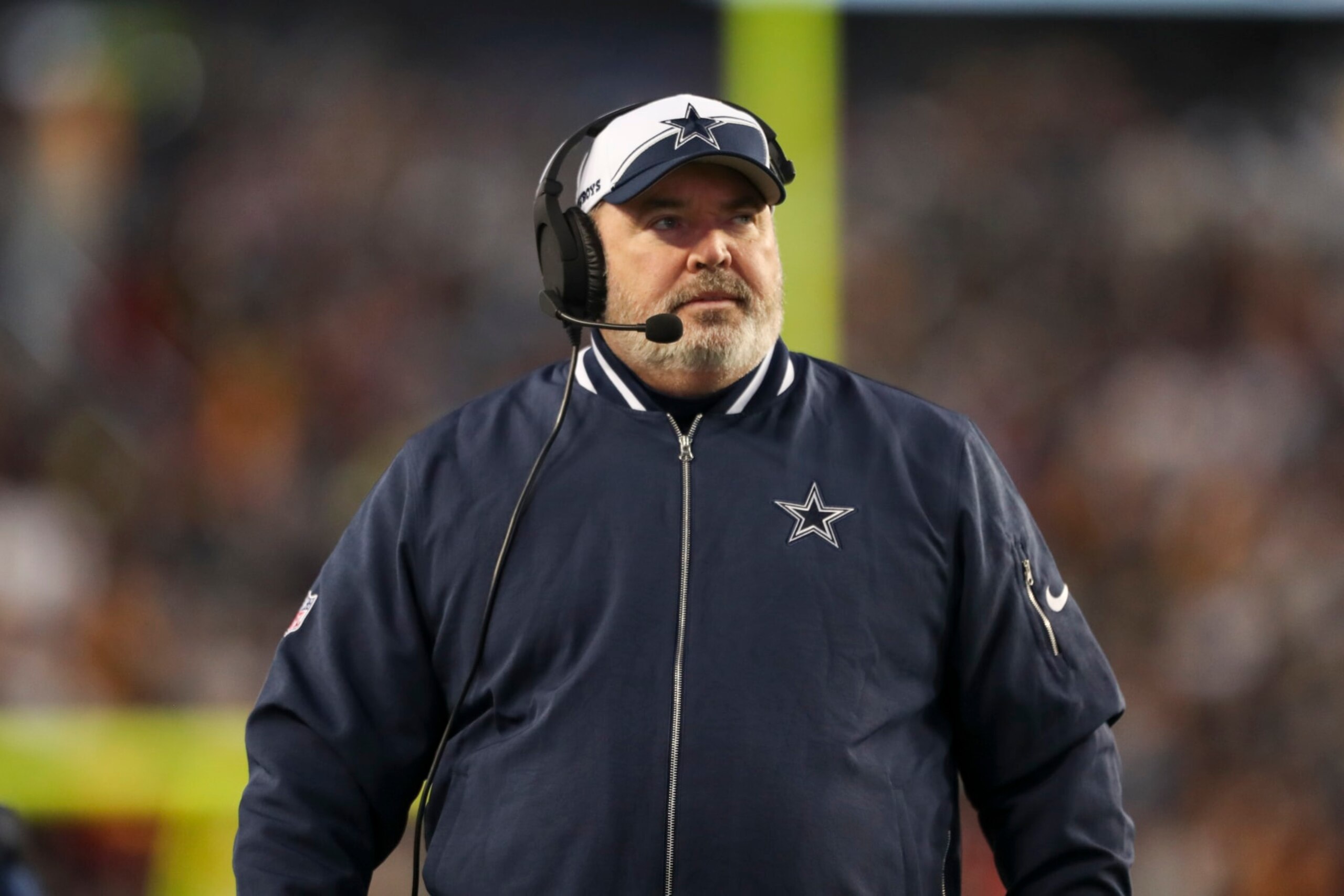

Mike McCarthy, Cowboys' Biggest Changes to Prioritize After Playoff Loss to Packers

The Dallas Cowboys spent parts of the 2023 season looking like legitimate Super Bowl contenders. During Sunday's loss to the Green Bay Packers in the Wild Card Round, Dallas looked more like a team that was just happy to be included in the playoff conversation.
Dallas had its fair share of ups and downs during the regular season, but it did enough to secure the NFC's No. 2 seed. That appeared to be huge, as the Cowboys last lost at home in Week 1 of the 2022 season.
The Cowboys didn't just lose to the seventh-seeded Packers; they got embarrassed. Green Bay jumped out to a 27-0 lead in the first half and never looked back. The game was not as close as the 48-32 final score might indicate.
Changes should be coming to Dallas, because this team clearly isn't Super Bowl material. Franchise owner Jerry Jones hinted before the postseason that it could start at the head coaching spot, depending on how Mike McCarthy fared.
However, a potential coaching change isn't the only change that the Cowboys need to prioritize this offseason. It may not be time for a full rebuild in Dallas, but a renovation is in order.
Find a Coach Who Can Maximize the Team's Talent
1 of 5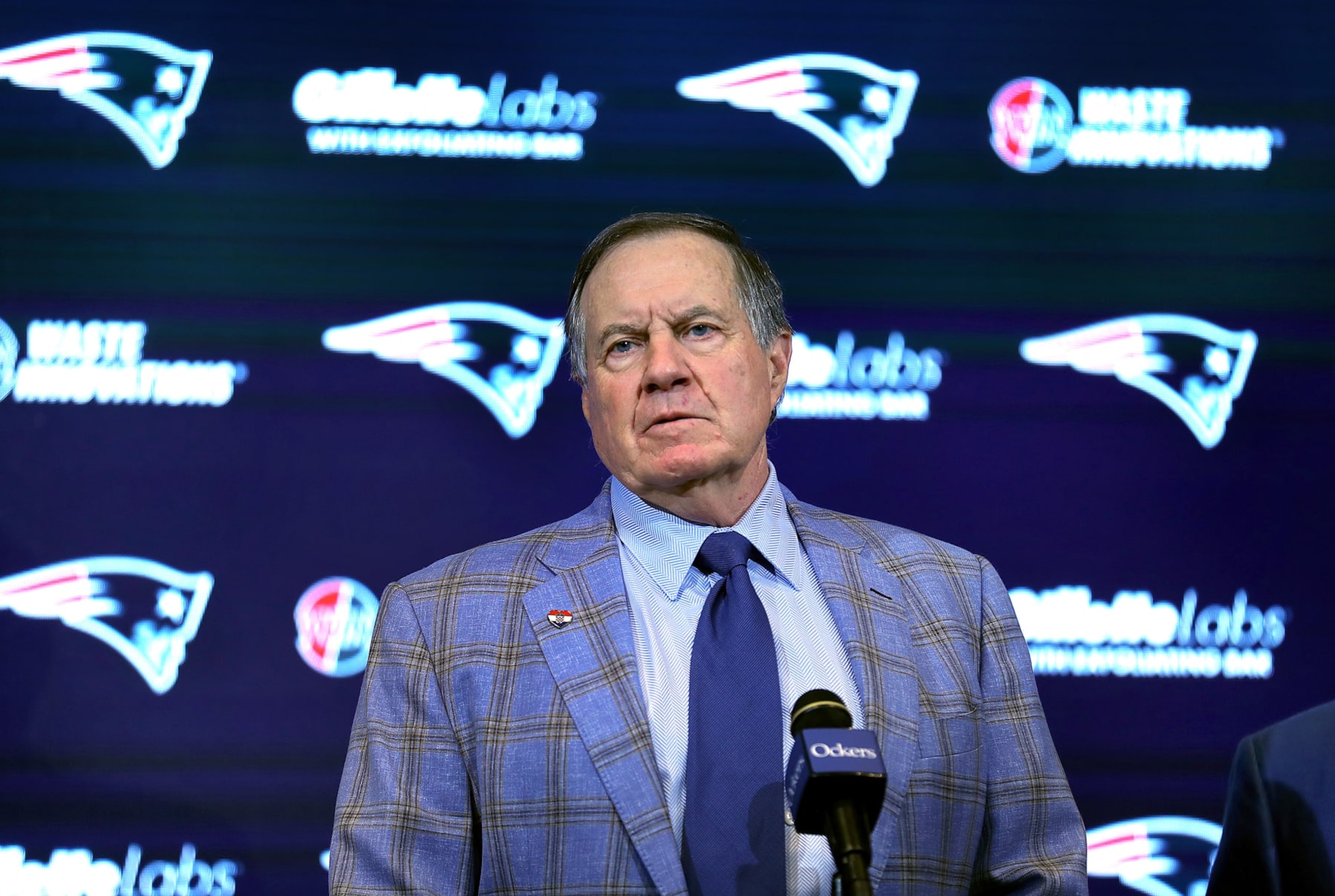
While Jones didn't deliver a win-or-you're-out ultimatum to McCarthy before the playoffs, he certainly didn't lend his unyielding support.
"We'll see how each game goes," he said, per Clarence Hill Jr. of the Fort Worth Star-Telegram.
The first and only game Dallas will play this postseason didn't go well, and that's a direct reflection of McCarthy. He took the reins of the offense this season, and he should have had the league's top scoring offense ready to roll.
Instead, the fourth-year head coach couldn't adjust to the shapeshifting coverages that Packers defensive coordinator Joe Barry threw at him. Barry's unit, it should be noted, gave up 30 or more points to two of its final four opponents. The Cowboys scored 16 before fourth-quarter garbage time.
Quarterback Dak Prescott appeared lost, as did Dallas' fifth-ranked defense. While the second piece is partially an indictment of defensive coordinator Dan Quinn, it's McCarthy's job to have the entire team prepared.
If McCarthy can't maximize the glut of talent that the Cowboys employ, it's time to find a coach who can. We recently examined the top candidates—a list that includes Bill Belichick, Jim Harbaugh and Houston Texans offensive coordinator Bobby Slowik. Mike Vrabel has since become available.
If Jones wants one of them, he may have to act quickly. Harbaugh is already set to meet with the Los Angeles Chargers. Belichick built a "solid" relationship with Jones, according to TheMMQB's Albert Breer, but he won't remain unemployed forever. Neither will Vrabel, and after Houston's blowout win on Saturday, Slowik's phone should be ringing frequently.
Jones probably will act quickly, because as of Sunday evening, it's nearly impossible to imagine running it back with McCarthy.
Stop Treating Prescott Like He's an Elite Quarterback
2 of 5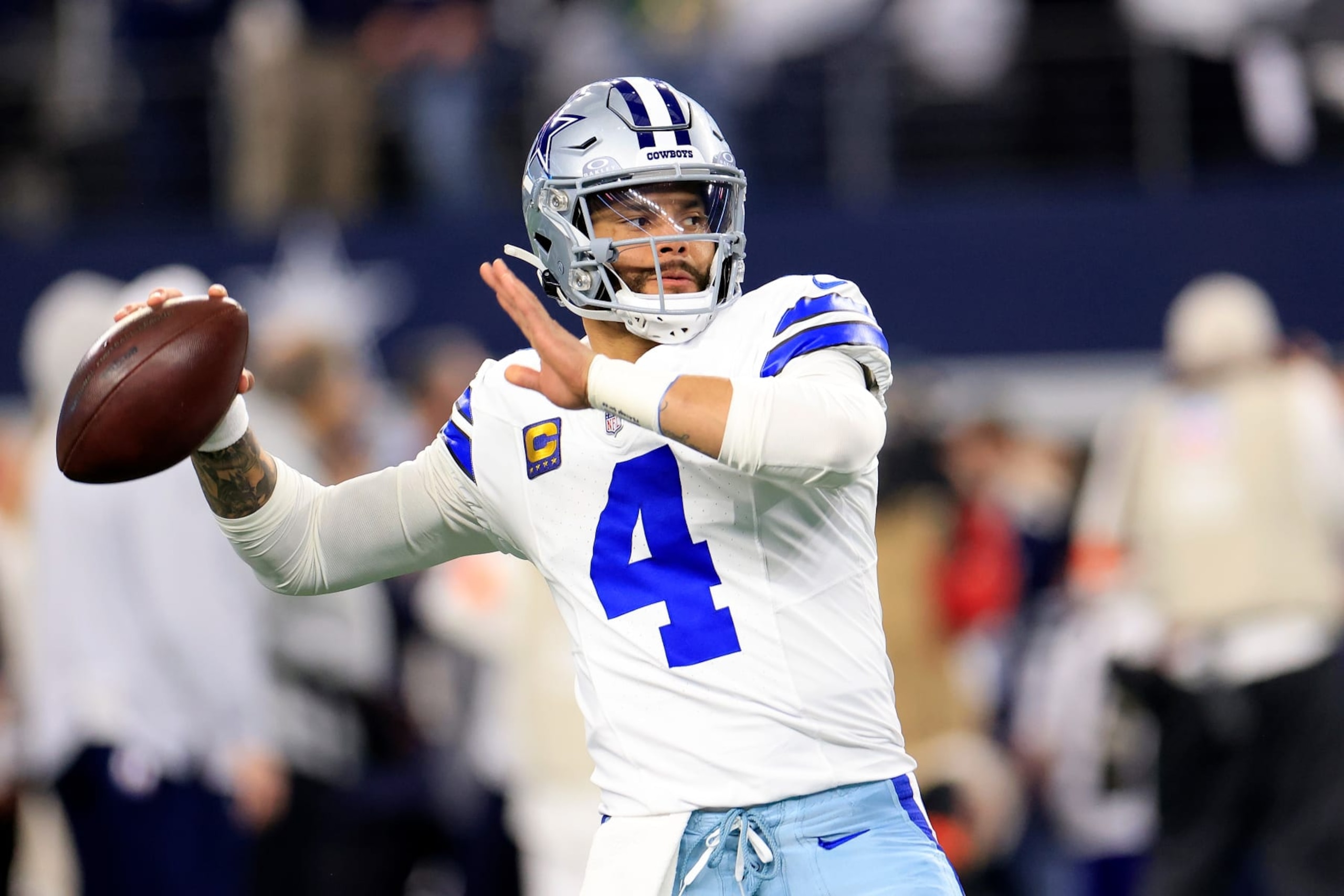
Prescott flopped just about as hard as McCarthy did on Sunday, which derails the direction in which this franchise was going. Heading into the season, Jones was prepared to give the 30-year-old quarterback another extension.
"We expect Dak to be with us a long time," he told 105.3 The Fan (h/t NFL.com's Michael Baca).
Prescott played like a viable MVP candidate for much of the season, and the Cowboys were expected to work out a new long-term deal in the offseason, according to NFL Media's Ian Rapoport.
After watching Prescott throw for 87 yards with a touchdown and two interceptions in the first half on Sunday, though, extension plans must be put on hold.
Prescott is entering the final year of his contract, and he's expected to carry a massive $59.5 million cap hit. A long-term deal could help lighten his cap number considerably, but how can Dallas legitimately commit to Prescott beyond next season?
The reality is that Prescott is a very good quarterback, but he has yet to prove he can be great when it matters most. He's now 2-5 in the playoffs in his eight seasons, and he'll be 31 in July. There's nothing wrong with having an above-average quarterback, but the Cowboys can't consider paying Prescott like he's elite.
The Cowboys have to stop treating Prescott like he's one of the four or five best signal-callers in the league, too. That means finding a legitimate No. 2 receiver—with all due respect to Brandin Cooks—and supporting Prescott with a quality rushing attack.
Most importantly, though, the Cowboys can't simply plan for Prescott to be there for a long time. It's time for Dallas to let him play out his contract and seriously ponder ways to improve the position.
Rediscover That Run-First Identity
3 of 5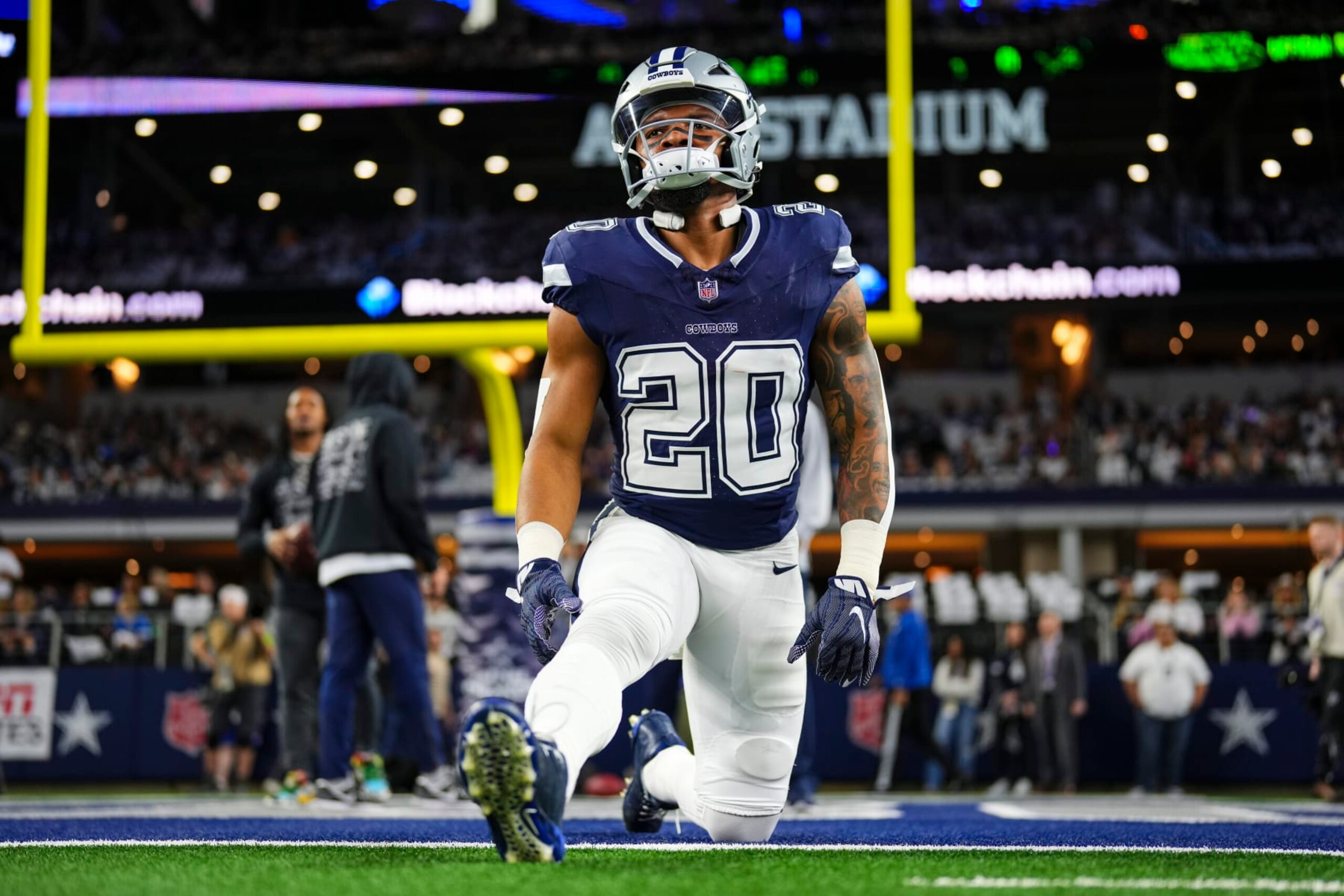
Because of his contract—which includes $62 million in dead money—moving off Precott next season isn't realistic. And perhaps he can redeem himself and earn the extension he shouldn't get this offseason.
However, Dallas does need to make offensive changes to get more out of Prescott.
Even the best quarterbacks have down games. The best teams find ways to overcome. Early in Prescott's career, Dallas did that by leaning on Ezekiel Elliott and the running game. Dallas simply didn't have that option this season.
Elliott lost a noticeable step in 2022, and the Cowboys parted with him in the offseason. They franchised Pro Bowl complementary back Tony Pollard and essentially handed him the backfield.
However, Pollard struggled in the every-down role, and the Cowboys didn't invest enough in the depth behind him. Rico Dowdle was merely serviceable, and rookie sixth-round pick Deuce Vaughn rarely saw the field.
As a team, Dallas ranked just 20th in yards per carry. There was no Plan B for the times that Prescott couldn't carry the offense—as was the case against Green Bay.
Prescott is capable of throwing it all over the field, and he's looked nearly unstoppable when everything is going right. It's time, though, for Dallas to rebuild its backfield and put Prescott at the helm of a more balanced offense.
Running backs like Wisconsin's Braelon Allen and Florida State's Trey Benson should be firmly on the Cowboys' radar in April's draft.
.jpg?w=2560 "Rams Raiders Football")

.jpg?w=2560 "Steelers Saints Football")
Put Some Effort into Rebuilding the Run Defense
4 of 5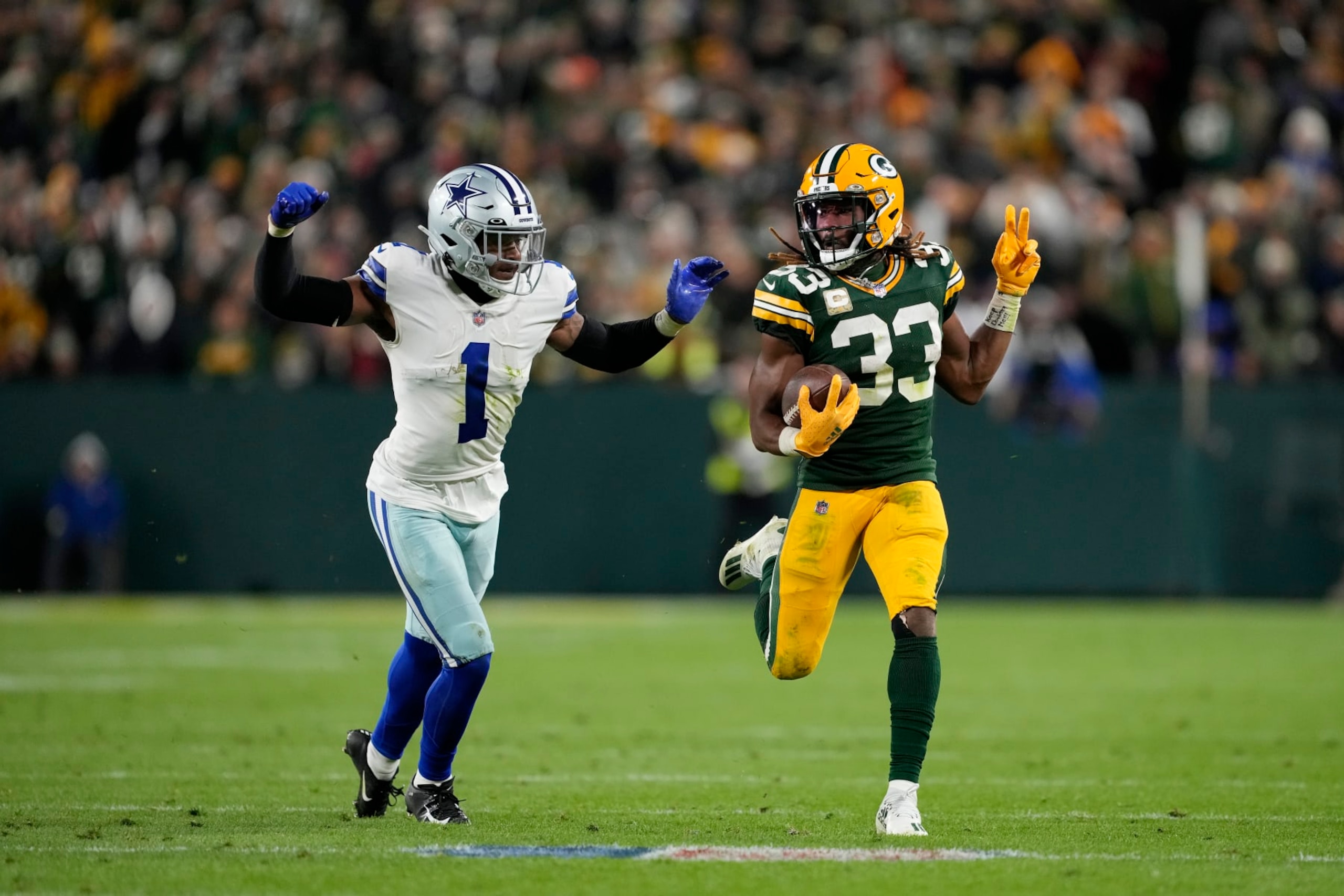
Dallas struggled to contain Aaron Jones and the Packers rushing attack on Sunday, and Green Bay racked up 143 yards on the ground. This helped set up play-action, allowed Jordan Love to find easy completions deep downfield and slowed the Cowboys' vaunted pass rush.
Of course, Dallas's run defense isn't a new problem. A year ago, the Cowboys finished the season ranked 22nd in rushing yards allowed and 17th in yards per carry allowed. It was a problem that the Cowboys didn't take nearly seriously enough.
In free agency, the Cowboys did next to nothing, aside from re-signing Leighton Vander Esch and Johnathan Hankins. They did use a first-round pick on Michigan defensive tackle Mazi Smith, but that selection was a major reach.
"A team hoping for a defensive tackle to make an immediate impact might be looking elsewhere," Matt Holder of the Bleacher Report Scouting Department wrote of Smith, who was the 63rd-ranked prospect on the B/R board.
Smith didn't make an immediate impact and played just 304 defensive snaps.
The Cowboys were marginally better against the run this season, finishing 15th in yards per carry allowed and 16th in rushing yards allowed. That's not good enough, though, because when teams—like Green Bay, the San Francisco 49ers, the Philadelphia Eagles and even the Arizona Cardinals—have gotten an early lead on Dallas, they've closed games out with the run.
Dallas has to invest more in its run defense instead of simply building around its secondary and pass rush. That means not reaching for developmental prospects early in the draft and focusing on legitimate Round 1 prospects, like Miami defensive lineman Leonard Taylor III and Clemson linebacker Jeremiah Trotter Jr.—the 18th- and 37th-ranked prospects on the B/R Scouting Department's latest draft board.
Stop Acting Like the Super Bowl Window Is Wide Open
5 of 5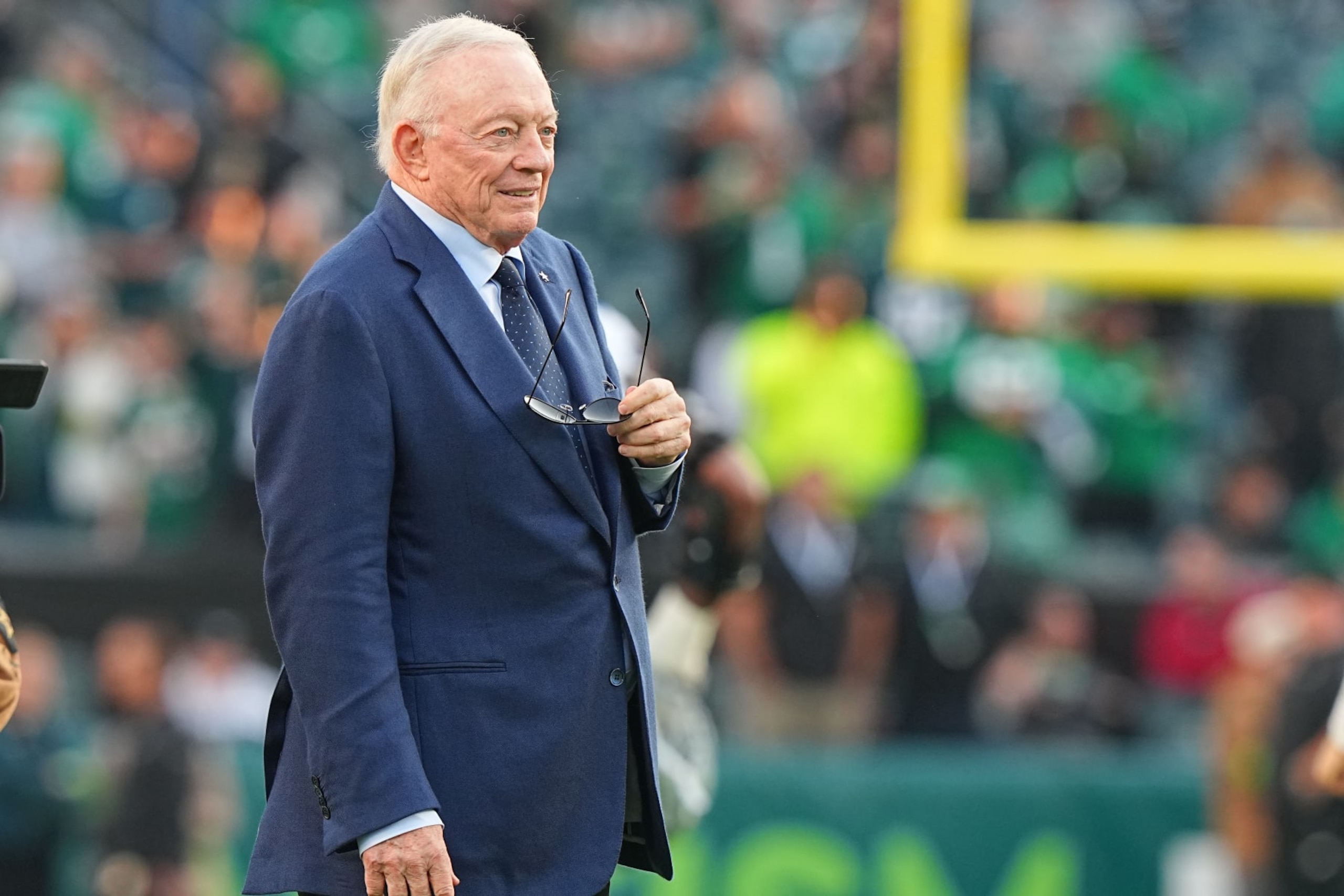
Jones, CEO Stephen Jones and vice president of player personnel Will McClay have to take a different approach to the 2024 offseason. A year ago, Dallas' brain trust treated the team like it was a player or two away from a championship.
Free agency was largely spent re-signing Cowboys. Dallas kicked off its draft by taking Smith and tight end Luke Schoonmaker, both players who weren't ready to fill holes immediately. The team's blockbuster moves of the offseason were trades for 33-year-old cornerback Stephon Gilmore and Cooks, now 30.
The result of that approach was a postseason run that ended a week earlier than last year's.
The Cowboys can't treat the 2024 offseason in a similar fashion. They aren't a player or two away, and in retrospect, that was clear all season. Sunday's game marked the ninth time that Dallas faced a team that finished the regular season above .500. It went 4-5.
That's not what championship teams do.
The Cowboys also have to put more thought into building for the long term because of how they approached the 2023 season. Dallas is projected to be $11.1 million over the salary cap, and key contributors like Pollard, Hankins, Gilmore, Tyron Smith and Dorance Armstrong are set to be free agents.
Star receiver CeeDee Lamb is also entering the final year of his rookie deal and is poised to become one of the highest-paid receivers in the league.
Dallas will have to consider parting with veterans like Cooks and Vander Esch just to get under the cap—releasing them would save $4 million and $2.1 million respectively.
Running it back with the same roster isn't feasible, nor would it be advisable. The Cowboys aren't looking to maximize what's left of their Super Bowl window. In reality, they're still searching for it.
*Cap, contract and free-agent status information via Spotrac. Advanced statistics from Pro Football Reference.
.jpg?w=2560 "Cowboys Packers Football")



.jpg?w=2560 "🚨 Week 8 AP Top 25 Poll")
