
Why Wins Still Matter in Modern-Day Pro Wrestling For WWE and AEW
Good versus evil is the basis the wrestling business is built on, but similar to any sport, wins and losses remain the motivation for fans and athletes alike.
Far too often in WWE over the years have fans been told—sometimes by the Superstars themselves—that winning and losing is irrelevant. Champions would lose without consequence, and high-profile victories have amounted to nothing.
Although there's been improvement under new the leadership, it remains an issue, just as it does in All Elite Wrestling.
AEW was the first major pro wrestling company in many years, if ever, to introduce a legitimate ranking system based on win-loss records upon its inception. It was merely a matter of time before it was phased out, but it was a useful and innovative concept for as long as it lasted.
We've seen what happens when wrestlers embark on undefeated streaks. We've also seen what happens when they lose a majority of their matches and fall out of favor with the audience.
What transpires on television occasionally suggests otherwise, but wins and losses matter in modern-day pro wrestling, and there are countless examples across WWE and AEW that prove it.
Winning Remains Best Recipe for Success
1 of 7Character development is integral to a performer's growth and can't be overstated, but winning matches is the tried and true formula for success in wrestling.
It illustrates that the competitor is to be taken seriously and is primed for bigger and better things, provided they're beating actual competition and not solely lower-level "local athletes."
That can be effective to a degree as well, and it was what made Goldberg such an attraction early in his WCW run. Not only was he winning matches, but he was also doing it in dominant fashion.
For as dynamic of a performer as Gunther is, fans had little faith he'd be able to get beyond a certain level in WWE because of how he's never been the most charismatic competitor. Despite that, he's gone unbeaten on the main roster and held the intercontinental title for over 500 days.
As a result, he's gotten over organically as a "final boss" on the Raw roster.
Prior to her departure from AEW, Jade Cargill also achieved megastar status by decimating the women's division over a two-year period. Had she lost shortly following her debut, she wouldn't have had that same aura.
Winning should ideally get a talent to the top of the card, and after breaking through that glass ceiling, losing won't make as much of a difference.
Winning Isn't Always Everything, but Perception Is
2 of 7Sometimes winning a match doesn't matter as much as how the wrestler wins and what's done to take advantage of it.
Most heels cheat to win. It's in their nature, as is getting their comeuppance. Every babyface needs a proper foil to overcome, but if the villain is constantly cheating or winning in fluky fashion, they'll be perceived by fans as someone who doesn't deserve to be among the elite.
Likewise, if they can't win when the lights are brightest, it won't mean anything when they get beat. The same can be said for a babyface. They need to be able to win "the big one" on occasion or fans won't be able to invest in them.
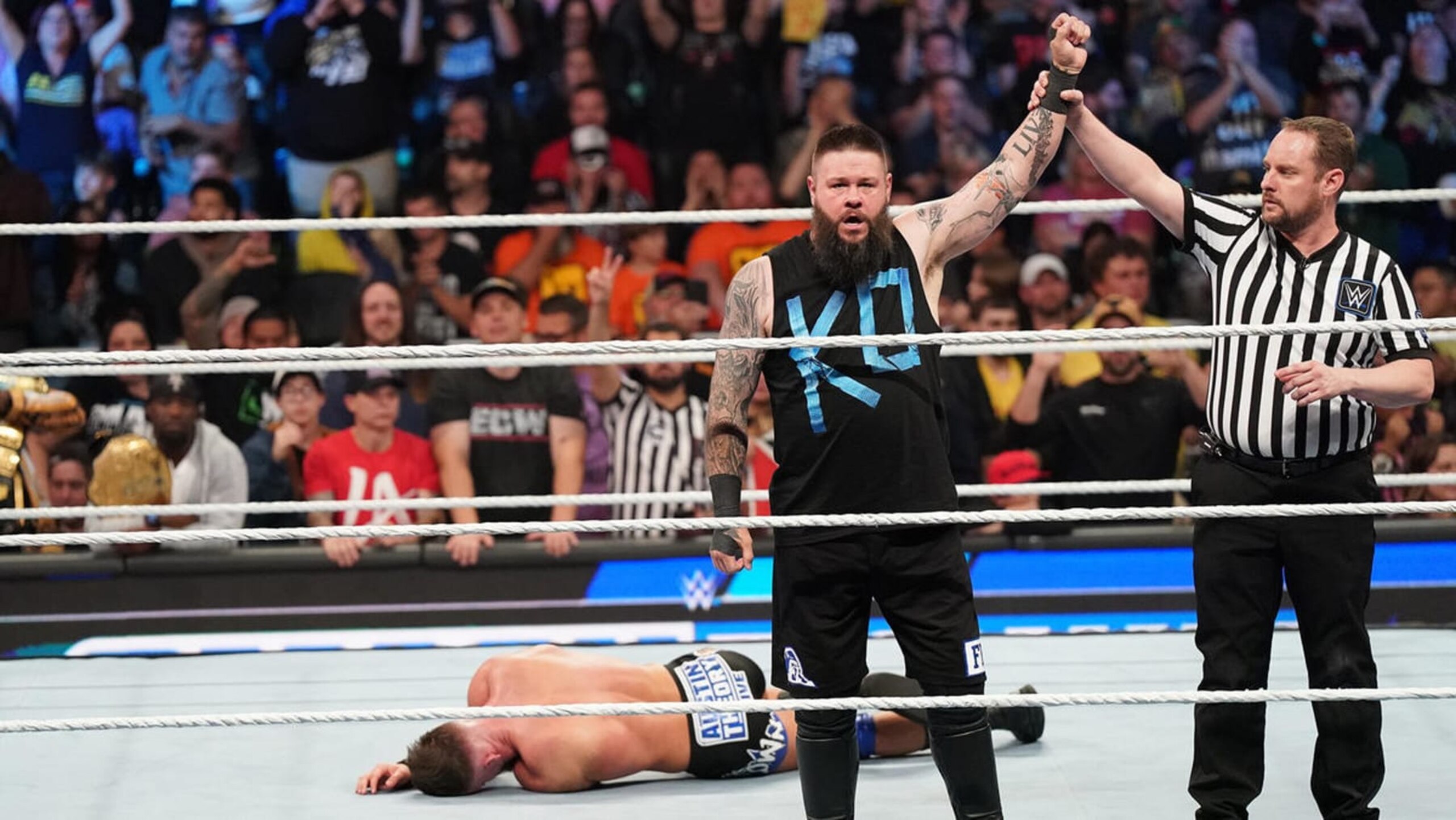
Austin Theory, in particular, has fallen victim to bad booking this past year. He reigned as United States champion for eight months but was never positioned as the focal point in any of his feuds and rarely won decisively.
His WrestleMania 39 win over John Cena in April should have catapulted him to new heights, but he was worse off afterward because WWE failed to follow up with him accordingly. Capitalizing is crucial in wrestling, especially in today's constantly changing landscape where wins can be forgotten in an instant.
Constant Losses for Unestablished Talent Will Have Adverse Long-Term Effect
3 of 7One loss will not kill a career, but it's all about how it's executed and how that wrestler bounces back.
For many years, John Cena was WWE's biggest cash cow because no one else was remotely close to matching his metrics in terms of merchandise, popularity and the like. Certain Superstars had the potential to, but they were booked in such a way that depicted them as being inferior to the all mighty Cena.
He's had his fair share of matches in which he had nothing to gain from winning but was booked to go over anyway, doing damage to his opponent in the process. Nexus at SummerSlam 2010 is a memorable example (the group's momentum peaked that night and never recovered), and Bray Wyatt at WrestleMania 30 is another.
Of course, Wyatt went on to have a Hall of Fame-worthy career in WWE, but it took him years to cement his spot at an elite level. His first loss to Cena, as well as subsequent defeats to Undertaker, Randy Orton and others, portrayed him as being a notch below those perennial main eventers. It was his connection with the crowd and character work that made him an exception to the ideology surrounding wins and losses.
LA Knight didn't start winning meaningful matches until SummerSlam, and although he was already a huge fan favorite prior to that, his hot streak would have been short-lived if he hadn't started delivering and living up to the hype.
With enough shortcomings, a wrestler will enter "damaged goods" territory and lose the opportunity to convince fans they're worthy of winning.
.jpg?w=2560)
.jpg?w=2560)

Bulletproof Booking Can Be Used to Tell Great Stories
4 of 7Once a star is established, they reach a certain point where they basically become bulletproof from a booking standpoint: They can be booked to lose on countless occasions and still remain over with the audience.
John Cena is, of course, the most obvious example of this. He recently acknowledged how he hasn't won a televised singles match in over five years, yet he's considered one of the greatest of all time and receives a raucous reaction every time he enters an arena.
AEW's Kenny Omega also finds himself at this stage of his career. He's suffered several high-profile losses this year, but Konosuke Takeshita, MJF and others have benefited from beating him. Meanwhile, Omega is no less of a main event player than he was previously.
When the time comes for Cena and Omega to finally break their losing streaks, it will be a major moment. This is how compelling stories are told with talent of their caliber.
It's worth noting that bulletproof booking can't be obtained immediately. It takes time for wrestlers to be put on that pedestal by fans, and only a few find themselves in that rarefied air in either company.
50/50 Booking Can Be Just as Damaging as Losing Too Frequently
5 of 7The new norm for WWE and AEW in recent years has been subjecting stars to 50/50 booking with the mindset that if they win as often as they lose, they will get over with the audience all the same. A quick look at both rosters will indicate this is not true.
Wardlow went from being one of AEW's hottest acts to just another guy in a six-month stretch because of 50/50 booking. He had three mediocre reigns as TNT champion, won and lost the belt in forgettable fashion, and he didn't feud with top talent aside from Samoa Joe.
Ricky Starks and Malakai Black are building momentum at long last, but only after picking up big wins and cooling off considerably. AEW has had a tendency of giving wrestlers hot debuts before leaving them off television for weeks at a time.
A good chunk of WWE's roster in the 2010s suffered from this. Kofi Kingston had a strong WWE Championship run and was instantly relegated to midcard status once it was over, while Dolph Ziggler was notorious for start-and-stop pushes that the audience eventually gave up in caring about.
A consistent string of wins and not going overboard with the losses is key in developing the talent of tomorrow. Look no further than Cody Rhodes, Solo Sikoa, Orange Cassidy and MJF as examples of that.
The Rise and Fall of AEW's Win-Loss Ranking System
6 of 7AEW's introduction of a rankings system based on wins and losses was an appealing aspect of the promotion for fans upon its launch. It determined who was next in line for a title shot and therefore made every match matter.
It was also used as a storytelling device to kick off rivalries and build to big-time matchups. Once wrestlers went undefeated for many months and didn't receive the golden opportunity they were owed, the system was quietly abandoned in late 2022.
It didn't help that wrestlers were winning pointless squashes weekly on the now-defunct Dark shows to bolster their win-loss records, only to never be utilized on Dynamite or Rampage.
It was a promising concept that would be worth revisiting down the road. Needless to say, it was a vast improvement over WWE.com's Power 25 from years ago and the oft-forgotten SmackDown Top 10 in 2018.
No. 1 Contender matches are more traditional but are a better alternative than having a titleholder get beat in order to set up an upcoming championship clash.
It isn't uncommon for wrestlers to contend for titles despite racking up losses because that's what the story calls for, but both WWE and AEW could be better with explaining how certain opportunities are earned (and doing away with the overdone open challenges for the foreseeable future).
More Attention to Wins and Losses Will Ultimately Create More Stars for WWE and AEW
7 of 7The biggest similarity WWE and AEW share at the moment is that they're both debuting fresh faces at a rapid rate.
AEW is always introducing new acquisitions to the main shows, and WWE has constant call-ups from NXT (The Creed Brothers) as well as the occasional return (Carlito) or special signings (Jade Cargill).
It's virtually impossible to get everyone over simultaneously. No amount of video packages will get the average viewer to care about newcomers overnight. It's all about the booking and sending the message that they're worth investing in.
WWE has so far failed with Cameron Grimes because his appearances are infrequent and he hasn't won many matches. Thankfully, they've gotten it right with The Creed Brothers, who have won their first two matches on Raw.
In AEW, Jay White feels like an important player because he has yet to lose a one-on-one match. Veterans such as Samoa Joe, Bryan Danielson and Jon Moxley have been protected to the point where wins against them are significant.
With wrestling, there's no need to reinvent the wheel when it comes to wins and losses. They'll forever be the lifeblood of the business and what separates the average from the extraordinary.
Graham Mirmina, aka Graham "GSM" Matthews, has specialized in sports and entertainment writing since 2010. Visit his website, WrestleRant, and subscribe to his YouTube channel for more wrestling-related content.

.jpg?w=2560 "Injury-stricken Seahawks signing veteran RB")

.jpg?w=2560 "Viral Rams Coach Vid 🖕")
.jpg?w=2560 "2 NFL Officials Suspended")


.jpg?w=2560 "Mahomes' Wife Trolls Kubiak 💀")