
Rotten in Oakland: How the A's Trashed Their Roots and Became MLB's Laughingstock

Ask an Australian what's so funny about "Rooted in Oakland." They will happily tell you.
Judging by the team's official account's tweets, "Rooted in Oakland" was quietly retired by the Oakland Athletics in May 2021 or so. It had been their slogan since 2017, when owner John Fisher bought out his partner Lew Wolff's shares in the club and assumed full control of operations. The slogan is meant to evoke Oakland's city symbol of a tree, and to suggest the commitment that the A's projected at the time to keep the club in town.
The emptiness of this is clear now, as the team makes a mad rush to escape to Las Vegas. It's hard to appeal to your "roots" when you pay a better lineup of lobbyists than your lineup of players to cry poor to the Vegas government, and fans in Oakland have certainly stopped buying it.
TOP NEWS

Brewers Complete Comeback In Game 2

World Series Game 2 Takeaways 🍿

Next MLB Players to Sign $200M Contracts 💰
Stadium upkeep has been neglected. Attendance has cratered to an anemic 9,960 fans per game. Possums live in the walls. Sewage regularly floods the dugouts. On Wednesday, they were on the wrong end of MLB's first perfect game in 11 years. And the side of the stadium still proudly tells you that this is all Rooted in Oakland.
Abandoned by their once-loyal supporters. Playing in front of 50,000 empty seats in baseball's biggest stadium, on a field that, at the most attended game of the season, found itself covered in trash. There are 29 major league clubs and then whatever this is.
Down under, they'd find this funny for a different reason. In Australia, "rooted" is inventively crude slang for having sex.
Then-closer Liam Hendriks couldn't help but note this when he was named an All-Star in 2019. The A's had taken out an ad in his home city of Perth celebrating him, complete with a giant #ROOTEDINOAKLAND. They didn't do their homework, and it was embarrassing, but mostly funny.
It was more charming back when the A's were good. Much of this situation was.
Now it's easy to see it as its own kind of marketing pitch to Rob Manfred and MLB. Look at what's left of our roots, this empty smelly stadium, all concrete with air pollution and leaky sewage. We're screwed in Oakland.
In the team's eyes, the rage from fans must seem childish more than anything. Business got done and money was made, and getting worked up about the marketing being a lie is a big waste of time.
What you have to hand to them is that they never lied at all.
"Rooted in Oakland" was in fact the constant project of Fisher's A's, the thing they worked hardest to make true and succeeded in doing. Thanks to Fisher, fans used to root in Oakland all the time.
Home of Champions
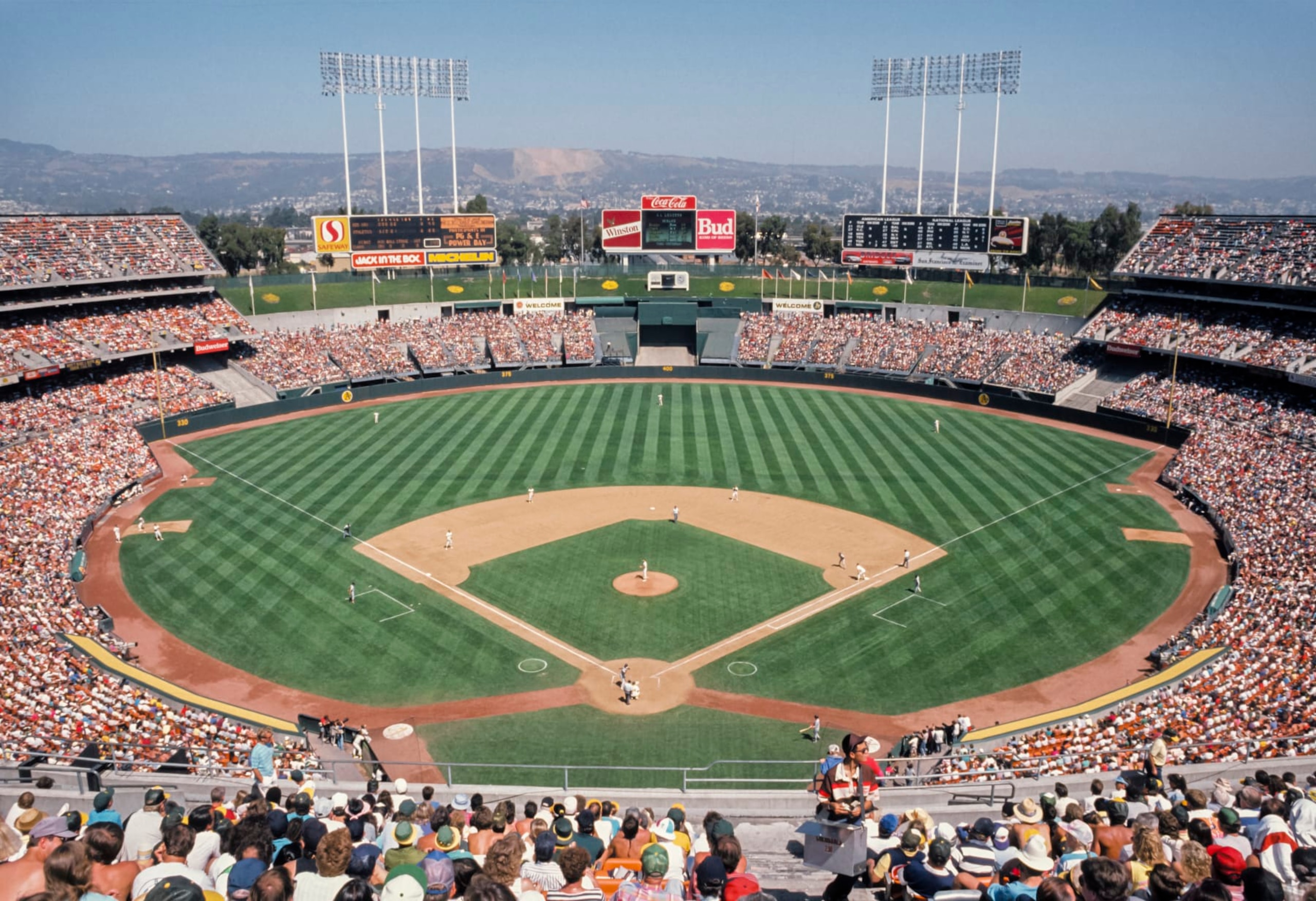
As tough as it is to tell right now, the A's will leave behind a decorated history of success in Oakland. Since 1968, the year they moved to to the city, the A's boast four World Series titles. Only the New York Yankees and Boston Red Sox can say the same thing.
For a while, the A's were more popular than the Giants across the bay.
Oakland has a number of advantages over San Francisco as a pro baseball market: better weather, much easier transportation, the best tailgating in baseball as one of the few teams to allow it and famously good beer choices.
The A's are the only MLB team with green in their color scheme (teal doesn't count); the iconic green-and-gold hat is popular around the world.
The A's were winners. While the sad-sack Giants were busy failing Willie Mays and Barry Bonds out in windy, inaccessible Candlestick Park, the A's fielded one of the best dynasties in baseball history in the 1970s, in a scenic ballpark with a meadow in the outfield and a beautiful view of the Oakland hills.
When the A's were good, owner Walter A. Haas operated the team under a principle that would hopelessly confuse Fisher today. Haas took the privilege of owning a ballclub seriously. Ownership took on financial risk, investing in entertainment for fans and making improvements to the Coliseum, running the club at a loss some years to put out a team that would enrich the city of Oakland and its residents.
Overall, Haas likely booked a cash loss running the franchise during his time in ownership, and was willing to because he genuinely loved the city. Haas wanted to leave behind the pride that Oakland has today, earning praise from team star Dave Stewart, among others, for his civic spirit and financial buy-in. The only pro team to wear "Oakland" on its uniform, those A's made the city their identity more than the Warriors or Raiders ever did.
Things peaked when the A's swept the Giants in the 1989 World Series, the latter of whom hadn't won a title since they played in New York. It got so bad that the Giants reached and signed an agreement to move to Florida.
What changed?
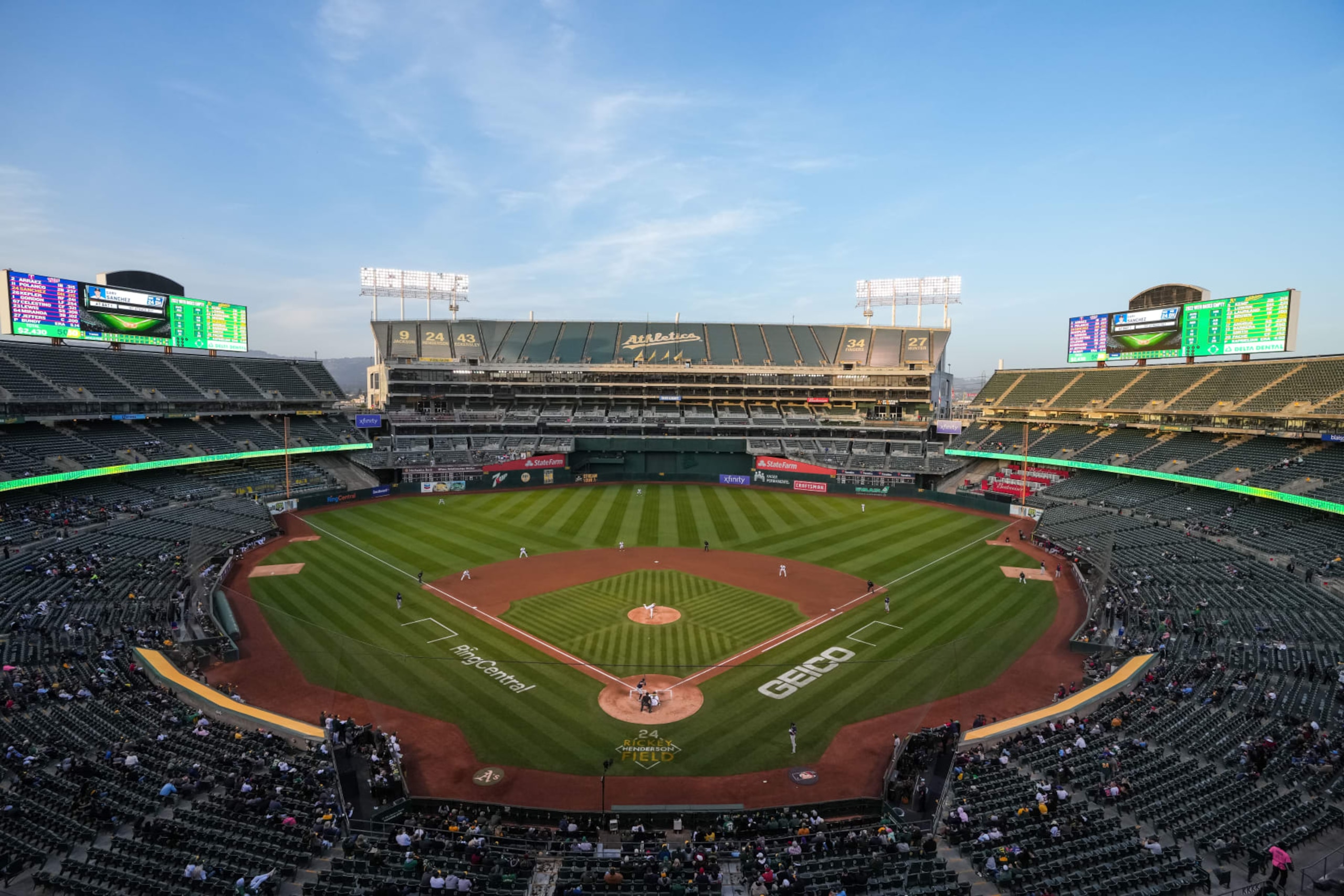
In 1995, part of a briefly successful effort to lure the Raiders to the Coliseum, the city of Oakland borrowed $200 million to build "Mount Davis," the impossibly ugly block of seats and suites that towers over what was once a nice baseball stadium.
This was a great deal for Raiders owner Al Davis but an incredibly bad one for the city and county, and one that they are still paying off long after the Raiders left town. Taxpayers still owe $13 million a year through 2025 for the same 30-year-old renovations that made the Coliseum obsolete, with the overall price tag nearly doubling to $350 million just from interest payments. It was a catastrophe that wrecked the city budget for years.
Later that year, Haas died, and his family decided to sell the team.
Right before the explosion in media revenue that would lift the boat of every MLB team and allow cheap owners like Fisher to operate at a profit, the Haas family sold the team for $85 million to real estate developers led by Steve Schott, who would in turn sell the team to Fisher and Wolff in 2005. The team's cost-cutting approach you see today has been in place since, with handing taxpayers the bill on a real-estate deal just like Davis did as the transparent goal.
Through this lens the team's repeated failures to make a deal happen in Oakland become clearer.
The Mount Davis deal ruined the Coliseum, permanently soured Oakland on public financing and made voters and politicians broadly suspicious of any dealing with the team to begin with. Every day, the A's in the Coliseum showed just how badly publicly funded projects can fail, while the team's owners carried on for 25 years pursuing a deal just like it and wondering why they kept striking out.
Across the bay, the Giants built their stadium without any public money, opening a lovely park on the water in 2000 for $357 million, about the total cost it ended up taking to build Mount Davis.
While the A's never committed seriously to a privately funded stadium deal and a series of half-baked attempts ran into basic land rights and infrastructure problems, Giants attendance soared as they strung together three World Series titles in the early 2010s, putting a bigger dent in Oakland's fanbase each time.
Stuck blowing up winning teams while ownership prioritized a real-estate handout, turning off more fans for good each time they sold star players, the A's gradually stopped trying to compete altogether.
Fans lived the whole cycle over and over, each time having to explain to your kid that their favorite player was going to go play for some other city, with each sell-off increasing the certainty of more to come in the future.
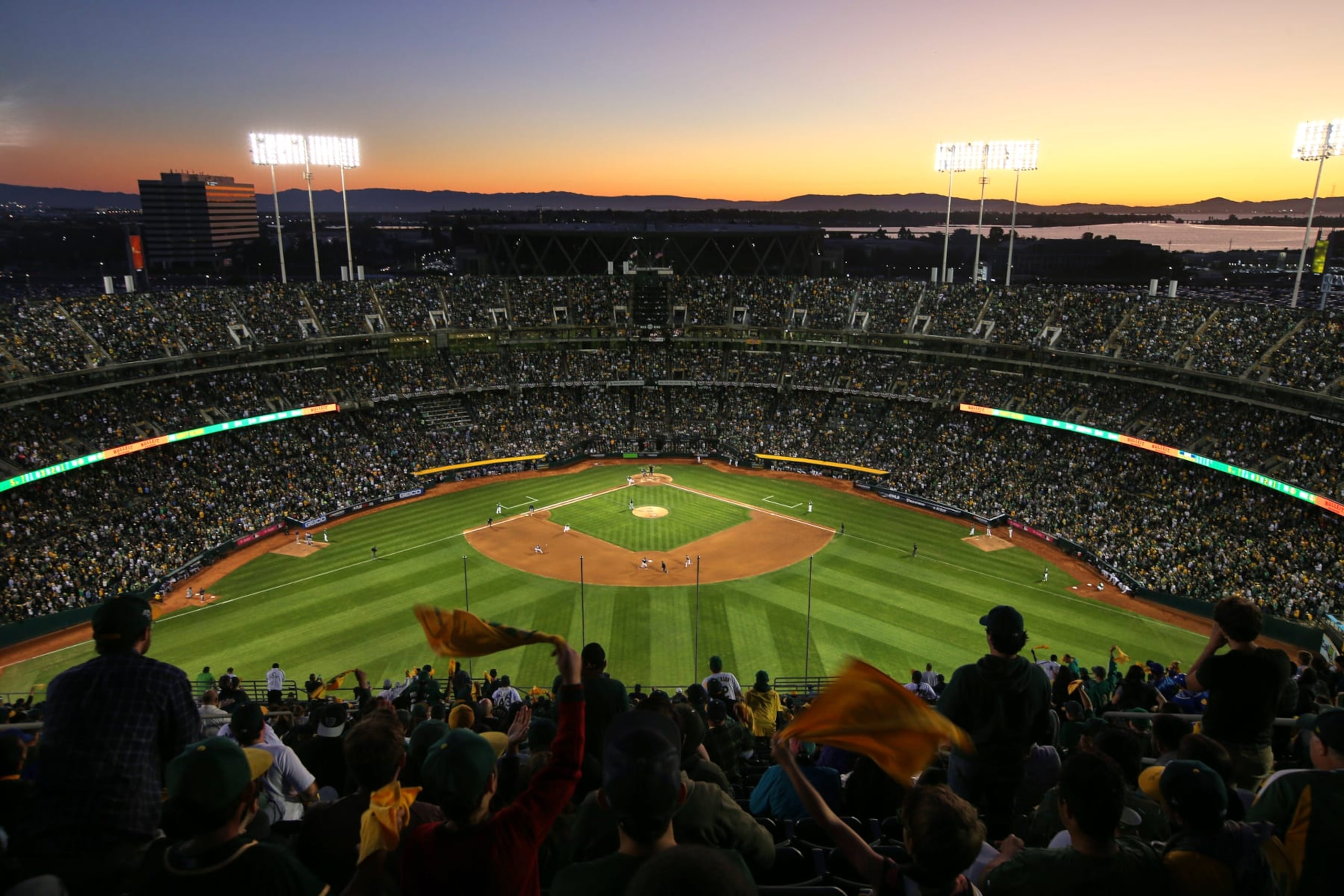
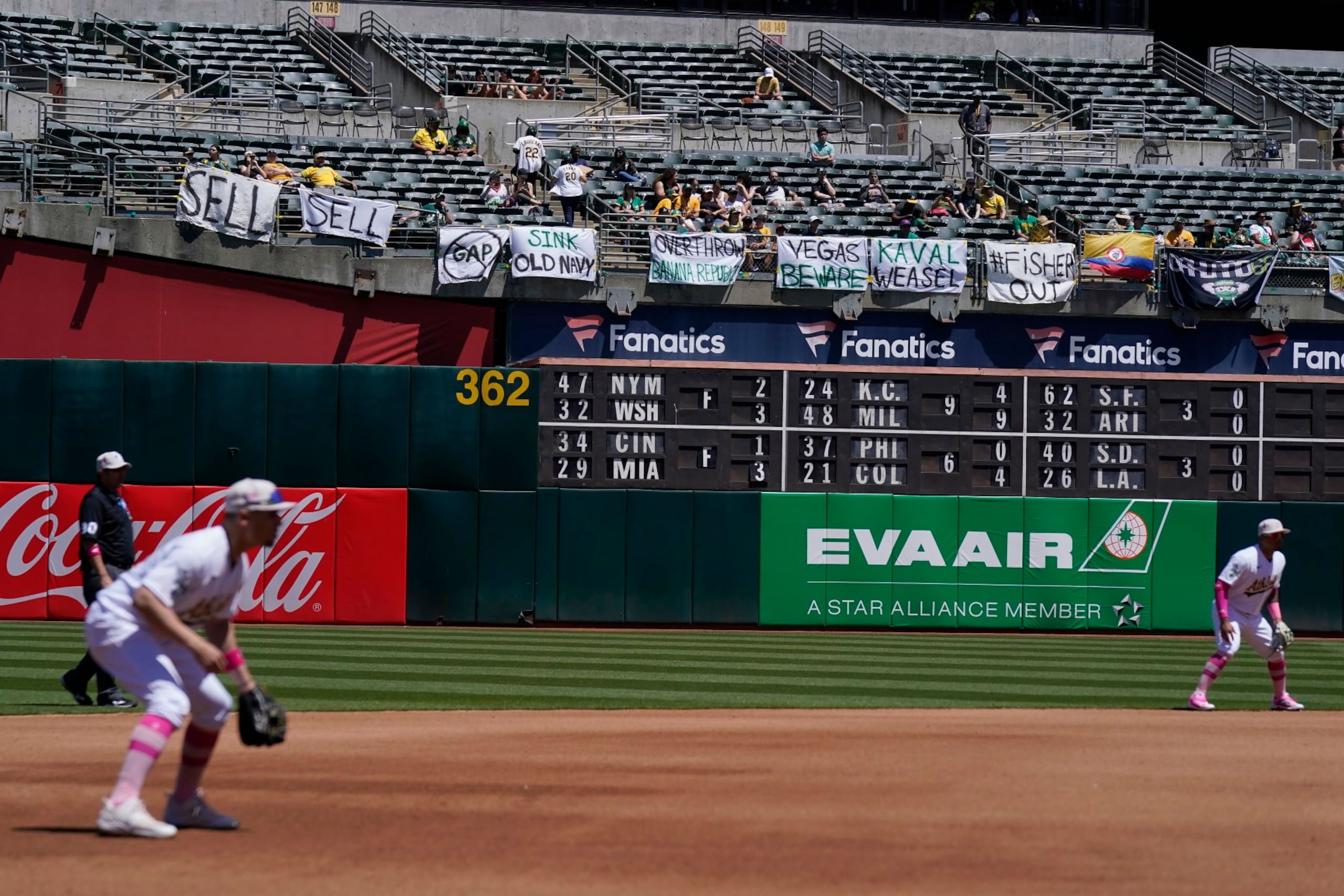
In spite of this all, Oakland still loved baseball. Less than a decade ago, multiple teardowns into the Fisher era, the Oakland bleachers were still a maelstrom that had Stephen Curry wishing their energy could transfer to Warriors fans. They now sit mostly empty, draped with signs insulting Fisher, signs warning Las Vegas and little else.
You can't blame fans for not buying it anymore. This current "rebuild" and this 2023 A's "team" have ditched the idea of a pretext, or a selling point, or even a slogan.
Marcus Semien was the first of Oakland's latest core to come up for free agency, hitting the market after the pandemic season in 2020. The A's never made Semien a real offer, "floating" him a one-year offer of $12.5 million with a nearly unheard-of deferral that would have spread it out over 10 years, a grim indication of how short on cash the organization was.
Semien signed an $18 million deal with Toronto. One of the first things he noticed, he said, was that the Blue Jays invested actual resources in their players. In his first season after leaving Oakland, he hit 45 home runs.
After a lifeless 2021 A's team collapsed down the stretch, they traded stars Matt Olson and Matt Chapman, netting nearly nothing in return in moves that are already busts. The 2022 A's were even worse, and they responded by selling even more, trading Sean Murphy for another paltry return.
The 2023 A's are historically terrible, on pace to finish 41-121, and show few signs of life, with nothing to show for the core of stars they developed in the 2010s.
Let's be fair. Even after so many mistakes, you can call some of their circumstances bad luck. A lot had to go wrong to make the A's this horrible.
For starters, none of the Giants teams in the early 2010s stacked up in a historical sense. The fact that the local competition maxed out at 94 wins, but won it all three times, was a tough break.
From a baseball sense, the pandemic was also brutally timed. The A's were built to compete in 2020, and attendance had been growing, before COVID slammed the door on that team, on the massive planned stadium development at Howard Terminal, and now potentially on Oakland baseball forever.
Some of this has to fall on the city of Oakland too. It's difficult to point to anything that the city has done well in attempting to keep the A's in town, and given the chance, the city has tended to make it harder.
The most important external factor might be fully unrelated to baseball: Fisher's family owns a lot of Gap, Inc. stock, and it has been a very bad couple of decades for that company. According to SEC filings, Fisher is the largest shareholder, and his holdings are down over 75 percent since 2013, having lost well over a billion dollars in value.
This could end up as the only relevant explanation for the move to Las Vegas. Even as late as May 2021 while his shares still had life, it is truly possible that Fisher meant it with "Rooted in Oakland." There is a great chance that he genuinely wanted to make a deal happen in the city when he bought the club, and that now he is simply too broke.
How to Fail On Purpose
The ultimate culprit for the disgrace on the field, and the common thread since the Haas family sold the team, is the conscious effort the A's have made to alienate fans. Trading stars over and over has been a constant process doomed to fail, systematically betting against the long-term value of star players, when stars turned out to be highly *under-priced* compared to today's market.
Compare the top MLB salaries in 2005 to those today. Even after adjusting for inflation, star players are more expensive across the board. Why? Clubs that invest in their present and future grow their fanbases, realizing the long-term revenue that stars drive and leaving the penny-wise pound-foolish competition in the dust.
Tim Hudson, Mark Mulder, Nick Swisher, Carlos González, Yoenis Céspedes, Josh Donaldson, Matt Chapman, Matt Olson and Sean Murphy were all traded. Jason Giambi, Barry Zito, Marcus Semien and Liam Hendriks were let go in free agency.
To date, the six-year, $66 million contract Eric Chavez signed in 2004, the year before Fisher bought the team, is still the biggest in franchise history. In the intervening 20 years, the Bay Area has seen incredible economic growth, and the A's have been content the whole time to cut costs and pinch pennies, missing out entirely on the flood of money into the region while the Giants reaped the profits.
The Oakland A's will forever be associated with the philosophy of intentional failure. The A's won more games than the Giants in the 2010s, and it didn't matter. Disrespecting customers became Fisher's standard practice, the only objective became scraping out everything good and leaving an empty shell behind, taking a free ride on MLB revenue sharing while other teams made the investments.
After squeezing all he could from ordinary people of Oakland, Fisher jacked up ticket prices as a final insult, ensuring deserted stands for the team's miserable last act.
Fisher will eventually sell the team for more money than he paid, having kept expenses down and cashed a massive check or two of taxpayer money along the way.
The nakedness of this is why people should not be surprised that fans no longer root in Oakland.
Fisher has dismantled any reason to care about the baseball on the field, and priced up what's left, profiting nicely in the act. He will never show his face in Oakland, and after long enough, with the scam fully up, the people are returning the favor.
By twist of fate, Nevada's legislature agreed to the stadium deal on June 13. On the same night, A's fans filled the Coliseum for a long-planned reverse boycott, breaking for one night the unofficial group refusal to put money in Fisher's pocket, to show what word-of-mouth and fan passion can still do if given any reason at all.
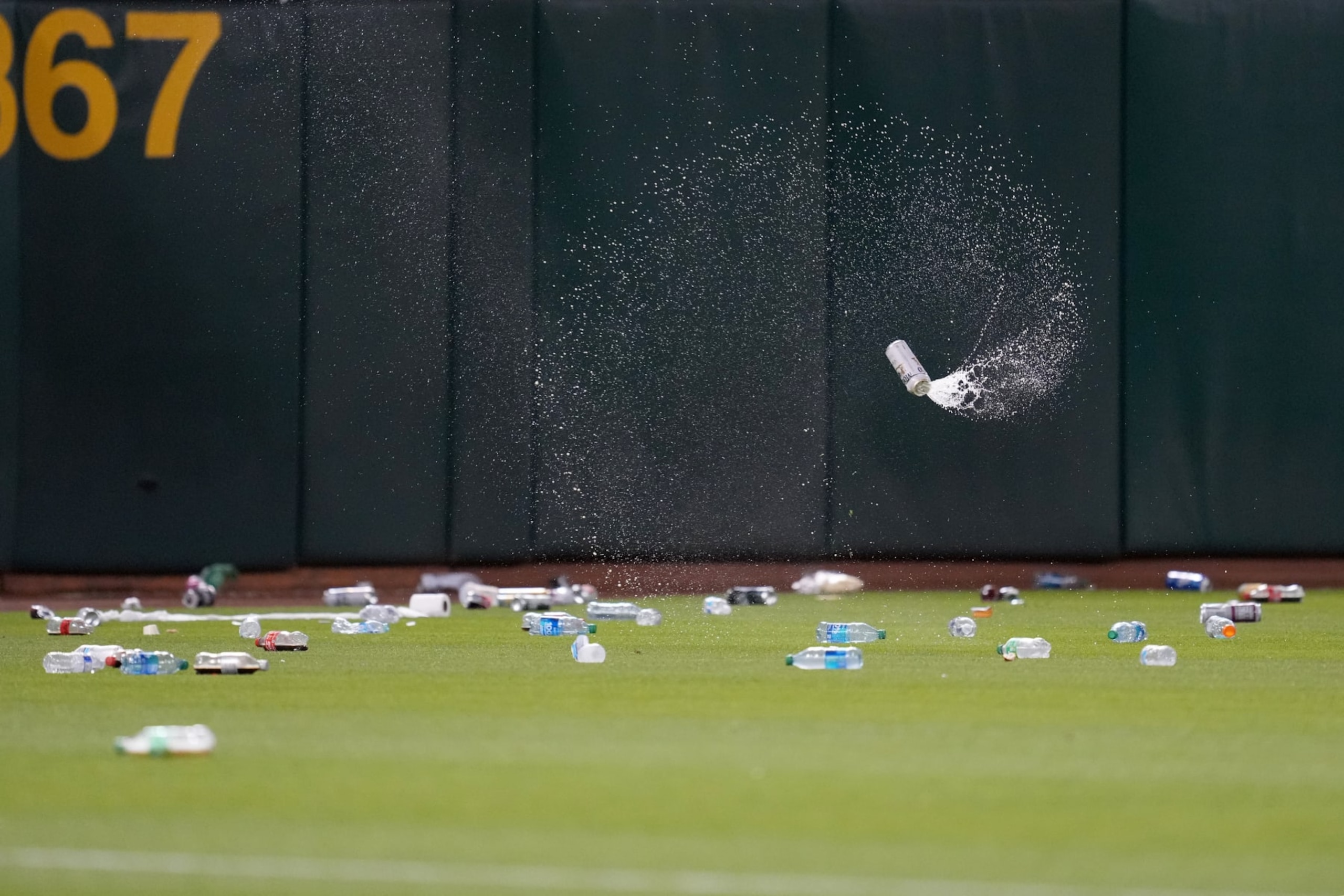
Chanting "sell the team" and "f--k John Fisher" at volumes so loud they disrupted the game multiple times, A's fans told the team goodbye after the game by blanketing the field in trash. There is a point where this becomes the last available protest.
The A's will abandon the Coliseum as essentially a garbage heap, just as we saw it on the last real night of Oakland A's baseball.
About as far from a tree—a real tree with strong roots that grow and endure, as you can get. The only place farther may be Las Vegas.




.jpg?w=2560 "Jonathan Taylor Landing Spots 📍")




