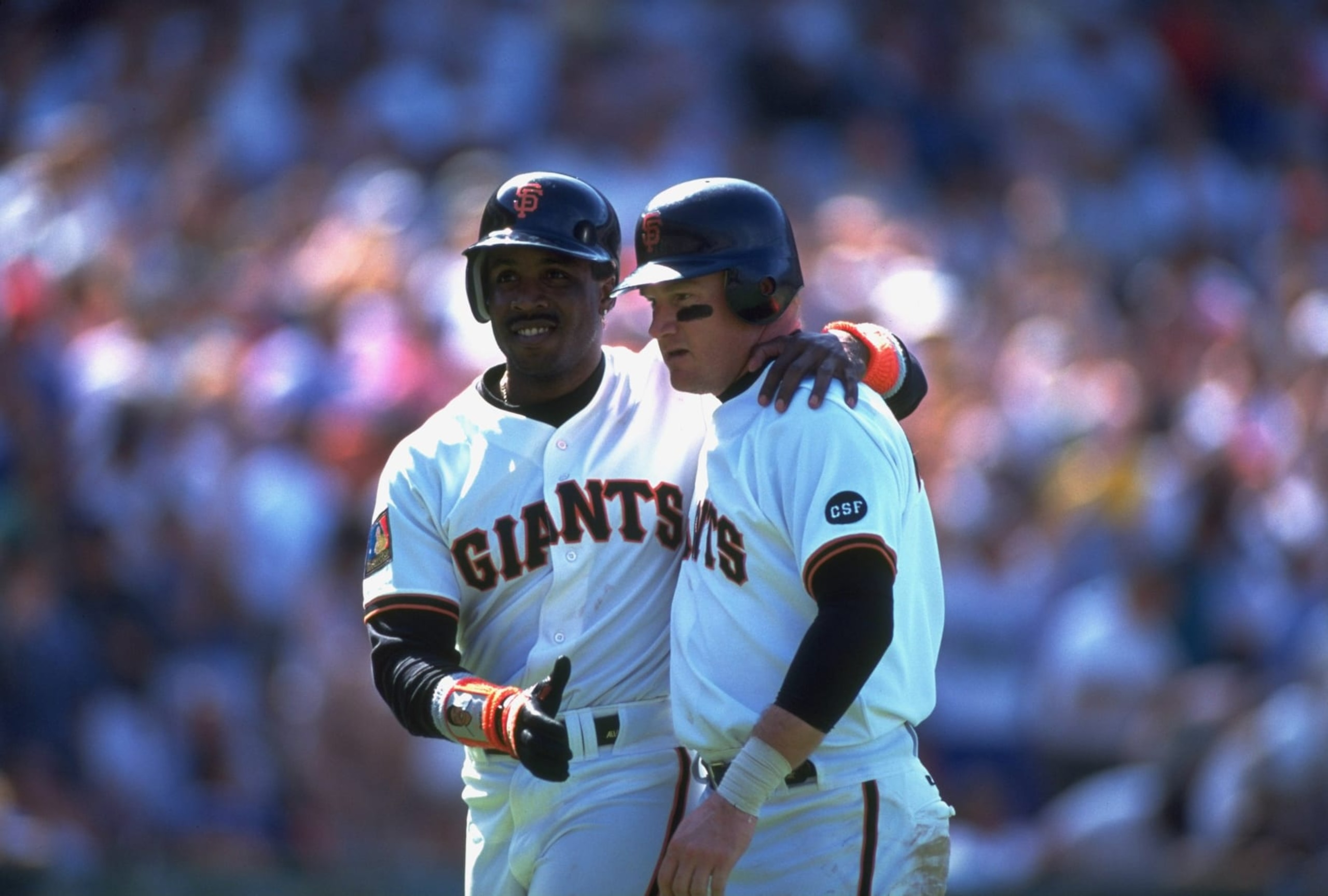


Who's ready for a weekly dose of Major League Baseball nostalgia?
In an effort to spend a few more words each week on the rich history that baseball has to offer, we're kicking off a new Throwback Thursday column meant to be a fun stroll down memory lane.
Up first is a look back at the best power-hitting teammates of the 1990s, from the Oakland Athletics duo of Mark McGwire and José Canseco at the start of the decade to the headliners of the potent Cleveland lineups of the mid-'90s and on to Ken Griffey Jr. and Jay Buhner closing out he decade launching bombs for the Seattle Mariners.
Ahead we've highlighted the 10 best power-hitting tandems of the '90s, and while there are plenty of statistics referenced in the following article, this is meant more to stir up some memories than to be a statistical deep dive.
Is your favorite dynamic duo missing from our list? Make your case in the comments and I'll see you there on Thursday afternoon!
Honorable Mentions
1 of 11
Tim Salmon and Jim Edmonds, California Angels
Salmon won AL Rookie of the Year honors in 1993 and Edmonds finished eighth in the balloting the following year, giving the Angels two of the game's best young outfielders. They played together for seven seasons, peaking as teammates in 1995 when Salmon (165 OPS+, 34 HR, 105 RBI) and Edmonds (129 OPS+, 33 HR, 107 RBI) both reached the 30-homer mark.
Cecil Fielder and Mickey Tettleton, Detroit Tigers
Fielder returned from Japan to launch 51 home runs during the 1990 season, and the following year Tettleton joined him in the middle of the lineup. During the three-year stretch from 1991 through 1993, Fielder averaged 36 home runs and 125 RBI, while Tettleton was not far behind, averaging 32 home runs and 94 RBI while posting an excellent .379 on-base percentage.
Tino Martinez and Bernie Williams, New York Yankees
Martinez had the best power-hitting season of the decade for the Yankees in 1997 when he finished runner-up in AL MVP voting with a 44-homer, 141-RBI performance. Meanwhile, while he was more of a well-rounded offensive player than a true slugger, Williams closed out the decade averaging 25 home runs and 104 RBI over the final four seasons of the 1990s.
Mark McGwire and Ray Lankford, St. Louis Cardinals
McGwire joined the Cardinals at the 1997 trade deadline, so he spent just two-and-a-half seasons in St. Louis during the decade, but he made the most of that short time with a 70-homer season in 1998 and 65-home encore the following year. More of a speed threat throughout his career, Lankford had matching 31-homer seasons in '97 and '98 to help this duo earn an honorable mention.
Fred McGriff and David Justice, Atlanta Braves
2 of 11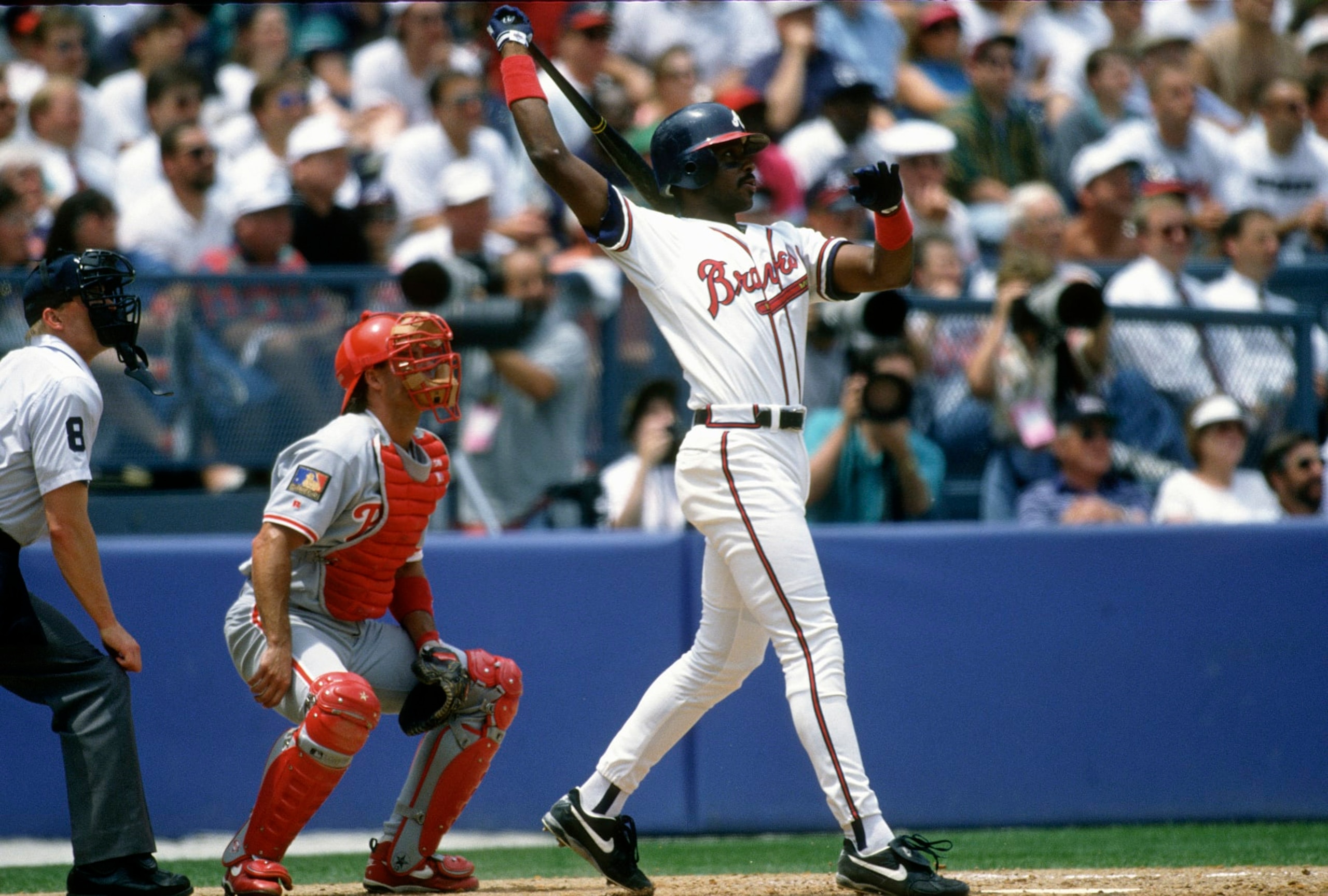
Teammate Window: 1993-96
There were a lot of potential combinations to consider for the Atlanta Braves, including rising stars Chipper Jones, Ryan Klesko and Javy Lopez, who all debuted in the first half of the decade and logged some solid power numbers.
However, it was the David Justice and Fred McGriff duo who helped launch Atlanta's impressive run of 11 straight division titles and led the club to a World Series championship in 1995.
McGriff was acquired at the 1993 trade deadline and went on to hit .310/.392/.612 with 19 home runs and 55 RBI in 68 games following the trade. That coincided with the best season of Justice's career as he posted a 131 OPS+ with 40 home runs and 120 RBI to finish third in NL MVP voting.
Justice was traded to Cleveland following an injury-plagued 1996 season, while McGriff joined the expansion Tampa Bay Devil Rays the following year, but that tandem helped pave the way for the next wave of homegrown stars.
Frank Thomas and Robin Ventura, Chicago White Sox
3 of 11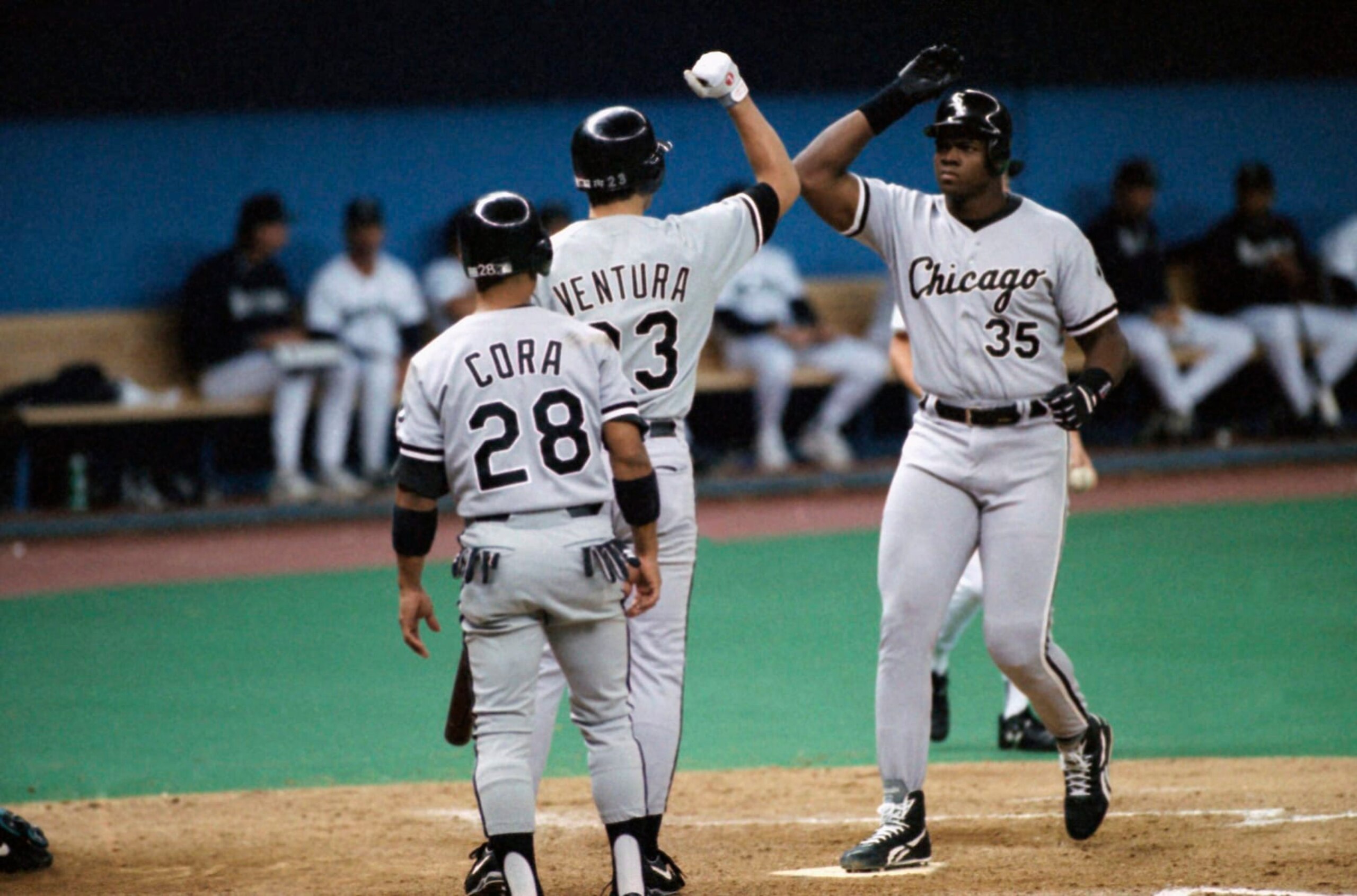
Teammate Window: 1990-98
The Chicago White Sox selected Robin Ventura (No. 10 overall in 1988) and Frank Thomas (No. 7 overall in 1989) in successive drafts, and that corner infield duo anchored the team's offensive attack for nearly a decade.
Thomas slugged 301 home runs during the 1990s, winning AL MVP in 1993 and 1994 while putting together one of the best peaks of any player in recent history. During the five-year stretch from 1993 through 1997, he hit .334/.455/.631 while averaging 39 home runs and 120 RBI.
Ventura is less of a household name, but he led all third baseman with 46.1 WAR during the 1990s, and he slugged 171 home runs (including his rookie year of '89) with the South Siders before joining the New York Mets in free agency prior to the 1999 season.
Their best year as teammates came in 1996 when Thomas (178 OPS+, 40 HR, 134 RBI) was his usual productive self and Ventura (127 OPS+, 34 HR, 105 RBI) tallied his career-high home run total.



Albert Belle and Manny Ramirez, Cleveland Guardians
4 of 11
Teammate Window: 1993-96
It was tough to decide which duo to choose from among the trio of Albert Belle, Jim Thome and Manny Ramirez, and any combination would have been worthy of a spot on this list as they anchored a potent Cleveland offense.
Belle was one of the most feared sluggers of the 1990s, and his 1995 season was one of the best individual performances of the decade as he had a 52-double, 50-homer, 126-RBI campaign for a team that reached the World Series.
That lined up with Ramirez's first full season in the majors when he hit .308/.402/.558 with 31 home runs and 107 RBI in his age-23 campaign, a year after finishing runner-up in AL Rookie of the Year voting.
Belle departed in free agency following the 1996 season, joining the Chicago White Sox on a record-setting deal, at which point Thome and Ramirez became the new dynamic duo in Cleveland.
Larry Walker and Andrés Galarraga, Colorado Rockies
5 of 11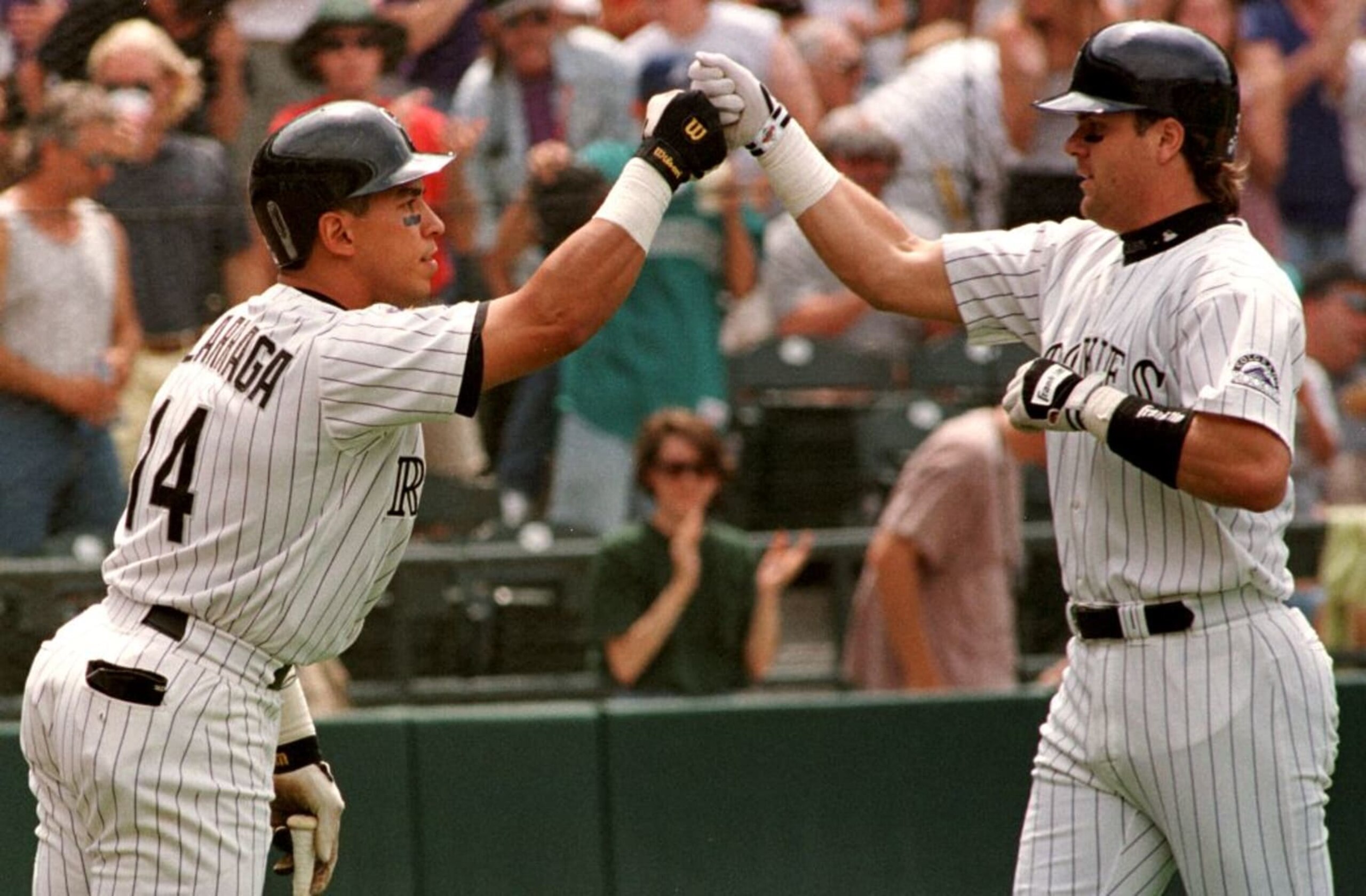
Teammate Window: 1995-97
The Colorado Rockies had some high-powered lineups in the early years of their existence as a franchise, and first baseman Andrés Galarraga was the team's first star, hitting .370/.403/.602 with 22 home runs and 98 RBI during the club's inaugural season in 1993.
Third baseman Vinny Castilla and outfielders Dante Bichette and Ellis Burks each had their own impressive offensive performances while playing alongside Galarraga, but the team's best power-hitting duo was formed when Larry Walker signed a four-year, $22 million deal in free agency prior to the 1995 season.
Walker (36 HR, 101 RBI) and Galarraga (31 HR, 106 RBI) both had strong seasons in 1995, and the following year Galarraga led the NL in home runs (47) and RBI (150) while injuries limited Walker to 83 games.
Their best season as teammates came in 1997 when Walker hit .366/.452/.720 with 130 RBI and an NL-leading 49 home runs, while Galarraga batted .318/.389/.585 with 41 home runs and an NL-best 140 RBI.
Mike Piazza and Eric Karros, Los Angeles Dodgers
6 of 11
Teammate Window: 1992-98
First baseman Eric Karros (1992) and catcher Mike Piazza (1993) kicked off a run of five straight NL Rookie of the Year wins for the Los Angeles Dodgers that included Raúl Mondesi, Hideo Nomo and Todd Hollandsworth.
Piazza hit .337/.401/.583 while averaging 33 home runs and 105 RBI in his five full seasons with the Dodgers, kicking off that impressive stretch with one of the best rookie seasons of all time in 1993 when he hit .318/.370/.561 with 35 home runs and 112 RBI.
Karros took some time to fully tap into his power potential, but he had 30-homer, 100-RBI seasons in 1995, 1996 and 1997.
The best year of Karros' career came in 1995 when he hit .298/.369/.535 with 32 home runs and 105 RBI to finish fifth in NL MVP balloting, while Piazza finished just ahead of him at fourth in the voting with an NL-leading 172 OPS+ and 32 homers.
Mark McGwire and José Canseco, Oakland Athletics
7 of 11
Teammate Window: 1990-92
The Bash Brothers' peak came during the late 1980s, but their run as a feared middle-of-the-order tandem stretched into the 1990s until José Canseco was traded to the Texas Rangers midway through the 1992 season.
Mark McGwire kicked off the new decade with a 39-homer, 108-RBI campaign, while Canseco had a 37-homer, 101-RBI effort alongside him for an Oakland squad that won 103 games and reached the World Series.
Canseco had the better season in 1991, posting a 157 OPS+ with an AL-leading 44 home runs to finish fourth in AL MVP voting and win his third Silver Slugger Award in four years. McGwire had the leg up the following year with 42 home runs, 104 RBI and an AL-best 176 OPS+ in 139 games.
Canseco was traded to Texas on Aug. 31, 1992, for a package built around fellow slugger Ruben Sierra, who had a 22-homer, 101-RBI season in 1993 and was an All-Star in 1994.
Barry Bonds and Matt Williams, San Francisco Giants
8 of 11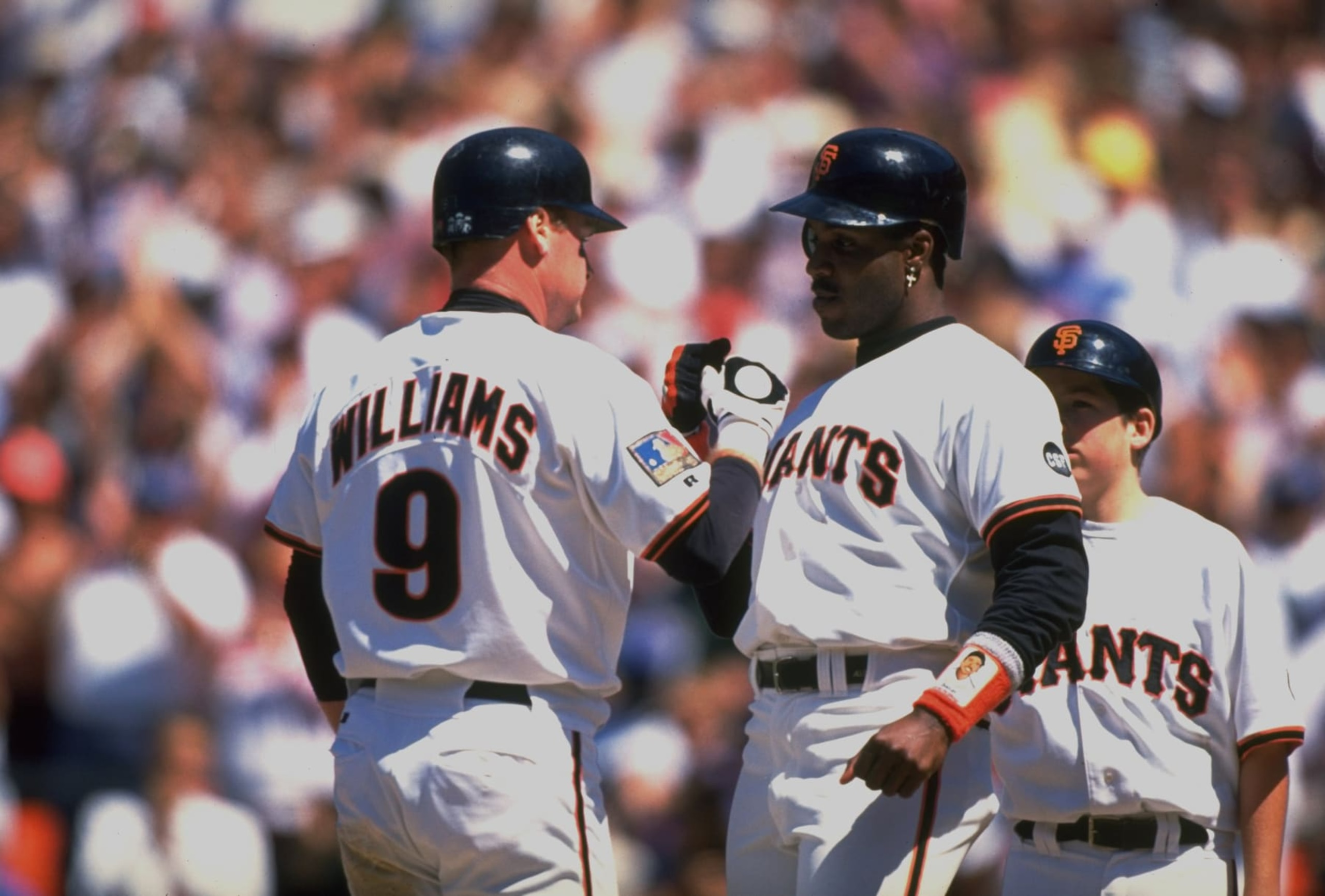
Teammate Window: 1993-96
There were 11 players who hit at least 300 home runs during the 1990s, and San Francisco Giants teammates Barry Bonds (361) and Matt Williams (300) both earned a spot on that short list of sluggers.
They were teammates from the 1993 season when Bonds joined San Francisco in free agency through the 1996 season, after which Williams was traded to Cleveland in the deal that brought Jeff Kent to the Giants to form one of the best power-hitting duos of the 2000s.
During their four years as teammates, Bonds (158) and Williams (126) launched a combined 284 home runs, with Bonds kicking off his San Francisco tenure with a 46-homer, 123 RBI campaign to win his third NL MVP in four years.
Williams hit an NL-leading 43 home runs in 112 games during the strike-shortened 1994 season to finish second in NL MVP voting, but he dealt with injuries the next two years leading up to his trade.
Ken Griffey Jr. and Jay Buhner, Seattle Mariners
9 of 11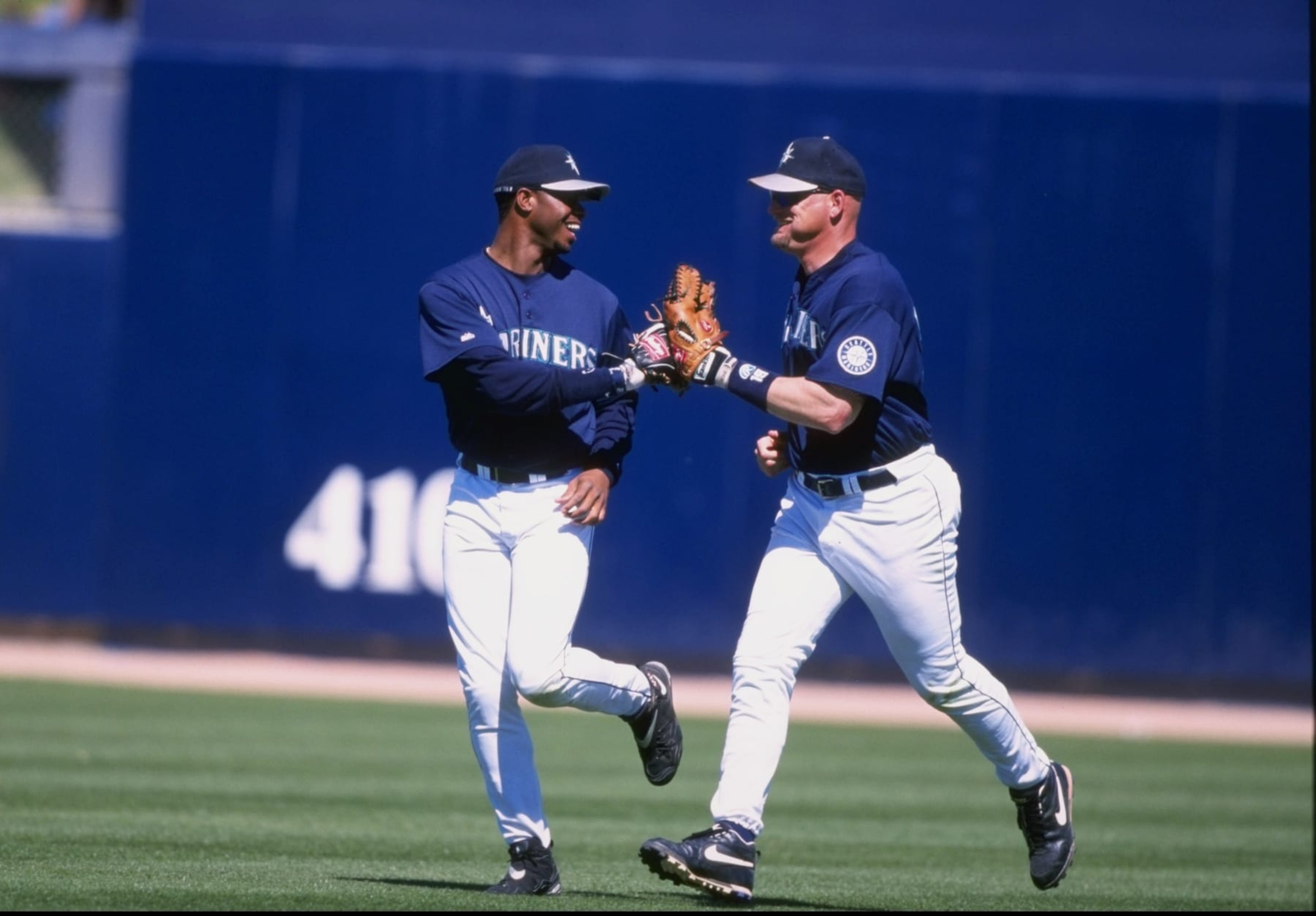
Teammate Window: 1990-99
The duo of Ken Griffey Jr. in his prime and Alex Rodriguez at the onset of his prolific career is worthy of a mention, but it was Jay Buhner who spent the bulk of the decade slugging alongside Griffey in the middle of the Seattle Mariners lineup.
After four straight 20-homer seasons, Buhner took his power production to another level in 1995 with a 40-homer, 121-RBI performance, and that was the first of three straight 40-homer, 100-RBI campaigns for the right fielder.
Griffey played just 72 games during Buhner's breakout 1995 effort, but he returned with a 49-homer, 140-RBI season in 1996 and took home AL MVP honors with a 56-homer, 147-RBI campaign in 1997.
It's still hard to believe those mid-'90s Seattle teams never won a World Series, with Edgar Martinez and a young Tino Martinez also providing power production, but that's why they say pitching wins championships.
Juan González and Rafael Palmeiro, Texas Rangers
10 of 11
Teammate Window: 1990-93, '99
The Texas Rangers consistently had one of the best lineups in baseball during the 1990s, with guys like Rafael Palmeiro, Jose Canseco, Will Clark, Ruben Sierra, Dean Palmer and Rusty Greer all providing support to lineup staples Juan González and Iván Rodríguez.
Since Rodríguez was more of a second-tier power threat, the question here was which of those other sluggers to slot alongside González on this list.
Palmeiro was still finding his power stroke at the start of the decade, but he broke out in 1993 when he hit .295/.371/.554 with 37 home runs and 105 RBI. That same year, González led the AL in home runs for the second straight season, hitting .310/.368/.632 with 46 home runs and 118 RBI.
Palmeiro left in free agency and joined the Baltimore Orioles, but he returned to Texas in 1999 and hit .324/.420/.630 with a career-high 47 home runs and 148 RBI. Still going strong and coming off AL MVP honors in 1998, González hit .326/.378/.601 with 39 home runs and 128 RBI to solidify this tandem's place on this list.
Carlos Delgado and Shawn Green, Toronto Blue Jays
11 of 11
Teammate Window: 1993-99
Carlos Delgado and Shawn Green were two of the top prospects in baseball during their time in the Toronto Blue Jays farm system, with both players spending three years on the Baseball America Top 100 list, overlapping in 1993 and 1994.
It also took both players multiple years to establish themselves as MLB regulars, and still more time before they fully tapped into their vast offensive potential.
The 1998 and 1999 seasons were the culmination of their side-by-side development.
Green was traded to the Los Angeles Dodgers for a package built around Raúl Mondesi following the 1999 season, while Delgado became the face of the Blue Jays, but for two years they were as productive as any power-hitting tandem during the 1990s.
All stats courtesy of Baseball Reference.

.png?w=2560)



.jpg?w=2560 "Jonathan Taylor Landing Spots 📍")




