
Albert Pujols' 700th HR Is Legacy-defining Gift for Fans—and He Still Has 1 Final Act
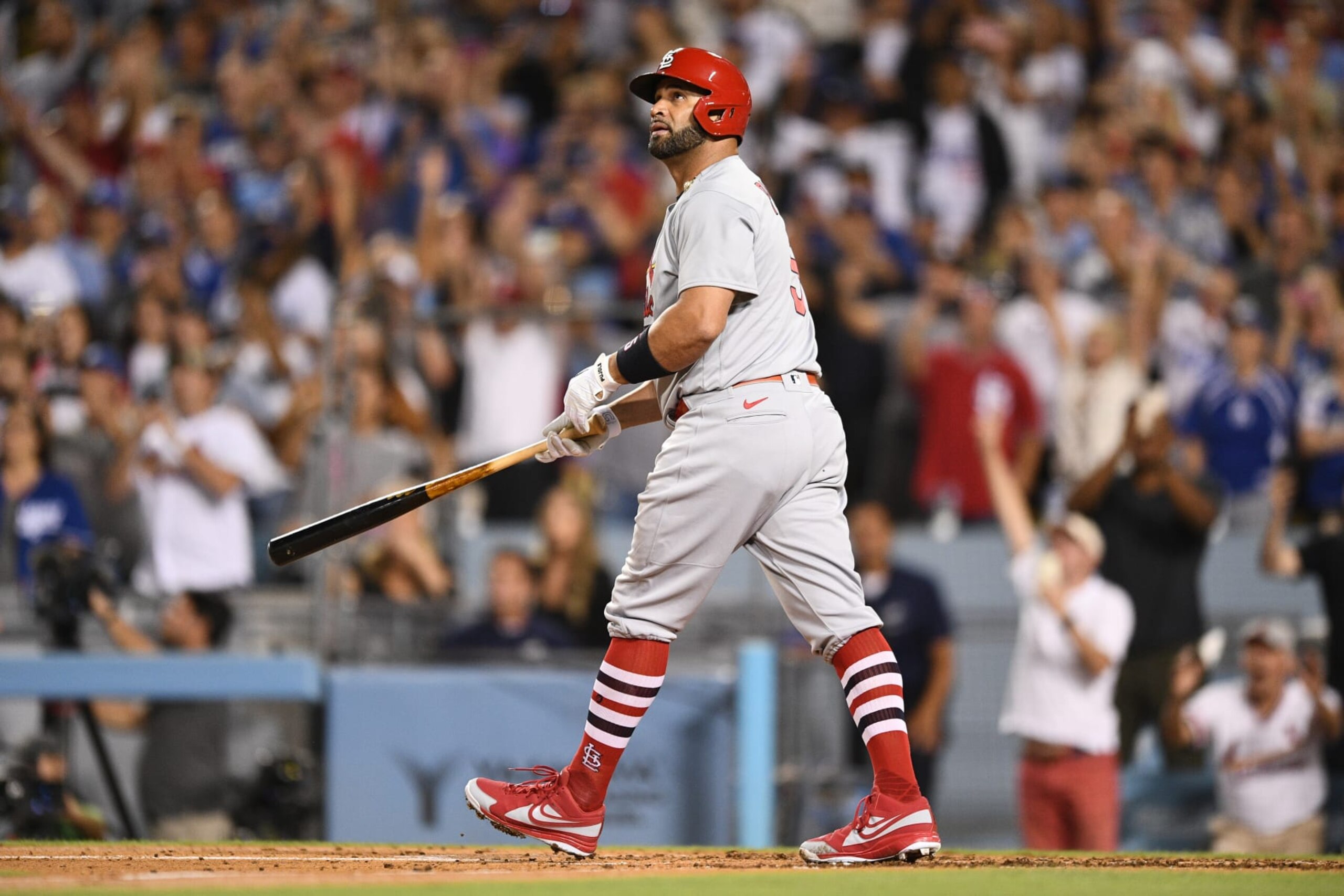
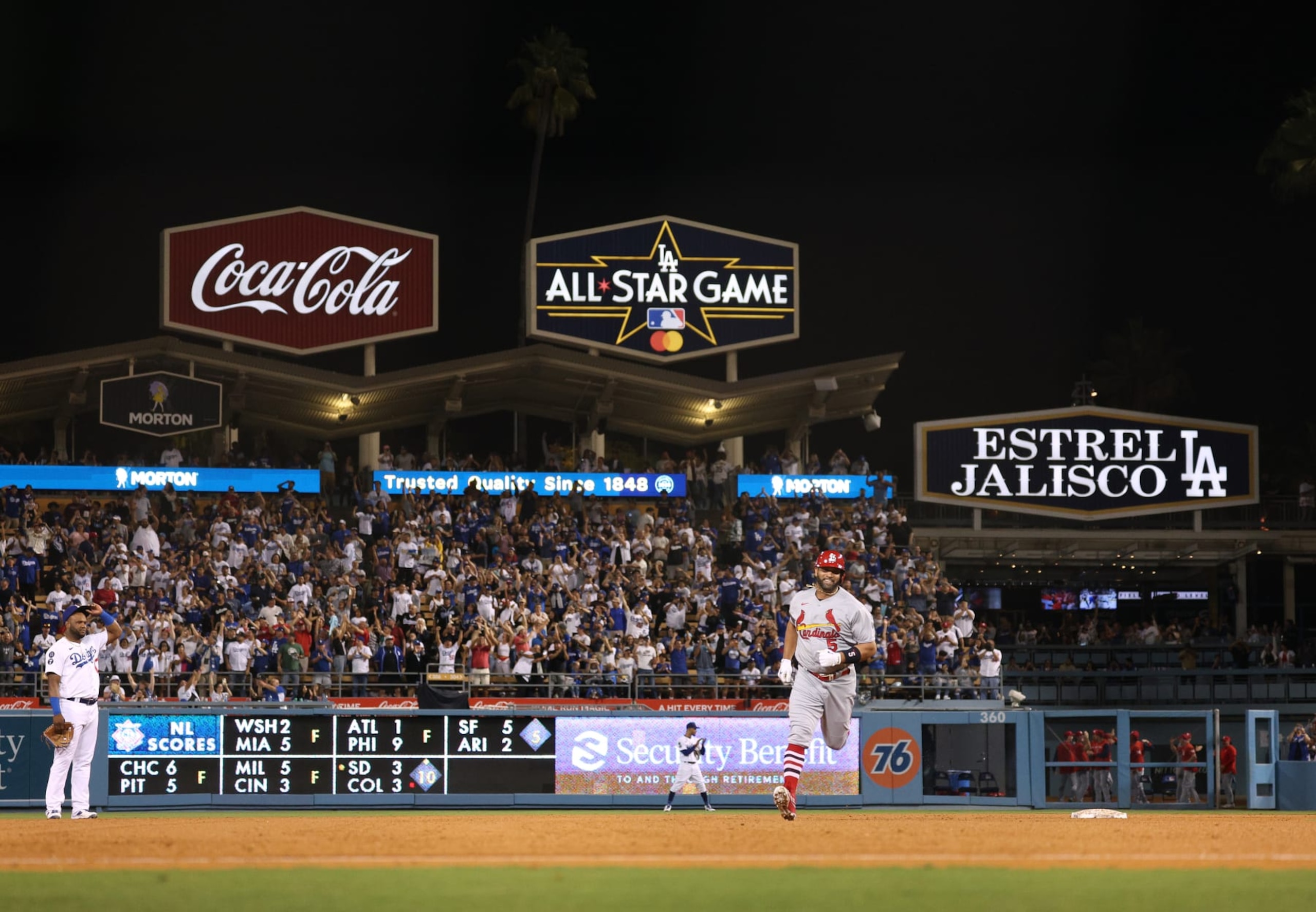
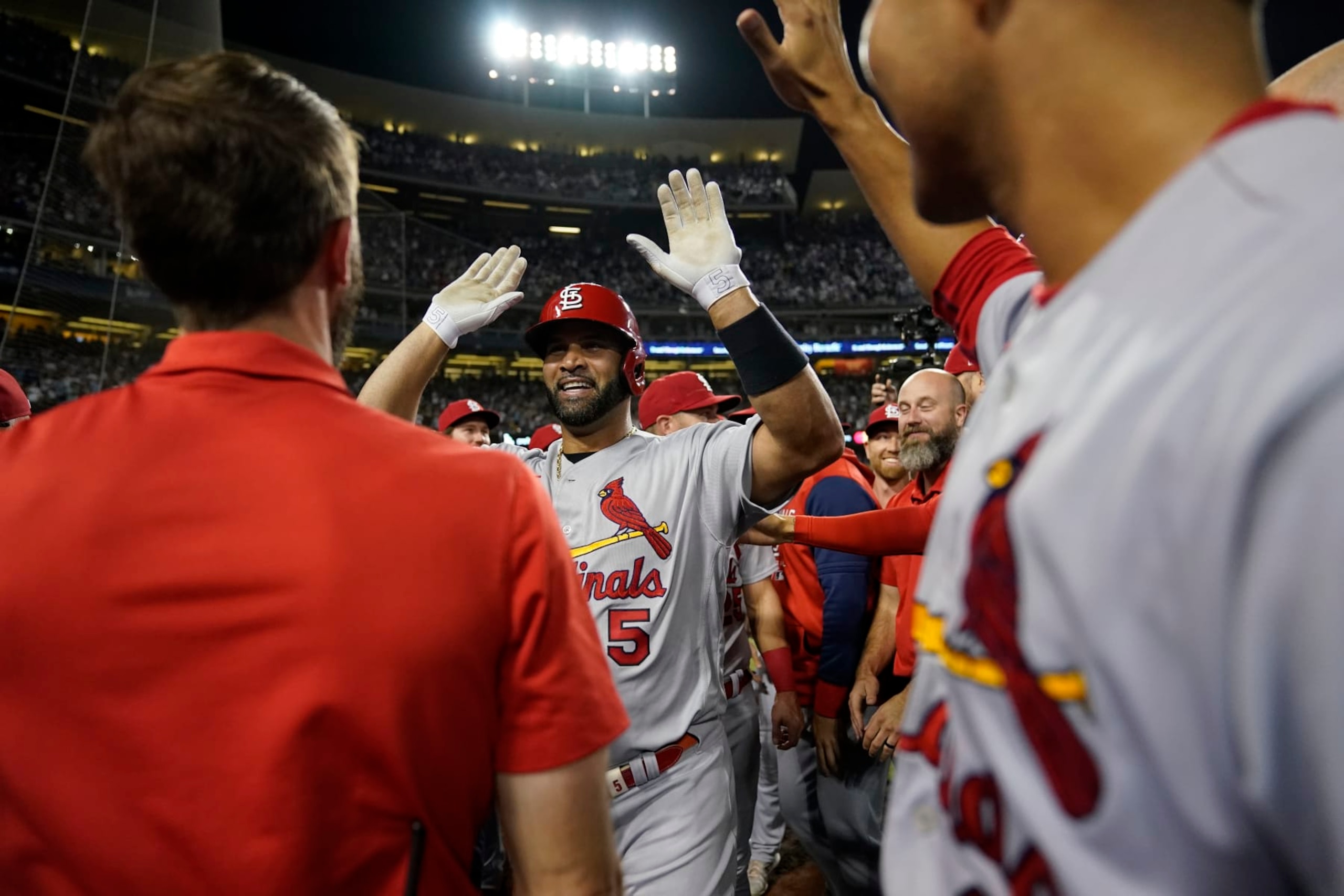
It was on Friday night at Dodger Stadium, precisely around 8:20 p.m. local time, that Albert Pujols finally ran out of things to prove as a Major League Baseball player. And in so doing, he provided perhaps the last and greatest gift he'll ever give to fans.
This is, of course, unless the 22-year veteran still has one more up his sleeve.
For the time being, Pujols fans the world over have every reason to be in a basking mood. The St. Louis Cardinals' three-time MVP, two-time World Series champion and future first-ballot Hall of Famer is fresh off achieving his most glorious feat yet, going where only three men had ever gone before when he launched his 700th career home run:
TOP NEWS

Yankees Sloppy in Game 2 Loss 😬

Realistic Offseason Trade Ideas 💡

Players Who Were Worse Than You Think in 2026 ⚾
Baseball now has a proper Washington-Jefferson-Roosevelt-Lincoln for its Mt. Rushmore of home run hitters. It's just Babe Ruth, Henry Aaron, Barry Bonds and Albert Pujols who have cleared this benchmark, and it's likely to stay that way for a long time.
But as Pujols sees it, he still has one thing to do before he can say he went out on top.
"What I'm chasing right now is another ring," the 42-year-old said on Tuesday. "That's what I'm chasing for the city of St. Louis and for our fans, and that's why I signed back this year."
700 Was a Dream
Things were different back in 2001. So different, in fact, that the name "Albert Pujols" didn't carry much clout even within the confines of baseball at the outset of the year.
He only checked in as the No. 42 prospect in MLB by Baseball America's reckoning, though the publication did grant that the then-21-year-old had the "approach of a veteran" who figured to "add power as he moves up."
The next thing anyone knew, though, Pujols made the Cardinals on the strength of a red-hot spring. He went just 1-for-9 through his first three games, and then it was off to the proverbial races starting with game No. 4. He went 3-for-5 with his first career home run, setting the pace for one of the most dominant rookie seasons in major league history.
Fast-forward 10 years to the end of the 2011 regular season. By then, Pujols had won three National League MVPs and been an All-Star nine times. His 445 career home runs were the fourth-most for a player through his age-31 season. He was also on his way to winning a second World Series title with the Cardinals after earning his first ring in 2006.
Basically, he was so covered in greatness that it was practically dripping off him. There was not a single knock against the legacy he was writing. Not one. Not even half a one.
Then the next decade happened.
It wasn't all bad. Pujols collected his 500th home run in 2014 and his 600th in 2017. Yet both events occurred against backdrops of rapidly diminishing returns that, combined with his $240 million contract, made him an increasingly awkward presence on the Los Angeles Angels roster.
His release in May 2021 was simultaneously shocking yet arguably overdue. Even his subsequent revival with the Dodgers came paired with just a .299 on-base percentage, dooming him to a below-average OPS+ for a fifth straight year.
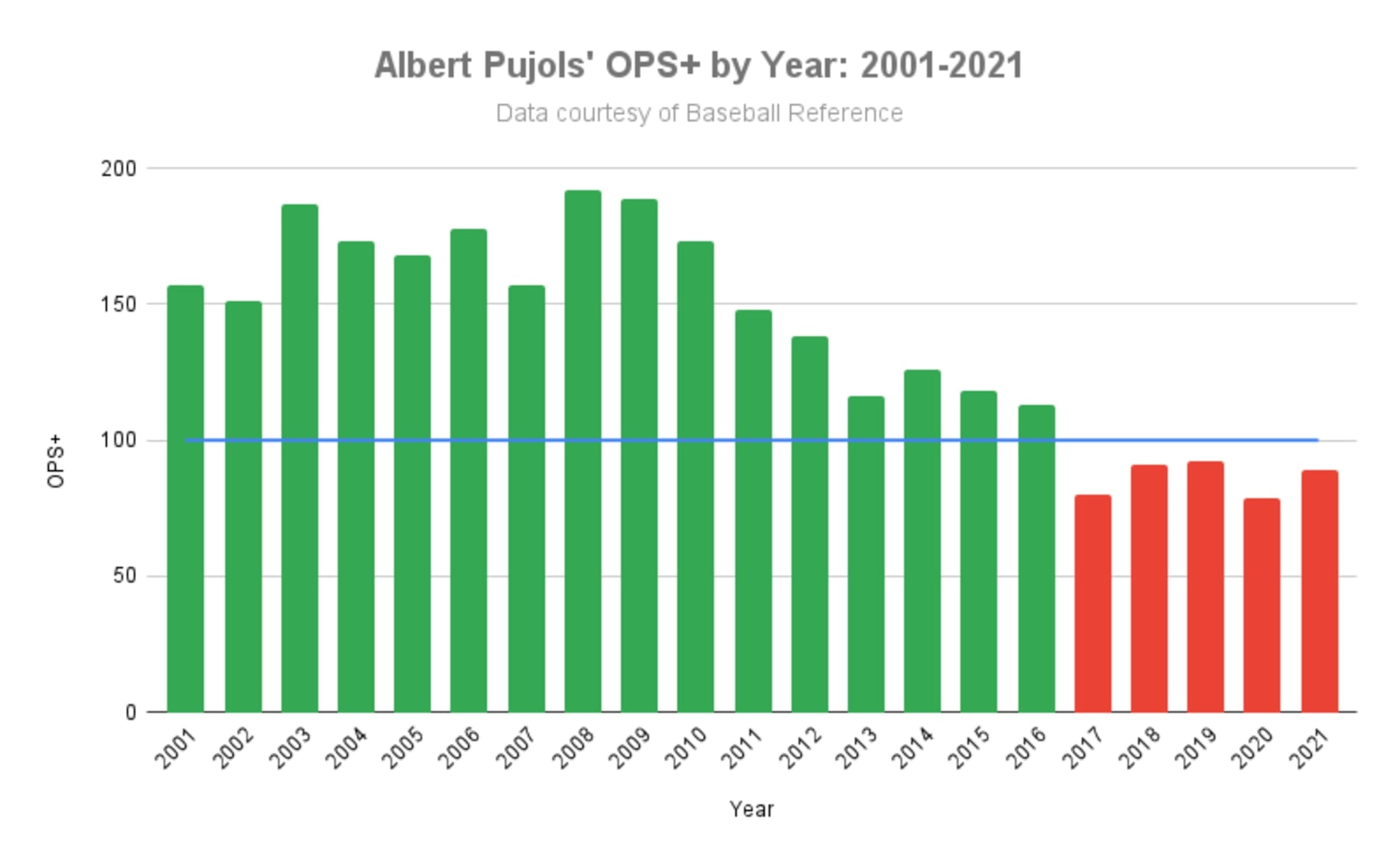
The writing was thus on the wall after 2021. Rather than continue to fight a losing battle, retirement was probably the best thing for Pujols.
It's not like he really needed to keep going, after all. His awards and accolades spoke for themselves. He likewise had the most wins above replacement of any first baseman not named Lou Gehrig. And while well short of a nice, round 700, his 679 home runs were the fifth-most in history and the top mark for a player born outside the United States.
If Pujols did come back for one more season, the odds of him getting the 21 home runs he needed to join the 700 home run club were never going to be good. That was four more than he hit as a 41-year-old in 2021 and three more than any right-handed batter had ever hit in his age-42 season.
Until, Suddenly, 700 Was Reality
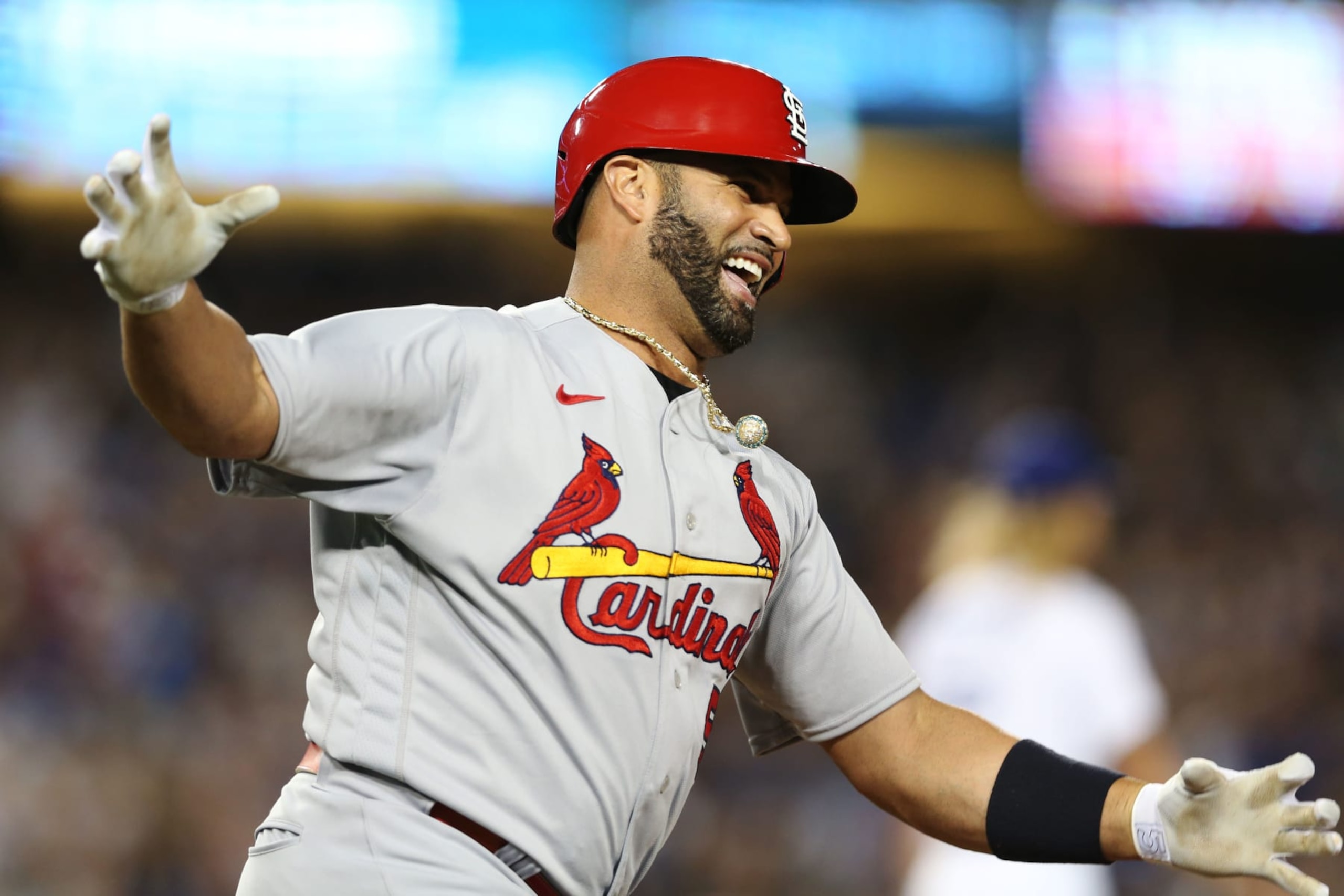
And yet, Pujols made the ultimate bet on himself anyway.
Sure, the one-year deal he accepted in March to return to the Cardinals came with minimal risk on their part. Its $2.5 million price tag was a small price to pay for the heartwarming public-relations story of the prodigal son finally returning home to St. Louis.
And if it didn't work out, oh well. The team had just proved by buying out Matt Carpenter and Carlos Martínez that it could afford to swallow $2.5 million.
For Pujols, though, the prospect of an ignominious end was very much there. This was no two-bit pretender he had signed with but a proper contender in the National League. If its 42-year-old designated hitter didn't hit, well, what then?
Even now, you don't have to go back that far to find this question looming ever larger.
Pujols had initially fanned the good-vibe flames by going 7-for-18 with two home runs out of the gate in April, but his next 42 appearances saw him go just 18-for-108 with two long balls. By July 9, an all-too-familiar story had unfolded: Albert Pujols, Bad Major League Hitter.
In the days and weeks that have come since then, Pujols would have been unrecognizable if he wasn't so easily recognizable as Vintage Albert Pujols.
In 55 games dating back to July 10, Pujols clubbed 17 home runs—which aren't counting the dozens he hit during a delightful and, in retrospect, oddly prophetic turn in the Home Run Derby—and hit .315/.375/.673 overall. Per his 191 wRC+, he's been baseball's hottest hitter this side of Aaron Judge.
The effect is that of a hitter who looks nothing like the guy who was thoroughly out of gas between the ages of 37 and 41. There's now just two hitters who have ever clubbed upwards of 20 homers with an OPS+ over 140 at this age: Bonds in 2007 and Pujols this year.
So much for the dreary and unsuccessful slog toward 700 that anyone could have anticipated from Pujols this year. Even as it stands right now, this is one of the greatest final acts that any player has ever authored. And in the context of what came before it, maybe the most redemptive to boot.
Pujols' final act would have been imprinted on many a memory even if he had stopped at, say, 695, 696, 697, 698 or even 699 home runs. But to get to 700 is to achieve a whole 'nother level of memory imprint. When a guy gets that far, he's assured that even casual fans will be able to recite how many home runs he hit without even having to look it up.
Bonds? 762. Aaron? 755. Ruth? 714. Pujols? 700...and counting.
And There's Still the Playoffs
If it's a ring that Pujols really wants, he must merely keep doing what he's been doing.
Whereas the worst fear of Pujols holding back an otherwise strong Cardinals team had more or less been coming true, the script has completely flipped since his bat caught fire. At 44-21, the Redbirds have won more games since July 10 than every team except the Dodgers and Houston Astros.
What was a 3.5-game deficit to the Milwaukee Brewers in the NL Central title is now a 6.5-game lead. And according to FanGraphs, what was a 2.7 percent chance of returning to the World Series for the first time since 2013 has now more than doubled to 6.5 percent.
Though nobody would call Pujols a secret weapon at this point, the Cardinals will be especially well positioned to go far in the playoffs if he continues carrying out his specialty of crushing left-handed pitching. He's hit .354 with a .762 slugging percentage for the year and bumped those figures up to .414 and 1.017, respectively, since July 10.
A handful of prominent National League hurlers should consider themselves warned. Not to name names, but...ahem, Clayton Kershaw, Julio Urías, Max Fried, Blake Snell and Ranger Suárez.
Should Pujols successfully lead the Cardinals to the franchise's 12th World Series championship, he'll find himself with three rings to match his three MVPs. It's not quite as exclusive as the 700 Home Run Club, but right now, the Three-Ring, Three-MVP Club has only four members: Joe DiMaggio, Yogi Berra, Mickey Mantle and Stan Musial.
If "What's on top of going out 'on top?'" is the question anyone is asking, there's your answer in theory. All Pujols has to do now is provide it for real.
Stats courtesy of Baseball Reference, FanGraphs and Baseball Savant.

.jpg?w=2560 "Grading WWE Raw 🔠")


.jpg?w=2560 "2 NFL Officials Suspended")


.jpg?w=2560 "Viral Rams Coach Vid 🖕")