
Most Overrated Bench Player on Every NBA Team
The term overrated is being thrown around way too much these days, especially in the NBA.
To be coined as an overrated player, there's not much you can do. It comes as a result of playing your style of ball, but failing to meet the expectations that are set by the media.
Take, for instance Chris Bosh, who averaged 18 points and eight boards per in his first season with the Heat, but was still considered as overrated because of the fact that we thought we could see so much more.
While some may hold him in high regards, many will say that he's overrated because of bloated stats.
In order to be an overrated player, they have to be held in high regards by some, but also in low by another. Fans may be tired of seeing a player on a national spotlight all the time, but is considered to not be as good as others hold him to be, which makes him an overrated player.
It's a fine line to be considered overrated or underrated, and many analysts don't know how to distinguish a player as overrated.
We tried our best and came up with the most overrated player from each team's bench.
Atlanta Hawks: Tracy McGrady
1 of 30At the conclusion of the 2007-08 season, Tracy McGrady averaged 22 points, six assists, and five boards per. It's a rare feat to average at least 20 points, five boards, and five assists per, but McGrady had already done it five other times.
Fast forward to 2011 and McGrady is a shell of himself. He recently finished a season with the Detroit Pistons where he averaged eight points, four assists, and four boards per game.
He spent more time conducting a players' boycott of former coach John Kuester, rather than letting his game do the talking as he had done for the duration of his career.
McGrady now finds himself with the Atlanta Hawks. While many want to believe that the 32-year-old does have it in him to become a threat once again, it would be a huge surprise to see him make a comeback at this stage in his career.
He could still be considered one of the best in the league, but injuries have impeded any progress. Since his career started in 1997, McGrady has played in 50 or fewer games four times in his career, with three of those occurrences taking place since the 2005-06 season.
Boston Celtics: Chris Wilcox
2 of 30He hasn't been overrated by many, but he's certainly being overrated by the Boston Celtics. They could have had a number of centers to replace Jermaine O'Neal in the middle, but settled on former Detroit Piston Chris Wilcox instead.
Wilcox was taken in the 2002 draft as a 20-year-old and has lived well below the expectations of a No. 8 pick.
He's averaged double-digit points only twice in his career and has been dealing with injuries over the past few seasons, which has limited him to playing in 70 or fewer games in every year since 2007.
He recently started 29 games with the Pistons, averaging seven points and five boards.
He's a solid athlete, but he's lacking greatly on offense and usually finds himself in foul trouble extremely quickly. If the Celtics expect Wilcox to even come close to filling the shoes of previous centers Kendrick Perkins and Shaquille O'Neal, then they're going to be in for a long season.
Charlotte Bobcats: Bismack Biyombo
3 of 30How is it possible that a rookie who's only played six minutes in one game be considered overrated?
For one, Bismack Biyombo was drafted with the seventh pick in the draft. There are only so many big man defenders who should be picked that high, and Biyombo isn't exactly showing anyone that he's going to turn out to be the next Dikembe Mutombo or Bill Russell on the defensive end.
At 19 years old, Biyombo does have the potential to become a solid defender who can send back a block or two per game, but not much else. He's extremely limited on offense and that's going to do no good on a team like the Charlotte Bobcats, where scoring from any source is a necessity.
The 'Cats will be excited to see his defense in the middle, but they should have looked for offensive weapons in the draft instead of a defensive-minded 19-year-old.
.jpg?w=2560 "NBA Gambling Charges")


Chicago Bulls: Kyle Korver
4 of 30In the 2009-10 season, Kyle Korver shot a league-high 54 percent from beyond the arc with the Utah Jazz.
The Chicago Bulls thought they struck gold when they signed him for $5 million per season in the 2010 offseason. The team needed some perimeter pieces to attract attention off Derrick Rose, and the league leader in three-point percentage should have been the answer.
It turns out he wasn't. Korver averaged eight points and still managed to convert on 42 percent of his three-point opportunities, but he would never come alive when the team needed him. He shot below 40 percent in the postseason, with his worst performance coming in the Conference Finals.
With the pressure all on Rose and the Bulls needing answers, Korver converted on only 4-of-14 three-point opportunities. Whenever he was on the floor, Korver was becoming more of a defensive liability than support from the perimeter.
Korver is a 42 percent career three-point shooter, but he's hardly providing what the Bulls have been asking for out of their main perimeter threat.
Cleveland Cavaliers: Daniel Gibson
5 of 30As much as we don't want to look at it sometimes, there are two ends on the floor.
Even though you have a perimeter threat who can convert on better than 40 percent of his three-point shots, he still has to play defense on the other end. Soon enough, the offense that he provides has the possibility of going stagnant, while his defense remains consistently below average.
There are a number of spot-up perimeter players like this, and Daniel Gibson happens to be one of those culprits.
One of the league's better three-point shooters, Gibson is a 42 percent career three-point shooter since joining the league in 2006 with the Cleveland Cavaliers. Still with the Cavaliers today, Gibson's coming off another solid season where he shot 40 percent from deep and averaged a career high 12 points per game.
The career high came as a result of LeBron James' absence and the Cavs needing scoring threats.
While many will laud over Gibson for his shooting prowess, they fail to take note of his defensive incapabilities. At 6'2", 190 pounds, Gibson's undersized, even for a point guard, and would rather focus more on improving his jumper rather than his ability to keep his assignment in front of him.
Dallas Mavericks: Vince Carter
6 of 30Much like his cousin Tracy McGrady, Vince Carter has also seen a sudden and severe regression in his game.
In the 2008-09 season, Carter was averaging 21 points, five boards, and a little under five assists per with the New Jersey Nets.
Once he was traded and the offense no longer circulated around him, Carter became a completely different player. His jump shot wasn't as consistent, and his athleticism had greatly declined, which limited his driving ability.
Still, Carter managed to keep up the pace and would average 15 points with the Orlando Magic and Phoenix Suns in his short time at each location. However, Carter would surprisingly get waived by the Suns and wouldn't get picked up until late in the offseason.
The Suns must have known something that we didn't. The Dallas Mavericks would pick Carter up, start him at shooting guard in their opening game against the Miami Heat, and have him replaced by Delonte West at the start of the second half.
Carter's first half consisted of coming up short on a layup, airballing a jump shot, and getting consistently beaten by his assignment in Dwyane Wade.
Carter relied heavily on his athleticism. He's 35 now, and with that athleticism gone, he's just not the same player he used to be with New Jersey.
Denver Nuggets: Rudy Fernandez
7 of 30Highly publicized after his performance in the Olympics with Spain and then after a strong rookie campaign, Rudy Fernandez was the latest European sensation upon his arrival to the NBA.
In the 2008-09 season, Fernandez came off the Portland Trail Blazers bench and averaged 10 points, three boards, and three assists.
His athleticism was through the roof for an overseas import, but he also showed off impressive range. Converting on two three-pointers per game on 40 percent shooting, Fernandez quickly became the talk of the league.
Following that season, it's all been downhill for Rudy. He shot 37 percent from beyond the arc in his second season, but saw that offset by his 38 percent shooting from the field overall. It only got worse in the 2009-10 campaign when he shot 37 percent from the field and 32 percent from deep.
Fernandez has the athleticism to be a prolific slasher, but he greatly limits himself and tends to shy away from being physical in the lane.
Detroit Pistons: Charlie Villanueva
8 of 30I had to take a few seconds to think about this one. I pondered if Charlie Villanueva was actually still relevant enough to even be considered overrated, and came to the conclusion that he still is.
Sadly, Villanueva is still relevant, and that's why the Detroit Pistons still have to go about playing him (Detroit will have to wait a few more games due to a suspension) and paying him $7 million per season.
After an excellent season with Milwaukee where he averaged 16 points, seven boards, and two blocks, the Pistons jumped at the opportunity to sign him and bolster their roster. Detroit still had pieces left over from the championship runs and considered Villanueva to be a reliable option.
If only that actually happened. Villanueva has been a money pit for the Pistons. He's played two of the worst seasons of his career with Detroit, with little to no positive outlook. Averaging 11 points and only four boards this past season, Villanueva continues to play below expectations.
Golden State Warriors: Ekpe Udoh
9 of 30It was tough to pick a Golden State Warriors player to consider overrated. It came down to Kwame Brown and Ekpe Udoh, and since Brown has never been considered anywhere near good, Udoh had to be the choice by default.
Taken with the sixth pick in the 2010 NBA draft after a terrific season at Baylor where he averaged 13 points and 10 boards, the Golden State Warriors selected Udoh to possibly add a defensive presence to their front court. Udoh averaged nearly four blocks per in his final year, which enticed the Warriors into taking a chance.
It might not have been the right one. At the moment, Udoh's hardly given a good reason as to why he was taken sixth. While he did average more than a block per game (three blocks per 36 minutes), Udoh was hardly a threat on the offensive end and only averaged four points.
Udoh still has the potential to become something special, but he's going to need to prove to his organization that he deserves the minutes.
Houston Rockets: Terrence Williams
10 of 30When he entered the NBA, everyone involved with the New Jersey Nets expected Terrence Williams to become the next Andre Iguodala or LeBron James.
He was extremely talented, athletic, strong, and had great lateral quickness to aid him on defense. Williams wasn't a prolific scorer in his time at Louisville, but he could basically do it all.
Averaging 13 points, nine boards, and five assists per, the Nets thought that they got themselves a superstar in the making when they took him with the 11th pick in the 2009 draft.
That wasn't the case. Williams managed to average 22 minutes in his rookie season, but didn't provide enough on the floor to give the team a reason to start him, or keep him for that matter.
After averaging nine points on 40 percent shooting to go along with 31 percent shooting from deep, the Nets were done with him 10 games into his second season.
Williams only played in 23 games last season and will now be expected to contribute on defense to a Houston team that could truly use some.
Indiana Pacers: Dahntay Jones
11 of 30For a moment there, we thought that Dahntay Jones was going to remain relevant.
Averaging 10 points, three boards, and two assists, while displaying great athleticism and tremendous defense, Jones was well on his way to becoming a significant member of this Indiana Pacers team.
That came to a crashing halt fast. Jones quickly fell back down to earth after that career season by averaging six points and a board per game, while playing in only 45 games and losing the starting job that he earned the previous season.
Jones is a terrific defender thanks to his athleticism, strength, and speed, but he can't seem to transition that to the offensive side of the floor.
He's only averaged six points per game for his career, and while some may covet him, he's not much else than a solid perimeter defender.
Los Angeles Clippers: Mo Williams
12 of 30The NBA made him an All-Star thanks to LeBron James, and he was actually considered a quality player because of the runs he and James made with the Cleveland Cavaliers.
Without James, we saw what Williams was. He could play the role of second option when he had a superstar that can get him open, but Williams proved that he's incapable of leading a team after leading the Cavs to an abysmal showing in their first year without LeBron.
Just look at Williams stats without LeBron. In the 2009-'10 season when he had James by his side, Williams shot 44 percent from the field and 43 percent from deep.
The following season, Williams shot 39 percent from the field and only 27 percent from beyond the arc. It was obvious what type of player he was when he didn't have a superstar by his side.
The Cavs were so desperate for answers that they went about trading Mo to the Los Angeles Clippers for Baron Davis.
Williams is a solid perimeter threat and is capable of leading an offense, but he sometimes gets more credit than he deserves.
Los Angeles Lakers: Matt Barnes
13 of 30Considered a solid perimeter threat, for some reason, current Los Angeles Lakers small forward Matt Barnes hasn't done much on the court aside from annoying Kobe Bryant and playing solid defense.
One of the greatest misconceptions of Barnes' career has been that he's this perimeter threat that a team can rely on. However, Barnes has been, statistically, one of the worst three-point shooters in the league amongst players who receive significant minutes.
Barnes has failed to shoot better than 37 percent for his career and has converted on more than one three-pointer per game only twice, which came with run-and-gun offenses in Phoenix and Golden State.
Outside of those two teams, Barnes has been relatively abysmal from outside and is a career 33 percent shooter from deep.
He's a solid defender and definitely a player who will get under your skin, but Barnes is the furthest thing a team would want from a consistent perimeter shooter.
Memphis Grizzlies: O.J. Mayo
14 of 30One of the most hyped-up high school superstars since LeBron James, the NBA was anticipating big things out of O.J. Mayo.
He played one season at USC, averaged a solid 20 points, made 88 three-pointers, and immediately declared for the draft.
Mayo would be taken third by the the Minnesota Timberwolves, but would be traded to the Memphis Grizzlies for the draft rights to Kevin Love. While Love has been making history with the Wolves, Mayo has only seen his play decline since joining the league in 2008.
The Grizzlies thought that they had picked up their shooting guard of the future. After a rookie season where he averaged 19 points, four boards, and four dimes, while converting nearly two three-pointers per game on 38 percent shooting, Memphis decided to give him the start once again in the next season.
Mayo followed that up with another impressive season. His points per game decreased, but his shooting percentage increased, and his three-point shot remained consistent, hovering around 40 percent.
However, Mayo hasn't been the same and is now coming off the bench as a sixth man. He only started 17 games last year, shot 40 percent from the field, and averaged 11 points per game.
It was a tough regression for Mayo, who still has the potential to become a formidable sixth man or a starter, but only if he earns it.
Miami Heat: Joel Anthony
15 of 30Miami loves Joel Anthony the defender. Joel Anthony the offensive player? They don't like that guy too much.
The Heat fanbase can give Anthony all of the MVP chants they want, it doesn't take away from the fact that he's quite possibly the worst offensive player in the league.
Despite being 6'9", having an extremely long wingspan, and containing great athleticism and speed for a player of his size, Anthony is greatly hampered by a lack of awareness around the basket and hands that can't catch anything.
Averaging 18 minutes of playing time for his five-year career, Anthony has averaged a grand total of a little less than three points per game. He's absolutely awful when it comes to offense.
If you've seen his legendary air-ball dunk against Phoenix, you're only just hitting the tip of the iceberg when it comes to his play on that side of the court.
He's a stellar defender, shot blocker, and all-around hustler, but his offense greatly limits him and makes him a liability.
Whenever he's on the floor, the Heat find themselves playing five-on-four basketball since no one on the opposing defense is paying attention to Joel.
Milwaukee Bucks: Mike Dunleavy
16 of 30Recently receiving a lucrative deal with the Milwaukee Bucks after making $10 million the year prior with Indiana, Mike Dunleavy continues to find himself on NBA rosters while making All-Star money.
After being convinced that he was the truth following a season where he converted on 43 percent of his three-pointers and averaged 19 points per game, the Pacers were met with great disappointment the following year where he only played in 18 games.
Dunleavy only shot 32 percent the following season, but made up for it with 40 percent shooting last year.
Dunleavy may have converted on at least one three-pointer per game over the past five seasons, but he should be a role player and not much else.
As long as teams continue to insist on starting the 36 percent three-point shooter, they won't get many results aside from a few three-pointers and a whole lot of points scored on their small forward.
Minnesota Timberwolves: J.J. Barea
17 of 30J.J. Barea doesn't deserve to be considered as overrated, but that's what happens when the NBA gets into an uproar over a few playoff games.
Barea was a terrific spark off the bench for the Dallas Mavericks in last year's postseason run. Averaging nine points per game in the playoffs, Barea provided the Mavs with a tremendous slasher and a shooter from outside that can help stretch the floor.
He proved to be a huge part of the team in their championship run, especially in their series against the L.A. Lakers and Miami Heat.
However, the NBA world might have gone a little overboard when thinking that Barea could then automatically be considered a worthy starter at the point.
J.J. is a terrific scorer and can provide that quick spark off the bench, but he has proven nothing as far as being a possible starter at the point and running an offense.
Barea was greatly overrated on account of the hype he sustained in the playoffs, but he could dispel that if he can prove capable of leading an offense.
New Jersey Nets: Mehmet Okur
18 of 30Taken out of the starting lineup in favor of a traditional post player in Al Jefferson, Mehmet Okur found himself on the bench and injured.
Okur played in only 13 games last season, which resulted in a dismal showing in terms of his percentages. Prior to then, Okur was a solid perimeter threat who hit over 38 percent of his three-pointer opportunities for four seasons. Averaging as much as 18 points per game, Okur became one of the league's top big-men shooters.
Unfortunately, Okur's shooting didn't allow the Utah Jazz to establish themselves as a strong team on the inside. Carlos Boozer had his struggles on the defensive end, and with Okur spending the majority of his time outside the paint, the Jazz struggled on account of it.
Okur proved that he could be a strong rebounder, but the New Jersey Nets are going to have to look more if they want to see an intimidating post presence.
New Orleans Hornets: Al-Farouq Aminu
19 of 30This selection absolutely deserves legitimate explanation, since you're probably asking when Al-Farouq Aminu was ever considered to be good in the first place.
In the deal that sent Chris Paul to the Los Angeles Clippers and Aminu, Eric Gordon, Chris Kaman, and a conditional first round pick to the New Orleans Hornets, we immediately claimed that this was a fair trade.
Gordon was already a prolific scorer, Kaman was a solid presence down low, and Aminu was considered to be a formidable part of the trade.
Let's just stop there. The Hornets may still be a dead franchise after this season. Gordon and Kaman are both free agents this offseason and both have the possibility of leaving. If both of those players end up leaving, that would leave the Hornets only with Aminu and the first-round pick.
The reason why Aminu's is overrated is due to him being considered a significant part of the deal. We know that he's an athletic player, but he only averaged six points and three boards per game, while struggling to get on the floor.
Despite the Clippers having a vacancy at small forward, the team refused to give Aminu any minutes and only started him in 14 games. Let that tell you something about Aminu and his talent level.
New York Knicks: Mike Bibby
20 of 30As a Heat fan, I'm not sure even where to begin.
Mike Bibby was a solid player in his short time with the Miami Heat. He provided the team with a strong veteran leader at the point and helped to stretch the floor on account of his perimeter game.
In the 22 games he played with the Heat, Bibby averaged seven points while hitting 46 percent of his three-pointers.
Then the postseason came along, and we quickly forgot about what he had done in the regular season. It was dreadfully obvious that Bibby's postseason struggles stuck with him in Miami. He started in every game but the last, and he shot an abysmal 28 percent from the field and 26 percent from beyond the arc.
On a team where LeBron James and Dwyane Wade play, you're going to get open looks. Bibby got those open looks and rarely converted on them in the playoffs.
That poor postseason play has been a trend in Bibby's career. Aside from 2002, when he averaged 20 points and shot 44 percent from beyond the arc, he's been painful to watch. He's a 41 percent shooter in the playoffs and has shot 40 percent or worse four times in nine appearances.
You have been warned, New York.
Oklahoma City Thunder: Daequan Cook
21 of 30After winning the three-point shootout and then converting on 39 percent from beyond the arc, Daequan Cook suddenly became looked at as a formidable three-point threat in only his second year.
That's where it all went wrong. Since winning the three-point shootout, Cook hasn't been the same. He followed up that impressive second season with an abysmal showing where he played in 45 games, converted only 40 three-pointers, and shooting a lowly 32 percent from beyond the arc.
Cook was let loose by the Heat and would go on to sign with the Oklahoma City Thunder. He shot 42 percent from beyond the arc, but he saw most of that production come during garbage time.
Cook was only averaging 14 minutes with the Thunder, but he could be looked at more after re-signing with the team over the offseason.
Unless he snaps out of this funk that he's been in since the mid-point of the 2008-09 season, Cook won't be looked at for significant minutes anytime soon.
Orlando Magic: J.J. Redick
22 of 30Attempting to break the trend of Duke shooters who can't make it in the NBA, J.J. Redick has done a good job of earning minutes and then maintaining his spot in Orlando Magic rotation.
Averaging 25 minutes of action per night off the bench last year, Redick impressed by averaging 10 points per while converting on nearly 40 percent of his three-pointers.
This came only a few years after Redick had only played in 34 games where he was mostly utilized as a garbage-time substitute to come in during blowout wins.
Currently, Redick finds himself as one of the first players off the bench for Orlando. He makes a living from beyond the arc and has established himself as one of the league's top perimeter threats.
Since joining the league in 2006, Redick has shot 39 percent for his career and can thank Dwight Howard for the great deal of open looks he gets.
The only problem with Redick is that he's too one-dimensional. He's not the type of player to take it in, he's afraid to get too physical, and isn't a solid defender in the slightest. Aside from his perimeter game, Redick is severely lacking at other aspects of the game.
Philadelphia 76ers: Marreese Speights
23 of 30Looked at as a terrific athlete and a strong post presence upon his entrance to the league, Marreese Speights has yet to provide the Philadelphia 76ers with the big man they're looking for to command the post.
On a team where big men are needed, Speights rarely finds himself in the rotation. Despite having Spencer Hawes at center and the oft-injured Elton Brand at power forward, Speights has had a great deal of trouble getting onto the floor, despite the team giving him numerous chances to prove himself.
In his first two years, Speights has averaged 16 minutes and could see that decline now that Nikola Vucevic joined the team via draft.
He was taken by the Sixers after a strong showing at the University of Florida in his second season. Speights averaged 15 points and eight boards, but it was his athleticism for a big man that truly enticed the Sixers into taking him with the 16th pick in the draft.
The Sixers have yet to see that, and he could see himself traded before the deadline.
Phoenix Suns: Shannon Brown
24 of 30We get that the Phoenix Suns needed depth at shooting guard, but looking towards Shannon Brown wasn't the answer.
The Suns need someone who can consistently hit shots in their offensive system. With so many formidable shooters who can run the two in the offseason, Brown might have been taken solely because of his athleticism and his ability to fire up the crowd.
He's most known for his athleticism and his drives, but he lacks greatly on his production from the perimeter.
Brown likes to shoot thinking that he's a perimeter threat. In his final season with the Los Angeles Lakers, he was given significant minutes for only the second time in his career. He was solid off the bench with nine points per game, but he's capable of so much more when you take note of his driving ability and athleticism.
He restricts himself to being a jump shooter. Brown's an unbelievable athlete, but he's only willing to prove it in the open court. In half-court sets, Shannon utilizes himself as a jump shooter and it greatly restricts a player who's capable of so much more.
Portland Trail Blazers: Greg Oden
25 of 30It's tough to call someone who has barely played in four seasons overrated, but we'll have to make an exception for Greg Oden.
Taken with the No. 1 pick in the 2007 NBA draft, Oden was overrated from the start, since he should have been taken behind Kevin Durant.
However, the Portland Trail Blazers needed a big man and Oden had the potential to become one of the league's best. In the NBA today where having a quality center is limited, the Blazers looked at Oden as a huge advantage.
Unfortunately, they'd have to wait a year before they saw his debut due to an injury. Unlike Blake Griffin, who came back from a season-ending injury in his rookie year and then played with a vengeance, Oden responded by playing in 61 games, and then getting hurt again.
He'd return next season, and it seemed that the Blazers made the right choice with their No. 1 pick. Oden was extremely athletic and was a terrific defender.
Given he was lacking greatly on the offensive side, it was still tremendous to see that he did have the capability to become a solid center.
That talk ended rather quickly as Oden got hurt after 21 games. He hasn't played since and may not play in the 2011-12 season.
The fact that the Blazers still have faith in him is what makes him overrated.
Sacramento Kings: Travis Outlaw
26 of 30Considered to be a terrific all-around threat in his time with the Portland Trail Blazers, the New Jersey Nets decided to take Travis Outlaw in the 2010 offseason and make him into a starter for the first time in his career.
There was probably a reason why Outlaw never started, and the Nets were the first team to find that out. After giving him $35 million, Outlaw responded by averaging nine points per on 38 percent shooting.
The fact that he only averaged four boards and shot 30 percent from deep wasn't helping either, as Outlaw lost his job to the likes of rookie Damion James and (yikes) Sasha Vujacic.
With the amnesty clause in place after the new CBA agreement, the Nets became one of the first teams to utilize it, with Outlaw being the casualty.
While some may look at Outlaw as a solid player who can do it all on the floor, he also has many faults.
Among those include the fact that Outlaw doesn't utilize his athleticism to his advantage, takes too many three-pointers, and has an overall questionable shot selection thus explaining the 43 percent shooting he has in his career.
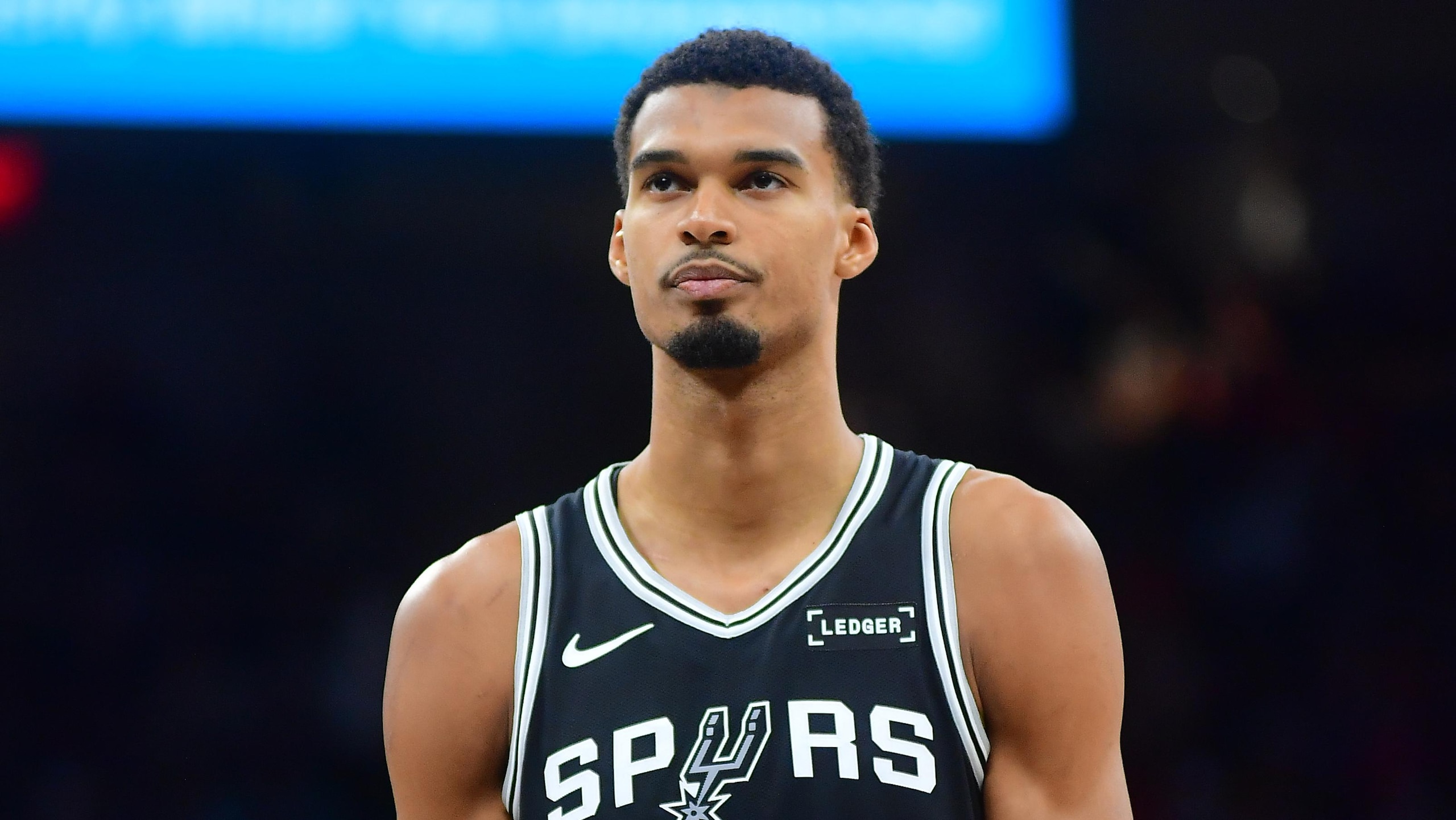
San Antonio Spurs: Matt Bonner
27 of 30Last year, you may not have noticed, but Matt Bonner led the league in three-point percentage at 46 percent.
It wasn't one of those cheap percentages either where the player shoots two three-pointers per game either. Bonner was taking nearly four three-pointers per game and was hitting his shots.
He has an awkward delivery, but he was benefited by the influence of his teammates in Manu Ginobili, Tony Parker and Tim Duncan attracting attention away from the perimeter.
Bonner doesn't do much else on the floor, but he's a solid perimeter threat off the bench, and that's nothing to overrate.
The problem with Bonner is that his defense may be the worst in the NBA. Even though he'll give you a three-pointer or two on offense, he'll also be busy giving up shot after shot to whoever his assignment was that night.
He's not strong enough, too slow, and his inability to get aggressive on either side of the floor makes him more of a liability than anything.
Toronto Raptors: Jerryd Bayless
28 of 30Attempting to make a name for himself since being taken 11th in the 2008 draft, Jerryd Bayless has yet to do so and now finds himself on his third team in his four-year career.
Taken by the Portland Trail Blazers in 2008, the team gave him two years before cutting their losses and declaring their first-round pick to be a bust. He had the ability to slash, but his perimeter game needed a lot of work.
Shooting 32 percent or worse from beyond the arc in his first two seasons, the Blazers were deep enough and no longer needed to develop Bayless.
It was disappointing to see that Bayless couldn't transition his perimeter game from college to the NBA. A 32 percent career shooter for his career, Bayless shot 41 percent in the lone year he spent in college at Arizona.
He had a strong showing with the Toronto Raptors last season where he averaged 10 points per game in 14 starts, but now finds himself on the bench once again and looking for an identity.
Utah Jazz: Josh Howard
29 of 30If the Utah Jazz are expecting to see the Josh Howard of old, I really hope they got the insurance and the prenuptial agreement to go with him.
In the 2007-08 season, Howard averaged 18 points and five rebounds per, while hitting on 35 percent of his three-pointers.
He played the role of swingman to perfection and was a stellar teammate on a number of championship caliber Dallas Mavericks teams. From playing individual defense to hitting the mid-range jumper, Howard could do it all on the floor.
He played 76 games that year. It would be the last time he's played in more than 53 games since then.
Howard played in only 52 games the next year and then 31 more the next season with the Mavericks, before they traded him to the Washington Wizards.
Unfortunately for the Wizards, Howard would spend the majority of his time with the team on the bench. He played 18 games in the 2010-11 campaign and clearly wasn't ready, as he shot 36 percent from the field and 24 percent from deep.
We can only hope the Jazz avoid these injury concerns.
Washington Wizards: Nick Young
30 of 30An outstanding athlete that I've had the pleasure of viewing many times, on account of the fact that he's lit up the Heat quite a few times, Nick Young is one of the league's most gifted offensive players.
Key word being offensive.
Struggling to garner a significant role on the team in his first three years, Young was given the chance to start in the 2010-'11 season. Surrounded by a number of his young peers, Young went off and averaged 17 points per game.
The fact that he converted on 39 percent of his three-pointers, while nailing two of them, gave the Wizards only more reason to get excited about his offensive game.
Once again, the key word is offensive.
The main problem with Nick Young is that he's too in love with scoring. Even though he was being given over 30 minutes of action per night last year, Young only managed to grab three rebounds and dish out a dime per game.
Both are extremely disappointing numbers for an athletic shooting guard that stands at 6'6".
His defense isn't anything special, either. He's more focused on putting the ball through the hoop instead of focusing on his assignment.
As a result, he now finds himself off the bench, with the Wizards choosing to start Jordan Crawford.




.png?w=2560 "Week 8 Winners & Losers 📊")
.jpg?w=2560 "Aikman Blasts Cowboys WR 🫣")
.jpg?w=2560 "Jonathan Taylor Landing Spots")