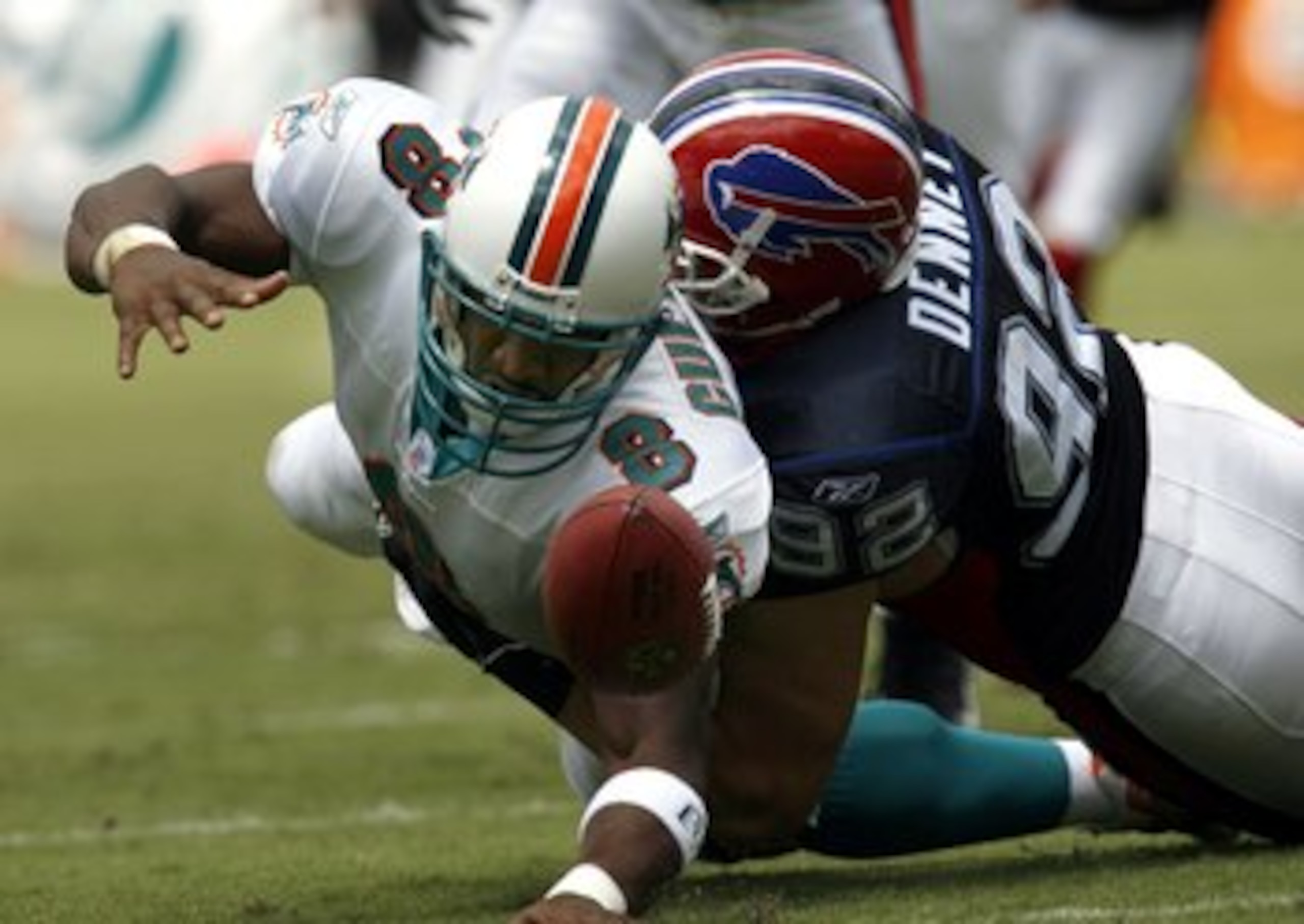

Miami Dolphins: The Top 25 Most Disappointing Dolphins Ever
For every Dan Marino, there is a John Beck, for every Vontae Davis, there is a Jason Allen and for every Mark Clayton, there is a Ted Ginn, Jr.
Even the most promising of free agent signings and the safest of draft picks sometimes amount to nothing.
Who could have predicted that Daunte Culpepper would only spend one year in Miami, or Joey Porter only three? It all adds into the paradoxical nature of the NFL, where undrafted free agents like Cameron Wake earn Pro Bowl nods, and first round picks like Eric Kumerow free fall into oblivion.
The Dolphins have enjoyed copious success over the past few decades, so it's only fair that they struggle with the occasional disappointment.
No. 25: Junior Seau
1 of 25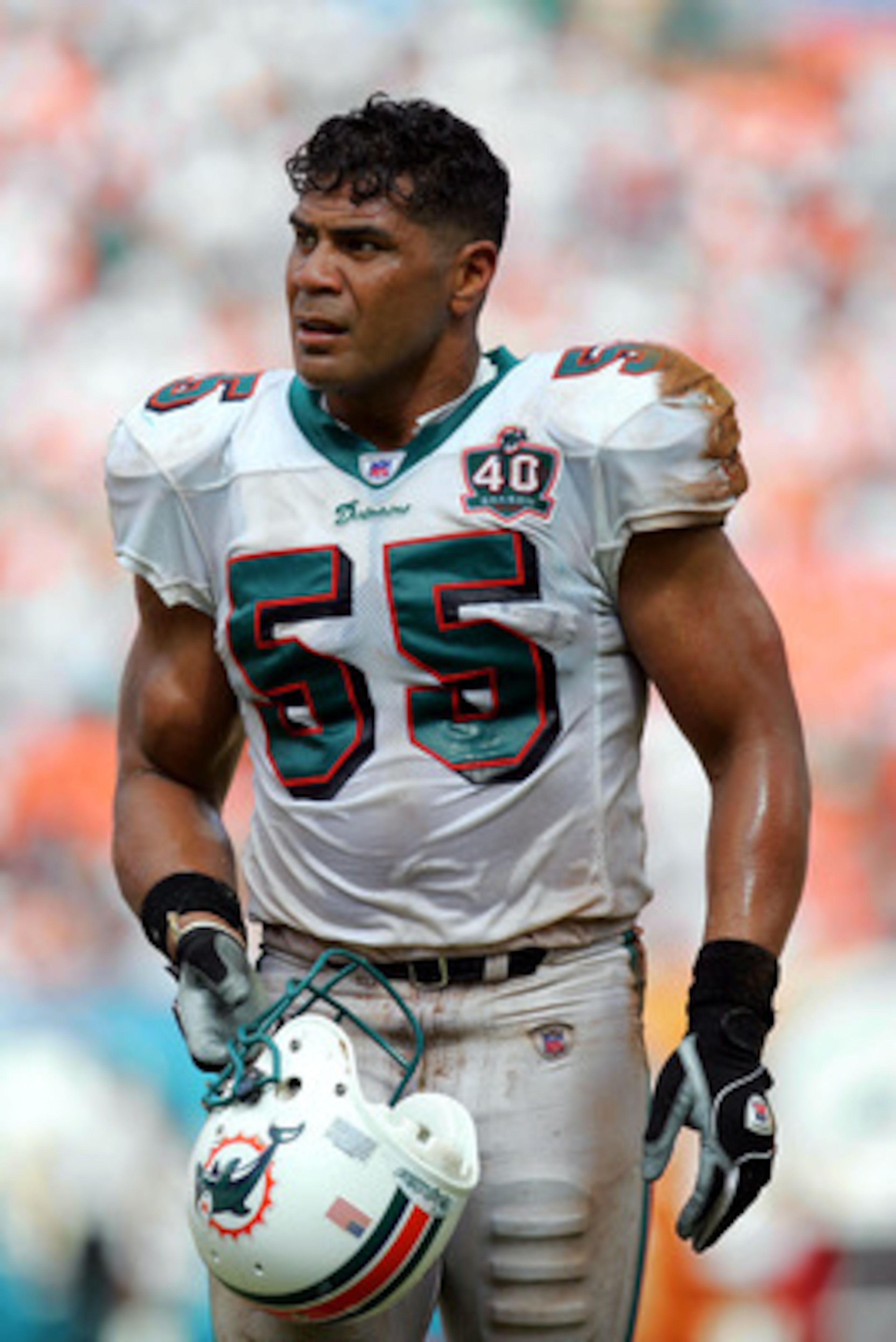
Before the 2003 season, Dave Wannstedt set out to solidify his defense with veteran studs. Just weeks before the Dolphins signed Sammy Knight, Terrell Buckley and Jeff Zgonina, Miami landed the biggest fish of them all: Junior Seau.
The 'Fins swung a deal with the San Diego Chargers to acquire their franchise linebacker. Seau was entering the twilight of his career, but still managed to record 133 tackles during his first season in Miami.
Just when it seemed as though the Dolphins had assembled an unstoppable defensive unit, Seau suffered a season ending pectoral injury in 2004 and then injured his Achilles in '05. Ultimately, Seau's tenure with Miami was diminished by injuries and disappointment.
No. 24: Sammy Knight
2 of 25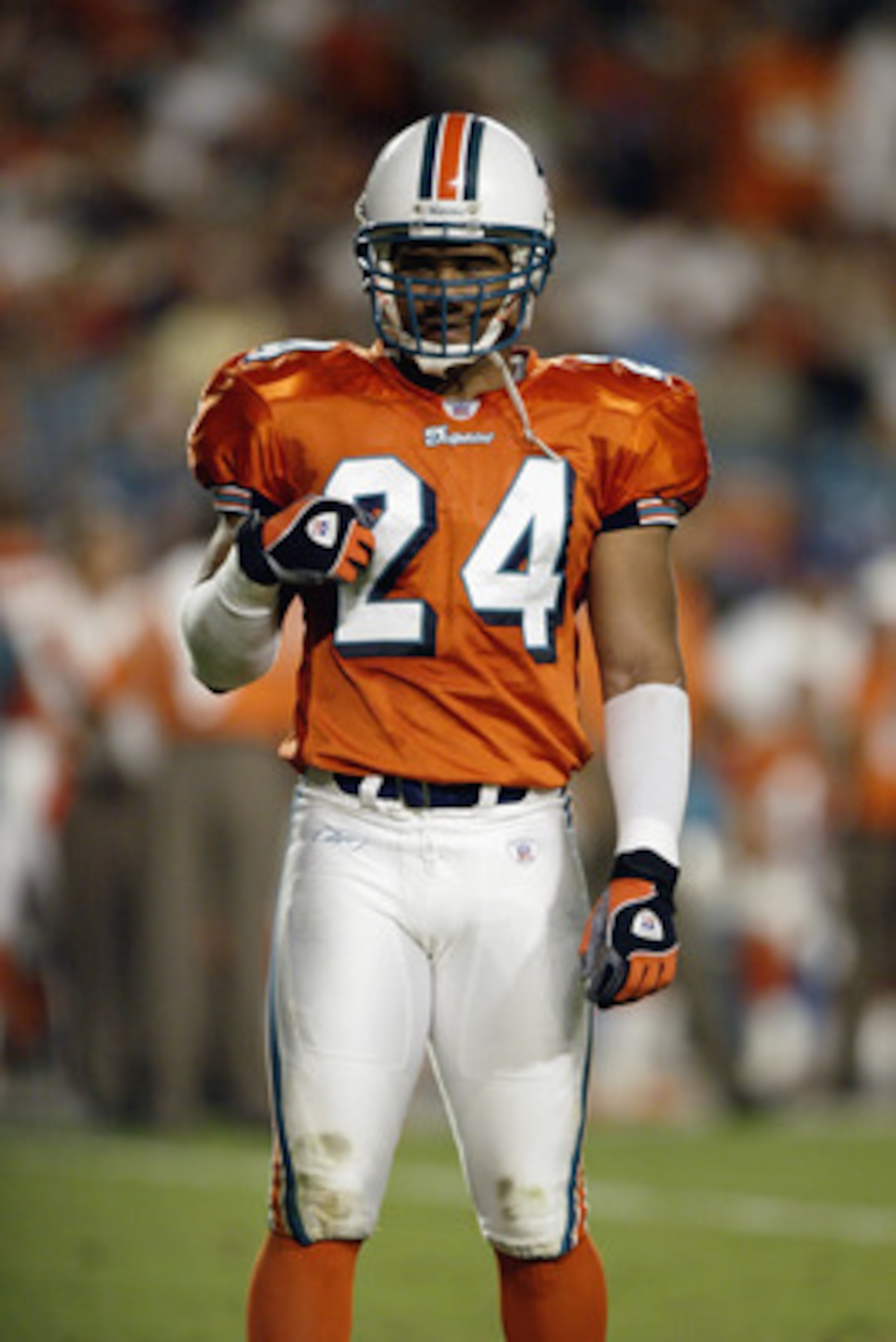
After Brock Marion's departure, Dave Wannstedt scoured the free agent market for a replacement. He managed to lure former Pro Bowl safety Sammy Knight to Miami despite offering a lower contract than other suitors had. Knight figured to be the final piece to a defense consisting of a whopping eight Pro Bowlers.
Knight enjoyed two respectably productive seasons with the Dolphins, but he never made the domineering impact the team hoped he would.
No. 23: Reggie Torbor
3 of 25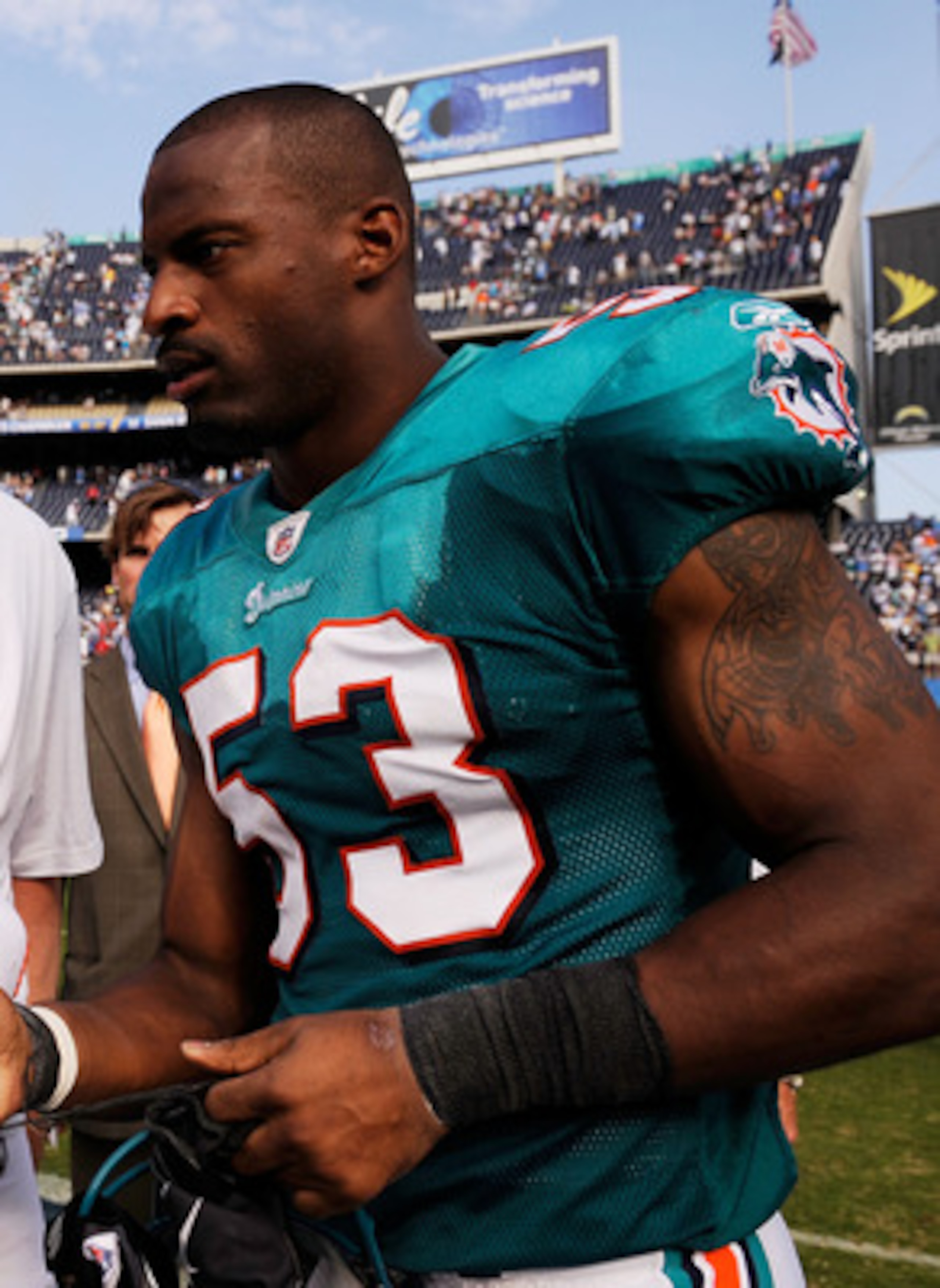
At the outset of the 2008 free agency period, the Dolphins made linebacker Reggie Torbor one of their first and biggest signings. Torbor was an integral piece to the New York Giants championship defense, contributing in all 20 games of their 2007 season at linebacker.
He figured to bring invaluable leadership, experience and stability to a defense lacking all three; however,
Torbor never made such an impact. In his two seasons with the 'Fins, he started a combined three games, and Miami cut him prior to the 2010 season, dodging his $3.5 million option.
Torbor has descended into a long lost of failed Trifecta signings.

.jpg?w=2560 "Falcons Saints Football")
.jpg?w=2560 "Rams Eagles Football")
No. 22: Damion McIntosh
4 of 25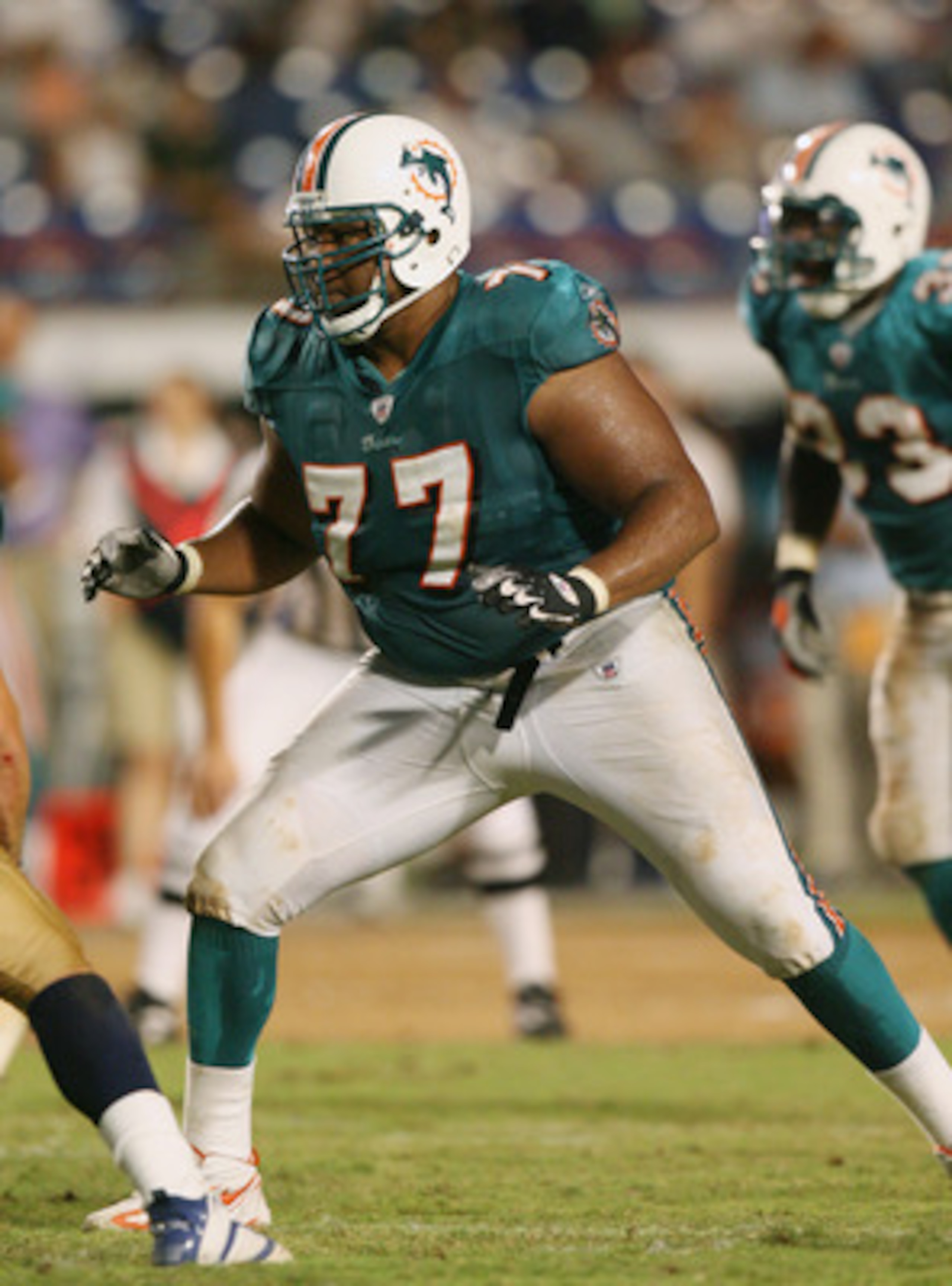
Looking to provide upgraded blindside protection for Jay Fiedler and extra run support for Ricky Williams, Dave Wannstedt lured in Chargers left tackle Damion McInotsh via free agency in 2004.
The 'Fins inked McIntosh to a six-year, $23 million deal, hoping he would morph into a franchise left tackle. However, he never fulfilled such a destiny.
McIntosh spent just three years with the Dolphins and was released just prior to the 2007 season.
No. 21: Brian Griese
5 of 25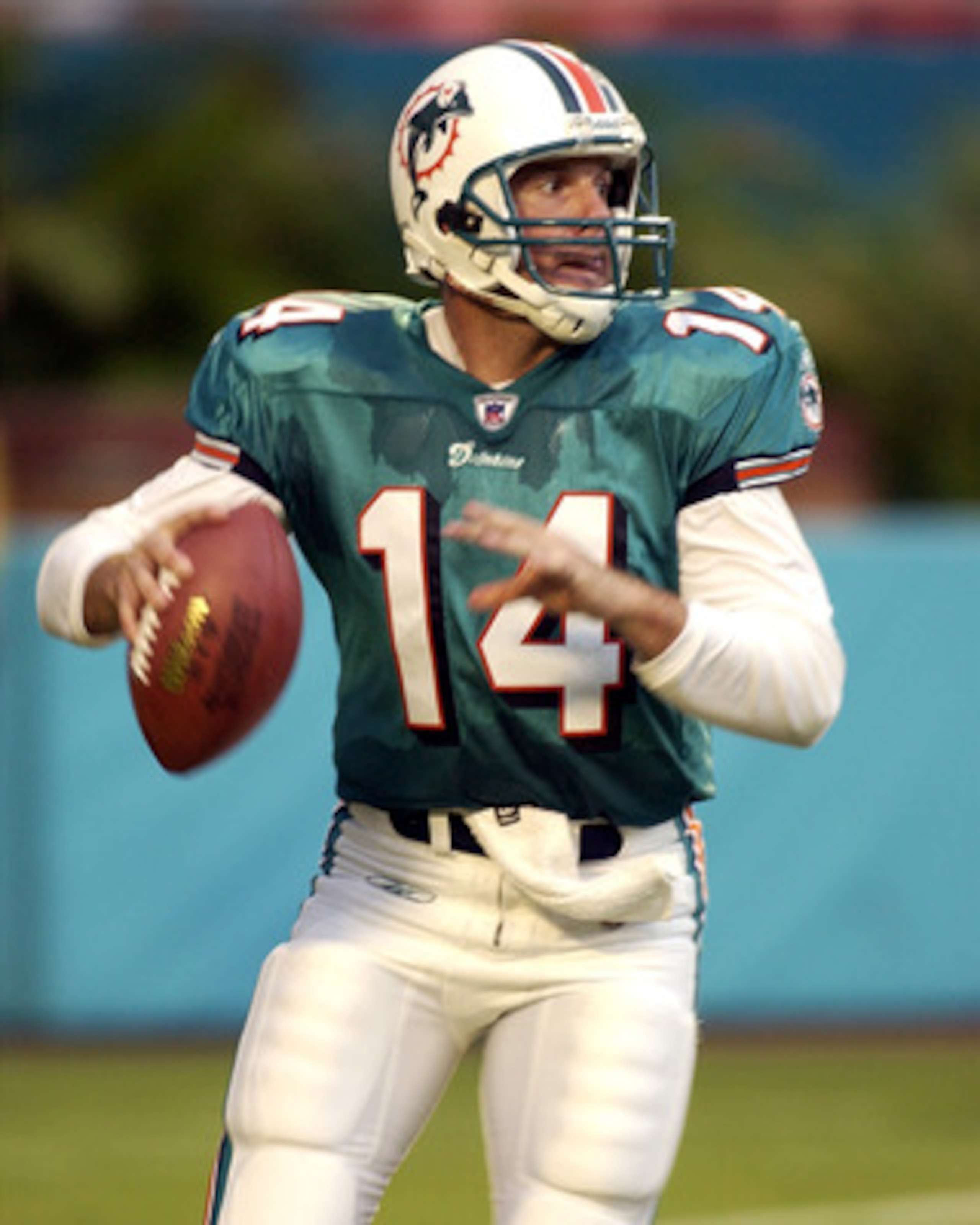
Strong Dolphin bloodlines might have lured Brian Griese to Miami during the 2003 offseason, but Brian never quite filled dad Bob's shoes.
Brian Griese made a strong first impression in Miami, throwing three touchdown passes in his debut, a win against the San Diego Chargers. Just when it appeared as though Griese could be the second coming of his father, he failed to duplicate the brilliance he showed in his debut again and finished the year with a 3-2 record as a starter.
Not terrible, but not good enough to earn a long-term deal with the Fins. After just one year with Miami, Griese signed with the Tampa Bay Buccaneers.
No. 20: Trent Green
6 of 25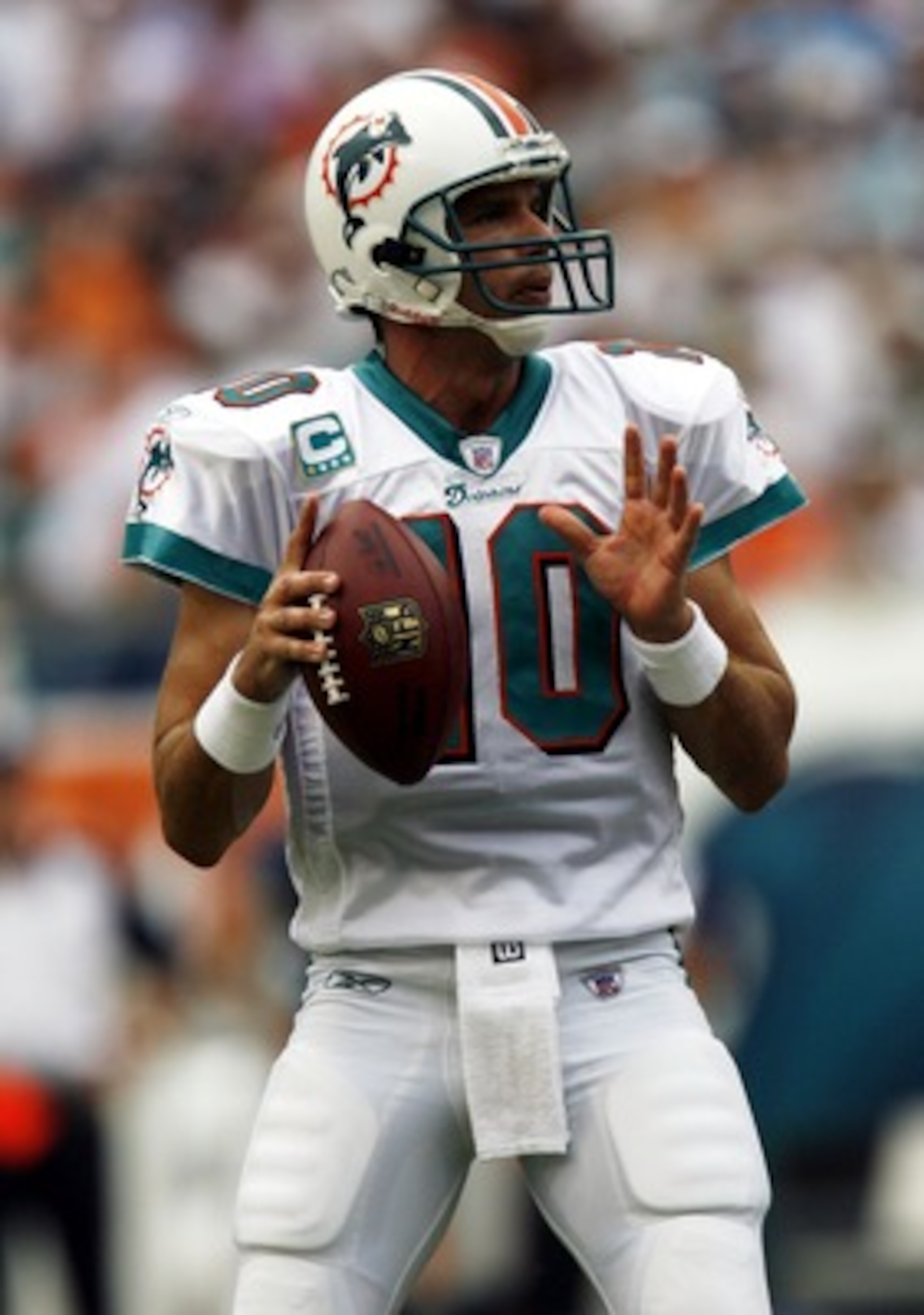
Inheriting a team in the beginning of a massive overhaul and rebuilding period, newly hired head coach Cam Cameron made a sensible decision: acquire a veteran quarterback to provide leadership and stability.
Cameron donned Trent Green the right man for the job and sent a fifth round draft pick to Kansas City in exchange for the 37-year-old. However, there was a caveat to the trade: Green was just recovering from a severe concussion.
Green's Dolphin career immediately got off to a troubling start. Entering Week 5, the team was 0-4, but things would only get worse. In Miami's Week 5 match up versus the Houston Texans, Green suffered another frightening concussion that would end his one and only season with the Dolphins.
No. 19: Cris Carter
7 of 25
With Oronde Gadsden and James McKnight sidelined by injuries, the Dolphins became desperate for a wide receiver midway through the 2002 season. Options were limited, but the team extended their reach into the media ranks where they managed to pull Cris Carter out of retirement.
Carter was only one year removed from a 73 reception season with the Vikings and two years removed from a 96 reception season.
Following his Week 9 debut, Carter was hospitalized by a kidney ailment, leaving him sidelined for four weeks. Carter returned in Week 14, catching his first and only touchdown. The following week, however, Carter dropped a touchdown pass that may have prevented the Dolphins from reaching the playoffs.
No. 18: David Boston
8 of 25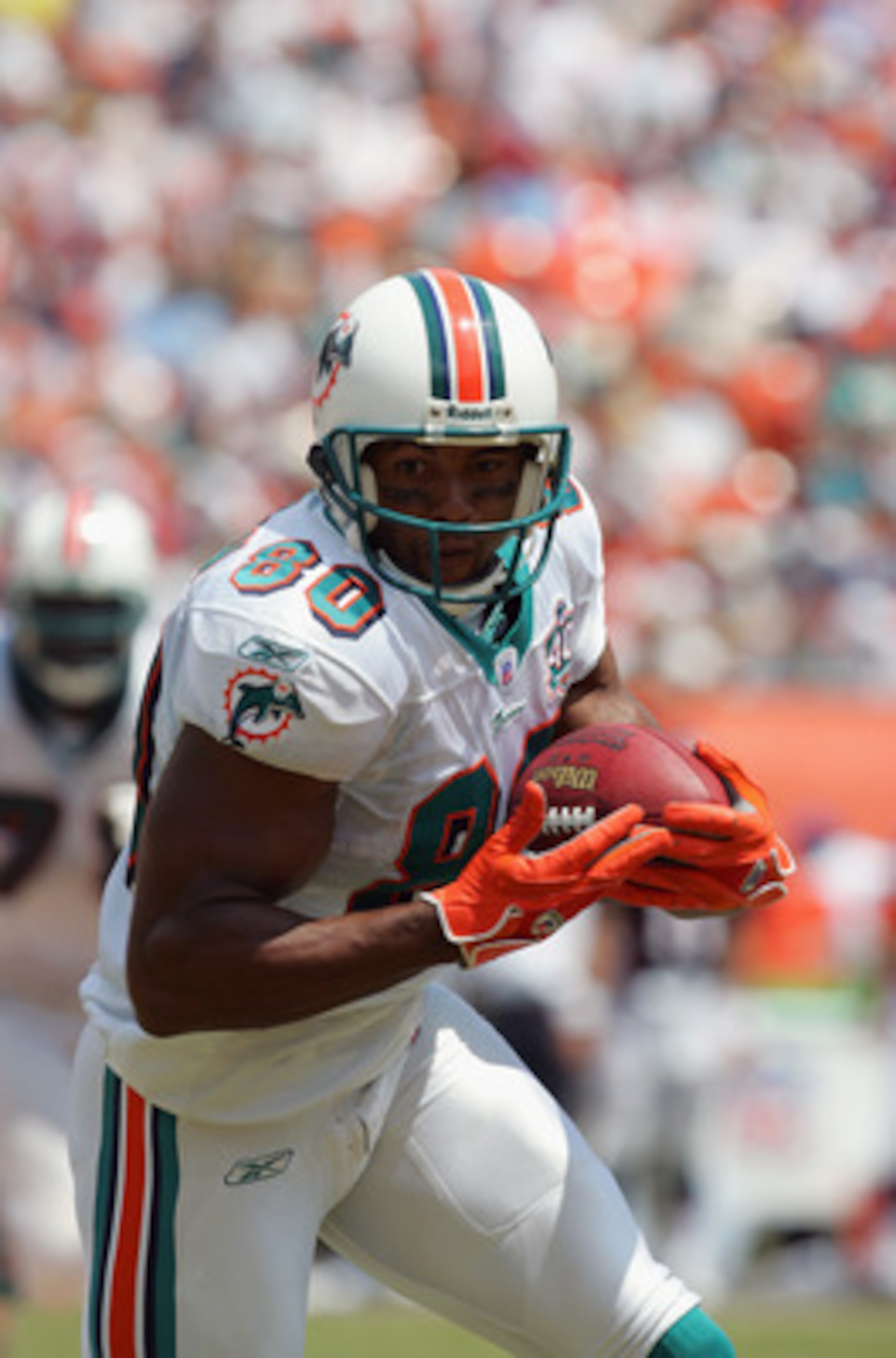
Prior to the 2004 season, the Dolphins sent a sixth round draft pick to San Diego in exchange for wide receiver David Boston. Just one year earlier, Boston had signed a massive seven-year, $47 million contract with the Bolts, but had a falling out with the organization, forcing a trade.
It was a deus ex machina for Miami's offense, who had just unexpectedly lost Ricky Williams to retirement.
But troubled followed Boston. He tested positive for steroids before the season (see the biceps in slide photo), leaving him suspended for the first four games of the year. Boston then tore ligaments in his knee and missed the entire season.
No. 17: Ernest Wilford
9 of 25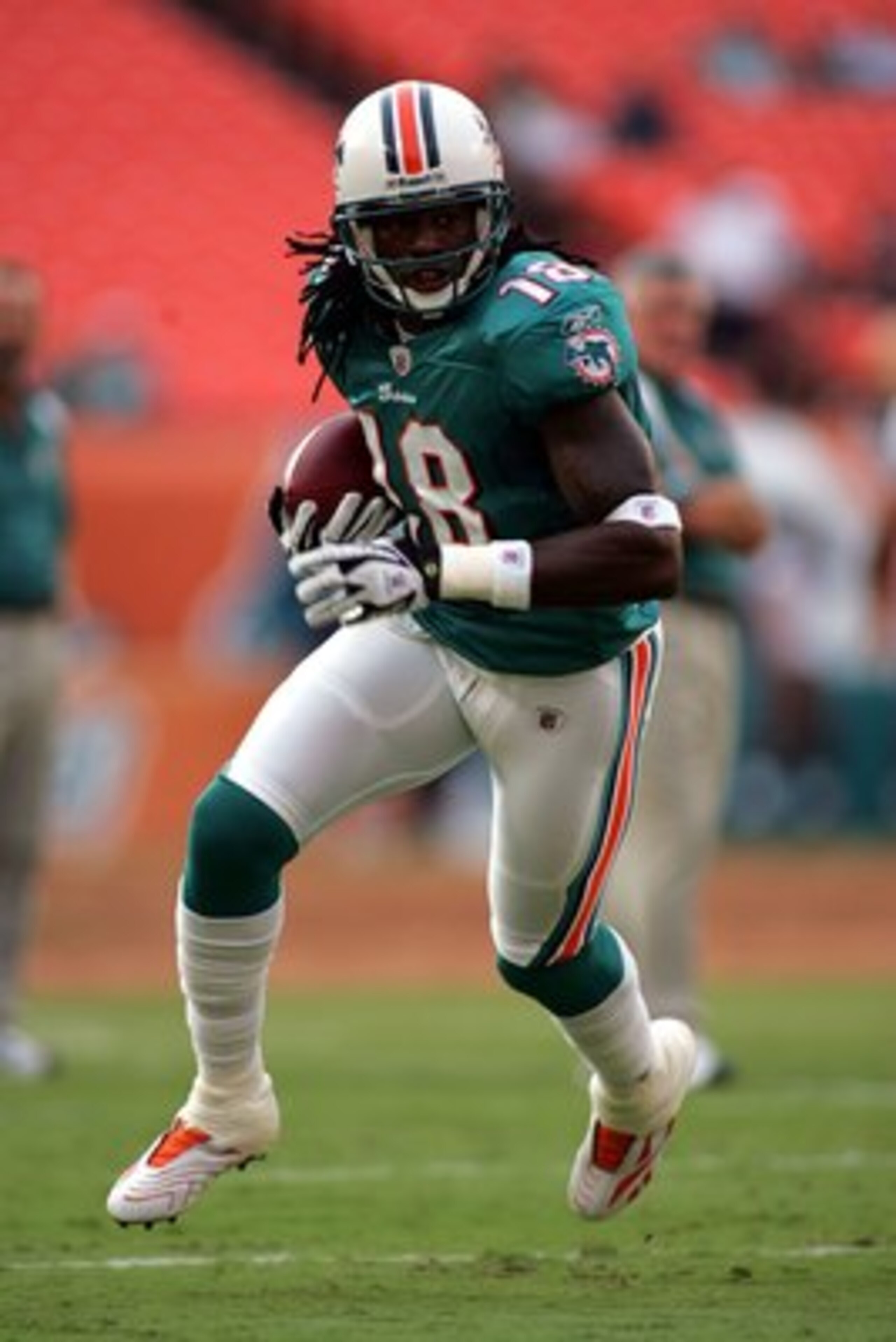
Bill Parcells' tenure as football czar of the Miami Dolphins is starting to look worse and worse by the minute. But while everybody talks about the Jake Long-Matt Ryan debate, nobody remembers his first free agent signee—Ernest Wilford.
Miami signed Wilford to a four-year, $13 million deal that included a substantial $6 million signing bonus. The once dominant Virginia Tech Hokie and productive Jaguars tight end figured to add a dynamic blend of size and hands to the Dolphins offense, but he did nothing of the sort.
Wilford spent just one year in Miami. He played in seven games and caught a measly three passes for 25 yards.
No. 16: David Overstreet
10 of 25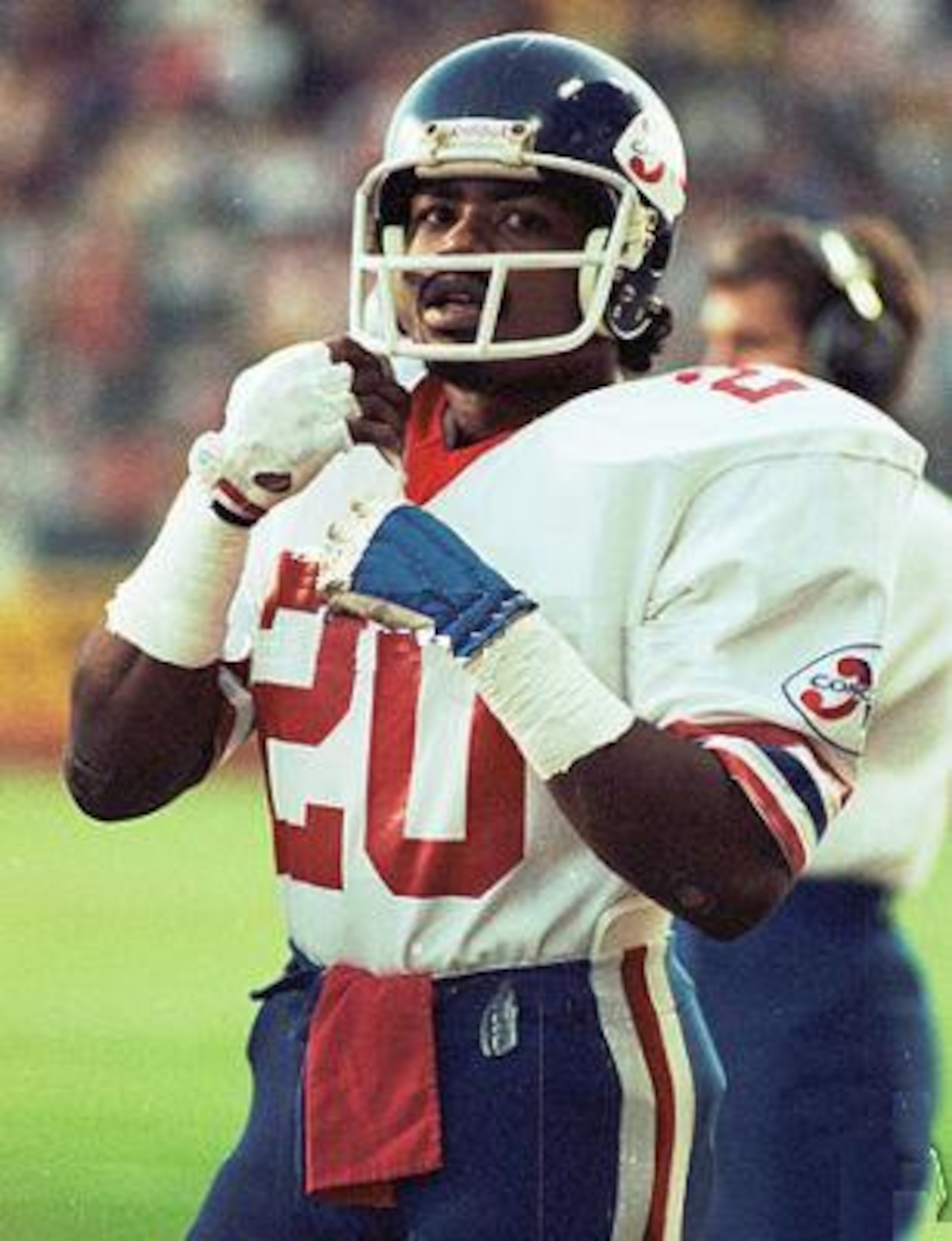
It almost seems unfair to put David Overstreet on this list considering the circumstances that surrounded his career. Don Shula drafted the Oklahoma running back with the 13th pick in the 1981 Draft, but a messy contract dispute pushed Overstreet to spend the '81 and '82 seasons in the CFL.
In 1983, he returned to the Dolphins, assuming a secondary role. He carried the ball 85 times for 392 yards, posting a decent 4.6 yards per carry.
Just when Overstreet appeared to be back on track to prominence, he died in a tragic car accident during the 1985 offseason. He was only 25.
No. 15: Jackie Shipp
11 of 25
With the 14th overall pick in the 1984 NFL Draft, Don Shula selected Oklahoma linebacker Jackie Shipp. Miami's linebacker corps was already anchored by a solid trio consisting of Charles Bowser, Bob Brudzinski and A.J. Duhe.
Shula aimed to fill out this unit with a fourth contributor, but Shipp never fulfilled that prophecy. Even though he served as a starter for three seasons, Shipp's career lasted only six years, and he never lived up to his first round billing.
No. 14: Joey Porter
12 of 25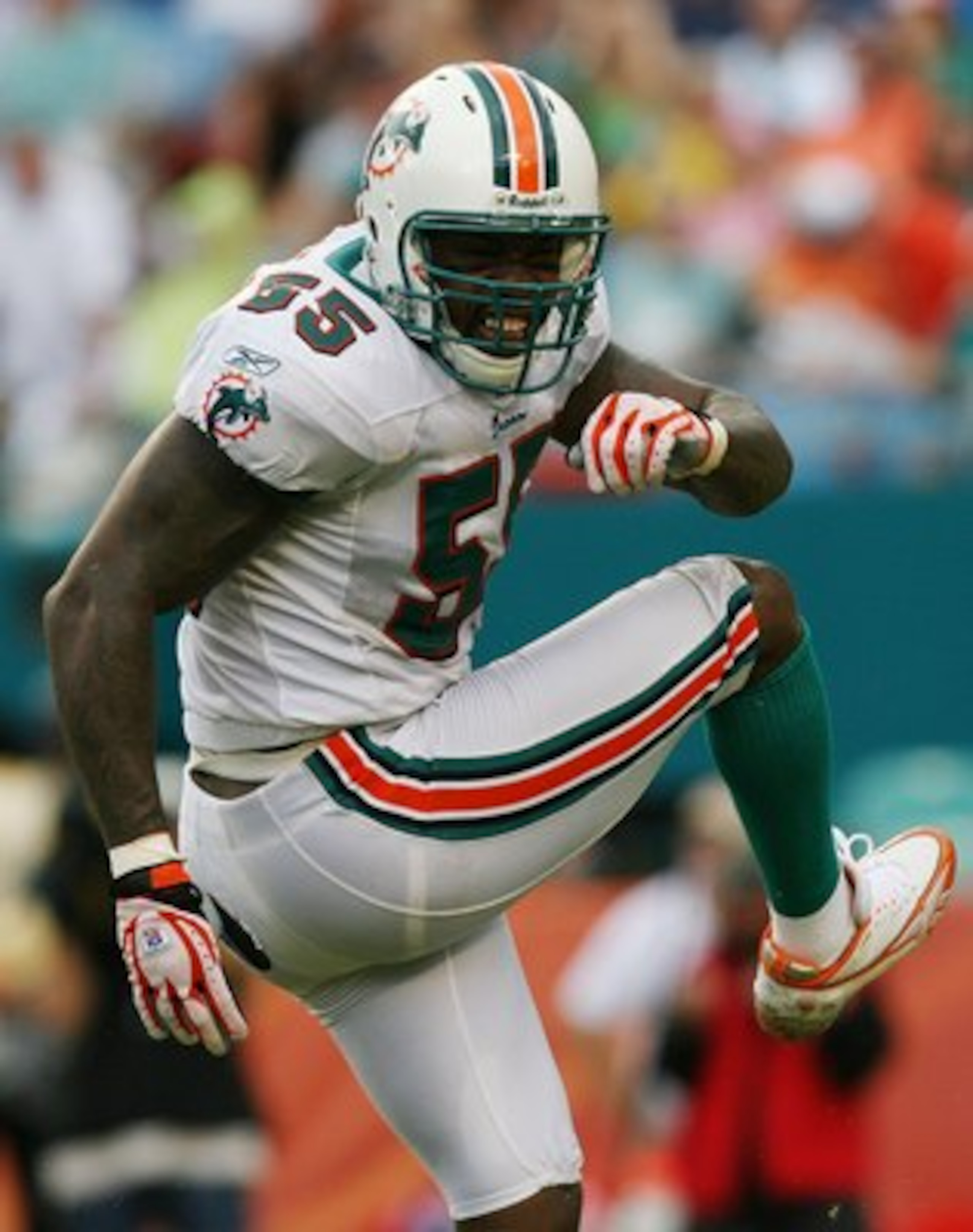
If it weren't for Joey Porter, there's a good chance the Dolphins would not have made the playoffs in 2008. He was a sack-master, racking up 17.5 sacks while serving as the team's emotional heartbeat.
But set aside that 2008 season, and Porter's Dolphin career was awful. In 2007, he signed a five-year, $32 million deal that included a $12 million signing bonus and $8 million in guaranteed money. That kind of contract should produce a perennial Pro Bowler or, at the very least, a long-term staple.
Porter provided neither, and he was released prior to the 2010 season. Again, it's difficult to label him a bust because of his incredible '08 campaign, but one season doesn't define a career.
No. 13: A.J. Feeley
13 of 25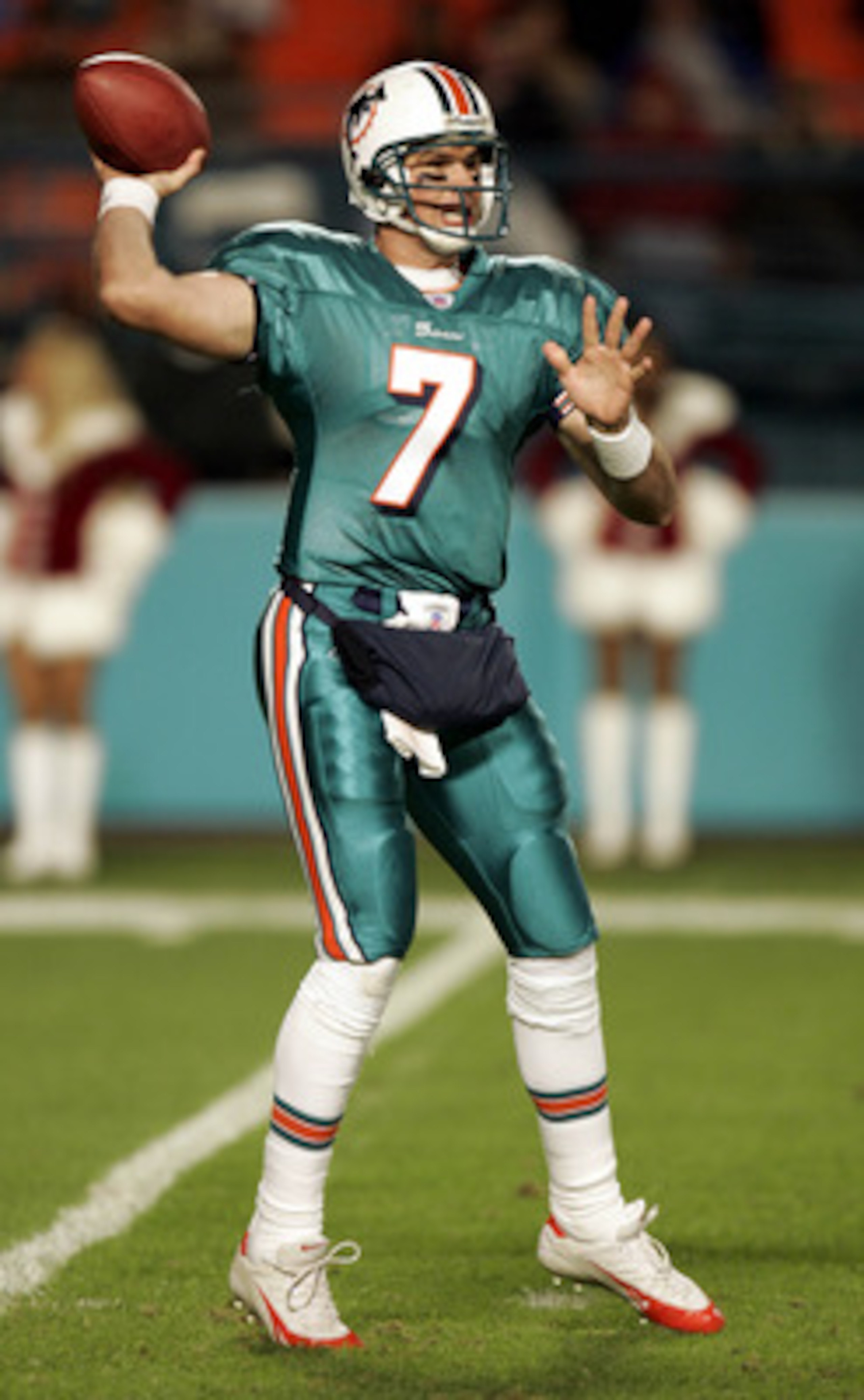
In 2004, the Dolphins sent a second-round pick to Philadelphia in exchange for quarterback A.J. Feely— a move they would soon regret.
In place of injured Eagles quarterbacks Donovan McNabb and Koy Detmer, Feeley led Philly to four victories, locking up a playoff spot for the team. Donovan McNabb returned in time for the playoffs, leaving Feely's trade stock sky-high.
Although Jay Fiedler had led the Dolphins to back-to-back playoff appearances in 2000 and 2001, Feely looked like a possible long-term solution, and more importantly, a Marino replacement.
Unfortunately, Feely was abysmal in orange and aqua. Feely began his career in Miami with three straight losses and was replaced by Fiedler by Week Four. He was gone after one season.
No. 12: Gibril Wilson
14 of 25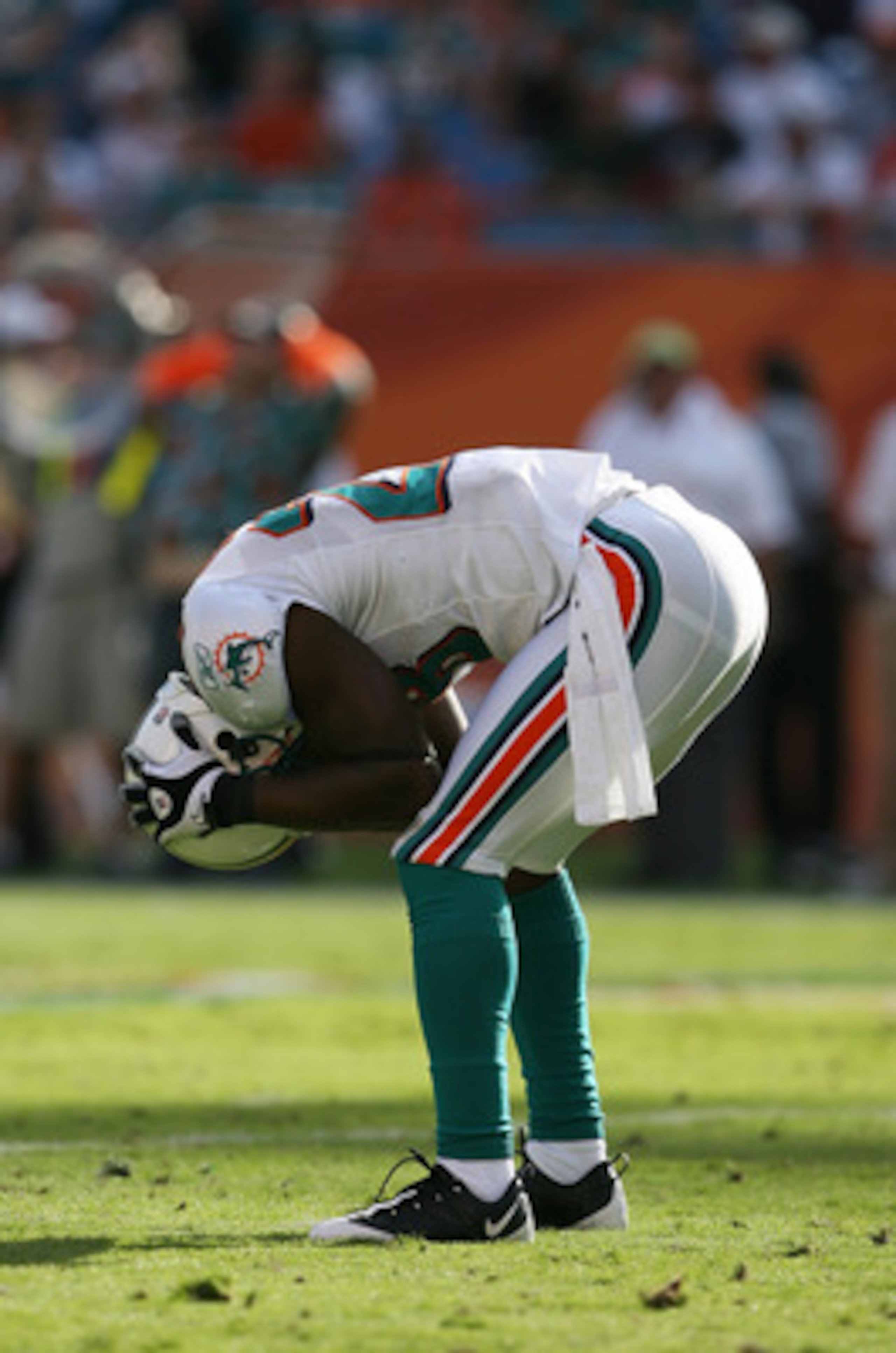
The Trifecta has dished out more than their fair share of bad contracts since they arrival in Miami. But all pale in comparison to the five-year, $27 million ($8 million guaranteed) contract they handed safety Gibril Wilson.
Miami ignored the red flags that surfaced after Wilson's lone, disappointing season with the Oakland Raiders in 2008. Instead, they viewed Wilson as a player just two years removed from a starting role on the 2007 Super Bowl champion New York Giants.
He was torched on a weekly basis and failed to provide a safety blanket for rookie cornerbacks Vontae Davis and Sean Smith. Wilson lasted just one season in Miami, and this photo is pretty indicative of his Dolphins career.
No. 11: Eric Green
15 of 25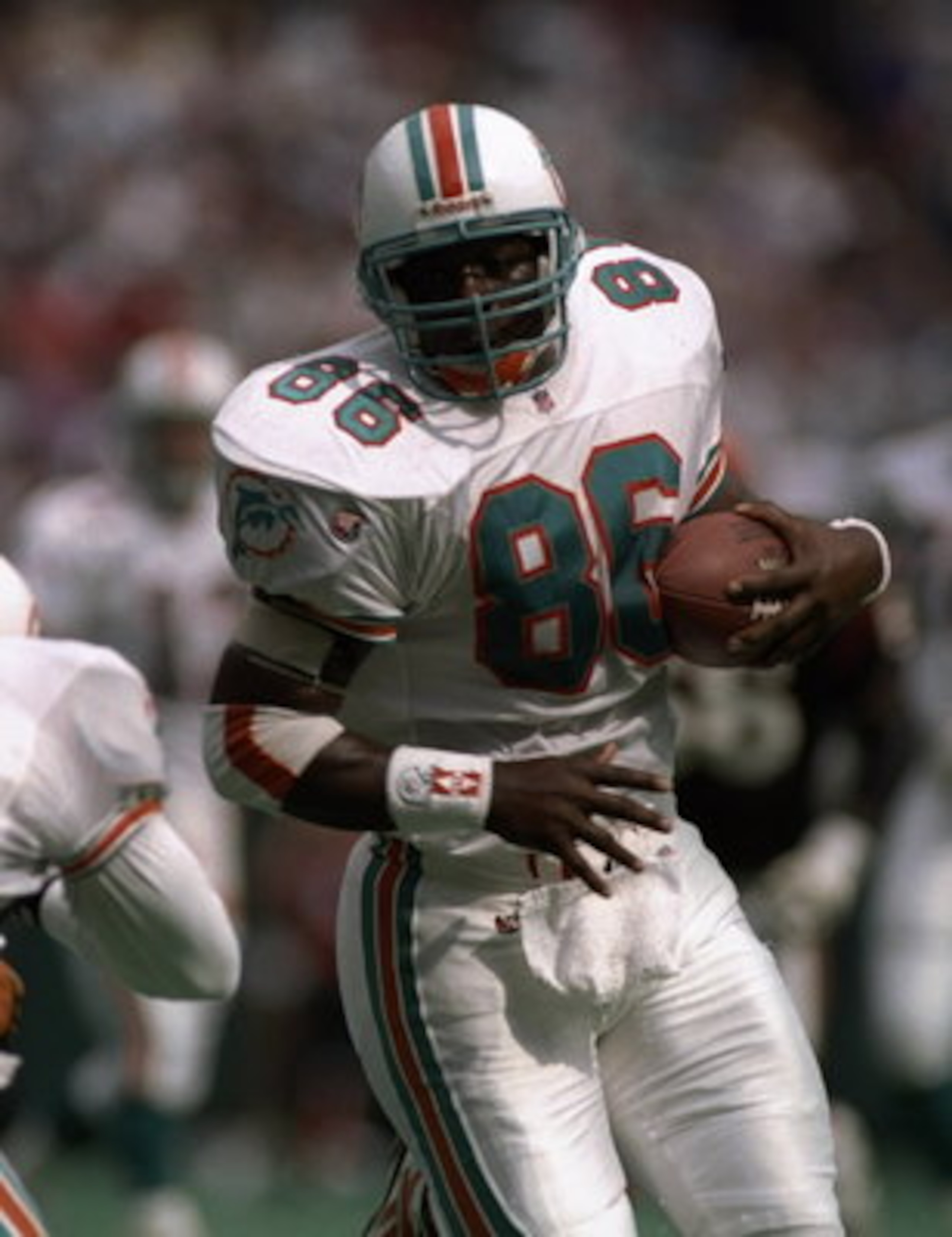
Following the departure of highly productive tight end Keith Jackson in 1994, the Dolphins searched for a replacement during the 1995 free agency period. Fortunately, Steelers tight end Eric Green, who had just capped off his second straight Pro Bowl season, hit the open market.
Don Shula handed Green a six-year, $12 million contract, making him the highest paid tight end in football.
It was a signing the Dolphins would soon regret. Green caught just 43 passes and was cut after only one season.
No. 10: Chad Henne
16 of 25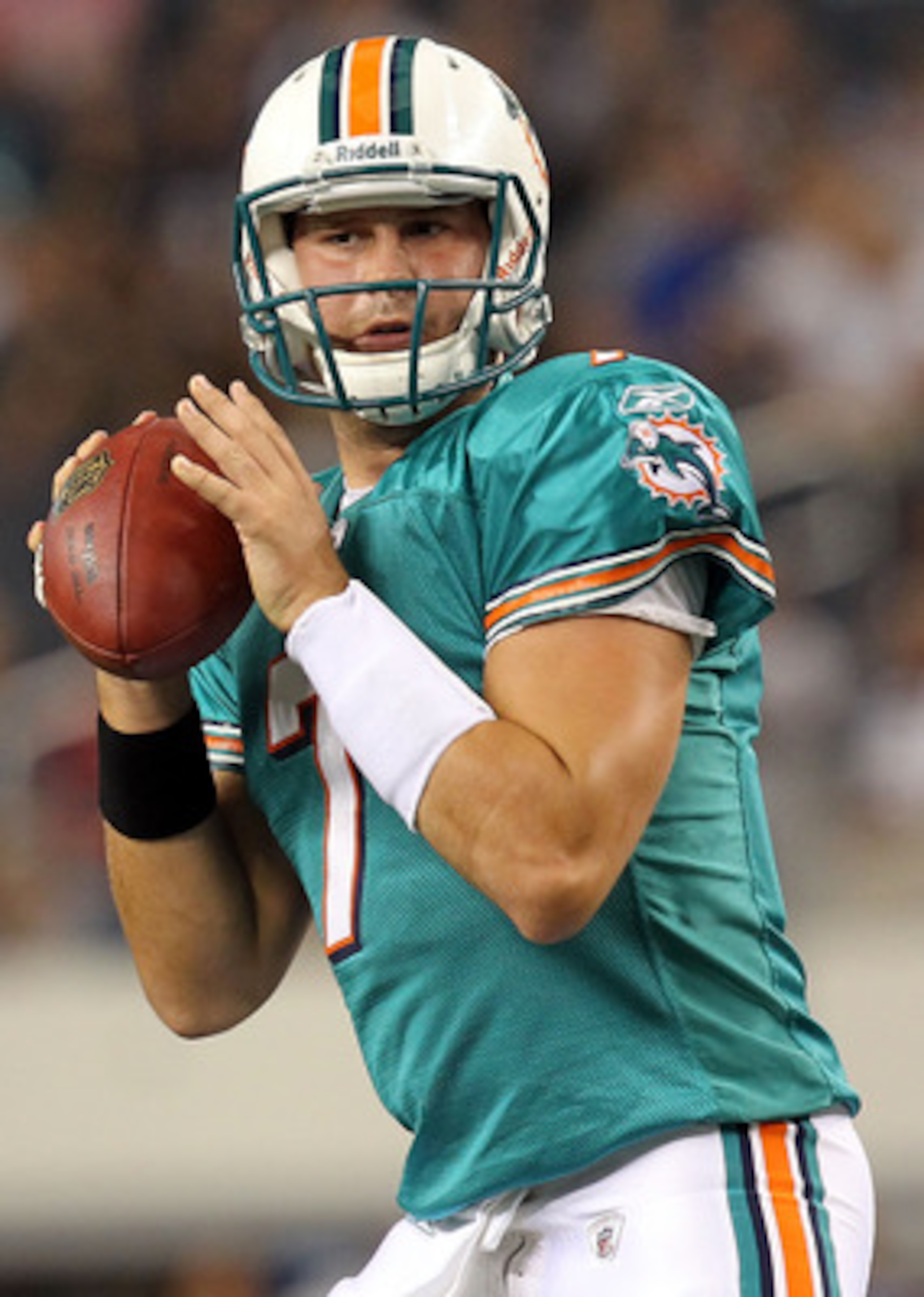
The jury is still out on Chad Henne, but he has been a monumental disappointment thus far. After thriving as a four year starter in Michigan's pro-style offense, the Dolphins snagged Henne with a 2008 second round pick.
He spent his first NFL season behind Chad Pennington, further multiplying expectations. Henne's first season as a starter was a relative success, but in 2010, everything imploded.
Henne will have every opportunity to retain his starting job and prove he can be a great quarterback in 2011, but Miami's hopes aren't rising too high.
No. 9: John Bosa
17 of 25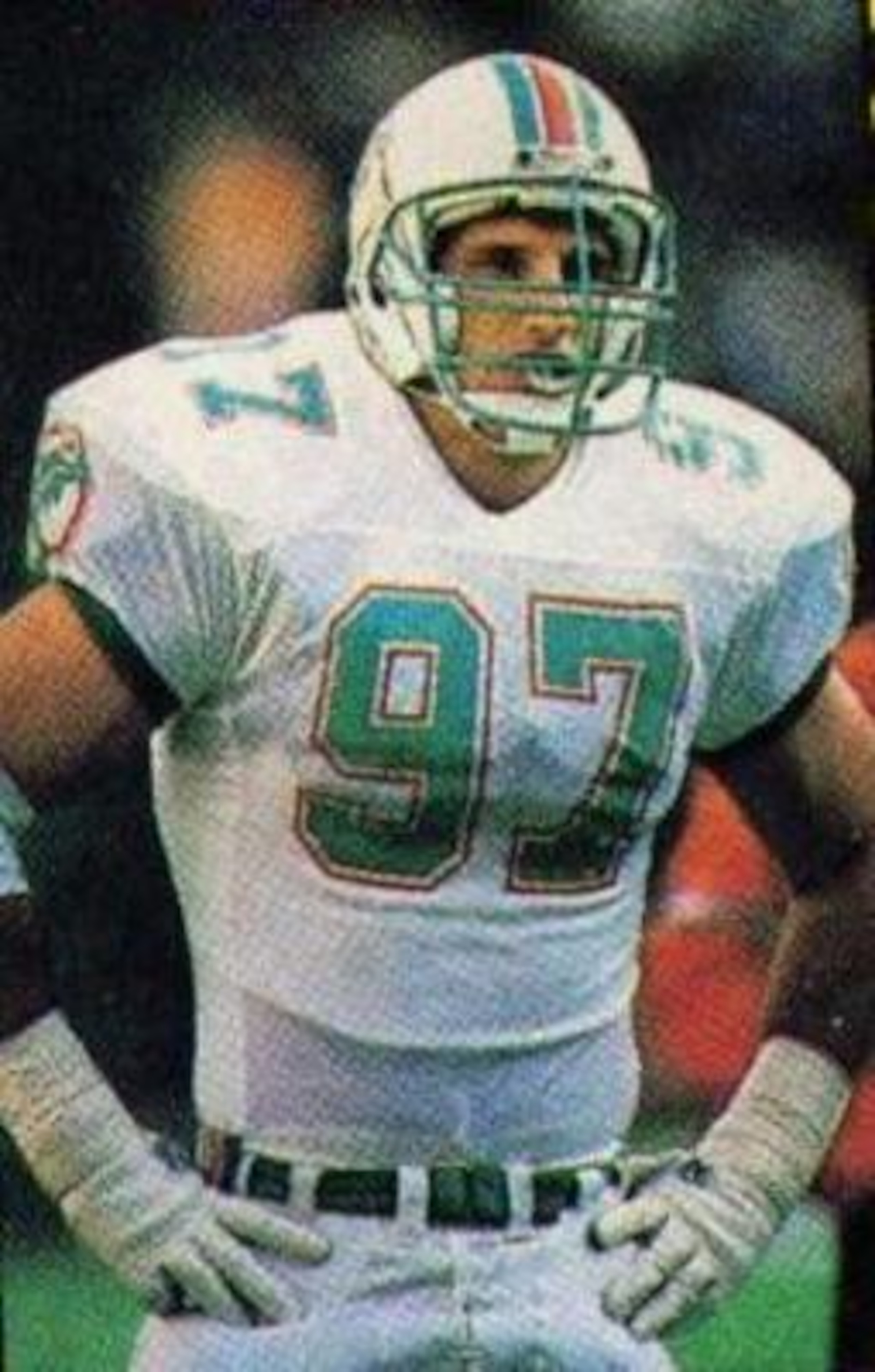
Don Shula's legendary scouting eye produced five Super Bowl appearances for the Dolphins, but no talent evaluator is without his whiffs. In the 1980s, Shula committed quite a few.
One of his most notable miscues came in the shape of 1987 first round pick John Bosa. Shula used the 16th overall pick on theBoston College defensive end, hoping to bolster a defense lagging behind a Super Bowl caliber offense.
Bosa started 12 games and racked up three sacks his rookie season, but that would be his peak. He started just nine games over the next two seasons and was out of league after the 1989 season.
No. 8: John Beck
18 of 25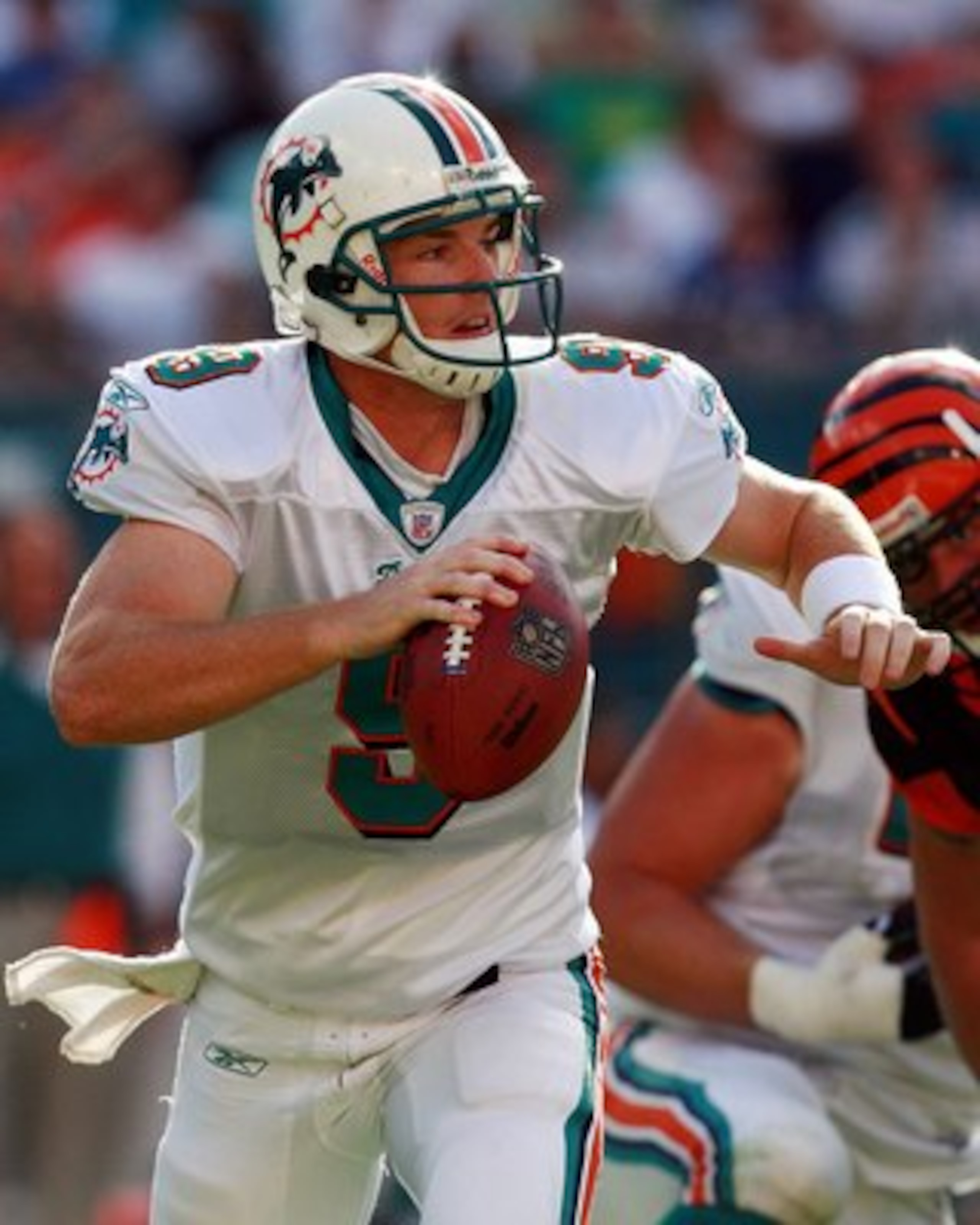
After famously passing on Brady Quinn for Ted Ginn, Jr. (in retrospect, not a horrible decision), Dolphins rookie head coach Cam Cameron used a second-round pick on BYU standout John Beck. Beck starred in the college ranks, but the 26-year-old failed to translate any of that skill to the next level.
Age aside, Beck had inadequate arm strength and showed little potential during his five starts with the 'Fins. Granted, he had a pretty terrible supporting cast. Beck was shipped off when Bill Parcells arrived and cleaned house.
As luck would have it, Beck is now in line to assume the Redskins starting quarterback job. He looks like another casualty in a long line of Dolphins quarterbacks who were rushed into a starting role without ample preparation or maturation. Patience is virtue, Dolfans.
No. 7: Jason Allen
19 of 25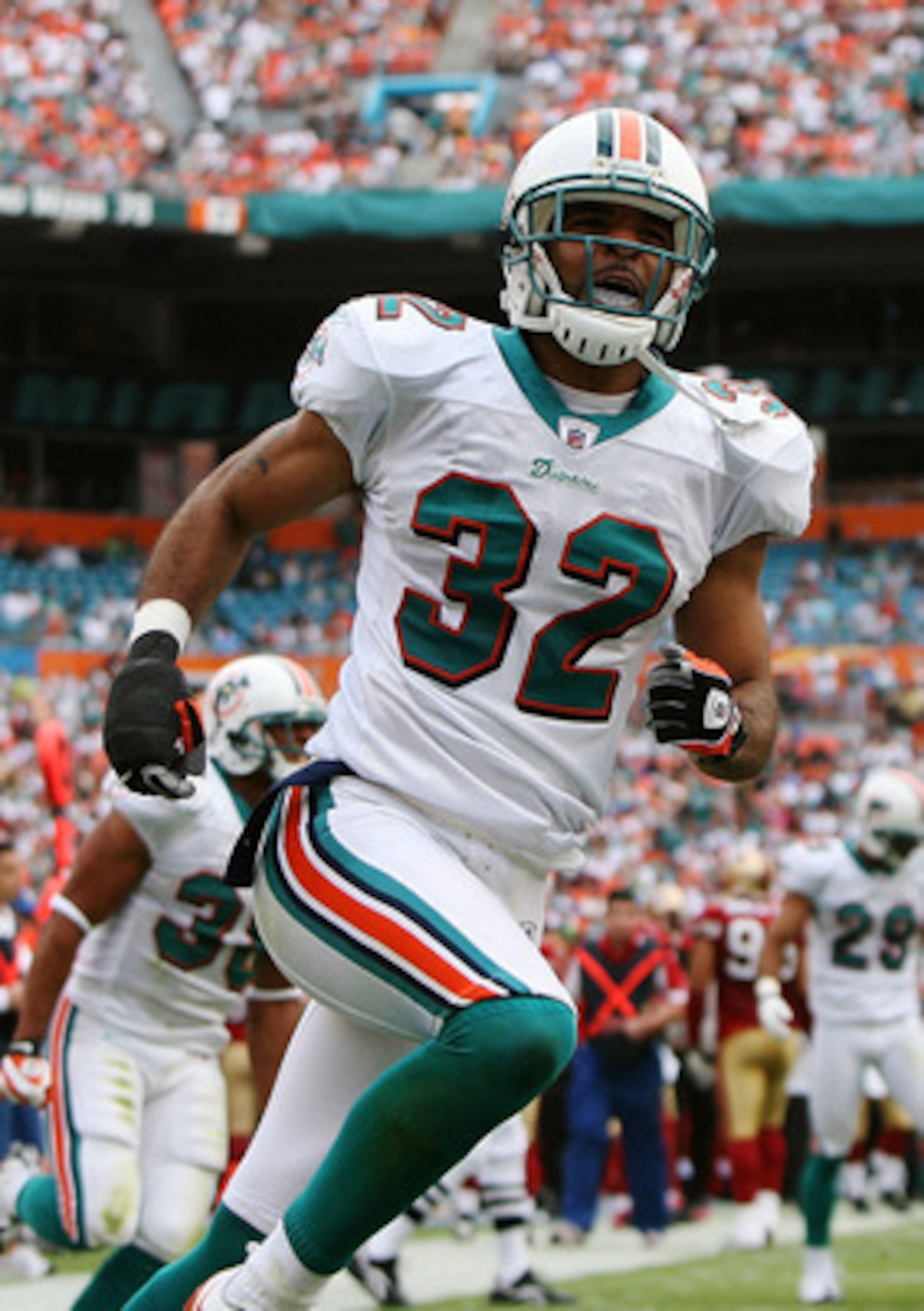
During his pseudo-debut as head coach of the Miami Dolphins, Nick Saban drafted Tennessee safety Jason Allen with the 16th overall pick in the 2006 draft.
The pick made plenty of sense at the time. Miami's secondary ranked 20th in the league in 2005 and was still ushering in a new wave of defensive backs after the Surtain-Madison era concluded. However, Allen's career got off to a rocky start. He became entrenched in a holdout that lasted into the 2006 regular season, and he never caught on once he signed.
Yet, despite his large scale struggles, Allen managed to hang on through three different regimes until he was released midway through the 2010 season.
Allen's career is sort of the symbol of Nick Saban's infamous stint. He was annually torched week in and week out, but is no longer the subject of fans' frustration. He can't hurt us anymore.
No. 6: Pat White
20 of 25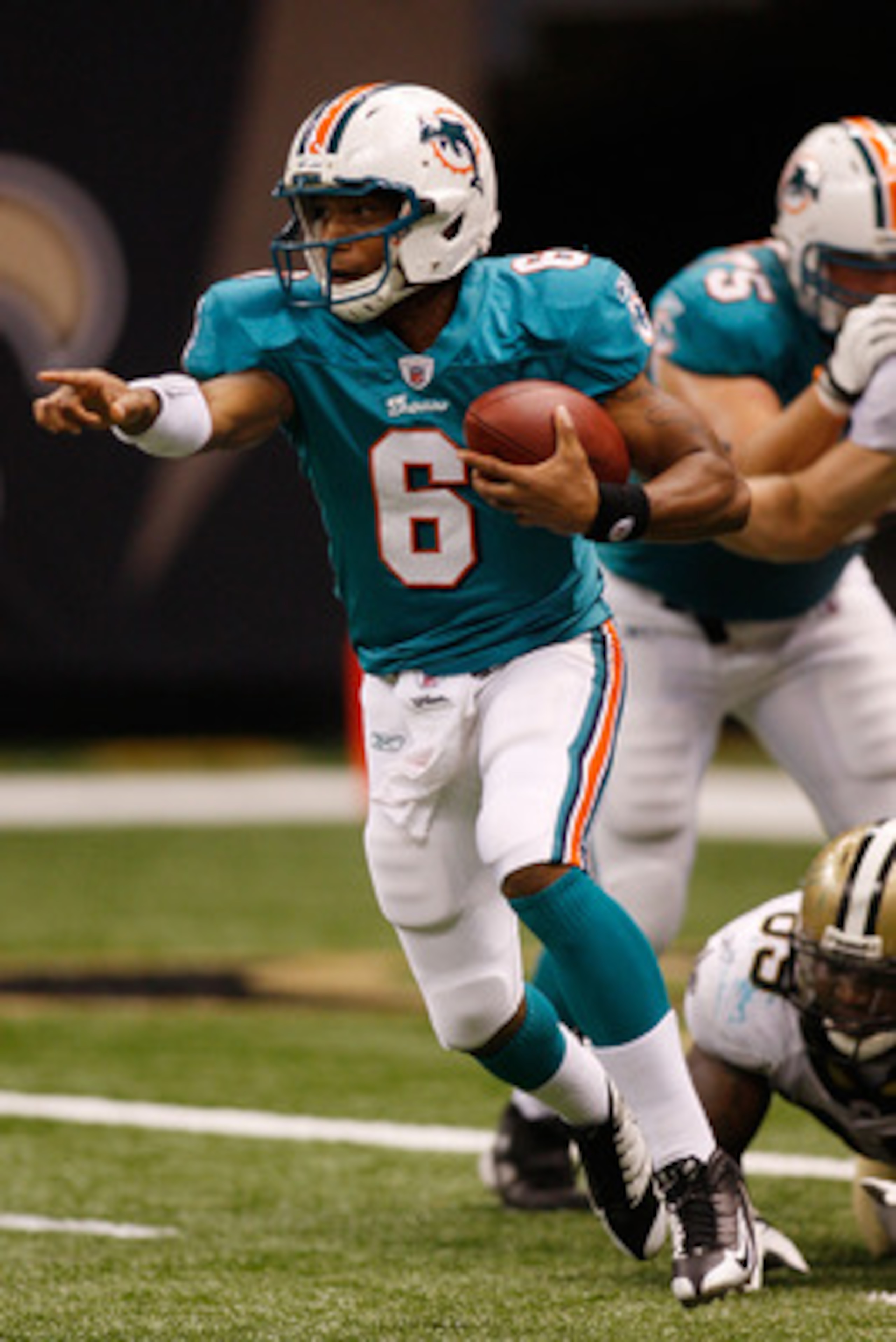
At a slim 6'0", 190 pounds, nobody really knew what to make of Pat White as the 2009 draft approached. White said he would only play quarterback in the NFL, and his supporters preached, "the guy is a winner." It is the same thing we have heard about countless busts in the past.
The Dolphins shocked the league when they drafted White early in the second round with Chad Henne and Pennington already on their roster. Nobody knew how White would integrate in Miami's offense, and quite frankly, the Dolphins never figured it out either.
They created some "WildPat" packages for him, and although he actually had a handful of great plays, the cons far outweighed the pros, and White is now out of professional sports. In retrospect, it is hard to see what the Dolphins were thinking. White was undersized, had minimal arm strength and accuracy and played in a spread offense at West Virginia.
No. 5: Eric Kumerow
21 of 25
Just one year after he drafted eventual John Bosa with the 16th overall pick in the 1987 Draft, Don Shula drafted Ohio State defensive end Eric Kumerow with the same pick in the '88 Draft.
Theoretically, the Dolphins would boast a fierce defensive front. Instead, Kumerow follow Bosa into oblivion. He played three seasons with Miami (his only in the league) and never started a game.
Meanwhile, Oklahoma State stud Thurman Thomas would remain on the board until the second round. He is now a Hall of Famer, and Kumerow barely has a photo on Google Images (the best measurement for how successful a player was).
No. 4: Sammie Smith
22 of 25
From 1983 to 1988, five different running backs led the Miami Dolphins in rushing yards. Looking to escape this troubling pattern and install a stud running back behind Dan Marino, Don Shula selected Florida State standout Sammie Smith with the team's 1989 first round pick (ninth overall).
Smith led the team in rushing in 1989 and 1990, but was ultimately a failure. He spent just three semi-productive years with the team and was out of the league after 1992.
The Dolphins passed on players like Trace Armstrong, Andre Rison and Steve Atwater in order to draft Smith.
No. 3: Ted Ginn, Jr.
23 of 25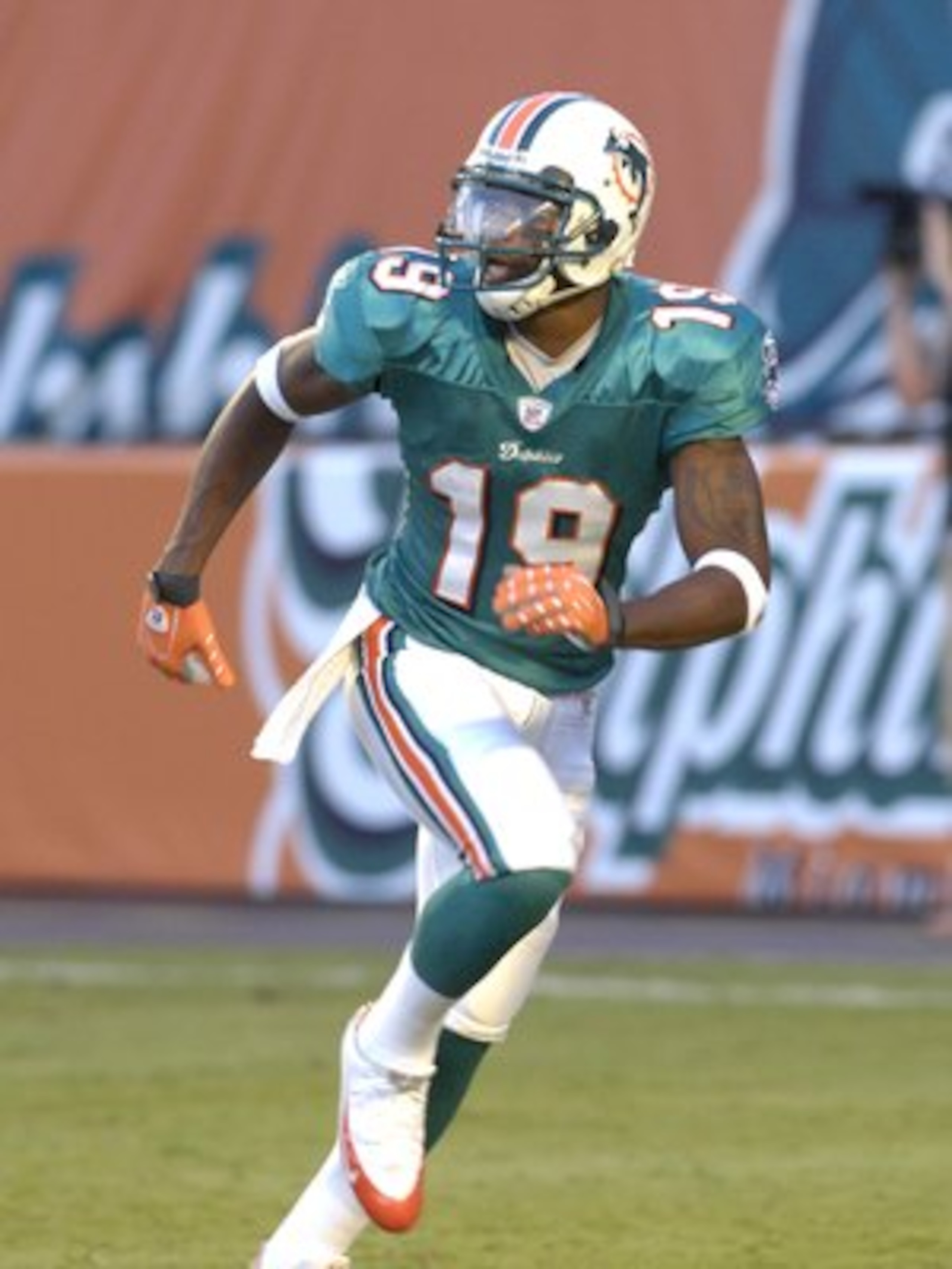
It literally made too much sense to draft Brady Quinn with the ninth overall pick of the 2007 NFL Draft. Notre Dame's golden child had slipped past his hometown team into Miami's quarterback-hungry lap, and once the Dolphins were on the clock, few doubted whom Cam Cameron would select with his first pick as the team's head coach.
But then, the unthinkable ensued.
In retrospect, we should thank Cameron for selecting Ginn and saving us the frustration of watching another quarterback fail to replace Dan Marino. Of course, Ginn has become a pariah in Miami, but the fact that Cameron passed on the likes of Patrick Willis and Darrelle Revis makes this even more difficult to stomach.
No. 2: Yatil Green
24 of 25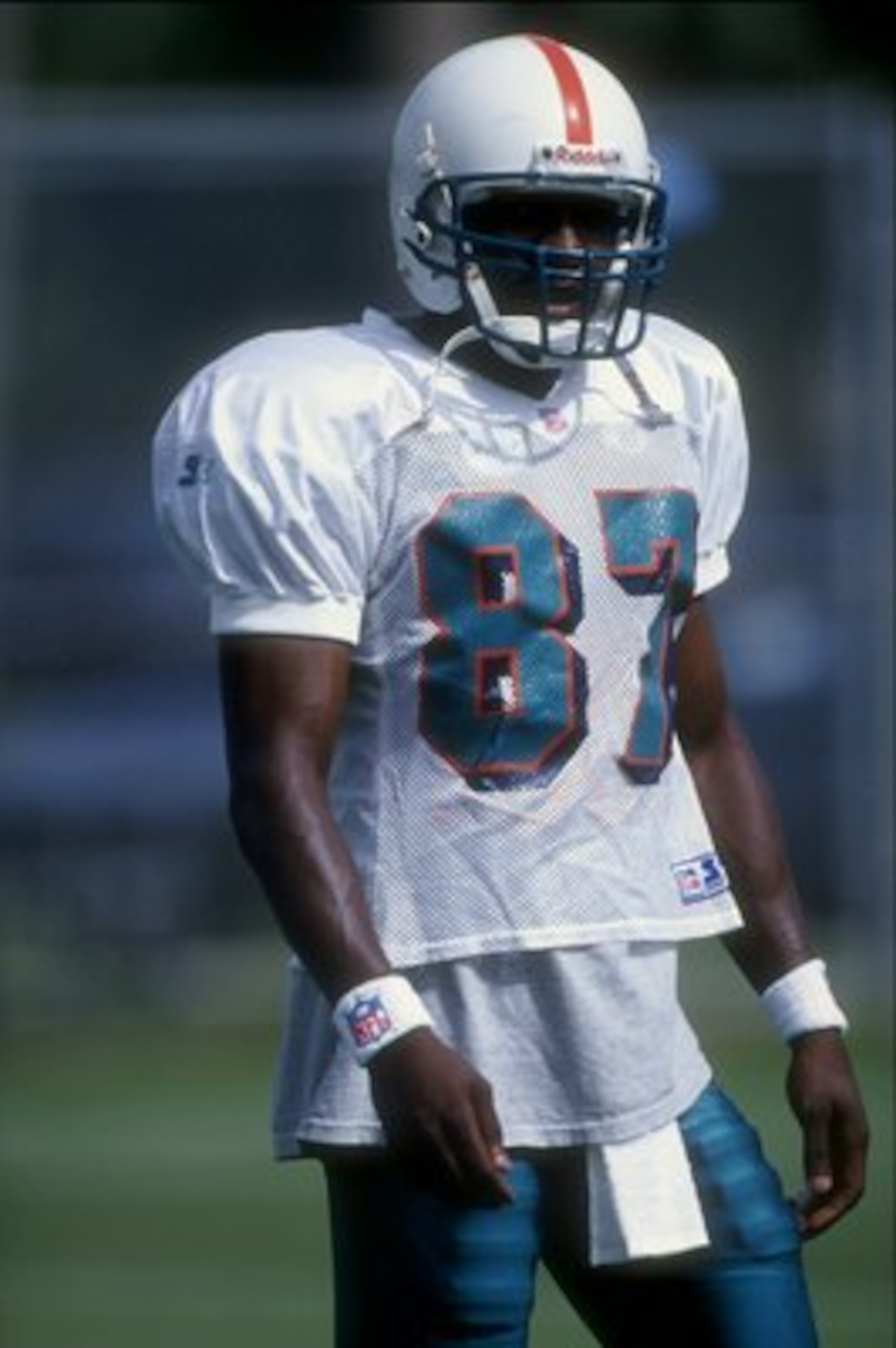
Looking to add a spark to a lackluster wide receiving corps, draft guru Jimmy Johnson selected former Miami Hurricane Yatil Green with his first draft pick as Dolphins head coach.
Green started one game and was out of the NFL after one season. Fortunately, Johnson proceeded to draft Sam Madison, Jason Taylor and Derrick Rodgers later in the '97 draft, making up for his miscue.
However, this abomination of a draft pick might be the biggest gaffe in team history. For the 15th overall pick to play only eight games is literally unbelievable. Imagine Miami drafting Dez Bryant last year, and he played eight games and then disappeared. And to make matters worse, players like Jake Plummer, Tiki Barber and Corey Dillon were all on the board when the 'Fins picked Green.
No. 1: Daunte Culpepper
25 of 25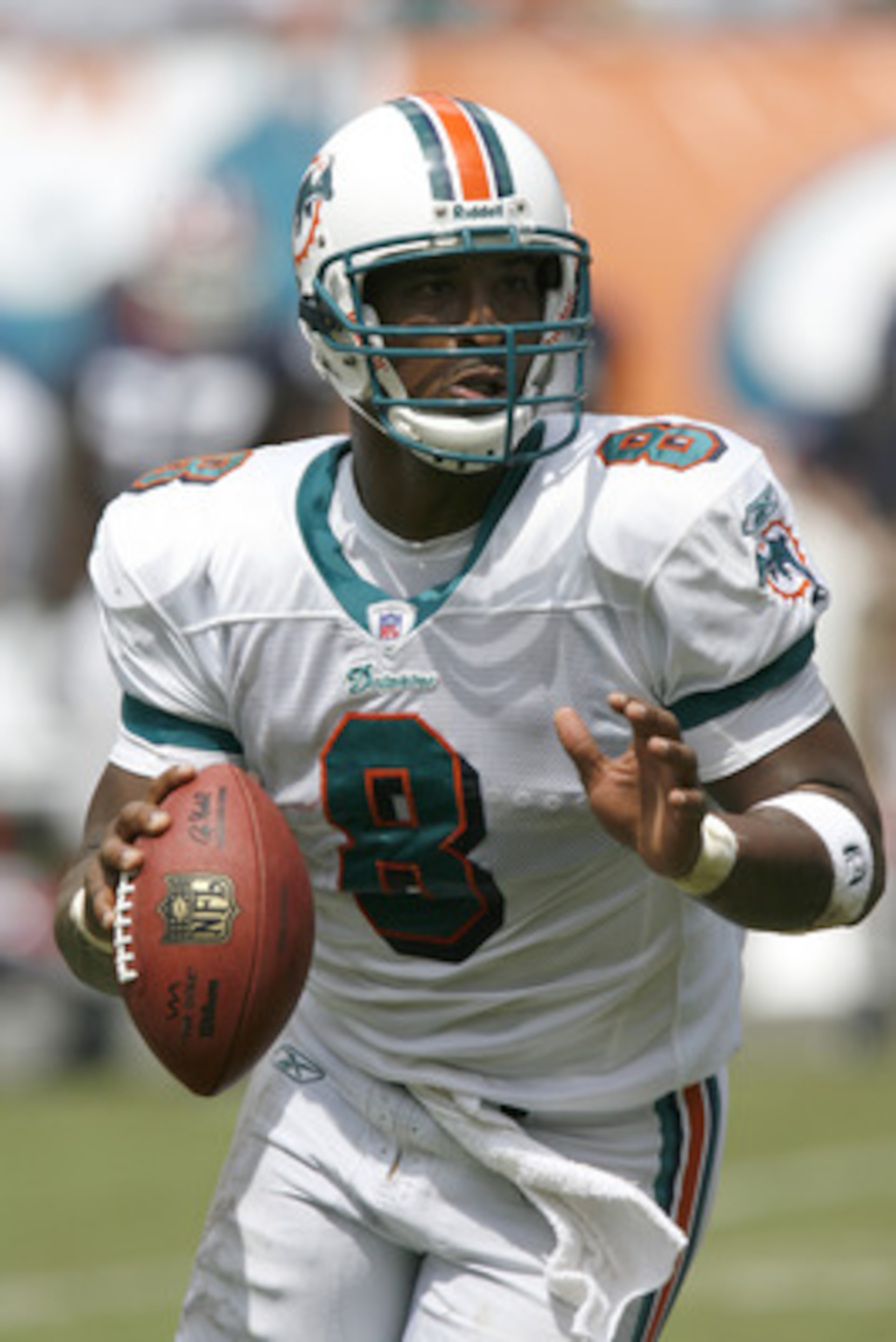
Drew Brees or Daunte Culpepper? One of these two quarterbacks would surely descend from the free agency heavens and solve the Dolphins' agonizing quarterback mishaps.
Sophomore head coach Nick Saban essentially had first dibs on the pair, but his medical staff was left to decide which severely-injured quarterback would return to top form. The Dolphins' staff deemed Culpepper's recently torn ACL favorable to Drew Brees' surgically repaired throwing shoulder, and the rest is history.
Miami sent a second-round pick to the Vikings in exchange for Culpepper's services. The team promptly signed him to a huge contract, which probably payed Culpepper upward $6 million per year. The Dolphins would soon learn that Culpepper's knee was not healed, and stories of his prima donna attitude contrast painfully starkly to Drew Brees' charitable work in New Orleans.
After one season, the former Pro Bowler was ousted from South Beach.
.jpg?w=2560 "Texans-Mixon Released Football")

.jpg?w=2560 "Grading WWE Raw 🔠")


.jpg?w=2560 "2 NFL Officials Suspended")
