
2011 NBA Draft: Kemba Walker vs. Brandon Knight, Who Has Brighter Future?
In 2011, the NBA is undeniably a point guard's league.
The current crop is at its highest level in years, with an outstanding mix of savvy veterans (Steve Nash, Chauncey Billups, Andre Miller), All-NBA stars entering their primes (Chris Paul, Deron Williams) and upstart youngsters with enormous potential (Derrick Rose, Rajon Rondo, Russell Westbrook, Steph Curry).
With names like that warming up in the opposing locker room on a nightly basis, having a stud point guard to counter them is damn near imperative.
Luckily, for a few teams in desperate need of a quality floor general, there are several worthy candidates in this year's draft class.
We all know Kyrie Irving is going first overall to the Cavaliers; that's been a given ever since the ping pong balls bounced in Cleveland's favor and the cameras panned to a smiling Irving.
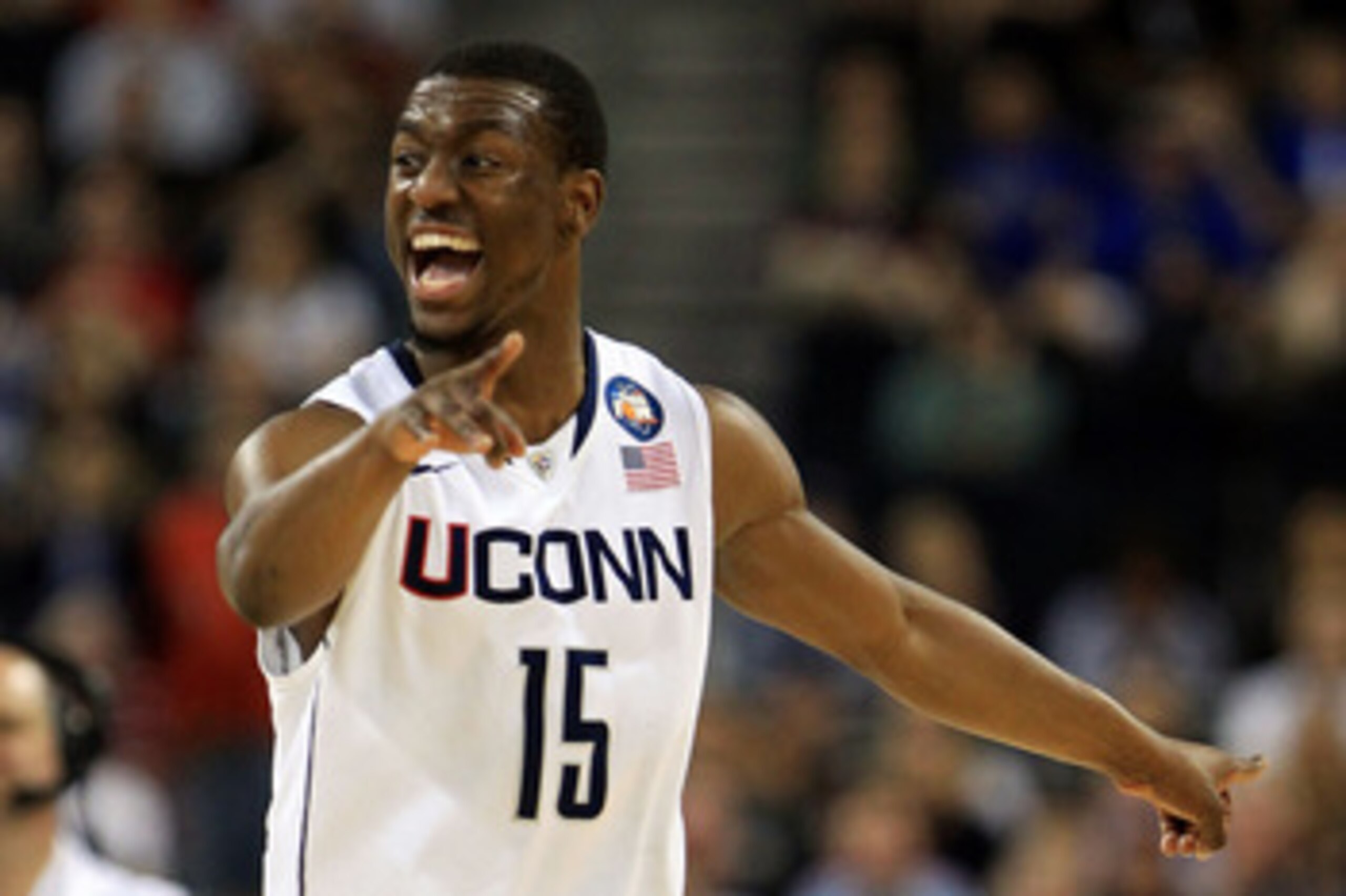
But what about the guaranteed second and third point guards going off the board, Kemba Walker and Brandon Knight?
They have contrasting styles, yet similar effectiveness. Both will be solid pros, but let's take an in-depth look at how their respective attributes will translate to the NBA.
Size
1 of 6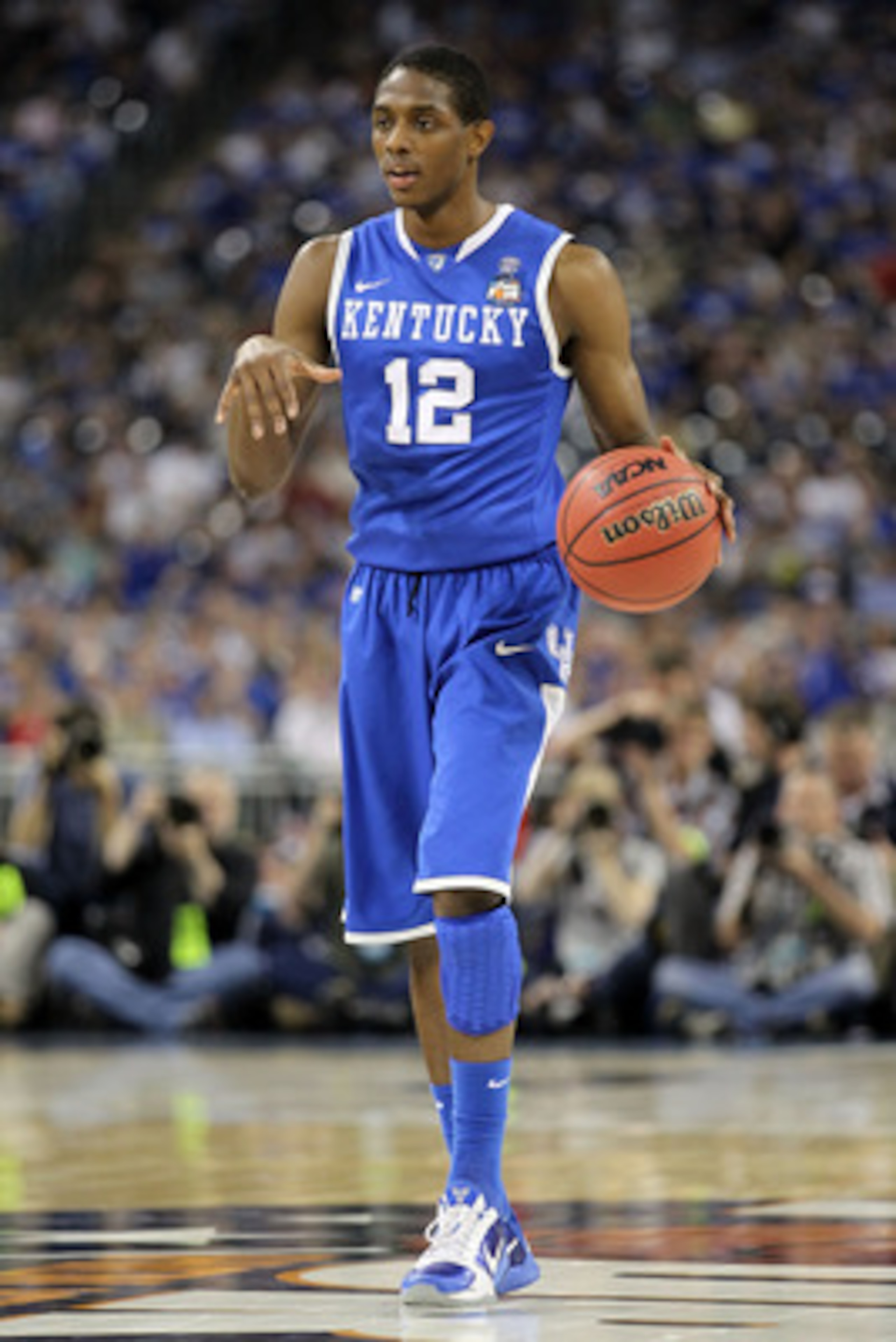
Knight obviously has the advantage here, as he is the ideal size for today's prototypical NBA point guard: 6'3" tall, 180 pounds, and a 6'6" wingspan.
He will need to add a little muscle over the next several years, but I hardly see that as being a major issue.
Walker, although once regarded as possibly too small for the rigors of the NBA, isn't actually as diminutive as once thought. At the Chicago pre-draft combine, he turned in solid measurements of 6'1" tall, 185 pounds, and a 6'3" wingspan.
The Utah Jazz—holders of the third overall pick—generally covet bigger point guards (they drafted Deron Williams over Chris Paul in '05), and I would be surprised if they didn't select Knight.
However, Walker's size, or lack thereof, shouldn't be much of a concern for other teams in the market for a point guard. Smaller point guards have been quite successful in the NBA; look no further than the newly crowned NBA champion Dallas Mavericks, who employ 5'10" J.J. Barea, a player whose penetration/attacking style is very similar to Walker's.
Athleticism
2 of 6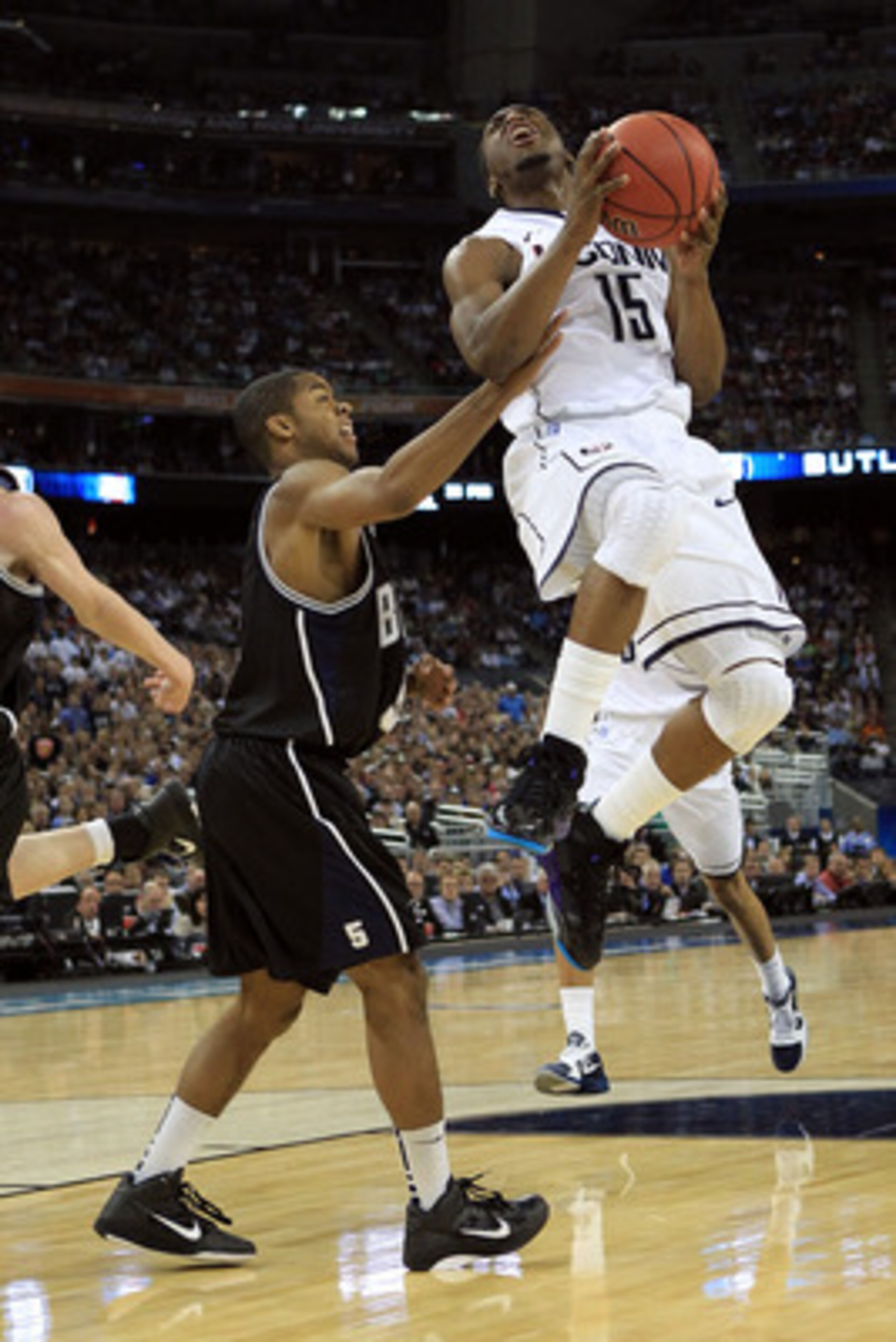
Knight will undoubtedly hold his own in the league from a physical standpoint, but Walker's athleticism is simply absurd.
Walker has a unique blend of blinding speed, exceptional quickness, great leaping ability, and an aggressive mindset.
He changes directions at full speed and cannot be contained by just one man off the dribble. He is very powerful for his size and is able to finish at the rim while absorbing contact.
His combine numbers don't exactly do his athleticism justice since they don't perfectly translate to what actually happens during a game. But his maximum vertical leap of 39 inches is very impressive.
Knight isn't really a threat to dunk on people like Russell Westbrook does, and he will likely get pushed around by stronger guards for his first year or two in the NBA.
But his speed and length make up for what he lacks in muscle. He will never have to worry about his place in the league because of a lack of athleticism.
Defense
3 of 6
Both will struggle to defend a certain type of point guard, but I doubt it will be a major detriment to either's career.
Knight will have a tough time against smaller, quicker point guards who like to penetrate into the lane. Walker on the other hand will occasionally be taken advantage of by tall, strong guards who can post him up in isolation situations.
While defense can always be improved upon, it is not a major question mark for either player as of now.
Walker is a very opportunistic defender, adept at swiping lazy passes or careless dribbles and turning them into two points at the other end.
Knight is able to use his 6'6" wingspan to challenge opponents' shots, even if he gets beat off the dribble.
Will they be able to defend Westbrook and Derrick Rose? Probably not. But frankly, no one guards those guys anyway.


Scoring
4 of 6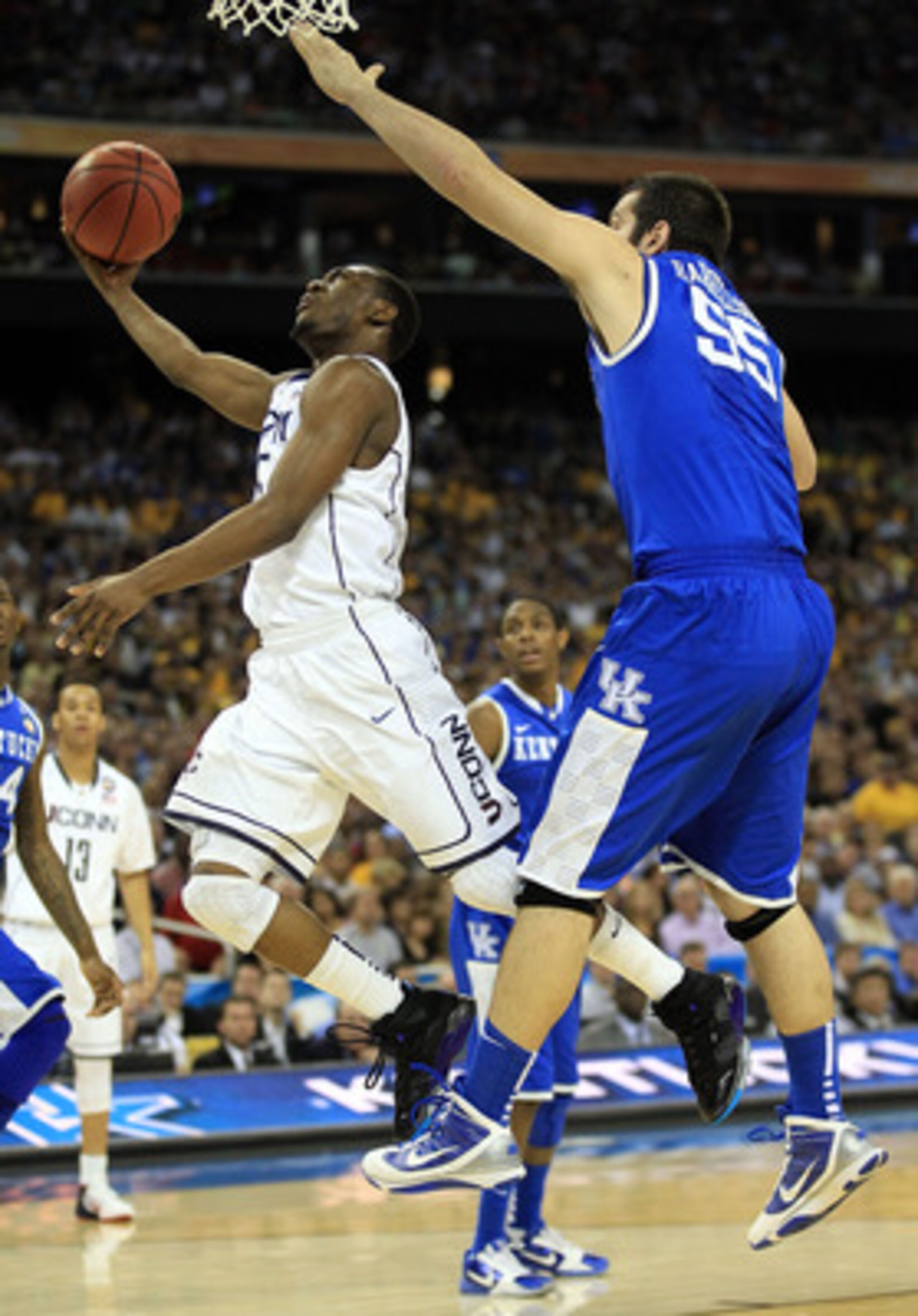
Both were prolific scorers last season, with Walker putting up 23.5 points per game while Knight averaged 17.3 in his lone collegiate season.
Despite their similarly impressive numbers, they score in very different ways.
Walker has mastered the art of creating space with a wicked crossover and a great understanding of how to utilize jab steps and pump fakes. Once he gets that space, he has a solid step-back jumper from the midrange, as well as an ever-improving package of floaters and scoop shots. And his aggressive style leads to plenty of opportunities from the free-throw line (7.7 attempts per game last year).
He will also be a capable three point shooter at the next level. He hit 33 percent of his threes last season, and while that doesn't exactly scream "sharpshooter", one must take into account the high number of bailout threes he launched with the shot clock winding down.
Knight already possesses NBA range on his three pointer, and will certainly have to be respected from deep. He also has a very quick, fluid pull up jumper that often catches defenders off guard. His length and decent athleticism allow him to finish around the rim effectively.
They left a little to be desired in the efficiency department last season (both shot just 42 percent on field goals) but this can be attributed to the heavy offensive burden that each had to carry.
I expect both players to score consistently in the NBA, regardless of the defense being employed against them.
Pure Point Guard Skills
5 of 6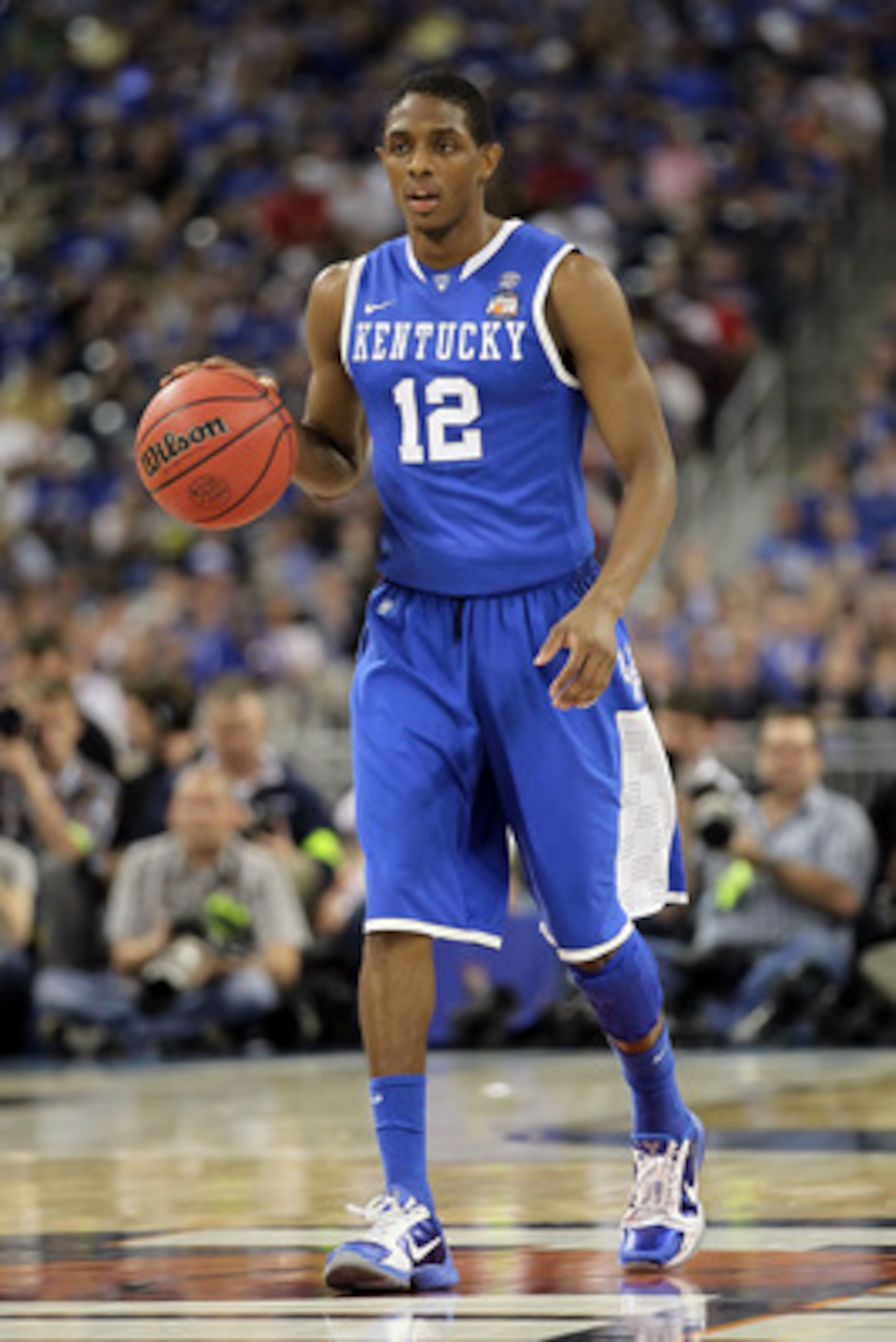
Walker and Knight are both considered combo guards who will need to learn the intricacies of the position at the NBA level.
Walker's ball handling ability is magnificent, but Knight's needs serious work. His dribble is way too high (look where the ball is in the picture) and will be continuously picked off by quick defenders.
He also has a tendency to turn the ball over (just a 1.3 assist-to-turnover ratio) and often tries to make the spectacular pass rather than the easy one.
Knight is only 19 and certainly has plenty of time to improve upon these weaknesses. But if he never grasps the nuances of the point guard position, it will be difficult for him to succeed.
Walker has the edge over Knight in efficiency (solid 1.95 assist-to-turnover ratio) and is a better distributor, often finding open teammates after commanding defensive help.
The main question mark for Walker will be whether or not he can adjust to an NBA style of offense.
The offense he ran at Connecticut was mostly "give the ball to Kemba, and everyone get the hell out of the way." It won't be like that at the next level, where he will be counted on to facilitate for others more than himself.
If Walker is able to organize and execute an NBA style offense, he will be an excellent point guard in this league for many years.
Verdict
6 of 6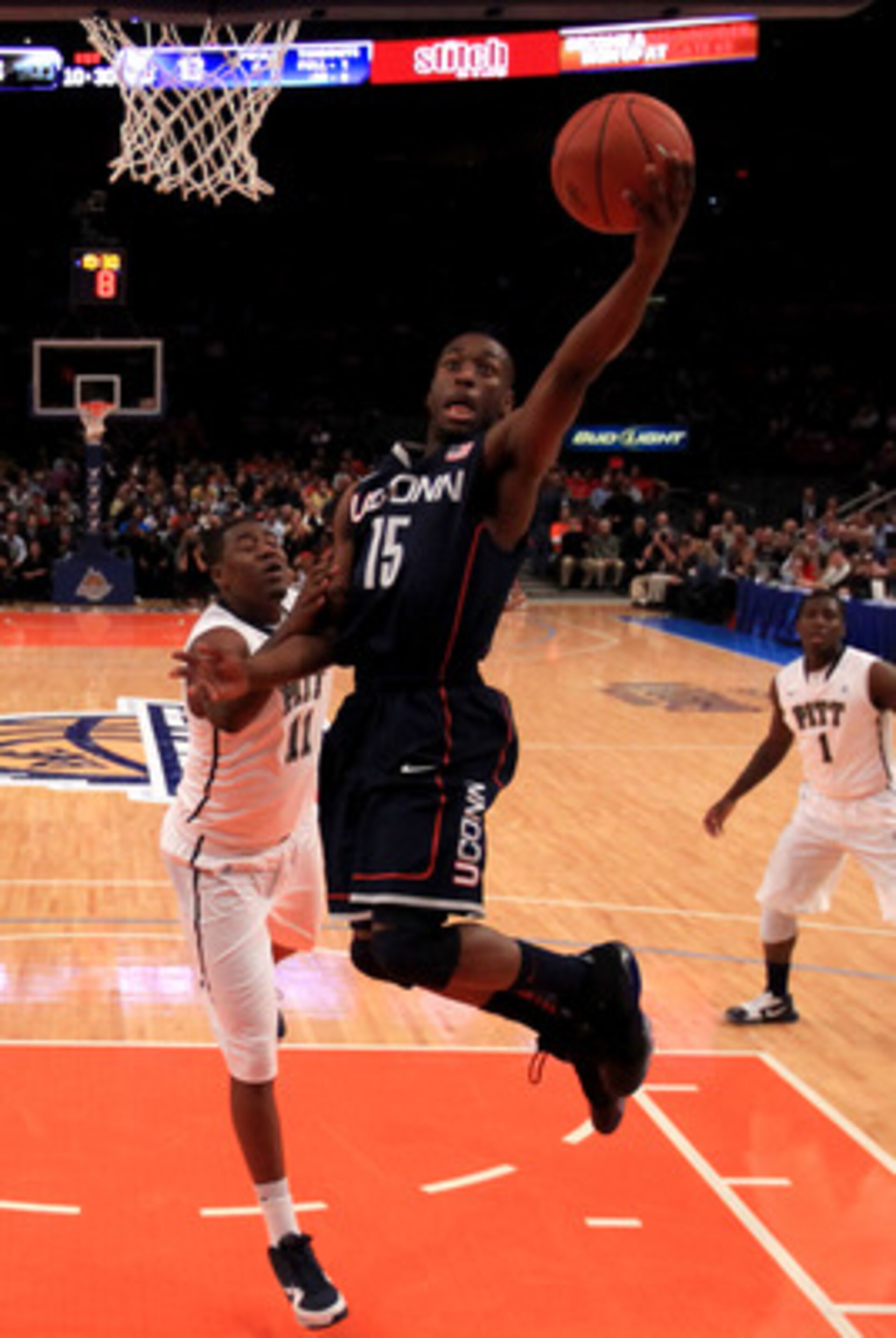
I believe Knight and Walker will both have long careers in the NBA. They are just too skilled, too gifted, and too driven for anybody to convince me otherwise.
As far as who has the brighter future, I have to give the nod to Walker.
Most people predict Knight will be selected before Walker because of his size and supposedly higher potential, but the areas where Walker excels (speed, aggression, ability to penetrate) translate so perfectly to today's NBA game.
He will be able to get into the lane at will and create for himself and others. He's a one man fastbreak and a more natural passer than Knight.
Also, you cannot discount his intangibles. He is a fearless competitor and proven winner with the heart of lion (a la former MVP Allen Iverson). He has an undeniable flair for the dramatic and won't back down in any situation.
You can go to war with Kemba Walker knowing that he will undoubtedly empty his full clip before going down.
Don't get me wrong, Knight certainly succeeds in high pressure situations (he hit game winners against Princeton and Ohio State in the NCAA tournament) and will be an excellent player for many years.
But if I'm in a do-or-die playoff game, I want Kemba Walker on my side.

.jpg?w=2560 "Grading WWE Raw 🔠")

.jpg?w=2560 "Bijan's INSANE 1st Half 🤩")
.jpg?w=2560 "Viral Rams Coach Vid 🖕")
.jpg?w=2560 "Injury-stricken Seahawks signing veteran RB")

.jpg?w=2560 "2 NFL Officials Suspended")