
2011 NBA Mock Draft: Full 1st Round Featuring San Antonio Spurs Outlook
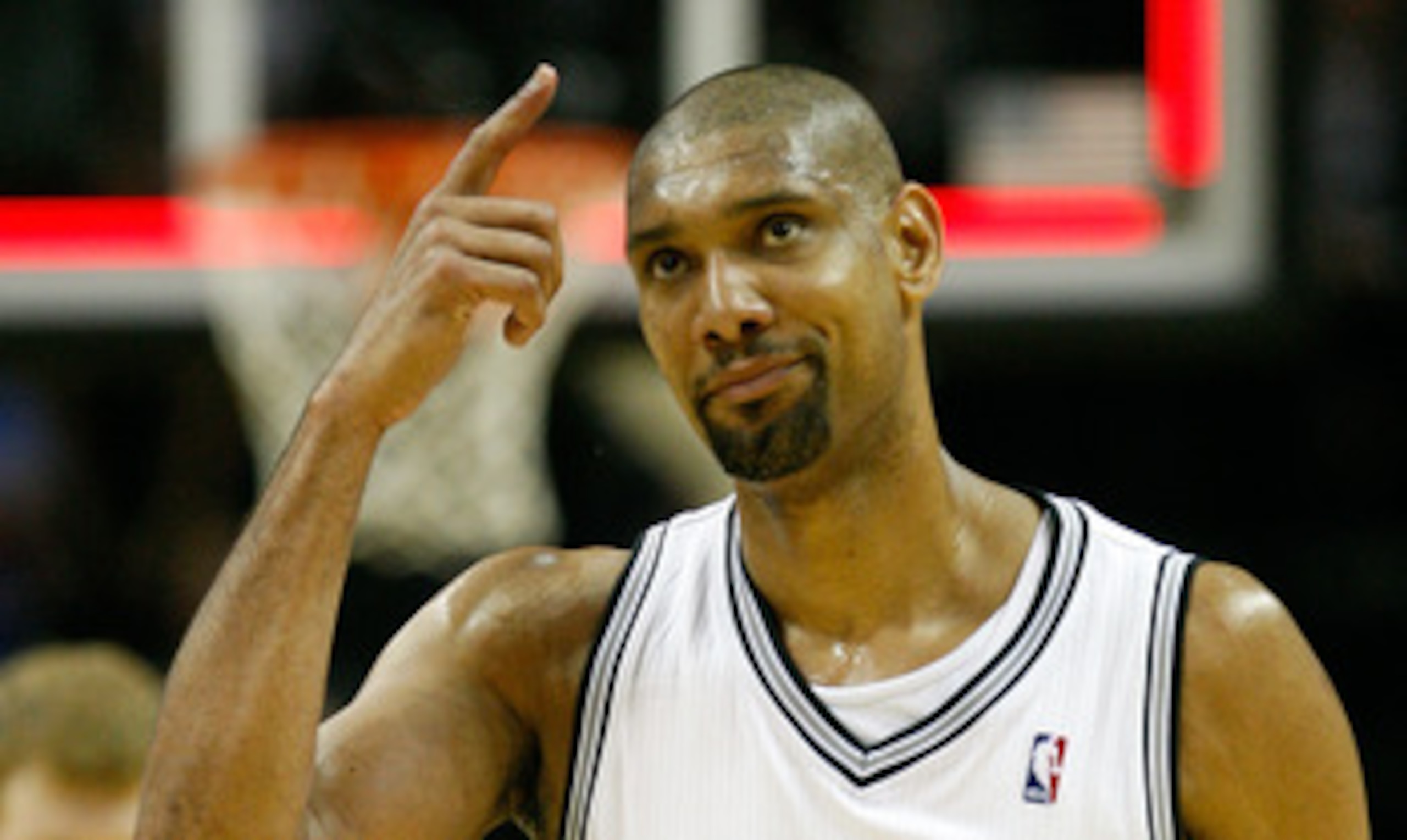
After holding the NBA's best record for the majority of the season, the San Antonio Spurs were dismantled by a younger, more energetic Memphis Grizzlies squad in the first round of the playoffs. After the upset, analysts and fans around the league declared the Spurs dynasty was officially over, and it's hard to argue.
The Spurs core isn't getting any younger, and their recent draft picks have failed to develop into the impact players needed to make a deep run in the playoffs. From 1999 through 2003, the Spurs drafted five foreign players. Their names? Manu Ginobili, Tony Parker, Luis Scola, Leandro Barbosa and Robertas Javokas. By most accounts, that would be considered four hits and one miss, even though Scola and Barbosa have produced elsewhere.
Since 2003, however, the Spurs have spent nine picks on foreign players. The names this time include Sergei Karaulov, Beno Udrih, Ian Mahinmi, Damir Markota, Giorgos Printezi, Tiago Splitter, Goran Dragic, Nando de Colo and Ryan Richards. Udrih is the only player on that list that could be considered to have made an impact in the NBA. To be fair, the two most recent selections, de Colo and Richards, should be give more time before being considered busts.
Now, it is understandable why the Spurs would select so many overseas prospects. Not only is there no immediate financial commitment, but they are usually picking in the late first round when the high-impact players are already off the board.
Also, they haven't exactly struck it rich when they did select American collegiate players, either. Over the past four drafts, the Spurs have swung and missed on three college players; Marcus Williams, James Gist and Jack McClinton. Another, James Anderson, has two strikes against him—he can't stay healthy, and he couldn't find his shooting stroke when he was on the floor. The only two hits they did get were DeJuan Blair and George Hill.
So what should the Spurs do in this season's draft? In the first round, they should look towards the best available small forward, somebody who can step in for the frequently struggling Richard Jefferson and make an immediate impact. If Kenneth Faried is available with the pick, however, they should abort the small forward plan and select the rebounding machine.
In the second round, the Spurs should look for the best remaining big man. If there is no power forward or center they deem worthy of playing right away, they should select another foreign player.
Now that we know what the Spurs should do, let's take a look at all 30 first-round picks.
1. Cleveland Cavaliers: Kyrie Irving, PG, Duke
1 of 30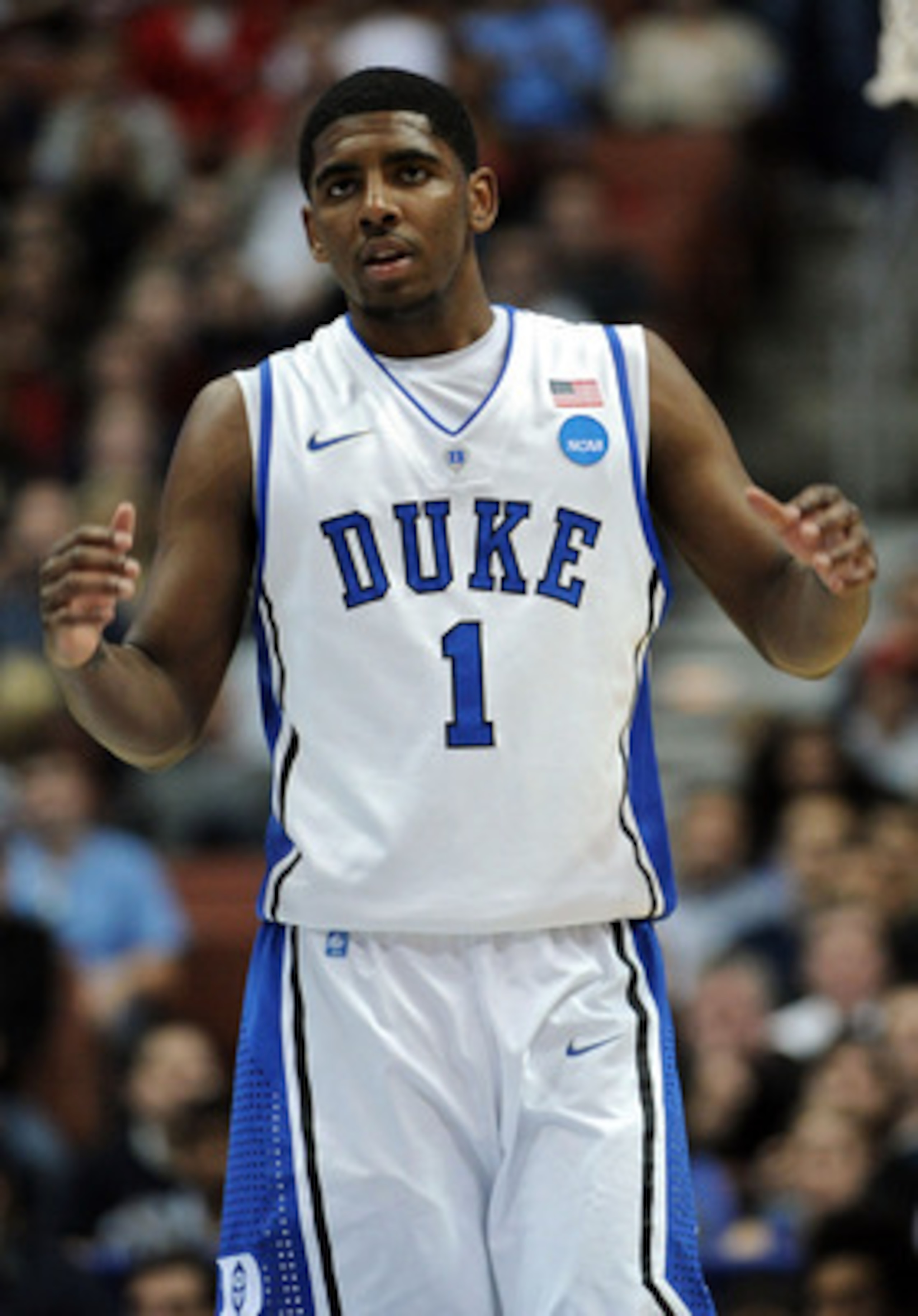
Although Derrick Williams would be a better fit for the Cleveland Cavaliers, who already have Baron Davis under contract for two more seasons, Kyrie Irving is the best player in the draft and the Cavs will take him with the first overall pick.
Despite missing most of the season with a foot injury, Irving was able to impress scouts with his all-around ability. In the 11 games in which he participated, he averaged 17.5 points, 4.3 assists, 3.5 rebounds and 1.5 steals per game while shooting 53 percent from the floor, including 46 percent from three and 90 percent from the free-throw line.
The only concern surrounding Irving is his health. When he returned from the foot injury to participate in the NCAA tournament, he appeared to be a shell of the player that started the season with the Blue Devils. He did finish strong with a 28-point effort against Arizona and passed all the medical exams at the Combine.
As long as he gets back into elite shape heading into his rookie season, Irving should provide Cleveland with some star power once again.
2. Minnesota Timberwolves: Derrick Williams, PF, Arizona
2 of 30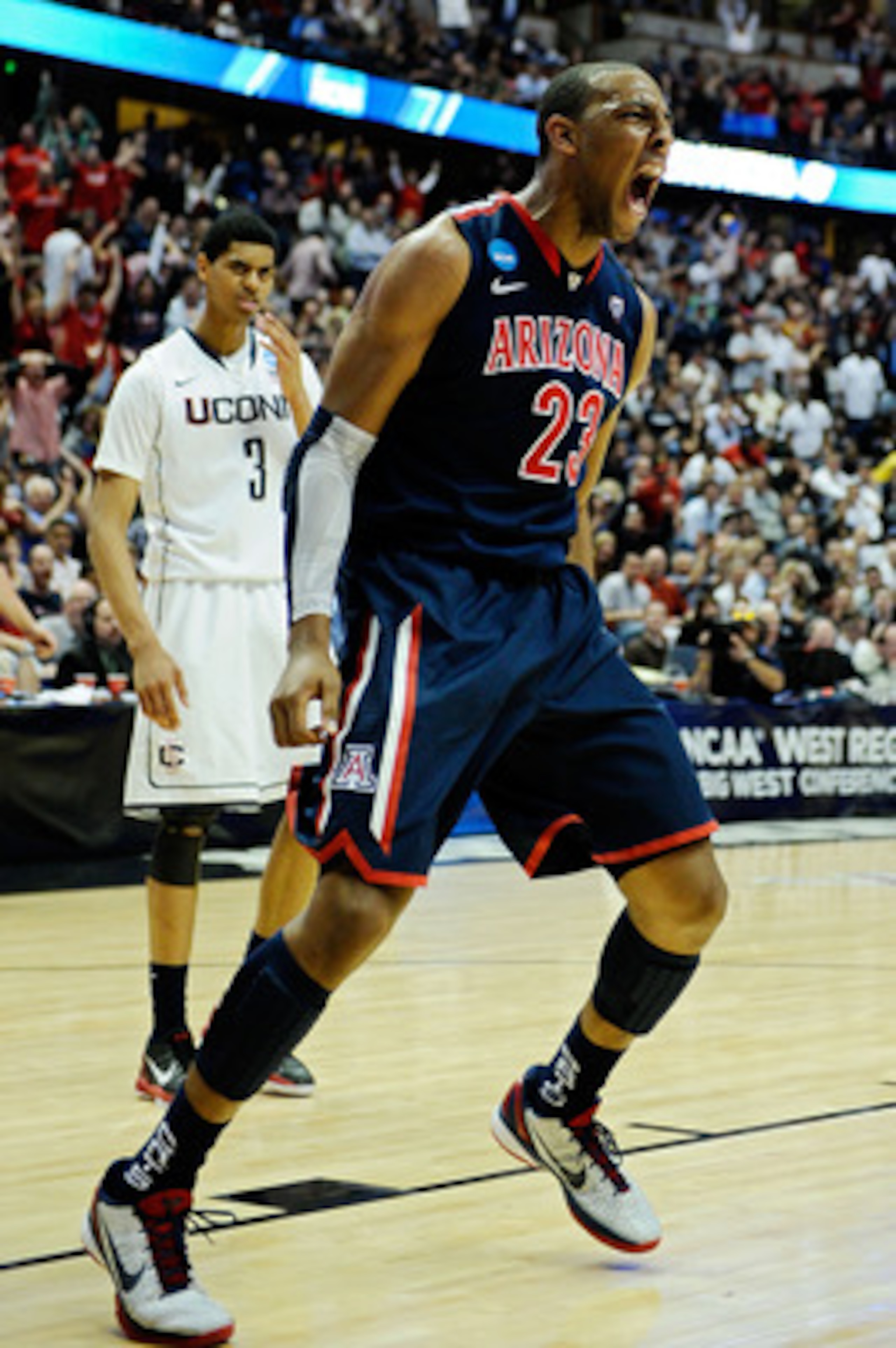
Derrick Williams is the most explosive player in the draft and will team up with Kevin Love to create a very formidable duo in the post for the Minnesota Timberwolves. Add in a rejuvenated Michael Beasley and the Wolves will have one of the most exciting frontcourts in the league.
Williams made improvements across the board from his freshman to sophomore year with the Arizona Wildcats. While playing in 30 minutes per game, he averaged 19.5 points and 8.3 rebounds while shooting nearly 60 percent from the floor and 75 percent from the line en route to being named the Pac-10 Player of the Year.
Williams offensive game is built around his freakish athleticism, but he is still working on his jump shot and will need to start being a better distributor from the post to become an all-around offensive threat. His defense is solid, although you would expect more than 0.7 blocks per game from an athlete like Williams. Learning to guard NBA power forwards will be the biggest task for him in his rookie season.
3. Utah Jazz: Brandon Knight, PG, Kentucky
3 of 30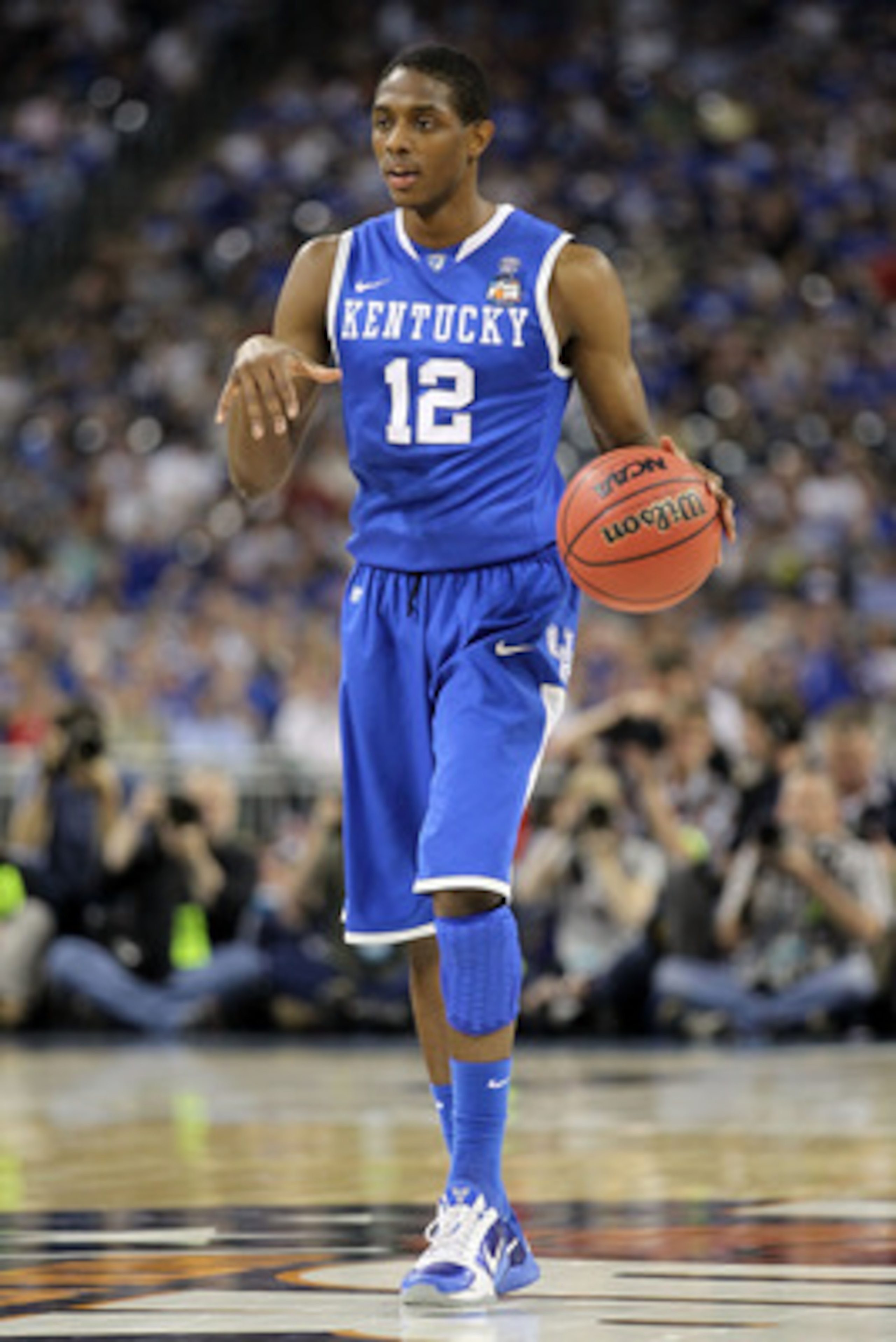
After Deron Williams weaseled his way out of town, the Utah Jazz are left with an interesting mix of veteran and young players. Devin Harris is a capable point guard that struggled throughout the season but should bounce back next season while Al Jefferson, Paul Millsap and Derrick Favors should provide a solid frontcourt for years to come.
Brandon Knight might not be the best fit for the Jazz, who could use a true shooting guard, but he will be able to step in right away and play along side Harris, while also fine tuning his point guard skills. Knight averaged 17.3 points, 4.2 assists and four rebounds in his only season at Kentucky but also turned the ball over more than three times per game, which is a ratio that will need to improve before he becomes a full-time point guard.
His defense is NBA-ready but will face a test if he is forced to guard shooting guards while playing with Harris. The only other question mark surrounding Knight is his consistently. This was illustrated very well in the NCAA tournament when he scored just two points against Princeton, followed by 30 against West Virginia, and then, only nine points against Ohio State. Everybody has an off night, but they will need to be few and far between if Knight wants to be a star in the NBA.



4. Cleveland Cavaliers: Jonas Valanciunas, C, Lithuania
4 of 30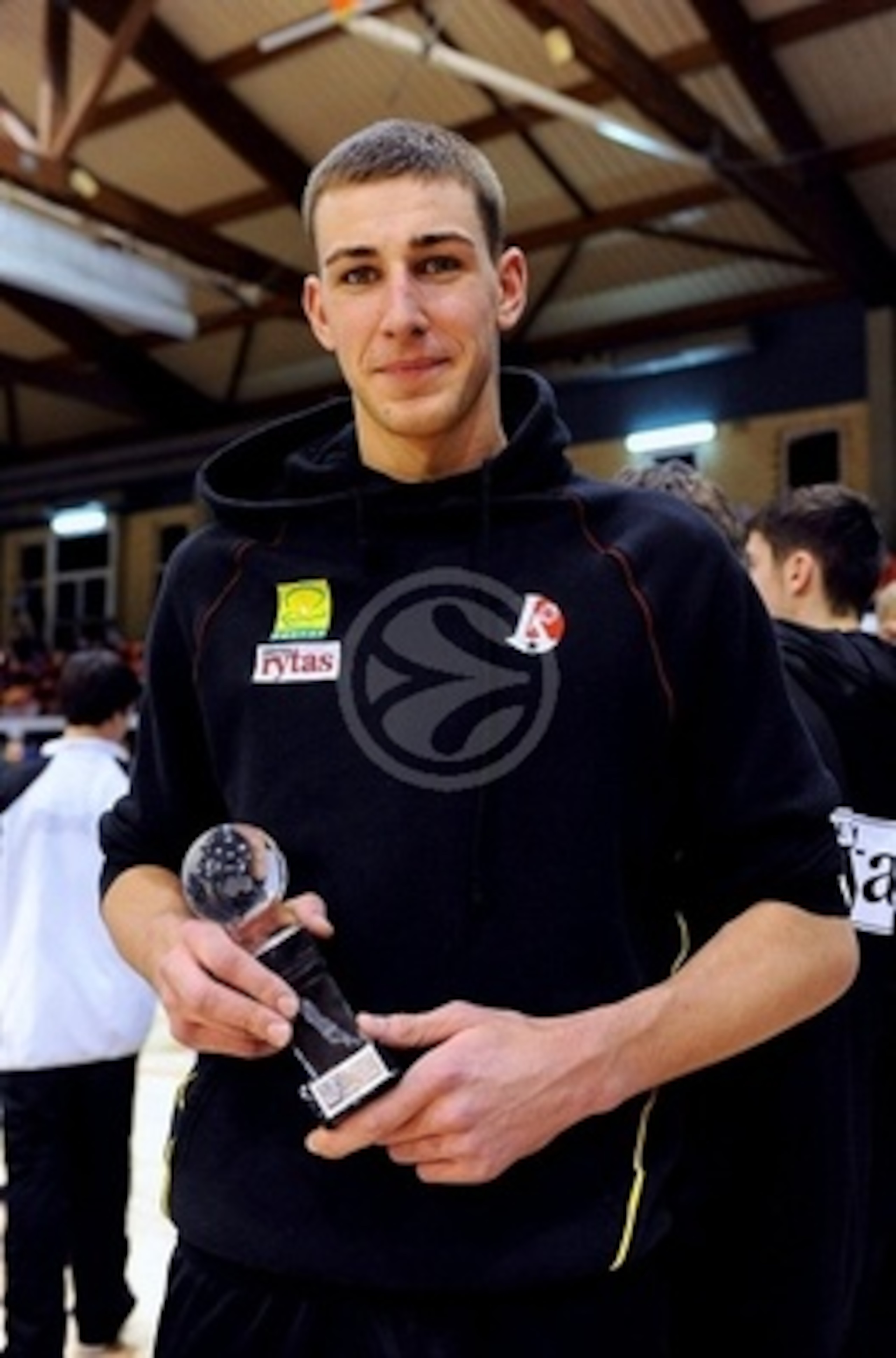
Jonas Valanciunas is an intriguing prospect because he is still growing and already has a wingspan well over seven feet. There will undoubtedly be a transition period once he comes to the NBA, which will require a buyout of his current Euroleague contract, but the potential is too good to pass up for a Cavs team in desperate need of size.
His offensive game is more developed than his defense, his isn't necessarily a bad thing for a big man like Valanciunas. Unlike most tall, lanky players in the past (Yao Ming), Valanciunas doesn't struggle to run up and down the floor and has good agility around the hoop.
He just turned 19 in May, so there is a lot of room for growth and improvement. His biggest problem appears to be defensive positioning as he racked up 3.1 fouls per game in just 15 minutes in the Euroleague this season. Assuming he comes to the NBA right away, his minutes will be limited due to both inexperience and those foul issues, but the potential to become a dominant interior force is undeniable.
5. Toronto Raptors: Enes Kanter, C, Kentucky
5 of 30
Ineligible for his only season at Kentucky, nobody is quite sure what to expect from Enes Kanter. The talent is seemingly there, but without a season of college basketball experience under his belt, it is unclear how NBA-ready Kanter is right now.
From the limited amount of time scouts have seen Kanter, they have come out impressed with his all-around game. Unlike Williams and Valanciunas, strength is not an issue with Kanter, who should be able to step in and provide solid defense against opposing big men.
The main cause for concern with Kanter, besides inexperience, is his knees. That issue could mean Kanter slides a bit on draft day because teams see what happens to big men like Tim Duncan and Kevin Garnett when their knees start to give out. So, for a 19-year-old to have knee problems already is definitely a concern.
6. Washington Wizards: Jan Vesely, PF, Czech Republic
6 of 30
Jan Vesely has all the tools to become a complete NBA player. He will need to bulk up if he is going to guard opposing power forwards, but the size and wingspan is already there. The one word that comes up a lot in scouting reports about Vesely is energy, and that's always a good thing.
Like most international prospects, there will be a learning curve for Vesely during his first few years in the league, and he will need to improve his mid-range game before he reaches his full potential. His offensive game close to the basket is much more polished and will be what he relies on in his first couple years with the Washington Wizards.
On defense, he is a bit of a tweener. He has the length to guard NBA power forwards but probably doesn't have the strength, and he has the size to guard NBA small forwards but probably doesn't have the speed. So, he will need to pack on some pounds after the draft.
7. Sacramento Kings: Donatas Motiejunas, PF, Lithuania
7 of 30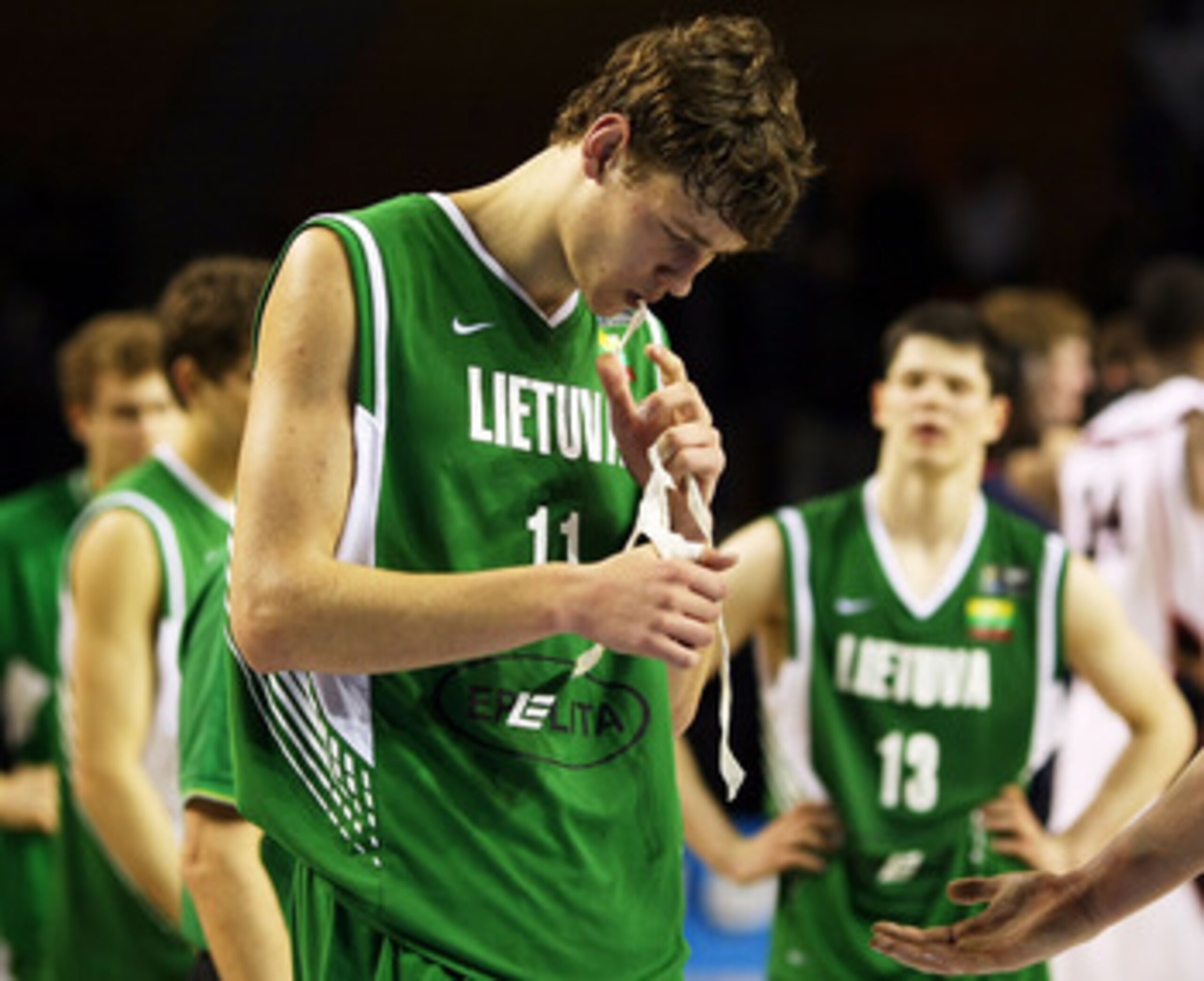
The Sacramento Kings make Donatas Motiejunas the fourth straight overseas player selected (Kanter never played in the United States). He represents another foreign big man that will need to hit the weight room if he is going to become the full package in the NBA.
Although his ability to knock down the outside shot has caused some people to compare him to Dirk Nowitzki, he is nowhere near as well-rounded of a player as Nowitzki was when he was drafted. That said, he is an excellent shooter with great potential. He will be able to team up with DeMarcus Cousins to provide a formidable frontline for the Kings.
Motiejunas has more talent than Vesely, but the reason he gets drafted after him is due to the energy mentioned on the previous slide. Vesely is a high-energy, hard-working forward, whereas Motiejunas has the reputation of being somewhat of a diva. The transition to the NBA calls for a lot of work, and scouts aren't sure Motiejunas is ready to put in the effort.
8. Detroit Pistons: Bismack Biyombo, PF, Congo
8 of 30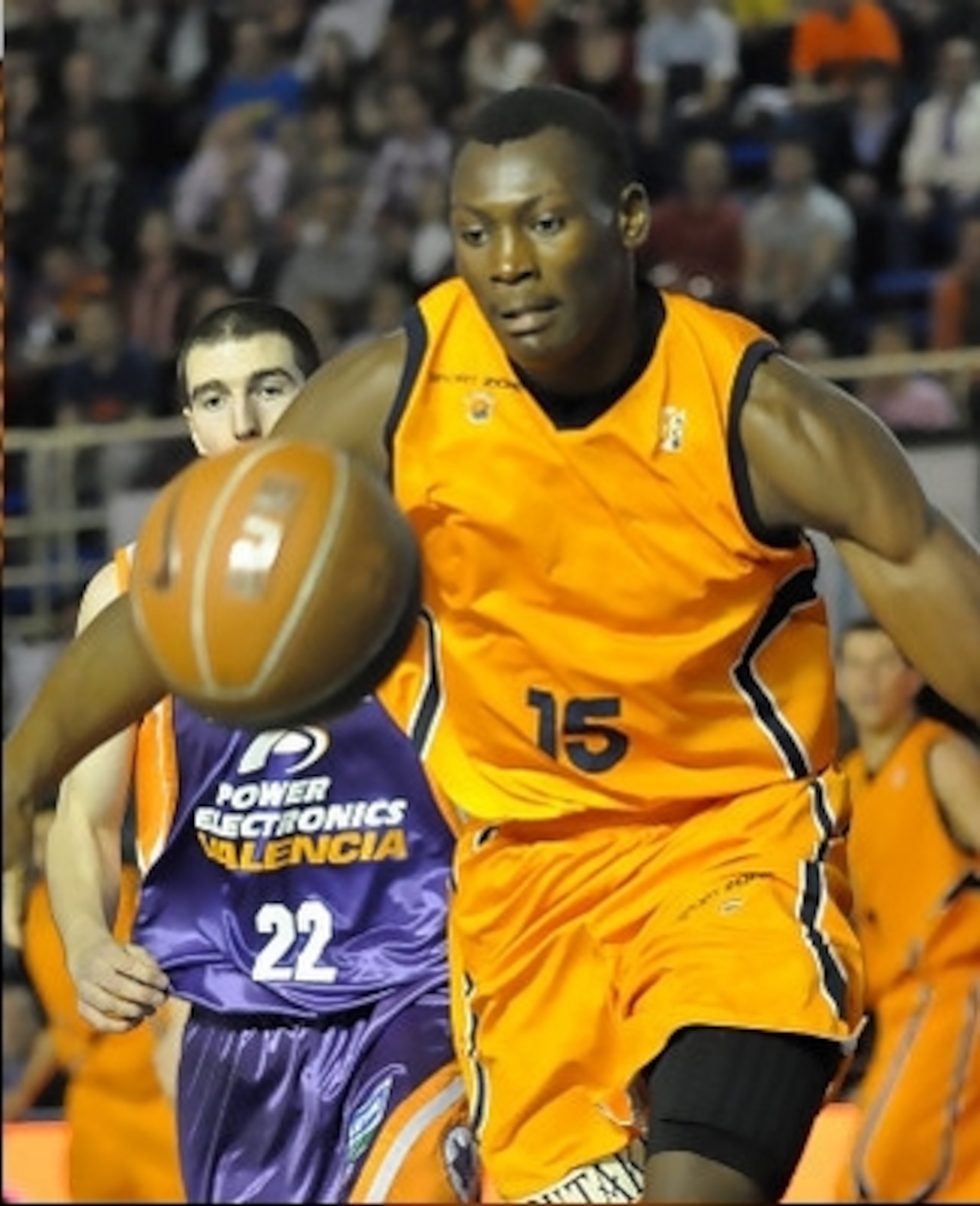
Bismack Biyombo is nothing more than a one-dimensional player right now, and it will likely be that way for quite awhile. His offensive game is extremely crude. However, that shows you how much of a defensive force he is because he still cracks the top 10 picks.
Detroit Pistons' fans know all about big men who are defensive wizards but are offensively deficient having watched Ben Wallace for eight years. Wallace is the guy most scouts compare Biyombo to and rightfully so. An interesting fact about Wallace, he has never average 10 points per game in his 16-year career, but he has averaged double-digit rebounds seven times.
Biyombo is still young, so all hope on the offensive end is not lost. He is a risky selection, especially this high in the draft, but Detroit needs size and, after the run on big men, he is the best one left.
9. Charlotte Bobcats: Alec Burks, SG, Colorado
9 of 30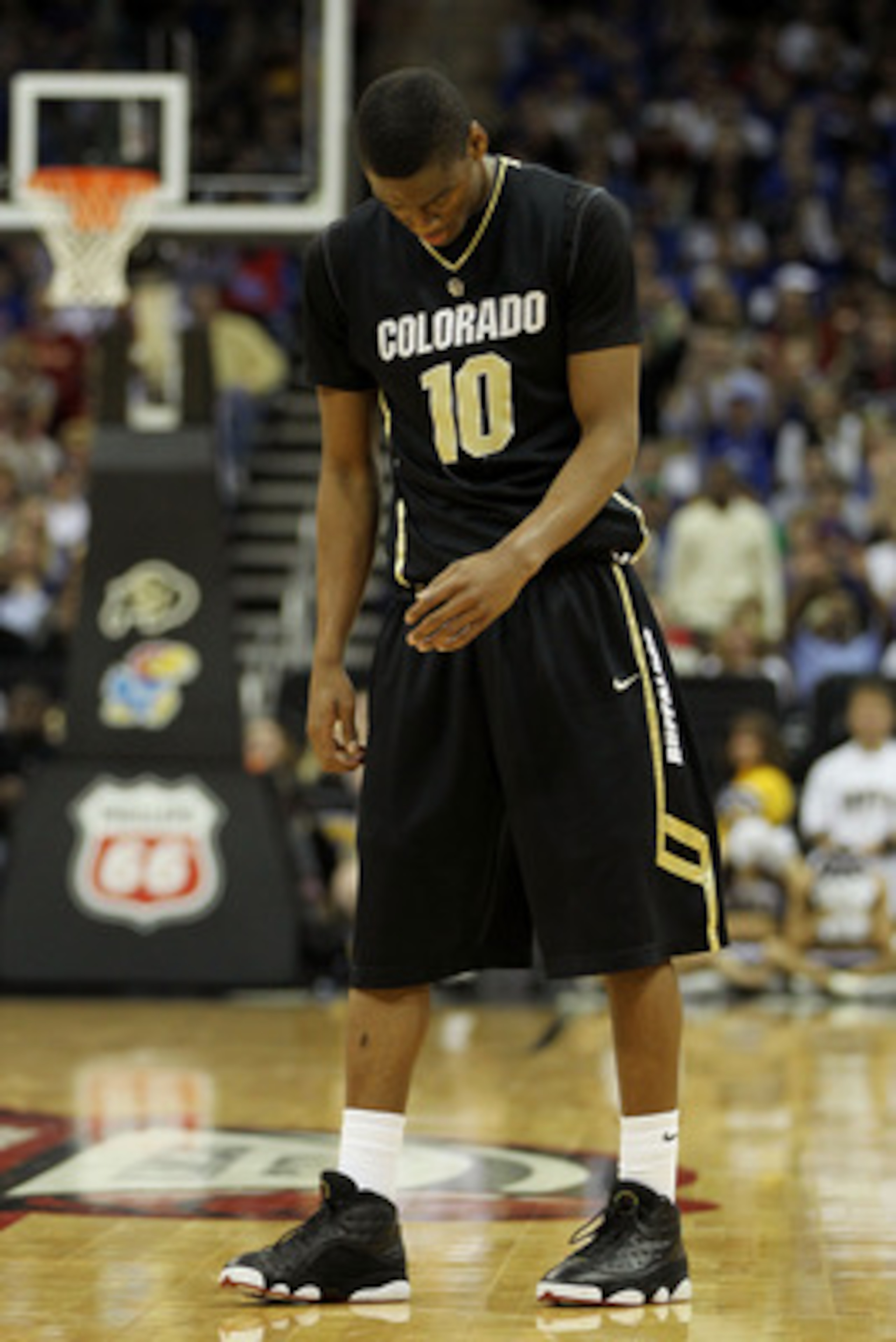
Despite being listed as a dual-guard on most websites, Alex Burks is going to be a shooting guard at the next level. His assist-to-turnover ratio is barely over one, which is not good enough to handle the ball on a consistent basis in the NBA. That works just fine for the Charlotte Bobcats, however, who are in need of a scoring guard like Burks.
He leaves Colorado after a sophomore season where he was a volume scorer, averaging 20.5 points on 22 shots per game. His outside shooting needs work, but Burks finishes well around the rim. He also averaged 6.5 rebounds last season, including 2.4 offensive boards, which is great for a guard. His size will allow him to defend opposing shooting guards right away and could become a top-notch defender over time.
Fortunately for Burks, the shooting guard depth in Charlotte is atrocious, so he should be able to step in almost immediately and gain valuable experience.
10. Milwaukee Bucks: Kawhi Leonard, SF, San Diego St.
10 of 30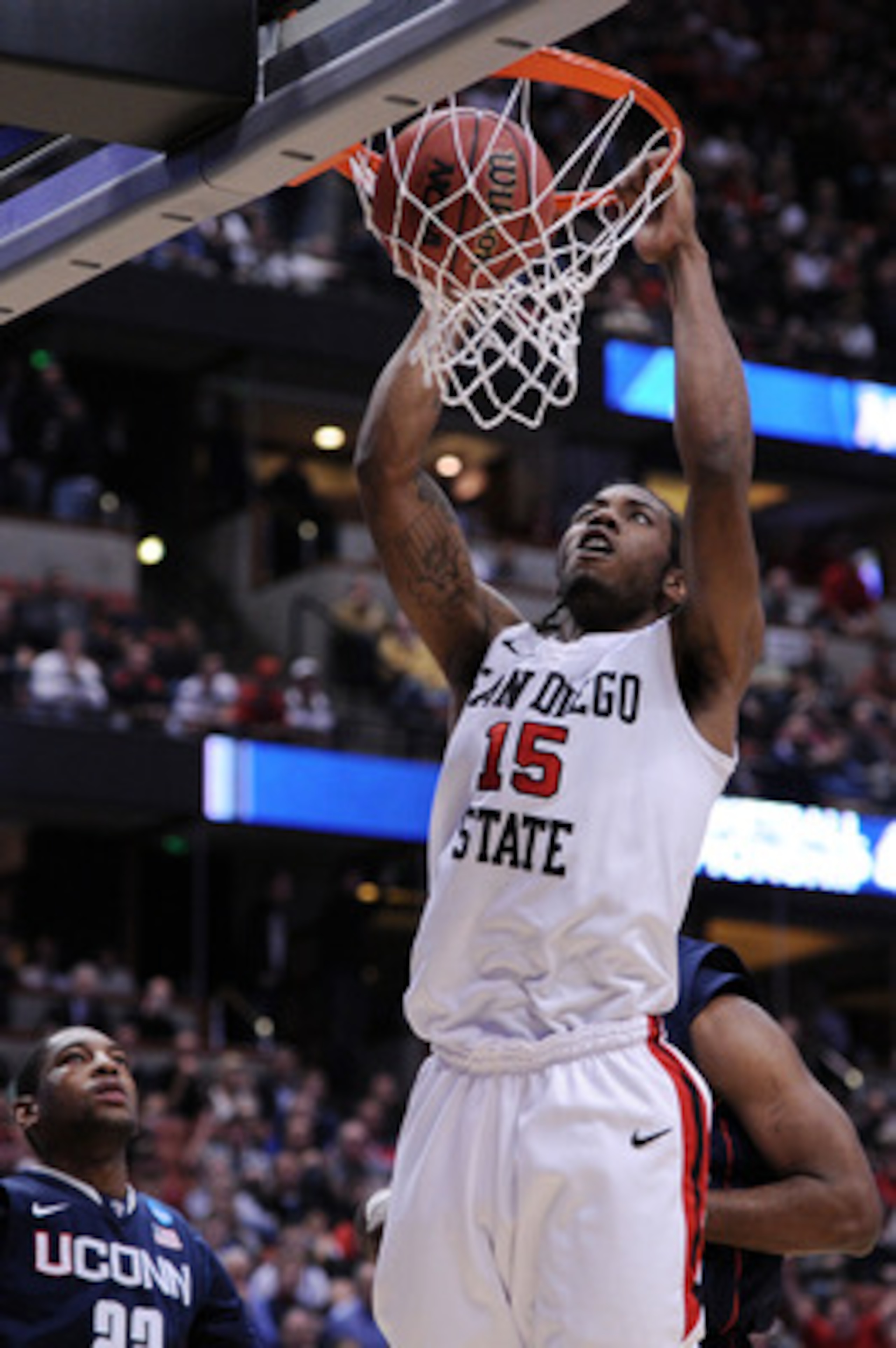
The Milwaukee Bucks missed the playoffs by two games this season in the weak bottom half of the Eastern Conference. Kawhi Leonard will be able to step in right away and instantly improve a team that struggled to find a consistent small forward all season.
Leonard's offensive game is still a work in progress, but he made strides with his perimeter shot in his second season at San Diego State. He averaged 15.5 points and 10.6 rebounds for the Aztecs. His defense is good enough to survive at this point, and he has the capability to improve once he improves his patience.
Leonard will be an upgrade over last season's small forward rotation for the Bucks, and if Brandon Jennings hangs around, might be the piece they need to slip into the playoffs next season.
11. Golden State Warriors: Marcus Morris, PF, Kansas
11 of 30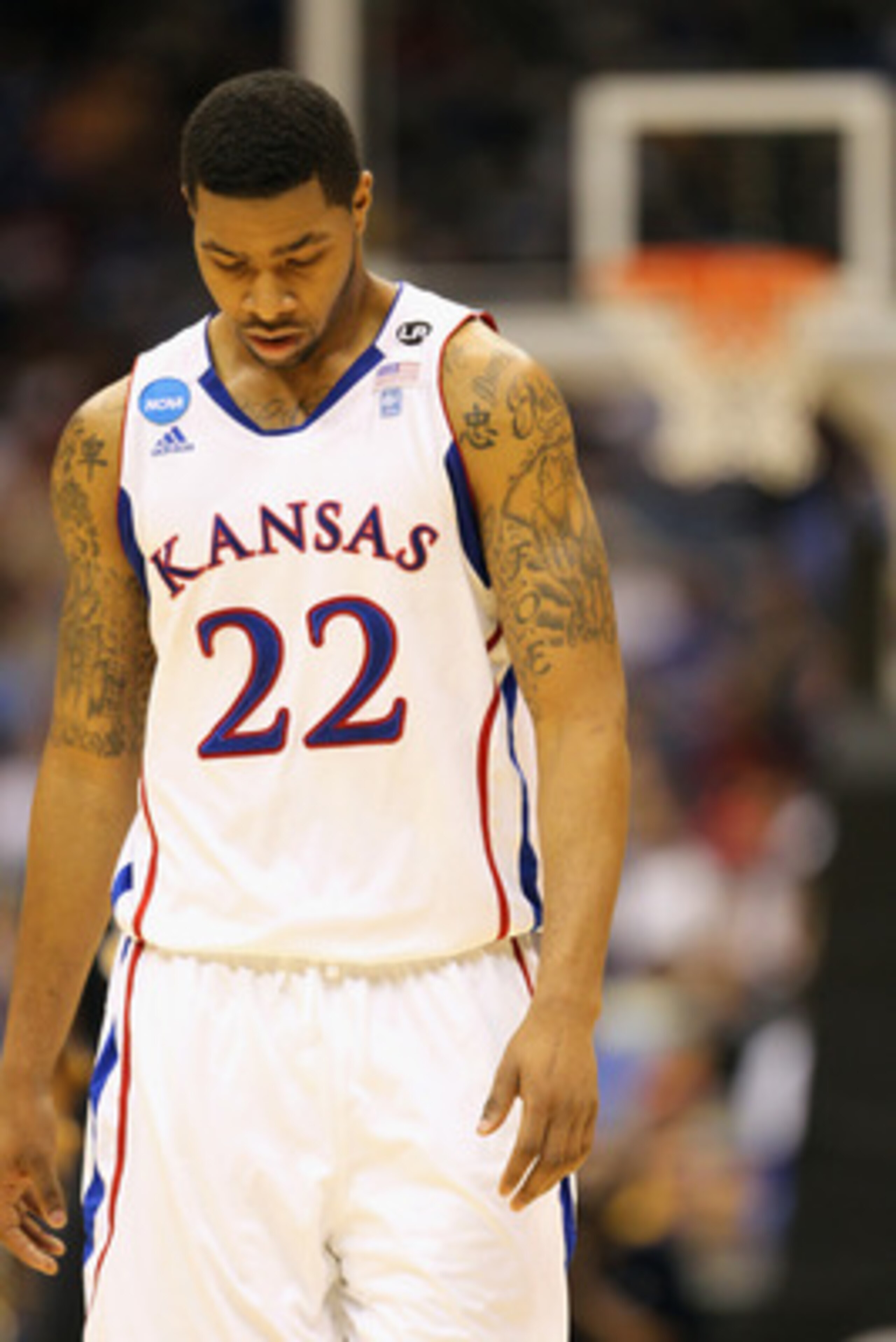
The Golden State Warriors are an exciting offensive squad that would benefit from a physical force like Marcus Morris. The only reason Morris is ranked outside of the top 10 is because what you see is what you get. Whereas most of the forwards selected before Morris have much higher ceilings than him, he is more NBA-ready and will provide instant help to Golden State's rotation.
After steady improvement for three years at Kansas, Morris finished his junior season averaging 17.2 points and 7.6 rebounds per game while shooting 57 percent from the field. He won't provide the explosiveness of a lot of his new teammates, but he will bring consistent rebounding, which is something the Warriors desperately need.
He is more of a big-body defender than shot-blocker (think DeJuan Blair) but isn't a major liability on the defensive end, although if he was, he would still fit in with the Warriors.
12. Utah Jazz: Klay Thompson, SG, Washington St.
12 of 30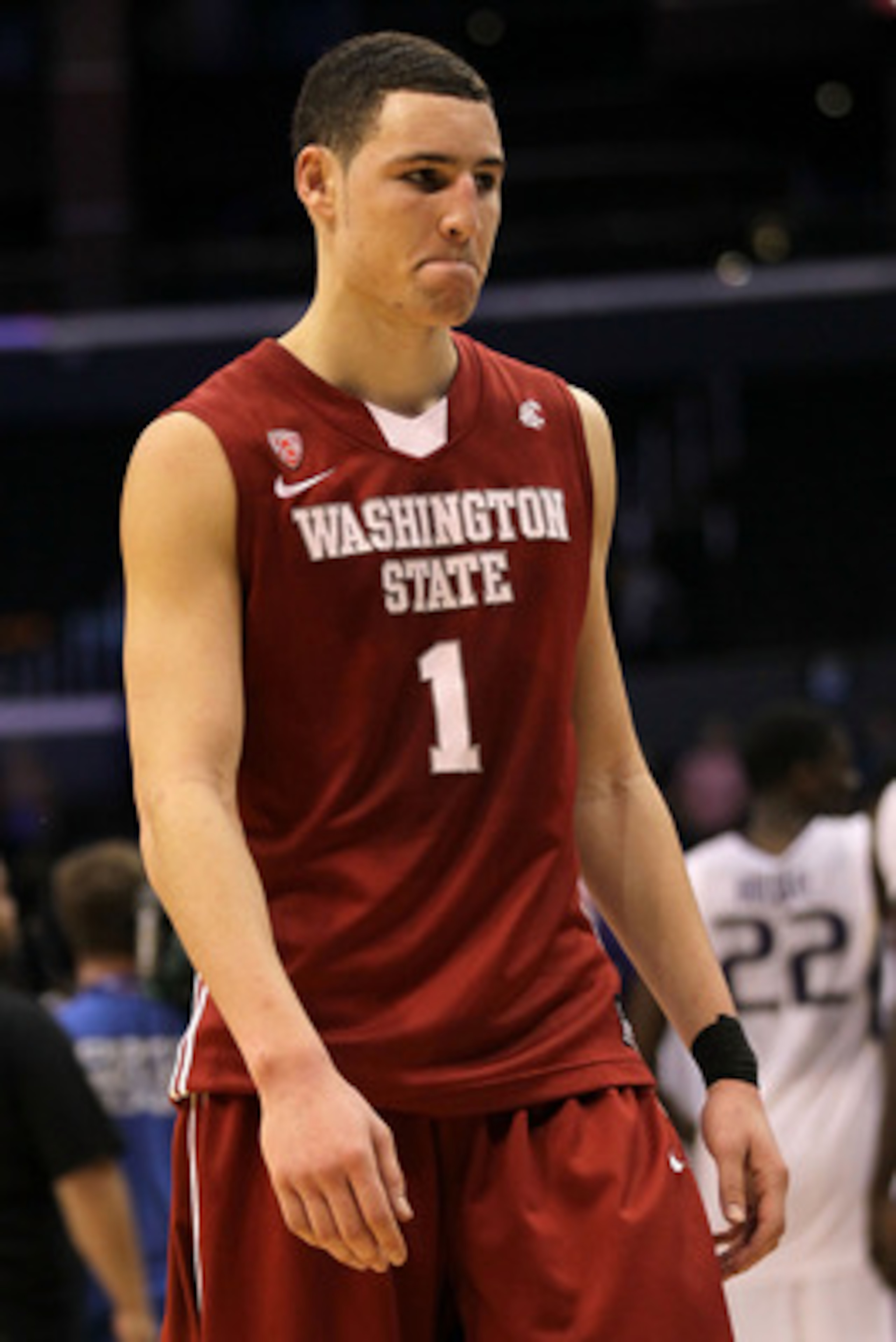
Klay Thompson has flown under the radar despite back-to-back strong campaigns with the Washington State Cougars. He'll come in and provide some offense from a shooting guard position that has become a defensive spot for the Utah Jazz in recent years.
Thompson knocked down almost three treys per game in his final season with the Cougars, and that will be his main weapon upon entering the NBA. Overall, he averaged 21.6 points, 5.2 rebounds and 3.7 assists while being considered a high-risk, high-reward defender. He averaged almost a block per game from the shooting guard spot and added 1.6 steals but frequently found himself in foul trouble due to his aggressive play.
Thompson has a chance to become a real steal at this spot for the Jazz. The offensive game is ready, the defensive game has upside and improvement is still on the way. He isn't nearly the athlete many of the players selected ahead of him are, but he is a basketball player and a darn good one.
13. Phoenix Suns: Markieff Morris, PF, Kansas
13 of 30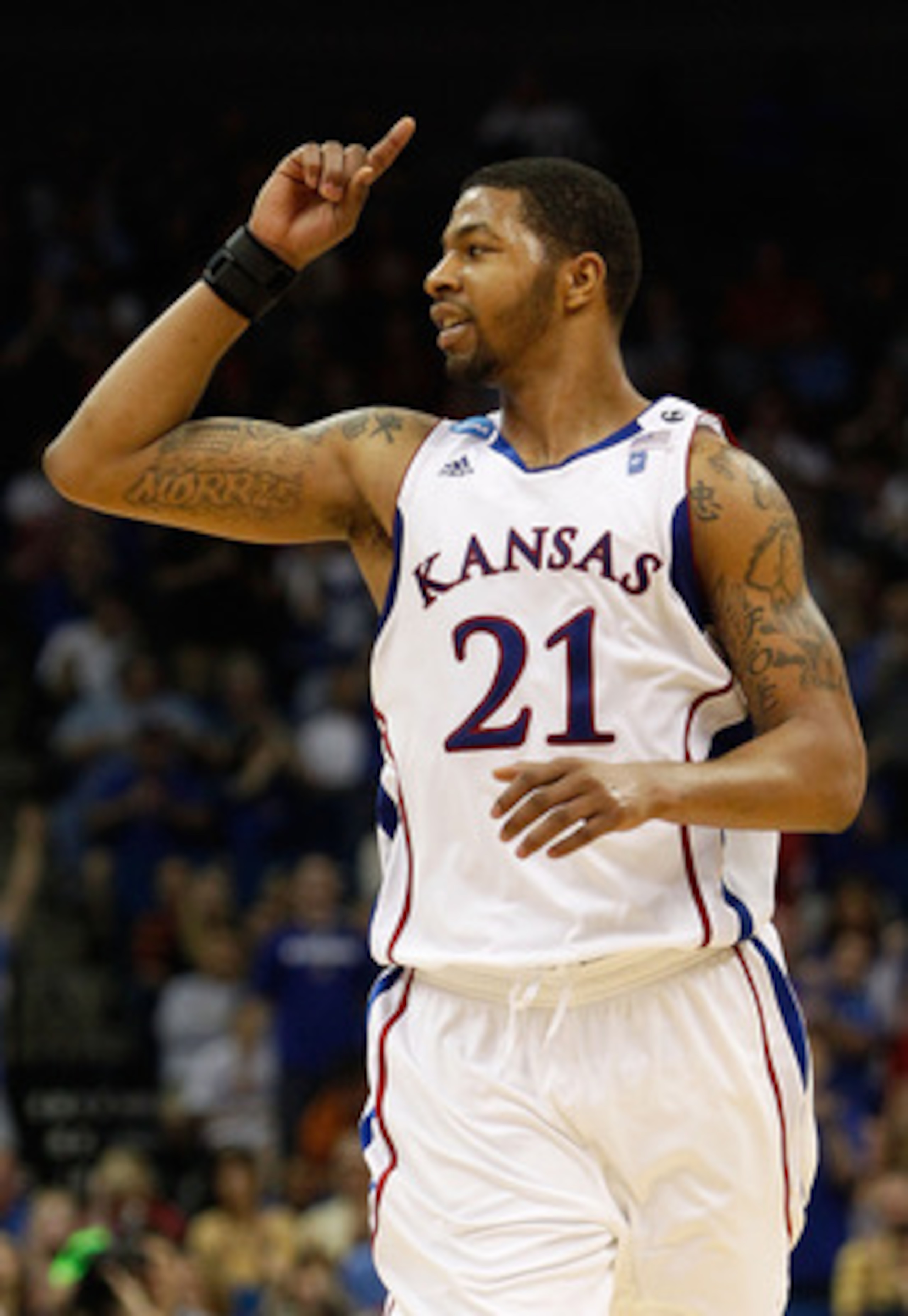
Markieff Morris, the slightly older twin brother of Marcus Morris, won't get his wish of getting to play with his brother at the next level. Morris struggled during his first two seasons at Kansas before stepping up in his junior season.
He has a better jump shot than his brother but isn't as polished in the paint. During his final year with the Jayhawks, Morris averaged 13.6 points and 8.3 rebounds and started to really improve on defense. He has the size and athleticism to become a really solid interior defender.
Another similarity with his brother, they are twins after all, is that what you see is what you get. If teams were picking purely based on who would help them right now, both Morris twins would be off the board quicker.
14. Houston Rockets: Kemba Walker, PG, Connecticut
14 of 30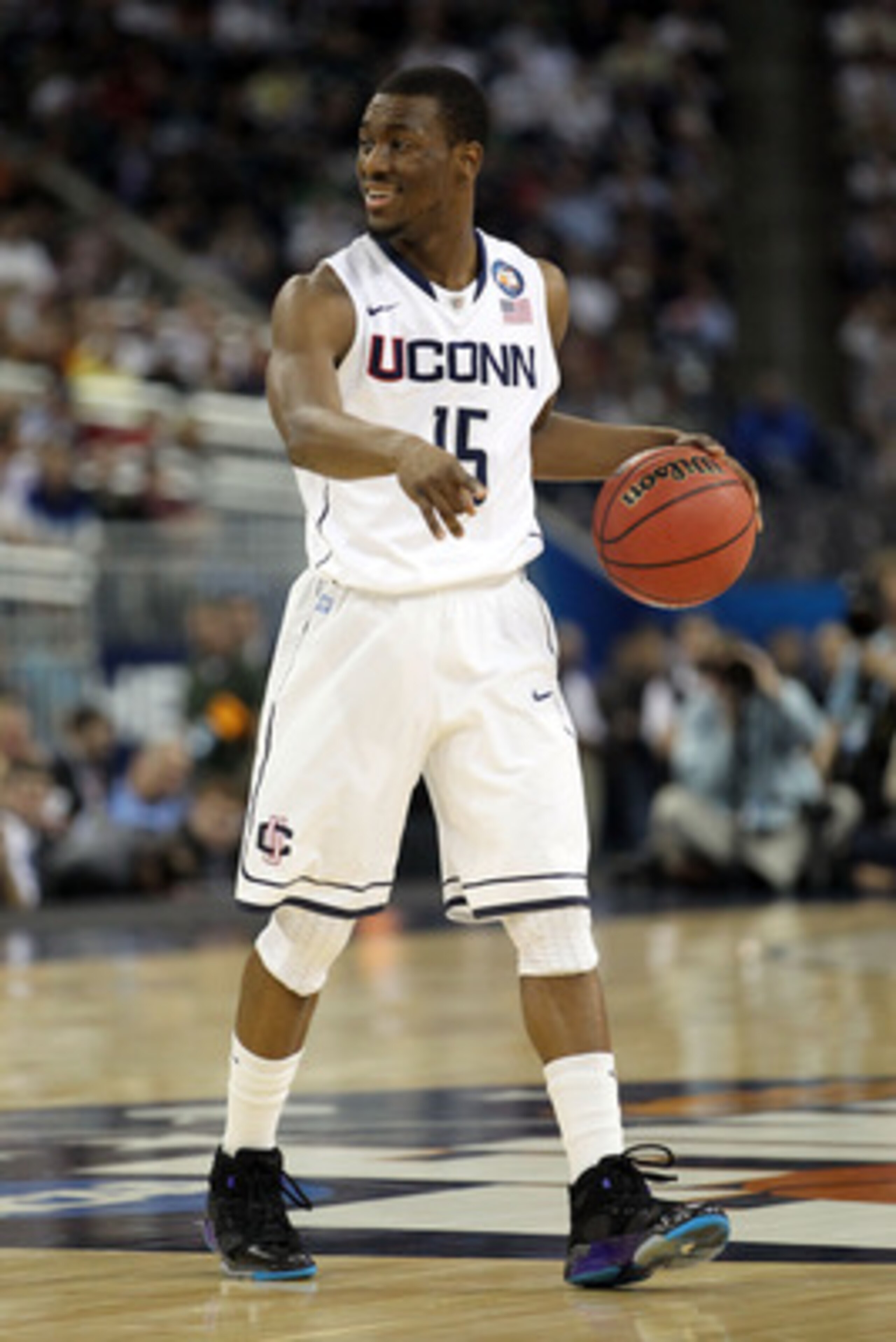
Kemba Walker is one of the most controversial players in this year's draft. Some mock drafts have him in the top five, and others have him dropping into the 20s. While some scouts think Walker has the ability to become a start in the NBA, others aren't convinced.
Walker leaves Connecticut after a senior season which seen him average 23.5 points, 5.4 rebounds and 4.5 assists en route to a national title. He has elite speed and agility will allow him to succeed in the NBA. He also averaged 1.9 steals, mostly thanks to that great speed.
The two main weaknesses for Walker are size and outside shooting. Barely standing 6' tall, Walker will have a tough time shooting over the taller guards that will be guarding him. He is mainly a driving guard though, so it shouldn't be a major issue. He only shot 33 percent from beyond the arc this season, which could use improvement to add another dimension to his game.
15. Indiana Pacers: Jimmer Fredette, PG, BYU
15 of 30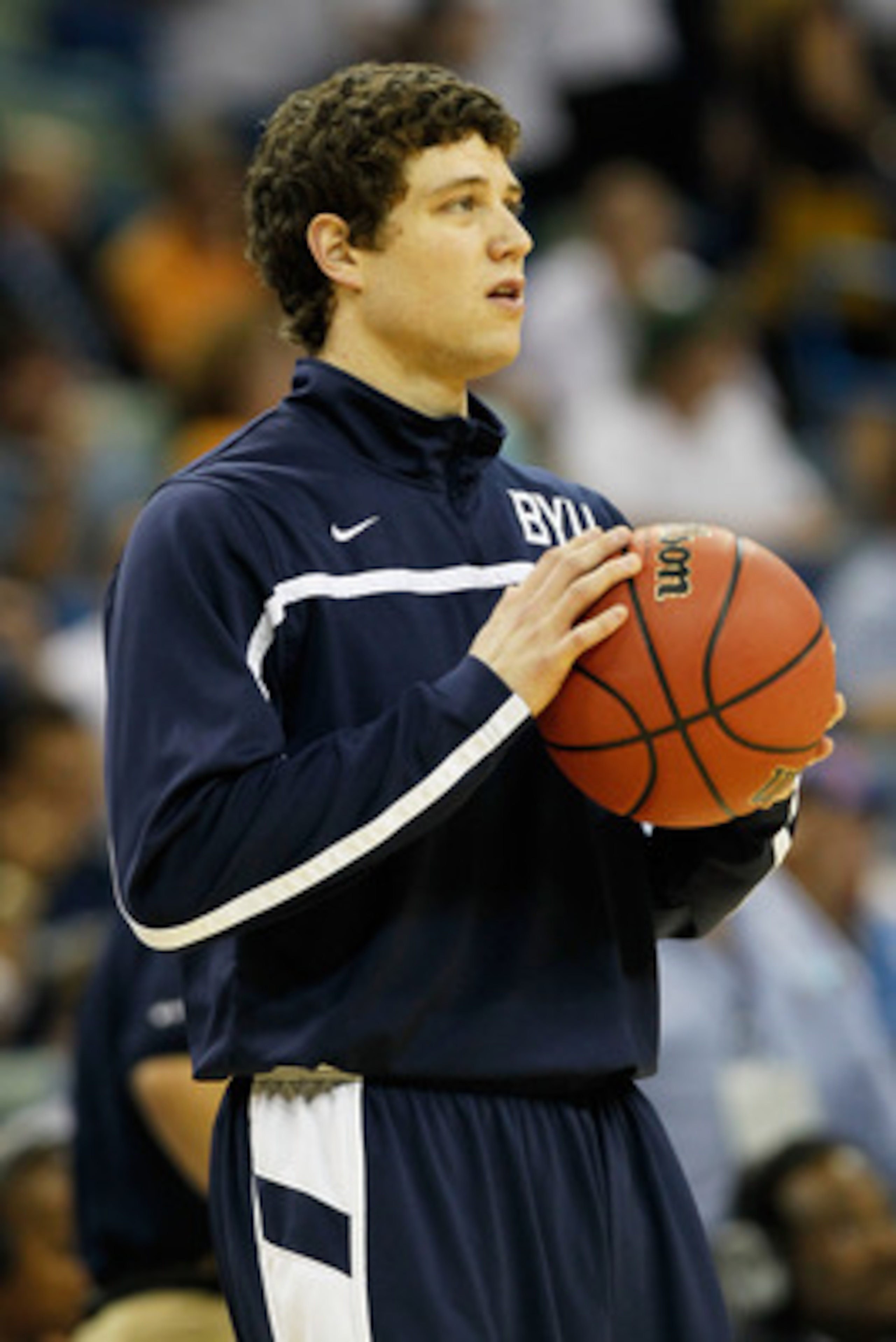
If Walker isn't the most controversial player in the draft, Jimmer Fredette is. Often criticized for a lack of defensive effort and ability, Fredette has become a lightning rod for criticism. He is an elite shooter that will have an impact in the NBA, whether he ever becomes a solid defender or not.
Fredette will likely be the first college senior off the board on draft night. He led the nation in scoring at 28.9 points per game. He shot 45 percent from the floor, including 40 percent from three-point range and 89 percent from the free-throw line. Fredette is still learning the point guard position, but when you can shoot like that, there will be a spot on the floor for you.
Fredette's defense has become the center of attention, however, and whether it's a lack of trying or a lack of ability, it will be exposed at the next level. Perhaps playing those games against prisoners taught him some bad defensive habits, but you can be sure he won't stop hearing about it until he shows improvement.
16. Philadelphia 76ers: Tristan Thompson, PF, Texas
16 of 30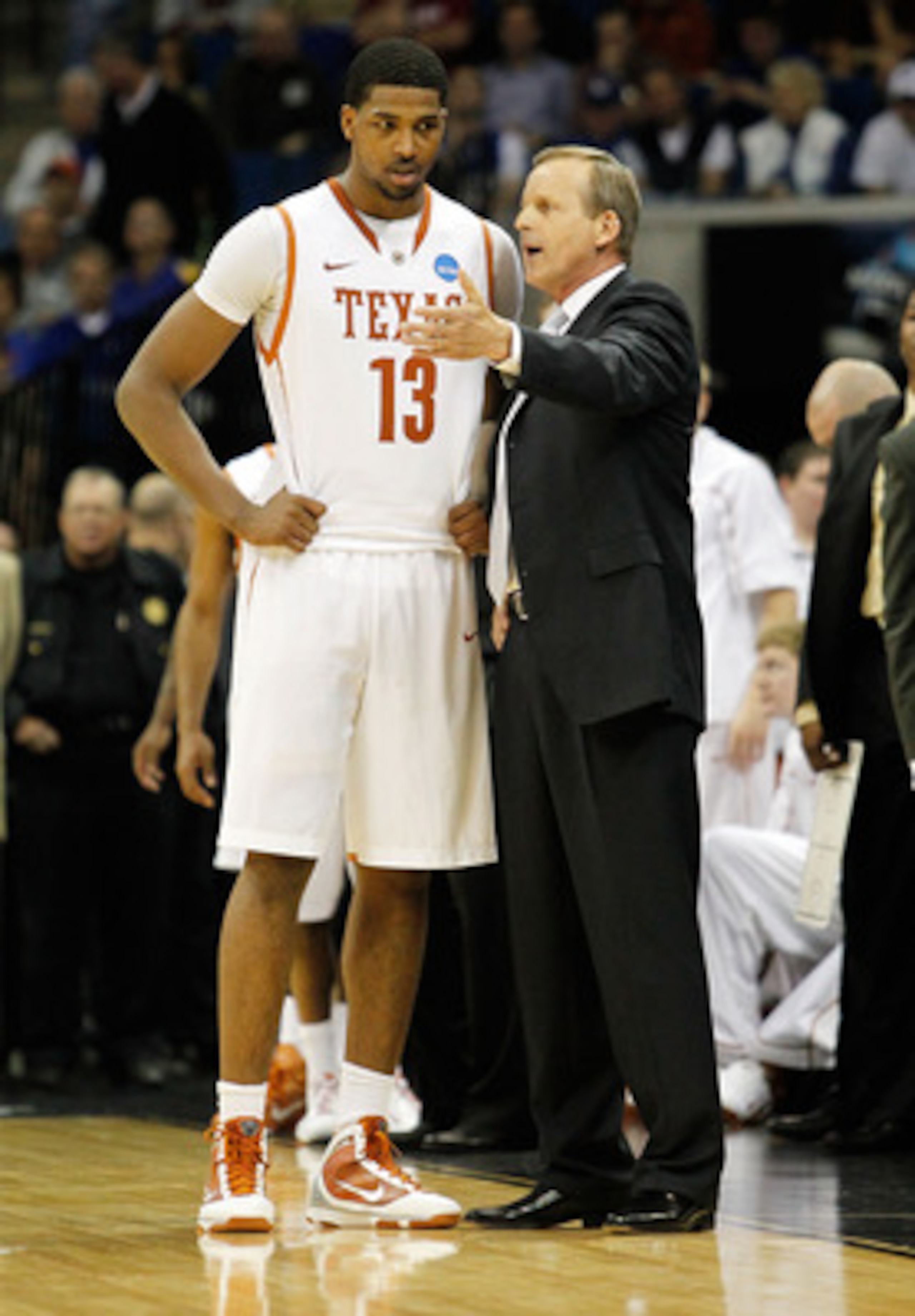
Despite an inconsistent year in his only season at Texas, Tristan Thompson's athleticism will ensure he gets drafted within the top 20. He will be able to step in and provide good defense for a Philadelphia 76ers team and provide relief to an aging Elton Brand.
Thompson averaged 13.1 points, 7.8 rebounds and 2.4 rebounds with the Longhorns. He had a respectable 56 percent field goal mark but struggled from the free-throw line, where he shot 49 percent. He is very effective in the paint but has a tough time making jumpers consistently.
Thompson struggled when he went up against tougher frontcourts, like Kansas. He will need to prove he can produce night in and night out, but the talent is there to become a solid NBA player.
17. New York Knicks: Kenneth Faried, PF, Morehead St.
17 of 30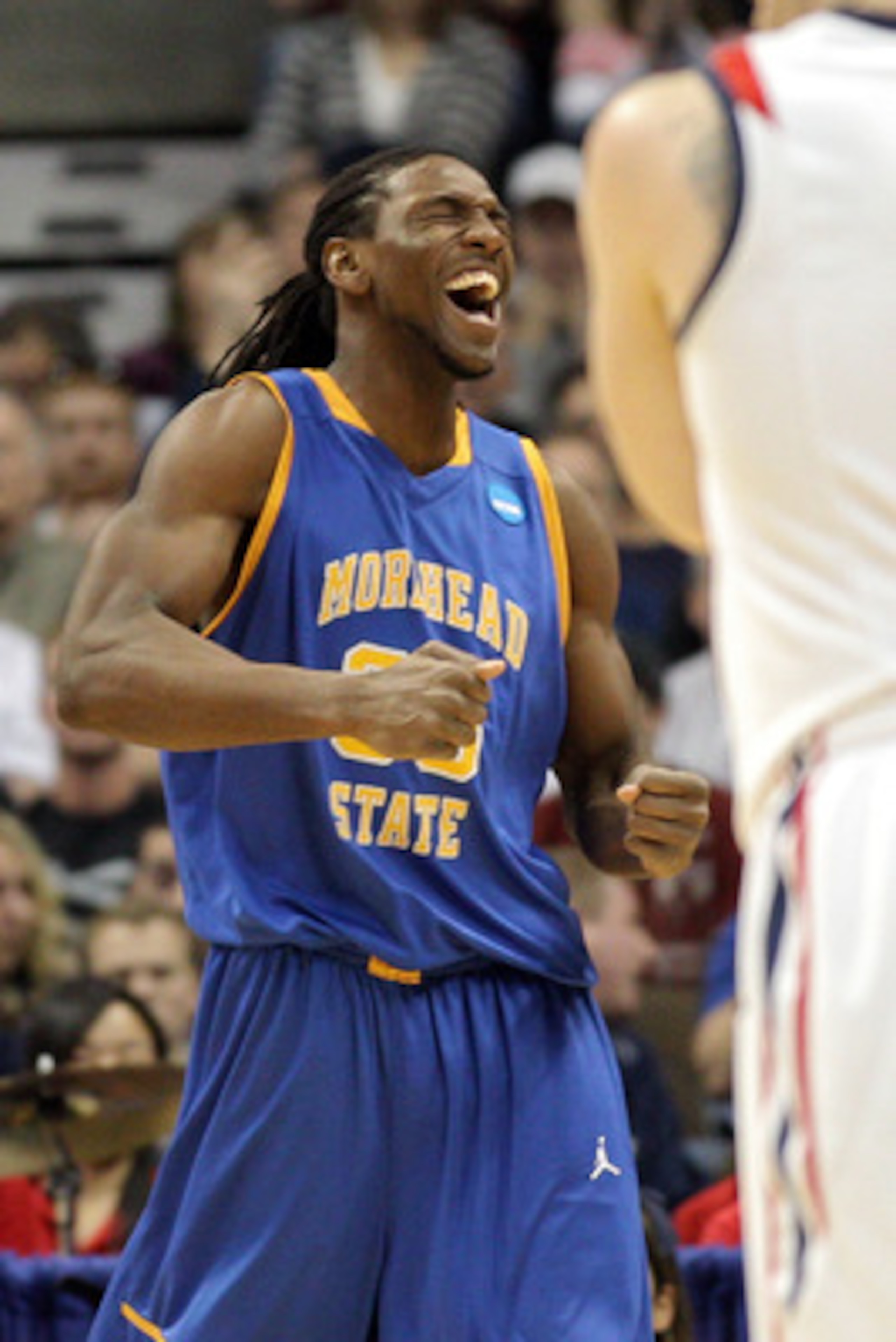
The leading rebounder in college basketball last season, Kenneth Faried will be able to step in and provide the New York Knicks with some much-needed defense. Lost in all the hype about his defense is an improving offensive game that makes him even more interesting.
Faried broke into the national conscious during the NCAA tournament when his Morehead State squad upset heavily-favored Louisville in the first round. He had a strong season throughout, averaging 17.3 points, 14.5 rebounds and 2.3 blocks. He had three 20-point, 20-rebound performances during the season as well. Although most of his points come from offensive rebounds, his post game is slowly improving.
The big worry about Faried is that his big statistics came against lower-level college competition. Whether or not that game will translate to the next level is a big question mark, especially when you consider he is a bit undersized.
18. Washington Wizards: Jordan Hamilton, SF, Texas
18 of 30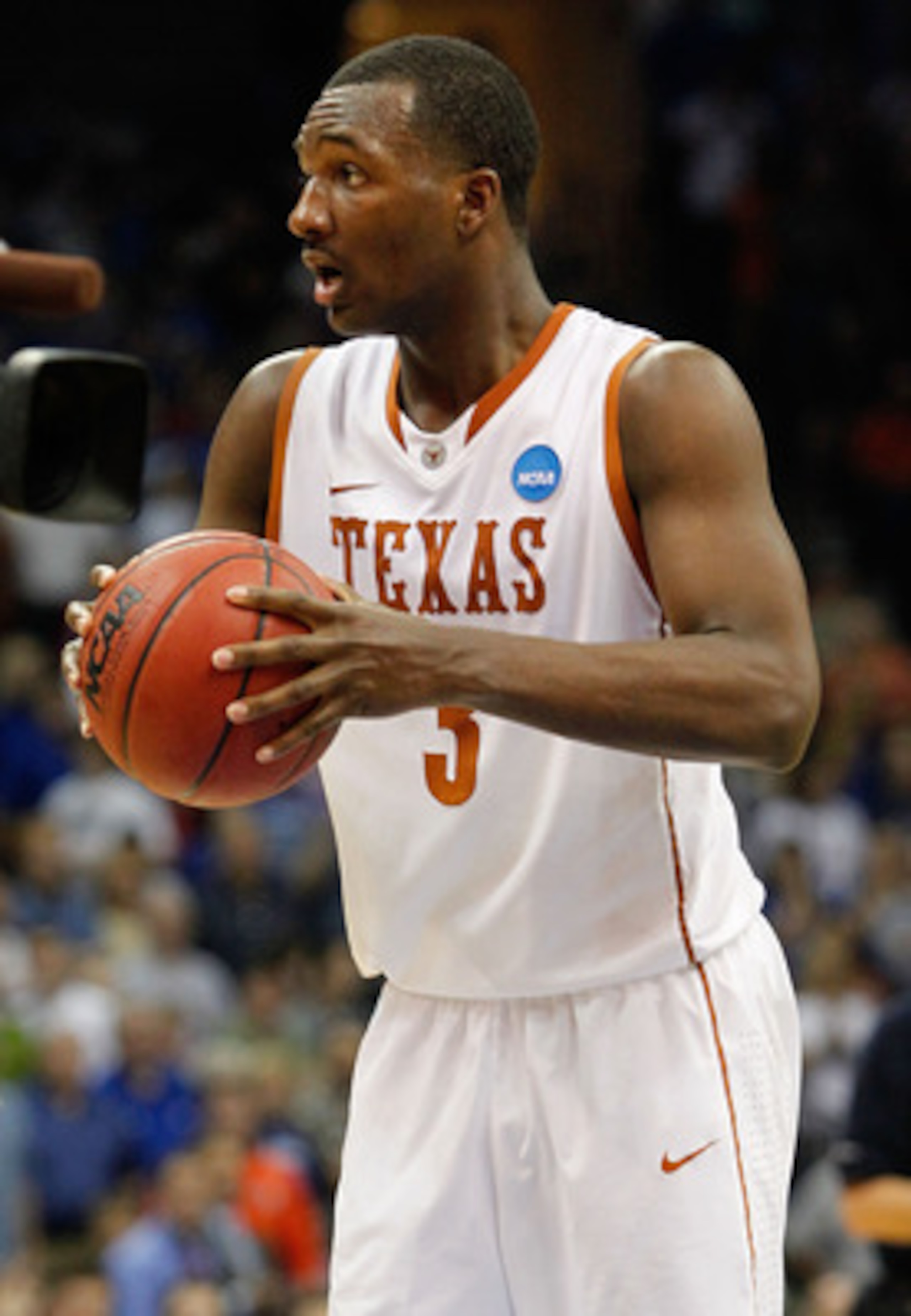
Jordan Hamilton will provide the Washington Wizards with a third perimeter scoring threat to go along with two athletic big men to continue moving the team in the right direction. Hamilton made across the board improvements during his second season at Texas that led him to declare for the draft.
Hamilton had eight double-doubles during his sophomore campaign with the Longhorns. His statistics included 18.6 points, 7.7 rebounds and 2.5 threes per game. Teamed with John Wall and Jordan Crawford, Hamilton would make Washington's backcourt very dangerous.
He may struggle once he no longer becomes the main scoring option. He has been known to be a bit streaky, so if he isn't getting consistent looks, he may not thrive.
19. Charlotte Bobcats: Chris Singleton, SF, Florida St.
19 of 30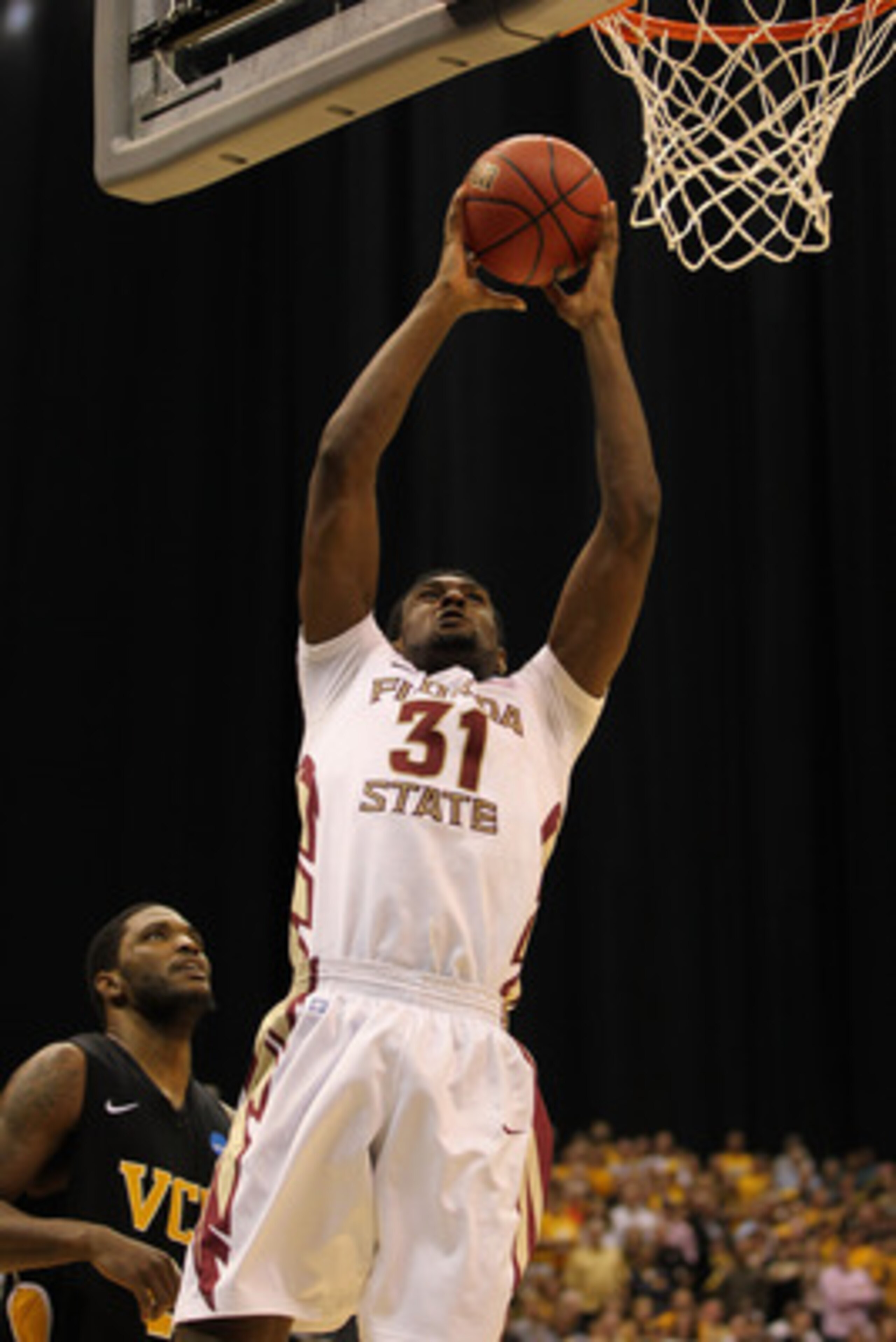
After adding Alec Burks earlier in the first round, the Charlotte Bobcats now add the athletic Chris Singleton to the mix. Perhaps the best defender in this class, Singleton will provide an instant boost to an already serviceable Charlotte defense.
His across-the-board production included 13.1 points, 6.8 rebounds, 2.0 steals, 1.5 blocks and 1.2 assists. His offensive game lags behind his defensive prowess, but he has made slight improvements during his time at Florida State.
Overall, a poor shooter, especially at the free-throw stripe where he shot 67 percent. It will take some time before he becomes a full-time player, but his strong defense means he'll be on the floor in key situations.
20. Minnesota Timberwolves: Tobias Harris, SF, Tennessee
20 of 30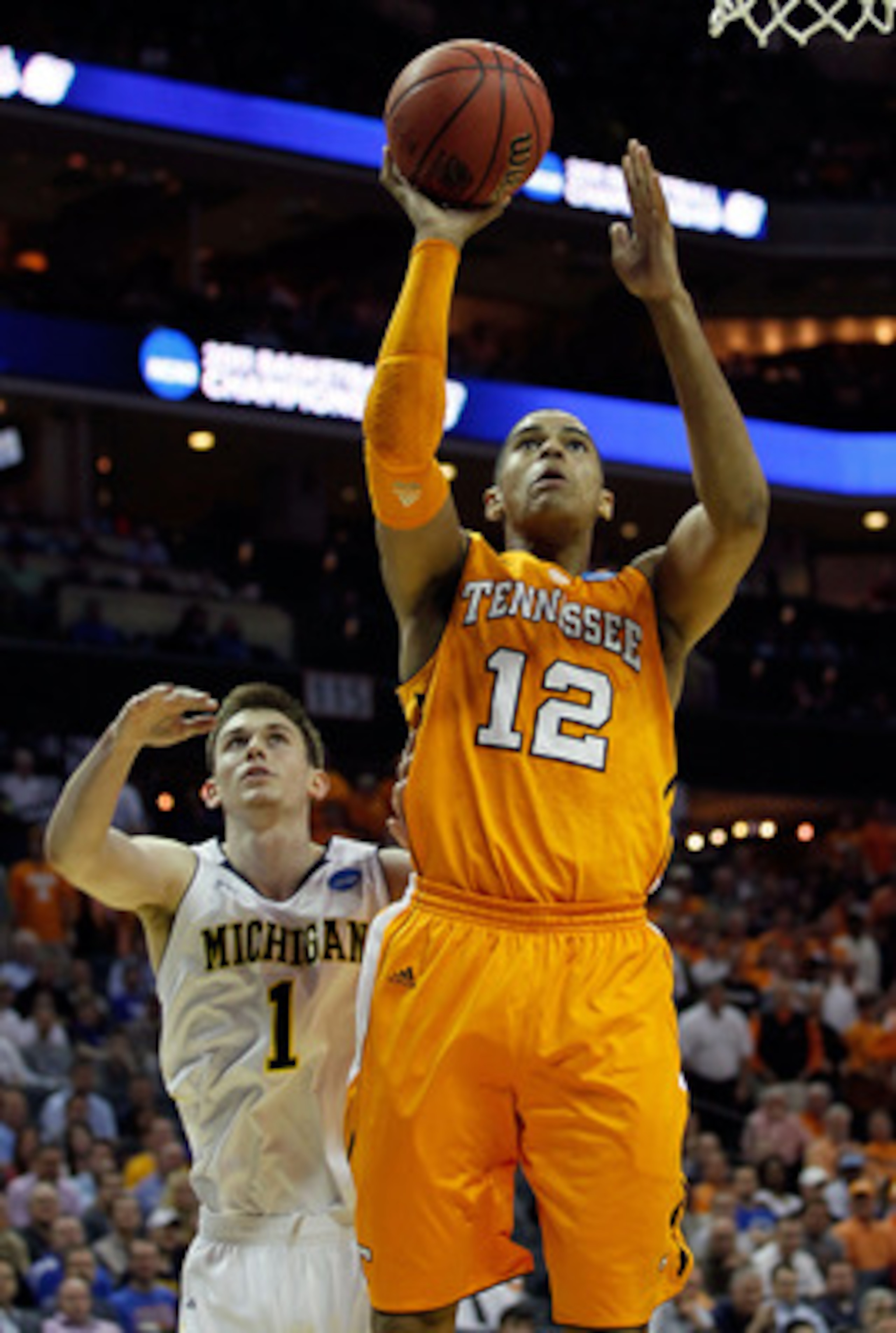
Tobias Harris performed well in his only season at Tennessee but probably could have benefited from one more season in college to work on his interior offense. He won't have a defined role for the Minnesota Timberwolves right away, but he is the best player left on the board, and the Wolves can use all the talent they can get.
Harris scored 15.3 points per game and chipped in 7.3 rebounds for the Volunteers. He won't turn 19 until July 15, so there is a lot of time for improvement. He is the type of player that provides something in almost every facet of the game, but isn't particularly impressive in any one area.
Harris is another tweener, that is stuck between the small forward and power forward positions. Barring a late growth spurt, he'll likely end up as a small forward in the NBA.
21. Portland Trail Blazers: Lucas Nogueira, C, Brazil
21 of 30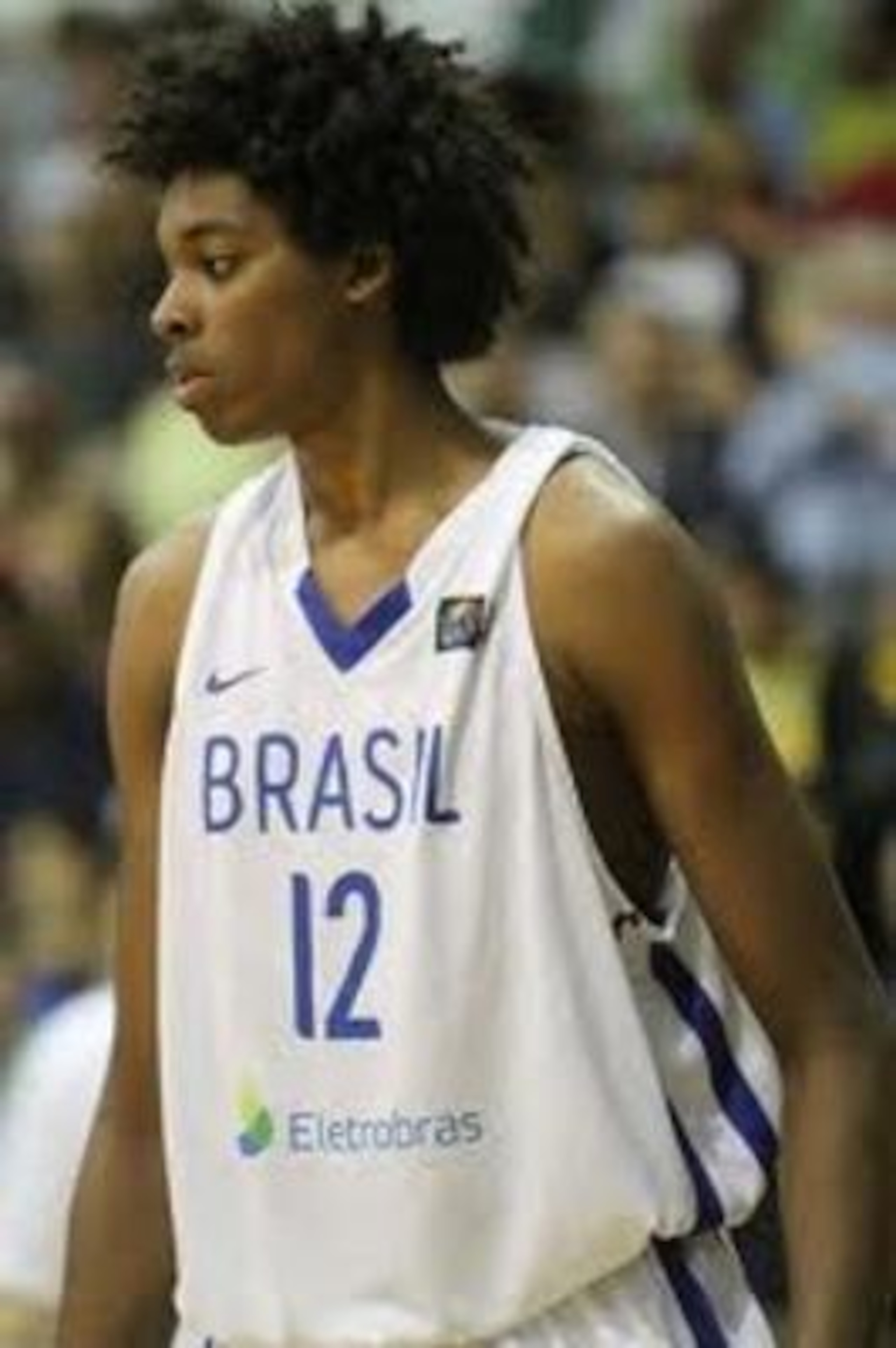
Lucas Nogueira has a lot of work to do, especially in the weight room, before he becomes a force in the NBA. The Portland Trail Blazers have been willing to wait for the ever-injured Greg Oden, so waiting a couple years for Nogueira shouldn't be much of a problem.
An ultra-athletic big man, he has the potential to become a defensive force in the NBA. Aside from the obvious shot-blocking ability that comes along with a player like Nogueira, he is also a really good rebounder and overall defender.
His offensive game is limited at this point and will take time to develop. He also needs to bulk up, so he can become the all-around star he has the chance to become. The odds of him becoming that all-around player aren't great, but in the bottom-third of the first round, it is worth a shot.
22. Denver Nuggets: Marshon Brooks, SG, Providence
22 of 30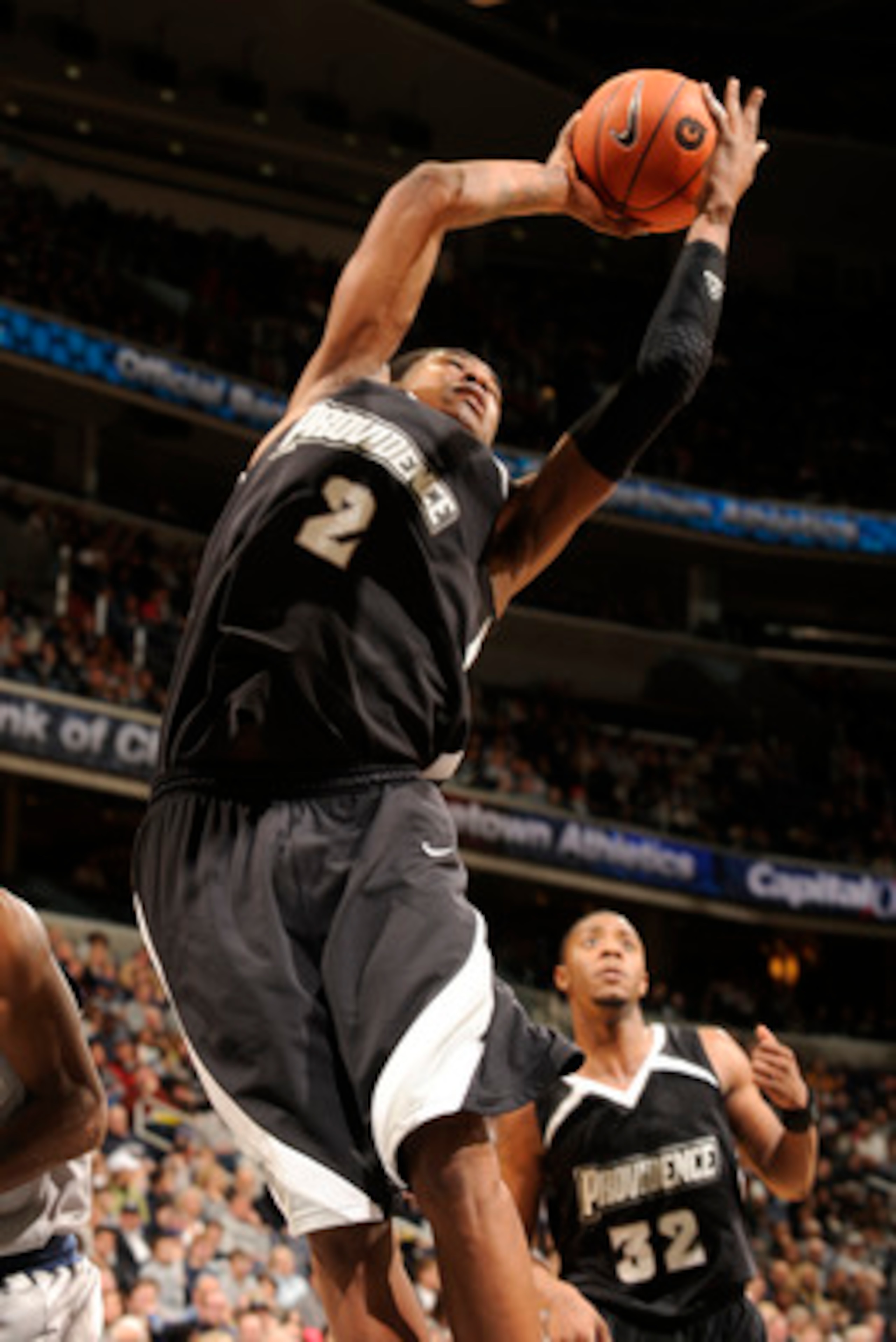
Steadily climbing up big boards in recent weeks, Marshon Brooks might go earlier than expected on draft night. Following a very impressive senior season at Providence, he'll be able to give the Denver Nuggets some scoring punch from the shooting guard spot.
Brooks averaged 24.6 points and seven rebounds and has the ideal size for a shooting guard in the NBA. He has very good athleticism and was able to get to the basket a lot with the Friars. Playing against the tough competition of the Big East helped his development.
He struggled with turnovers when forced to handle the ball more in his senior year. Although he did knock down about two three-pointers per game, his percentage could use some improvement if he sees it as a major weapon in the NBA.
23. Houston Rockets: Davis Bertans, SF, Latvia
23 of 30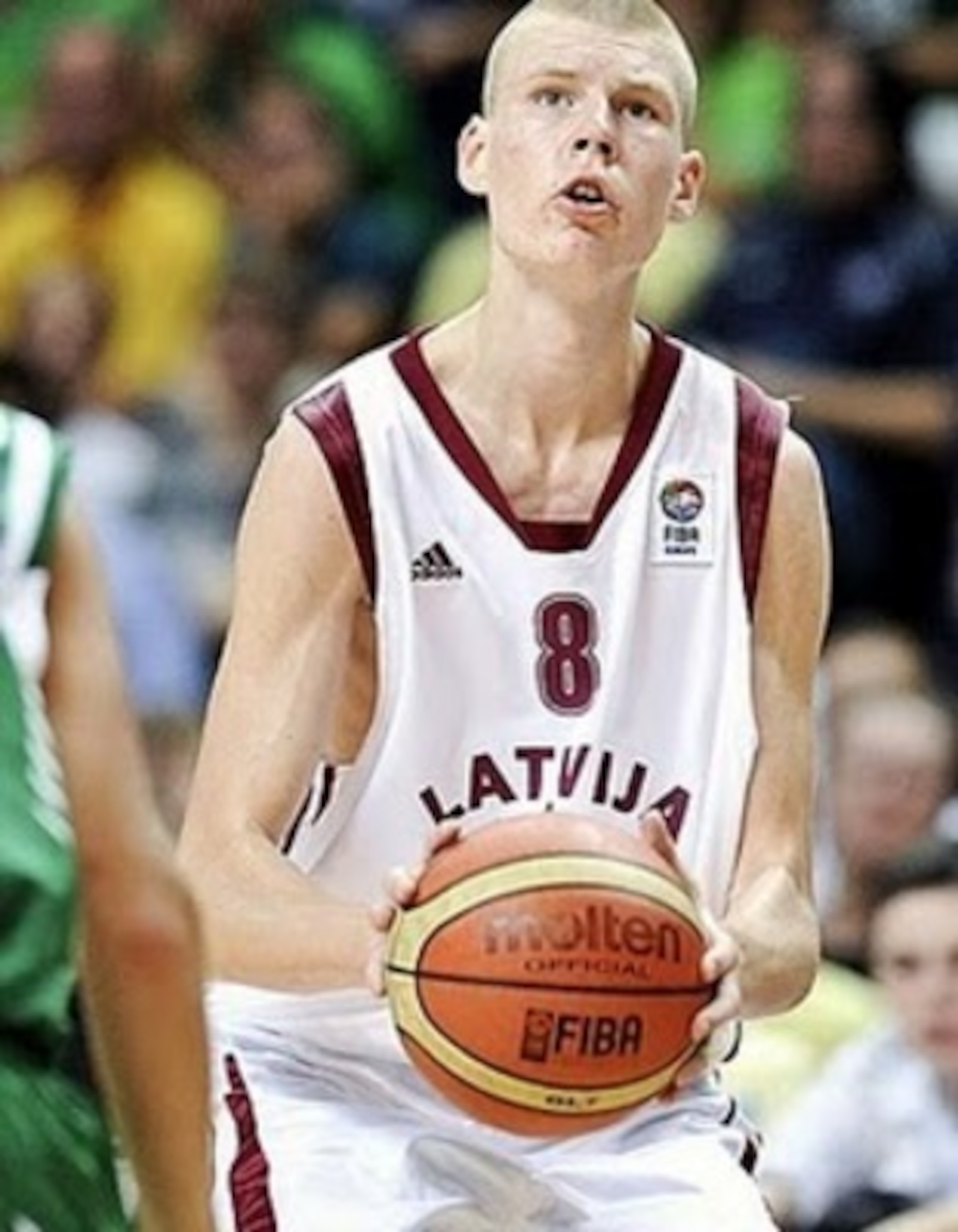
Davis Bertans will be a player who will likely spend a couple more seasons overseas before becoming a factor for the Houston Rockets. The Rockets would likely prefer somebody who could step in right away and produce, but the options here are limited, and Bertans has good upside.
Bertans has a solid offensive game already, but it could benefit from some more seasoning. He will be a good scorer in the NBA eventually, but the next couple of years will determine whether he is a starting-caliber player or just a sharpshooter off the bench.
His defense needs work, but his size will allow him to collect rebounds. For Bertans, it all comes down to which teams is willing to wait and see exactly what type of player they are going to get with the hopes of being rewarded.
24. Oklahoma City Thunder: Kyle Singler, SF, Duke
24 of 30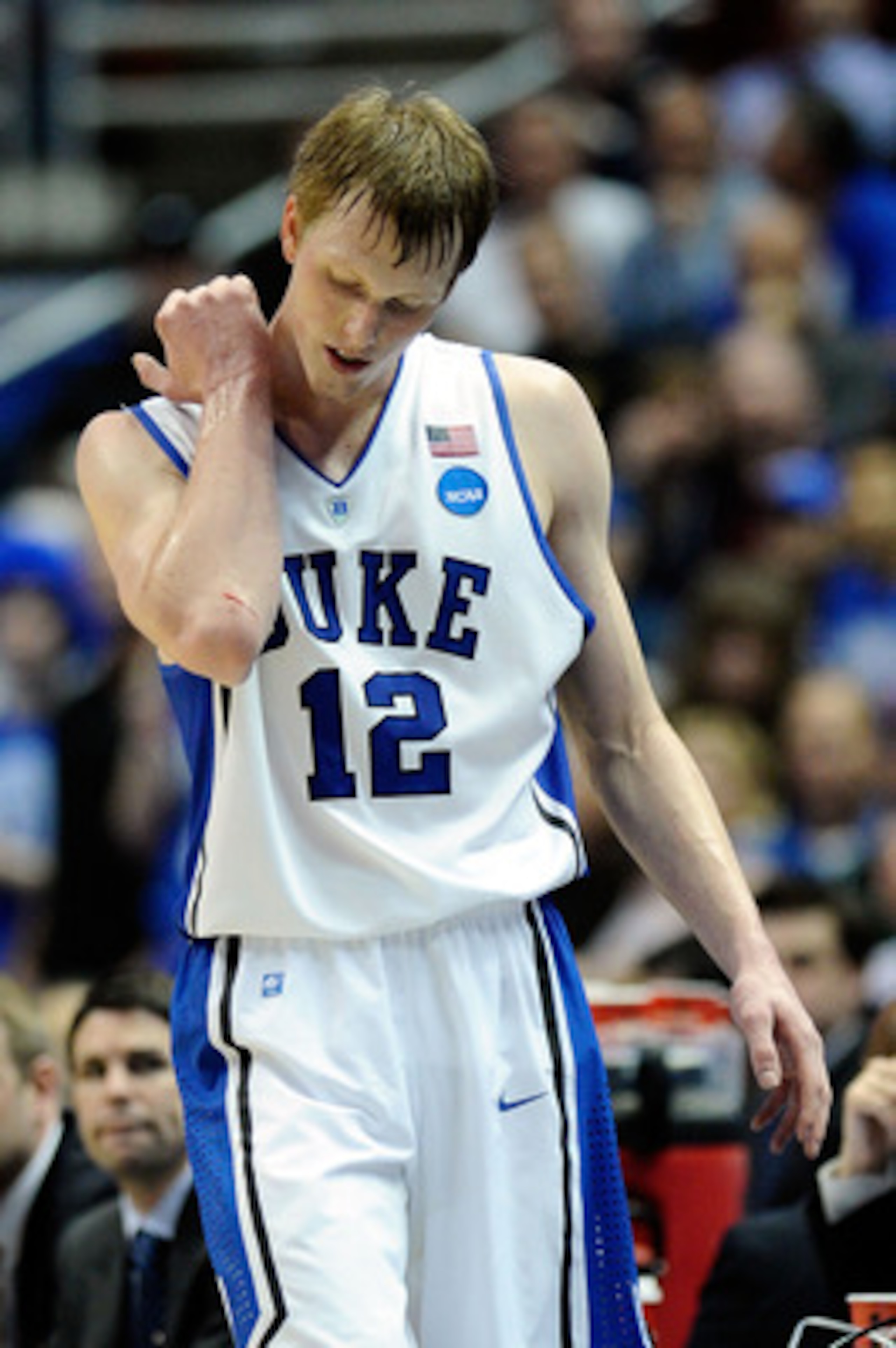
Kyle Singler will give the Oklahoma City Thunder another young, offensive threat to add to an already impressive cast of shooters. Singler hasn't made great strides over his past three seasons at Duke but gained valuable experience playing in a bunch of big games.
Inconsistency led to a down year in some categories for Singler, but he still averaged 16.9 points and 6.8 rebounds in his senior season. He only shot 32 percent from beyond the arc but has shown in the past that number can be closer to 40 percent. He has average size for the position and should provide the Thunder with some solid minutes off the bench.
It would be nice to see a little more consistency from Singler. Like most Duke alumni, he is a high-character individual who will work hard on his game.
25. Boston Celtics: Trey Thompkins, PF, Georgia
25 of 30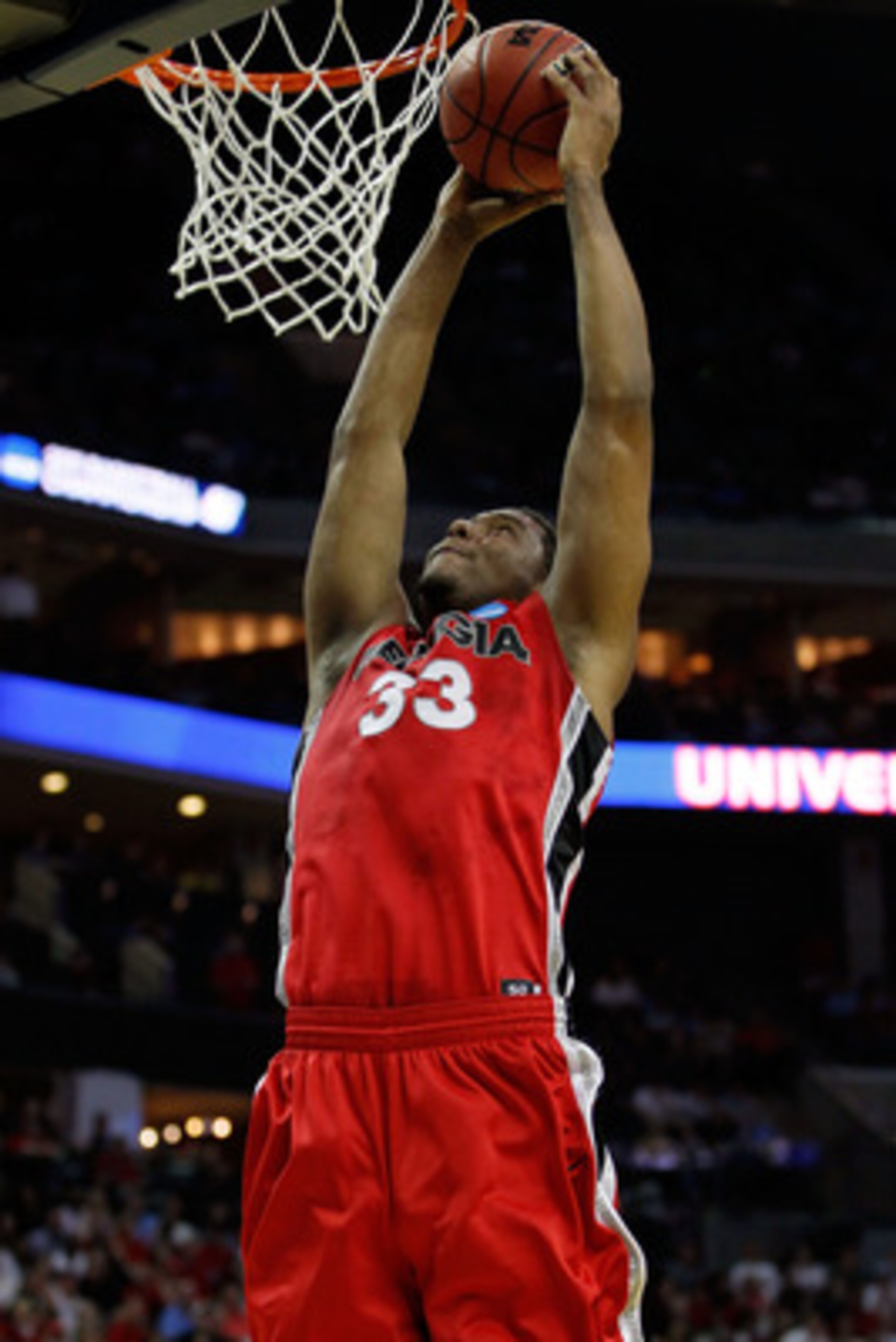
With an aging frontcourt, the Boston Celtics will benefit from a player like Trey Thompkins who can step in right away and provide production off the bench. Thompkins is an offensive threat who has the ability to step out and knock down long-range jumpers although he did struggle doing so in his final season at Georgia.
Thompkins will spend most of his first few seasons working on his defense, especially if he joins the Celtics. Despite having good enough size to play power forward, he doesn't rebound or block shots particularly well.
His numbers declined from his sophomore to his junior season, so there are cautionary tales about staying in school. The talent is there, however, and he should provide good value for a team late in the first round.
26. Dallas Mavericks: Tyler Honeycutt, SF, UCLA
26 of 30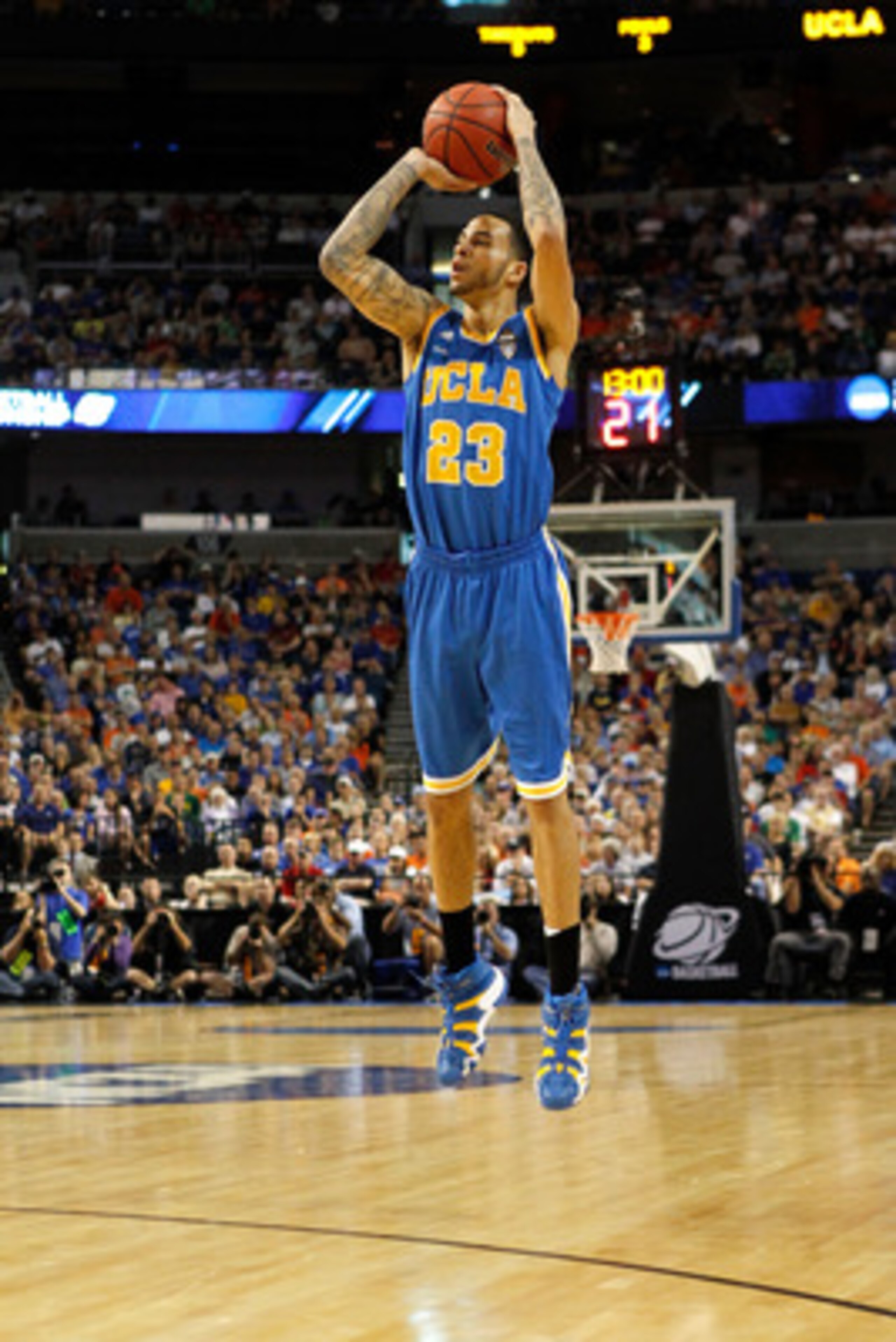
While Thompkins is a player who illustrated that players should come out while their value is high, Tyler Honeycutt might turn out to be an illustration of a player who came out of college too soon. While his numbers did increase, his shooting percentage plummeted.
He does have the size, athleticism and shooting ability to become a solid NBA player but probably could have used another season (or two) to refine his skills. Getting drafted late in the first round isn't always a bad thing, however, as it means playing for a better team and less pressure.
Honeycutt will need to work on his defense and learn to protect the ball before he finds consistent minutes.
27. New Jersey Nets: Josh Selby, SG, Kansas
27 of 30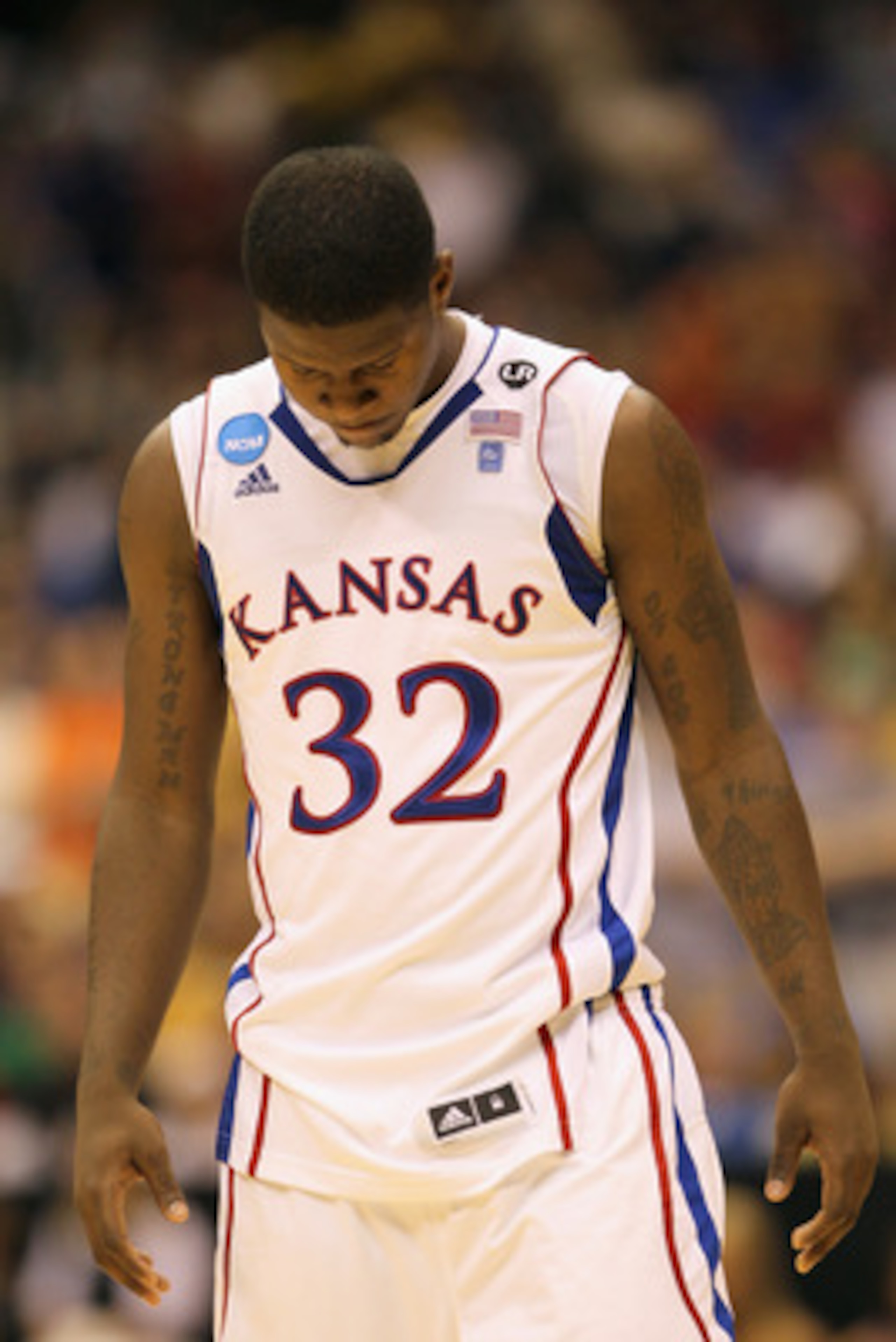
Another player who could have used another season in college is Josh Selby. After returning from a suspension (red flag), Selby struggled to find any type of consistency throughout the season and didn't score double-digit points after returning from an injury in February.
Make no mistake, Selby has a very high ceiling and may become a very good guard in the NBA one day, but he could have used another season of playing big minutes in college instead of trying to fight for them off the bench.
It just doesn't make much sense for Selby to come out in this draft unless he got some bad information. His shooting percentage was poor, he didn't show much versatility and his defense was inconsistent at best. His talent will sneak him into the first round, but he'll likely be disappointed.
28. Chicago Bulls: Justin Harper, PF, Richmond
28 of 30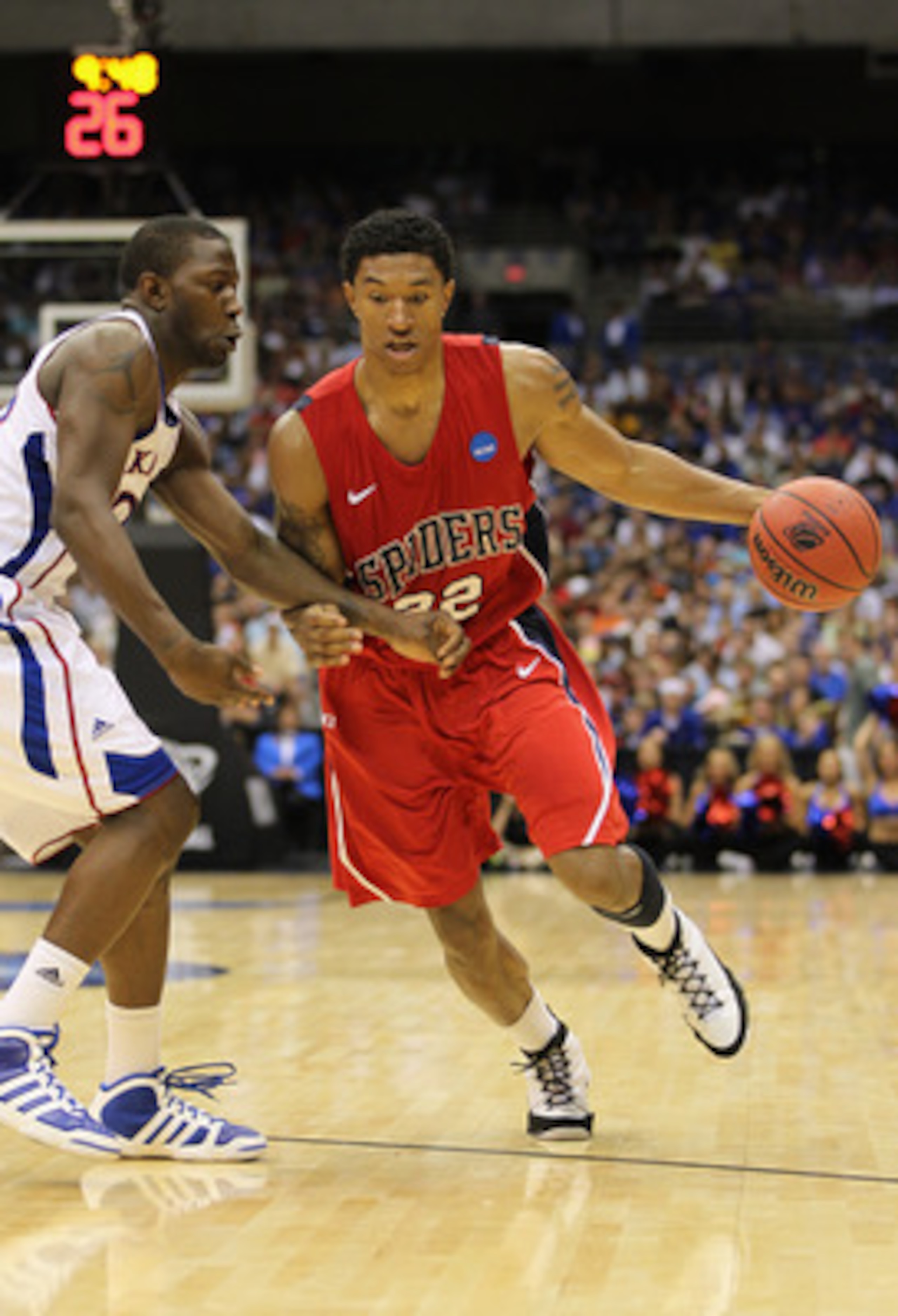
Following three seasons where he was improving, albeit not at a rapid pace, Justin Harper had a breakout senior season with Richmond. His shooting percentages reached career highs across the board as did his rebounding numbers.
Harper is an all-around player that will be able to stretch defenses, which will fit in great for the Chicago Bulls, who lack that type of big man. He averaged about 18 points in his final year with the Spiders and showed improvement on the defensive end as well.
The biggest concern with Harper is his strength. He will likely need to build up some muscle to be able to defend power forwards in the NBA. A bench player focusing on offense for his first few years, Harper may eventually crack a starting lineup.
29. San Antonio Spurs: Chandler Parsons, SF, Florida
29 of 30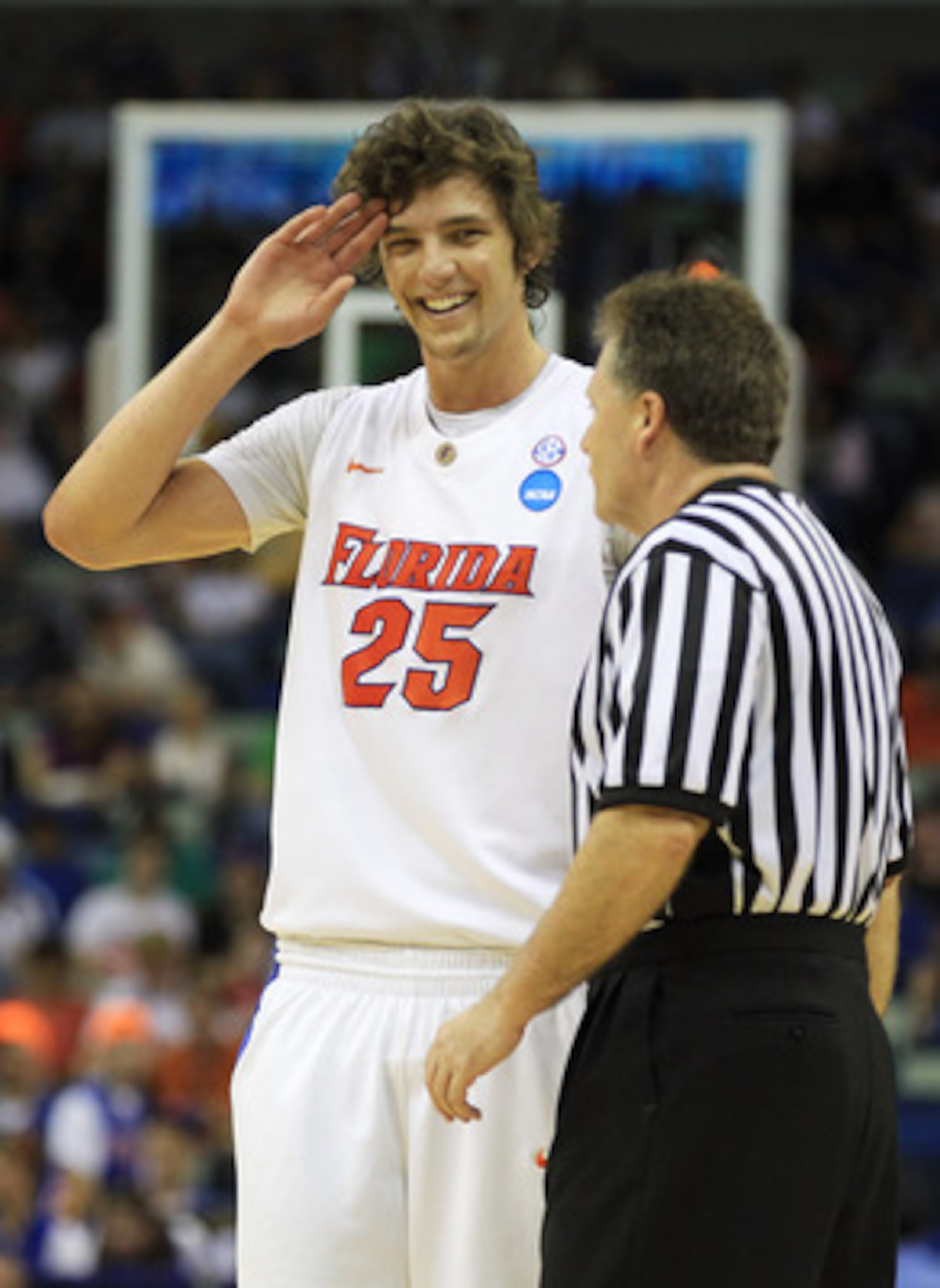
As mentioned on the introduction slide, the San Antonio Spurs need a small forward who can step in and contribute right away for the terribly inconsistent Richard Jefferson. Chandler Parsons may not have been the guy they were hoping for at this spot, but he can knock down the outside shot, which is key for playing with the Spurs.
He has good size for the small forward position and will be a solid role player immediately. His defense leaves a lot to be desired. He does grab rebounds, however, so his effort on the defensive end won't be a total loss.
It wouldn't be a shock if the Spurs were to take a foreign player at this spot, especially after missing on James Anderson last season late in the First Round.
30. Chicago Bulls: Travis Leslie, SG, Georgia
30 of 30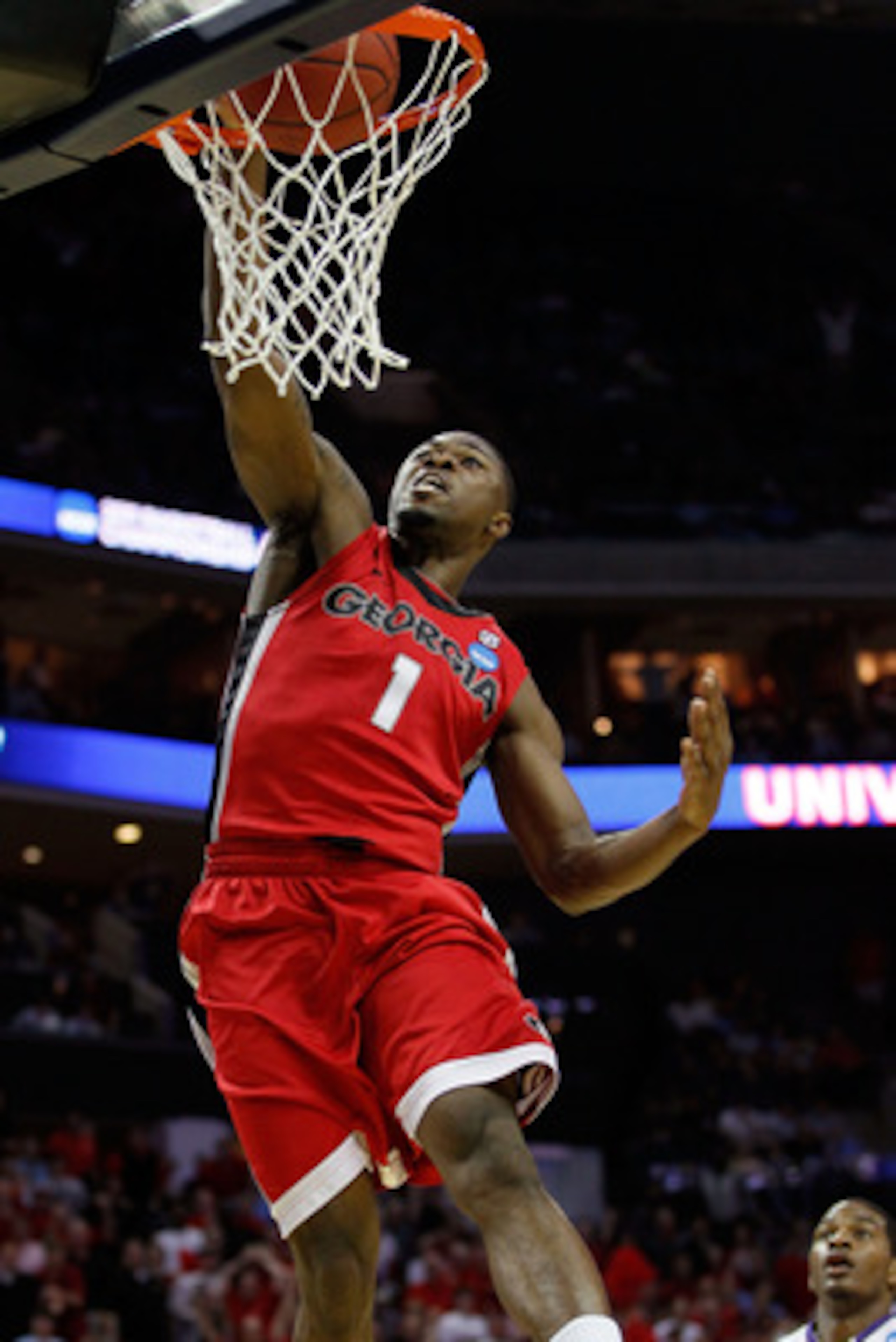
Fairly consistent in his final two seasons at Georgia, Travis Leslie will be able to give the Chicago Bulls some offensive ability at the shooting guard position. The Keith Bogans and Ronnie Brewer duo were one of the main reasons the Bulls couldn't compete with the Heat.
Leslie is still a raw talent that will take some time to develop, but he is a freak of an athlete that may turn into a big steal at this spot. He averaged 14.4 points and 7.2 rebounds while shooting 49 percent from the field and 80 percent from the line.
The reason he falls so far in the first round, besides needing development, is because of questions about his jump shot. He rarely attempted three-pointers at Georgia, so he won't suddenly start making them at the next level.
With the NBA Draft approaching, NBA Mock Draft season is here. Stay tuned to Bleacher Report for updated mock drafts, along with the latest NBA Draft news, analysis, rumors and predictions.

.jpg?w=2560 "Raiders Could Start Mendoza")

.jpg?w=2560 "Rodgers Iced Out on Plane 💎")
.jpg?w=2560 "🚨 Week 8 AP Top 25 Poll")
.jpg?w=2560 "Packers Safety Slams Refs 🤬")