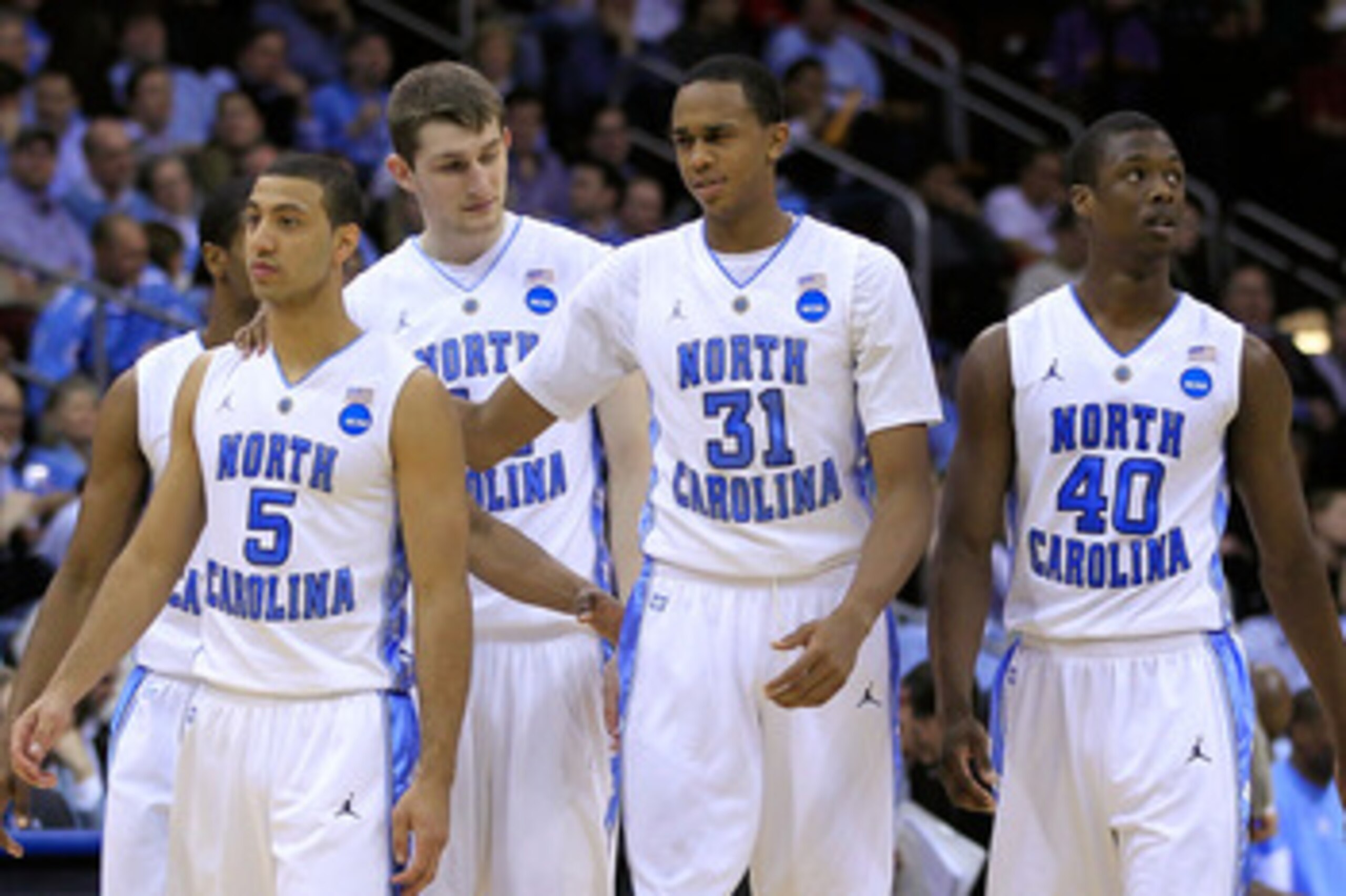

College Basketball Recruiting: The Most Important Incoming Player for the Top 25
Roy Williams inherited a very talented team from Matt Doherty in his first season with North Carolina.
Sean May was a great post player, Raymond Felton was the leader and Rashad McCants provided clutch shooting, just to name a few outstanding players. They won 19 games and made it to the NCAA tournament, which was considered an achievement after a volatile season under the previous coach.
The following season, they added Marvin Williams, and that was enough to not only return North Carolina to prominence but deliver Roy Williams his first championship.
The following article will examine which of the incoming recruits for the 2011-2012 season will bring the X factor and be the most important for their respective teams—even if they are not the best players in their incoming classes.
Take current NCAA champions, Connecticut for example. They had a freshman class of six, Roscoe Smith being the highest rated (ESPNU 34). Not to take anything away from Smith's contribution, but the Jeremy Lamb was the second best player to Kemba Walker.
North Carolina was eliminated in the Elite Eight of the NCAA tournament and returns all their starters. Can any of the incoming recruits give them the edge to go deeper in the tournament?
No. 25 UCLA Bruins
1 of 25North Carolina transfers Travis and David Wear are ready to play, but UCLA lost 26 points-per-game in Tyler Honeycutt and Malcolm Lee, both of whom have relinquished their amateur status.
In any other year, these players might have gone through the draft process and then returned to school. With Harrison Barnes and Terence Jones staying at North Carolina and Kentucky, respectively, that's two guaranteed draft spots opening up, and many players like Honeycutt and Lee stood a higher chance of being drafted.
Leading scorer and rebounder Reeves Nelson is back and center, and Joshua Smith showed a lot of promise last season. If the Wear twins can deliver on the promise they took to North Carolina, then this will be a solid front line.
Shooting will be one of the main concerns for this team, as Lee and Honeycutt made 54% of the team's three-point baskets last season. Lazaric Jones had a hand injury and only shot 38% overall, but he will be bettter next season.
UCLA only has two recruits coming in, 6-foot-4 Norman Powell, and a four-star guard and junior college transfer De’End Parker.
They are both extremely athletic wings but on paper, junior college champion Parker is the best option to score on the perimeter. This would create the space needed by the Wear twins and Reeves to operate inside or mid range.
No. 24 Texas A & M
2 of 25Former Murray State coach Bill Kenedy will take over Texas A&M following Mark Turgeon's departure for Maryland due to the surprise resignation of long-time coach Gary Williams.
Kenedy will inherit a team that placed second in the Big 12 last season before losing in the opening rounds of the NCAA tournament. Leading scorers Khris Middleton and David Loubeau are back, but the team will miss graduated point guard B.J. Holmes.
Two highly touted players, recruited by Mark Turgeon, should strengthen the back court: 6-foot-4 Jordan Green will add scoring, while 6-foot-3 Jamal Branch would be the primary candidate to replace Holmes.
Branch, the No. 9-ranked point guard in the class of 2011 by Scout.com, is credited for his decision-making and passing ability. If he can improve on the departing Holmes’ 9.7 points and 3.2 assists, Bill Kennedy will be off to a good start.
Rising senior Dash Harris might be an obstacle to Branch starting, but he only made 12 of 72 three-point attempts in 27 minutes last season.
No. 23 Butler Bulldogs
3 of 25Why is Butler even ranked when they do not have any players of worth returning? You simply cannot sleep on any team being coached by Brad Stevens. The top scorers are gone. Shelvin Mack has decided to take his chances in the upcoming draft, and Matt Howard’s eligibility has expired.
Based on Butler’s success over the last couple of years, it is surprising that the team has not cashed in on its prestige and signed at least a top ten talent.
Jackson Aldridge is a product of the Australian Institute of Sport, the same place that produced many of St. Mary's international players, including Mathew Dellavedova and Patrick Mills.
Aldridge is a gunner with international experience and should counteract Butler's reputed defense with scoring.
He told PantherU, "I was in Germany as the NCAA tournament progressed, and my teammates kept talking about how Butler kept knocking off big time schools. So I was very interested in how they were going, and when I got back home I’ve watched every game from their amazing NCAA tournament run."
It is a wonder that other players do not capitalise on this. Butler are currently America's darlings and should get plenty of the national spotlight. Plus their players always speak highly of the coach.
Next season will be a challenge as several role players who struggled to score in the finals against a strong Connecticut Huskies team will be asked to step up their offensive repertoire. Without a doubt, Coach Stevens will find a way.
In the 2010, following amazing tournament success, starter Matt Howard spent much of the time on the bench with foul trouble. Further, when he did manage to play, he struggled to score against the bigger players. This year, Howard came back a changed man. He added a three-point shot and was less foul-prone.
Aldridge should make things easier in the transition period. He is considered a great shooter, though scouts fear that he may struggle, at first, with the pace of the college game.

.jpg?w=2560)

No. 22 Missouri Tigers
4 of 25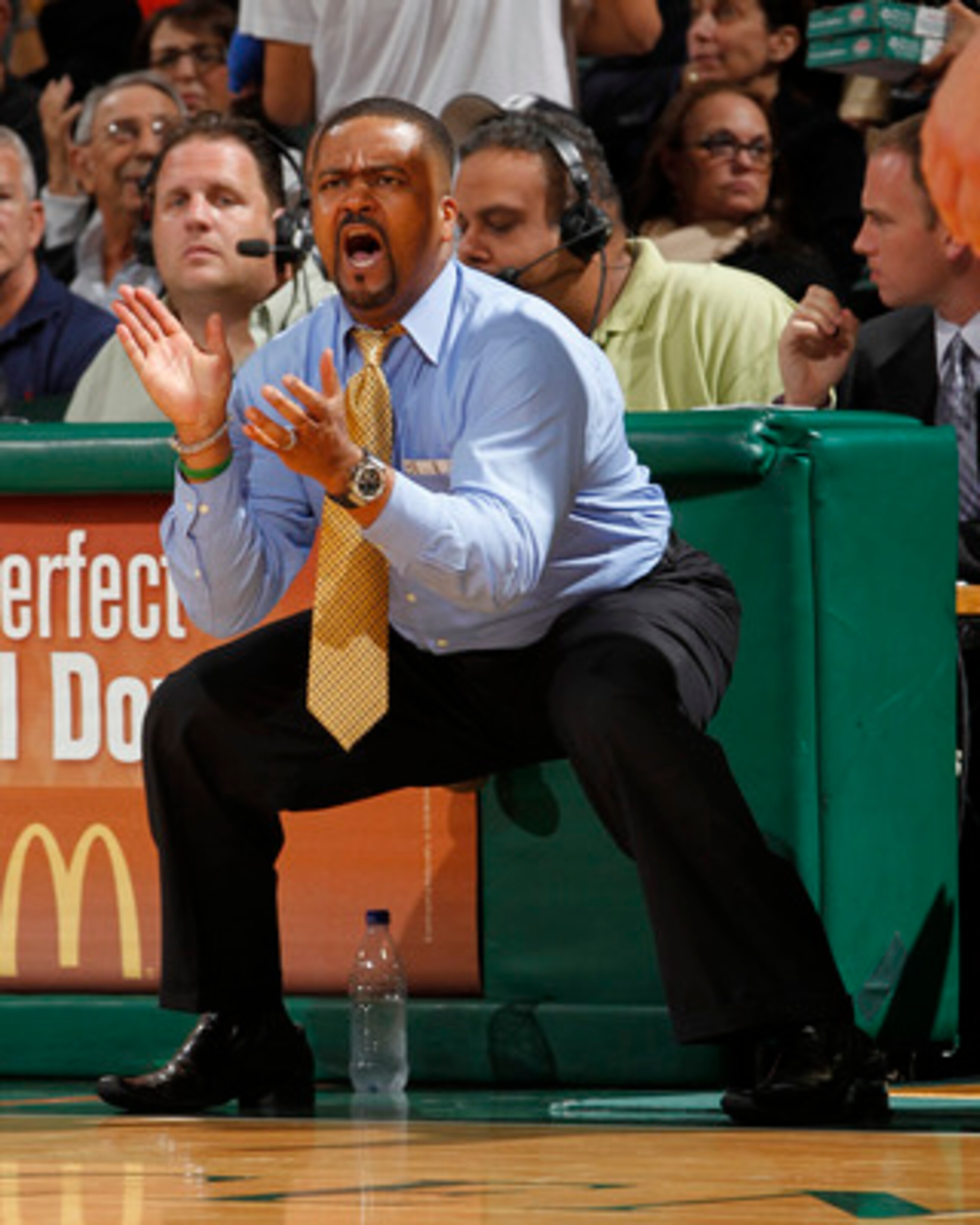
Great news: Laurence Bowers and Kim English will be back for their senior years. Not so great news is the coaching change. Frank Haith, whose record in the ACC is 43-69 now in charge.
He has yet to sign any new recruits, but he inherited a team with six seniors that contribute heavily, and that should make for an easier first-year transition for Haith.
Sometimes a coach just needs a clean break. Haith spent seven years in Miami.
Roy Williams spent several years in Kansas and only won his first championship when he went back to his alma mater. Williams was winning at Kansas, though.
No. 21 Texas Long Horns
5 of 25Should Texas be ranked after losing Tristan Thompson, Corey Joseph and leading scorer Jordan Hamilton prematurely, as well as senior players Gary Johnson and defensive stalwart Dogus Balbay?
Probably not, but they have a player coming in that is worth watching. Myck Kabongo is a 6-foot-2 point guard with eyes in the back and sides of his head. He seems to miss nothing and is very quick. He controls the game like T.J. Ford. The ball seems as much a part of his body as his fingers.
If you watch basketball for the highlights, then you will love this kid. If you appreciate the finer elements of the game, then avoid Texas games, because you might just start rooting for the Longhorns.
No. 20 George Mason
6 of 25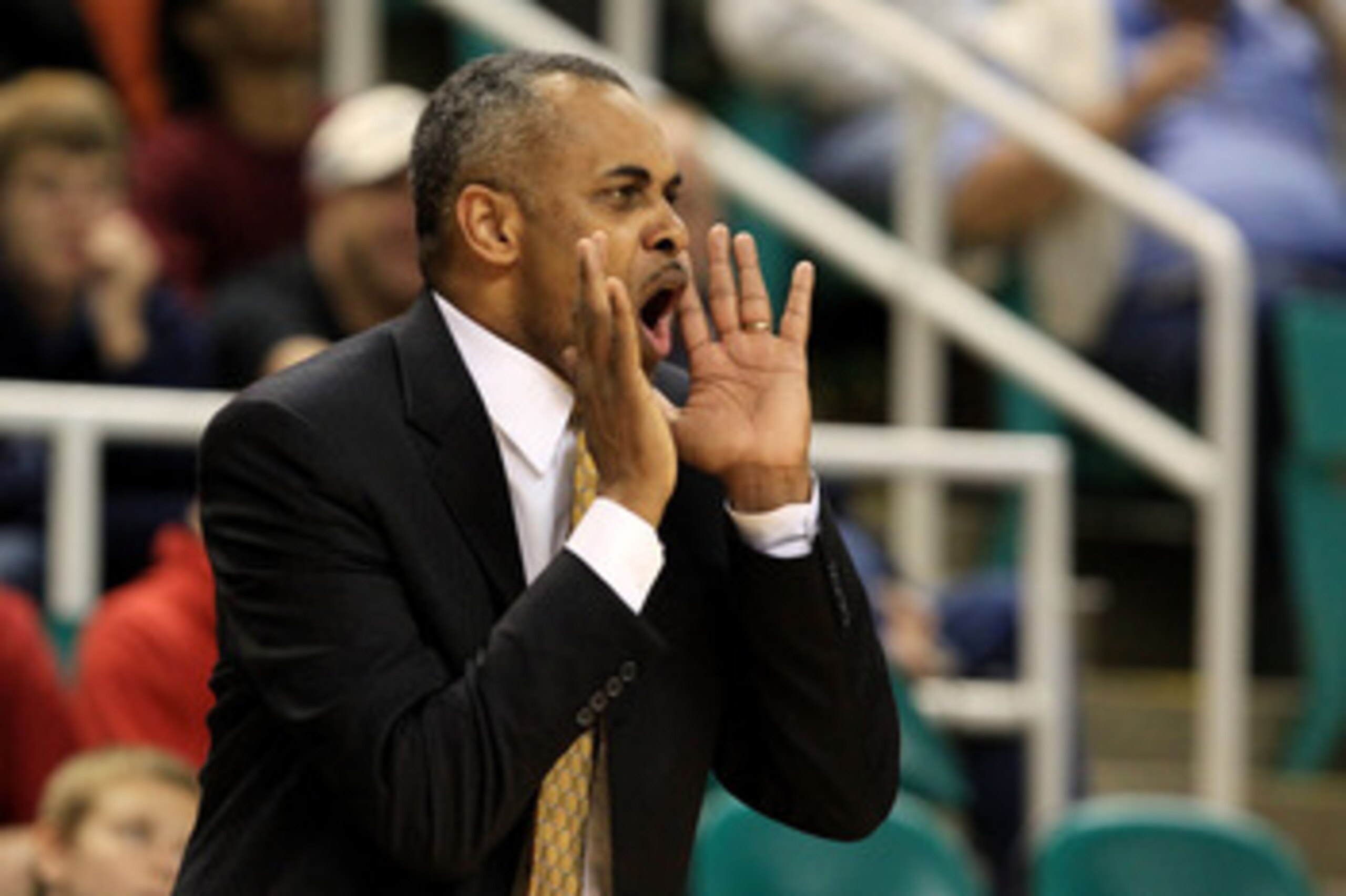
Paul Hewitt is another ousted ACC coach; however, unlike Frank Haith, he was pushed before he could jump from Georgia Tech.
Leading scorer and senior Cam Long will be gone, but second leading scorer and top rebounder Ryan Pearson should provide solid leadership.
Nevertheless, Hewitt does what he does very well: recruit. George Mason just received a commitment from the 6-foot-8 Erick Copes, the No. 6-ranked center in the 2011 recruiting class. He was originally committed to George Washington.
Copes is described as a terrific rebounder but struggles to score outside of five feet. This is not a problem, as George Mason's offense is guard-oriented.
With the graduation of Isaiah Tate, Pearson—who made 40% of his three pointers last season—could move to small forward and allow Copes to settle in at center.
No. 19 Florida State Seminoles
7 of 25Leonard Hamilton will not have the services of his two leading scorers, Chris Singleton (draft) and Derwin Kitchen (graduation) next season. However, he returns the core of players who managed to finish third in the ACC without an injured leader, Singleton.
He signed three four-star recruits: small forward 6-foot-7 Antwan Space, 6-foot-4 Aaron Thomas and 6-foot-3 Terry Whisnant. All three are good scorers, and Whisnant is one of the best shooters in the class of 2011.
The Seminoles' calling card is its defense, which saw them finish their season in the Sweet 16. Singleton and Kitchen combined to average 26 points per game, so they should be relatively easy to replace.
They will get an early test when they face Michigan State in the ACC/Big Ten challenge.
The top newcomer for this team will be Space. On paper, he looks like an easy replacement for Singleton, as they have the same length and shooting touch.
This Florida State team will surprise some top teams in the ACC if experience counts!
No. 18 Cincinnati Bearcats
8 of 25
Cincinnati was beaten in-conference by Connecticut Huskies during their one-conference match, and then repeated this in the third round of the NCAA tournament.
They finished sixth in a highly competitive Big East conference and return all but two starters. The top four scorers return and any freshman need to perform very well to break the starting five.
Shaquille Thomas, a 6-foot-6 athletic forward, can run with the best of them and is the team's highest-rated incoming recruit.
However with the departure of Ibrahima Thomas (no relation), the Bearcats have a glaring hole at center which will need to be filled, especially if they are to be competitive in the rugged Big East next season.
Thomas averaged a modest 5.7 points and 5.3 rebounds per game last season, but his 6-foot-11 frame was a great obstacle to overcome in the paint.
Junior college transfer Cheikh Mbodj, another Senegalese big man, should bolster the front line of UC next season. At 6-foot-9 and 245 pounds, he would help Yancy Gates on the glass.
Speaking of Gates, he finished the season averaging a mere 12 points per game and 6.9 rebounds. However in the last ten games, out of which UC won seven, Gates averaged 15 points and 8 rebounds, in victories over Georgetown (twice), Louisville and Missouri.
Justin Jackson showed a lot of promise as a freshman but the size of Mbodj is more coveted in this instance, hence UC's season may hinge on how fast the Senegalese can learn Cronin's system.
No. 17 Michigan Wolverines
9 of 25John Beilein looks to improve on a team that lost by two points to Duke in the third round of the NCAA tournament and earned a surprise fifth-place finish in the Big Ten.
With no seniors and less than a hand full of Juniors, this was a very young team. They were led by sophomore Darius Morris who averaged 16 points and 6.7 assists per game, but will now be taking his talents to the NBA.
The young Wolverines were a little on the small side as Beilein only started one forward, 6-foot-8 Jordan Morgan. This coming season should see more contribution from the 6-foot-9 Jon Horford, whose first season was interrupted by a knee injury. He is the brother of Atlanta Hawks center, Al. Their father, Tito, played in the NBA as well.
Carlton Brundidge is a 6-foot-1 four-star ESPNU-rated shooting guard who dominates the mid-range game and is one of three recruits in the 2011 class. Another is high energy three-star ESPNU-rated power forward Max Bielfeldt.
The most important recruit that could easily replace Morris is Alphonso "Trey" Burke. He is a four-star-rated guard who originally committed to Penn State before changing his mind. He is now headed to Ann Arbor.
Burke has very good defensive instincts and will average a high number of steals per game. He is also a major scoring threat who can shoot the three or finish around the ring over larger defenders with either hand.
If he shines at Michigan, the days of the Fab five might be back, just without the hype.
No. 16 Marquette Golden Eagles
10 of 25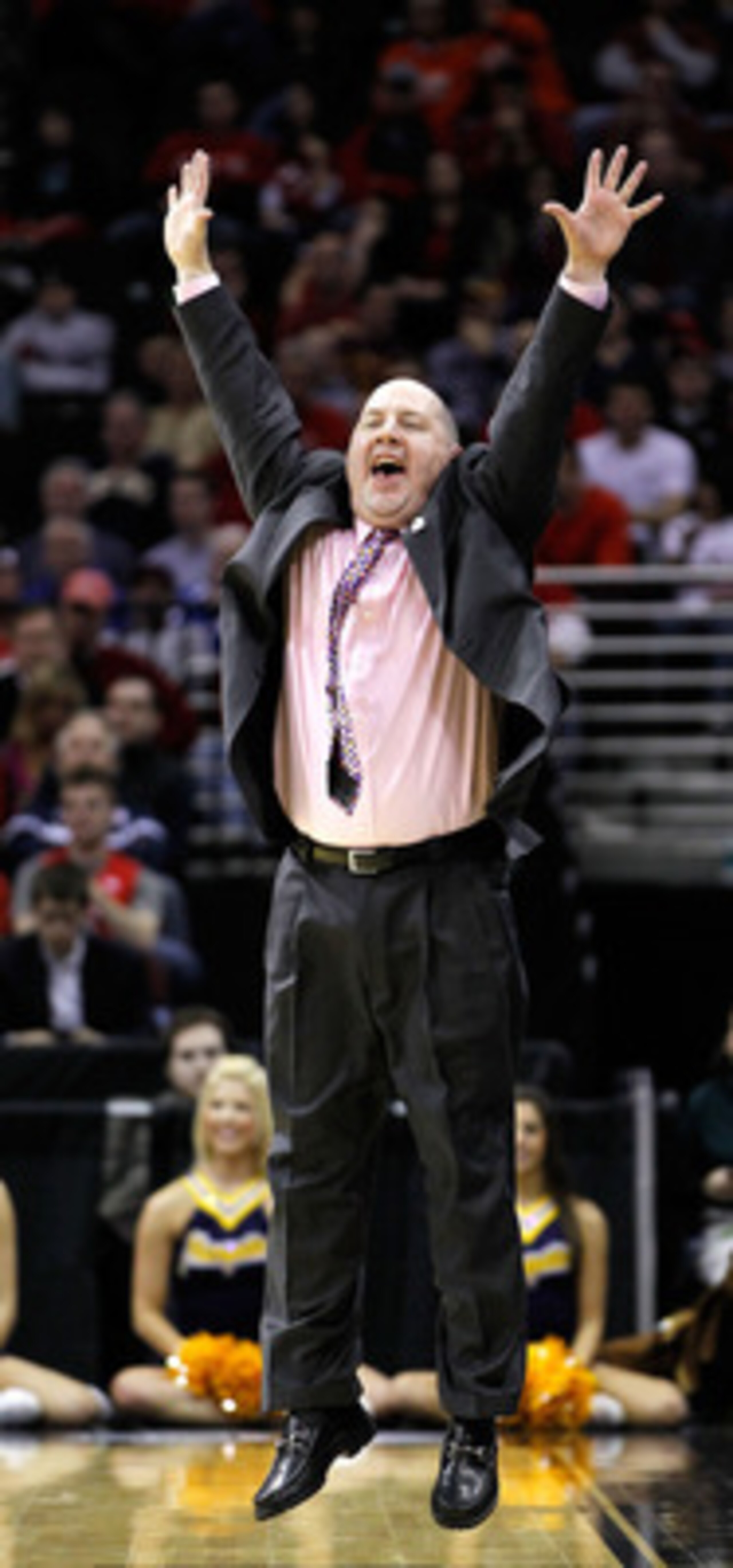
Last season Marquette benefited from an expanded tournament that featured 68 teams instead of 65, and which saw the Big East enter a record eleven teams.
Marquette lost in the sweet sixteen to North Carolina by 18 points and should bring back everyone but Jimmy Butler.
However, the top returner will be the coach, Buzz Williams. Even with so many coaching spots being vacated just after the season, including those at Maryland and Texas A & M, Williams remains with the Golden Eagles.
He will have the nucleus of his team back but will miss the versatility of Jimmy Butler, who was a stat stuffer. Dwight Buycks led the team with 3.2 assists per game, but his eligibility has expired.
Again like Michigan, length might be a problem with this team. However, when it comes to Marquette, it is not the size of the dog but the size of the fight in the dog. Any team that plays Williams' Marquette is in for a battle.
6-foot-11 Chris Otule, who averaged 1.5 blocks per game in seventeen minutes, should see more playing time.
They have three recruits coming in, all of whom are wing players. If anyone should make a splash, it will be Juan Anderson, a 6-foot-6 small forward from California.
With Darius Johnson-Odom (15.8 points per game) and Jae Crowder (11.8 points per game) back, Anderson will not be expected to be a big scorer. Nonetheless, if he takes to Williams' system quickly, he will be a major contributor in the future.
No. 15 Xavier Musketeers
11 of 25This is Tu Holloway's team and he treats it as such, so it was no surprise to see him back after flirting with the NBA draft.
However, his style of play contrasts greatly with that of another player Xavier leans on at times: seven-footer Kenny Frease. Whereas Holloway is quick and excels in a more up-tempo offense, Frease is better-suited to a slower half-court play in which he can overpower smaller defenders and finish with a hook shot. Either way ,Xavier has options.
A new recruit that could fit in naturally with either style is 6-foot-5 Dezmine Wells, out of Hargreaves Military Academy. He can play either power forward if Xavier goes small or on the wing if they play a larger lineup.
With the graduation of both Dante Jackson and Jamel McLean, there are vacancies in the team's starting lineup, and a player with Wells' intensity has a good chance of taking one of those spots.
Next year sees the arrival of Sim Bhullar, a 7-foot-4 player who will surely make a big splash. Playing with Frease will make that transition easier for Wells, who played at Word of God Academy with John Wall.
No. 14 Pittsburgh Panthers
12 of 25In the land of predators, the lion is king. If the Big East was the best conference in the country last season, then Jamie Dixon can claim the lion's share of glory, as his team lost only three games in-conference.
Sadly, they lost a 71-70 nail-biter to Butler in the third round of the tournament.
They lost three key seniors—Bradley Wannamaker, the ever-versatile Gilbert Brown, and man mountain Gary McGee. Wannamaker and Brown take some degree of scoring ability with them, but Trevor Woodall and Ashton Gibbs should contribute further here.
Nasir Robinson is a great post player even though he is only 6-foot-5, and he should improve on his 9.4 points and 5 rebounds per game.
The team still has room to improve in its three-point shooting and its interior defense. Durand Johnson is a 6-foot-7 shooting guard and is reputed to be a good shooter. John Johnson is a formidable guard in the line of Brevin Knight and should be a sleeper.
A lot will be asked of 6-foot-9 Khem Birch, the No.1-ranked center in the class of 2011, though at 210 pounds, the Big East will be an adjustment for him. See here a more in-depth look at Birch.
If Birch does not hang around for more than a year, then Pitt also have another center coming in: 6-foot-11 Malcolm Gilbert, who is reputed to be an excellent shot-blocker and interior defender, much like what the departing McGee brought to the table.
No. 13 Wisconsin Badgers
13 of 25Bo Ryan was another victim of Butler's success in the sweet sixteen in the last NCAA tournament. Ryan now loses stretch forward Jon Leur, his leading scorer and rebounder, to graduation.
The good news is that scoring point guard and junior Jordan Taylor is back and plans to lead the team's talented nucleus, which finished third in the Big Ten behind Purdue and Ohio State.
Bo Ryan likes to bring in unknown prospects who will blossom into solid contributors, and the 2011 class is littered with at least three such players rated at two stars or below. However, his 2011 recruiting class also includes two four-star players: Frank Kaminsky, a 6-foot-10 center, and Jarrod Uthoff, a 6-foot-8 power forward.
These two players will be important for replace Leur and his frontcourt mate Keaton Nankivil. The team would need to go very far in order to displace Jared Berggren from either post position, as unlike the departing pair of post players who loved to shoot for three, Berggren loves to play inside.
This will also free up a lot of shots for Mike Bruesewitz, Taylor and Ryan Evans.
At only 200 pounds, Jarrod Uthoff probably needs to bulk up a little, but Kaminsky will be required to play immediately. He can shoot the ball up to 18 feet—a skill Bo Ryan seems to like in his post players.
No. 12 Kansas Jayhawks
14 of 25Four of Kansas' starters will be absent next season, as Marcus Morris and his twin brother Markief are now professionals, and Tyrell Reed and Brady Morningstar have both graduated. That makes Tyshawn Taylor the only returning starter next season.
Further, highly-regarded freshman Josh Selby has decided that one year of college is enough for him. Not a problem. Elijah Johnson should prove his mettle shortly.
Thomas Robinson looks like a star playing with the Morris twins, but can he shoulder the burden of being the man? There are so many questions surrounding this Kansas team that perhaps they should not even start the season in the top 25!
Kansas needs another scorer, someone to draw the attention of the opposition, or else Thomas will be in for a long season of double and triple-teams. Taylor's game is better-suited to set others up. There are several players that may be able to step up their game, but luckily for Kansas, they got a late commitment form Ben McLemore, who broke his mother's heart by not signing with her Missouri Tigers.
McLemore is described as an explosive wing who can shoot the three. Let’s hope he's better than Xavier Henry.
Self can still pick up a five-star recruit in the form of DeAndre Daniels, a small forward that could be the difference between a No. 1 seed and the NIT.
No. 11 Vanderbilt Commodores
15 of 25In a perfect world, Vanderbilt would be picked to win the SEC this year. They return all five starters from last season, including four seniors.
Festus Ezeli, John Jenkins, Jeffery Taylor could all have entered the draft with a legitimate chances of hearing David Stern call their names (or whoever calls the second round draft picks), but chose to return to school instead. However, this is also the same team that lost in the second round to Richmond, and critically, they are in the same conference as Kentucky.
Kentucky and Vanderbilt just about account for the argument between four-year players and one-and-done players. Kentucky likes to restock their roster annually with fresh faces with NBA aspirations, while Vanderbilt plays the long game with their recruits.
As always, this matchup will be a must-see next season, though the Commodores have as good chance against UK as the Dallas Mavericks have against the Miami Heat in the NBA finals.
The most important signee will be four-star recruit Kendren Johnson. Although 6-foot-3 shooting guard Dai-Jon Parker has a higher ranking than Johnson, Parker may play a limited role due to the return of Jenkins, last season's SEC high scorer.
Johnson is 6-foot-3, 215-pound guard in the mold of Kendall Marshall of North Carolina. He is an assist machine in the making and will be a steady backup at point guard.
No. 10 Arizona Wildcats
16 of 25Derrick Williams will be greatly missed by Arizona, but the team will prevail. Williams averaged 19.1 points per game—almost 10 points clear of the next best scorer, Lamont Jones, who averaged 9.7 per game, for a team that was beaten in the Elite Eight by the eventual champions, the Connecticut Huskies.
Sadly Lamont Jones has left the program to be nearer to his grandmother. He tried to enroll at St. John's, but due to their recent employment of a former high school coach, Jones will not be allowed to play for Steve Lavin. Nonetheless, are several other New York-area teams vying for his services.
Several players are ready to take Williams' place as the leader of the Wildcats, including rising juniors Solomon Hill and Kevin Parrom.
However, the biggest news is the commitment of five-star-ranked recruit Josiah Turner who returns Arizona to the days of Lute Olson, when the Wildcats were known as 'point guard U'.
Turner is just as comfortable scoring or passing and should fit in this team adequately. If the 2011 recruiting class had not diluted by so many point guards, such as Marquis Teague (Kentucky), Myck Kabongo (Texas), B.J. Young (Arkansas) and Tony Wroten Jr (Washington), then Turner's arrival would be discussed much like that of Derrick Rose at Memphis or John Wall at Kentucky.
This was a huge signing for Sean Miller, who recently signed an extension himself. This marks Arizona’s return as a perennial contender.
Miller signed another five-star player, Nick Johnson, a 6-foot-3 shooting guard who is reputed to be able to score in bunches.
No. 9 Memphis Tigers
17 of 25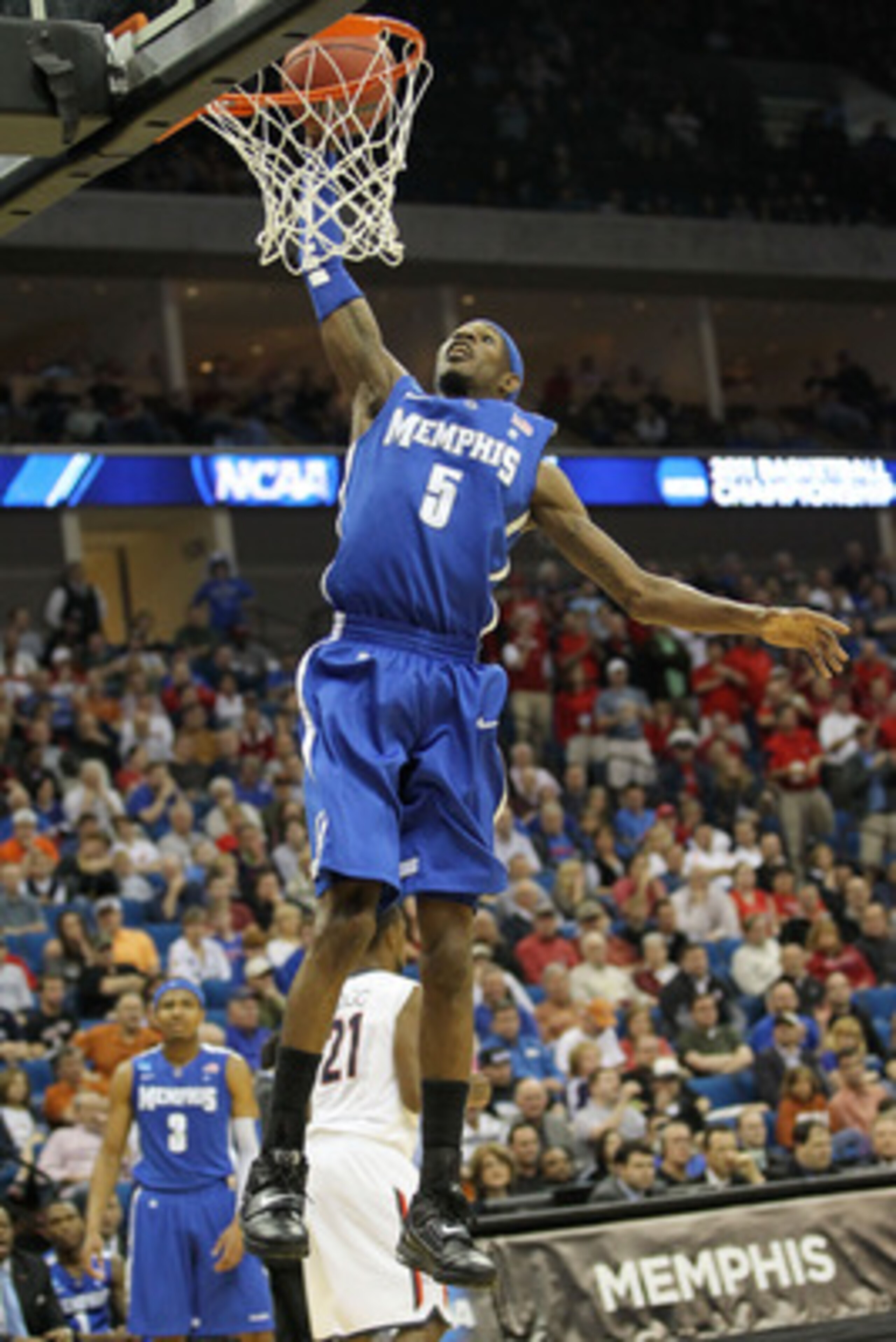
Memphis adds proficient, athletic forward Adonis Thomas to a team that is very solid on the wing. They have eight players that averaged between 6 and 9 points per game.
All these players are capable of scoring 20-plus points in any game, but consistency seems to be their issue. If they had a single player who excelled in this category, they would be a very good team.
Will Barton is back, although he was expected to declare for the draft. Hopefully he can improve on his freshman season in which, at times, he seemed out of control.
Memphis will miss the size of senior Will Coleman. They have four players 6-foot-7 or taller including Hippolyte Tsafack, who had to abandon his redshirt year when Wesley Witherspoon got injured.
They have more size coming in the form of junior college transfer Stan Simpson. At 6-foot-11 and 240 pounds, he gives Memphis much-needed size.
Not to take anything away from Thomas, but no one on Memphis averaged more than 5 rebounds per game last season. Simpson's size and defensive ability will be just as welcomed as Thomas’s talents.
The downside regarding Simpson is that he transferred from a Division One college to a junior college—not the usual trajectory of an impact player. He played one season at Illinois after redshirting his first year, then left for John A. Logan CC.
No. 8 Florida Gators
18 of 25Billy Donovan is surrounded by a new staff this season. Assistant Larry Shyatt is now his own man at Wyoming, Rob Lainier was lured to Texas, and Rick Pitino has taken his son, Richard, under his wing at Louisville.
Donovan was able to re-stack his staff with some heavyweight assistants, including two past Division I coaches, John Pelfrey and Norm Roberts.
Now that his staff is in place, Donovan will need to sort his roster for the coming season. Vernon Macklin, Chandler Parsons and Alex Tyus have all used up their four years of eligibility.
Erving Walker, the team's leading scorer from last season, is back, but would he be best suited to start at point guard. Or, could rising sophomore Scottie Wilbekin be best suited to keep this untested squad together?
Donovan will have three guards capable of starting for any top team vying for the off guard position. Mike Rosario, a transfer from St John, averaged 16.7 points in his last season, Kenny Boynton, who averaged 14.2 points per game last season, and five-star recruit Bradley Beal.
Beal, the No. 4 overall recruit on ESPNU's 100 list, is a scoring phenomenon with no obvious weaknesses. This dictates stardom from the day he arrives on campus. Can Donovan relegate him to the bench? Alternatively, he could start three guards.
Many coaches would give their right arm for this dilemma.
No. 7 Duke Blue Devils
19 of 25Duke has five freshmen coming in, but there is no mystery that the top recruit is five-star Austin Rivers, ranked No. 2 on ESPNU's top 100. He now takes his talents with him to Durham.
With the graduation of Nolan Smith, Kyle Singler and the loss of last season's top freshman, Kyrie Irving to the draft, Duke badly needs a scoring injection. Can Austin Rivers be that guy? He certainly has the star quality.
Duke has a lot of options this season, The Plumlee brothers, Miles and Mason will be joined by their "little" brother, 7-foot Marshall. Freshman Quinn Cook will also give rising sophomore Tyler Thornton stiff competition for the starting point guard position.
Alex Murphy left high school early to help strengthen the small forward position, for which Michael Gbinije will also be competing.
But the player that will allow Duke to challenge UNC dominance is Rivers. If he can replicate Irvin's season (without the injury), that will be a good start.
No. 6 Connecticut Huskies
20 of 25The current NCAA champions have only one recruit coming in, and one player of note leaving. They play the same position. Can the recruit equal his predecessor? There is no need.
Kemba Walker is gone. The Junior capitalized on his prestige as the Final Four Best player and entered his name into the upcoming NBA draft. Point guard Ryan Boatright looks like a direct replacemen,t but the presence of Shabazz Napier negates this.
Napier and and fellow rising sophomore Lamb will compose one of the best backcourts tandem in the nation.
No. 5 Louisville Cardinals
21 of 25Rick Pitino loses his leading scorer P. Knowles and welcomes two top 30 recruits, Chane Behanan and Wayne Blackshear.
2011 is the year of the shooting guard, as Blackshear is a scoring machine who will make the loss of Knowles a little easier. If he was a better three-point shooter, he would give Rivers and Beal a run for their money as top off guard.
With Terrence Jennings' untimely defection to the NBA draft, Behanan arrives just in time to save the day. The 6-foot-7, 230 pound forward has a little range and will provide Pitino with much-needed size and interior scoring.
With the weakening of top teams Notre Dame and Pittsburgh due to their losses of several key players, Louisville will challenge Syracuse and Uconn for the top spot in the Big East, especially with these two additions.
No. 4 Syracuse Orange
22 of 25Syracuse always seems to have an abundance of talent, but chemistry issues always seem to derail their promising seasons.
They finished third in the Big East standings last season, but with their talent level, they could have finished first by a mile.
They return everyone but their leading scorer and rebounder, Rick Jackson. Fab Melo, a highly-touted Brazilian 7-footer who averaged just under ten minutes per game last season, is in doubt for the season as he is currently facing criminal charges, and may be in doubt for next season as well. Still, don't be surprised to see him back.
Syracuse won its first 18 games with Fab Melo as a starter. But that's not the end of it—the center averaged 2.3 points and 1.9 rebounds a game. He lost his starting job, and his minutes were reduced. Maybe his girlfriend was distracting him.
The good news for Syracuse is that, as always, they have a loaded recruiting class that including two five-star recruits Michael Carter-Williams and the No. 2 center in the nation, Rakeem Christmas.
Carter-Williams will force Jim Boeheim to either start him with Triche or Jardine, or push Dion Waiters for playing time.
The most important recruit here is Christmas, who will anchor the Orange's defense. His shot-blocking and rebounding ability will come in very handy for Boeheim.
No. 3 Ohio State Buckeyes
23 of 25Jared Sullinger is back, but without graduated seniors Jon Dibbler and David Lighty, things will get a little tricky for the rising sophomore. Dallas Lauderdale is gone as well, but two other rising sophomores will keep the Buckeyes relevant.
Point guard Aaron Craft and forward Deshaun Thomas will see their production increase with playing time. William Buford will provide senior leadership and scoring.
Coach Thad Matta has a very strong recruiting class coming in, but a lot will be asked of Amir Williams, the No. 4-rated center in the class of 2011.
The 6-foot-10 Detroit Country Day product should form one of the best front-court duos with Sullinger. Williams is described as an explosive post player who scores with hooks of the dribble, similar to Chris Webber, who went to the same high school.
No. 2 Kentucky Wildcats
24 of 25Kentucky has four incoming five-star recruits for next season. No wonder Kentucky is held in as much esteem (or contempt) as the Miami Heat, where three franchise players came together to form a juggernaut last summer.
As much as people hate seeing LeBron James, Dwayne Wade and Chris Bosh playing together, they will detest UK more as they are about to blaze a trail of carnage through the NCAA.
Anthony Davis, Michael Gilchrist, Marquis Teague and Kyle Wiltjer could be double-digit scorers for any competitive team, but they will play together for college basketball’s equivalent of the Pied Piper, John Calipari.
Who is the most important? With the unexpected return of Terrence Jones, the most important recruit will be the one that chooses to save his knees for the NBA and comes off the bench.
The NCAA does not recognize a sixth man of the year (or do they?), but whoever decides to back up either of the starters will be a shoe-in for such an award.
Michael Gilchrist has dominated this class since his freshman year, in which he had as much hype as Schea Cotton. Can he deliver the goods, or will he fall along the wayside as did Cotton? Playing with great players won't prove much, but it is an easy path to a lucrative professional career.
Anthony Davis was a guard during most of high school until a growth spurt allowed him to overtake Gilchrist at the finish line for best player in the class of 2011. He brings a guard skill set into a power forward's body, albeit without the requisite weight, but that will come with time.
Marquis Teague, younger brother of Jeff Teague who is formerly of Wake Forest and currently plays for the Atlanta Hawks, is the No. 1 point guard in this class. Considering that the last three top point guards were Derrick Rose, John Wall and Kyrie Irving, the bar has been set extremely high for him. But if anyone can deliver, it is this 6-foot-2 scoring sensation.
Kyle Wiltjer maybe the least heralded recruit in this group, but he is no runner up. He brings something to the table that Calipari has never had before, and that's a forward who can score consistently from anywhere in the form of Dirk Nowitzki.
As a point guard, Marquis Teague will be the most important, as he will need to hold this team together. Nonetheless, the man under the most pressure will be the coach. If he cannot get a loaded team like this to the NCAA finals, then he should be fired. Extremely harsh, or is it?
No. 1 North Carolina Tar Heels
25 of 25It is always a good time to be a North Carolina fan in the Roy Williams era, but this is a great time to be a UNC fan. So they had one rough season in which things got on top of themselves, but that's all in the past now. They have an arsenal of talented players who want to be in college.
One-on-one, no one can stop Tyle Zeller deep in the post. He is not a dunker but he is very adept at adjusting his shot around the ring or getting to the foul line.
Harrison Barnes is a pro playing an amateur game, and John Henson is a rebounding force. If you see Dexter Strickland lining up for the 100-meter race in London next year with a basketball in his hand, do not be surprised; the guard is a blur!
If the cloning of human beings is illegal, how do you explain Kendal Marshall, who seems to be playing in the NBA finals at the moment even though he has never been drafted? OK, that may be a slightly drastic way of saying that Marshall plays like Jason Kidd, but the similarities speak for themselves.
If his team had any weaknesses, they would probably have been depth in the frontcourt and three-point shooting.
Not anymore. With the addition of P.J. Hairston and Reggie Bullock's return from injury, three-point shooting will be taken care of.
Bob McAdoo's nephew, James, is an upgrade from Justin Knox and will compliment Henson and Zeller very well. Just like Marvin Williams before him, James is a combo forward. Do the similarities end there?
.jpg?w=2560 "Viral Rams Coach Vid 🖕")


.jpg?w=2560 "Injury-stricken Seahawks signing veteran RB")
