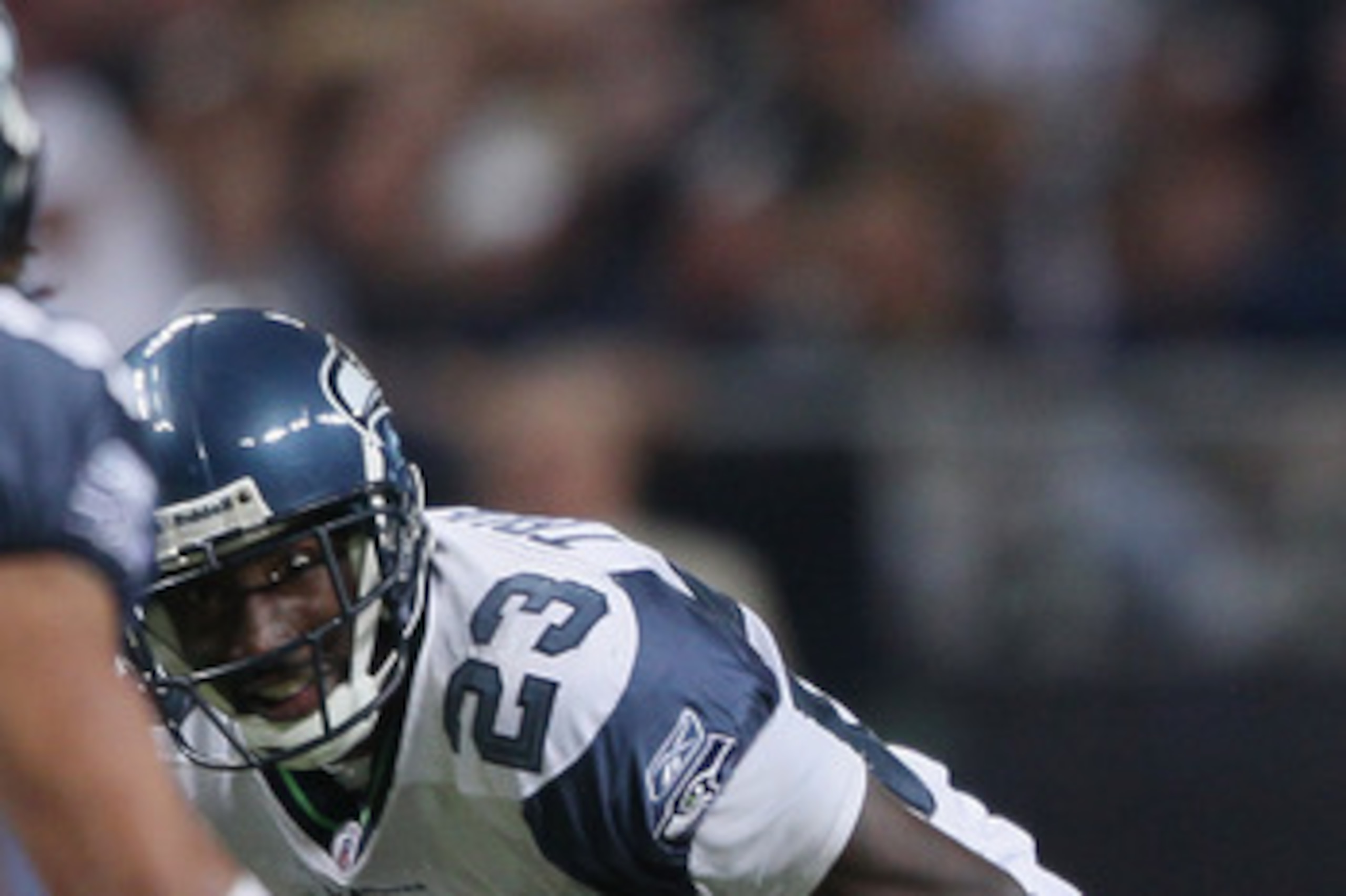

Seattle Seahawks: Will These 6 Veterans Be on the Opening Day Roster in 2011?
The Seahawks wait in limbo as the lockout continues, unintentionally buying time and tweaking their many plans for how to proceed once NFL business starts in 2011.
Nearly 300 roster moves were executed by the organization in the first year under Pete Carroll and John Schneider, a diligent approach to remaking the roster.
The Seahawks face the task of re-signing or replacing nearly half of their “regular” 2010, 53-man roster, but the organization never shies away from making the unexpected decision.
Given the fact that eight of their main 2010 contributors were acquired after the beginning of training camp, via trade or signed as cast-offs from other teams, an unforeseen release or two is not out of the question.
Let’s take a look at six 2010 Seahawks—including three free agents that could be re-signed—that may have to fight for their jobs in 2011.
Michael Robinson, FB
1 of 6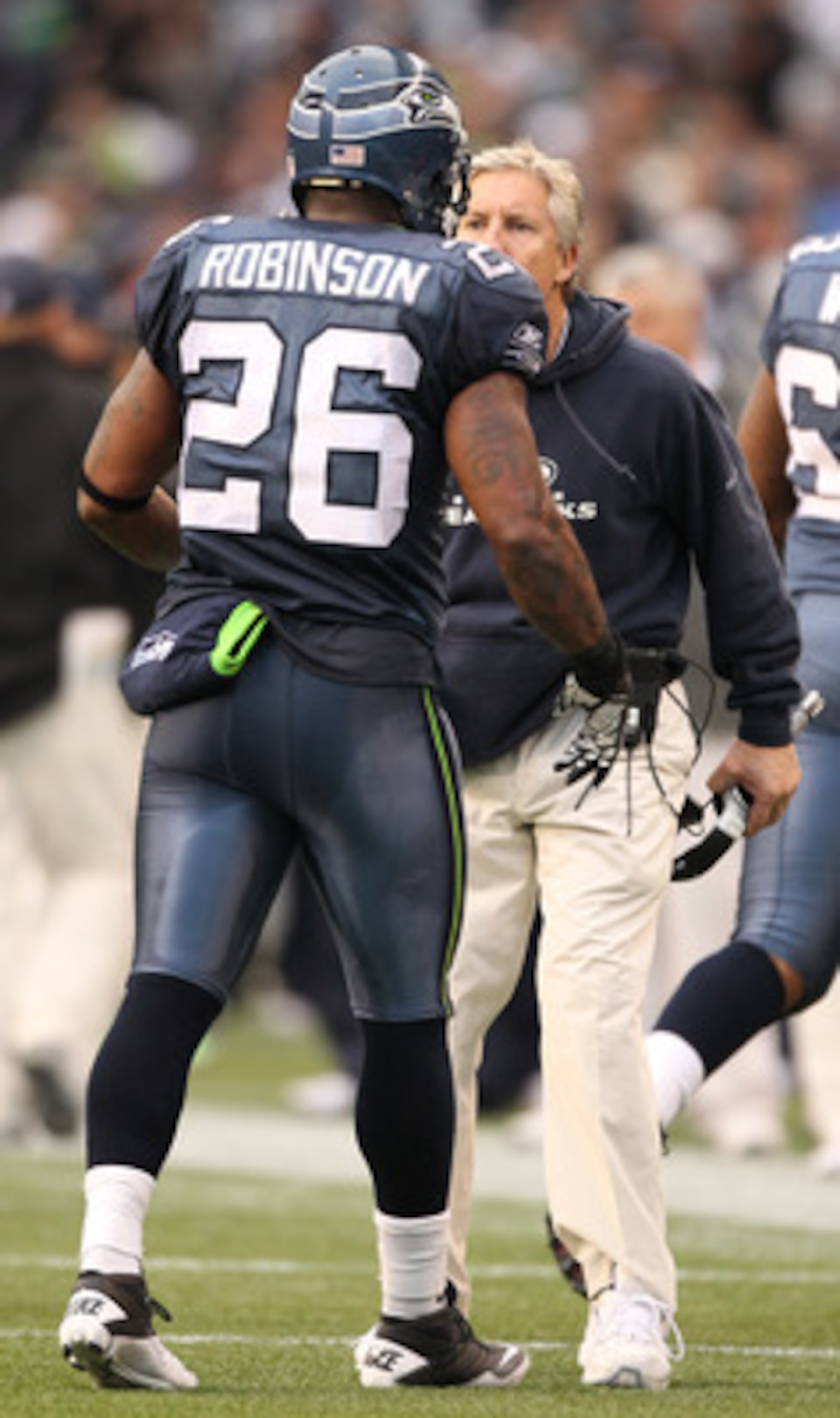
Robinson was released by the 49ers at the end of training camp in 2010, coming off what appeared to be his least productive season in San Francisco: less than 10 touches in 2009—the former college quarterback saw time as a kick returner—after three seasons of 35-plus.
Former 49er and current Seahawks assistant special teams coach Jeff Ulbrich was shocked the Seahawks were able to get Robinson after he was released, happy with the addition.
Robinson is a hard-working veteran that brings versatility and a presence on special teams. He is a bit undersized for the fullback position at 6’1”, 223, but is a tough player.
However, Robinson missed five games in 2010—he missed two during his four-year tenure in San Francisco—and didn’t prove to be a true road-paving presence for the backfield. He also was unable to provide a consistent outlet as a receiver out of the backfield, one of his strengths earlier in his career.
Seattle was able to exploit some of his talents via wildcat-type formations in 2010, but Seattle has players with similar talents. Receiver Isaiah Stanback is a Schneider favorite and a former college quarterback at the University of Washington. Second-year receiver Golden Tate also has wildcat capabilities and could see the more time in the role—possibly something similar to Percy Harvin’s role in Darrell Bevell’s Minnesota offense—in 2011.
Though the team doesn’t currently have anyone to replace Robinson, Seattle needs a fullback that is a powerful blocker and consistent receiver. An H-back is a possibility given Tom Cable’s background, and Robinson was a college quarterback, not a tight end, fullback or receiver.
Even if Seattle decides to bring Robinson back to compete for his 2010 spot, it’s not a given he makes the opening day roster; he didn’t for the 49ers in 2010.
Marcus Trufant, CB
2 of 6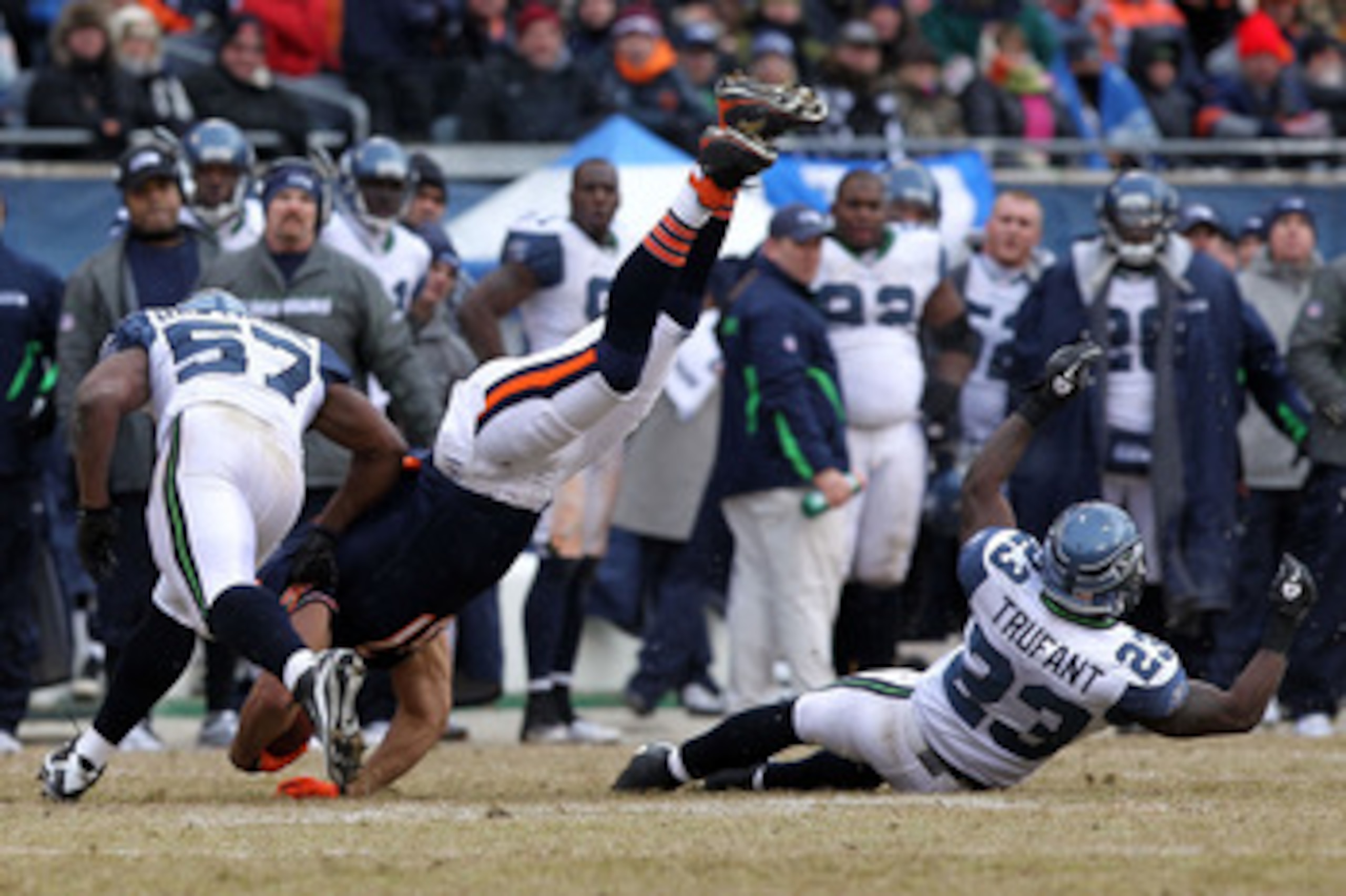
I recently highlighted Trufant as a player that could potentially restructure his contract to stay with Seattle under ideal circumstances, as he is from the state and likes playing in the Northwest.
Trufant signed a hefty contract in 2008 for six years and just over $50 million. It pays him $5.9 million in 2011, increasing into its expiration after 2013. But what if Trufant is unwilling to rework his deal?
He has not proven capable of being a true No. 1 corner in nearly four seasons. Only four interceptions in the past three seasons, his lone pick in 2010 a pick six in Week 1, shows his steady decline since signing his contract—a back injury a major culprit in his decline the past two seasons.
In figuring Trufant’s situation, it’s worth noting a transaction from John Schneider’s past involving a former All-Pro veteran corner that was seemingly on the downside of his career.
Charles Woodson spent eight years in Oakland, two of his final four seasons there injury-riddled, and was signed by the Packers in an uncharacteristic big free-agent signing by GM Ted Thompson—seven years, $52 million in 2006.
Woodson’s role as a leader on the Packers' Super Bowl team is well documented: 30 interceptions, eight touchdowns, 13 forced fumbles, eight sacks and almost 14 pass defenses a year in his five years with the team.
The Seahawks will have to decide if Trufant can bring Woodson-like leadership in the next two to four years; Woodson was the 2009 NFL Defensive Player of the Year, lofty production that Trufant is unlikely to fulfill.
Walter Thurmond presumably occupies the corner slot opposite Trufant; Roy Lewis was a special teams captain and nickel corner in 2010, currently signed on a one-year deal.
The Seahawks are looking to get longer, faster and more physical in the secondary in hopes of creating more scheme versatility. The Seahawks have a variety of young, physical cornerbacks all 6’0” or taller signed within the organization, or in the form of 2011 draftees, to compete with Trufant.
If he isn’t 100 percent ready to compete for his job in training camp and proves he is no longer a cut above the rest of the competition on the roster, Trufant may be a surprise training camp cap casualty in 2011.
Brandon Stokley, WR
3 of 6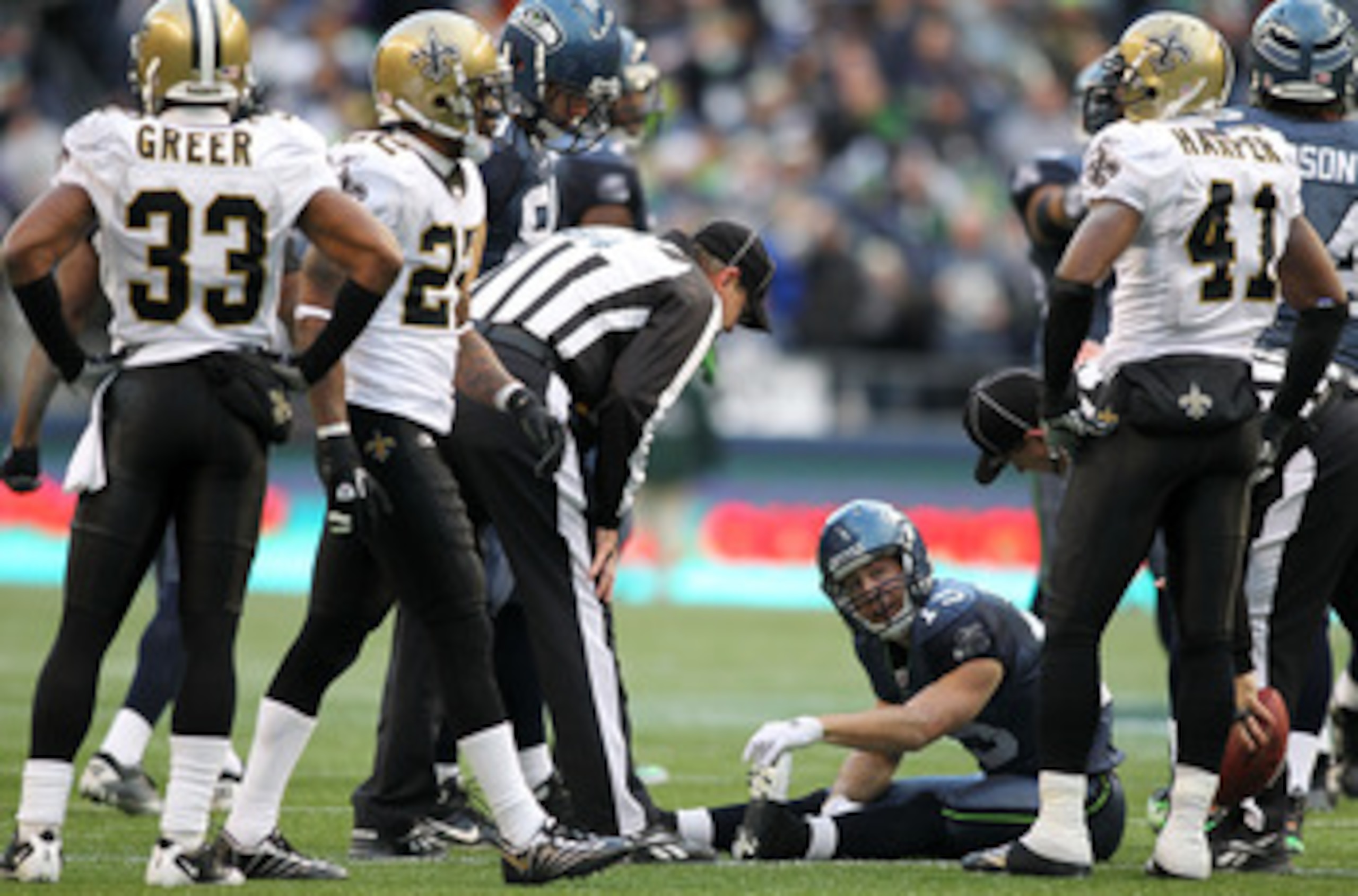
Brandon Stokley was signed before Week 4 last season and made a tremendous impact as a true veteran on a young receiving corps. I previously highlighted him as a player Seattle must re-sign due to his leadership and expertise, and that opinion still stands.
However, I can envision a scenario where Stokley is re-signed for 2011 and doesn’t make the opening day roster.
Remember, Stokley didn’t come to Seattle until he was fully healthy; he played in 11 of a possible 13 games, spending a good part of the season battling various injuries. His experience in Jeremy Bates’ system made his integration into the offense a no-brainer, but Bates was fired after the 2010 season, cutting the tie that brought Stokley to Seattle.
Stokley could be available for the veteran minimum, in which case Seattle would be hard pressed not to explore re-signing him, simply because he is a player who will elevate those around him during training camp with his work ethic and football acumen.
But the Seahawks have a bevy of young talent at the position, a group Stokley worked closely with in 2010. Additionally, Isaiah Stanback and rookie Kris Durham are expected to be part of the fray in 2011.
The team will feature a young core of five receivers—six including Deon Butler—competing to make an impact if they can stay healthy as a unit during training camp.
If Stokley is not re-signed or is the odd man out of that group as the ol’ veteran, it could be a sign the Seahawks’ young unit—Ben Obomanu the oldest signed receiver, turning 28 in October—is primed to make strides in 2011.

.jpg?w=2560 "Falcons Saints Football")
.jpg?w=2560 "Rams Eagles Football")
Stacy Andrews, OL
4 of 6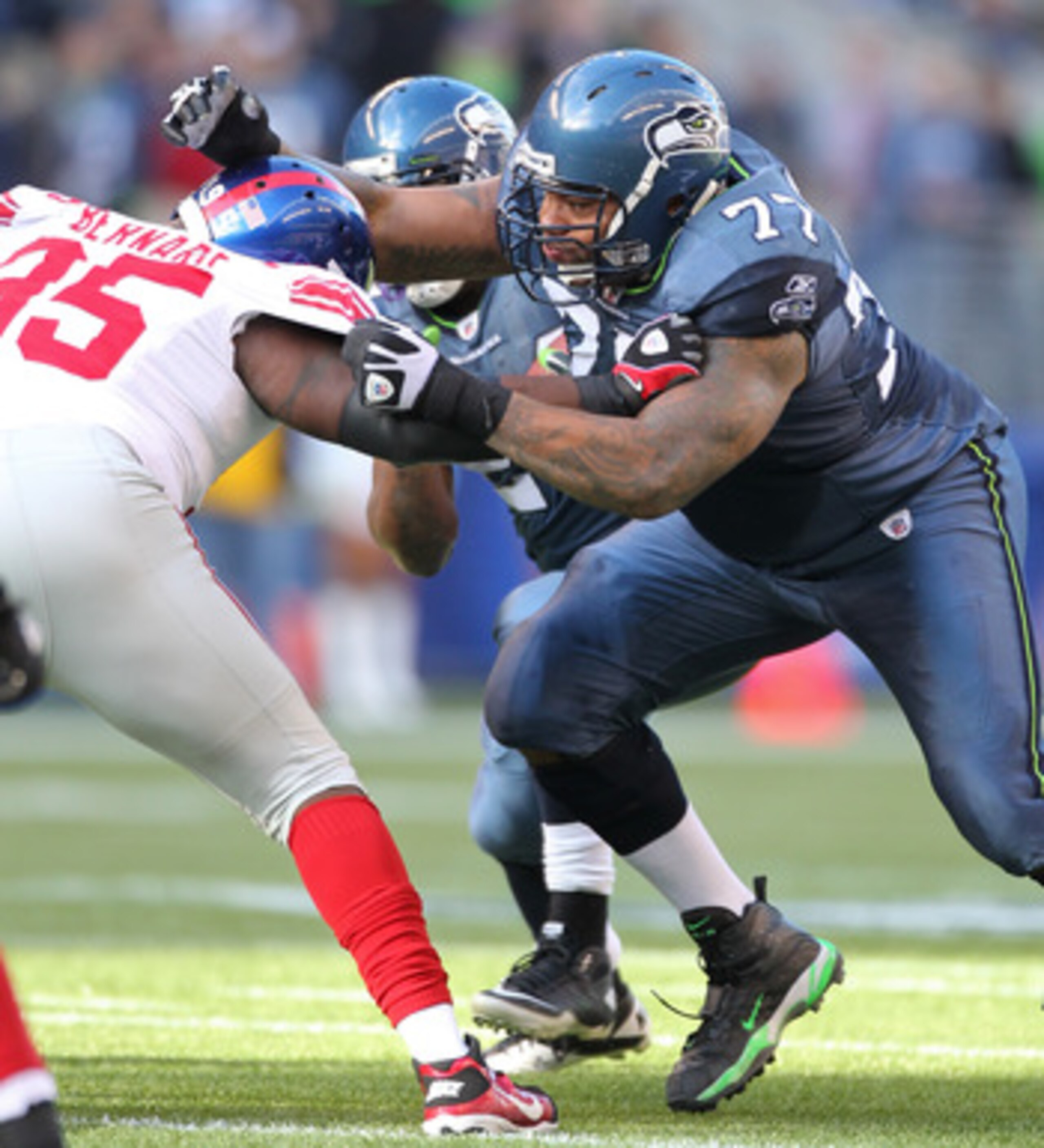
Andrews is a player I’ve highlighted continually, an offensive lineman I believe Seattle could cut ties with this offseason.
Andrews saw time at both guard and tackle in Cincinnati during 2004-2006, breaking out during the 2007 season at tackle and earning a franchise tag. He played less stellar in 2008, making it through 15 games before suffering a major knee injury.
Andrews came to Seattle for a seventh-round pick after training camp in 2010, along with the six-year, $38.9 million deal he signed with Philadelphia before the 2009 season.
Andrews never competed at his “natural” right tackle spot in 2010 for Seattle, starting 12 games at right guard before being demoted in Week 15.
Pete Carroll gave some indication towards Andrews’ 2011 status with the team at the owners meetings, calling him a "legitimate factor."
Seattle then drafted James Carpenter for that right tackle spot in the first round of the draft; quite the contrary to the endorsement for Andrews and his $5.25 million salary in 2011.
Furthermore, one of the main reasons the organization liked Carpenter was because of his pro-style pedigree from playing under Nick Saban at Alabama. He is expected to contribute right away.
Versatile lineman Tyler Polumbus is a restricted free agent, and free agent Ray Willis was injured in 2010 but started 26 games in two seasons prior; both are capable as backups at the tackle spot or guard spot.
If Seattle can retain both or keep one and find a cheap free-agent competitor for depth, the organization may decide to move on from Andrews and his hefty salary in 2011.
Olindo Mare, K
5 of 6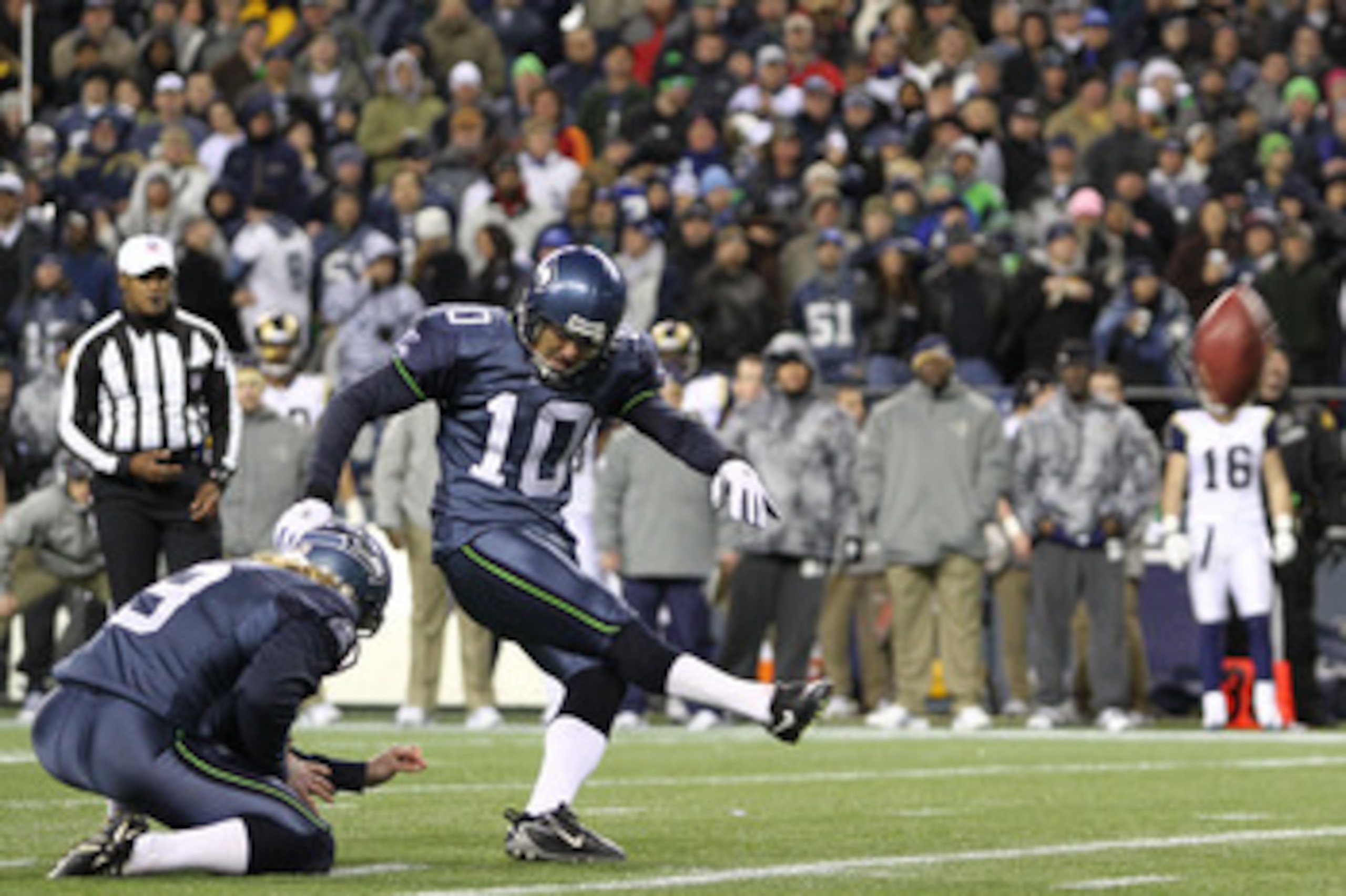
Mare is another player I highlighted as a must re-sign for Seattle because of his consistent and durable leg during his three seasons in Seattle.
However, Mare is coming off his least effective season as a Seahawk, hitting 83 percent of his kicks, though he has been in the top 10 each of the past three seasons in field-goal percentage for kickers with at least 20 attempts. He was 6-of-6 on field goals while playing win-or-go-home football in 2010 and has made nearly 90 percent of his field goals in his career as a Seahawk.
Kickers are often not valued highly unless they are truly elite. Mare is not truly elite, and he is likely past his prime, less than a week shy of his 38th birthday.
I’d personally be surprised to see Seattle completely move on from their veteran kicker, especially considering his willingness to give the team a hometown discount.
Even if they do re-sign Mare, Seattle would be wise to bring in competition for the position given the veteran's age. If Mare’s age appears as an issue during an abbreviated camp—and the new kickoff rules prove to no longer help the veteran’s value—the Seahawks may have a new kicker in 2011.
Kentwan Balmer, DL
6 of 6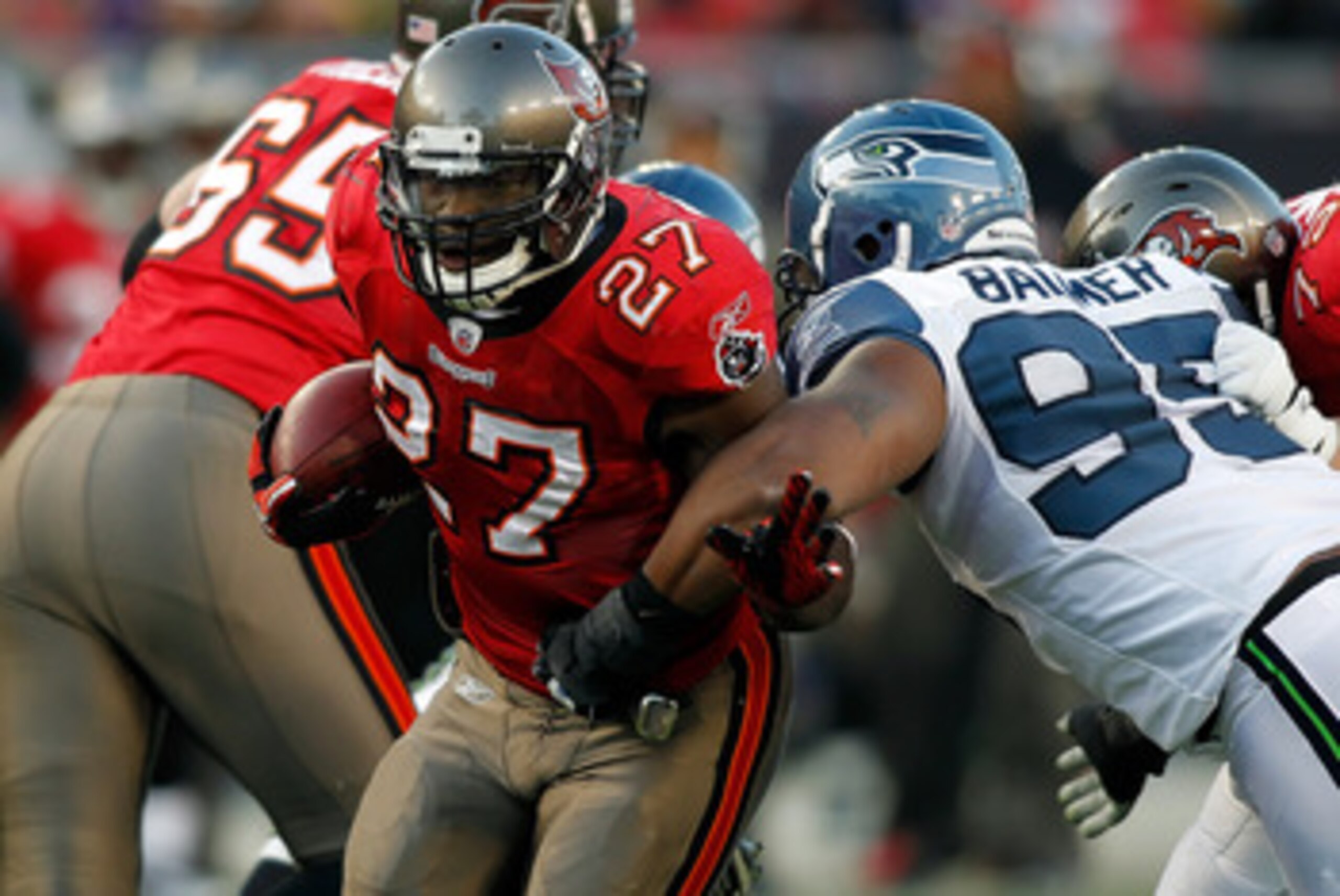
Releasing Balmer would appear to be a less than prudent decision for Seattle, as the Seahawks have five free agents at the position—potentially six if Brandon Mebane eventually leaves as a “restricted” free agent.
However, Balmer is another player I previously highlighted as one I believe may struggle to remain on the roster through opening day.
He has historically been inconsistent, dating back to his college days at North Carolina. A first-round pick in 2008 for the 49ers, Balmer played two seasons, went “AWOL” and was shipped to Seattle—reunited with former 49ers GM Scot McCloughan.
He had a career year in Seattle, registering 43 tackles in 16 games after only 19 tackles his first two seasons in the league. However, he looked tentative and overmatched at times in 2010. Even when he was around the ball, he was inconsistent at making a decisive, one-on-one play.
Balmer may have potential, but he needs to work hard off the field. Balmer’s weight has not changed much since coming into the league; various listings average out to approximately 305 in college, 298 at the 2008 combine and listed at 315 in the pros. One of his “red flags” was that he needed to add strength to be a true tackle or slim down and add explosiveness to move to end. Neither appears to be the case to this point.
Given the fact that he plays multiple roles on the line, the lack of a true offseason boosts the possibility he stays with the team. If he works hard this offseason, competes in camp and shows a solid understanding of his role in the defense, he should stay on the team for the remaining year of his contract.
However, the lockout brings unique circumstances, as some players are working out alone, without the motivation of teammates and the scrutiny of coaches.
Balmer needs to prove his history of work ethic issues is unwarranted and that he is willing to buy in to strength coach Chris Carlisle’s program as soon as he is allowed to be at team facilities.
Unfortunately for Balmer, he came into the league with the expectations that come with being a first-round pick; he was reportedly unhappy with his playing time in San Francisco before leaving camp last preseason.
If he is unwilling to shed those personal expectations and proves to have lacked urgency and a training ethic during the 2011 offseason, as he is not expected to be a starter, I expect the Seahawks to find a player that is willing to compete with a sense of urgency to simply make the roster.
.jpg?w=2560 "Texans-Mixon Released Football")

.jpg?w=2560 "Grading WWE Raw 🔠")


.jpg?w=2560 "2 NFL Officials Suspended")
