
2011 NBA Draft: Top 10 Point Guard Prospects
Admittedly, we have a weak draft class on our hands. I myself have written that I don't think there is a single star in this class.
Point guard, though, is a position where there is actually some depth. As far as this position goes, we have everything.
We have productive veterans with a long track record of success in guys like Kemba Walker. We have relative unknowns with worlds of talent like Brandon Knight. We also have veterans who have tons of talent but never put it all together like Demetri McCamey.
There is no Derrick Rose or Chris Paul in this draft, but there appear to be several players that could be serviceable starters and still others that would make nice sixth men.
10. Charles Jenkins, Hofstra
1 of 10This past season, Jenkins averaged 22.6 points, 3.4 rebounds and 4.8 assists per game. He also made 42 percent of his three-point attempts and 82.4 percent of his free throws.
Suffice it to say that Jenkins would be a much more hyped prospect if he had put up those types of numbers just about anywhere but Hofstra.
Jenkins is a stout point guard at 6'3" and 220 pounds. That bodes well for his ability to take the pounding of a long NBA season.
Going into the NBA Combine and his private workouts, I'm sure the biggest question will be about his quickness. At his size, can he get up and down the floor as well as NBA teams would like?
Maybe the most appealing thing to NBA teams will be that Jenkins was a durable four-year contributor at Hofstra and that he did a great job of improving as his career wore on. As a senior, Jenkins set career highs in points, assists, assist/turnover ratio, blocks, field-goal percentage, free-throw percentage and three-point percentage.
Jenkins appears to be pretty close to a complete package. He has size, smarts and is an efficient scorer. The questions will be the aforementioned quickness issue and also whether or not he is ready for the significant jump in competition level from mid-major college basketball to the NBA.
9. Shelvin Mack, Butler
2 of 10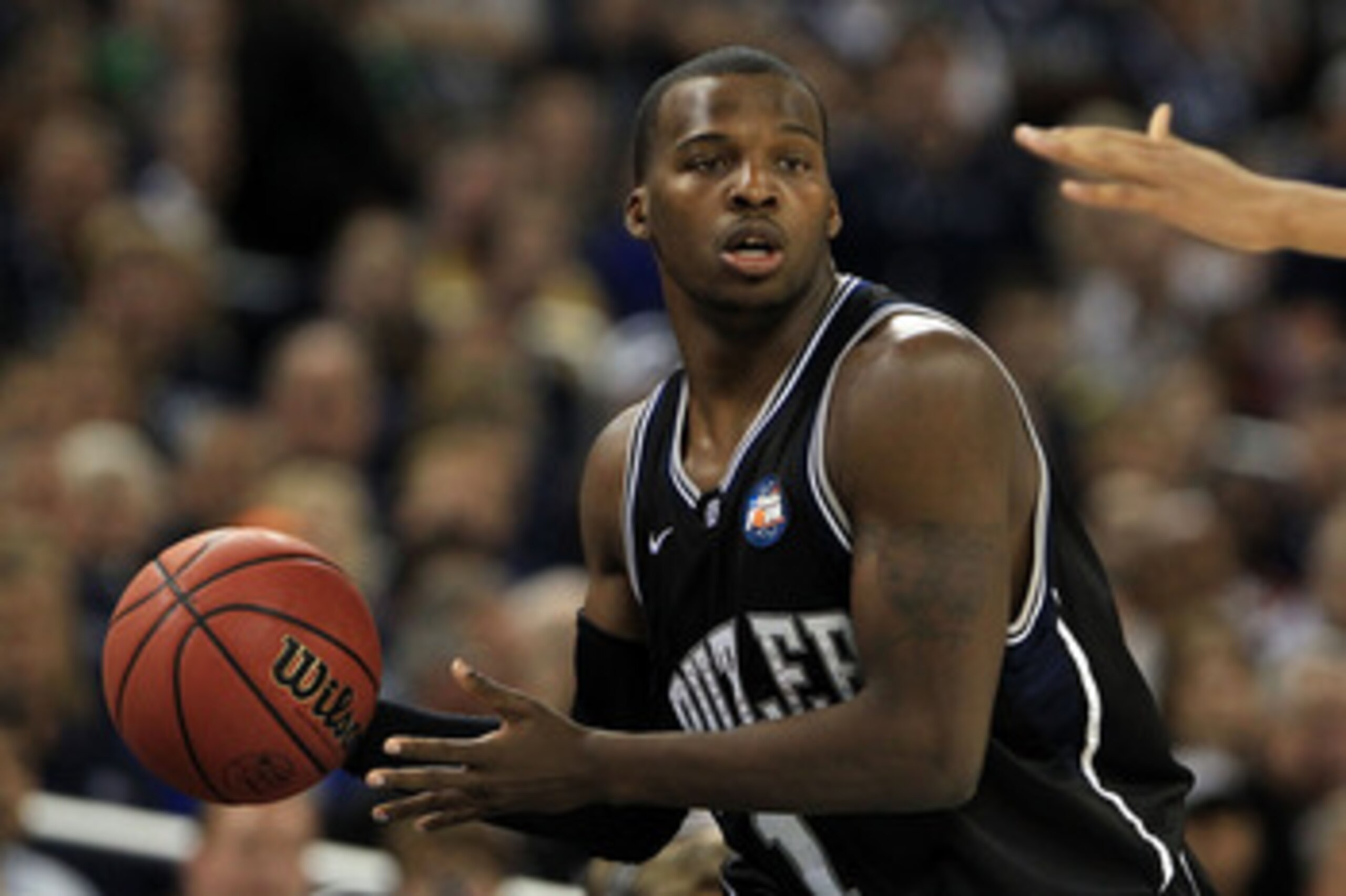
Shelvin Mack is a name that should ring a bell for most college basketball fans. He was, after all, a big part of a Butler team that made the national championship game in back-to-back seasons.
While he was often overshadowed by teammates like Gordon Hayward and Matt Howard, Mack played no small part in their success.
Much of what Mack would bring to an NBA team can't be quantified by statistics. Mack has been a big part of the foundation of a highly successful program over the last few years. He has a great feel for the point guard position, and he has a very sturdy frame, particularly for a point guard.
He isn't without question marks, though. He played many of his minutes for Butler at shooting guard with players like Ronald Nored and Shawn Vanzant sharing minutes at the point.
The problem there is that Mack probably isn't an efficient enough scorer or good enough shooter to be a shooting guard at the next level. He shot just over 40 percent from the field and just over 35 percent from three-point range last season. His relatively large frame will allow him to guard other shooting guards from time to time, though.
Mack is likely best suited for a pick and roll team, as much of Butler's offense comes from the pick and roll. Mack won't be awed by the NBA, as he knows a little something about playing on the biggest stages. His experience playing in a very disciplined system like the one at Butler will also serve him well.
Mack is an NBA-ready player. Ultimately, his success will be tied to how well he acclimates to being a full-time point guard.
8. Demetri McCamey, Illinois
3 of 10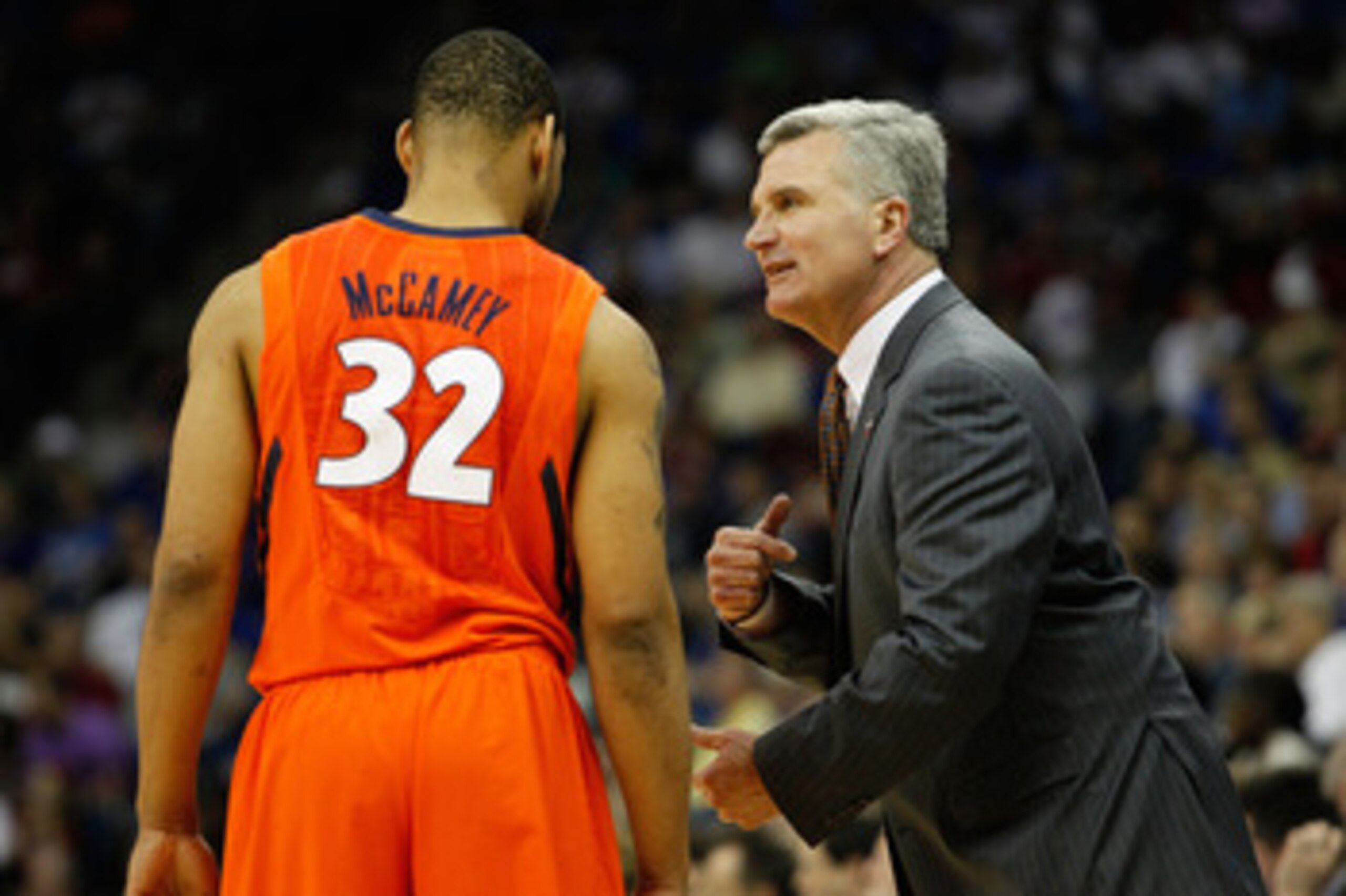
McCamey came to Illinois with a great amount of fanfare. The hope was that he would lead the Illini to heights not seen since the days of Deron Williams and Luther Head.
McCamey showed flashes from time to time, but he never developed into the type of player Illinois hoped he would be.
The team that drafts McCamey will be hoping it can pull that talent out of McCamey in ways that Bruce Weber and the other coaches at Illinois could not.
This is not to say that McCamey did not have success at Illinois. In his best season, his junior season, he averaged 15.1 points and 7.1 assists per game. As a senior, his scoring and assist numbers dipped a bit, but his shooting percentage from three-point range increased to 45.2 percent, which is more than adequate for a point guard.
The biggest question marks surrounding McCamey deal with effort and attitude. Last season, Weber called his point guard out for a lack of effort. At certain points of the season he looked out of shape, and he struggled with explosiveness.
The best-case scenario for McCamey is getting drafted by a veteran team that has a chance to win. He needs to play behind an established point guard who can show him the ropes, both on the court and off.

7. Darius Morris, Michigan
4 of 10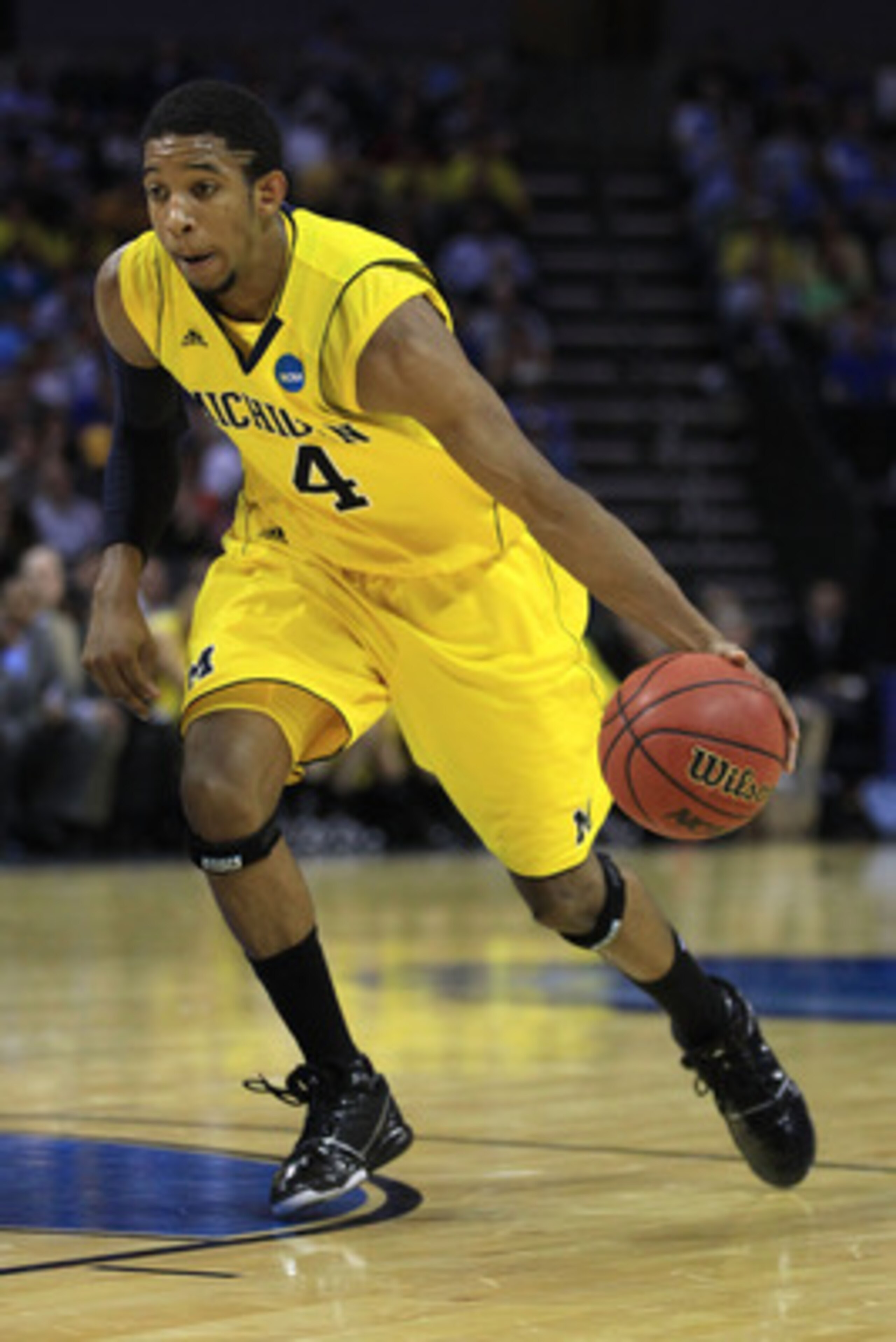
Morris is a bit of a hybrid guard that will be trying to parlay his great improvement from his freshman to sophomore season into being drafted in the first round.
As a freshman at Michigan, Morris averaged just over 24 minutes per game but only contributed 4.4 points and 2.6 assists per game.
As a sophomore, though, Morris really started to flourish. He raised his scoring average to 15 points per game, largely on the strength of his quick first step and aggressiveness when driving to the basket.
The improvement in his point guard skills was notable as well. He raised his assists per game average to 6.7 per game, and his assists to turnover ratio went up to 2.28.
Teams will also consider Morris at shooting guard, but I think his future is at the point. Morris only shot 25 percent on his three-point attempts last season, and at only 190 pounds, driving to the basket won't be nearly as easy for him at the next level. Thanks to those factors, he is more of a distributor than he is a natural scorer.
Morris' great improvement last season will likely get him some serious looks in the second half of the first round. He doesn't have the long track record of success you'd ideally like to see, but he has the height, build and stats that you want in a point guard prospect.
6. Nolan Smith, Duke
5 of 10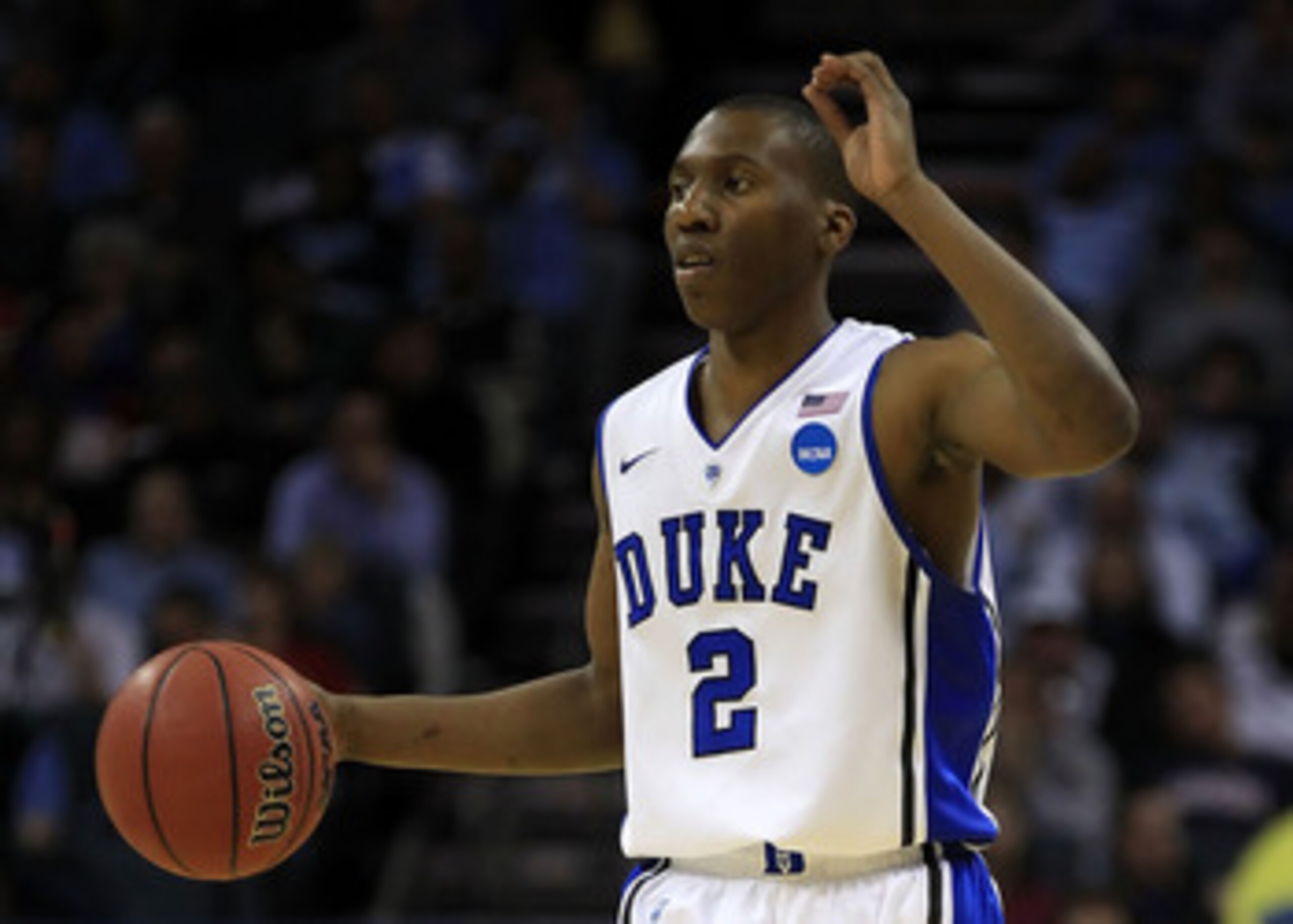
Nolan Smith is a player that most college basketball fans know. Smith was a four-year contributor at one of the most successful college programs in the nation. As a junior, he helped lead Duke to a national title.
Outside of the national championship, Smith's senior season was his finest hour. He averaged 20.6 points, 4.5 rebounds and 5.1 assists. He actually managed to put up those career-high numbers in fewer minutes than he played as a junior.
Even with his solid statistics, Smith's best attribute is probably his experience. He has played in some of the most hostile environments in all of college basketball. Every ACC game is akin to a playoff game.
At 6'3" and 185 pounds, Smith has good size for a guard and will probably be able to defend both point guards and shooting guards.
Smith will likely be drafted for his skills at the point, but there will surely be some interest in trying to play him off the ball at shooting guard. Last season he shot 35 percent from three-point range, and as a junior he shot even better by making 39.2 percent of his three-point shots. That's not ideal for a shooter playing 2 guard, but you can live with that.
In a draft where very little is certain, you could do a lot worse than drafting a player as experienced and as successful as Nolan Smith.
5. Reggie Jackson, Boston College
6 of 10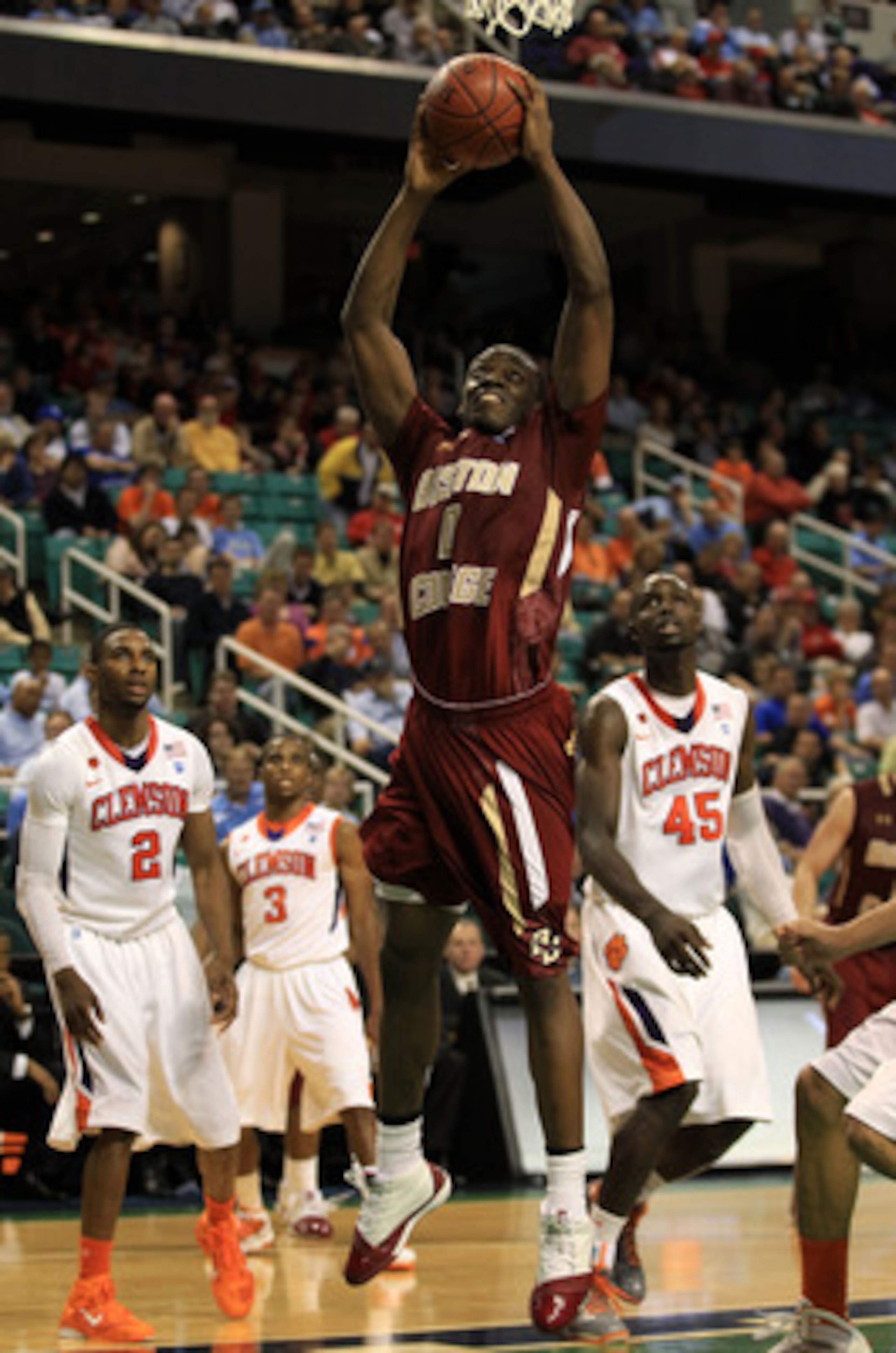
Jackson is a player who isn't done justice by his stats and measurements—and it's not as if those numbers are anything to be ashamed of.
Last season, Jackson averaged 18.2 points, 4.3 rebounds and 4.5 assists per game and made 42 percent of his three-point shots. At 6'3" and 208 pounds, he also has the ideal size of a point guard.
I'm not exaggerating when I say that Jackson was the offense at Boston College this past season. Ravaged by outgoing transfers and other player departures, the Eagles had only seven scholarship players on their roster.
While considerable credit goes to coach Steve Donahue, Jackson played a huge role in willing that team to a pretty good season considering the circumstances.
The team looked to Jackson to run the offense, get everyone involved and take all of their big shots. Somehow in all this, Jackson managed to be incredibly efficient. Jackson shot over 50 percent from the field and shot 79 percent from the free-throw line in addition to his aforementioned success from three-point range. Those percentages are sky-high considering the burden he was carrying.
Even if Jackson becomes a superstar in the NBA, he will never be asked to carry a load as heavy as the one he carried last season for Boston College. If he flourished in that situation, things can only get better when he is surrounded by a team full of guys that complement him well.
4. Jimmer Fredette, Brigham Young University
7 of 10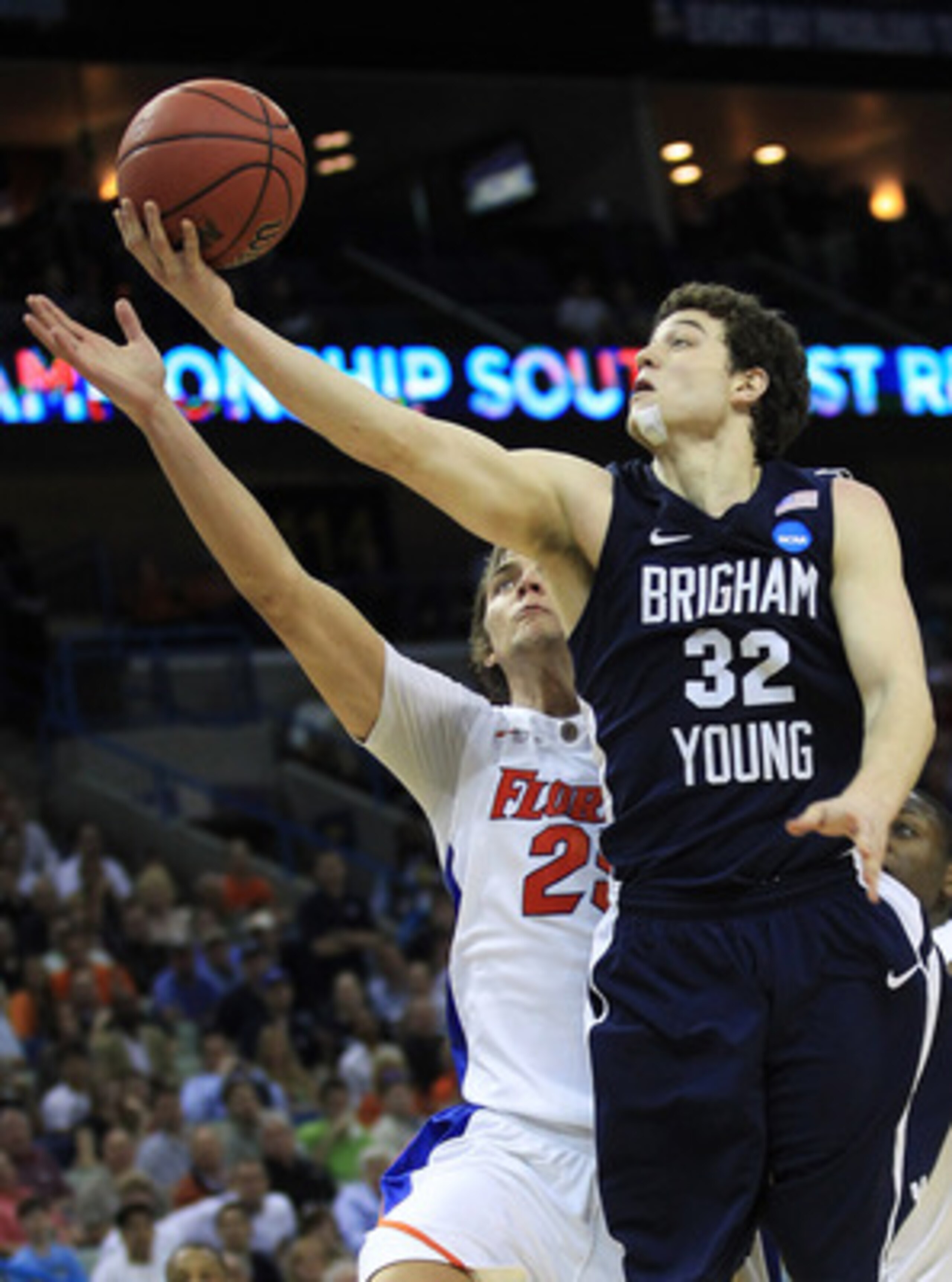
No player in this NBA draft class has been discussed more than BYU's Jimmer Fredette. Much ink, digital or otherwise, has been spilled debating whether Fredette is a star in the making or a franchise-wrecking waste of a pick waiting to happen.
Fredette is listed as a point guard, but his skill set is more typical of a shooting guard. He is a lights out spot-up shooter with seemingly unlimited range. He is mostly a point guard in that he works best when he has the ball in his hands with the chance to create for himself.
Fredette's shooting percentages fell a bit last year, but I don't think that's reason for alarm. Much more was expected of him last season versus the season before, and it showed. As a junior, he shot 44 percent from three-point range. As a senior, that dipped to 39.6 percent.
Many see the highlights of Fredette pulling up and firing threes and assume he is a selfish shot-chucker, but that could not be further from the truth. He is a willing passer, but he was simply doing what was asked and needed of him when he took all those threes.
He averaged 4.3 assists per game last season, and that's a lot when you consider what a high percentage of BYU's shots he was taking himself.
Fredette will be a steal for someone in the middle of the first round. There have been few players that have scored so prolifically at a high level while also being efficient. While he's certainly not the second coming of Jason Kidd, I think most will be pleasantly surprised at his distributing abilities. Just like at BYU, though, any team with Jimmer on the roster won't be asking him to distribute the ball.
Jimmer has a long career ahead of him as a spot-up shooter and bench scorer. I'm not sure he plays defense well enough to be a starter that plays 35 or more minutes per game, but I think he has as low a bust risk as anyone in this draft.
3. Brandon Knight, Kentucky
8 of 10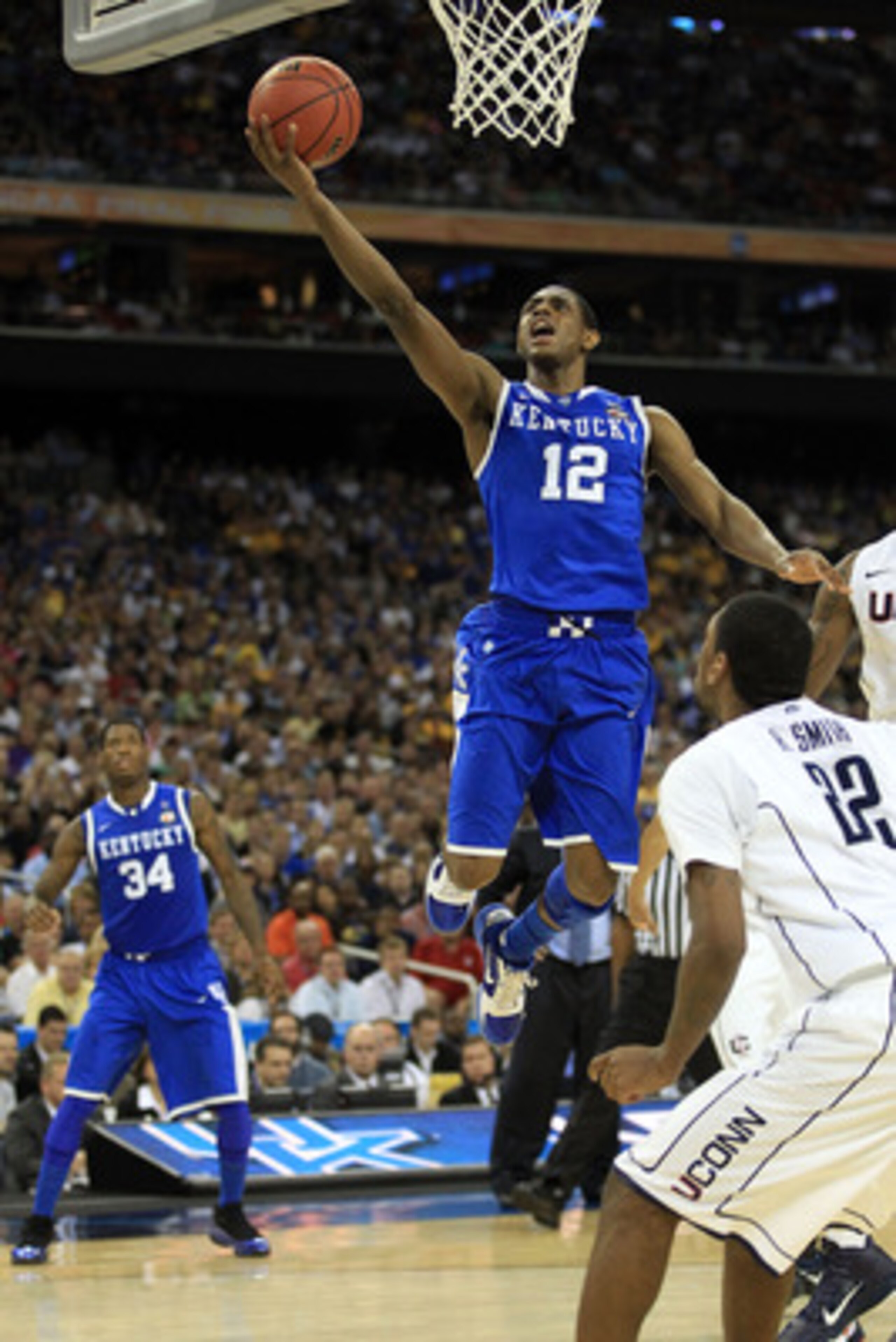
For my money, Knight has the most boom or bust potential of anyone in this entire draft class.
A blue chip, can't-miss prospect out of high school, Knight played one up-and-down season at Kentucky before declaring for this draft.
The things that make him look like a future star are obvious. He averaged over 17 points per game on one of the best teams in the nation. As the season wore on, he became the guy that the Wildcats looked to for a big basket, unseating another hyped freshman, Terrence Jones, for that role.
He also just looks the part. He stands 6'3" and weighs 185 pounds and appears to be the best athlete on the court every time he plays.
The evidence that he will be a bust is just as compelling, though.
For all those points that he scored, he was not a terribly efficient scorer. He shot just 42.3 percent from the field. In the NCAA tournament, that percentage dipped to around 33 percent.
The points he did score often seemed disjointed as well. Too often, Kentucky seems to be playing one-on-five basketball offensively. Knight was no exception, as he scored a great deal of points off sheer athleticism and aggression. That won't happen nearly as often in the NBA.
Perhaps most troubling are his struggles with turning the ball over. Overall, his assist to turnover ratio was just 1.33, and in the NCAA tournament he committed a frustratingly high 3.4 turnovers per game.
Knight's best-case scenario is being taken by a team that can afford to sit him behind veteran players. Even though he was playing on a high-profile team in pressure situations, Knight doesn't seem to have done all that much maturing basketball-wise in his year on campus. He'll still have a lot to learn.
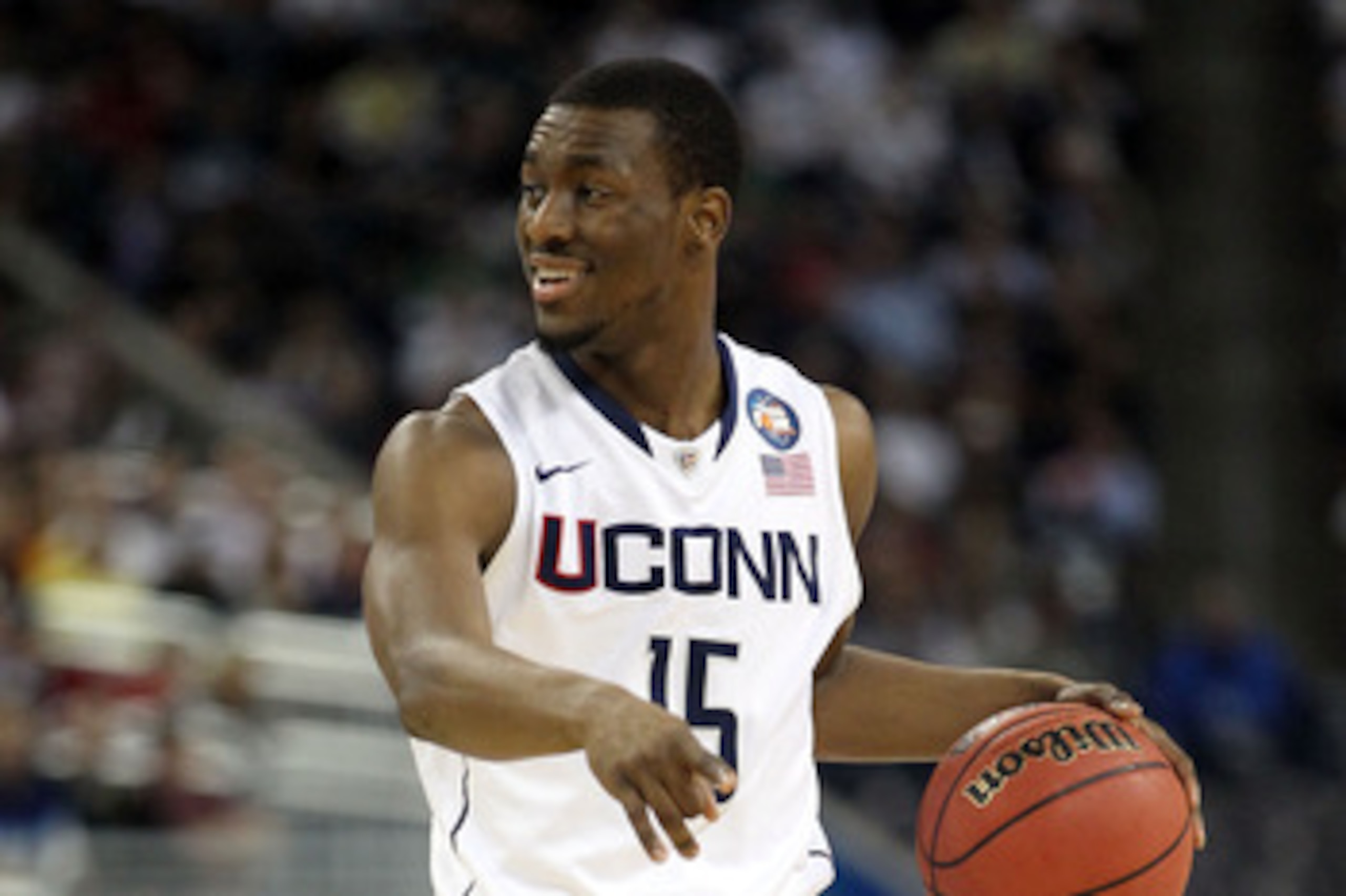
2. Kemba Walker, Connecticut
9 of 10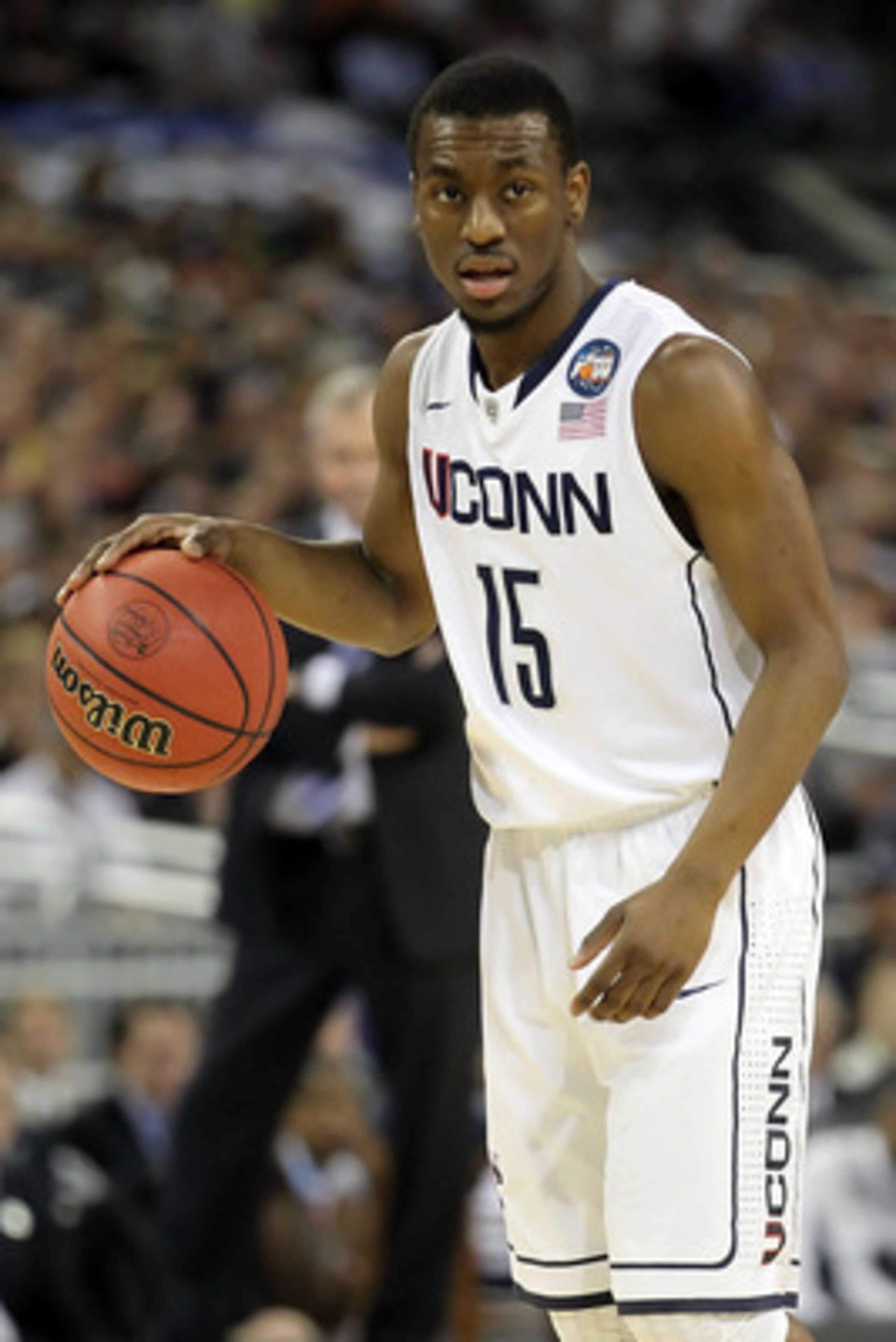
Kemba Walker was the most complete player in college basketball last season.
He averaged 23.5 points, 5.4 rebounds, 4.5 assists and 1.9 steals per game on the way to leading his Connecticut Huskies to the national championship.
There are other guards in this draft that shoot better. There are some that distribute better. There are still others that defend better. But there is no player that does it all as well as Kemba Walker.
Most impressive might be the fact that late in the season, Walker hoisted the entire team onto his back and led it to both the Big East and NCAA tournament championships. No one believed that UConn would have enough left in the tank to win the NCAA tournament after its long run through the Big East tournament. Walker just refused to let the Huskies lose.
Even a complete player like Walker isn't without warts. He is not the most efficient scorer. Last season, he shot just under 43 percent from the field after shooting around 40 percent from the field in the season before that. NBA teams will be betting on the fact that his efficiency will rise as less is asked of him.
He also isn't the best shooter. He has never shot better than 33.9 percent from the three-point line.
He has also been known to play out of control from time to time, although his turnover rate isn't all that bad.
Like so many other score-first point guards, Walker's success at the next level will largely be dependent on how well he runs an offense. At Connecticut, his assist numbers weren't all that great, but he wasn't being asked to be a distributor. He does show good leadership skills, and his teammates generally seemed to enjoy playing with him. Sometimes that's as good a barometer as any stat on how well a guy runs the point.
1. Kyrie Irving, Duke
10 of 10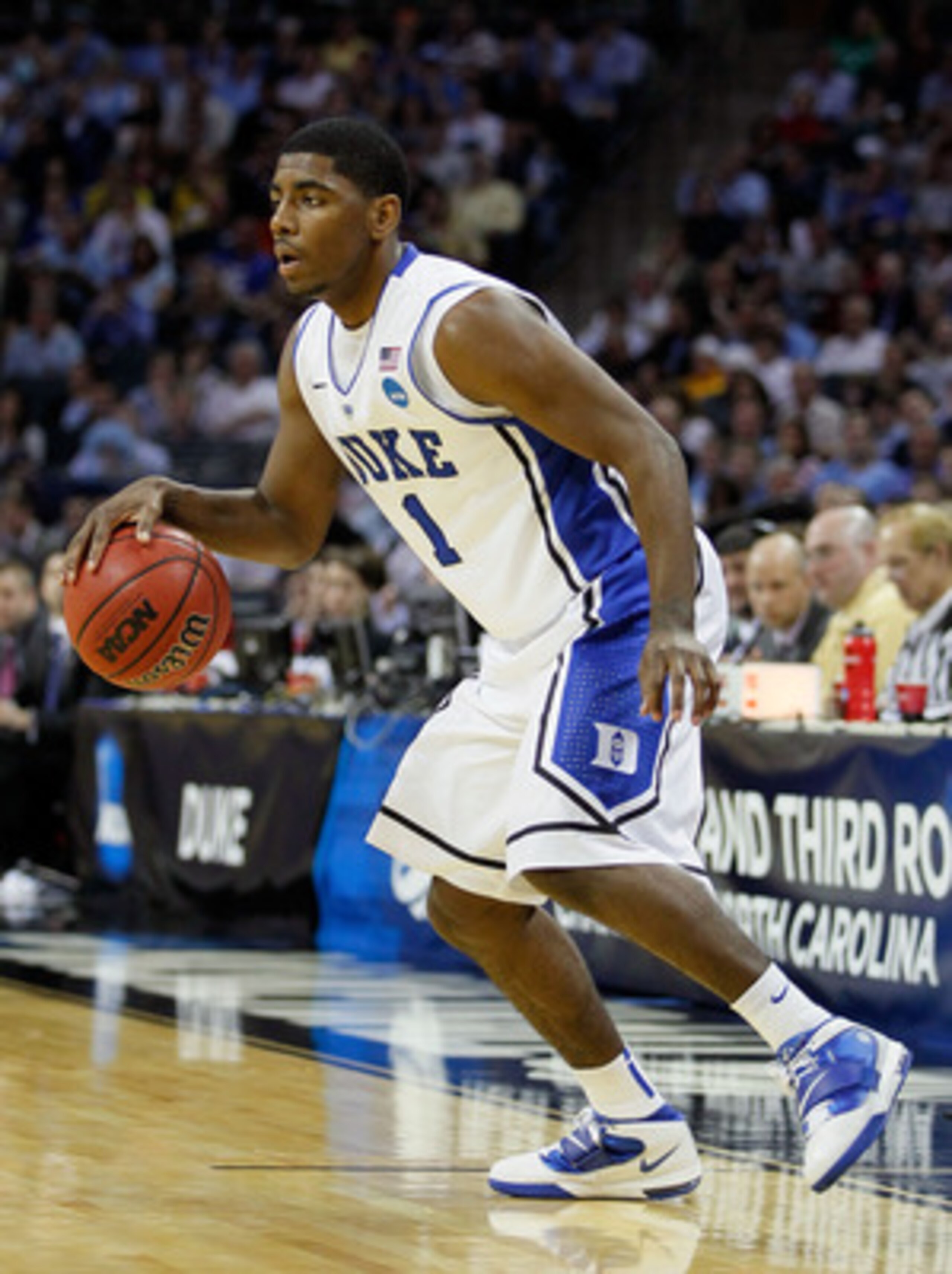
Kyrie Irving is the best exhibit of just how weak this draft class is. Irving, like Knight, was a can't-miss prospect coming out of high school. Most expected him to be the consensus overall No. 1 pick after his one season at Duke.
Irving played only 11 games at Duke, and he still finds himself at the top of most mock drafts.
That also speaks to how good people expect him to be. In those 11 games, Irving averaged 17.5 points per game on 52.9 percent shooting from the field and 46.2 percent shooting from the three-point line. He chipped in 4.3 assists per game as well, no small number when you consider that he split point guard duties with Nolan Smith.
Most impressive is probably Irving's ability to come in with so much to lose as a prospect with so much hype and fanfare and still work so hard to fit in and just do what the team needs. Irving never seemed to force the issue. It would have been easy for him to come in and try to do too much to try to prove that he was all he was made out to be, but he didn't.
Prior to his injury around midseason, Irving was fitting in about as well as you can expect a freshman to fit in.
Irving has all the things you want in a franchise point guard. He plays within himself and looks to involve his teammates early and often. At 6'2" and 185 pounds, he also has the size you want. The icing on the cake is that he can create his own shot and is a great shooter.
The only thing that would give any franchise pause is his lack of experience. There is just too much good here to let that get in the way, though. Any team drafting at the top of the draft looking for a point guard should look no further than Kyrie Irving.






.jpg?w=2560 "Latest Peyton-Colts Rumors")