
UFC 129: 4 Things This Fight Card Revealed About the Future of the Sport
UFC 129, the largest show in UFC history, has came and went. Lyoto Machida proved that his style is far from figured out (as well proving there may be some truth to Steven Segal's film exploits), Jose Aldo held on to his title, and Georges St-Pierre jabbed his way to a decision yet again.
The UFC 129 dust is settling and MMA fans are moving their minds onto UFC 130. This shift of focus is premature.
UFC 130 is no doubt important but UFC 129's implications will extend further than that of any other event in recent history. This is because UFC 129 served to indicate trends that will carry into the future of mixed martial arts. It was thus almost a prototype for the future of the sport and the UFC itself.
What exactly did UFC 129 reveal about the future? Read and find out.
Champions Fighting Not to Lose and Being Too Far Above the Competition
1 of 4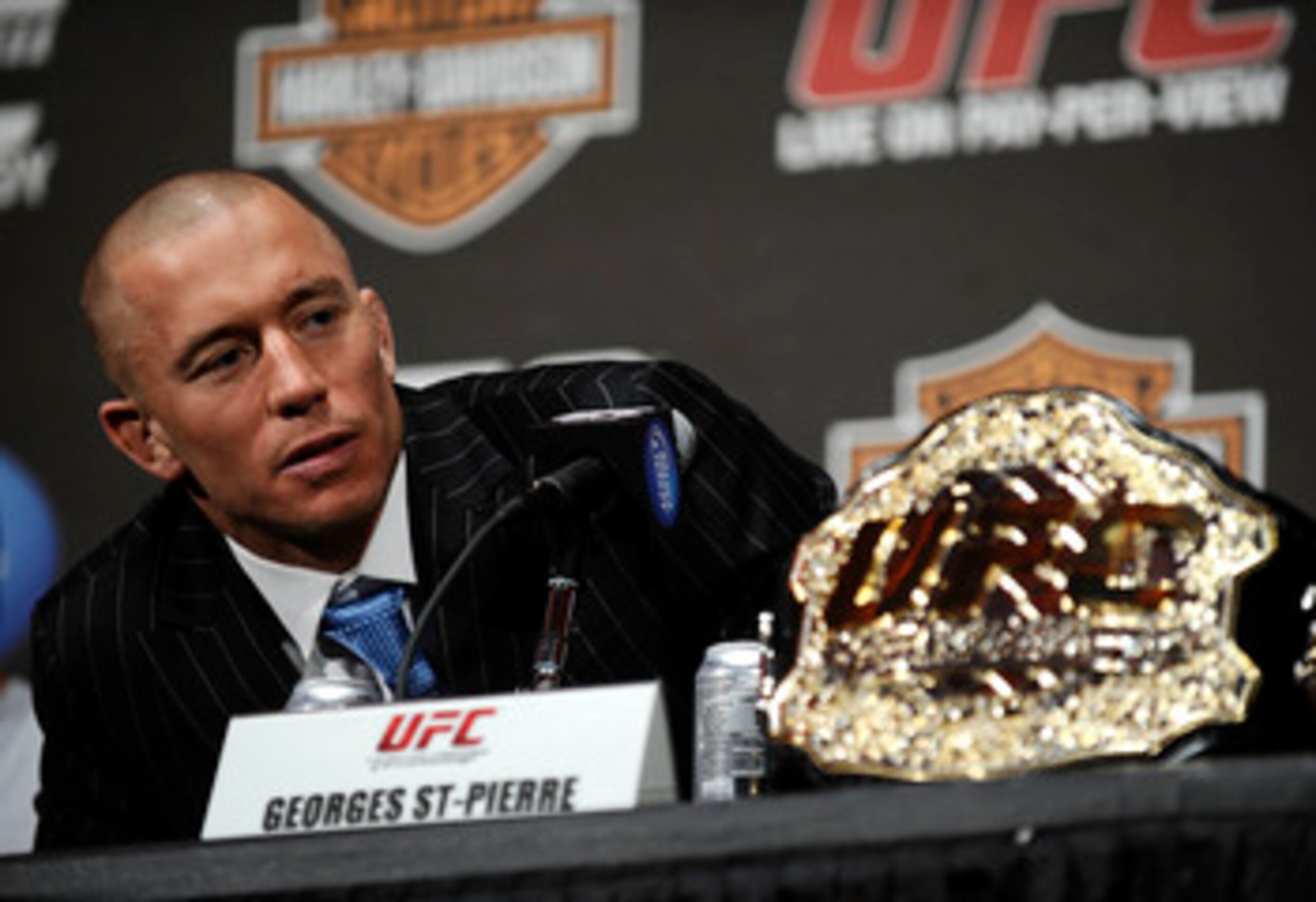
UFC welterweight champion Georges St-Pierre is considered by many to be one of the best pound-for-pound fighters in the world. His UFC 129 opponent Jake Shields is...not.
This is the source of much of the disappointment and anger directed towards St-Pierre; he clearly had a large advantage in the stand up but refused to capitalize on it and actually finish the fight.
This, unfortunately, is nothing new for St-Pierre, who employed a similar strategy against Josh Koscheck at UFC 124.
Such a trend may only become more common as the sport continues to grow. Why would fighters risk millions of dollars in sponsorships and other benefits of being a champion by trying too hard to finish the fight? Why wouldn't they just take a safe route to victory?
St-Pierre epitomizes this school of thought. There is simply too much at stake for him to lose. There will only be more at stake for future champions of the sport.
Another issue that goes along with this one is the fact that the champions in some weight classes are skill-wise far above even the number one contenders.
One needs to look no further than Anderson Silva, Jon Jones and St-Pierre to see the vast gap in skills between champion and challengers.
With such huge differences, weight classes may become stale and boring and people may even stop buying pay-per-views if they feel that they will be paying to witness a one-sided fight that ultimately won't be finished since the champion won't want to risk it.
This is perhaps the most, and thankfully the only, disturbing matter that the UFC has to face in its future and the only one that damaged the luster of the otherwise stellar UFC 129.
The Evolution of Techniques in the Sport Itself
2 of 4
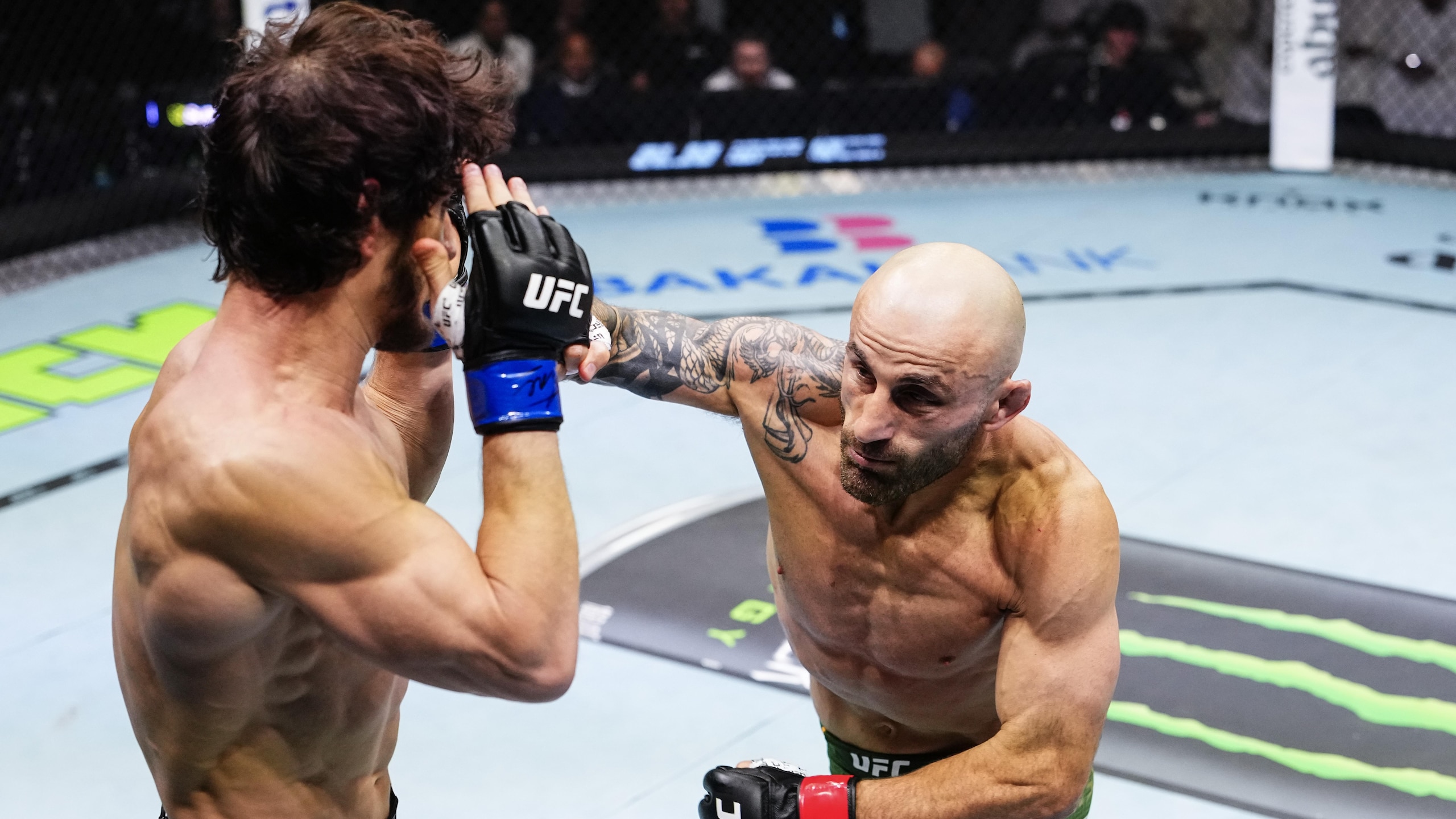
On Saturday, April 30th, the MMA world saw the first—and perhaps the last—crane kick knockout in mixed martial arts history.
Fans were also treated to an incredible fake-leg-kick-throw-spinning back fist knockout courtesy of Canadian standout John Makdessi as well as a slick flying triangle by Pablo Garza.
While most will just glance over these as nothing but exciting highlights, they are something more.
These instances, specifically Lyoto Machida's crane kick, represent the evolution of the very sport itself. In 1993 when the sport started many people in the country were ignorant to what martial arts really were; they thought it was all about flashy moves like the crane kick from The Karate Kid.
Their world was rocked when they saw Royce Gracie taking people down and applying submission holds that hadn't been commonplace in America since the heydays of catch wrestling.
Almost twenty years later the sport has changed considerably. The competitors have cross-trained to such a level that now these flashier techniques have become possible to pull off.
We have seen Brazilian Jiu-Jitsu in MMA evolve before our eyes with new techniques like the rubber guard and we will see striking in MMA evolve with the revival of the more rarely seen moves.
Perhaps the spinning back fist or the Steven Segal kick will become part of every fighter's arsenal like the arm bar or the hip escape?
The Growth of the Sport in Foreign Markets
3 of 4What do Great Britain, Mexico, and the United States all have in common?
They are all traditionally big markets for boxing. Thus, when the UFC began its growth it would be common sense to think that those three locales would be the focus of the UFC's expansion.
None would think that Canada would be largest market for the UFC outside of the United States. This, of course, is what ended up happening.
Canada is a massive market for the UFC and it helped the organization put on its largest event to date, with slightly over 55,000 fans in attendance.
The UFC has successfully pervaded the sports scene in Canada—a feat which it has been thus far unable to do in the United States—with the Canadian Football League's Hamilton Tiger-Cats sponsoring Mark Hominick.
Dana White and company, being as smart as they are, have likely taken note of what exactly they did in Canada and will no doubt seek to apply what they have learned there in their continuing efforts in Britain, Europe, and Australia.
Perhaps we will even see the "Canadaization" of China within the next few years? Only time will tell.
All that matters is that the UFC's efforts in Canada were brilliant and we will definitely see what they did in Canada again in the future.

The Effective Use of New Media
4 of 4
UFC 129 was one of the only, if not the only, card to feature more of the fights for free (seven) than on the pay-per-view broadcast (five).
This is in large part due to the UFC's use of Facebook in its efforts to increase the popularity of the sport.
Most of this has already been touched on in a previous article so it will not be revisited suffice to say that we can count on the UFC's continuation of using new media to expand the brand's power; there is simply too much to be gained by it.

.jpg?w=2560 "LA Premiere of \"Chad Powers\"")



.jpg?w=2560 "Landing Spots for Trade Candidates 📍")
.jpg?w=2560 "Ugly Jets Scoring Stat 😳")