
San Francisco 49ers: Rating the First Round Draft Picks This Decade
Since 2001, the San Francisco 49ers have selected 13 players in the first round, of which seven are still with the team. That includes outside linebacker Manny Lawson—once the NFL lockout ends, it seems he’s headed to another team through free agency.
In light of the 49ers' 42 percent winning percentage over the last 10 years, the draft has played a role in their middling success. But a look over their selections reveals a wide spectrum in terms of player contribution and impact on the organization.
Next week, the Niners will have the seventh pick, and many see them going for help on the defensive side of the ball. What will really help is selecting an elite player who steps in and plays well. There have been a few who have done it, and some who haven’t.
Here’s my assessment of the Niners’ first-round selections in the last 10 years, from worst to first, with their impact on the team.
No. 12 Rashaun Woods 2004
1 of 13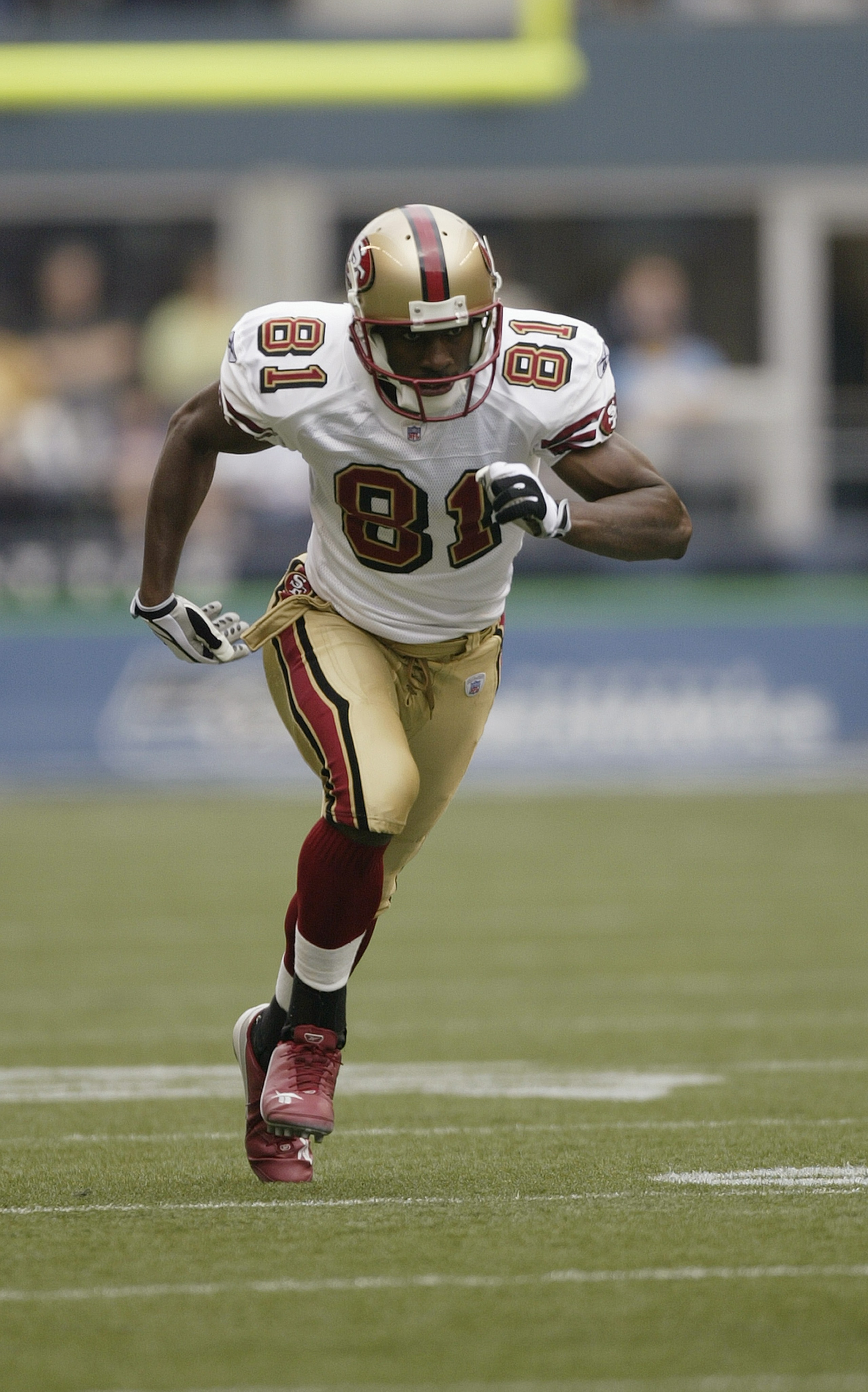
The organization was fighting salary cap problems, and general manager Terry Donohue was decidedly thinking about the next year—except this pick helped propel him out of a job.
At 6'2" and 202 pounds, Woods wasn’t fast enough to separate, strong enough to battle press coverage, or big enough to play inside. He was a cop-out pick whose seven receptions in 14 games were followed by some time on IR before being cut. He ranks among some of the NFL’s worst picks in the last 10 years.
Re-do: This is a tough one, but out of the next 32 players taken after Woods at the 31st slot, the one who stands out is Darnell Dockett, the DT out of Florida State who has become a major inside force for the Arizona Cardinals.
As for receivers, no one really stands out.
No. 11 Kwame Harris 2003
2 of 13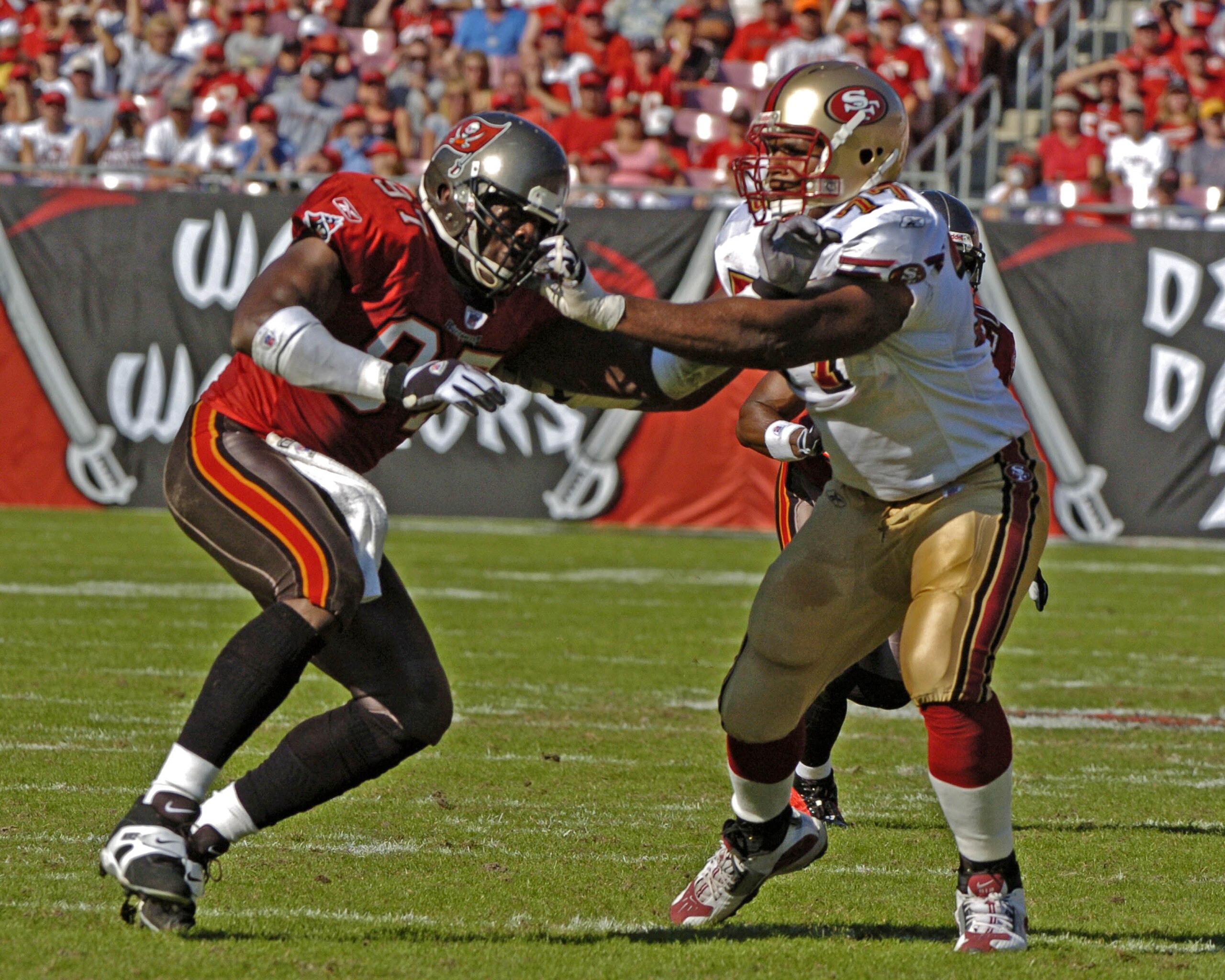
He came out of Stanford at 6'7" and 310 pounds. He seemed ready to grow into an elite left tackle, except the defensive ends and outside linebackers he faced all seemed one to two steps quicker—and stronger. He started 12 games in ’03 and ’04 at left tackle before getting switched to right tackle. There, he wasn’t all that effective in run blocking, either.
Left tackle has become the second-most valuable position in pro football, and this miss on such a vital position contributed to the below average offensive performance by the team. He wasn’t the only reason, but he certainly didn’t help.
Re-do: Jon Stinchcomb out of Georgia. He started slow, but over the last six years he has started every game. New Orleans selected him four slots after Harris.
No. 10 Mike Rumph 2002
3 of 13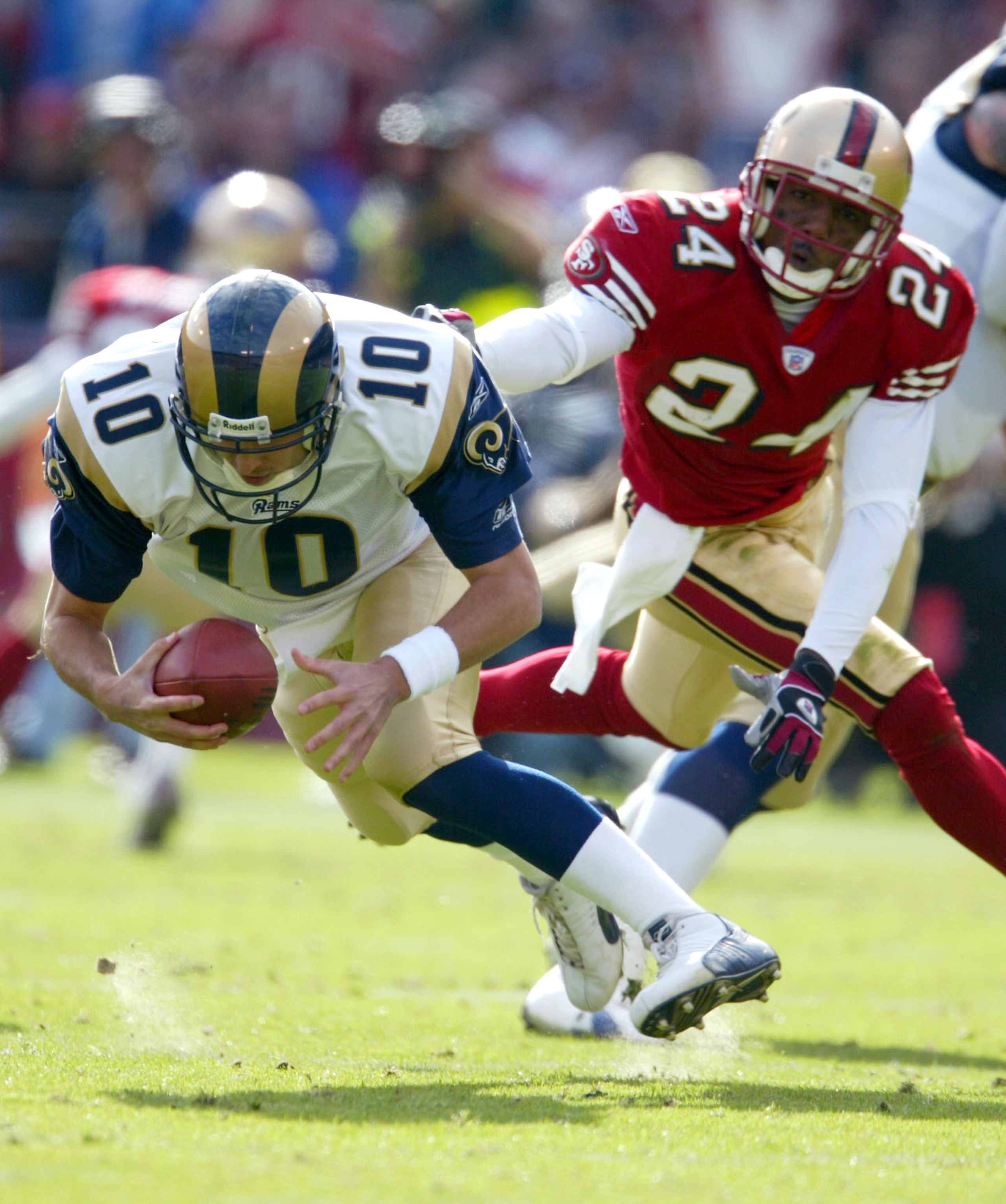
Improved secondary play was needed. Coach Dennis Erickson felt that the defensive front was doing the job, but an impact safety was needed. At 6'2" and 205 pounds, he had the size. His three-year career at Miami seemed to provide the pedigree. But he couldn’t stay healthy.
In 2003, his second year, he started at right corner and had his best year, including three interceptions. But injuries in ’04 and ’05 limited him to five games total. Healthy, he might have developed into an All-Pro, so it’s not fair to blame the 49er front office for missing out. But for the 27th player taken in the draft at a position that seemed not all that inclined to induce injury, Rumph’s lack of long-term production held the team back.
Re-do: Rumph. That may seem odd, but at the time he was rated atop the best DBs in the draft. The first at that position was Quentin Jammer, and the first one after Rumph was Lamont Thompson of Washington State. Both played well but neither became a long-term elite player.
But it was a weird draft, in that three of the four first players taken were David Carr (1), Joey Harrington (3) and Mike Williams (4). None came close to living up to expectations, but Carr gets excused since he played behind one of the worst offensive lines as a rookie for Houston. (Julius Peppers was the second player taken.)
.jpg?w=2560 "Commanders 49ers Football")
.jpg?w=2560 "Colts Football")
.jpg?w=2560)
No. 9 Kentwan Balmer 2008
4 of 13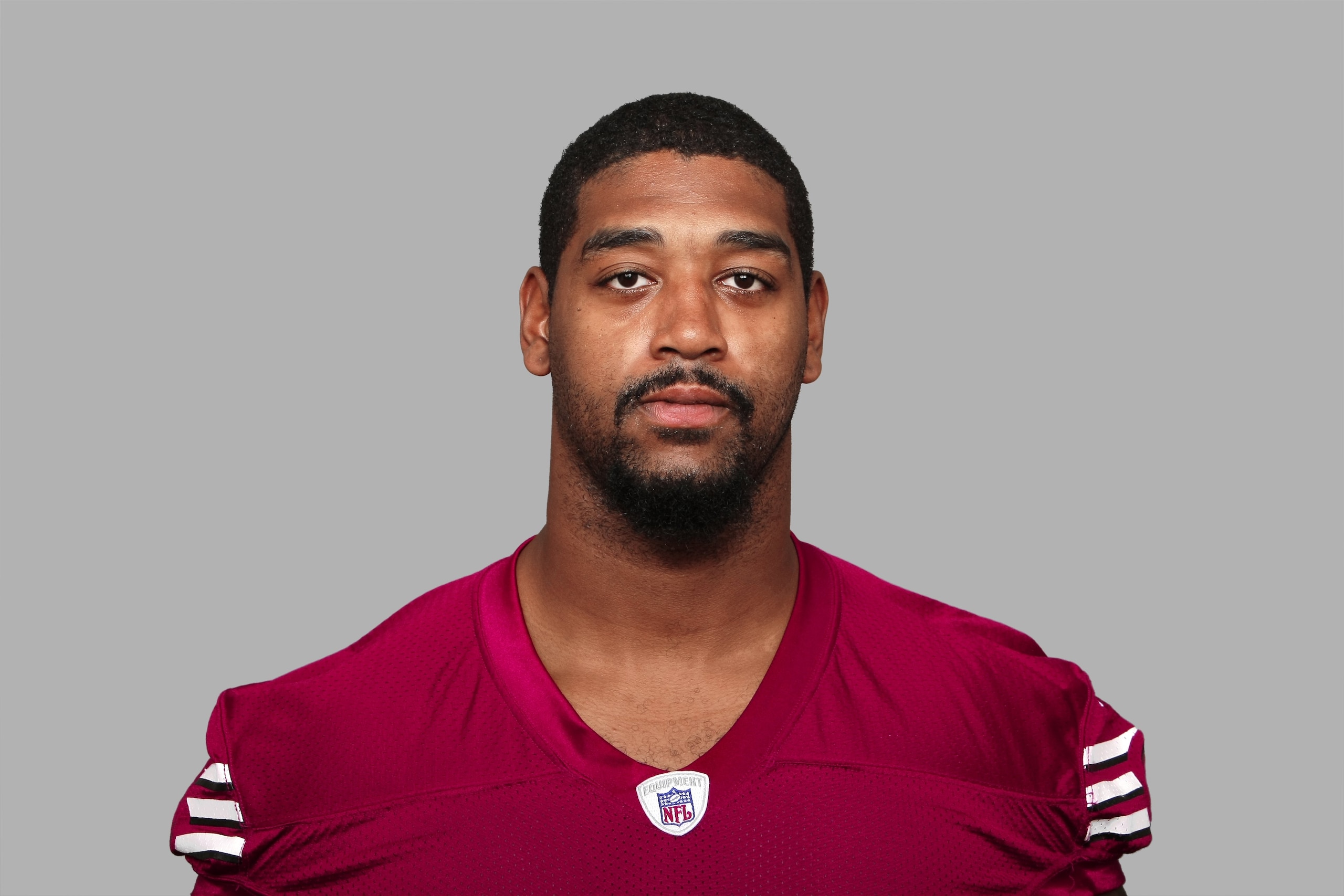
He bolted from Mike Singletary and staff last year and is now contributing some in Seattle. And Balmer, coming out of North Carolina, proves how hard it is to project a player’s ability in the pros.
In that draft, Chris Long (Rams), Derrick Harvey (Jaguars) Sedrick Ellis (Saints) and Lawrence Jackson (Seahawks) all were drafted before Balmer. Long is an elite player but, after that, only Ellis, who has started every game he’s been active for the Saints, has been consistent.
Re-do: Balmer again, only with a better coaching staff.
No. 8 Manny Lawson 2006
5 of 13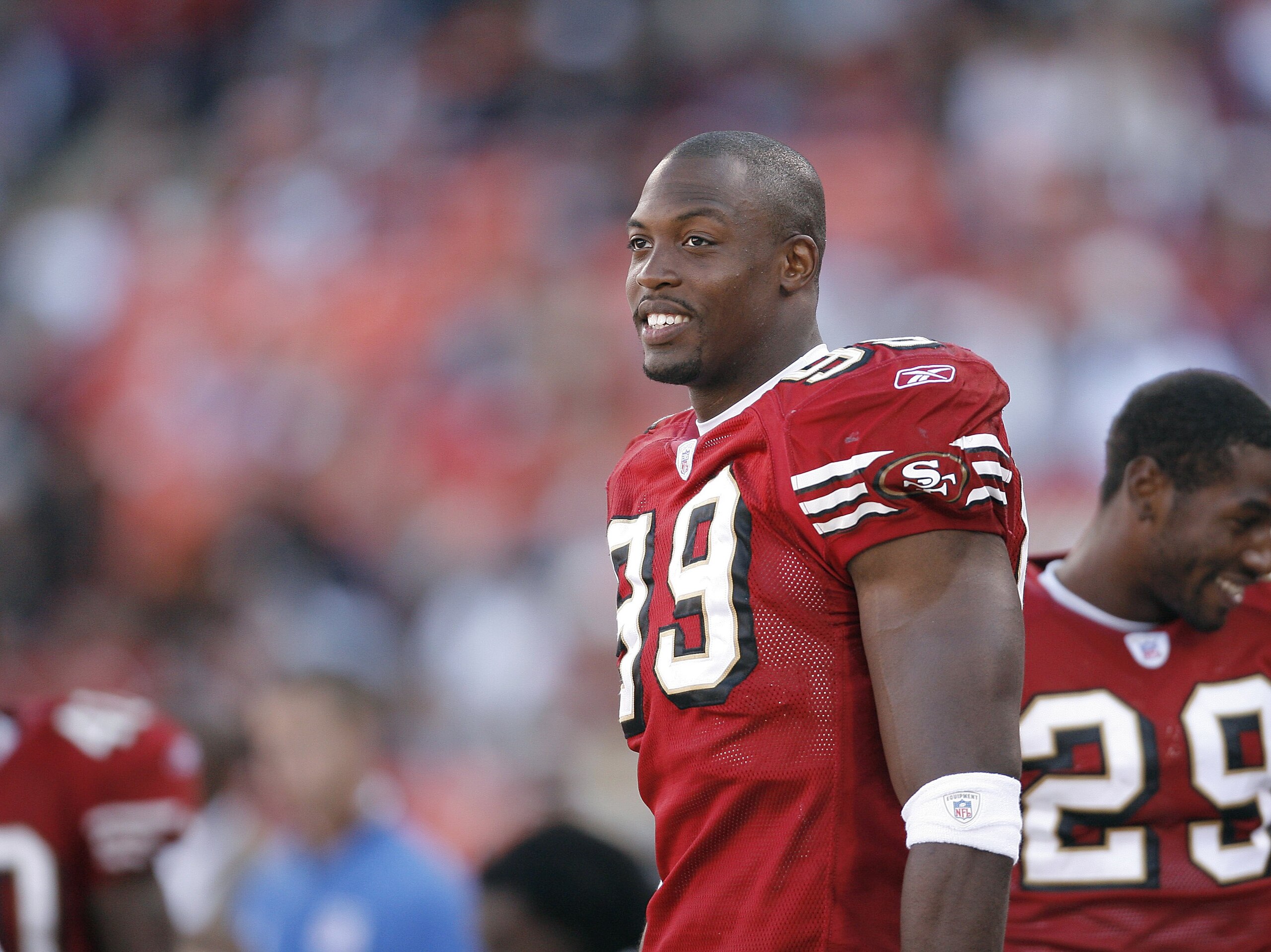
There are many 49er fans who are still waiting for Lawson to become an elite player. In many ways, he already is. He had 6.5 sacks in ’09, and has started 32 straight games. He overcame a knee injury in the first month of his first season, and is capable of running with tight ends and running backs.
But that’s not enough. However, he was the second first-rounder that year. But as the 22nd player taken that year, he’s hardly been a bust. Perhaps it’s easy to say he hasn’t lived up to heightened expectations.
Re-do: Maybe Thomas Howard, now of the Oakland Raiders. Both have similar stats, but Howard also benefits from a 4-3 alignment that puts more pressure on the offensive line. The 49ers’ 3-4 requires all linebackers to make plays.
No. 7 Michael Crabtree 2009
6 of 13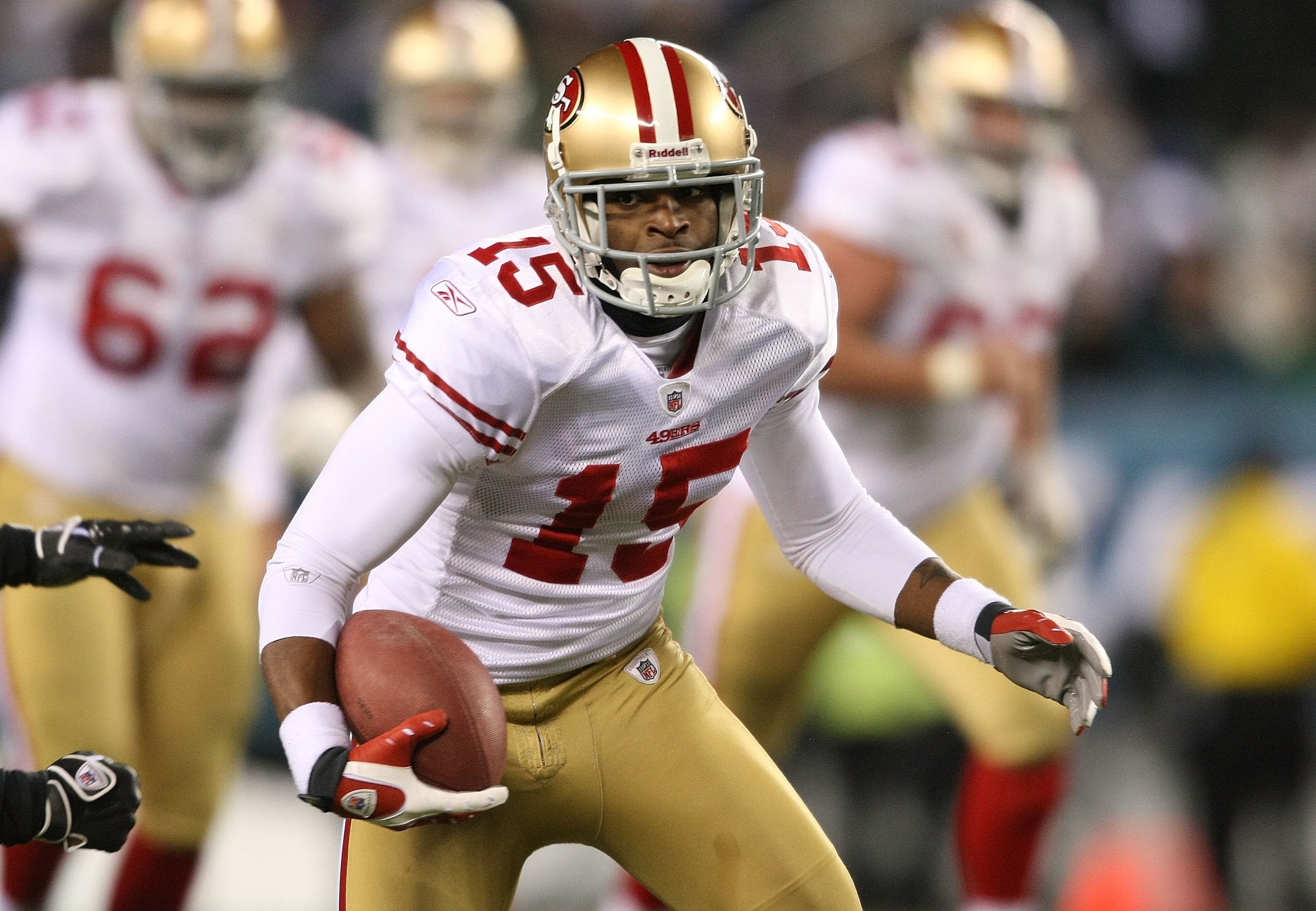
He’s got strong hands, good speed and moves. The issue is whether he can consistently beat pressure coverage. At Texas Tech, he often got free run of the secondary. In the NFL, that happens about as often as a solar eclipse.
Couple that with less-than-stellar accuracy from a variety of quarterbacks, and it’s easy to see that Crabtree might be a touch frustrated. That said, he’s averaging 13.3 yards per catch. What he’s not doing is catching the short throw and making a man miss for big gains. It also has to be said that Singletary’s offensive scheme didn’t set him up for a lot of success.
All in all, for the 10th player taken, the jury is still out.
Re-do: Jeremy Maclin of Missouri who ended up in Philadelphia. Maclin has been an explosive addition to the Eagles lineup, but he benefits from having DeSean Jackson on the other side. Still, he’s had a greater impact than Crabtree. But then, Crabtree has been miles better than the first receiver taken in ’09 by the Raiders, Darrius Heyward-Bey.
No. 6 Mike Iupati 2010
7 of 13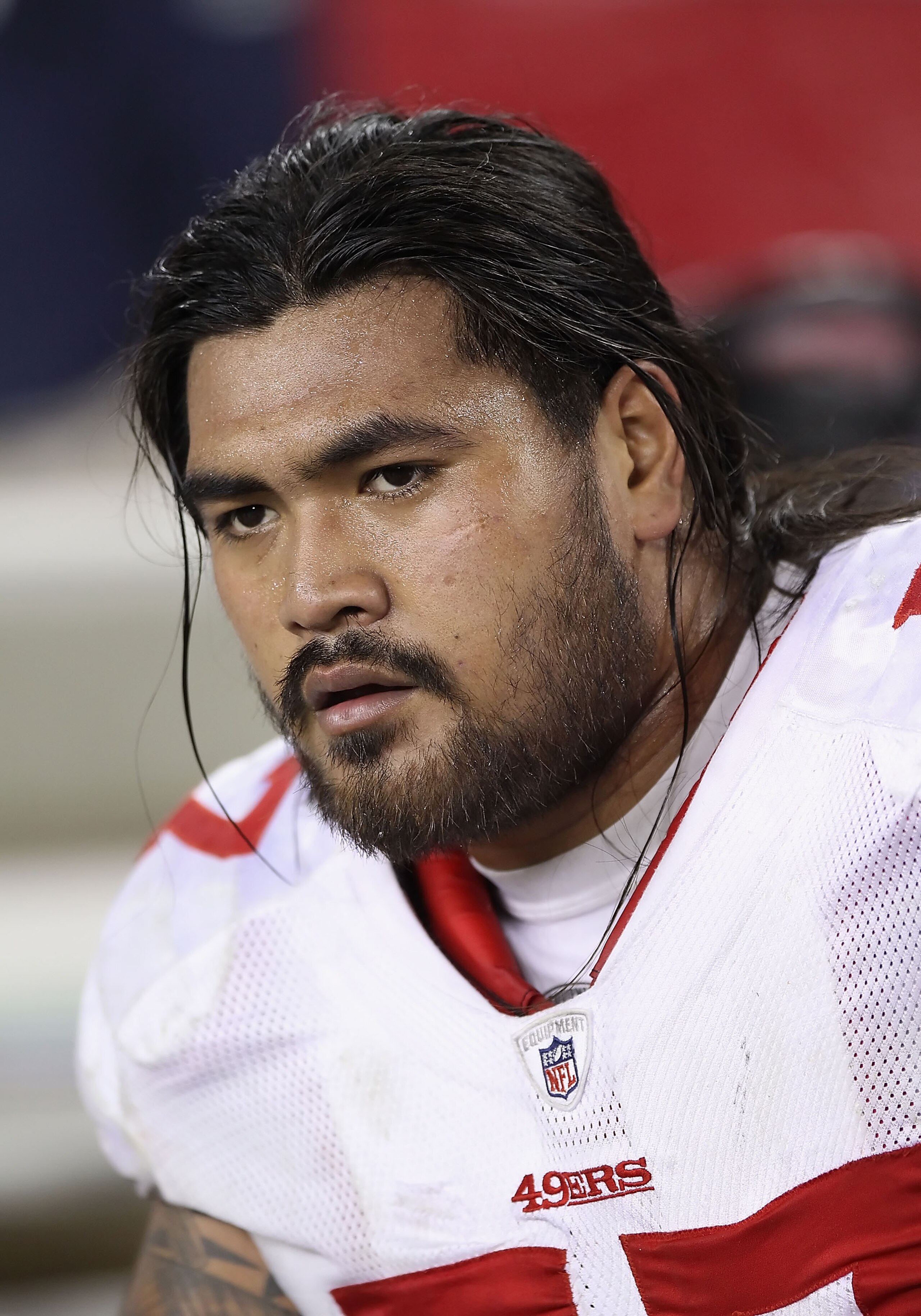
Iupati was the 17th player taken last year, and he started 16 games at left guard. There were times he struggled in pass protection, but generally most of Frank Gore’s biggest runs came up the middle, and Iupati performed well. In short, it’s too early to tell what kind of impact he has had, and there's nothing to say he isn’t going to do well for a long time.
Re-do: Iupati.
No. 5 Anthony Davis 2010
8 of 13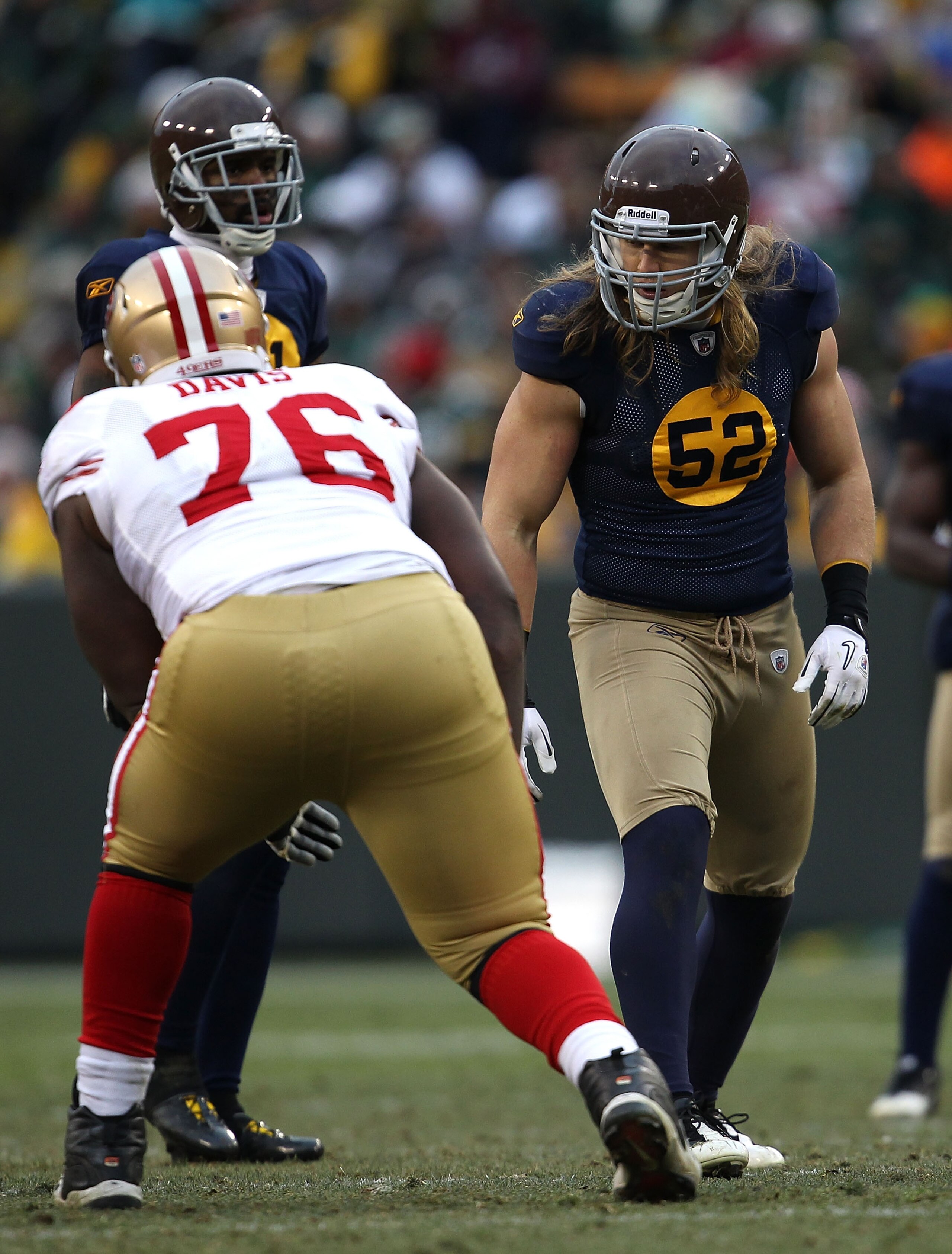
At 6'5" and 325 pounds (or in that same area code), he’s a domineering force. But just like Iupati, he had some stumbles, particularly in pass protection. It is hoped that adapting to the speed of the NFL will allow him to shift to the vital left tackle position.
As for impact, same as Iupati: Too early to tell, but nothing to suggest that he won’t be a long-term success.
Re-do: Davis.
No. 4 Joe Staley 2007
9 of 13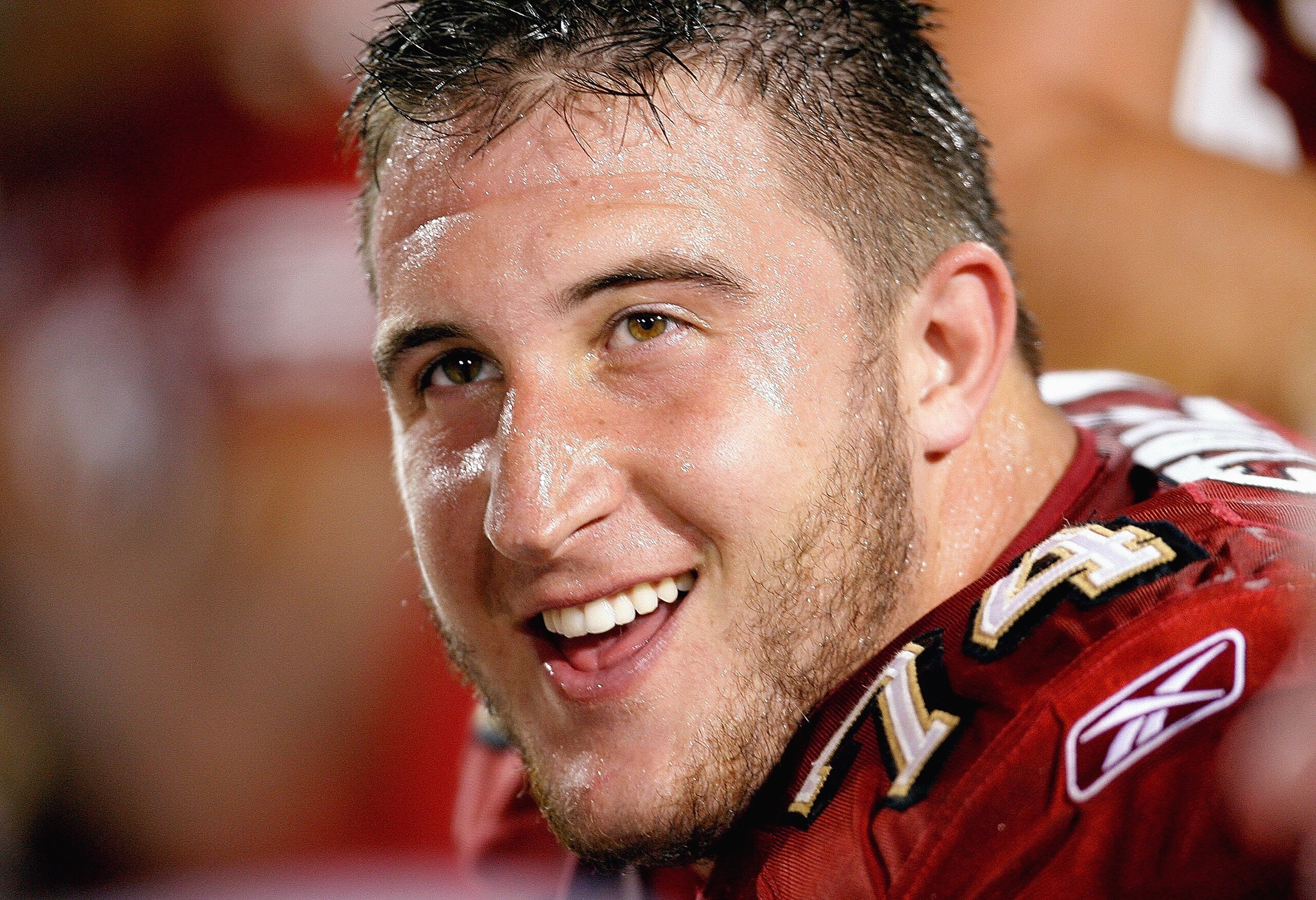
Staley has started 50 games at left tackle since he was drafted. He isn’t the starter, but he’s a valuable contributor for a unit that needs seven or eight capable bodies to endure the long NFL season.
Has he played up to being the 28th player taken four years ago? If he plays another five years as either a starter or vital backup, he’ll be worth it—and the Niner front office knows it. Capable, experienced offensive linemen who can play more than one position are always in demand in the NFL.
No. 3 Andre Carter 2001
10 of 13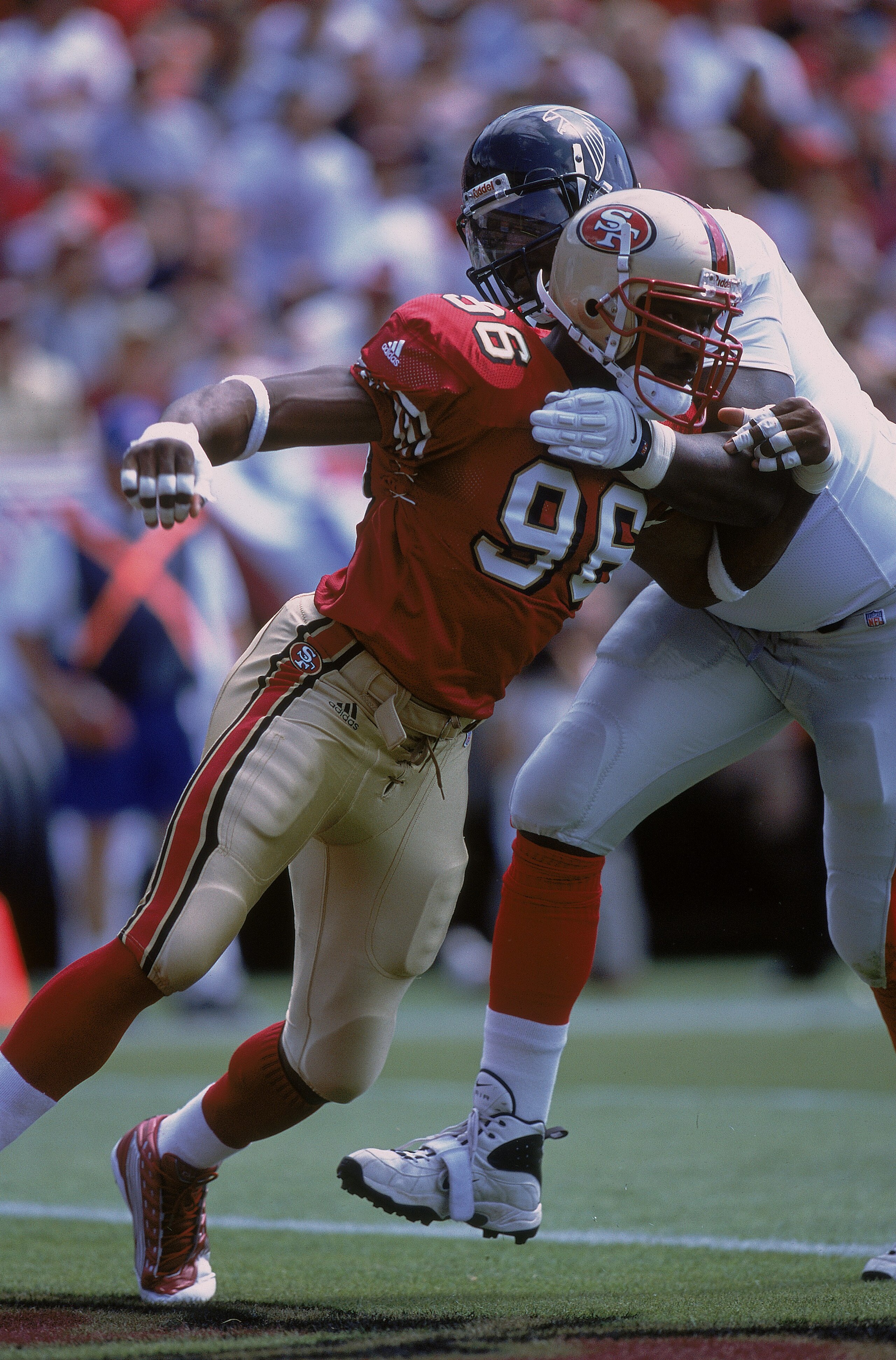
As the seventh player taken, the 49er front office envisioned a one-man quarterback-wrecking crew. But success in the pros as that stop-at-all-costs defensive end, a la Julius Peppers, proved a little more fleeting. Namely, NFL offensive tackles had quicker feet, longer reach and better quarterbacks than what Carter faced in college.
It’s a natural transition to make, and Carter has done well with 66 career sacks. Perhaps the only downside is that he didn’t turn into another Lawrence Taylor. Who is to say he couldn’t have been another Taylor had he had the support that Taylor did in New York? Now with the Redskins, Carter completed his 10th year in the league.
Re-do: Carter.
No. 2 Vernon Davis 2006
11 of 13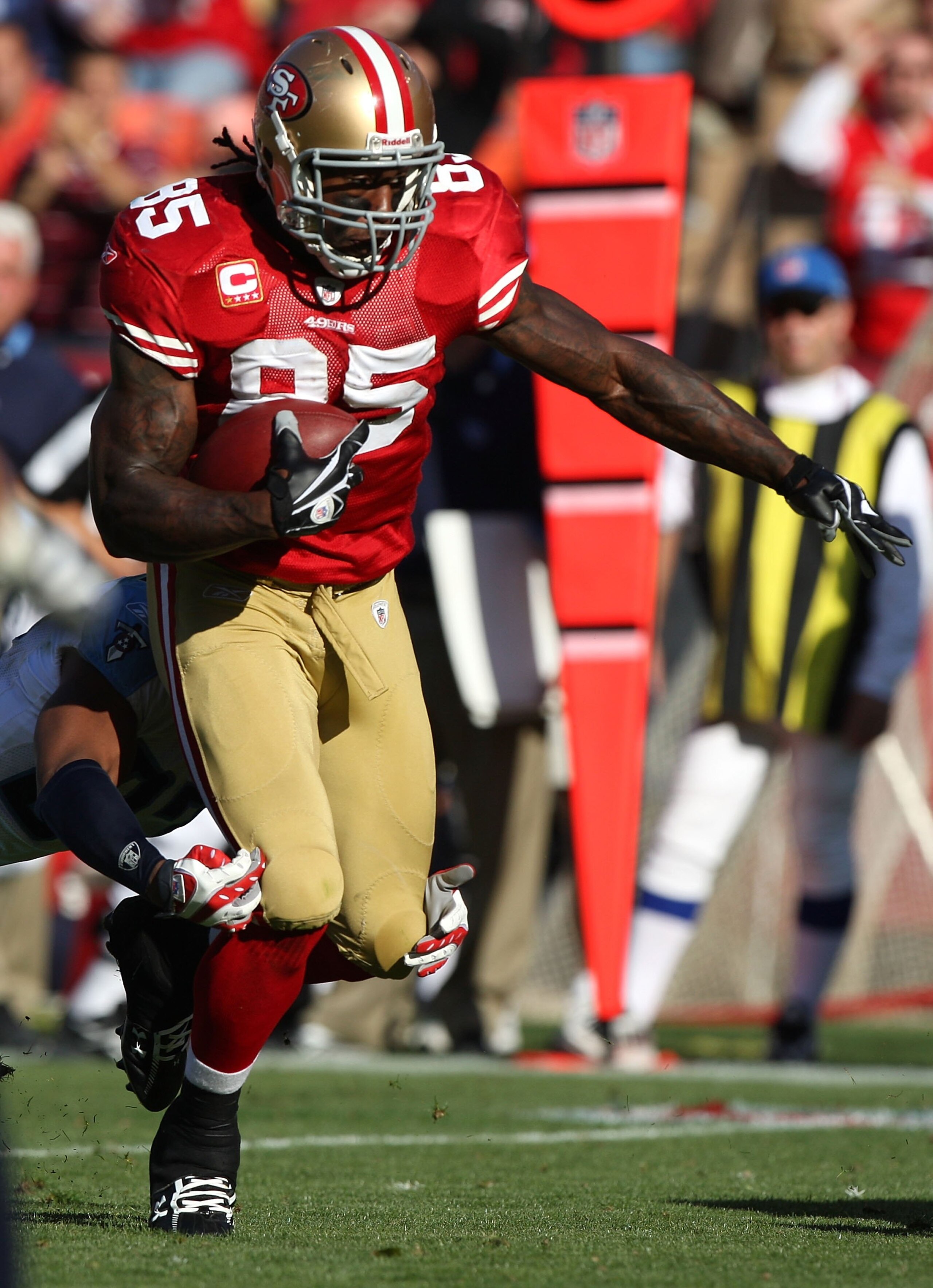
The sixth player taken, Davis has developed into an amazing talent. In ’09, his 13 TD receptions set a record for tight ends. That year, he totaled 78 receptions, so one of six catches ended in the end zone. In 2010, he dropped to 58 catches and had seven TDs, a 1-in-9 ratio. Blame the coaching staff.
Re-do: You kidding? Consider the five players taken before Davis: Mario Williams, Reggie Bush, Vince Young, D’Brickashaw Ferguson and A.J. Hawk. None have played any better than Davis.
No. 1 Patrick Willis, 2007
12 of 13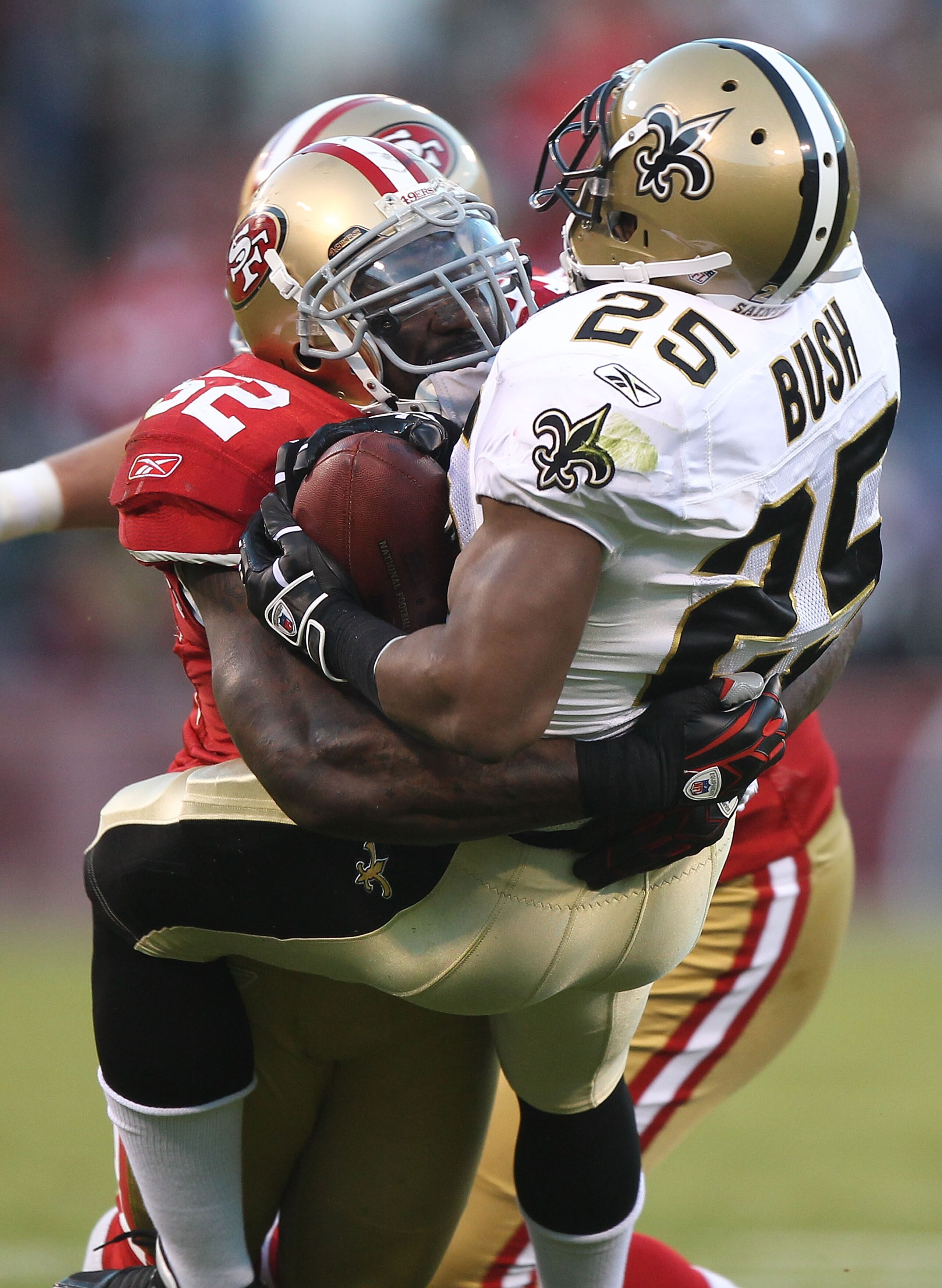
He was the 11th player taken and all he’s done since is play just about every down on defense. He’s started every game but the last of 2010. He’s made the Pro Bowl every year and has been a three-time All-Pro selection. I consider him the premier inside linebacker in the league, though howls from Baltimore (for Ray Lewis) can be heard. Still, I’ll take Willis.
Re-do: Don’t be serious.
Nos. 1-13 Alex Smith 2005
13 of 13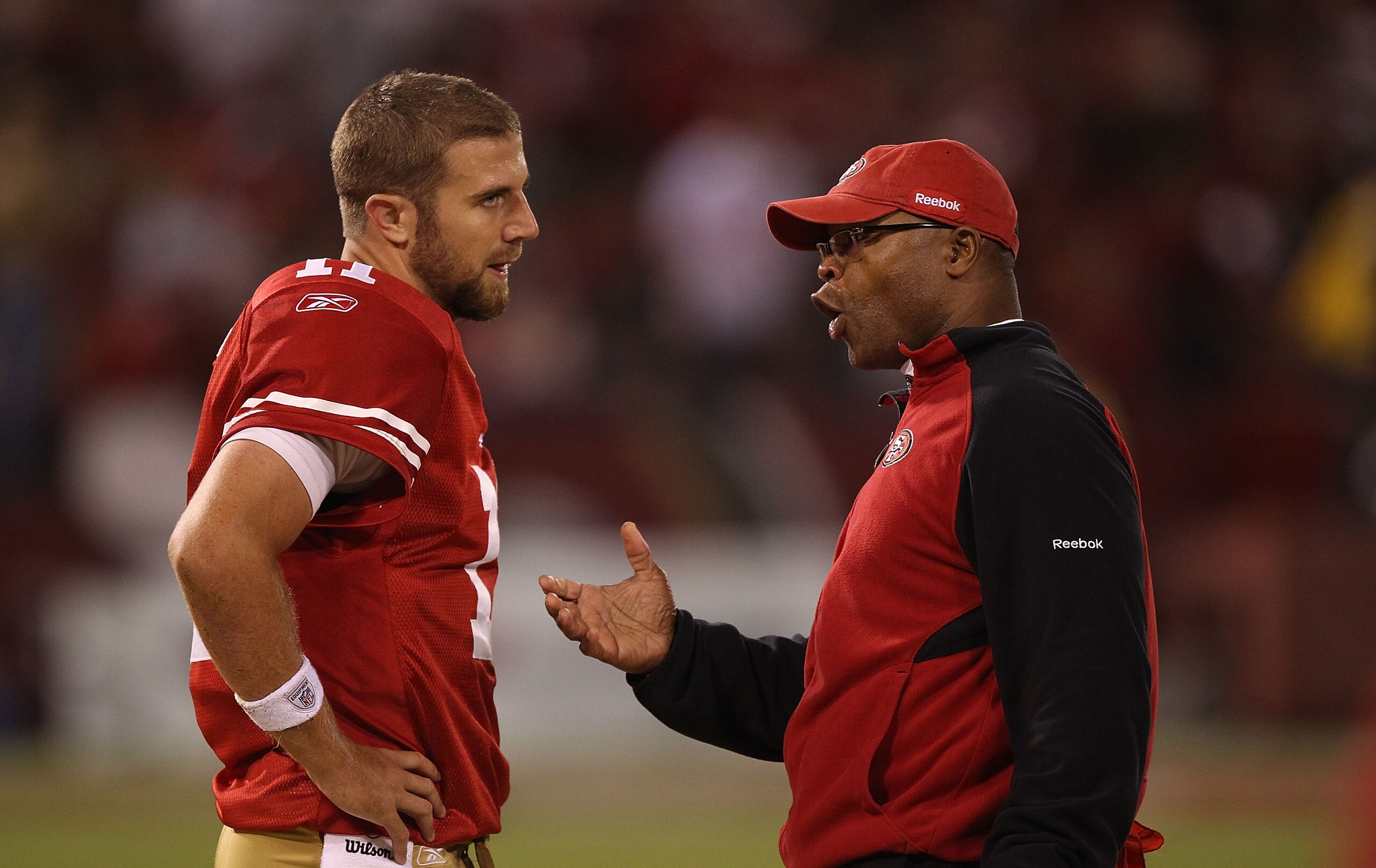
He was the first player taken in 2005, and ever since it’s been anything but easy. There are a bevy of stat sites that rate his contributions and whether they increase the 49er chances for victory.
There’s the completion percentage of 57.1, the 53 interceptions over the 51 TDs, and the career rating of 72.1. Most of all, he’s 16-24 as a starter, and that makes him rather dull compared to Brodie, Tittle, Montana and Young, to name a few.
To all of which I say, let’s wait. I know, six years is a long time, but wait. Early in his career he had no offensive line. He had a coach who then questioned his courage, so he played on an injured shoulder, which has required two surgeries.
He played for another coach whose idea of innovation was a screen pass. He has had questionable quality in his receivers and it didn’t help that he often finds he has to come from behind, especially on the road.
That said, Montana did all that. So did Young. But let’s give him a year in which his line keeps him upright, his receivers get open and his coach calls plays that have a decent chance of moving the chains.
If so, and the Niners stumble, then it’s clear. He might be the worst No. 1 draft pick of the last 10 years. If he leads the team to the Super Bowl, then it’s different. But we still don’t know.
.jpg?w=2560 "DOLPHINS-AIKMAN")


.jpg?w=2560 "Malik Beasley Negotiating Plea Deal (AP)")

.png?w=2560 "Week 8 Winners & Losers 📊")
