Pro Wrestling: 10 Years Later, Fans Still Ask, 'Why Did WCW Fail?'
In 1996, the sky was the limit for Eric Bischoff and World Championship Wrestling. Everything that Bischoff touched turned to gold.
Starting with the debut of Nitro, and later the formation of the New World Order, WCW was unstoppable.
Fans were tuning in, ratings climbed to unbelievable heights and WCW nearly put WWE out of business by dominating the weekly ratings battle for 84 weeks straight.
Kind of hard to believe that six years after its debut on TNT that the company would be shutting its doors for good, right?
Still to this day, it just doesn't make sense how WCW fell so hard, so fast.
Here are five of the many reasons WCW aired its "Season Finale" of Monday Nitro on March 26, 2001.
5. Halloween Havoc 1998
1 of 5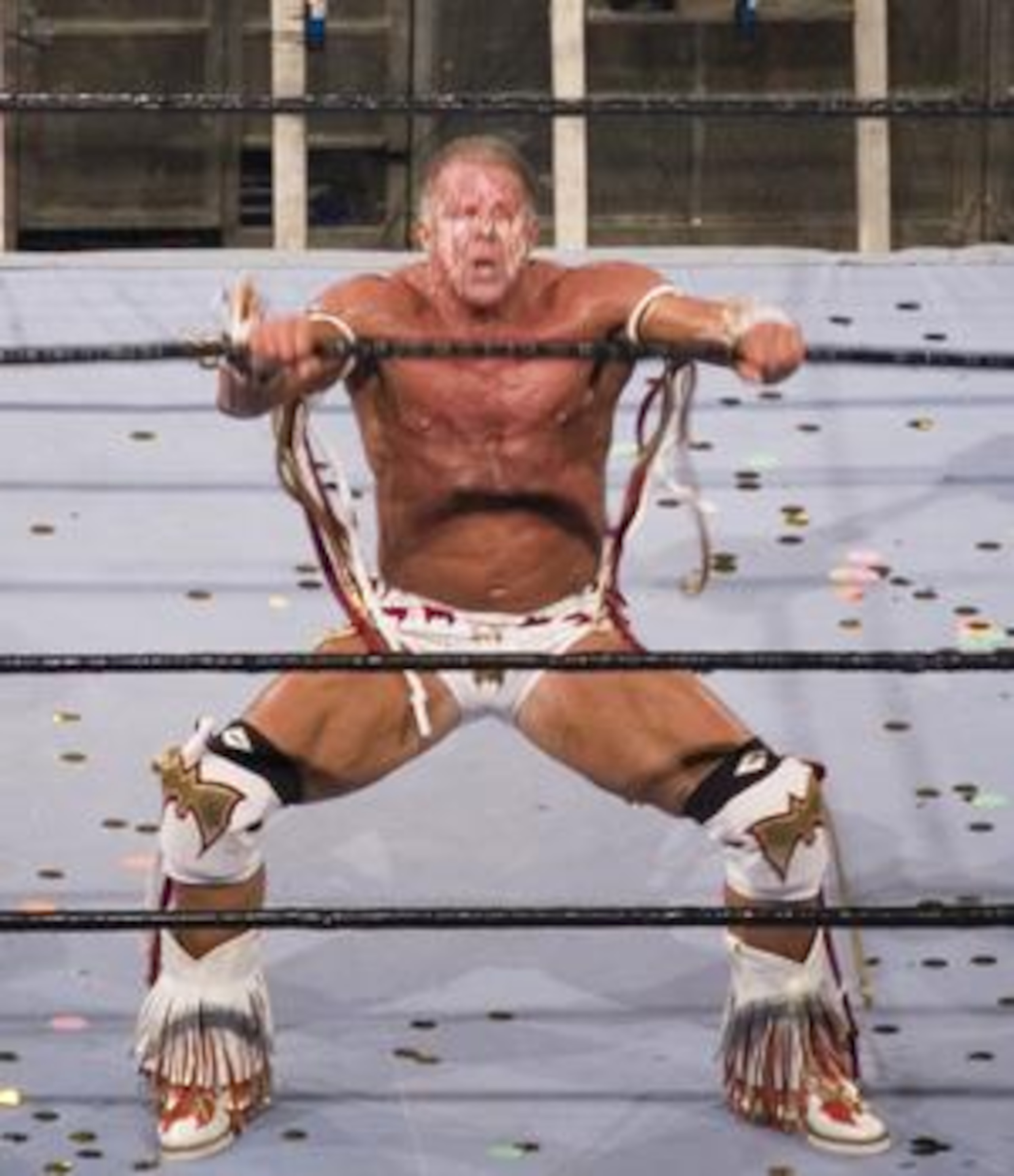
WCW built this event up to be one for the ages, but it turned out to be a show remembered as the first signs of the mismanagement within the company.
Halloween Havoc was known for the "Return Bout" of The Ultimate Warrior, who had been taunting Hollywood Hogan for months. Instead, the match was lightning quick and ended with the nWo in the ring taking turns destroying the Warrior.
The Main Event of the show was for the WCW title, between the champ Bill Goldberg and his challenger, Diamond Dallas Page.
The match was one of the best all year, however, both Goldberg and Page were not informed entering their match that they were going to have to end it earlier than planned.
As a result, the match up and show would run over its allotted time slot. Therefore, many viewers around the country were not able to see the match's ending, and WCW was forced to show it on Nitro for free.
WCW's pay-per-view sales would never be the same.
4. January 4, 1999 Edition of Monday Nitro
2 of 5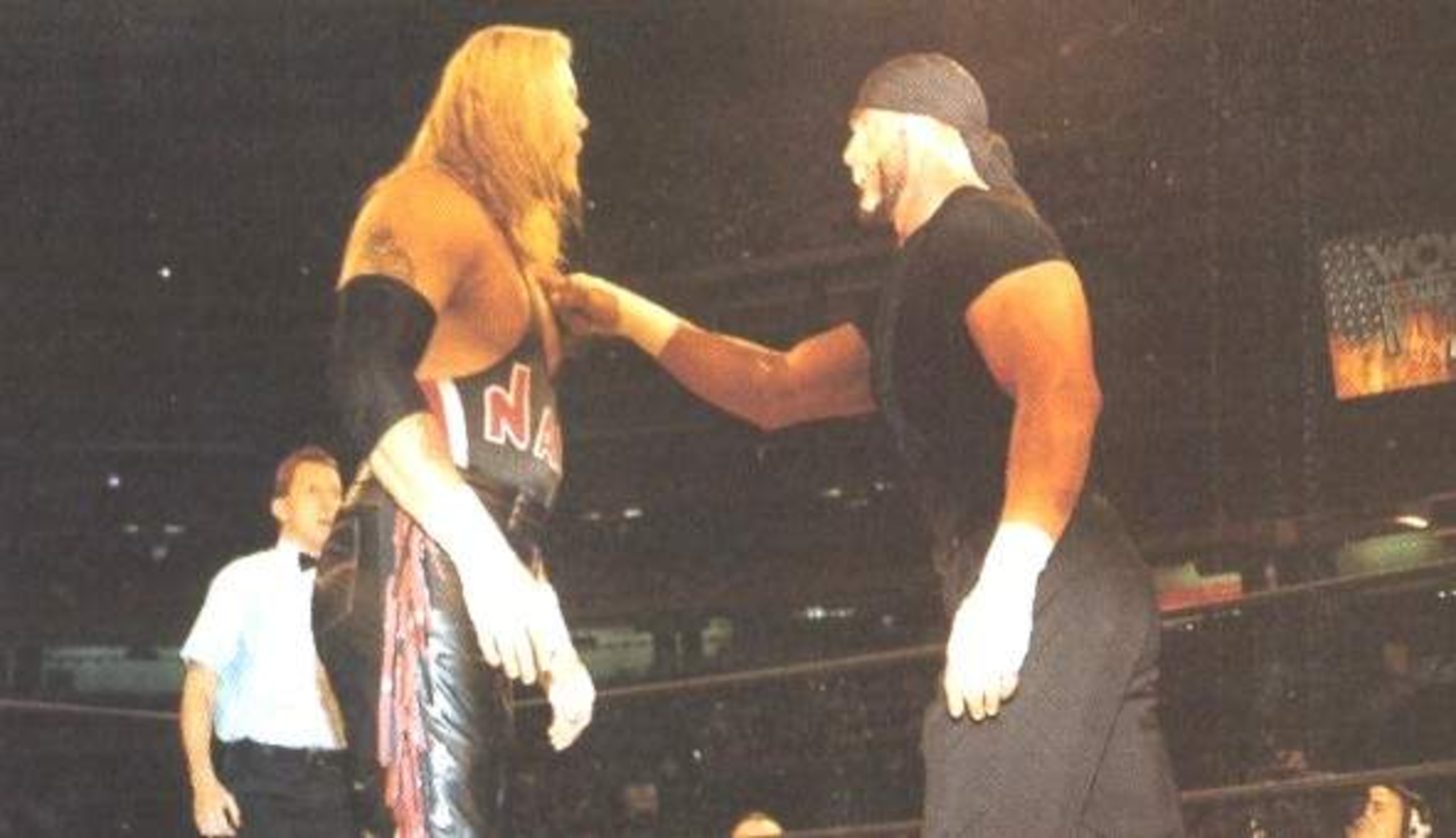
WCW made quite a splash on its flagship show to ring in the New Year in 1999.
Kevin Nash, one of WCW's biggest draws, won the World Heavyweight Championship from megastar in the making Bill Goldberg at Starrcade just two weeks earlier, snapping Goldberg's colossal winning streak and putting a halt to his epic rise to the top of the business.
Both Nash and Goldberg were heavily cheered entering the match, as both were over with the fans and were both built up very well going into Starrcade.
WCW made the decision to end the streak to close out 1998, which everyone knew had to end sooner or later. The decision that will live in infamy is the way Goldberg was booked to lose the match.
Scott Hall would return from out of nowhere (perhaps rehab) in the main event and use an electric stun gun to weaken Goldberg easily, setting him up for a Jackknife powerbomb from Nash and pinfall.
Nash vowed to give Goldberg his due rematch on Nitro.
However, in the first quarter of the show it was revealed that Goldberg was arrested on harassment charges for stalking Miss Elizabeth (Creative originally wanted to have Goldberg arrested on rape charges...however, he refused), and he was taken from the arena in a cop car.
Hulk Hogan would ironically return from retirement immediately after Goldberg's arrest, and since Nash had vowed to give the fans a title match, he challenged Hogan to an impromptu match.
The two would meet in the main event that evening, with Hogan poking Nash in the chest and covering him for the three-count, thus claiming the WCW Heavyweight belt.
WCW had duped the fans once again into giving them a highly anticipated bout only to have it taken over by the nWo and Hogan.
3. WCW Thunder
3 of 5
In 1997, WCW was on top of the wrestling world. Everything that Eric Bischoff touched turned to gold.
Ted Turner saw ratings on TNT climb to amazing heights after the take-off of Nitro, and wished to have the same success for his sister-station TBS.
To accomplish this, Turner ordered Bischoff to create a show on Thursday nights on TBS, which would be called Thunder.
Bischoff was not as eager to do so, as he notes in his autobiography Controversy Creates Cash, as he felt that his company was already operating at capacity and did not think that launching another show would help the company in the long run.
Bischoff was unable to hire more talent or staffing for this show, and was forced to now accomplish more with less.
The WCW product would therefore become overexposed, and storylines would be forced to run shorter periods of time, causing the creative department to work more to create extensive plots and storylines.
Thunder's debut can be pinpointed as the beginning of the end.
.jpg?w=2560 "Seahawks Chiefs Football")

2. Russo/Bischoff/Hogan: Bash at the Beach 2000
4 of 5
This event is perhaps one of the more controversial moments in all of wrestling history.
Vince Russo and Eric Bischoff headed the creative department in WCW during this time, and were not seeing eye-to-eye on how to use Hulk Hogan in the main event.
Hogan had a "creative control" clause on his contract, so therefore he could deny any certain finish he felt was not good for his character.
Hogan was not happy about losing a clean finish in the main event to Jeff Jarrett. Bischoff and Hogan came up with the idea that Hogan would win the title in a fashion similar to the "Fingerpoke of Doom," only this time, it would be Jarrett giving up his title.
Hogan would leave in disgust and, therefore, the title would be vacated, setting up a tournament for the new champion to be crowned.
Hogan would return at this point and battle over the real rights to the title. What was decided by Russo and Jarrett (and not known by Hogan), was that Jarrett would lie down in the middle of the ring, and Hogan would once again win the WCW title in a screwjob finish, thus destroying all credibility to the title without any punches being thrown.
Hogan and Bischoff left the arena immediately after the match's finish, happy with the angle being executed, yet confused of how the pinfall was devised.
With Hogan and Bischoff out of the building, Russo completely re-wrote the storylines for the title. He set up an immediate championship match between Jarrett and Booker T, and Booker would win and become the new champion, and therefore cause all developed storylines for the coming weeks and months to be useless.
Prior to the match, Russo would get on the mic and trash Hogan and his character, exposing Hogan's creative control issues and criticizing him for his constant backstage problems.
Hogan would file suit against WCW and would not return to the company.
At this point, WCW's mismanagement was being played into storyline, and the company had less than 10 months left.
1. The New World Order
5 of 5
The nWo is perhaps the greatest stable in all of pro-wrestling history.
It is also the greatest example of what can happen in wrestling if Creative is unable to determine when a certain idea or storyline has been used too long.
The nWo saw the rise of Hollywood Hogan as a heel, the creation of Eric Bischoff as an on-air personality, a role which he still plays today.
Several other ideas can be linked to the nWo, such as the Corporation and D-Generation X in the WWE, Immortal in TNA wrestling, and characters who have an abuse-of-power, such as Mr. McMahon in the WWE, and Bischoff/Hogan reclaiming the same role in TNA today.
The New World Order was formed at Bash at the Beach 1996, as Hulk Hogan joined forces with the "Outsiders", and defectors from the WWF, Scott Hall and Kevin Nash, who came to start a war with WCW.
The group would assault WCW stars, security, and personnel for months and years, and continued to add members to its faction on a weekly basis.
Around 1998, the nWo began to get big and featured stars who couldn't get over at all with the fans, and the concept had simply lost its magic.
After many failed revivals, and after adding and taking out and adding and taking out once again nearly 30 different members of the years, the nWo finally disbanded in late 2000 after a four-year run.
The idea caught fire so much in the beginning that Bischoff and the rest of the creative department just couldn't seem to part with the nWo concept and kept trying to find ways to stretch the story out longer and longer, yet all that they were able to do is continuously water it down.
Many different superstars were held down and unable to reach main event status, and therefore defected to WWE at the end of their contracts.
Superstars such as The Giant, Chris Jericho, Eddie Guerrero, Chris Benoit, Bill Goldberg were all young stars with the company defected to WWE (and would all be future WWE heavyweight champions) due to the disgruntlement of being unable to be featured at the top of the card at the time of their departure.
It was Hogan, Nash, Jarrett, Sting, Luger, Hall, and the rest of the nWo who always had the spotlight.
Ten years later, it is still very difficult to identify one exact reason that WCW is no longer around today.
All of the company's mistakes can be traced to poor booking and the inability to let go of the same, overused concepts, as well as use future superstars already on the roster to allow their product to continue to grow.





.jpg?w=2560 "Raiders Sticking with Cousins")