

BCS Championship Matchups Since 1998: Did The Computers Get Them Right?
I am not a proponent of a playoff system. The primary reason for that is because I really don't care if there is one undisputed national champion. As far as I'm concerned, if there are 10 teams that each have a share of a mythical national championship in any given year, that is fine with me.
Even if my team is one of those 10 teams, I really don't think it would dampen my parade.
I acknowledge that I am in the minority in this respect. Moreover, I fully respect the opinion of those that want to see only one, undisputed national champion. I also fully acknowledge that the only way that is going to happen is via a playoff system.
That said, while I do not support a playoff system, I am also not a proponent of the BCS.
In effect, my goal in this slideshow is not to prove that a playoff system is necessary. It is also not to set out to show what the specific national championship game matchups should have been.
It is not even to debunk the BCS.
Rather, I will do my best to look at every BCS championship game matchup, as unbiasedly as possible.
I will then attempt to say whether the BCS got the matchup right, wrong, or whether it was debatable.
I think right and wrong are fairly straightforward in these cases. Nevertheless, the term debatable is somewhat debatable.
For my purposes, when I use "debatable," I do not mean that the matchup should have incontestably featured another team. Rather, I mean that any of two or more teams in the pool could have been in the championship game, and neither of those teams would have been "wrong."
In other words, there was no computer or human that could have picked the "right" team or teams. Ultimately, one or more teams were going to get left out in the cold.
Relevant Criteria Used
1 of 15
Firstly, I will note that how the actual title game turned out was irrelevant for my purposes. I was strictly concerned with the final determination of the BCS computers, as regards to the championship matchups it chose.
Secondly, the only criteria that I concerned myself with was wins, losses and strength-of-schedule. For the most part, I consider style points silly and irrelevant.
Thirdly, I am of the opinion that teams that do not win their conference should not be in the national title game. Looking at it logically, how can a team that wasn't the conference champion possibly be the national champion?
Finally, I acknowledge that the two best teams might not always wind up in the national title game. However, the national title—or any bowl game—is the final destination for a team that earned the right to be there.
It is not a one-off game for a team that happens to be good.
Or, as Nick Saban recently said, "It’s the full body of work. It’s not just that you can beat one team, but if you have to beat six or seven other teams and have to play with consistency to do it, I think that goes a long way in saying a lot about what kind of football team that you have."
1998: Tennessee Vs Florida State
2 of 15
Teams: 12-0 Tennessee Volunteers vs. 11-1 Florida State Seminoles
Tennessee was the only AQ-Conference team that finished undefeated.
However, FSU lost (badly) to North Carolina State in the second week of the season. The Wolfpack wound up 7-4 that year.
Teams left out: The following AQ teams had one loss: Kansas State, Ohio State, Wisconsin, Arizona and UCLA. Also, Conference USA's Tulane went 11-0.
KSU's one loss was in double-overtime to an 11-win Texas A&M in the Big 12 Championship. OSU's loss was to a 6-6 Michigan State. Wisconsin lost to a 10-win Michigan team. UCLA lost to an eight-win Miami (FL) team. Arizona lost to UCLA, and Tulane did not beat any ranked teams.
Breakdown: Tennessee unquestionably deserved to be there. Florida State was there by virtue of having lost early in the season. However, it also has to be noted that the Noles played a decidedly difficult schedule.
Not only did they play their ACC schedule—which included a ranked Georgia Tech team—but they played out-of-conference games against three ranked opponents: Texas A&M, USC and Florida.
However, OSU also played a notable schedule, including in-conference games against ranked Penn State and Michigan and out-of-conference games against ranked West Virginia and Missouri.
KSU played a competitive schedule, but didn't win their conference.
Finally, UCLA didn't play as competitive a schedule, but they did beat a 10-win Arizona team and a nine-win Texas.
Final Verdict: The BCS got Tennessee right.
Florida State's inclusion is debatable, as OSU also deserved consideration. On the other hand, as OSU started the season ranked No. 1, it could be said that they had control of their destiny and lost it.
1999: Florida State Vs Virginia Tech
3 of 15
Teams: 11-0 Florida State Seminoles vs. 11-0 Virginia Tech Hokies
FSU beat four ranked teams during the season including out-of-conference Florida. Virginia Tech played and beat one ranked team—Miami (FL). Their out-of-conference included James Madison, Alabama-Birmingham and Clemson.
Teams Left Out: There were no other undefeated teams in AQ conferences. However, the MAC's Marshall went 12-0 with no wins over ranked teams.
The only notable one-loss team was Nebraska. The Huskers played five ranked teams on the year and their one-loss was to a nine-win Texas team.
Breakdown: No questions about FSU's inclusion in 1999.
As for V-Tech, undefeated is undefeated, even if it was a relatively easy path the championship.
Final Verdict: The BCS got it right.


2000: Oklahoma Vs Florida State
4 of 15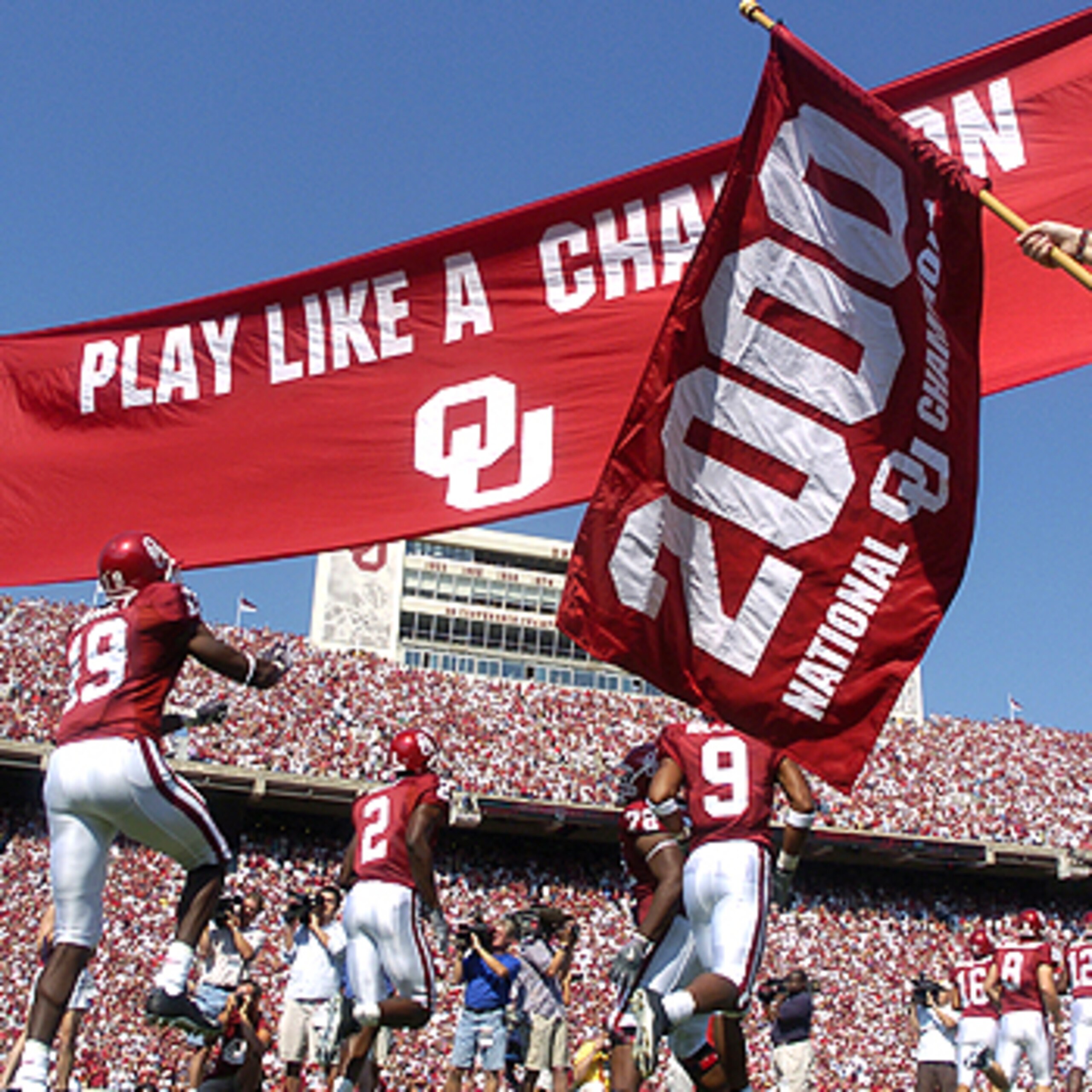
Teams: 12-0 Oklahoma Sooners vs. 11-1 Florida State Seminoles
Oklahoma was the only undefeated AQ team.
Florida State's one loss was to a one-loss Miami (FL) team.
Teams Left Out: The following AQ teams had one loss: Miami (FL), Virginia Tech, Oregon State and Washington. Also, the WAC's TCU went 10-1.
Washington's one-loss was to a nine-win Oregon team. Oregon State and Miami (FL) lost to Washington. Virginia Tech lost late in the season to Miami (FL). TCU lost to 7-5 San Jose State.
Breakdown: Oklahoma played a fairly daunting schedule, making the Sooners' selection unquestionable.
Washington and FSU had similar schedules in terms of competitiveness, while Virginia Tech, Oregon State and Miami's (FL) schedules were slightly easier. However, Miami (FL) beat FSU and Tech, while Washington beat Miami (FL) and Oregon State.
Final Verdict: Oklahoma without question. Florida State should not have been there.
Either Washington or Miami (FL) would have made more sense. Ultimately, when the records are the same and the schedules are similar, head-to-head has to count for something.
The BCS got it dead wrong.
2001: Miami (FL) Vs Nebraska
5 of 15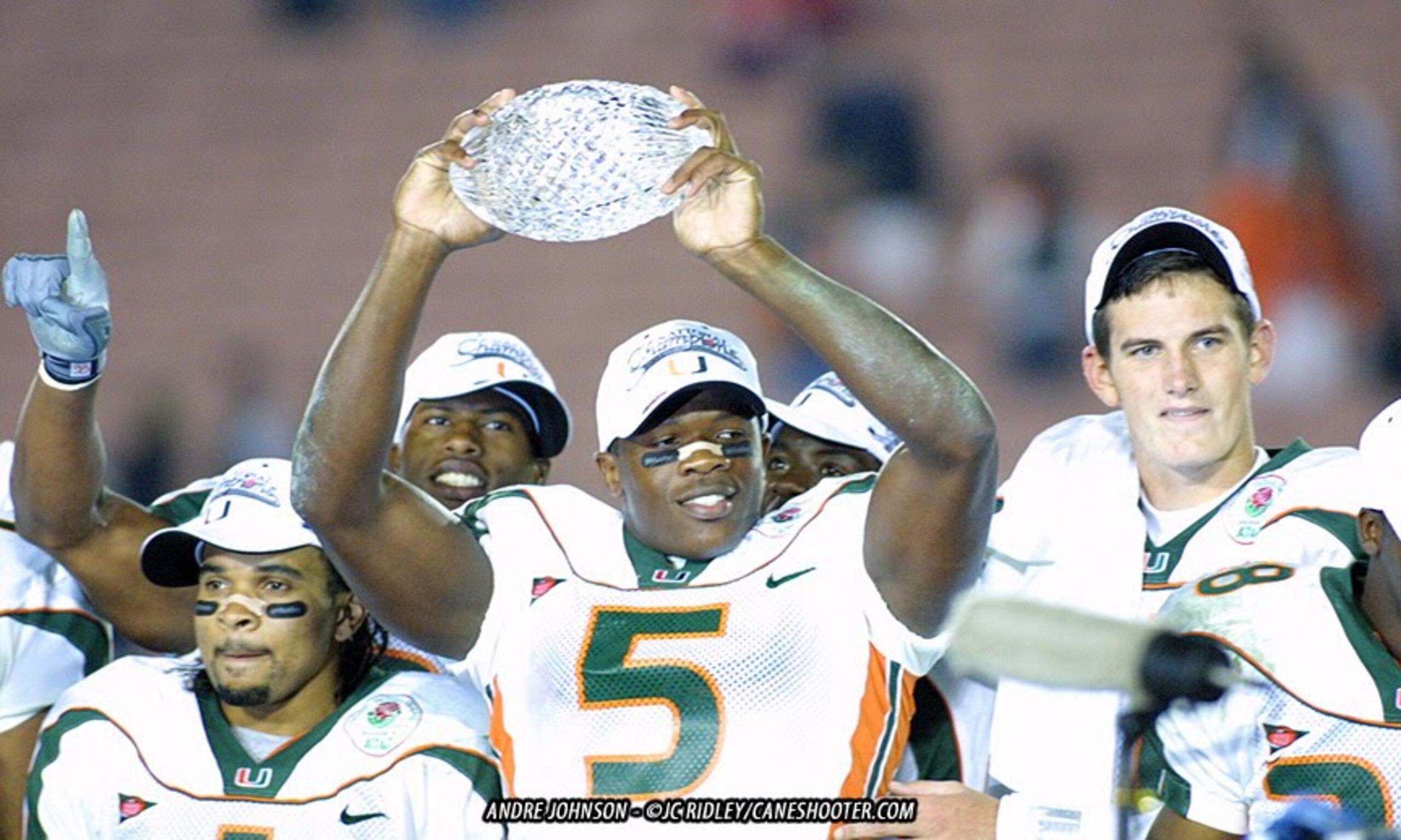
Teams: 11-0 Miami (FL) Hurricanes vs. 11-1 Nebraska Cornhuskers
Miami (FL) was the only no-loss team.
Nebraska's one loss was to a 10-win Colorado team. In effect, Nebraska not only didn't win their conference championship; they didn't even play in the championship game.
Teams Left Out: Other one-loss AQ teams were: Oregon, Illinois, and Maryland. Also, BYU was a non-AQ one-loss team.
Oregon lost a close game to a nine-win Stanford team. Illinois lost to an eight-win Michigan. Maryland lost to an eight-win Florida State. BYU's loss was against Hawaii in the final game of the year.
Breakdown: Miami (FL), yes. On the other hand, by virtue of not being their conference champion, Nebraska was an automatic and emphatic, "no."
Out of the remaining teams, Oregon played the toughest schedule with Maryland coming in a close second.
Final Verdict: The BCS got it wrong.
The game should have been Miami (FL) against Oregon. However, Maryland would have been a reasonable—albeit highly debatable—substitute for the Ducks.
2002: Ohio State Vs Miami (FL)
6 of 15
Teams: 13-0 Ohio State Buckeyes vs. 12-0 Miami (FL) Hurricanes
The Bucks and Canes were the only two undefeated teams in the country.
Teams Left Out: None
Breakdown: Although by year's end, some were saying that a two-loss USC was the best in the country, and OSU officially had to share the Big Ten title with one-loss Iowa, no other teams deserved serious consideration for the big game.
Final Verdict: No question. The BCS got it right. Of course, my two-year-old niece could have gotten it right as well.
2003: Louisiana State Vs Oklahoma
7 of 15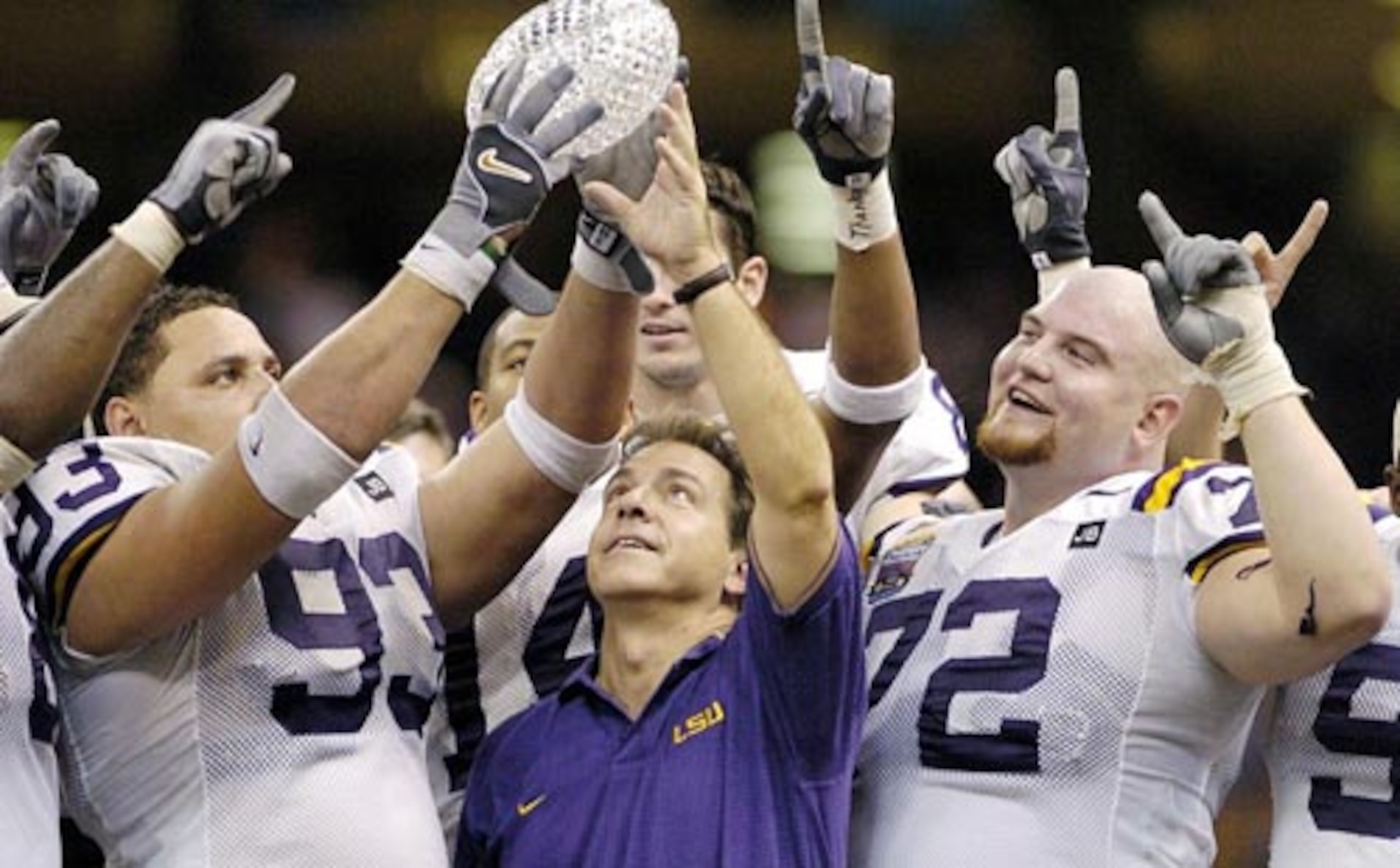
Teams: 12-1 LSU Tigers vs. 12-1 Oklahoma Sooners
No teams finished without a loss. Oklahoma's loss came to Kansas State in their conference championship. LSU lost to Florida. In effect, LSU won their conference championship. Oklahoma did not.
Teams Left Out: The only other one-loss AQ team was Southern Cal. However, TCU, Boise State and Miami (OH) also only had one loss.
USC lost in triple-overtime to an eight-win Cal team. TCU's one loss meant they didn't win their conference. BSU lost to an eight-win Oregon State and Miami (OH) lost to a nine-win Iowa team.
Breakdown: By virtue of not winning their conference, Oklahoma should have been out of the running. That would have left LSU and USC.
Boise State didn't beat anybody of consequence, TCU didn't win their conference and Miami (OH) badly lost their out-of-conference marquee matchup to Iowa.
Final Verdict: The BCS got it wrong.
If Oklahoma had won their conference and gone undefeated, then either LSU or USC's inclusion in the championship would have been debatable. If Oklahoma's loss had not come in the Big 12 championship, but earlier in the season, then any pairing of the three teams would have been debatable.
Nevertheless, it didn't happen that way, and the game should have been LSU vs USC.
2004: Southern Cal Vs Oklahoma
8 of 15
Teams: 12-0 USC Trojans vs. 12-0 Oklahoma Sooners
Teams Left Out: Auburn was the only other AQ team to finish undefeated. Also, Utah of the Mountain West and Boise State of the WAC went without a loss.
Breakdown: Utah and Boise State didn't really play enough teams of consequence to be seriously considered alongside USC, Oklahoma and Auburn.
Meanwhile, Auburn played four ranked teams, USC played three and Oklahoma played two.
Looking deeper, neither Oklahoma nor USC played any FCS opponents, while Auburn played one. Oklahoma and USC played six bowl-eligible teams, while Auburn played five.
Looking even deeper, the combined record of all of Oklahoma's opponents was 70-63 (.526). For USC, the combined record was 73-71 (.507). For Auburn, 67-56 (.545, though this did not include the Tiger's FCS opponent).
Final Verdict: This has been debated ad nauseum since 2004, and frankly, it is one of the many reasons why the SEC has become all but untouchable from a national discussion perspective.
Nevertheless, the facts clearly point out that this matchup was debatable and would have been debatable no matter who had been in the final.
2005: Texas Vs Southern Cal
9 of 15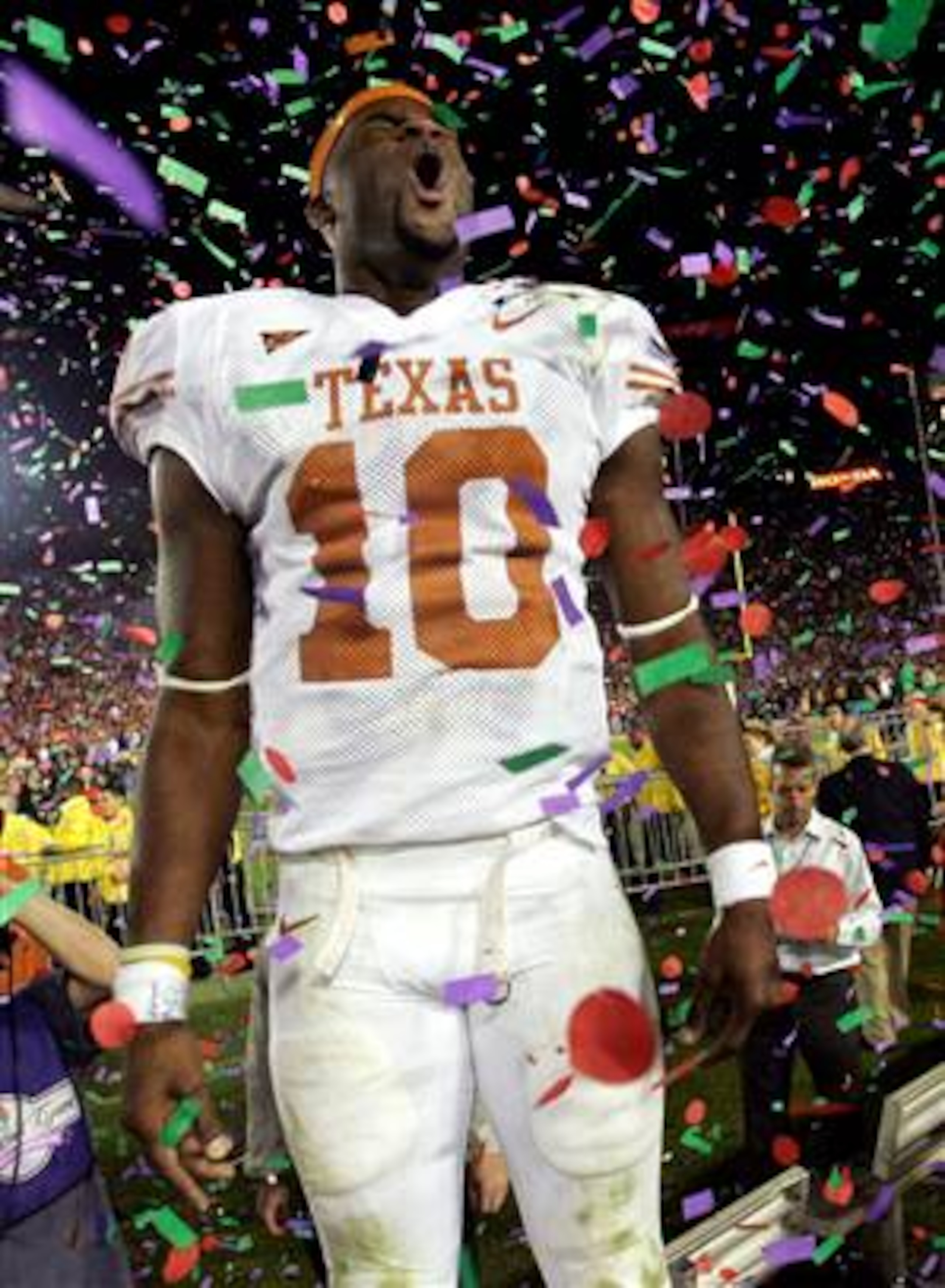
Teams: 12-0 Texas Longhorns vs. 12-0 USC Trojans
These were the only undefeated teams in the country.
Teams Left Out: None
Breakdown: None necessary. There was no question who deserved to be in the title game.
Final Verdict: The BCS got it right.
2006: Florida Vs Ohio State
10 of 15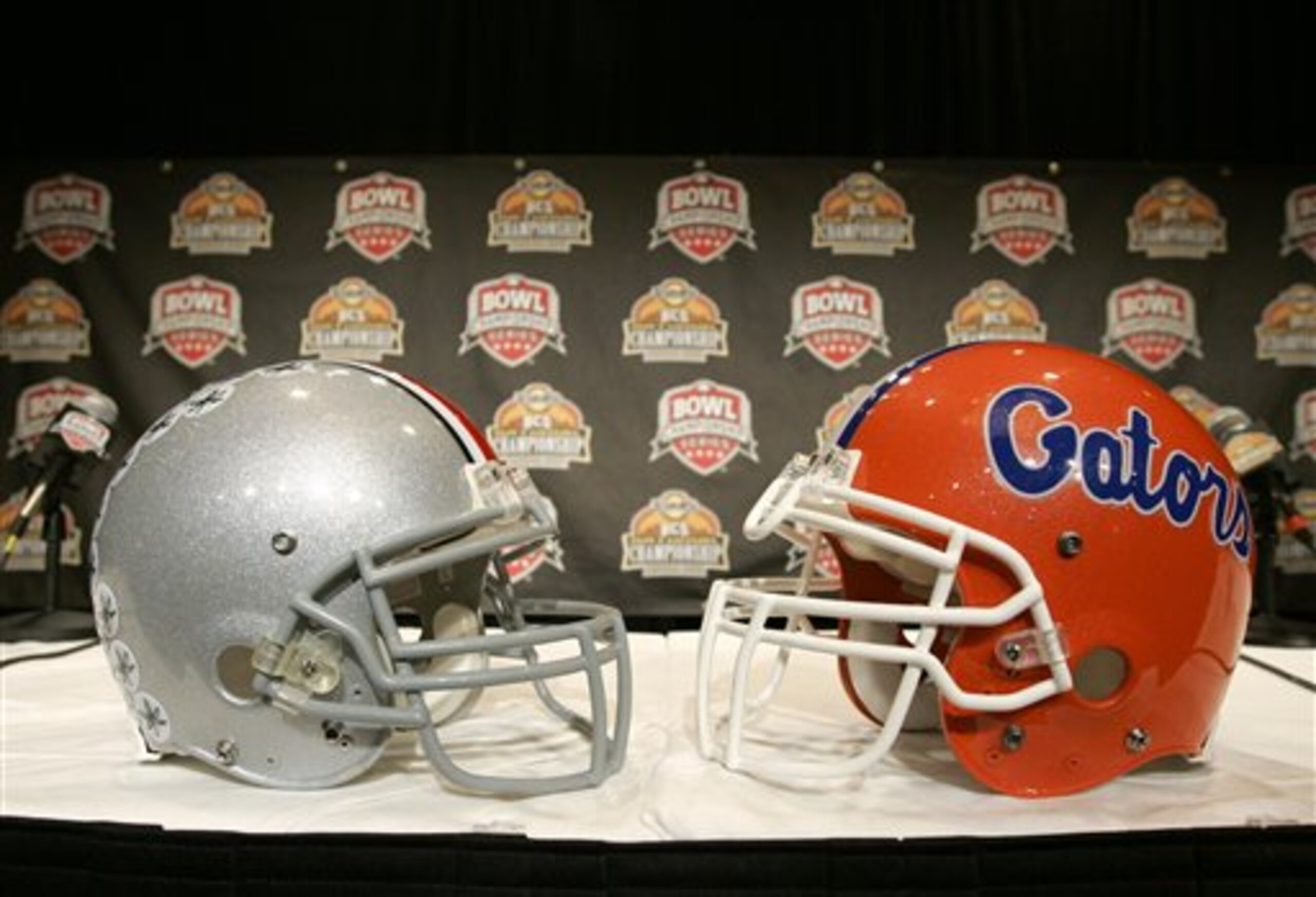
Teams: 12-1 Florida Gators vs. 12-0 Ohio State Buckeyes
The only other undefeated in the country was Boise State. Florida's loss came to a 10-win Auburn team.
Teams Left Out: As already mentioned, Boise State went undefeated. Also, the following teams finished the season with one loss: Michigan, Wisconsin and Louisville.
Michigan lost to Ohio State. Wisconsin lost to Michigan and Louisville lost to a 10-win Rutgers team.
Breakdown: Ohio State unquestionably deserved the bid. On the other hand, there was a great deal of controversy surrounding Michigan's mysterious plummet in the BCS polls following a week of inactivity.
While the polls were obviously rigged, neither Michigan nor Wisconsin deserved the national championship bid any which way, based on the fact that neither won their conference.
Meanwhile, Louisville played three ranked teams, while Florida played five. Furthermore, every SEC team that Florida played, other than Vanderbilt, was bowl eligible. On the other hand, Louisville played a tougher out-of-conference than the Gators.
As for Boise State, they didn't play any ranked teams.
Final Verdict: The BCS got it right.
However, the Cardinals at least deserved some consideration, which they never really got. Regardless, you're not going to catch me even attempting to argue that Florida didn't deserve to be there. It just rubs me the wrong way that Louisville was never given a genuine chance, basically because of the national—and at that time, undeserved—perception of the Big East.
2007: Louisiana State Vs Ohio State
11 of 15
Teams: 11-2 LSU Tigers vs. 11-1 Ohio State Buckeyes
The Buckeyes lost to a nine-win Illinois team. The Tigers two losses were both in triple-overtime. The first was to a seven-win Kentucky and the second was to an eight-win Arkansas.
Teams Left Out: Hawaii was an undefeated non-AQ team. The only other one-loss team was Kansas, who lost to Missouri in their final week of play.
Other two-loss teams were: Virginia Tech, Missouri, Oklahoma, West Virginia, Southern Cal, Arizona State, Georgia and BYU.
Breakdown: Missouri, ASU and Georgia didn't win their conferences, thereby eliminating them. Virginia Tech lost an out-of-conference game to LSU, thereby, in my mind, eliminating them as it concerns direct competition with Louisiana State.
That leaves Oklahoma, West Virginia, Southern Cal, Hawaii and BYU, along with LSU.
First of all, the Tigers played four ranked foes. Moreover, as already mentioned, their two losses went down to the wire.
Oklahoma played three ranked teams. Their losses were to a six-win Colorado and an eight-win Texas Tech.
West Virginia played four ranked teams. Their losses were to a nine-win South Florida and a five-win Pitt.
USC played four ranked teams, with their losses coming to a four-win Stanford and an eight-win Oregon.
Finally, Hawaii played one ranked team, as well as two FCS teams, while BYU also played only one ranked team. The Cougars two losses were to a six-win UCLA and a 10-win Tulsa.
Final Verdict: I personally think the BCS got it right. Nonetheless, on paper, it is debatable.
2008: Florida Vs Oklahoma
12 of 15
Teams: 12-1 Florida Gators vs. 12-1 Oklahoma Sooners
Florida lost by one point to an eight-win Ole Miss team, while the Sooners lost to an 11-win Texas.
Teams Left Out: Non-AQ teams Utah and Boise State were the only undefeated teams.
The following teams had one loss: Texas, Texas Tech, Penn State, Southern Cal and Alabama.
Breakdown: Neither Texas, Texas Tech, nor Bama were conference champions, thereby eliminating all of them.
Utah played three ranked teams. Boise State played one ranked team.
Penn State played four ranked teams, and their one loss was to an eight-win Iowa. USC played three ranked teams with their only loss coming to an eight-win Oregon State.
Meanwhile, Florida played four ranked teams, while Oklahoma played six.
Final Verdict: Oklahoma definitely deserved the game. On paper, Florida was somewhat even with Penn State. However, Penn State was hurt due to a late season loss. Moreover, this was the first season that a non-AQ team—namely Utah—deserved serious consideration.
The matchup was debatable.
2009: Alabama Vs Texas
13 of 15
Teams: 13-0 Alabama Crimson Tide vs. 13-0 Texas Longhorns
Teams Left Out: The Big East's Cincinnati, as well as non-AQ's Boise State and TCU were also undefeated.
Breakdown: The Tide played four ranked teams. Texas played two.
Meanwhile, Cincinnati played two ranked teams, Boise State played one, and TCU played three.
At first glance, it would appear that at the very least, Cincinnati and especially TCU deserved at least as much of a shot as Texas. However, the argument against non-AQ teams—and especially Mountain West Conference teams in 2009—was not that there weren't quality opponents within their conference.
Rather, it was that the bottom of the conference was littered with a disproportionate number of cupcake teams. In effect, a Big 12 schedule, from top-to-bottom, was more challenging than a MWC schedule from top-to-bottom. If you look closely at the MWC of 2009, you will see that this argument does have validity.
It also has to be noted that TCU played an FCS team, while Texas did not. On the other hand, outside of that FCS team, the combined record of TCU's out-of-conference slate was 20-19; one game better than Texas' 25-25.
As for Cincinnati, the Big East had three ranked teams, as did the Big 12. The Big East—a conference of eight—had two non-bowl-eligible teams, while the Big 12 had three. Therefore, both put 75 percent of their members into bowls. The Bearcats did have one FCS team on their out-of-conference. Other than that, their other three out-of-conference foes went 19-19.
Final Verdict: Alabama deserved to be there. I would give Texas the nod over the Bearcats and Horned Frogs, based simply on the fact that the latter two had FCS teams on their schedule, of which I don't think particularly highly.
Nevertheless, the matchup was debatable. At the very least, I think a lot of people assumed that Bama vs. Texas was fait accompli, which, based on the evidence, was just not true. Both Cincinnati and TCU deserved serious consideration.
2010: No. 1 Auburn Vs No. 2 Oregon
14 of 15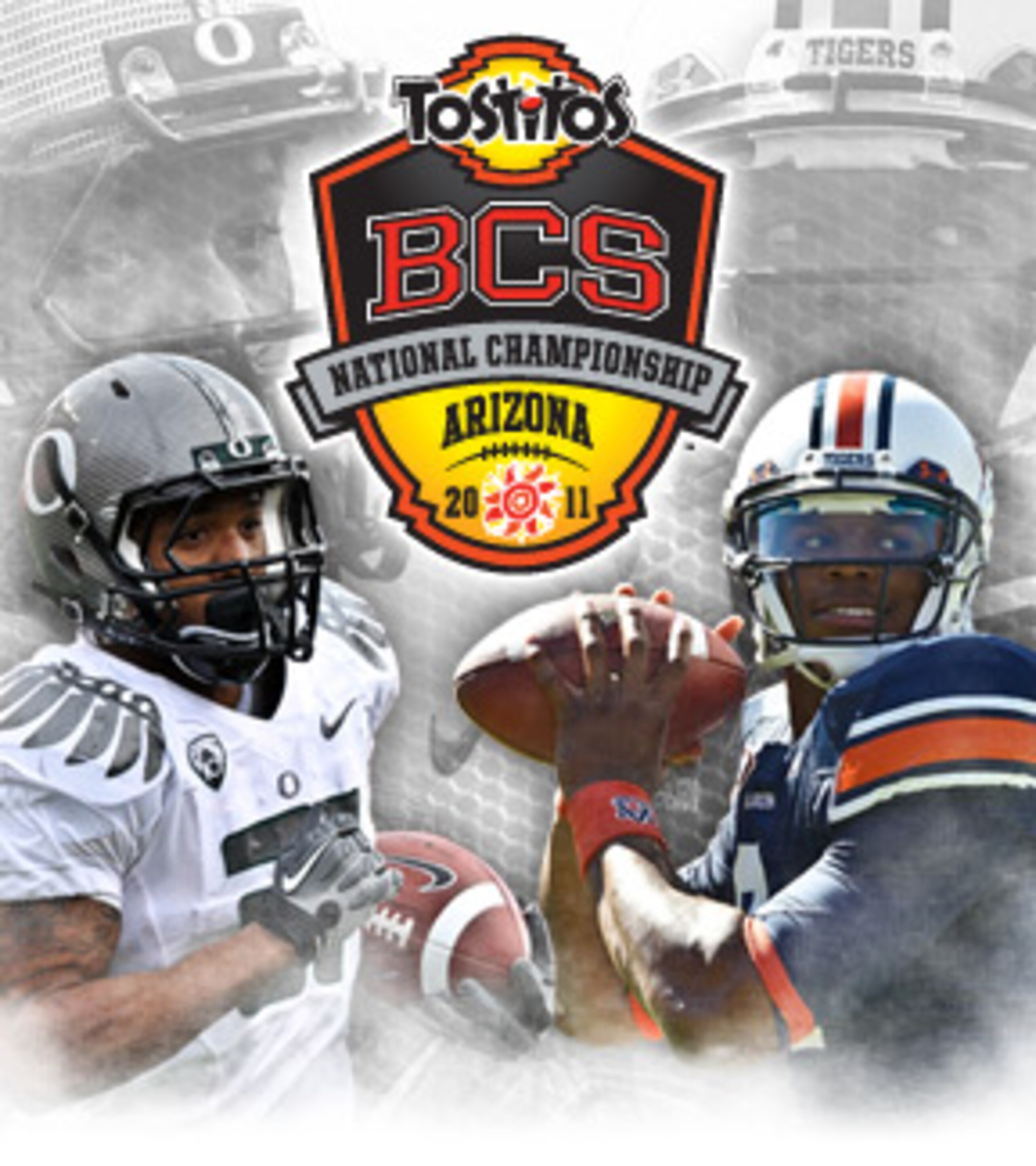
Teams: 13-0 Auburn Tigers vs. 12-0 Oregon Ducks
Teams Left Out: Non-AQ TCU was also undefeated.
Breakdown: On my own silly, little metric, Auburn had the second strongest schedule of any team in the top 25, and certainly the strongest of the top three.
Meanwhile, TCU had the second-weakest schedule of any of the top 25 teams, while Oregon had the eighth-weakest schedule.
Needless to say, there are inherent biases in my system as there are in any system. Nevertheless, Auburn more than earned their shot. I also don't think TCU deserved it over Oregon; at least, not this year.
Final Verdict: The BCS got it right.
Final Synopsis
15 of 15
The hard facts—at least as it concerns this particular exercise in futility—were that the BCS has gotten five right, three wrong, and five have been debatable.
Moreover, of the five that the BCS got right, four of them hardly required computers or complex mathematics or even three minutes of in-depth thought to come to the final conclusions.
Nevertheless, for me, the real cost of the BCS has been two-fold, and it became readily apparent to me as I researched information about past BCS seasons.
Firstly, as I looked back over the schedules of the early BCS championship participants, I was floored. As I already mentioned, in 1998, Florida State's out-of-conference schedule included: Texas A&M, Southern Cal, Miami (FL) and Florida.
Ohio State's 1998 out-of-conference included: West Virginia, Missouri and a pretty good Toledo team (coached by current-Missouri coach Gary Pinkel).
In 2001, Miami (FL) played a Big East schedule that included four ranked teams, plus an out-of-conference consisting of: Penn State, Troy, Florida State and Washington.
I'm not saying there weren't a fair share of very successful teams at that time that went the cupcake route. I'm also not saying that there aren't teams now that make a real effort to schedule competitive out-of-conference slates.
However, can you imagine if 2010's Auburn had scheduled Texas A&M, USC, Miami (FL) and FSU as its out-of-conference? Of course you can't, because it would never happen.
That is the first casualty of the BCS.
The second is the fact that more-often-than-not, the teams that have been passed over for inclusion in the national championship have been lower-profile teams. Furthermore, those teams have usually been passed over for higher-profile teams.
Washington in 2000, Oregon in 2001, Louisville in 2006, Cincinnati in 2009. In fact, let's face it, if Ohio State had won out this year, the final game would have been the Bucks against the Tigers, and Oregon would be playing TCU in the Rose Bowl. And I don't need to do any math or crunch any statistics to come to that conclusion.
Perhaps that's the way it is and that's the way it's always been. Nonetheless, it is hardly necessary in an ultimately oligarchical set-up for a specific system to be put in place to keep the have-nots out.
Regardless, this year is the first year since arguably 2005 that the BCS got it 100 percent, unequivocally correct. And if 2005 is any indication, that should make for a very exciting national championship game.
_0.png?w=2560)


.jpg?w=2560 "Love's Body Already 'Tired'")
.jpg?w=2560 "Tyreek Deal May Come Soon")


.jpg?w=2560 "Ward Nearly Walks Out of Presser ▶️")
