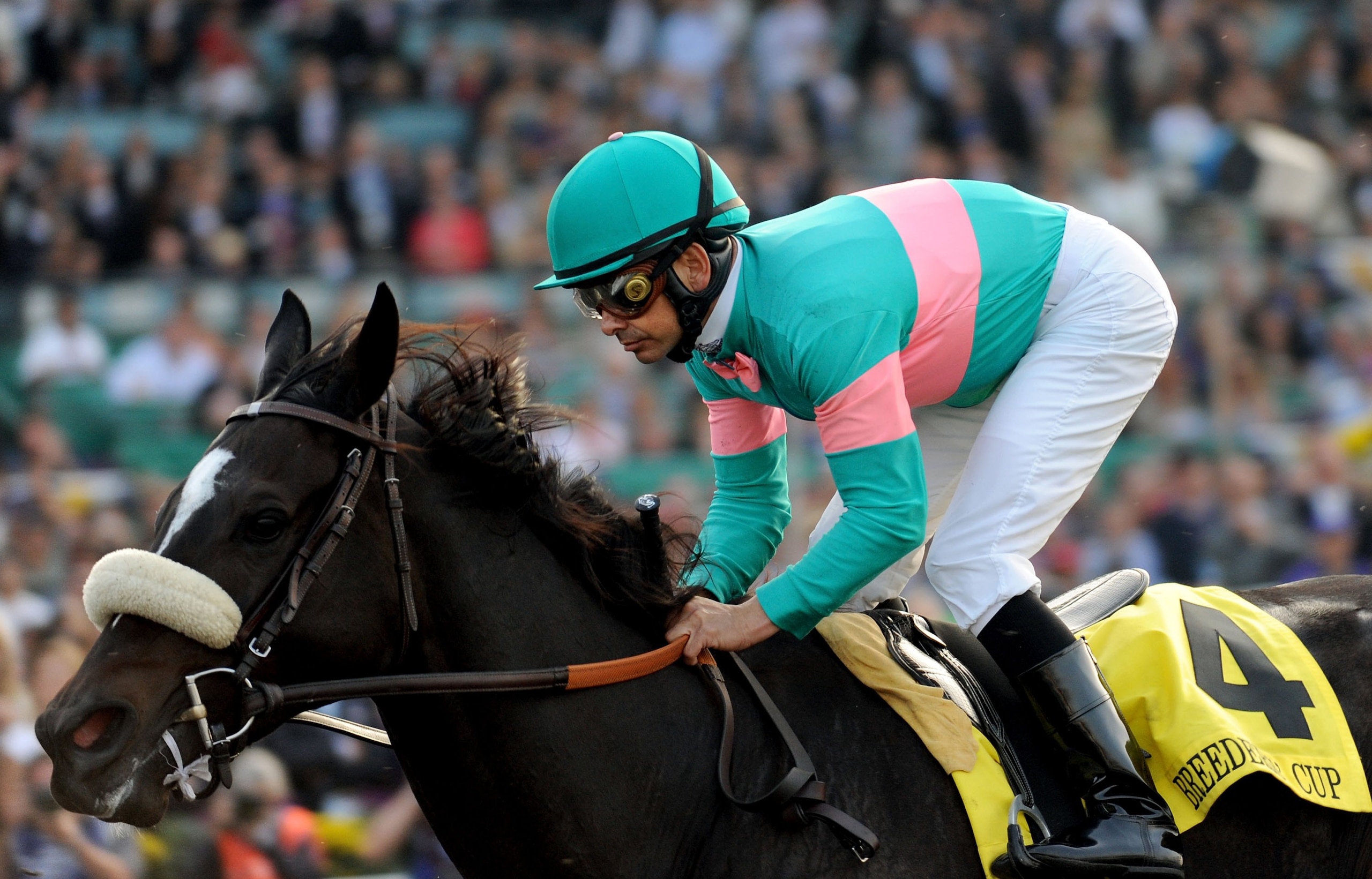

2010 Breeders' Cup: Is Zenyatta the Greatest of All Time?
All this week, we're going to hear countless people, most of them ignorant, debating who the greatest thoroughbred of all time is. Of course, the first thing they're all going to ignore is any horse foiled before, say, 1900, and of course any horse that did the bulk of his or her running outside of North America. Nijinsky II? Bah. Phar Lap? At least he was poisoned by U.S. gangsters.
So I'll fall into the same trap as everyone else: in order to be considered, a horse must have raced at least half of his or her peak races in North America or Dubai since 1900 and cannot have been poisoned by U.S. gangsters. Oh, and thoroughbreds only, and flat racing only. But now, where does Zenyatta rank?
Here's my top-10 (with a promise of reconsideration when I wake up Sunday morning):
10. Dr. Fager
1 of 11How good was Dr. Fager? In 1968, he ran a mile in 1:32 1/5 on the dirt at Arlington Park. In the 42 years since, it has been matched, yes matched, just once, and that was just a couple of years ago at Belmont Park. Sure, Secretariat's Belmont time hasn't even been approached, but the number of 1-1/2 mile races and the number of horses bred to succeed at that distance have decreased with each passing year. One mile? If not the most common route distance, it's pretty darn close. And still, for four decades, the best anyone has done is equal the time, and only once.
Dr. Fager won 18 of 22 races, becoming one of the first horses ever to win over $1 million on the track. In 1968, he won the Vosburgh at Aqueduct in still stakes-record time for 7 furlongs. In fact, no one even came within three-fifths of a second of his mark for 33 years. He broke the 2-minute barrier in the Suburban. And just because he was that good, he tried the grass at Atlantic City and won the United Nations Stakes. That year, he became the only horse to be awarded champion older male, champion sprinter, champion turf horse, and overall horse of the year in the same year. Not too shabby. He was future Hall of Fame trainer John Nerud's only horse of the year winner.
9. Forego
2 of 11Today, if a horse wins 34 of 57 lifetime races, he'd probably be dismissed as some lark dominating the open $7,500 claimers at Mountaineer. Impressive, sure, but not a champion. And Forego very nearly wasn't a champion. As a sophomore, he was a nothing handicap winner, dawdling in obscurity behind fellow three-year-olds Sham and some movie star named Secretariat.
But as a four, five, and six-year-old, Forego was one of the most impressive geldings to ever take to a North American track. He won horse of the year each year, and only missed out on a fourth Eclipse Award in 1977 due to some Triple Crown winner named after a town in the Pacific Northwest. He won the Woodward, the same race that has produced five of the last seven Eclipse winners for horse of the year, each year from 1974 to 1977, the first two at 1-1/2 miles, the last two at 1-1/8. He took two Met Miles, three Brooklyn Handicaps, and the 1974 Jockey Club Gold cup when it was still run a 2 miles. Sure, he doesn't have the almost-unblemished record of many of the other horses on this list, but when you spend four years at the top racing anywhere from 1 mile to a now-un-American 2 miles, you certainly have to be a super horse...
8. Zenyatta
3 of 11...speaking of a super horse, California's leading lady has already cemented herself in the conversation for greatest horse ever, at least by our narrow eyes of the world. No matter how you look at it, her style is not conducive for perfection. You can't expect a horse to be able to make up eight lengths on Grade-I winners with fractions in the mid-20s and high-40s. Sooner or later, some speed horse is going to come through. But then again, you can't expect any horse to be like Zenyatta.For three seasons, she has dominating the female handicap division, taking 12 Grade-I races in a row against her fellow sex. In her only two starts on dirt, she won most comfortably, including a breathtaking annihilation of 2007 champion older female Ginger Punch in the 2008 Apple Blossom. Oh, she also took a little Grade-I against males last year in the Breeders' Cup Classic.
The final chapter hasn't been written yet, and it's an important one. This year's Classic field is much stronger than last year, with bona fide dirt routers set to take dead-aim at the unbeaten champion. If she wins, there's no question that Zenyatta's spot amongst the all-time greats is deserved. Even her biggest detractors will have to recognize some legitimacy with a triumph over Blame, Quality Road, and Lookin at Lucky. No six-year-old has ever taken the Classic, and only one horse – Tiznow – has ever taken two Classics overall. For now, Zenyatta is eighth, but her name is in pencil. So too, at least until Saturday, is everyone ahead of her.


.jpg?w=2560 "NBA Gambling Charges")
7. Kelso
4 of 11“Once upon a time, there was a horse named Kelso, but only once” - Joe Hirsch. We already talked about Dr. Fager, but Kelso's career took a surprisingly similar turn. While injury kept Kelso out of the Triple Crown races in 1960, he made up for lost time by turning the handicap season into a first horse of the year award. Like Dr. Fager, he dominated New York-racing for four years, but unlike Dr. Fager he continued on for a fifth. In fact, for six consecutive seasons from 1960 to 1965, he won a race that is now a Grade-I. No other horse – not even John Henry – has ever done that.
Every year from 1960 to 1964, he won the traditional championship race, the Jockey Club Gold Cup at 2 miles. He was the only horse ever to break 200 seconds in the race, and he did it thrice. He took three Woodwards, three Whitneys, and a pair of Suburban Handicaps. He was a short head shy of becoming racing's first $2 million-winner. He is the only horse ever to win five horse of the year awards; no other horse won more than three.
6. Colin
5 of 11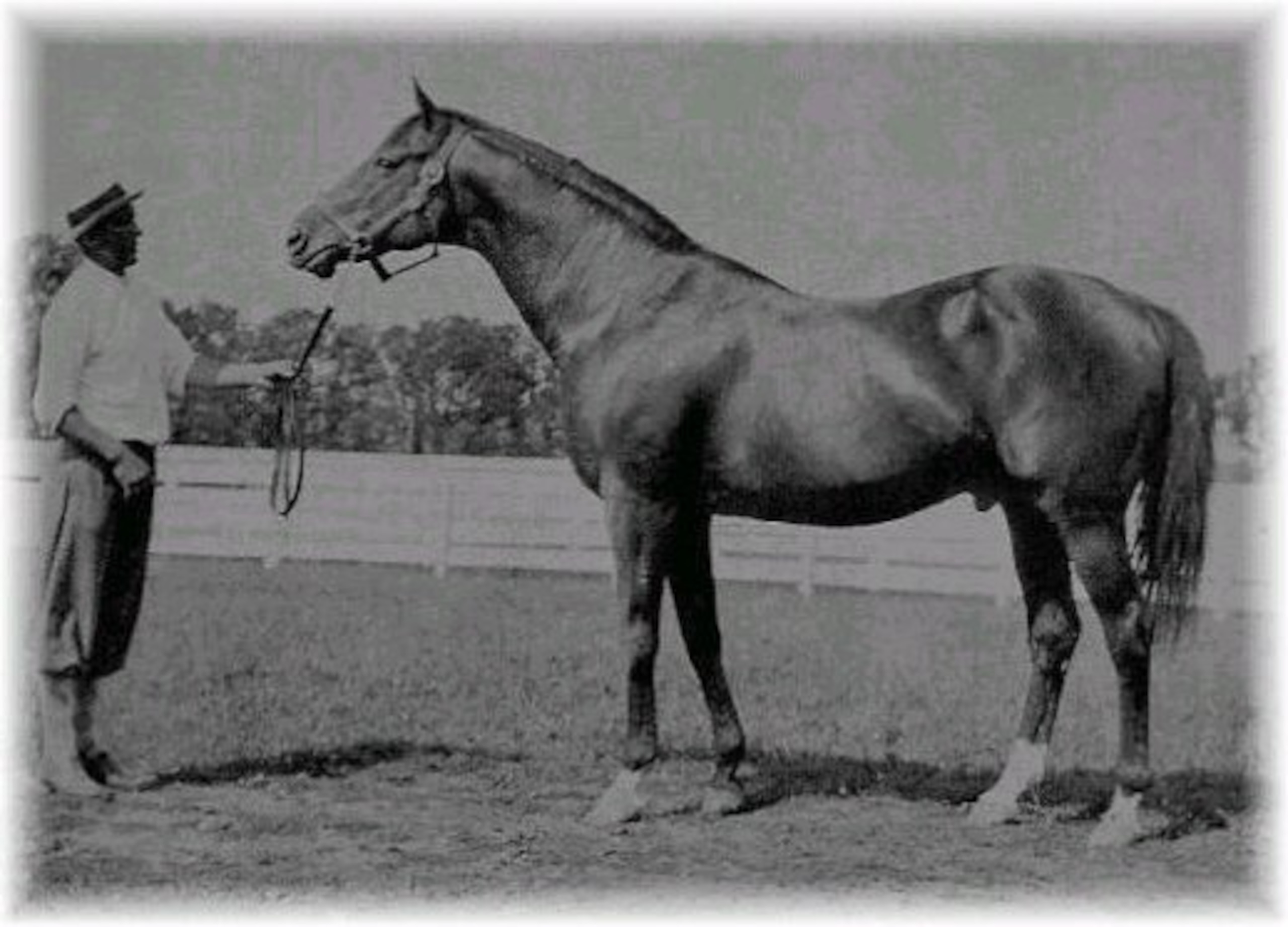
When James G. Rowe died in 1929, he left his family only one request for his tombstone. He wanted it to say, “He trained Colin.” He didn't care for any mention of his record eight Belmont Stakes wins, his pair of Kentucky Derby triumphs, or his other Hall of Fame charges such as Regret, the first filly to take the Run for the Roses, or Hindoo, Maskette, and Peter Pan, all legends in their own right. All he wanted the world to know was he trained Colin.
In 15 lifetime starts, Colin was defeated as often as, well, he was never defeated. He started 15 times over two years, 14 times in stakes, and won them all. While ill in 1907, he took the famous Saratoga Special, on his way to becoming the last juvenile to win horse of the year until Native Dancer in 1952. As a three-year-old, he continued his dominance in New York, taking the Belmont Stakes. After New York banned gambling that summer, Colin was shipped to England, but an injury ended his career before he could race. He was the last major champion over multiple seasons to retire unbeaten until Personal Ensign in 1988.
5. Spectacular Bid
6 of 11No matter if you don't believe the given excuse that Spectacular Bid stepped on a safety pin the morning of the 1979 Belmont Stakes, you must believe his accomplishments. After a great-but-inconsistent juvenile year, Buddy Delp's charge rolled through the spring of 1979 with destiny. They took the three premier Derby prep races at Gulfstream, the Flamingo Stakes at Hialeah, and finally the Blue Grass at Keeneland. Then, for good measure, he took the Derby and the Preakness, and looked like a sure bet to become racing's third Triple Crown winner in as many years.
But as has become the rule for the past 32 years, destiny would not shine. The Bid supposedly stepped on a safety pin and ran third in the Belmont, one of only two races he didn't at least place in and one of only four from 30 starts that he did not win.
After losing to Affirmed in the 1979 Jockey Club Gold Cup and by association losing out on the Eclipse Award for horse of the year, Spectacular Bid engaged in one of the greatest seasons in racing history. He destroyed the left coast in five straight stakes races, the majority with track-record times, before shipping across the country and taking the Washington Park Handicap at Arlington, shaving two seconds off the stakes record for 1-1/8 mile in the process. By the time Spectacular Bid arrived back at Belmont Park to make up for two disappointing losses from the year before, his dominance was so undeniable that no one entered against him in the Woodward. In what was his last race, Spectacular Bid eased around the track in the grandest exhibition in American racing history. He retired as horse racing's richest ever thoroughbred.
4. Native Dancer
7 of 11Alfred G. Vanderbilt's homebred only lost once in his 22 starts, but unfortunately that came in the one race that always eluded the grand gentleman of the sport: the Kentucky Derby. Had Native Dancer won that race, had the Grey Ghost become racing's ninth Triple Crown winner in 1953, there's no question his name would be held in the same breath as Secretariat or Man o'War. While still just a breath below, what he did for the sport during the Golden Age of Baseball is nothing shy of incredible.
Racing's first television star, Native Dancer made Saratoga's juvenile stakes look like third-level allowance contests during the summer of 1952. By the end of the year, he had won enough to become the first two-year-old in nearly half a century to be selected as North America's horse of the year. His winning streak continued into the spring, taking every prep race in New York. After his loss in the Derby, he returned to his racing home to New York to take the Withers, and then turned around and took the Preakness and Belmont, before taking a couple of races in Illinois. An ankle injury to Native Dancer at the end of the year cost racing it's planned showdown between older champion Tom Fool and the Grey Ghost, and also cost Native Dancer his second horse of the year honor.
Injuries continued to plague him in 1954, but he did win the Met Mile in heroic come-from-the-sky style. Despite racing only three times as a four-year-old, his dominance and popularity were so high that he won his second horse of the year award, becoming the only horse to ever win the honor as both a juvenile and as an older male. Then, just because he could, he went on to become one of the most influential sires ever on both sides of the Atlantic.
3. Citation
8 of 11If you ask most any major turf writer who he thinks was the best horse ever, there's only three names likely to come up, and really, you can make a tremendous case for any of the three. So there's really no way I'm going to alter who the top three are, at least not until a horse gives me good reason to make a change. So far, not a single horse on this list won the Triple Crown, and only three of the seven even won a Triple Crown race. While the Triple Crown is not the only measure of greatness, it certainly is a measure, yet it's only a mere part of why we hold Citation in such high regard.
Citation won championship races basically everywhere in the U.S. where championship races are held. He won the Futurity Stakes and Pimlico Futurity as a two-year-old in New York and Maryland. He won Florida's top prep race, Hialeah Park's Flamingo Stakes, early in his sophomore season. After his Triple Crown campaign in 1948 (how often can you call a horse's Triple Crown races a mere afterthought amongst his accomplishments?), he took two major races in Illinois. Then after dominating the two-mile Jockey Club Gold Cup in what was then the second-fastest time on record, he took the Pimlico Special by a little more than the entire length of the racecourse. Yup, it was a walkover as no one was willing to lose to him.
After a severe injury brought his season to a halt, Citation took more than a year off. Now racing exclusively on the left coast, he was continuously second-best to the speedy English-bred Noor. After a poor start to his six-year-old season in 1951, Citation regained form, taking three handicaps, including the Hollywood Gold Cup to become racing's first millionaire. While millionaires would follow over the next couple of decades, Triple Crown winners wouldn't. At least not until one of the horses still to come.
2. Man o'War
9 of 11While Citation has a claim on the greatest horse of all time, there's only two horses whose names ring as the most fierce ever. There's Man o'War and Secretariat, Secretariat and Man o'War, Big Red and Big Red. You can go either way, and there's no way you can be wrong.
Man o'War was so good, his one loss is frequently joked as to having coined a term. While the word “upset” has been traced by some as far back as the antebellum period, Upset's win over Man o'War in the Sanford Memorial Stakes during their two-year-old seasons in 1919 was so shocking, so incomprehensible, and in some circles, considered fixed, that today Upset is nearly as famous as Man o'War. Still, despite the race starting before Man o'War was lined up facing the track, despite Man o'War conceding the field a good 50-60 yards, Big Red ran second, nearly catching Upset in the final strides.
As a three-year-old, no one could even come close to Man o'War. He ran the table, winning all 11 races he entered. By the fall, he was so sickenly good his connections had to scramble to find a horse to run against him in the Lawrence Realization Stakes. Big Red took six seconds off the world record while winning by an estimated 100-lengths. Then, he ended his career by beating reigning champion Sir Barton in a match race up in Canada. Had Man o'War not been eased, the seven-length margin of victory easily would have been more than twice as much. But as disgustingly good as Big Red was, there was another colt who would steal the titles of greatest horse ever and Big Red right from under his nose.
1. Secretariat
10 of 11What is there to say about Secretariat that has never been said before? Anything? For once, all we need to do is look at the Triple Crown races. That's it. Because what Secretariat did over a few weeks in the spring of 1973 was so good, so much better than any horse before or since, that the rest of the conversation is moot.
Secretariat, early in his three-year-old season, broke two minutes in the Kentucky Derby. A split-second later, Sham did too, and only one other horse has managed to crack under the barrier in the 37 years since. In the Preakness Stakes, only a clocker's error, one that the Maryland Jockey's Club and Magna Entertainment Corp. stubbornly refuse to reconsider, kept Secretariat from another stakes record. Then there's the Belmont Stakes that defies words.
There's so much more than makes Secretariat the greatest horse ever to step onto a North American racecourse, but just looking at those few weeks, that trio of races, it's unfathomable. Secretariat shattered the world record for 1-1/2 miles. Shattered. And no horse has even come within ten lengths of it since on any dirt track around the world. If every horse ran his best-ever 1-1/2 dirt race at the same time, Secretariat would still be almost three first downs ahead of everyone else at the finish line. On that Saturday in June, he was almost a football field clear.
Conclusion
11 of 11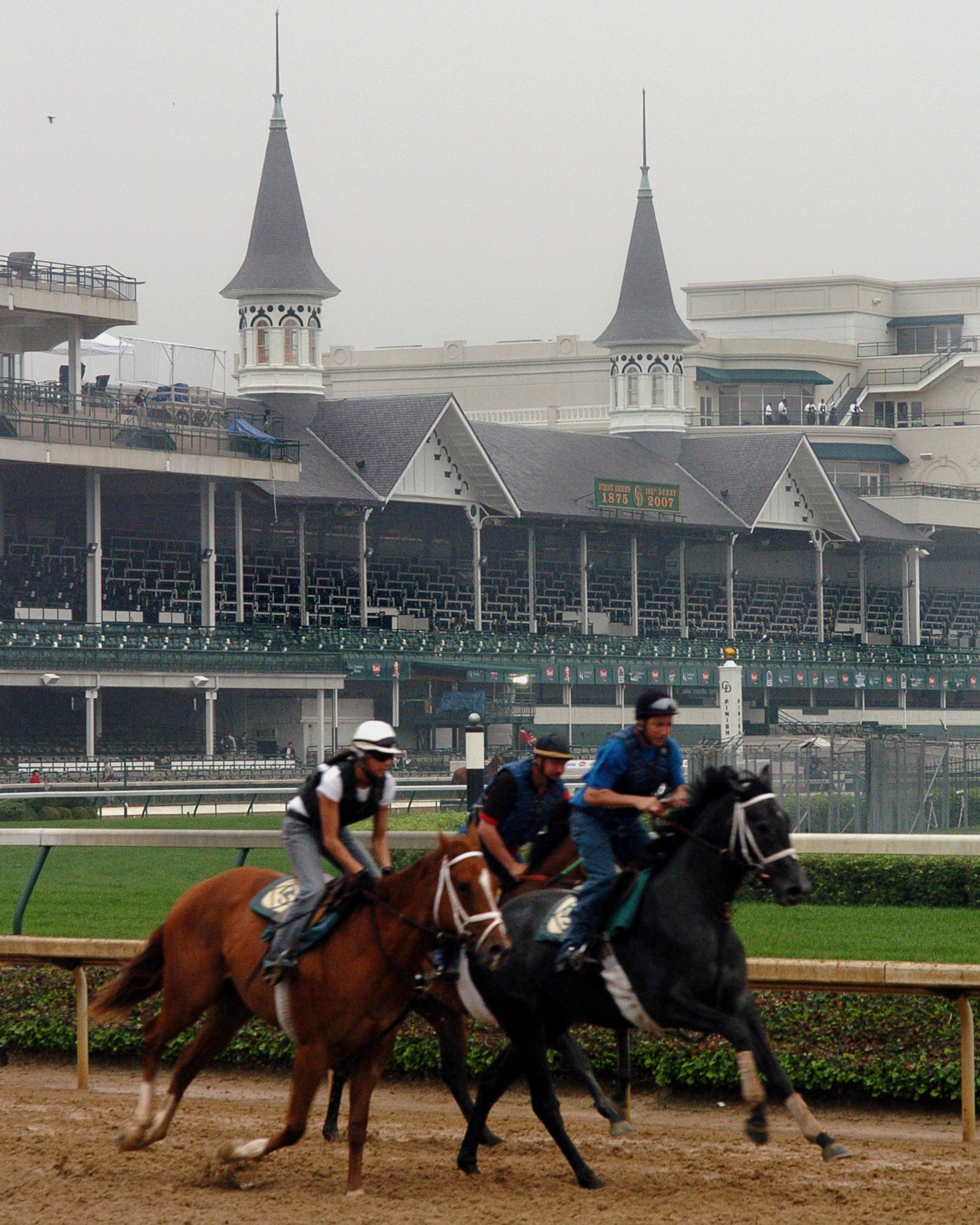
Since 1900, these were the best ten. But everyone's name is in pencil for now. At least until Zenyatta spins out of the turn under the Twin Spires.
How does your list compare?
.jpg?w=2560 "Commanders 49ers Football")

.jpg?w=2560 "Jonathan Taylor Landing Spots")