

LeBron James and the NBA's Top 5 Most Overrated Players
Who is the NBA’s most dominant player? Does this question sound familiar boys and girls? No? Well then how’s that rock you’ve been under all these years—cozy?
Seriously, the who’s who in basketball debate has grown staler than last week’s nachos, much like the million dollar query that has followers of LeBron James and those of Kobe Bryant constantly slinging mud at one another over the Internet.
In fact, if I had a dollar for every time someone asked me to choose the better of James and Bryant, then I would probably have enough singles to tip every stripper in Vegas—and I mean handsomely.
But don’t fret my lovelies. I refuse to be the umpteenth person to open this super sized can of worms.
In fact, it’s my opinion that some of the top names in basketball are vastly overestimated (I know...blasphemy, right?).
Three of these men are ranked among the very best in the league, and have been touted as this year’s leading candidates for MVP honors.
Rajon Rondo and Joe Johnson bring up the rear.
Oops, did I just give some of it away? My apologies.
Ahead is a list of the top five most overrated players in our beloved NBA. Enjoy.
1. Dwight Howard (Orlando)
1 of 5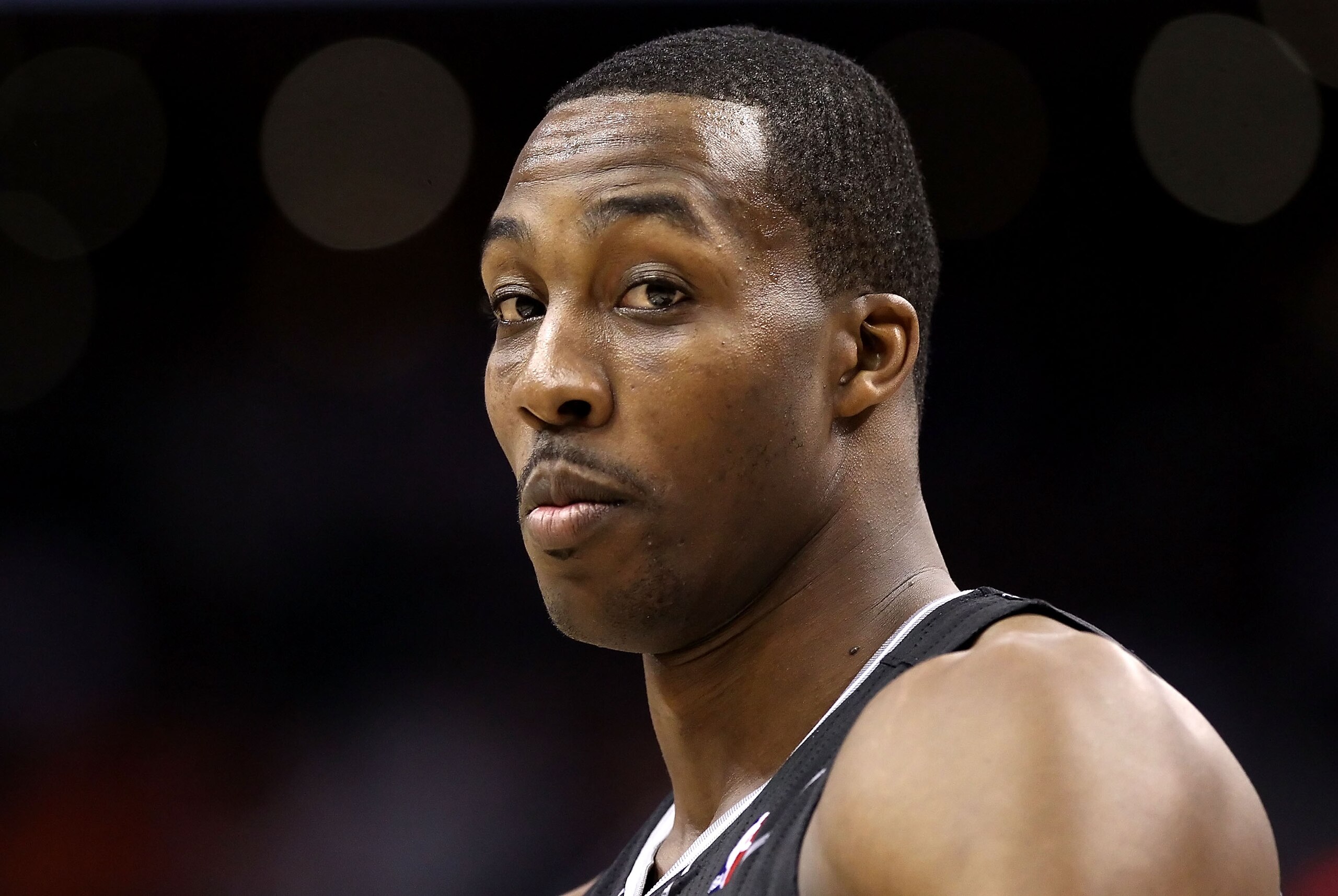
Season Averages (2010-2011)
PPG: 23.2 RPG: 14.2 BPG: 2.4 TO: 3.6
Dwight Howard is often recognized as the NBA’s most dominant force underneath (although Los Angeles’ Andrew Bynum is nipping at his heels), but is his nightly output the result of an enhanced skill-set or anatomic advantage?
It’s hard to deny his importance defensively, as well as the potential threat he poses on the offensive end; but Howard could produce at a much higher clip if he weren’t so reliant on his physical gifts.
His points are mainly generated from high percentage attempts, this is true, but as we have seen, when Howard is challenged by a seasoned defender (like Kevin Garnett), his effectiveness on both ends of the floor diminishes considerably.
Howard doesn’t have the luxury of turning to an eight foot jumper when faced by a defender comparable in size, or advanced in experience, and often resorts to forcing his way to the cup with a limited assortment of spinning elbows, running hook shots and flat out prayers in the form of attempted shots.
The rest of his production stems from second chance opportunities (put back jams and layups), alley-oops and free throws, which seem to bother him to the same extent that they do Shaq (Season average is a miserable 59 percent).
Let’s be real and call a spade a spade: Howard’s utter futility on the offensive end qualifies him as an underachiever at best—especially when the stakes are raised, as indicated by his pedestrian achievements in last year’s Eastern Conference finals against Boston; and though he is a proven defenseman, with multiple honors to show for it, one could argue that at seven feet, 265 pounds, Howard is certainly capable of more.
2. Joe Johnson (Atlanta)
2 of 5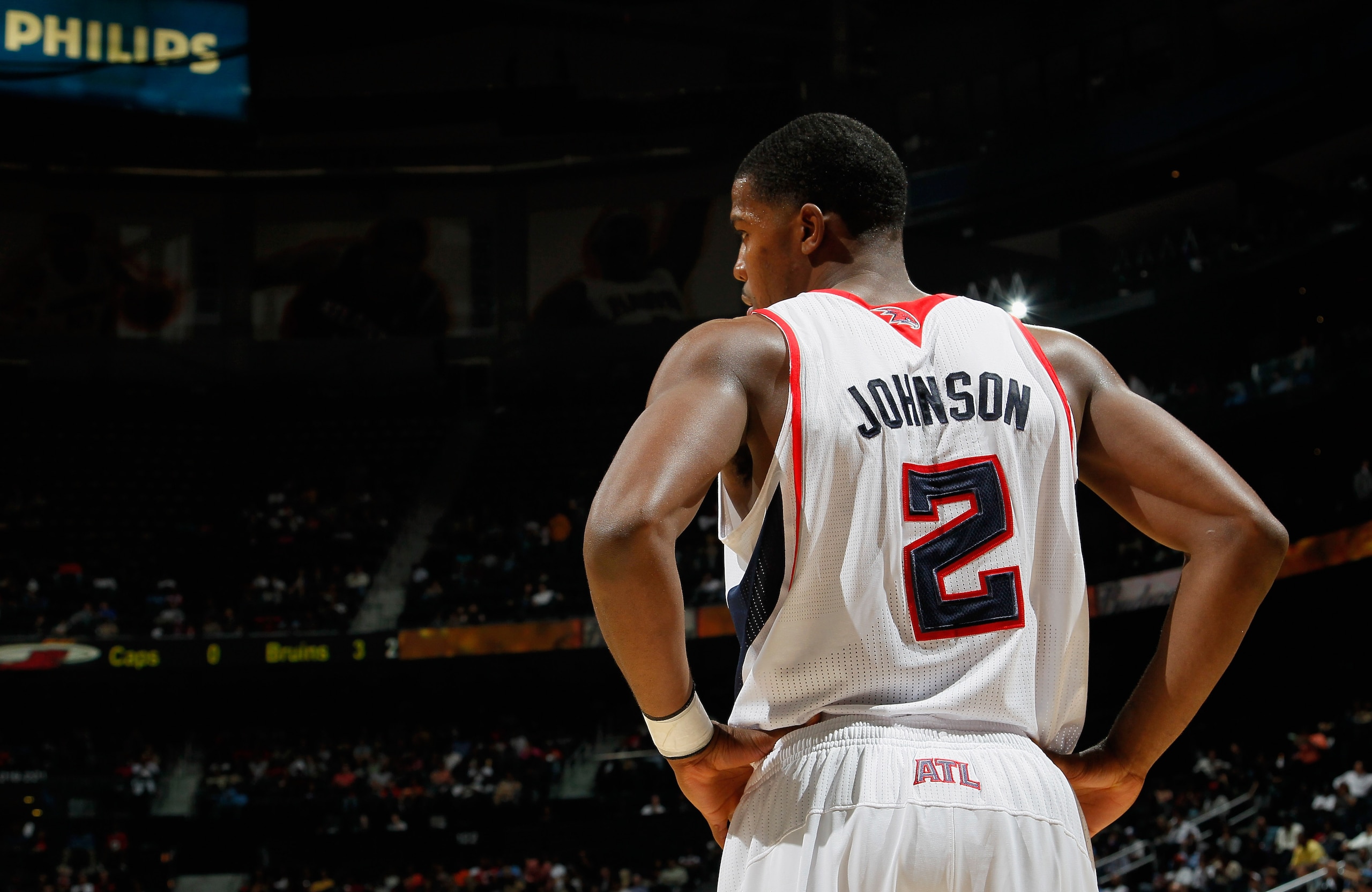
Joe Johnson...enough said. Next slide.
3. Amar'e Stoudemire (New York)
3 of 5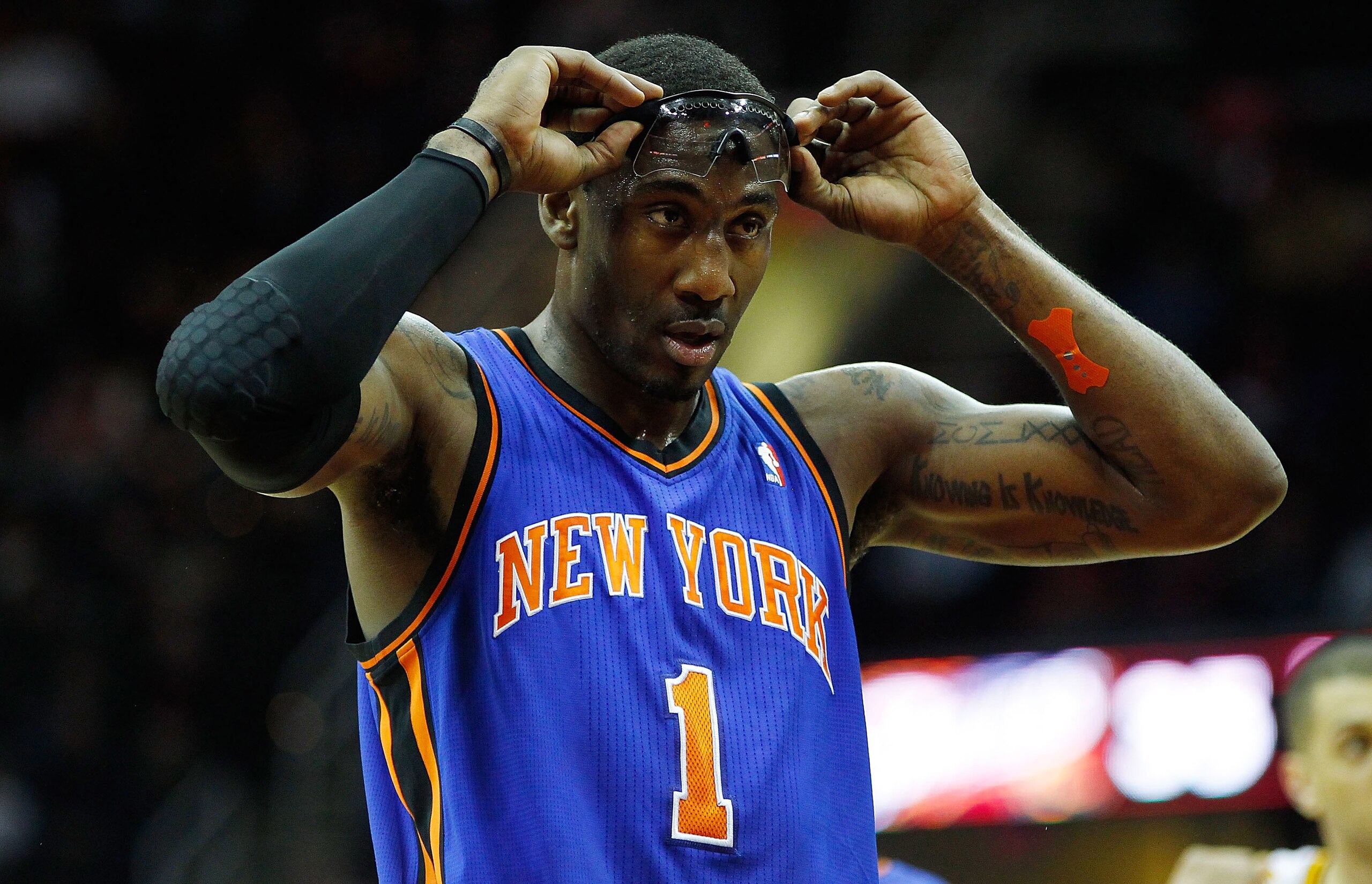
Season Averages (2010-2011)
PPG: 25.5 RPG: 8.3 APG: 2.5
New York’s Amar’e Stoudemire has been given many nicknames over the course of his lengthening career. For starters, as a fresh-faced 6’10", 240 pound rookie out of high school, Stoudemire was summarily dubbed the “Man Child” by all who had eyes. “The Beast” came next, followed by my personal favorite “Black Jesus,” which somehow failed to stick as time wore on.
The eight-year-veteran came into this season as the savior of New York, an appellation prematurely rendered unto him by optimistic Knicks fans, who, somewhat delusively, believed he would lead the spiraling franchise from the wilderness of longstanding mediocrity to the promised land of championship glory singlehandedly (They’ve wised up since then).
What Stoudemire isn’t called very often is overrated, however. I’m calling him that now. Below is a list of seven reasons why:
--Has shown limited effectiveness both offensively and defensively this season. Like many NBA performers of the modern era, Stoudemire relies too much on his athletic ability, especially when his shot isn’t falling or when his opponent plays him close. This dependency will hurt him in the long run when he can no longer bulldoze his way to the basket. Father Time won’t allow it.
--He simply doesn’t make his teammates better.
--Inadequate ball handler, even for his position.
--He crumbles under pressure
--He suffers from a lack of basketball intelligence; often makes thoughtless mistakes at critical moments of the game.
--He can only thrive in a fast-paced, transition-oriented offense. Appears lost and uncomfortable in the half-court set.
--Thus far, Stoudemire hasn’t lived up to the $100 million (max) contract he signed with New York last summer. It’s crucial to his team’s success that he begins to hold serve with the better competitors in the league on a nightly basis.
.jpg?w=2560 "NBA Gambling Charges")


4. Rajon Rondo (Boston)
4 of 5
Season Averages (2010-2011)
PPG: 10.6 APG: 11.3 RRG: 4.4
Rajon Rondo appears to be African-American, with shoulders wide enough to fit a man twice his size, but he may have Irish blood running through his veins yet. That’s my only explanation for how lucky he’s been since the beginning of his professional career, and until proven otherwise, I’m sticking to it.
Why? For starters, Rondo was drafted to play in Beantown, on the parquet floors of the most storied franchise in the National Basketball Association, and has since been under the collective wing of accomplished teammates Ray Allen, Paul Pierce and Kevin Garnett, the nucleus responsible for one of the 17 NBA championship banners hanging from the rafters of the TD Banknorth Garden.
Over the course of his four-year career, Rondo has passed for 2,878 assists, 735 of which have come this season, and owes roughly 90 percent of this total to the aforementioned “Big Three.” In fact, if not for the varietal scoring capabilities of his elder cohorts, Rondo may not be considered the master distributer he is today.
It’s one thing to behind the wheel of a used Miata; but in Boston, Rondo controls a well-oiled machine, despite its heavy mileage, and thus, his job is made easy.
Would he produce the same numbers as a member of the beleaguered Cavaliers? And for arguments sake, assuming his assist-count wouldn’t be handicapped by an inferior supporting cast, could Rondo also shoulder a substantial part of the scoring load in Cleveland, or with any other sub .500 team, despite his ineffectiveness as a shooter?
Sure, Rondo could drive the lane instead—he’s good for that. But during those possessions when guard penetration is not the best option, and there will be many in the postseason, how might Rondo respond?
If recent history is any indication, then probably not well.
5. LeBron James (Miami)
5 of 5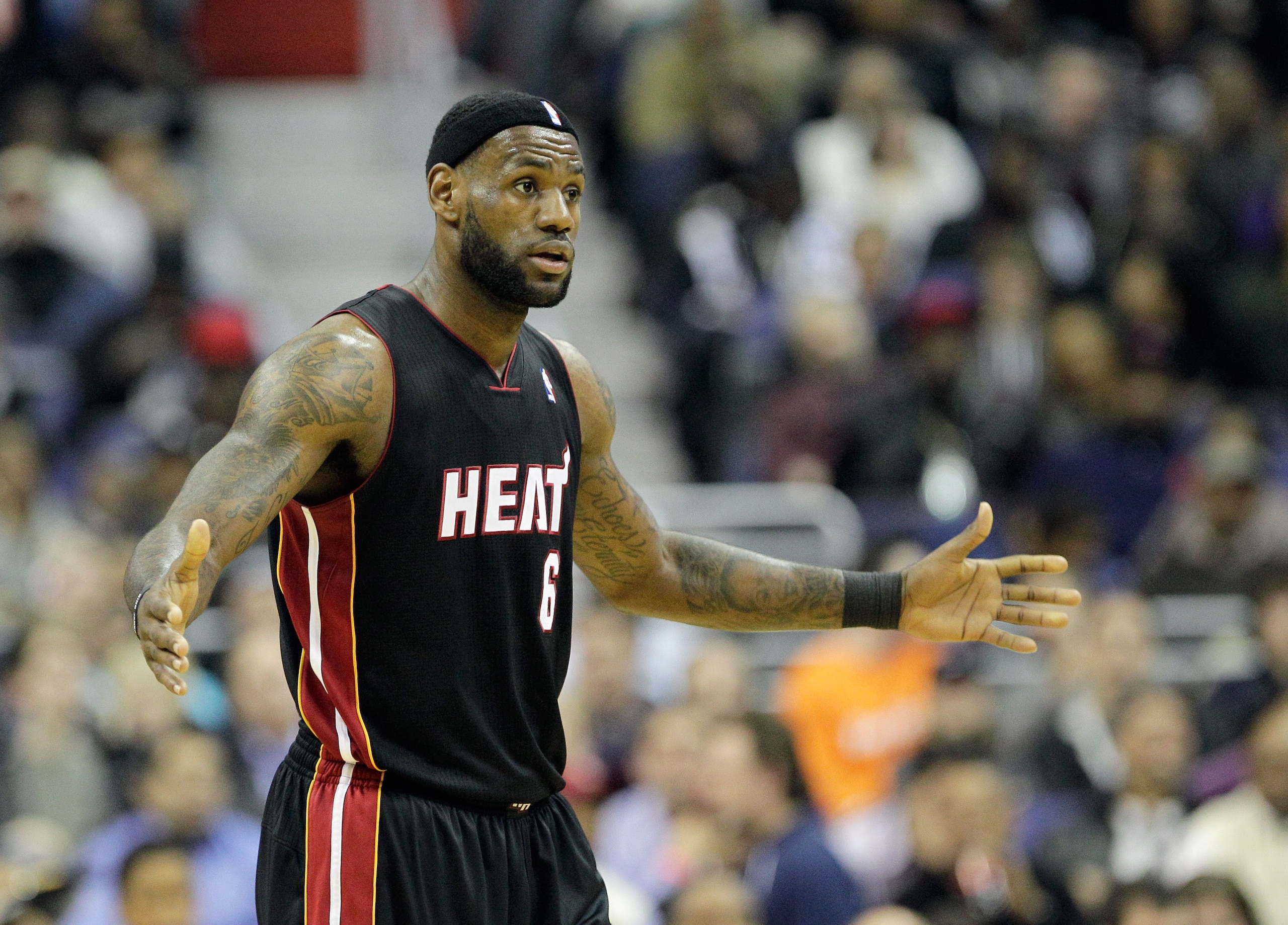
Season Averages (2010-2011)
PPG: 26.6 RPG: 7.5 APG: 7.0
Miami’s LeBron James is arguably the most gifted athlete in NBA history. Standing at a towering 6'8" inches tall, and weighing roughly 250 pounds of rock-solid muscle, James imposes his will on those unable to counter his exceptional strength and quickness, and he simply leaps over those who can (This is most evident when he’s leading the break in transition).
In fact, James’ cat-quick first step has proven to be a most devastating weapon, particularly when he’s isolated on the perimeter. By the same token, however, given the right defender(s), James has a tendency to force the issue, and the result is not always positive.
This is actually when his lack of basketball technique comes into view: Because if he can’t beat his opponents off the dribble or muscle them around with his strength, rather than score from the perimeter or from midrange, which he struggles to do consistently, James often throws in the towel—much like he did against Boston in the semifinal round of the eastern conference playoffs last May.
But his scanty jump shot, substandard career free throw shooting percentage (74 percent) and utter uselessness in pressure situations aren’t my only concerns. James could also stand to develop his ball handling ability, as well as his shoddy man-to-man coverage, which is often exposed by isolation specialists such as Paul Pierce, Kevin Durant and Kobe Bryant, among others.
Last of all, now that he’s Pat Riley’s new show pony in Miami, James should look into a few Salsa lessons: Perhaps they could stir the evolution of his dreadful footwork—a man can’t live on the crab dribble alone, you know?



.png?w=2560 "Week 8 Winners & Losers 📊")
.jpg?w=2560 "Aikman Blasts Cowboys WR 🫣")
.jpg?w=2560 "Jonathan Taylor Landing Spots")