

Oklahoma-Texas: Top 10 Games of the Red River Rivalry
Texas' stunning defeat at home by UCLA last week ruined the chances of a Red River shootout featuring undefeated top-10 teams.
Records, conference standings, and national rankings don't matter, however, when the Oklahoma Sooners and Texas Longhorns face each other in their annual showdown. The two programs usually put on an excellent show, and this Saturday should be no exception.
Here is a look at the 10 greatest matchups in the history of this great rivalry.
No. 10: 2004, Oklahoma 12, Texas 0
1 of 10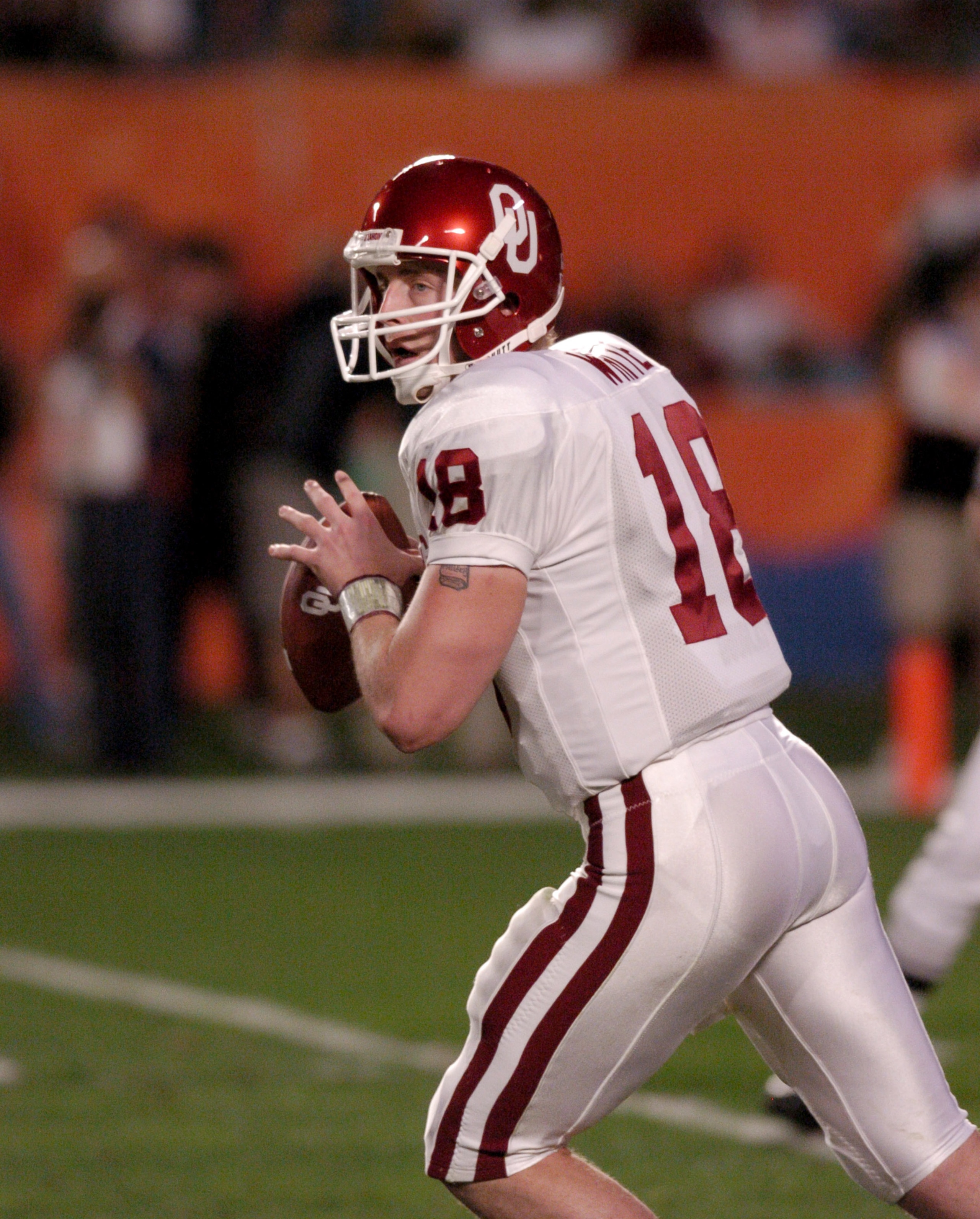
Implications: Just like their 1975 showdown at the Cotton Bowl in Dallas, this installment of the rivalry featured two 4-0 teams, No. 2 Oklahoma and No. 5 Texas. Once again, the winner of this one would be the front-runner for not only the Big XII South and the Big XII Championship, but a spot in the BCS National Championship.
Who Delivered: This figured to be the year that the Longhorns finally outdid the Sooners and snapped their four-game losing streak: they had the quarterback, junior Vince Young, and the running back, senior Cedric Benson.
But it was the Longhorn defense, led by future first-round picks linebacker Derrick Johnson and safety Michael Huff—both of whom nabbed interceptions—that kept the game close. The reigning Heisman Trophy winner, Jason White, couldn’t get much done for the Sooners, but their freshman running back could.
Adrian Peterson carried the ball 32 times for 225 yards. In the end, one offensive touchdown was enough for Bob Stoops' team, as the Oklahoma defense shut out Texas in an unexpected defensive melee.
Afterward: Texas did not lose another game the rest of the season, and despite not playing in the Big XII Championship Game, earned a BCS at-large bid.
They faced Michigan in Pasadena, and on New Years Day played one of the greatest Rose Bowls of all time. Vince Young’s four rushing touchdowns gave the Longhorns a 38-37 win over Chad Henne, Braylon Edwards, and a fine Wolverines club.
The Sooners also didn’t lose another game for the remainder of the 2004 regular season, crushing Colorado in the Big XII Championship to earn a spot in the Orange Bowl to play for the BCS Championship. But in the first-ever bowl game showdown of Heisman Trophy-winning quarterbacks, USC’s Matt Leinart completely outplayed Jason White, and the Sooners were embarrassed, 55-19.
No. 9: 1951, Texas 9, Oklahoma 6
2 of 10
Implications: The No. 6 Longhorns came into Dallas looking to knock off the Sooners for the first time in four years. Oklahoma, the defending National Champion, must have been looking ahead to the Red River shootout, because they were stunned by Texas A&M the week before, losing 14-7. Still, the Sooners were ranked 11th.
Who Delivered: Texas posted a quick safety to go up 2-0, then an Oklahoma fumble led to a short touchdown run by Carl Mayes, an emergency sub for the Longhorns' star back Gib Dawson, whose father died that morning.
Longhorns quarterback T. Jones ran and passed for several key first downs to keep the ball away from Oklahoma. The Sooners and quarterback Eddie Crowder didn’t gain even one yard of offense in the first quarter, but a touchdown run by Crowder narrowed the score to 9-7.
In typical 1950s southwest football, the defenses dominated in the second half and neither team scored.
Afterward: The victory didn’t spur Texas on to a great finish of the 1951 season. A week later they lost to Arkansas and would finish up with two more losses on the way to a 7-3 season for Edwin Price. Still, for the Longhorns, the victory did have one major historical mark.
During Oklahoma's unbelievable run under head coach Bud Wilkinson from 1947 to 1959—the Sooners were No. 1 in the conference each year, with only 12 losses that entire stretch—the only time Texas defeated Oklahoma was that 1951 matchup.
Wilkinson’s Sooners didn’t lose again after falling to Texas in October 1951, but it was not enough for a fourth straight appearance in the Sugar Bowl, or any other bowl for that matter.
No. 8: 2000, Oklahoma 63, Texas 14
3 of 10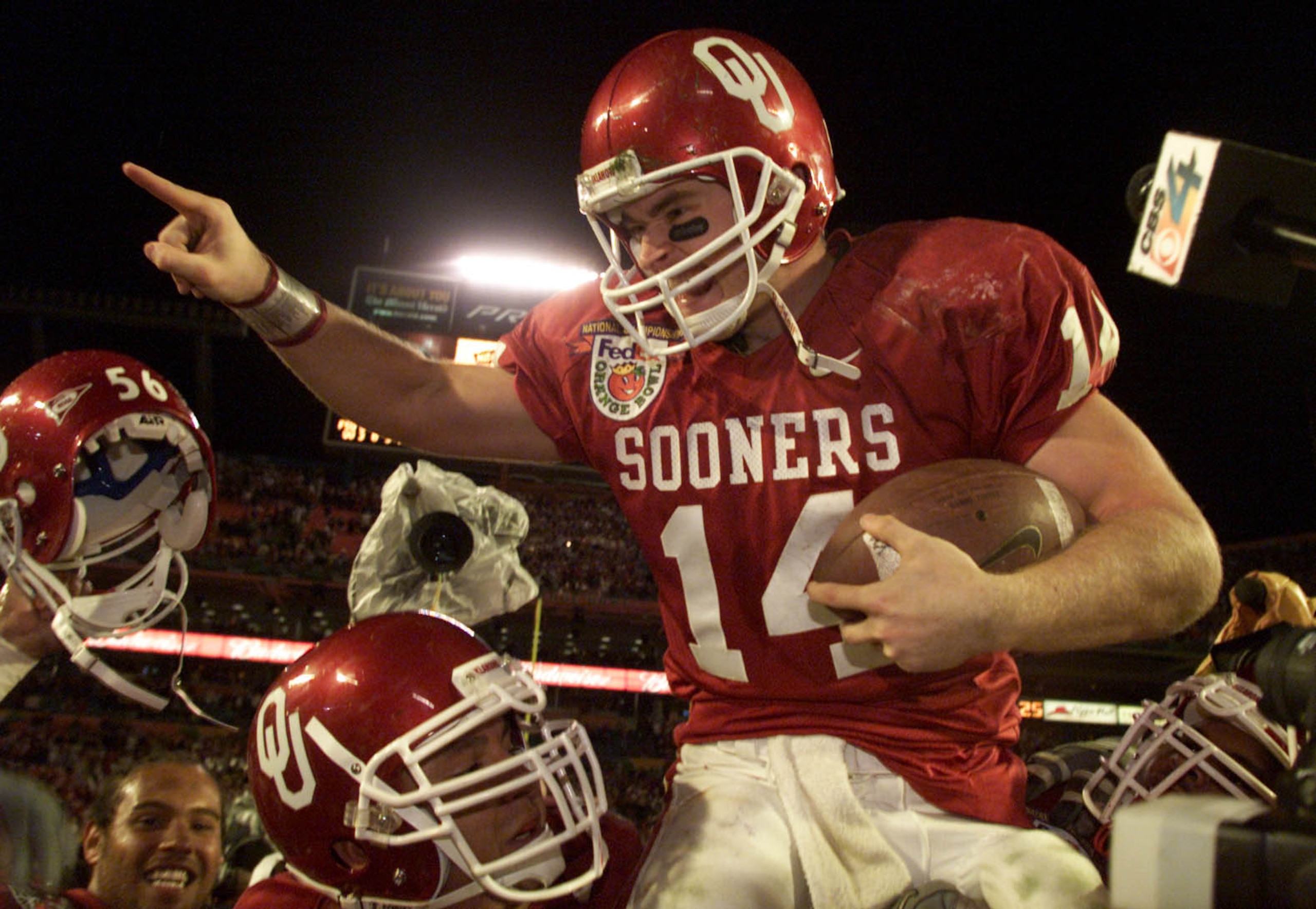
Implications: As usual, both teams came into the Red River classic ranked: the only blemish to either squad's record was a narrow loss by Texas at Stanford in Week 2.
Who Delivered: Quarterback Josh Heupel drove the Sooners to touchdowns on their first five possessions, while his running back Quentin Griffin established a new school record with six rushing touchdowns as the Sooners annihilated the Longhorns.
On the other side of the ball, the Bob Stoops defense, led by Roy Williams and Rocky Calmus, completely shut down Major Applewhite and the Texas offense.
Afterward: Texas and head coach Mack Brown didn’t pack it in after suffering the most lopsided loss in the century-old rivalry. The Longhorns won out and earned a berth in the Holiday Bowl.
Oklahoma also won out, and by defeating Kansas State in the Big XII Title Game, it earned a spot in the National Championship. In the Orange Bowl, the Sooners defense took center stage, shutting out Heisman Trophy winner Chris Weinke and the Florida State offense as the Sooners won 13-2.


No. 7: 1990, Texas 14, Oklahoma 13
4 of 10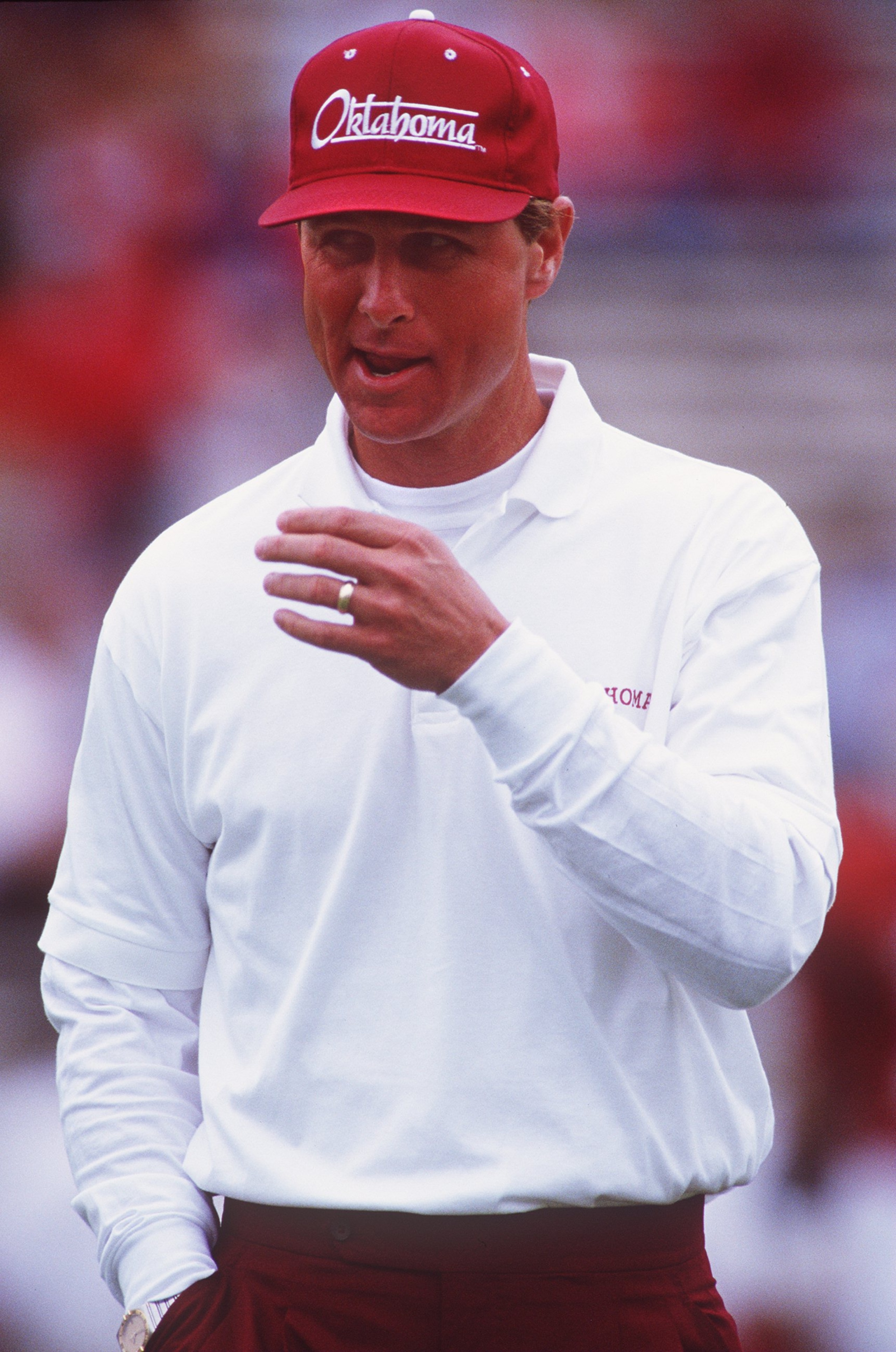
Implications: Neither Texas nor Oklahoma was at their typical elite status in the late '80s and early '90s, but a great rivalry doesn’t always depend on national ranking. And when the unranked Longhorns took on the 5-0 Sooners in 1990, it produced the closest game in this decades-old rivalry.
Who Delivered: Twin brothers Kerry and Keith Cash each caught touchdown passes from Peter Gardere for Texas and the defense limited Oklahoma’s offense to just one touchdown.
Still, in the final seconds the Sooners had a chance to give head coach Gary Gibbs his first win in the Red River Shootout, but kicker R.D. Lashar’s 47-yard game-winning attempt sailed wide.
Afterwards: The surprising Longhorns didn’t lose another game, earning a trip to the Cotton Bowl. The loss sent Oklahoma reeling, for they were beaten in the next two weeks by Iowa State and Colorado. Only a late-season crushing of Nebraska salvaged their season because they did not appear in a bowl game.
No. 6: 1994: Texas 17, Oklahoma 10
5 of 10
Implications: For the first time since 1985, both teams headed into the rivalry ranked: Oklahoma, 13th, and Texas, 15th.
Who Delivered: The underdog Longhorns had to face Oklahoma with a redshirt at quarterback. And in his first start, James Brown completed 17 of 22 passes for 148 yards and accounted for both Longhorn TDs. But Oklahoma, trailing 17-10 in the final minutes, marched deep into Texas territory thanks to a 41-yard completion from Garrick McGee to P.J. Mills. The Sooners neared the goal line, but in the final seconds, Texas nose tackle Stonie Clark stuffed Oklahoma’s James Allen to preserve the win.
Afterwards: The Sooners stayed stuck in neutral the remainder of the season, losing three of their next six before BYU crushed them in the Copper Bowl. Texas suffered a similar post-Red River hangover, losing three of their next four, but still earned a spot in the Sun Bowl, where they edged out UNC, 35-31.
No. 5: 2008, Texas 45, Oklahoma 35
6 of 10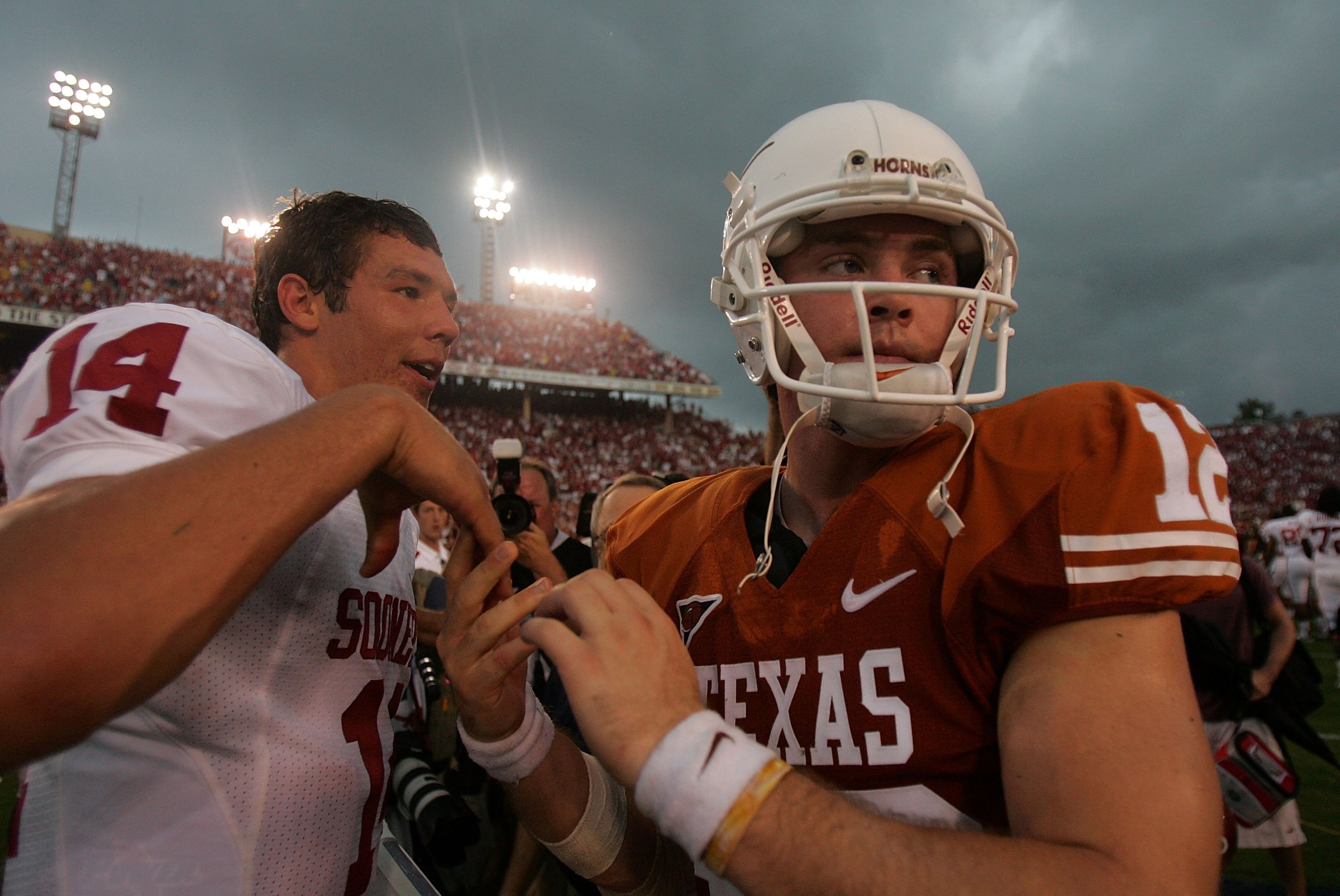
Implications: Since neither team had yet been held under 35 points that season, the matchup of No. 1 Oklahoma and No. 5 Texas was expected to be a major display of offensive superiority. And neither team disappointed.
Who Delivered: Quarterback Sam Bradford tossed three first-half touchdown passes to give the Sooners a 21-10 lead early in the second quarter. But Colt McCoy refused to let the Longhorns lose to Oklahoma for a second straight season. After producing 10 quick points before halftime, McCoy led the Longhorns to three more touchdowns in the second half, including two in the final eight minutes, to overcome a 35-30 deficit.
Afterward: Both Bradford and McCoy would be in New York City that December as Heisman Trophy finalists: the award went to Bradford. But in the National Championship Game, Bradford’s Sooners were edged out by another Heisman winner, Tim Tebow, as the Gators won their second National Championship in three years. McCoy’s Longhorns fared better in their postseason bid, defeating Ohio State 24-21 in the Fiesta Bowl.
No. 4: 1996: Oklahoma 30, Texas 27 (OT)
7 of 10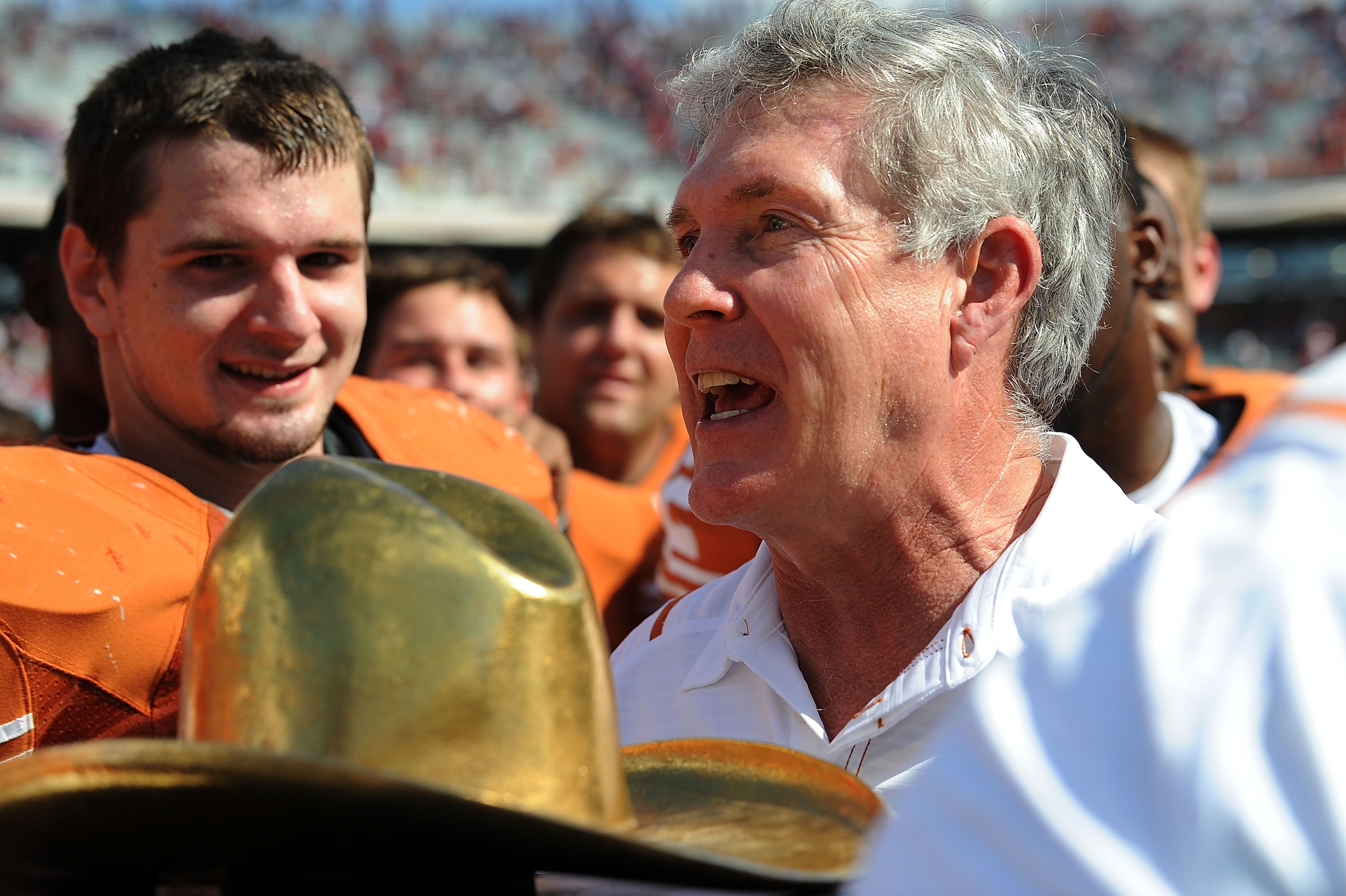
Implications: Not so long before the titanic matchup of coaching legends Bob Stoops and Mack Brown, the Red River rivalry featured the less-than-stellar showdown of Oklahoma’s John Blake and Texas’ John Mackovic. Neverthless, those two led two very bad teams (at least by historical standards) to a great matchup in 1996.
Who Delivered: Fittingly, the first ever intra-conference matchup between the two schools (now each members of the Big XII South) was tied after 60 minutes. But rather than settle for another tie in the Red River series, the two teams played overtime (the rule having been adopted by the NCAA that year).
In overtime, Oklahoma’s backup running back James Allen scored from two yards out to cap the winless Sooners' 11-point comeback win over Texas and their sophomore standout running back, Ricky Williams.
Afterward: Texas lost the following week at Colorado, then rebounded to win the first-ever Big XII title game over Nebraska, but lost to Penn State in that season’s Fiesta Bowl. The Sooners' win was one of the few bright spots during that time, and in 1999, Bob Stoops arrived to resurrect the program.
No. 3: 1985, Oklahoma 14, Texas 7
8 of 10
Implications: Once again, both teams were undefeated entering their mid-October matchup: the 3-0 Longhorns and the 2-0 Sooners. But with Oklahoma ranked second in the nation, a Texas win could boost the Longhorns into the top 10.
Who Delivered: Playing most of the game without their All-American nose tackle, Tony Casillas, the Oklahoma defense suffocated Texas. Longhorns quarterback Todd Dodge was sacked six times by a Sooner defense anchored by Brian Bosworth that completely shut out the Texas offense.
But a seven-yard fumble return by Longhorns senior defensive end Kip Cooper gave Texas an early 7-0 lead. A 43-yard pass from a freshman quarterback named Troy Aikman (who threw just nine passes all day) set up a Sooner touchdown run by Lydell Carr that evened the score. And in the third quarter, the Sooners surged ahead thanks to a 45-yard touchdown run from Patrick Collins.
Afterwards: The Longhorns were incredibly up-and-down the remainder of the season. They defeated fourth-ranked Arkansas on the road a week later, but followed with a loss to SMU. A brutal loss to Texas A&M late in the season limited them to only a Bluebonnet Bowl appearance, where they were defeated by Air Force.
Oklahoma ran into Jimmy Johnson’s fantastic Miami Hurricanes a week after defeating Texas and lost, 27-14. But by cruising through the remainder of the Big 8, the Sooners earned an appearance in the Orange Bowl. There, Oklahoma stunned Joe Paterno and No. 1 Penn State, 25-10, to give Barry Switzer his third and final National Championship.
Still, Troy Aikman—who suffered an injury against Miami and lost his starting job—bolted for UCLA the next year.
No. 2: 1975, Oklahoma 24, Texas 17
9 of 10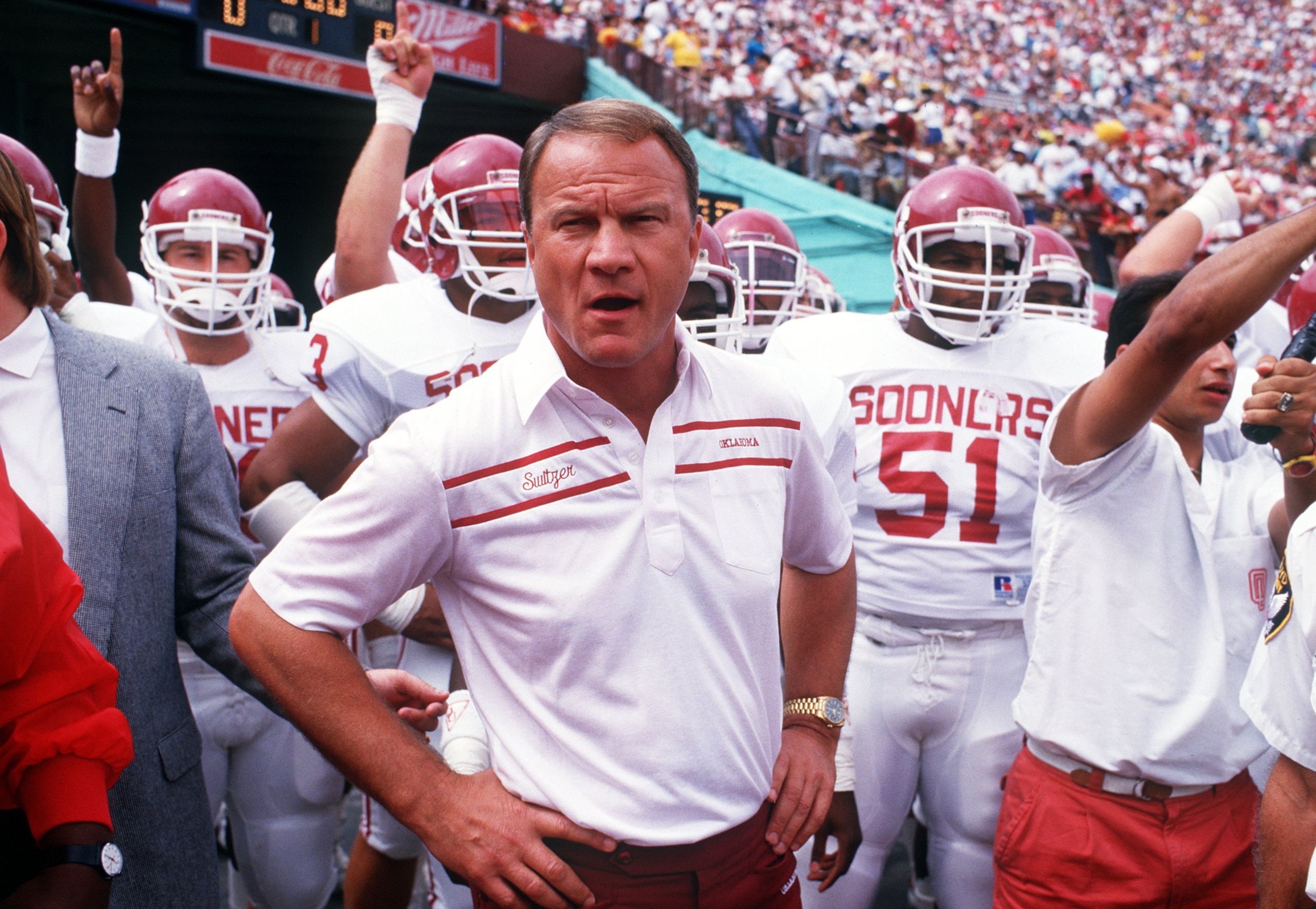
Implications: This was one of those rare cases when an annual rivalry had a major impact on the national championship chase. Each team sported a 4-0 record: the Sooners were defending national champions and ranked No. 2, the Longhorns No. 5.
Who Delivered: Sophomore running back and future Heisman Trophy winner Earl Campbell gained 66 yards in the first half, but the 100-degree heat sent him to the bench for a while, and he was in and out of the lineup in the second half. Still, the Longhorns hung in the ball game and tied the score at 17 midway through the fourth quarter. Then senior quarterback Steve Davis marched the Sooners 79 yards in just seven plays, the crushing blow coming courtesy of Oklahoma fullback Horace Ivory, who raced 33 yards untouched for the go-ahead touchdown.
Afterward: The win gave Barry Switzer his 25th in 26 games at Norman. The Sooners would lose to Kansas four weeks later, but a win over No. 2 Nebraska and an Orange Bowl victory over Michigan allowed Oklahoma to repeat as National Champions. Although they lost this installment of the Red River rivalry, Darrell Royal’s Longhorns cruised through the rest of the regular season, winning their next five before a loss to Texas A&M prevented Texas from making a bowl appearance.
No. 1: 1984, Texas 15, Oklahoma 15
10 of 10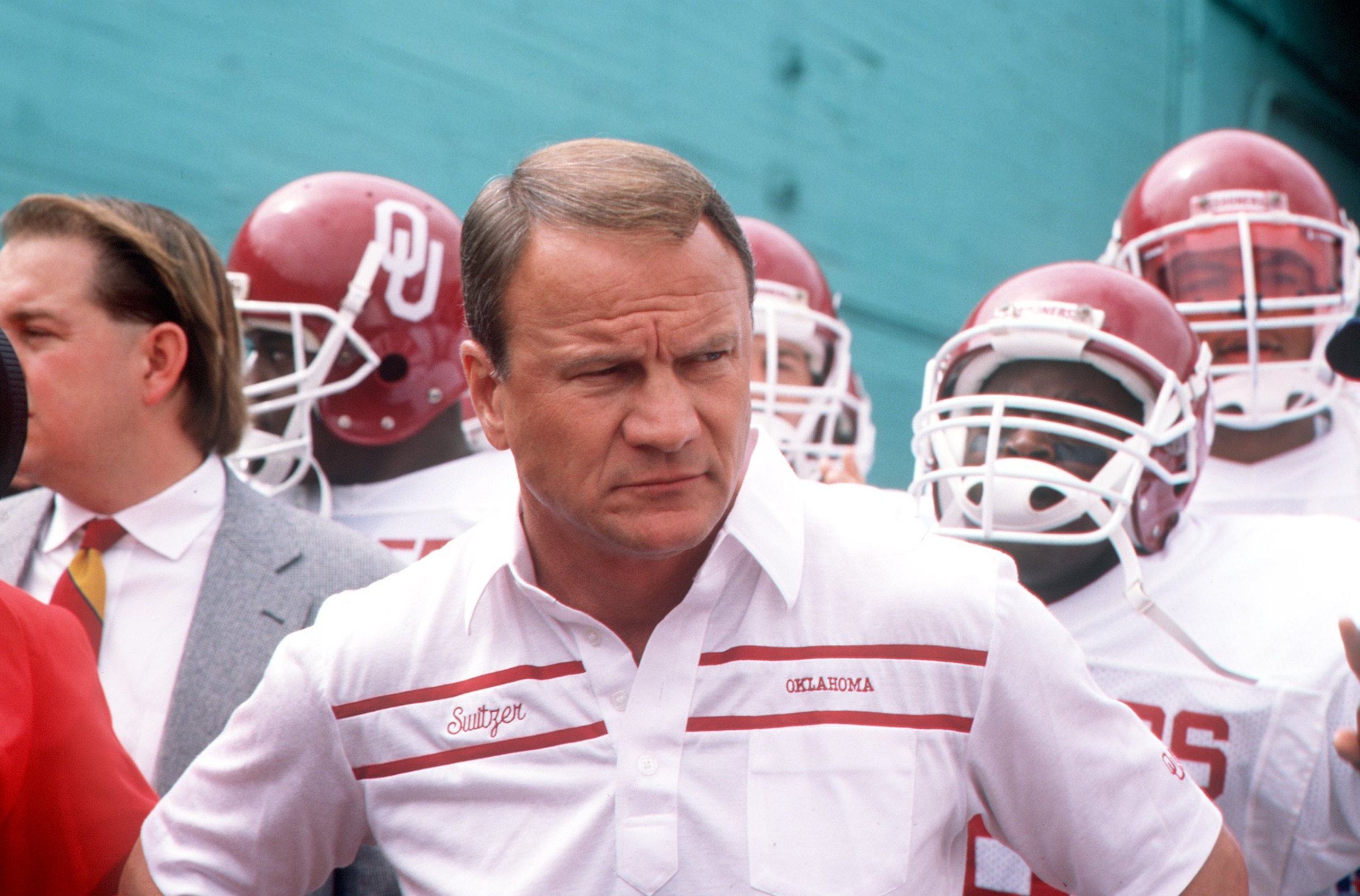
Implications: This was the only time that the Red River Shootout featured the nation’s No. 1 and No. 2 teams. Need we say anything else?
Who Delivered: According to Sooners head coach Barry Switzer, the officials certainly didn’t deliver. His running back Steve Sewell did, however, scoring a pair of second half touchdowns to help Oklahoma come back from a 10-point deficit at the half.
Ahead 15-10 with two minutes to play, the Sooners rebuked Texas at the goal line on fourth-and-one. Oklahoma took over on downs, but rather than risk a turnover, Switzer elected to take a safety and give the ball back to Texas. On the ensuing drive, a pass interference call and an offsides against Oklahoma infuriated Switzer.
But not as much as an apparent interception by Sooner safety Keith Strawberry, whom the officials ruled out-of-bounds. On the next play, with five seconds remaining, Texas kicker Jeff Ward nailed a 32-yarder in pouring rain at the Cotton Bowl, leading to the fourth tie in the rivalry’s history.
Afterward: The Sooners lost to Kansas two weeks after the disappointing tie but still earned a berth in the Orange Bowl. There they were beaten handily, 28-17, by Washington. At first, the upset tie seemed to do wonders for Texas, who went on to win their next three games. But losing three of their next four dropped the Longhorns in the rankings, and they were clobbered by Iowa in the Freedom Bowl, 55-17.
_0.png?w=2560)


.jpg?w=2560 "NFL investigating 2 referees for separate viral exchanges")
.jpg?w=2560 "OBJ Calls Out Giants 😳")


.jpg?w=2560 "Ward Nearly Walks Out of Presser 😳")
.jpg?w=2560 "Tyreek makes another cryptic post amid Chiefs rumors")