

College Football: Power Ranking The AP Top 25 Defenses Going Into Week 3
What does every national champion going back to 1999 have in common?
I'll save you the suspense, and say that every single national champion dating back to the 1999 Florida State Seminoles had a scoring defense ranked in the top 20.
In fact, every single one of those teams had a scoring defense ranked in the national top 10, short of LSU in 2007. In that year, the Tigers were No. 17.
At this point, you might argue that those teams also probably all had top 20 scoring offenses. However, in that assumption you'd be wrong.
Going back to 1999, three national champions did not have top 20 scoring offenses: 2009 Alabama was No. 22, 2006 Florida was No. 23, and 2002 Ohio State was No. 41. Furthermore, 2003 LSU was barely in the top 20, as they were No. 19.
In the end, it goes back to the old saying: Offense sells tickets, but defense wins championships.
In the following slideshow, I attempted to rank the defenses of the AP Top 25 teams after two weeks of play. I did so while considering both the final results of the teams in question, as well as their opponents.
Needless to say, I haven't watched all of these teams play. In effect, a large portion of my opinions are based on statistics, and what I've read in a number of fairly reputable blogs.
Still, I attempted to compile the order of the defenses without consideration for the teams' hype, and with as little personal bias as possible.
It is true that there is still a lot of football to be played. Nonetheless, the dynamics, talents, and limitations of various teams have begun to take shape.
Moreover, I think it goes without saying that any team that hopes to compete on the highest level will be a team that remains high on this list as the season goes on.
25. Houston Cougars
1 of 25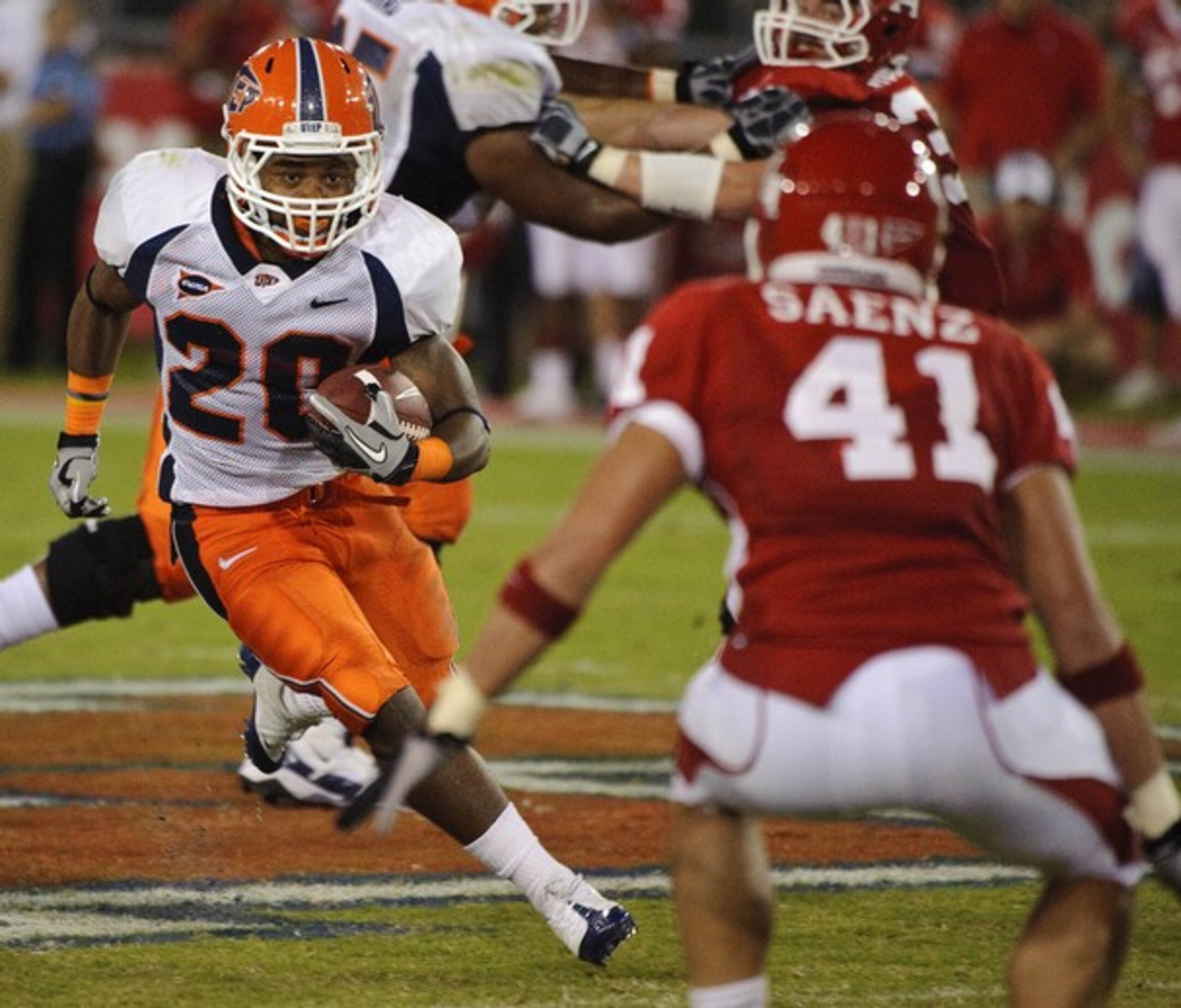
Three Biggest Impact Players: LB Marcus McGraw, LB Phillip Steward, CB Jamal Robinson,
Potential Weaknesses: Last year, Houston's defense was 111th in the nation. In other words, they've got work to do this season.
Former Dallas Cowboys' defensive coordinator Brian Stewart is the new defensive coordinator, and he will attempt to install a 3-4 defense.
As for specific holes, when the team is 111th in the nation, it is less a matter of holes, and more a matter of what do you have to build on?
Statistics After Two Games: 2-0. 26 points per game allowed. 392.5 yards per game: 252.5 passing, 140 rushing. Two sacks, three interceptions, five forced fumbles, two recovered fumbles. Average number of first downs allowed: 24. Opponents' third down conversion rate: 20-36. Opponents' fourth down conversion rate: 2-5. Red zone defense: 8-9.
Opponents So Far: Texas State (FCS), and UTEP
Thoughts: Houston barely held UTEP to less points than did FCS Arkansas-Pine Bluff. Moreover, they let up 28 to FCS Texas State.
In short, this defense still isn't good. They are currently the 75th ranked scoring defense in FBS. I guess that's an improvement from 111.
Fortunately—or unfortunately—Houston doesn't really play anybody of note this year. On the other hand, one can hardly blame the Cougars for that. They have UCLA, Mississippi State, and Texas Tech on their schedule.
When they signed up for those games, the teams in question had a reasonable chance of being good.
Regardless, no matter what the Cougars' final record, there probably isn't a team on their schedule that will give the nation a true measure of how good they are or aren't. On either side of the ball.
24. Southern California Trojans
2 of 25
Three Biggest Impact Players: DT Jurrell Casey, LB Michael Morgan, LB Chris Galippo
Potential Weaknesses: The 2009 Trojans had their worst defensive showing since 2005. Of course, that 2005 team competed for the national championship on the back of a strong offense. Last year's defense didn't have that luxury.
This season, their biggest issue—besides the NCAA sanctions and their coaching woes—is having to replace their entire secondary.
Statistics After Two Games: 2-0. 25 points allowed per game. 464 yards allowed per game: 139.5 rushing, and 324.5 passing. Five sacks, one interception, two forced fumbles, and zero fumble recoveries. 26.5 first downs allowed per game. Opponents' third down conversions: 12-30. Opponents' fourth down conversions: 2-4. Red zone defense: 5-7.
Opponents So Far: At Hawaii, and Virginia
Thoughts: Well, they've got two wins. One of their wins was over a team that will probably make a bowl.
Needless to say, Hawaii is going to get their passing yards on anybody. However, the Warriors not only put up over 400 yards through the air against the Trojans, but also managed over 100 yards on the ground.
The Trojans seemed to fare slightly better against the Cavaliers, but the Cavaliers probably aren't as good as the Warriors. Besides, it was at the Colosseum.
Nevertheless, the fact remains that the USC defense has let up almost 70 yards more than the offense has gained. They have also gotten out-first downed. In that, they are alone amongst all top 25 teams. That is disturbing, especially when one considers that while both of their opponents were respectable, neither was elite.
The next two games—at Minnesota and at Washington State—should be easy wins for USC. After that, the schedule toughens up considerably.
The Trojans defense will be depended upon to take some sizable steps forward over the next two weeks.
23. Oregon State Beavers
3 of 25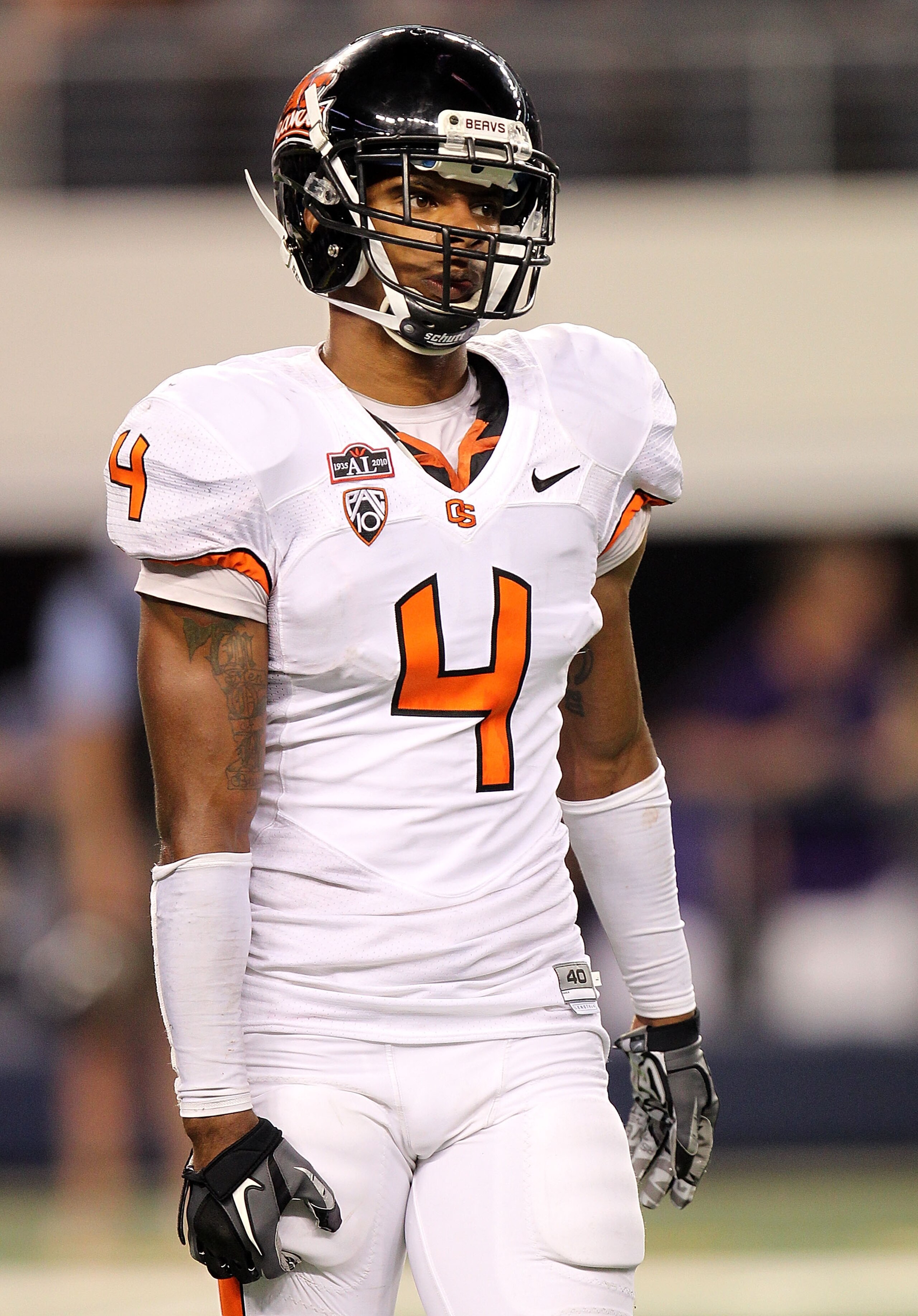
Three Biggest Impact Players: DT Steven Paea, S Lance Mitchell, CB James Dockery
Potential Weaknesses: Pass rush and overall pass defense. Last season, OSU ranked 105th nationally in terms of sacks. They also ranked 84th nationally in pass defense. It is probably safe to say that the first issue led to the second.
This year, they return most of their notable defensive linemen, as well as three players in their secondary. All of those players will need to step up their game.
Statistics After One Game: 0-1. 30 points allowed: 278 yards on the ground, and 175 through the air. One sack, two picks, zero forced fumbles. 28 first downs allowed. Opponent's third down conversions: 11-17. Opponent's fourth down conversions: 0-0. Red zone defense: 4-6.
Opponents So Far: TCU (at Cowboy Stadium in Arlington, TX.)
Thoughts: The Beavers are the only team in the top 25 that has yet to register a win. Of course, their one loss was to a very good, fourth-ranked TCU team.
Nevertheless, it is hard to fairly judge the Beavers. In their game against the Horned Frogs, they made some big plays in the red zone, but that was after they allowed TCU to mount some long drives.
At times, the Frogs looked unstoppable, but did that have as much to do with OSU's defense as TCU's offense?
Either way, the following two things are true: Oregon State plays a murderous schedule against some of the best offenses in the country. In two weeks, they will be going against Boise State. They also have Arizona, Southern Cal, Stanford, and Oregon later in the year.
Also, Oregon runs an offense very similar to TCU. If OSU is going to win the Civil War for the first time since 2007, they will have to figure out a way to stop the zone read.



22. Penn State Nittany Lions
4 of 25
Three Biggest Impact Players: DT Ollie Ogbu, DE Jack Crawford, LB Chris Colasanti
Potential Weaknesses: Penn State didn't graduate that much in terms of quantity, but in terms of quality, they lost a lot. Specifically, all of their linebackers, one cornerback, and their All-Big Ten Defensive Player of the Year defensive tackle have left.
It is PSU, so they can fairly be expected to reload on defense. Nevertheless, can they reload to the point that they will match last year's ninth-best scoring defense in the country?
As their offense is starting a true freshman at quarterback, they will have to in order to match last year's success.
Statistics After Two Games: 1-1. 19 points per game allowed. 336.5 yards allowed per game: 127.5 on the ground, and 209 through the air. Three sacks, zero interceptions, two forced fumbles, and one fumble recovery. 16.5 first downs allowed per game. Opponents' third down conversions: 5-25. Opponents' fourth down conversions: 3-5. Red zone defense: 4-4.
Opponents So Far: Youngstown State (FCS), and Alabama
Thoughts: After an iffy beginning to their game against YSU, the Penn State defense settled down and played their typically stingy game.
However, they didn't look great against Alabama.
Certainly, not many people gave them a chance against the Tide, and given the 24-3 score, obviously it was the offense that really fell flat.
Nevertheless, there was some uncharacteristic play by the PSU defense. Specifically, missed tackles, sloppiness, and overall, surprisingly passive play.
It remains to be seen just how good this defense is, and it is unlikely we will find out before October, at which time the Lions open the Big Ten season at Iowa.
21. Michigan Wolverines
5 of 25
Three Biggest Impact Players: DT Ryan Van Bergen, LB Obi Ezeh, LB Jonas Mouton
Last season's worst in-conference scoring defense went into this season with a seriously shorthanded secondary.
One of their safeties and one of their cornerbacks are both recently converted wide receivers. All of the starters in the secondary are backed up by true freshmen.
Statistics After Two Games: 2-0. 17 points allowed per game. 439 yards allowed per game: 146 on the ground, 293 through the air. One sack, three interceptions, one forced fumble, and one fumble recovery. 19.5 first downs allowed per game. Opponents' third down conversion: 8-29. Opponents' fourth down conversion: 3-6. Red zone defense: 4-6.
Opponents So Far: University of Connecticut, and Notre Dame
Thoughts: It doesn't surprise me that Michigan has found some wins. It doesn't surprise me that Michigan has seen a bit of luck go their way. It does surprise me that their defense has surrendered an average of 17 points a game to two at least respectable offenses.
Certainly, that requires a bit of an explanation. First of all, as a power rushing team, UConn was not ideally suited to take advantage of Michigan's primary weakness. Secondly, Notre Dame lost its quarterback early in the game.
Thirdly, Michigan's defense let up over 500 yards of offense and showed some major holes against a Notre Dame offense that was without their quarterback, and is in the midst of a coaching transition.
Still, wins are wins, and the fact of the matter is Michigan has played one of the more competitive first two weeks in college football.
I do think that sooner or later, that secondary is going to get exposed, and when they do, it won't be pretty. Maybe against a very good Indiana passing game. Maybe against Michigan State. Maybe against Iowa.
However, it's not going to happen over the next two weeks, as the Michigan schedule settles down in games against Massachusetts (FCS) and Bowling Green.
20. Wisconsin Badgers
6 of 25
Three Biggest Impact Players: LB Chris Borland, DE J.J. Watt, SS Jay Valai
Potential Weaknesses: Wisconsin had to replace three members of a very good defensive line, as well as one safety. In effect, this defense definitely had questions heading into this season.
Most notable is the pass defense. Wisconsin ranked sixth in the Big Ten last year in passing defense, despite having a very strong pass rush.
With much of that pass rush gone, it remains to be seen if the Badgers can not only maintain their pass defense of last year, but also improve. Needless to say, they will have to improve if they are to knock off conference foes, Iowa and Ohio State.
Statistics After Two Games: 2-0. 17.5 points per game. 262 yards allowed per game: 83.5 rushing and 183.5 through the air. Four sacks, three interceptions, three forced fumbles, and one fumble recovery. Average first downs allowed: 11.5. Opponents' third down conversion: 7-26. Opponents' fourth down conversion: 1-1. Red zone defense: 3-3.
Opponents So Far: At UNLV and San Jose State
Thoughts: The Badgers have the misfortune of being one of two teams of who I've seen both of their games in their entirety (the other being Iowa).
In effect, while their statistics aren't too bad, I didn't think their defense looked terribly impressive. This was especially true against San Jose State.
As was the case when UNLV played UW, the Spartans' offense at times looked lost, which helped the Wisconsin defense to possibly look better than it was. Perhaps this was the result of both teams having new head coaches, and thus, new offensive systems.
Moreover, the UW defense didn't register one sack against San Jose State.
On the Spartans' first points of the game, 165 pound wide receiver Chandler Jones literally ran through four poorly executed tackles to reach the end zone.
On the bright side, their rush defense has been fairly solid, and both defensive end J.J. Watt and linebacker Chris Borland—who missed the SJST game with a shoulder injury—are easily All-Big Ten caliber players. However, they're going to need a lot more help from the other nine members of this squad.
19. Auburn Tigers
7 of 25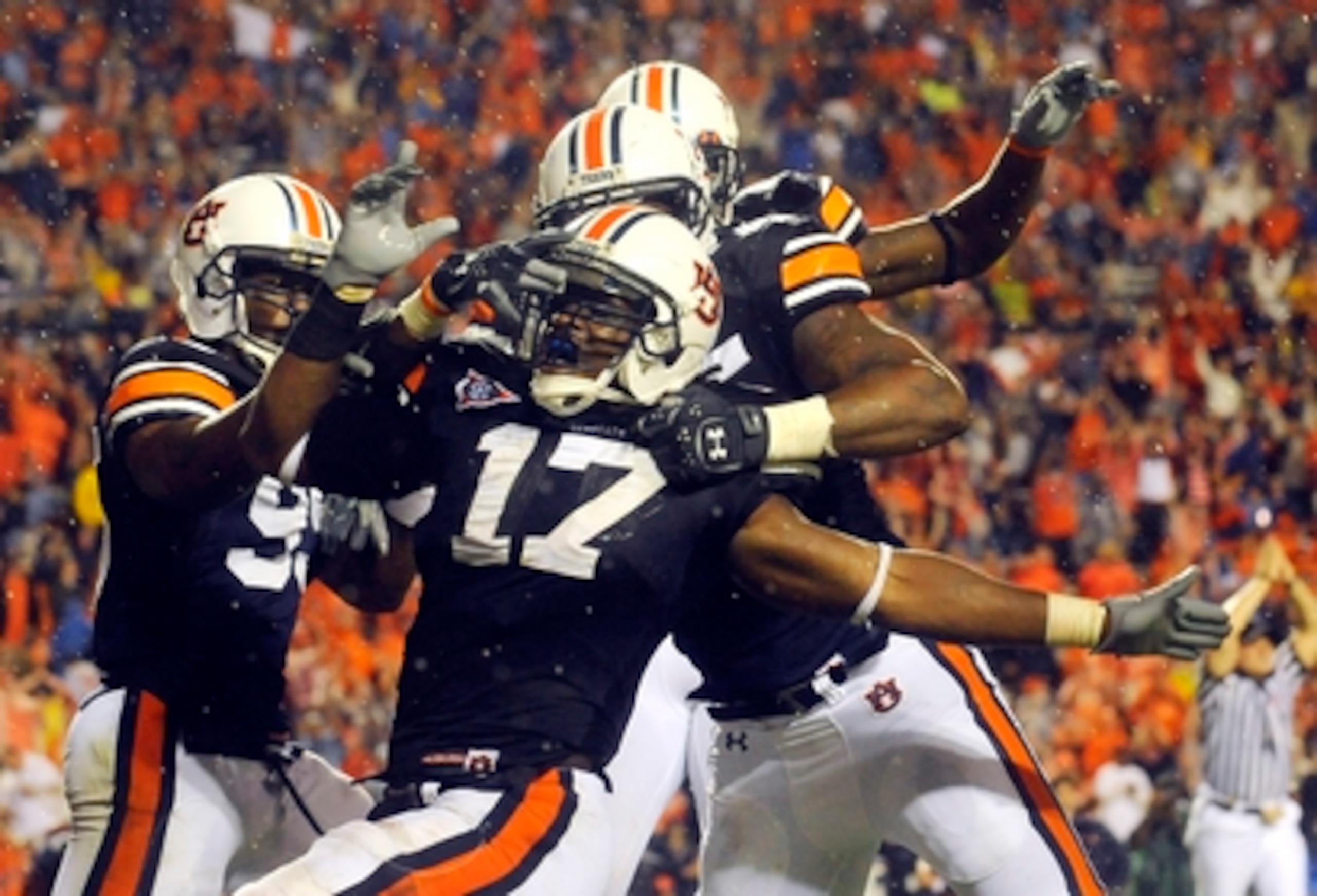
Three Biggest Impact Players: LB Craig Stevens, LB Josh Bynes, CB Neiko Thorpe
Potential Weaknesses: Pass defense and the secondary.
Coming into this season, this was an issue, as Auburn had to replace two starters, including second team-All SEC cornerback Walt McFadden.
Statistics After Two Games: 2-0. 20 points per game allowed. 306 yards per game: 226 passing, 160 rushing. Seven total sacks, one interception, three forced fumbles, one fumble recovery. Average first downs allowed: 19. Opponents' third down conversion: 10-33. Opponents' fourth down conversion: 2-5. Red zone defense: 6-6.
Opponents So Far: Arkansas State and at Mississippi State
Thoughts: The front seven on this team is one of the best in the country, and that has translated into 3.24 yards per carry for opposing teams.
Furthermore, the pass rush has been getting to the quarterback, as evidenced by the sacks they have accumulated.
However, right now, Auburn is ranked eighth in the SEC in passing yards allowed.
Auburn seemingly improved in this area a great deal from game one to game two. On the other hand, Mississippi State's quarterbacks, Chris Relf and Tyler Russell, seemed to fall apart in the fourth quarter, completing 5-13 for 29 yards.
One is left to wonder how much that had to do with the Tigers, and how much that had to do with the quarterbacks. Some MSU blogs seem to feel the quarterbacks and receivers had a great deal to do with it.
Auburn has South Carolina and Arkansas early in their SEC schedule. Last year, the Gamecocks and Razorbacks ranked third and first in SEC passing offense. This year, both teams return 10 players on offense, including their quarterbacks.
In order for the Tigers to compete for the SEC championship, the pass defense will have to show it can shut down elite opposition.
18. Boise State Broncos
8 of 25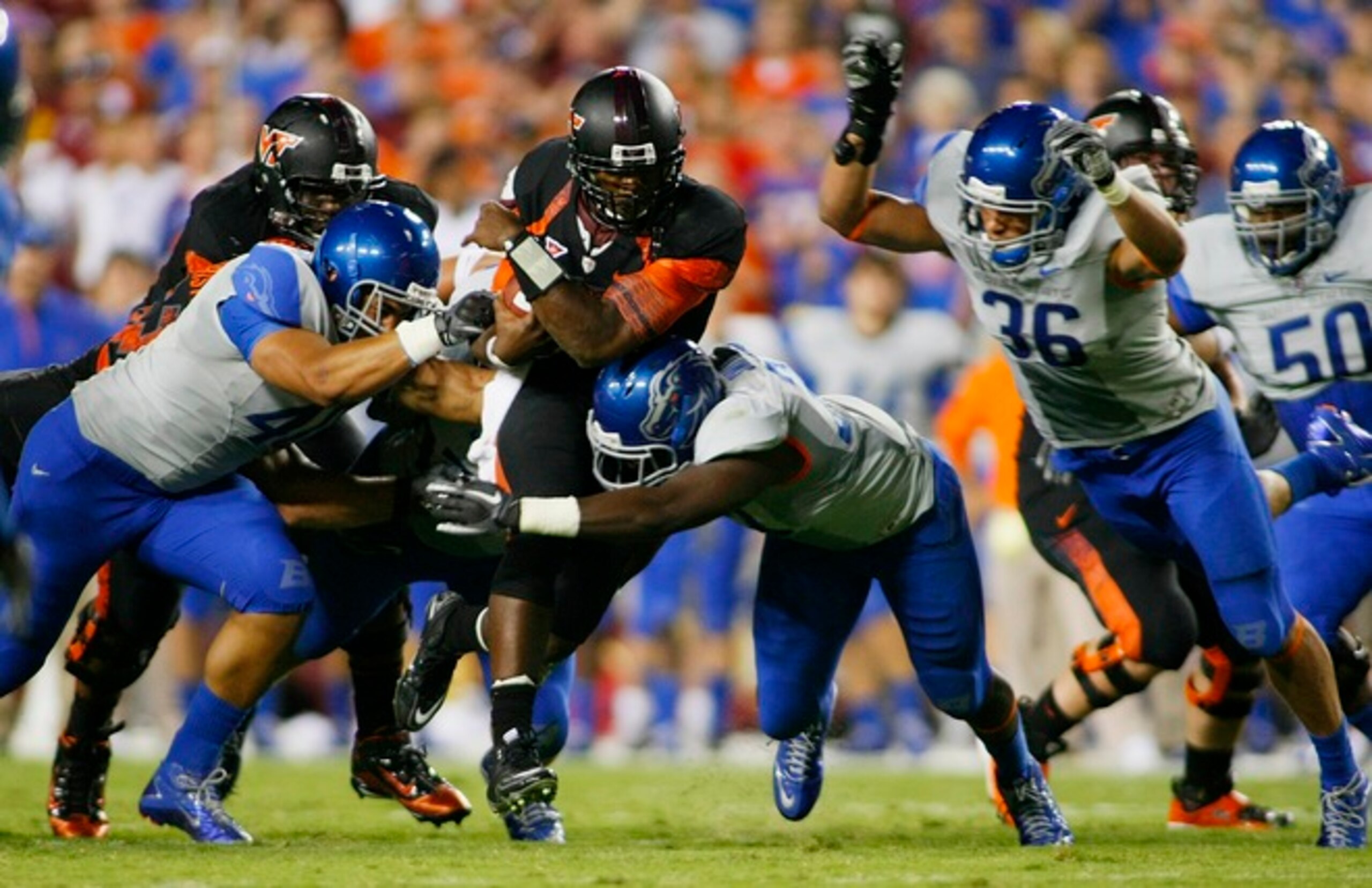
Three Biggest Impact Players: DE Ryan Winterswyk, CB Brandyn Thompson, SS Jeron Johnson
Potential Weaknesses: With 10 returning starters from 2009's 14th-best scoring defense, let's face it; there are no glaring weaknesses.
On the other hand, I can think of quite a few teams with glaring weaknesses that could also handily shut down Wyoming, New Mexico State, Toledo, San Jose State, Louisiana Tech, Idaho, Nevada, and Utah State. And those teams would also have a fairly decent shot against Fresno State and Hawaii.
Statistics After One Game: 1-0. Points allowed per game: 30. 314 yards allowed: 128 rushing, 186 passing. Three sacks, two forced fumbles, one fumble recovery. First downs allowed: 21. Opponent's third down conversions: 4-12. Opponent's fourth down conversions: 1-2. Red zone defense: 4-5.
Opponents So Far: Virginia Tech (at Fed Ex Field in Maryland)
Thoughts: No thoughts here. This is a great team, and specifically a great defense that can compete with any team, anywhere, at any time.
On the other hand, this is a defense that let up 30 points to a team that couldn't beat FCS James Madison, but that is secondary.
The more important question is: Can they do it week in and week out? Unfortunately, we're not going to find that out this season, no matter where their bowl destination is.
Therefore, I suppose it can be said that this is a great defense that will be needed to show up two times this regular season (which is one more time than last year or any season since 2005).
One down, one to go.
17. Miami (FL) Hurricanes
9 of 25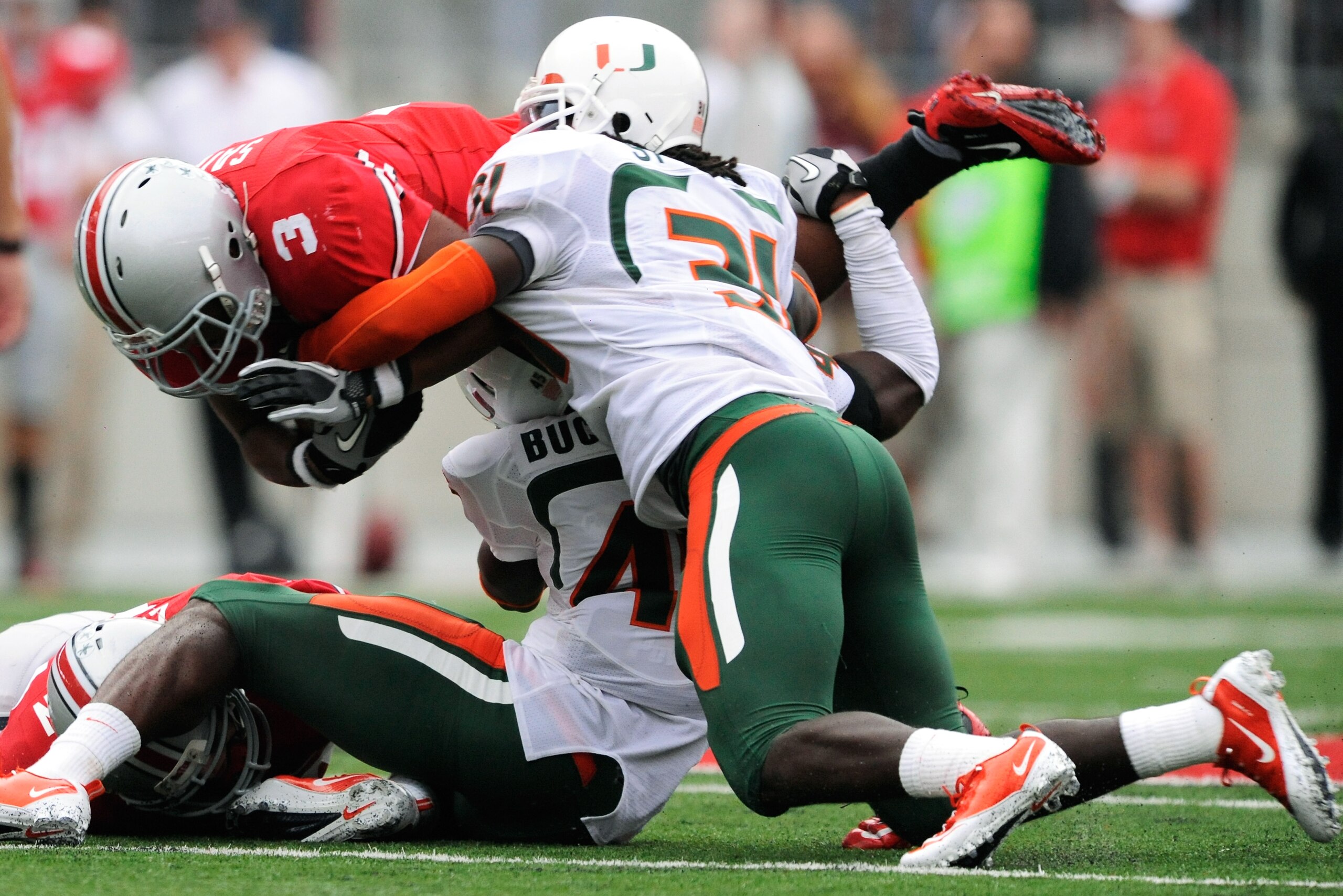
Three Biggest Impact Players: CB Brandon Harris, DE Allen Bailey, LB Colin McCarthy
Potential Weaknesses: The biggest issue appears to be the pass rush. Last year, Miami ranked 74th in sacks.
Needless to say, it being the "U," there is plenty of talent to go around. It remains to be seen how much of it will show up on the field.
Statistics After Two Games: 1-1. 18 points allowed per game. 262 yards allowed per game: 116.5 rushing, and 145.5 passing. Nine sacks, one interception, one forced fumble, and zero fumble recoveries. 14.5 first downs allowed per game. Opponents' third downs conversions: 10-32. Opponents' fourth down conversions: 1-1. Red zone defense: 7-10.
Opponents So Far: Florida A&M (FCS), and at Ohio State
Thoughts: Certainly, it is no shame to lose to OSU. Moreover, this loss was more on the offense than the defense. After all, Jacory Harris' four interceptions didn't exactly put the defense in a good spot.
However, there were opportunities for the d to take this game home, and they didn't do it.
It is hard to say whether this is a middle-of-the-road defense and team, or whether they are ready for the big time yet. Given the current state of the ACC after last week's massacre, there does seem to be opportunity for the Canes to win the conference.
16. Florida Gators
10 of 25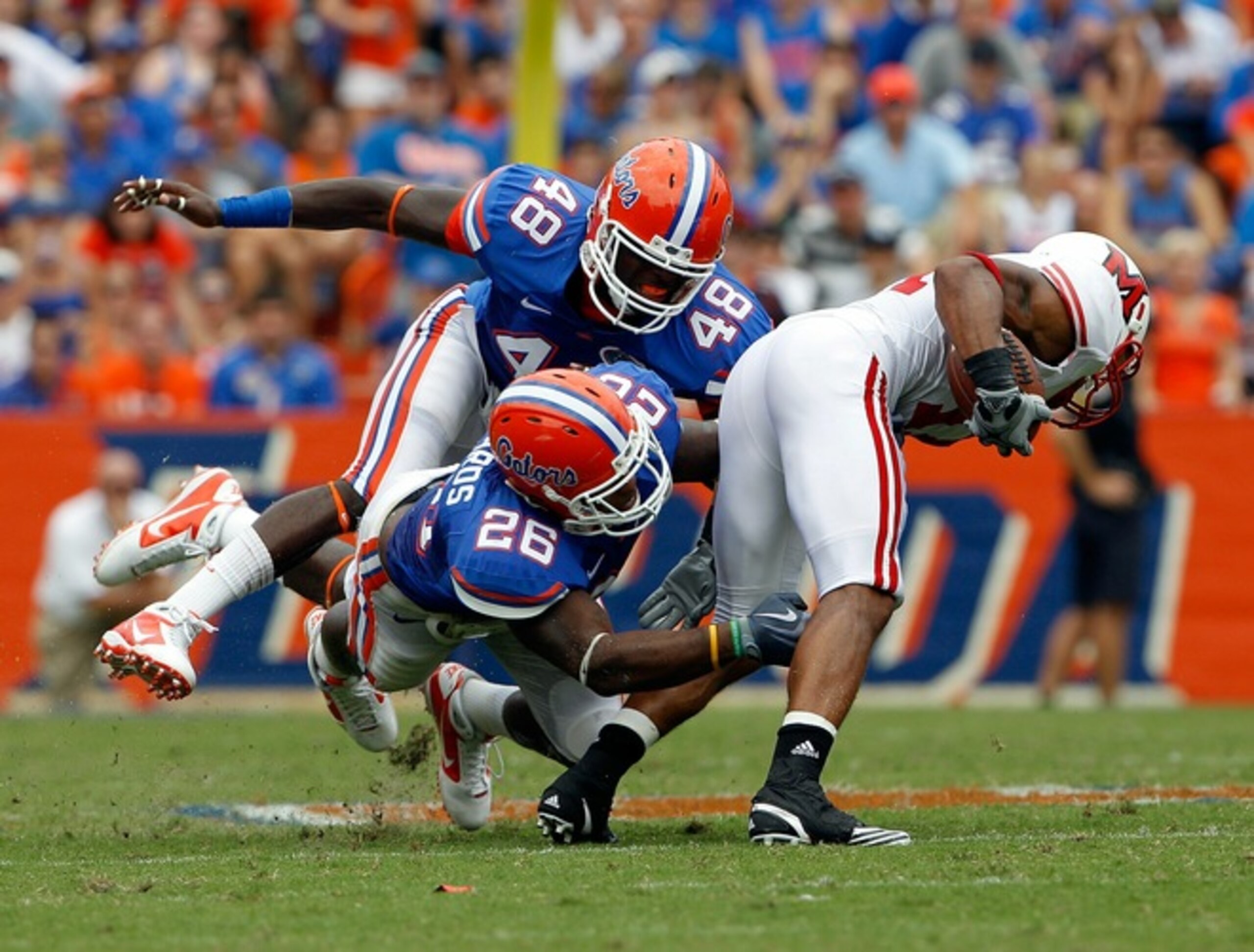
Three Biggest Impact Players: S Ahmad Black, DT Omar Hunter, DE Justin Trattou
Potential Weaknesses: The No. 3 scoring defense of 2009, lost four of their top five tacklers, two of their top three leaders in interceptions, and three of their five leaders in sacks, including the top two.
I know this is Florida, but you just don't easily replace that sort of production.
As it is, the secondary projects to be solid, but the front seven might be a work-in-progress.
Statistics After Two Games: 2-0. 13 points allowed per game. 271 yards allowed per game: 124 rushing and 147 passing. Three sacks, eight interceptions, two forced fumbles, and one fumble recovery. 16 first downs allowed per game. Opponents' third down conversions: 9-28. Opponents' fourth down conversions: 1-2. Red zone defense: 6-7.
Opponents So Far: Miami (OH), and USF
Thoughts: Much has been made about the surprising ineptitude of the Florida offense. The defense has not been bad by any stretch of the imagination, but they also have not been as good as past Urban Meyer coached Gator squads.
Against Miami (Ohio), they were consistently put in a bad situation due to the offense.
However, while South Florida is a very respectable team, they probably shouldn't be competing with the Gators. Nevertheless, if not for some fortuitous fumbles and two second half interceptions, South Florida would have had a very real chance at pulling the upset.
In closing, this is still a good defense, but they might have to be much better than good to pull the offense's weight.
15. Oklahoma Sooners
11 of 25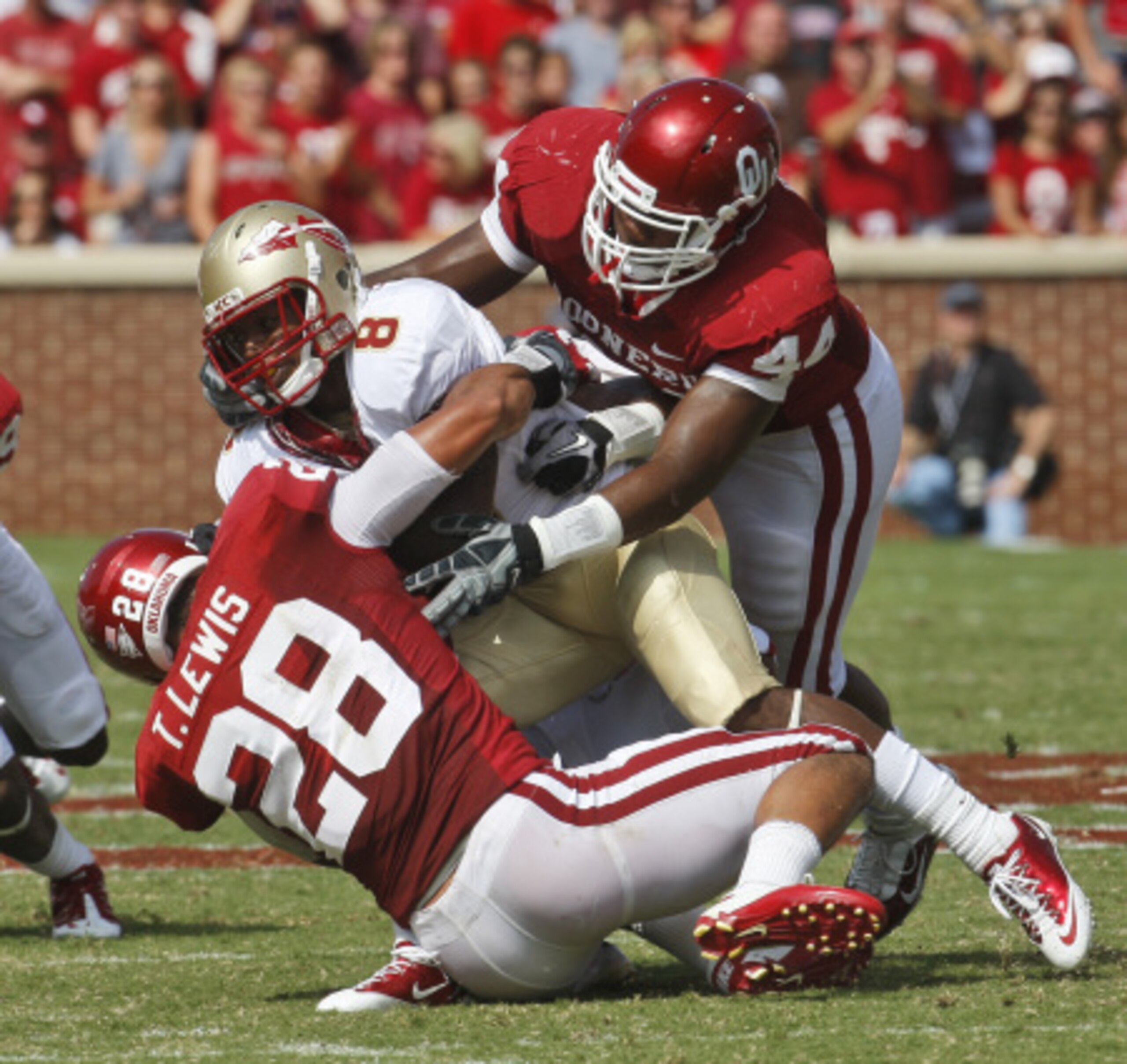
Three Biggest Impact Players: DE Jeremy Beal, LB Travis Lewis, S Quinton Carter
Potential Weaknesses: Despite the fact that last year was a considerable let down for the Sooners, they still had the eighth best scoring defense in the country.
Losing Gerald McCoy and Auston English from the line will hurt, but OU will, as usual, reload up front.
On the other hand, it remains to be seen if Oklahoma can replace two departed corners and linebackers, particularly where it concerns their coverage.
Statistics After Two Games: 2-0. 20.5 points allowed per game. 383 yards allowed per game: 101.5 rushing, and 281.5 passing. Seven sacks, five interceptions, five forced fumbles, and two fumble recoveries. 17.5 first downs allowed per game. Opponents' third down conversions: 12-35. Opponents' fourth down conversions: 1-1. Red zone defense: 3-3.
Opponents So Far: Utah State and Florida State
Thoughts: Oklahoma only outgained Utah State by one yard. In this case, the stats aren't inaccurate. The Sooners were that bad.
I don't know what Bob Stoops did to turn his team around, but OU came back the next week and absolutely routed a good Florida State team.
So, which Oklahoma is the real Oklahoma?
Admittedly, I don't know any better than anybody else. However, we'll find out on October 6 at the Red River Rivalry.
If the Sooners win that one, they should have a clear path the Big 12 championship game, probably against old rival Nebraska.
14. Nebraska Cornhuskers
12 of 25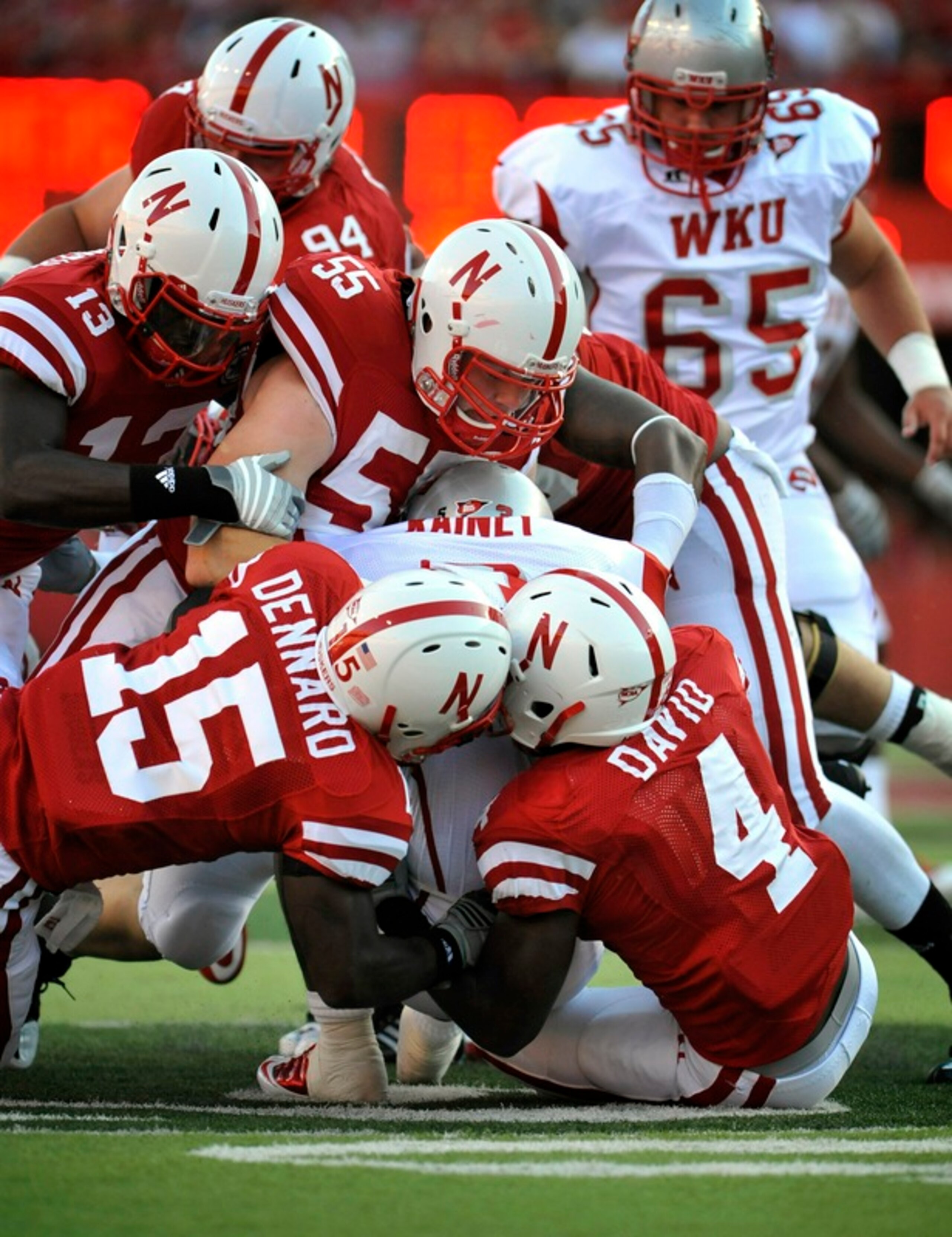
Three Biggest Impact Players: DT Jared Crick, DE Pierre Allen, CB Prince Amukamara,
Potential Weaknesses: Last season, the Huskers had the No. 2 ranked scoring defense in the country. Needless to say, the loss of Ndamukong Suh will hurt. He is one of those rare players whose presence is simply irreplaceable, even for a team like Nebraska.
In effect, the absence of Suh's intangible and tangible presence is an issue.
On top of that, the Huskers are replacing four of their top five tacklers from last year.
Statistics After Two Games: 2-0. 13.5 points allowed per game. 289 yards allowed per game: 119.5 rushing and 169.5 passing. Eight sacks, six interceptions, four forced fumbles, and two fumble recoveries. 19 first downs allowed per game. Opponents' third down conversions: 8-28 Opponents' fourth down conversions: 0-0. Red zone defense: 5-6.
Opponents So Far: Western Kentucky, and Idaho
Thoughts: Nebraska has beaten inferior competition. On the other hand, there is no getting around the fact that said competition has decidedly picked up yardage against them. Almost 300 yards per game in both cases.
It is true that some of that yardage came in garbage time, but not the majority of it.
Obviously, at this point, there are plenty of teams that have yet to really play an opponent of their own caliber. However, a number of those teams have completely squashed that opposition.
As has been well-documented by this point, Nebraska has a fairly easy schedule. Nevertheless, next week against Washington and Jake Locker will be a much more realistic gauge of how good this Blackshirt squad is.
13. Utah Utes
13 of 25
Three Biggest Impact Players: DT Dave Kruger, DT, Sealver Siliga, CB Brandon Burton
Potential Weaknesses: The back seven, which loses everybody aside from two cornerbacks. That means that five of the top six tacklers are gone, and almost every player that recorded an interception last season.
In effect, the pass defense will be vulnerable, as will the run defense at the second level.
Statistics After Two Games: 2-0. 17 points per game allowed. 292.5 yards allowed per game: 92 rushing, 200.5 passing. Four sacks, one interception, three forced fumbles, and two fumble recoveries. 17.5 first downs allowed per game. Opponents' third down conversions: 14-34. Opponents' fourth down conversions: 2-4. Red zone defense: 5-7.
Opponents So Far: Pitt, UNLV
Thoughts: The Utes took care of an early season test against an overrated, but still good Pitt team.
Most notably, they squashed their running game to the tune of 2.28 yards per carry.
They did the same against the Rebels, although in that game, UNLV had some success through the air. The fact is, the game was probably closer than the score would indicate, but UNLV killed themselves on special teams.
Ultimately, this is a good defense that will have time to sort out any loose items, as their schedule through October should be a breeze. On the other hand, November will be a bear, with games against TCU, Notre Dame, and BYU.
12. West Virginia Mountaineers
14 of 25
Three Biggest Impact Players: LB J.T. Thomas, DT Chris Neild, DE Julian Miller
Potential Weaknesses: The only weakness of note appears to be at safety.
However, with a fair amount of experience in the rest of the secondary, not to mention a very aggressive style of play, this is an area that should have time and room to grow.
Statistics After Two Games: 2-0. 10.5 points per game allowed. 275 yards per game: 99 rushing and 176 passing. No sacks, one interception, four forced fumbles, two fumble recoveries. Average first downs allowed: 12.5. Opponents' third down conversion: 7-28. Opponents' fourth down conversion: 1-2. Red zone defense: 2-3.
Opponents So Far: Coastal Carolina (FCS), and at Marshall
Thoughts: This West Virginia defense has done most of what it has needed to do against inferior competition. However, there have been two issues.
Firstly, in two games, they have generated no sacks. That is saying quite a lot for a team that plays as aggressively as WVU. I don't know much about Coastal Carolina's style, and it seems that Marshall is a team that likes to get the ball out of the quarterback's hand as quickly as possible. Still, two games against inferior competition and no sacks?
Secondly, the Mountaineers let up 364 yards to Marshall. 151 of those yards came on two plays: One a 55-yard run, and the other a 96-yard pass.
This would indicate defensive breakdowns; most probably irresponsible safety play, which, as noted above, is a potential weakness for this defense. Furthermore, this is something that could be an issue when they travel to LSU in two weeks.
11. Texas Longhorns
15 of 25
Three Biggest Impact Players: DE Sam Acho, CB Curtis Brown, S Blake Gideon
Potential Weaknesses: With four of their top six tacklers from 2009 gone, the Horns will have some big defensive questions.
Most notable are the front seven where there are four new starters.
The run defense will, as usual, be good enough to shut down the lesser opponents on their schedule, but it remains to be seen if it will be able to take teams that can match their talent level.
Statistics After Two Games: 2-0. 12 points allowed per game. 238 yards allowed per game: 75 on the ground and 165 through the air. Six sacks, one interception, two forced fumbles, and one fumble recovery. 13.5 first downs allowed per game. Opponents' third down conversions: 7-26. Opponents' fourth down conversions: 0-3. Red zone defense: 3-5.
Opponents So Far: At Rice, and Wyoming
Thoughts: Texas has been solid, though unspectacular, against two decidedly inferior opponents.
They have stopped both teams' run games, and neither of their opponents have picked up any substantial yardage against the Longhorns.
On the other hand, both teams have put up well over 200 yards on the Horns, and both teams have managed to sustain a few drives.
Texas will have their toughest stretch of the year at the beginning of October when they play Oklahoma, and then Nebraska after a bye week.
10. TCU Horned Frogs
16 of 25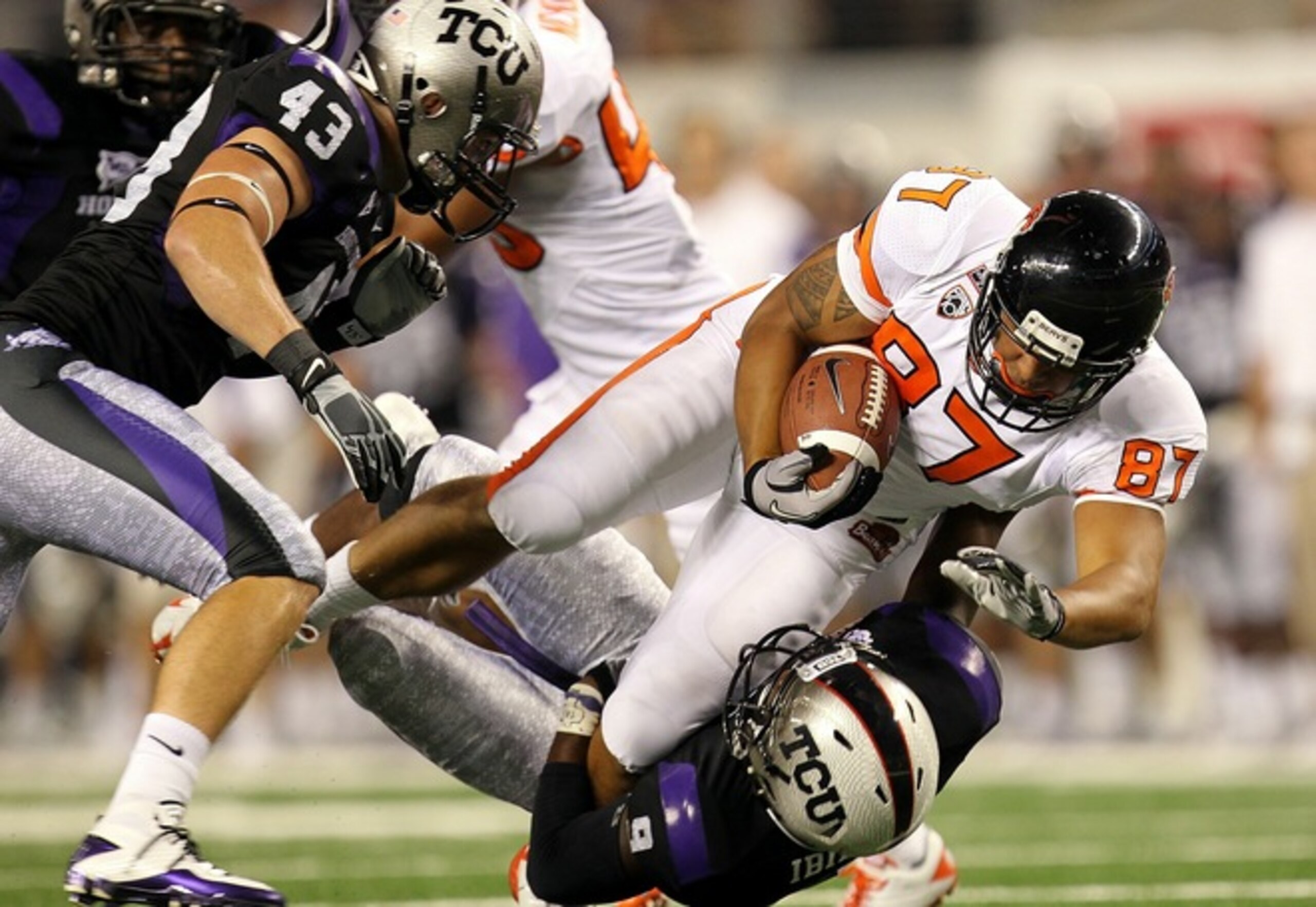
Three Biggest Impact Players: DE Wayne Daniels, LB Tank Carder, S Teejay Johnson
Potential Weaknesses: With the departure of Jerry Hughes and his 11.5 sacks, pass rush will be a slight issue. Also, TCU graduated two All-MWC cornerbacks, as well as their top tackler from last season.
However, there is plenty left in the cupboard.
As long as younger players develop as expected, this is a team that should repeat or come close to their sixth-ranked scoring defense of 2009.
Statistics After Two Games: 2-0. 14 points allowed per game. 205.5 yards allowed per game: 82.5 yards rushing, and 120 yards passing. Seven sacks, one interception, eight forced fumbles, four fumble recoveries. 12 first downs allowed per game. Opponents' third down conversions: 9-25. Opponents' fourth down conversions: 1-1. Red zone defense: 2-2.
Opponents So Far: Oregon State (at Cowboy Stadium in Arlington TX.), and Tennessee Tech (FCS)
Thoughts: Last season, Oregon State generated over four yards per carry. In their first game of the year, TCU held them to under three. Furthermore, Wayne Daniels has already compiled 3.5 sacks on the year.
In short, this is unquestionably an elite defense, and any questions they had coming into the year, seem to have been answered.
It would be nice to have more of an opportunity to measure them against stronger competition, but their only other regular season games of note—conference foes BYU and Utah—are in October and November, respectively.
9. Arkansas Razorbacks
17 of 25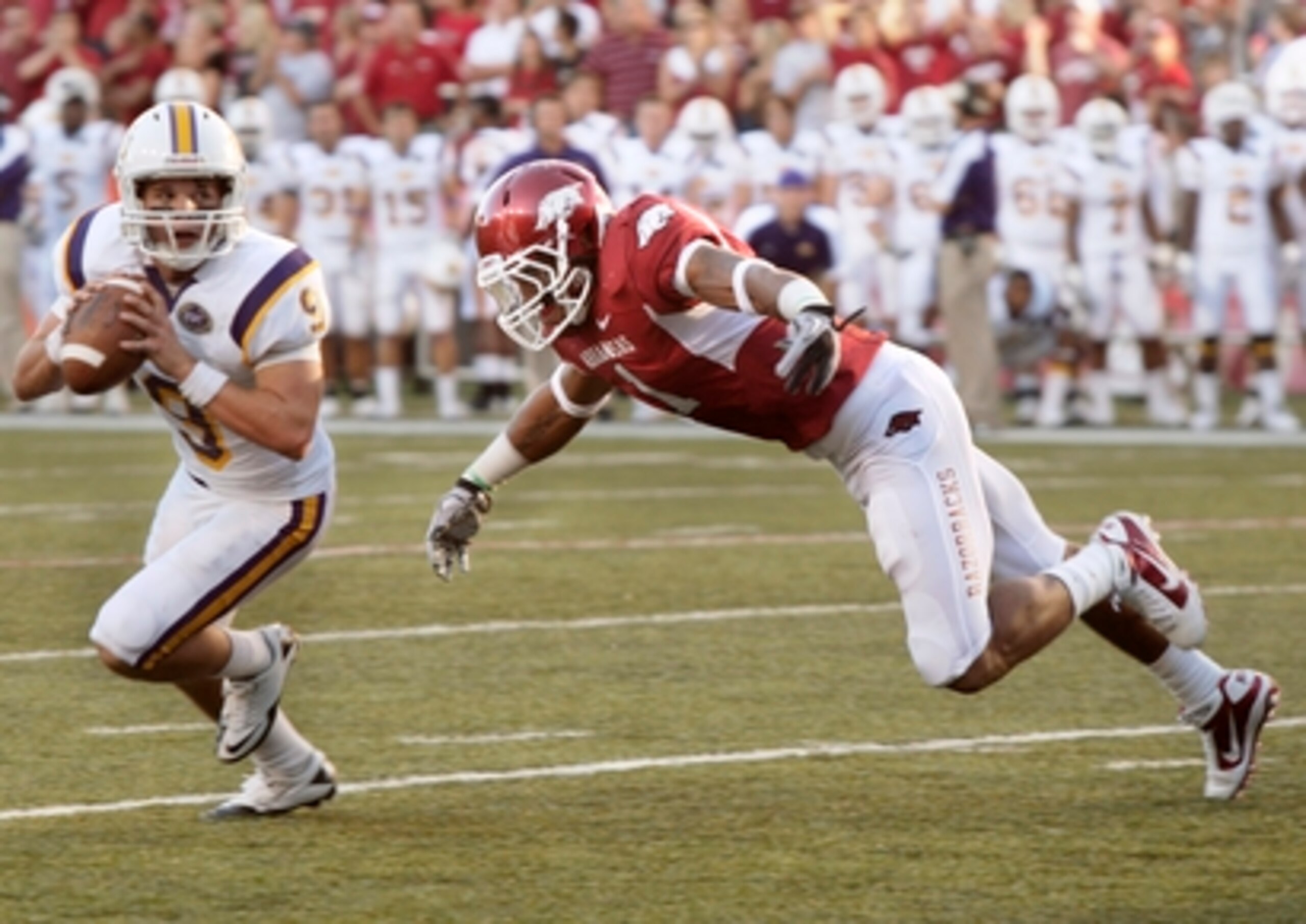
Three Biggest Impact Players: LB Jerry Franklin, LB Anthony Leon, DT DeQuinta Jones
Potential Weaknesses: Last year, the Razorbacks were the 12th-ranked defense in the SEC. In effect, they've got nowhere to go but up.
They lose their sack leader from last year, as well as two defensive lineman. In effect, the biggest holes appear to be in the rush defense and the pass rush.
Statistics After Two Games: 2-0. Five points allowed per game. 187.5 yards allowed per game: 97.5 rushing and 90 passing. Five sacks, one interception, four forced fumbles, and one fumble recovery. 22 first downs allowed per game. Opponents' third down conversions: 7-29. Opponents' fourth down conversions: 2-2. Red zone defense: 1-1.
Opponents So Far: Tennessee Tech (FCS), and Louisiana-Monroe (at War Memorial Stadium in Little Rock, AR.)
Thoughts: Arkansas has shut down two decidedly over-matched opponents.
This might seem like a small accomplishment, but in comparison to their two most "over-matched" out-of-conference opponents of last season—who scored a total of 37 points—this is a substantial step forward.
Particularly notable has been their rush defense, which has allowed less than three yards per carry. Also, the pass rush has been much improved.
Their big test will come over the next five weeks when the face: Georgia, Alabama, Texas A&M, and Auburn. They have a bye week after the Bama game.
Do I think this defense is really a top 10 defense? No, but they are markedly improved over last year, and for now, the proof, as they say, is in the pudding.
8. Arizona Wildcats
18 of 25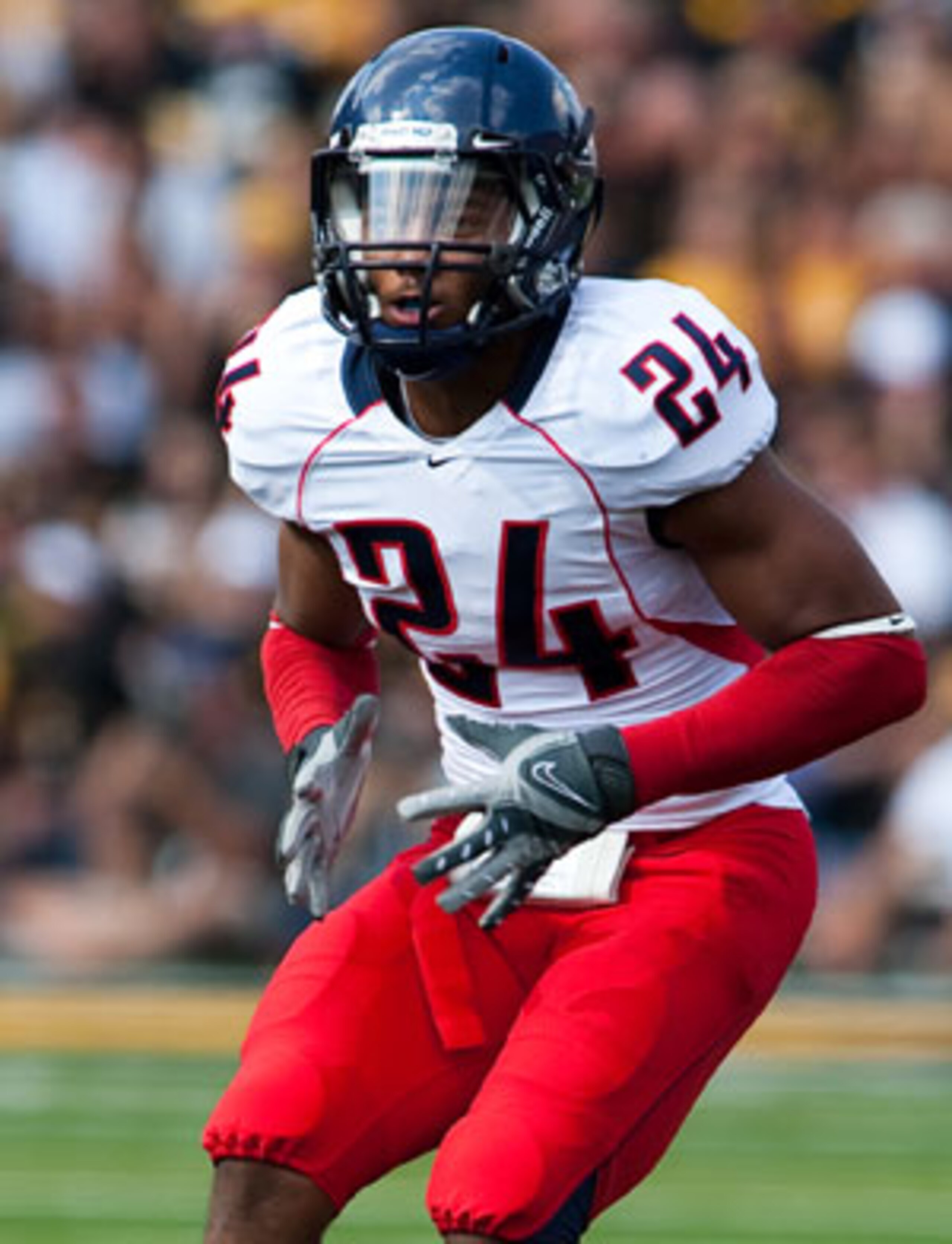
Three Biggest Impact Players: DE Ricky Elmore, CB Trevin Wade, CB Robert Golden
Potential Weaknesses: Run defense, particularly up the middle.
Arizona graduated both of their defensive tackles, all of their linebackers, and one of their safeties. Also, their returning safety, Robert Golden, has switched to cornerback.
In effect, there does seem to be potential for teams to attack the Cats right up the middle.
Statistics After Two Games: 2-0. Four points allowed per game. 152 yards allowed per game: 115 rushing, and 62 passing. Five sacks, one interception, seven forced fumbles, and four fumble recoveries. 10 first downs allowed per game. Opponents' third down conversions: 12-33. Opponents' fourth down conversions: 0-2. Red zone defense: 1-2.
Opponents So Far: At Toledo, and the Citadel (FCS)
Thoughts: As with so many teams at this point in the year, it is difficult to say how much of the UA defensive success is based on the Cats or their lackluster opponents.
Nevertheless, there are also plenty of top 25 teams that have played lackluster opponents and have not shut them down to the tune of four points per game.
In short, Arizona deserves plenty of credit for their performances so far this year. That said, their next game against Iowa will be the true measuring stick. If the Wildcats are indeed soft up the middle, Iowa is the ideal team to expose it.
7. LSU Tigers
19 of 25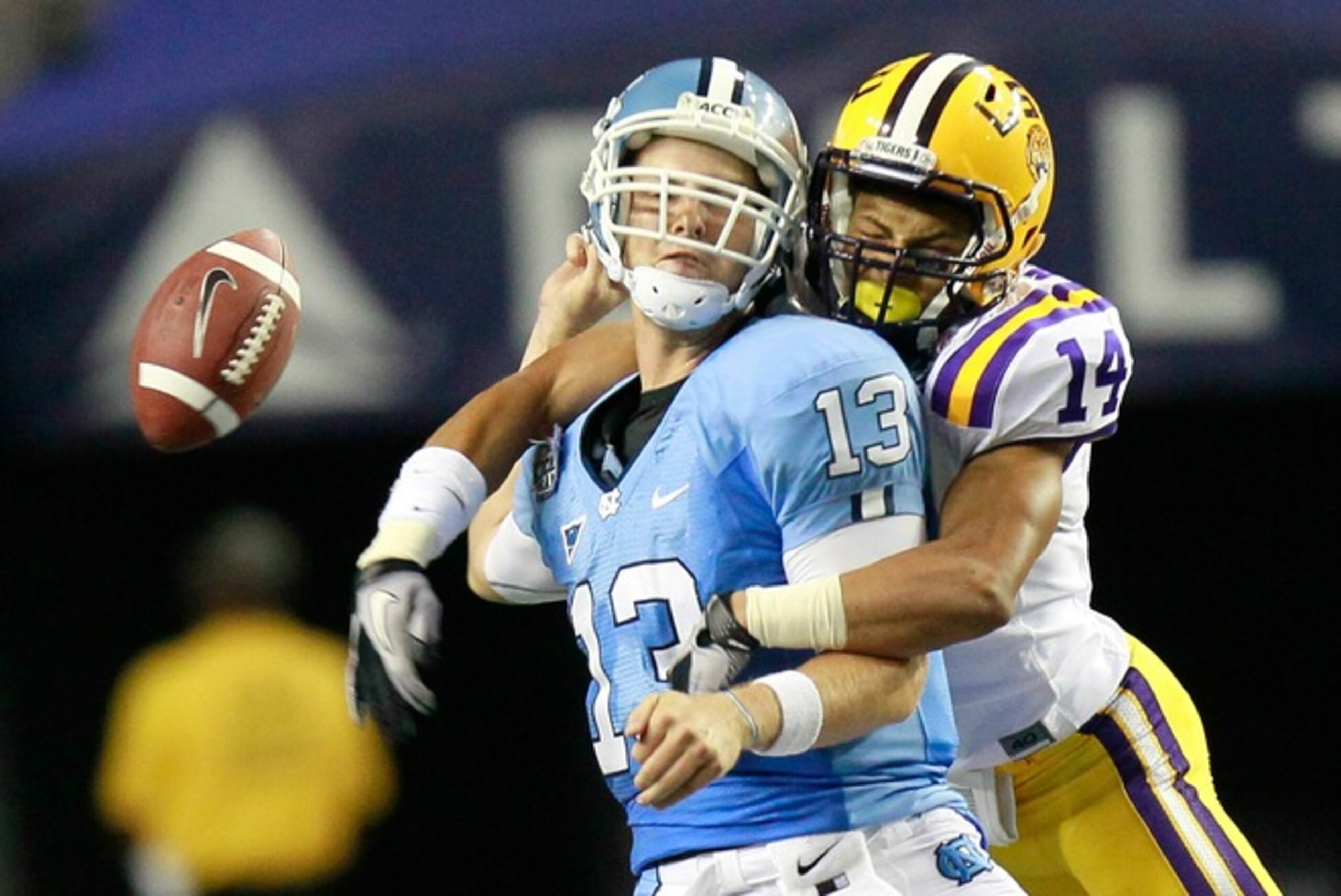
Three Biggest Impact Players: LB Kelvin Sheppard, CB Patrick Peterson, DT Drake Nevis
Potential Weaknesses: Last season, LSU was the 26th-ranked scoring defense in college football. This year, they will have to replace five of their front seven as well as two in the secondary.
I'm sure most Tiger fans would like to call this a "reload" year, but they just might have to settle for a rebuilding project.
Statistics After Two Games: 2-0. 13.5 points per game. 285.5 yards allowed per game: 44.5 rushing, and 241 passing. 10 sacks, zero interceptions, nine forced fumbles, and four fumble recoveries. 14 first downs allowed per game. Opponents' third down conversions: 6-30. Opponents' fourth down conversions: 1-2. Red zone defense: 4-5.
Opponents So Far: North Carolina (at Georgia Dome in Atlanta) and at Vanderbilt
Thoughts: It's a bit difficult to gauge just how meaningful the Tigers win over the Tarheels was. After all, UNC was missing 13 players.
On the one hand, the majority of those players were on the defensive side of the ball. On the other hand, under Butch Davis, UNC had never been known as an offensive force.
Either way, LSU won, though they gave up a sizable chunk of yards along the way.
Of course, they utterly crushed Vanderbilt. Are the Commodores good? No, but they put up over 400 yards of offense against Northwestern. They barely put up a quarter of that total against the Tigers.
Finally, averaging under 50 yards allowed on the ground, and compiling 10 sacks in two games, is impressive no matter who one's opponents are.
I'm still a bit skeptical of LSU and their defense—particularly their pass defense—but they'll have plenty of opportunities to prove themselves over the course of the season.
6. South Carolina Gamecocks
20 of 25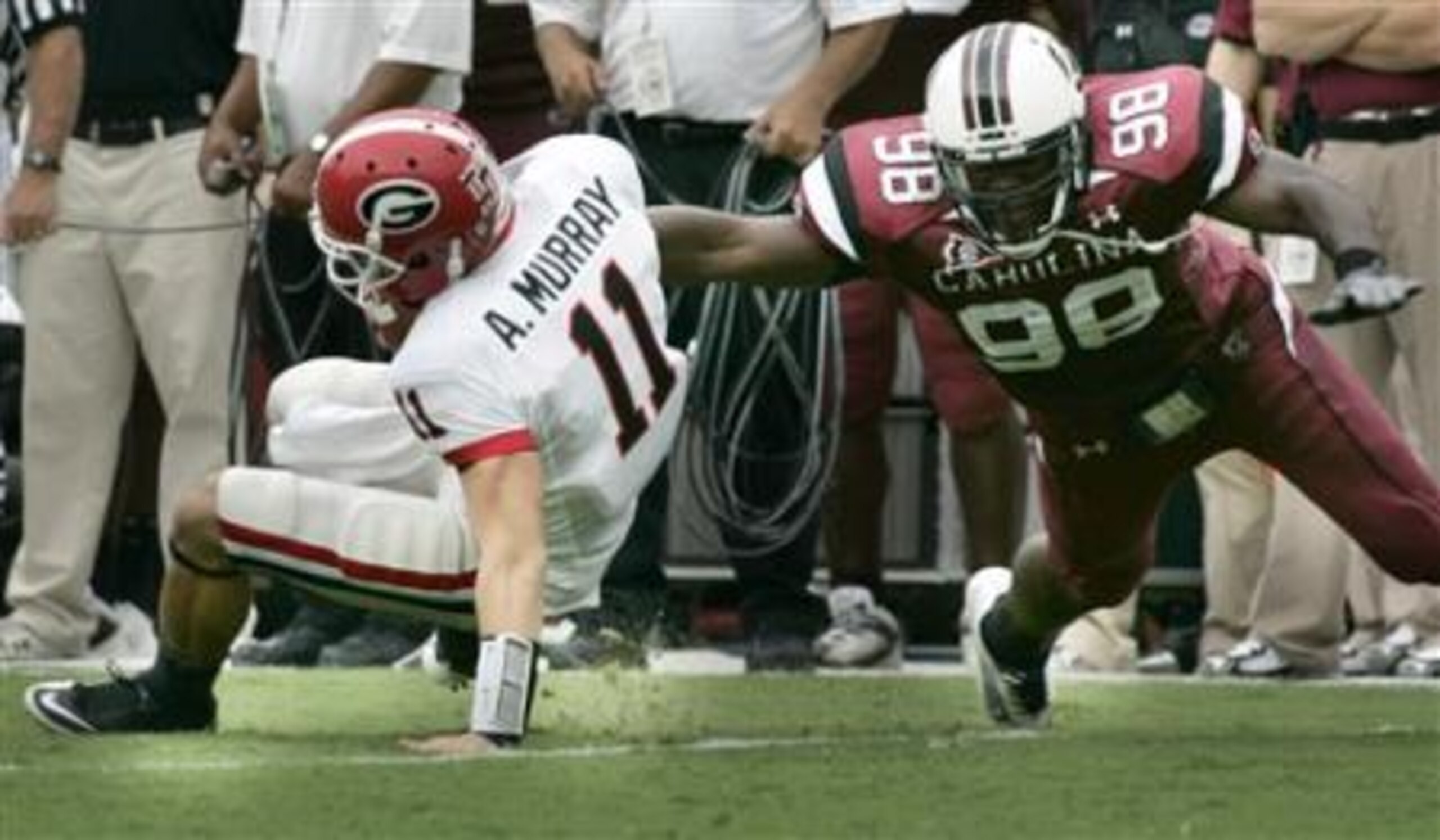
Three Biggest Impact Players: DE Cliff Matthews, CB Stephon Gilmore, CB Chris Culliver
Potential Weaknesses: Yes, the Ol' Ball Coach is known for offense, but his teams can play defense too. Last year, the Gamecocks were the 15th best scoring defense in the country. This year, they return nine starters from that squad.
The only notable questions on this defense are whether the secondary make more big plays, as they only picked off six balls last season. Also, can Shaq Wilson seamlessly move over one spot, and fill the shoes of All American linebacker Eric Norwood?
Otherwise, this is one of the most solid returning groups in the country.
Statistics After Two Games: 2-0. 9.5 points allowed per game. 328.5 yards allowed per game: 64 yards rushing, and 264.5 passing. Four sacks, one interception, three forced fumbles, and two fumble recoveries. 17 first downs allowed per game. Opponents' third down conversions: 13-30. Opponents' fourth down conversions: 0-2. Red zone defense: 4-9.
Opponents So Far: Southern Miss and Georgia
Thoughts: The Gamecocks didn't really look great against Southern Miss. Moreover, they got a bit lucky here and there in beating the Bulldogs.
However, make no mistake. Holding Georgia to six points, even with a new quarterback, is an accomplishment. Moreover, they held the Dawgs to a 2.3 rushing average. While UGA is starting a new quarterback, they are also returning their entire offensive line.
On the other hand, with only one interception so far this year, there is still the question of whether this secondary can change games.
After next week's game against FCS Furman, USC travels to Auburn, and then follows a bye week with a home game against Alabama. If the Gamecocks are the real deal then the nation will know it by the middle of October.
5. Stanford Cardinal
21 of 25
Three Biggest Impact Players: LB Thomas Keiser, LB Chase Thomas, S Delano Howell
Potential Weaknesses: The Cardinal was the 90th-ranked defensive unit in the country, so there is plenty of room to improve, and plenty of areas to improve upon.
This season, with a new defensive coordinator, Stanford has switched from a base 4-3 to a 3-4. Head coach Jim Harbaugh hopes this will not only reinvigorate this questionable bunch, but it will also take advantage of their returning talent.
The Cardinal has plenty of experience in the back seven, but they graduated two of their starting linemen.
Statistics After Two Games: 2-0. 8.5 points allowed per game. 195 yards allowed per game: 98 yards rushing, and 97 yards passing. Six sacks, two interceptions, seven forced fumbles, and three fumble recoveries. 13.5 first downs allowed per game. Opponents' third down conversions: 6-24. Opponents' fourth down conversions: 1-4. Red zone defense: 1-1.
Opponents So Far: Sacramento State (FCS), and at UCLA
Thoughts: Surprisingly impressive. Certainly, Sacramento State is hardly USC, and UCLA is having their fair share of troubles.
Nevertheless, the Cardinal shut out the Bruins, and Sacramento State's points came off a punt return, a very short field set up by an interception, and a 52-yard field goal given up in garbage time.
Besides, plenty of top 25 teams have played plenty of over-matched opponents, and not come out looking as good.
I don't think the defense is good as they appear to be right now. However, the next four weeks will be the defense's proving ground as they play a powerful Wake Forest offense, at Notre Dame, at Oregon, and Southern Cal.
4. Iowa Hawkeyes
22 of 25
Three Biggest Impact Players: DE Adrian Clayborn, DT Karl Klug, SS Tyler Sash
Potential Weaknesses: Iowa is a fairly complete defense. However, this season they have to replace two All-Big Ten linebackers, as well as an All-Big Ten cornerback.
Although linebacker has been a strong area throughout the Ferentz era, the Hawkeyes are not a team that can expect to "reload" at any position.
Nevertheless, the linebackers should be helped out considerably by one of the best defensive lines in the country.
Statistics After Two Games: 2-0. Seven points per game allowed. 216 yards allowed per game: 71.5 rushing, 144.5 passing. Four sacks, three interceptions, zero forced fumbles. Opponents' average first downs per game: 10.5. Opponents' third down conversion: 9-30. Opponents' fourth down conversion: 1-3. Red zone defense: 2-4.
Opponents So Far: Eastern Illinois (FCS) and Iowa State
Thoughts: In two games, the Iowa defensive line has manhandled everything put in its way. Due to that, it's almost hard to gauge the Hawks' back seven, as they have seemingly just swept up the little bits that have managed to squeeze through.
Moreover, they have done this, as I can remember, without one blitz, or without once bringing their safeties into the box.
At first glance, this defense appears to be as good as advertised. Even more notable, this is the deepest Hawk defense that I can remember.
Next week at Arizona will be the big test when they face a Wildcat squad that is currently a top 20 scoring offense.
3. Oregon Ducks
23 of 25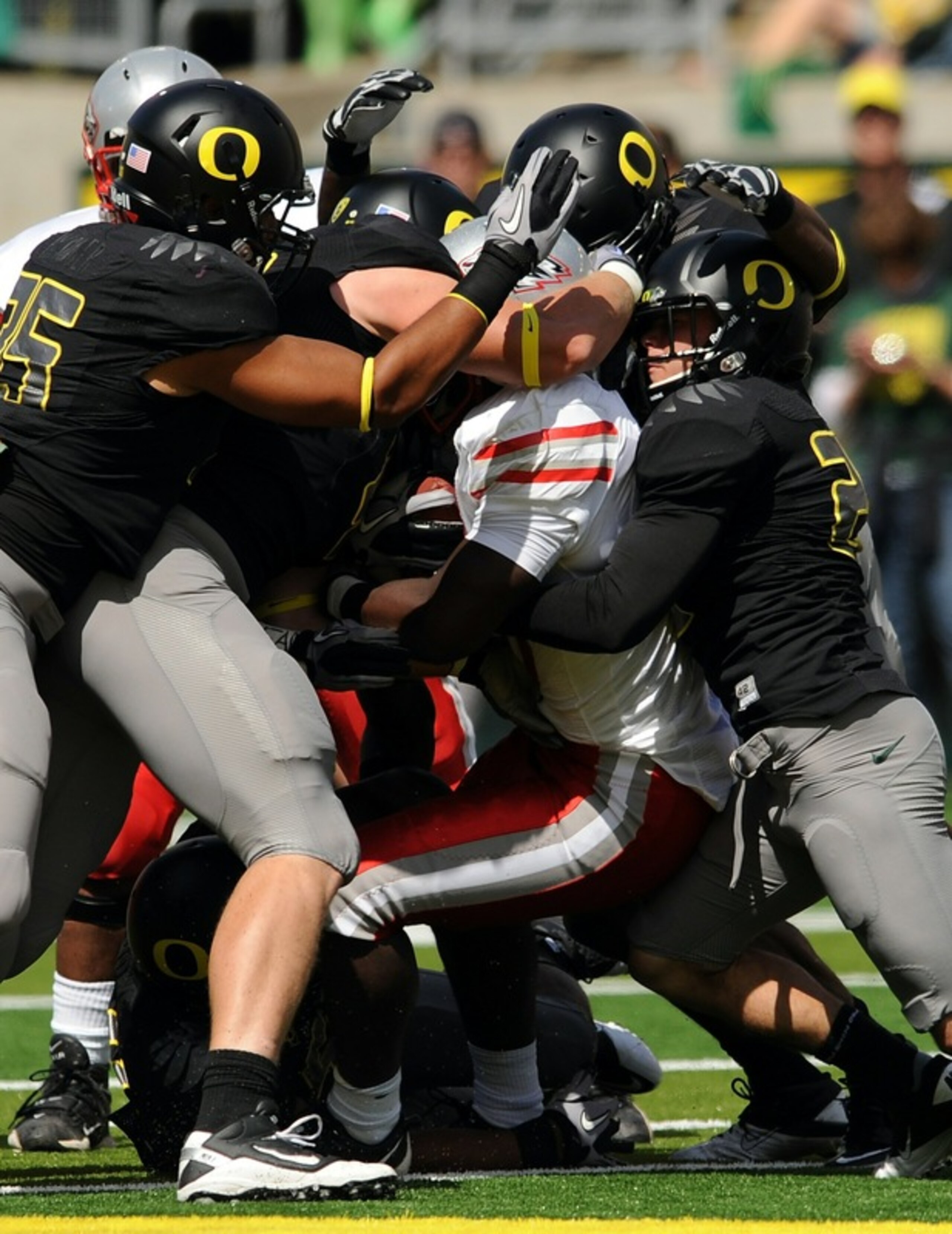
Three Biggest Impact Players: DT Brandon Bair, LB Spencer Paysinger, S John Boyett
Potential Weaknesses: The Ducks return six of their back seven, and overall, they return eight from last year's 35th-ranked defense.
This squad has no major holes, though the loss of two linemen might initially take away from their run defense.
Statistics After Two Games: 2-0. 6.5 points per game. 220 yards allowed per game: 103.5 rushing and 116.5 passing. Three sacks, three interceptions, four forced fumbles, and three fumble recoveries. 11 first downs allowed per game. Opponents' third down conversions: 5-28. Opponents' fourth down conversions: 0-5. Red zone defense: 2-2.
Opponents So Far: New Mexico, and at Tennessee
Thoughts: The Oregon defense has performed solidly. They humiliated New Mexico, and took advantage of a number of Tennessee mistakes.
This defense is probably better than most give them credit for, as they have a lot of pressure put upon them by the very high scoring—and high tempo—Oregon offense.
This leads to the opposing offense spending more time on the field than might be desired by most coaches.
In effect, under Chip Kelly, Oregon might never have a top 10 or even top 20 defense. At least, as far as statistics are concerned. However, due to the nature of their team dynamic, they may never have to.
2. Ohio State Buckeyes
24 of 25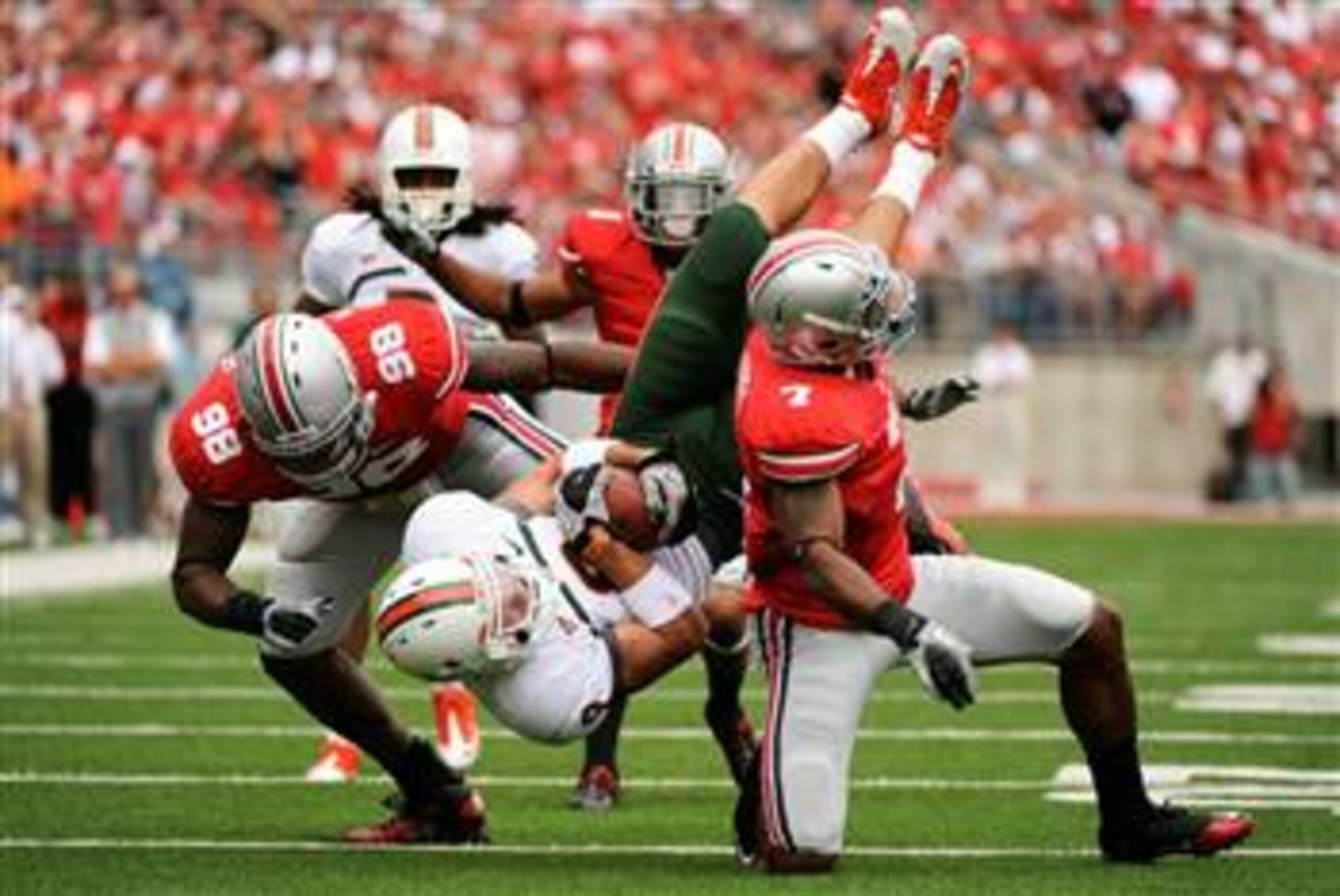
Three Biggest Impact Players: LB Ross Homan, LB Brian Rolle, DE Cameron Heyward
Potential Weaknesses: The secondary.
They graduated both safeties, including All-Big Ten strong safety Kurt Coleman. Moreover, while both returning cornerbacks were decent last year, neither was superb, and they occasionally got lost in coverage. Furthermore, both failed to make big plays, compiling only one interception between the two of them.
Much more will be expected out of them this year.
Statistics After Two Games: 2-0. 15.5 points allowed per game. 275.5 yards allowed per game: 57 rushing, 193.5 passing. Three sacks, five interceptions, four forced fumbles, and two fumble recoveries. 15 first downs allowed per game. Opponents' third down conversions: 11-29. Opponents' fourth down conversions: 0-2. Red zone defense: 1-4.
Opponents So Far: Marshall and Miami (FL)
Thoughts: The Buckeyes' defense took big steps towards answering any lingering questions about their secondary when cornerback Chimdi Chekwa snagged two picks against Miami (FL).
On top of that, despite the d-line not registering a sack against Marshall in Week 1, they registered two against the Canes. Moreover, they harassed Miami quarterback Jacory Harris all game.
Of the 31 points scored so far on the Bucks, 21 of them have been on the special teams. While that might not please Jim Tressel, the fact is this defense has only let up 10 points so far this year.
Their next big test won't come until they face Wisconsin in Madison on October 16.
1. Alabama Crimson Tide
25 of 25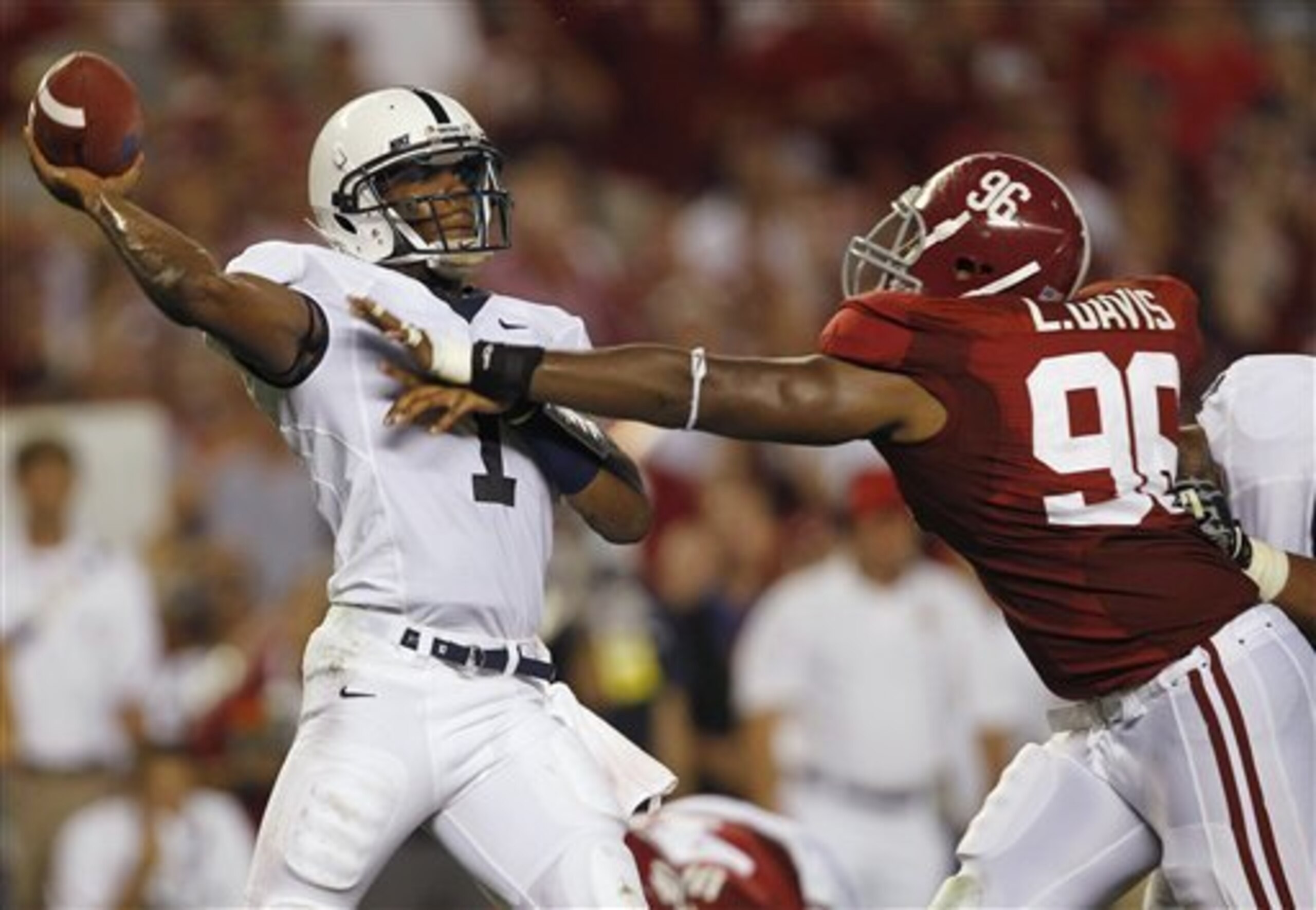
Three Biggest Impact Players: LB Dont'a Hightower, S Mark Baron, DT Josh Chapman
Potential Weaknesses: With only two players returning from last year's top ranked scoring defense, there are a number of questions surrounding this year's defense.
Most notably, four of their top five tacklers are gone.
However, the reality is that even in the worst of circumstances, Nick Saban's squad is going to be good. The question thus remains how good?
The front seven have essentially reloaded, thus leaving the biggest questions in the secondary.
With a freshman, two sophomores, and a junior as the starters, it remains to be seen how they will fare against an elite passing game.
Statistics After Two Games: 2-0. Three points allowed per game. 229 yards allowed per game: 108 rushing, 121 passing. One sack, four interceptions, four forced fumbles, one fumble recovery. Average first downs allowed: 12. Opponents' third down conversions: 6-27. Opponents' fourth down conversions: 3-3. Red zone defense: 2-4
Opponents So Far: San Jose State and Penn State
Thoughts: Two weeks have gone by and the Tide are the No. 1 defensive team in the country, both statistically and figuratively.
It is true that the Penn State offense, which is manned by a true freshman quarterback, was hardly a real test for the Bama defense. Nevertheless, the Lions do have a good deal of experience on the rest of the offense, and the Tide shut them down to the tune of 283 yards on the game.
Moreover, in two games, Alabama has yet to let up a touchdown. That includes garbage time as well.
It is notable that the Tide have only gotten one sack so far this year, but, once again, when you're allowing three points per game, I suppose such things are minutiae.
Their first substantial test will come in two weeks when they travel to Fayetteville to take on Arkansas, the top scoring offense in last year's SEC.



.jpg?w=2560 "5 Teams Eyeing Jonathan Taylor")
.jpg?w=2560 "Mahomes Told Teammate to Leave Meeting")

.jpg?w=2560 "NFL investigating Eagles")
.jpg?w=2560 "Jonathan Taylor Landing Spots 📍")
