England World Cup 2018: Eight Reasons FIFA Should Bring Football Home
England, the birthplace of football, is one of five countries (or pairs of countries) being considered by FIFA to host the 2018 World Cup.
The decision will be made by FIFA executives on Dec. 2 of this year, a decision that is sure to energize the citizens of whichever country win the bid.
Though England has registered a bid to host the World Cup in both 2018 and 2022, FIFA has numerous reasons to choose England to host the tournament the next year it is available for hosting, 2018.
Here are eight of those reasons.
Passionate Fans
1 of 8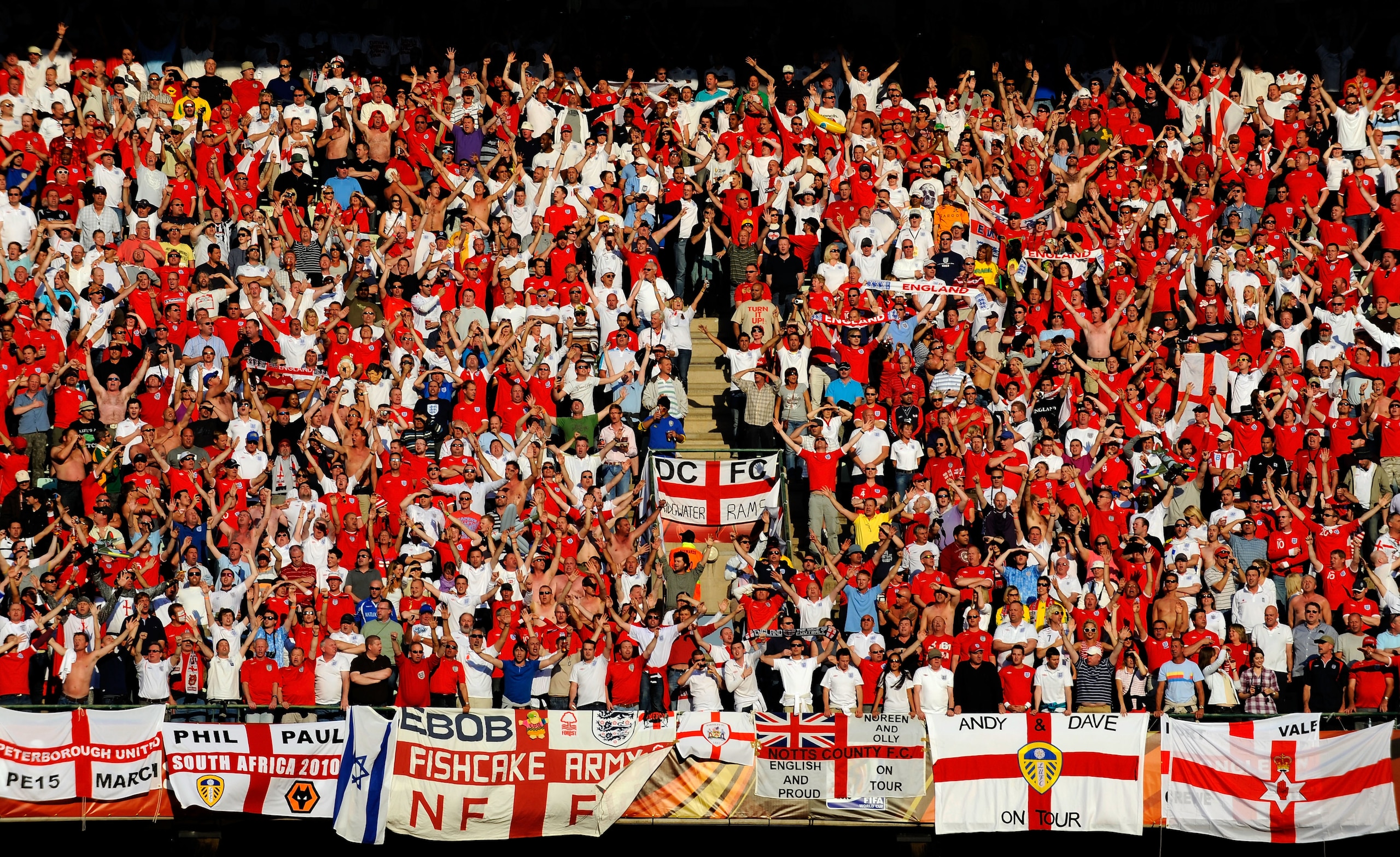
England has the most passionate football fans in the world. While some people around the world would shun being called a hooligan, English football fans relish the title.
I spent a month traveling through Europe this summer, during which lunch and dinner were always accompanied by a World Cup match while every city brought a new breed of fans into the spotlight. But there was always one constant.
No matter where you are, you're never any further than 50 meters from a pack of rabid English fans.
And no matter how poorly they may be playing (see: loss to Germany), everyone in England will be watching the game, still firmly entrenched in their stance that somehow their boys will find a way to win.
Every Brit we talked to was convinced that England was the best team in the world, lest they be reminded they were only two years removed from an embarrassing failure to qualify for Euro 2008.
Needless to say, sending the World Cup to England would be met with the most raucous, exuberant celebration the country has seen since...probably since its World Cup championship in 1966.
Speaking of 1966...
It's Been Too Long
2 of 8
The last time England won the World Cup, 1966, was also the last time the country hosted the tournament. By the time 2018 rolls around, we will be passed the 50-year anniversary for the two occasions.
Can you imagine the outrage golfing Scots would have if the British Open weren't at St. Andrews for 50 years?
Or American baseball fans if the World Baseball Classic did not have a game in the U.S.A. for half of a century?
It would be unruly.
And the last thing we want to see is English hooligans, or even the tame fans, becoming unruly.
The scary part is, there are several other European contingencies bidding for the 2018 Cup. Meaning...
The Possibility of Waiting Until at Least 2026
3 of 8
If you thought 2018 was too late for England to host the World Cup, how about if they had to wait until 2026?
Two pairs of European countries, Belgium & Holland and Spain & Portugal, are also bidding for the 2018 Cup.
If either of those contingencies is awarded the tournament, a FIFA rule will prohibit England from hosting it in 2022 as they are from the same continent.
That would be rather demoralizing for the British, who were also vying strongly for the 2006 World Cup until it was awarded to Germany.
It would require all efforts to bring it to England in 2018 to be shut down, figure out what went wrong, and strum up a whole new campaign for the bringing the Cup to England the following decade or even later.
The hatred between the Spanish and Portuguese should make that pair less attractive, while Belgium and the Netherlands are a bit too party-centric to safely be hosting fans from all over the world.
Great countries, all four of them, but neither of the pairs is more deserving of the World Cup than England.



English Horns Are Infinitely Less Annoying Than Vuvuzelas
4 of 8
Anyone who watched the World Cup in South Africa this summer had to struggle to hear the crowd cheer thanks to the thousands of vuvuzelas being blown at every second of every match.
While they were an iconic symbol for the continent's first tournament of such a large scale, each match saw the plastic instruments become even more annoying than the last.
That brings us to the English horn, a two-reeded windpipe instrument in the oboe family.
Playing a much softer, subtler sound, everyone in the stands could play the English horn all throughout the matches and fans watching on television might even find it soothing.
Matches featuring the English team will be deafening because of the crowds chanting.
Matches involving other countries' teams will also be serenaded by cheers, boos and whistles, rather than the vuvuzela which was recently banned UEFA matches.
If I find my way to the World Cup in England in 2018, don't get mad when I hold up the entry line as my English horn is inspected by security.
I'm doing it to make you guys look good.
The Stadiums
5 of 8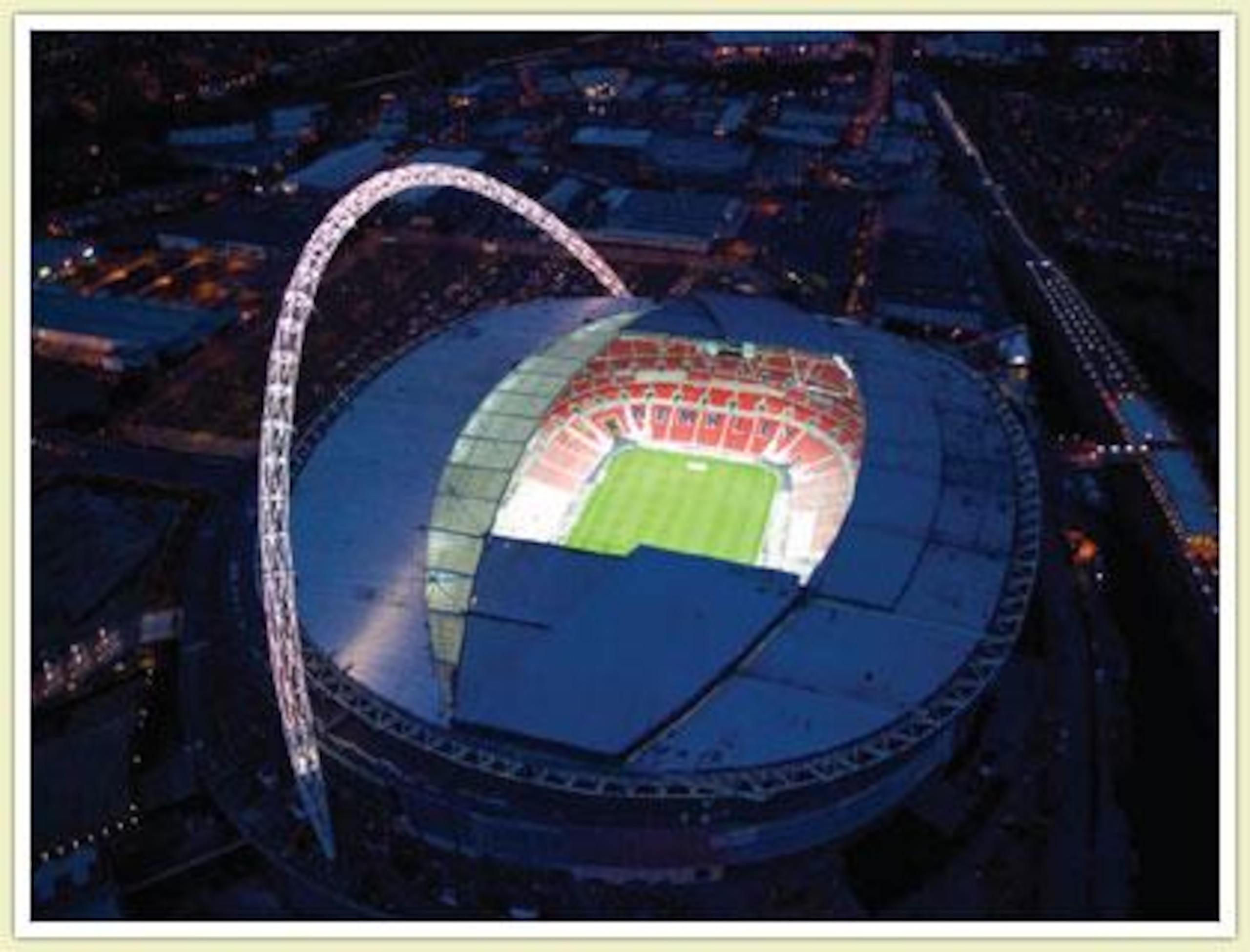
Overall, England has the most iconic football stadiums in the world.
From Wembley (pictured) and Emirates Stadiums in London to Old Trafford in Manchester and Anfield in Liverpool, England's club teams play in some on some of the finest pitches God's green grass has to offer.
Also, a majority of the proposed host venues are already in use, saving the headache on behalf of both the host country and FIFA to rush in building stadiums that meet specific codes.
Of the 15 proposed English venues, only three of them have yet to be completed. Two are expected to be completed in 2012, the third in 2014.
That leaves a good amount of leeway to have them completed in time for the 2018 World Cup.
There was a time in recent years when many people believed South Africa would be unable to host this year's World Cup because they were so far behind in the constriction of their stadiums.
That would hardly be the case if England were hosting in 2018.
Experience Hosting International Sporting Events
6 of 8
Though England hasn't hosted the World Cup since 1966, it's had its fair share of international competitions on English soil.
Golf's British Open is in England roughly every other year, tennis's Wimbledon Championship is hosted in southern London every summer, the city that will also play host to the 2012 Olympic games whose mascots' likenesses can be seen above.
If annual events such as the Open and Wimbledon can be operated as swimmingly as they are, and barring any unforeseen turn of events at the 2012 Olympics, English event coordinators will be seasoned veterans at operating international sporting events by the time 2018 rolls around.
Considering the amount of people that will be packed into London for the 2012 Games, English people might find an event as spread out as the 2018 World Cup easy to operate.
Not that it will be easy, thanks to Murphy's Law, but they will certainly know how to handle just about any situation.
Andy Anson
7 of 8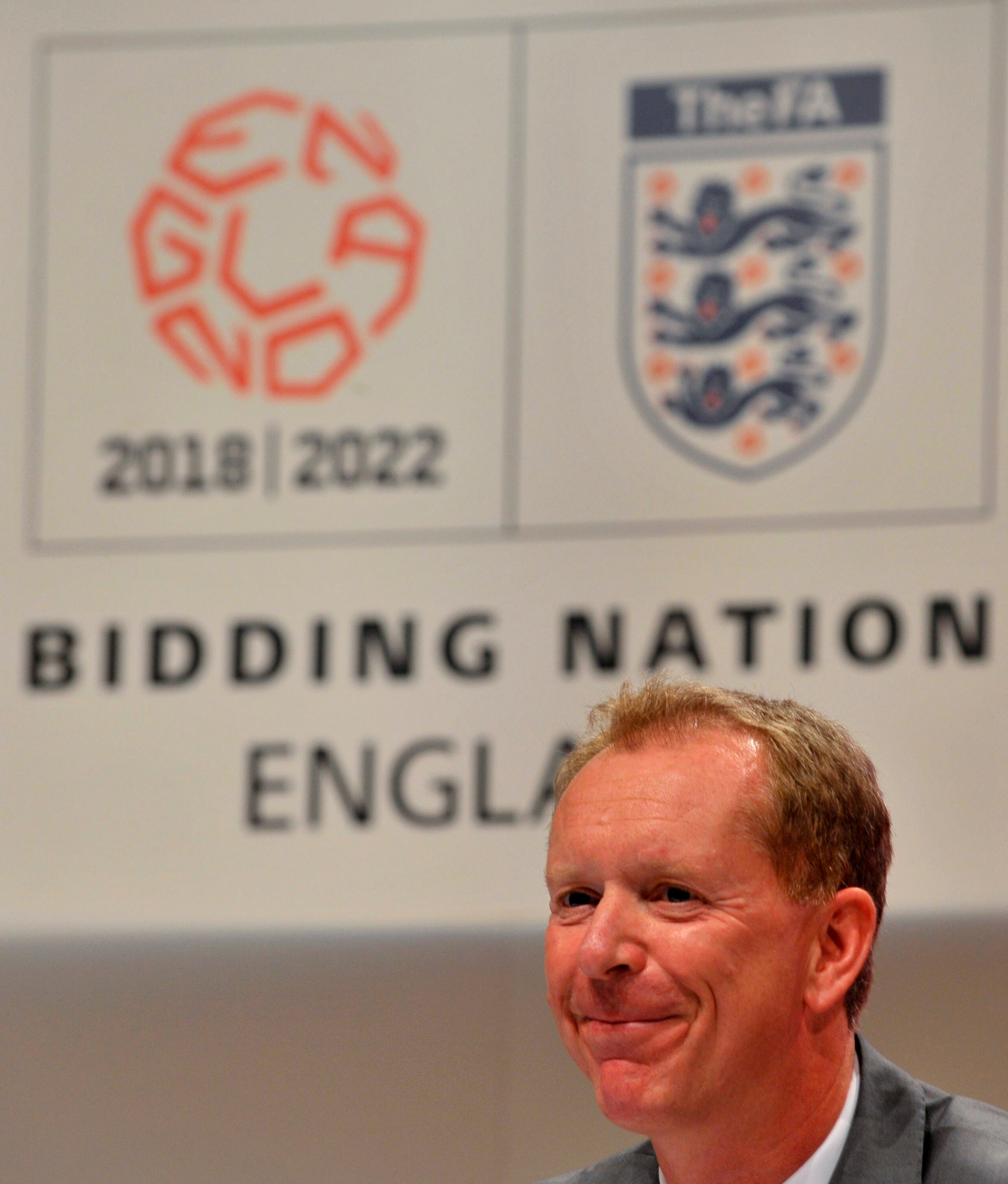
This slide show has been avoided mentioning specific names, as 2018 is far enough away that there is no telling whether Fabio Capello will still be manager and there is certainly not a roster spot already secured eight years in advance.
There is one man who would have a constant presence between now and 2018 should England be awarded the World Cup, and that is Andy Anson, head of the group officially in charge of bringing it to English soil.
Anson knows football. He played for Manchester City's schoolboys team as a, well, as a schoolboy.
But he knew so much more about so many other subjects that Anson forwent his budding football career to attend Exeter College in Oxford, England.
There, Anson earned his Blue in football, recognition for playing sports at the highest collegiate level.
During his professional career, Anson has worked in consumer products while with the Disney Corporation, entertainment while at England's Channel 4, and sports as the commercial director for Manchester United and chief executive of tennis's ATP Europe.
Consumers, entertainment and sports. If there's three things you want the guy leading efforts to bring the World Cup to your home country to be familiar with, it's consumers, entertainment, and sports.
Anson has also said that he will shy away from the "bring football home" mentality that was present in England's campaign to host the 2006 Cup, calling it arrogant.
Well I'm not English, so don't call me arrogant, call me observant. I'm sorry, Andy, but...
England Is Where Football Was Invented
8 of 8
It has been touched on throughout this slide show, but it's time to talk about it more in-depth.
Football, as we know it today, was invented in England in 1863 when the Football Association (FA) was created to form a standardized set of rules to unify the various types of footie that were being played at the time.
The FA is still active today, overseeing all of both professional and amateur football, and is a member of both UEFA and FIFA.
Sometimes I wonder if English people have white blood cells, or if they've been replaced by microscopic footballs making them susceptible to breaking out in random acts of the sport at any point in time.
Riding the tube? Better have a daily recounting the most recent transfers.
Walking home from work? Try getting past the group of kids playing in that field without hailing a pass.
It's crazy how much England and its citizens yearn for football at all hours of the day.
After creating such an incredible sport a century and a half ago, England owed it to the rest of the world to lend the game's defining tournament to another country once every four years.
But this December, when FIFA sits down to award the honor of hosting the 2018 World Cup, it owes it to England to finally bring the game home.
.jpg?w=2560 "NBA Gambling Charges")



.jpg?w=2560 "Jonathan Taylor Landing Spots")

.jpg?w=2560 "Aikman Blasts Cowboys WR 🫣")