
2010 College Football Predictions: If Defense Wins Titles, Who Wins BCS?
“Offense Sells Tickets...Defense Wins Championships.”
Does defense really win championships?
If so, why do we spend so much time talking offense?
Quarterback ratings, the spread, the option, the wildcat, receivers, tailbacks, tight ends—the list seemingly goes on forever.
Though every once in while we might throw a 3-4 or 4-3 into the conversation, you don’t hear a lot about defense unless you are referring to a great defensive player or a great defensive team.
We all want defense; we all know we need defense—but honestly, we can’t wait to get our offense back on the field and score points.
Case in point: Would you rather your team score 75 points on your most bitter rival, or would you prefer to hold them to under 10 points?
Despite our affinity for touchdown scoring, we have definitely celebrated great defenses over the history of the game, and we have given them some great nicknames.
College football has given us “The Wrecking Crew,” “The Blackshirts,” “The Junkyard Dogs,” and “The Seven Blocks of Granite.”
Professionally speaking, the NFL has provided the “Monsters of the Midway,” “The Orange Crush,” ”The Purple People Eaters,” and of course, “The Steel Curtain.”
But is it really the defense that wins championships?
Is the play of the defenders what decides who wins it all and who doesn’t?
The following slideshow will attempt a landmark experiment in college football attempting to prove or disprove the hypothesis “defense wins championships.”
First, we will look back through seven years of statistics and track the top statistical leaders in two key offensive and defensive statistical categories. Then we will show the end results of the statistical leaders’ seasons (win/loss record, conference championship, bowl/BCS game, etc.).
Secondly, we will list the last seven national champions and show their ratings in each category.
These first two exercises should clearly indicate whether offense or defense proves more critical in winning championships.
Lastly, we will utilize all the data to indicate who will win the 2010 BCS National Championship.
Defensive Points Allowed Per Game
1 of 8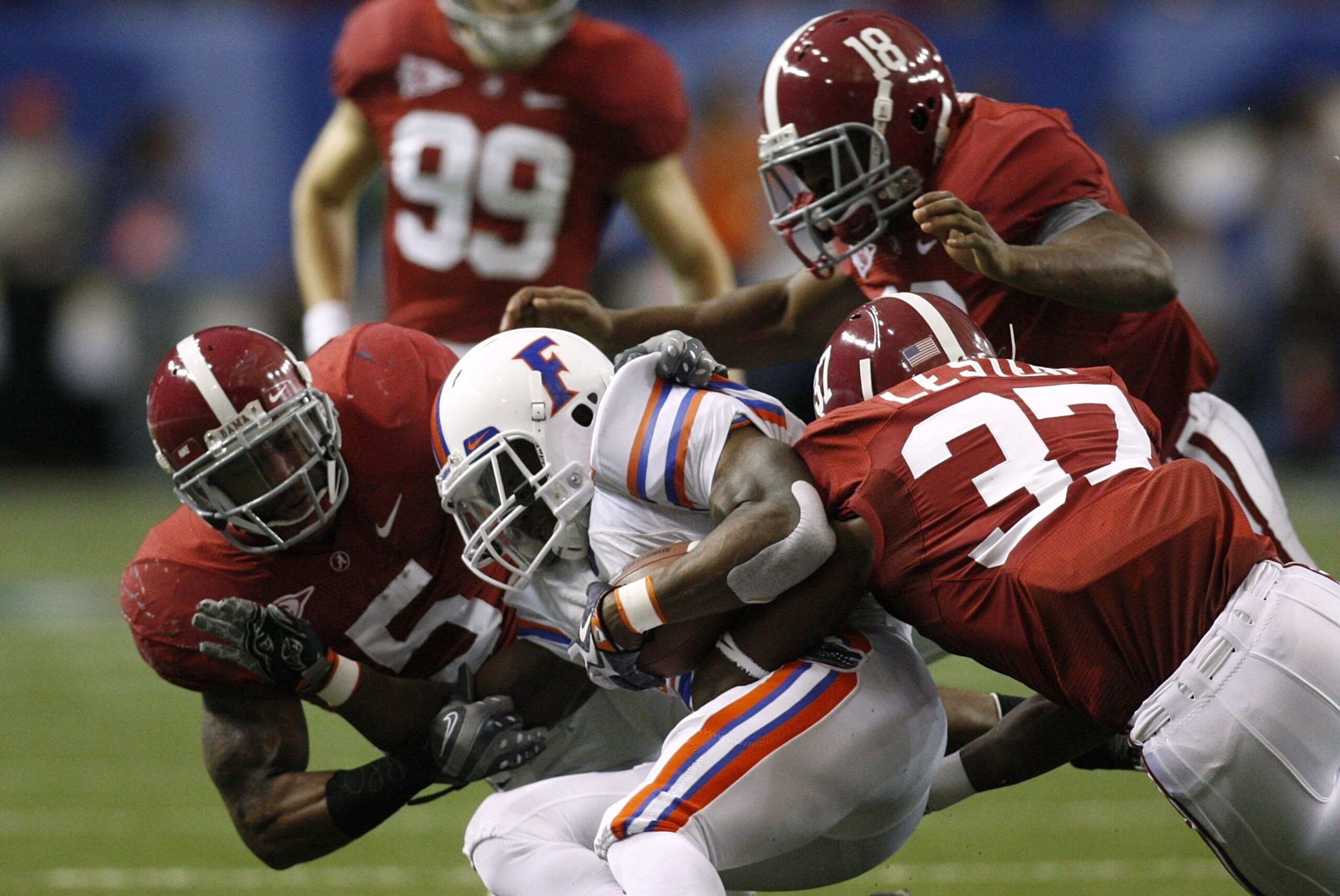
Teams, by year, that ranked No. 1 in fewest defensive points allowed per game:
2003: LSU (10.8 pts/g)
Result: 13-1, BCS National Champions, SEC Champions, No. 1 rank
2004: Auburn (11.2 pts/g)
Result: 13-0, SEC Champions, won Sugar Bowl, No. 2 rank
2005: Alabama (10.7 pts/g)
Result: 10-2 (wins vacated), won Cotton Bowl (vacated), No. 8 rank
2006: V. Tech (9.3 pts/g)
Result: 10-3, lost in Chick-fil-A Bowl, No. 18 rank
2007: Ohio St. (10.7 pts/g)
Result: 11-2, Big Ten Champs, lost in BCS title game, No. 4 rank
2008: USC (7.8 pts/g)
Result: 12-1, Pac-10 Champions, won Rose Bowl, No. 2 rank
2009: Alabama (11.0 pts/g)
Result: 14-0, BCS National Champions, SEC Champions, No. 1 rank
Defensive Yards Allowed Per Game
2 of 8
Teams, by year, that ranked No. 1 in fewest defensive yards allowed per game:
2003: Oklahoma (255.6 yds/g)
Result: 12-2, lost in Big 12 title game, lost in BCS title game, No. 3 rank
2004: N.C. State (221.4 yds/g)
Result: 5-6, no bowl, No. 56 rank
2005: V. Tech (239.7 yds/g)
Result: 11-2, ACC Coastal Champions, won Gator Bowl, No. 7 rank
2006: V. Tech (221.1 yds/g)
Result: 10-3, lost in Chick-fil-A Bowl, No. 18 rank
2007: Ohio St. (225.3 yds/g)
Result: 11-2, Big Ten Champs, lost in BCS title game, No. 4
2008: USC (206.1 yds/g)
Result: 12-1, Pac-10 Champions, won Rose Bowl, No. 2 rank
2009: TCU (233.3 yds/g)
Result: 12-1, MWC Champions, lost in Fiesta Bowl, No. 6 rank
Offensive Points Scored Per Game
3 of 8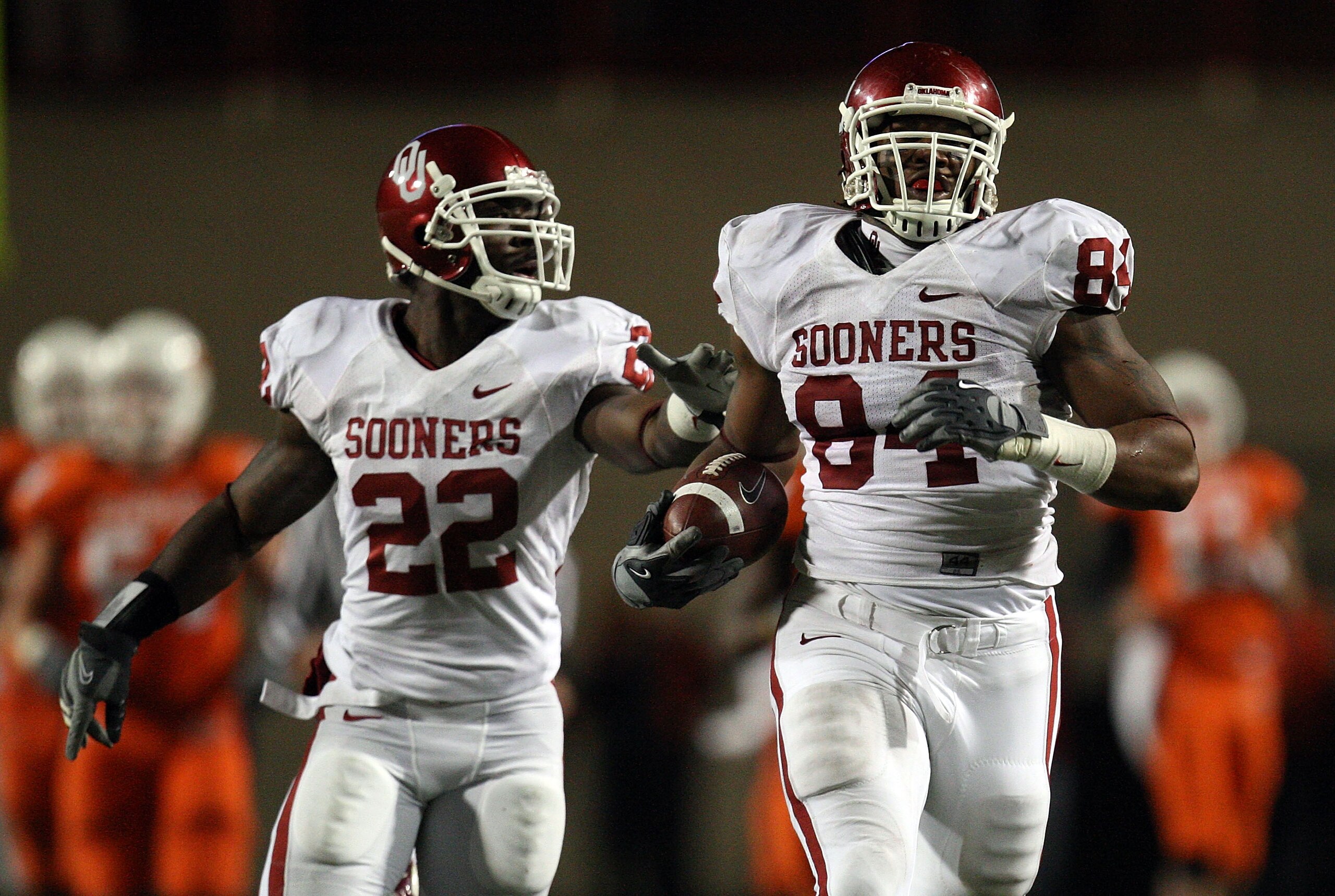
Teams that ranked No. 1 in offensive points scored per game:
2003: Oklahoma (45.2 pts/g)
Result: 12-2, lost in Big 12 title game, lost in BCS title game, No. 3 rank
2004: Louisville (50.3 pts/g)
Result: 11-1, C-USA Champions, won Liberty Bowl, No. 7 rank
2005: Texas (50.9 pts/g)
Result: 13-0, BCS National Champions, Big 12 Champions, No. 1
2006: Hawaii (47.3 pts/g)
Result: 11-2, won Hawaii Bowl, No. 24 rank
2007: Hawaii (46.2 pts/g)
Result: 12-1, WAC Champions, lost in Sugar Bowl, No. 17 rank
2008: Oklahoma (54.0 pts/g)
Result: 12-2, Big 12 Champs, lost in BCS title game, No. 5
2009 Boise State (44.2 pts/g)
Result: 14-0, WAC Champions, won Fiesta Bowl, No. 4 rank


-(1).png?w=2560)
Offensive Yards Gained Per Game
4 of 8
Teams, by year, that ranked No. 1 in offensive yards gained per game:
2003: Texas Tech (584.6 yds/g)
Result: 8-5, won Houston Bowl, No. 31 rank
2004: Louisville (536.7 yds/g)
Result: 11-1, C-USA Champions, won Liberty Bowl, No. 7 rank
2005: USC (580.3 yds/g)
Result: 12-1 (wins vacated), Pac-10 Champs, lost BCS title game, No. 2
2006: Hawaii (549.9 yds/g)
Result: 11-2, won Hawaii Bowl, No. 24 rank
2007: Tulsa (542.5 yds/g)
Result: 10-4, won GMAC Bowl, No. 30 rank
2008: Houston (575.1 yds/g)
Result: 8-5, won Armed Forces Bowl, No. 45 rank
2009: Houston (581.2 yds/g)
Result: 10-4, C-USA West Co-Champs, lost Armed Forces Bowl, No. 27
BCS National Champion Statistics
5 of 8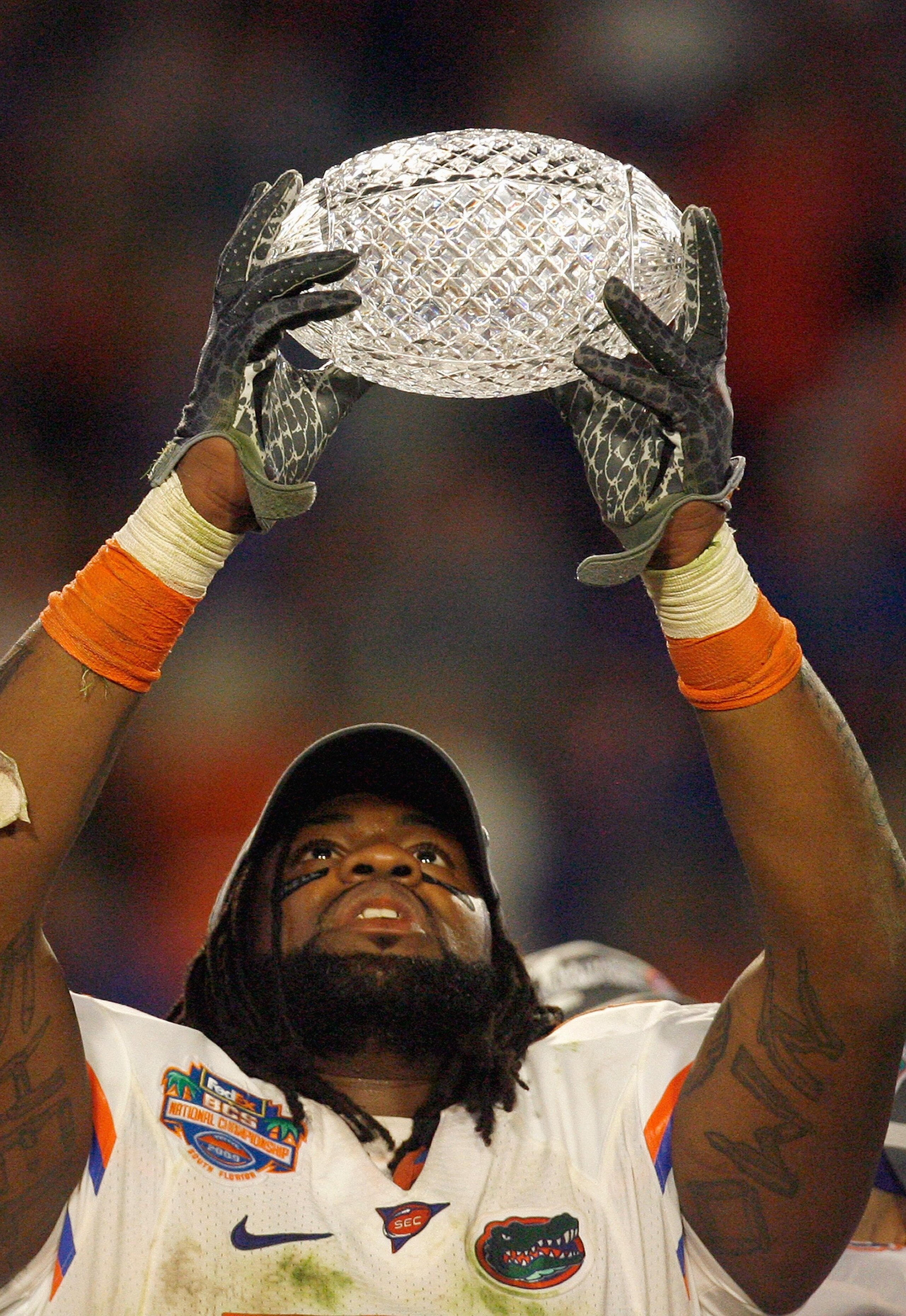
2003: LSU
Defensive Points Allowed Per Game: 10.8, No. 1
Defensive Yards Allowed Per Game: 259.5, No. 2
Offensive Points Scored Per Game: 34.9, No. 12
Offensive Yards Gained Per Game: 426.5, No. 26
2004: USC
Defensive Points Allowed Per Game: 12.5, No. 2
Defensive Yards Allowed Per Game: 272.8, No. 7
Offensive Points Scored Per Game: 36.8, No. 7
Offensive Yards Gained Per Game: 442.8, No. 15
2005: Texas
Defensive Points Allowed Per Game: 14.6, No. 4
Defensive Yards Allowed Per Game: 280.6, No. 6
Offensive Points Scored Per Game: 50.9, No. 1
Offensive Yards Gained Per Game: 508.4, No. 3
2006: Florida
Defensive Points Allowed Per Game: 13.5, No. 6
Defensive Yards Allowed Per Game: 268.8, No. 10
Offensive Points Scored Per Game: 28.8, No. 26
Offensive Yards Gained Per Game: 398.1, No. 21
2007: LSU
Defensive Points Allowed Per Game: 19.6, No. 16
Defensive Yards Allowed Per Game: 283.8, No. 3
Offensive Points Scored Per Game: 38.7, No. 12
Offensive Yards Gained Per Game: 448.2, No. 19
2008: Florida
Defensive Points Allowed Per Game: 12.8, No. 5
Defensive Yards Allowed Per Game: 279.3, No. 8
Offensive Points Scored Per Game: 45.2, No. 3
Offensive Yards Gained Per Game: 442.4, No. 18
2009: Alabama
Defensive Points Allowed Per Game: 11.0, No. 1
Defensive Yards Allowed Per Game: 241.7, No. 2
Offensive Points Scored Per Game: 31.7, No. 24
Offensive Yards Gained Per Game: 413.8, No. 33
The Results
6 of 8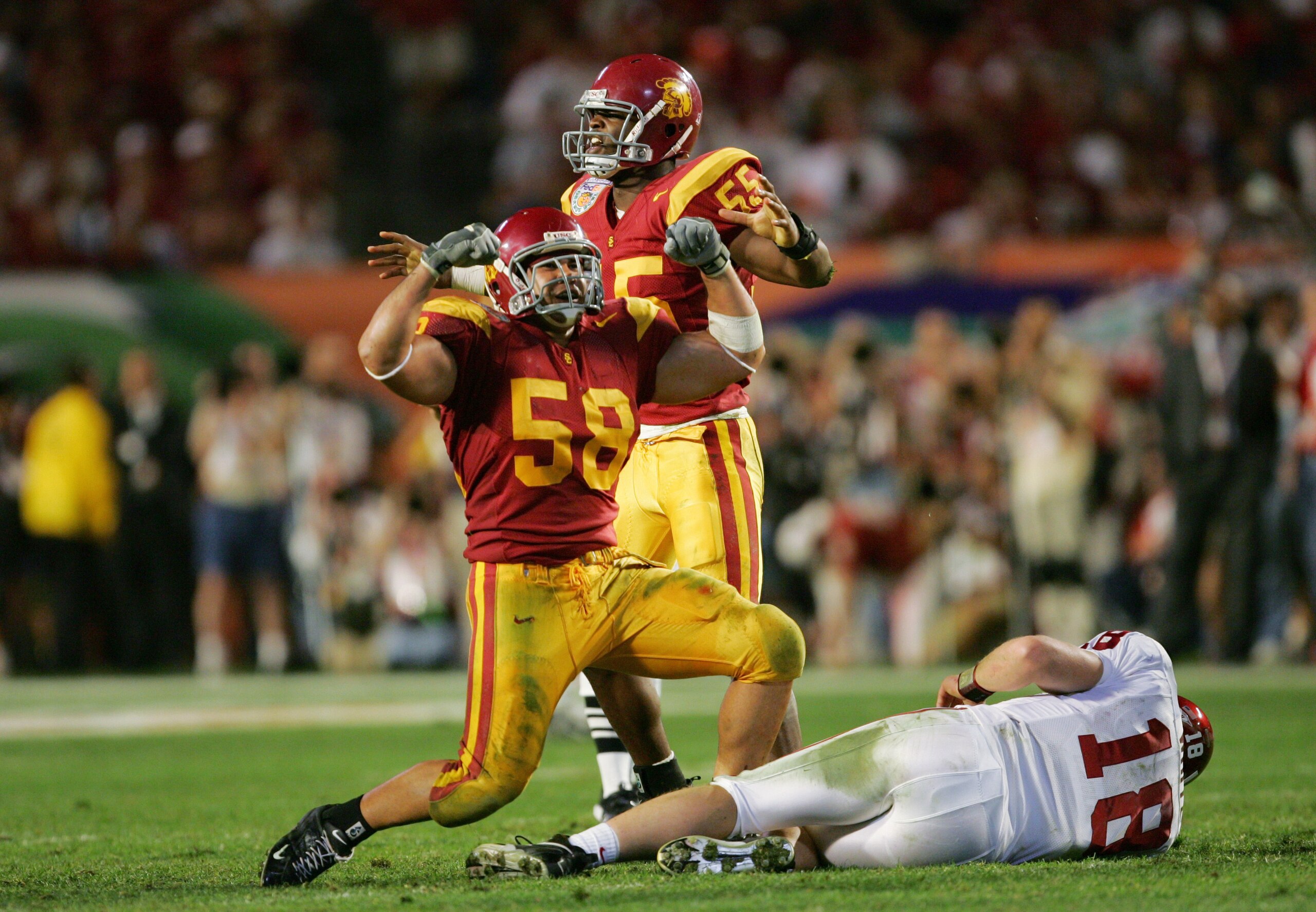
So, what do the numbers say?
Is it offense or defense that wins championships?
Well, let’s look at the facts.
First, based on the combined statistics for the leaders of the two defensive categories vs. the leaders of the two offensive categories:
Winning Percentage
Defensive Teams = 85.71 percent vs. Offensive Teams = 83.78 percent
Average Ranking
Defensive Teams = 9.42 vs. Offensive Teams = 16.21
BCS Bowl Wins/Bids
Defensive Teams = 5/9 vs. Offensive Teams = 2/6
Conf. Championships
Defensive Teams = 8 vs. Offensive Teams = 8
BCS Championship Appearances
Defensive Teams = 5 vs. Offensive Teams = 4
BCS National Titles
Defensive Teams = 2 vs. Offensive Teams = 1
Secondly, based on the last seven BCS title winners:
Average ranking in Defensive Points Allowed = 5
Average ranking in Defensive Yards Allowed = 5.42
Average ranking in Offensive Points Scored = 12.14
Average ranking in Offensive Points Allowed = 19.29
Additional observations regarding the past seven BCS Champions:
1. Only once in seven years has the national champion ranked out of the top 10 in either defensive category (2007 LSU defense ranked No. 16 in points allowed).
2. Six of the last seven national champions have ranked out of the top 10 in at least one of the offensive categories. Additionally, four of these BCS title holders have ranked out of the top 10 in BOTH offensive categories.
3. The average ranking across all four categories for all seven BCS champions in 10.46.
4. The most “balanced” championship team in terms of rankings over the past seven years is the 2005 Texas squad, which ranked an average of 3.5 over the four categories.
5. The least “balanced” championship team in terms of rankings over the past seven years is the 2009 Alabama Crimson Tide team, which ranked No. 1 and No. 2 defensively and No. 24 and No. 33 offensively.
Based on these findings, we can assert the following:
1. Teams that rank first in one of the offensive or defensive categories have a better opportunity to win a Conference Championship than teams who do not.
2. Teams that are defensively dominant rather than offensively dominant are ultimately more successful.
3. Teams that are stronger defensively are more likely to obtain a BCS bowl bid and then are more likely to win the BCS bowl game.
4. Defensive teams are more likely to reach the BCS Championship and then are more likely to win the title.
5. Teams are more likely to win the BCS Championship if they are ranked in the top five defensively and in the top 15 offensively (combined).
6. Defense wins championships.
Predicting the 2010 BCS Championship
7 of 8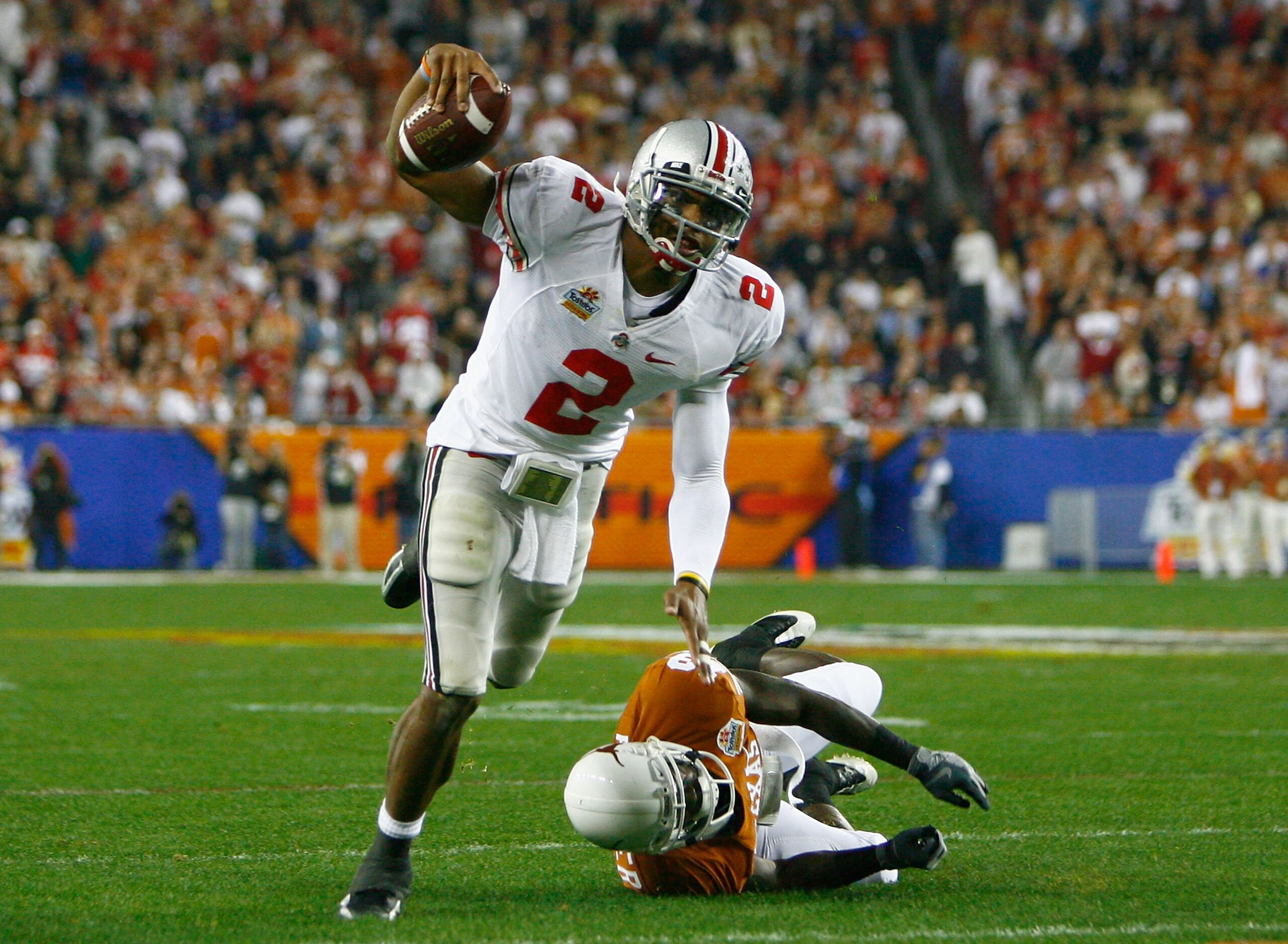
The numbers clearly indicate that the two teams who meet on Jan. 10, 2011 in Glendale, Arizona will be teams that are defensively dominant.
More than likely both will rank in the top 10 nationally in defense and in the top 25 nationally in offense.
Furthermore, the winner of the 2010 BCS Championship will likely rank in the top five defensively and in the top 15 offensively.
So, who will these teams be?
The 2011 BCS National Championship
Ohio State vs. Texas
Ohio State
Ohio State returns seven starters on a defense that ranked No. 5 overall in 2009. Additionally, they return nine starters on an offense that ranked No. 18 in rushing and that can expect to improve offensively.
The play of Terrelle Pryor may be the key. He doesn’t have to be perfect, but the Buckeye offense has to find a way to successfully pass the ball and score points without making costly mistakes.
According to Phil Steele, Ohio State’s schedule is the 61st hardest (or 59th easiest) in the nation. The 2010 schedule includes eight home games. If the Buckeyes can throw the ball and play excellent defense, they may have a clear shot down the highway to Glendale.
Texas
Texas, on the other hand, returns six starters to a defense that was rated No. 3 in 2009. Though there are questions in key areas (as there are everywhere across the country), overall the Longhorns are stacked with talent and should be able to post a top-five defensive ranking in 2010.
The questions for the Longhorns are obviously offensively-related, returning four starters to an offense that ranked 29th overall in 2009. Four seniors on the offensive line and a talented group of receivers and running backs should help freshman Garrett Gilbert have a solid season under center.
Again, the Longhorn offense doesn’t need to be stellar, and if Mack Brown can be successful changing the focus to a rushing game, it won’t need to lead the nation in scoring when paired with one of the best defenses in the country.
Texas’ strength of schedule is 62nd (according to Phil Steele), which means they should have a great chance of running through their schedule unblemished.
The Pick
If the numbers are right, Ohio State should have the advantage over Texas in the championship game. The Buckeyes' offense should be more productive, while their defenses should be close to even.
Interestingly, it may come down to two rushing teams playing two defenses that can stop the run.
Glendale may witness one of the lowest-scoring BCS championships in recent history.
Regardless, the numbers say that the Ohio State Buckeyes will win the 2010-11 BCS Championship.
Other Defensively Dominant BCS-Bound Teams
8 of 8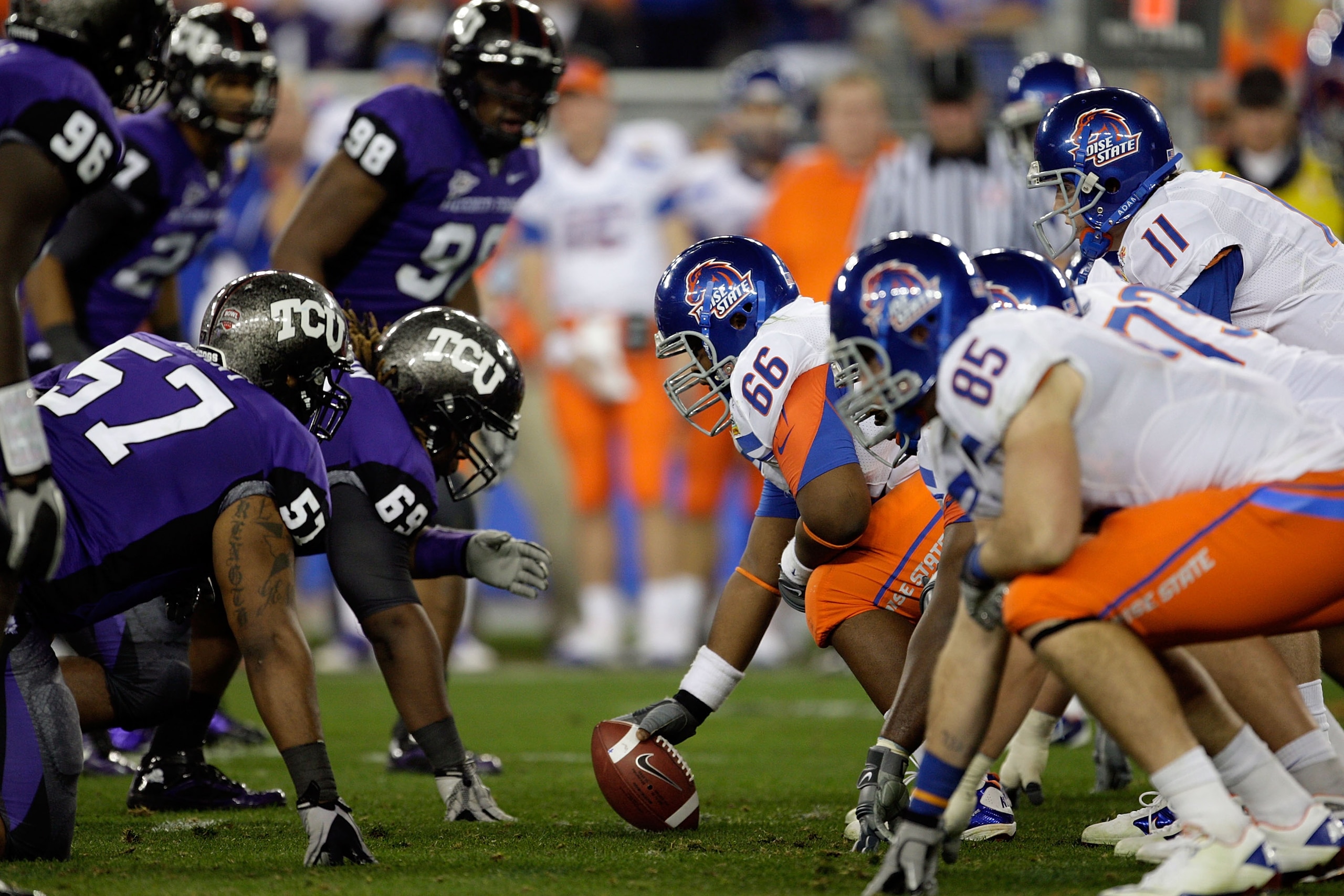
Undoubtedly the numbers aren’t perfect and leave a lot to be desired. There are a lot of “what-ifs” in any prediction, and this is certainly no exception.
By the numbers, here is who comes up just short of the title game.
TCU
The No. 1 defense in 2009 has seven returning starters, and the No. 7 offense returns nine starters. The strength of schedule is a desperate 93 of 120. No team from a non-BCS conference has ever made it to the BCS Championship Game. If the Horned Frogs manage an undefeated season, they may deserve to be the first, but will their strength of schedule and the voters prohibit history from being made?
Boise State
The No. 10 defense in 2009 returns nine starters, and the No. 14 offense returns nine starters. The Broncos' strength of schedule is 87 of 120, leaving Boise State in the exact same position as TCU.
If they go undefeated, do they deserve a shot at the title? Well, there are solid arguments to support both answers to that question. Will it ultimately happen? Chances are the answer is "no."
Alabama
The defending national champion Crimson Tide’s 2009 No. 2-ranked defense returns only one starter for 2010, while its No. 42 offense returns eight starters. Alabama has to survive another brutal SEC schedule, and their No. 15 strength of schedule reflects this. The Crimson Tide’s outstanding defense ultimately pushed them over the top in 2009; the departure of most of this unit will more than likely prevent their return in 2010.
Iowa
The Hawkeyes' No. 10-ranked defense returns eight starters, while its No. 89-ranking offense (of 120) returns six starters. If defense alone wins championships, Iowa would be at the top of the heap, but unless the offense can jump 60 slots or so in the rankings, Iowa may settle for another BCS bowl but not the championship game.
North Carolina
The Tar Heels may have the best defense in the nation in 2010. They return nine starters to a unit that ranked No. 6 overall in 2009, but they also return nine starters to an offensive unit that ranked an ugly 108th in offense.
The Tar Heels (per Phil Steele) play the 24th-most difficult schedule in college football. If only an offensive revival could occur in Chapel Hill in 2010! If so, we could finally watch a Tar Heel team win a national championship without cutting down a net...
.jpg?w=2560 "Grading WWE Raw 🔠")



.jpg?w=2560 "Nabers' Recent IG Post 👀")
.jpg?w=2560 "Landon Dickerson Placed on IR")