Is Today's UFC Truly "As Real As It Gets"?
Upon recently re-watching a few of the older UFC bouts on DVD, I became nostalgic, though not for reasons common to most current UFC fans. Most UFC fans--myself included--appreciated everything Royce Gracie did for MMA, though we've accepted that his prime has passed. Who didn't love watching Dan Severn tear through the competition? Nevertheless, his eventual retirement was warmly welcomed after a dominating career.
Some people miss the gis worn by the respective schools of fighting, though eventually gis were banned to thwart grip advantage and realistically style combination was a necessary evolution for anyone that wanted to survive the most devastating of grapplers and strikers in UFC competition. Even though I've come to accept these subsequent changes to the UFC, a quiet longing grew in me for other reasons.
TOP NEWS
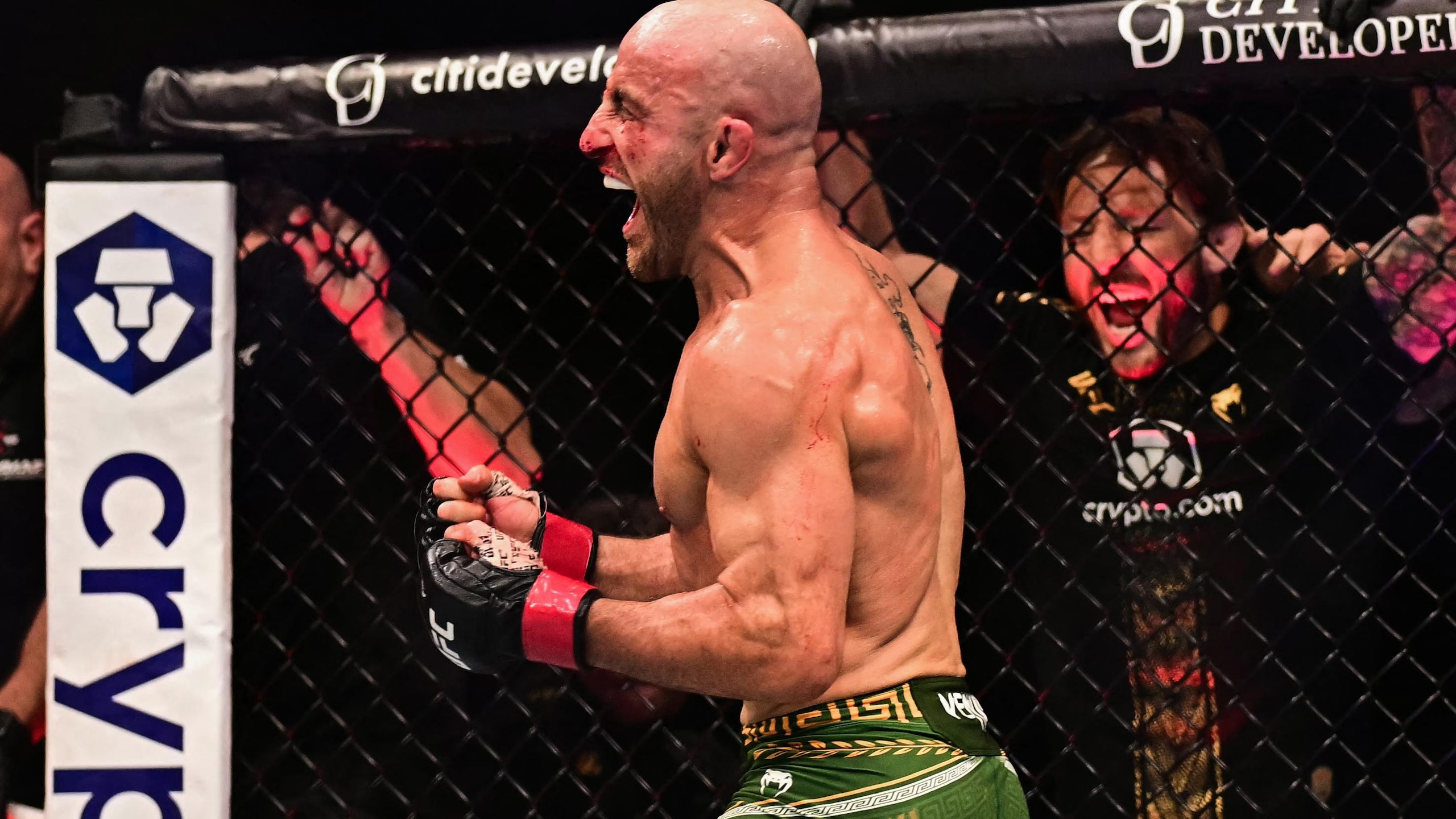
Volkanovski breaks record after title win at UFC 333
Fights to Make After UFC 333 ➡️

🚨 UFC 336 Fights Announced
My source of nostalgia came from the raw layout that the tournament held; not necessarily in the sense of the fighters being picked from a fish bowl (although that was highly entertaining), but for a few other reasons--namely the lack of rounds and judges. I realize that these "sporting" elements were needed to draw in a bigger crowd since it helped viewers consider MMA as being an official sport whereas they normally would not, but given that MMA has evidently grown to sufficiently sustain millions of viewers after adopting "sporting" rules, a question lingers in my mind: considering all the rule additions to the UFC in the years beyond its tournament days, is the current UFC truly "as real as it gets" as its slogan suggests?
Consider the issue of time limits. To at least some degree, time limits are an important component of the UFC today since a few key matches in its early days went way beyond the open-window-of-entertainment in viewers. One such match is the Royce Gracie and Ken Shamrock match in UFC 5. The ridiculous performance (mainly on the part of Shamrock) made the bout last thirty-six minutes. It was nothing but Shamrock laying in Gracie's guard for a half hour and periodically hitting him. It would have gone longer had it not been declared a draw, which was evidently the intention of Shamrock as he'd easily been choked out very quickly by Gracie in the past. Considering instances like this fight, it is easily understood why time limits were put into place. However, why the leap from time limits to rounds?
While it's true that rounds give the UFC a more commonly accepted format amongst audiences, why dilute fighting any more than it has to be? MMA has come to hold the gaze of the entire world. It has already captivated athletes from other sports that are generally considered to be hardcore. People everywhere are beginning to realize that MMA is--indeed--the toughest sport in the world due to its brutal demand of the body under the looming threat of being knocked out or submitted. As a result, MMA has continued to grow, and with continuous advancements in media, it's clearly accepted by the public as more and more viewers are starting to watch it.
In considering the growth and true establishment of MMA in popular culture, it seems odd for people to be content with this lack of realism in the UFC. In actual altercations, there are no rules. Anything from weapons to biting, fish hooking, eye gouging and so forth are expected facets of real one-on-one combat. Of course, MMA fighters can't use weapons as serious injury and quite likely even death would result; the Octagon may be the closest thing society has to the Colosseum, but the two are inherently different in terms of degree of violence. Biting, fish hooking and eye gouging cause debilitating injuries that would likely last for life, and punching bone without gloves often breaks people's hands. The advancements in MMA in response to the aforementioned conditions are completely understandable. Why, then, are there rounds?
How many fights have we all seen that, had they gone without rounds, probably would have offered different results? UFC 82: Dan Henderson vs. Anderson Silva and UFC 104: Lyoto Machida vs. Mauricio "Shogun" Rua are two good examples. Silva hasn't lost a fight in the UFC, but he lost round one to Henderson--badly. Henderson had him in side control and was beating Silva when the round ended. As a result, they separated and went back to the free movement phase where, of course, Silva dominated. The rounds during Machida vs. Rua gave Machida recovery time he desperately needed to ice his hamstrings, and the actual perspective between amount of contact that each fighter had would have been much greater without rounds.
As far as judges are concerned, it should be noted that more than anything UFC viewers want to see fights finished. As a result, we have to keep subjectivity out of the equation as much as possible in order to know, to the best of our ability, who the best fighter is in any particular bout. Otherwise viewers are often left to wonder how a real fight between two great fighters (e.g., Dan Henderson and Anderson Silva) would have actually turned out if they were in an actual altercation without external moderation by subjective scoring systems, time limits and--least realistic of all--time to rest! By adding more rules and regulations to MMA, it strays further and further from its essence: one-on-one, unarmed combat where either fighter attempts to knock out or submit his opponent.
There's no doubt that MMA is fighting, but it holds many more rules than the typical one-on-one altercation will ever have. If the UFC really is "as real as it gets," should it not hold itself to the standard of a real one-on-one combat--implying no rules--and take heed by adding rules only by absolute necessity from that point onward? Rules should be based on utility--not appeal. I suggest that the UFC should go back to its roots and focus on offering a more accurate fighting atmosphere, one where there are no rounds but ample time limits.
If the time limit ends and the fight could still continue (e.g., UFC 104: Machida vs. Rua and UFC 72: Tyson Griffin vs. Clay Guida), then I propose letting it continue another five minutes. Why not? At that point (and only that point) should the judges score the bout. Again, the only reason there should be a time limit is to keep the viewers entertained; otherwise all fights should have a definite finish, whether by KO, TKO, Submission, et cetera. I'm not claiming that the UFC should once again attempt to determine which traditional style of martial arts is superior to another, but I do believe that it should uphold its slogan "as real as it gets" to the best of its ability. In my opinion, it is best to remember that MMA is fighting that qualifies as a sport, not a sport that qualifies as fighting.

.jpg?w=2560 "Raiders Could Start Mendoza")



.jpg?w=2560 "Rodgers Iced Out on Plane 💎")

.jpg?w=2560 "🚨 Week 8 AP Top 25 Poll")