
College Football's Coaches' Carousel: Did They Deserve To Get Fired?
Sometimes, it's all about timing. Other times, it's about quelling the boosters' unrest and calming the fans' rage before it gets out of control.
In either case, some coaches' firings have raised eyebrows in recent years. It's time to take a look back, now that everything has been said and done, and evaluate whether or not the eject button should have been hit on these four coaches:
Ron Zook, Florida Gators
.jpg?w=2560 "AP Poll Top Five Week 9")

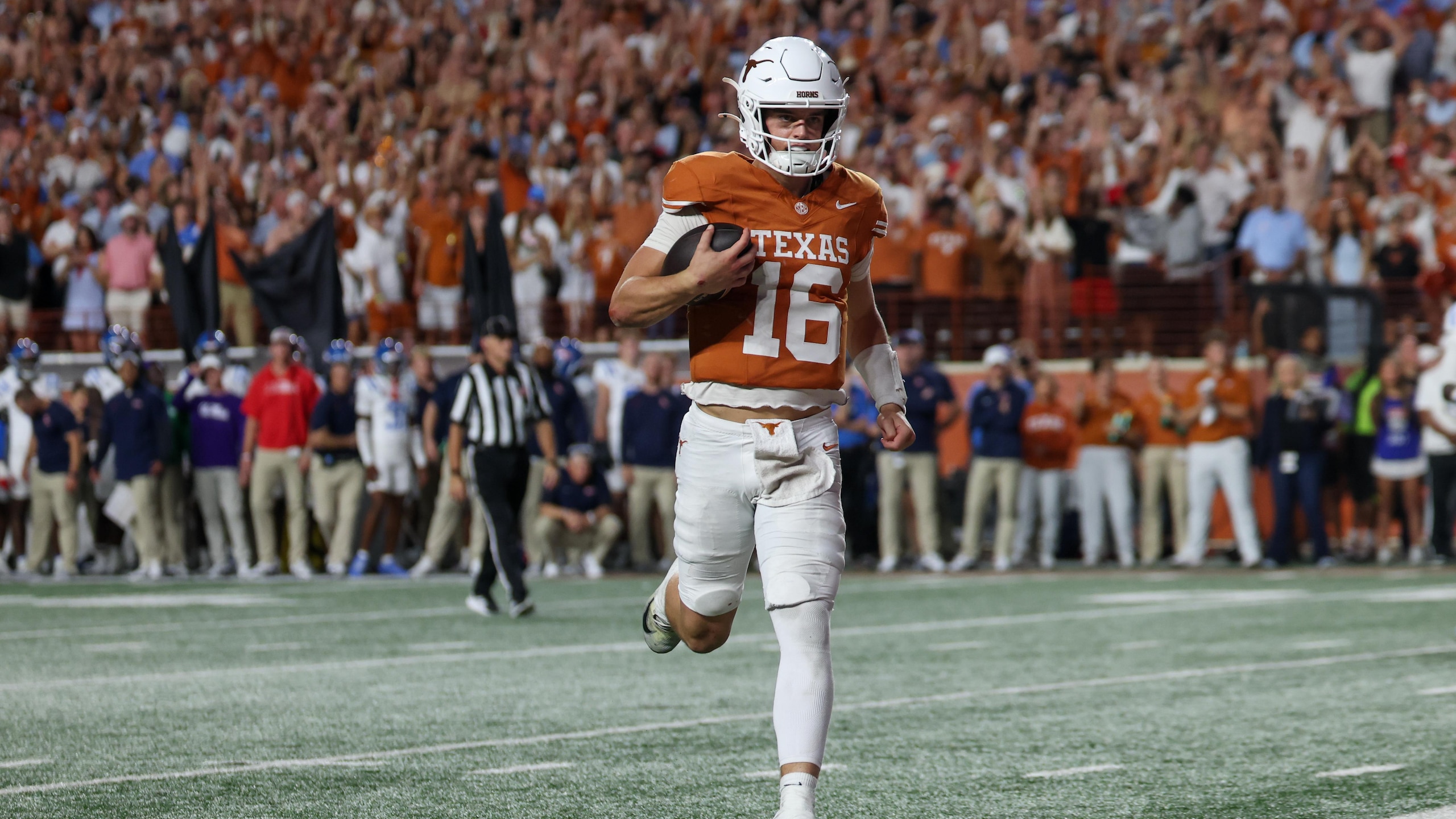
Nothing like upsetting an angry Gator. After experiencing enormous success, Steve Spurrier left Gainesville for the Washington Redskins' head coaching position in 2002. Within 24 hours after Ron Zook was hired to take his place at Florida, the website FireRonZook.com popped up. Not a good sign.
Zook racked up three seasons of 8-5, 8-5, and 7-4 before finally getting canned. The Zookster beat Florida State in Tallahassee—something Spurrier never did—and his Gators played the spoilers to the 2002 and 2003's SEC champs, preventing them from going undefeated. After being terminated, Zook eventually took a job at Illinois, and Urban Meyer filled his shoes at the Swamp.
When Florida won the 2006 BCS championship, twenty-two of the twenty-four starters were Zook's recruits—including the MVP quarterback, Chris Leak—and Meyer publicly thanked Zook for his contributions. While Zook's recruiting ability has never been questioned, his coaching ability was always an issue.
In 2005, Zook did not win one game in the Big Ten, and the Gators fans were were thumping their chests and saying, "See, I told you." Two years later, after ending the Ohio State Buckeyes' 28-consecutive home-game winning streak, the Fighting Illini went to the Rose Bowl, eventually losing to USC.
The Gators, by the way, lost to Michigan in their bowl in that same season. But the point was made—the Fighting Illini had made the biggest turnaround in division 1A history (seven games). The Zookster had arrived, and was rewarded with the Big Ten Coach of the Year award
Tyrone Willingham, Notre Dame
Oh, the debates on this firing still continue. Not much more needs to be thrown on the fuel-filled fodder—but hey, that's what we like to do.
Willingham, in his first year in South Bend, won eight straight games, was the first coach in Notre Dame history to win ten games (10-3 final record) in his inaugural season, and was named the ESPN/Home Depot Coach of the Year.
In his next two seasons, he went 5-7 and 6-6, before finally getting the axe with an overall record of 21-15. Enter Charlie Weis.
Weis of course, had an entirely different Notre Dame experience. In his first year, he went 9-3 overall (versus Willingham's 10-3) and went to the Fiesta Bowl, losing to 34-20 to the Buckeyes.
In 2006, he received the mother of all contracts after posting a 5-2 record—roughly equal to what Willingham's record was at the same point in his second season. The Irish ended up going 10-3, and lost to the LSU Tigers in the Sugar Bowl, 41-14—the ninth-straight bowl loss for the Irish.
In 2007, Weis went 3-9, versus Willingham's 6-6. Yet Weis was not fired, and after three seasons, has only one more win than Willingham, at 22-15.
David Cutcliffe, Ole Miss
In his first season at Ole Miss, Cutcliffe recruited Eli Manning, who would eventually guide the New York Giants to a Super Bowl win in 2008. From 1999 to 2004, Cutcliffe had records of 8-4, 7-4, 7-5, 7-6, 10-3, and 4-7, winning three Independence Bowls and a Cotton Bowl (finishing No. 13 in the Nation after the Cotton Bowl win). In only one of his six years did his team not qualify for a postseason bowl.
In his final year in 2004, he was fired after posting a 4-7 record (tied for third in the SEC West). His 44-19 record, five straight winning seasons, and first 10-game winning season in over thirty years in Oxford, apparently was not good enough.
Guy Morriss, Baylor Bears
Well, it's not like Morriss was walking into a winning program. The Baylor Bears had posted one conference win in thirty-seven Big 12 games when Morriss took over the program, in 2003. While he did post a dismal 3-9 season, he did upset the Colorado Buffaloes, who were favored by almost three touchdowns.
The next season he again coached the Bears to only one conference win in the Big 12—but what a win it was.
In an overtime victory against the No. 16 Texas A&M Aggies, Morriss decided to go for two, instead of settling for a PAT and sending the game into a second OT. It was their first win against the Aggies since 1995, and all of a sudden, the Bears' faithful were believers.
2005 saw a lot of progress, with the Bears going 5-6 (best record since '95) and a first—a conference road win against Iowa State. 2006 was more typical of Baylor Bears football, with injuries decimating their offense and ending in a 4-8 record.
In 2007, after losing a lot of seniors and their highly-touted quarterback, Shawn Bell, the Bears posted a 3-9 record and Morriss was fired at the end of the season.
Looking at his predecessors' records, Morriss was actually making progress at Baylor. Dave Roberts (4-18) in '97-98 and Kevin Steele (9-36) '99-02 both had inferior records compared to Morriss, who finished with a 18-40 record at Baylor. Yet the Bears fired him.
Did these coaches deserve to be fired, or was it just a case of being in the wrong place at the wrong time? I believe the terminations were all unjustified. What say you, college football fans?
.jpg?w=2560)

.jpg?w=2560 "Mahomes Told Teammate to Leave Meeting")
.jpg?w=2560 "Baker Gets Glove From Rays 🧤")

.jpg?w=2560 "NFL investigating Eagles")
.jpg?w=2560 "Updates from EVERY NFL Game 🏈")
.jpg?w=2560 "Steelers Roll Saints in Paris")