
With the 2022 NBA trade deadline now in the rearview, some teams should already be looking ahead to free agency to compensate for moves that were made—or ones that weren't but should have been.
Some deals, like the Ben Simmons-James Harden swap, will take time to declare a winner and loser. For others, it's far easier.
For the following five teams, here's how they can amend their trade-deadline mistakes and formulate a plan to attack free agency.
Dallas Mavericks
1 of 5
What Makes Them a Loser
A revamped front office in Dallas clearly didn't believe in Kristaps Porzingis, who the previous regime traded multiple first-round picks to get before awarding the 7'3" big man with a five-year, $158 million max deal.
Wanting to get off his massive contract was understandable, even if Porzingis' scoring (19.2 points per game) was needed now more than ever with Tim Hardaway Jr. sidelined following foot surgery. Finding another scorer who could knock down shots next to Luka Doncic seemed like the likely trade-deadline route.
Instead, Porzingis is now gone, with Dallas still owing its 2023 first-round pick to the New York Knicks.
Moving the 26-year-old isn't what makes the Mavs a deadline loser (although his defense was the best we've seen in years), but rather the package they received in return.
Davis Bertans, like Porzingis, is on one of the worst contracts in the NBA. With three years and $49 million remaining after this season, Bertans is an overpriced shooter who's making just 31.9 percent of his threes this season.
Spencer Dinwiddie, the other piece of the deal, has arguably been worse. The 28-year-old point guard ranks 225th out of 248 qualified players in true shooting percentage this season (50.1 percent). He's also on a rough contract (two years, $36.9 million left) with the final season guaranteed at $10 million (or fully guaranteed at $18.9 million if he reaches 50 games played this year and next).
Trading Porzingis for some expiring salary or a different high-caliber starter would have been one thing, but all the Mavs did was break one bad contract up into two while hurting the team's defense and putting more scoring pressure on Doncic in the process.
Free-Agency Approach
The Mavs already kick-started their free agency by signing Dorian Finney-Smith to a four-year, $55.5 million extension, keeping him out of unrestricted free agency. The move puts Dallas at $149 million in committed salary for next season, already $2 million over the luxury-tax line.
Even with Porzingis gone, the Mavs have no cap space but have given themselves more digestible contracts that could be moved or broken down even more. Dallas will have the mid-level exception to sign a player with (approximately $10.1 million), although using the full amount would put them $12 million into the luxury tax.
All of this is without factoring in a new deal for Jalen Brunson, who's become arguably the most important player on the roster now outside of Doncic.
The Detroit Pistons, armed with over $30 million in cap space, could throw a significant offer at Brunson, one even Mark Cuban and the Mavs may be unwilling to match.
If Brunson leaves, Dallas will be stuck paying $63 million to Hardaway, Dinwiddie, Bertans and Reggie Bullock alone next year with no true co-star next to Doncic for a team that will be dipping into the tax.
The Mavericks need to keep Brunson at all costs and look for avenues to dump salary elsewhere.
Los Angeles Lakers
2 of 5
What Makes Them a Loser
The Lakers are 26-30 this season, 3-7 in their last 10 games and clinging on to the ninth seed in the West. The teams closest to them in the standings (Los Angeles Clippers and New Orleans Pelicans) each picked apart the Portland Trail Blazers roster to add some win-now help for a playoff push.
Los Angeles, of course, did nothing.
To make things worse, general manager Rob Pelinka tried to justify his inactivity by saying that superstars LeBron James and Anthony Davis were consulted with and were OK with the Lakers standing pat.
According to ESPN's Dave McMenamin, this simply wasn't true:
"James and Davis did not have any conversations with Pelinka on Thursday in which they gave their approval of L.A. letting the deadline pass without making any deals, a source familiar with the situation told ESPN. 'Totally false,' the source said."
For a team that was limited in assets, Talen Horton-Tucker, Kendrick Nunn, the 2027 first-round pick and a few second-rounders were still in play. Even trying to pull off a two-for-one swap of end-of-the-bench guys to open up a roster spot for the buyout market would have been something.
Free-Agency Approach
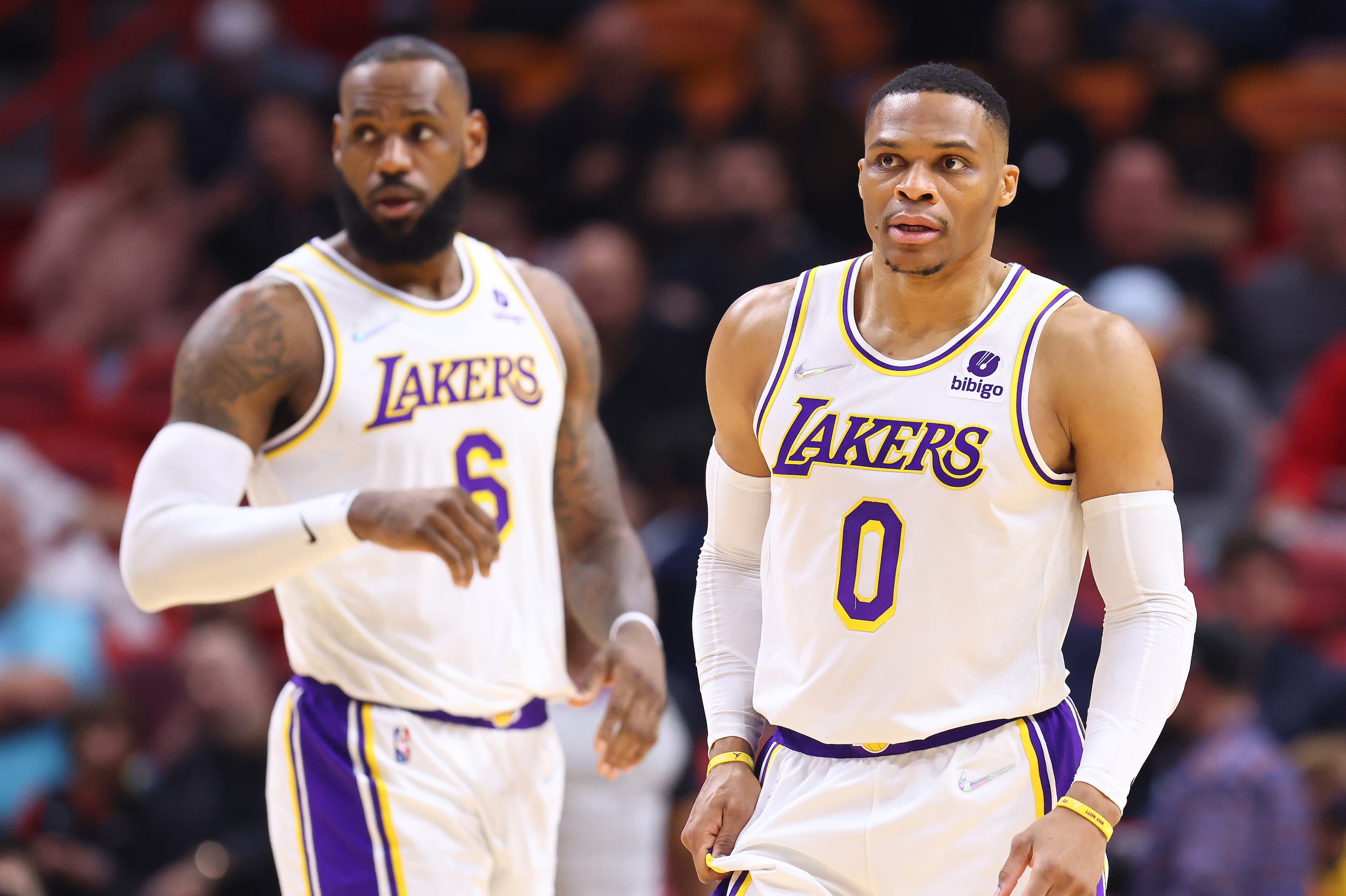
The Lakers have $149 million in salary committed for next season, meaning the team is already above the $147 million luxury-tax line with just seven players under contract. It's safe to assume Russell Westbrook will be picking up his $47 million player option.
Los Angeles will have no cap space, meaning it will be limited to the tax-payer mid-level exception of $6.3 million. That's money that could be used to try to bring back Malik Monk, who deserves a raise given his averages of 13.0 points on 40.3 percent shooting from three this season.
This is a team that needs to add talent on the cheap around its superstar nucleus, preferably players who didn't hit their prime over a decade ago. The allure of playing in L.A. for the Lakers next to James and Davis should once again convince some ring-chasing vets to take a discount.
Players such as Goran Dragic, Serge Ibaka, Jeremy Lamb, Tristan Thompson, Thaddeus Young and John Wall (if he ends up getting a buyout from the Houston Rockets) should all be on the Lakers' radar this summer. Carmelo Anthony has earned his roster spot back as well.
New York Knicks
3 of 5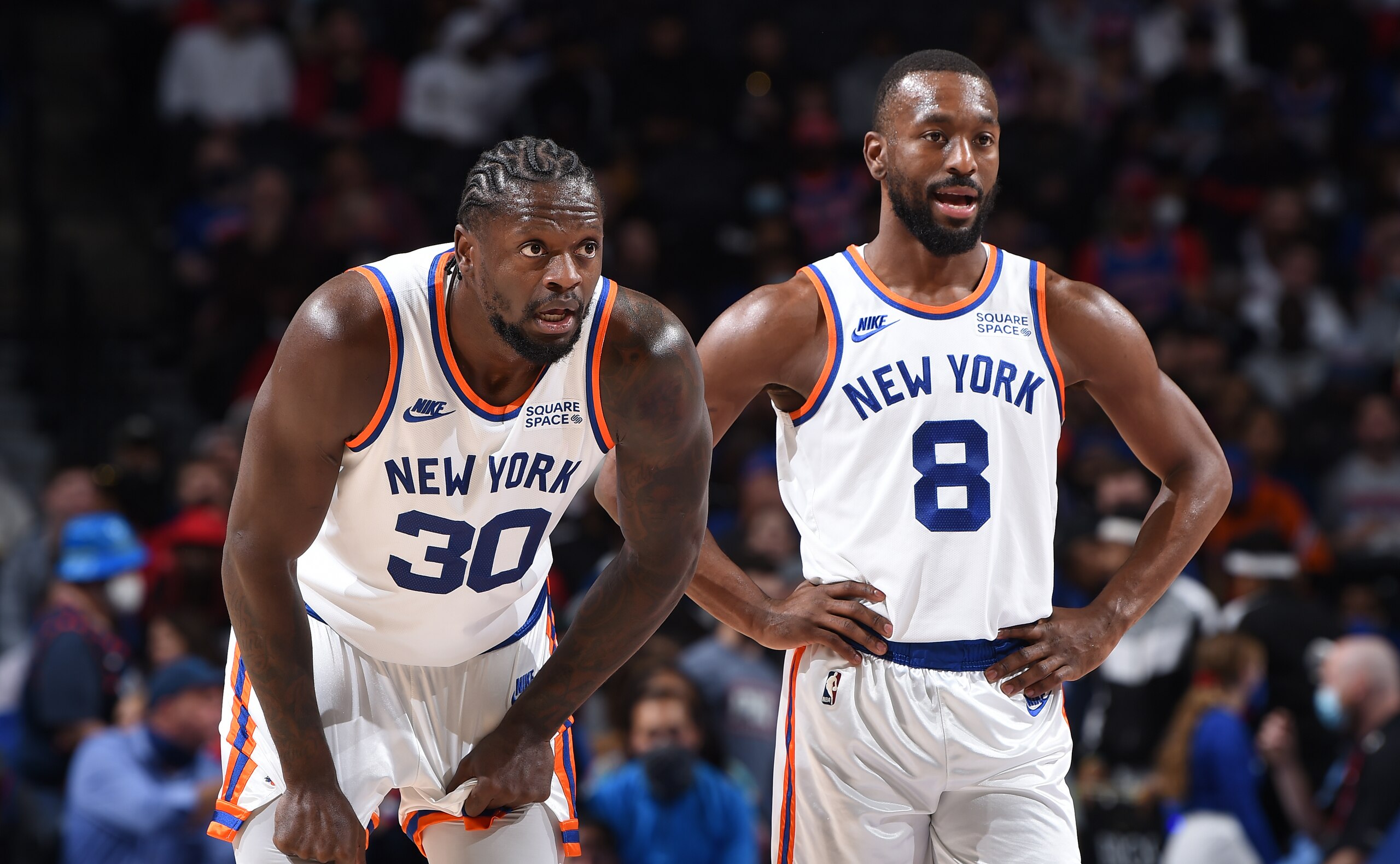
What Makes Them a Loser
Like the Los Angeles Lakers, the Knicks needed to do something to put a jolt of energy into an underperforming roster.
Currently sitting at 25-31 overall, New York is in 12th place in the East. An earlier trade for Cam Reddish has been a dud thus far, with Tom Thibodeau only recently starting to play the talented 22-year-old more.
Looking for point guard help appeared to be a must, given New York is just 28th in assist percentage (57.1 percent) this season. Moving Kemba Walker's salary could have helped clean up next year's books as well.
Instead, the Knicks chose to destroy what little good karma was left from last season's run, letting this group of mismatched veterans and young talent self-destruct.
Free-Agency Approach
Again, New York needs point guard help, although the Knicks will have limited funds to chase one with.
The Knicks project to be right at the salary-cap line of $121 million even without signing any outside free agents, although they'll have a $10 million mid-level exception to use.
This money could be dangled at Patty Mills (if he declines a $6 million player option to stay with the Brooklyn Nets), Ricky Rubio, Tyus Jones, Dennis Schroder, Goran Dragic or John Wall if he gets a buyout from the Houston Rockets.
New York also needs to decide how much it wants to pay Mitchell Robinson to return, as the unrestricted-free-agent-to-be hasn't shown the growth most were expecting now in his fourth year in the league.
This roster could get expensive fast, especially with RJ Barrett and Reddish both extension-eligible this summer as well.
Portland Trail Blazers
4 of 5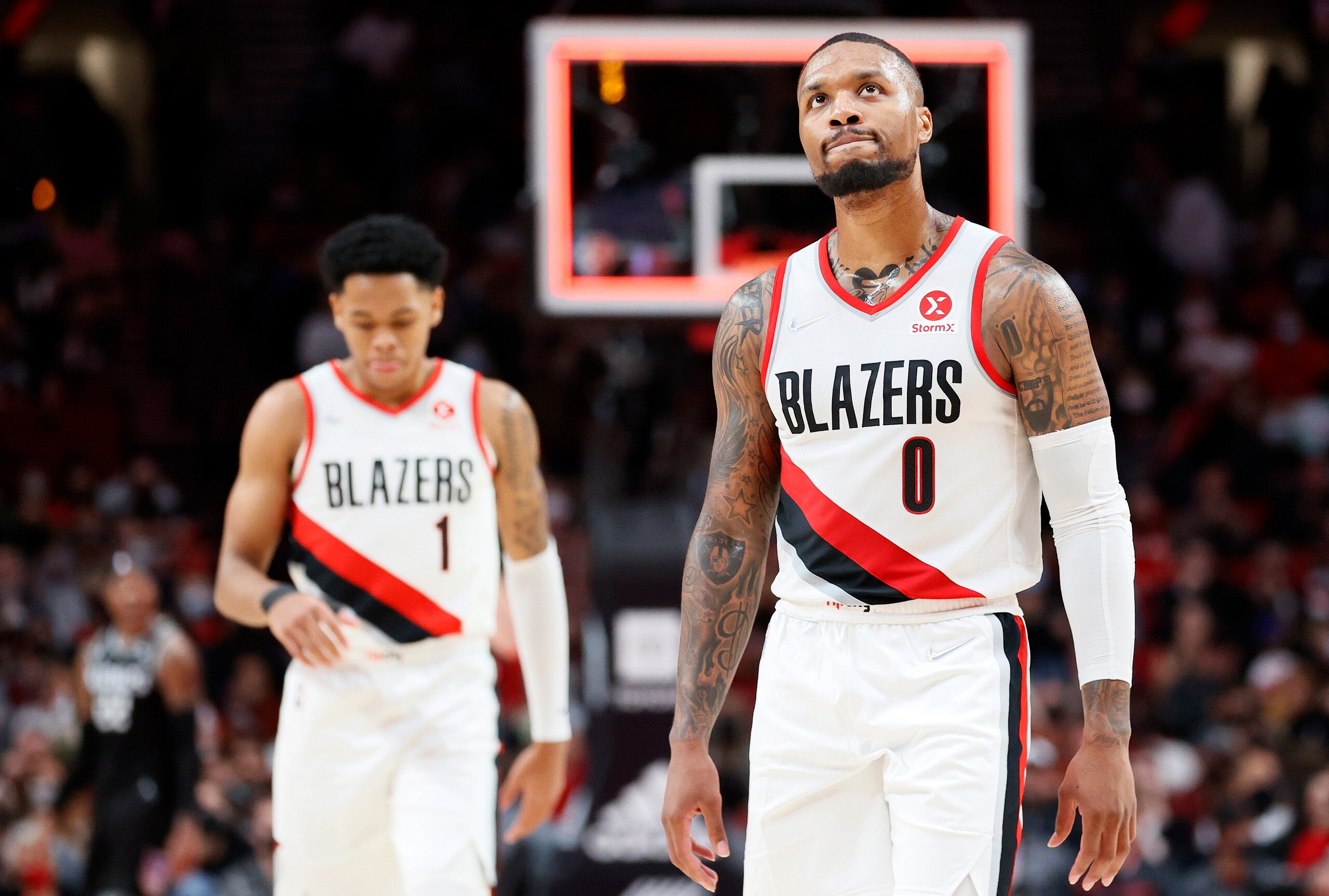
What Makes Them a Loser
Losing a valuable two-way starter in the prime of his career who was signed at a reasonable rate for the next four seasons was worth far more than just a second-round pick and an unproven rookie, yet that's all Portland was able to muster for Norman Powell, even with Robert Covington attached.
It's hard to believe this was the best Joe Cronin could get for Powell, who was averaging 18.7 points and shooting 40.6 percent from three. The San Antonio Spurs got a 2022 first-rounder for Thaddeus Young, after all.
Parting with CJ McCollum was made possible with the emergence of Anfernee Simons, and the veteran shooting guard's contract was far tougher to swallow than Powell's. While the return was better (Josh Hart, Nickeil Alexander-Walker, a protected 2022 first and two seconds), Portland also had to give up Larry Nance Jr. in the deal and then chose to re-route Alexander-Walker to the Utah Jazz instead.
With the dust settled, Portland lost two of its three best players, with only Hart and possibly Keon Johnson looking like sticking pieces on a revamped roster. There's some extra cap space and draft picks to play with, but this team could be one of the worst in all of basketball for the rest of the year if Damian Lillard continues to miss time following abdominal surgery.
A one-year reset was the right approach, but this didn't have to be a complete gut job.
Free-Agency Approach
One advantage to trading two of your best players for a modest return is some added cap space, which Portland now possesses. Still, at $20.3 million in projected cap space, that's not enough money to make a run at a top-tier free agent like Bradley Beal, Deandre Ayton or possibly even Miles Bridges. The Blazers can open up significantly more if they choose not to guarantee the salaries of Eric Bledsoe (only $3.9 million of his $19.4 million) and Hart, however.
The Blazers need to give Simons a new deal as well following his career year (16.1 points, 3.7 assists, 39.2 percent from three in 29.0 minutes), a salary that could fall between $15 million and $20 million per year.
Before they reward Simons, Portland should definitely waive Bledsoe and open up another $15.5 million in space. A decision on Hart must be made before free agency, although at just under $13 million, he's worth keeping.
Both Ayton and Bridges are restricted but would give Lillard and Simons a dynamic frontcourt talent to join forces with. Mitchell Robinson or Mo Bamba would provide a shot-blocking option in the middle, and veterans such as T.J. Warren and Bobby Portis could space the floor and score.
The best thing to come out of the Blazers' deadline was flexibility, although there's a lot more work to be done now to get this closer to a championship-caliber roster. A Lillard trade seems inevitable unless Portland can put together a monster offseason.
Washington Wizards
5 of 5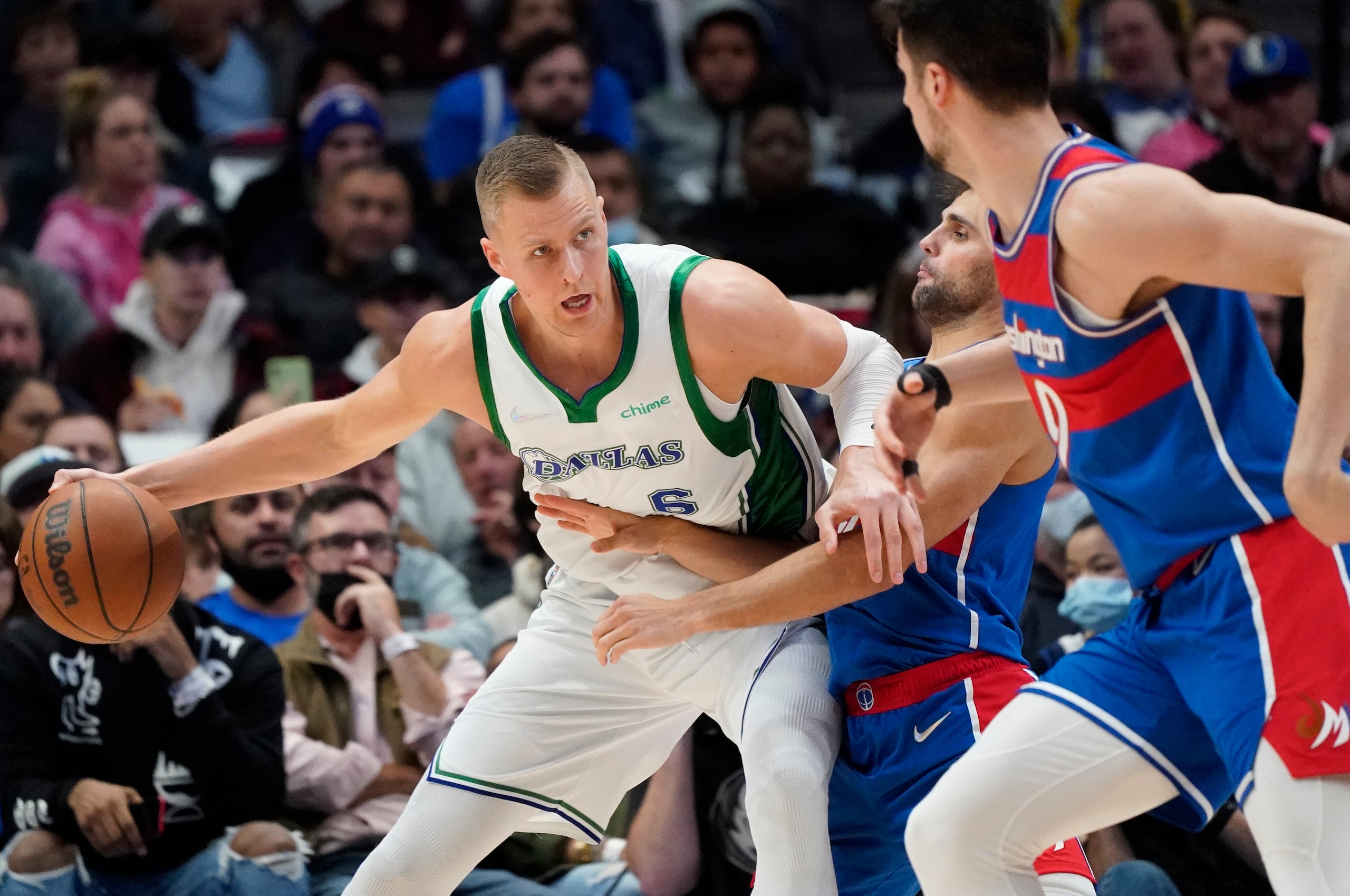
What Makes Them a Loser
The trade for Kristaps Porzingis came out of nowhere and reeks more of a team desperate to add talent next to Bradley Beal more than a calculated, drawn-out transaction.
Kudos to the Wizards for dumping Davis Bertans and Spencer Dinwiddie in the process, but making this move for Porzingis just brings up more questions about this roster construction.
Washington now has tons of power forwards (Porzingis, Kyle Kuzma, Rui Hachimura, Deni Avdija) who all need their minutes and touches to continue to develop.
Also, who exactly is playing point guard now? With Dinwiddie gone and Aaron Holiday dumped on the Phoenix Suns for cash considerations, the Wizards are down to just Ish Smith (acquired in a deal for Montrezl Harrell) and Raul Neto.
Beal's head is probably still spinning from the revolving door of point guards Washington has placed next to him in recent years (John Wall, Smith, Russell Westbrook, Dinwiddie and now Smith again), although the three-time All-Star won't see the court again until next year following wrist surgery.
The Wizards did the right thing by trading Westbrook and increasing roster flexibility yet did the opposite by dealing for Porzingis now. This roster lacks any sort of balance or continuity going into a critical offseason.
Free-Agency Approach
Beal will likely be the most sought-after player on the free-agent market as a 28-year-old who's averaged 25.8 points per game over the past six seasons. He can make the most money by staying in Washington and signing a five-year, $245 million deal, however.
The Wizards can also open up some additional cap space by waiving Smith (his $4.7 million salary is non-guaranteed) and Kentavious Caldwell-Pope ($4.8 million of his $14 million salary is guaranteed) if they so choose and will have the full mid-level exception to go shopping with.
Washington needs to find a point guard to replace Dinwiddie, with players such as Kyrie Irving ($34.1 million player option), Collin Sexton (restricted), Patty Mills ($6 million player option), Jalen Brunson, Patrick Beverley, Dennis Schroder and Ricky Rubio serving as the best available. Some would likely have to come via sign-and-trade.
Having fallen to 25-29 and out of the play-in picture, Washington is currently an odd-fitting bunch that needs to re-sign Beal and go point guard hunting in free agency.
All salary information via Spotrac unless otherwise noted.

.jpg?w=2560 "B/R's Expert Week 7 NFL Picks 🔮")
.jpg?w=2560 "Puka Dealing with Calf Injury")