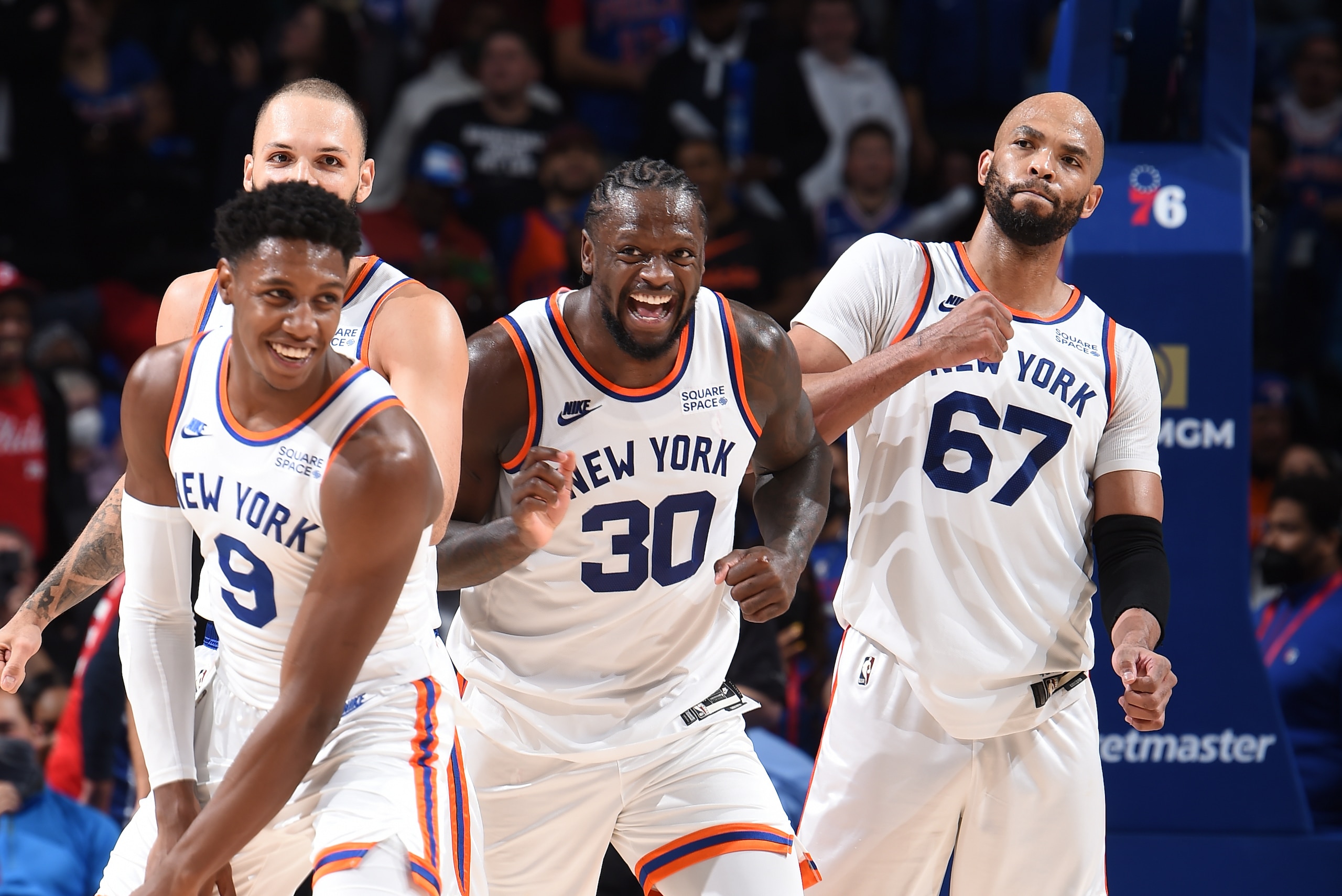


Strap in, folks. The 2022 NBA deadline is coming. Soon. Like, it's almost here. And every team has work to do.
That includes yours.
Some squads have more clear-cut agendas ahead of Feb. 10. Others have a more ambiguous list of priorities. We're identifying what should be the most pressing one.
Every need will be unique to each situation. Prospective contenders and deadline buyers are more beholden to specific holes or weak spots in the rotation. Rebuilding teams and likely sellers will have more broad mandates. And squads caught in the middle or wandering aimlessly through life will be saddled with bigger-picture directives.
The chances of each team attempting to address—or successfully tending to—their most urgent need will be discussed throughout. Overall, though, we only care about singling out what should be their primary objective. Figuring out a solution is up to them.
Atlanta Hawks: Point-of-Attack Defense
1 of 30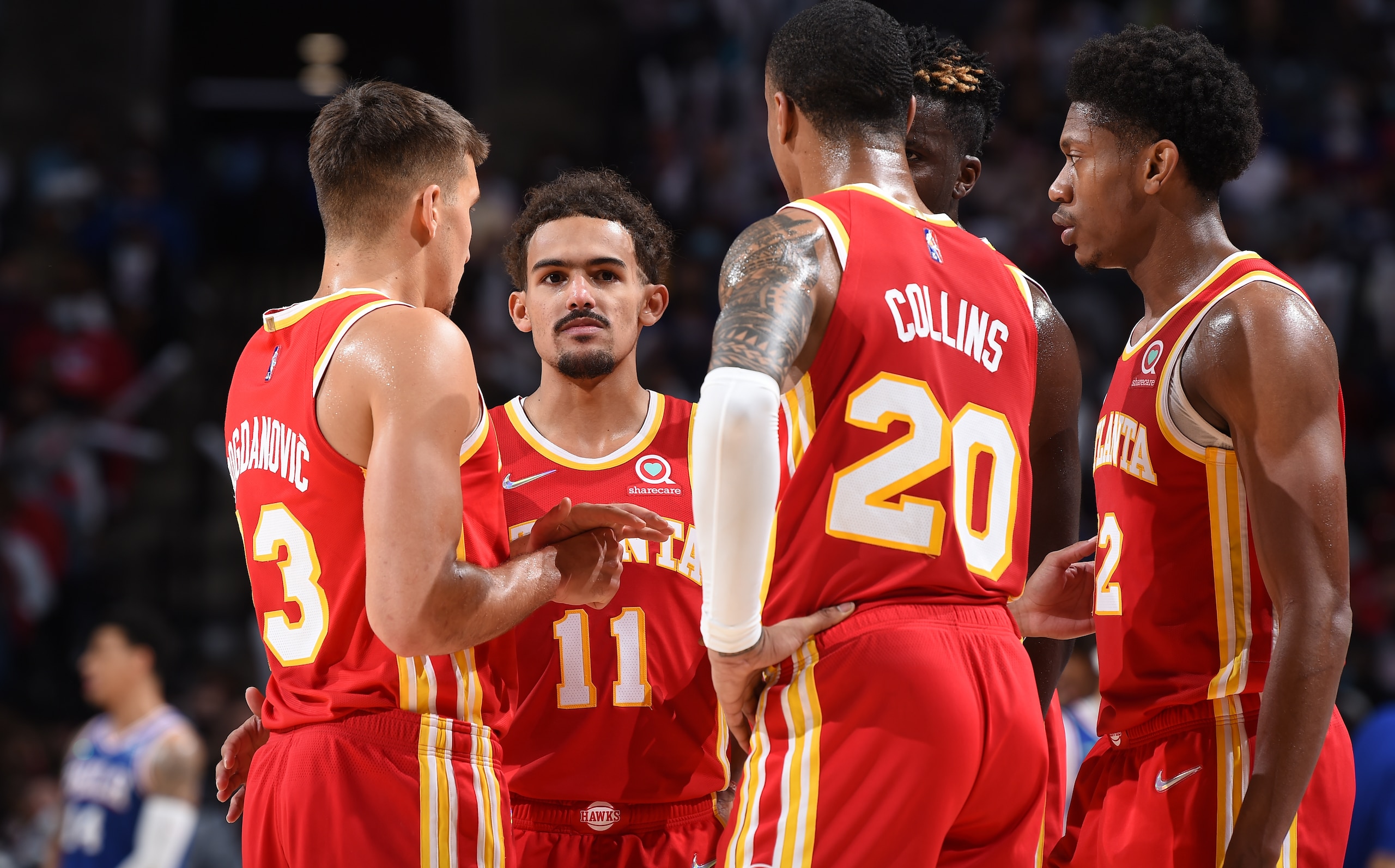
A recent hot streak probably diminishes the urgency with which the Atlanta Hawks will approach the trade deadline. Their offense has been a fireball all season, and the defense is finally starting to catch up. Perimeter players are doing a better job fighting over screens, and the roster at large is working harder to get back when its own possessions end in something other than a bucket.
Brief improvement doesn't portend permanence, though. A healthy De'Andre Hunter makes a big, lasting difference, and Delon Wright's scrappiness is a constant. But Atlanta is still 27th in points allowed per possession on the season. Its sixth-place ranking over the past two weeks cannot haphazardly be deemed a new normal.
Hunting for some point-of-attack fuel at the less-glamorous end should be the Hawks' default. Landing someone to work in tandem with Trae Young—who has upped his own defensive ante—would be a huge deal, and Hunter's capacity to guard 2s, 3s and 4s in high volume allows general manager Travis Schlenk to target players of various sizes and archetypes.
Others will want Atlanta to glitz up the Trae-less offensive minutes, which remain problematic. But those stretches have proven beyond manageable when Bogdan Bogdanovic is healthy and will exist in even smaller doses if this team bags a playoff berth.
Boston Celtics: Knockdown Shooting
2 of 30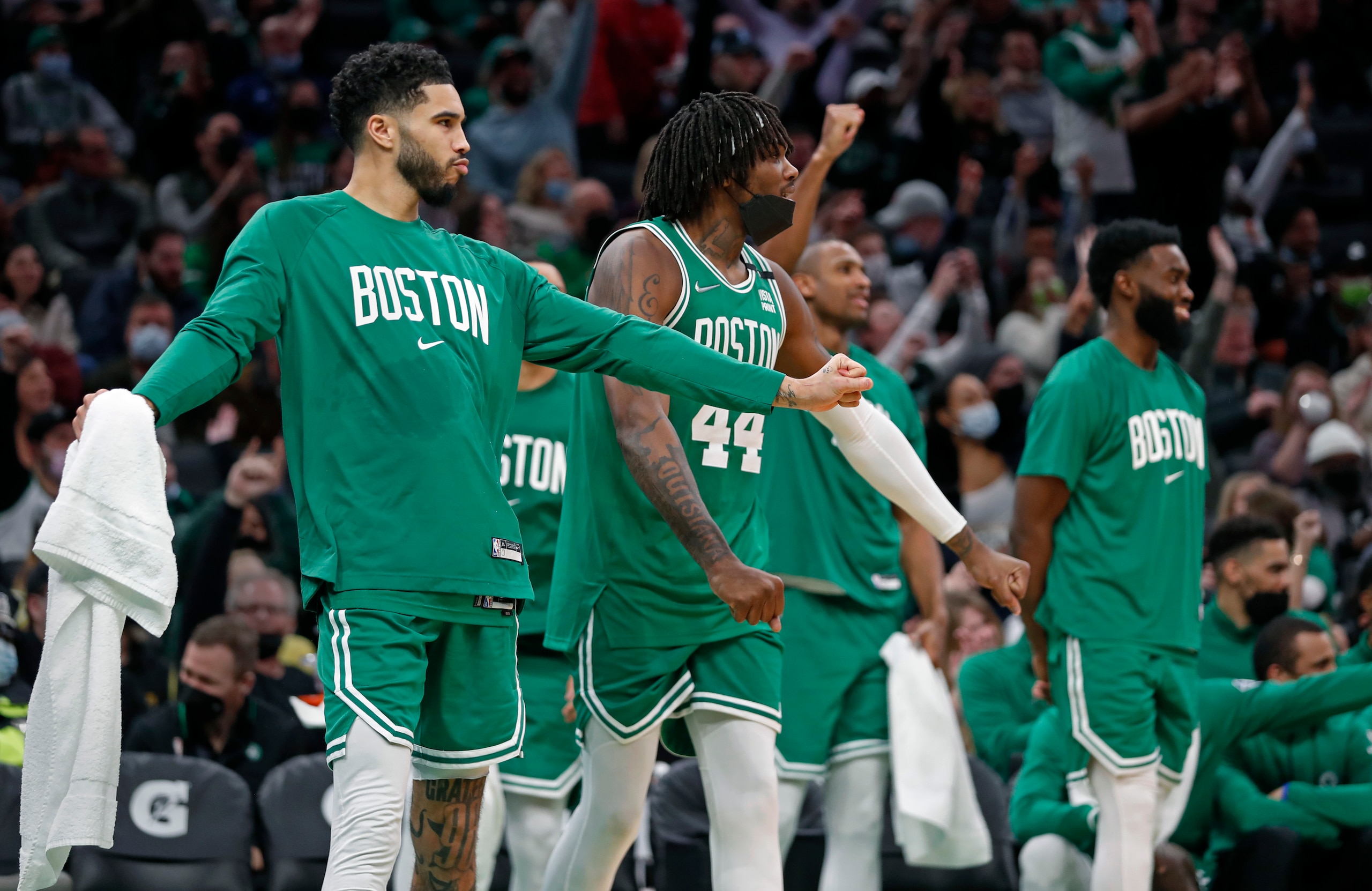
This is the quintessential matter of preference. The Boston Celtics are simultaneously good enough to approach the deadline as buyers and have so many different needs that there's technically no wrong answer.
Rim pressure. Knockdown shooting. Secondary playmaking. A true floor general. Take your pick. They need it all.
Knockdown shooting looms as the more enticing choice, if only because the Celtics aren't shaping up to aggressively buy. At nearly $3 million above the luxury-tax threshold, assuming Jaylen Brown's unlikely contract incentives hit, they're overwhelmingly expected to shed payroll rather than make any monster or wholesale upgrades.
Operating as quasi-sellers or lateral-shoppers basically eliminates the likelihood of adding a floor general. Impact playmakers and point guards will cost not only shinier assets but stand to inflate Boston's bottom line.
Outside marksmen can come in more cost-effective forms. They're also a means of hedging against the Celtics' playmaking and rim-pressure voids. The offense would be a lot less blah if Boston wasn't 23rd in three-point accuracy or 25th in effective field-goal percentage on all wide-open jumpers outside 10 feet.
Brooklyn Nets: Two-Way Wing
3 of 30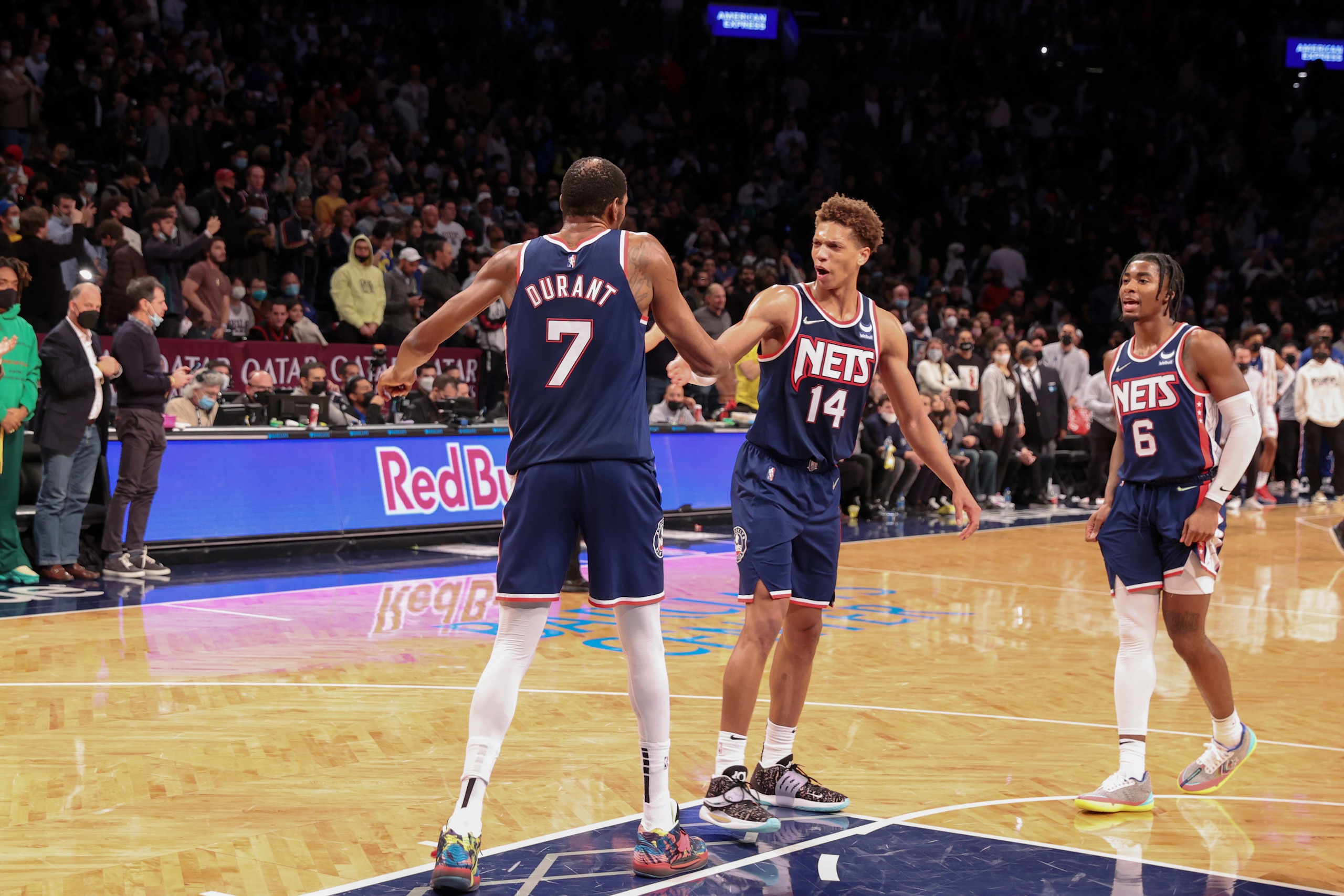
Between injuries up and down the roster, part-time availability from a certain someone and an ever-changing rotation, it can be difficult to identify the Brooklyn Nets' biggest need.
Is it a backup point guard, because Patty Mills is more microwave scorer than offensive captain? Is it a matchup-proof center who allows for more predictable rotations in the middle? How about someone who attacks the rim? Or a frontcourt body who caps dependence on any one of a 32-year-old Blake Griffin, 34-year-old James Johnson and 36-year-old LaMarcus Aldridge?
The answer, in this case, is none of the above. More than anything, the Nets need a wing who adds value at both ends.
Joe Harris is the closest they get to an entrenched three-and-D-plus-other-stuff asset, and he hasn't played since Nov. 14 after undergoing ankle surgery. (Kevin Durant is not really a wing.) DeAndre' Bembry and Bruce Brown make defensive waves, but their offensive utility is limited, and Brooklyn shouldn't want to play them together.
Kessler Edwards has provided quality minutes, but he's hardly a known quantity, and the Nets will have to convert him from a two-way contract if they plan to use him during the playoffs. Cameron Thomas doesn't offer enough defense.
Whether Brooklyn has the assets to trade for someone significant is a separate matter. It probably needs to hit the buyout-market lottery. But the overall point stands: This team needs true wings, period.
Charlotte Hornets: Interior Defense
4 of 30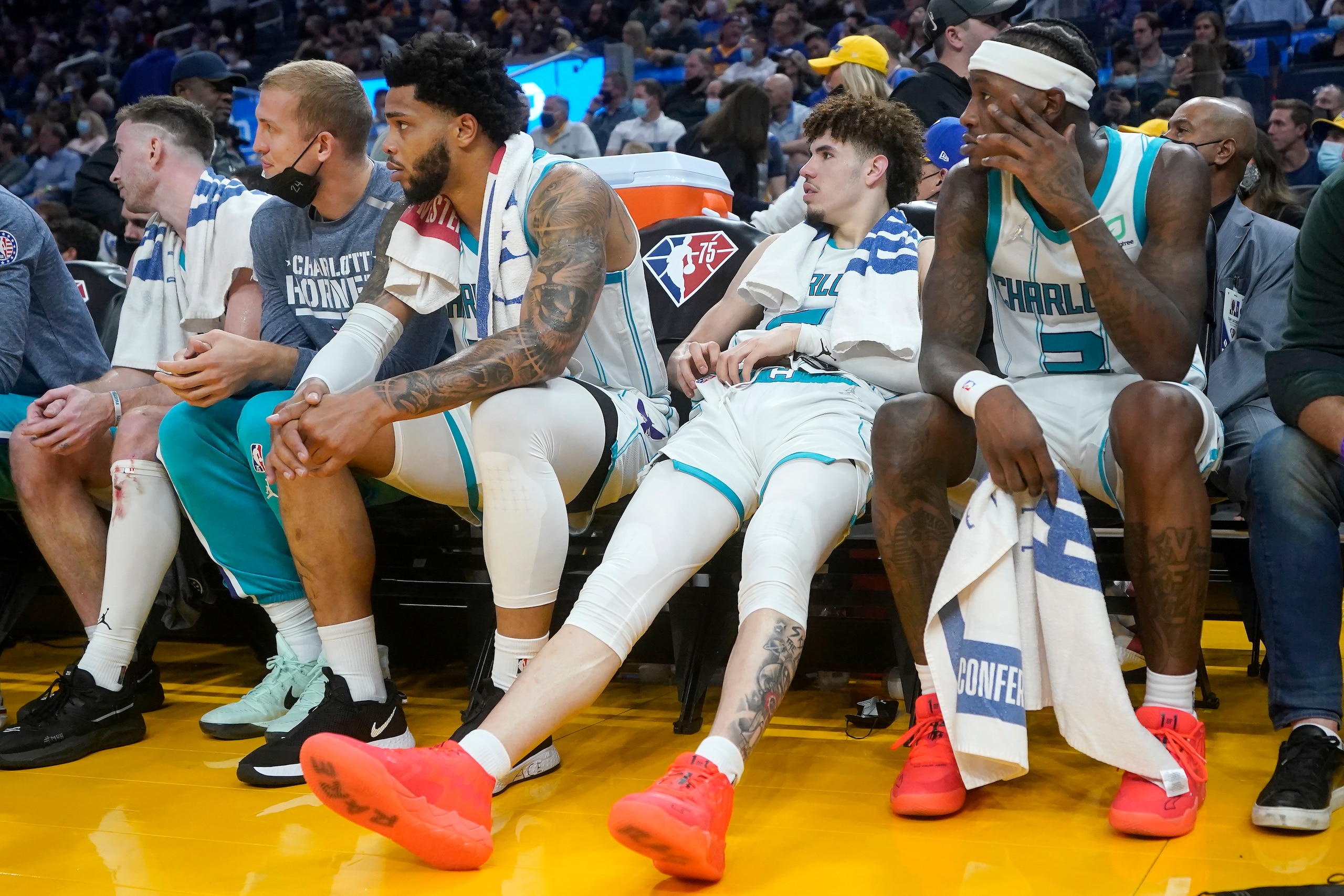
Low-hanging-fruit alert.
To the Charlotte Hornets' credit, their defense is not the dumpster fire it was earlier this season. They rank eighth in points allowed per possession since just before Christmas, when they were last below .500. Both units with Mason Plumlee in the middle and smaller lineups are holding their own on the glass and getting set after missing shots on offense.
This isn't quite rosy enough to declare the Hornets defense a finished product. They have neither an established nor up-and-coming anchor and should focus on finding one to maximize both this season and their overall future.
That's not to say Charlotte has to go the blockbuster route. Top-of-the-line defensive anchors don't grow on trees, and the big-man market is not particularly robust. Myles Turner has long been the most popular Hornets suggestion, but his left foot injury brings into question how much he'd actually help this year. And even if he was healthy, Charlotte is not yet obligated to go all-in on anyone.
Sniffing around less-prominent bigs (or small-ball 5s) who fortify much of what the Hornets have been doing in recent weeks is just as useful. Names like Nerlens Noel, Nicolas Claxton and Chris Boucher don't leap off the page, but they boost defensive credibility ahead of the postseason without bankrupting your asset trove or requiring you to clear complicated salary-matching obstacles.
Chicago Bulls: Defensive-Minded Wing
5 of 30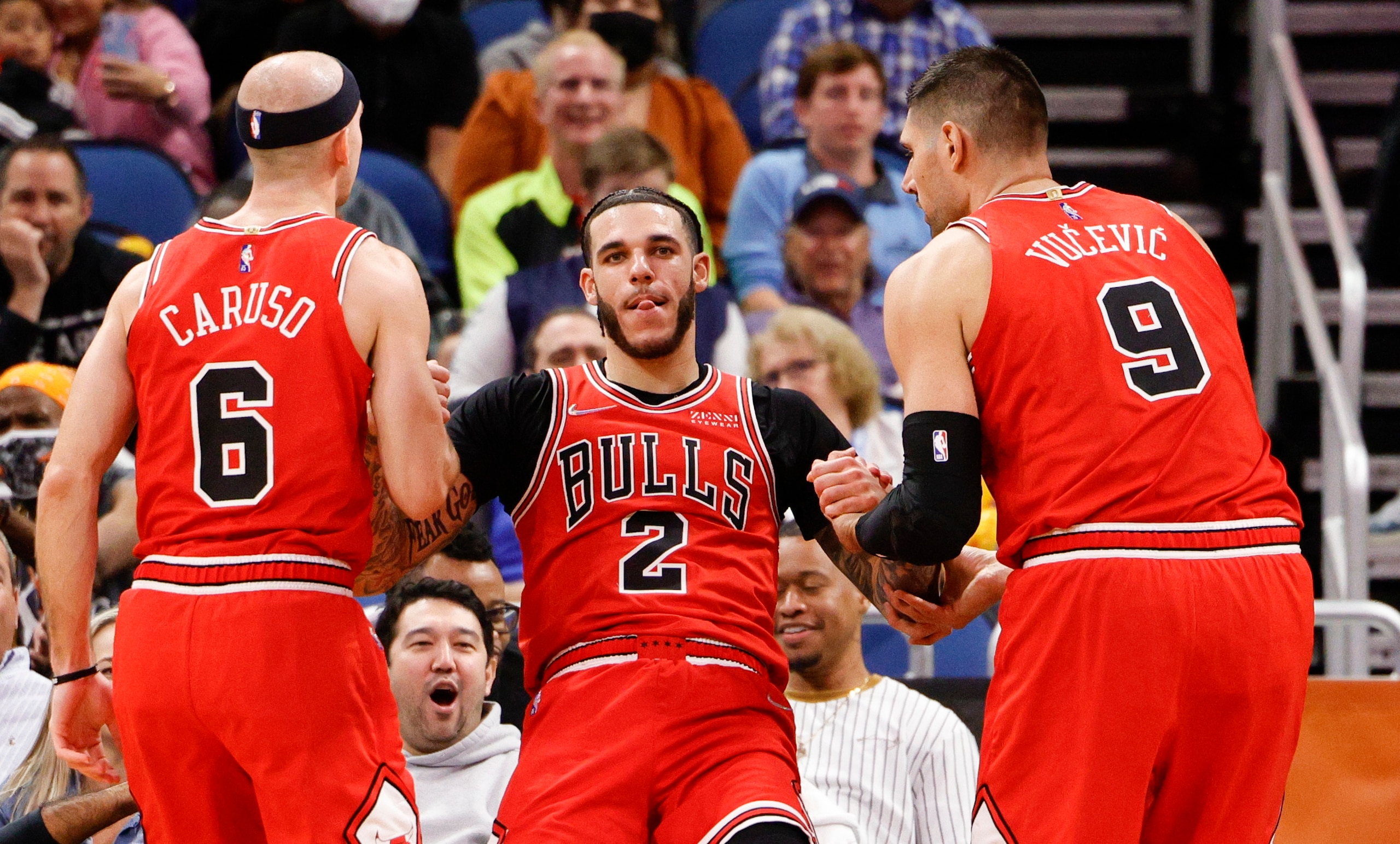
Limited availability within the perimeter rotation has derailed a Chicago Bulls defense that initially profiled as one of the league's biggest overachievers. They are 25th in points allowed per possession since Dec. 20, when injuries and entries into health and safety protocols first started wreaking havoc, and now rank 19th for the entire season.
There is an air of "Well, duh" at play here. Alex Caruso (right wrist) and Lonzo Ball (left knee) have both missed extensive time during this stretch and will remain out for the foreseeable future. Of course the Bulls' defense has suffered without two of their best point-of-attack options.
Banking on Lonzo and Caruso rejoining the rotation and instead focusing on a backup 5 or sweet-shooting wing is Chicago's right. Javonte Green and the emergence of rookie Ayo Dosunmo, a frenetic defender, might be able to limit the bleeding.
Counterpoint: Eh.
Chicago needed reinforcements on the perimeter long before now. Patrick Williams' season-ending wrist injury created an initial void. That talent vacuum has grown larger in the face of more bad luck (aka Grayson Allen). And though key injuries render the Bulls less likely to make all-in overtures, the performances of DeMar DeRozan and Zach LaVine, not to mention their record, obligate them to prowl the market for defensive difference-makers on the wing.
Cleveland Cavaliers: Combo Scorer and Playmaker
6 of 30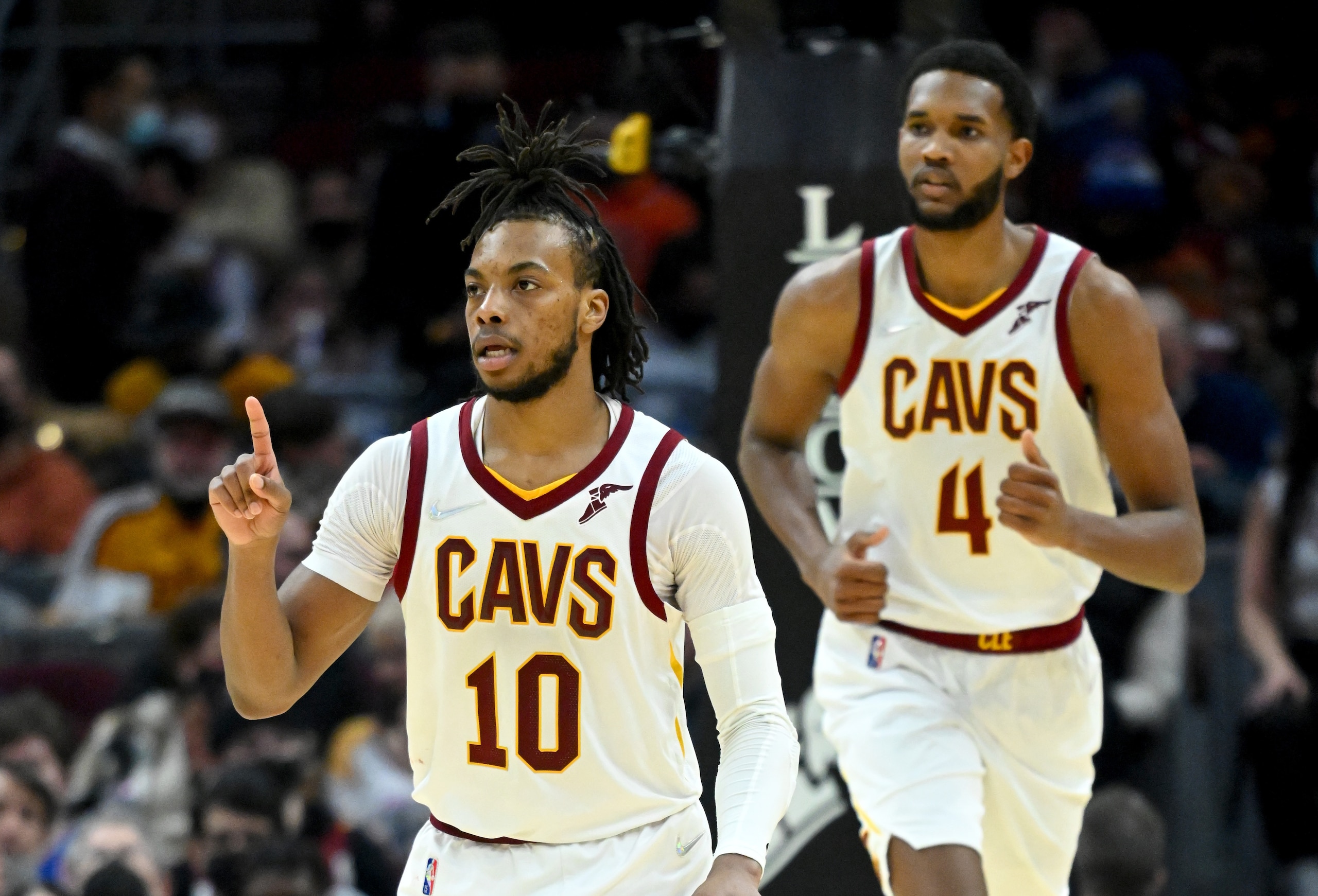
Where would the Cleveland Cavaliers be if Collin Sexton (left meniscus) and Ricky Rubio (left ACL) never suffered season-ending injuries?
It's a tantalizing and painful and unfair question. Maybe the Cavs don't have a much better record at full strength. They're already propping up a top-three defense and the league's fifth-best net rating, and their offense was hardly the stuff of envy when Rubio and Sexton were in the fold.
If nothing else, though, a healthier roster makes it easier for Cleveland to buy. More of its assets would have higher value (i.e. Rubio and Sexton themselves), and the motivation to do something seismic is no doubt stronger with a cleaner bill of availability.
Then again, the Cavaliers would always have needed to balance ahead-of-schedule success against the dangers of rushing a retooling process in its infancy. Surrendering first-round picks for a non-star carries real risk without a sample size from this core beyond the past half-season.
Cleveland is still well within its rights to buy, because it's a good team now, and teams that are good now should buy. Adding someone who can handle the ball, run half-court sets and put pressure on defenses with his own scoring would do wonders for an offense hovering around the bottom 10 in points scored per possession.
But any win-now transaction should tilt toward conservative. Moves that require loosely or distantly protected firsts needn't be the priority. Attaching lower-end buffers to Rubio's expiring deal is more the Cavs' speed.
Dallas Mavericks: Shooter Who Can Shoulder Some Creation
7 of 30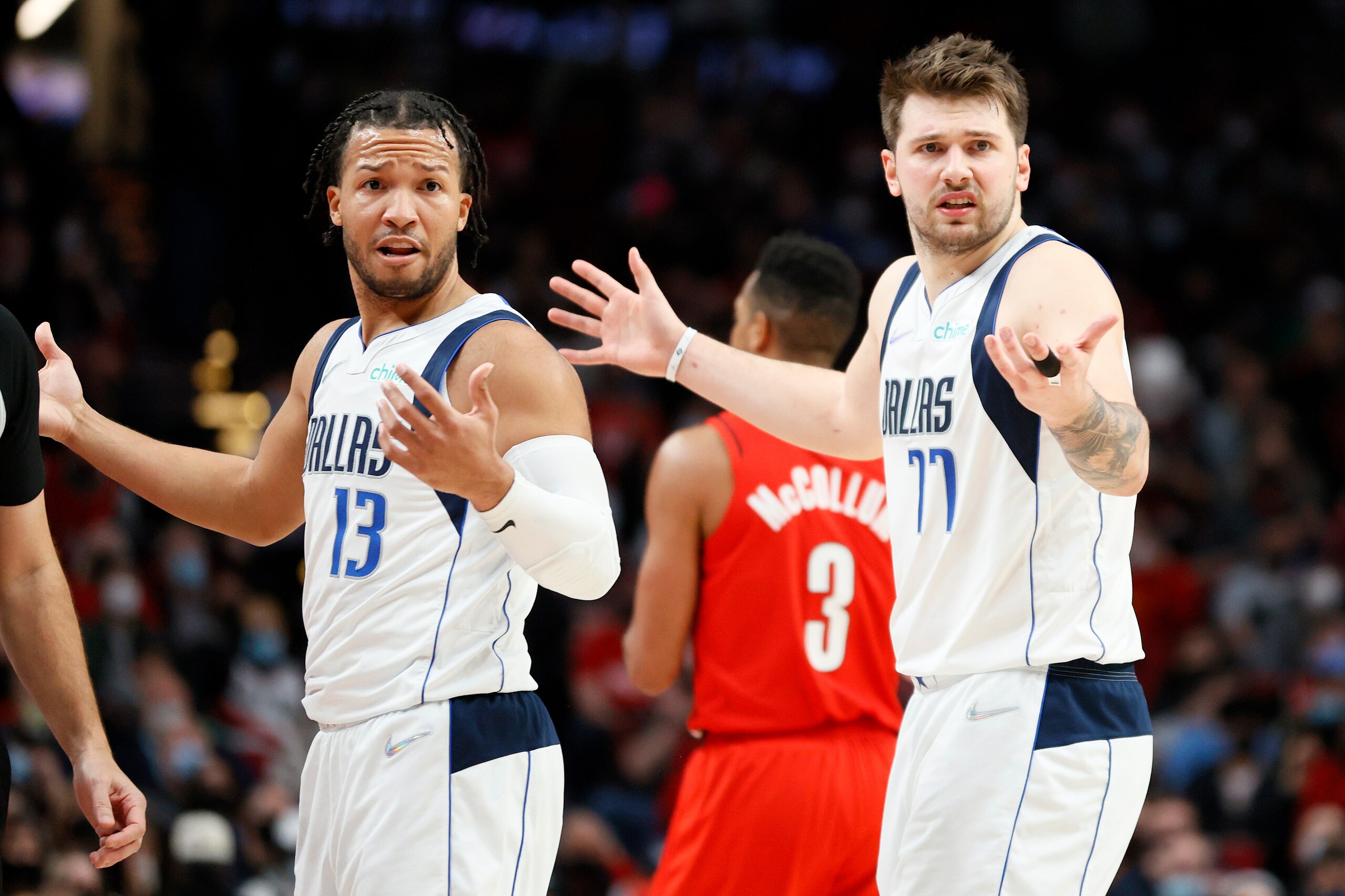
Jalen Brunson's breakout campaign is going to cost the Dallas Mavericks if they want to re-sign him in free agency. In the meantime, though, it also limits their need to desperately search for a higher-end secondary creator to pair with Luka Doncic.
Good thing, too. Because the Mavs most likely don't have the asset firepower to wedge themselves into the flashiest conversations. They cannot convey a first-round pick until 2025, Brunson has finite appeal as a mega-cheap salary and soon-to-be free agent, and Josh Green is the most desirable prospect on their docket.
Peddling Kristaps Porzingis' improved defensive mobility might allow for bigger swings, but this presumes the two years and $69.8 million left on his contract are considered a net-positive asset. That's not a given.
Lowering expectations for Dallas' best-case outcome brings us here: to a shooter who can put the ball on the floor and generate his own looks in a pinch. In other words: The player Tim Hardaway Jr. was supposed to be before his left foot injury, with more playmaking.
Forced to choose, the Mavericks can skew toward pure shooting. Brunson is basically an offensive engine these days, and the defense has so far been good enough (fifth in points allowed per possession) to focus solely on bolstering a blah offense that ranks 25th in efficiency from beyond the arc.
Denver Nuggets: Point-of-Attack Defense
8 of 30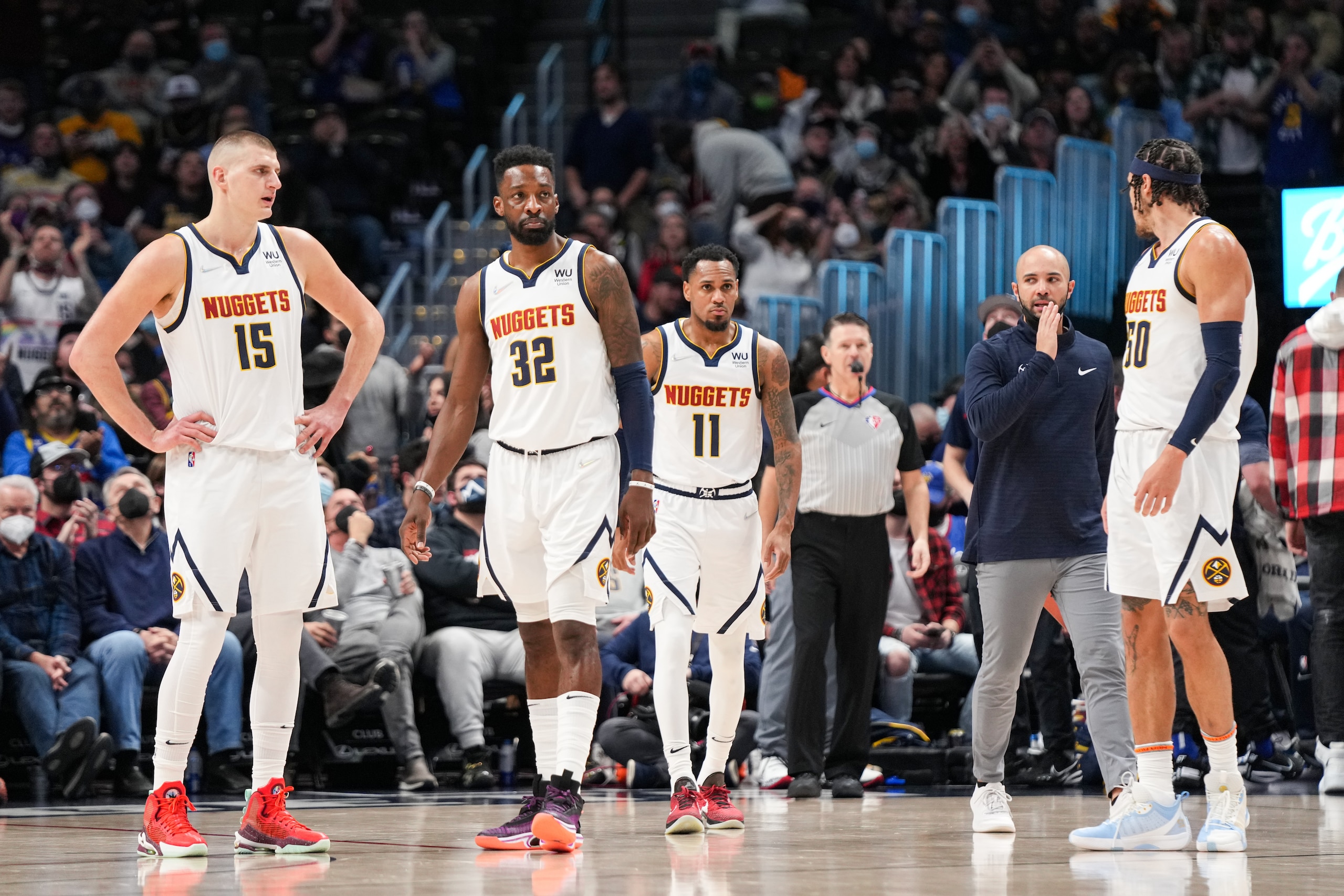
Pinpointing the Denver Nuggets' most pressing need is made harder by the uncertain statuses of Jamal Murray (left ACL) and Michael Porter Jr. (back). If neither one returns this season, scooping up another shot creator becomes critical even after the acquisition of Bryn Forbes.
Let's be optimistic, because doomsday thinking sucks, and assume Murray rejoins the rotation in time for the playoffs. And if you're still skeptical, let's just assume Nikola Jokic is an offensive deity who weaponizes the offense enough on his own for Denver to steal a playoff series or two.
Beefing up point-of-attack defense vaults to the top of the list using this logic. Aaron Gordon has worked his butt off this season, but he's currently spending more than 25 percent of his possessions chasing around point guards, according to BBall Index. That is not the role for which he's best suited.
Even having him pester 2s and 3s, which he does on nearly half of his reps combined, is a much-too-big ask. He's at his best in the perimeter or mobile big role, with point-of-attack responsibility peppered in whenever necessary.
Acquiring reinforcements won't be easy. The Nuggets cannot convey a first-rounder before 2027 and aren't dripping with expendable mid-end salaries. Are they willing to give up Zeke Nnaji for someone like Kenrich Williams? Does JaMychal Green-plus-seconds net a useful wing defender? Beats me. But Denver owes it to Jokic's masterpiece of a season to try.
Detroit Pistons: Small Ransom for Jerami Grant
9 of 30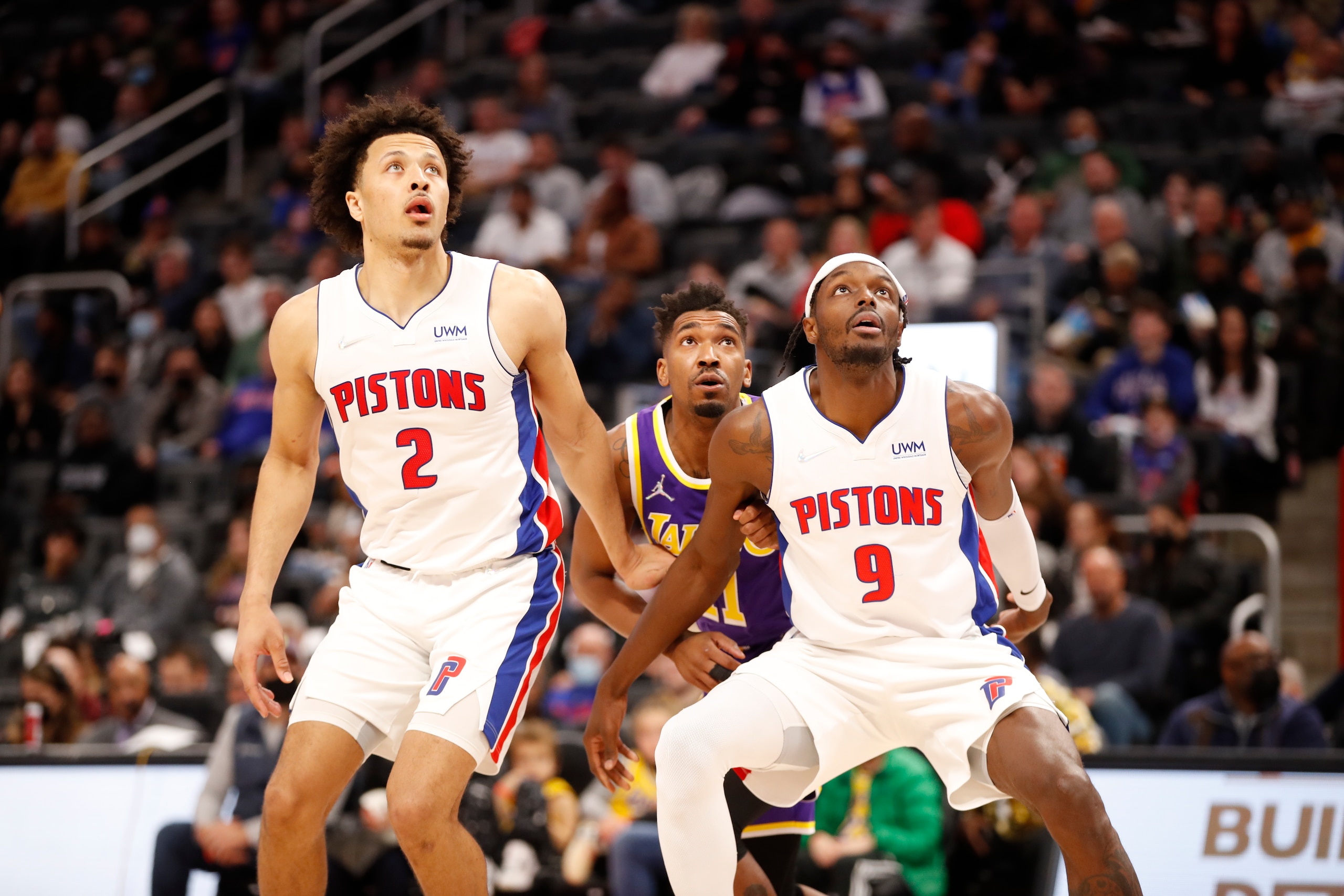
This is not meant to be a cop out. The Detroit Pistons just don't yet have the infrastructure to target specific needs. Cade Cunningham—who has, firmly, entered the Rookie of the Year running—is their lone blue-chip cornerstone, even if you're in love with Saddiq Bey and Isaiah Stewart and holding out hope for Killian Hayes.
Rolling the dice on a second primary ball-handler and scorer to pair with Cunningham is the way to go if the Pistons are compelled to address singular holes. But that doesn't change their most urgent mission: extracting the right package for Jerami Grant.
It isn't so much about his not fitting the timeline. That line of thinking is both valid and overrated. But he is after a four-year, $112 million extension and the chance to continue operating as a No. 1 or No. 2 option. Detroit is not yet good enough to pay any non-superstar building-block money, and allocating the offensive volume necessary to meet Grant's preferences will inherently cap their ceiling.
Moving him in advance of the deadline is the right call. Let another team figure out his pay grade and role. And yes, it has to be in advance of this deadline.
Grant's extension ask and functional stipulations, however fungible, serve as roadblocks to any deal. It will only get harder to grab two-low end firsts or one higher-rung pick or prospect if the Pistons reroute him as an expiring contract over the offseason or during the 2022-23 campaign.
Golden State Warriors: Extra Roster Spot
10 of 30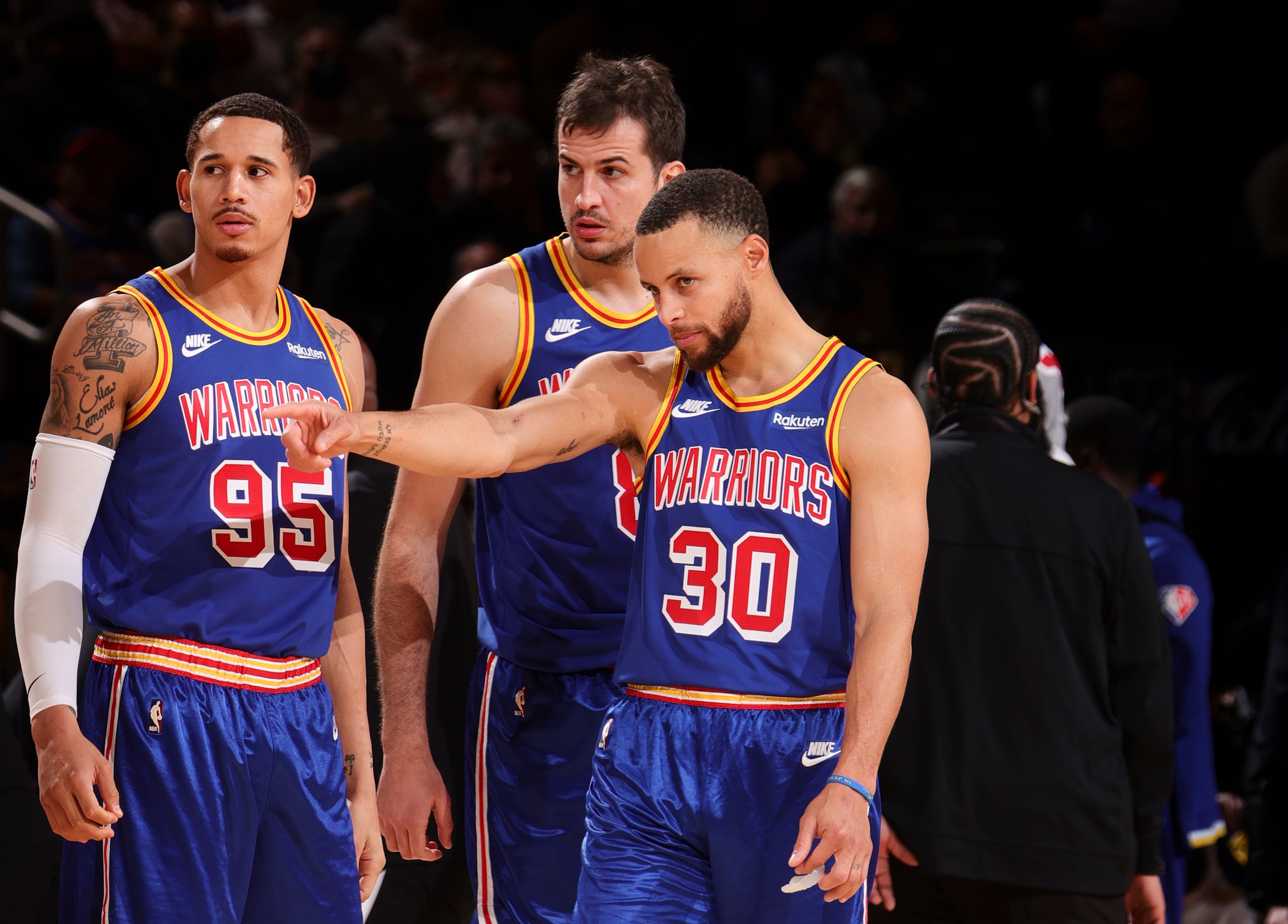
Sure, the Golden State Warriors could use another shot-creator and -maker. And yes, depending on the severity of Draymond Green's back issue, it'd behoove them to shore up the big-man rotation regardless of whether they expect James Wiseman to return this season. But we might as well face facts: They're not addressing anything of consequence at the deadline.
Golden State is only built to broker blockbuster trades. Green, Stephen Curry, Klay Thompson and Andrew Wiggins are all making max or near-max money, and salary matching gets awfully tough after them.
Wiseman is the team's fifth highest paid player and still earning under $10 million. The Warriors also have too much draft equity invested in him to cut bait before he takes the floor again—independent of acquiring a fringe star. Jonathan Kuminga, their sixth highest paid player, is in the same boat. They just took him at No. 7. He's not getting shipped out for anything less than a star return.
Shopping anyone else will prove inconsequential. Kevon Looney ($5.2 million) and Jordan Poole ($2.2 million) don't make enough to bring back a ton on their own, and Golden State isn't flipping ultra-cheap, freshly-plucked-lottery-pick Moses Moody just because.
Minimum salaries are all that's left after them. That won't do anything. The Warriors are better off dredging up a roster spot by jettisoning Nemanja Bjelica so that they can adequately poke around the buyout market.
Houston Rockets: A First-Round Pick That Conveys After 2022
11 of 30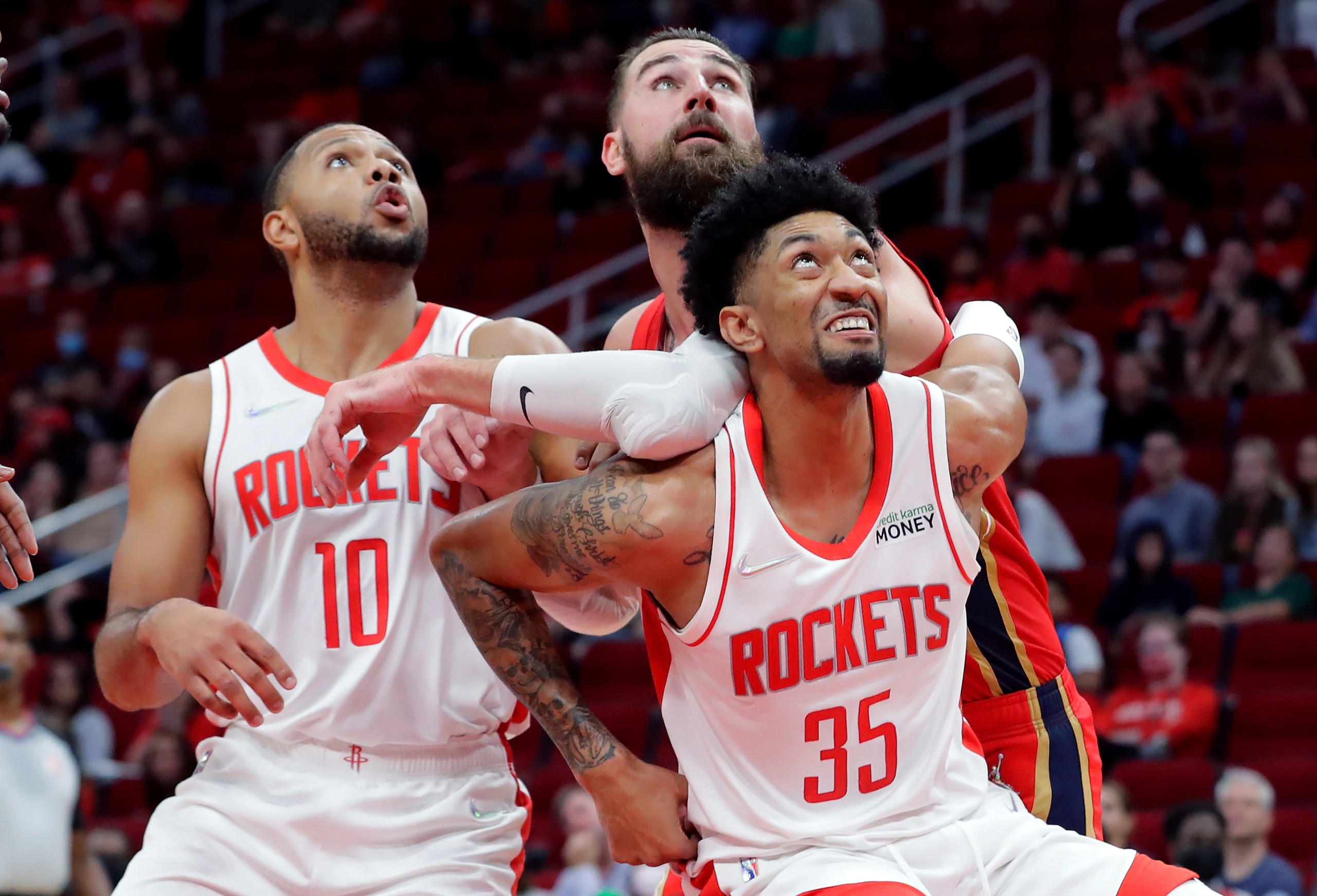
As was the case with the Detroit Pistons, this is not meant to oversimplify the Houston Rockets' situation. They're just a rebuilding team without concrete form. They shouldn't approach the deadline looking to fill one singular void so much as indiscriminately acquire talent that fits the graduality of their direction.
Targeting any ol' first-round picks is an A-OK move. And using Eric Gordon as the primary magnet makes the most sense. He is under contract through next season, but his rim pressure, shooting and spot defense ensure he's an asset now. They risk seeing his value plunge if he takes a step back or suffers another injury, and certain teams will be reticent to pay a 33-year-old non-star $19.6 million next season even if he's healthy.
At the same time, the Rockets are not the Pistons. Pretty much their entire roster from this season projects to be under contract in 2022-23, they have additional future firsts headed their way, and their stock of current players includes more attractions for prospective buyers.
Houston can stand to be more selective while selling. And with so many players expected to be back next season, it might as well canvas the market for first-rounders that convey after this year, so there's more time to evaluate the incumbent nucleus before running into a roster-spot crunch.
Indiana Pacers: An Actual Direction
12 of 30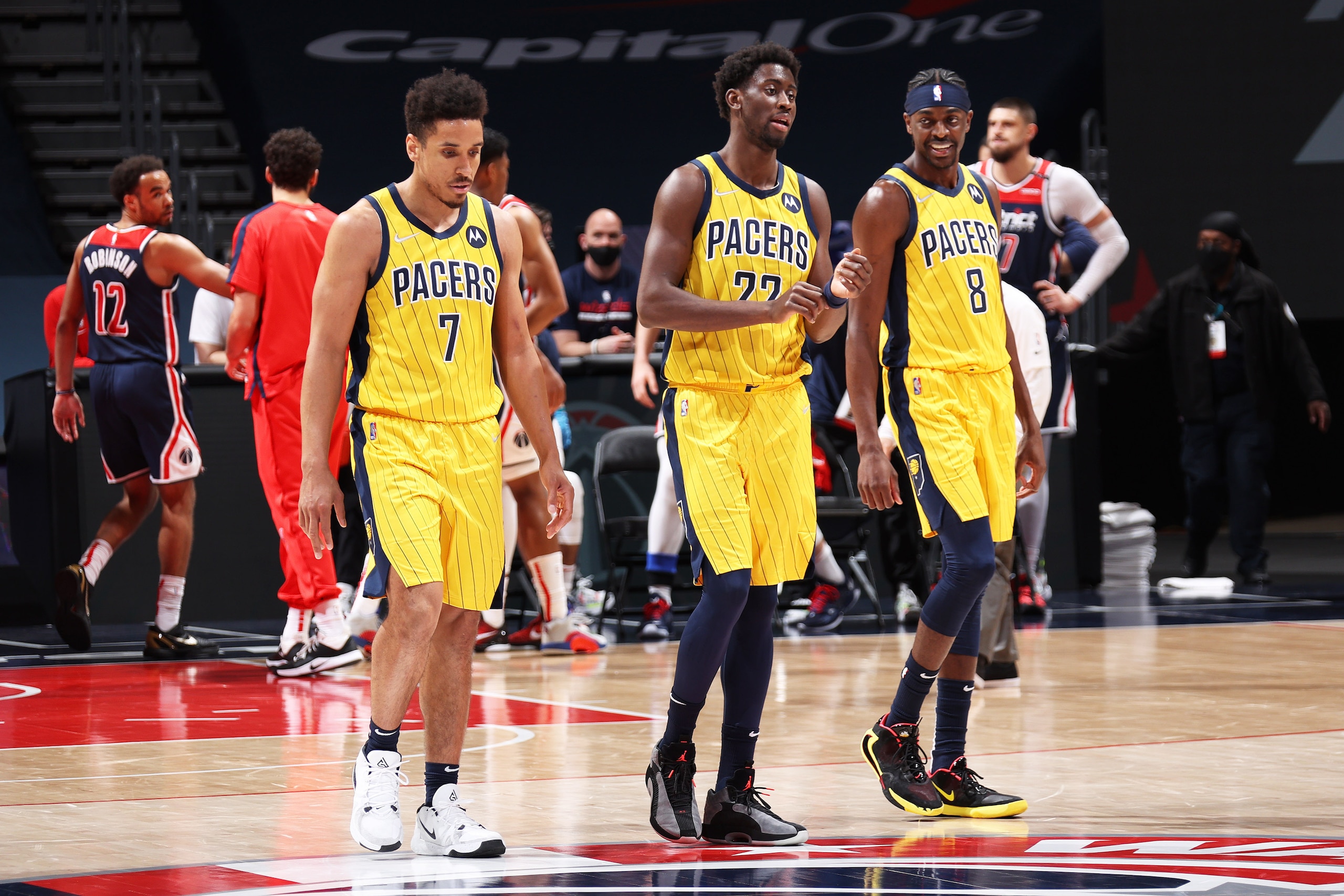
I'm normally against the vague "Figure out a direction, dammit!" slant...unless it's the Sacramento Kings under the microscope. But the Indiana Pacers suffer from a comprehensive lack of vision. As Tony East said during a recent episode of Locked On Pacers (1:48 mark):
"So far, what we've heard as fans, what we've seen from the team, what we've heard said is 'They might be headed for a rebuild.' But then [team governor] Herb Simon says 'Hold on, hold on. We might be headed for a retool.' But their roster situation says a rebuild's better. And their standings situation says a rebuild is better. But their owner, who has seen retooling work many times, would like to retool.
"So it's important for the Pacers to pick a direction...They have to figure out if they want to rebuild or retool. Do they want to get good players and try to be pretty good the rest of this season and be good next year? Or do they want to go down this year, get their first top-10 pick since the 1980s and try to build via some young stuff, some assets, and go that way now that they've finally hit on some draft picks in [Chris] Duarte and Isaiah Jackson."
Myles Turner's left foot injury only adds to this convolution. Do they move him when his value will take a hit? Should Domantas Sabonis be available even though he's worth more to Indiana than any potential suitor?
Roadblocks and counters to the counters don't absolve the Pacers of choosing a direction. They have other decisions to make beyond the frontcourt—most notably whether to trade Caris LeVert and players such as Torrey Craig and Justin Holiday. Whatever they do, though, has to end with their following a clear, organizationally aligned path forward.
LA Clippers: Playmaker They Can Keep Beyond This Season
13 of 30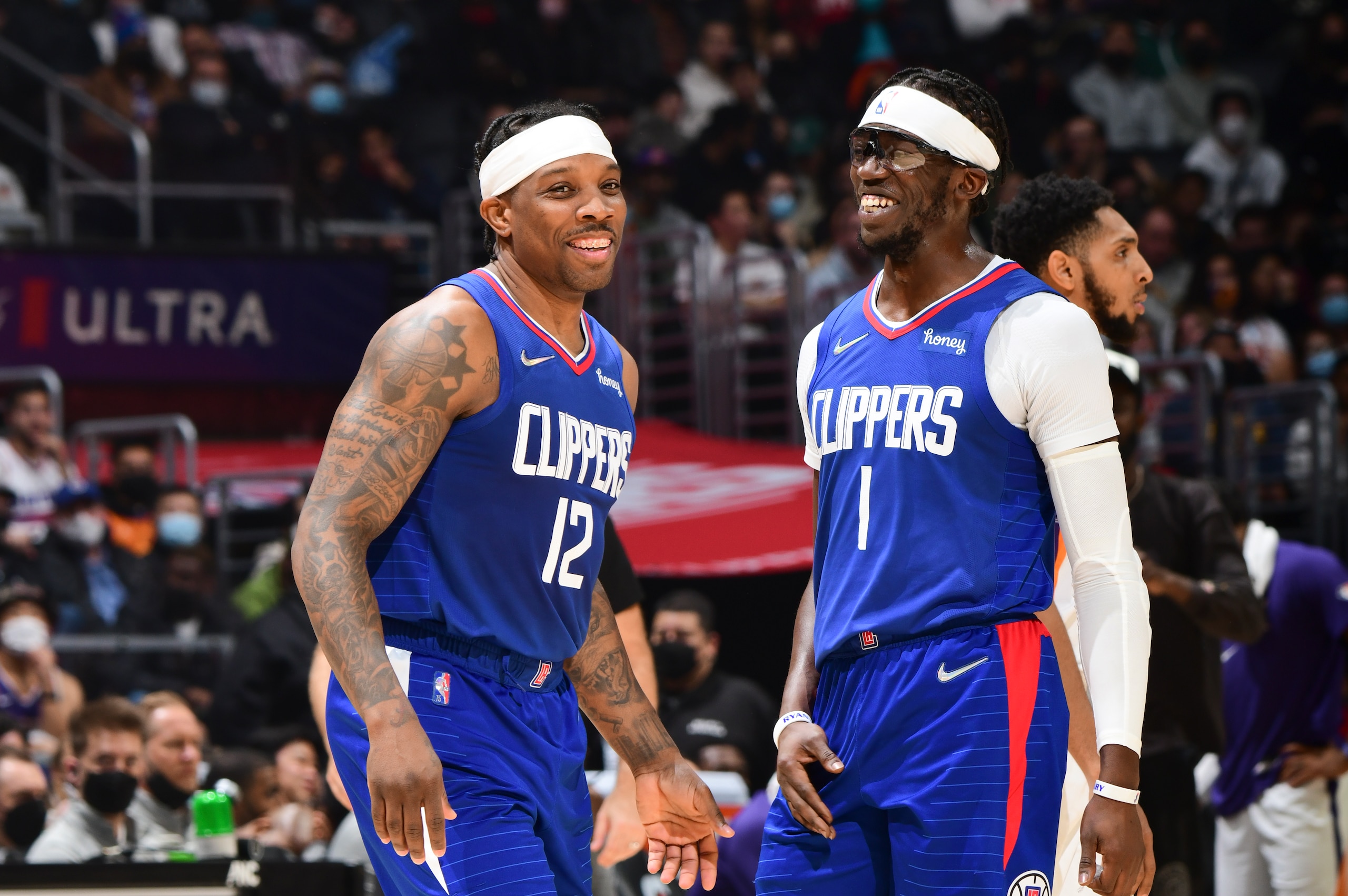
Giving the LA Clippers a trade-deadline directive with this season in mind rings overwhelmingly hollow. They don't know whether Kawhi Leonard (right ACL) or even Paul George (right elbow) will play again this year. Aggressively buying doesn't track with their trajectory if neither is available yet there's no point in tanking when they don't have a 2022 first-round pick.
The trade deadline will likely come and go with the Clippers lightly selling to cut their gargantuan tax bill. But rather than endorse saving money on the behalf of a billionaire, we should be more inclined to focus on how LA can opportunistically set itself up for next season.
Enter the search for a more conventional point guard.
The Clippers are after "someone who can both manage the game or provide a spark depending on the situation," according to The Ringer's Kevin O'Connor. This jibes with the state of their offense. They are 25th in points scored per possession, and their ball-handlers rank 23rd in efficiency out of the pick-and-roll. Having both George and Leonard can obfuscate some of the offensive shortcomings, but LA, at the very least, needs a safety net for times like this.
Absent any first-rounders, the Clippers cannot hope to negotiate a blockbuster. That's fine. They should instead try parlaying one of their mid-end contracts (Serge Ibaka, Marcus Morris Sr., Eric Bledsoe) and second-rounders into a playmaking option who—and this is important—they have the capacity to retain beyond this season.
Los Angeles Lakers: Two-Way Perimeter Players
14 of 30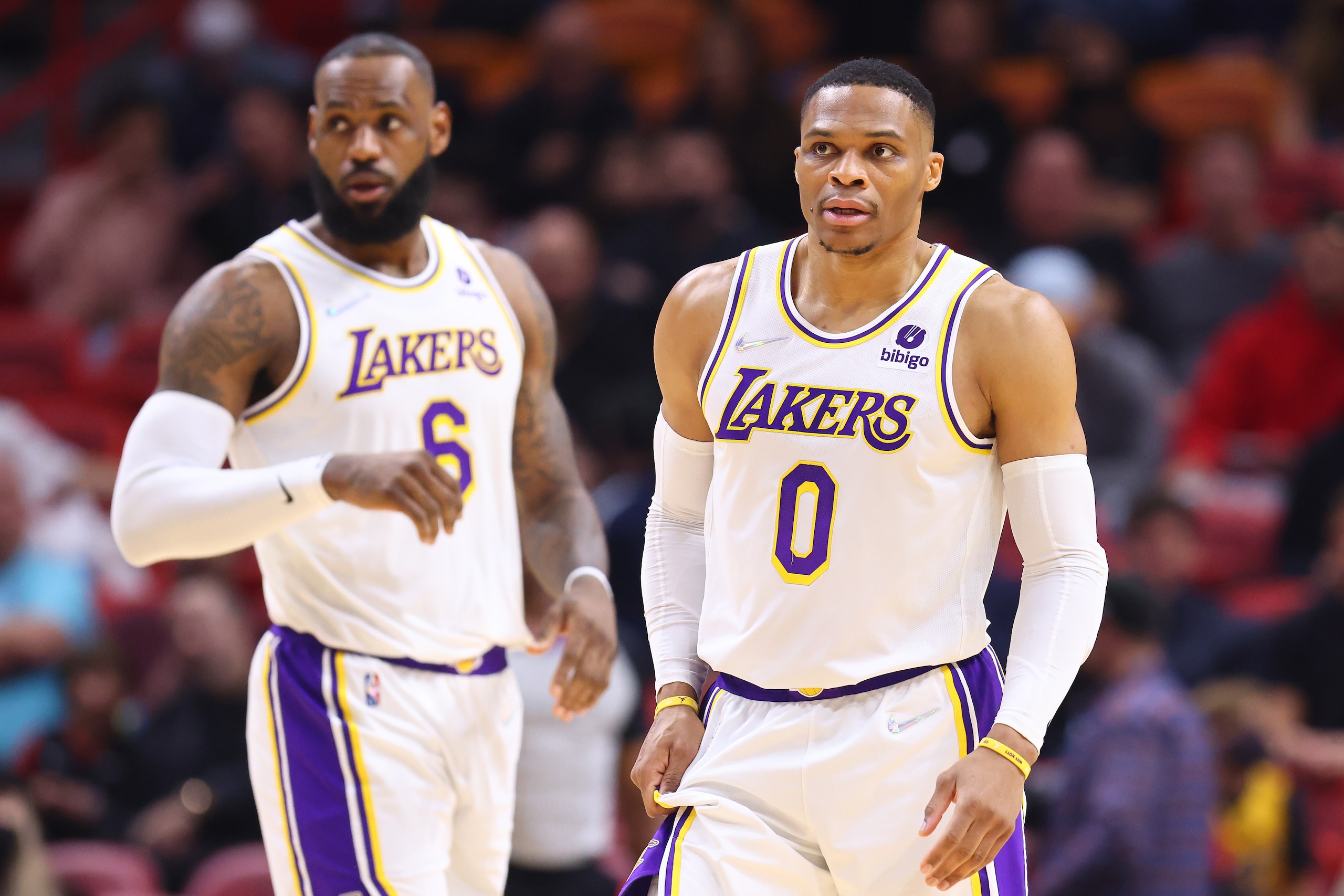
Proponents of brutal honesty will favor "Finding a Russell Westbrook trade" for the Los Angeles Lakers. That is...not unfair. It is, however, unrealistic. Playing in Los Angeles has done nothing to improve his market value. The Lakers have a higher chance of moving him over the summer, when he becomes a (massive) $47.1 million expiring contract.
Searching for wings or even guards who can positively impact both ends of the floor is the more fitting to-do item. The Lakers' rotation is overrun with aging vets and one-dimensional players, in egregiously outsized roles, who either jeopardize their defensive integrity or shrink the floor on offense.
Coming out of the deadline with even one three-and-D contributor under the age of 55 would be divine. It is also a pipe dream.
Talen Horton-Tucker and Kendrick Nunn, who has yet to play this season, are the team's only non-stars making more than the minimum. Tethering them together allows the Lakers to take back a player making a hair over $18.2 million, but that alone isn't going to secure a difference-maker.
Tossing in their 2027 (or 2028) first-rounder only helps so much. Most front offices don't enjoy the job stability necessary to intensely value draft picks more than a half-decade out. So while Eric Gordon or Jerami Grant would be ideal gets for this roster, the Lakers' top offer will, in all likelihood, never be the best package on the table.
Memphis Grizzlies: Whatever They Want (But Preferably a Big Wing Who Can Shoot)
15 of 30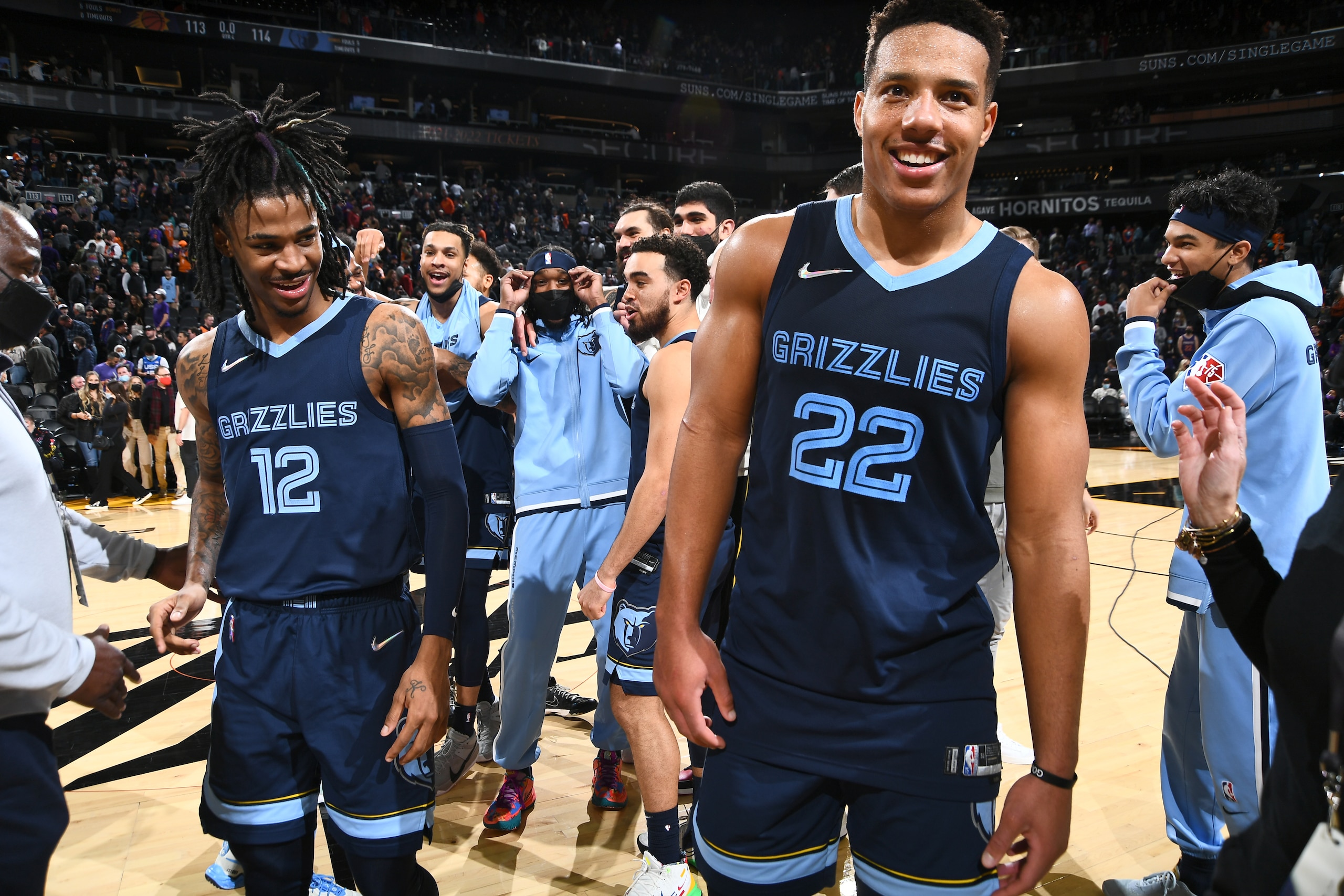
Every fiber of my being wants the Memphis Grizzlies to enter the deadline as an enthusiastic buyer. It almost doesn't matter who and what they target, so long as they buy at all. This season may be found money, but they're too good not to buy.
Standing pat still enables them to upend the Western Conference. They already own the No. 3 seed and have worked their way up to ranking in the top 10 of both offensive and defensive efficiency. There's no reason to short-circuit their future when no one plausibly available slingshots them up to the tippy-top of the title-contention mountain, right next to the Phoenix Suns.
Here's the thing: The Grizzlies don't need a dramatic acquisition. They can straddle the happy medium in between afterthought trade and blockbuster deal. They have three first-rounders in this year's draft, the Golden State Warriors' 2024 selection (top-four protection) and all their own picks moving forward, plus a collection of expiring contracts belonging to players who forecast as offseason flight risks.
Memphis is also blissfully flexible when it comes to integrating potential newcomers. Jaren Jackson Jr. is malleable enough, at both ends, to play beside another big. There is room for another ball-handler, particularly in minutes without Ja Morant, of any size.
Adding a bigger wing who can shoot makes the biggest difference. Someone like Harrison Barnes could noticeably elevate the Grizzlies' postseason peak without costing the moon. But again: Memphis is built to explore virtually any possibility.
Miami Heat: Extra Roster Spot
16 of 30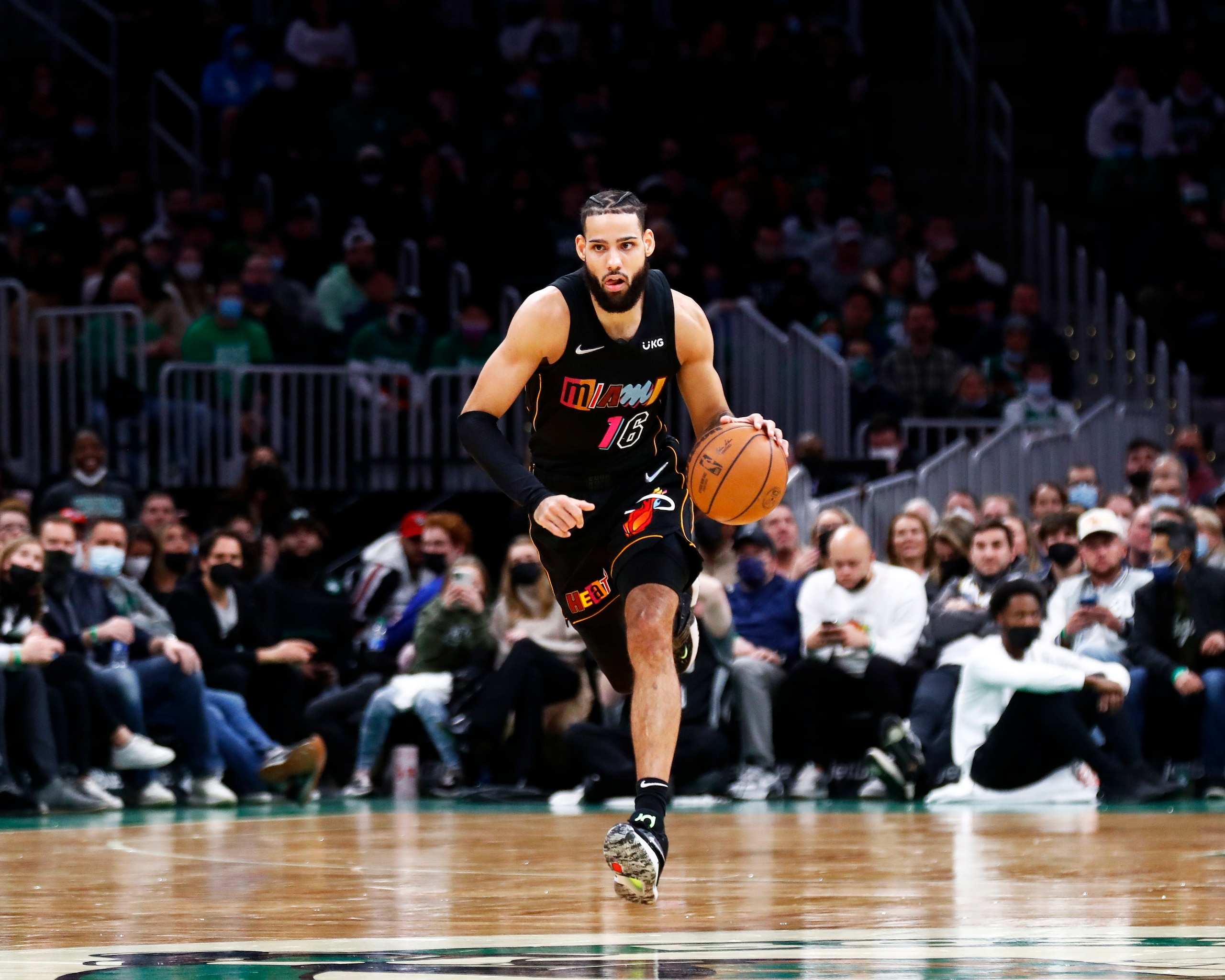
Don't strain yourself looking for Miami Heat trade scenarios ahead of the deadline. They're few and far between and, for the most part, immaterial.
Five of the Heat's six highest-paid players aren't going anywhere: Jimmy Butler, Kyle Lowry, Bam Adebayo, P.J. Tucker and Tyler Herro. Duncan Robinson is in no way untouchable, but he's no longer slogging through a shooting malaise, and his standalone trade value will be murky with four years and $74.4 million left on his contract.
Nobody on the roster is making more than $1.8 million after Miami's top-six guys, which torpedoes any meaningful theories. Team president Pat Riley can try tying future firsts, beginning in 2025, to Robinson and see where it gets him, but the Heat are contending for a top spot in the East despite laboring through a slew of absences from key players. They don't have to travel the nuclear route, even if it's ingrained into this front office's DNA.
Creating a second roster spot is the way to go. Miami has one opening as it stands but will need to convert Caleb Martin from a two-way contract to ensure he's playoff-eligible. Finding a taker for, say, KZ Okpala's $1.8 million increases the Heat's wiggle room under the tax (sub-$400,000) and allows them to become actual players on the post-deadline buyout market.
Milwaukee Bucks: Brook Lopez Proxy/Another Frontcourt Body
17 of 30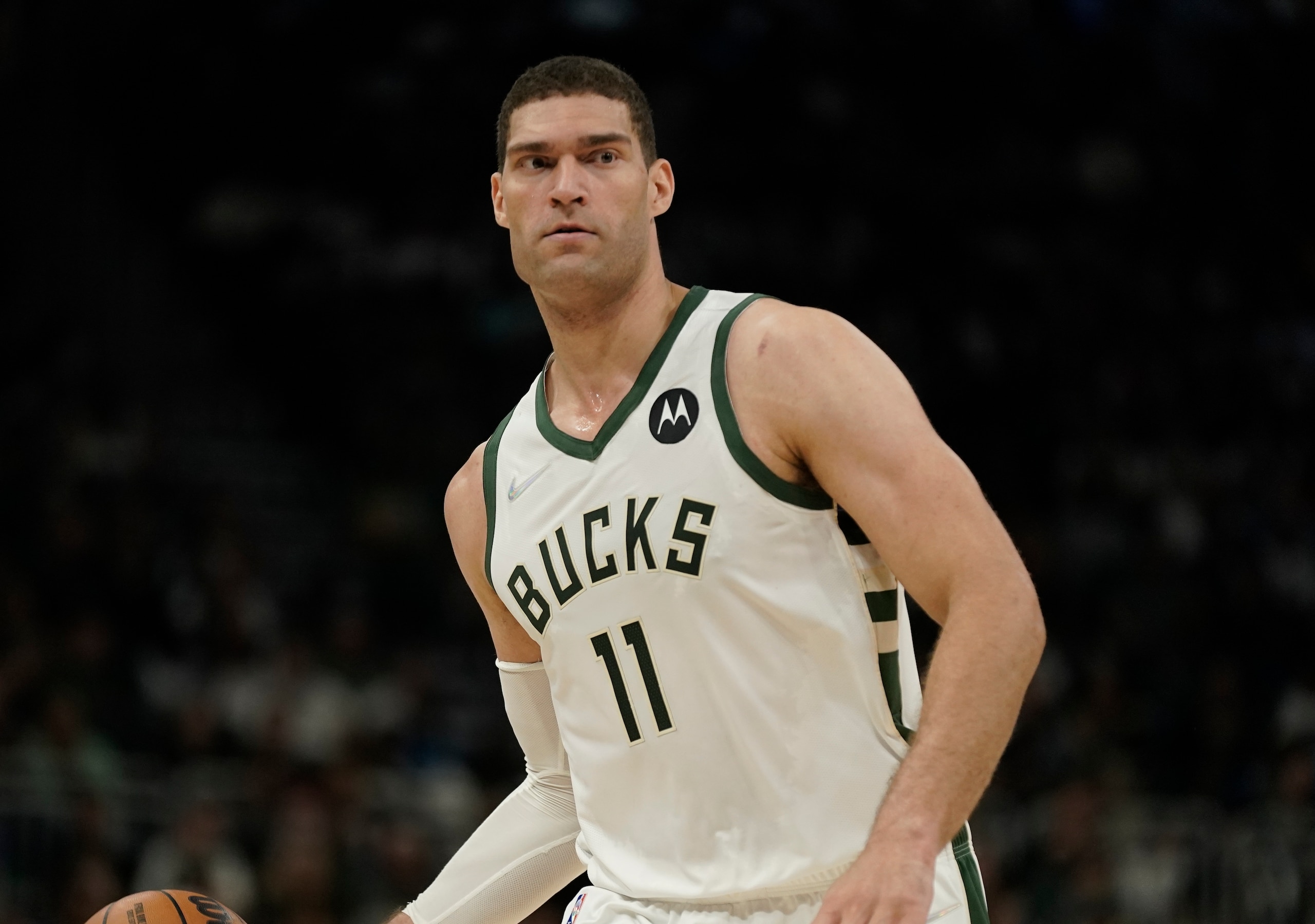
Brook Lopez has appeared in only one game this season while dealing with a back injury that required surgery, and it may be time for the Milwaukee Bucks to operate as if he's a non-factor.
It doesn't matter that the hope remains he'll return this year. They can't be sure what he'll look like, or whether he'll hold up across what's left of the regular season and playoffs.
Milwaukee needs additional insurance, because the trickle-down effect without Lopez is real. His absence thrusts Bobby Portis into the starting lineup, weakening the bench. It also increases the amount of time Giannis Antetokounmpo spends at center, and while those stretches are mostly straight fire, playing the two-time MVP as the de facto 5 limits how much he's allowed to party-crash defensive possessions as a free safety.
The Bucks are clearly biding their time and expect something to happen at or after the deadline (buyouts!). Letting DeMarcus Cousins go suggests that much and might double as a vote of confidence in Lopez's recovery.
There's also the matter of Milwaukee's barren asset pool. It cannot wow sellers with packages built around first-rounders, prospects or alluring mid-end salary. Moves of any substance will require shipping out Lopez himself, a course of action that feels premature. But whether it's a traditional big, stretch big, small-ball big, an imitation P.J. Tucker or something else, the Bucks need to plan as if Lopez won't inject stability into their frontcourt rotation—because, at this rate, he probably won't.
Minnesota Timberwolves: Frontcourt Shooting Off the Bench
18 of 30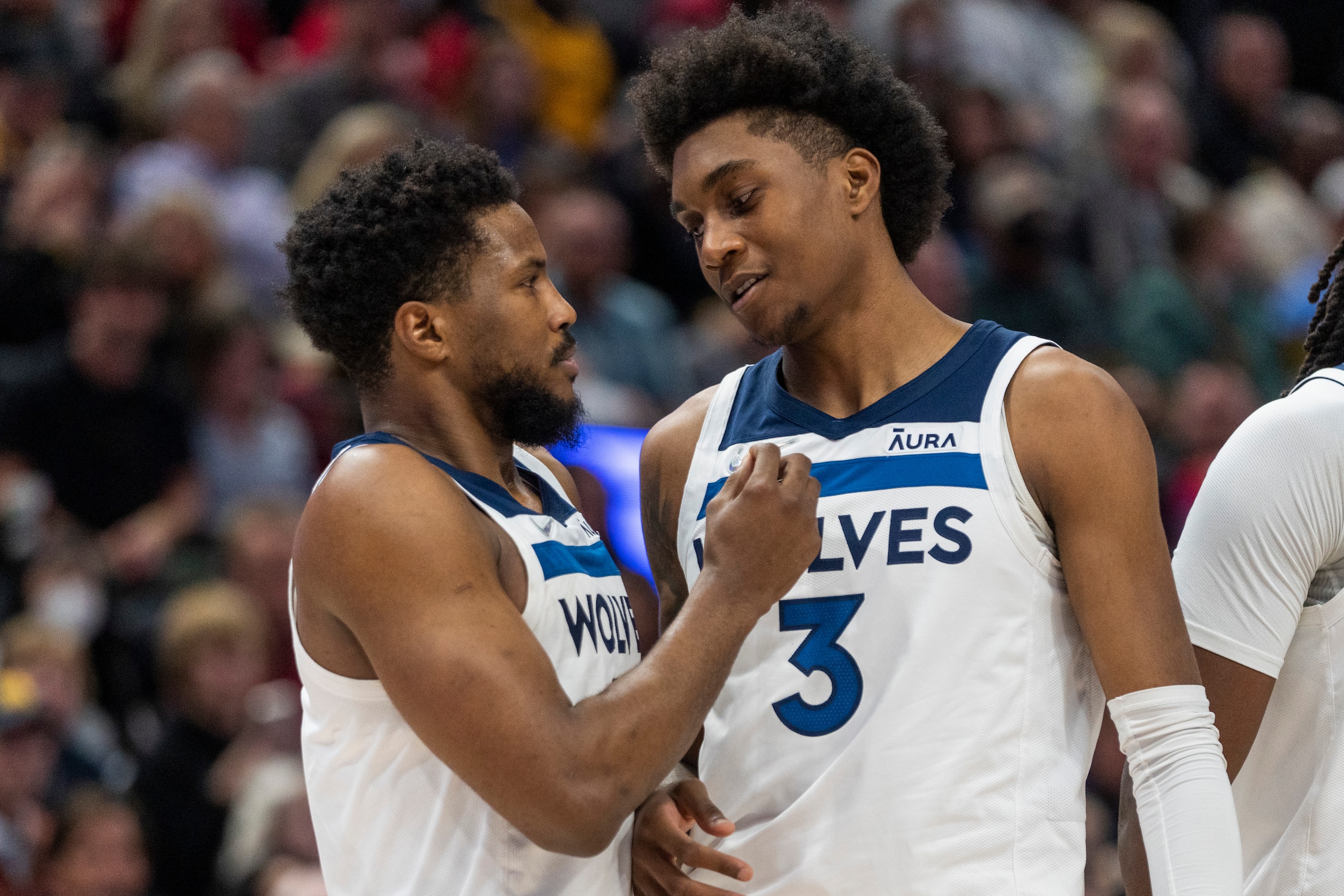
Am I traveling great lengths to avoid saying the Minnesota Timberwolves need an upgrade at the 4, beside Karl-Anthony Towns, because doing so would marginalize the maniacally effective defensive energy Jarred Vanderbilt has injected into the rotation as a member of the starting lineup?
You betcha. And I'm not sorry.
This also has the benefit of, you know, being the correct stance. Minnesota's preferred starting five has chewed up and spit out opponents when everyone's available. You can envision a better fit than Vanderbilt next to Towns, but upgrading from the former's minutes is not the largest issue plaguing this team.
Bench shooting owns that (dis)honor. The Wolves' reserves rank 25th in three-point efficiency, and some of the biggest culprits hail from the frontline.
Jaden McDaniels is connecting on just 29 percent of his treys. Naz Reid is under 33 percent. Taurean Prince is playing better...and still shooting 34 percent from deep for the year. Malik Beasley, though predominantly a guard, is under 35 percent this season despite a recent (and slight) uptick. Josh Okogie (29.4 percent) and Jake Layman (16.7 percent) no longer factor into the rotation.
Shoring up the offense may feel superfluous exiting a January through which the Wolves ranked second in points scored per possession and slipped on defense. But the secondary frontcourt rotation needs a comprehensive breath of fresh air, and shot-making depth ranks among the most critical problem spots.
New Orleans Pelicans: Backcourt Upgrade
19 of 30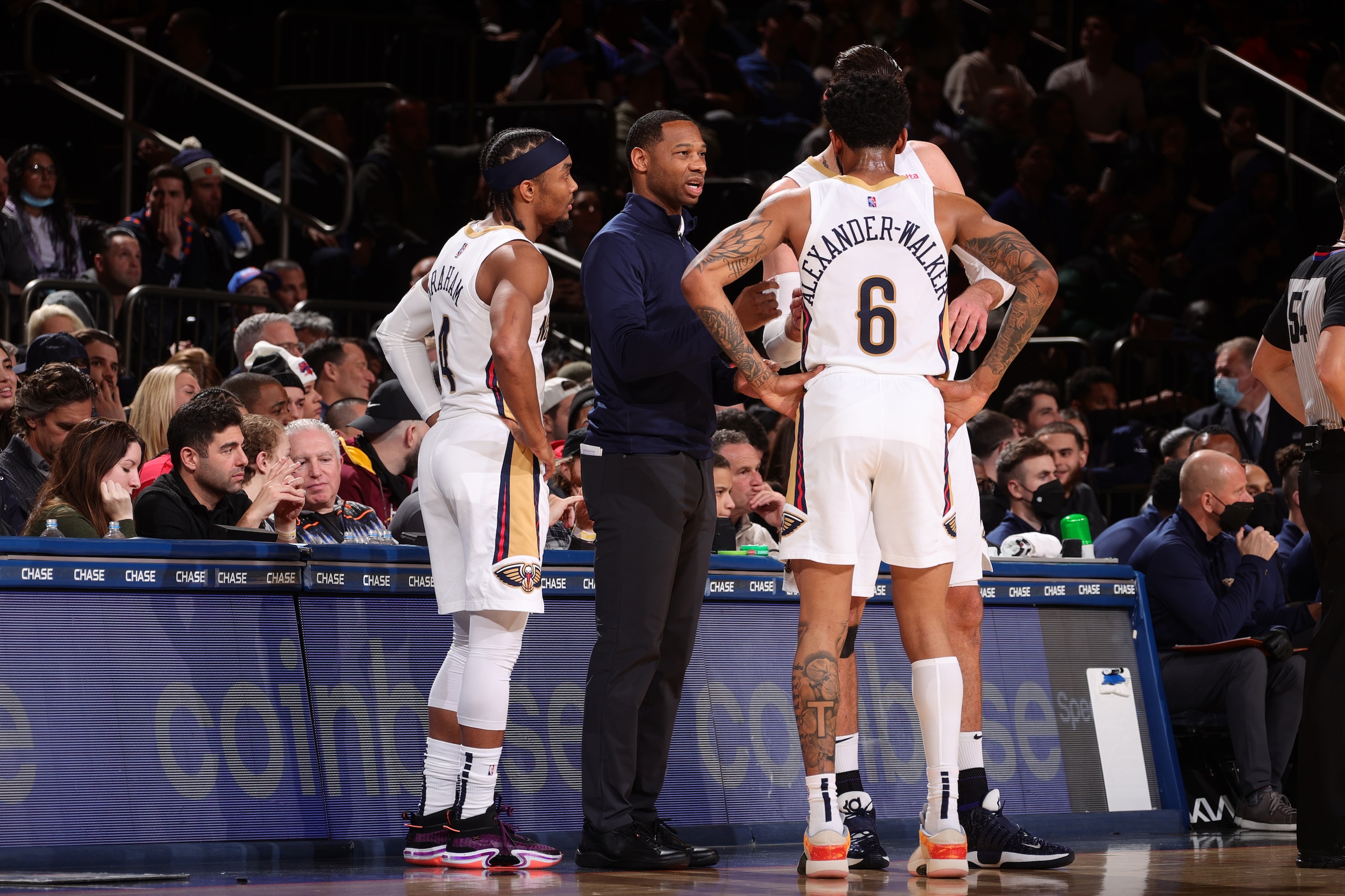
With or without Zion Williamson, the New Orleans Pelicans need to stock the rotation with backcourt shot-makers.
Those who (eventually) play alongside Zion must spit fire off the ball. And without Zion—which is to say, every game so far this season—New Orleans needs guards who can knock down jumpers off the dribble.
Neither of these boxes is checked at the moment. The Pelicans' backcourt members rank a combined 29th in three-point marksmanship, ahead of only the Oklahoma City Thunder, and they're dead last in effective field-goal percentage on all pull-up jumpers.
Giving fewer minutes to Tomas Satoransky and Garrett Temple might help the cause, but New Orleans isn't exactly teeming with splashy alternatives. Jose Alvarado is a shot of defensive adrenaline but an unreliable three-point shooter. Kira Lewis Jr. is out for the season. Nickeil Alexander-Walker has always been touch-and-go.
Devonte' Graham has the track record to suggest he can bump up his 35.3 percent clip from downtown, but this is the second consecutive season in which his off-the-bounce three won't fall. Short of actually giving Trey Murphy minutes at the 2 (and at all) and his catching fire, the Pelicans should be on the lookout for backcourt shot-makers—hence their apparent interest in CJ McCollum, per Bleacher Report's Eric Pincus.
New York Knicks: Additional Minutes for the Kids
20 of 30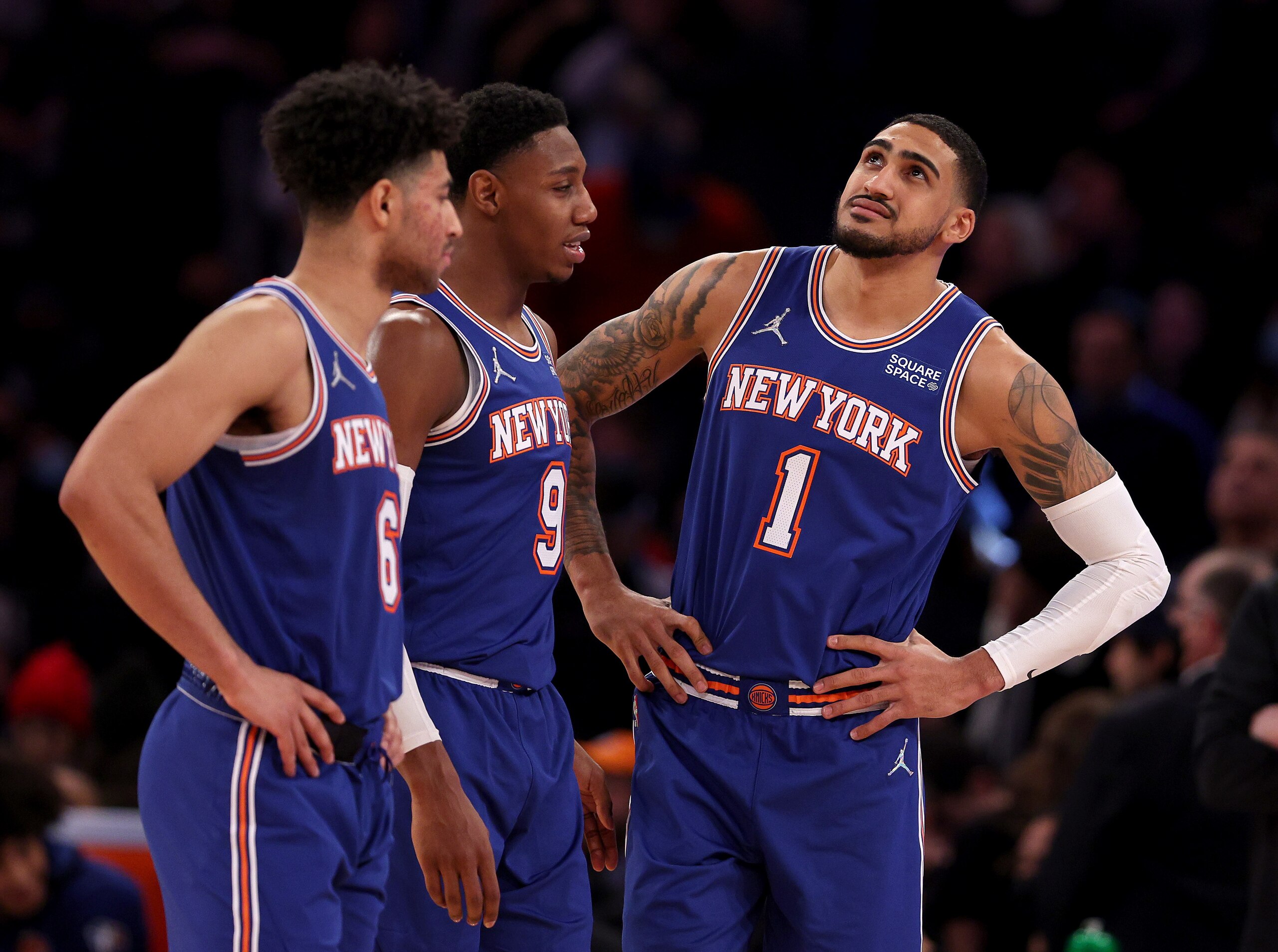
Organizations in total alignment of their direction and realistic regular-season outcomes shouldn't need to make trades just so they can open minutes for youngsters.
Which is exactly why the New York Knicks need to make trades to open minutes for youngsters.
This is somewhat tongue-in-cheek, but also, not really. Though RJ Barrett's playing time is without issue, head coach Tom Thibodeau hasn't exactly done a bang-up job of emphasizing development amid a season gone astray.
Obi Toppin's usage is criminal. He's averaging just 13.1 minutes per game since the Knicks' Jan. 2 loss to the Toronto Raptors. Rookie Quentin Grimes has started getting regular run, which is great. Immanuel Quickley's court time is the most consistent of the bunch, aside from Barrett, but what would happen to him if Derrick Rose, Kemba Walker and Alec Burks were all healthy at the same time?
And then there's Cam Reddish. He's averaging under seven minutes, with two DNPs, through the five games he's been active. Implementing new players is tough at midseason. You also don't give up a future first, of any kind, just to not play someone.
To be fair: The Knicks have a ton of guys who warrant floor time. That's the problem. Catering to vets and an ostensibly deep roster is cool when you're winning. The Knicks are not. They're 11th in the East, and you don't get a participation trophy for earning a play-in spot. It's time to free up more minutes for the kids.
Oklahoma City Thunder: Floor-Spacing
21 of 30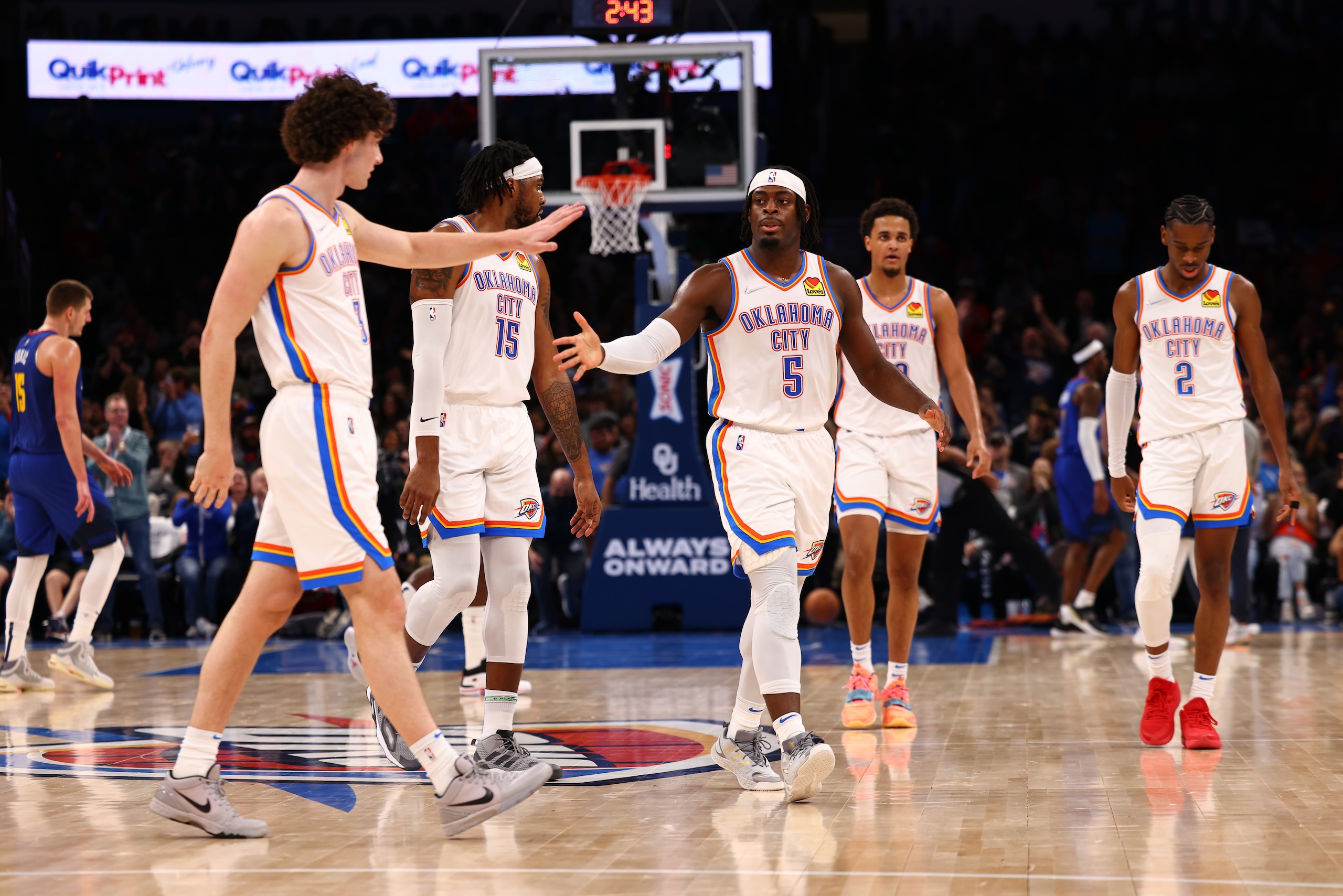
There is a not-insignificant part of me that prefers to see the Oklahoma City Thunder repurpose their center rotation just for the hell of it. Give this team Nicolas Claxton or Mitchell Robinson or Marvin Bagley III or Mo Bamba or Chris Boucher, and let's see what happens.
But none of the swankiest options will cost nothing, and the Thunder shouldn't be ponying up picks or any of their own young players for big-men fliers—particularly when everyone mentioned above is literally scheduled to hit free agency this summer. Plus, I also kind of dig Mike Muscala doing his thing and the Jeremiah Robinson-Earl experiment in the middle.
Opening up the floor is more important, especially with Shai Gilgeous-Alexander and his shot creation now sidelined with a right ankle sprain until at least after the All-Star break.
Oklahoma City's half-court balance has been claustrophobic all season. It ranks dead last in overall three-point percentage and isn't even hitting 31 percent of its above-the-break triples. Only the Sacramento Kings and Detroit Pistons are less efficient on wide-open looks outside 10 feet, and just three teams shoot worse on pull-up jumpers.
Team president Sam Presti doesn't need to jeopardize the tank or act like a buyer at the deadline to stumble into better shooting. The Thunder have more than $35 million in cap space, rendering them the quintessential salary-dumping ground. They should be able—and actively trying—to absorb someone who reliably stretches defenses to facilitate tax aversions and multiteam trade scenarios.
Orlando Magic: Beef Up Draft-Pick Stash
22 of 30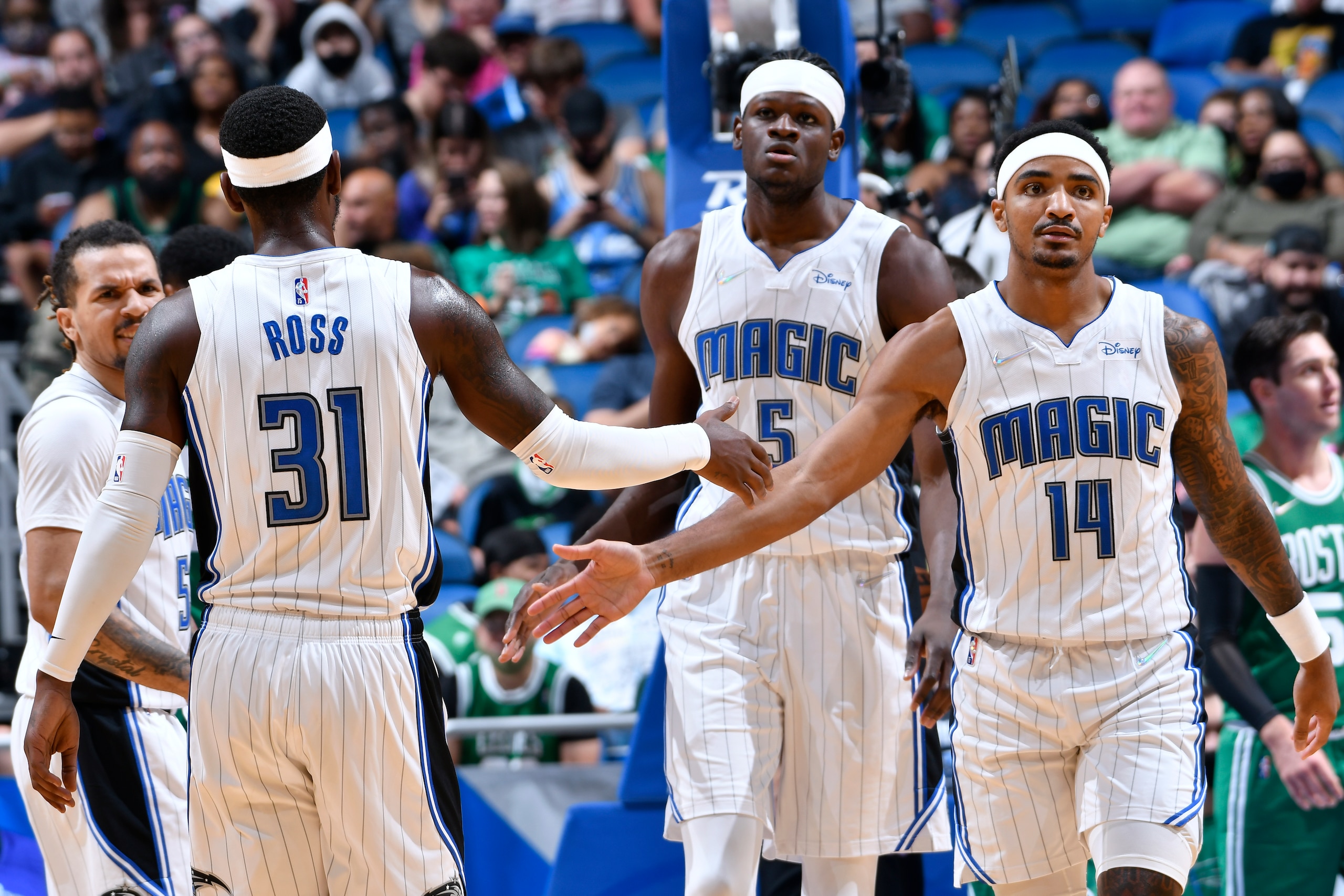
Generic directives are actually a compliment to the Orlando Magic. Cole Anthony, Franz Wagner and Wendell Carter Jr. have made them incredibly fun to watch at the top. More recently, so have Jalen Suggs, Chuma Okeke and Mo Bamba.
Orlando gets less interesting inside the latter part of its rotation. Gary Harris looks reborn but doesn't fit the bigger picture. R.J. Hampton's season has for the most part broken my heart. Terrence Ross, like Harris, isn't long for the Magic.
Getting back Markelle Fultz and Jonathan Isaac from ACL injuries will deepen their appeal. They need to increase their number of bites at the draft apple anyway. They have all their own picks, plus extra firsts from Chicago (2023) and Denver (2025), but neither of those additional selections projects to be high, and Orlando must remain in asset-acquisition mode until a consensus tent-pole cornerstone emerges.
Select contracts accelerate this stance. The Magic should be gauging Bamba's value ahead of restricted free agency. Harris isn't playing well enough to justify his $20-plus million price point, but his expiring salary lets them lease out future payroll to teams peddling picks to offload longer-term pacts. Ross will be worth something to contending teams when he's owed just $11.5 million next year.
And the Magic aren't limited to them. Virtually nobody registers as untouchable if the right package of first-rounders or equivalent prospects is on the table. Beyond Anthony, Suggs, Carter and Wagner, in fact, it should be open season.
Philadelphia 76ers: Someone to Hit Shots off Joel Embiid Double-Teams
23 of 30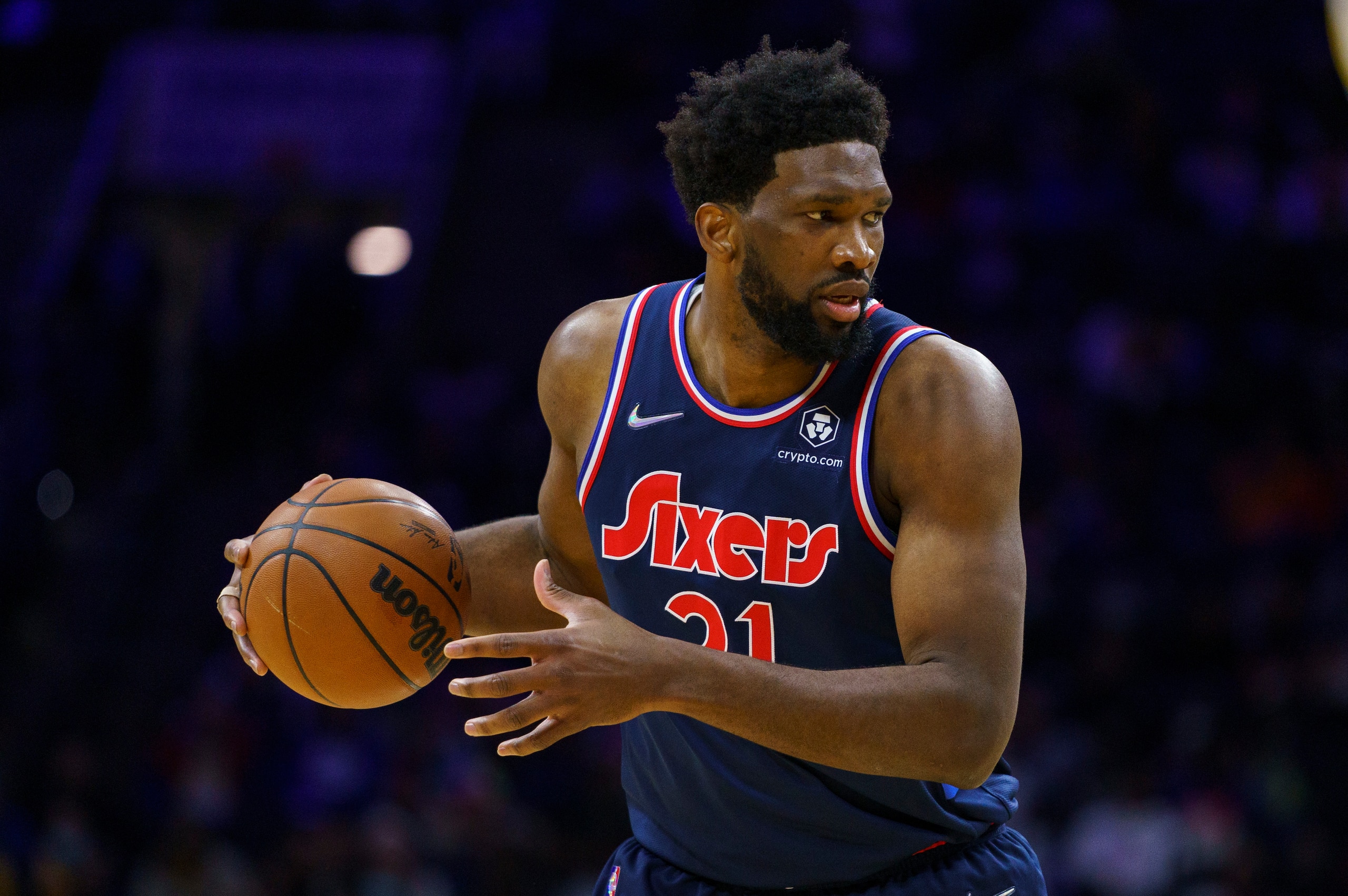
Resolving the Ben Simmons situation should top the Philadelphia 76ers' to-do list. But team president Daryl Morey has never sounded like someone who will settle for less than a blockbuster return, and the team's apparent appetite for a James Harden sign-and-trade or opt-in-and-trade hints at a whole lot of nothing happening over the next week or so.
Spotlighting actual roster needs feels more meaningful. And even that's impacted by a Simmons non-trade. The Sixers definitely need another higher-end creator to co-star with Joel Embiid, if not bolster the second unit. But they don't have salary filler that's both enticing to outside parties and expendable to them to make it happen.
In the absence of new or especially realistic Simmons trade scenarios and the alternative means to do something splashy, Philly should try finding a cheaper someone who can help the offense capitalize on the absurd amount of defensive attention paid to its MVP candidate.
Embiid is getting double-teamed on 32.5 percent of his possessions, the second-largest share in the league, behind only Giannis Antetokounmpo. The Sixers are averaging 1.06 points per possession in these situations. Milwaukee pumps in more than 1.16 when Giannis gets doubled up.
To be fair: Philly is shooting above 59 percent on field-goal attempts off passes from Embiid. But it needs another upper-echelon scorer who dissuades teams from throwing the kitchen sink at Embiid in the first place, or who can better break down defenses and keep the ball moving when he's doubled.
Phoenix Suns: Ball-Handling Attacker
24 of 30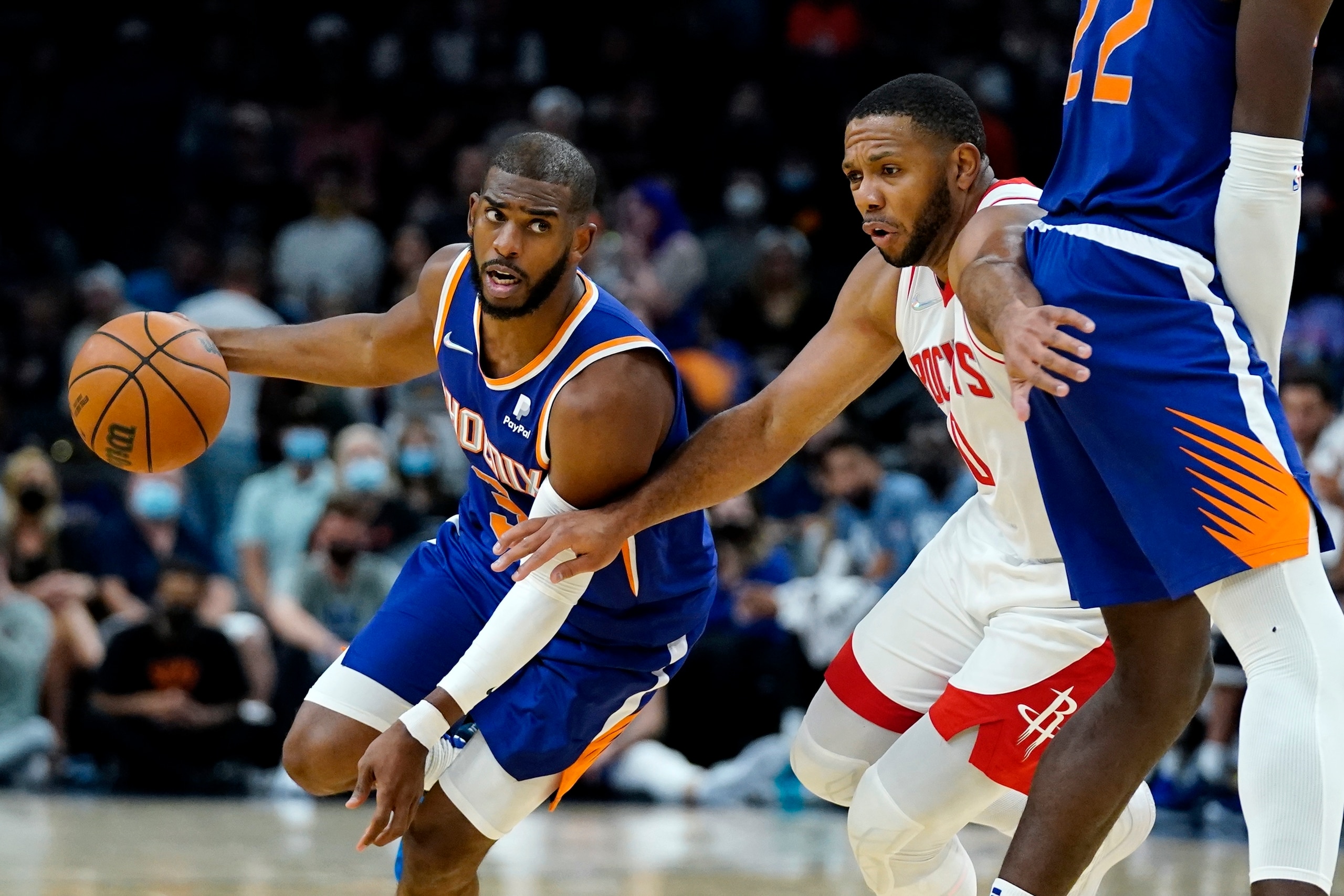
Signing JaVale McGee over the summer and then picking up Bismack Biyombo midseason has deepened the Phoenix Suns' secondary big-man rotation enough for them to turn their trade-deadline attentions elsewhere.
To a third ball-handler and perimeter attacker, for instance.
Devin Booker and Chris Paul outfit the Suns with more than enough table-setting and self-creation. Cameron Payne livened up before suffering a wrist injury, too. But the offense could still use a guard or wing who puts more pressure on the basket and who can theoretically soak up minutes in lineups featuring both CP3 and Book.
Phoenix doesn't need to get unnecessarily dramatic. No team takes a smaller share of its shots at the rim, but that hasn't precluded the Suns from cobbling together the league's second-best offense or dismantling opponents in crunch time.
Left alone, this squad should be the prohibitive favorite to come out of the West. But they can strengthen an already ironclad title case by angling for minor (Kenrich Williams) to medium-sized (Eric Gordon) upgrades who diversify their offensive portfolio for the playoffs.
Portland Trail Blazers: Assets for 2022-23
25 of 30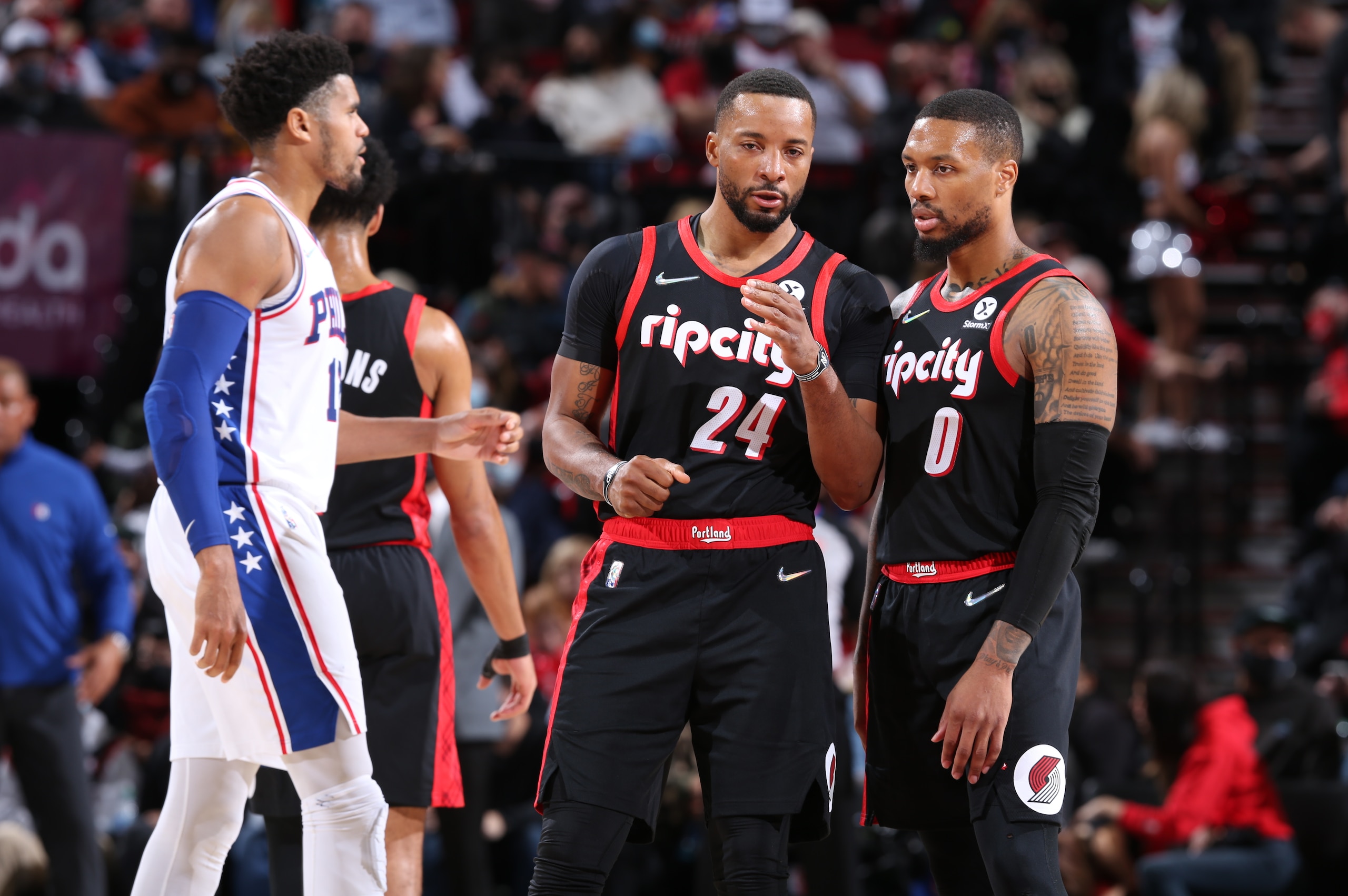
Calling for the Portland Trail Blazers to strip down their roster and begin anew is the reflexive response for this exercise. Their situation doesn't work like that. Insisting they deal soon-to-be free agents such as Robert Covington, Jusuf Nurkic and Anfernee Simons (restricted) is next up. Their situation doesn't work like that, either.
Portland's season is indeed a wash. It looked frisky for a second after Damian Lillard underwent surgery to repair an abdominal injury but has since returned to solid ground. That isn't quite an impetus for the Blazers to miscellaneously sell. They have little incentive to divest so long as Lillard wants to stay put.
This is different from demanding they buy. They don't have the license to do that, either. Lillard could change his tune over the offseason, or the team could hire a different front-office exec rather than stick with interim general manager Joe Cronin.
Outlooks so fluid call for hedges. Portland could opportunistically buy on someone who won't damage its chances of keeping this year's lottery-protected pick. It could look to parlay Covington and Nurkic into draft capital or younger players it can then flip as part of a larger trade over the summer. It could try unloading CJ McCollum or Norman Powell for the same type of return and offseason endgame, with the intention of also making it easier to re-sign Simons.
Whatever the case, Portland should use this trade deadline to reload with next season's roster in mind.
Sacramento Kings: The Ever-Elusive Actual Direction
26 of 30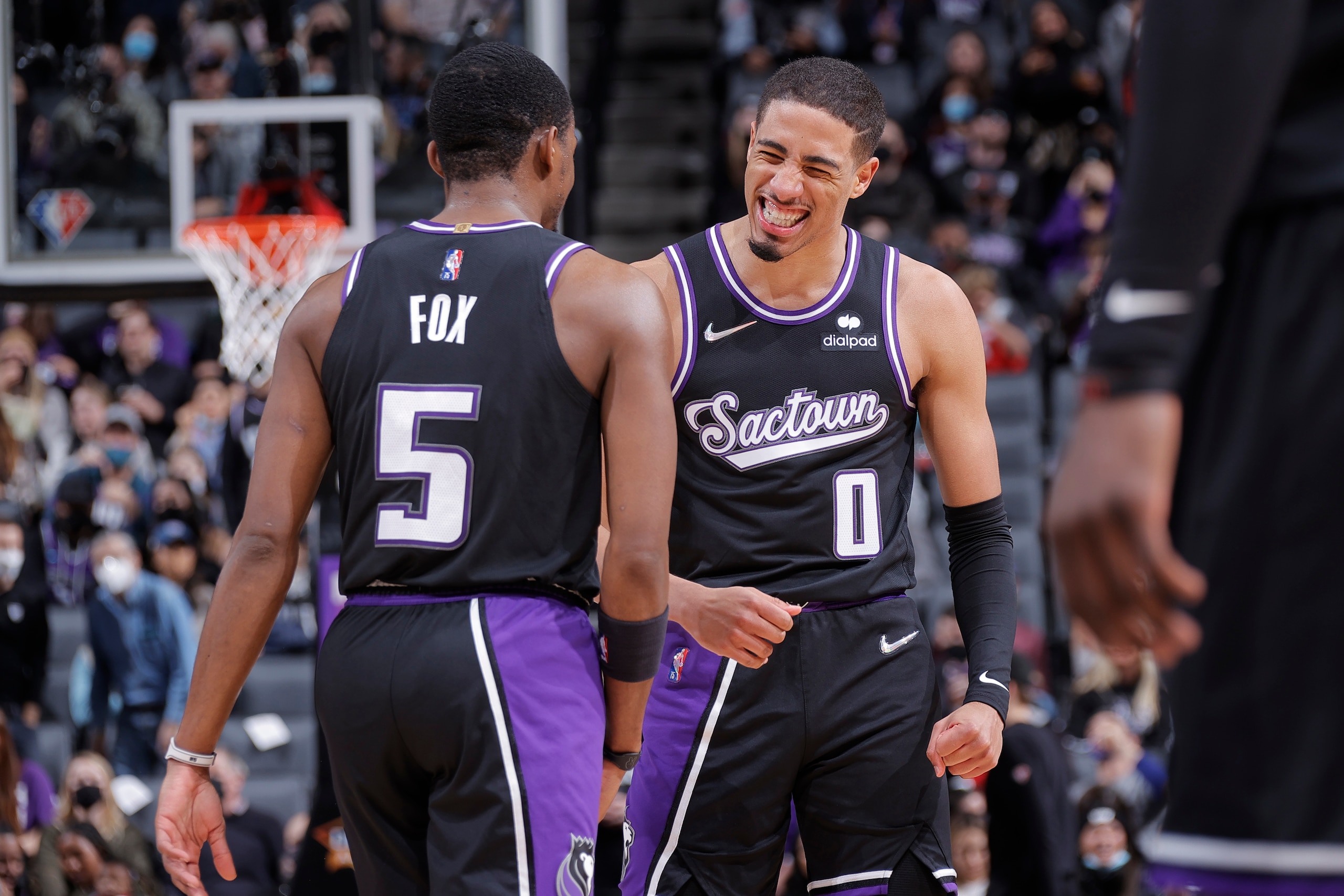
Dear Monte McNair, Vivek Ranadive and whomever else with the Sacramento Kings this concerns,
Please, for the love of common sense, and for your fanbase, just do something, anything, that doesn't scream "We consider only kind of sucking as a success!"
Perhaps that includes going all-in for Ben Simmons. Maybe it's just a consolidation trade for another star we don't realize is available. Or perhaps this entails taking a stick of dynamite to the core, offering up everyone from Harrison Barnes to Buddy Hield to even De'Aaron Fox for draft and prospect capital that consigns you to rock bottom but also guarantees you one or two top-end lottery picks.
If you need to make Tyrese Haliburton untouchable as part of any tectonic shakeup, that's fine. He's incredible. Put Richaun Holmes off-limits, too. That needs to be the extent of your pearl-clutching. This core isn't good enough to approach the deadline with a narrow mind. You're 13th in the West for crying out loud!
And just so we're clear: Forking over future draft picks just so you can win the right to overpay Jerami Grant, a quintessential third or fourth wheel who won't single-handedly fix your defense, doesn't count as chiseling out an actual coherent direction.
Sincerely,
A Concerned Bystander
San Antonio Spurs: Functional Shooting
27 of 30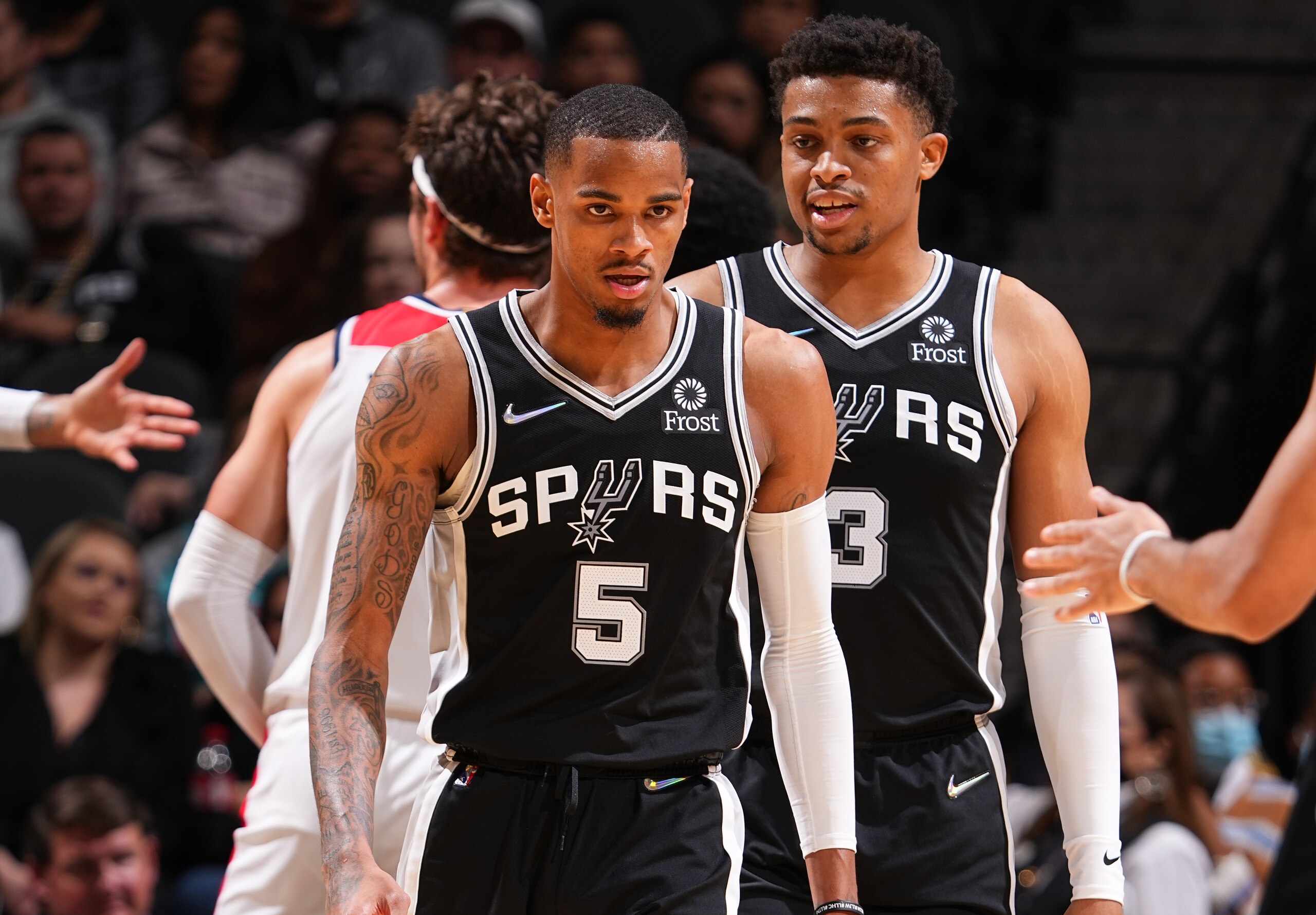
Jettisoning Bryn Forbes as part of a three-team trade with Boston and Denver is proof the San Antonio Spurs are catering to the macro view and fully aware they have a logjam of guards on their hands. That, in turn, is evidence enough to push for them to take their retool-rebuild-or-whatever a step further and strive to boost the future-draft-pick stash by shopping Derrick White and Jakob Poeltl.
And yet, that would still represent a stark contrast from how the Spurs have operated in the past. They are not controlled demolitionists or situational tankers, at least not since 1997. They aren't even a viable candidate to pounce on whatever stars are available at the deadline.
Make no mistake, they continue to need an All-NBA-type cornerstone. Dejounte Murray falls juuust short of that measuring stick. But they're not a quick-fix, let's-go-all-in kind of organization. They're going to chug along at their own pace, attempting to develop and mine gems from within, even if that means having to unearth the next Face of the Future in the late or post-lottery.
Assuming they even do anything, the Spurs' trade deadline will more likely be geared toward caulking cracks in the roster (and finding Thaddeus Young a new home). And right now, that means chasing after functional shooting—players who not only jack up their three-point-attempt-rate (30th) and long-range accuracy (16th) but who can do so off the dribble, under intense half-court pressure, and in transition.
Toronto Raptors: Second-Unit Punch
28 of 30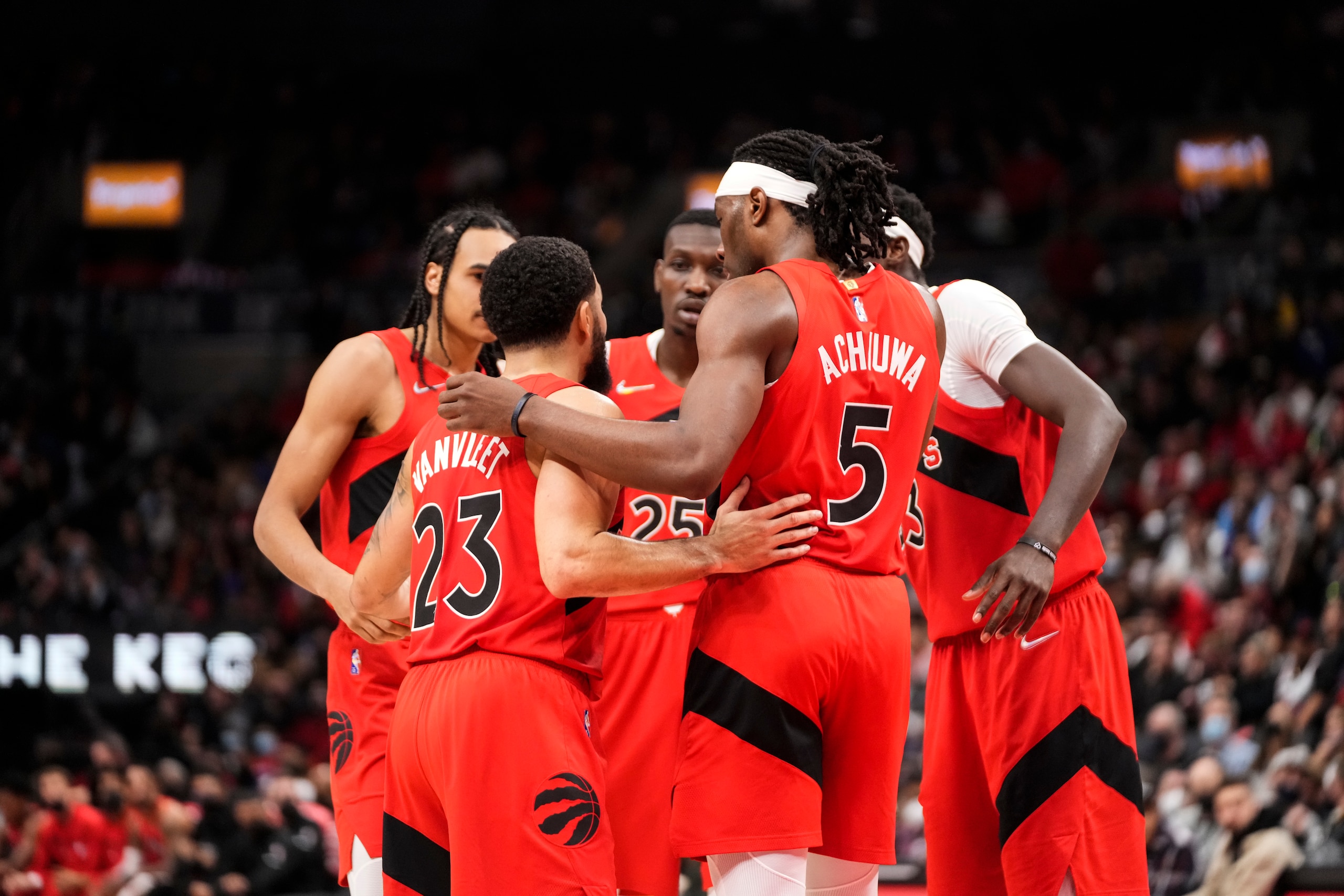
Toronto Raptors team president Masai Ujiri reportedly has designs on buying at the deadline, according to TSN"s Josh Lewenberg. This will anger any rivals who were counting on him to gauge the market for Pascal Siakam or Fred VanVleet and segue into surprise-seller mode.
It also makes a lot of sense.
The Raptors have the makings of a sleeping giant. Their preferred starting five—Siakam, VanVleet, OG Anunoby, Scottie Barnes, Gary Trent Jr.—gives them plenty of talent at the top, even if the lineup numbers are net neutral for the year. Chris Boucher has also perked up a little after a disastrous start to the year; his three-ball is even falling in recent weeks.
Reliable options are wearing thin after that, and it shows in Toronto's playing-time distribution.
VanVleet, Siakam and Anunoby rank first, second and third, respectively, across the entire league in minutes per game. Scottie Barnes checks in at 10th. This is top-heaviness that would make Prime Tom Thibodeau blush.
Bringing in even one player who ensures the rotation stretches seven dependable bodies deep every night would be a godsend. Such a move will mean a great deal more if that player is capable of spearheading the second unit as some combination of playmaker, floor-spacer and self-sustaining scorer.
Harp on the Raptors' need for a properly sized center if you must. That's more of a secondary matter unless they're planning to stick Barnes with the bench mob.
Utah Jazz: Athletic Defenders
29 of 30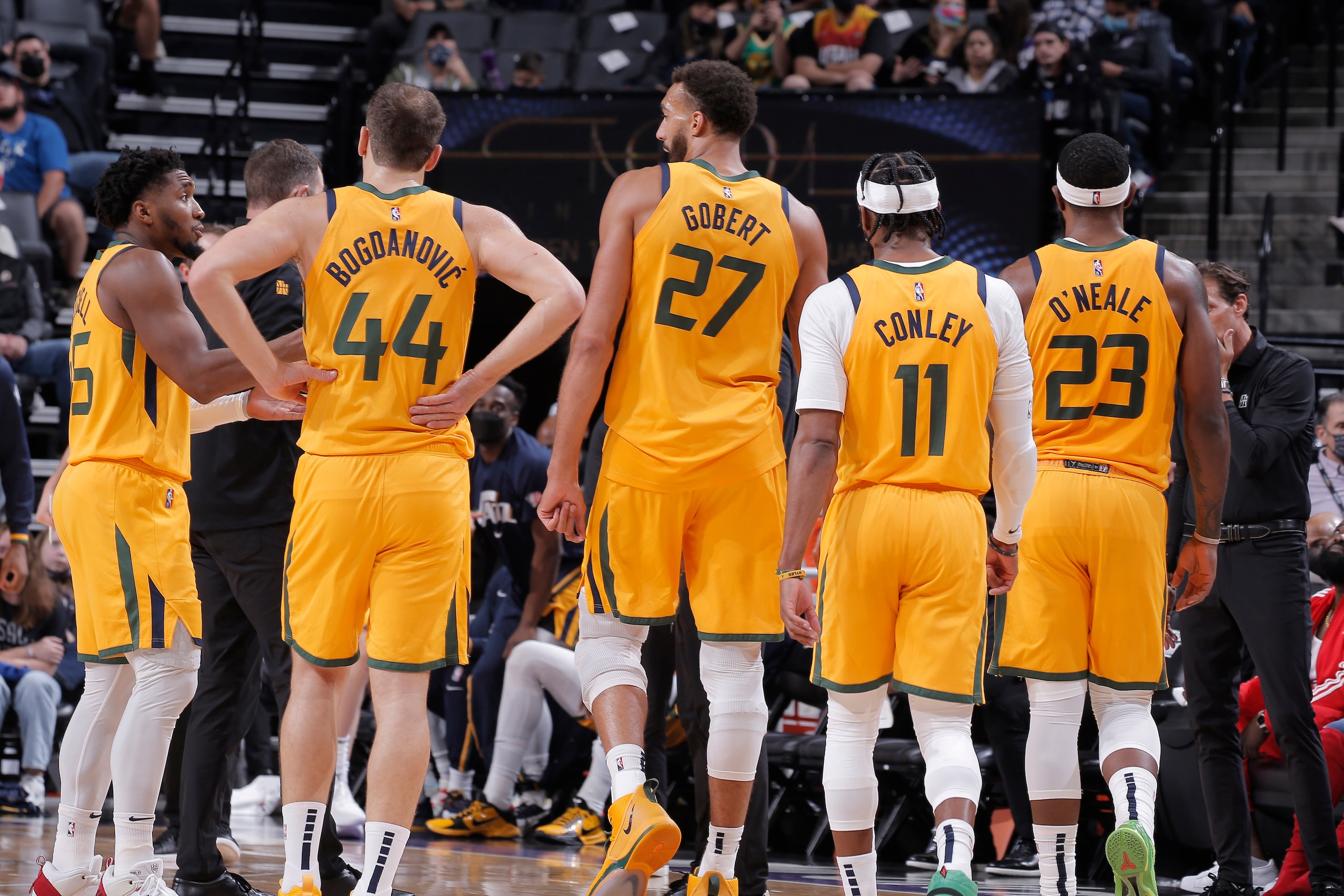
Joe Ingles' season-ending ACL injury opens the door for the Utah Jazz to prioritize playmaking ahead of Feb. 10. They didn't have a lot of secondary table-setters behind Mike Conley and Donovan Mitchell in the first place. Ingles' absence now makes it so their third-best perimeter initiator is...Jordan Clarkson or Trent Forrest.
That isn't OK. It's still more OK than the Jazz's dearth of athletic defenders.
Though this comes with the caveat Utah has been dealing with key absences, the team went a disastrous 4-12 through January while placing 25th in points allowed per possession. A healthy Rudy Gobert changes nearly everything, and Danuel House Jr., currently in health and safety protocols, has earned himself a rest-of-season contract. But this rotation still needs someone who can ease Royce O'Neale's defensive workload, cover up around the basket if Gobert is pulled away and neutralize transition attacks after missed shots.
Losing Ingles doesn't destroy the Jazz's trade scenarios. His expiring contract has value as cap relief, and they have other cards to play. Clarkson's shot-making will appeal to offenses hard up for self-creation, and the offense can probably withstand the loss of Bojan Bogdanovic if the return for Utah is shiny enough.
But the Jazz were never perfectly positioned to remedy their biggest, most longstanding problem. They can't convey a first-round pick before 2026, so even at their most generous, they're unlikely to have the best offers for a Robert Covington or Josh Richardson, let alone a Marcus Smart or Jerami Grant.
Washington Wizards: Caps-Lock SHOOTING
30 of 30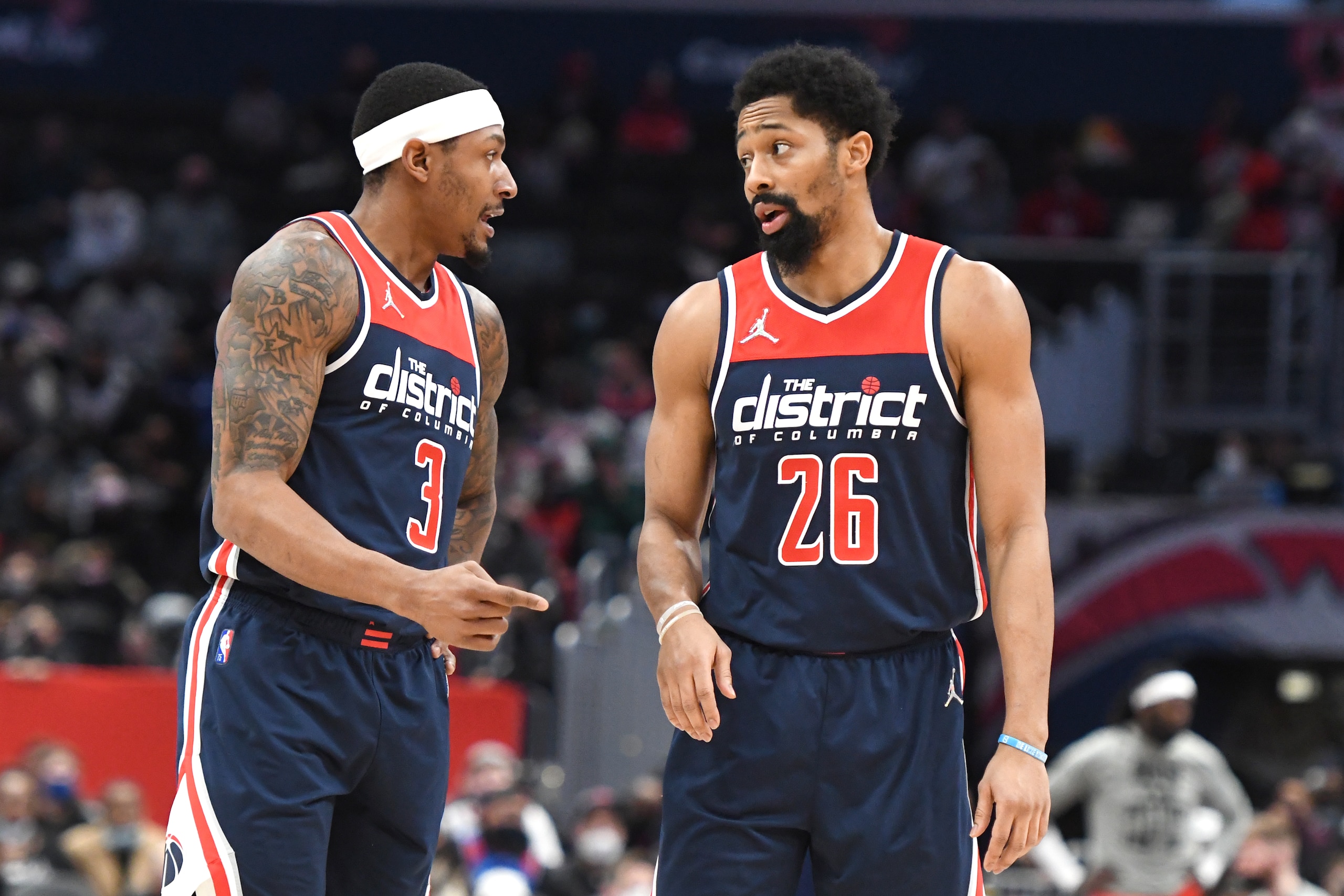
Go ahead and give an honorable mention to "New digs for Spencer Dinwiddie" and "A point guard Washington Wizards players actually want to hear talk." But a midseason agenda that wholesale doesn't seem realistic so long as this team plans to keep trudging along with Bradley Beal as its centerpiece.
Settle on "more shooting" instead. The Wizards rank in the bottom five of both three-point-attempt rate (26th) and efficiency (28th), and only four teams are posting lower effective field-goal percentages on wide-open jumpers outside 10 feet. Kentavious Caldwell-Pope (37.5 percent) and Aaron Holiday (37.5 percent) are the lone everyday rotation players burying more than 33.3 percent of their triples.
Hypothetical shooting infusions would ideally come from the point of attack, where Washington houses two of the league's least threatening 1s. Dinwiddie is knocking down under 32 percent of his treys, while Raul Neto lands at sub-23 percent. Beal's career-worst 30 percent clip from distance isn't helping matters, either.
Really, though, the Wizards shouldn't be too choosy. Kyle Kuzma has fallen below 34 percent from beyond the arc. Davis Bertans has been all over the place (32.4 percent) and is too one-positiony to sponge up much more playing time. Rookie Corey Kispert is under 32 percent from long range. Deni Avdija (31.1 percent) and Rui Hachimura (33.3) are largely non-threats from behind the rainbow. Thomas Bryant (31.3 percent) has yet to recapture his outside pizzazz.
So, yeah, the Wizards need shooting. Any shooting. From anywhere.
Unless otherwise noted, stats courtesy of NBA.com, Basketball Reference, Stathead or Cleaning the Glass and accurate entering Tuesday's games. Salary information via Spotrac.
Dan Favale covers the NBA for Bleacher Report. Follow him on Twitter (@danfavale), and listen to his Hardwood Knocks podcast, co-hosted by NBA Math's Adam Fromal.

.jpg?w=2560 "B/R's Expert Week 7 NFL Picks 🔮")

.jpg?w=2560 "LaMelo Claps Back at Lonzo 🤣")
.jpg?w=2560 "Steelers Fan Event in Paris Canceled (AP)")