

Giants' Top Players to Consider for Franchise Tag, RFA Contract Tenders
The New York Giants weren't quite good enough to make the postseason in 2020, but they were competitive in the NFC East and seemed to build both confidence and momentum under first-year head coach Joe Judge.
With Dave Gettleman back in the fold as general manager, the Giants should have a prime opportunity to build on what they accomplished in 2020. Their 6-10 record could quickly turn into 8-8, 9-7 or better, which may be enough to win the division in 2021—the Washington Football Team won it at 7-9 this past season.
Adding a few new pieces will go a long way toward making New York a division contender, but this isn't the only task at hand for Gettleman. He will also have to address New York's pending free agents, both unrestricted and restricted.
After all, if the Giants hope to build on what they did in 2020, they'll need to keep some of those key pieces in place.
Here, you'll find an in-depth look at New York's top candidates for the franchise tag and for restricted-free-agent (RFA) contract tenders.
On Tags, Tenders and New York's Salary-Cap Situation
1 of 3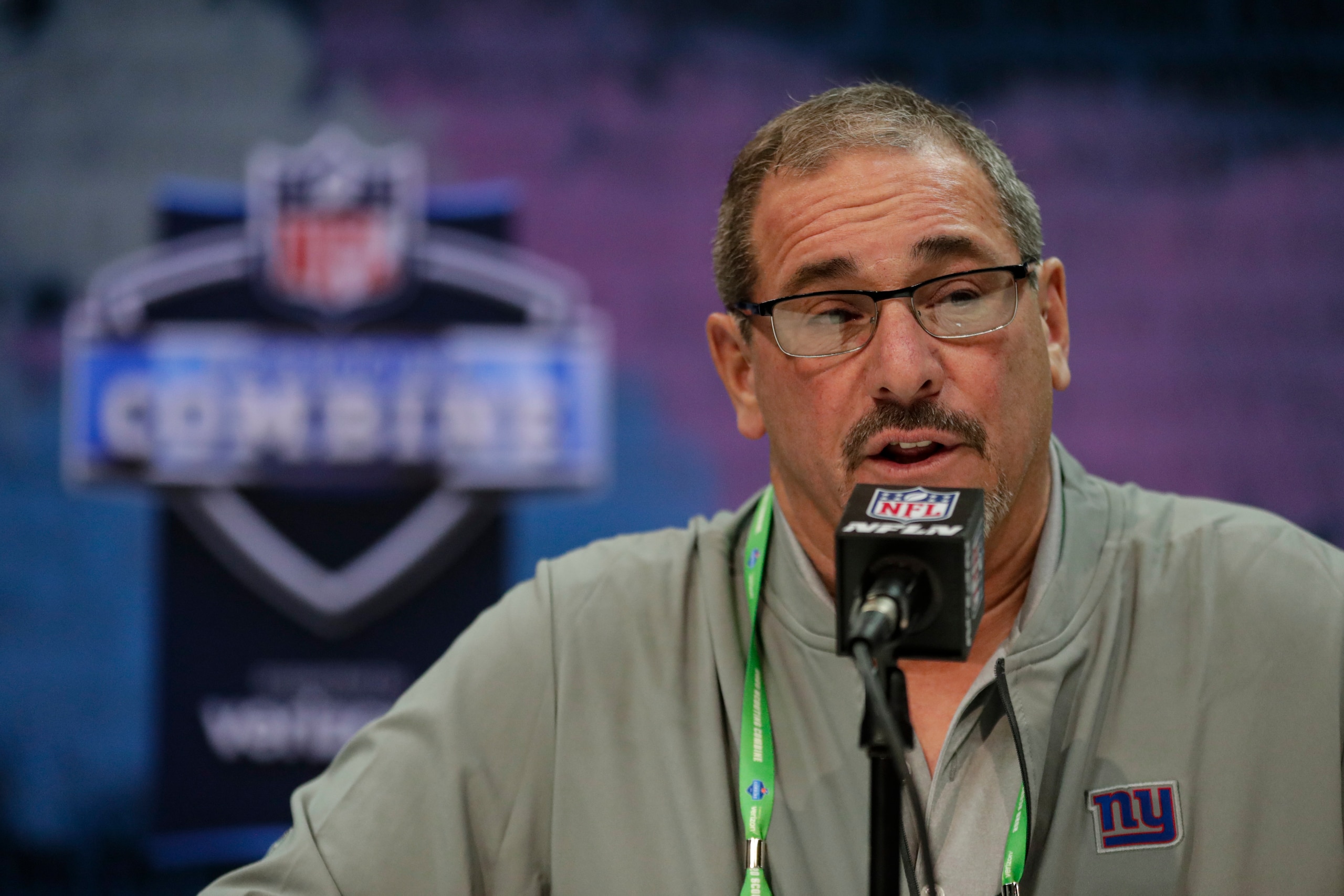
Before we get into specific players, it's worth explaining how the franchise tag and RFA tenders work, along with New York's current cap situation (if you're familiar with how tags and tenders work, feel free to skip to the bottom of this page for team specifics).
The franchise tag is a tool utilized to keep players in place without the use of a long-term deal. This can benefit a team that is unsure about a player's future or a team looking to keep a player off the market while a long-term deal is negotiated.
The tag comes in three forms—non-exclusive, exclusive and the transition tag—and can only be used on one player per team. The exclusive tag keeps a player off the market altogether, while other teams can negotiate with a player on the non-exclusive or transition tag. If a player with the non-exclusive tag signs elsewhere, his team receives two first-round picks as compensation. A team has the right of first refusal on a transition-tagged player but receives nothing as compensation if he leaves.
In terms of cost, the tags are as follows. The exclusive franchise tag costs an average of the five top salaries at the players' position or 120 percent of the offered player's current salary, whichever is greater. The non-exclusive tag cost the average of the position's top five cap-hit percentages over a five-year period applied to the current cap. The transition tag costs the same cap percentage but applied to the top 10 salaries at the position over five years.
In short, a shrinking 2021 salary cap may cause non-exclusive and transition tags to be cheaper, but they're still not going to be cheap.
RFA tenders have a sliding salary scale—full details can be found at NFL.com—but essentially lock in a player with three accrued NFL seasons for Year 4. If another team signs the player to an offer sheet and the team that tendered the player does not match, it receives corresponding compensation—a player given a second-round tender, for example, brings a second-round pick in return.
Tenders come in four basic forms, first-round, second-round, original-round and right-of-first-refusal.
Both the franchise tag and RFA tenders could prove to be problematic for the Giants this offseason, as the team is projected to be more than $1 million over the salary cap.
Gettleman will have to create some cap room just to navigate the draft, and he's going to have even more work cut out for him if he hopes to tag or tender anyone in 2021.
The Franchise Tag
2 of 3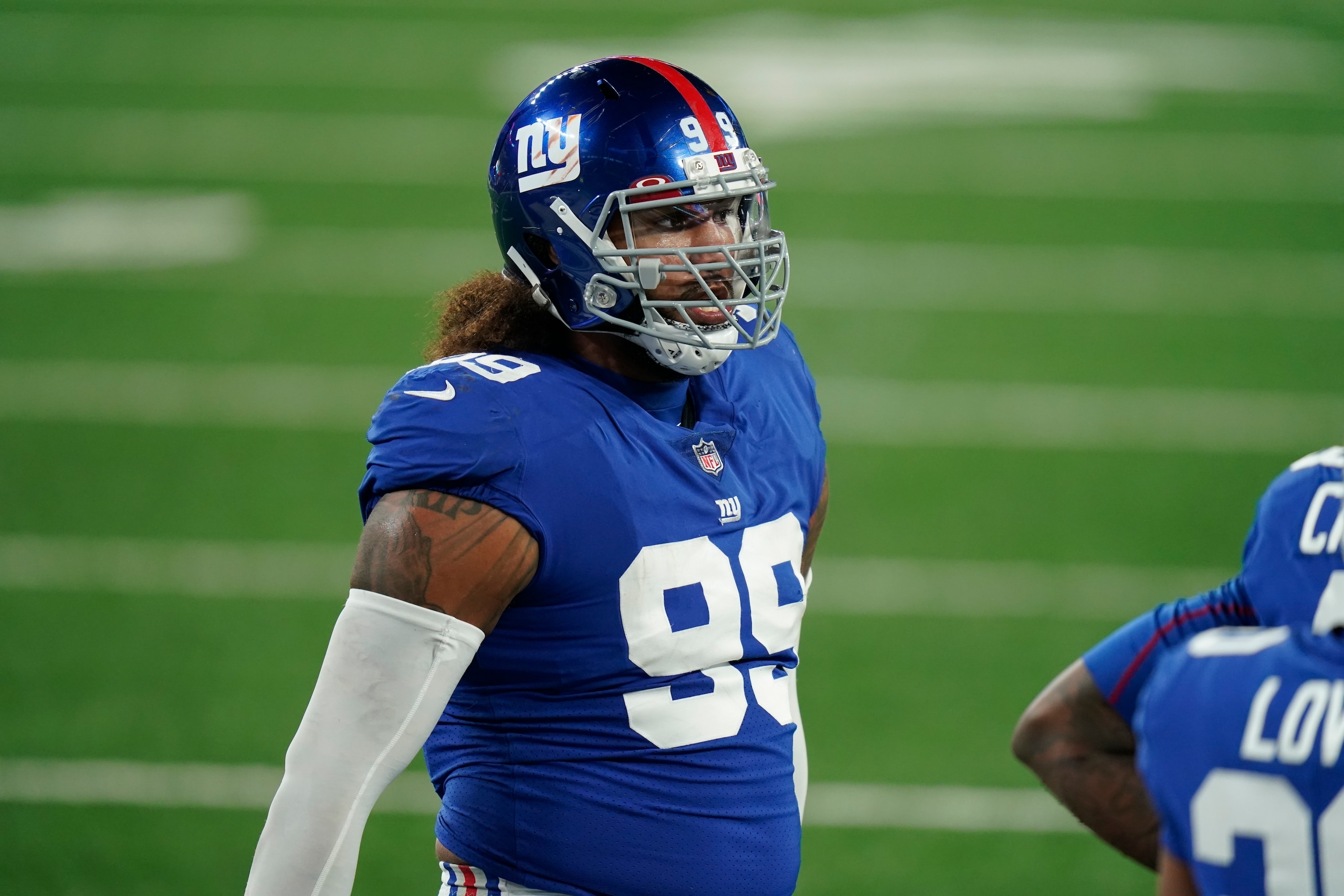
Given the Giants' cap situation, it feels unlikely the team will utilize the franchise tag in 2021. The only players deserving of it are defensive linemen Leonard Williams and Dalvin Tomlinson. Both are impact defenders who played notable roles in New York's ninth-ranked scoring defense last season.
Williams was responsible for 11.5 sacks and 57 tackles, while Tomlinson was responsible for 3.5 sacks and 49 total tackles.
However, there are problems with franchise-tagging either player. For Williams, the main issue is that Gettleman used the tag on him in 2020. This means that another use of it would cost New York 120 percent of the 26-year-old's 2020 salary—roughly $19.3 million.
It's more likely the Giants would look to lock up Williams for the long term, and that could prove costly.
"A player like Leonard is probably, whether he had a monster year or not, he was going to demand a big second contract," former NFL general manager Scott Pioli said on an NFL conference call (h/t Zack Rosenblatt of NJ.com).
And if the Giants grant Williams a lucrative extension, it'll be hard to justify using the tag on Tomlinson. New York is already in a bind cap-wise and cannot afford to spend $30-plus million on two players along the defensive front.
It'll be a surprise to see New York keep both Williams and Tomlinson, and it'll be a surprise to see either receive a variation of the franchise tag.
Restricted Free Agents
3 of 3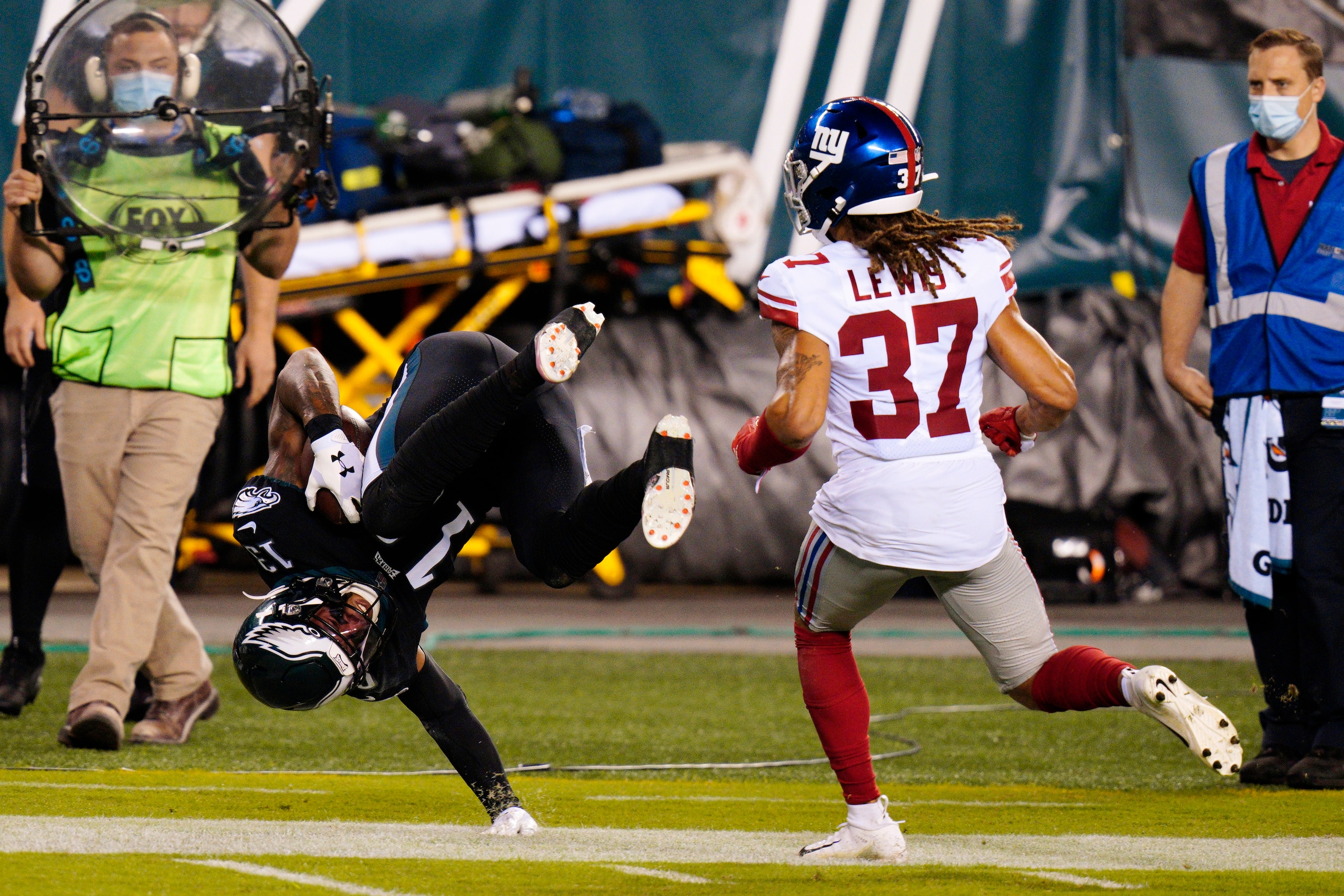
As is the case with the franchise tag, we may not see the Giants offer up a high RFA tender this offseason. Cornerback Ryan Lewis is the only player set to be a restricted free agent, and he isn't what one might consider an offseason priority.
The 26-year-old first signed with the Arizona Cardinals as an undrafted free agent in 2017. The Giants represent his eighth NFL team, and he has just nine league starts on his resume. Three of those did come in New York last season, though, where he played a total of five games.
Lewis also flashed a bit of potential during his limited playing time. Despite being targeted 19 times in coverage, he allowed an opposing quarterback rating of just 83.0. New York may want to get an extended look at him after he finished the 2020 season on injured reserve.
Still, a right-of-first-refusal tender is the most likely scenario for the Pittsburgh product if he receives a tender at all. The Giants won't be eager to give a substantial raise to a player who, to this point, has struggled to establish himself as a reliable contributor.
And given New York's cap situation, trying to pick Lewis back out of the free-agent pool at the league minimum may be the preferable strategy.
*Cap and contract information via Spotrac. Advanced statistics from Pro Football Reference.


.jpg?w=2560 "Rams Eagles Football")
.jpg?w=2560 "Grading WWE Raw 🔠")


.jpg?w=2560 "2 NFL Officials Suspended")
