The NBA draft always offers hope, but when teams get high-value picks wrong, despair shoves its kinder cousin out of the way.
That the 2020 class presents no obvious stars might be a blessing—at least for the teams with lottery picks. You can't really be said to have missed on a key selection if nobody in or around the league is sure who the target should have been.
As we look back on the last 20 years' worth of drafts, though, there's no shortage of costly, franchise-crippling gaffes.
This will be a mostly unscientific process, as trying to guess what would have happened to a team if it had gotten its pick right requires fantasizing about alternate timelines. But we'll try to narrow the parameters enough to avoid getting too swept away in butterfly-effect analysis.
We'll only consider drafts from 2000 to 2019, and because we're looking for maximum impact, misses outside the top five are off limits. In 2013, about half the league could've taken Giannis Antetokounmpo before he landed at No. 15, and just about every team, including the Golden State Warriors, passed on Draymond Green at least once in 2012.
Even more specifically, we're dealing with one-pick-away errors. The "right" pick has to come off the board immediately after the "wrong" one.
Finally, we also have to stay focused on misses that had major impacts. As an example, we won't hit the Cleveland Cavaliers selecting Anthony Bennet first in 2013 because the next pick, Victor Oladipo, didn't turn out to be some kind of franchise savior. To make the list, we'll need a team to botch its selection one spot ahead of someone far better than Oladipo.
Here comes some hindsight.
Honorable Mention
1 of 6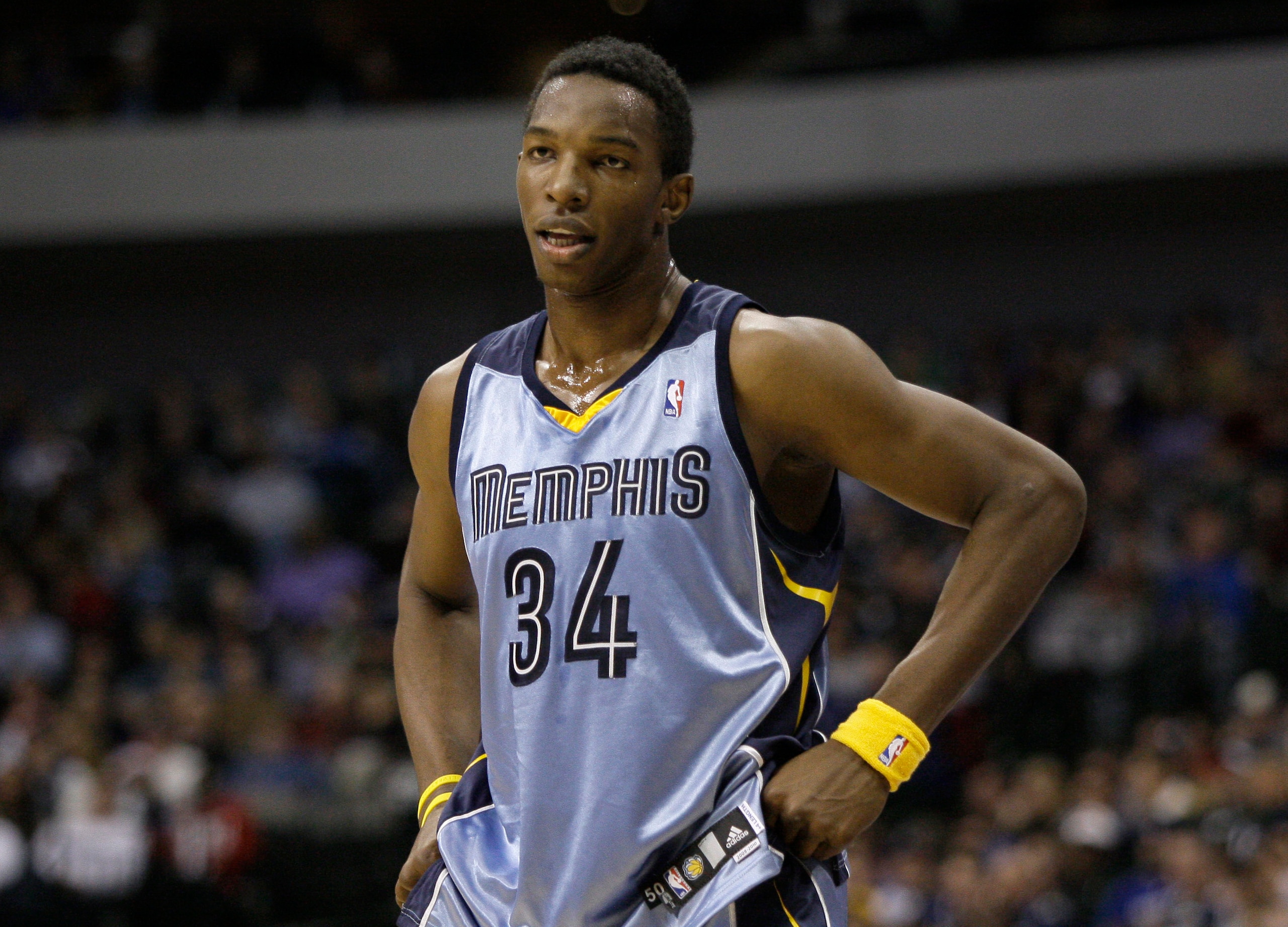
Hasheem Thabeet Over James Harden, 2009
Marc Gasol had just finished up his rookie year by averaging 11.9 points, 7.4 rebounds and 1.7 assists while hitting 53.0 percent of his shots from the field and flashing the court sense that would define his excellent career on both ends.
So, naturally, the Memphis Grizzlies took another center, Hasheem Thabeet, at No. 2, allowing James Harden to slip to the Oklahoma City Thunder, who picked third.
We don't need to belabor Thabeet's status as a bust, but let's just say the team that became the Grit 'n Grind Grizz had a desperate need for a dynamic scorer and could easily have hidden Harden's crummy defense. There might have been a ring in Memphis' future with Harden involved, but the Grizzlies got bupkis from Thabeet for a year-and-a-half before cutting ties.
The only reason this didn't make the list is because there was an even bigger gaffe later in the same draft.
The Sixers Trade Up for Markelle Fultz, 2017
This draft miss doesn't fit our "one pick away" criteria because the Philadelphia 76ers didn't grab Markelle Fultz immediately ahead of Jayson Tatum, and rules are rules. But there's no denying the gravity of this error.
Philly traded its No. 3 pick, which the Boston Celtics used to select Tatum, and a future first to get Fultz. The point guard promptly flopped and wound up on another team after just 33 contests over two years with the Sixers. Tatum is an All-Star and a good bet to win an MVP award before he's done.
Oops.
Damian Lillard Could Have Come Home to California, 2012
The Sacramento Kings will still be heard from in this exercise, so we won't pile all the way on here. Plus, this error just barely meets our "top-five" cutoff. That said, the Kings' decision to pick Thomas Robinson fifth in 2012, one slot ahead of Oakland native Damian Lillard, was an epic miss.
That's how you keep the longest playoff drought in the NBA going.
Pistons Pick Darko over Three Future Superstars
2 of 6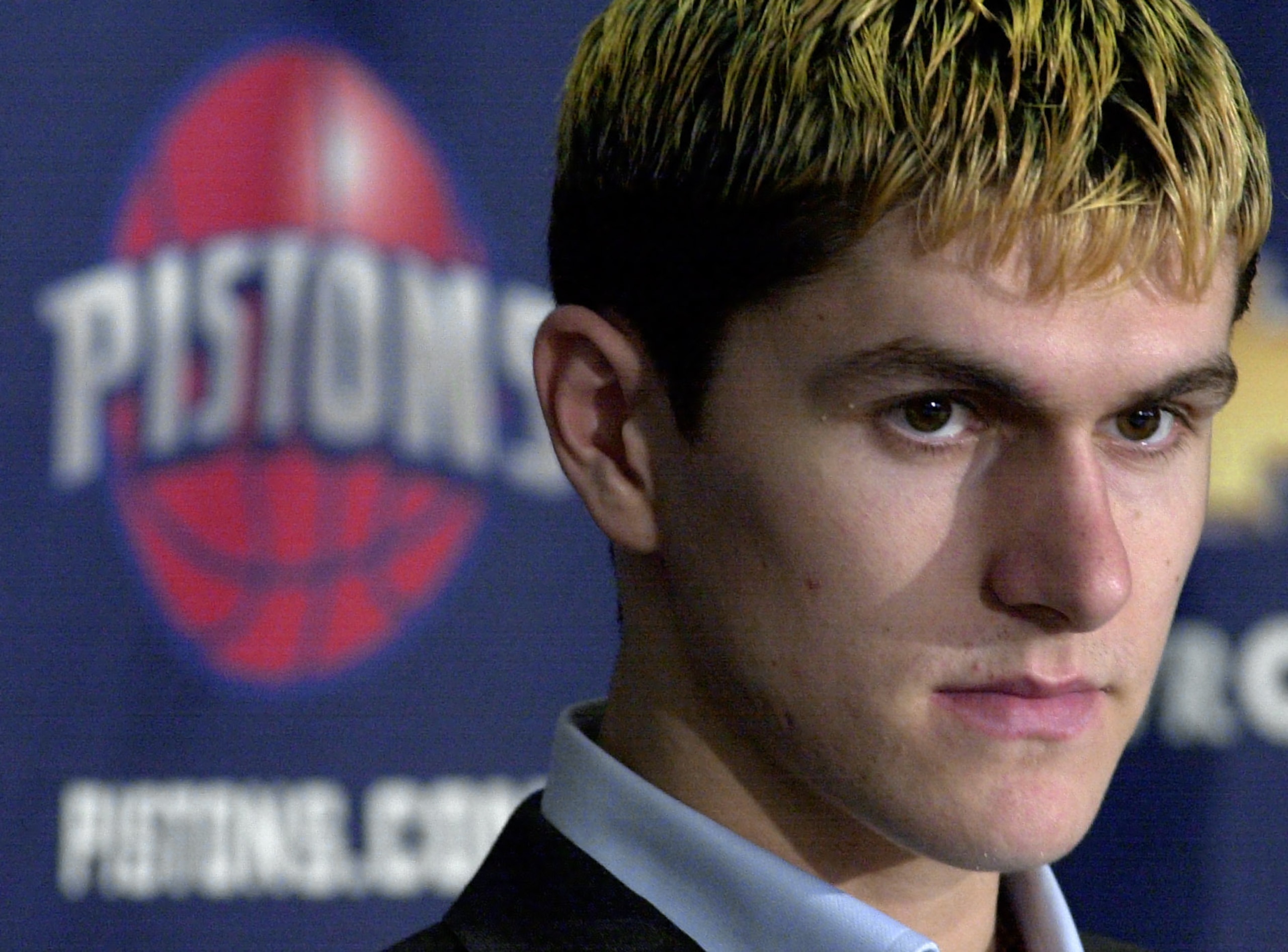
The Detroit Pistons didn't suffer for their 2003 mistake right away, but the pain of selecting Darko Milicic over Carmelo Anthony, Chris Bosh and Dwyane Wade came eventually.
Those three superstars, at least two of which will be first-ballot Hall of Famers, came off the board in order after Detroit grabbed Milicic with the No. 2 pick. The Pistons didn't need immediate help. They were coming off their second straight 50-win season and would go on to win the 2003-04 title with Milicic glued to the end of the bench.
In fact, Detroit would advance at least as far as the conference finals every year after that until 2008, part of a six-season run (they also made it in 2003) no team has matched since. A team that good had no business picking second in the draft, but a 1997 trade that sent Otis Thorpe to the Vancouver Grizzlies for a future first-rounder paid off handsomely six years later.
Those Pistons were veteran-laden, defensively dominant and perhaps best remembered for racking up deep playoff runs without a quintessential superstar. There's a case to be made that Ben Wallace, who won Defensive Player of the Year four times with Detroit, actually produced like a superstar, but that's a discussion for a different day.
There's no denying the Pistons remained very good with Milicic on the roster, despite him contributing next to nothing until a trade sent him to the Orlando Magic in his third year. The focus here has to be on how much better Detroit could have been with Anthony, Wade or Bosh.
Those three were all great right away. Bosh actually led the draft class with 6.2 win shares in 2003-04, Anthony scored 21.0 points per game and helped the Denver Nuggets reach the playoffs, and Wade averaged 16.2 points, 4.5 assists and 4.0 rebounds in the first year of a career that would end with him on the very short list of the best shooting guards in history.
Can you imagine the boost the Pistons would have gotten from any of those three players?
You could argue someone like Anthony would have fractured the Pistons' delicate, starless chemistry somehow. But that's a tough sell considering the surplus of no-nonsense veteran leadership and blue-collar work ethic of the team.
Had Detroit taken Anthony, Bosh or Wade, it could have racked up another title or two and had a clean bridge to its next era. Without exaggeration, we could be talking about the Pistons of the 2000s and 2010s much like we talk about the San Antonio Spurs of that same period.
This draft miss fundamentally altered the course of an organization and changed the NBA landscape for, conservatively, a decade.
Utah Gets a Good Point Guard, Misses a Great One
3 of 6
Deron Williams was a three-time All-Star and two-time All-NBA selection, which isn't so bad for a No. 3 overall pick. But the point guard who came off the board immediately after the Utah Jazz took Williams went on to produce one of the greatest careers we've ever seen at the position.
You'd think the franchise that had employed John Stockton—the steadiest, most durable traditional point guard of all time—would have recognized those same qualities in Chris Paul. But CP3 went fourth to the New Orleans Hornets and is still among the best floor leaders in a league Williams has been out of since 2017.
While Williams' career was solid (his 77.3 win shares are second-most in the 2005 class), Paul's is on another planet. His 180.3 win shares more than double D-Will's, and CP3's list of accolades requires a deep breath before recitation: 10 All-Star nods, nine All-NBA teams, nine All-Defensive honors, four assist titles, six steals crowns and, circling back to the start, the Rookie of the Year award.
If the Jazz had selected Paul, they would have essentially replaced the NBA's all-time assist and steal leader, Stockton, with a player who'll likely crack the top five in both categories this coming season. And while it requires some assumptions, it also seems likely that Paul, a true throwback at the position, wouldn't have freelanced to such a degree as to effectively force the retirement of venerable head coach Jerry Sloan.
The Jazz were .500 or better in each of Williams' five full seasons with the franchise. That's far from disastrous. But Paul had the higher peak and, since he's still playing, obviously offered more in terms of longevity.
Utah made a good pick, but it had the opportunity to make a truly great one at the exact same position.


.jpg?w=2560 "NBA Gambling Charges")
Kevin Durant Slips Past Portland
4 of 6
It wouldn't have been easy to feel fully confident about Kevin Durant's future. At the time of the 2007 draft, there wasn't a precedent for string-bean 6'10" perimeter-scoring dynamos with nearly 7'5" wingspans.
There still isn't.
Even if KD's one-year collegiate career included averages of 25.8 points per game (fourth in the nation) and an alarmingly smooth guard's game for a player his size, the Portland Trail Blazers would have been acting somewhat boldly had they taken him first overall in 2007.
Greg Oden, despite already troubling health issues, somehow seemed like the safer pick at No. 1 overall.
So much for that.
Oden's body betrayed him immediately. A knee injury cost him his entire rookie season, and subsequent operations limited him to a grand total of 105 career NBA games, just 82 of which came in a Blazers jersey. There were flashes of interior dominance, and Oden averaged 11.1 points and 8.5 rebounds in 2009-10...the year Durant won the first of three straight scoring titles.
Durant remains one of one. Thirteen years later, there is no "KD type." There is only KD. Maybe we should forgive Portland for failing to recognize such a singular talent.
Still, a miss is a miss, and the Blazers passed on an MVP and perhaps the greatest pure scorer in NBA history for 82 games of a physically disintegrating big man. Don't blame Oden; he was dealt a bad health hand. But the Blazers can't hide from a genuinely franchise-altering miscalculation.
Minnesota Whiffs on Stephen Curry...Twice
5 of 6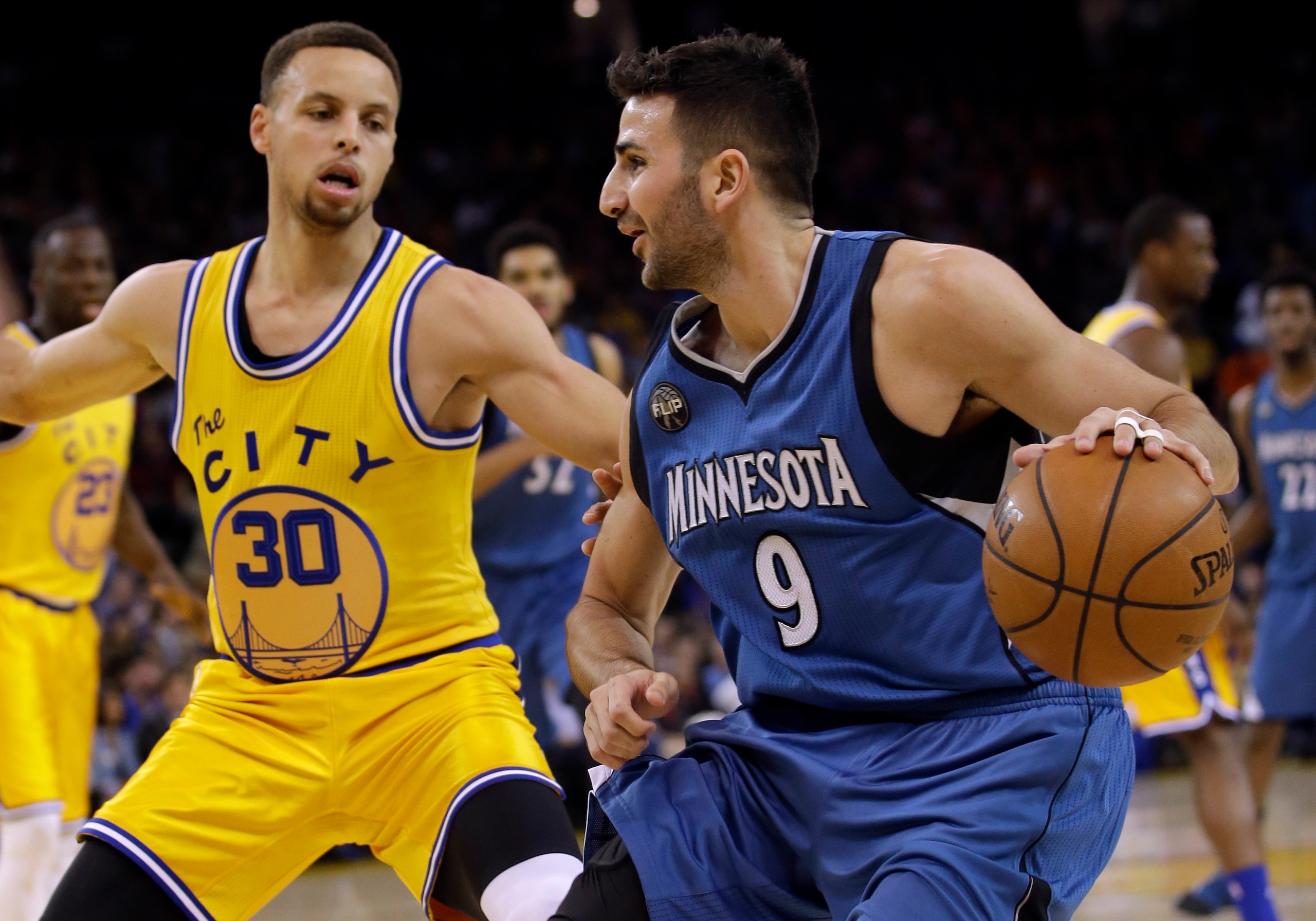
The Minnesota Timberwolves have made one playoff trip since 2004. Anybody else think they might have a few more postseasons on the ledger if they'd gotten the 2009 draft right?
Quite clearly in need of a point guard after watching Sebastian Telfair and Kevin Ollie divvy up most of the minutes at the position in 2008-09, the Wolves used the No. 5 pick on Ricky Rubio and immediately followed it up with Syracuse's Jonny Flynn at No. 6.
Stephen Curry went to the Golden State Warriors with the seventh selection. All he did for the Dubs was lead them to three titles, win a pair of MVPs and change the way the sport of basketball is played.
It's possible Curry's ankle troubles wouldn't have resolved so favorably in another locale. His career was legitimately on the line before he got past persistent sprains, and the Warriors never would have been able to build a championship roster if not for the discount Curry had to take on his $44 million contract in 2012.
Steph wasn't a sure thing...right up until he became a superstar in 2012-13.
That doesn't get Minnesota off the hook.
For starters, the Wolves didn't seem to know Rubio was going to stay in Spain until 2011, and there was little justification for believing Flynn had anything close to Curry's upside. The 2009 draft was the first of president of basketball operations David Kahn's tenure, and in hindsight, it was a clear signal of all the would go wrong during one of the most derided executive careers in recent league history.
The Wolves had two cracks at one of the most significant players the league's ever seen, and they passed on both of them.
The Luka Doncic Debacle
6 of 6
It's rare that we can identify an egregious draft miss within two years, but Luka Doncic is a rare player.
In 2018, the Sacramento Kings used the No. 2 overall pick on Marvin Bagley III instead of Doncic. Since that decision, Doncic has become (arguably) a top-five player in the league and seems ticketed for more than one MVP before his career is over. Bagley, though admittedly hampered by injury, has only been good enough to start 10 games over two years for a losing team.
That's a big enough discrepancy to label the Kings' decision a colossal misfire, but the Bagley-over-Doncic decision gets worse the harder you look at it.
For one thing, Bagley's skill set and measurements pegged him as a low-value player type—even if he maxed his potential. Though he stands 6'11", he never seemed capable of manning the center spot defensively, and his lack of reliable stretch meant he'd almost have to play that position on a good team. Framed another way, he seemed destined to be an empty-calories stat-stuffer on a bad team.
There's still time for that to change, but that's precisely what Bagley has been so far.
Doncic, meanwhile, just finished leading the most efficient offense in NBA history while producing averages of 28.8 points, 9.4 rebounds and 8.8 assists per game. In his age-20 season.
He is unprecedentedly skilled for his size and projects as one of the best offensive weapons the league has ever seen. In contrast, Bagley will have to get significantly better to become a viable starter.
If given a redo, since-deposed general manager Vlade Divac probably wouldn't have worried quite so much about drafting someone who'd take the ball out of a then-20-year-old De'Aaron Fox's hands.
For the millionth time, never draft for fit.
We can't conclude our most recent draft catastrophe (draftastrophe?) without nodding to the Phoenix Suns, who took Deandre Ayton first overall, or the Atlanta Hawks, who traded out of the No. 3 position that would have netted them Doncic. But in keeping with our rules, it was the Kings who had a transformational megastar in front of them, passed on him, and saw him realize his potential for the team that nabbed him with the very next pick.
Sacramento will have to live with this one for a long time.
Stats courtesy of NBA.com, Basketball Reference and Cleaning the Glass. Salary info via Basketball Insiders.



.png?w=2560 "Week 8 Winners & Losers 📊")