
NBA History's Biggest One-Hit Wonders
Getting to the NBA is exceptionally difficult. If we estimate that some 10 billion people have lived on the planet since the league started, the 4,489 who've made it to this level comprise an infinitesimally small percentage of that sample.
Sticking around for a while might be every bit as difficult, as those on this list of "one-hit wonders" can probably attest.
Even when you put together a great couple of months, a solid postseason or even an entire NBA calendar year, nothing is guaranteed. Time in the league often goes quicker than it arrived.
There wasn't much objective criteria for discovering the inclusions here. A couple of players had fairly long, solid careers with outlier great seasons. A couple banked in on one good postseason run. One was a rookie sensation for a handful of games.
Some you may be looking for who are not here, including Jeremy Lin, Billy Ray Bates and Bobby Simmons. Those names, among others, were common responses when the subject question was posed to fans. Bates was probably the closest to being included, but he, Lin and Simmons all had more than one good season to their names. And their best seasons weren't necessarily eye-popping in comparison to the rest.
Lin, for example, peaked during Linsanity, but he averaged 12.0 points and 4.3 assists over 416 games after that.
Over the league's history, plenty of situations that feel more like legitimate "one-hit wonders" have manifested themselves. These are among the most notable, but feel free to add your own in the comments section.
Rodrigue Beaubois
1 of 11
During 2009-10, Dallas Mavericks rookie Rodrigue Beaubois appeared in just 56 games and only played 12.5 minutes per outing.
But in March of that season, his minutes jumped up to 18.7 per game. He averaged 13.4 points and shot 46.0 percent from three.
The hot streak was punctuated by a 40-point performance against the Golden State Warriors on March 27. It also made the team's owner, Mark Cuban, look like a basketball savant.
"I'm not going to trade Roddy," Cuban told reporters in February of that year. "There are maybe one or two guys in the league I'll trade him for. Other than that, he's pretty much untouchable."
The sentiment may have seemed absurd in the moment. Maybe it still did after the long-armed point guard showed flashes of brilliance in March. At the very least, though, people had to be intrigued after the 40-point performance.
Sadly for both Beaubois and Mavs fans, very little happened for him after that game. He posted a career-high 35.4 game score that night. Over his next (and final) 134 games, his average game score was 4.8.
After four seasons in which he played sparingly, he was out of the league.
Bismack Biyombo
2 of 11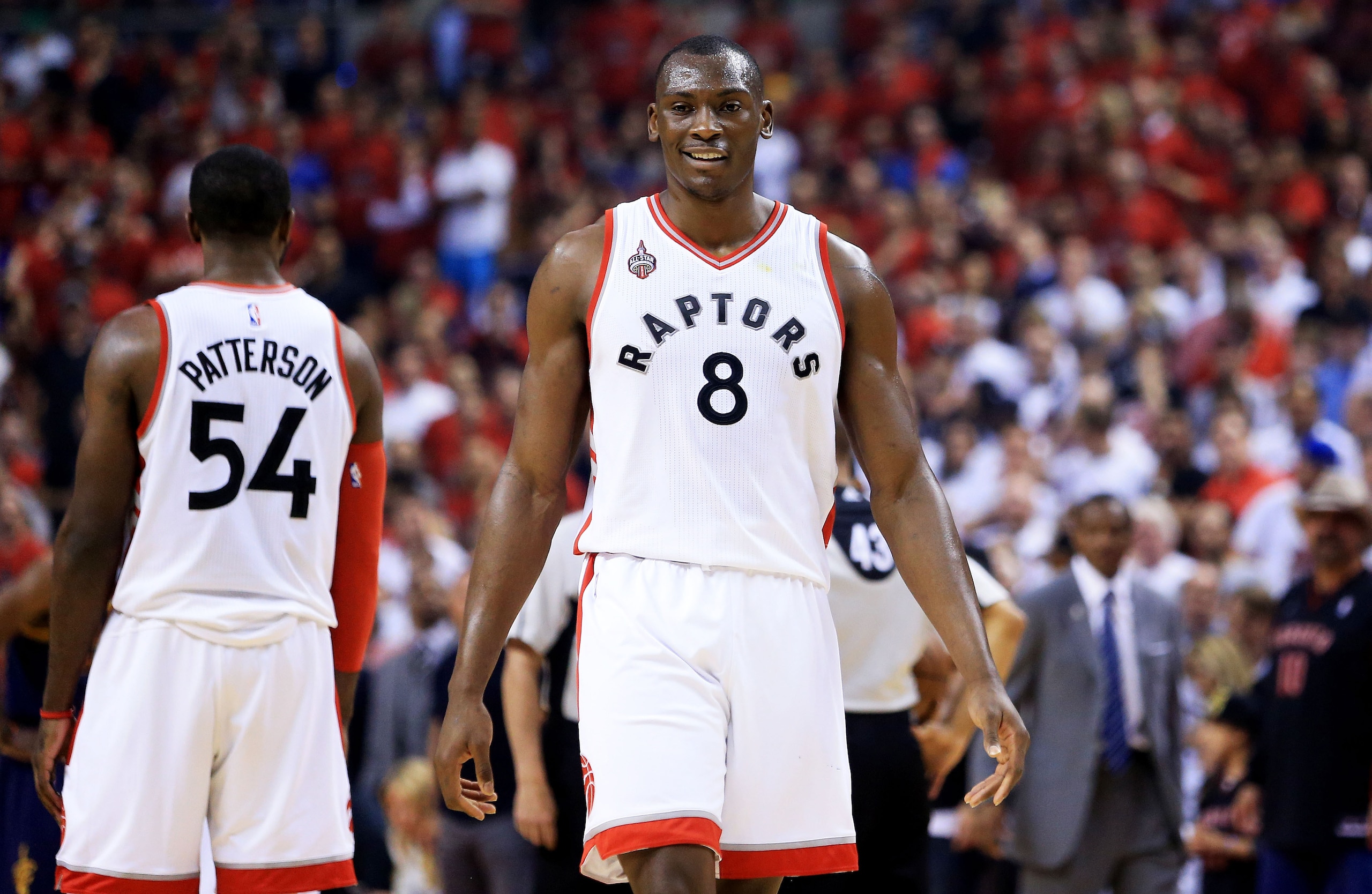
There was an effort to avoid active players for this exercise. After all, if an active player is picked and goes on to have a strong campaign, he would negate his inclusion on the list (though that would make for a cool story).
In Bismack Biyombo's case, we probably have enough of a sample to trust that his 2016 playoff run with the Toronto Raptors was an outlier.
For his career, Biyombo has a below-replacement-level minus-2.6 box plus/minus. By that metric, he doesn't have a single above-average season. His career averages are 6.2 rebounds, 5.1 points and 1.3 blocks in 20.2 minutes per game.
He's a solid defensive role player with a negative career net rating swing (difference in the team's net points per 100 possessions when a given player is on or off the floor).
In that 20-game postseason sample, he was much more. And really, you can probably just narrow that down to five games. Over the last four outings of a second-round series with the Miami Heat and the first game of the Eastern Conference Finals against the Cleveland Cavaliers, Biyombo averaged 11.2 points, 10.4 rebounds and 2.0 blocks per game. He was plus-22 across all five matchups.
And that summer—the infamous 2016 free-agency period—the Orlando Magic rewarded that five-game stretch with a four-year, $70 million deal.
Over the life of that contract, Biyombo is 819th (out of 861 players) in wins over replacement player.
Aaron Brooks
3 of 11
Aaron Brooks is the first of the two players mentioned in the intro who actually had solid overall careers. Brooks played in 10 NBA seasons and had a career average of 9.7 points. He shot 37.0 percent from three. He averaged double figures in four different campaigns.
But all the solid numbers he posted in the surrounding seasons paled in comparison to what he did in 2009-10.
As the starting point guard for the Houston Rockets, Brooks averaged 19.6 points, 5.3 assists and 2.5 threes per game, with a 39.8 three-point percentage and an above-average true shooting percentage. He was 25th in the league in offensive box plus/minus, and it was the only season of his career in which he had an above-average overall box plus/minus.
"This is a great accomplishment for me," Brooks said after receiving the Most Improved Player Award in 2010. "One of the most important awards I've earned in my life."
It would, of course, be the last individual honor Brooks earned in his NBA career, but it's one he should remain proud of. Even if you're a so-called "one-hit wonder" in the NBA, you're part of one of the most elite fraternities in the history of sports.


Willie Burton
4 of 11
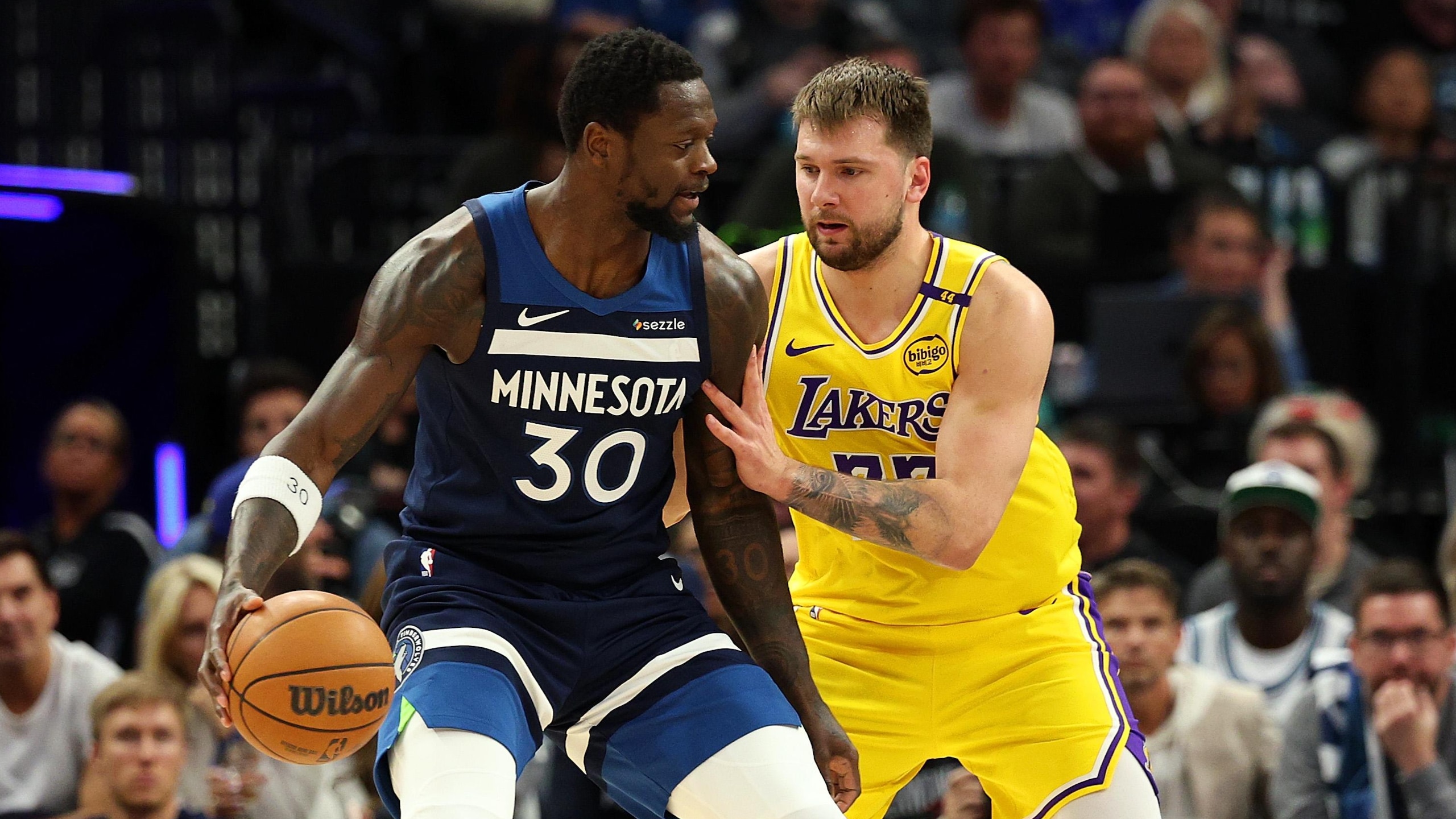
Based on a formula concocted for a piece entitled, "Is Wilt's 100 Really the Most Impressive Scoring Performance in NBA History?," Willie Burton's 53-point game is topped only by Wilt Chamberlain's 100-pointer in "points above average."
The idea is relatively simple: How many more points did the player contribute on that given night than the average shooter from that season would have? For Burton, on Dec. 13, 1994, the answer was 29.4. The standard is the 30.6 Wilt posted in his 100-point game.
That season, Burton finished with an average of 15.3 points, but he was in a league overseas in 1995-96. He only played in 40 more NBA games, and he averaged just 4.5 points in those outings.
"That changed things for me a lot," Burton told Vice's Andrew Heisel in 2015 of that night. "That changed things a whole lot. For the rest of my career. I couldn't sneak up on anyone anymore."
Even still, no one can take away the night that he did. It's one of the greatest single-game performances in league history.
Dan Dickau
5 of 11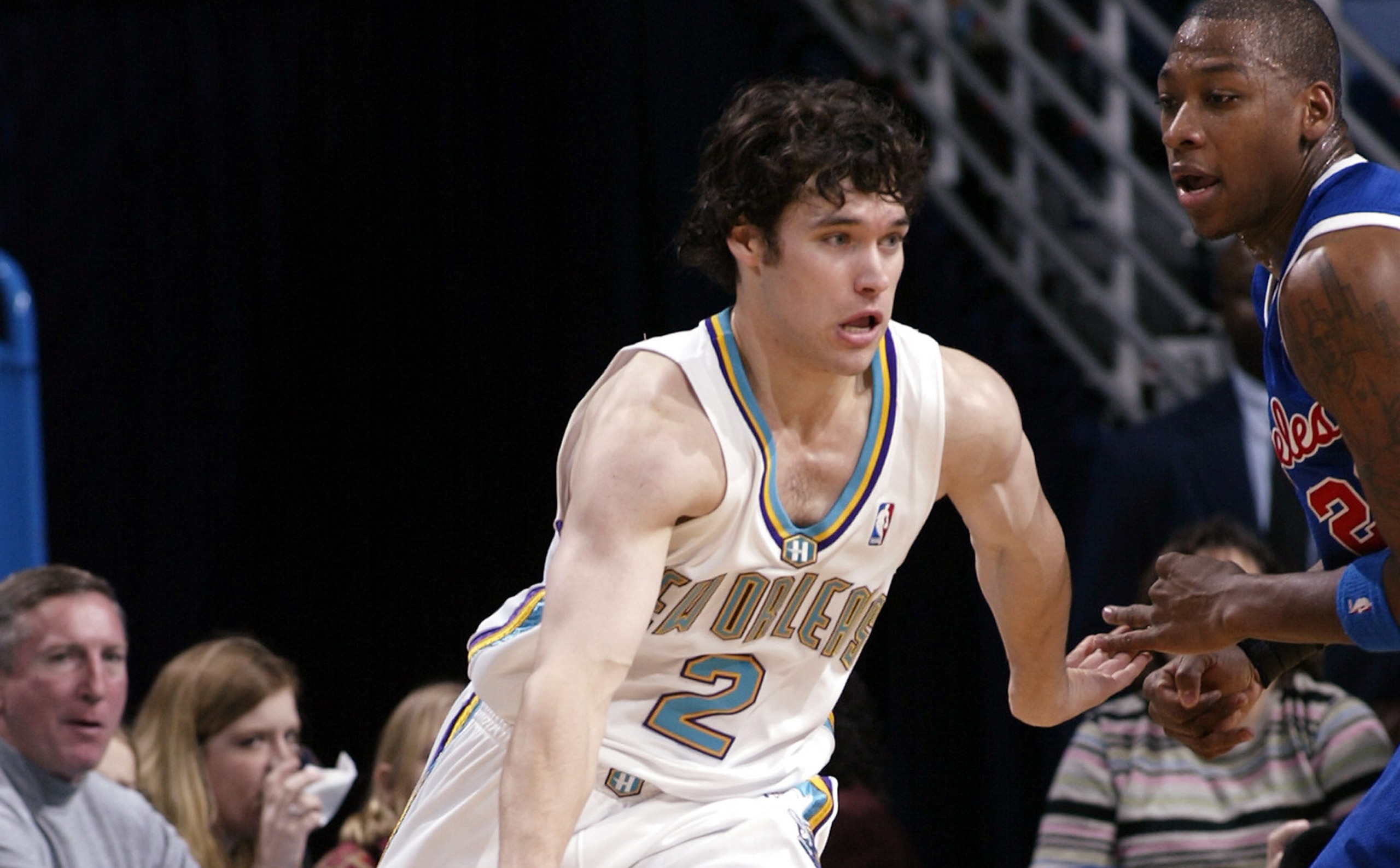
Dan Dickau became a star in college while averaging 20.1 points, 5.3 assists and 3.4 threes over his junior and senior seasons with the Gonzaga Bulldogs.
Then, his first two NBA seasons suggested he might not last long in the league. He averaged just 3.0 points in 8.7 minutes for the Atlanta Hawks and Portland Trail Blazers.
He started his third campaign with a third different team. And in just four games with the Dallas Mavericks, he managed a total of five points (all in the fourth game).
When Dallas traded him to the New Orleans Hornets, suddenly things were looking up. With New Orleans, Dickau averaged 13.2 points and 5.2 assists. He also had a positive net rating swing there.
He even earned a mention for the "Bill Simmons All-Star Team, reserved for the 'Random guys I explicably like who haven't hit the big-time yet'?"
He wasn't able to sustain that magic going forward, though. Over the next three seasons, Dickau appeared in 136 games and averaged 4.3 points.
Richard Dumas
6 of 11
This might be the clearest example on the list.
As a rookie, Richard Dumas averaged 15.8 points for the 1992-93 Phoenix Suns. Yes, those Phoenix Suns. The team that went all the way to the NBA Finals against the Chicago Bulls. The team that featured Charles Barkley, Dan Majerle and Kevin Johnson.
Dumas was that team's fourth-leading scorer. He averaged double-figures that postseason and had a 25-point performance in Game 5 of the Finals that staved off elimination at the hands of Michael Jordan.
"Richard was on fire tonight," Suns coach Paul Westphal said after the game. "He's a sensational player, and I think he's a future Dream Teamer."
During the broadcast, Magic Johnson compared the rookie to Julius Erving.
That's high praise, to put it mildly, from two guys who had spent plenty of time around the game to that point.
Unfortunately, a long-term suspension from the league for substance-abuse issues preceded that rookie campaign. And he received another one after 1992-93, which cost him all of 1993-94.
After that suspension, Dumas only appeared in 54 more NBA games. He averaged 6.0 points.
Jaren Jackson
7 of 11
Memphis Grizzlies big man Jaren Jackson Jr. comes from strong basketball lineage. His father, former San Antonio Spur Jaren Jackson, was a solid role player for over a decade. He played 7,210 minutes in the NBA and averaged 5.5 points per game.
His "hit," though, undoubtedly came during the 1999 playoffs with the title-winning Spurs. His 31 postseason three-pointers led the team. He shot 36.0 percent from deep and averaged 8.2 points.
Over a seven-game stretch against the Los Angeles Lakers, Portland Trail Blazers and New York Knicks, he averaged 13.4 points and shot 42.3 percent from three.
Again, Jackson was a solid player before and after this playoff run, but nothing else quite measured up to his contributions to the first Spurs title team.
Jerome James
8 of 11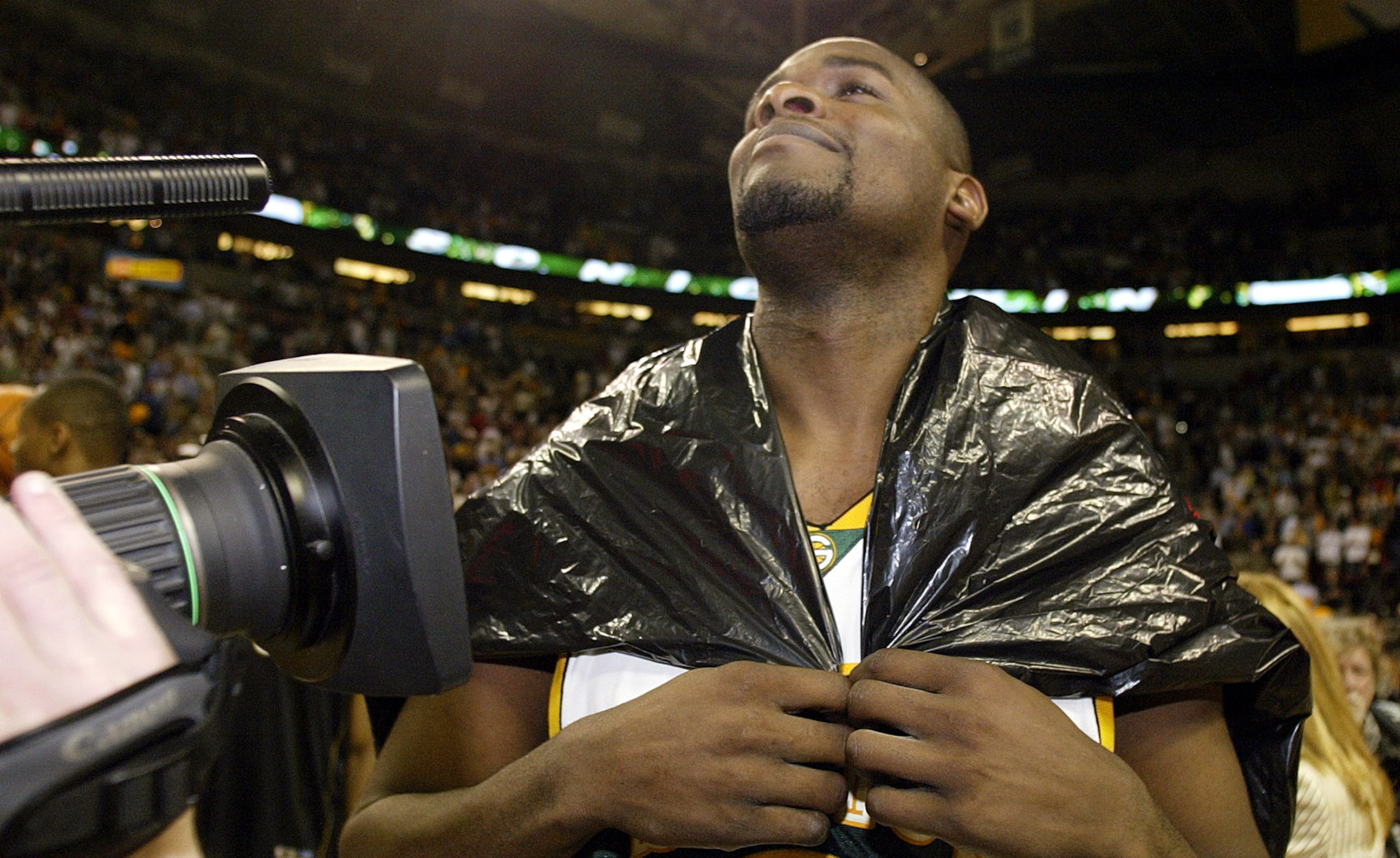
Prior to the 2005 playoffs, Jerome James played in 268 games and averaged 4.9 points and 3.5 rebounds. He shot 49.3 percent from the field as a seven-foot center. He was just coming off his age-29 season.
But in the 2005 postseason, he looked like a completely different player.
Over the first five games, all against the Sacramento Kings, he averaged 17.2 points, 9.4 rebounds and 2.2 blocks. He shot 58.1 percent from the field. The Seattle SuperSonics won that series, 4-1.
For the entire run, which ended at the hands of the eventual-champion Spurs, James put up 12.5 points, 6.8 rebounds and 1.8 blocks.
That sample, which lasted for just under a month, was enough for the New York Knicks to reward James with a long-term contract that ESPN's Bill Simmons lambasted:
"The greatest moment of the movie goes to the greatest moment of the summer: Isiah Thomas signing Jerome James to a five-year, $29 million contract. Seriously, what were the odds that James' agent took him out to dinner right before the playoffs and said: 'Look, I know you're lazy, I know you don't care, but all you have to do is play hard for four weeks and I guarantee Isiah will make you a ridiculous offer ... can you do that? Can you break a sweat for four weeks? This summer, after we sign the deal, you can put on 75 pounds for all I care. Just give me four weeks!'"
The deal quickly went sour for James and the Knicks. He played in just 90 games during the life of that contract and averaged 2.5 points and 1.8 rebounds.
Mike James
9 of 11
Mike James is here for largely the same reasons Brooks was. He was a solid role player for over a decade. He averaged 9.9 points per game and shot 37.9 percent from three over the course of his career. But nothing measured up to his "hit" 2005-06.
That season, James put up 20.3 points, 5.8 assists and 2.1 threes per game for the Toronto Raptors while shooting a white-hot 44.2 percent from beyond the arc. He was 17th in the league in offensive box plus/minus. And Toronto's net rating was 3.1 points better when James was on the floor.
Raptors HQ's Daniel Reynolds summed up James' lone season north of the border:
"So what did Mike James do when he got to Toronto? Simple: he looked around, saw that there were a lot of shots to be had, and decided to take as many of them as he could. Over 79 games as a Raptor, the man some still call the Amityville Scorer cracked the top 20 in the league for points per game. ... A full quarter (25 percent!) of Toronto's possessions that season went through the hands of Mike James. The team didn't win much, but don't blame him. Mike James was doing what he could — and then some."
Over the rest of his career, James played in 268 games, shot 38.9 percent from the field and averaged 7.4 points.
Larry Sanders
10 of 11
Larry Sanders had exactly one season in which he played at least 1,000 minutes. The 1,937 he logged in 2012-13 isn't far off the 2,698 he played in all other seasons combined.
The Milwaukee Bucks made the playoffs that season, and Sanders was a big reason why. The team was plus-0.7 points per 100 possessions when he was on the floor and minus-4.3 when he was off.
He averaged 13.7 points, 13.2 rebounds and 3.9 blocks per 75 possessions and earned himself a four-year extension that could have paid him $48 million.
"SANDERS! has the tools to become something like a skinnier Tyson Chandler on the pick-and-roll—a springy alley-oop-gobbling beast who sucks in multiple defenders just by cutting down the gut, opening up outside shots for everyone else," Grantland's Zach Lowe wrote at the time.
But that evolution was not meant to be. Over the remainder of his career, Sanders appeared in 55 games and averaged 6.9 points.
Two years into that extension, he walked away from the game.
"Everyone has to make a living," Sanders wrote for The Players' Tribune in 2015. "I'm no different from the person whose 9-to-5 isn't their dream job. It's a scary thing to walk away from security but I'm more afraid of living with the 'what if.'"
Von Wafer
11 of 11
Over his first three seasons in the NBA, Von Wafer played in 46 games and averaged just 1.4 points. He was a whopping 23-of-100 from the field and 6-of-44 from three.
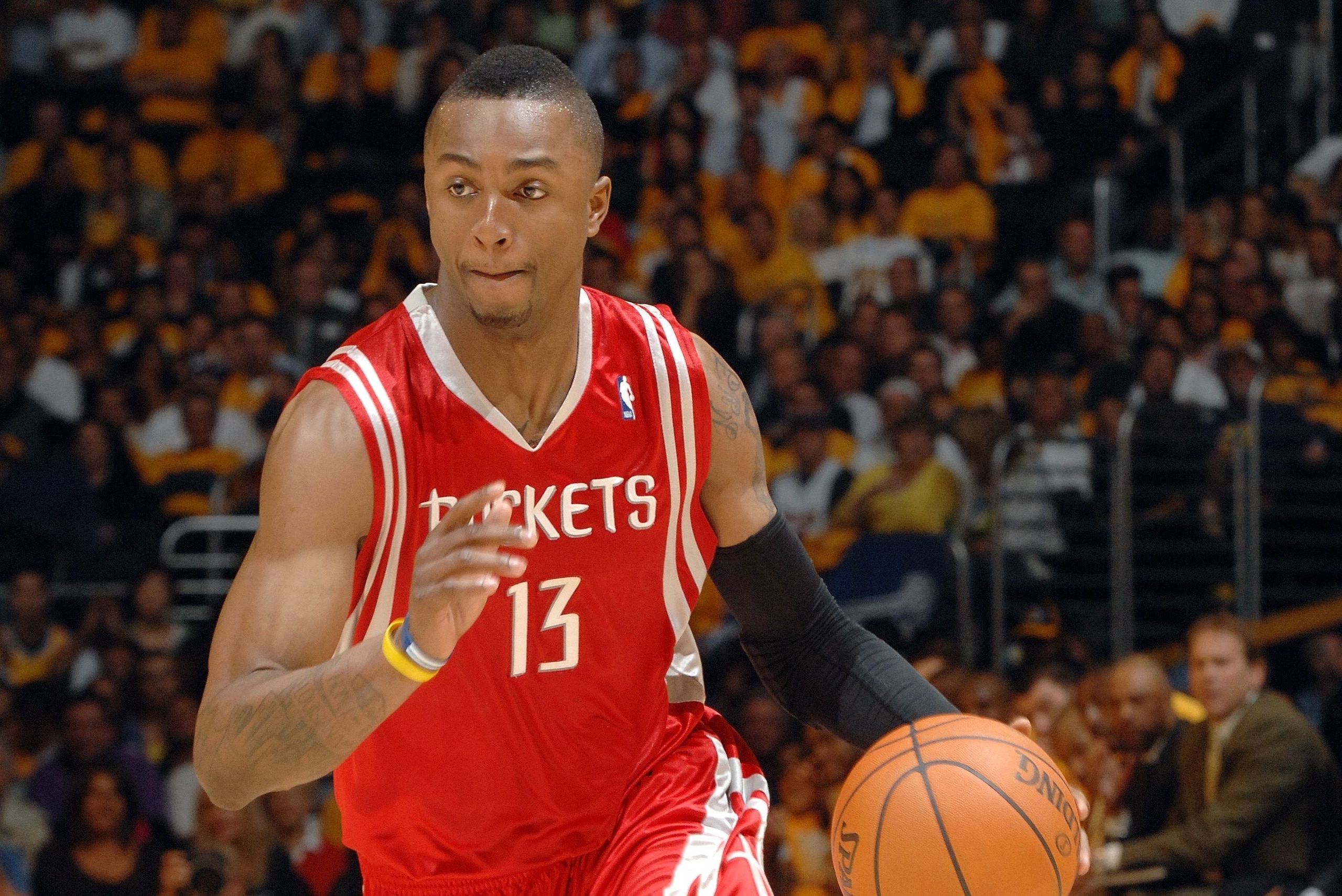
Then, he seemingly out of nowhere became a rotation player for the 2008-09 Houston Rockets squad that went 53-29. That season, Wafer averaged 9.7 points and shot 39.0 percent from three. Houston's net rating was 0.7 points better with Wafer on the floor.
But even those numbers sell Wafer's impact on that season short. Rockets play-by-play commentator Craig Ackerman tweeted:
"Thru a 10-game stretch in JAN 2009, he AVG 17ppg on 52% fg & 41% 3fg incl a game winner in Boston. More importantly, he dragged the @HoustonRockets out of a funk that captured the imaginations of basketball fans across the world! Ok, primarily me, but it was & still is awesome!!!"
It wasn't enough to keep Wafer around, though. He played in Greece the following season, and he averaged just 4.2 points over 91 games in the rest of his NBA career.
But like everyone else on this list, regardless of how things ended, Wafer will always have that stretch of his career in which he was a bona fide NBA contributor.

.jpg?w=2560 "Old Brady Vid Goes Viral 🐐")