
Every NBA Team’s Least Tradable Contract
For years, it felt like every team in the NBA had one or two terribly burdensome contracts.
With all the ill-advised contracts from the summer of 2016 finally ending, there are actually plenty of teams with pretty clean books right now. But that doesn't mean there aren't still some doozies around the league.
Between now and the Feb. 6 trade deadline, teams are going to be placing calls all over the NBA, looking for places to unload the deals currently hampering their cap flexibility.
Some may be able to find takers. Others won't be so lucky.
After a quick detour to look at some teams that could probably move just about anyone, we'll look at each team's least tradable contract.
Teams That Could Probably Trade Anyone on the Roster
1 of 19
Atlanta Hawks
Atlanta has three players making an awful lot more money than their production would suggest they should be: Chandler Parsons ($25.1 million), Evan Turner ($18.6 million) and Allen Crabbe ($18.5 million). Those three have combined to play fewer minutes than five individual Hawks.
But all three are expiring at the end of this season. They might actually be some of the better salary-matching deals in the league. In fact, they've already come up in just that fashion for rumors involving Detroit Pistons center Andre Drummond, per ESPN's Adrian Wojnarowski.
Every other Hawk is making less than $7.1 million. Most of them are young. Moving them wouldn't be difficult.
Boston Celtics
You might go with Kemba Walker or Gordon Hayward here. They're really the only options, as everyone else is making less than $13 million annually. But both are playing great, are on the right side of 30 and are at positions in high demand.
Kemba has been a dynamite playmaker and is fifth in the league in threes per 75 possessions. Hayward's creation from the wing, efficient scoring and switchability on defense fit perfectly alongside Jayson Tatum and Jaylen Brown.
If Boston really wanted to make a deal, it wouldn't have trouble finding takers for its guys.
Denver Nuggets
Paul Millsap and Nikola Jokic are the only two Nuggets making more than $18 million this season.
Plenty of teams would sign up for last season's first-team All-NBA center in a heartbeat. That leaves Millsap, but the fact that he's on an expiring deal probably makes him movable, too. Conversely, the fact that he's in his age-34 season makes it a bit more difficult.
Los Angeles Clippers
The Clippers' cap sheet looks a lot like Boston's. Their two best and highest-paid players (Kawhi Leonard and Paul George) are in the middle of their primes. Everyone else is on more-than-manageable salaries.
If the Clips want to enter the rumor mill this season, they have plenty of marketable names.
New Orleans Pelicans
The same is true here.
Jrue Holiday is making $26.1 million this year and next. He has a player option for $27 million in 2021-22. But he's another guy who would actually be in pretty high demand if he hit the market. The New York Times' Marc Stein tweeted that Jrue was available back in December, but executive vice president of basketball operations David Griffin quickly refuted that.
The other veterans wouldn't be hard to move, either. Derrick Favors is on a $17.7 million expiring deal. JJ Redick's $13.5 million this season and $13 million next year would be desired by a number of teams in need of shooting and veteran leadership.
And again, like all the other teams here, the rest of the deals on the books are far from onerous.
Portland Trail Blazers
Portland isn't trading Damian Lillard. And if the Blazers ever got serious about breaking up that backcourt, there would surely be interest in CJ McCollum.
Hassan Whiteside and Kent Bazemore are next up on the cap sheet. Since they're both expiring, they probably wouldn't be tough to move, either.
Difficult but Not Impossible
2 of 19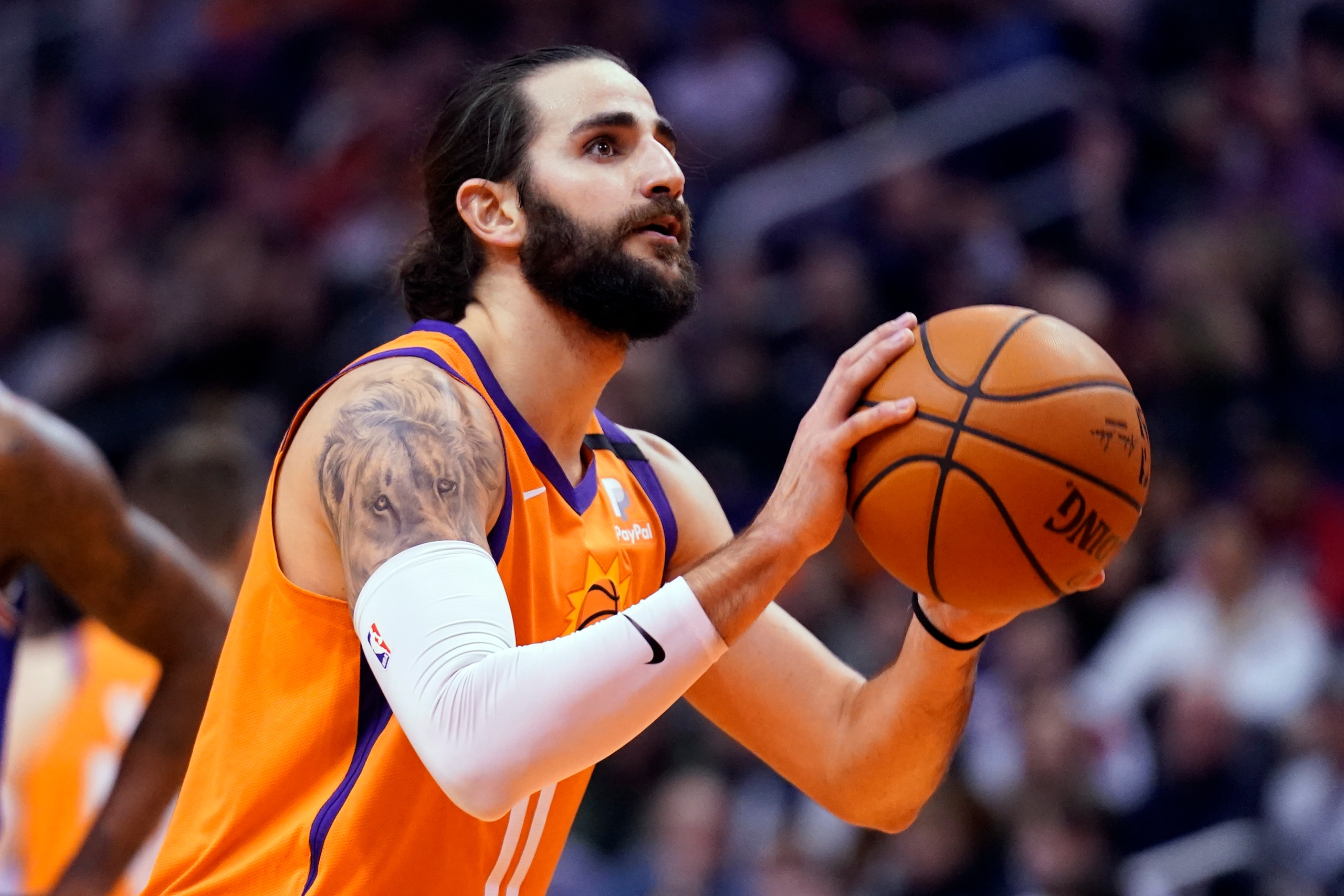
Chicago Bulls: Cristiano Felicio
Given how weak this summer's crop of free agents is, Otto Porter Jr. opting out next season wouldn't be surprising. Teams might be able to view him as an expiring contract. And Zach LaVine's sub-$20 million salary might actually have turned out to be a bargain.
The one player on a decent-sized contract who rivals probably couldn't talk themselves into is Felicio. Even still, his $8.2 million payout this season could be good salary-matching fodder if attached to a bigger deal.
Indiana Pacers: Myles Turner
With his combination of shot-blocking and three-point shooting, Turner has a fairly intriguing skill set for a center.
But look around the league and ask yourself, "Who's dying for a 5?" The lukewarm market for this position will end up being a running theme throughout this article.
Turner is versatile and still pretty young, but there may not be a ton of teams eager to sign up for his $18 million per year through 2022-23.
Milwaukee Bucks: Eric Bledsoe
Bledsoe is not fully guaranteed in 2022-23, but that's technically the last season of this contract. He'll be in his mid-30s by then and is posting a below-average three-point percentage for the fourth straight season.
That and his reputation for postseason struggles could make his contract a tough sell.
New York Knicks: Julius Randle
The Knicks figure to be sellers at the deadline, and they actually have a lot of players who could help playoff teams. And they're all on manageable, tradable deals.
If there's one contract that might make a potential trade partner uneasy, though, it's Randle's, just because it runs through 2021-22 (though the $19.8 million that season isn't fully guaranteed).
Randle is a solid, young(ish) big man, but his bull-in-a-China-shop game is a little outdated. And the regression in three-point shooting and defensive numbers may be worrisome.
Orlando Magic: Nikola Vucevic
Vucevic is really good. He's probably underrated. He's 16th in box plus/minus this season after finishing 10th last year.
But the new deal he just signed runs through 2022-23, when he'll make $22 million. On top of the tepid center market, he'll also be in his mid-30s by then.
Phoenix Suns: Ricky Rubio
Devin Booker is on a monster deal that will pay him over $158 million between now and the end of the 2023-24 season. And though a lot of the catch-all numbers suggest he's not worth it, you have to imagine plenty of suitors would come running for his raw production if he were made available.
The next-highest-paid Sun is Tyler Johnson, but he's on an expiring deal.
That brings us to Rubio, who's guaranteed $51 million over this season and the two after. He's always been a helpful player, as evidenced by his career 5.3 net rating swing, but the all-time-bad shooting numbers might scare trade partners away.
Toronto Raptors: Kyle Lowry
Marc Gasol and Serge Ibaka are both on expiring contracts. With one exception, everyone else on the books is making less than $11 million per season. Contracts like that aren't hard to move.
Lowry is on the hook for $30 million next season, though he probably has enough left in the tank for one more push with a contender. It's just not easy to find a team that screams, "One 33-year-old, $30 million point guard away from a title."
Brooklyn Nets: DeAndre Jordan
3 of 19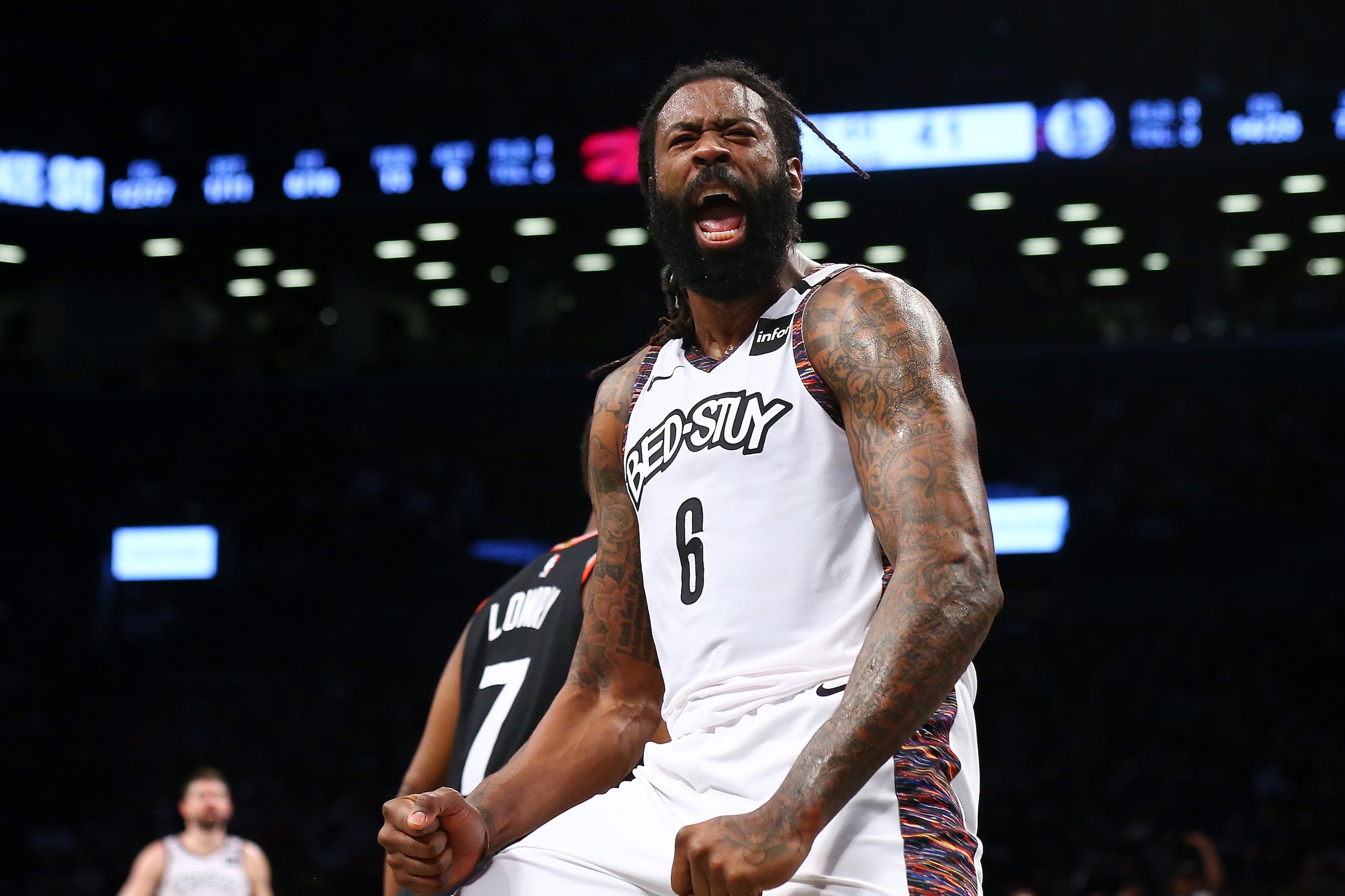
DeAndre Jordan will be 34 years old when his current deal expires in 2023. His $10 million average salary isn't terrible, but such an advanced age for a player who's relied on athleticism over the course of his career might scare off potential trade partners. And he's already been trending in the wrong direction for a while.
The Brooklyn Nets are the fourth team over the last three years for which Jordan has had a negative net rating swing. And this season, the swing is catastrophically bad.
The Nets are minus-6.0 points per 100 possessions with Jordan on the floor. They're plus-3.0 with him off, according to Cleaning the Glass.
His offensive game kills spacing, a pretty important ingredient in today's NBA. And his impact as a defender and rebounder isn't big enough to outweigh that.
Unless he's attached to some other contracts, it's tough to imagine Brooklyn being able to trade Jordan during the life of this contract.

Charlotte Hornets: Terry Rozier
4 of 19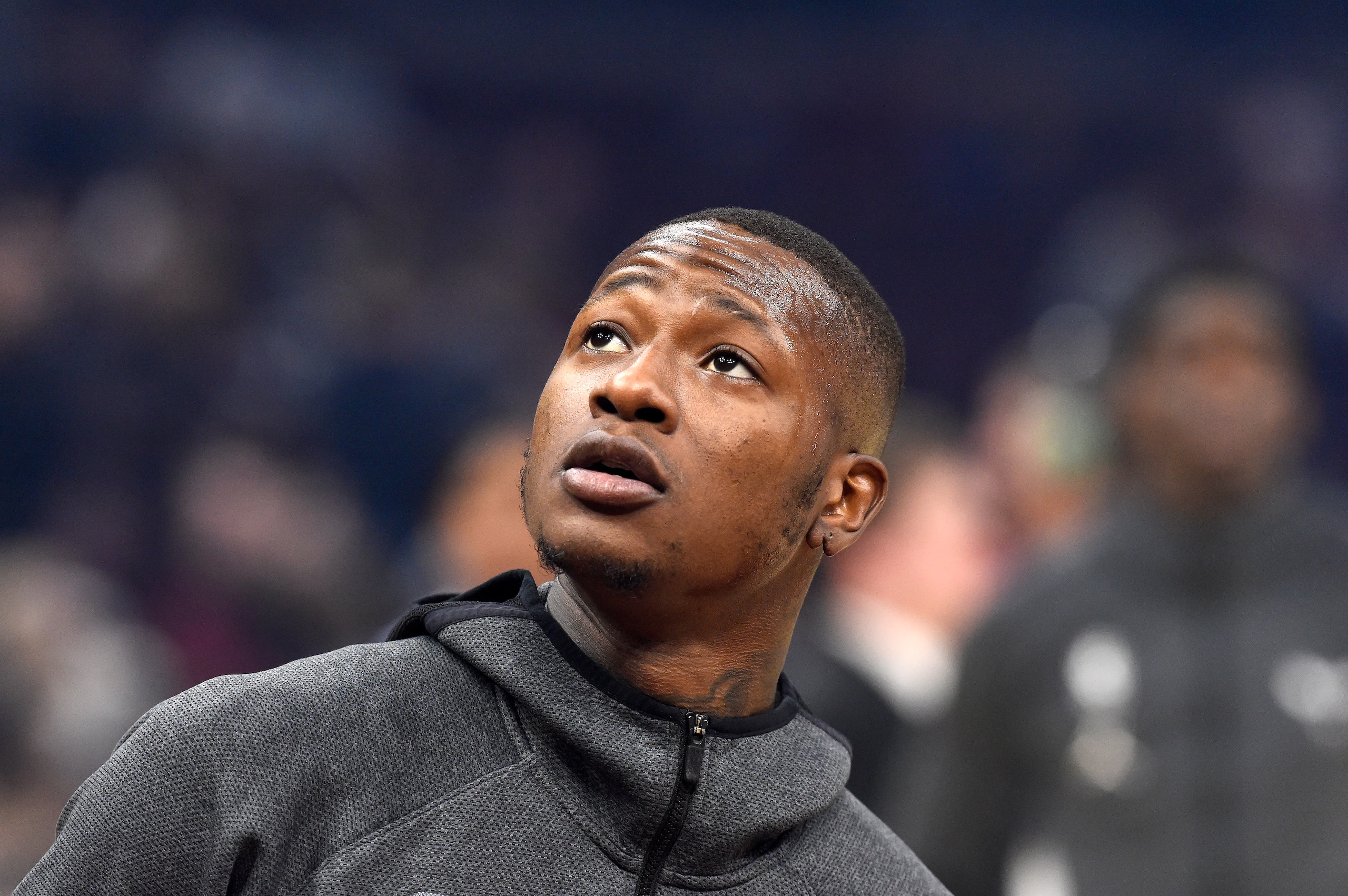
There's certainly a temptation to go with Nicolas Batum here. Given his age (31) and production over the last couple of years, a decision to pick up his $27.1 million player option for next season wouldn't be surprising. If teams think he's going to do that, he might be tough to move.
It's still harder to see teams lining up to devote nearly a fifth of their cap sheet to Terry Rozier.
In his first season as a full-time starter, he's posting career highs in points (17.8) and three-point percentage (39.4). And he's on pace to top 40 percent from the field for this first time in his career.
But his true shooting percentage is still well below average. And for the fifth time in five seasons, he's rocking negative net rating and offensive rating swings. This season, Charlotte is 9.4 points per 100 possessions worse, a swing that ranks in the 12th percentile.
Despite his size (6'1", 190 lbs), Rozier has generally been a plus defender, but his combination of usage and inefficiency has a larger impact.
That suggests "solid backup." It's hard to imagine many teams would want to pay starter money for that.
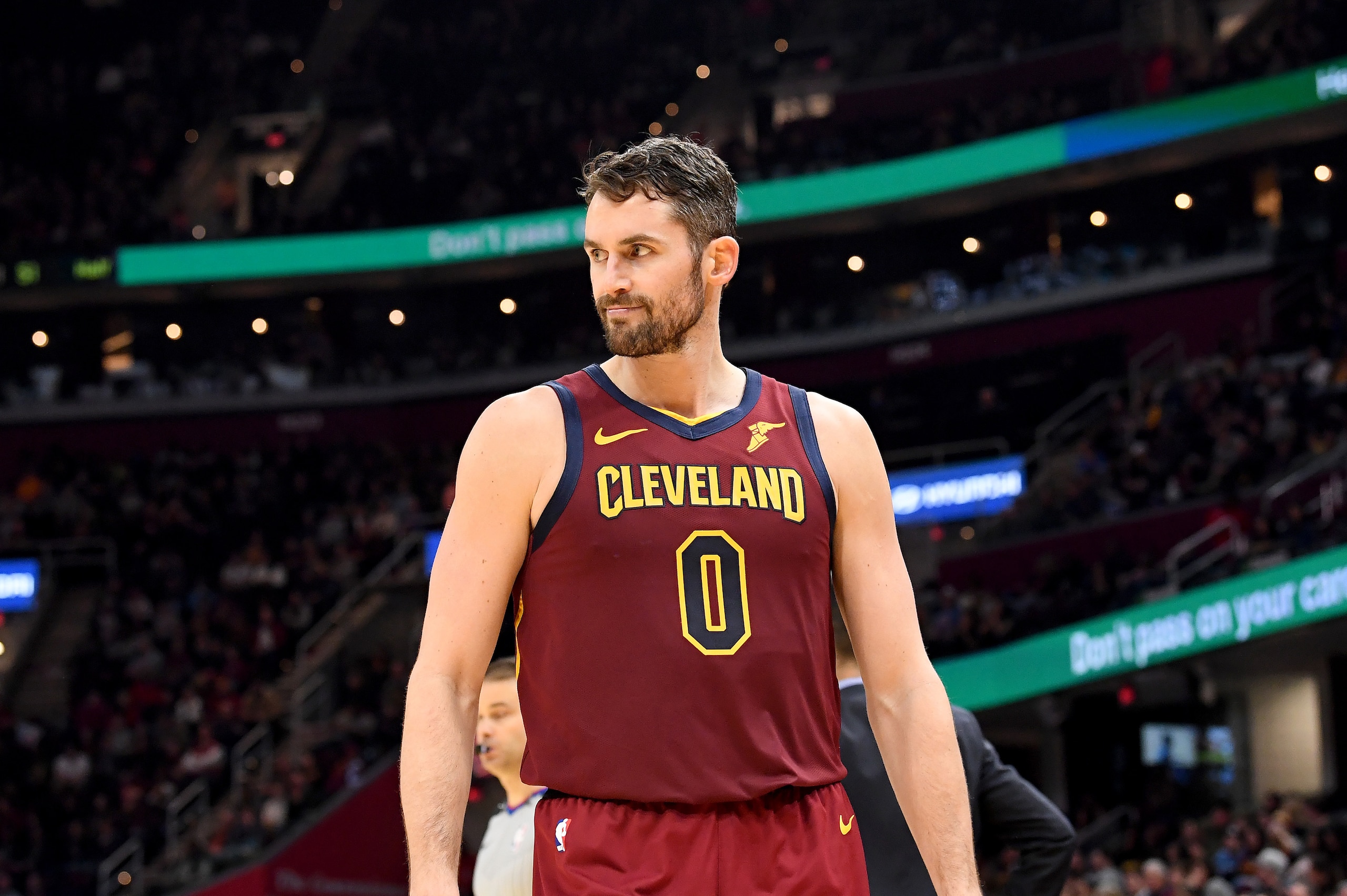
Cleveland Cavaliers: Kevin Love
5 of 19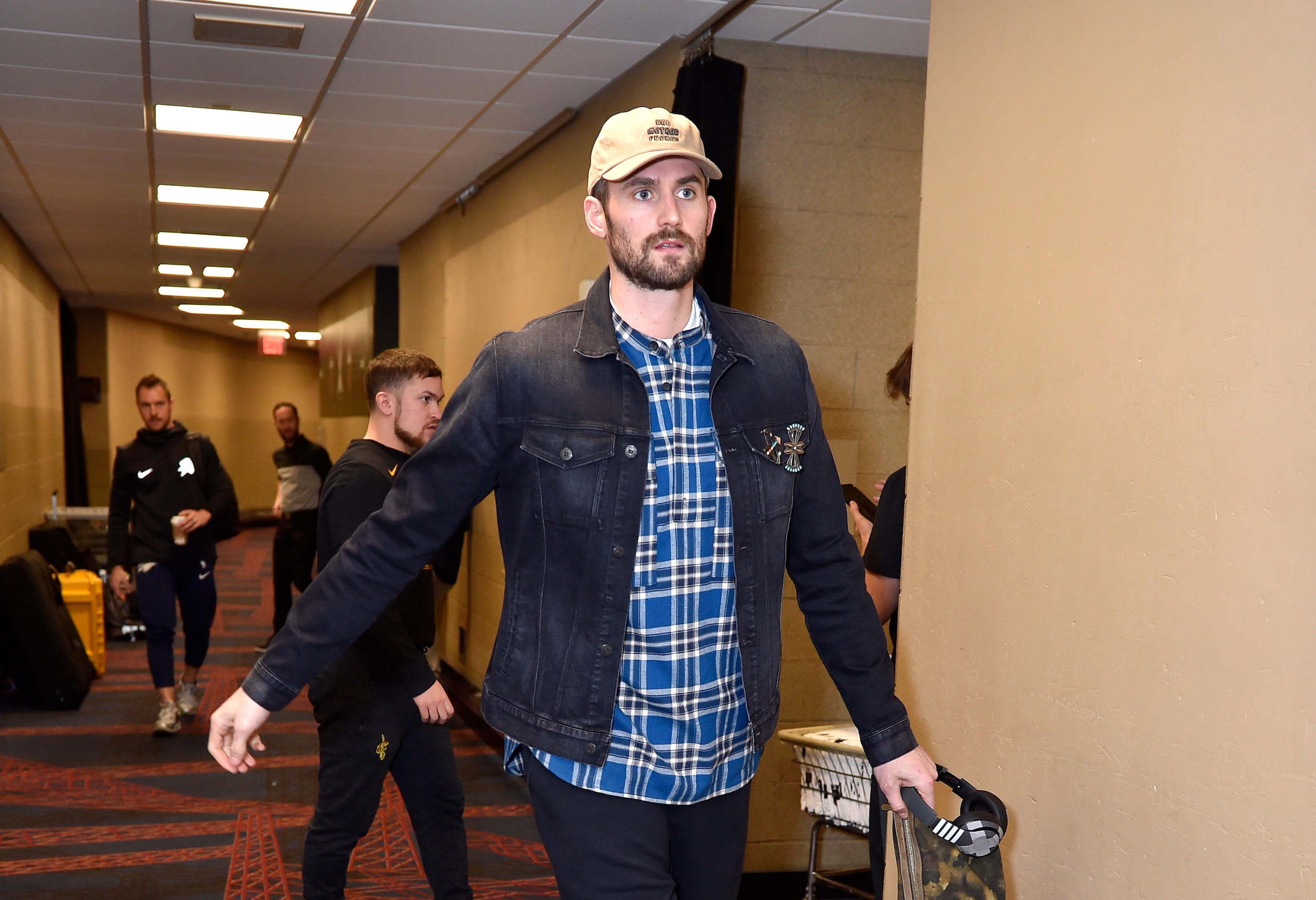
Things appear to be deteriorating rapidly between Kevin Love and the Cleveland Cavaliers.
After some posturing over the last several months that he was a part of the team's long-term plan, ESPN's Adrian Wojnarowski wrote in early December, "The Cleveland Cavaliers are expressing a willingness to listen to offers for All-Star forward Kevin Love."
A month later, video surfaced of Love taking out some frustration (presumably with the team) on a bench chair. What happened next ramped all this up even more.
"Cavaliers' Kevin Love had an emotional outburst directed toward GM Koby Altman on Saturday expressing displeasure and disgust with the organization -- after team issued fine for bench tantrum," The Athletic's Shams Charania wrote.
The capper was what could probably be described as an on-court tantrum against the Oklahoma City Thunder.
After clomping down the floor behind the rest of the team, Love threw his hands up at Collin Sexton, seemingly exasperated with life as a Cavalier. He then stomped back up to the top of the key, demanded the ball and two-hand hucked it at Cedi Osman.
As if his injury history, his age (31) and the $91.5 million guaranteed after this season weren't enough to make his contract tough to move, this recent stint as a malcontent seals it.
Given how thoroughly and quickly this relationship has fallen apart, Love will probably get moved. But all these factors are going to make it difficult for Cleveland to recoup much value.
Dallas Mavericks: Kristaps Porzingis
6 of 19
Not that the Dallas Mavericks would want to deal Kristaps Porzingis—there's still plenty of reason to like the fit between him and Luka Doncic—but his deal might be pretty tough to move.
Porzingis is posting a below-average BPM for the second time in four seasons. He's at minus-0.2 for his career. He's never had an above-average true shooting percentage, either.
And so far, the Mavs are playing far better when Luka is on the floor without KP. They're plus-15.4 points per 100 possessions (98th percentile) in that situation, compared to plus-5.9 (79th percentile) when both are in.
The idea of Porzingis—a sweet-shooting 7'3" power forward who can also protect the rim—has always been a little more tantalizing than the real thing. And now that knee issues are part of the equation, it'd be even harder for a team to trade for him and the $120-plus million he's guaranteed (nearly $160 million if he picks up his option for 2023-24).
Detroit Pistons: Blake Griffin
7 of 19
Blake Griffin may have given literally all he had left to the Detroit Pistons last season.
After he averaged a career-high 24.5 points, 7.5 rebounds, 5.4 assists and 2.5 threes in 2018-19, knee issues have plagued Griffin throughout this campaign, to the extent he may need an operation.
"Detroit Pistons star forward Blake Griffin will visit a specialist this week because of his ailing left knee and season-ending surgery is being considered," Yahoo Sports' Chris Haynes reported.
If he is able to avoid such a measure, Griffin has a lot of work to do to rehab his value. He isn't just posting a career-low BPM right now; his minus-4.3 marks the first time in his career he's been below average, and it ranks 292nd among the 315 players with 300-plus minutes.
There's a chance we may never see the Griffin of 2018-19 again, and Detroit is on the hook for $36.6 million next season, plus another $39 million if he picks up his player option for 2021-22. At this point, the Pistons might actually have to attach picks and young players in order to move his deal.
Golden State Warriors: Draymond Green
8 of 19
Back in October, Bleacher Report's Nekias Duncan wrote, "With [Stephen] Curry and Klay Thompson out for the foreseeable future, it's fair to wonder what kind of hit [Draymond Green's] production will take."
Over two months later, we've seen the hit.
Like Griffin, Green's impact has cratered this season. His minus-0.6 BPM is the worst he's posted since his rookie campaign. His raw scoring is up a bit, but his rebounds, assists and blocks are all down. His true shooting percentage is below 50.
Life without Curry and Klay has been rough, and Green's trade value has surely taken a hit.
"There's also the matter of Green's mileage," Duncan wrote. "He's appeared in 104 playoff games since the 2014-15 campaign, with the Warriors downsizing in a bulk of those games. Their Green-at-center lineups set the league ablaze, but there's a ton of tread on his tires."
Green is guaranteed to be under contract for three years after this one at an average salary of just over $24 million. Then he has a $27.6 million player option for 2023-24, his age-33 season.
If Golden State ever decided it wanted to explore the market for Green, it'd be tough to find many teams dying to take that on.
Houston Rockets: Russell Westbrook
9 of 19
This almost writes itself.
If you include the player option in 2022-23, Russell Westbrook is set to make $131.5 million over the three seasons after this one. That final year? A whopping $46.7 million.
That might be a little less alarming if Westbrook were five years younger, but he'll be 34 in 2022-23. For a player so reliant on explosiveness and Crank-like energy, it's easy to see how things could go south in a hurry.
The warning signs are already showing up. His three-point percentage and BPM have both dropped each of the last four years, all the way down to borderline career lows in 2019-20. His 23.5 three-point percentage is about a dozen points below average, and his exactly average 0.0 BPM is the lowest he's posted since his rookie campaign.
When he's on the floor with James Harden, the Houston Rockets are plus-6.9 points per 100 possessions (83rd percentile). Sounds good, right? But when Harden is on the floor without Westbrook, they're in the 92nd percentile.
That's not a huge difference, but the stylistic problems created could be amplified in the postseason. Defenses not only don't mind Westbrook shooting, but they often welcome it. Floor spacing is limited when he and Clint Capela are on the floor, hence the more aggressive double-teams Harden has faced most of this season.
Over the life of this current contract, continued diminution of his athleticism and the hunger to take over that helped him win an MVP might make this one of the least manageable contracts in the NBA.
In the short term, it may still be worth it for Houston. A half dozen or so teams have legitimate title aspirations. The Rockets are among them, and the trade to acquire Westbrook will look like a stroke of genius if they win a championship. But it's hard to imagine those chances getting much better over the next few years.
Los Angeles Lakers: Kentavious Caldwell-Pope
10 of 19
Two offseasons ago, Yahoo Sports' Keith Smith explained some mechanics of the collective bargaining agreement that apply to the Los Angeles Lakers' subject for this piece.
"Kentavious Caldwell-Pope also has a de facto no-trade clause because he signed a one-year deal with Early Bird rights after completion," he wrote in 2018. "The NTC, along with the Trade Bonus, could make a trade of KCP tricky for the Lakers."
Well, L.A. enjoyed that so much that it gave him the same leverage again.
"I can confirm that KCP has a player option for 2020-21," Smith wrote this offseason. "This gives him another de facto no-trade clause."
KCP has one of the only contracts on the Lakers' books that looks like good salary-matching fodder, but good luck convincing him to waive that no-trade clause.
L.A. is also in that group of teams that have a real shot to win it all in 2019-20. Making the choice to leave seems unlikely.
Memphis Grizzlies: Jonas Valanciunas
11 of 19
There was probably a realistic argument to include the Memphis Grizzlies in the section about teams that could trade just about anyone.
Andre Iguodala is the squad's highest-paid player, but his deal is expiring, and teams will be interested between now and Feb. 6. Perhaps his value might be diminished by teams still hoping for a buyout, but it feels like offers will come.
Next up on the books is Jonas Valanciunas, and he's been excellent this season. He's averaging 20.6 points, 13.6 rebounds, 2.8 assists and 1.3 blocks per 75 possessions with a 65.0 true shooting percentage, and he has a plus-4.8 net rating swing for a team unexpectedly in the playoff hunt.
But this goes back to the market for big men. It's just hard to come up with many teams that should be lining up to trade for more traditional centers.
And though his annual salary declines from $16 million this season to $15 million in 2020-21, then down to $14 million in the final year, it's still a two-plus-year commitment.
Miami Heat: Dion Waiters
12 of 19
Unless his contract is a throw-in as part of a larger deal, it's tough to imagine anyone trading for Dion Waiters.
"The Waiters contract is as close to untradable that I have ever seen in the NBA," a league executive told ESPN's Bobby Marks, and it's not hard to see why.
On top of the three suspensions he's been handed this season, Waiters has come close to being a positively impactful player exactly once in his career. Even that might be a stretch as his career-high minus-0.9 BPM was comfortably below average.
Among the 265 players with at least as many career three-point attempts, Waiters is 262nd in BPM and 259th in true shooting percentage.
Paying a player the rest of the $12.1 million he's owed this season, as well as another $12.7 million next season, to actively make your team worse isn't going to be an attractive item on the trade market.
Minnesota Timberwolves: Andrew Wiggins
13 of 19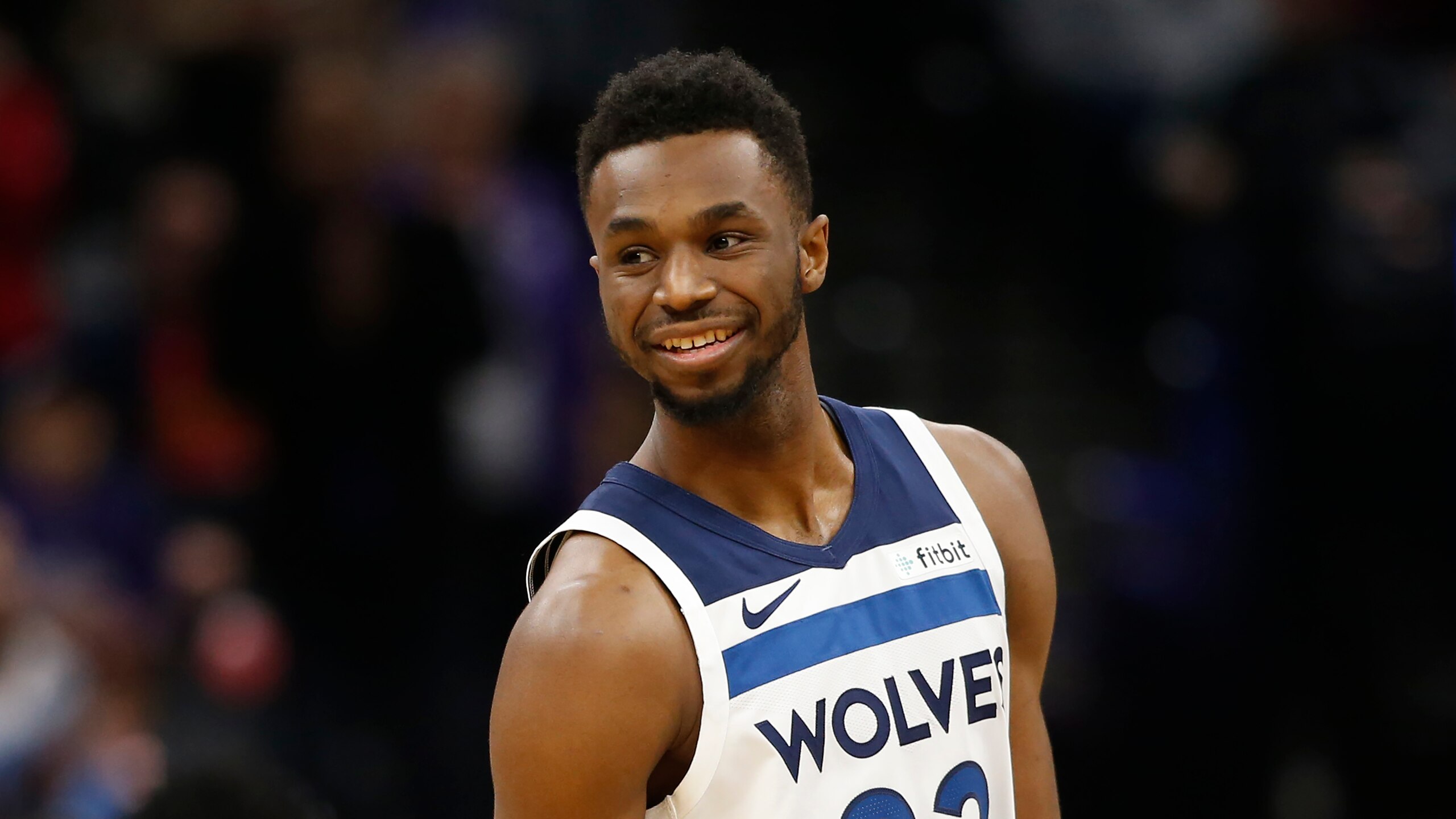
With Karl-Anthony Towns reportedly unhappy in Minnesota, the Timberwolves probably need to poke around the trade market to see if there's any way to make the roster more palatable for their superstar.
That might mean moving on from Andrew Wiggins. But given his track record, dealing his contract and improving the roster might not go hand-in-hand.
Wiggins is on track for the best season of his career, but he's still well shy of average in BPM and true shooting percentage. At 24 years old and five-plus seasons in, it's fair to wonder if he'll ever get there.
Some team may be able to convince itself that it can be the one to finally extract Wiggins' full potential. But is that hope worth $121.2 million through the 2022-23 season?
Wiggins will account for around a quarter of his team's salary cap for each season during this contract. Empty-calorie scoring and a lack of passing, rebounding and top-line defense probably aren't worth that.
Oklahoma City Thunder: Chris Paul
14 of 19
Chris Paul isn't done yet. In fact, a handful of numbers suggest he's been better this season than last.
In just 31.8 minutes per game, he's averaging 16.3 points, 6.6 assists, 4.9 rebounds, 1.5 steals and 1.5 threes. The Oklahoma City Thunder's net rating is 5.9 points per 100 possessions better when he's on the floor.
There's little question the 34-year-old point guard is still a helpful player.
But of course, there are age and health concerns. He averaged just 59 appearances per season from 2016-17 to 2018-19. And by the end of this mega-contract that expires in 2022, he'll be 37 and making $44.2 million.
That's a massive commitment for any team that might be interested in trading for the future Hall of Famer.
Like Westbrook, this would be a much different conversation if Paul were five years younger. But with the way the CBA is currently set up, plenty of players are hitting their peak earning capacity after their primes have come and gone.
Philadelphia 76ers: Al Horford
15 of 19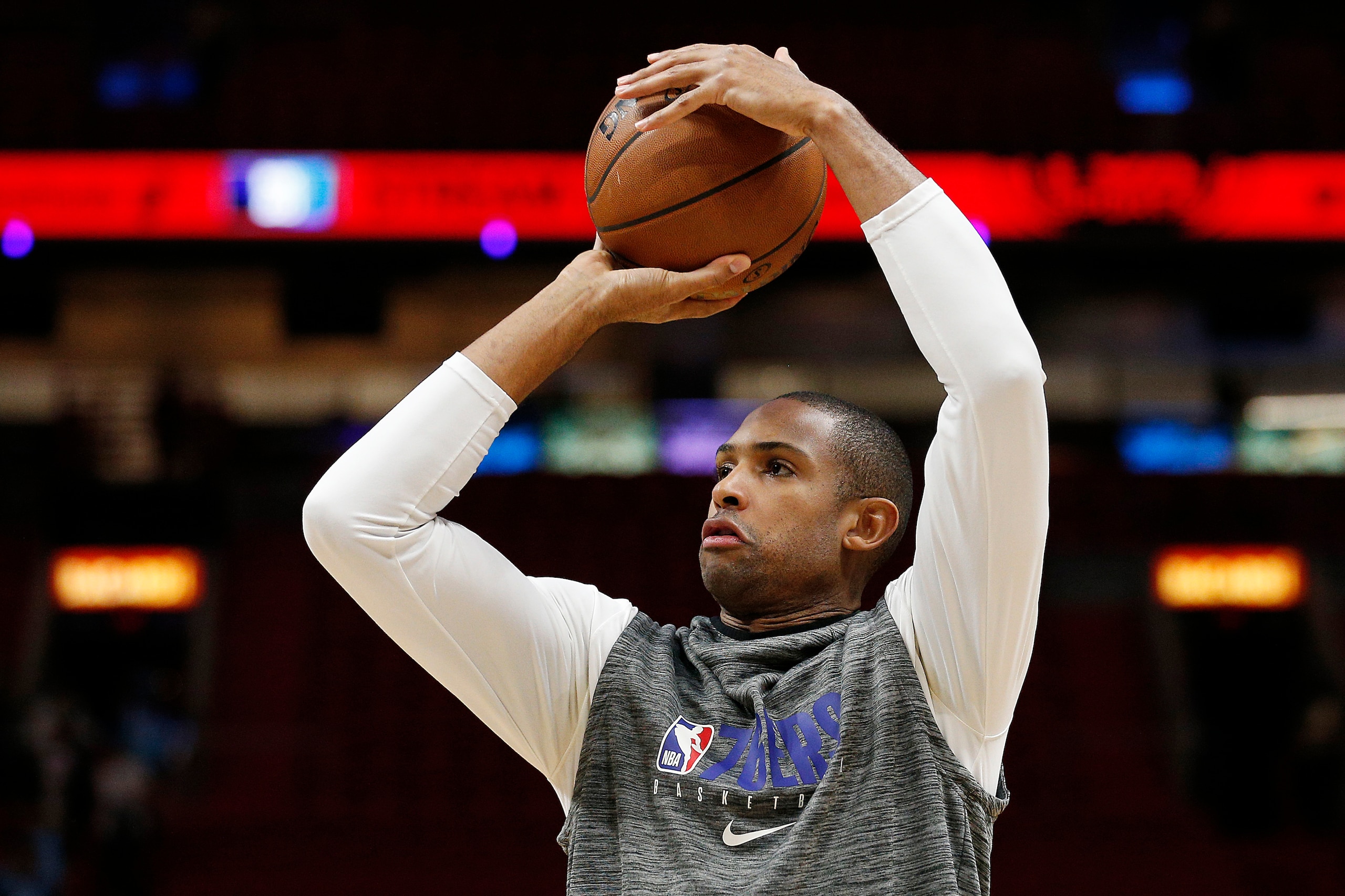
Al Horford's fit with Joel Embiid and the rest of the Philadelphia 76ers was always going to take some time to figure out. Nearly three months into the season, he's voicing some concern.
"I'm out [there] for the team and doing what I can to help us,” Horford said, per the Philadelphia Inquirer's Keith Pompey. "But offensively, I'm very limited with the things that I can do. So I can't control that stuff."
Horford is posting his lowest usage percentage since 2009-10. His true shooting percentage is well below average and on track to be a career low. His assist numbers are down from what he did for the Celtics. His defensive impact at power forward appears limited compared to what he's traditionally provided as a center.
He may just be in the wrong role with the Sixers, but we're also talking about a player in his age-33 season. By the end of this contract, he'll be 36. The money for 2022-23 isn't guaranteed, but the $54.5 million over the two seasons after this one most certainly is.
If Philadelphia feels ready to jump ship on this experiment before Feb. 6, it'll likely look into moving Horford. After all, his natural position is the same as Embiid's. But the contract the Sixers gave him may not be easy to move.
Sacramento Kings: Harrison Barnes
16 of 19
Like a handful of the other teams already detailed, the Sacramento Kings' books are fairly clean.
All three of the veterans they added this summer for a playoff push—Trevor Ariza, Cory Joseph and Dewayne Dedmon—have failed to provide many positive contributions (Dedmon and Joseph have been particularly bad). But with all three around that $12-13 million salary range, it's not hard to seem them moved.
The only other players on deals set to pay more than $10 million per season going forward are Buddy Hield and Harrison Barnes. Hield has yet to find the magic that carried him to a bevy of career highs last season, but his shooting would intrigue plenty of suitors if he hit the market.
Barnes has a few traits that are generally marketable, as well. His size (6'8", 225 lbs), theoretical switchability and ability to play small-ball 4 should all be in demand. But, like Porzingis, the theory of Barnes often brings more than the real thing.
Over the course of his career, the net rating of his teams has been 2.2 points per 100 possessions worse when he's on the floor. And the only time he's ever posted an above-average BPM was way back in 2014-15.
The problem may be that Barnes has just been asked to do too much over the last few years. As an ancillary piece who's the fourth or fifth option in lineups (as he was in Golden State), he can fill gaps at a so-so level. And filling enough of them made him a plus.
Tasked with being closer to the alpha, so-so didn't cut it anymore.
Maybe some team hoping to reduce his role would be interested in a trade. The problem then, of course, is his salary. Do you want to pay your fourth or fifth guy an average of $21.3 million between now and the end of the 2022-23 season?
Most NBA teams probably don't want to, either.
San Antonio Spurs: LaMarcus Aldridge
17 of 19
This one felt like a toss-up between LaMarcus Aldridge and DeMar DeRozan. The latter having a player option that could get him into a relatively weak crop of free agents tips the scales.
Even Aldridge's contract wouldn't be a nightmare to take on. It's guaranteed for $24 million in 2020-21, but he may offer some intrigue as a stretch 5 in the twilight of his career.
He's been a part of some bad defenses over the last couple years, though. With him on the floor, the San Antonio Spurs' defensive rating has ranked in the 42nd percentile in 2018-19 and the 19th percentile this season. Both years, the defense has performed better when he sits.
At 34 years old and with over 36,000 minutes in the regular season and playoffs combined, Aldridge is unlikely to reverse that trend.
Trade for him as a 4 and opponents are likely to hunt his matchup around the perimeter all night. Acquire him to play the 5 and you could have some serious trouble protecting the rim.
That high-release turnaround jumper is probably something Aldridge will be able to hit fairly consistently until he's 50, but it doesn't move the needle enough to outweigh his defensive issues.
Utah Jazz: Mike Conley
18 of 19
Mike Conley's tenure with the Utah Jazz hasn't gotten off to quite the start many imagined.
He's missed 13 of Utah's 35 games with a nagging hamstring injury. He's shooting 36.5 percent from the field and 36.0 percent from three (for a way-below-average 43.9 effective field-goal percentage). He's below one steal per game for the first time since his rookie campaign.
And perhaps most telling, the Jazz are plus-1.9 points per 100 possessions (60th percentile) when he's on the floor and plus-3.9 (71st percentile) when he's off.
There's time for Conley to get healthy and turn this season around. But right now, it may be hard for opposing front offices to see much beyond an undersized 1 who's 32 years old and guaranteed to make $34.5 million next season.
Washington Wizards: John Wall
19 of 19
Through no fault of his own, John Wall's massive contract became one of the league's most burdensome soon after it was signed.
For a player so reliant on his athleticism and end-to-end speed, his injury history (punctuated by the dreaded Achilles tear in 2019) is beyond concerning. If his physical traits have been compromised, he may not have the requisite craftiness or outside shooting (32.4 percent from deep for his career) to justify the monumental salary.
His average between now and the end of the contract in 2022-23 is over $30 million. His player option in the final season, when he'll be 32, is for $46.9 million. The cap may still be going up by then, but that'd be a monster hit even if it climbed up to $150 million.
The reality for Washington may be starting from an extreme team-building disadvantage over the remainder of this deal.
All stats, unless otherwise indicated, courtesy of Basketball Reference, NBA.com or Cleaning the Glass and current heading into games on Monday.

.jpg?w=2560 "AD Trolls Bears WR on IG 😂")
.jpg?w=2560 "Viral Dan Campbell Presser 💙")
.jpg?w=2560 "Buzz: MHJ Hired Agents for Trade")
.jpg?w=2560 "Report: Steelers WR to Miss 'Weeks'")
.jpg?w=2560 "Cam Ward Says He's Not A Loser")


.jpg?w=2560 "Chargers Fall to 0-5 🤢")