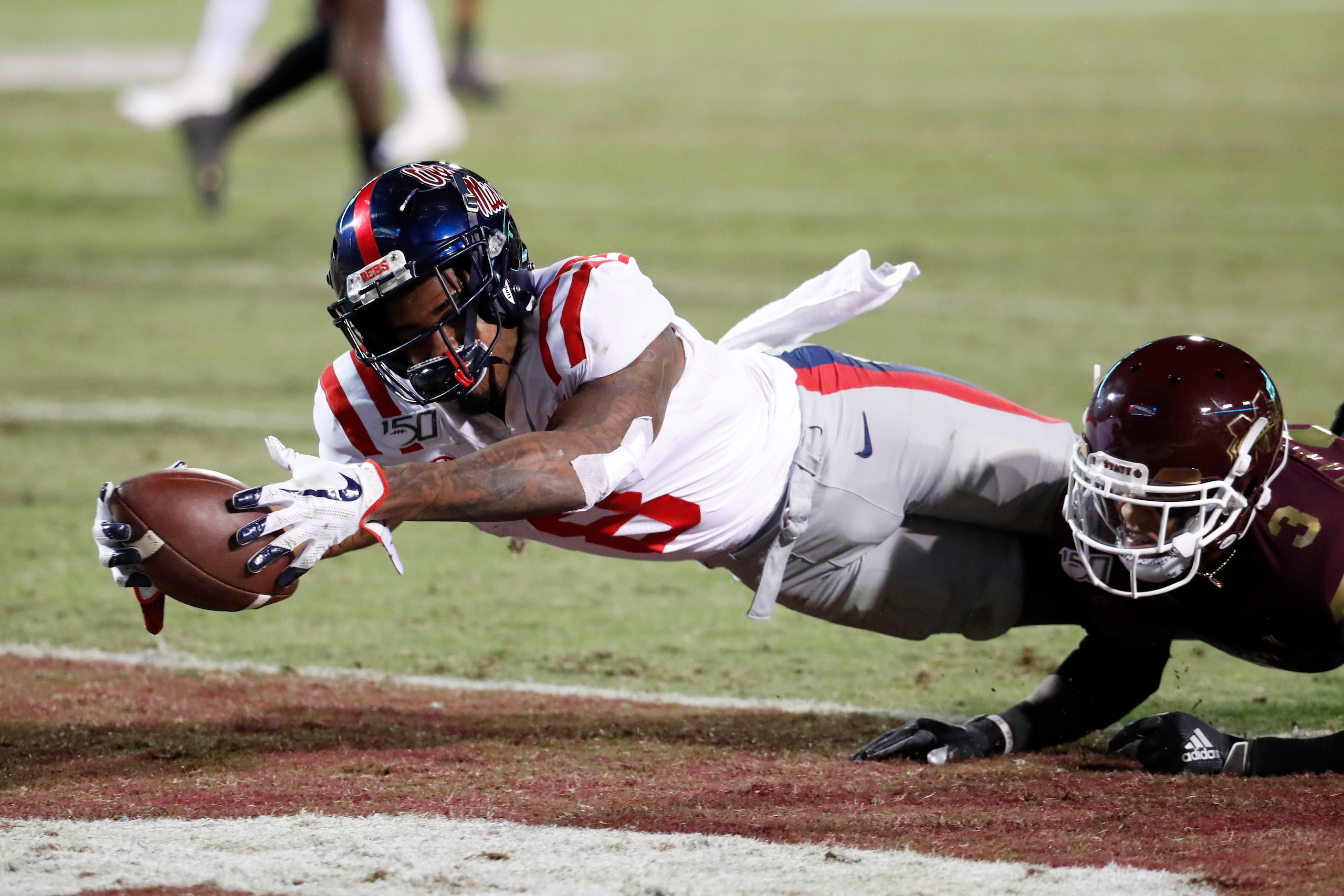


For teams such as Ole Miss, Purdue and Houston, the 2019 college football season didn't go according to plan, resulting in sub-.500 records and a comfy spot on the couch for bowl season.
But there's always next year—because every season we see teams improve by leaps and bounds.
From 2017 to 2018, Georgia Southern went straight from 2-10 to 10-3 and Cincinnati surged from 4-8 to 11-2, leading the pack of 10 teams that increased their win total by at least four.
This year's shining example was Central Michigan, transforming from a 1-11 train wreck to an 8-5 MAC championship competitor. And the Chippewas are just one of 12 teams that already have at least four more wins than last year—a club that will probably increase in size after bowl season.
Which teams are most likely to turn things around in 2020?
Taken with the grain—nay, boulder—of salt that rosters are far from finalized, we've combed through the list of non-bowl teams to find a few that were better than their record and/or have a substantial number of starters with college eligibility remaining.
Consider this your early look at the sleepers to watch next year.
The following eight teams are listed in alphabetical order.
Army Black Knights
1 of 8
For teams such as Ole Miss, Purdue and Houston, the 2019 college football season didn't go according to plan, resulting in sub-.500 records and a comfy spot on the couch for bowl season.
But there's always next year—because every season we see teams improve by leaps and bounds.
From 2017 to 2018, Georgia Southern went straight from 2-10 to 10-3 and Cincinnati surged from 4-8 to 11-2, leading the pack of 10 teams that increased their win total by at least four.
This year's shining example was Central Michigan, transforming from a 1-11 train wreck to an 8-5 MAC championship competitor. And the Chippewas are just one of 12 teams that already have at least four more wins than last year—a club that will probably increase in size after bowl season.
Which teams are most likely to turn things around in 2020?
Taken with the grain—nay, boulder—of salt that rosters are far from finalized, we've combed through the list of non-bowl teams to find a few that were better than their record and/or have a substantial number of starters with college eligibility remaining.
Consider this your early look at the sleepers to watch next year.
The following nine teams are listed in alphabetical order.
Georgia Tech Yellow Jackets
2 of 8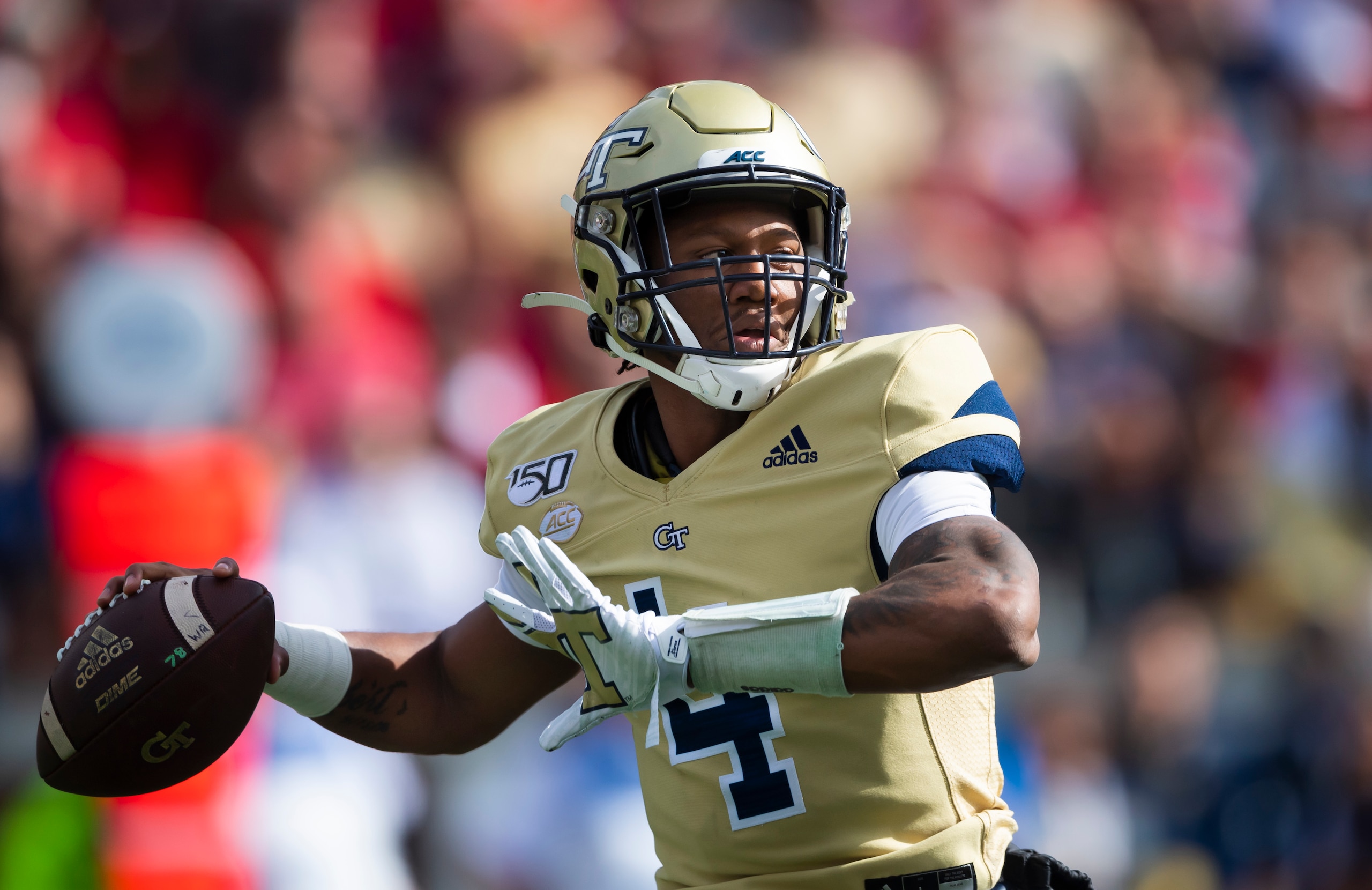
The first year of Georgia Tech's transition out of Paul Johnson's triple-option offense went about as poorly as expected.
That's not a knock on head coach Geoff Collins but rather an acknowledgment that it's not easy to start throwing the ball 20-plus times per game when you've spent more than a decade recruiting quarterbacks and wide receivers for an offense that runs roughly five times as often as it passes. It's going to take some time.
There were flashes of significant potential, though.
Redshirt freshman QB James Graham was impressive in November games against Virginia and NC State, throwing for five touchdowns and rushing for two more in those two contests. Sophomore running back Jordan Mason ranked sixth in the ACC with 899 rushing yards. Each of Tech's three leading receivers—Ahmarean Brown, Adonicas Sanders and Malachi Carter—has at least two years remaining too.
They might not be an above-average scoring team next year, but don't expect another season near the nation's basement with 16.7 points per game.
And while the defense was quite bad for most of the season, only one of Georgia Tech's top 20 tacklers (Christian Campbell) has exhausted his college eligibility. It's never safe to assume a unit will be better just because it's one year older, but it's also hard to argue with that much returning experience.
If Georgia Tech doesn't improve upon this 3-9 campaign, it will be predominantly because of the schedule.
The Yellow Jackets get a nonconference gimme at home against Gardner-Webb, but their other three non-ACC games are against UCF, Notre Dame and Georgia. Woof. Plus, they draw Clemson and a road game against a should-be-better-next-year Syracuse in their interdivision games. Double woof.
Still, Georgia Tech ought to at least flirt with a bowl game in 2020.
Houston Cougars
3 of 8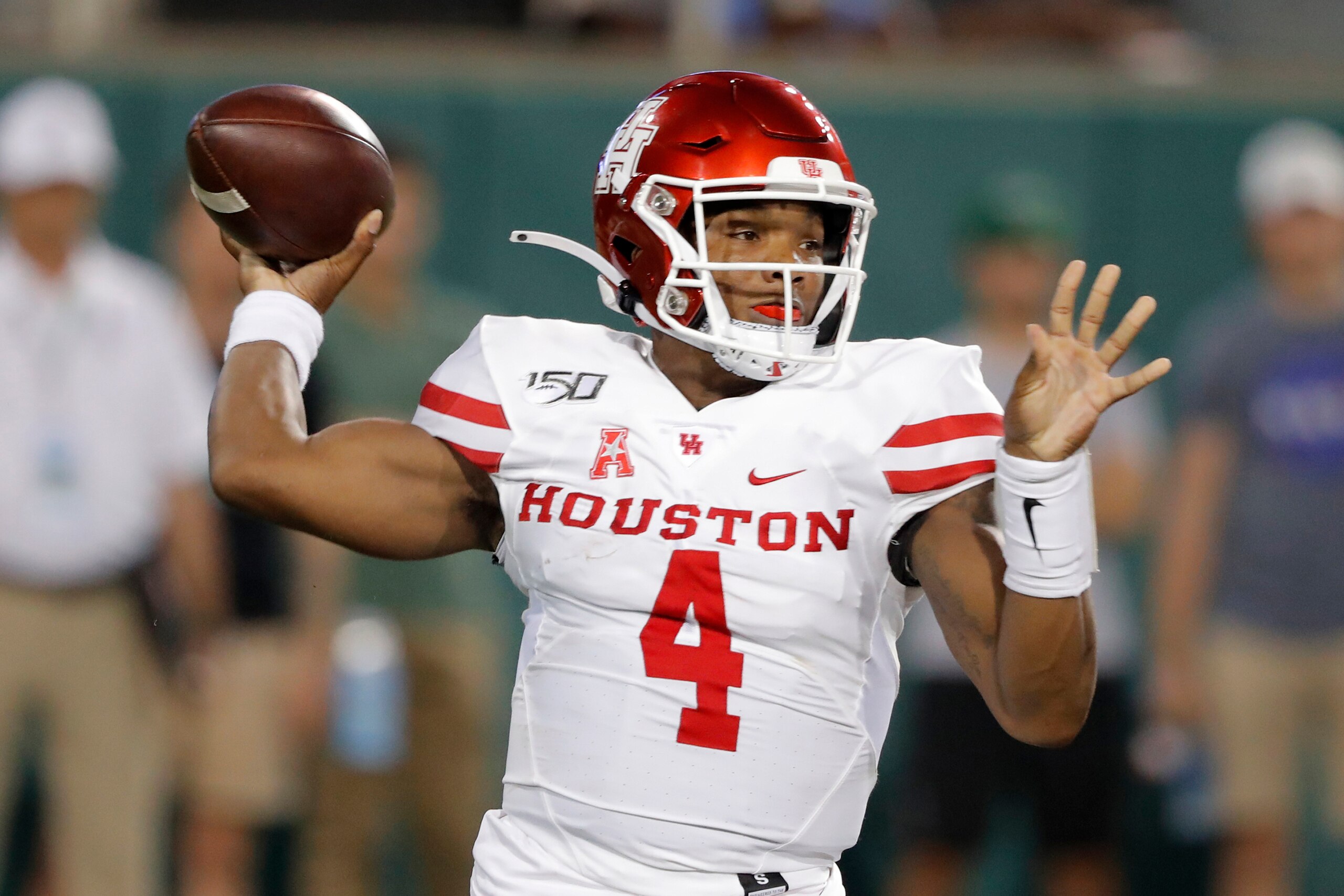
One of the biggest, strangest developments of this season came when Houston's senior quarterback (D'Eriq King) and senior wide receiver (Keith Corbin) decided, after a rough 1-3 start, to redshirt and preserve their final year of eligibility.
Last year, we saw former Clemson quarterback Kelly Bryant and former Oklahoma State wide receiver Jalen McCleskey take a similar advantage of the new redshirt rules by ending their seasons after four games, but those guys did it to transfer. King and Corbin did it with the full intention of remaining at Houston for one more—hopefully less disappointing—season.
We bring this up not to rehash the debate about whether it was a brilliant move or a case of leaders quitting on their team, but rather to point out how much potential the Cougars have in 2020.
King is a dual-threat wizard who accounted for 50 touchdowns in about 10.5 games as a junior. If any Group of Five player was going to make an appearance in this year's Heisman Trophy conversation, he'd be the one.
In addition to getting Corbin back (691 yards and 10 touchdowns as a junior), King should have a returning arsenal of running back Patrick Carr and wide receivers Marquez Stevenson, Jeremy Singleton and Tre'von Bradley. There's a reasonable chance Stevenson declares for the NFL draft after back-to-back years with at least 900 yards and nine touchdowns, but even if he goes, this offense will pack a punch.
Similar to Georgia Tech, Houston's defense is awful, but there is cause for optimism with 14 of this year's 15 leading tacklers possessing at least one more year of eligibility. Nose tackle Aymiel Fleming (25 tackles, one sack) is the only remotely noteworthy departure, so an improvement from allowing 34.0 points per game is a viable expectation.
It all boils down to King, though. If he sticks with the Cougars instead of gallivanting off to become the next great mobile passer for the Oklahoma Sooners, Houston should be in the mix for the AAC title.
.jpg?w=2560 "AP Poll Top Five Week 9")
.jpg?w=2560)
Nebraska Cornhuskers
4 of 8
2019 was supposed to be Nebraska's breakthrough year, but it wasn't meant to be. The Cornhuskers merely improved from four to five wins—nowhere near the "on the fringe of the CFP conversation" season many were anticipating.
The offense took a slight step backward after losing a 1,000-yard rusher (Devine Ozigbo) and a 1,000-yard receiver (Stanley Morgan Jr.), but Nebraska still fared well while breaking in new weapons such as Dedrick Mills and Wan'Dale Robinson.
Aside from senior wide receivers Kanawai Noa (17 receptions for 245 yards) and Mike Williams (five catches for 109 yards), that entire offense should be back. There's nary a senior on the two deep for the offensive line. All three quarterbacks will return, most notably Adrian Martinez. All six leading rushers should be back. With that type of cohesion, Nebraska could skyrocket from 28 points per game to something in the upper 30s.
Will it be enough to overcome a porous defense, though?
In six of Nebraska's seven losses, it allowed at least 31 points and 449 yards of offense. Against Ohio State or Jonathan Taylor, fine, that happens. But playing that poorly against Purdue and Colorado was troubling. All nine Big Ten opponents rushed for at least 100 yards against the Cornhuskers, as they allowed 223.4 rushing yards per conference game.
Perhaps it's good news, then, that five of the starters from the defensive front seven are graduating. Could be an addition-by-subtraction situation, considering Nebraska hasn't stopped anyone from running the ball in the past three years. But when the defense holds an opponent to 35 points or fewer, Nebraska ought to win more often than not.
North Carolina State Wolfpack
5 of 8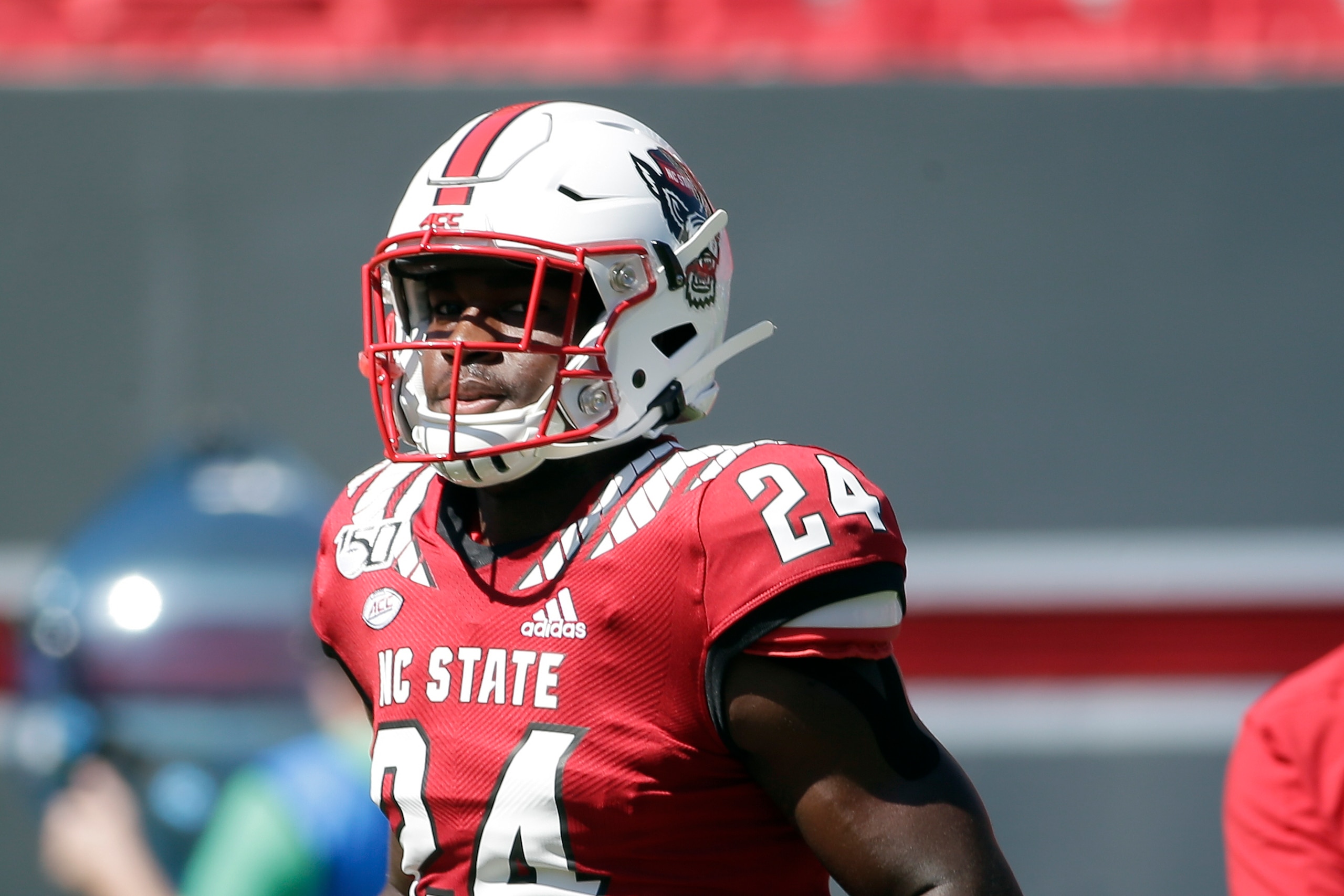
NC State can't be any worse than it was over the second half of this season.
The Wolfpack went 0-6 and were outscored by 147 points. Even in the lone game in which the final score didn't look like a blowout, they were down 28-10 late in the third quarter against Georgia Tech, which finished 3-9.
But this was always likely to be a rebuilding year for them.
They lost a three-year starter at quarterback (Ryan Finley), a 1,000-yard rusher (Reggie Gallaspy II) and a pair of 1,000-yard receivers (Jakobi Meyers and Kelvin Harmon). It's next to impossible to suffer that much attrition without hitting a few potholes, so it's no surprise they went straight from a moderately above-average offense (33.8 PPG; 456.1 YPG) to one of the worst in the ACC (22.1 PPG; 380.3 YPG).
The good news is the Wolfpack took their lumps with young players who should be better next year because of it.
Head coach Dave Doeren shuffled Devin Leary (freshman), Matthew McKay* (sophomore) and Bailey Hockman (sophomore) at quarterback, giving all three a chance to audition for the starting job in 2020. Both of the leading rushers (Zonovan Knight and Jordan Houston) were freshmen. And of the five guys who racked up at least 300 receiving yards, four still have at least one year of eligibility remaining.
The four leading tacklers will also return, which gives defensive coordinator Tony Gibson a nice foundation.
In Doeren's first season (2013), NC State averaged 22.8 points per game and allowed 30.2 while sputtering to a 3-9 record. The following year, the Wolfpack went 8-5. This year's points marks were staggeringly similar (22.1 and 30.1, respectively), but perhaps another five-win improvement will be in the cards next year.
*McKay has already entered the transfer portal, but he's still eligible to return.
Ole Miss Rebels
6 of 8
The tough fact of life for the Ole Miss Rebels is that even if they improve drastically, they are still probably going to get crushed under the weight of a preposterous schedule.
Four of their first five games next season are a "neutral-site" contest against Baylor in Houston, home games against Auburn and Alabama and a road game against LSU. Game No. 7 is against Florida. Game No. 9 is at Texas A&M. Even a team with Top 25 talent could start the season 3-6 against that monstrosity.
But the Rebels are better than the 4-8 record they cobbled together this season.
Five of their eight losses were by one possession against teams that became bowl-eligible, including a 15-10 game at 12-1 Memphis and a 20-14 game at 9-3 Auburn. Even in the less competitive losses to LSU and Alabama, the Rebels still put up 37 and 31 points, respectively. They were just helpless on defense against Tua Tagovailoa and Joe Burrow, which happened to a lot of teams this year.
Some of those close results should turn into wins next season with just about every stat producer on offense eligible to return.
Both halves of the Matt Corral-John Rhys Plumlee QB tandem were only freshmen. Running back Scottie Phillips is graduating, but Jerrion Ealy (722 yards, 6.9 YPC) and Snoop Connor (512 yards, 6.3 YPC) were better as freshmen than the senior was—plus Plumlee is the No. 1 rushing option on the roster. Star sophomore receiver Elijah Moore (67 receptions, 850 yards) will also be back.
The Rebels do need to replace their entire starting defensive line and a significant chunk of the secondary, but the linebacking corps is in great shape with leading tacklers Lakia Henry and Jacquez Jones and top sack artist Sam Williams all likely to return.
Again, because of the schedule, Ole Miss may only improve to 6-6. But that would be one .500 team nobody wants to draw in a bowl game.
And let the record show that this was written before Lane Kiffin accepted the job to coach at Ole Miss. The Rebels' odds of going to a bowl game look better because of that.
Purdue Boilermakers
7 of 8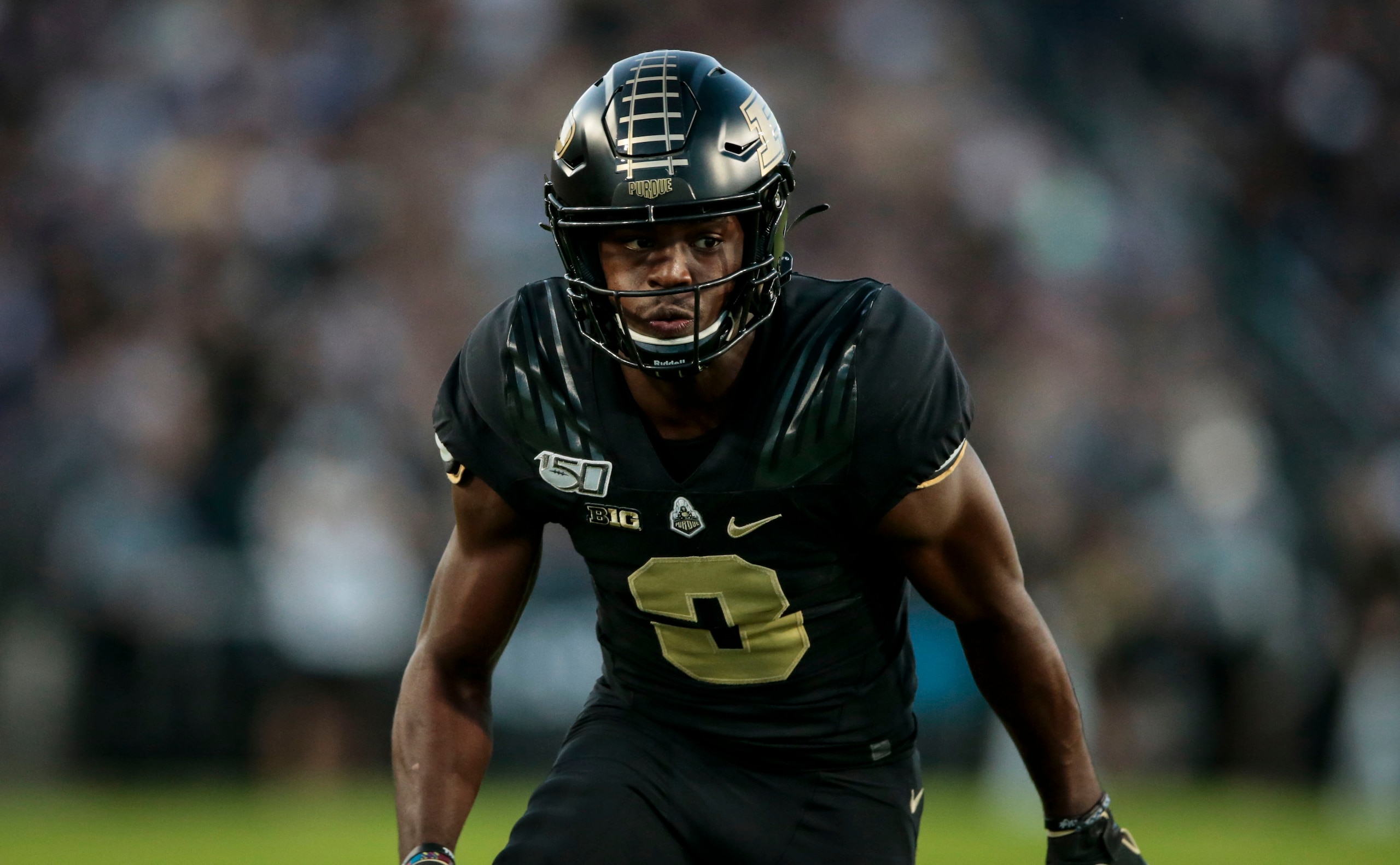
Raise your hand if you're ready to watch Purdue lead the nation in passing yards in 2020.
Aggressively shoves hand into the air.
Purdue's season went up in flames in early September when quarterback Elijah Sindelar (collar bone) and all-purpose phenom Rondale Moore (hamstring) suffered what turned out to be season-ending injuries. When they were both healthy for the first two games, though, the former threw for 932 yards and nine touchdowns while the latter made 24 receptions for 344 yards.
Now, add David Bell to that mix.
The freshman wide receiver didn't do much early on. By the end of Week 3, he had just six catches for 130 yards and one score. But once Moore went down, a new star was born.
Bell averaged 8.9 receptions for 100.6 yards and 0.7 touchdowns over the final nine weeks of the regular season, despite catching passes from two quarterbacks—Aidan O'Connell and Jack Plummer—who had not thrown a ball in a game in college before this season.
Pair that 1,000-yard receiver with another stud who went over 1,000 yards as a freshman and give them a veteran quarterback who was already granted a sixth year of eligibility and you've got the recipe for an outstanding offense.
Head coach Jeff Brohm is no stranger to that recipe, either. In each of his three seasons with Western Kentucky (2014-16), the Hilltoppers ranked top five nationally in passing yards per game and averaged 47 passing touchdowns per year. If Purdue's three main parts of that aerial attack can stay healthy, the Boilermakers will be a problem.
As was the case in our discussion about Nebraska, Purdue's considerably below-average defense is a legitimate concern, but the offense might be electric enough to just win shootouts on a regular basis.
West Virginia Mountaineers
8 of 8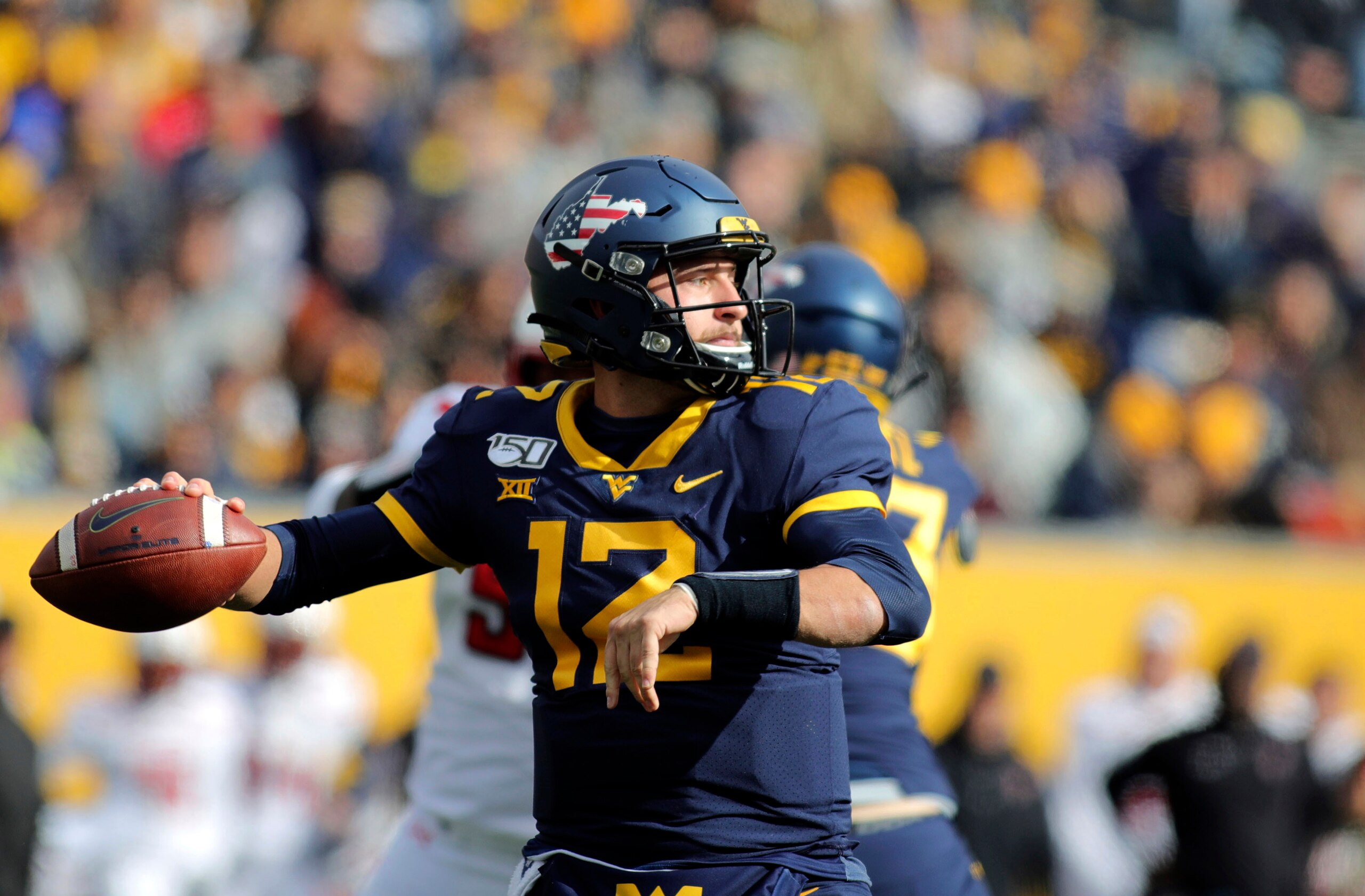
After West Virginia lost quarterback Will Grier, his three favorite targets (David Sills V, Gary Jennings and Marcus Simms) and head coach Dana Holgorsen, the natural expectation was that the Mountaineers offense wouldn't be as good in 2019 as it was in 2018.
No one expected it to be this bad, though.
The unit went from averaging 40.3 points per game to 20.6. That delta of 19.7 was the largest in either direction by any team. Even LSU's vault from 32.4 PPG to 47.8 wasn't as drastic as WVU's plummet. Similarly, the 'Eers averaged 190.4 fewer yards of total offense per game. The next-largest drop was 154.0 by Old Dominion.
But don't count on that to be the new normal in Morgantown. The Mountaineers just needed to slog through a tough year to break in their new head coach as well as a bunch of transfers and freshmen. Both quarterbacks were transfers, and of the nine players who accumulated at least 170 yards from scrimmage, only three gained three or more yards for the Mountaineers in 2018.
In other words, it was a "starting over from scratch" type of year. And it did end on a high note with road wins over Kansas State and TCU in November—plus a loss to Texas Tech in which the Mountaineers had a vintage offensive performance with 549 total yards.
With everyone other than backup running back Kennedy McKoy and No. 3 wide receiver George Campbell expected to return, they can build on that finish.
Aside from starting cornerbacks Hakeem Bailey and Keith Washington II, the defense will also remain largely intact. And speaking of building on strong finishes, West Virginia held each of its final two opponents below 300 total yards and held its final three foes to 20 points or fewer. Keep that up and they'll be back in the nine-win range again in no time.
Kerry Miller covers college football and men's college basketball for Bleacher Report. You can follow him on Twitter, @kerrancejames.

.jpg?w=2560 "Mahomes Told Teammate to Leave Meeting")
.jpg?w=2560 "Baker Gets Glove From Rays 🧤")
.jpg?w=2560 "NFL investigating Eagles")
.jpg?w=2560 "Updates from EVERY NFL Game 🏈")

.jpg?w=2560 "Steelers Roll Saints in Paris")