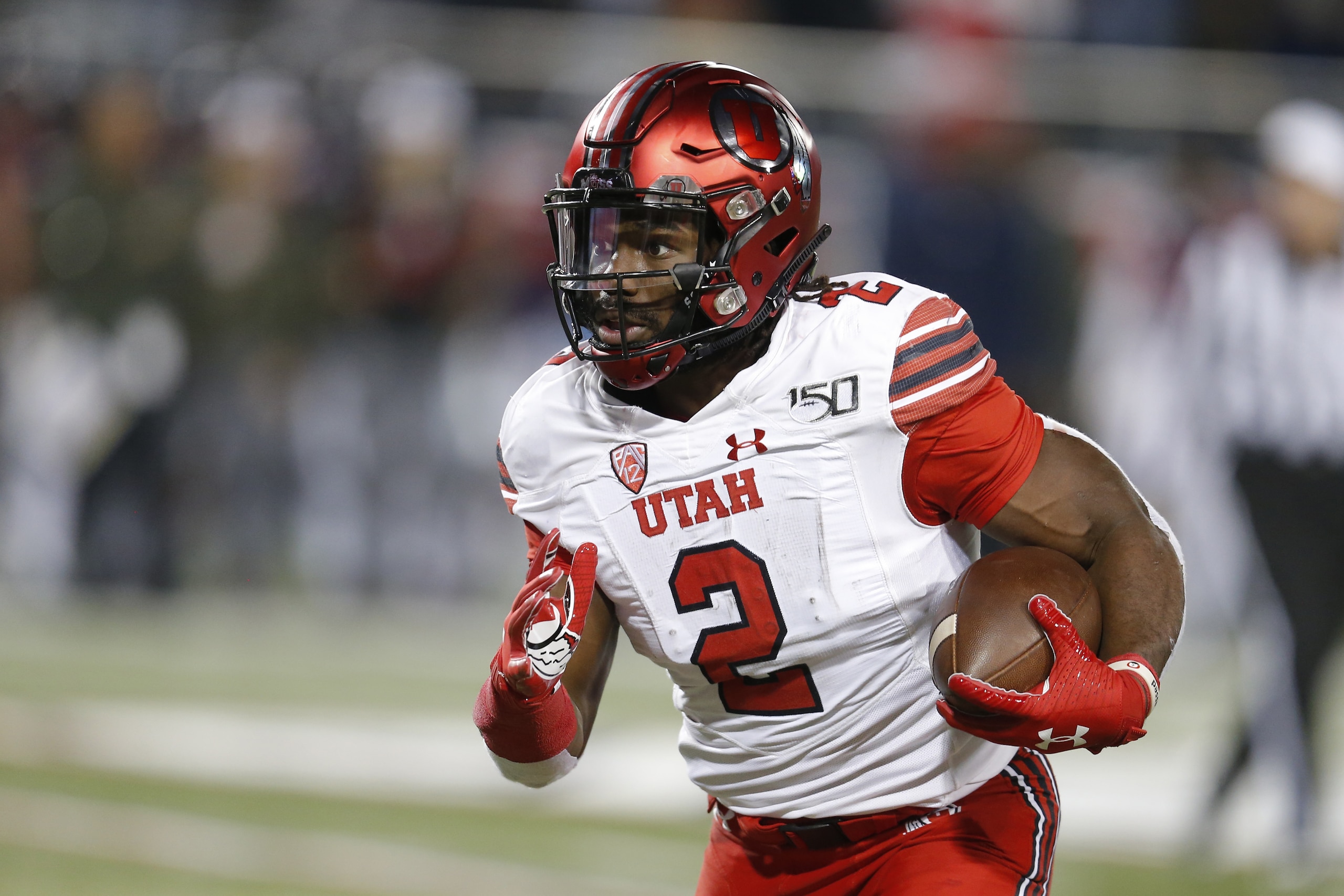

The Case For and Against Utah Reaching the College Football Playoff
Oregon dropped out of the College Football Playoff conversation by losing to Arizona State on Saturday, meaning that it's Utah or bust for the Pac-12.
So which will it be?
Since debuting at No. 8 in the initial CFP rankings on Nov. 5, Utah has beaten UCLA and Arizona by a combined score of 84-10 and has benefited from losses by Penn State (twice), Oregon and Alabama. The Utes haven't passed Nick Saban's squad yet, but they are sitting at No. 6, poised to move ahead of the fifth-ranked Crimson Tide with two more wins.
TOP NEWS

Week 5 AP Top 25 Poll 🔢

Updated CFP Bracket Projections 🔮
Top Overreactions after Week 5 of CFB Season 😧
But it won't matter unless they can also pass at least one of the teams in the Top Four, nor will it matter if the Utes get caught from behind by a playoff hopeful such as Oklahoma, Baylor, Minnesota or Wisconsin.
With the Utes on the brink of ending the Pac-12's two-year CFP drought, though, let's take an early peek at what will be a difficult decision for the selection committee.
Note: While we won't sit here and try to play out the roughly 4,000 possible scenarios in the other four major conferences, we are assuming for the purposes of this debate that Utah will beat Colorado in Week 14 and beat Oregon in the Pac-12 Championship Game on Dec. 6. Anything short of that and Utah would miss the CFP.
The Case for Utah
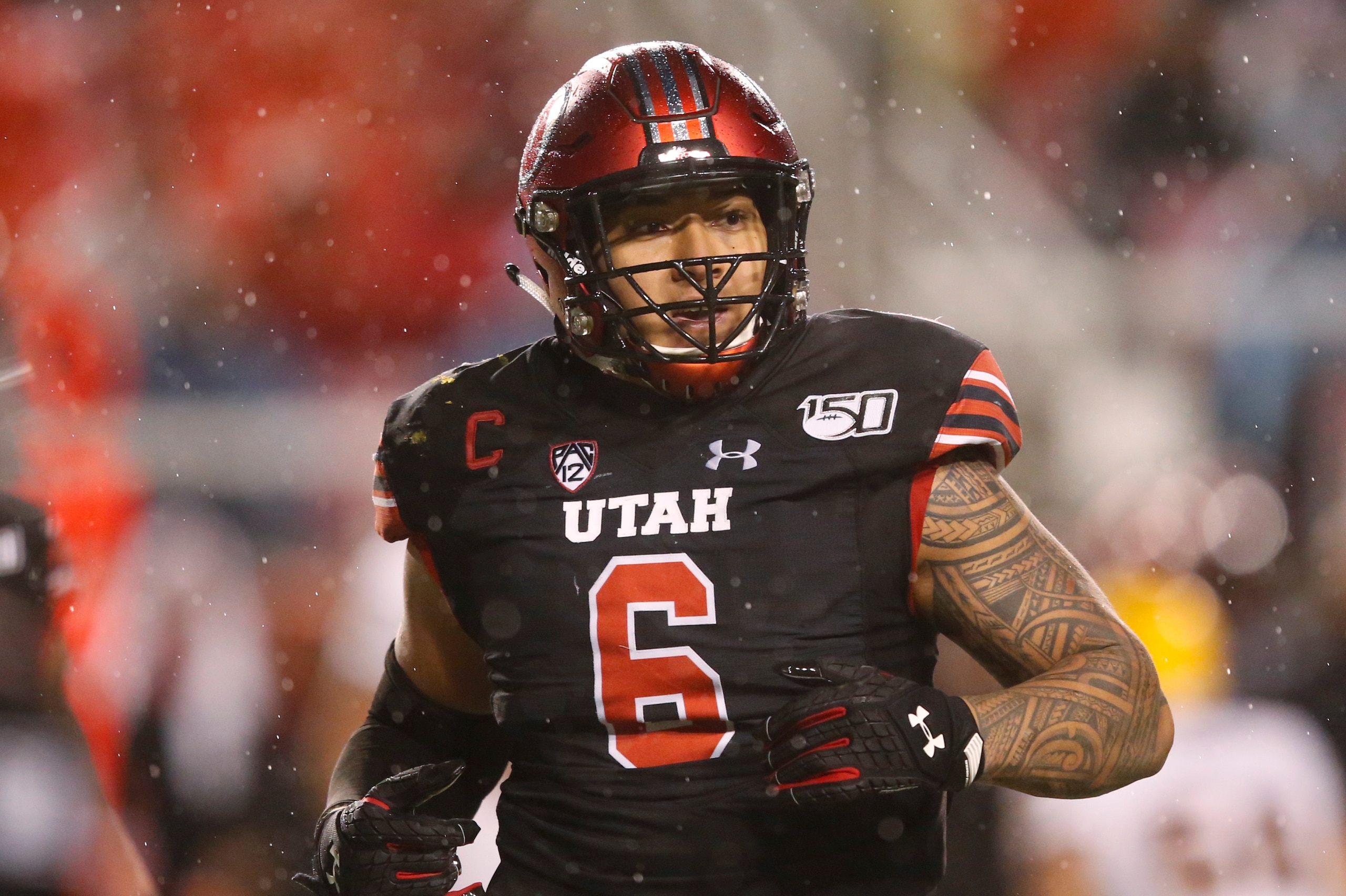
In the argument for the Utes, we're talking about a projected Power Five conference champion with at least 12 wins. In the College Football Playoff era, 17 teams have fit that description, and 16 of them went to the playoff. The lone exception was Ohio State last year, but that was a most unusual situation with an undefeated Notre Dame and three other conference champions with at least 12 wins in the mix, and with a 49-20 eyesore of a loss to 6-6 Purdue on the Buckeyes' resume.
Granted, we appear to be on a trajectory for another outlier season in which all five Power Five leagues produce a champion with at least 12 wins, in which case someone needs to be left out. But the selection committee has already shown on four consecutive Tuesdays that it considers Utah to be better than both Oklahoma and Baylor, so it should be the Big 12 that grabs the short straw if it comes to that.
The perhaps more compelling argument for Utah lies within its statistical dominance.
The Utes rank ninth nationally in yards per play on offense and fourth in that same category on defense.
Two other teams rank in the top nine in both of those statistics this year: 11-0 Ohio State and 11-0 Clemson. That's impressive company for a team that's trying to prove it belongs in the Top Four.
The only squad that ranked in the top nine in both categories last year was Clemson, which went 15-0 and won the national championship before having four of its defensive leaders go in the first 40 picks of the NFL draft.
No team did it in 2015 or 2017, and only Louisville (fourth on offense, eighth on defense) pulled it off in 2016. And if you'll recall, those Lamar Jackson-led Cardinals were right in the thick of the playoff hunt before they wilted in spectacular fashion over the final two games of the regular season.
So, to recap, teams to rank in the top nine on both sides of the ball in yards per play in the past five years are:
- One that had a quarterback who probably should have won two Heisman Trophies and who is on the verge of winning an NFL MVP
- One that became the first team in over 120 years to go 15-0
- Two undefeated squads that are destroying everything in their paths and trying to repeat that 15-0 feat, and
- Utah
If you haven't much watched the Utes play this season, you're probably whistling the "One of these things is not like the other" song, but it's no fluke. And, for what it's worth, former Clemson quarterback Tajh Boyd thinks the Utes are deserving:
The Utes were 10th in yards allowed per play last year, and they brought back the entire defensive line and most of the starting secondary from that team. It's not the least bit surprising that they're damn good on D and leading the nation in rushing yards allowed.
Moreover, last year's offense was emerging as one of the country's most unstoppable units until it lost both starting quarterback Tyler Huntley and starting running back Zack Moss for the season in early November. At full strength, they scored at least 40 points in four consecutive October games.
With those two seniors back and leading the charge—Moss ranks fifth in the nation in yards from scrimmage per game; Huntley is fifth in passer efficiency rating—Utah has been next to impossible to slow down.
This is the part where someone inevitably claps back with a "But the (rest of the) Pac-12 sucks" rebuttal. While a fair argument, it doesn't explain why Utah has been so much better than the rest of the league.
Why is it that California managed just 85 yards of total offense while also allowing a season-worst 231 rushing yards in a 35-0 loss to the Utes? Why has UCLA scored multiple touchdowns against every other opponent but managed just a field goal at Utah? Or can you explain how Washington State—which has at least 369 passing yards in every other game this season—could only muster season-worst marks of 13 points and 313 total yards against the Utes?
Even though Oregon was ranked ahead of the Utes until this week, it had become increasingly clear over the past month that Utah was the most dominant team in the league.
Yes, Utah lost to USC, but it was a Friday night road game in September in which Moss suffered a first-half shoulder injury and finished with 20 total yards. It was also a game in which the often-controversial Pac-12 refs called a combined 27 penalties for 237 yards. That thing was a gong show from the beginning, and it's still a much more forgivable loss than what Georgia (vs. South Carolina) or Oklahoma (at Kansas State) is presenting to the playoff selection committee.
The Case Against Utah

It's a much simpler argument: Utah hasn't beaten anyone good.
While you could say the same thing about Clemson, at least the Tigers are undefeated and scheduled a pair of nonconference games against SEC opponents who were supposed to be better than they are (Texas A&M and South Carolina).
Meanwhile, Utah loosened up for Pac-12 play with games against BYU, Northern Illinois and Idaho State. And in case you're wondering, no, Idaho State is decidedly not one of the good FCS teams. It has finished at or near the bottom of the Big Sky Conference in the vast majority of the past 15 seasons, including this one.
It is worth mentioning that the road win over 7-4 BYU looks a lot more impressive now than it did on Aug. 29. The Cougars might even sneak into the CFP Top 25 by the end of the year. But don't kid yourself: That is a pathetic best win for a team that hopes to reach the playoff.
Aside from Alabama, each of the still-in-the-playoff-conversation teams from the Big Ten and SEC has at least one marquee victory that makes a win over BYU look like a joke. And while neither Baylor nor Oklahoma faced a nonconference schedule worth a darn, either, at least the Bears have three wins over teams with a minimum of seven wins, and at least the Sooners handed Baylor its only loss of the year.
Beating Oregon in the Pac-12 Championship Game would be Utah's best win of the season, and that conference title would likely help push the Utes ahead of an Alabama team not competing in the SEC championship tilt. But the Big Ten, SEC and Big 12 champs will each add impressive victories in their respective conference championships, so how much can that game help Utah's case?
Before the season began, Utah's schedule was always going to be a problem. In a preseason dive into the Pac-12's chances of reaching the playoff this year, I went so far as to suggest that even if the "Utes go 13-0, they might only be No. 6 in the final rankings."
And I still believe that to be true. If Georgia and LSU both finish 12-1 with the former defeating the latter in the SEC Championship Game, if Clemson and Ohio State both get to 13-0, and if either Oklahoma or Baylor had run the table, the 13-0 Utes would likely be ranked No. 6. Keep in mind, if Utah had beaten USC, the Trojans would be 7-5, leaving the Utes without a single regular-season game against an opponent with eight or more wins.
Statistical dominance or not, it's hard to go to bat for a team that hasn't even faced—let alone beaten—a quality foe.
The Verdict: Wait and See
Between the five major conference championships and the nine Week 14 games involving at least one team still in the playoff hunt, there are way too many variables in play to try to make any definitive statements.
Not only do those 14 to-be-determined results matter, but they'll also play a key part in the eye-test argument for each team. For example: If Utah blows out Colorado and Oregon while Oklahoma extends its streak of playing in games decided in the final 30 seconds, that's a lot different than if the Utes squeak by the Ducks while the Sooners cruise to victory against Oklahoma State and Baylor.
But the moral of the story is that Utah is more than just a place-holding paper tiger, which is the way most had been talking about the Pac-12's two playoff candidates during the past month. If the Utes win out, they'll be in the conversation for the No. 4 seed, no matter what happens in the other four leagues.
Kerry Miller covers college football and men's college basketball for Bleacher Report. You can follow him on Twitter, @kerrancejames.
_0.png?w=2560)



.jpg?w=2560 "Viral Rams Coach Vid 🖕")
.jpg?w=2560 "Injury-stricken Seahawks signing veteran RB")
.jpg?w=2560 "2 NFL Officials Suspended")

.jpg?w=2560 "Grading WWE Raw 🔠")
.jpg?w=2560 "Mahomes' Wife Trolls Kubiak 💀")

