


The final four teams standing in the 2019 NBA playoffs are a testament to the draft's importance.
Three are anchored by players they drafted and developed: the Golden State Warriors (Stephen Curry, Klay Thompson, Draymond Green), Portland Trail Blazers (Damian Lillard and CJ McCollum) and Milwaukee Bucks (Giannis Antetokounmpo). The fourth, the Toronto Raptors, used a star they brought through their system (DeMar DeRozan) to headline a blockbuster deal for their new centerpiece (Kawhi Leonard).
Those clubs currently stuck in the lottery, which will be drawn Tuesday night, are hoping they'll find their own fortune-changers when this year's talent grab rolls around June 20.
After laying out our latest mock, we'll spotlight three under-the-radar potential difference-makers in this class.
2019 NBA Mock Draft
1. New York Knicks: Zion Williamson, PF/C, Duke
2. Cleveland Cavaliers: RJ Barrett, SG/SF, Duke
3. Phoenix Suns: Ja Morant, PG, Murray State
4. Chicago Bulls: Coby White, PG/SG, North Carolina
5. Atlanta Hawks: De'Andre Hunter, SF/PF, Virginia
6. Washington Wizards: Cam Reddish, SG/SF, Duke
7. New Orleans Pelicans: Darius Garland, PG, Vanderbilt
8. Memphis Grizzlies: Jarrett Culver, SG, Texas Tech
9. Atlanta Hawks (via Dallas Mavericks): Jaxson Hayes, C, Texas
10. Minnesota Timberwolves: PJ Washington, PF/C, Kentucky
11. Los Angeles Lakers: Bol Bol, C, Oregon
12. Charlotte Hornets: Romeo Langford, SG, Indiana
13. Miami Heat: Kevin Porter Jr., SG, USC
14. Boston Celtics (via Sacramento Kings): Brandon Clarke, PF/C, Gonzaga
15. Detroit Pistons: Sekou Doumbouya, SF/PF, France
16. Orlando Magic: Keldon Johnson, SG/SF, Kentucky
17. Brooklyn Nets: Goga Bitadze, C, Georgia
18. Indiana Pacers: Cameron Johnson, SF, North Carolina
19. San Antonio Spurs: Rui Hachimura, PF, Gonzaga
20. Boston Celtics (via Los Angeles Clippers): Talen Horton-Tucker, SG/SF, Iowa State
21. Oklahoma City Thunder: Nickeil Alexander-Walker, SG, Virginia Tech
22. Boston Celtics: KZ Okpala, SF/PF, Stanford
23. Utah Jazz: Nassir Little, SF/PF, North Carolina
24. Philadelphia 76ers: Tyler Herro, SG, Kentucky
25. Portland Trail Blazers: Matisse Thybulle, SF, Washington
26. Cleveland Cavaliers (via Houston Rockets): Mfiondu Kabengele, PF/C, Florida State
27. Brooklyn Nets (via Denver Nuggets): Luguentz Dort, SG/SF, Arizona State
28. Golden State Warriors: Grant Williams, PF/C, Tennessee
29. San Antonio Spurs (via Toronto Raptors): Dylan Windler, SF, Belmont
30. Milwaukee Bucks: Carsen Edwards, PG, Purdue
Draft order via Tankathon
Darius Garland, PG, Vanderbilt
Did Garland's one-and-done stint with the Commodores slip past you? Don't worry if it did. An early knee injury limited him to a blink-and-you-missed-it stretch of five November games.
Those five games—which were really four outings and then a two-minute run cut painfully short by a meniscus tear—might have impressed as much as a miniature sample could. The 6'2" Indiana native averaged 19.8 points, 4.8 rebounds and 3.3 assists while shooting 52.8 percent overall and 47.8 percent from three in the four full contests.
But his draft stock—and potential to turn around a team—are more closely tied to a diverse skill set that once made him a 5-star recruit and a McDonald's All-American.
"I think he's top-five," New York Knicks guard and Vandy alum John Jenkins told Marc Berman of the New York Post. "Based on talent alone and skill level. I think he's going to be a great pro—sees the game well, super quick, has a great jumper and good feel for the game. ... He's the real deal."
Garland, whose father, Winston, played seven seasons in the Association, is unproven as a table-setter and defender. But he sports a modern combination of pull-up and spot-up perimeter shooting, both of which could help him stretch opposing defenses beyond their comfort zones.
Jaxson Hayes, C, Texas
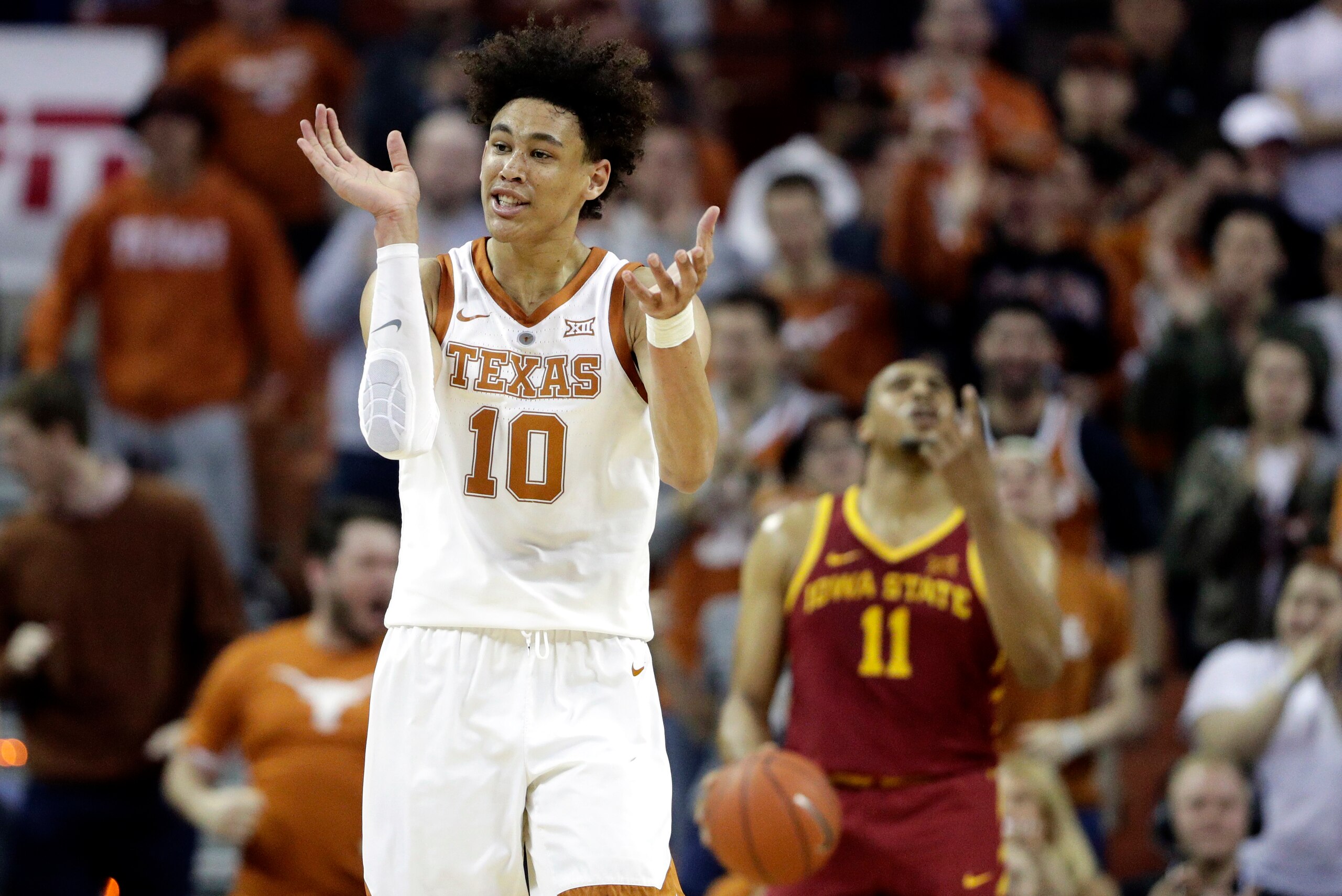
While today's pace-and-space style typically values versatility over everything, there's still a place for a big man with a limited skill set—provided said big man can jump out of the gym, race around the perimeter and never run low on fuel.
As Bleacher Report's Jonathan Wasserman explained, Hayes' narrow, defined skill set could actually work in his favor:
"His immediate and long-term roles are already defined and easy to picture. He'll be used almost exclusively to run and jump in transition (1.40 PPP, 95th percentile), roll to the hoop (1.429 PPP, 95th percentile), cut (1.569 PPP, 96th percentile), finish around the basket (1.581 PPP, 98th percentile) and protect the rim (3.8 blocks per 40 minutes), though his lateral mobility will come in handy for defensive switches, as well."
You can't coach size, let alone size tied to fluid athleticism and limitless supplies of energy. If the 6'11", 220-pounder makes the most of his natural gifts, he could serve as a defensive anchor and above-the-rim finisher for the next decade-plus.
Bol Bol, C, Oregon
A foot injury not only cut Bol's collegiate career short, but it also cast a cloud of uncertainty over his NBA outlook. Seven-footers with foot problems don't have the best track record in professional basketball, and Bol looks more vulnerable than most with a frame as thin (235 pounds) as it is long (7'2").
But if clubs are comfortable with his medical reports, he's as fascinating as any non-Zion prospect in this class.
Much like his father, the late NBA veteran Manute, Bol isn't your typical 7-footer. He has a jumper. He has some handles. He moves the ball. And then he does a lot of what you want your traditional center to do: post scoring, shot-blocking, rebounding.
While he only made it through nine games with the Ducks, they looked like the start of something special. His per-40-minute averages included 28.2 points, 12.8 rebounds, 3.6 blocks and 1.9 three-pointers.
He might be the biggest boom-or-bust prospect in this field, but his ceiling is incredible.
.jpg?w=2560)
.jpg?w=2560 "Cardinals LB's Quote Resurfaces 😏")
.jpg?w=2560 "Skattebo Has 0 Touch Game 😬")
.jpg?w=2560 "49ers FB Slams CJGJ 😳")
.jpg?w=2560 "Chargers Fall to 0-6 📉")
.jpg?w=2560 "Bills Safety Ejected for Spitting")