

Spending responsibly in NBA free agency is hard to do. Teams are under pressure to make splashes, and it usually takes expensive investments to create the biggest waves. Decisions made in haste or out of desperation can haunt franchises for years.
Strictly targeting All-Stars and household names is not a solution. Many of the offseason's top prizes and most recognizable faces are far from sure things.
The stakes are higher in these cases, so the risk is, too.
To be clear: Everything might turn out just fine for teams that pay these players. Some of them may ink shorter deals, accept cheaper-than-expected salaries or just straight ball out for the life of their next contract.
At the same time, signing any of them to a long-term agreement is, depending on cost, not a decision to be taken lightly.
Injury-Related Risks
1 of 5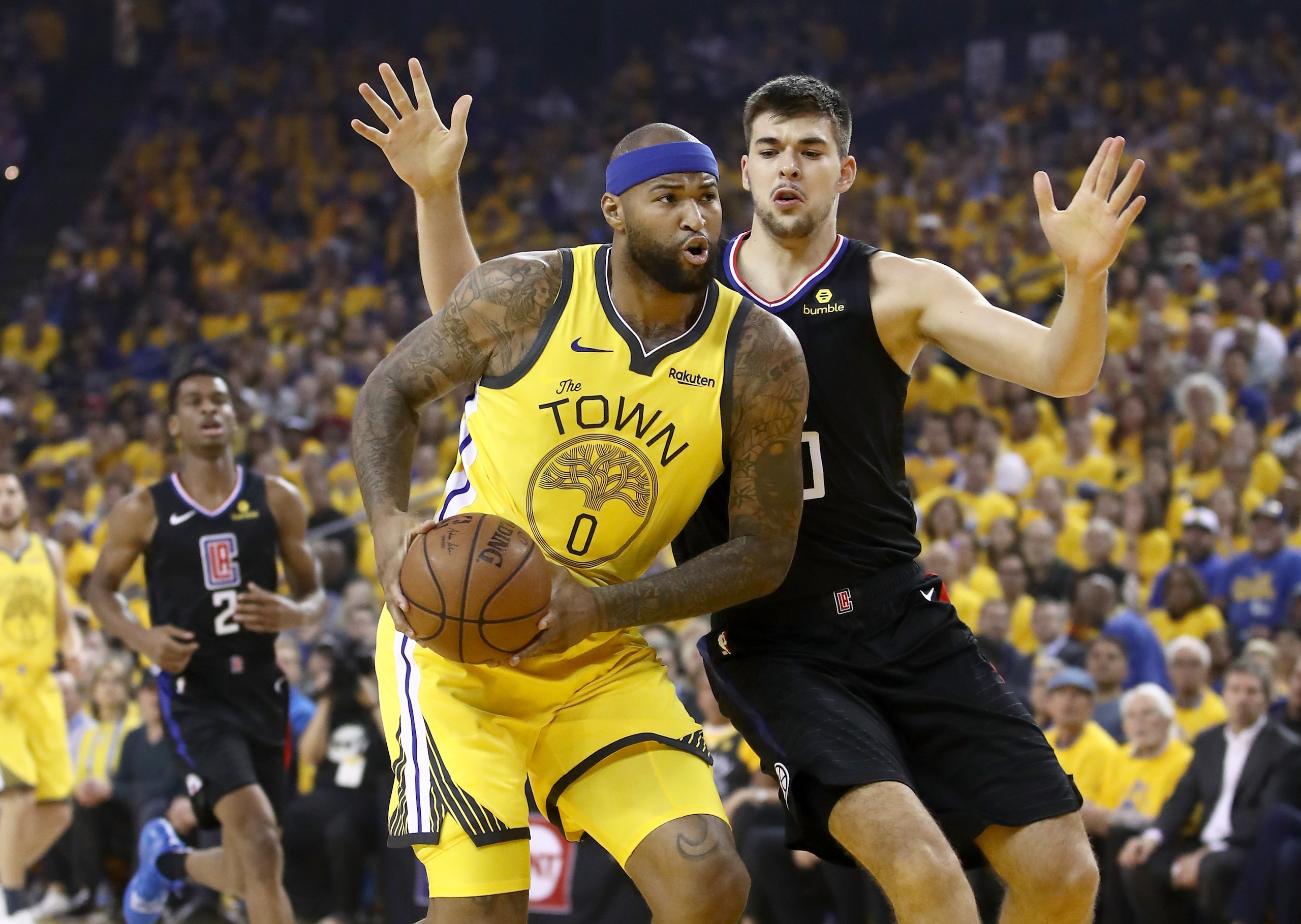
DeMarcus Cousins' free agency is impossible to project. The market is almost entirely devoid of teams with both cap space and a glaring need at center, and those who can talk themselves into spending on a big man must figure out whether the 28-year-old qualifies as a big-time acquisition.
His injury history is that much of a detriment. It took him almost a year to return from a torn left Achilles, and now he's tasked with recovering from a tear in his left quad that could sideline him for the rest of the postseason.
"It's going to be an enormous loss for him," a Western Conference executive told Bleacher Report's Ken Berger. "He might end up in a situation where these injuries cost him $150 million. It'll have a profound impact."
Forget about max-contract overtures. Last year's Achilles injury cost Cousins that superstar pay grade, and he was never recapturing it after a partial season with the Golden State Warriors. This latest setback likely bilks him of any significant multiyear offer whatsoever, a harrowing notion for an All-NBA center still in his prime.
It only takes one team. Suitors unaccustomed to having a fair shake at big names might come out of the woodwork. But investing in Cousins over the long term is an incalculable risk. He needs to get through an entire season without major issue before regaining the benefit of the doubt.
Kristaps Porzingis (restricted)
Kristaps Porzingis' recovery from a torn left ACL won't depress his market. That's arguably more dangerous.
Torn ACLs are not the harbingers of doom they used to be, but Porzingis has battled injuries, specifically on the left side of his body, for his entire career. The stakes are inherently higher when near-max money is involved, and the Dallas Mavericks are apparently prepared to offer him the full boat over five years, according to ESPN.com's Tim MacMahon. (Their max-contract stance was reported days before news broke that Porzingis is under investigation by the NYPD following rape allegations.)
Perhaps that changes. Porzingis' next deal could be shorter or cheaper than expected, and the Mavericks can include availability-based incentives that inoculate them against complete disaster.
For the amount of money he'll still end up getting, those safeguards don't matter much. He is 24 and talented, but the questions about his health will persist until he proves they don't need to anymore.
Derrick Rose
Taking a flier on Derrick Rose for a year or two is a whatever gamble. The real danger lies with reading too much into what was, mistakenly and recklessly, deemed a comeback season.
Yes, Rose shot a personal-best 37.0 percent from deep. Yes, his 65.1 percent clip around the rim was the second-highest of his career. And yes, he had a 50-point game. But his resurgence was truncated.
That 50-point detonation came at the end of October. He shot 23.2 percent from beyond the arc over his final 30 games and 5.9 percent after the trade deadline. The Minnesota Timberwolves offense never took off when he played without Karl-Anthony Towns.
Rose's season was many things, including, perhaps, a step in the right direction. It was not a return to stardom. And he finished the year on the shelf after undergoing surgery to remove bone chips in his right elbow. Doubling down on his performance with a substantial multiyear investment would be an overreaction.
Julius Randle (Player Option)
2 of 5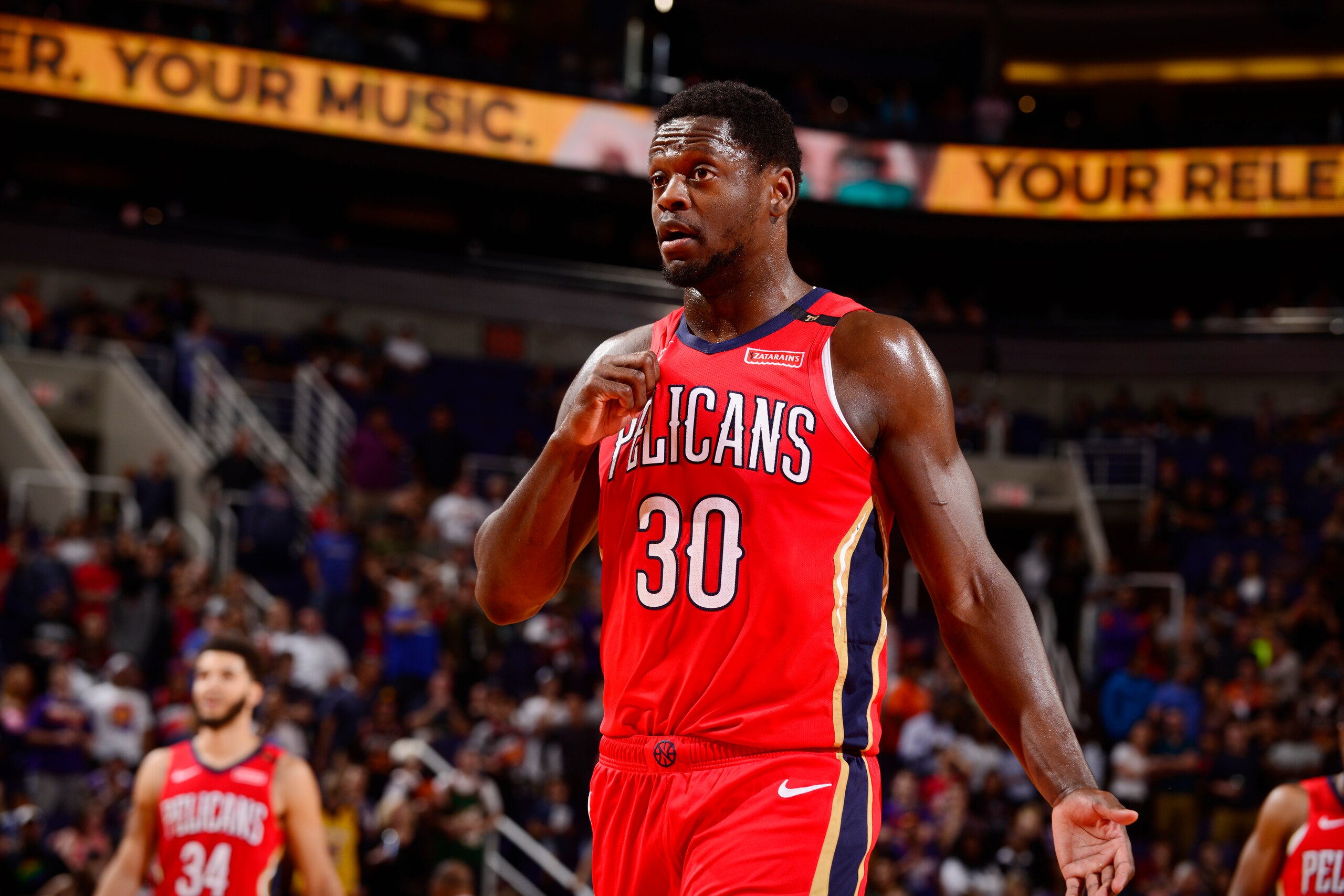
Julius Randle's layover contract with the New Orleans Pelicans is about to pay off—for him.
For his team, be it the Pelicans or another, though? That's much less of a sure thing.
Giannis Antetokounmpo, Joel Embiid and Karl-Anthony Towns were the only other players to clear 25 points, 10 rebounds and three assists per 36 minutes. That output begs for a long-haul pact worth noticeably more per year than Randle's $9.1 million player option.
He might get it. The squeeze on big men won't impact him like it will others. He transcends the stereotype with the quickness to blow by most wings and the power to bowl over most 5s, all while playing on the ball.
Running him at center mismatches defenses into anarchy, but playing him at power forward no longer includes so much of a spatial trade-off. He more than tripled his career three-point-attempt rate last season, and his 34.4 percent hit rate from behind the rainbow is respectable enough to demand attention. His accuracy climbed to 35.8 percent on catch-and-shoot treys.
Paying Randle like a high-end starter amounts to trusting that his jumper will hold. That's a risk unto itself. Last year is an outlier for the time being—an encouraging sign, but not necessarily a new status quo.
Reconciling his defensive warts is tougher. He can handle one-on-one situations but gets drawn astray by ball screens. Offenses will target him in the pick-and-roll, and he's not a reactive or reliable source of help defense.
Sticking him at center doesn't mask the problem unless he's going up against stationary post-up brutes. And even then, he fails to provide the most basic layer of rim deterrence.
Almost 42 percent of opponent shots came at the basket when New Orleans deployed him at the 5. The Los Angeles Lakers ran into the same problem when using him as their lone big. His next team will, too.
D'Angelo Russell (Restricted)
3 of 5
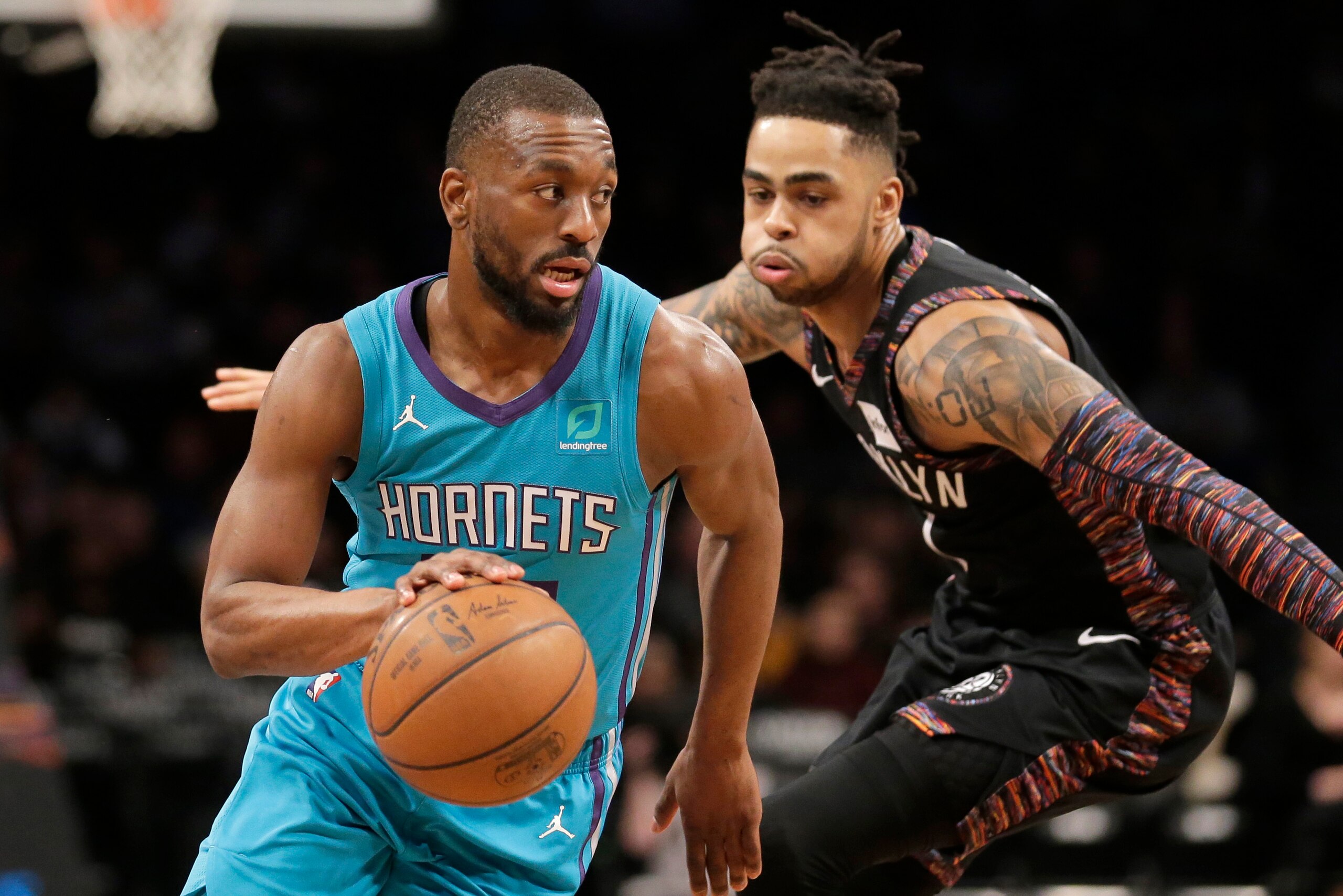
D'Angelo Russell blossomed in his fourth season, captaining the Brooklyn Nets as a lead playmaker and scorer and emerging at just the right time. They don't navigate injuries to Spencer Dinwiddie and Caris LeVert and rebound from an 8-18 start to make the playoffs without him.
Bigger guards who can command the offense, not just for spurts but full-time, are hard to find. Russell lives up to that billing. Brooklyn's offense didn't dominate with him as the only ball-handler, but it survived—a critical feat knowing the Nets didn't have the availability from Dinwiddie and LeVert necessary to keep two of their three best initiators on the court at all times.
The degree of difficulty attached to Russell's breakout season must not be undersold. He finished with the league's sixth-highest usage rate and jump-started more pick-and-rolls per game than everyone except Kemba Walker.
Only six players attempted more pull-up threes, on which Russell shot 34.9 percent—a solid mark when weighing his volume. That he can slide seamlessly into an off-guard act makes him so much more attractive. He canned 39.4 percent of his spot-up treys, which accounted for more than 17 percent of his total looks.
Statistical cherry-picking can get tired. This note should not: Russell joined Harden and Stephen Curry as just the third player in league history to clear 25 points, eight assists and three made triples per 36 minutes.
Forgiving his poor postseason showing is easy against the backdrop of his entire year. (His crunch-time work prior to the All-Star break was special.) But his struggles did reinforce the most pressing concerns.
Getting pestered by Ben Simmons is a problem for everyone. Russell is uniquely at risk versus bigger defenders because he's not especially quick, and his game has never been predicated on reaching the rim and drawing fouls. He is predictable in that way. It is easier to coax him into settling for jumpers or abandoning possessions.
Giving him star money would not automatically be a sunk cost. He is 23, and he is really good. But career years are not always lasting normals. Russell is still toting the burden of proof and development.
His market should neutralize some of the risk by keeping his price point in check. Poaching restricted free agents is difficult, so many don't bother trying. The teams most hurting for a point guard upgrade also don't have the cap space to start a bidding war.
This helps only so much. Russell is about to get paid handsomely without being a sure thing. That's never a safe combination.


Nikola Vucevic
4 of 5
Admirers should be lining up to pay Nikola Vucevic following his All-Star campaign. They won't be.
Centers face a built-in disadvantage on the open market. This includes floor-spacing offensive hubs like Vucevic. The demand for starting 5s isn't high right now, and the description of the ideal big man has become so specific that only a scant few check all the boxes required to land that Brinks-truck deal.
Vucevic's inclusion is more about whatever obligation the Orlando Magic might feel to bring him back on the heels of his career year and their first playoff bid since 2012. Plus, like always, a few wild cards willing to pay for any kind of splash could be lurking in the shadows.
If they are, Vucevic has the curb appeal to draw them out. He is one of just three players ever to eclipse 20 points, 12 rebounds, four assists and one made three per 36 minutes. His company: 2018-19 Nikola Jokic and 2013-14 Kevin Love.
All the praise Vucevic receives for his offensive armory is well-deserved. He can hurt set defenses in so many ways. His stationary passing and post moves aren't new, but ripping more threes has enabled him to pump fake into drives and drop passes off the dribble.
Even his defense is underrated. He cannot be the nerve center of an entire system, but he's a smart rim protector and doesn't get dusted when dropping back in pick-and-rolls.
This is worth quite a bit in the regular season. The playoffs are a different story. Vucevic is schemeable in the postseason. Physical bigs can take him out of his element on offense, and he won't have the same defensive impact when guarding centers who work almost exclusively on the perimeter.
Marc Gasol isn't considered a frontline matchup nightmare anymore. He burned Vucevic in the Toronto Raptors' gentleman's sweep over the Magic. That has to matter when talking dollars and cents. Paying Vucevic a lucrative sum is not the most feckless dice roll, but it does put a cap on the versatility and viability of a team's frontcourt.
Kemba Walker
5 of 5
Sample size sets Kemba Walker apart from D'Angelo Russell. He is four years into stardom, so the same market constraints don't apply. Teams are more likely to trust him. The Indiana Pacers or Utah Jazz will have an easier time convincing themselves he's their finishing piece.
That extra level of certainty guarantees Walker a max payday. Some version of the full boat will be available if he wants it.
Here are his contract options, assuming he's looking for the max:
- Four-year max with a rival team: $140.6 million
- Four-year max with Charlotte: $146.5 million
- Five-year max with Charlotte: $189.7 million
- Five-year max with Charlotte (if he makes All-NBA team): $221.3 million
Not one of these max-contract iterations feels particularly safe.
Sure, Walker is averaging 23.7 points and 5.7 assists per 36 minutes while shooting 37.7 percent from downtown over the past four years—benchmarks matched only by Stephen Curry after accounting for outside volume. But he's about to turn 29, and his offensive production is generated through exhaustive procedures. Only James Harden attempted more looks this season after using seven-plus dribbles.
This type of game may not age well for an undersized point guard.
Signing elsewhere would simplify Walker's role for the better, and he's not alone among max-contract risks. The back end of potential deals for Jimmy Butler and Tobias Harris won't look so hot. But Butler has cracked the NBA's top-10 ranks within the last year, and Harris will be just 27 when next season tips off.
Walker's free agency is rendered significantly more complicated by his own team. The Hornets have no one else after him—no entrenched star, no superstar prospects. They will be more compelled to throw five years at him than the Philadelphia 76ers are to do the same for Butler and Harris. And getting Walker for that much money, as a lifeline without a co-star, is all sorts of limiting even if he plays near his peak for the next half-decade.
Unless otherwise noted, stats courtesy of NBA.com or Basketball Reference. Salary and cap-hold information via Basketball Insiders and RealGM.
Dan Favale covers the NBA for Bleacher Report. Follow him on Twitter (@danfavale) and listen to his Hardwood Knocks podcast, co-hosted by B/R's Andrew Bailey.

.jpg?w=2560 "Mahomes Told Teammate to Leave Meeting")
.jpg?w=2560 "🚨 Week 8 AP Top 25 Poll")

.jpg?w=2560 "Baker Gets Glove From Rays 🧤")
.jpg?w=2560 "5 Teams Eyeing Jonathan Taylor")
.jpg?w=2560 "Steelers Roll Saints in Paris")
.jpg?w=2560 "NFL investigating Eagles")
.jpg?w=2560 "Updates from EVERY Game")