If you've grown frustrated about the length of time it's taken for the Minnesota Timberwolves to trade Jimmy Butler, you're probably not alone.
Of course, that's not going to speed up the process one bit. As simple as it sounds, the Timberwolves won't trade the four-time All-Star until they're comfortable with the return.
No one knows whether Minnesota will find what it's seeking. But history agrees with being extra cautious in an attempt to get it right. One bad trade can set an organization back for years to come.
Think that sounds hyperbolic? Try explaining that to the teams that are still being burned by the following exchanges. No matter if it was clear immediately or became that way over the years, the clubs on this list gave significantly more than they received in these swaps. Whether players, draft picks or both, the outgoing pieces could have potentially saved these squads had they just stayed put.
The deals are ordered from least to most lopsided.
Chicago Bulls: 2014 Draft-Night Disaster
1 of 5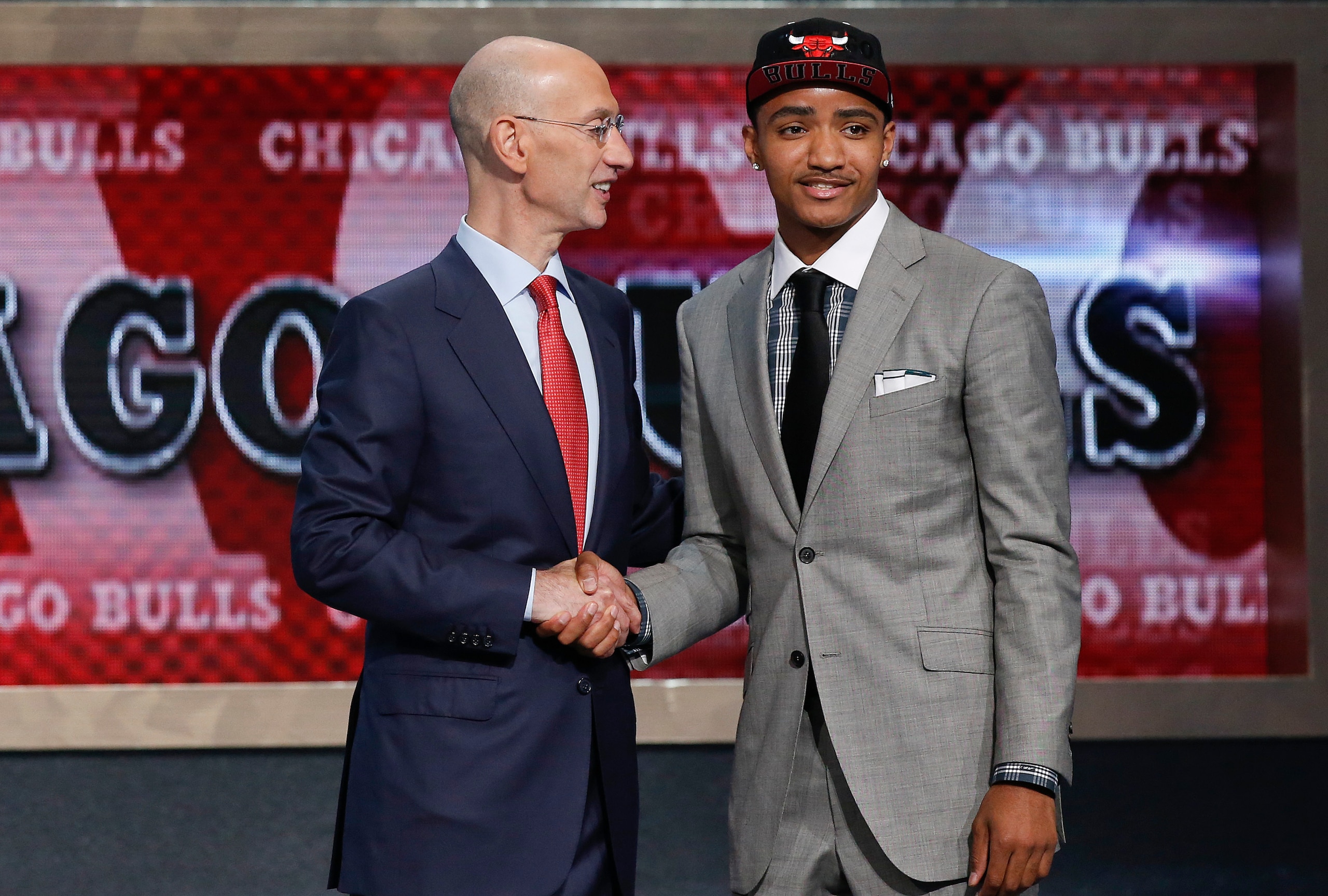
June 26, 2014: Chicago Bulls trade Gary Harris, Jusuf Nurkic and 2015 second-round pick to Denver Nuggets for Doug McDermott and Anthony Randolph
The inexact science of the NBA draft was on full display in this misfire in the Windy City. Ostensibly, the Bulls moved two non-lottery picks (Nos. 16 and 19) for a lottery choice (No. 11), which was invested in McDermott, the NCAA's reigning scoring champ and a possible antidote to the Bulls' offensive shortcomings (28th in efficiency, 30th in scoring).
"We think he's a complete player," then-Bulls coach Tom Thibodeau told reporters.
Four years later—and now four teams removed from Chicago—it's obvious McDermott is a shooting specialist at this level. He's solid in that regard (career 40.3 percent outside), but there are enough flaws in his game that he's never averaged more than 23 minutes a night. He's contributed the seventh-fewest defensive win shares among rotation players since entering the league.
Harris, meanwhile, has emerged as one of the NBA's most intriguing youngsters. He landed 12th on Bleacher Report's Adam Fromal's list of the top players under 25, thanks to his defensive versatility, steady outside shot (40.5 percent the past two seasons) and perpetually improving offense (career-high 17.5 points per game in 2017-18).
Harris is essentially the low-maintenance, three-and-D wing the Bulls need to tie their roster together. But since he's not there, they've had to throw major money at Zach LaVine, a traffic cone on defense who can be more ball-dominant than his numbers say he should.
Detroit Pistons: The 'Throw-In' Who Got Away
2 of 5
July 31, 2013: Detroit Pistons trade Brandon Knight, Khris Middleton and Viacheslav Kravtsov to Milwaukee Bucks for Brandon Jennings
Four players moved that fateful night, but only one transformed the swap into a massive victory for one side and a crippling loss for the other.
Back then, Middleton looked like a throw-in. While he was a substantial part of the swap—Zach Lowe, then with Grantland, wrote in 2015 that the Bucks specifically requested him and the Pistons were hesitant to part ways—he was an unknown to casual fans (then a second-rounder with 27 games under his belt). Knight and Jennings, both relatively recent lottery choices, were the headliners.
Well, Knight was out of Milwaukee by February 2015, and the Pistons traded Jennings a year later. As for Middleton, he's closing in on a colossal payday next summer, should have a convincing All-Star case this season and snagged the 28th spot on SI.com's list of the top 100 NBA players of 2019.
"Offensively, he can shoot the three, create a shot and generate high-percentage scoring opportunities by beating help defense with the pass," SI.com's Ben Golliver wrote. "Defensively, he can switch seamlessly through multiple positions and handle lead assignments thanks to his quickness and length."
Middleton is essentially a three-and-D contributor who happens to provide 20 points per night and crunch-time heroics. Think about what he's become, and then remember how long the Pistons have been searching for a competent option at small forward.
Detroit's current rotation at the 3 features Stanley Johnson, Glenn Robinson III and Khyri Thomas. Combine Johnson's career 8.4 player efficiency rating with Robinson's 11.0 and it barely beats Middleton's mark of 17.4 last season.
Brooklyn Nets: Part I
3 of 5
March 15, 2012: Then-New Jersey Nets trade Mehmet Okur, Shawne Williams and 2012 first-round pick to Portland Trail Blazers for Gerald Wallace
The Nets only liked three players in the 2012 draft, per Chad Ford on ESPN.com: Anthony Davis, Michael Kidd-Gilchrist and Thomas Robinson. That's one reason they only put top-three protection on this pick.
The other was a desire to satisfy Deron Williams and convince him to re-sign that summer. Wallace, two years removed from an All-Star selection, would be an easier win-now sell than the pick.
Problem is that pick became Damian Lillard, and Father Time caught up to Wallace and Williams in no time. Neither Wallace nor Williams made another All-Star roster. Lillard, on the other hand, booked his third All-Star trip last year and made his initial first-team All-NBA appearance.
"Portland was able to take advantage of another team's thirst to further its rebuilding efforts," ESPN.com's Amin Elhassan wrote in 2013. "By trading Wallace to the Nets ... the Blazers were able to acquire a top-three-protected pick in a fairly deep draft, without jeopardizing future cap flexibility."
The deal looked like a big win for the Blazers back then. It's grand larceny at this point, as the 28-year-old Lillard holds top-five franchise rankings in career points (10,842, fourth), assists (2,928, fourth) and threes (1,269, first).
The Nets have been hunting for a young building block ever since. Even if you like some of their prospects, you have to admit there's no Lillard-caliber player on the roster and hasn't been for quite some time.


Cleveland Cavaliers: Dealing Uncle Drew
4 of 5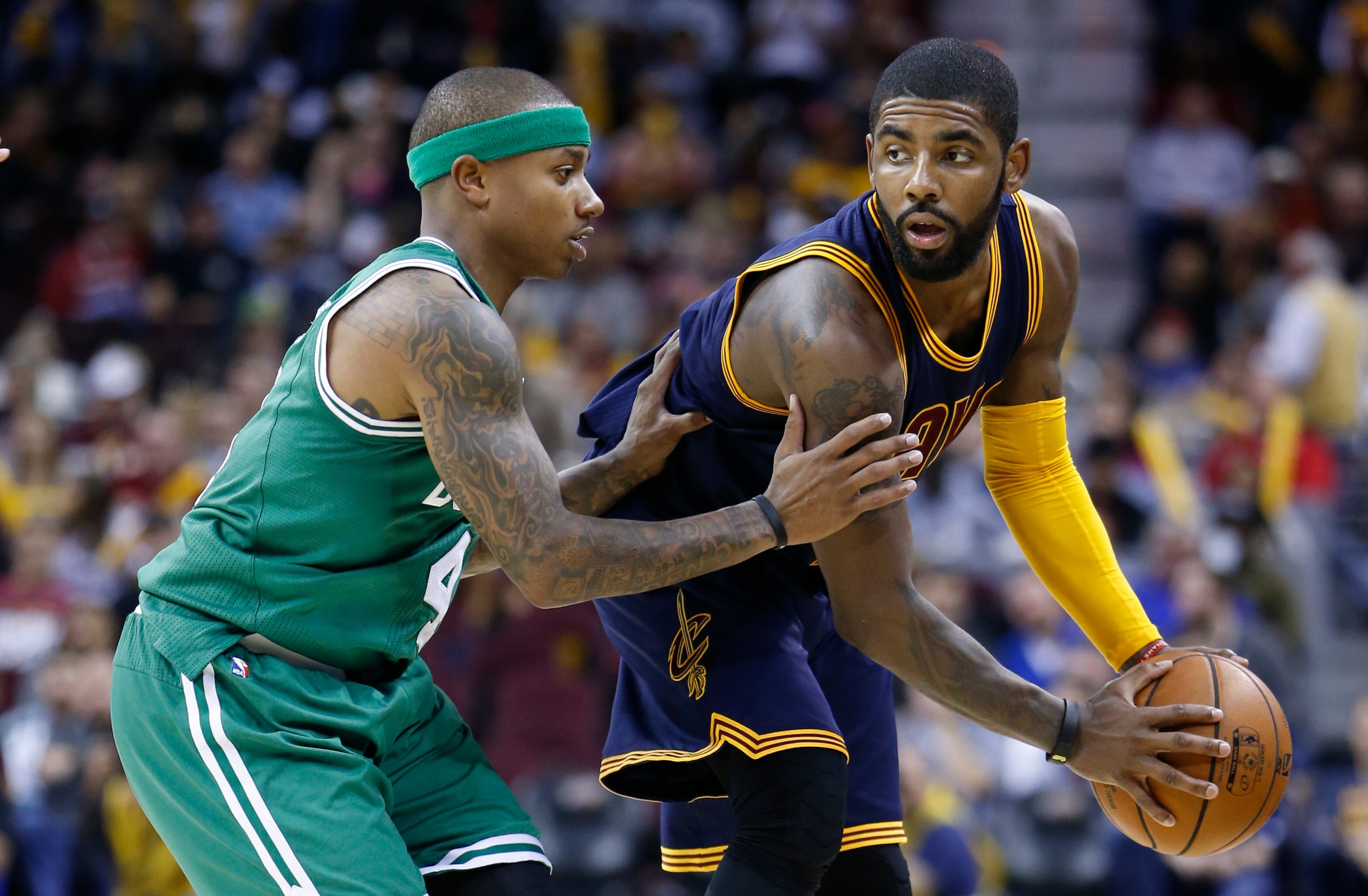
August 30, 2017: Cleveland Cavaliers trade Kyrie Irving to Boston Celtics for Jae Crowder, Isaiah Thomas, Ante Zizic, 2018 first-round pick and 2020 second-round pick
Is this a rush to judgment? Not at all, even while conceding we don't know what Collin Sexton (the player selected with the first-rounder) or even Zizic will become.
Irving is 26 years old, and he's already a five-time All-Star. His 21.99 career points per game put him 33rd in NBA history. He's come dangerously close to joining the famed 50-40-90 club, and he's responsible for one of the biggest shots the league has ever seen (certainly the most important make in Cleveland's history).
Even without knowing the future for Sexton and Zizic, this is a horrific return for Irving. Especially when the Cavs may have tied their own hands in terms of forcing an Uncle Drew deal.
In June 2017, Cavs front-office personnel, coaches and team staff members had a "what if" brainstorming session about Irving's future, sources told ESPN.com's Dave McMenamin. Word of that talk made its way to Irving, and he submitted his trade request a few weeks later.
"It was sloppy," a league source told McMenamin.
It looks even worse in hindsight considering how little Cleveland has received.
Thomas was injured when he arrived, debuted in January and was gone by February. The Cavs had to shed a first-rounder and take back Jordan Clarkson's bloated contract just to move him. They also moved Crowder at the deadline after he averaged only 8.6 points on 41.8 percent shooting across 53 games.
Irving is on a short list of 2018-19 MVP candidates, and the Celtics are expected to pace the East in victories. The Cavs are likely looking at a yearslong rebuild that may not end until they find their next Kyrie.
Brooklyn Nets: Part II
5 of 5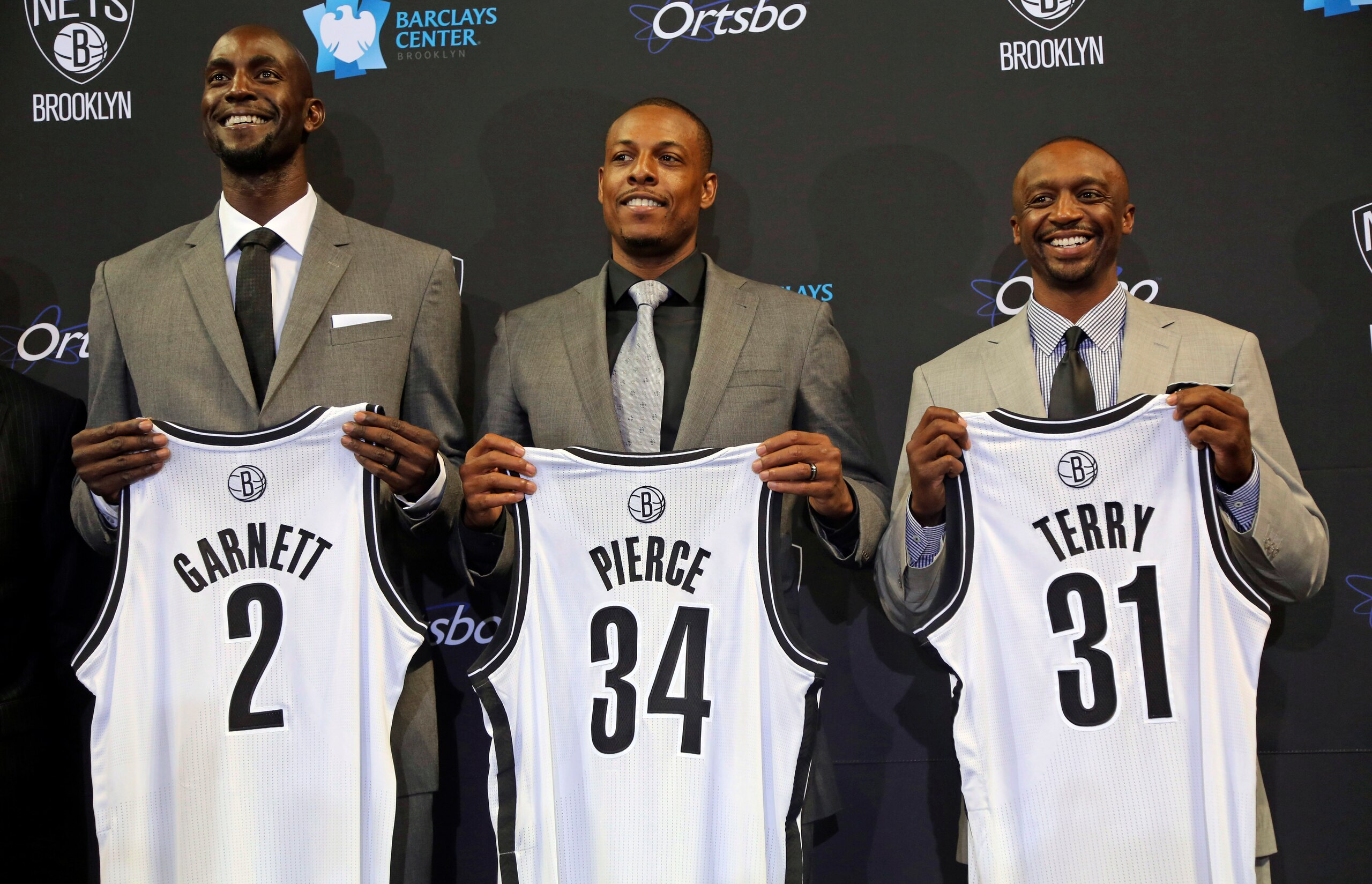
July 12, 2013: Brooklyn Nets trade Keith Bogans, MarShon Brooks, Kris Humphries, Kris Joseph, Gerald Wallace, three first-round picks (2014, 2016, 2018) and right to swap 2017 first-round picks to Boston Celtics for Paul Pierce, Kevin Garnett, Jason Terry, D.J. White and 2017 second-round pick
This deal—long viewed as the bane of Brooklyn's existence and perhaps Boston's biggest boon—has been dissected from every possible angle over the years. None of them is remotely flattering to the Nets.
"The Nets are what happens when there's no parachute and the engine blows," Stefan Bondy wrote in a trade retrospective for the New York Daily News. "They are the audacious experiment whose mission malfunctioned at takeoff and was aborted in midair, leaving behind a trade that is debated as the worst in the history of the NBA."
The Nets didn't get two seasons out of any of these players, while the Celtics restocked their cupboards for almost a half-decade. Boston whiffed on the 2014 pick (James Young at 17) but nabbed Jaylen Brown with the 2016 selection. The 2017 and 2018 choices were traded away; the former brought back Jayson Tatum (plus a future first), while the latter helped deliver Kyrie Irving.
Brooklyn won a single playoff series with the aging, expensive roster it misidentified as a contender. Because so many of its assets were sacrificed in this woefully shortsighted scheme, it's been playing the waiting game ever since. Credit the new front office for making the best of a brutal situation, but that doesn't change the fact that the roster severely lacks top-tier talent.
Aesop would appreciate how this trade treated the problematically impatient Nets and the slow-and-steady Celtics. Boston's future is as bright as any, while Brooklyn has yet to escape from underneath the cloud it cast upon itself.
Unless otherwise indicated, all stats are from Basketball Reference or NBA.com.
Zach Buckley covers the NBA for Bleacher Report. Follow him on Twitter: @ZachBuckleyNBA.

.jpg?w=2560 "NBA Gambling Charges")

.jpg?w=2560 "Jonathan Taylor Landing Spots")
.jpg?w=2560 "NFL House in Paris Closes for Protests (AP)")

.jpg?w=2560 "Trevon Diggs Cut by Seahawks")