

Ranking the NFL's Best Deep Passers
If there's one thing that can make coaches, scouts and evaluators ignore everything wrong with a quarterback, it's the ability to hurl a football 70 yards on a rope. Yes, fans get excited about the bomb as well, but you need look no further than the Buffalo Bills' selection of Wyoming quarterback Josh Allen with the seventh pick in the 2018 NFL draft.
Allen has issues making his second and third reads. He's not always accurate on simpler, shorter throws. But he's got a cannon for an arm, and that alone turned him into a first-round pick when everything else might have had you thinking he was a second-day guy.
Coaches think they can take raw, big-armed kids and fill in the blanks. Sometimes that's possible; more often, it's not. Efficient deep passing is about far more than waiting for your speed receivers to beat coverages downfield. It's about timing and faking defenders out and advanced route concepts and functional velocity through proper mechanics.
Most of all, it's about accuracy. Not the kind of accuracy that allows you to find the inside of a garbage can with a football from 50 yards away but the kind of accuracy that will leave the ball a couple of feet past a racing cornerback and in the hands of your receiver on the fly. The kind of accuracy that comes from squaring your shoulders to the target even after you've been flushed from the pocket. The kind of accuracy that comes from reading the whole field and knowing before you throw what the best plan of action is.
The NFL's best deep passers all come to the field with a plan, and they've made it work through tireless practice and film study. Having a cannon for an arm is Step 1; these guys have gone through the whole book.
All deep passing stats courtesy of Pro Football Focus.
10. Philip Rivers, Los Angeles Chargers
1 of 10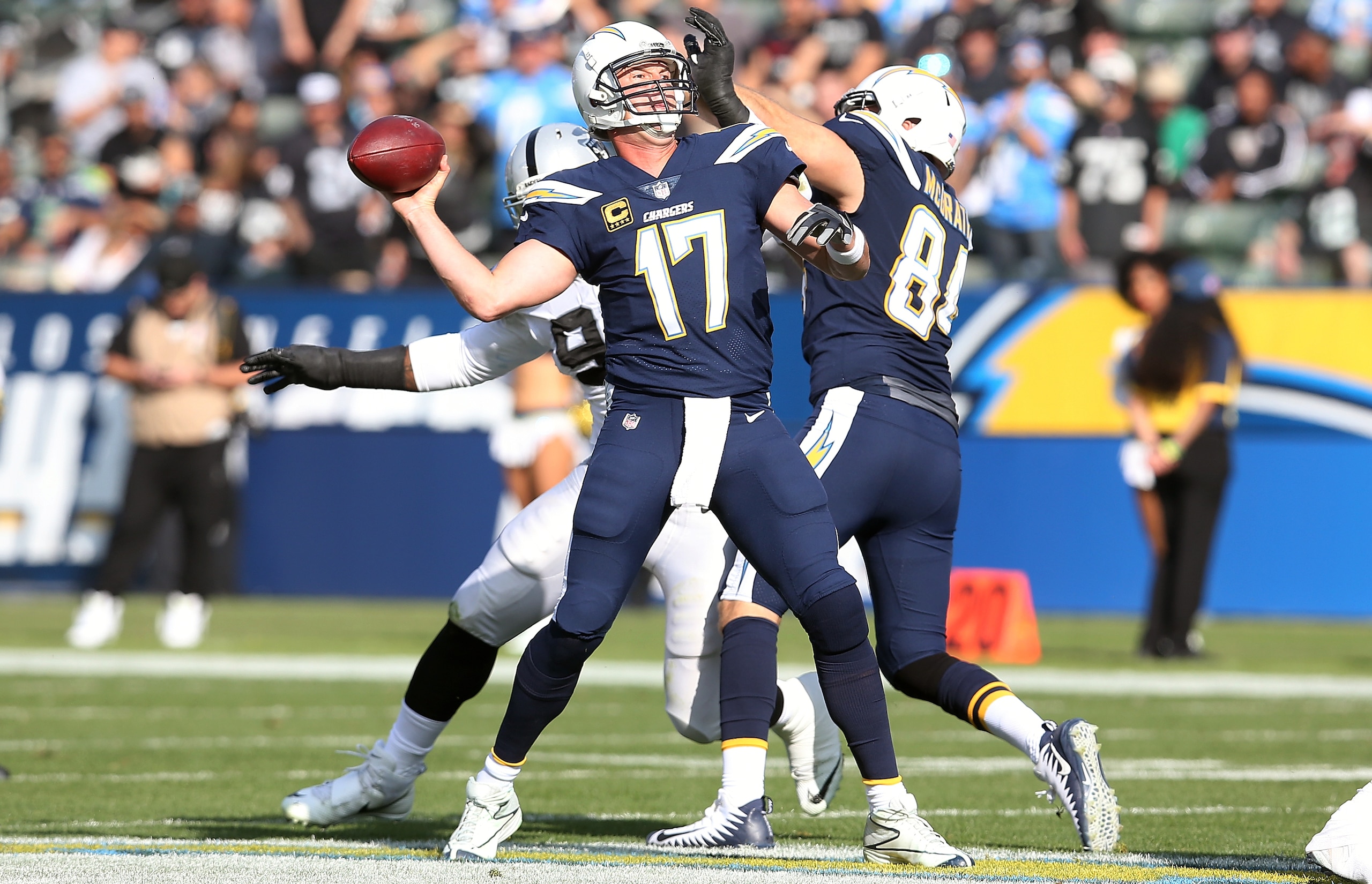
Throughout his career, the Los Angeles Chargers' Philip Rivers has used an unorthodox sidearm delivery, but that hasn't prevented him from making accurate downfield throws, and though his efficiency has dropped a bit, he's still an estimable player when it comes to hitting receivers deep. He's also been one of the most consistent deep throwers over the last decade-plus, registering a 92.0 passer rating on throws 20 or more yards in the air from 2007 through 2016 and besting that with a 92.3 rating in 2017.
Moreover, Rivers has remained consistent on deep throws without a clear downfield speed threat who can torch the league's top cornerbacks and safeties. This requires better ball placement than if Rivers had an Antonio Brown or Tyreek Hill on the field. Not to slight Travis Benjamin or Tyrell Williams, two players with potential in that regard, but between that receiver group and an offensive line in transition, it's been up to Rivers more than most to elude pass-rushers—after all, deep throws take time—and know where the deep targets will be based on route concepts.
No matter who Rivers' receivers are in 2018—tight end Hunter Henry's season-ending torn ACL was a major blow—you can expect him to make big plays because of his experience and acumen that other top quarterbacks might not.
9. Alex Smith, Washington Redskins
2 of 10
In his final season with the Kansas City Chiefs, Alex Smith was the most prolific and efficient deep passer in the league, with a 131.4 passer rating on his 62 deep attempts. That was one of the most atypical stats of 2017, as Smith has been far more of a checkdown artist throughout his career—both with the Chiefs and the San Francisco 49ers before that.
Did Smith's arm get stronger in 2017? Not really. What happened was a perfect combination of quarterback, surrounding talent and scheme. Chiefs head coach Andy Reid and offensive coordinator Matt Nagy (now the Chicago Bears' head coach) drew up a brilliant series of deep passing plays in which pre-snap motion and option concepts kept defenses on their heels. Add in speed receiver Hill, who can blow by any cornerback, and Smith had a ton of schemed openings, and all he had to do was deliver the ball downfield with anticipation. That's not to discount Smith's contributions to Kansas City's explosive offense; it's simply to recognize he was more of a point guard than a shooter.
Traded to the Washington Redskins, Smith goes forward without the same kind of deep receiver or variable offense. Head coach Jay Gruden runs a West Coast offense, which Smith is used to, and former Washington quarterback Kirk Cousins has been a good deep passer over the last couple of seasons. We'll have to see if Smith makes any list of deep passers in 2019 or if 2017 was an aberration.
8. Matthew Stafford, Detroit Lions
3 of 10
Last season, Matthew Stafford's 111.6 passer rating on deep throws ranked second in the league behind Smith. Unlike Smith, though, Stafford entered the NFL with a great arm—it's now one of the best—and he's learned to corral his occasionally wild velocity and merge it with accuracy and understanding in Jim Bob Cooter's offense.
Stafford throws great deep passes from the pocket for the Detroit Lions, but what makes him one of the best long throwers is his ability to get out of the pocket under pressure, make throws from different arm angles and turn those throws into completions and touchdowns. Marvin Jones Jr. is Stafford's primary deep target, though 2017 rookie Kenny Golladay showed a lot of promise in that regard when he was healthy.
Stafford still occasionally regresses to make some rogue throws, but he's matured impressively over the last few seasons, and his efficiency on big plays is a valuable sign of that progress.

.jpg?w=2560 "Rams Eagles Football")
.jpg?w=2560 "Texans-Mixon Released Football")
7. Tyrod Taylor, Cleveland Browns
4 of 10
The Buffalo Bills' inability to commit to his long-term future should not be held as an indictment of Tyrod Taylor. It's tough to think of a recent instance of a quarterback and a team being more out of step with each other than Taylor and Buffalo in 2017. Taylor is a good pocket passer, and he excels on the move, but offensive coordinator Rick Dennison seemed determined to wipe any option plays from the playbook—including the types of run-pass options that would have lifted Taylor to a different level by allowing him to use his speed as a passing advantage.
Throughout his career, Taylor has been a good deep thrower; through 2016, he had a 101.5 passer rating on 129 deep passes—tied with Drew Brees for fourth in the league behind Cousins, Russell Wilson and Tom Brady. His regression to an 83.3 rating in 2017 was more of an indictment of the system and the coaching staff than the player.
The Bills' decision to trade Taylor to the Cleveland Browns gave Cleveland head coach Hue Jackson a better-than-average deep passer and a player with potential on short to intermediate routes. Taylor has a lot of room to grow in the right system, but he's already there as a slinger of the deep ball.
6. Carson Wentz, Philadelphia Eagles
5 of 10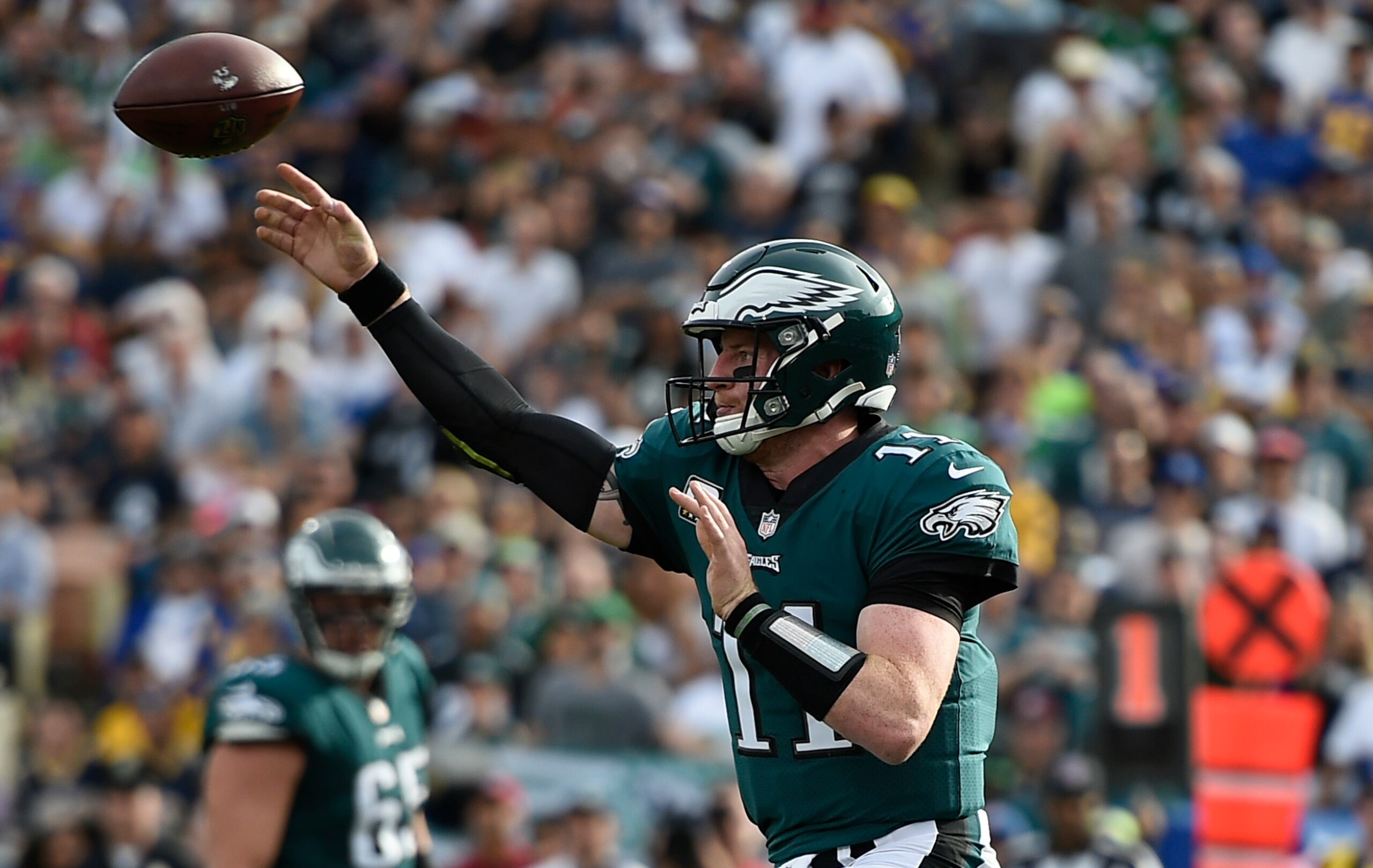
The Philadelphia Eagles won the franchise's first Lombardi Trophy without Carson Wentz down the stretch. That speaks to the team's depth and the coaching staff's ability to work with backup Nick Foles, and it also told the rest of the league one thing: When Wentz comes back, you better watch out.
Wentz entered the league with excellent mobility and the arm to make throws to any target, but his second season showed he was developing exponentially as a reader of the field. Additionally, Wentz tightened his mechanics and had a stronger running game behind him, so he may have felt he didn't have to do as much, that he could wait for plays to happen.
The Eagles' decision to move Nelson Agholor from outside to the slot played a big part in Wentz's progress—Agholor seemed to have an innate feel for how to adjust his routes when Wentz broke the pocket. Per Next Gen Stats, only the Houston Texans' Deshaun Watson (8.3) had a higher completed air yards average than Wentz (7.9). Wentz was a bit inconsistent with the deep ball to start the 2017 season, but he reined things in as the year went along, and his development in that regard should continue.
5. Drew Brees, New Orleans Saints
6 of 10
According to Pro Football Focus, Brees was the second-most accurate quarterback on deep throws in 2017, completing 52.5 percent of his passes and amassing 965 yards, good for fifth in the league. Brees got those yards with just 61 deep throws, and it took him a while to get on track. Over the last few seasons, he has struggled at times to generate the functional velocity required to hit downfield receivers in stride.
The difference in his accuracy as the season went on seemed to be mechanical. When the New Orleans Saints' Brees is in the pocket without pressure, there are times when he'll bend his upper body back to generate velocity without transitioning through his lower body to make throws—in other words, he's making upper-body throws that don't travel with the depth and speed he'd like. When he uses his lower body to generate torque or makes a deep throw on the run after squaring his body to the target, things go much better because he manages his upper-body movement.
At age 39, Brees may not be the deep-ball thrower he was half a decade ago, but when he's on point, he can be accurate to all parts of the field with the ability to deduce where open receivers will be and the capacity for throwing them open through ideal anticipation.
4. Tom Brady, New England Patriots
7 of 10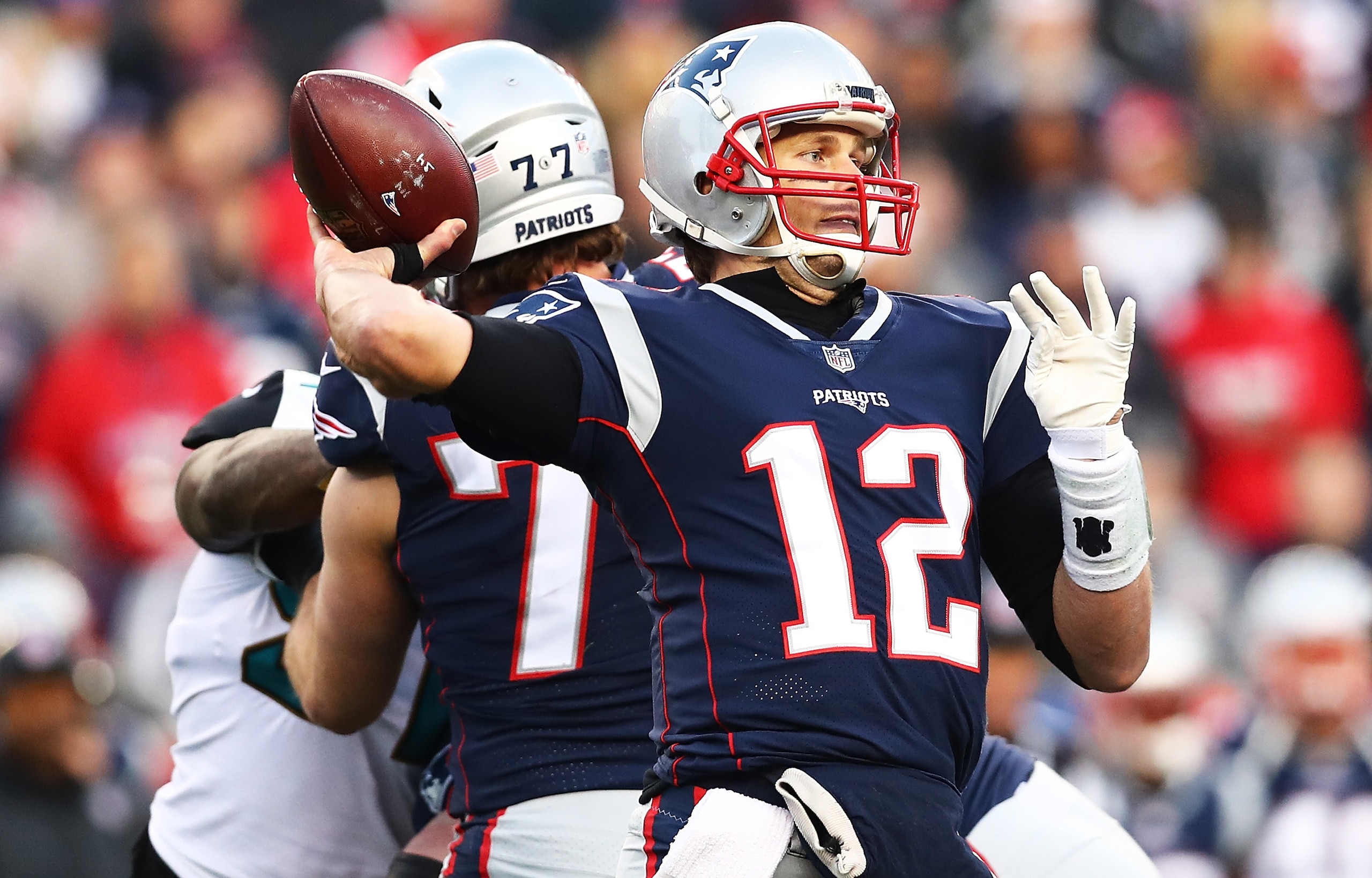
The New England Patriots offense changed when receiver Julian Edelman suffered a torn ACL before the 2017 season. Edelman is Brady's primary intermediate receiver, and they have excellent chemistry on the team's array of option routes. With Edelman out, the Patriots had two choices: reduce the passing game and make it a checkdown offense or use their deep receivers in more of a vertical game.
New England decided on the latter, to great success. With Brandin Cooks and Chris Hogan as his primary deep threats, and Rob Gronkowski as the near-uncoverable intermediate and deep threat over the middle, Brady had one of his best deep passing seasons, with an 88.5 passer rating on 80 attempts.
With Edelman back in the fold and Cooks traded to the Los Angeles Rams, it's possible Brady will return primarily to the short-to-intermediate passing game he'd been more comfortable with in recent years. But there are few quarterbacks in the league who can better take advantage of a defensive breakdown than Brady.
3. Kirk Cousins, Minnesota Vikings
8 of 10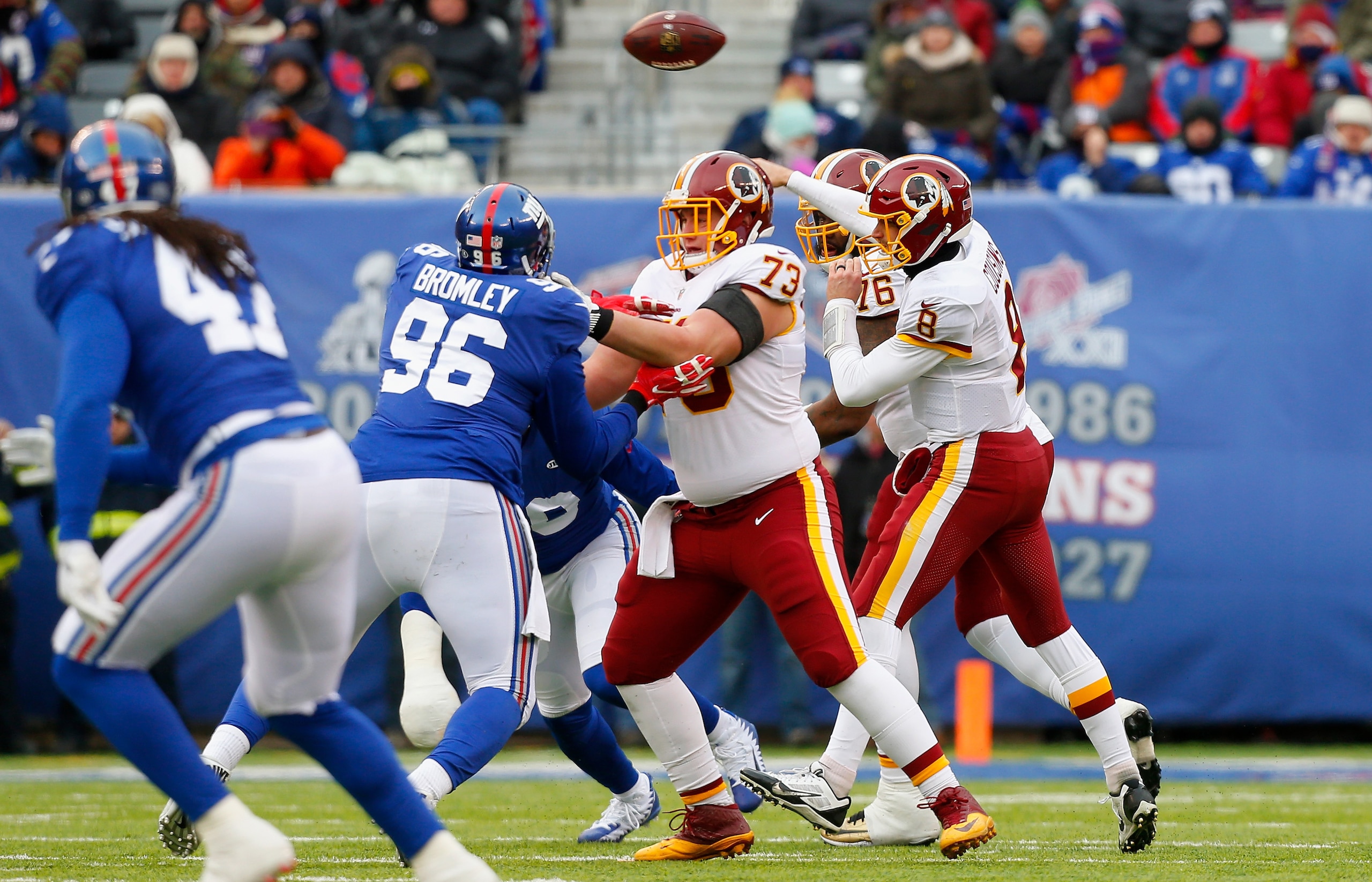
Throughout his career in Washington, Cousins was a tough evaluation. When he became the full-time starter in 2015, he led the league in completion percentage at 69.8, but he was often off on his deep passes, as his mechanics weren't consistent and his ability to read the field was still somewhat limited. But over the next two seasons, he put the mechanical side of his game together, and his deep throws became more consistently accurate.
In 2017, with a limited receiving corps, he amassed a 106.4 quarterback rating on 66 deep throws. Cousins' primary advantage in D.C. was Gruden's ability to scheme his receivers open. Fortunately for Cousins, who signed with the Minnesota Vikings, he now has two of the best deep-ball receivers in the league in Adam Thielen and Stefon Diggs and an offensive coordinator in John DeFilippo who worked well with the quarterbacks in Philadelphia.
It's likely that in this system Cousins will have equivalent opportunities to throw deep, and he'll have the right kinds of receivers. If he can pick up his ability to read the field and avoid making errant throws into coverage (a problem that continued to dog him in 2017), Cousins and the Vikings could be a perfect match.
2. Russell Wilson, Seattle Seahawks
9 of 10
It takes time to throw deep. The average passing play lasts about 2.5 seconds before the ball is released. So, making an accurate deep throw is more difficult if your offensive line doesn't protect you.
Which means Wilson's excellence as a deep passer breaks a lot of rules. Since he entered the league, the Seattle Seahawks line has been blown apart by questionable coaching and even more questionable personnel decisions. Former line coach Tom Cable, now with the Raiders (good luck, Derek Carr), created a line that made Wilson one of the most pressured quarterbacks year after year. Let's hope for Wilson's sake that new line coach Mike Solari will reverse those issues.
How has Wilson become a productive deep thrower despite all the pressure? First, he's great at diagnosing one-on-one matchups when opponents blitz—that's why he had the highest percentage of big-time throws versus the blitz last season, per Pro Football Focus. Second, he makes a habit of bailing out of the pocket and redirecting his body to the target; that's when a lot of the Seahawks' deep passes come—Wilson's receivers understand they must alter their routes to adjust to his movements. Third, he's mechanically sound enough to combine velocity and accuracy in a consistent package.
If Seattle gets its line figured out, imagine how great Wilson could be with the deep ball.
1. Aaron Rodgers, Green Bay Packers
10 of 10
Certain things are seemingly required for a quarterback to be a great deep passer. He must have receivers who are timed on their routes so he can trust what he's seeing. He must have an offensive game-planner who gets that receiver separation because of scheme is of paramount importance. And he must have a decent running game to bring downfield play-action opportunities.
And then there's Aaron Rodgers, who doesn't seem to need any of those things.
Limited to just seven games in 2017 because of a broken collarbone, Rodgers struggled to maintain his usual deep passing acumen in an offense without a consistent deep receiver. The holes in Green Bay Packers head coach Mike McCarthy's passing concepts became abundantly apparent when Rodgers was out and backup Brett Hundley replaced him. McCarthy has believed for years that receivers should get themselves open with their own physical attributes as opposed to advanced passing schemes.
But when he's healthy, Rodgers can transcend all of it. His deep accuracy, both from in the pocket and when on the move, is something to behold, and one wonders how explosive his passing game would be if he had a coach who bent a bit more to the modern game. Rodgers will enter the 2018 season with Davante Adams and Randall Cobb as his primary receivers, and offseason acquisition Jimmy Graham proved in Seattle that you can still catch touchdowns in a flawed system. No matter who his targets are, Rodgers will do more with less deep passing help than any other quarterback in the league.
.jpg?w=2560 "Commanders Eagles Football")
.jpg?w=2560 "Chiefs Dolphins Football")

.jpg?w=2560 "Grading WWE Raw 🔠")


