

Cavs Must Kill Jekyll-and-Hyde Act If They're Going to Survive Game 3 and Beyond
CLEVELAND — As Tyronn Lue stepped off the podium following the Cleveland Cavaliers' series-sealing 128-93 Game 4 blowout of the Raptors, he was asked about the team's defense. Why, after needing seven games to dispose of the Pacers, did the team attack Toronto's DeMar DeRozan differently than Victor Oladipo in Round 1?
"We didn't," Lue said, explaining how the Cavs implemented a tougher defensive philosophy following his alteration of his starting five following a Game 1 loss in the first round.
There were blitzes and double-teams and schemes created for Cleveland to take advantage of a player who is not among the best at two vital characteristics in the modern-day NBA: defense and three-point shooting.
TOP NEWS
Jokic says booing fans not welcome in Denver

Brown with an all-time summary of relationship with Tatum
Worst NBA Predictions 🫣
There were games where DeRozan, a four-time All-Star, couldn't get a shot off—let alone impact the game in ways he did during the regular season. He was benched late in Game 3 and was ejected midway through Game 4, but the score was getting so out of hand that his flagrant foul was as much of a white flag as it was an attempt at thwarting momentum.
"But Oladipo had the ball in his hands a ton—some nights he got off 20 shots," Lue was pressed.
"Execution," the coach said, succinctly, speaking of the chasm that lies between the game plan and the final score.
Oladipo was fearless. When his three-point shot wasn't falling, he got to the rim. When his team was down, he attempted to pick his guys up any way possible. With DeRozan, the game plan worked, signaling that while the process may have been similar, results were much different.

Thus goes the story with a Cleveland team that has lacked a top-down identity for the entire 2017-18 season, a theme that has tricked into the playoffs.
Are the Cavs a drive-and-kick team? Yes, until they go a conference finals game without hitting a three-pointer as late as midway through the third quarter. Are they a team-defense squad that can square up on an All-Star backcourt? Sure, until a team comprised of reserve guards forced into action due to injuries produces at All-NBA levels.
And here the Cavs are, down 2-0 to the Celtics, once again being victimized by the troubles that led them to a roller coaster of a regular season and a first-round playoff matchup that had many wondering if this was the end of an era.
Jayson Tatum, Boston's Rookie of the Year hopeful, has been the target of this round's defensive efforts. That, however, has led to second-year swingman Jaylen Brown being the one doing the damage, averaging 23 points per contest.
Brown has taken advantage of countless defensive breakdowns from the Cavs. Cleveland, meanwhile, has struggled from three and has gotten little from players not named LeBron James or Kevin Love.
"We have to come out and just take the game," Lue said following the Cavaliers' Thursday morning practice. "We have to put a full 48-minute game together, which I know we can. Physicality, hard fouls, [they're] into our body, into our airspace. They're playing playoff basketball. We need to [not] let them run as freely. We did it in spurts; we need to do it for a full 48 minutes."

Internally, the Cavs believe Game 2 against Boston was on the right track. Heading into halftime with a lead is much better than the blowout they endured in Game 1. Third quarters, however, have been a postseason-long problem for Cleveland, with multiple games lost during the third 12-minute stretch.
Turnovers have been paired with bad shots and a lack of ball movement, leading to missed jumpers that have turned into an easy two or three points the other way for a younger, more athletic Celtics team.
If Lue and the Cavaliers are to hang on to anything at this stage, it's the 180-degree turnaround between Games 1 and 2 of the Western Conference Finals. The Warriors stormed out to a 1-0 lead only for the Rockets to suddenly thrive on ball movement and timely shots in Game 2. They had two-time MVP Steph Curry on his backside and sank open three-pointers and uncontested layups.
"Exactly," Lue said when discussing the Rockets' execution in Game 2. "We have to do the same thing, which I know we can. These three days really give us a chance to do some different things, try to incorporate some things, and do things better."

An unusual three-day break between Games 2 and 3 has provided the Cavs with time to focus on film, recognize communication breakdowns and see just how many easy baskets they've allowed.
The Cavaliers, of course, want to play more like they did during stretches of their second-round series against the Raptors than they did during the first round, where a 17-point lead was lost, or Game 2, where a seven-point lead turned into an eight-point deficit by the fourth quarter. Missed opportunities by James and the rest of the Cavs snowballed into panic-like sets that reduced passing and resulted in a variety of players settling for low-percentage attempts.
"We got down six or seven, and we started playing like we're down 25," Lue said. "We just have to take better shots going down the stretch."
The issue, of course, is that this Cavaliers season is not like any other. No other team in the league came in with championship aspirations and looked mediocre through the first half. No other team traded a top-15 talent (Kyrie Irving) for players they thought could help fill in the gaps. And no other team traded six players for four new ones in February.
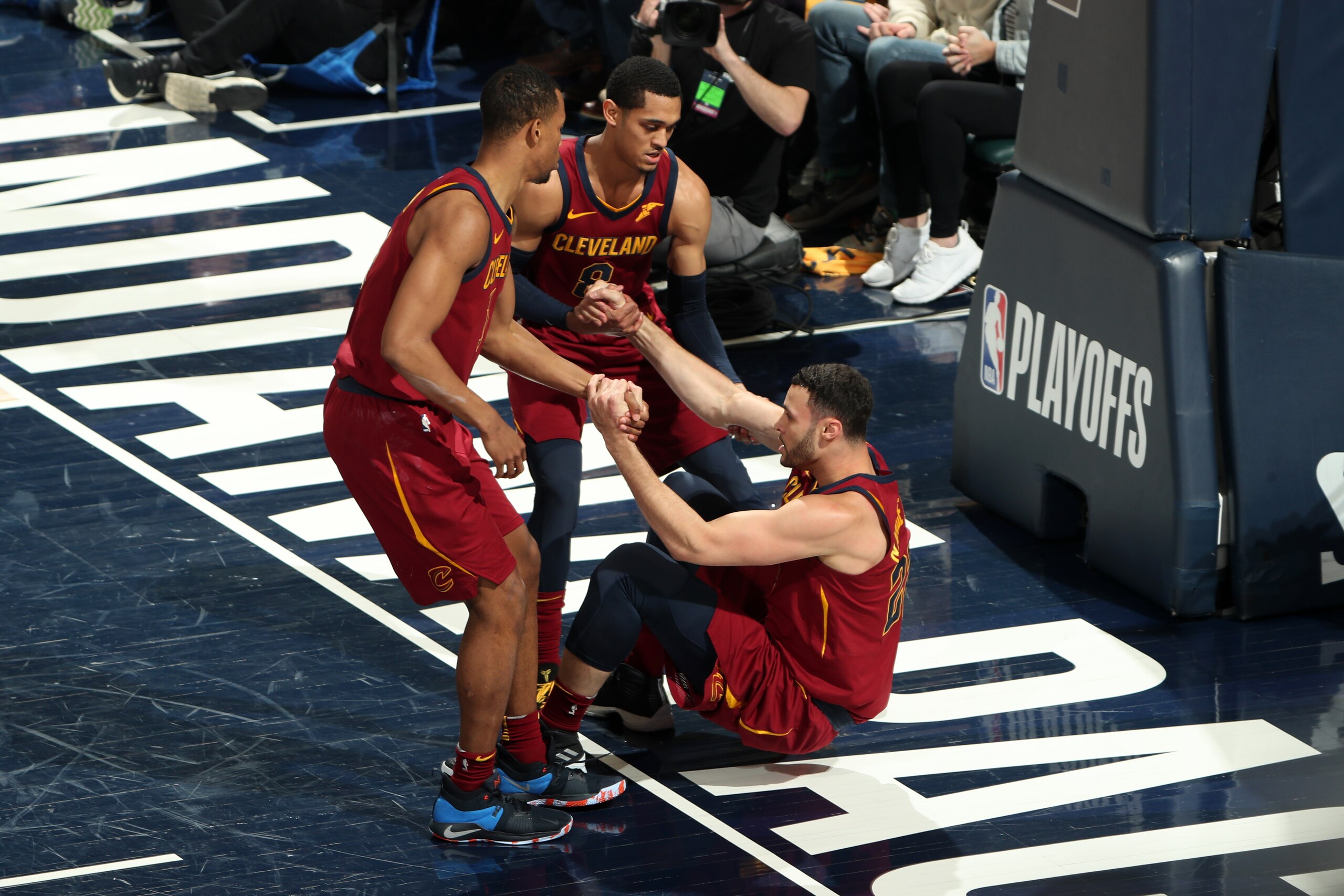
It's easy to point out what should happen or what needs to happen—the trick is making it happen.
The Cavaliers have turned it up before. One game after getting blown out by the Pacers on the road, Cleveland came back for a decisive Game 7 win. There's reason to believe the Celtics, who are 1-4 on the road during this postseason, could struggle.
The bigger risk, however, is that the Cavaliers continue to Jekyll and Hyde themselves into an early vacation, relying too much on LeBron.
"We have to ramp it up," JR Smith said. "We're making LeBron play hero ball, which is tough to do in the Eastern Conference Finals. We have to help him. We have to give him an opportunity for us to make him feel confident to give us the ball so we can make the right plays."
As the playoffs have shown, there's knowing what they have to do and there's doing it. Execution will be the deciding factor in needing to win four of the next five games to return to the NBA Finals.

.jpg?w=2560 "Mahomes Told Teammate to Leave Meeting")
.jpg?w=2560 "5 Teams Eyeing Jonathan Taylor")
.jpg?w=2560 "Jonathan Taylor Landing Spots 📍")
.jpg?w=2560 "Baker Gets Glove From Rays 🧤")

.jpg?w=2560 "NFL investigating Eagles")
