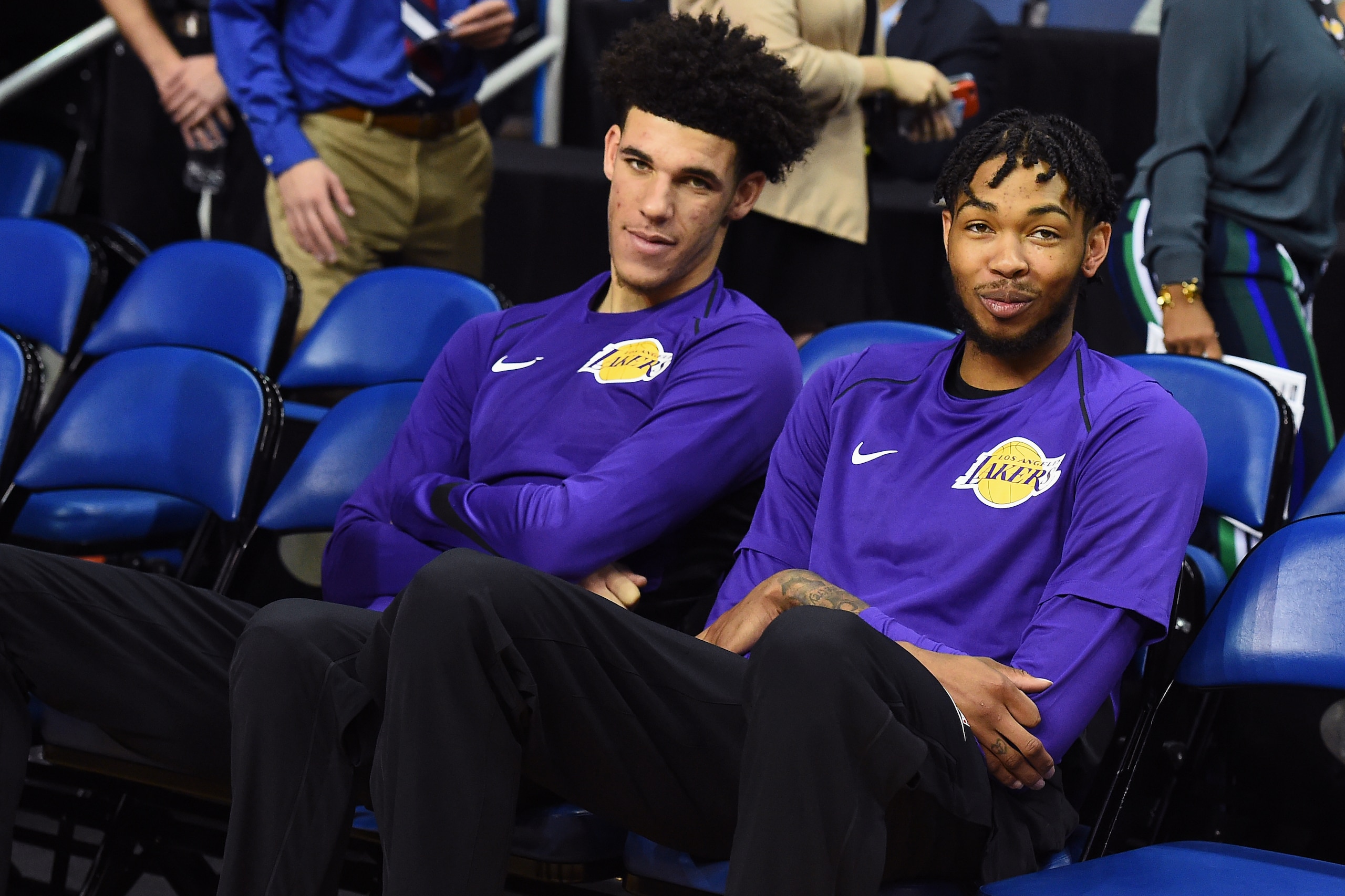

5 Los Angeles Lakers Who Must Step Up Immediately
The Los Angeles Lakers still aren't ready to launch—they just look closer than they have in years.
Their roster is almost entirely comprised of NBA talent. Their defense went from comically bad to competent in a single offseason. They seem to have two centerpiece prospects, and a handful of others might be keepers.
Life is almost good in Laker Land. But it'd be a whole lot better if the following five players could up their performance, production and efficiency.
Each has fallen short of something, be it preseason hopes or expectations tied to their specific roles. L.A.'s road back to respectability starts with getting this quintet on track.
Corey Brewer, SF
1 of 5
Last season, the Lakers needed Corey Brewer's salary to facilitate their Lou Williams-for-a-first deadline deal. Now, they like using the 31-year-old as a model for their youngsters to follow.
"True professional, he practices every single day like it's a game…such a great example for our young guys," head coach Luke Walton said, per Lakers Nation's Serena Winters.
The issue is, L.A. has placed Brewer in more than a teaching role. He has played in each of their 14 games—even started one—and averaged 13.7 minutes a night. If he's going to continue receiving consistent floor time, he must greatly improve his on-court contributions.
He's an inefficient shooter overall (41.2 percent) and abysmal outside (11.1 percent). Previously lauded for his defense and transition offense, he's now allowing opponents to shoot 4.6 points better than they do on average and rates as just an 18th-percentile fast-break scorer.
And his play isn't just a drag on his own numbers. He's made the Lakers 3.9 points worse per 100 possessions by taking the floor. They need him to start providing some type of positivity, either to justify his current role or allow them to find value in return on the trade market.
Josh Hart, SG
2 of 5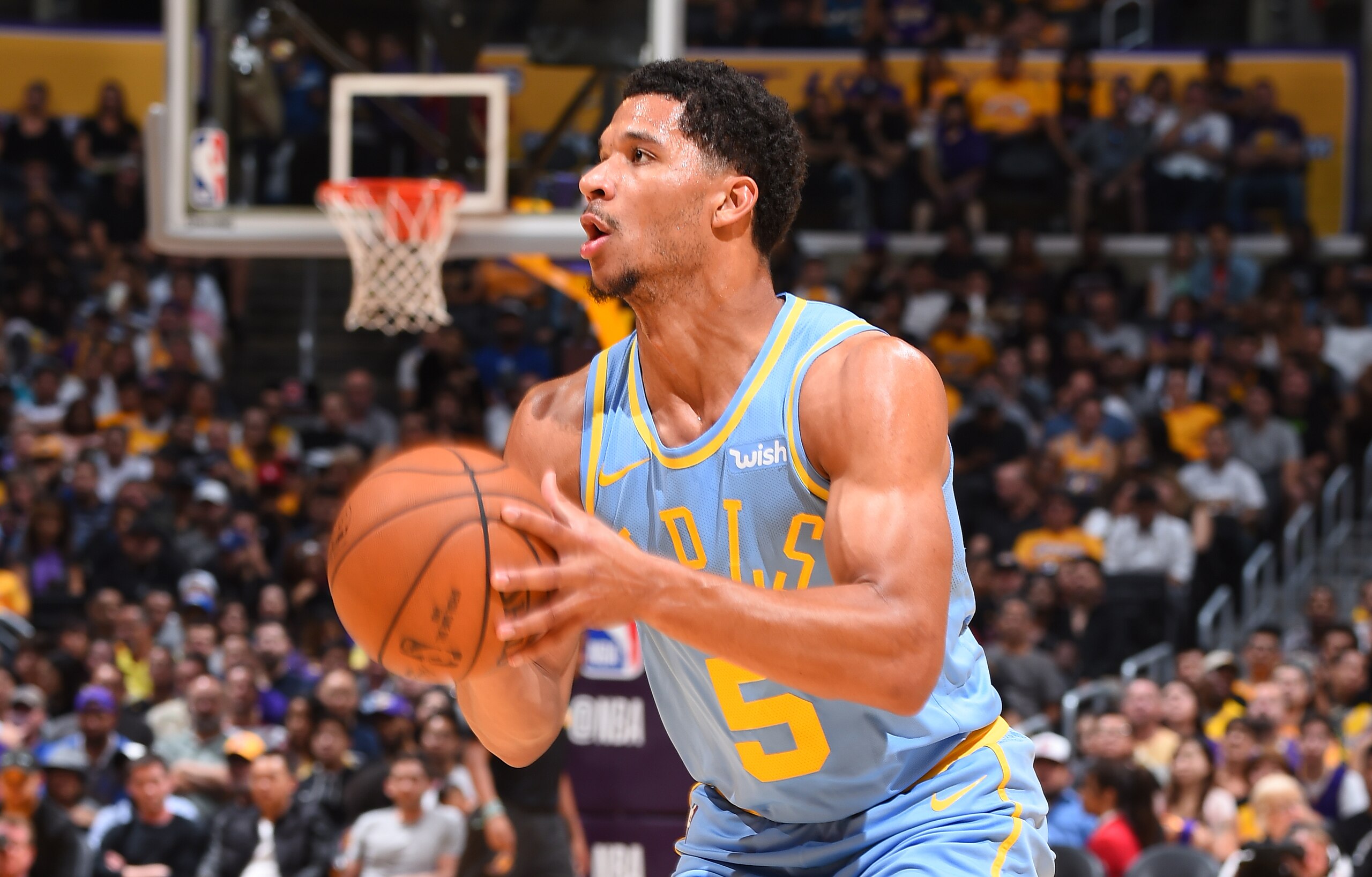
The Lakers saw two qualities in Josh Hart that held tremendous appeal—natural leadership and defensive tenacity.
The first was evident from his four-year collegiate career, which featured a national championship and a consensus first-team All-America selection. The second is seen in the approach he brings inside the lines.
"I take defense personally, when somebody scores on me I don't care if it's a good move or what. That infuriates me," he told reporters in October. "I don't like getting scored on, I take that personally."
Hart has delivered at the defensive end. He's holding opponents 1.9 points below their shooting average and pacing purple-and-gold regulars in on-court defensive efficiency (97.7). And it's hard to judge his leadership since various ailments plagued him at summer league, early in training camp and again for the season opener.
But offense is another story, and a nightmarish tale at that. Hart is shooting 0-for-November, dragging his field-goal percentage to 34.5 and his perimeter conversion rate to an unsightly 16.7. His minuscule 2.7 assist percentage is further dwarfed by his 13.6 turnover percentage.
Hart appeared to have cemented his place in the reserve rotation, but his offensive struggles kept him bound to the bench in L.A.'s last two games. Even defense-first players need a certain level of offensive functionality.
Kentavious Caldwell-Pope, SG
3 of 5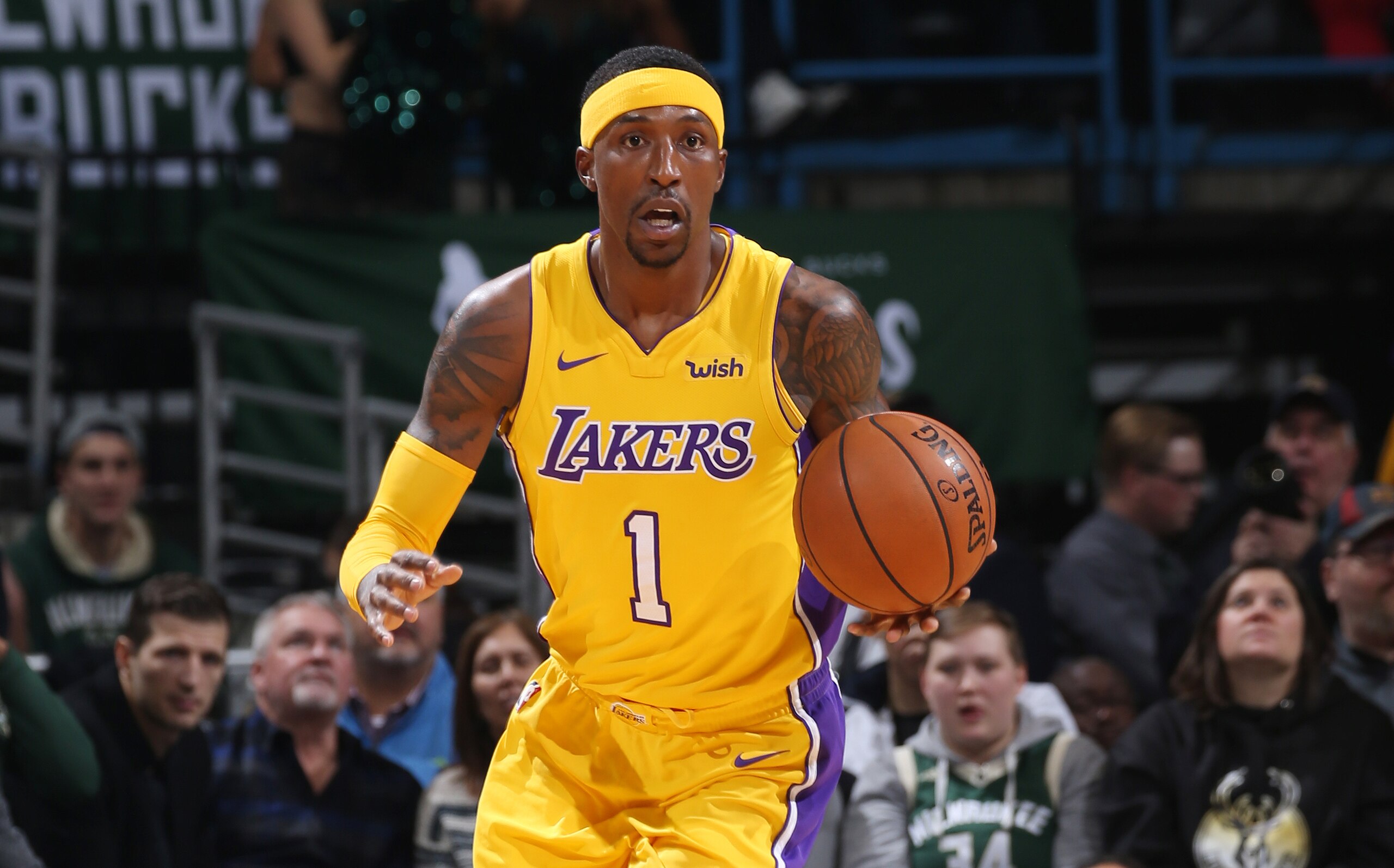
Kentavious Caldwell-Pope wouldn't be a Laker right now if he hadn't been amenable to signing a one-year pact. And it's only logical to think the fact he shares an agent with LeBron James improved his attractiveness.
But there were basketball reasons behind Caldwell-Pope's $18 million arrangement as well. Namely, L.A. envisioned his experience and tenacity as two tools with which the franchise could form its identity.
"[He's] just a hard-nosed player," Walton told NBA.com's David Aldridge. "He's been in that Eastern Conference, hard worker. He kind of helps set that tone."
That tone has triggered one of the campaign's biggest surprises—the Lakers rocketing from 30th to fourth in defensive efficiency. Caldwell-Pope deserves some of the credit for that transformation.
But L.A. has backtracked at the offensive end (from 24th to 28th). And again, Caldwell-Pope's fingerprints are present. Despite his billing as a three-and-D player, he's converting an anemic 31.0 percent of his long-range looks. His turnover percentage is at an all-time high (12.2), while his scoring (11.5) and PER (10.3) have dipped to their lowest levels since his rookie year.
Caldwell-Pope cannot afford to languish on offense like this. He couldn't cash out this past summer, which means he's headed right back for free agency at year's end. He has the next five-odd months to convince the Lakers he's worth keeping and the other 29 teams he's worth pursuing once the market opens.


Brandon Ingram, SF
4 of 5
The baseline goal for Brandon Ingram's sophomore campaign was improvement in all facets. For the most part, the 20-year-old has managed to check that box.
But expectations around Laker Land are so much greater than that for the former No. 2 pick. Magic Johnson previously set the bar at 20 points per game. General manager Rob Pelinka said Ingram would operate as their crunch-time quarterback, per NBA TV (h/t Lakers Nation).
In other words, L.A. wanted more than baby steps. Because few things would accelerate this rebuild faster than Ingram making a sophomore leap to stardom.
That isn't happening. He's had some great moments and a few rough ones, making the complete package appear solid-not-spectacular. He not only fails to lead the Lakers in any of the five major stat categories, he doesn't rank higher than fourth in any of them. He has nights where elite play feels imminent and others that make you wonder how big a role he'll play in whatever this organization becomes.
"There is a fine like between like smooth and just passive," Sports Illustrated's Ben Golliver said on the Open Floor podcast. "He is walking back and forth between that line a lot. There are times where he will go invisible."
Granted, Ingram is still super young—younger than five of this year's lottery picks—and still developing both his game and his body. His length and skills still lend themselves to dreams of NBA nobility. But he's coming along too slowly to change the Lakers' immediate fate. It's a round-peg-in-square-hole situation, but he's failing to fill the front-line role that had been set aside for him.
Lonzo Ball, PG
5 of 5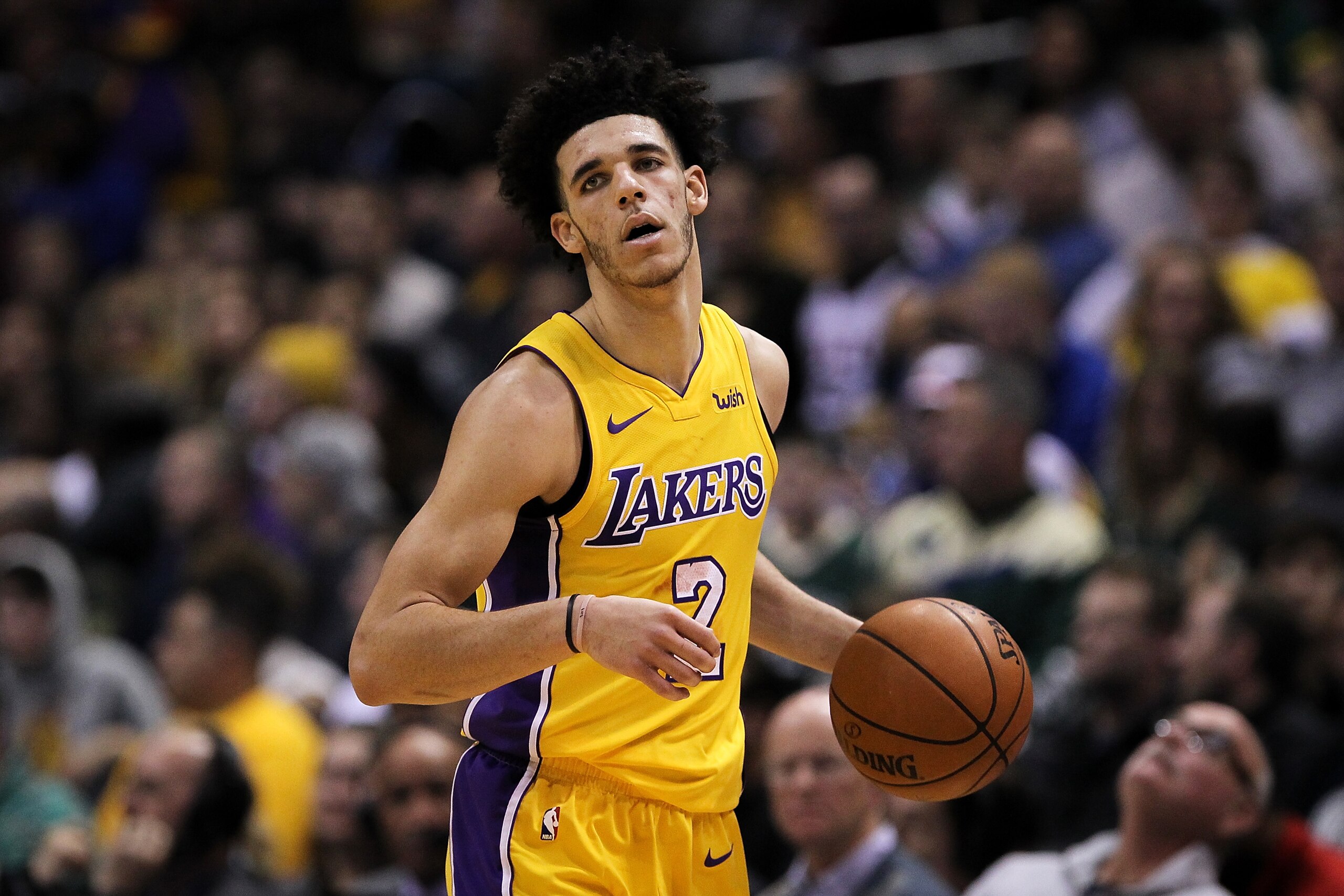
If you think putting Lonzo Ball on the list proves our evaluations are too harsh, you'd have some potent ammunition for your argument.
In the second game of his pro career, he produced a stat line only five rookies have matched since 1983-84 with 29 points, 11 rebounds and nine assists. By his 13th outing, Ball surpassed LeBron James as the youngest player to triple-double in NBA history. That feat even earned Lonzo some love from LeBron.
"I think he's going to be a really good point guard in our league, probably a great point guard," James told reporters. "If he continues to work on his craft, which it seems like he does ... [the Lakers] got a good one."
That's an incredible accomplishment list for this stage of Ball's career. But that doesn't tell the entire story of his play.
Like, how if he continues at his current rate, he'll post the third-lowest field-goal percentage ever (31.3 percent, minimum 2,000 minutes). Or that he's just 23rd among freshmen in PER (10.8) and tied for 21st in win shares (0.1). Or how the Lakers play substantially better when he isn't in the game (minus-4.3 net rating) than when he is (plus-1.7).
Ball hasn't been an overnight franchise fix, and no one should have expected that. But it's not too early to want more from him as both a shooter and a scoring threat. The longer it takes to get acclimated there—he doesn't have to dominate the points column, just force defenses to respect him—the harder his job as offensive engineer becomes.
Unless otherwise indicated, all stats are from Basketball Reference or NBA.com.
Zach Buckley covers the NBA for Bleacher Report. Follow him on Twitter: @ZachBuckleyNBA.




.jpg?w=2560 "Love's Body Already 'Tired'")
.jpg?w=2560 "Tyreek Deal May Come Soon")

.jpg?w=2560 "Ward Nearly Walks Out of Presser ▶️")