
Revisiting Chicago Bears' Best, Worst Moves of 2017 Offseason
The sweltering throes of summer make for a good time to reflect on the new-look Chicago Bears.
After all, few franchises underwent as many changes as the Bears this offseason. General manager Ryan Pace and the front office went all-in on a roster overhaul at some of its weakest points, though the avenues taken proved quite polarizing for fans.
The front office largely addressed premium positions with major facelifts, including quarterback, wideout and the secondary as a whole.
But one doesn't undertake a major project without a few gaffes along the way. Fans will have differing opinions on where those mistakes are, yet perhaps the biggest issues seem to be simple omissions.
Let's take a look at the best and worst moves of Chicago's offseason, which tie in with how the team might perform next season.
Best: Letting Jay Cutler Walk
1 of 6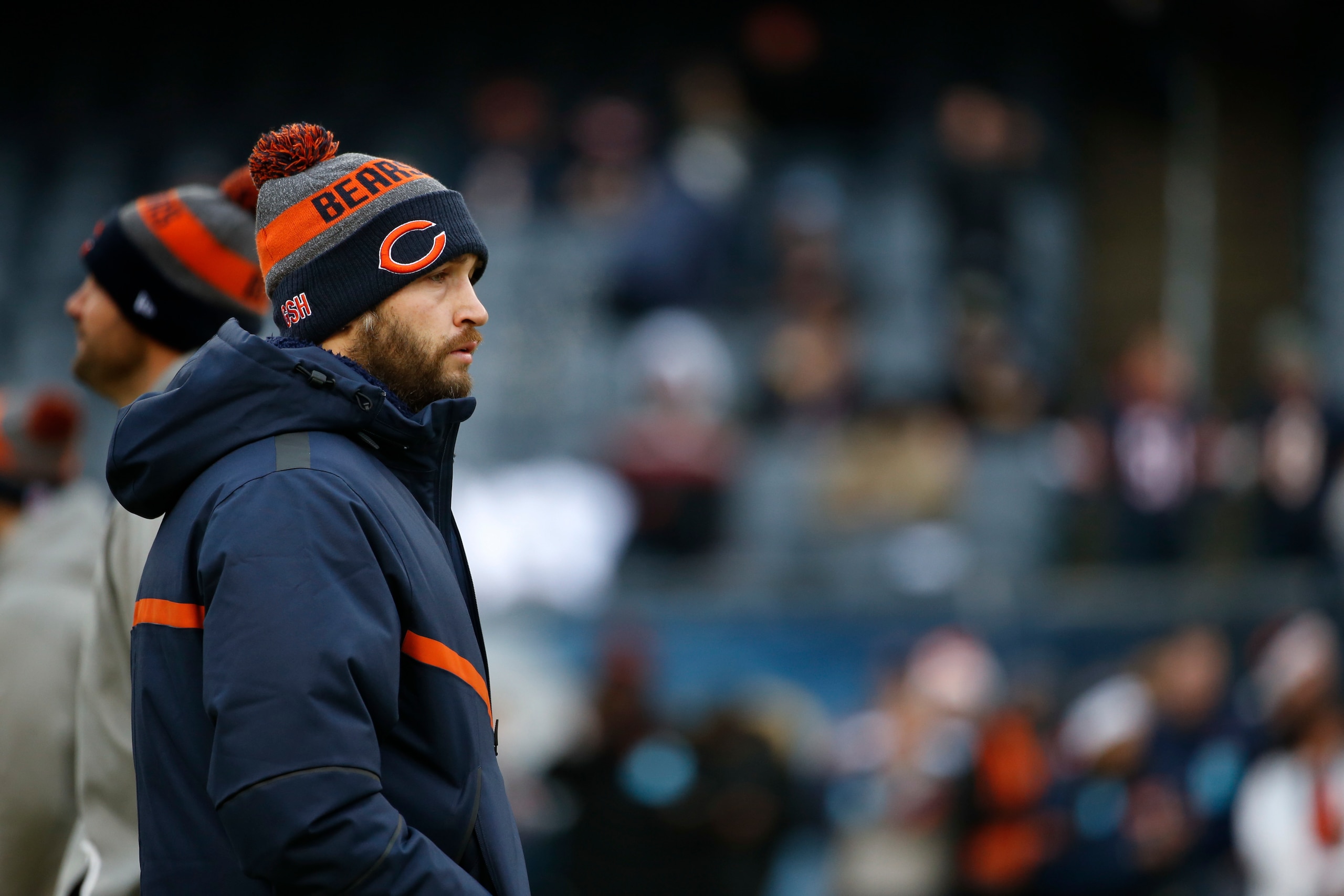
Look how quickly hindsight can change the perception of a move.
The Bears moved on from Jay Cutler early in the offseason, and he's stepped away from strapping up the cleats to picking up a microphone in the broadcast booth.
At the time, letting Cutler walk seemed silly—with it seeming likely the team would draft a quarterback at No. 3, why not keep the veteran around to mentor the rookie? Another year of Cutler wouldn't be the worst thing in the world, and as fans will remember, his return propelled the Bears to one of their only wins last season.
But Pace had bigger plans.
Pace went out and grabbed Mike Glennon in free agency, a 27-year-old looking for a chance to become a franchise signal-caller. Then, as fans know, he traded up for Mitchell Trubisky in the draft.
If this was the plan all along—and it's not a stretch to think as much—letting Cutler walk made plenty of sense. Maybe he'd be a better third option than Mark Sanchez, but severing ties with a former franchise quarterback to better implement a new era is the best way to go.
Worst: Losing Alshon Jeffery
2 of 6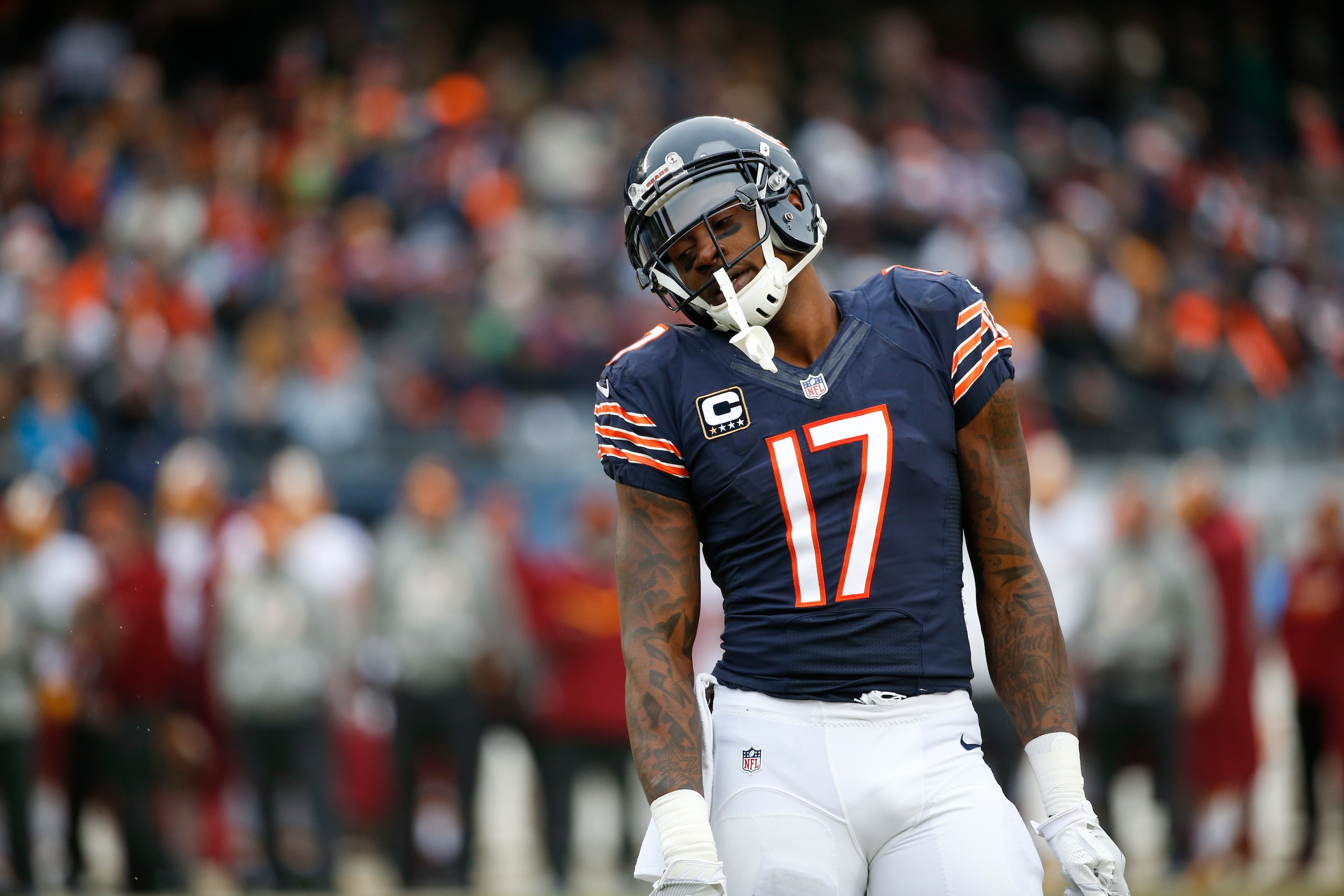
Disclaimer: The Bears aren't entirely at fault here.
Still, losing a No. 1 wideout who turned out to have an asking price in the "easily affordable" range can't go omitted as a major black eye for a team about to break in a pair of new quarterbacks.
Such is the case with Alshon Jeffery, a guy the Bears needed to keep in town, whether via a tag or otherwise. Instead, Chicago watched him join the Philadelphia Eagles on a cheap deal.
Again, this isn't all on Pace and the Bears. Look at the following note from the Chicago Tribune's Brad Biggs after Jeffery departed: "Multiple sources indicated Jeffery was not interested in returning to the Bears, and his value at $14 million for one season can be debated after two underwhelming contract years."
But the Bears could have done more. Instead, the team is hoping for another year of progress from breakout candidate Cameron Meredith. This combines with the hope rehab projects Kendall Wright and Markus Wheaton can put on great performances and help fans forget Kevin White is essentially still a rookie heading into his third year. If all else fails, the team will turn to the 30-year-old Victor Cruz.
If Chicago felt Jeffery didn't want to be in town, fine. But part of the job is convincing players it is worth sticking around. If the quarterbacks struggle in 2017, this might classify as a hindsight what-if scenario.
Best: Remaking the Entire Secondary
3 of 6
For some, Chicago's offseason fell into disappointment territory because the front office didn't use copious amounts of cap space to nail down major free agents like Stephon Gilmore and A.J. Bouye.
Alas, Pace still sunk major dollars into revamping the entire secondary.
For good reason. Chicago's secondary was lost a year ago. Now the unit has new starters on the boundaries, with Marcus Cooper and Prince Amukamara and at least one new starter at safety thanks to veteran Quintin Demps. Rookie Eddie Jackson out of Alabama might have enough juice to swipe the starting spot next to him too.
Demps is the big highlight here. A turnover machine at the age of 31, he ranked as the 12th safety at Pro Football Focus last year. He's not as old as his age implies, either, after minimal usage during the first four years of his career.
Those new boundary corners are, at worst, upgrades over what the Bears put on the field last year. But Pace targeted them for a reason—they should benefit from press looks trotted out by defensive coordinator Vic Fangio, which wasn't always what teams asked them to do elsewhere.
Keep in mind these four new faces pair well with other upside-minded pieces on the roster such as Kyle Fuller, Deiondre' Hall and Cre'von LeBlanc.
There aren't enough roster spots to go around after the overhaul, which is one of the better problems an NFL team can have given the importance of the secondary these days.

Worst: Ignoring the Pass Rush
4 of 6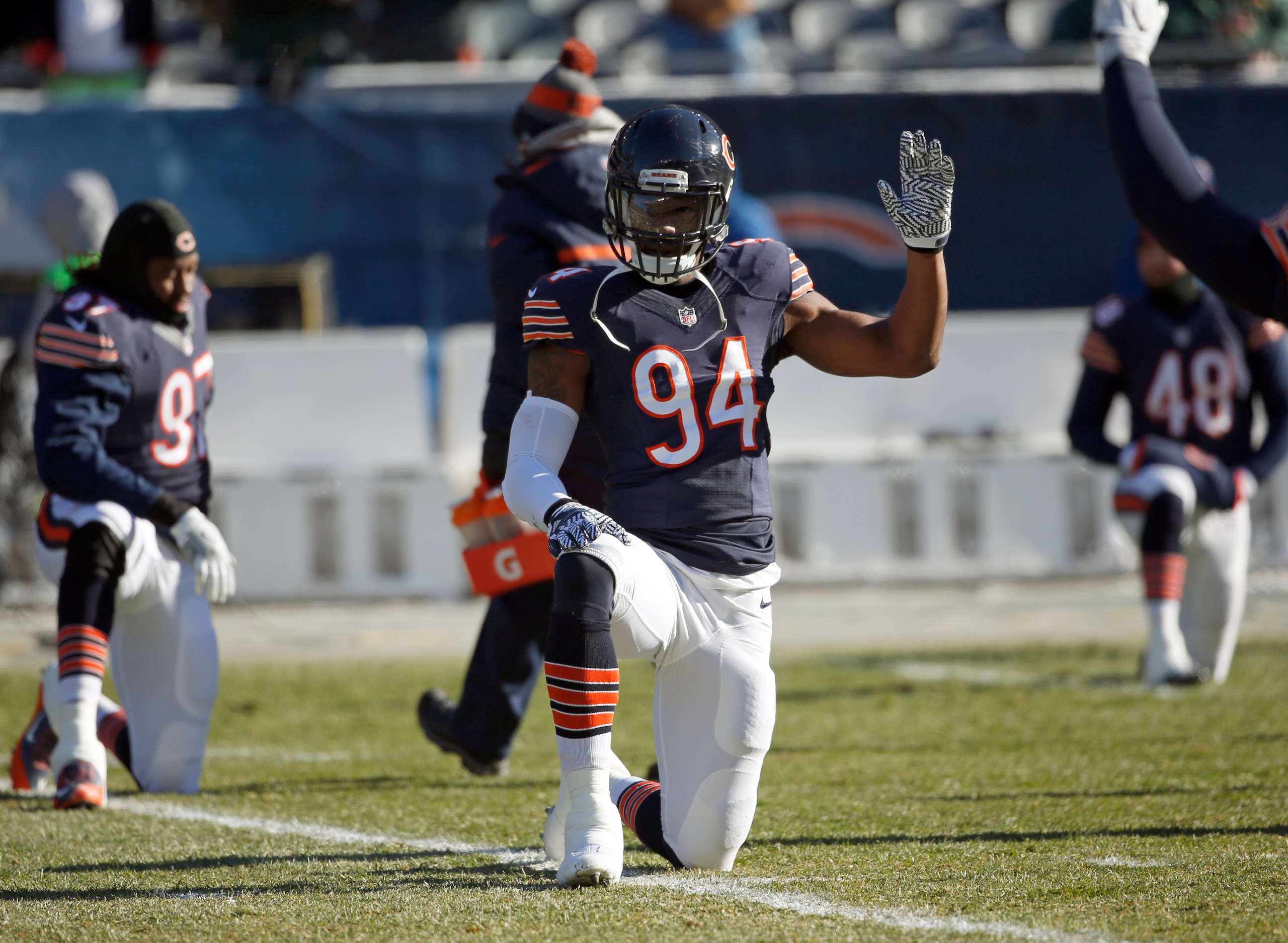
Where the Bears did well revamping premium defensive spots, they failed to reel in some insurance when it comes to applying pressure on quarterbacks.
On paper, the Bears have one of the better front sevens in the NFL.
On paper.
The outlook fails to mention rookie breakout pass-rusher Leonard Floyd missed games with injuries last year. Fellow edge presence Pernell McPhee has had a hard time staying healthy since coming to town in 2015. Lamarr Houston only suited up for two games a year ago.
Take it a step further. In the trenches, nose tackle Eddie Goldman only dressed for six games, and the coaching staff clearly didn't trust Jonathan Bullard to take on a heavy workload.
It's a red flag, then, that the Bears didn't make any major additions to a front seven needing some reserves when it comes to rushing the passer. The lack of moves, even if it meant spending the team's last pick in the draft on a rotational edge-rusher, puts an ill-advised amount of hope in guys like McPhee and Houston finally being able to stay healthy.
And if they can't, inaction here means the new-look secondary could end up looking worse than it should because the players get gassed while staying in coverage for so long.
Best: Doubling Down at QB
5 of 6
Teams can't please every fan.
Chicago hit quarterback twice this offseason: once with Glennon in free agency and one more time with Trubisky in the draft.
It sets up an interesting scenario. The rookie doesn't have to find himself thrown to wolves right away and is afforded something most in his position aren't: the chance to adapt and learn in a relatively pressure-free environment. Glennon, on the other hand, gets a chance most in his position don't in receiving one more shot to prove he's a franchise quarterback, which could mean another massive contract sooner as opposed to later because, either way, he's handing the team over to Trubisky.
Critics, will point out the cost. Glennon came at a lofty price tag of three years and $45 million. It's a front-loaded deal so no long-term damage done, but fine, paying such a huge price for a guy who has hardly attempted a pass for two years looks bad.
The other talking point is the cost of trading up to take Trubisky at No. 2 overall in the draft. Sure, he might've fallen one more slot, but Pace targeted his guy from the beginning of the process and was aggressive in moving up to get him.
Those angry about a team being assertive to get guys they like at the league's most important position are doing it wrong. Go ahead and look at the four quarterbacks left standing in the playoffs last year by the time of the conference title games:
Little else matters in the NFL without a quality starting quarterback. The Bears took two shots on guys they believe can start well in the league this offseason, making it by far the front office's best move.
Worst: Sticking with the Current Edges of the Offensive Line
6 of 6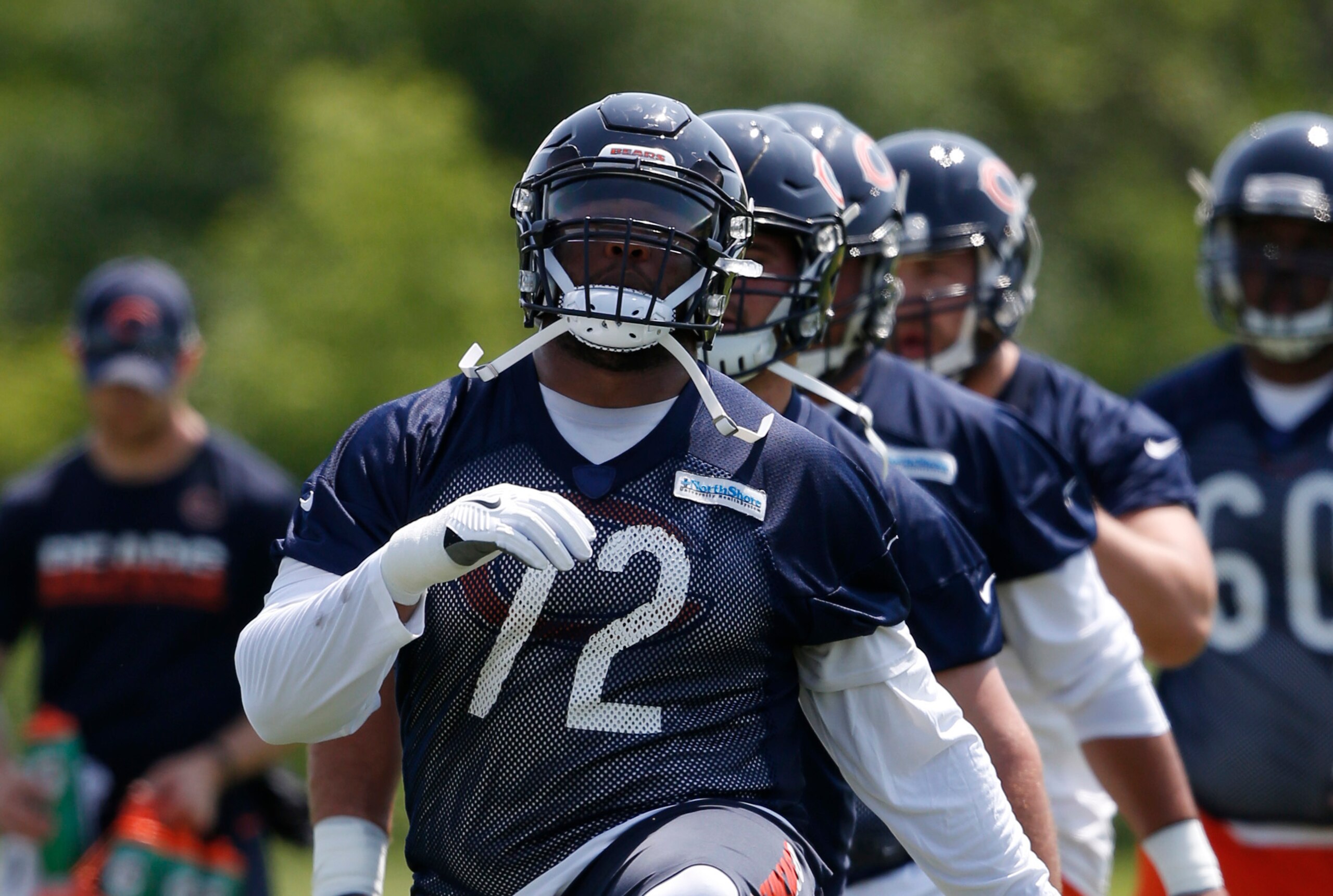
Then again, omission comes into play to round out this list and might have a big impact on whether the quarterbacks live up to what the front office seems to expect.
While Chicago's interior along the offensive line might be one of the league's best, the edges stick out as a sour point.
On the left side, Charles Leno Jr. has struggled to progress as a starter, last year finishing as the No. 53 tackle in the league at PFF. On the right, Bobby Massie—a mid-tier signing to begin with—landed at No. 49 after a ho-hum showing.
The Bears wound up flirting with tackles in free agency before not moving on the area. The draft, given its main weakness rested in this area, wasn't an option.
Pace, at least, has gone to bat for Leno publicly recently, according to Biggs: "I like Leno a lot. I like his makeup. I like his intelligence. I am so hopeful he will get back on this track (hand motioning skyward) because last year was a little bumpy."
And maybe both players take a step in the right direction next year. Massie will be in his second year, and Leno is all of 25 and still developing, not to mention he could have quality chipping help this year from superb blocking tight end Dion Sims.
But the oversight here is a problem. If poor play on the edges means Glennon struggles, the team could have a hard time getting anything of value for his departure, let alone winning games. The damage poor play could do to Trubisky doesn't need explaining.
Alas, Chicago couldn't hit every major need in one offseason. Putting faith in struggling tackles, though, seems like playing with fire.
All contract information courtesy of Spotrac unless otherwise specified. Stats courtesy of NFL.com. All advanced metrics courtesy of Pro Football Focus.
.jpg?w=2560 "Rams Eagles Football")

.jpg?w=2560 "Grading WWE Raw 🔠")



