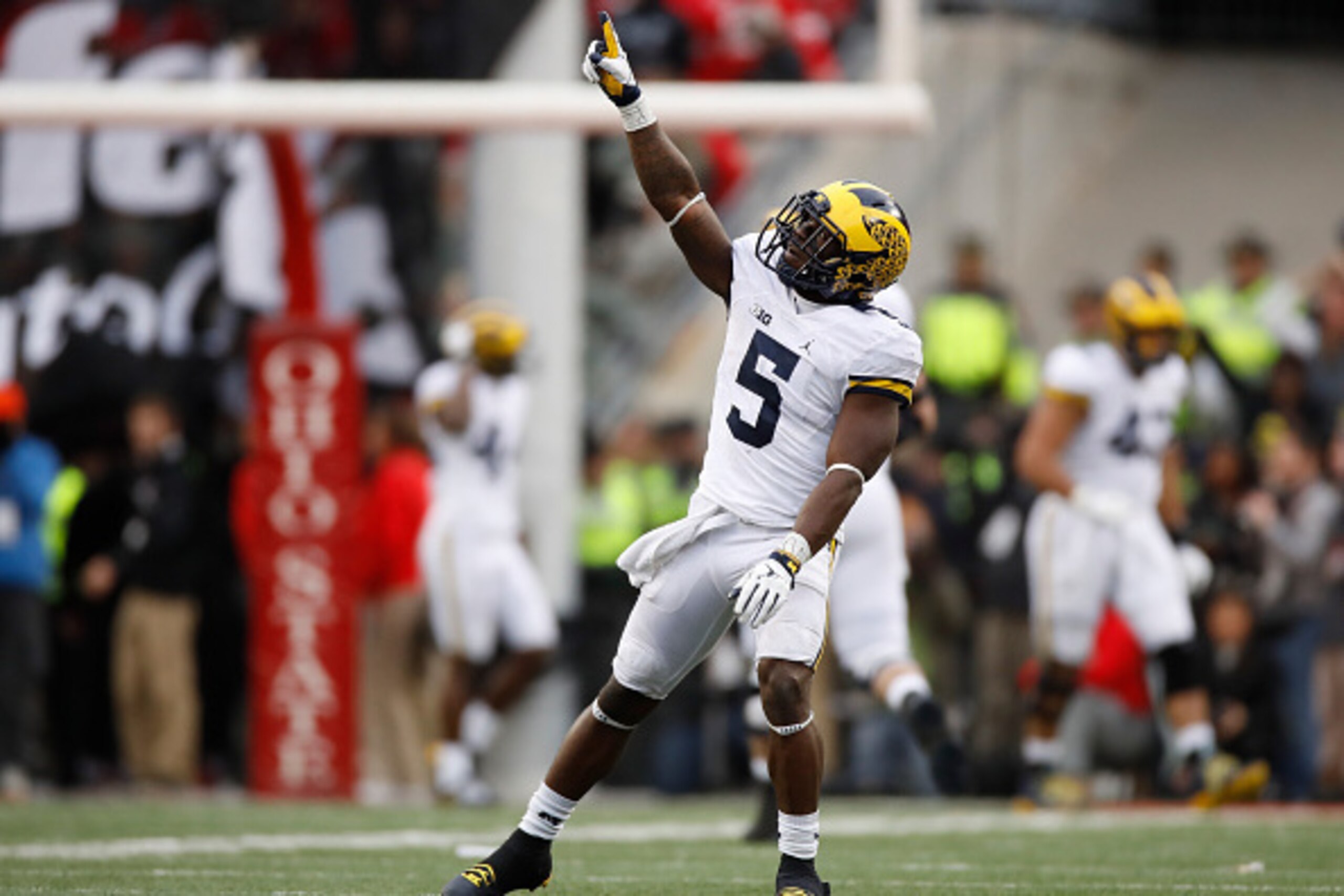

10 Players Washington Redskins Should Avoid in 2017 NFL Draft
The Washington Redskins can play it smart in the 2017 NFL draft by avoiding a hybrid safety many writers and pundits believe they should take in the first round.
Scratching a touted defensive back off their board isn't the only way for the Redskins to avoid mistakes come April 27-29, though. The Burgundy and Gold can also protect themselves by resisting letting events in free agency push them into drafting a wide receiver in the opening round.
Losing 1,000-yard pass-catchers DeSean Jackson and Pierre Garcon was indeed a blow to Washington's passing game. Yet this team still has the weapons to avoid over-drafting at the position early on, particularly with this year's class deep in quality wideouts in the middle of the draft.
Speaking of the passing game, the Redskins would be wise to take a quarterback at some point as insurance against the ongoing uncertainty surrounding starter Kirk Cousins. He will enter a second straight season playing under the franchise tag, so it makes sense for team president Bruce Allen to engage in some future planning.
However, Allen and the team's hierarchy have to be prudent about the style of quarterback they draft. In short, the signal-caller in question must fit head coach Jay Gruden's adherence to a pocket-based offense or be avoided altogether.
Read on for a closer look at 10 prospects the Redskins should avoid in this year's draft.
1. Takkarist McKinley, DE/OLB, UCLA
1 of 10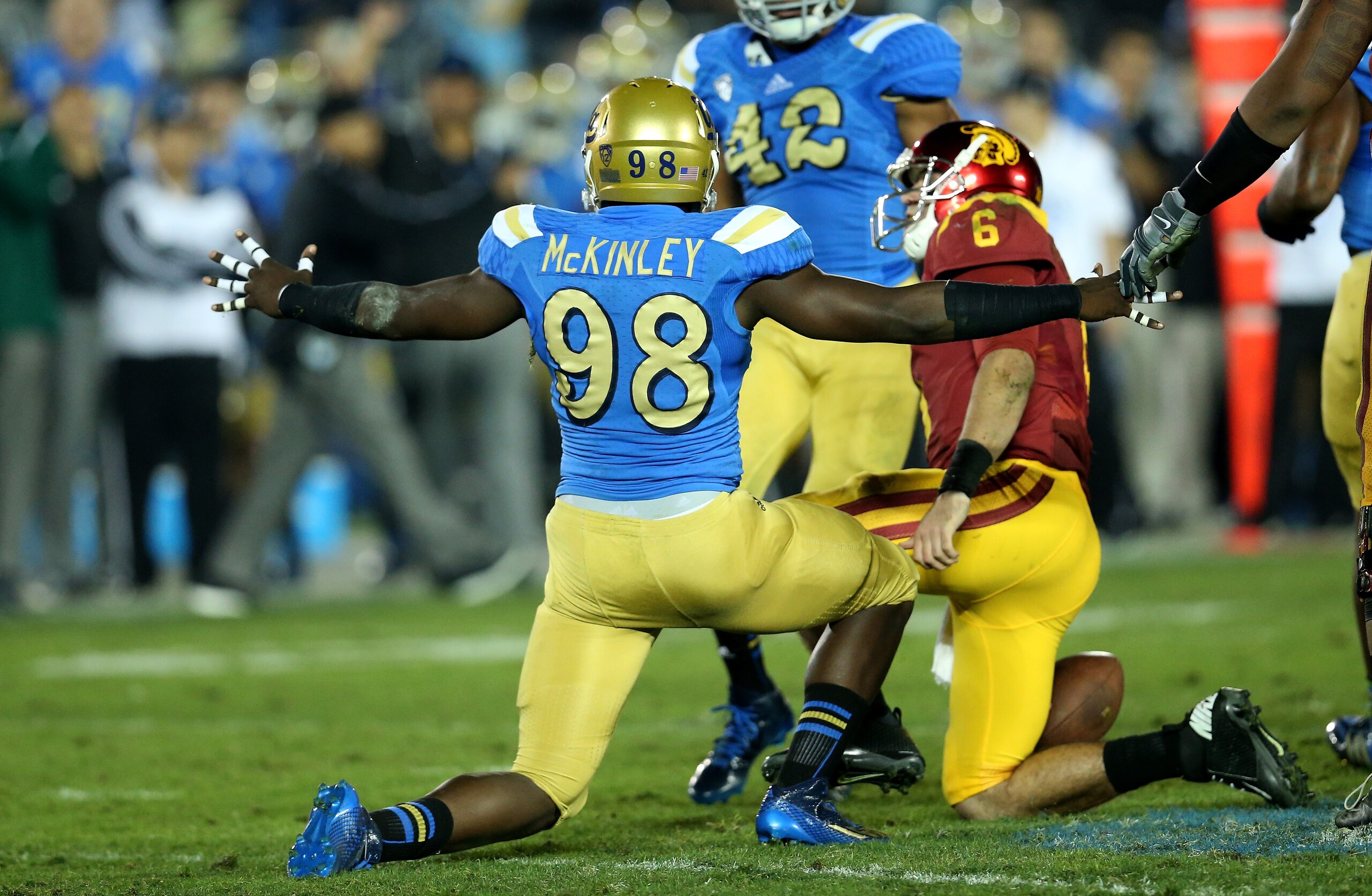
On the surface, there is plenty to recommend Takkarist McKinley to the Redskins. Yet a closer look reveals one or two key reasons to give the former UCLA star a wide berth during draft weekend.
At first glance, McKinley's hybrid skills as a roving pass-rusher who can wreck protection schemes either with his hand in the dirt or from a standing position would answer a big need in Washington.
The NFC East club needs more weapons on the edges to bolster a pressure defense that logged a mere 38 sacks in 2016. It would also be wise to get some insurance against Trent Murphy's suspension, Preston Smith's inconsistencies and Junior Galette's recent injury woes, which include missing the last two seasons with ACL tears.
However, McKinley isn't the prospect to provide a remedy, despite flashing during his time with the Bruins. The biggest so-called red flag is the shoulder surgery the player underwent in March, a procedure McKinley revealed would keep him out four to six months, per ESPN.com's Jeff Legwold.
Washington's need for a force off the edge is too pressing to have to wait for a player recovering from surgery to get up to speed. Drafting a player who could miss significant time initially should be a last resort for a team that saw too many of 2016's rookie class gather dust at positions of need—think wideout Josh Doctson and defensive back Kyle Fuller.
McKinley also hasn't made the most of the pre-draft process, according to Sports Illustrated's Chris Burke: "Aside from his 40 time, he tested rather poorly in agility drills at the combine. That plus his relative lack of experience dropping in coverage could add obstacles in the way of a full-time 3–4 OLB role."
Numbers during the offseason workouts aren't always the best way to judge a draftee's potential for the pros. It's also true McKinley's indifferent showings may owe a lot to his troublesome shoulder.
Yet when you put the two together, they add up to a strong argument for the Redskins passing on McKinley, especially when there are a host of other productive edge-rushers available in this draft, such as Temple's Haason Reddick.
2. Taco Charlton, DE, Michigan
2 of 10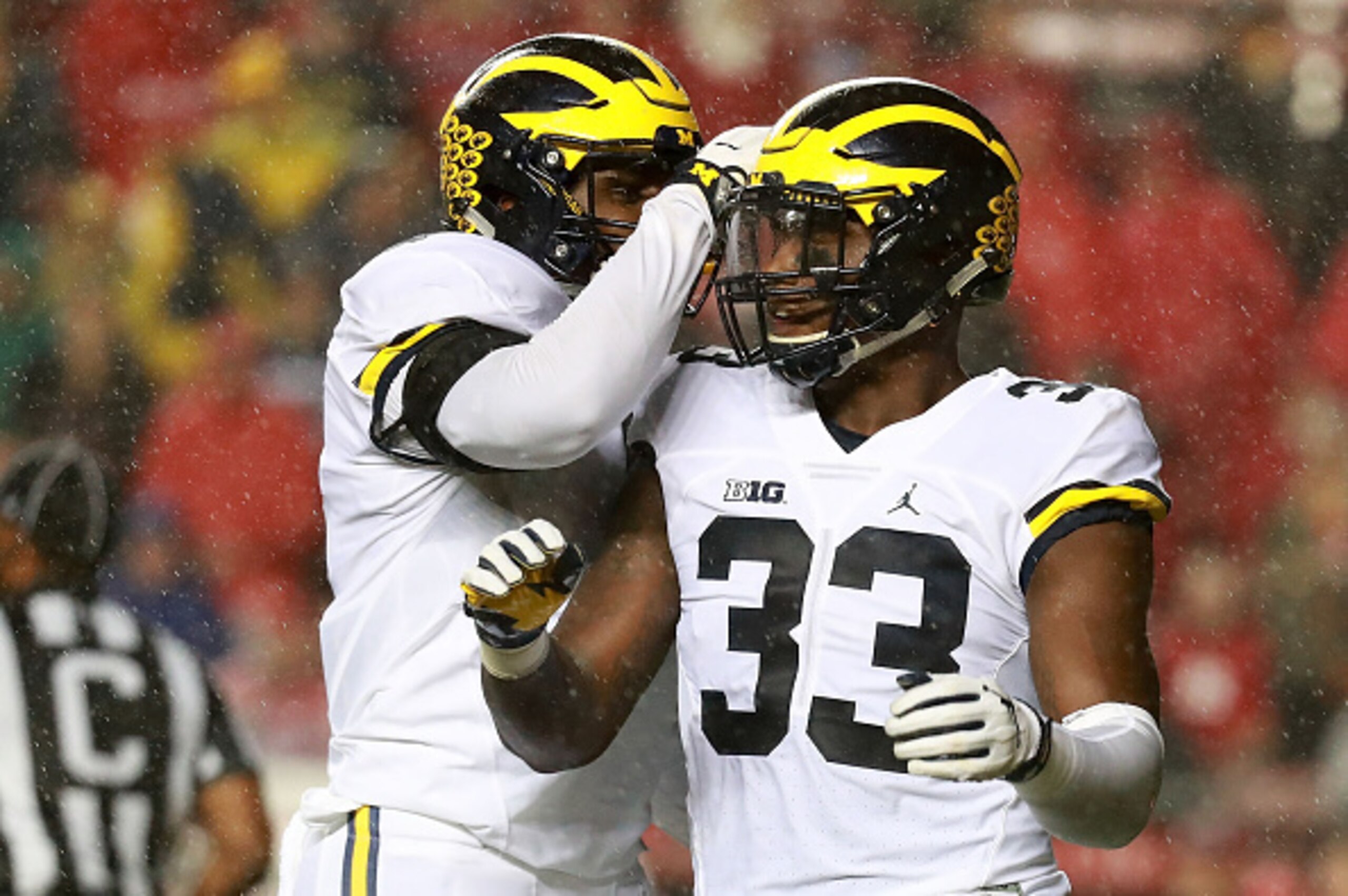
Taco Charlton is the first of two Wolverines defenders Washington would be smart to avoid on draft day. There's just something about Charlton that leaves you thinking his core natural talent isn't always duplicated by what's seen on film.
In other words, Charlton leaves too many plays between the hashmarks. Delivering on a regular basis is a question often asked of the rush end during his collegiate career, according to Lance Zierlein of the league's official site: "'Inconsistent' has been the buzzword that has followed Charlton since coming to Michigan, but he began the process of shaking it during his senior season."
Zierlein is right about Charlton making good on his final year at Michigan. The 6'6", 272-pounder was in on 10 sacks and eight quarterback hurries in 2016, per cfbstats.com. Those numbers indicate Charlton would be an asset in Washington.
However, Zierlein also noted how Charlton's ability to be a hit in the big league will depend a lot on his being "committed to the weight room and willing to absorb coaching." Those are pretty big ifs for a team to be convinced into using a top-20 pick on Charlton.
While the numbers were there in his final season with the Wolverines, they never were there before. Interested teams will have to decide if this is or isn't a player who sat on his talent until the chance of a pro payday presented itself.
3. Deshaun Watson, QB, Clemson
3 of 10
It's surprising Deshaun Watson's name has been linked with the Redskins as often as it has this offseason. Yet more than one draft scribe has floated the idea of Clemson's dual-threat quarterback moving to D.C.
Just this week, CBSSports.com' Will Brinson sent Watson to Washington in his latest mock draft. His idea has the Redskins preparing early to get rid of Cousins.
Back in March, Sports Illustrated's Chris Burke (h/t Stephen Czarda of the Redskins' official website) tabbed Watson to Washington. Later in the month, R.J. White of CBSSports.com also had Washington picking Watson 17th overall: "I can definitely see Bruce Allen and [owner] Dan Snyder pulling the trigger on the splashy pick in Watson, who led Clemson to the national title this past season. There are plenty of areas in Watson's game that need improving, and he would benefit from sitting a year before taking the reins in Washington."
As far back as January, Dieter Kurtenbach of Fox Sports (h/t Tommy Chalk of the Washington Times) made the same selection. Frankly, all of this Watson-to-Washington talk is baffling.
For one thing, ditching Cousins now after back-to-back Pro Bowl seasons makes no sense. There is still time under his current tag to settle on a new long-term deal before the season begins.
Even without fresh terms, Cousins is the best quarterback on the roster, one who knows Gruden's offense well and fits it like a glove. No. 8 also offers that rarest of rare commodities at Redskins Park, namely continuity.
Why wreck even being relatively settled at football's most important spot by positioning Watson to look over Cousins' shoulder all season? Imagine the calls for Watson to start the first time Cousins throws an interception.
There's also the not-so-small matter of Watson being a terrible scheme fit for Gruden. He's a dynamic runner and a boom-or-bust passer, evidenced by his "30 interceptions over the past two seasons," per ESPN.com's John Keim.
Investing heavily in a dynamic athlete with questionable mechanics for the nuances of playing quarterback at the pro level proved a disaster for the Redskins with Robert Griffin III. Results would likely be similar with Watson, especially since Gruden doesn't design his offense for dual-threat players under center.
Drafting Watson would only serve to reduce the franchise to the level of dysfunction and chaos most of the NFL community mockingly associate the Burgundy and Gold with.
.jpg?w=2560 "Chiefs Giants Football")
.jpg?w=2560 "Colts Football")
.jpg?w=2560 "Titans Colts Football")
4. John Ross, WR, Washington
4 of 10
It must be so tempting for the Redskins to look at John Ross and see DeSean Jackson. After all, the former Washington Huskies burner boasts similar vertical speed to D-Jax.
Even Ross' slight 5'11", 188-pound frame needn't be a concern, although Walter Football's Charlie Campbell believes it is: "Ross is short and lacks length, so he isn't going to be receiver who wins a lot of 50-50 passes against NFL cornerbacks. He also could have issues getting off jams from bigger press-man corners."
Campbell has a point, but a lack of physical might never stopped the 5'10", 175-pound Jackson from terrorizing NFL defenses. Ross, armed with his record-setting 40-yard dash speed from the combine, has the potential to do the same.
So why should the Redskins avoid Ross?
It's simple. This team doesn't need another speed merchant at wide receiver. New signings Terrelle Pryor and Brian Quick can both stretch coverage vertically. So can 2016 first-round pick Josh Doctson.
In fact, Doctson's presence makes the strongest case for not drafting Ross. The Redskins still have to find out what they have in Doctson, who appeared in only two games during a rookie season interrupted by injuries.
It's too soon to give up on the one-time TCU sensation former general manager Scot McCloughan thought worthy of a first-round pick. This isn't Chicago Bears and Kevin White territory just yet.
Even Allen thinks McCloughan made the right call selecting Doctson, per Liz Clarke of the Washington Post: "So we need Josh to step up and take that opportunity. He has an opportunity now to succeed."
Put a healthy Doctson alongside Pryor, Quick and emerging slot star Jamison Crowder, and the Redskins will have all the weapons they need at wideout for 2017.
5. Jabrill Peppers, S/LB, Michigan
5 of 10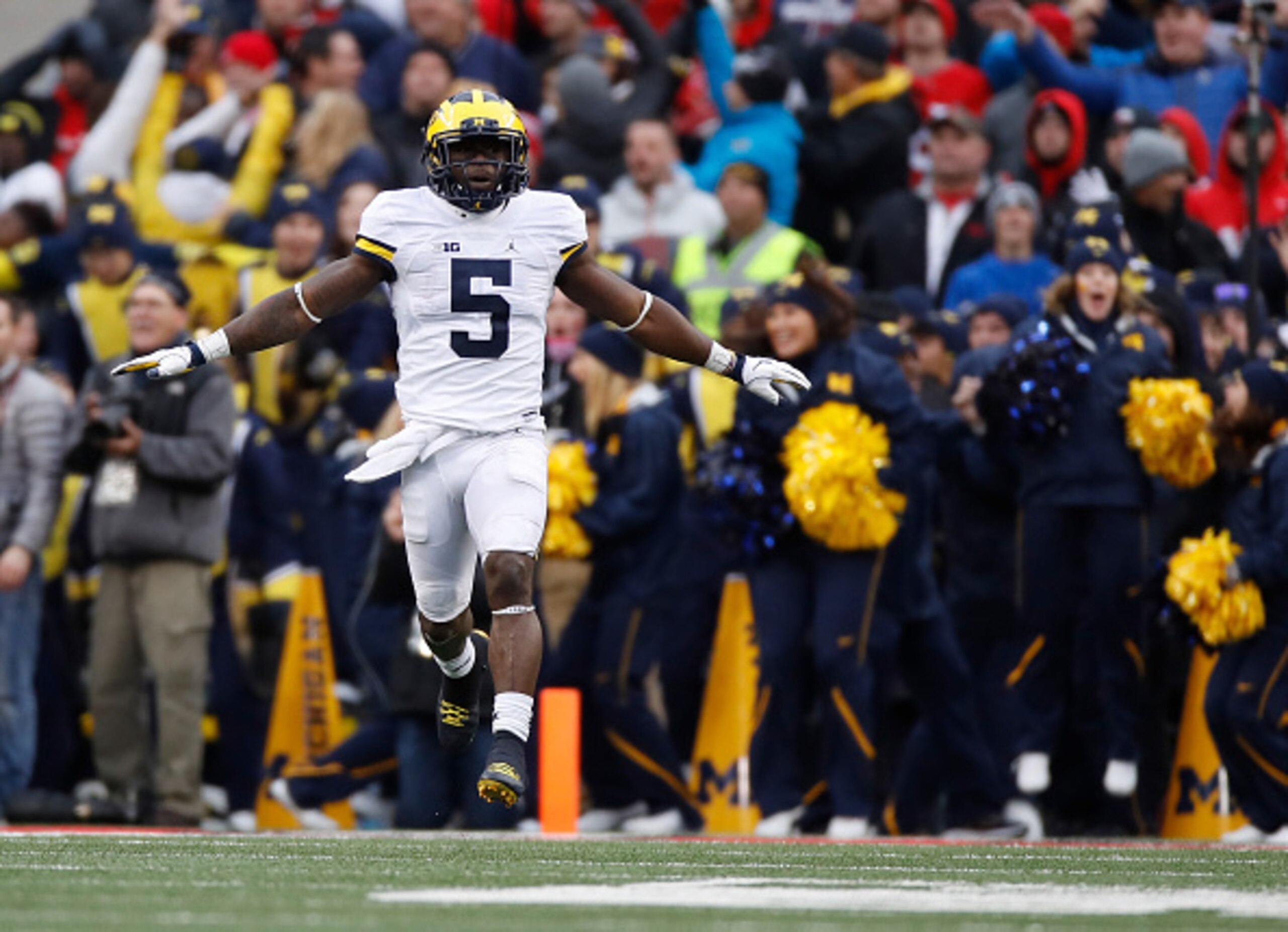
It's not easy finding draft scribes who don't think the Redskins should draft Jabrill Peppers with the 17th pick in the first round.
Lance Zierlein of the league's official website is one writer who sends Peppers to Washington: "This is probably earlier than I would go with Peppers, but with DeAngelo Hall on the back end, Peppers would be allowed to play in space and be deployed all over the field like he was at Michigan."
Zierlein's reference to Hall is telling because it speaks to exactly why the Redskins should avoid Peppers on draft day. If Hall is ticketed to play free safety, as Zierlein supposes, Peppers would naturally be left to man the strong safety spot.
Such a scenario would render free-agent arrival D.J. Swearinger and 2016 second-round pick Su'a Cravens moot. Both are hitters who could handle operating close to the line of scrimmage as force players.
Cravens' crossover skills as a hybrid linebacker would also be wasted by drafting Peppers, a defensive back who also doubled up as a linebacker at Michigan. If the Redskins were truly serious about drafting Peppers, they wouldn't have signed Swearinger, nor would they be moving Cravens to safety full time.
Frankly, the Redskins' secondary doesn't need another hybrid type. Instead, the group could use a more natural and durable free safety than Hall, a converted cornerback who has missed 31 games and not intercepted a pass in three years.
Considering Will Blackmon, another converted corner, is also in the running at free safety, the need for a player who traditionally fits the mold at the position only grows. It's why somebody like Washington's Budda Baker would be a better fit for the Redskins than Peppers.
6. T.J. Watt, DE/LB, Wisconsin
6 of 10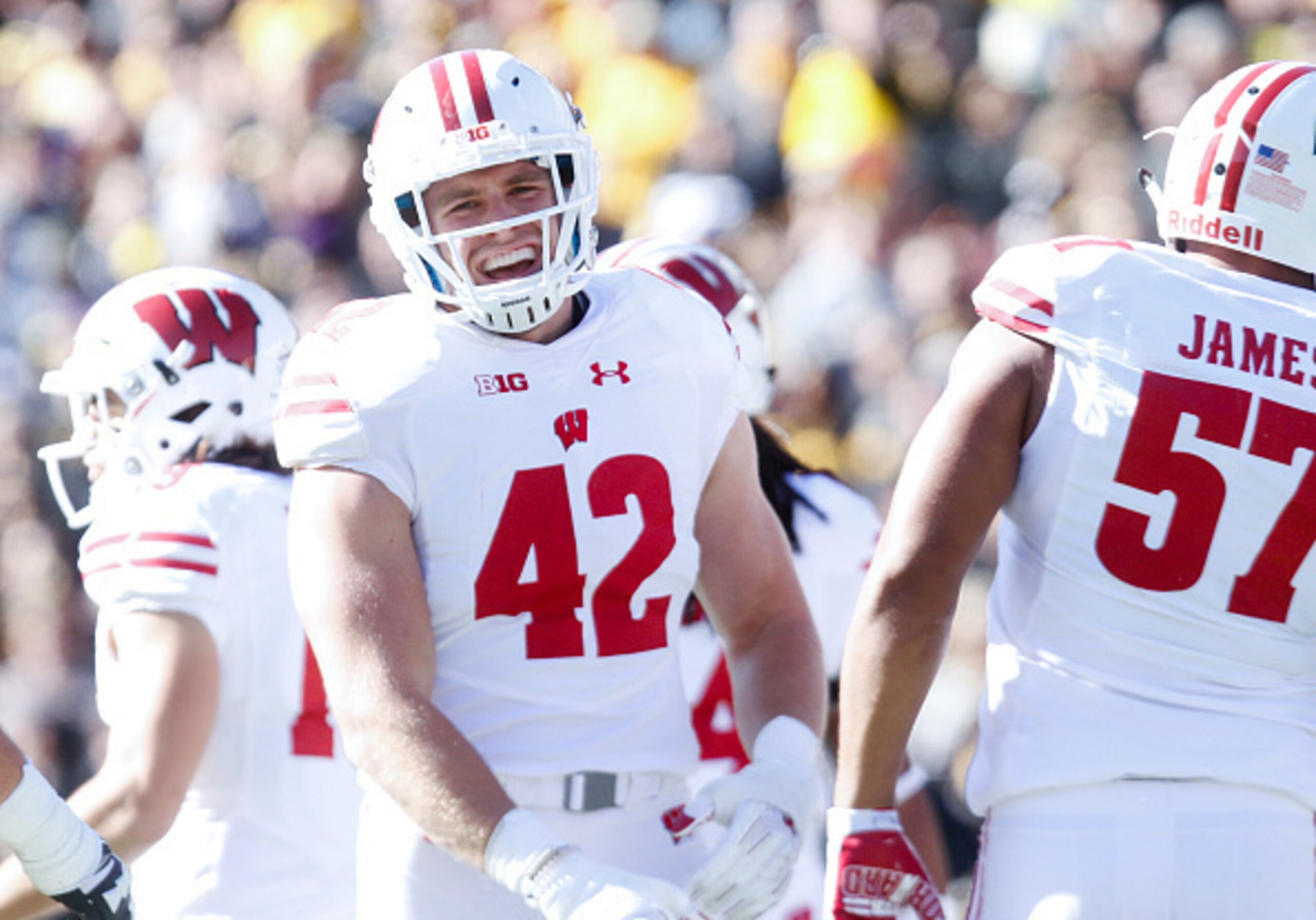
T.J. Watt is a late riser up draft boards who revealed last month he would meet with the Redskins, per Jeremy Bergman of the league's official website. ESPN.com's John Keim felt the team's willingness to talk things over with J.J.'s brother reinforced a commitment to bolster the pass rush ahead of the new season.
Yet the same commitment will be better served by avoiding Watt the younger. He played more than one spot at Wisconsin, lining up on the edge as well as on the inside. However, that's just where the comparison between Watt and Clay Matthews of the Green Bay Packers, another versatile and roving pass-rusher, ends.
Unlike Matthews, Watt doesn't possess the natural dynamism to be a true game-wrecker in the pros. In particular, he is sorely lacking the initial quickness out of his stance and closing speed to regularly overwhelm wily offensive tackles.
Slow feet are a killer for both blockers and pass-rushers in the NFL. It's why Watt wouldn't generate enough heat off the edges to be a consistent menace in Washington's pass-rushing rotation.
7. Zay Jones, WR, East Carolina
7 of 10
Knocking a draft prospect for putting up eye-popping numbers in a player-friendly system is always a tough needle to thread. After all, a player can only produce against the opposition in front of him and deserves credit for producing to his maximum.
Yet the argument is one that counts against East Carolina's Zay Jones, at least according to Charlie Campbell of Walter Football: "Jones had video game-like production playing in a college offense that inflates numbers. As a senior, he totalled 158 receptions for 1,746 yards with eight touchdowns."
The fact Campbell also noted Jones broke a school record for catches previously held Justin Hardy, who has caught just 42 passes in two years since entering the league as a fourth-round pick for the Atlanta Falcons in 2015.
Wide receiver is often considered the hardest position for rookies to succeed in right away. Expecting Jones to quickly get to grips with the intricacies of Gruden's playbook would not be a risk worth taking.
Jones could probably do it, but like Ross, he's not really needed at a position already looking loaded headed into the new season.
8. Montravius Adams, DT, Auburn
8 of 10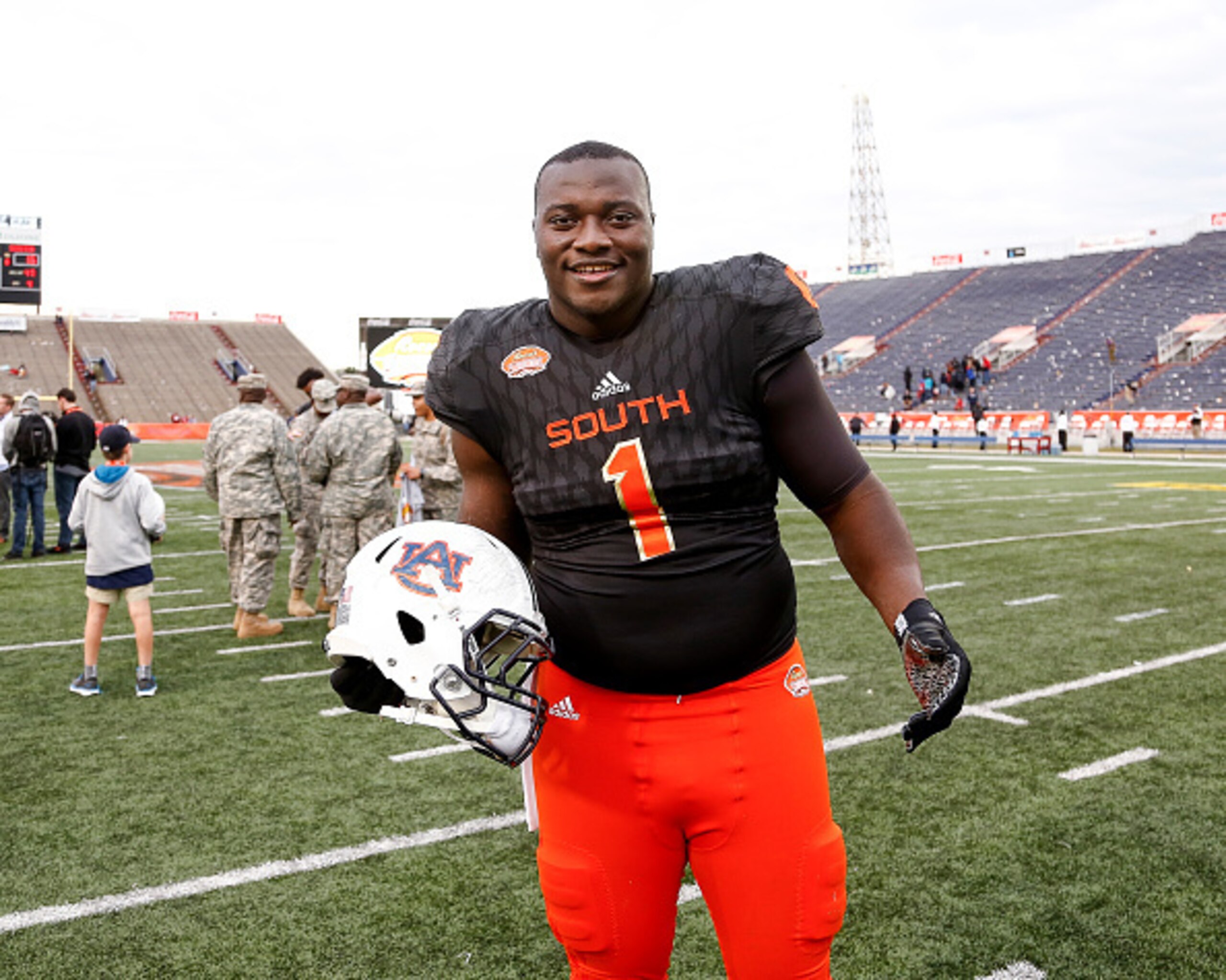
The Redskins could still use help along the defensive line, even after smartly adding to the position during free agency. However, Auburn's Montravius Adams isn't the player to provide it.
In many ways, Adams is reminiscent of another former Auburn trench-wrecker who made the jump to the NFL as a first-round pick, Nick Fairley. Yet despite boasting the size, instincts and aggression most coaches dream to find in a modern defensive tackle, Fairley has never lived up to the hype.
In fact, Fairley has played on three teams since being drafted by the Detroit Lions in 2011, largely because his effort and production have been questioned. It's a similar story with Adams, who should be in the conversation as the best D-tackle in this class but didn't produce enough during his time at Auburn.
A Pro Football Focus scouting report lamented Adams' failure "to display the consistent ability to anchor against double-teams, might not be strong enough to play NT." The report also noted how he "doesn't always play up to his talent level."
These critiques are a common theme with Adams. If he wouldn't fit at nose tackle, where Washington can turn to new boy Terrell McClain or incumbents Ziggy Hood and Phil Taylor, there wouldn't be an obvious spot for Adams at Redskins Park, making him one to avoid.
9. Wayne Gallman, RB, Clemson
9 of 10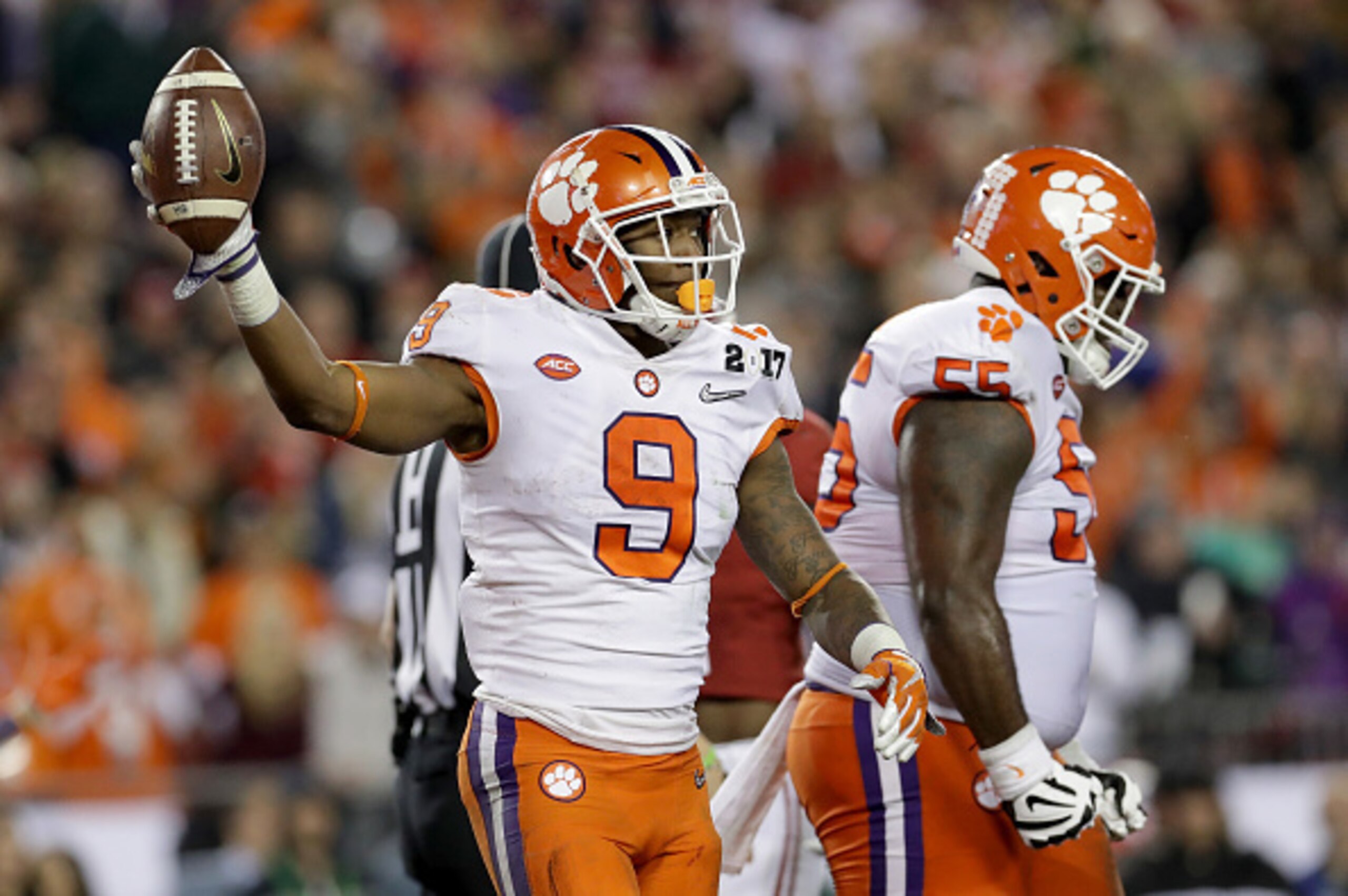
The Redskins need to come out of this draft with a dynamic running back capable of boosting an anemic ground game. However, don't count on Clemson's Wayne Gallman being it.
Perhaps the biggest criticism you could level against Gallman is his lack of imagination as a runner. As a straight-line grinder, he was dependable and durable for the Tigers.
However, this is a back who doesn't always make the most of his naturally quick feet. Nor does he show elite perception when choosing holes to exploit beyond his initial blocks.
Stellar vision and the ability to be decisive about when to make cuts are the two key attributes runners need to thrive in Washington's version of the zone-based rushing scheme. Putting Gallman in this system would only give the Redskins another steady yet limited and big-play back in the mold of 2016's undrafted rookie Robert Kelley.
10. Forrest Lamp, G, Western Kentucky
10 of 10
It's easy to wonder if the Redskins would be tempted by another unfashionable yet skilled offensive lineman with crossover potential to play multiple positions along the front. If so, Western Kentucky's Forrest Lamp may cross their radar, even though the smarter play would be to avoid him.
Drafting a lineman others weren't high on is the route the team took in the first round in 2015 when the now-deposed McCloughan sensibly used a top-five pick on Iowa tackle Brandon Scherff. Converting Scherff to guard has certainly worked out well since, as he's developed into a Pro Bowl-level O-lineman.
However, there are differences between drafting Scherff and settling for Lamp. For one thing, Washington's front five has gotten stronger since Scherff arrived in 2015. His development, along with right tackle Morgan Moses, has solidified a group already underpinned by classy left tackle Trent Williams.
Drafting Lamp to play next to Williams isn't necessary while Shawn Lauvao is still in town. The veteran is not always a favorite among fans, but Lauvao can be a punishing blocker in the running game when healthy.
By contrast, Lamp is merely the best pick of a meager guard class this year, a player possessing only "limited starting experience inside," according to Dane Brugler of CBSSports.com.
Lamp may have intriguing raw skills and intangibles, but he is still a prospect the Redskins can justifying avoiding later this month.
Sticking to safe prospects who fit specific positions of need is the best way for Washington to use this year's draft the right way to refine a playoff-ready roster.
.jpg?w=2560)
.jpg?w=2560 "Cardinals Giants Football")






