

NFL1000: Denver Broncos 2017 NFL Draft Preview
The Denver Broncos won Super Bowl 50 despite an unsettled quarterback situation because they had the NFL's best defense, per Football Outsiders. They followed that achievement by further unsettling their quarterback situation and missing the playoffs with a 9-7 record in 2016, despite again having the league's best defense.
It must be said, though, that the unsettlement wasn't all the team's fault. It was obvious from his physical decline that Peyton Manning had to retire. Broncos general manager John Elway refused to blink at backup Brock Osweiler's contract demands, a decision that looks brilliant in retrospect given Osweiler's epic failure with the Houston Texans. And the free-agent market didn't turn out the way Elway wanted it to. That happens. So, the Broncos put 2015 seventh-rounder Trevor Siemian up against 2016 first-round pick Paxton Lynch, and Siemian won the job. Lynch got his snaps when Siemian was hurt, but neither quarterback completed 60 percent of his passes, and neither looked ready for prime time—at least, not yet.
The matter of Denver's amazing defense is also now more complicated following the departure of defensive coordinator Wade Phillips. Phillips took the estimable personnel he was given and turned in what may be the best defense of the decade, with apologies to the Seattle Seahawks. New head coach Vance Joseph, a defensive mind, will implement his own schemes and philosophies, but all he can really do is try to match what Phillips did.
Still, it's the offense that needs fixing before the Broncos can get back to the postseason. The line regressed massively last year, the running back situation is far from certain, a third receiver is needed to complement the dynamic duo of Demaryius Thomas and Emmanuel Sanders, and additional help at tight end would be nice. The return of offensive coordinator Mike McCoy is certainly a step in the right direction, especially as it pertains to quarterback development—McCoy improved his standing earlier in the decade by presenting Tim Tebow with an easy first-read offense, which made Tebow look like an NFL quarterback for a while—but it's clear where this team needs to focus its energies in the draft: Make hay on offense while the defensive sun still shines.
Methodology
1 of 19
The NFL1000 team of scouts graded a series of important attributes for every player in their positional reviews. Using a scale starting at zero and going up to anywhere from five to 50 based on the position and the attribute, the scouts graded each player based on their expertise and countless hours of tape review over the years. Our evaluators had specific positional assignments based on their fields of expertise:
- Doug Farrar: Lead scout/quarterbacks
- John Middlekauff: Running backs/fullbacks
- Marcus Mosher: Wide receivers/tight ends
- Mark Schofield: Wide receivers/tight ends
- Duke Manyweather: Offensive tackles
- Ethan Young: Offensive guards
- Joe Goodberry: AFC defensive ends
- Justis Mosqueda: NFC defensive ends
- Charles McDonald: Defensive tackles
- Zach Kruse: 3-4 outside linebackers
- Derrik Klassen: 4-3 outside linebackers
- Jerod Brown: Inside linebackers
- Kyle Posey: Cornerbacks
- Ian Wharton: Cornerbacks
- Mark Bullock: Safeties
- Chuck Zodda: Special teams
Each corresponding position slide was written by the assigned scout.
Quarterback
2 of 19
Scheme: Air Coryell/Hybrid
Starter: Trevor Siemian
NFL1000 Scores: 67.4/100
NFL1000 Position Rank: 23/38
In the preseason, Siemian stole the starting quarterback job from first-round pick Paxton Lynch because he showed nice velocity, an easy, quick release, and impressive mobility. Then the regular season came along, more complicated pass defenses came with it, and Siemian started to struggle with ball placement and accuracy. At times, these were glaring and frustrating issues for Denver's receivers, but this isn't to say Siemian is a lost cause—far from it.
He's shown the mental fortitude to face the demands of starting in the NFL and replacing a legend; now, the challenge for Siemian is to stay within himself and make the throws he needs to make—especially under pressure.
Backup: Paxton Lynch
NFL1000 Scores: Not enough snaps to qualify
Lynch came out of Memphis last year with a few obvious issues to improve. At 6'7", he can get gangly with his footwork, his release isn't always clean, and he was going to be a project when it came to decision-making against NFL defenses, given that he occasionally got lost against collegiate opponents. He started two games in his rookie campaign when Siemian was hurt, and his nine sacks weren't all on the line—when Lynch slowed his reads, he tended to succumb to pressure.
The word is that Lynch will have an opportunity to compete with Siemian for the starting job in 2017, but unless he makes major improvements in the offseason, he'll have to wait.
Team Need: 4/10
Potential Draft Fits: Joshua Dobbs (Tennessee), C.J. Beathard (Iowa)
Running Back
3 of 19
Scheme: Zone
Starter: C.J. Anderson
NFL1000 Scores: 73.9/100
NFL1000 Position Rank: 9/82
After signing a long-term deal last March, C.J. Anderson injured his meniscus in Week 7 and was placed on injured reserve. He looked to be headed for a career year, but injuries happen, and he should be back to full health in 2017. Anderson went from an undrafted free agent to one of the better inside runners in the NFL over the last few seasons. As
As a one-cut downhill runner who also has the feet to make defenders miss, Anderson is a natural in the Broncos' zone scheme. He has excellent strength, with the ability to break soft arm tackles to gain extra yards. He plays fast but has a good feel for letting his blockers locate, which allows him to run outside the tackles. Anderson is also a natural in the passing game, has consistent hands and can get open against most linebackers. He is a stout in pass protection. Overall, a healthy Anderson should give Denver a big boost in the run game, helping it get back into the playoffs this season.
Anderson is also a natural in the passing game, has consistent hands and can get open against most linebackers. He is a stout in pass protection. Overall, a healthy Anderson should give Denver a big boost in the run game, helping it get back into the playoffs this season.
Backup: Devontae Booker
NFL1000 Scores: 68.3/100
NFL1000 Position Rank: 61/82
Devontae Booker was a favorite of many media members heading into the 2016 draft, but he did not deliver and had a disappointing rookie year. After being selected in the fourth round, he was thrust into starting action following Anderson's knee injury. Booker did not play fast, struggled to see holes and did not look confident. He also struggled to hold on to the football, with four fumbles, including three lost fumbles.
He did show signs of life down the stretch, excelling in the passing game over the last month of the season. Booker catches the football naturally and has the instincts in space to make defenders miss. He needs to improve this offseason to be a dependable backup but displayed some positive signs in December and January to build on for 2017.
Backup: Kapri Bibbs
NFL1000 Scores: Not enough snaps to qualify
Kapri Bibbs played a limited role in the Broncos offense. He had 29 carries and did not score a rushing touchdown. Bibbs' role should be a major question with a new coaching staff in place. He lacks speed and the playmaking ability to get on the field. It's safe to say the undrafted free agent will need a good training camp just to make the team in 2017.
Team Need: 4/10
Potential Draft Fits: Joe Mixon (Oklahoma), Kareem Hunt (Toledo)
.jpg?w=2560 "Colts Football")
.jpg?w=2560 "Chiefs Giants Football")
.jpg?w=2560 "Titans Colts Football")
Fullback
4 of 19
Scheme: Zone
Starter: Andy Janovich
NFL1000 Scores: 73.7/100
NFL1000 Position Rank: 2/20
Andy Janovich established himself as one of the best fullbacks in the league as a rookie. That was until he hurt his ankle in Week 12 and was placed on injured reserve. Janovich was drafted in the sixth round and immediately became the Broncos starter. He is a good athlete who plays with a physical nature. An excellent lead blocker who can locate linebackers in space, Janovich has the power to move bodies on contact. He is more than functional as a ball-carrier in short-yardage situations and can also break long runs because he plays fast. He has soft hands for a fullback, and his role in the passing game should expand moving forward. Elway found another gem late in the draft who should help Denver revitalize its running game next season.
Team Need: 0/10
Potential Draft Fits: The Broncos have their fullback of the future in Janovich
Wide Receiver
5 of 19
Scheme: Air Coryell/Hybrid
Starter: Demaryius Thomas
NFL1000 Scores: 71.6/100
NFL1000 Position Rank: 9/155
Even with inconsistent play from the quarterback position, Thomas and Sanders enjoyed productive seasons in 2016, recording over 1,000 receiving yards apiece. Thomas hauled in 90 passes for 1,083 yards and five touchdowns and served as a prototypical X receiver in the Denver offense. He has the size (6'3", 229 lbs) and speed necessary to thrive on the outside, and he can run a variety of routes along the boundary as well as down the field. Strength is another core component of his game, and he has the upper-body power to fight off jams at the line of scrimmage and get into his routes quickly.
Thomas' strength also helps him at the catch point, as his hands give him an advantage in many contested-catch situations. For example, on a reception against the Tennessee Titans in Week 14, Thomas secured a pass with his hands on an in-breaking route with Brice McCain draped all over him, committing pass interference. Those types of plays are a staple of Thomas' game and help him bail out his quarterbacks on errant passes or throws into coverage.
Starter: Emmanuel Sanders
NFL1000 Scores: 70.7/100
NFL1000 Position Rank: 13/155
Sanders caught 79 passes for 1,032 yards and five touchdowns last season—three more receptions than he tallied in 2015. He is a versatile receiver with the ability to run routes out of the slot and on the boundary as a Z receiver, but because of his footwork and quickness at the line, he can align as an X receiver in some situations.
His versatility also extends to the route tree, as Sanders gives the Denver offense every route against every type of coverage. He can beat the press and release vertically or even shake defenders loose on shorter routes such as curls and slants. He can find space on over routes or crossing routes against zone coverage and has good awareness and feel for the defense in those situations. He is also dangerous with the football in his hands and adds to the blocking game, as he is willing to engage defenders on running plays and after fellow receivers record receptions.
Backup: Bennie Fowler
NFL1000 Scores: 60.0/100
NFL1000 Position Rank: 130/155
A Michigan State product, Bennie Fowler III saw limited action last season, appearing in 13 games. Over that time, he caught only 11 passes for 145 yards and two scores. His biggest play of the season came in a big Week 12 matchup against the Kansas City Chiefs, as he caught a 76-yard touchdown pass from Siemian. On that play, he got separation on a corner route against Phillip Gaines on a 3rd-and-2 situation and made a nice adjustment to a throw behind him. From there, Fowler outraced Gaines to the end zone. This play showed just a glimpse of what he can provide as a receiver. With some refinement as a route-runner, as well as some more consistency in catching the football, he could emerge as the third receiver for the Broncos this season.
Backup: Cody Latimer
NFL1000 Scores: 60.7/100
NFL1000 Position Rank: 1124/155
Cody Latimore played just 12 games in his third season with the Broncos after a solid career at Indiana University. In his time on the field, he pulled in only eight passes for 76 yards. His biggest play of the season might have come against the Titans in Week 14, when he caught a pass from Riley Dixon on a fake punt to convert a fourth down. On that play, he ran a good stop route to fool the coverage player on the outside. But Latimore has mainly been a contributor on special teams the past few seasons and has yet to break into the lineup as a receiving threat.
Backup: Jordan Taylor
NFL1000 Scores: 60.2/100
NFL1000 Position Rank: 129/155
Rookie Jordan Taylor appeared in all 16 games for the Broncos last season, and of the three backups, he was the most productive. He caught 16 passes for 209 yards and two touchdowns, including a six-yard scoring play against the Chiefs in Week 12 on which he showed the ability to work open in a scramble situation. He has ideal size to play the X receiver position, standing 6'5" and weighing 210 pounds, and he also showed some ability at the catch point last season, going up and snaring a few errant throws as well as holding on to some passes while absorbing a shot to his back from a defender. Given his size and relative inexperience, he will likely emerge from this trio of backups as the third option behind Thomas and Sanders.
Team Need: 5/10
Potential Draft Fits: Josh Reynolds (Texas A&M), Isaiah Ford (Virginia Tech), ArDarius Stewart (Alabama), Taywan Taylor (Western Kentucky)
Tight End
6 of 19
Scheme: Air Coryell/Hybrid
Starter: Virgil Green
NFL1000 Scores: 65.1/100
NFL1000 Position Rank: 28/96
Virgil Green's sixth NFL season was his most productive as a pass-catcher. The former Nevada tight end assumed a bigger role for Denver and caught 22 passes for 237 yards and a touchdown. As a receiver, Green is effective in the flat and underneath and works best against off coverage when matched versus linebackers. He did struggle with drops at times. When called on in the running game, though, he was a solid blocker who could be counted on to block the play side in a zone-blocking scheme. With the switch to a more Air Coryell-based passing system, Green might be required to run deeper routes, but his ability as a blocker and as a receiver in the shorter areas of the field makes him a useful piece for the Denver offense.
Backup: Jeff Heuerman
NFL1000 Scores: 60.1/100
NFL1000 Position Rank: 62/96
Jeff Heuerman contributed minimally to the Denver passing game last season, with only nine receptions for 141 yards. But with the new offensive scheme coming to town, he may play a bigger role going forward. Heuerman averaged 15.7 yards per reception, and on some of his nine catches he showed an ability to attack a defense vertically. A prime example was his 31-yard reception against the New England Patriots in Week 15, when he ran a seam route against a Cover 3 look and got behind the underneath defenders before securing a pass from Siemian. Routes like this might make Heuerman a great fit for the Denver offense in 2017.
Backup: A.J. Derby
NFL1000 Scores: 59.1/100
NFL1000 Position Rank: 74/96
After spending his rookie season with New England on injured reserve, A.J. Derby made the Patriots' 53-man roster in 2016 and saw his first NFL action in Week 1 against the Arizona Cardinals. But late in October, he was traded to the Broncos for a fifth-round pick. He appeared in six games, catching 16 passes for 160 yards. Against the Titans in Week 14, he had five receptions for 57 yards and showed the ability to execute a strong chip against pass-rushers before releasing into the flat as well as the skill to pick up additional yards after the catch. But he also had a critical lost fumble late in that contest that allowed Tennessee to seal the game. Like Heuerman, Derby will enter the third year of his NFL career looking to solidify himself as the No. 2 tight end in Denver.
Backup: Henry Krieger-Coble
NFL1000 Scores: Not enough snaps to qualify
Rookie Henry Krieger-Coble spent the majority of his first NFL season on the practice squad. He did appear in the final two games of the season, notching one reception for 13 yards against the Chiefs in Week 16. In that game, he also executed a few strong blocks on the edge on running plays. He is likely a depth piece for the Broncos and their young tight end group.
Team Need: 4/10
Potential Draft Fits: Evan Engram (Mississippi), David Njoku (Miami), Bucky Hodges (Virginia Tech), Gerald Everett (South Alabama)
Left Tackle
7 of 19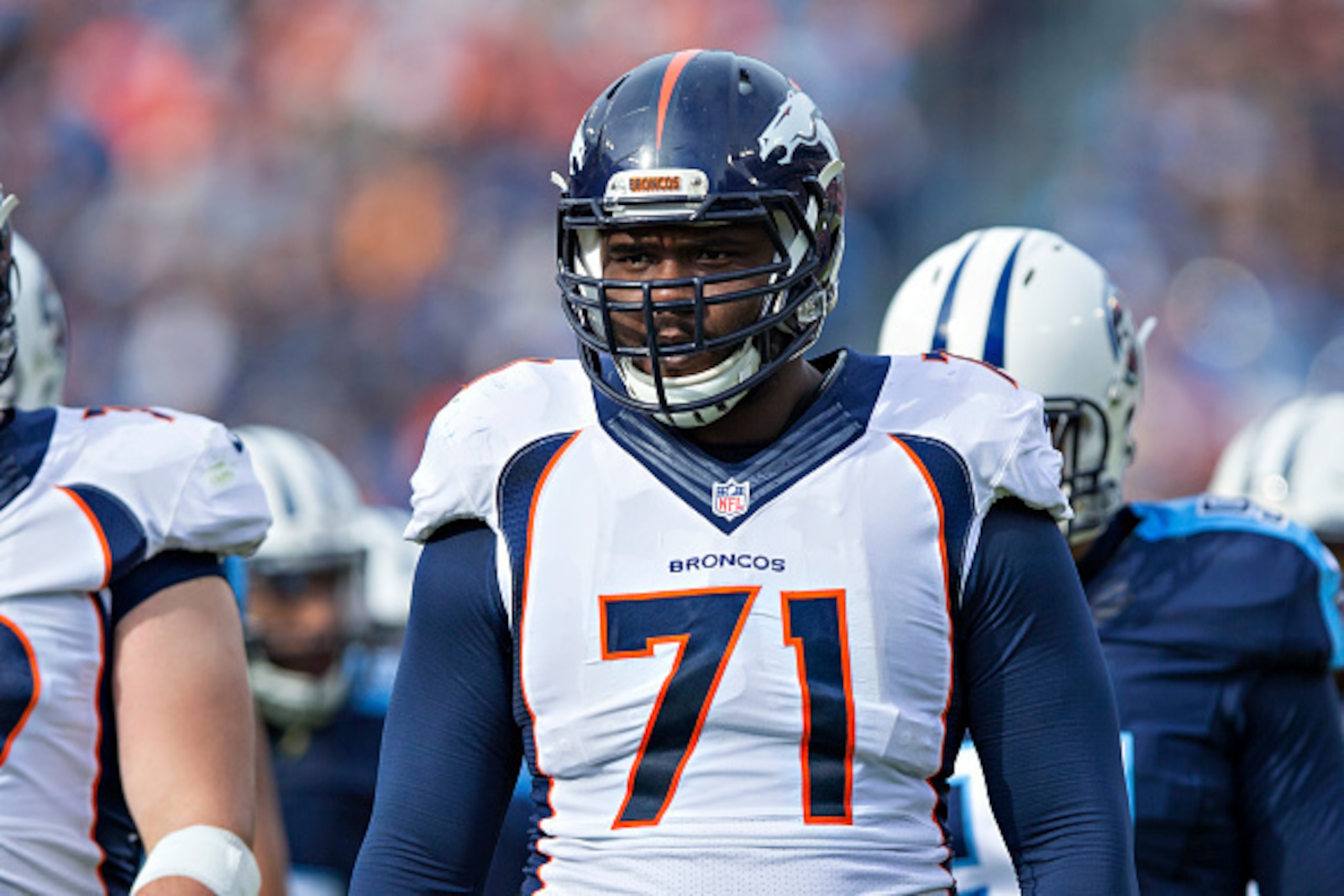
Scheme: Gap/Power
Starter: Donald Stephenson
NFL1000 Scores: 69.8/100
NFL1000 Position Rank: 28/38 (Graded as a right tackle)
Donald Stephenson signed with Denver last offseason and was expected to be a key piece in the revamping of the offensive line, but his lack of consistency in 13 games left a lot to be desired. The Broncos signed former Oakland Raider Menelik Watson in March, so the offensive tackle jobs figure to be a competition between Stephenson, Watson and possibly an early draft pick. With Watson best suited to play right tackle, it's possible the Broncos could move Stephenson to the left side. Stephenson possesses many of the traits you want in a starting tackle, especially a left tackle, but his up-and-down performance was what kept him from earning a starting role in Kansas City.
Backup: Ty Sambrailo
NFL1000 Scores: 63.4/100
NFL1000 Position Rank: 38/38 (Graded as a right tackle)
Ty Sambrailo's rookie season was laced with enough flashes to make many believe his future looked promising, but the soon-to-be third-year man has accumulated a rash of injuries that have seemed to halt his development. In two seasons, Sambralio has notched just seven starts, and in 2016 he struggled immensely at right tackle. The injury history and lack of elite physical traits tell us that in all likelihood, Sambrailo will be a career backup.
Team Need: 10/10
Potential Draft Fits: Ryan Ramczyk (Wisconsin), Cam Robinson (Alabama)
Right Tackle
8 of 19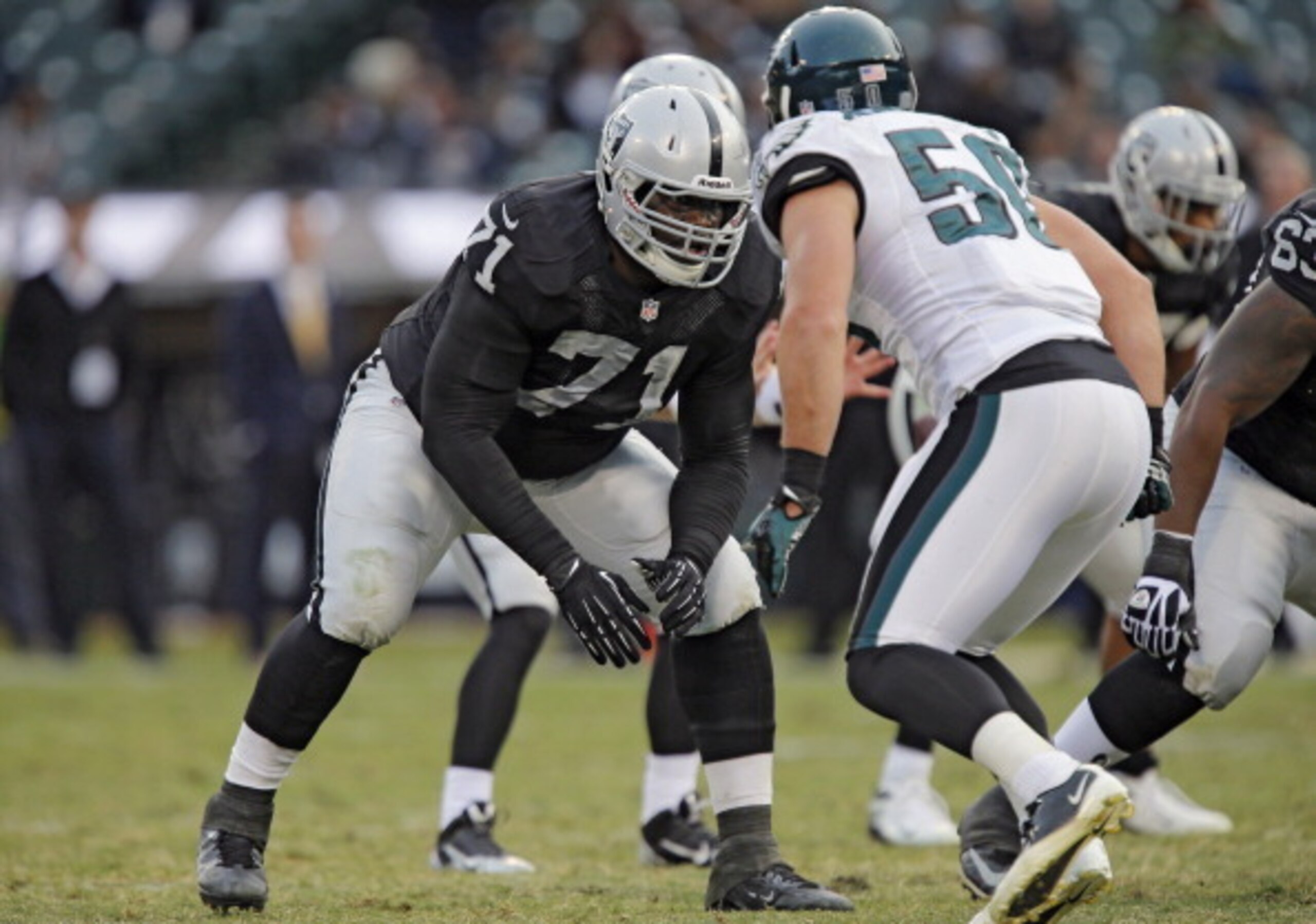
Scheme: Gap/Power
Starter: Menelik Watson
NFL1000 Scores: Not enough snaps to qualify
Watson was signed as a free agent but has struggled to find consistency during his career, following a similar path as fellow lineman Stephenson. We highlighted Watson in our NFL1000 piece about the right tackle free-agent market and provided a glimpse at what Denver got. Watson has been hampered by injuries and has been benched multiple times. In three seasons, he has not earned a full-time starting role. Still, he will be in competition for a starting role.
Backup: Justin Murray
NFL1000 Scores: Not enough snaps to qualify
Justin Murray, an undrafted free agent out of Cincinnati, spent 2016 on the Denver practice squad before signing a reserve/future contact in January. Murray figures to add depth and competition as a reserve right and left tackle.
Team Need: 10/10
Potential Draft Fits: Ryan Ramczyk (Wisconsin), Cam Robinson (Alabama)
Offensive Guard
9 of 19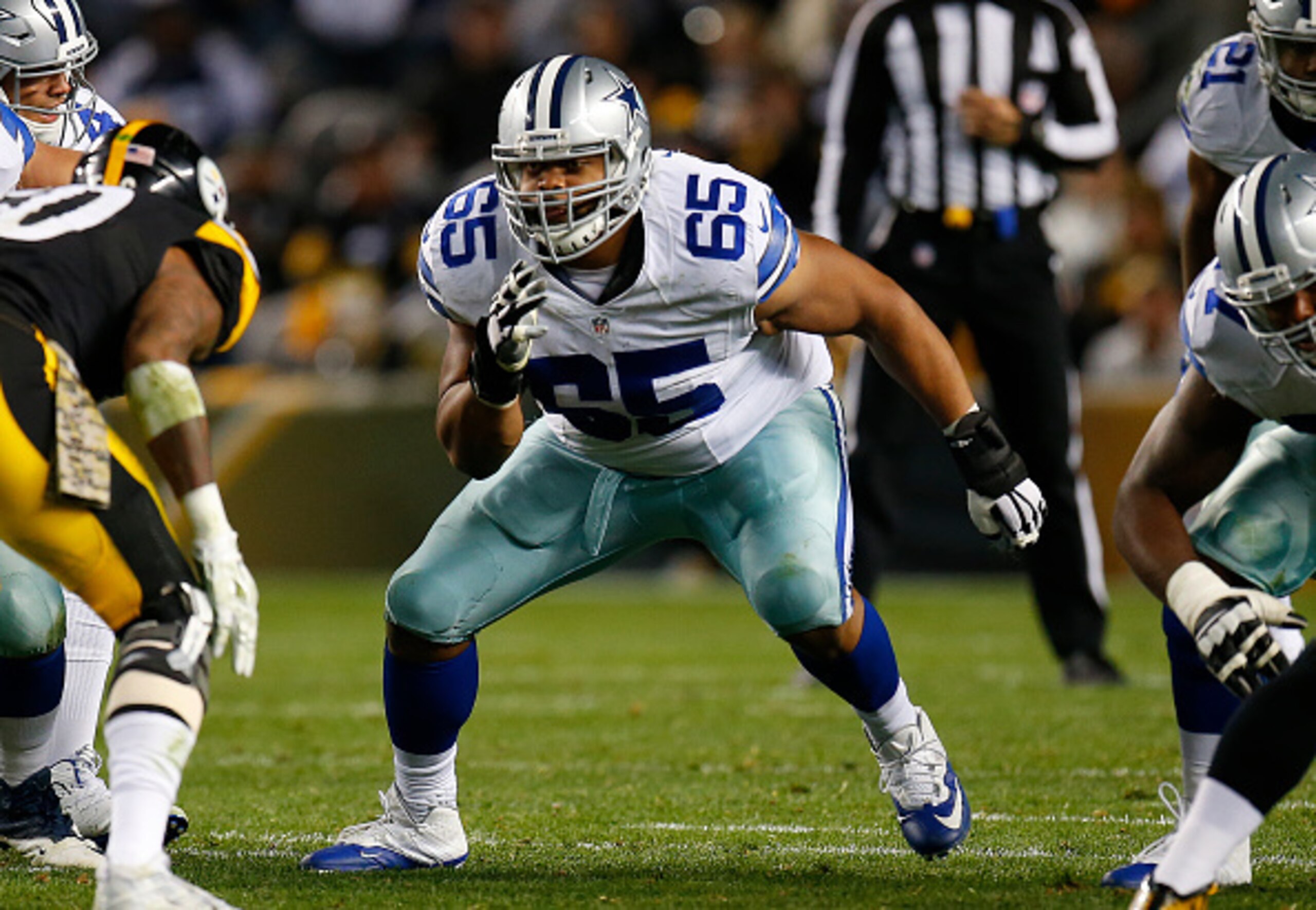
Scheme: Gap
Starter: Ron Leary
NFL1000 Scores: 71.2/100
NFL1000 Position Rank: 23/78
Denver's big free-agency pickup up front, Ron Leary is a great fit for the Broncos in their new power-based scheme. Leary should add a lot to the offensive line, and Denver certainly needs it given the performance of guys like Michael Schofield last year. The run game will likely be the focus of McCoy's offense early on, and Leary should be a valuable enforcer in that regard.
Starter: Max Garcia
NFL1000 Scores: 69.2/100
NFL1000 Position Rank: 42/78
Max Garcia fits the profile of this new power-based offense as well, though one of him and Leary will have to switch sides if they're both going to get on the field next season. His game is a work in progress, though he showed intriguing flashes on tape at times. Garcia wins with power and finishing ability and should continue to develop with this better schematic fit.
Backup: Michael Schofield
NFL1000 Scores: 67/100
NFL1000 Position Rank: 69/78
Unlike Leary and Garcia, Schofield's lack of strength makes him a poor fit for this new offense. He will battle for the lead swing job this year, and as is evidenced by his grade, he will be much better served coming off the bench going forward.
Team Need: 2/10
Potential Draft Fits: Damien Mama (USC), Jessamen Dunker (Tennessee State)
Center
10 of 19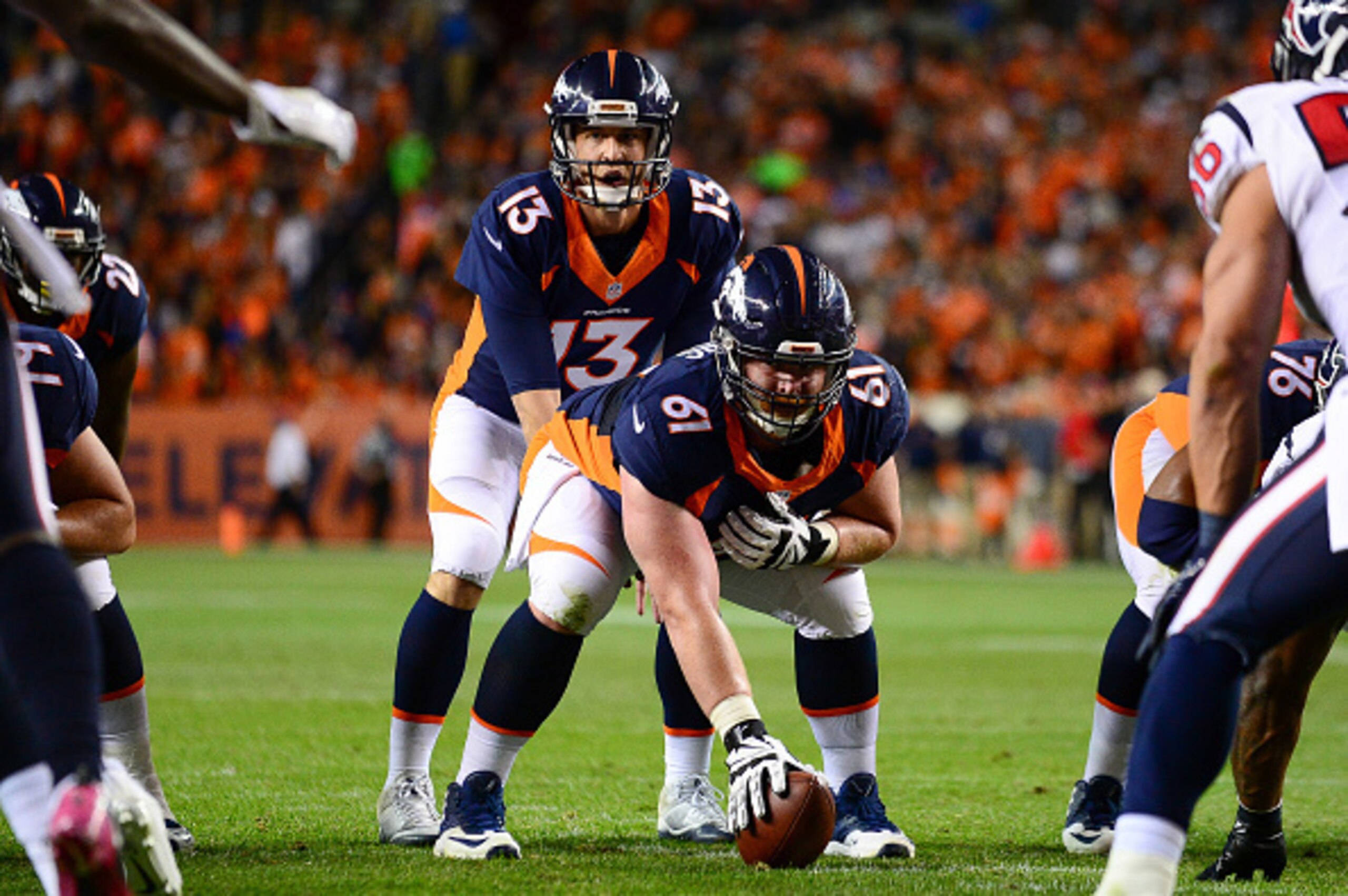
Scheme: Gap
Starter: Matt Paradis
NFL1000 Scores: 71.6/100
NFL1000 Position Rank: 10/38
Matt Paradis burst on the scene last year, and his strength was an asset in run and pass protection. He improved the performance of the whole Broncos line, especially from a pre-snap calls perspective. This new scheme will be less read-based than Gary Kubiak's read-heavy blocking scheme, but Paradis has the ability to pick up the concepts quickly so he can continue to be an asset before the ball is snapped.
Backup: James Ferentz
NFL1000 Scores: Not enough snaps to qualify
We haven't seen much of James Ferentz, an Iowa product who came over from Houston but has played limited snaps. He has been on the team for a couple of years now, but the new coaching staff may want to bring in its own players to provide competitive depth.
Team Need: 3/10
Potential Draft Fits: Cameron Tom (Southern Miss), Tobijah Hughley (Louisville)
Defensive End
11 of 19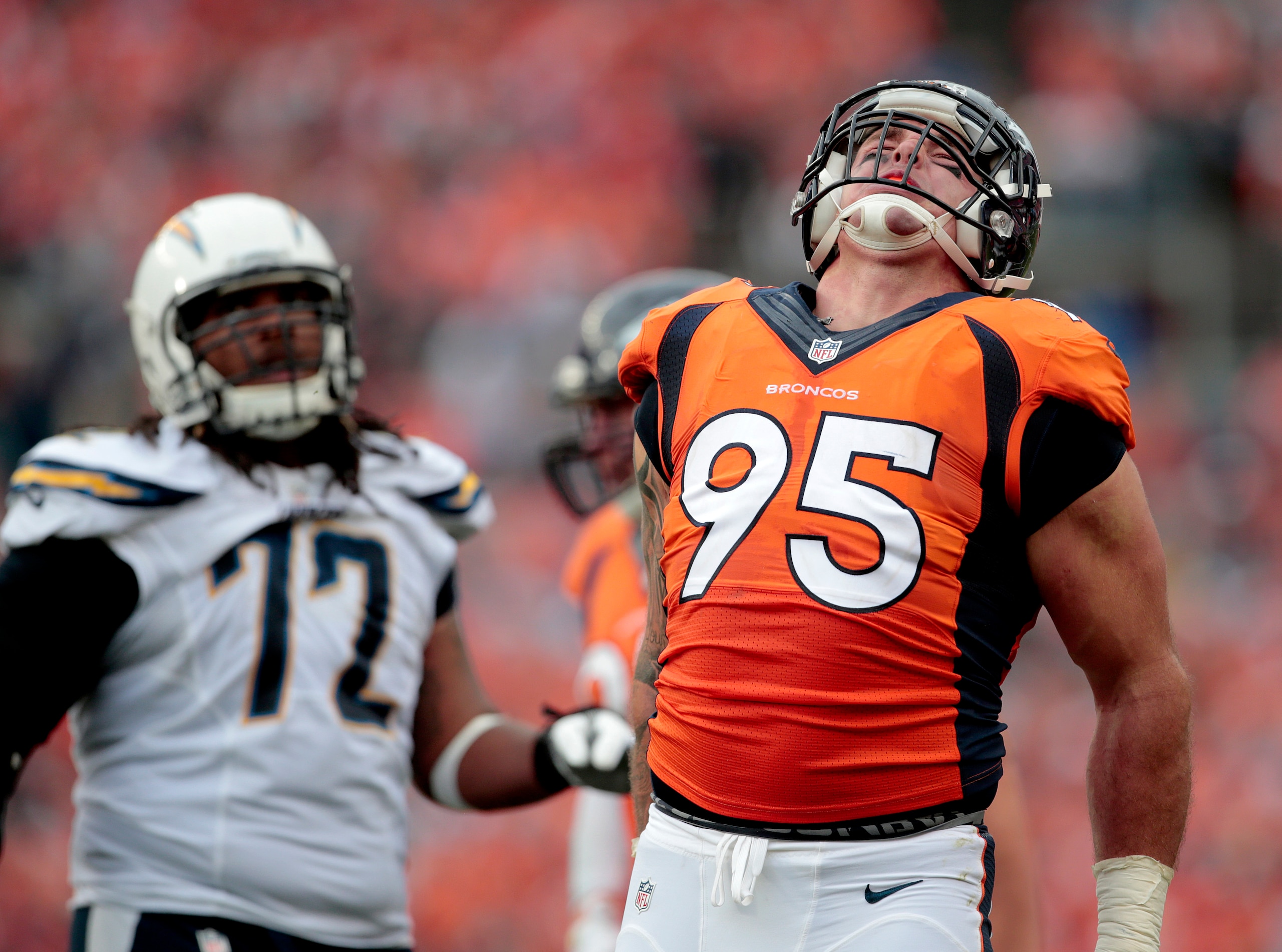
Scheme: 3-4
Starter: Derek Wolfe
NFL1000 Scores: 66.7/100
NFL1000 Position Rank: 8/53
Derek Wolfe started 2016 slowly but rounded into his usual self despite dealing with injuries. His 51 tackles and 5.5 sacks helped the Denver defense secure another great campaign. He's a disruptor with good power and a motor that runs hot. The highlight of Wolfe's season was the Broncos' Week 4 game against the Tampa Bay Buccaneers, in which he recorded six tackles and 2.5 sacks. If you need one game to watch of his, that would be it. Wolfe is one of Denver's definitive starters going into 2017.
Starter: Jared Crick
NFL1000 Scores: 63.5
NFL1000 Position Rank: 24/53
Jared Crick had a surprisingly productive first year in Denver, posting 53 tackles and three sacks. He was good as a run defender and opportunistic as a pass-rusher. The Broncos could upgrade this spot in their nickel defense, but as of now, Crick is a solid starter and should play in most of their base 3-4 packages.
Backup: Adam Gotsis
NFL1000 Scores: 56.9/100
NFL1000 Position Rank: 96/99 (Graded as a defensive tackle)
As a second-round pick in 2016, Adam Gotsis had an opportunity to play a big role in the Denver defense but ended up being more of a reserve as a rookie. He was active for all 16 games but played only a handful of snaps each week and totaled 221 on the season. With decent improvement in his sophomore year, Gotsis could eat into Crick's playing time and possibly relieve Wolfe for a few series.
Team Need: 4/10
Potential Draft Fits: Malik McDowell (Michigan State)
Defensive Tackle
12 of 19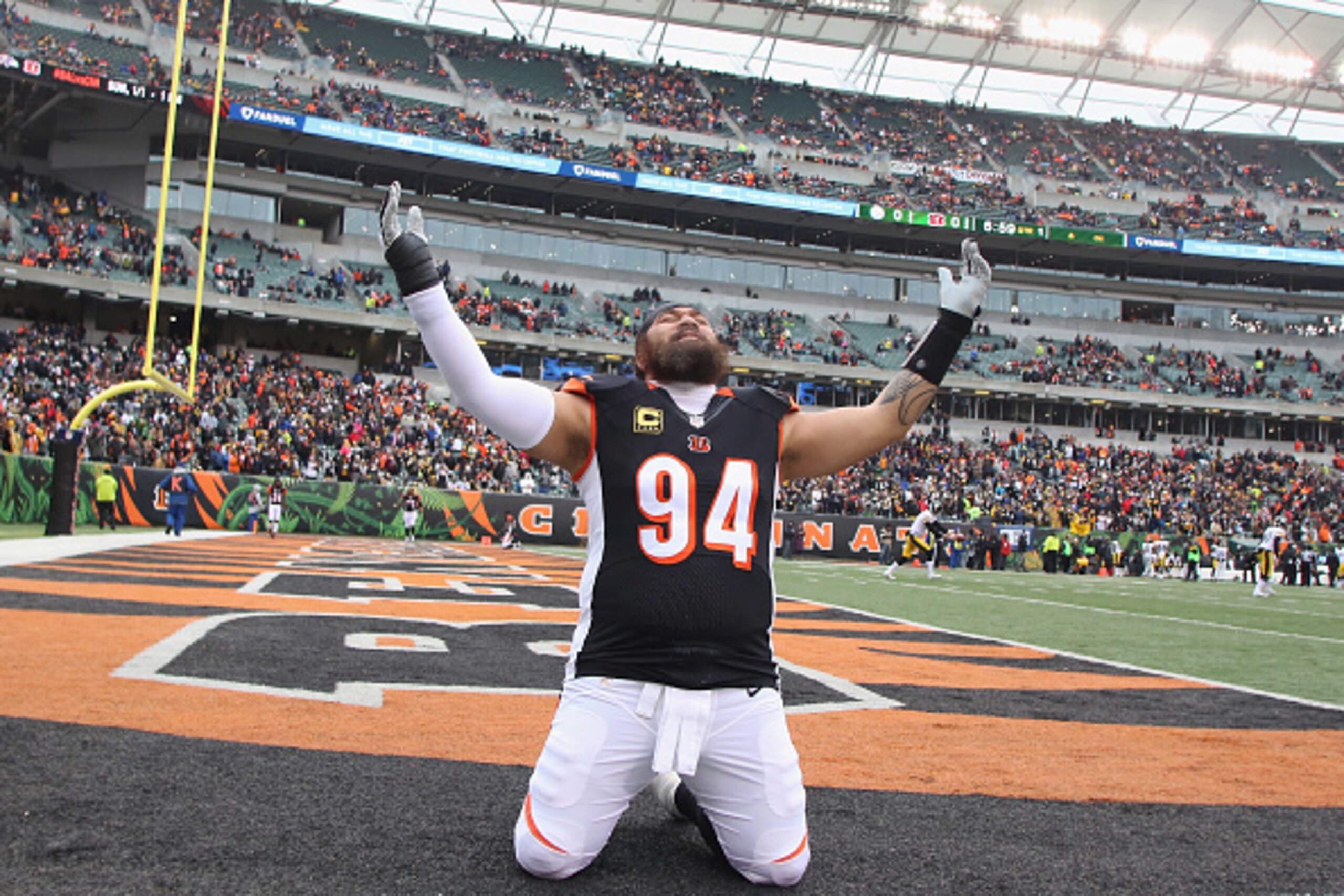
Scheme: 3-4
Starter: Domata Peko
NFL1000 Scores: 61.6/100
NFL1000 Position Rank: 62/99
The Broncos signed Domata Peko to be the nose tackle in Joseph's defense. It's not exactly an exciting move, but Peko should hold them over for a year while they search for a young replacement. Peko doesn't offer much as a pass-rusher. He'll be a steady, net-neutral presence for the Denver defensive line moving forward.
Backup: Zach Kerr
NFL1000 Scores: 59.3/100
NFL1000 Position Rank: 81/99
Zach Kerr has been bogged down by injuries since he entered the league as an undrafted free agent in 2014. He showed promise early in his career but has yet to regain the spark that helped him make the Indianapolis Colts in 2014. When Kerr was in the lineup last season, he struggled mightily as both a run-stopper and a pass-rusher. Perhaps a change in scenery is what the doctor ordered.
Backup: Kyle Peko
NFL1000 Scores: Not enough snaps to qualify
Kyle Peko is Domata Peko's cousin. His only action last season came against Oakland in the season finale, when he logged 14 snaps, per Pro Football Focus.
Team Need: 7/10
Potential Draft Fits: Eddie Vanderdoes (UCLA), DeAngelo Brown (Louisville), Dalvin Tomlinson (Alabama)
Outside Linebacker
13 of 19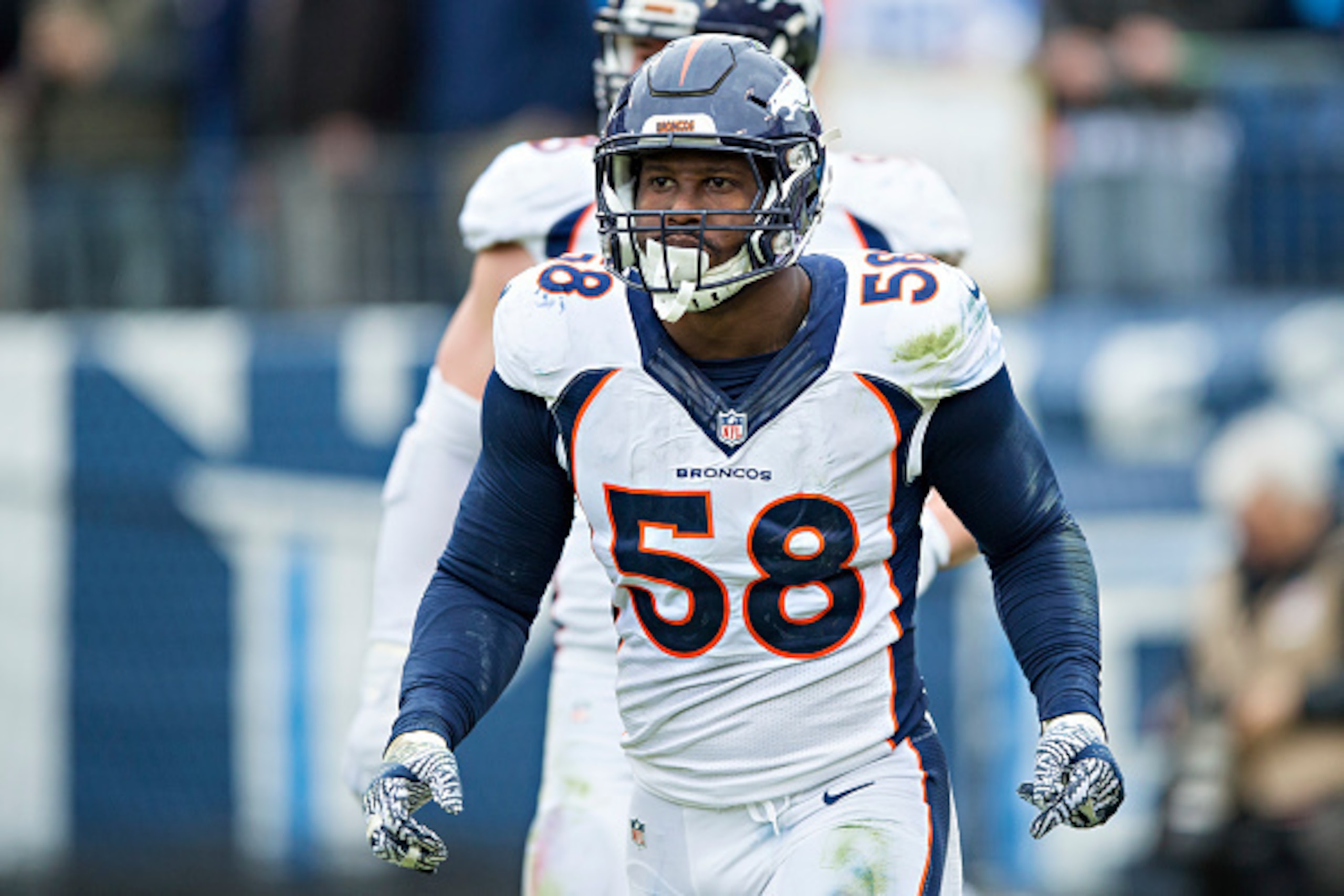
Scheme: 3-4
Starter: Von Miller
NFL1000 Scores: 77.9/100
NFL1000 Position Rank: 2/65
Von Miller remains the gold standard at 3-4 outside linebacker, even if he finished slightly behind Jadeveon Clowney in our final positional rankings. No edge-rusher can match his combination of burst, bend and finish around the corner, and Miller has developed into a dominant presence in setting the edge against the run. He finished as NFL1000's No. 20 overall player for 2016. Over the last three seasons, Miller has 38.5 sacks and eight forced fumbles—including 13.5 sacks and three forced fumbles last year. He is under contract through the 2021 season.
Starter: Shane Ray
NFL1000 Scores: 71.9/100
NFL1000 Position Rank: 9/65
A first-round pick in 2015, Shane Ray thrived in a bigger role after veteran DeMarcus Ware was injured last season. He produced a career-high eight sacks, including four over the final six games. With Ware now retired, Ray has the opportunity to be Denver's go-to option opposite Miller. If he can build on his promising second season, the Broncos will continue to field one of the best pass-rushing defenses in football.
Backup: Shaquil Barrett
NFL1000 Scores: 69.5/100
NFL1000 Position Rank: 20/65
Shaquil Barrett failed to improve on his promising 2015 sack total (5.5) with only 1.5 in 2016, but don't let the stats fool you. The undrafted free agent out of Colorado State is an effective edge player capable of handling a bigger role moving forward. Barrett possesses a terrific burst as an edge-rusher, and he held up better against the run during his second season. Expect the Broncos to give him more snaps in 2017. He will be a restricted free agent following the season.
Team Need: 1/10
Potential Draft Fits: Avery Moss (Youngstown State), Vince Biegel (Wisconsin), Samson Ebukam (Eastern Washington)
Inside Linebacker
14 of 19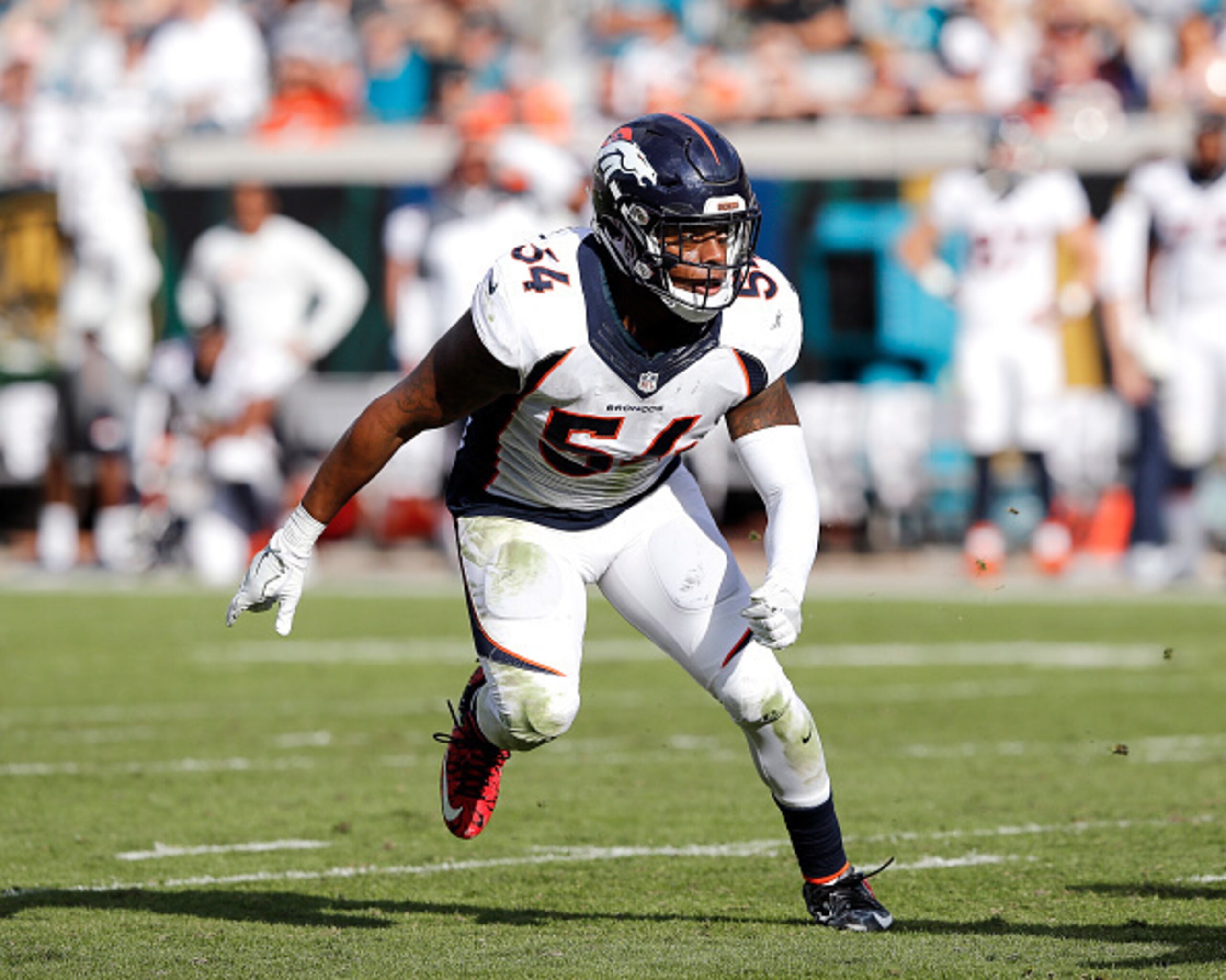
Scheme: 3-4
Starter: Brandon Marshall
NFL1000 Scores: 73.3/100
NFL1000 Position Rank: 10/65
Brandon Marshall landed in the top 10 of all inside linebackers in 2016, and for good reason. He's a top-tier player who can consistently produce as a run defender and in coverage. He's quickly becoming one of the more underrated defenders in the league. The Broncos defense has an above-average secondary and pass-rushing sensation in Miller, but Marshall is the steadying force of the unit. He's rarely out of place and has the athleticism to handle running backs in coverage.
Marshall missed five games in 2016 because of a hamstring injury and will have to show he's recovered. With an offseason to heal, it's hard to imagine Marshall will miss a step. He should comfortably return as the starter and will man the inside for the Broncos for the next four years.
Starter: Todd Davis
NFL1000 Scores: 71.5/100
NFL1000 Position Rank: 22/65
Todd Davis proved more than capable in his first year as a starter alongside Marshall. Danny Trevathan had joined the Chicago Bears before the 2016 season, which left a significant hole at inside linebacker. Davis had no trouble securing the position. He can over-pursue or misread keys in run support, but he consistently gives full effort. As contact and force become rarer from linebackers, Davis sets a high bar as a player who will bring speed into contact and initiate physicality at the line of scrimmage. He was exposed in coverage and will need to improve his ability to open up with dynamic skill players. Nevertheless, the Broncos have an established duo that could become a top-five pairing in no time.
Backup: Corey Nelson
NFL1000 Scores: 66.4/100
NFL1000 Position Rank: 55/65
Nelson is the coverage guy for Denver and a solid backup to both Marshall and Davis. He played more in 2016 because of injuries. In run support, Nelson is much like Sean Spence. He relies on athleticism and speed to shoot gaps but can often be bullied by even adequate competition. As of now, Nelson is little more than a backup with sub-package coverage duties. He'll struggle to become a starter without technical refinement in run support.
Team Need: 3/10
Potential Draft Fits: None. Could consider undrafted free agents for camp competition
Cornerback
15 of 19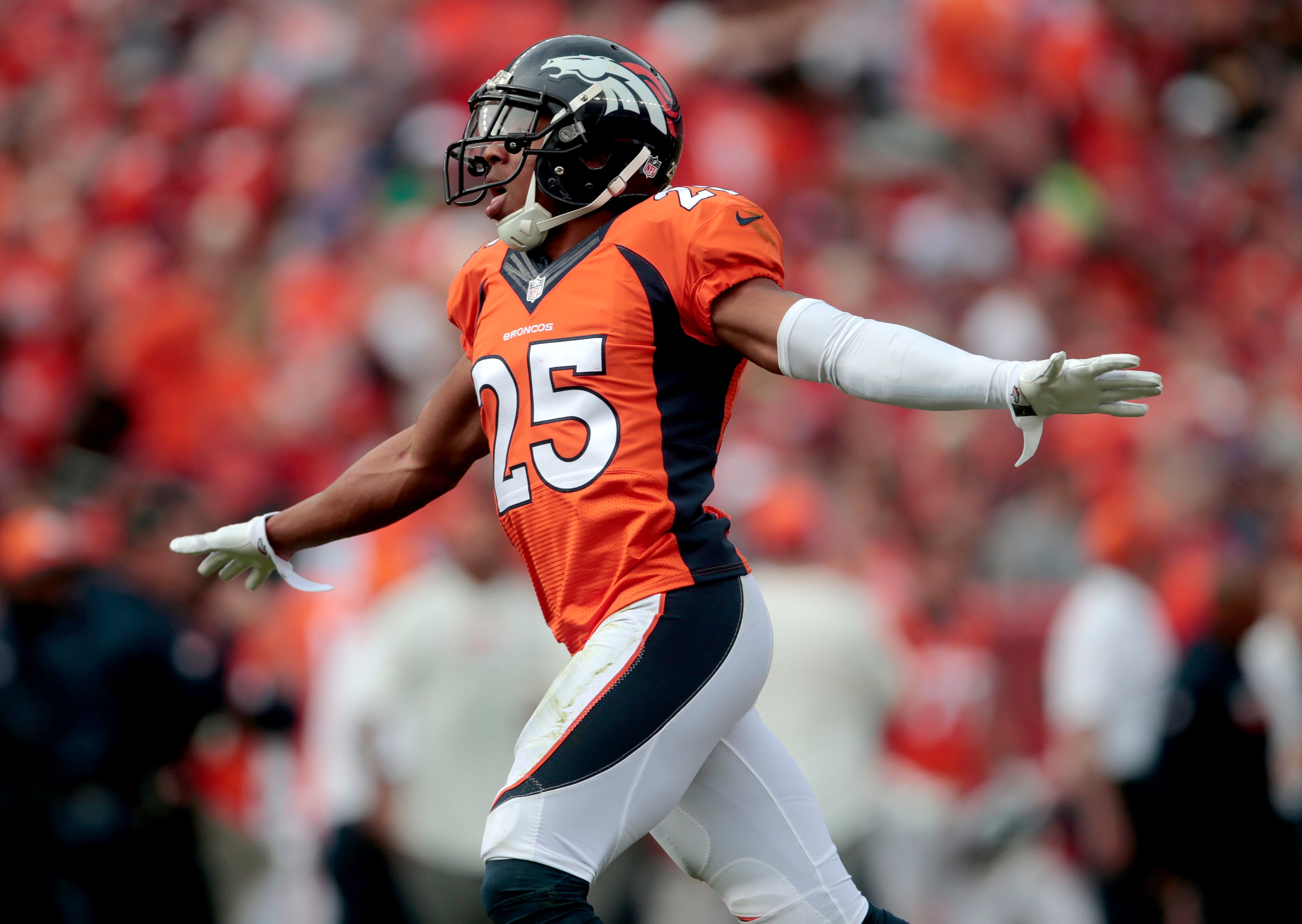
Scheme: Cover 1 and 2-Man
Starter: Chris Harris Jr.
NFL1000 Scores: 77.3/100
NFL1000 Position Rank: 1/133
Chris Harris Jr. was our top-rated corner by a good margin. We had him as best in coverage, reaction and the slot. On the surface, his two interception and 11 passes defensed look pedestrian. But those figures are low because his man was never open. Harris has cat-like quickness, and his anticipation of routes is second to none. Taller receivers can't shake free, and smaller receivers can't outsmart him. NFL1000's 22nd-ranked player is a rare talent who is more physical than his size (5'10", 199 lbs) would suggest. That shows up in the run game and at the line of scrimmage when he presses. It's hard to poke holes in Harris' game.
Starter: Aqib Talib
NFL1000 Scores: 72.5/100
NFL1000 Position Rank: 9/133
Aqib Talib is no slouch himself. Ranking in our top 10, the aggressive risk-taker would be the No. 1 corner on the majority of teams. Like Harris, Talib's season was nothing special by the numbers. But his three interceptions and 12 passes defensed don't do him justice. On Monday night in Week 7, Talib recorded our highest grade for the position against the Texans. He was a force in coverage, allowing only two catches on eight targets for minimal yardage. He wasn't beaten all game, and there were plenty of plays on which he blanketed his receiver, offering no chance for the opponent to even get a target. At age 31, Talib probably had his best season.
Nickel: Bradley Roby
NFL1000 Scores: 69.2/100
NFL1000 Position Rank: 21/133
The Broncos' embarrassment of cornerback riches continues with Bradley Roby. Because he's their third corner, most people don't know how good he is. Hint: very. Roby had a couple of stinkers in Weeks 9 and 10, but outside of that, he played at a high level. He is at worst a high-end No. 2 corner. But Roby plays behind two studs, so he hasn't had the opportunity to unleash his full potential. He's entering the last year of his deal, so he may elect to go somewhere else to be "the guy." For now, Roby relies on athleticism, and at times, more advanced receivers beat him. The majority of the time, though, he out-athletes his man and wins.
Team Need: 2/10
Potential Draft Fits: The only reason the Broncos would draft a corner is if they plan to let Roby walk, and still they wouldn't do so until Day 3
Free Safety
16 of 19
Scheme: Cover 1 and 2-Man
Starter: Darian Stewart
NFL1000 Scores: 74.7/100
NFL1000 Position Rank: 5/50
Stewart is the perfect example of someone who never gave up. After going undrafted in 2010, he bounced around the league, spending time with the then-St. Louis Rams and Baltimore Ravens before landing with the Broncos. He worked his way up the depth chart in Denver and not only solidified the starting free safety spot as his but also excelled at the position. He was fantastic last season as the single deep safety, displaying good range and staying on top of anything deep, including getting on top of go routes down the sideline from the middle of the field. Stewart earned the four-year, $28 million contract he signed in the middle of the season, and the Broncos were smart to lock him up as the team's starting free safety for the foreseeable future.
Backup: Justin Simmons
NFL1000 Scores: 70.6/100
NFL1000 Position Rank: 28/50
The Broncos' third-round pick last year, Justin Simmons had a good rookie campaign. He filled in for Stewart when needed but played most of his snaps as the third safety in nickel and dime sub-packages. He's mostly a coverage safety at this point, playing well in deep zones and flashing good understanding of route combinations. He should continue to see plenty of snaps but also be given time to develop behind Stewart. Expect him to continue as the backup for most of the 2017 season, but he could push Stewart for snaps the following season.
Team Need: 0/10
Potential Draft Fits: None. Could consider undrafted free agents for camp competition
Strong Safety
17 of 19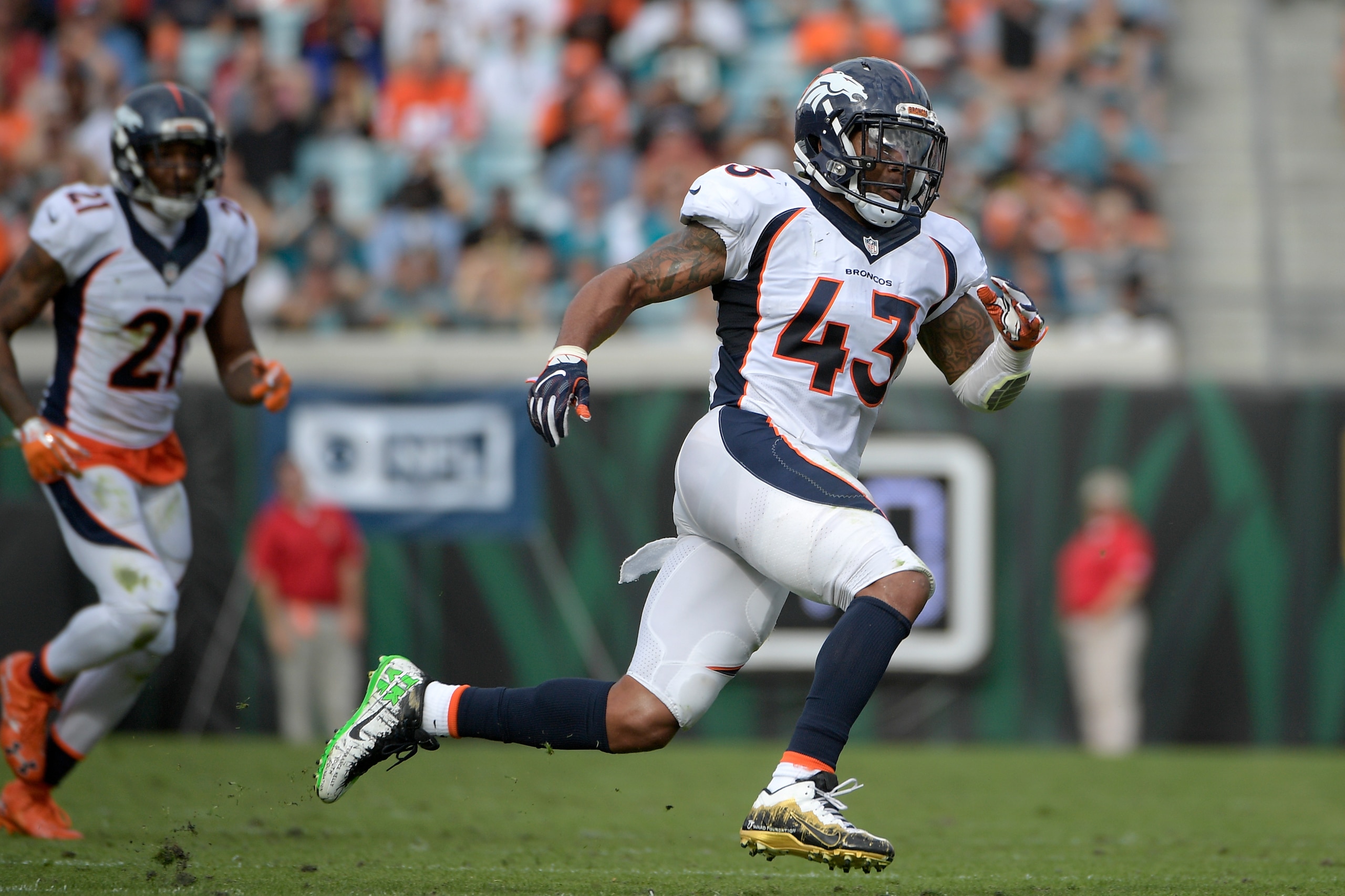
Scheme: Cover 1 and 2-Man
Starter: T.J. Ward
NFL1000 Scores: 73.6/100
NFL1000 Position Rank: 12/53
T.J. Ward was given a variety of roles with the Broncos defense last season. He played strong safety in base formations but shifted to linebacker in dime packages. He was also tasked with some tough assignments, matching up against tight ends and running backs, but he did well for the most part. He did have a few struggles in man coverage against some of the better receiving tight ends, and he wasn't as effective against the run at dime linebacker as he was at safety. But Ward is an above-average starter who can fill multiple roles, which makes him a valuable piece on the Denver defense.
Backup: Will Parks
NFL1000 Scores: 70.6/100
NFL1000 Position Rank: 34/53
A sixth-round pick, Will Parks outperformed expectations. He spent most of his rookie season backing up Ward, but when he was given the chance, he flashed potential, matching up against tight ends and running backs in man coverage. Parks also displayed good instincts in underneath zone coverages and seemed to understand how different routes were designed to manipulate the defenders and create space. Like Simmons, he should be afforded time to develop behind an established starter. But Parks will have to deal with higher expectations after a surprising rookie year.
Team Need: 0/10
Potential Draft Fits: None. Could consider undrafted free agents for camp competition
Kicker
18 of 19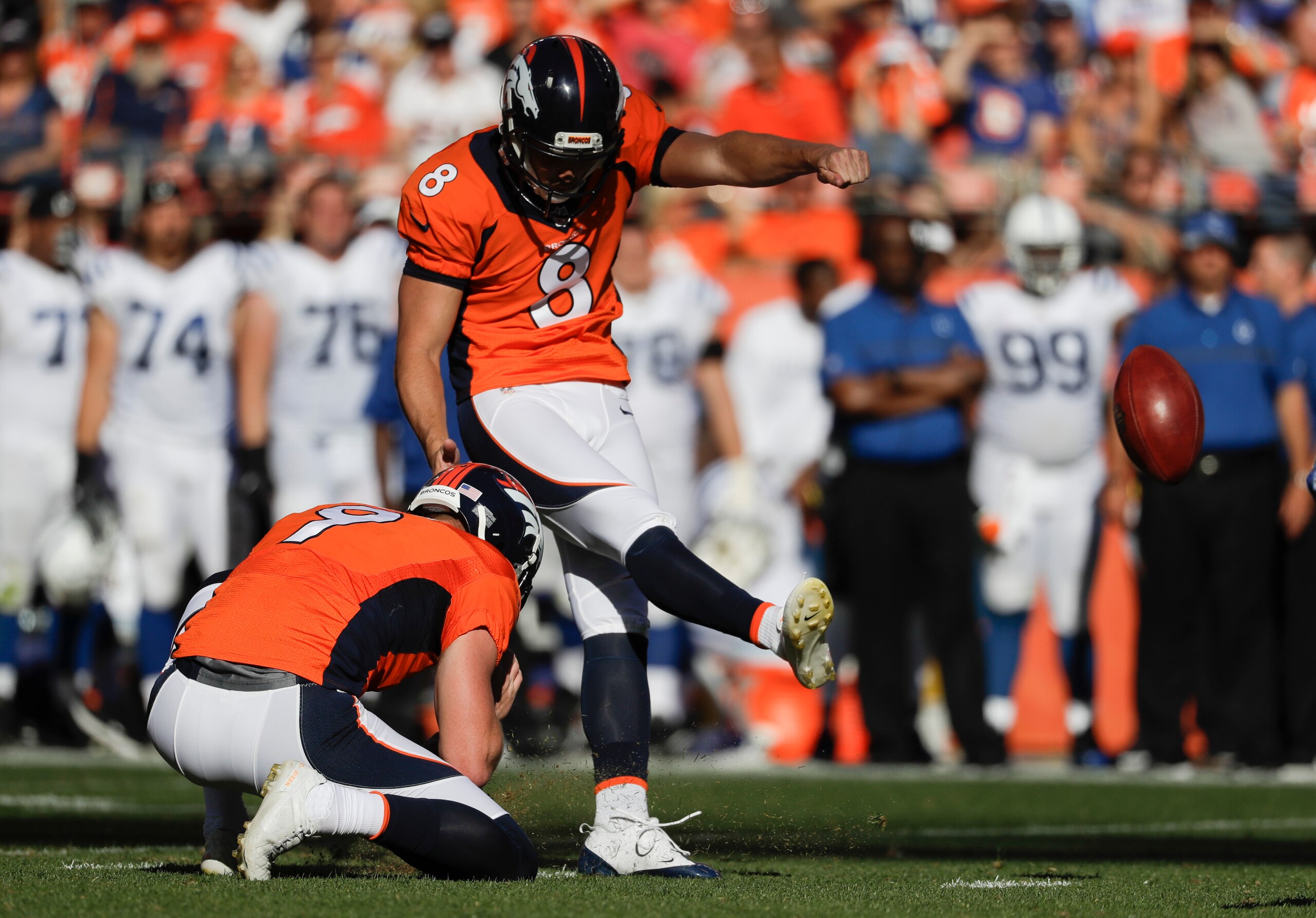
Starter: Brandon McManus
NFL1000 Scores: 68.9/100
NFL1000 Position Rank: 8/34
Brandon McManus is entering his fourth full season with the Broncos and has been a slightly above-average contributor in each of the past two seasons. He was perfect from under 40 yards over the past two seasons, and such short-distance consistency hints at a strong focus that should only benefit him as he continues to understand his mechanics and work to develop more consistency on longer kicks. McManus was just 10-of-15 on kicks over 40 yards last year, so he still needs to work on staying within himself and trusting his power from distance, but he is already a capable kicker and should show some improvement over the next several years. If he keeps up this level of play, he'll be in line for a sizable contract once this year is up, but for now, he'll play the 2017 season on a restricted free agent tender from the Broncos.
Team Need: 1/10
Potential Draft Fits: None
Punter
19 of 19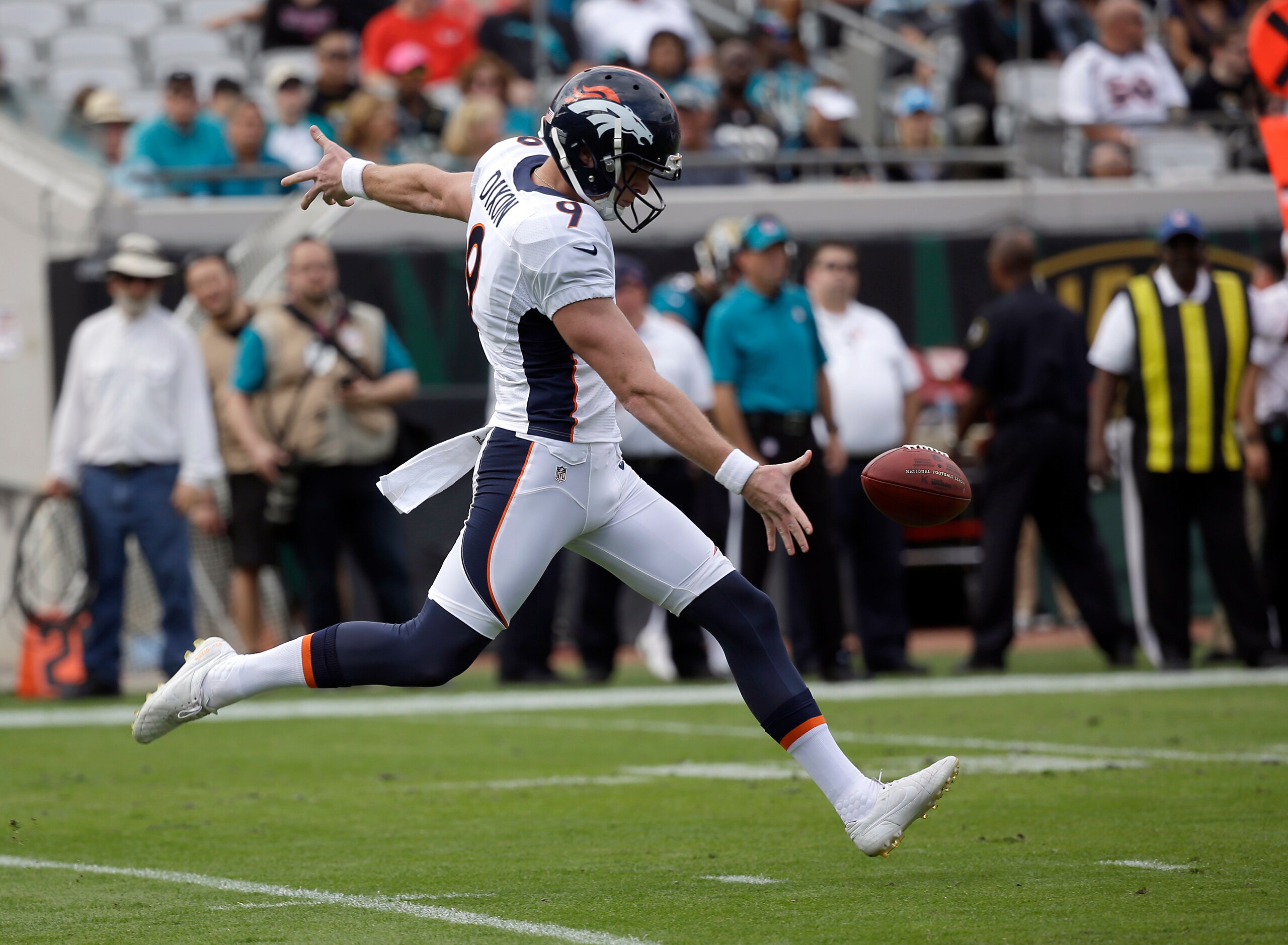
Punter: Riley Dixon
NFL1000 Scores: 64.7/100
NFL1000 Position Rank: 25/34
Riley Dixon was unimpressive coming out of Syracuse, as I felt he lacked the leg needed to be an NFL punter. I also thought he would struggle to adapt to the climate challenges presented in the NFL after watching him struggle at the 2016 Senior Bowl. As expected, Dixon's distance and hang-time figures were slightly below average, but he showed an above-average feel for the directional game, especially for a rookie. First-year punters often have a difficult time adjusting to the NFL ball and the precision demands of special teams coordinators, but Dixon was ahead of the curve in those facets of the game.
Dixon won't ever develop the leg to become an elite punter, but he's capable of being a quality starter because of his directional prowess. Expect to see continued improvement in 2017, and while Dixon may not be the answer for the next 15 years in Denver, he provides a good value as a player on a rookie deal for the next three years.
Team Need: 1/10
Potential Draft Fits: None
.jpg?w=2560)
.jpg?w=2560 "Cardinals Giants Football")







