
NFL1000: Chicago Bears 2017 NFL Draft Preview
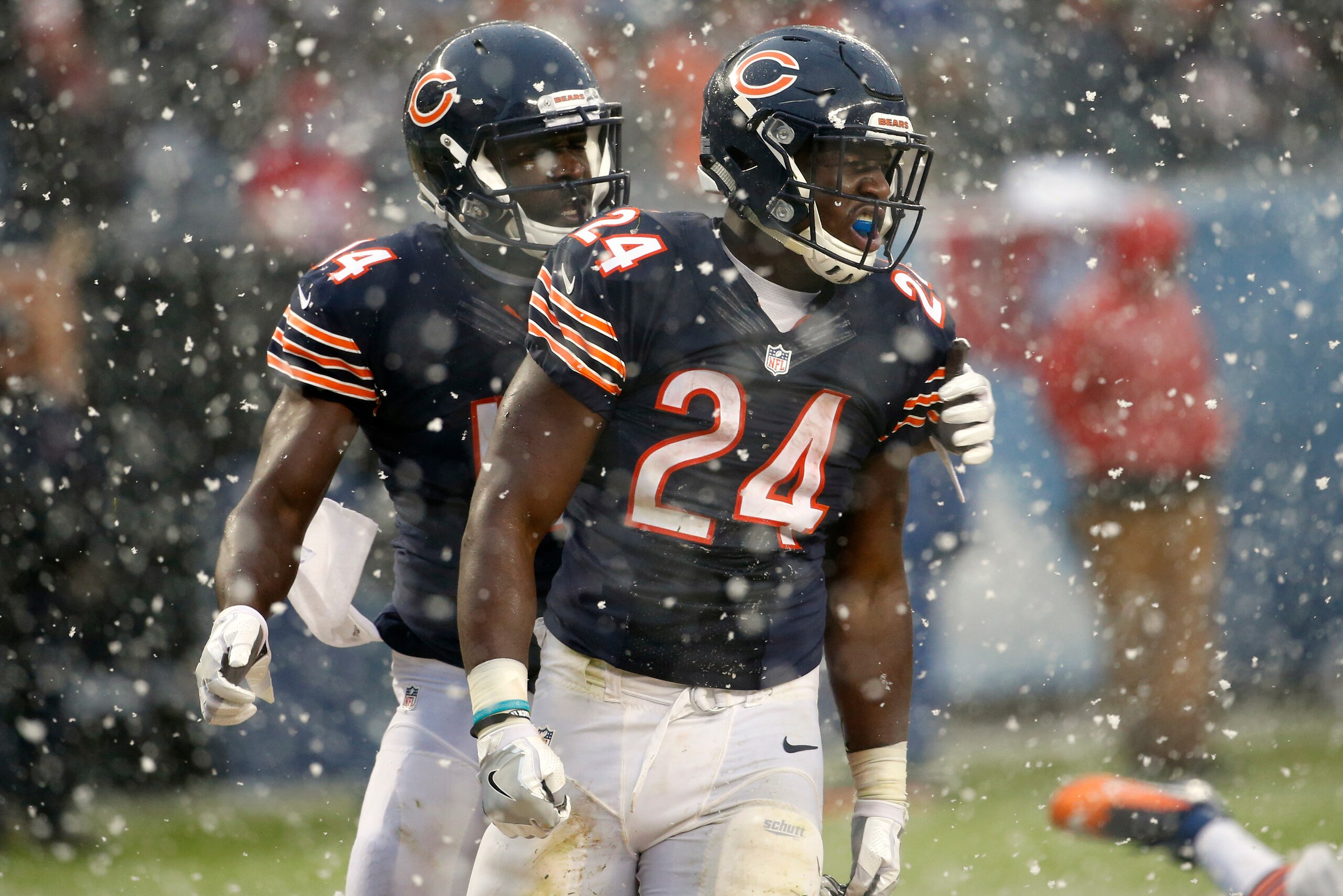
The idea when the Bears made the move from Marc Trestman to John Fox as their head coach before the 2015 season was that Fox's defensive acumen would turn around a leaky defense, and his ball-control philosophy, along with offensive coordinator Adam Gase's ability to work with quarterbacks, would keep the ball in Chicago's hands and tame Jay Cutler's more unpredictable traits.
It worked a bit in the first season, as Cutler had one of his best campaigns. The defense improved under Vic Fangio, and it seemed that the Bears were on the right track.
Of course, that didn't continue. The team reverted to a 3-13 mark in 2016, as Cutler was hurt and the defense fell apart. The Bears parted ways with Cutler in March, replacing him with former Buccaneers backup Mike Glennon, who got a three-year, $45 million deal.
The team's signing of Mark Sanchez as a backup was the last straw in a clear break from the Cutler era, and though there's a lot that's unknown about Glennon, he does better fit the Bears' ball-control philosophy—Fox far prefers a quarterback he can trust, as opposed to a guy who creates splash plays and frustrates his coaches on alternate downs.
Beyond that, the team's needs are severe. Adding Quintin Demps to the safety rotation will help against deep passing, but more needs to be done in the secondary. The receiver depth took a big hit when Alshon Jeffery signed with the Eagles, and though the offensive line is great when everyone's healthy (both Josh Sitton and Kyle Long were unable to play the entire season), they could use help at tackle. Expect general manager Ryan Pace to also look for help along the defensive line and at tight end.
The Bears aren't that far away from a decent season in 2017, but there's a lot riding on a quarterback who's paid on potential as opposed to production, and that's always a risky move.
Methodology
1 of 19
The NFL1000 team of scouts graded a series of important attributes for every player in their positional review, using a scale starting at zero and going up to anywhere from five to 50 based on the position and the attribute. Our evaluators had specific positional assignments based on their proven fields of expertise.
- Doug Farrar: Lead scout/quarterbacks
- John Middlekauff: Running backs/fullbacks
- Marcus Mosher: Wide receivers/tight ends
- Mark Schofield: Wide receivers/tight ends
- Duke Manyweather: Offensive tackles
- Ethan Young: Offensive guards
- Joe Goodberry: AFC defensive ends
- Justis Mosqueda: NFC defensive ends
- Charles McDonald: Defensive tackles
- Zach Kruse: 3-4 outside linebackers
- Derrik Klassen: 4-3 outside linebackers
- Jerod Brown: Inside linebackers
- Kyle Posey: Cornerbacks
- Ian Wharton: Cornerbacks
- Mark Bullock: Safeties
- Chuck Zodda: Special teams
Each corresponding position slide was written by the assigned scout.
Quarterback
2 of 19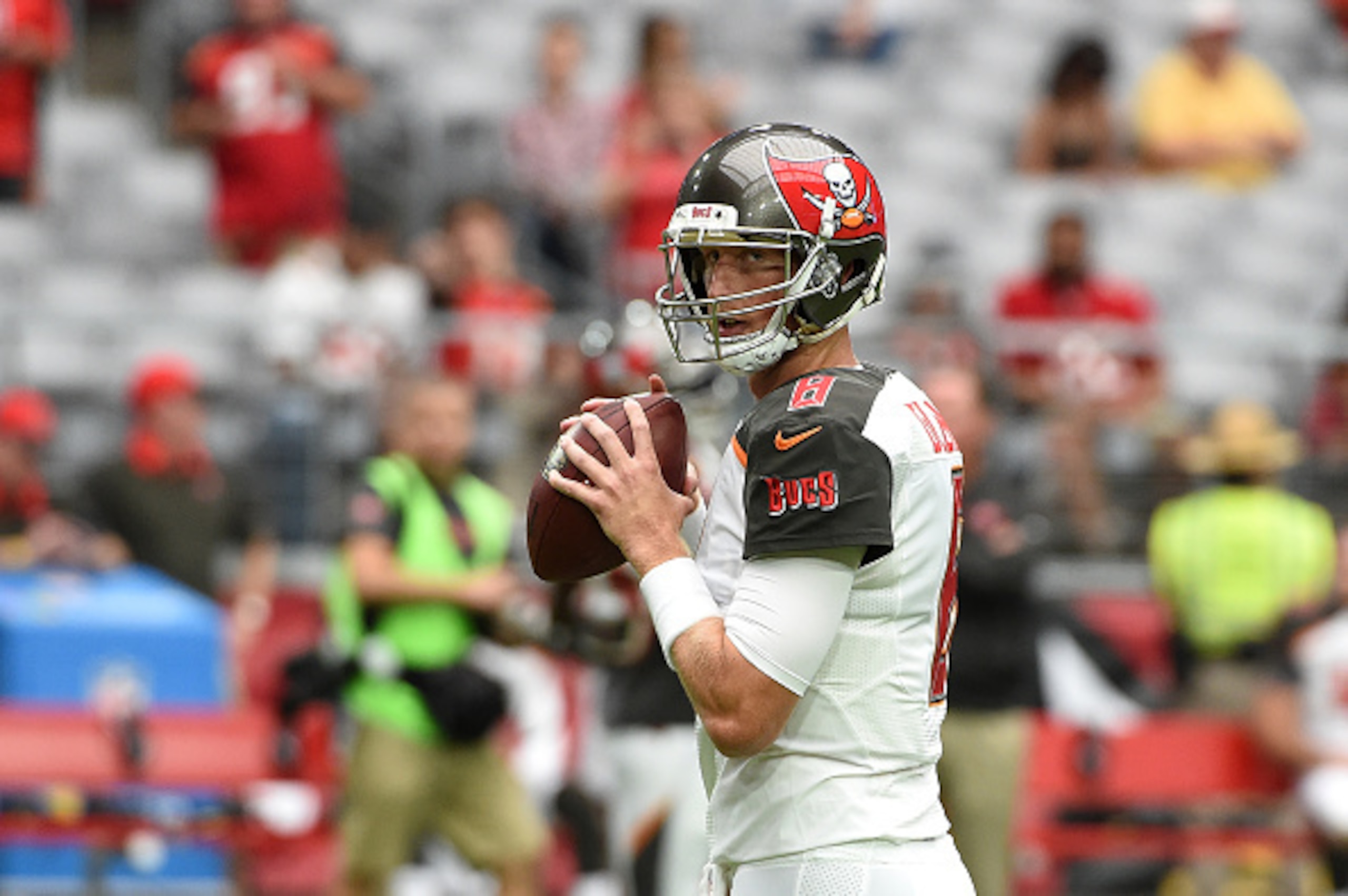
Scheme: West Coast (ball control)/Zone
Starter: Mike Glennon
NFL1000 Scores: Did not have enough snaps to qualify
The three-year, $45 million deal the Bears gave Glennon is really a one-year, $16 million deal with a bunch of escape clauses after 2017 if things don’t pan out. Still, that’s a lot of cabbage for a guy who’s thrown a grand total of 630 passes in his career, and just 11 since 2014. The Bears are going more on Glennon’s potential than his production, and there’s a lot of that going around--Mark Dominik, the Buccaneers’ general manager when that team drafted Glennon in the third round of the 2013 season, believes Glennon has the potential to be a Joe Flacco-esque talent.
Glennon fits the suit--he’s a big guy with a great arm, and when he did play in 2013 and 2014, he was reasonably efficient, throwing 29 touchdowns to 15 interceptions. Glennon can stand in the pocket well; where he struggles in comparison is when he has to make plays outside the pocket and under pressure. Bears offensive coordinator Dowell Loggains prefers a ball-control offense with the deep pass as a major component, and from that perspective, you can see why Glennon is appealing as the main man.
Backup: Mark Sanchez
NFL1000 Scores: Did not have enough snaps to qualify
Once a decent ball-control quarterback with good mobility and an adequate arm, Sanchez has regressed to a career backup role in recent years, and with the Cowboys in 2016, he struggled to get that done, as evidenced by the two picks he threw against the Eagles--one on a bad-looking jump screen when he failed to pick up an overload blitz, and the second when he misread intermediate coverage. Sanchez can operate a basic offense at a backup level, but expecting him to re-capture any of his relative glory days with the Jets is a fool’s errand.
Backup: Connor Shaw
NFL1000 Scores: Did not have enough snaps to qualify
Shaw got his one bit of NFL action in his rookie season with the Browns, completing 50 percent of his passes and throwing an interception against a great Ravens defense. Shaw has suffered leg and thumb injuries since then, and the Bears picked him up off waivers in July of 2016. He’s a smart quarterback with some mobility and a decent arm, who needs to be managed carefully in a scheme.
Team Need: 6/10.
Potential Draft Fits: Patrick Mahomes, Texas Tech/Brad Kaaya, Miami
Running Back
3 of 19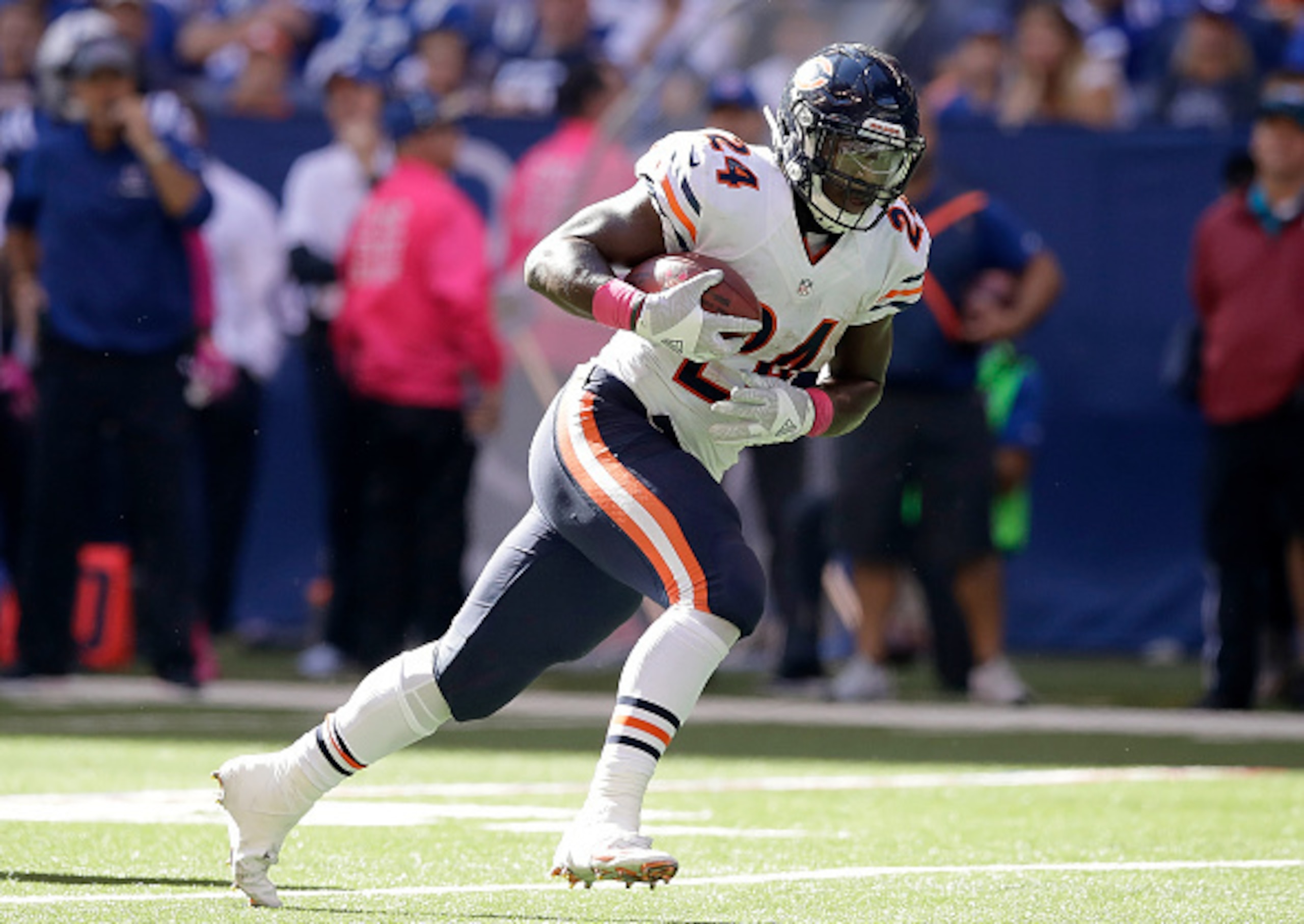
Scheme: Zone/power
Starter: Jordan Howard
NFL1000 Scores: 73.5/100
NFL1000 Positon Rank: 13/82
The Bears found a fifth-round gem in Jordan Howard, who was second in the NFL in rushing in 2016. He was one of the lone bright spots for a terrible Chicago offense, gaining 1,313 yards and six touchdowns on the ground.
Howard's running style is set up to excel in the cold NFC North for years, as he's a physical downhill runner who looks to get upfield fast. He will lower his shoulder on contact and run through defenders. Speed, and short-area burst are major parts of his game. He is consistently moving the chains and dragging defenders with him. He's also a very good outside zone runner who will find a crease and hit it.
His role should only expand in the passing game in 2017. He had 29 catches, but that number could double as he will be the focal point of the offense. His toughness and physicality translate to pass protection, where he is solid. Howard should only build off his big rookie season.
Backup: Jeremy Langford
NFL1000 Scores: 68.3/100
NFL1000 Position Rank: 63/82
Jeremy Langford opened the 2016 season as the starter, but Howard replaced him after an ankle injury. Langford is best suited to be a backup, though, as he is average at every aspect of the position.
A so-so athlete who lacks speed and explosive qualities, Langford is a one-cut runner who won't make anyone miss. He will take what is given but struggles to make positive yards when he lacks good blocking. He also lacks the foot quickness to get outside the tackles. Langford is solid in the passing game, has good hands and is stout in pass protection. He'll be the team's No. 2 back in 2017.
Backup: Benny Cunningham
NFL1000 Scores: 67.4/100
NFL1000 Position Rank: 67/82
The Bears signed former Los Angeles Rams running back Benny Cunningham to a one-year deal in March. He is a good change-of-pace back, especially in the passing game. He doesn't bring much to the table as a runner, though. He only had 21 carries in 2016 and is not a player you can depend on inside or outside the tackles.
Cunningham is a good pass-catcher and can get open out of the backfield and create mismatches. When the ball is in his hands, he looks to get upfield, but he won't make explosive plays. Cunningham should be a third-down back for the Bears, but don't expect much else.
Backup: Ka’Deem Carey
NFL1000 Scores: Did not have enough snaps to qualify
Ka'Deem Carey has spent his entire three-year career on the Bears after being drafted in the fourth round in 2014. He is on the outside looking in because of the emergence of Howard. He had only 32 carries in 2016 and will be fighting for a roster spot come training camp.
Team Need: 2/10
Potential Draft Fits: None
.jpg?w=2560 "Colts Football")
.jpg?w=2560 "Chiefs Giants Football")
.jpg?w=2560 "Titans Colts Football")
Fullback
4 of 19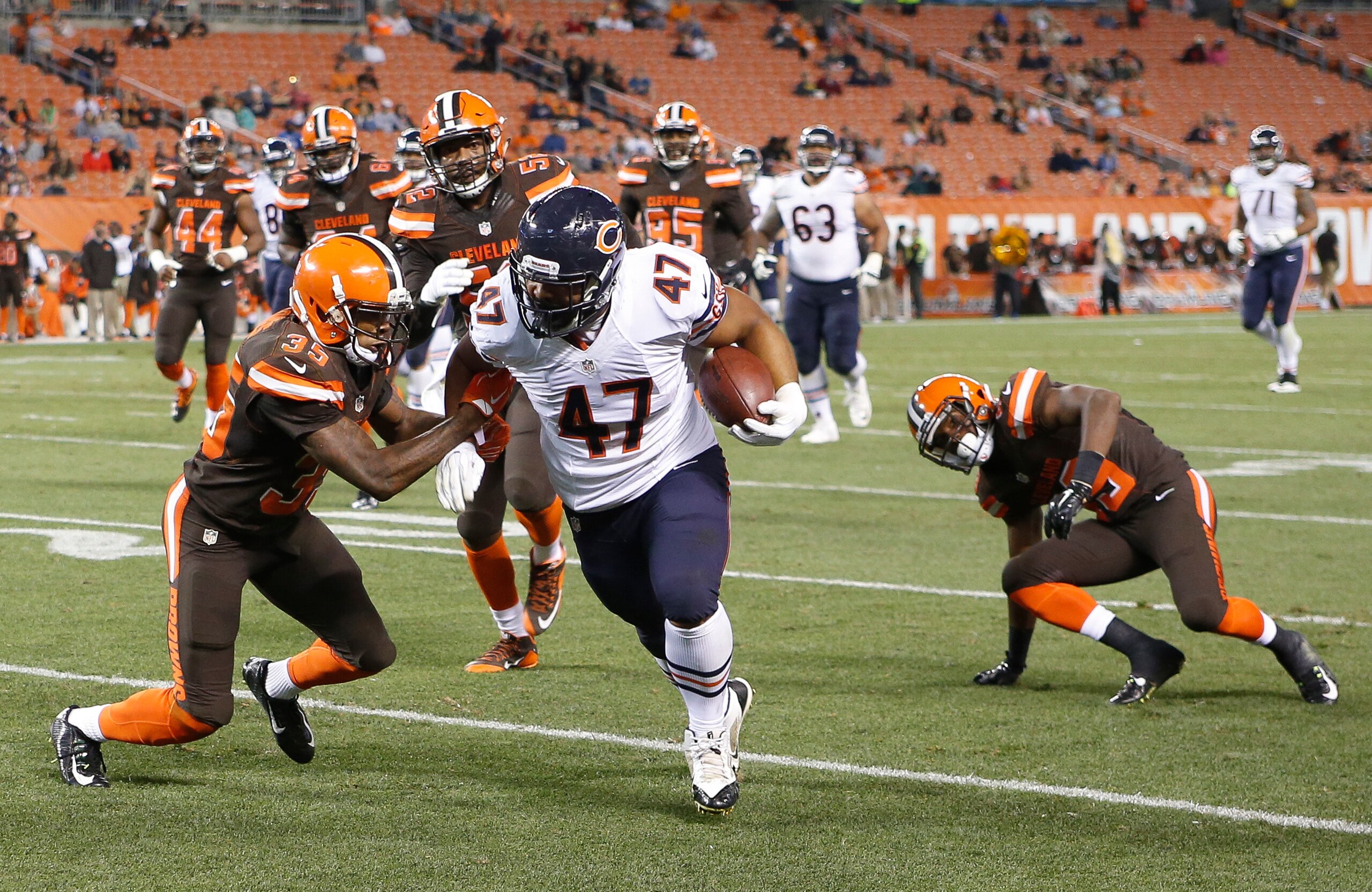
Scheme: Zone/power
Starter: Paul Lasike
NFL1000 Scores: 69.3/100
NFL1000 Position Rank: 19/20
Paul Lasike is just a middle-of-the-road starter. He is basically just a lead blocker and doesn't bring much else to the table. He is a physical player and is good in the power run game, as he will play downhill and can handle linebackers on contact.
Lasike is not a great athlete, can struggle to adjust on the fly against quicker defenders and can only operate on certain plays. He does not add much value as an offensive weapon, as he is not a runner or a pass-catcher. As long as Jordan Howard stays healthy, Lasike's role should be pretty basic and continue to stay within the Bears' scheme.
Team Need: 2/10
Potential Draft Fits: They could bring in an undrafted free agent to compete with Lasike.
Wide Receiver
5 of 19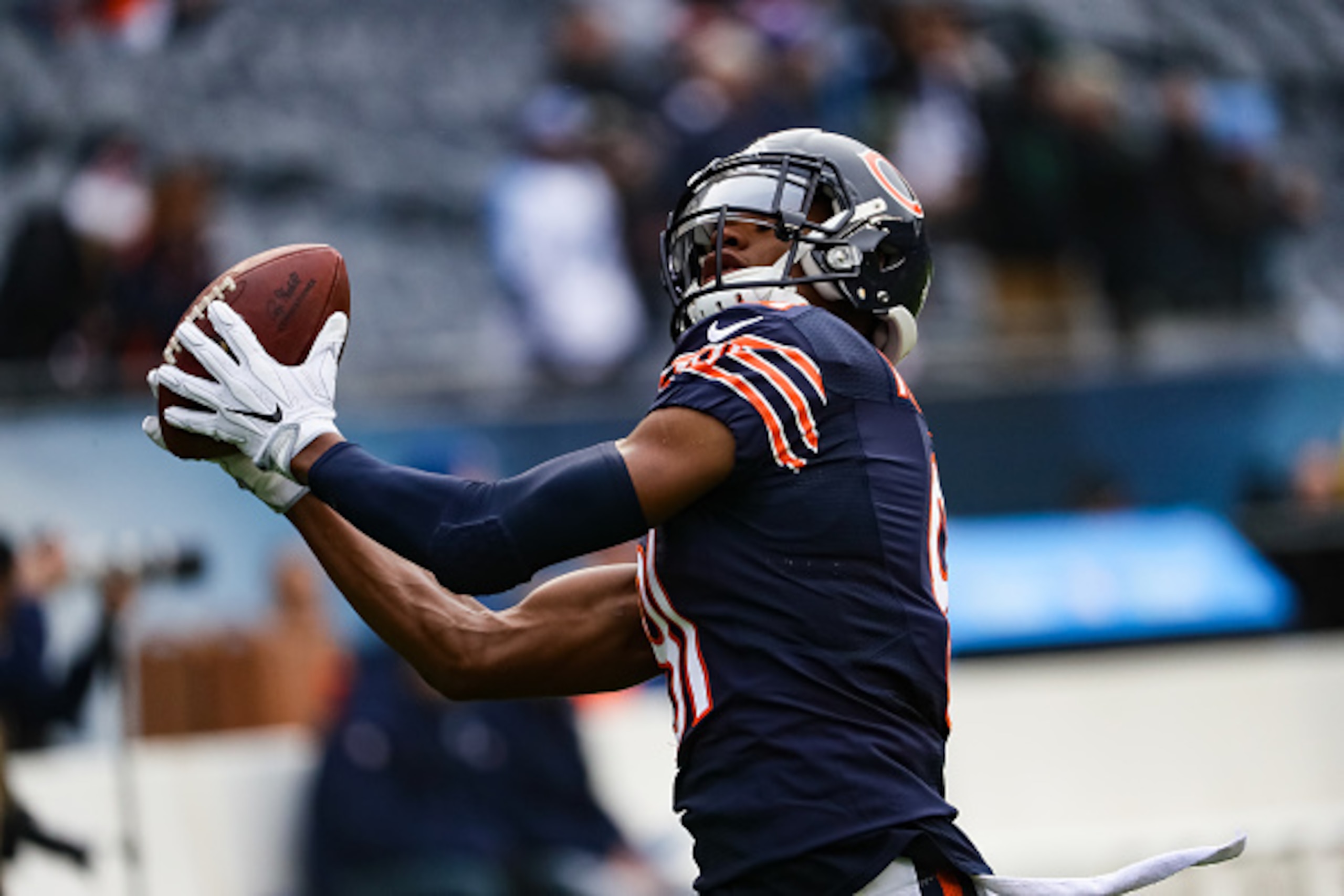
Scheme: West Coast
Starter: Cameron Meredith
NFL1000 Scores: 66.7/100
NFL1000 Position Rank: 56/155
With Alshon Jeffery's free-agent departure, Cameron Meredith is the next receiver in line to handle the No. 1 duties in Chicago. Meredith's season was a surprise, as he finished with four 100-yard receiving games, dazzling in a few contests with his elite size and speed. He finished the year strong with 439 yards in the team's final five games.
Meredith is an exceptional athlete at 6'3" and 207 pounds. He's got the physical requirements to be one of the better X-receivers in the league if he can come anywhere close to his ceiling. If the Bears can find more consistent quarterback play, the 24-year old from Illinois State should easily surpass 1,000 receiving yards in 2017. Meredith has a chance to be an elite player for the Bears.
Starter: Kevin White
NFL1000 Scores: Didn't receive a NFL1000 grade due to insufficient snaps
Since being drafted with the seventh overall pick in 2015, Kevin White has only played in four games after multiple injuries have derailed his career. When he's played, he's looked lost and overwhelmed. He's a raw player who desperately needs time on the field to learn all of the ins and outs of the position.
While he's athletic and has the size (6'3", 216 lbs) to be dominant, his body may be too broken down to return value on that top-10 pick. This will be a huge year for White and his NFL career.
Backup: Kendall Wright
NFL1000 Scores: 62.7/100
NFL1000 Position Rank: 101/155
Kendall Wright was miscast as a slot receiver in Tennessee and eventually fell out of favor with the Titans coaching staff. After having a 94-catch season in 2013, Wright's production has dropped every year since. His best spot is on the outside as a Z-receiver who can stretch field with his speed. He should open the season as one of the top-three wideouts on the team, and the hope is that a change of scenery will revitalize his career.
Backup: Markus Wheaton
NFL1000 Scores: Didn't receive a NFL1000 grade due to insufficient snaps
Markus Wheaton only played in three games last season after injuring his shoulder early. The Bears paid Wheaton $6 million for 2017, so they expect him to be one of their top receivers. Wheaton has versatility, as he can play outside and in the slot, but even when he's healthy, he's a mediocre No. 2 option. His top attribute is his quickness, but he's not a deep threat. His best position may be in the slot for Chicago.
Backup: Rueben Randle
NFL1000 Scores: Didn't receive a NFL1000 grade due to insufficient snaps
Rueben Randle signed a futures/reserve contract with the Bears in January. Randle is a former second-round pick who has talent, but he will struggle to make the 53-man roster as the team will likely add talent to the group via the draft.
Team Need: 6/10
Potential Draft Fits: Mike Williams, Clemson; Corey Davis, Western Michigan; JuJu Smith-Schuster, USC
Tight End
6 of 19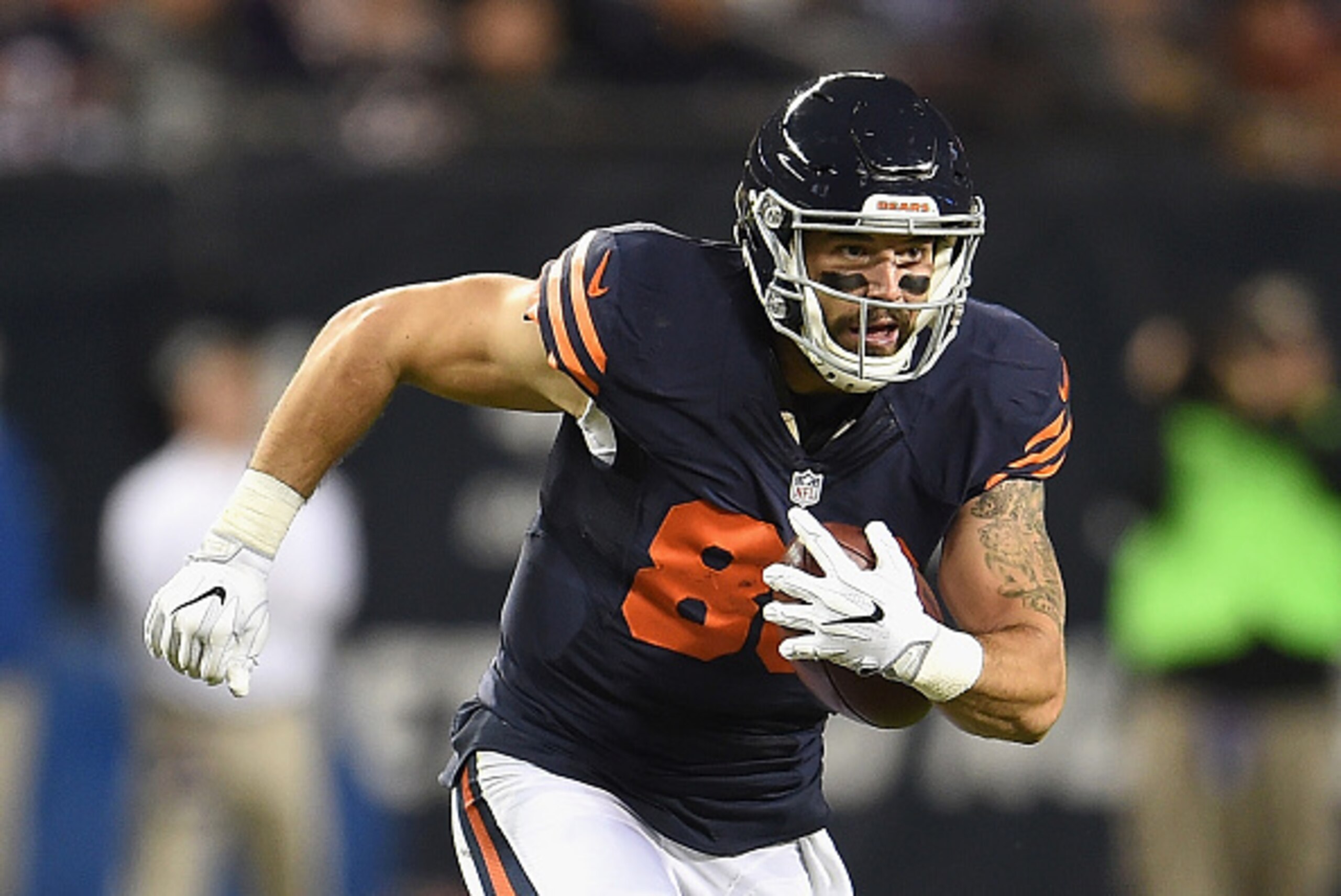
Scheme: West Coast
Starter: Zach Miller
NFL1000 Scores: 68/100
NFL1000 Position Rank: 12/96
Zach Miller was on his way to a nice season before suffering a foot injury in November. At 32, Miller can no longer be counted on to play a full season, as he hasn't done so once in his NFL career. When he's healthy, he's a nice weapon in the passing game who can survive as a blocker. But he's just not reliable enough to be the team's No. 1 tight end.
Backup: Dion Sims
NFL1000 Scores: 63/100
NFL1000 Position Rank: 40/96
The Bears signed Dion Sims to a three-year, $18 million contract in March to be the team's blocking tight end. While that's an expensive deal for a backup, it does give them a somewhat reliable option behind Miller.
At 6'4", 271 pounds, Sims has athleticism and soft hands, but he's not the weapon in the passing game that his size suggests. He's never gone over 300 receiving yards in a season, but his value will come in the running game as he's one of the better blocking tight ends in the league.
Backup: Daniel Brown
NFL1000 Scores: 63.5/100
NFL1000 Position Rank: 39/96
Daniel Brown caught 16 passes in 2016 as a wide receiver/tight end hybrid. At 6'5", 243 pounds, Brown has the athleticism to be a Y-receiver for the Bears. He will likely compete with a rookie tight end for a spot on the 53-man roster.
Team Need: 9/10
Potential Draft Fits: O.J. Howard, Alabama; Evan Engram, Ole Miss; Jake Butt, Michigan
Left Tackle
7 of 19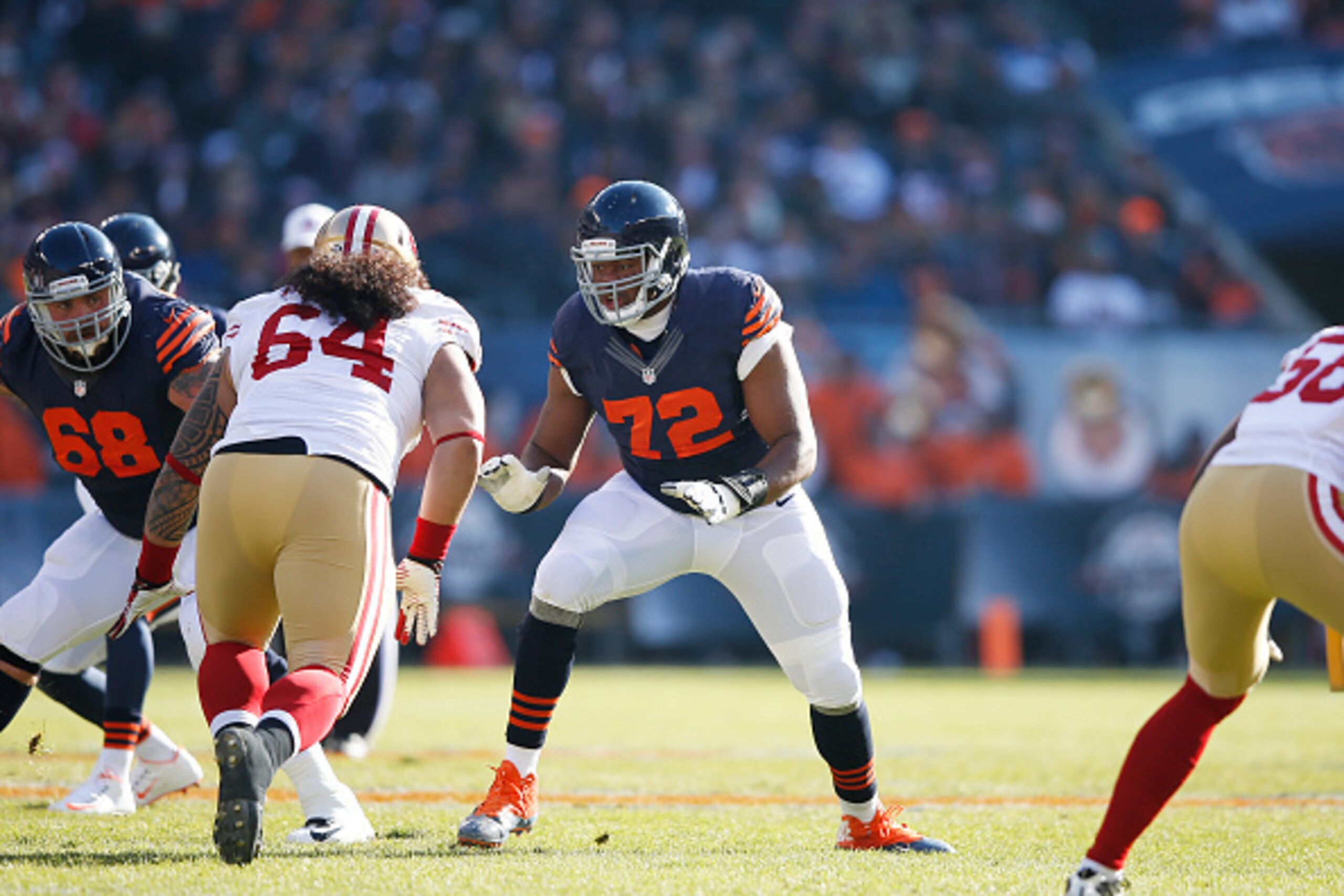
Scheme: Zone flex
Starter: Charles Leno Jr.
NFL1000 Scores: 71.6/100
NFL1000 Position Rank: 27/40
Charles Leno Jr. started all 16 games for Chicago in 2016, his first season as a full-time starter after being a seventh-round draft pick in 2014.
The 6'3", 305-pound Leno is an undersized, yet athletic, left tackle who is adequate at best as a run-blocker but solid as a pass protector.
Numbers do not always tell the entire story when it comes to offensive line play, but Leno surrendered 23 hurries, eight hits and five sacks on the season, providing a little context of how solid his pass protection is.
Team Need: 4/10
Potential Draft Fits: Taylor Moton (Western Michigan), Julie'n Davenport (Bucknell)
Right Tackle
8 of 19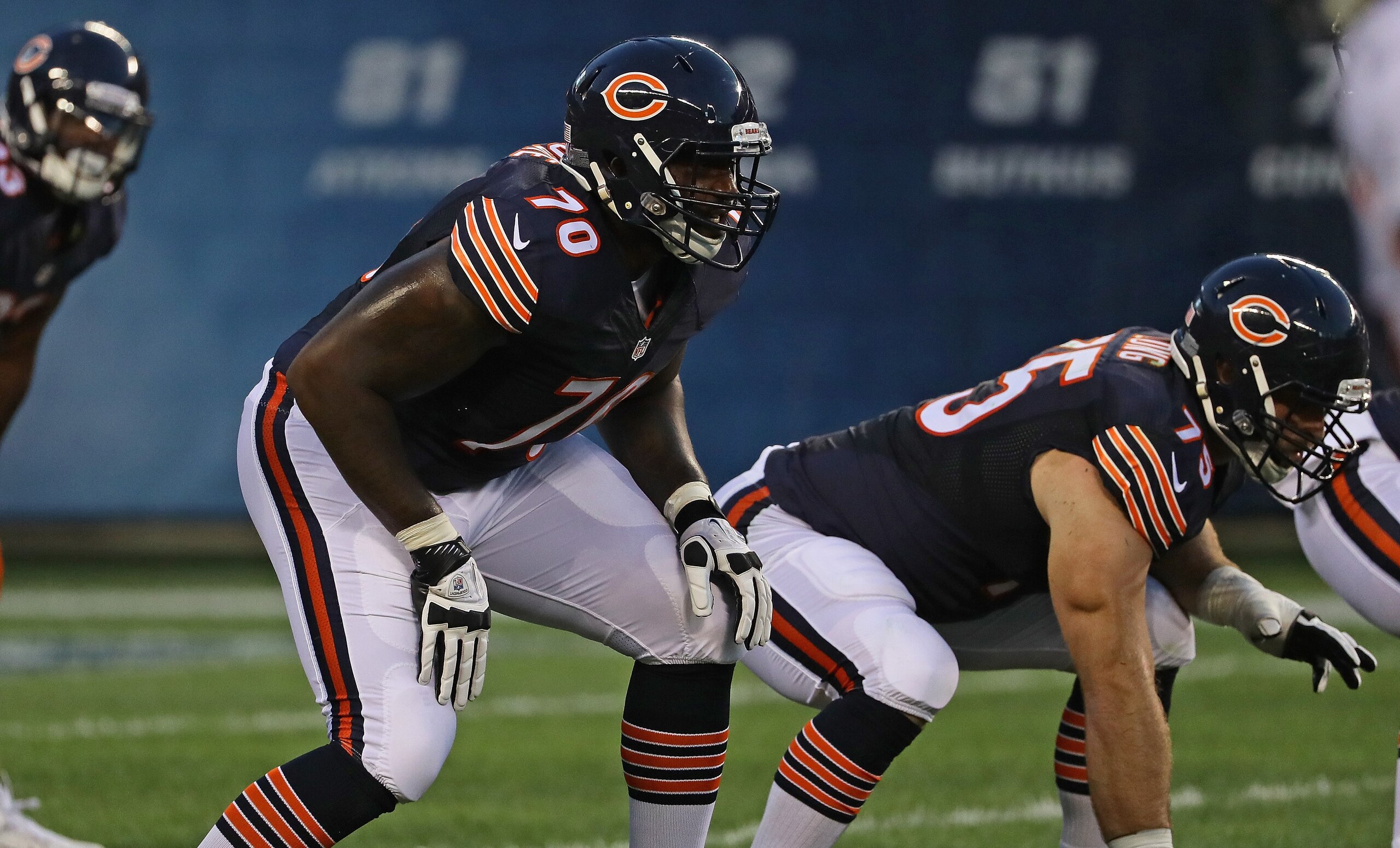
Scheme: Zone flex
Starter: Bobby Massie
NFL1000 Scores: 71.9/100
NFL1000 Position Rank: 16/38
Bobby Massie was a big free-agent signing for Chicago last offseason, and the fifth-year man out of Ole Miss struggled in the first half of the campaign. Massie surrendered 27 hurries, six hits and four sacks on the season, but 19 hurries, five hits and three sacks over the first eight weeks.
Massie also struggled to sustain blocks in the running game early on, but he found his rhythm and was solid in the second half of the season.
His turnaround should have shown Chicago that it can count on him.
Team Need: 4/10
Potential Draft Fits: Look for Chicago to add quality depth and competition via a late-round draft pick or an undrafted free agent who possesses the traits to be a swing tackle.
Offensive Guard
9 of 19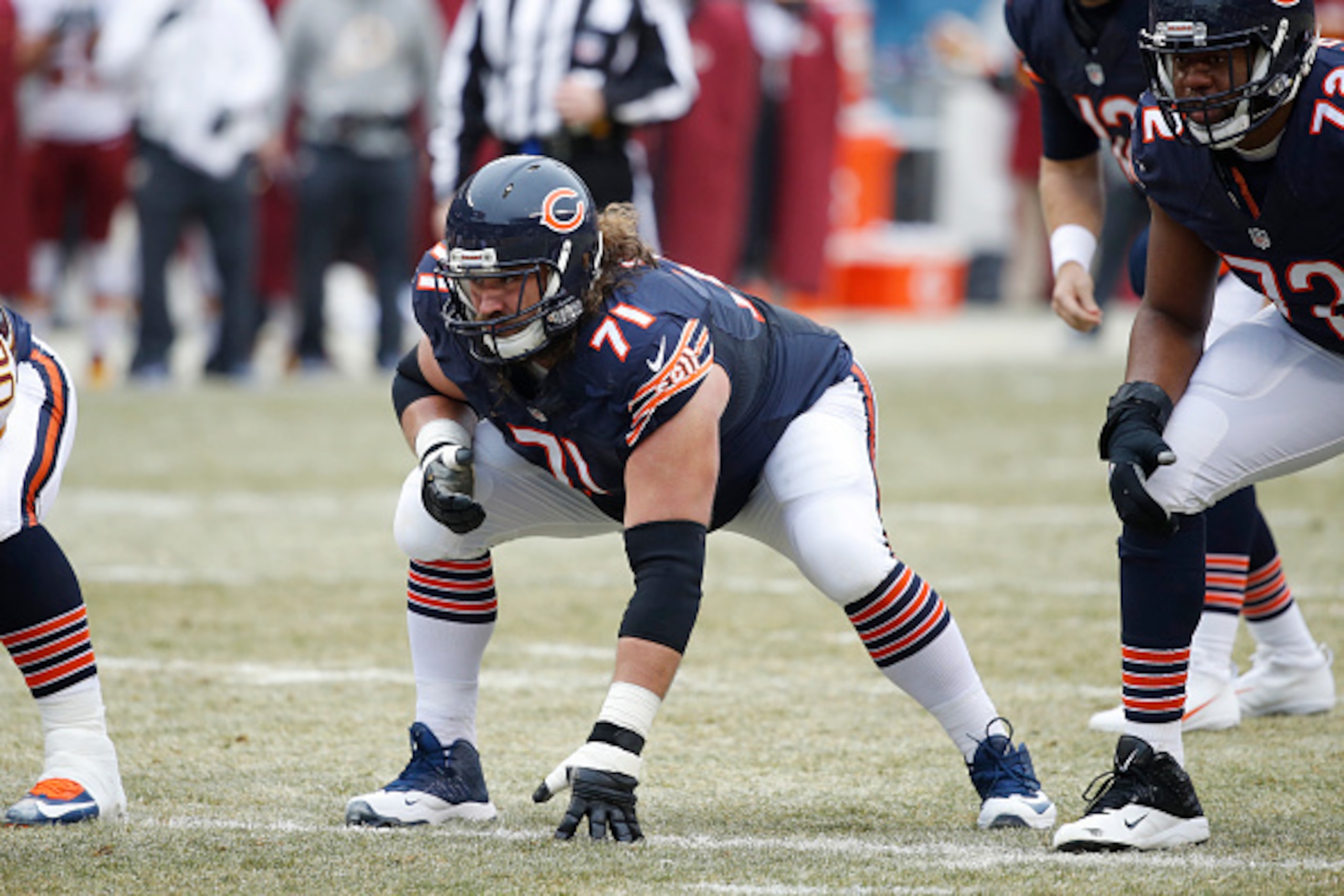
Scheme: Zone flex
Starter: Josh Sitton
NFL1000 Scores: 76.0/100
NFL1000 Position Rank: 2/78
The Bears were the beneficiaries of the Josh Sitton fiasco last year when he was surprisingly cut by the Green Bay Packers. The Bears stumbled onto one of best interior offensive lines we have seen in recent memory. Sitton is unmatched from a play-strength perspective, and if he can stay healthy this year, this unit could lead the league in rushing. He battled through various injuries, but even so, guard isn't an area that needs to be addressed in the draft.
Starter: Kyle Long
NFL1000 Scores: 74.7/100
NFL1000 Position Rank: 5/78
Medicals are a bigger question for Kyle Long. The Bears guard has reportedly lost 40 pounds following his ankle operation, per his father, Howie (via the Chicago Tribune), and has canceled a surgery to repair his torn labrum due to complications from the ankle surgery.
It seems like Long has a hard road back. Hopefully he makes a full recovery, but the Bears may want to grab a depth lineman in case he doesn't make it back by Week 1 and Eric Kush is forced into the starting lineup.
Backup: Eric Kush
NFL1000 Scores: 70.2/100
NFL1000 Rank: 36/78
It was shocking when the Bears got Kush back for as cheap as they did (two years, $2.7 million), as his performance on tape last year was worthy of a starting role. And with his experience at center, in a market craving that, his value should've been much higher.
Kush isn't a mauler, but he has quick, violent hands that disrupt defenders' attempts at establishing contact. It's a shame we won't get to see him get the chance to hold a job. That said, with Long's injury struggles, the Bears may need Kush in the starting lineup early this year.
Backup: Cyril Richardson
NFL1000 Scores: Did not have enough snaps to qualify
If Long's medical is as bad as advertised, this would the spot to upgrade on the depth chart. Cyril Richardson has not shown anything close to reliability and shouldn't be counted on as sixth lineman inside.
Team Need: 2/10
Potential Draft Fits: Jordan Morgan, Kutztown; Kyle Kalis, Michigan
Center
10 of 19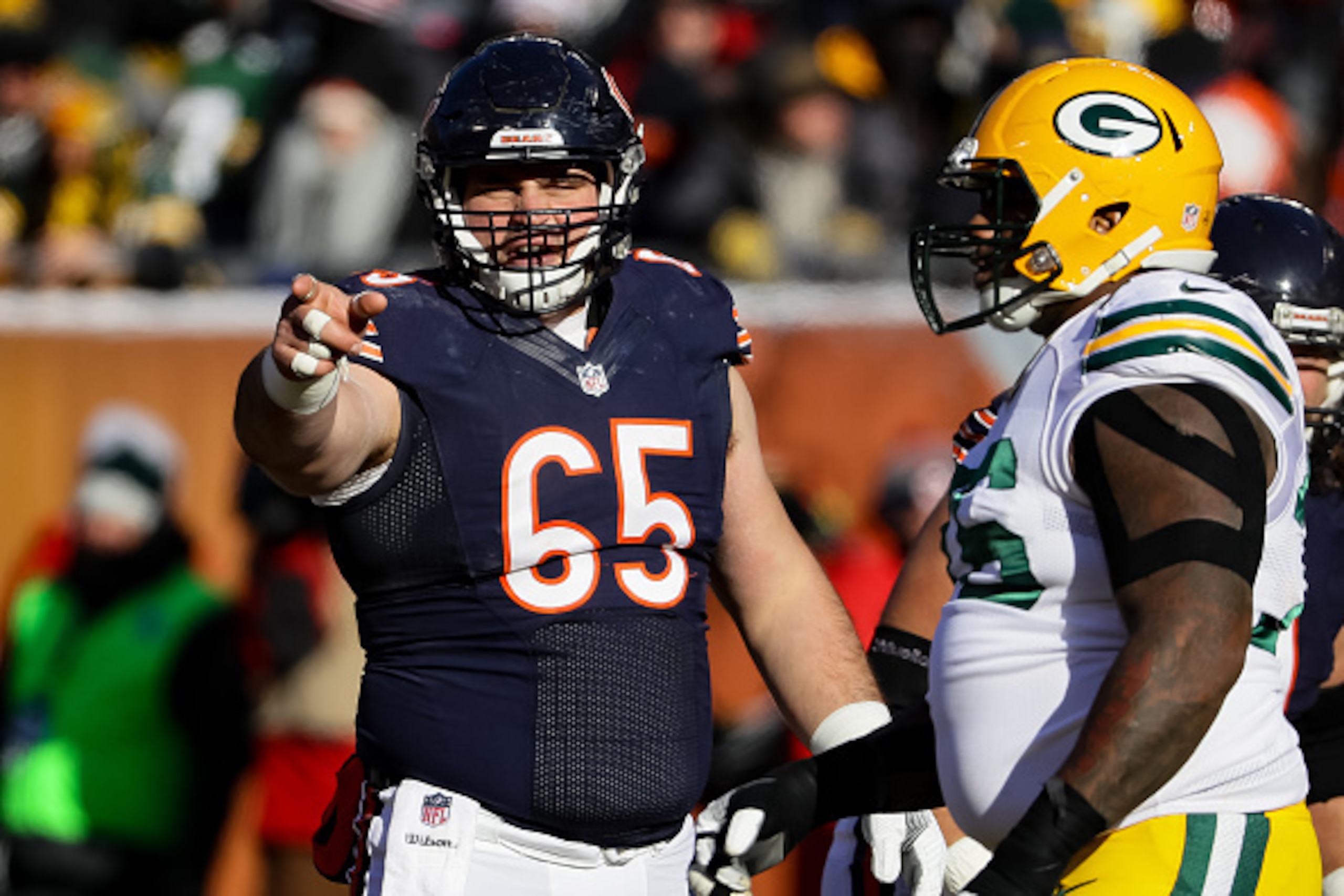
Scheme: Zone flex
Starter: Cody Whitehair
NFL1000 Scores: 71.2/100
NFL1000 Rank: 14/38
Cody Whitehair's rookie year was extremely impressive, especially when you consider he converted positions after playing tackle at Kansas State. Whitehair was the key to Chicago's zone-heavy scheme at times, as his ability to get to his spot on reach blocks and natural feel of when to climb to the second level was key for the Bears' running game. His performance dipped a little when he lost the bookends around him, but going into his second year at center, he should continue to develop.
Backup: Hroniss Grasu
NFL1000 Scores: Did not have enough snaps to qualify
Hroniss Grasu was a highly regarded center prospect at one point, but injury concerns pushed him down on draft day to the 71st overall pick in 2015 and have made it hard for him to make an impact in the league. If he can bounce back from a torn ACL and stay healthy, depth is not needed here.
Team Need: 1/10
Potential Draft Fits: Mark Spelman, Illinois State; Austin Stephens, Utah State
Defensive End
11 of 19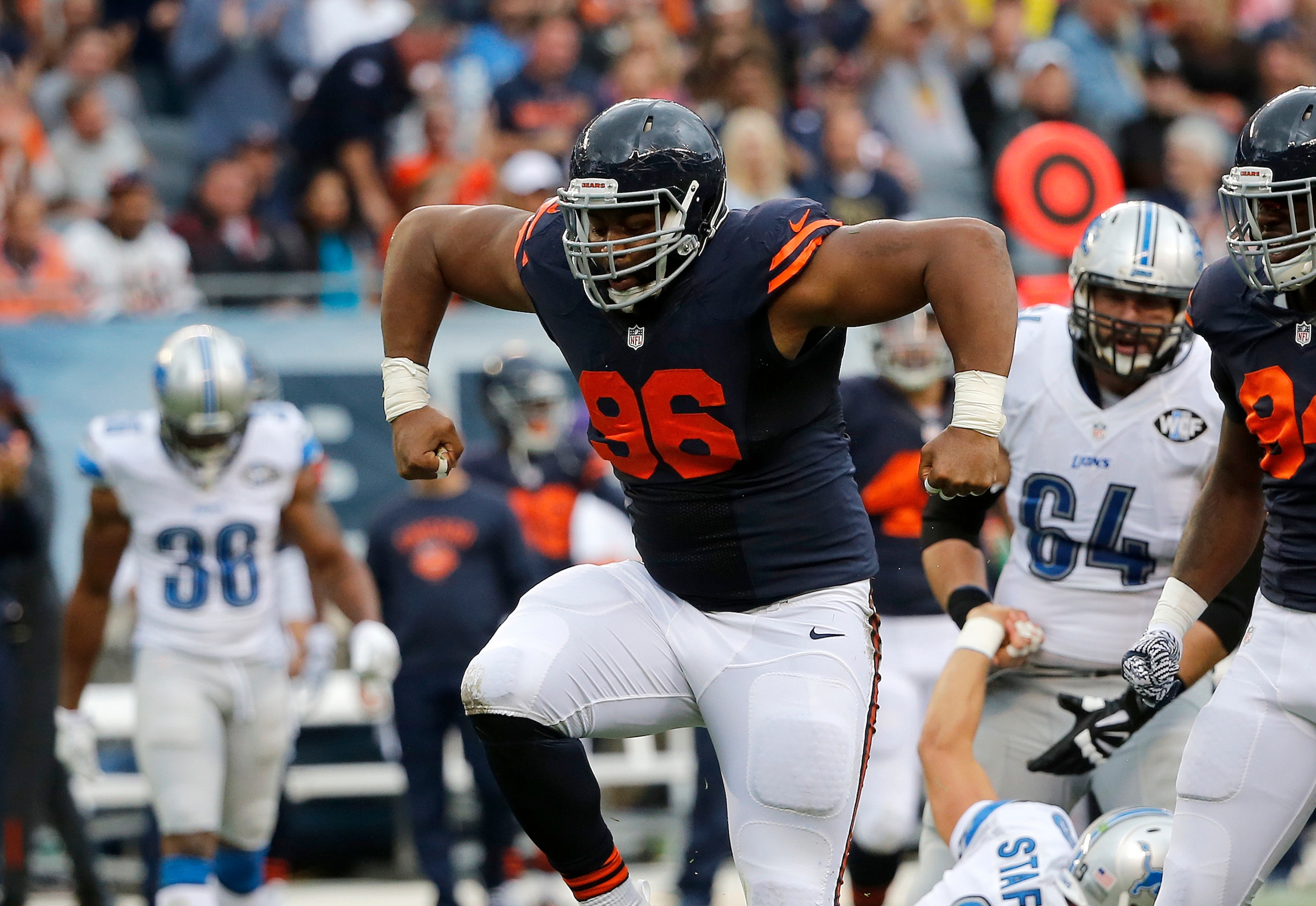
Scheme: 3-4
Starter: Akiem Hicks
NFL1000 Scores: 67.3/100
NFL1000 Position Rank: 7/53
Washington's Chris Baker and Chicago's Akiem Hicks were the most underrated 3-4 defensive ends in the NFC last season. Baker parlayed that into a long-term deal with the Tampa Bay Buccaneers, and the Chicago Bears have a decision to make about Hicks.
He signed a two-year, $10 million deal in 2016, but he's in a contract season after we saw the salaries of free-agent defensive linemen, relative to talent level, skyrocket. The team lost Cornelius Washington this offseason to the in-division Detroit Lions.
Will the Bears let Hicks walk in 2018, forcing them to replace their two best bodies at the position from their 2016 team? If so, they'll need to do so early and high in the draft. We'll know a lot more about the Bears' long-term plans for Hicks after the draft, but they have yet to tip their hand.
Starter: Jonathan Bullard
NFL1000 Scores: 62.2/100
NFL1000 Position Rank: 30/53
If you look back at mock drafts from last spring, there were many that had Florida defensive lineman Jonathan Bullard projected in the first round, as early as to the Seattle Seahawks.
On draft weekend, though, Bullard was taken with the 72nd overall selection, a third-round pick, by the Chicago Bears. With Washington moving onto the Detroit Lions, expect Bullard to step in as a pressure specialist, Washington's old role. Bullard struggled to hold his own for three downs last year, but he's a 23-year-old former top-75 pick. He'll get as many chances as possible to earn a starting gig on this Chicago defensive line, especially considering the thin depth behind Hicks.
Backup: Mitch Unrein
NFL1000 Scores: 61.4/100
NFL1000 Position Rank: 37/53
Now a 30-year-old, Mitch Unrein had his first crack at being more than just a spot starter last season. In his first six NFL campaigns, he started a combined seven games. In 2016, he started nine. If the season started today, Unrein would likely start for the Chicago Bears opposite Hicks, but if Bullard develops just a smidge in terms of early-down play, he'll get the nod.
Unrein is one of just three 3-4 defensive ends on the team to see a significant amount of playing time in 2016, and the team didn't add a body to the position after Washington walked in free agency, as John Jenkins is your prototypical nose tackle.
Unrein is nowhere near the roster bubble right now, with only three players at a two-starter, heavily-rotated position, but he's on the wrong side of 30, has only started 16 games in his career and is in a contract year. Don't be surprised if the team adds a defensive end in the middle rounds who pushes Unrein down the depth chart, as two of its three ends under contract could be gone by this time next season.
Team Need: 7/10
Potential Draft Fits: Malik McDowell, Michigan State; Jonathan Allen, Alabama; Charles Walker, Oklahoma
Defensive Tackle
12 of 19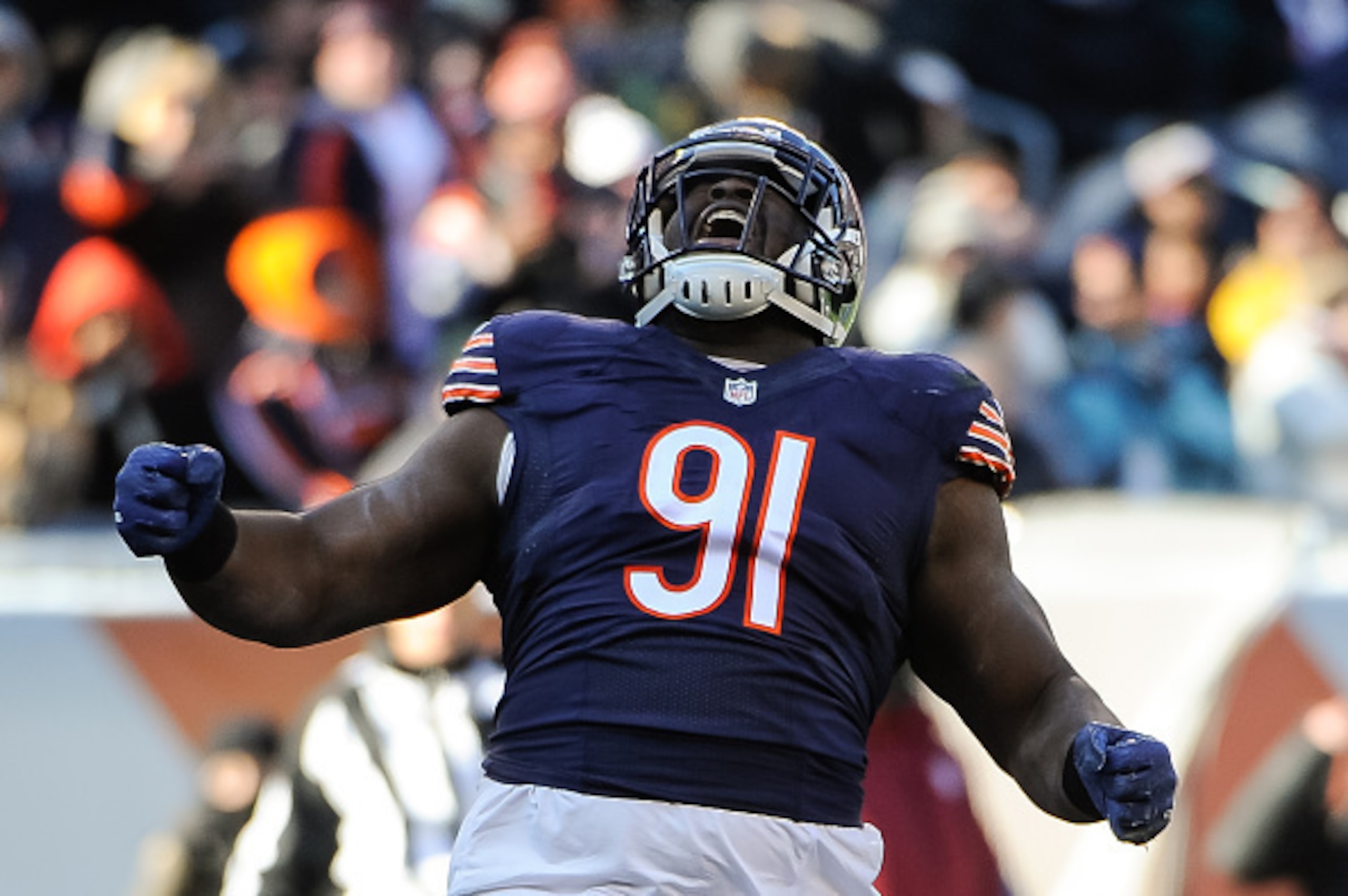
Scheme: 3-4
Starter: Eddie Goldman
NFL1000 Scores: 67.8/100
NFL1000 Position Rank: 23/99
Eddie Goldman is talented; there's no denying that. However, the best ability is availability, and Goldman has yet to prove he can stay healthy during an NFL season. He is a sound tackler who's able to disrupt the pass and run game, but that doesn't matter much if he can't stay on the field.
If Goldman were able to stay healthy, there's no doubt he could be one of the top 20 defensive tackles in the league, but that remains a question mark.
Backup: Will Sutton
NFL1000 Scores: 58.2/100
NFL1000 Position Rank: 91/99
Will Sutton was highly-touted coming out of Arizona State, but he has yet to put it all together in the NFL. He's been miscast as a nose tackle in the Bears' scheme. Ideally, Sutton is a 3-technique; his lack of strength at the point of attack was routinely exposed last season. Due to Goldman's injury issues and Sutton's lack of ability, the Bears should look to add a quality nose tackle early in the draft.
Team Need: 8/10
Potential Draft Fits: Dalvin Tomlinson, Alabama; Eddie Vanderdoes, UCLA
Outside Linebacker
13 of 19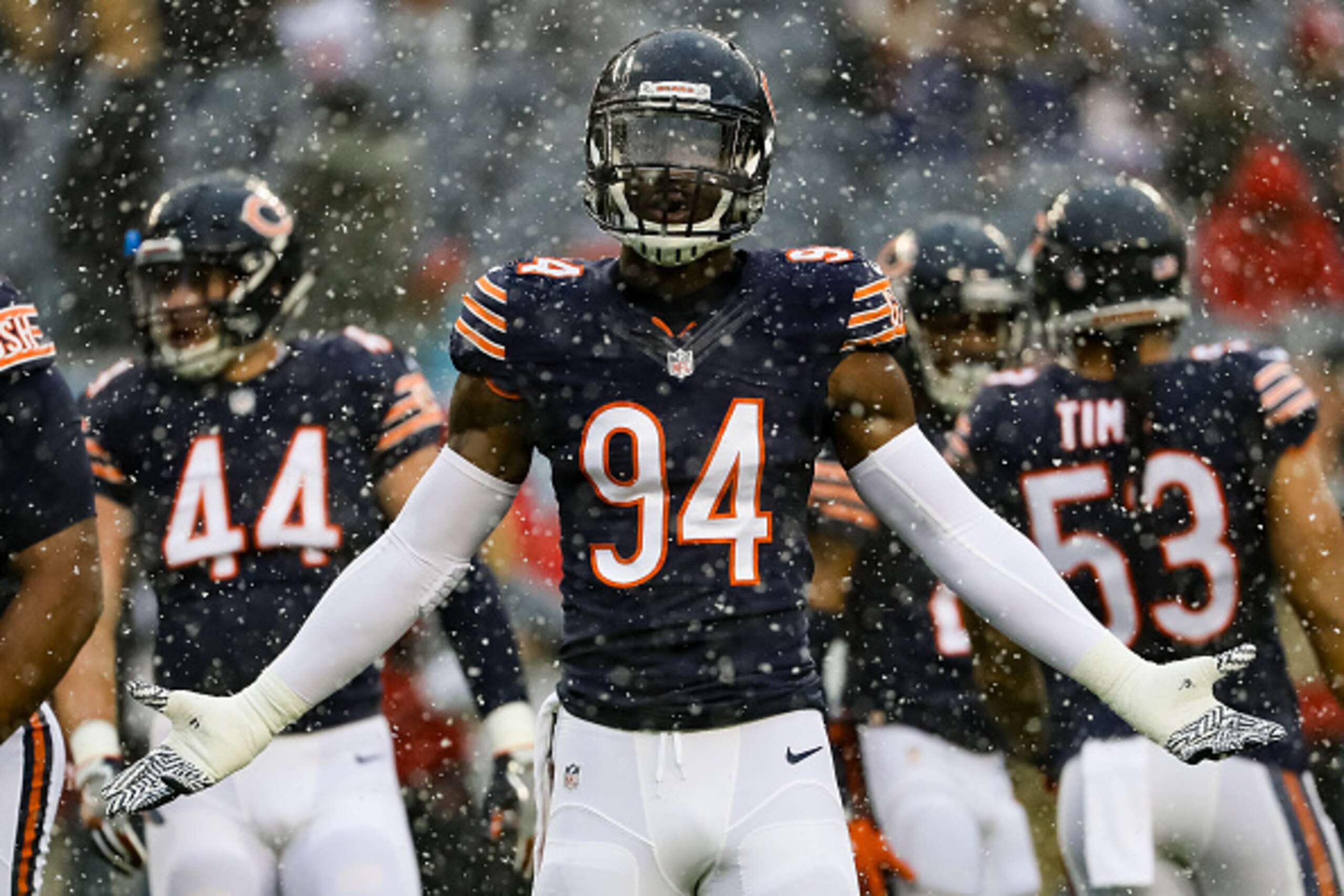
Scheme: 3-4
Starter: Leonard Floyd
NFL1000 Scores: 69.3
NFL1000 Position Rank: 21/65
Leonard Floyd's rookie season was a roller coaster ride. He sandwiched a dominant stretch of play in the middle of the season (6.5 sacks over a six-game span) with a slow start and a slow finish; however, a string of injuries (including a second concussion) limited him to end the year.
Floyd has obvious talent and athleticism on the edge, but he needs to get a little stronger this offseason so he can combine his highly effective speed rushes with power counters. His ceiling is sky-high within coordinator Vic Fangio's defense.
Starter: Pernell McPhee
NFL1000 Scores: 69.9
NFL1000 Position Rank: 18/65
Pernell McPhee missed the first seven games of the 2016 season after landing on the PUP list with a knee issue. He returned to tally four sacks over the next seven contests. Few edge-rushers are better at attacking offensive tackles with power than McPhee, who ranked eighth among 3-4 outside linebackers in our pass-rushing grades. He was below-average against the run, but a shoulder injury that later required surgery might have been to blame. The Bears need McPhee healthy in 2017.
Backup: Willie Young
NFL1000 Scores: 68.6
NFL1000 Position Rank: 26/65
Willie Young has quietly produced 24 sacks over 46 games since arriving in Chicago in 2014. While Young is the kind of rusher who needs a lot of snaps to be productive, he does have good length, surprising bend and a motor that always runs hot.
The Bears could do much worse than Young as a top backup edge-rusher. However, he'll turn 32 this September, and he's recovering from knee surgery. Lamarr Houston, Chicago's other backup, missed all but two games last season after tearing his ACL for the second time in three years.
Backup: Lamarr Houston
NFL1000 Scores: Did not have enough snaps to qualify
Houston played only 31 snaps last season after tearing his ACL in Week 2. He’s suffered a torn ACL in both of his knees over the last three years, although he did produce eight sacks over 16 healthy games in 2015. Houston turns 30 in June, but he still has two years left on the five-year, $35 million deal he signed in Chicago in 2014. He’s probably miscast at outside linebacker in the 3-4.
Team Need: 6/10
Potential Draft Fits: Carl Lawson, Auburn; Charles Harris, Missouri; Taco Charlton, Michigan; T.J. Watt, Wisconsin
Inside Linebacker
14 of 19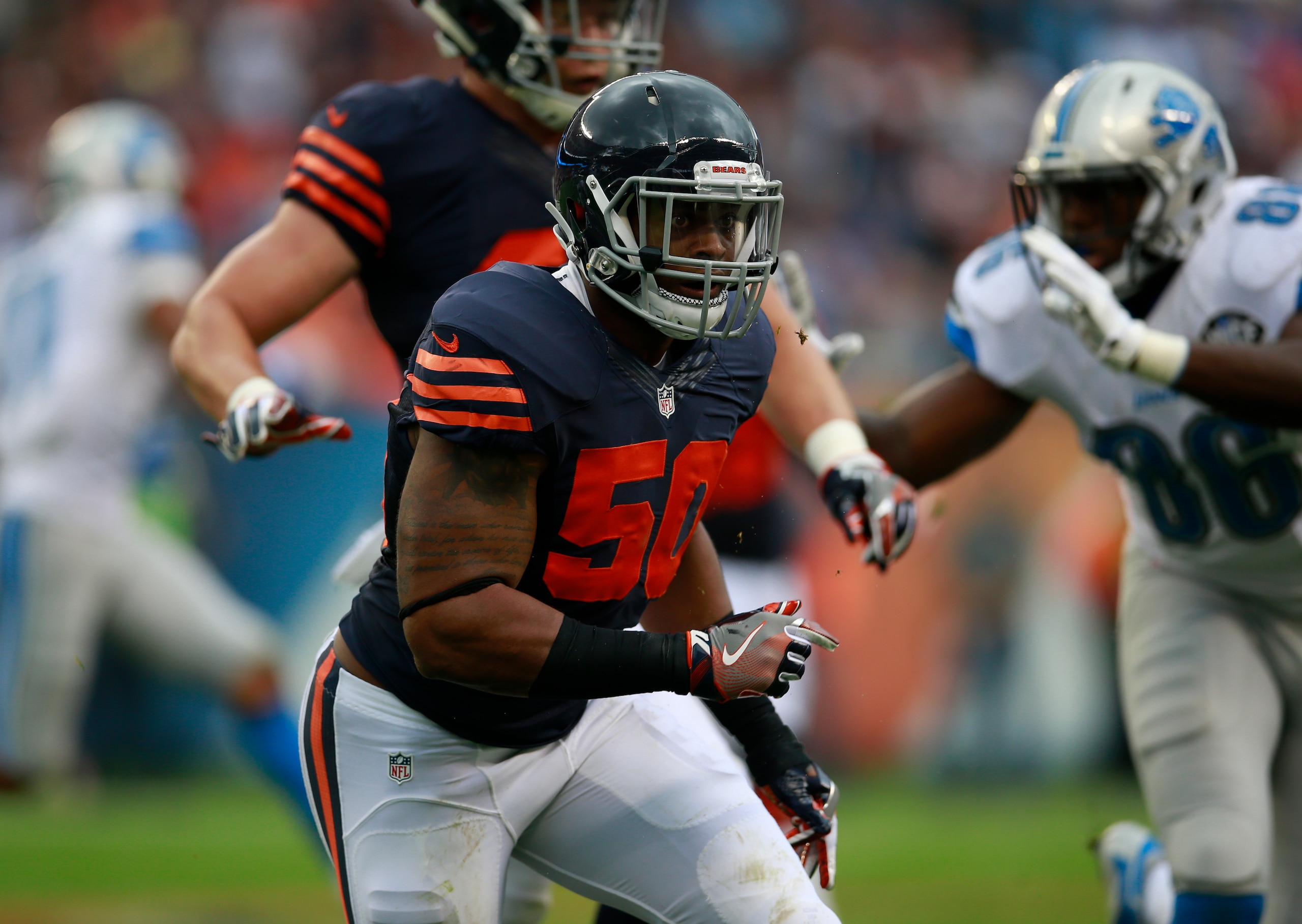
Scheme: 3-4
Starter: Jerrell Freeman
NFL1000 Scores: 77.9/100
NFL1000 Position Rank: 3/65
Jerrell Freeman signed with the Chicago Bears as a free agent last offseason and began 2016 with some of the best linebacker play in the league. As a hitter, few have the anticipation and aggression to fill gaps downhill like Freeman. He has no fear in taking on offensive linemen at the point of attack. He'll win the battle with pure power and has the recovery and athletic ability to track down ball-carriers as well.
Unfortunately, a suspension for performance-enhancing drugs derailed Freeman's season and may give some pause to his ability to perform on an equal playing field. 2017 will be an excellent opportunity for him to remind teams why the Bears signed him to be the unquestioned leader of their 3-4 defense.
Starter: Danny Trevathan
NFL1000 Scores: 74.1/100
NFL1000 Position Rank: 5/65
Where Freeman wins with brute strength and power, Danny Trevathan wins with speed and athleticism. He's the perfect complement to Freeman, with the sideline-to-sideline range to track down edge runs. Freeman takes on lead blocks while Trevathan comes knifing through gaps for tackles in the backfield. As a duo, few in the NFL are better than these two working in tandem.
Trevathan is attempting to come back from a ruptured patellar tendon that ended his season in Week 12 last year. Trevathan may begin the season on an injured list, making Nick Kwiatkoski's development even more valuable. If Trevathan can return fully healthy, he's more than capable of quickly earning a starting role. The Chicago Bears brought him in last offseason and figure him to be the long-term option when healthy.
Backup: Nick Kwiatkoski
NFL1000 Scores: 68.9/100
NFL1000 Position Rank: 39/65
As a rookie, Kwiatkoski stepped in following the injuries to the starters and performed well. He suffered the expected rookie struggles but managed to continue a pattern of growth and experience that will likely continue into 2017. The beauty of the Bears roster is that they've got two high-level starters and a cheap backup. Additionally, Kwiatkoski got starter's reps last year and could again fill in if needed.
Kwiatkoski's best trait is his ability to find the ball despite underdeveloped mental processing and average athleticism. He simply manages to make plays. The 23-year-old Kwiatkoski tallied nine tackles in a win against the San Francisco 49ers and looked significantly better than the opposing linebackers. He's young and developing, but he's the perfect depth piece to keep around.
Team Need: 1/10
Potential Draft Fits: UDFAs to compete for special teams playing time.
Cornerback
15 of 19
Scheme: Cover 2
Starter: Tracy Porter
NFL1000 Scores: 59.2/100
NFL1000 Position Rank: 103/133
Though he'll turn 31 years old before the season kicks off, Tracy Porter is highly likely to be a starter in 2017. Porter's shown signs of slowing down, in that he's primarily been an off-ball corner in the last two seasons, but he's crafty and intelligent even with physical decline.
The Bears would surely rather see Porter move to the slot full time, but that would require either Kyle Fuller or Deiondre' Hall to take massive developmental steps forward to challenge him.
Starter: Prince Amukamara
NFL1000 Scores: 61/100
NFL1000 Position Rank: 81/133
The Bears brought in Prince Amukamara despite his letdown season with the Jacksonville Jaguars in 2016. But Amukamara will essentially walk into the starting job because of the lack of proven talent on the roster.
Amukamara's great athleticism has waned after injuries early in his career, but his biggest issue is the inability to generate turnovers. He's had multiple interceptions just one year out of six, and because he's not an elite coverage man, that's not good enough to be a long-term starter. Like Porter, Amukamara would ideally need be replaced in 2018.
Slot: Bryce Callahan
NFL1000 Scores: 61.4/100
NFL1000 Position Rank: 80/133
The slot job in Chicago should go to either Marcus Cooper or Bryce Callahan, with Callahan being the in-house and more consistent option despite injury woes. Callahan is only 25 years old, and his average slot grade of 15.6 was good enough to be a top-20 slot-specific player last season.
His speed and closing ability stand out the most, though the Bears' conservative scheme is one reason his pass defense seems lacking and his interception total (zero) is so low. That'll leave the door open for Cooper to enter the rotation if it doesn't change.
Depth: Kyle Fuller
NFL1000 Scores: Did not have enough snaps to qualify
The 14th overall pick of the 2014 NFL draft, Kyle Fuller remains an enigma despite a strong start to his rookie season. A knee scope kept him out of action in 2016, further casting concern on his future as he enters the final year of his contract. 2015 wasn’t promising, either, despite defensive coordinator Vic Fangio being a good theoretical fit for Fuller’s zone scheme. Fuller is the wild card of the bunch, as he’s arguably the most talented of the group, but his confidence is likely at an all-time low. The Bears should give him every opportunity to earn playing time.
Depth: Deiondre’ Hall
NFL1000 Scores: Did not have enough snaps to qualify
One of the bigger blunders of the Bears’ 2016 season was playing cornerback Deiondre’ Hall just 79 defensive snaps despite the team's disastrous season. Giving veteran Tracy Porter playing time while Hall rode the bench was a major miscue, as now Hall will have little experience to fall back on as he tries to earn a role. Hall could move to safety depending on the draft’s results or spend the year as the fifth cornerback.
Team Need: 7/10
Potential Draft Fits: Marlon Humphrey, Alabama; Chidobe Awuzie, Colorado; Gareon Conley, Ohio State; Quincy Wilson, Florida; Jalen Tabor, Florida
Free Safety
16 of 19
Scheme: Cover 2
Starter: Adrian Amos
NFL1000 Scores: 69.5/100
NFL1000 FS Rank: 33/50
Adrian Amos was the best of a bad bunch for the Bears at safety. He was serviceable, and at 23, flashed enough potential to suggest he's capable of being more than that. He's a fluid athlete with good range, but his ability in coverage is somewhat restricted in the Bears' scheme.
Chicago likes to play safe and keeps both of its safeties defending deep halves of the field for a lot of the game. As such, Amos doesn't always get to show off his potential. Against the run, he is a willing tackler, though he can take some suspect angles at times, which leads him to miss the occasional tackle in the alley. The Bears will hope that by pairing him with veteran Quintin Demps, he can continue to develop in a positive manner.
Backup: Chris Prosinski
NFL1000 Scores: Did not have enough snaps to qualify
A career backup, Chris Prosinski's biggest impact on game day usually comes on special teams. He's always been a core special teams player since he entered the league in 2011, and at 29, that remains his best opportunity at making the final roster.
He's a good scheme fit as an interchangeable backup at either strong or free safety and as a special teamer. But if either starter were to go down with a significant injury, the Bears would likely look to find someone other than Prosinski to take over the starting responsibilities
Backup: DeAndre Houston-Carson
NFL1000 Scores: Did not have enough snaps to qualify
A small-school prospect last year, DeAndre Houston-Carson was drafted by the Bears in the sixth round. He has plenty of positive traits for a coverage safety, but coming out of a small school, Houston-Carson was always expected to take a year or two to develop in the NFL.
He spent most of his rookie campaign on the bench, only playing a handful of snaps. But being a young draft pick with time to develop in a relatively user-friendly scheme, Houston-Carson could find himself beating out Prosinski for the primary backup role at free safety in training camp.
Team Need: 4/10
Potential Draft Fits: Jamal Adams, LSU; Desmond King, Iowa; Justin Evans, Texas A&M; Eddie Jackson, Alabama
Strong Safety
17 of 19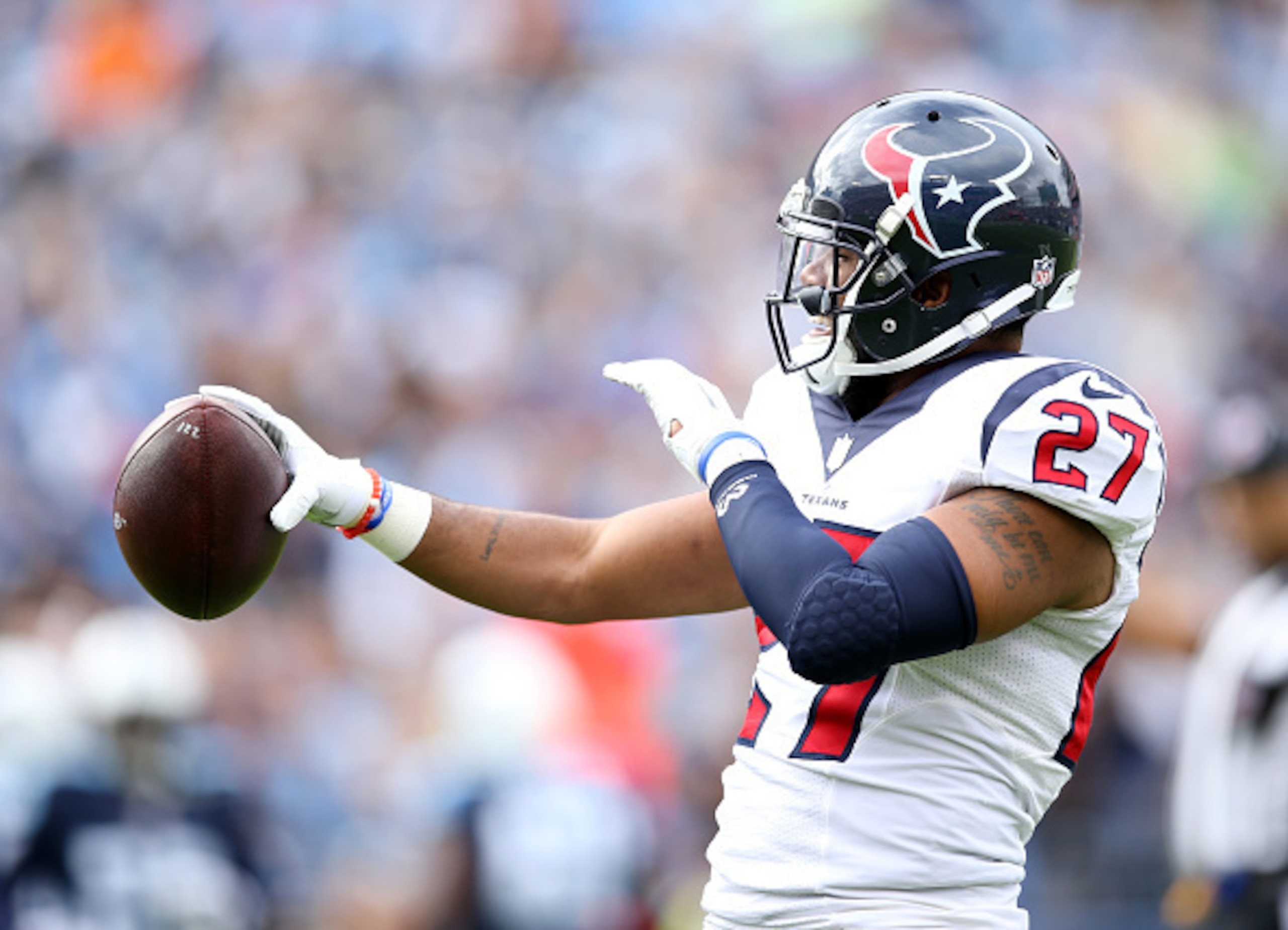
Scheme: Cover 2
Starter: Quintin Demps
NFL1000 Scores: 70.8/100
NFL1000 Position Rank: 31/53
While unspectacular, Quintin Demps has been reliable for a number of years. He's versatile and interchangeable and can play either strong or free safety in the Bears' scheme. With a bunch of young, recent draft picks at safety, Demps should be able to provide some veteran leadership on the back end that the Bears somewhat lacked last year.
He is a better run defender than any of the safeties on last year's roster and his coverage grade could improve in a much simpler, more forgiving scheme than what he played in during his time with the Texans. He isn't the long-term answer for Chicago, but he's a solid pickup who should be a reliable player in the secondary—something the Bears desperately need.
Backup: Harold Jones-Quartey
NFL1000 Scores: 69/100
NFL1000 Position Rank: 44/53
Harold Jones-Quartey went from undrafted in 2015 to starter for the Bears during the 2016 season. As would be expected of any young player, let alone one who had gone undrafted, Jones-Quartey was wildly inconsistent this year. He would have one solid outing followed by a poor one.
Toward the back end of the campaign, he put together a four-game stretch of serviceable performances, but those were split up by two contests he missed due to injury. He followed that stretch with two subpar performances. It's clear he still needs to develop, which he should be able to do while backing up Demps.
Backup: Deon Bush
NFL1000 Scores: 68.6/100
NFL1000 Position Rank: 47/53
The Bears drafted Deon Bush in the fourth round last year but didn't get a great deal of production out of him during his rookie season. He didn't see the field until Week 8 and only saw significant playing time during a five-game stretch from Week 11 to Week 15 while filling in for teammates dealing with injuries.
It's clear he has plenty of development to do before he's ready to be a starter. Fortunately, with the addition of Demps, Bush can now sit and learn from the sidelines without being forced into action.
Team Need: 3/10
Potential Draft Fits: UDFA for competition.
Kicker
18 of 19
Starter: Connor Barth
NFL1000 Scores: 65/100
NFL1000 Position Rank: 30/34
The Bears recently re-signed Connor Barth to a one-year deal worth $980,000, with $155,000 of that money guaranteed. With that new deal in place, it's unlikely that Chicago spends draft capital on a young kicker, but it is likely to visit the undrafted free-agent marketplace to see what kind of talent it can bring in as competition this offseason.
Barth had a below-average 2016, as he went just 1-of-3 in limited action from 50-plus yards and notched an accuracy of 78.3 percent on field goals for the year. This was Barth's first time playing a full slate of games at Soldier Field, a notoriously difficult place for kickers to ply their trade.
While there may be some improvement expected from Barth, the one-year deal with limited guaranteed money shows that if the right player comes along, Chicago is ready to move on. Expect this to be a camp competition with a high-end undrafted kicker as the likely leg Barth faces.
Team Need: 6/10
Potential Draft Fits: Jonathan Gonzales, Portland State; Jake Elliott, Memphis
Punter
19 of 19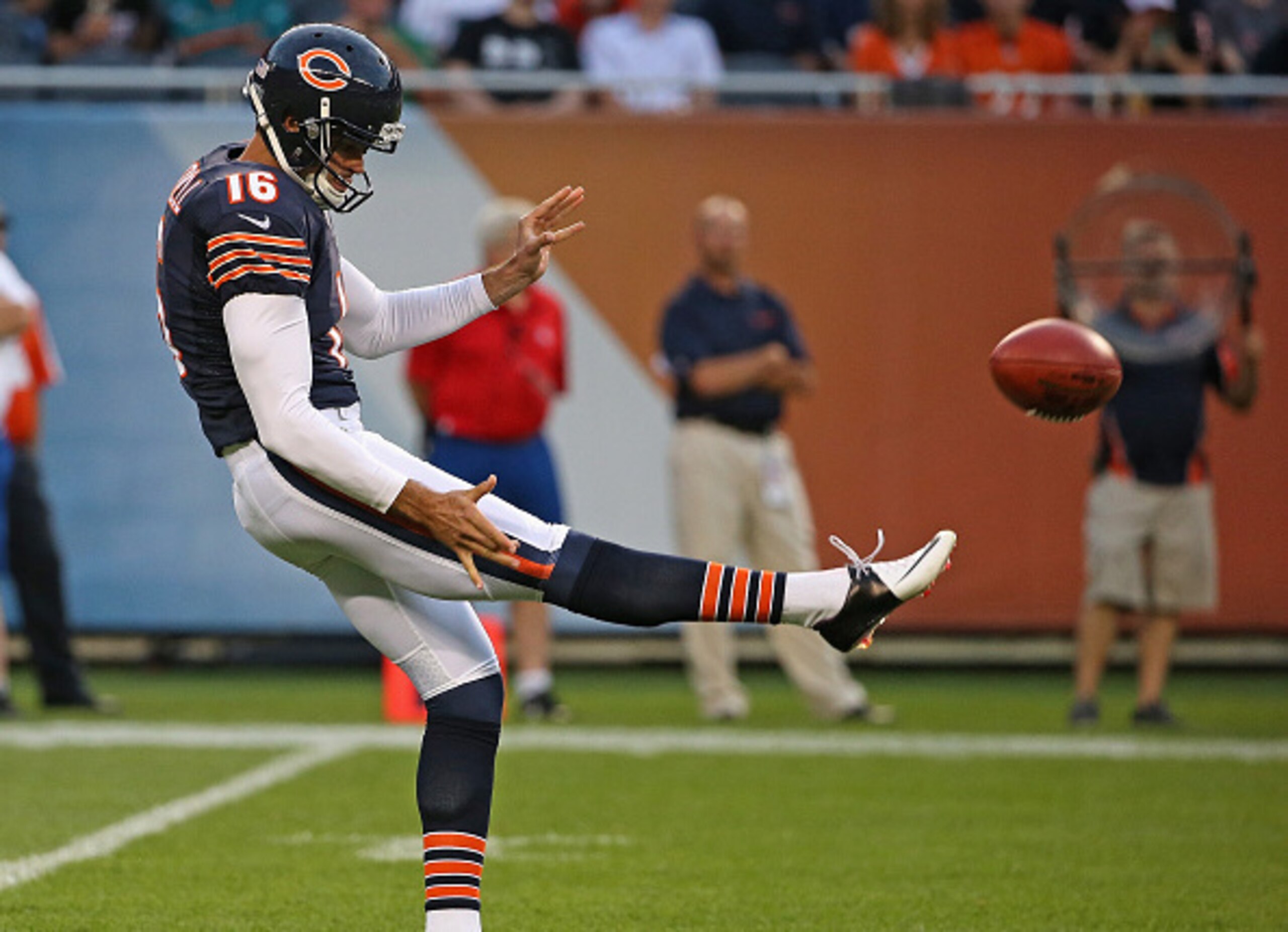
Punter: Pat O'Donnell
NFL1000 Scores: 65.8/100
NFL1000 Position Rank: 20/34
Pat O'Donnell's grading fell victim to a two-week stretch in which he put up scores of 56 and 47 in absolutely terrible conditions, skewing his rating down significantly. While the initial reaction would be to say O'Donnell had a below-average year, he would have graded out in the upper half of punters without these two games. O'Donnell's distance generated is average, but he produces slightly above-average hang time and shows a feel for the directional game that is inconsistent, but with promise.
Overall, O'Donnell is likely to provide good value to the Bears in the final year of his rookie deal in 2017. If he is able to be a little more consistent and avoid that one deep valley he saw in 2016, he could be in line for a sizable pay raise into the mid-tier of punter salaries. That'd put him in the $2 million-per-year range heading into 2017. But for now, Chicago has a capable punter on a team-friendly deal for one more season.
Team Need: 2/10
Potential Draft Fits: None
Advanced statistics provided by Pro Football Focus unless otherwise noted. Salary info courtesy of Spotrac unless otherwise noted.
.jpg?w=2560)
.jpg?w=2560 "Cardinals Giants Football")







