

Will Luis Enrique's Exit Gamble Pay off with Final Hurrah at Barcelona?
Both Pep Guardiola and Luis Enrique announced their departures as head coaches at FC Barcelona before season's end. Each cited exhaustion as the reason they could no longer go on. Their decisions to step down were both made at press conferences; the manner in which their messages were delivered—and received—is telling, however.
Guardiola stepped down in late April 2012. Chelsea had just knocked his side out of the Champions League a couple of days earlier; and Barca were a few days away from surrendering their league title to Jose Mourinho’s Real Madrid. A demob-happy thrashing of Athletic Bilbao in the Copa del Rey final came four weeks later.
TOP NEWS

Final Men's Ballon d'Or Rankings 📊
Highlights and Viral Moments 🍿

Carrick Replacement Options 📝
Guardiola’s players, including team captain Carles Puyol and club legend Xavi Hernandez, as well as the club’s hierarchy, were summoned for the fateful, Friday morning press conference. Leo Messi was too distraught to attend, later posting a message on Facebook, explaining “because of the emotions” he felt it better to sit it out (h/t Buenos Aires Herald). After Guardiola finished his announcement, and had fielded a few questions, his players applauded him off stage.
Luis Enrique—who has enjoyed management success at Barca on a par with Guardiola—let the world know last Wednesday night he was standing down as manager after a routine 6-1 defeat of Sporting Gijon. None of his players were present in the room. Neither was the club’s president or sporting director. There were no tears, no fanfare.
Nobody was taken aback by Luis Enrique’s news. There was surprise, though, at the timing. Why now, with so much to play for? Barca sit on top of La Liga, a point ahead of Real Madrid (who have played a game less), and have a Copa del Rey final to come against Alaves at the end of May.
Was Luis Enrique pre-empting a heave that would come after likely elimination to Paris Saint-Germain in this week’s UEFA Champions League fixtures? Would his senior players—burnt out by his intense, surly nature—have forced him out by the end of the season?
After weeks of endless speculation about his reluctance to confirm if he’d stay on as manager next season, will his decision clear the air and free up his players? Luis Enrique suggests it will, claiming last weekend that the mood in the camp is better as a result of his departure announcement: “My relationship with the dressing room now is even better than it was," per El Confidencial (in Spanish).
Or will Barca’s players see Luis Enrique as a lame-duck leader for the remaining three months of his term? Because that was exactly how Alex Ferguson reckoned his Manchester United troops saw him once he shocked the football world in May 2001 by declaring he was retiring from the club at the end of the following season.
At the time, United were imperious. Their injury-time Champions League triumph over Bayern Munich at the Camp Nou was fresh in the memory. They had just won three league titles on the bounce, but Ferguson’s 60th birthday—a landmark that played on his mind—was looming at the end of the year. A row with Manchester United’s board, who refused to guarantee him a director’s seat and an ambassadorial role with the club on retirement, crystallised his thoughts. He decided to walk, threatening to sever all ties with the club.
But first a valedictory tour of the battlefields, a final season in charge with the promise of a four-in-a-row domestically, something no other club had achieved in over a century of English top-flight football, as well as the irresistible thought of leading out United for the Champions League final at Hampden Park in Glasgow, his backyard, a fantasy he admitted “obsessed” him.
By December, his dreams had been trampled on. United’s form had plummeted. They languished in ninth in the league table.
On Christmas Day, his wife, Cathy, and their three sons, staged a dramatic intervention, urging him to reconsider his decision to pack it in. They were pushing an open door. Ferguson later admitted he knew by October he’d made a serious blunder. “I cursed myself,” he wrote in his 2013 autobiography. “I’ve been stupid. Why did I even mention it?”
With retirement on the horizon, he couldn’t focus properly. He was consumed by thoughts of who would replace him. With his players, he relaxed, just a tad, but enough for diabolical results. It had a debilitating effect on their performances.
Of this, he was adamant, writing in his autobiography: “When they thought I was leaving, they slackened off. A constant tactic of mine was always to have my players on the edge, to keep them thinking it was always a matter of life and death. The must-win approach.” Instead, they had one eye on life after Ferguson. They downed tools, he argued.
Ferguson approached Maurice Watkins, a club director. A U-turn on his retirement plan was announced. United’s form improved. They won 13 of their last 15 games of the season, although they went out on the away-goals rule to Bayer Leverkusen in the Champions League semi-finals and finished the season trophyless. Ferguson did, though, add another six Premier League titles to his resume as well as the 2008 Champions League before finally leaving Old Trafford in 2013.
Bob Paisley, one of only two men to win three European Cups as manager (along with Carlo Ancelotti) also announced he would step down a year out. The long farewell, which Paisley made known in August 1982, had no impact on his players. The skies did not fall in over Merseyside. Liverpool won the League Cup, which the players made Paisley pick up on the steps of Wembley, as well as a sixth league title from nine seasons under his reign.
It was business as usual. Perhaps it had something to do with Paisley’s unassuming management style. Paisley never practiced the siege mentality favoured by Ferguson. Paisley’s players were empowered. When Paisley left, Joe Fagan led the club to a treble. When Ferguson departed in 2013, Manchester United fell into a tailspin.
When Ferguson threatened to leave over the winter of 2001, his players were rudderless. By his own admission, the Scot lost his grip on their thoughts. Manuel Pellegrini argued that a similar kind of uncertainty pervaded the minds of his Manchester City players during the hoopla last season that preceded Guardiola’s arrival to the Premier League. It distracted them.
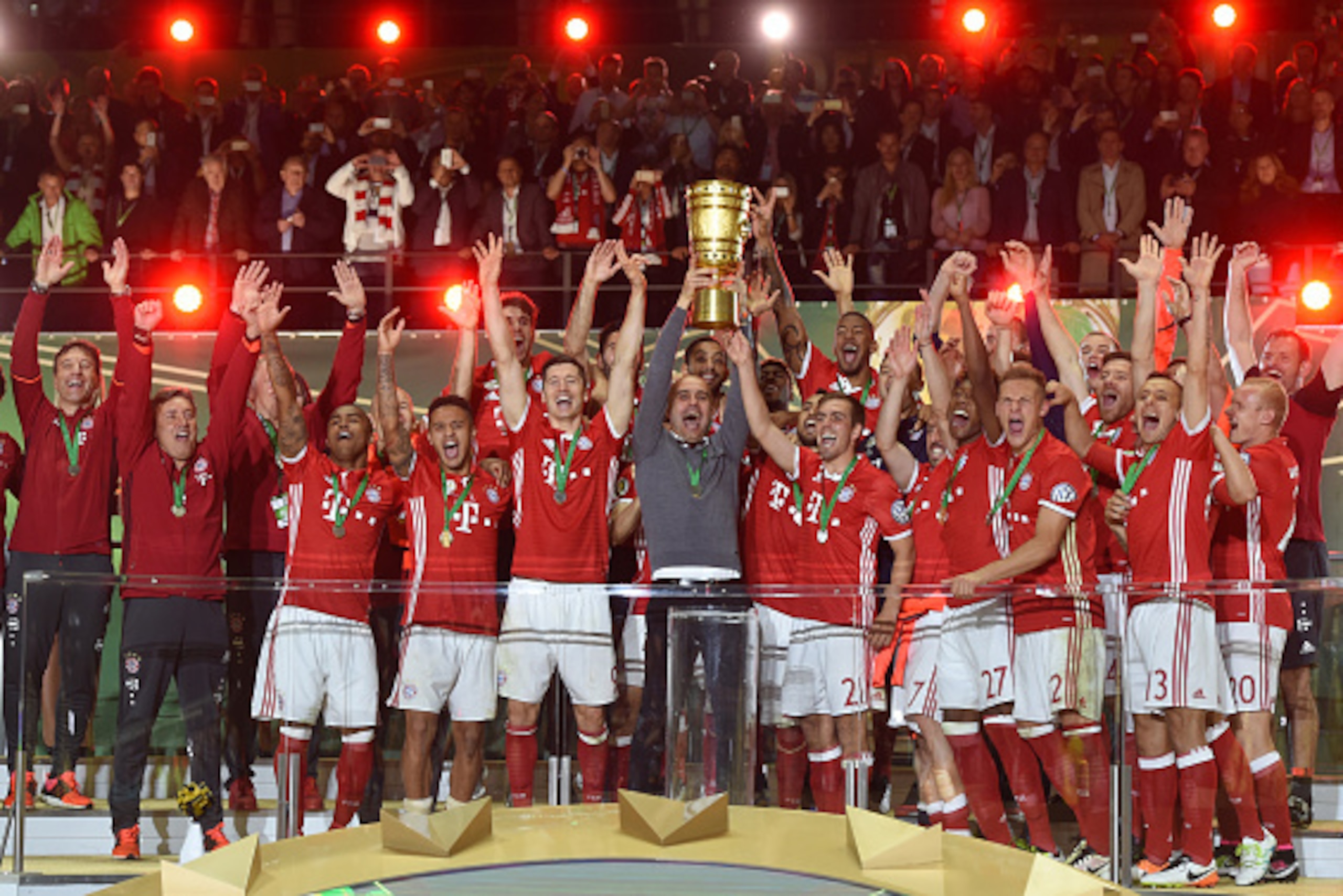
In December 2015, Bayern Munich confirmed Guardiola would leave the club at the end of the season. Rumours swirled about his next port of call. The dog on the street knew it would be Manchester City. The club had been courting him since 2012; several of City's directors were old associates of his from Barca.
Pellegrini was addled by the constant quizzing at press conferences about Guardiola’s availability. He pushed the club to make an announcement. They finally did so February 1, 2016. The clarification did not, however, strengthen his hand. It was the opposite.
In the minds of his players, he was a dead-man walking. “From there, the relationship with the players was more complicated,” he said in an interview with 24horas (in Spanish) last month. “The authority was not the same.”
It is difficult to measure the impact of his forewarned departure. Manchester City flip-flopped through the whole season, bursting out of the blocks with five wins on the trot, only to wobble.
After the Guardiola announcement in February 2016, the club’s fortunes were mixed: They slipped from second to fourth in the league table by the time Leicester City were crowned champions, but over the same period they picked up a League Cup and registered their best run in the European Cup, albeit going down insipidly to Real Madrid in the semi-finals.
It is easier to measure the impact of Bayern Munich’s decision to announce midseason that Guardiola would take over from Jupp Heynckes as manager the following summer. The news had a galvanising effect on his squad, which remained intent on making up for the 2012 Champions League final defeat to Chelsea.
The German coach was upset by the January 2013 press announcement heralding Guardiola’s arrival, more put out by the handling of the declaration than the fact of it. He knew it was coming, but it went public earlier than he expected and, as a stickler for detail, he was irked by a press-release gaffe declaring he’d be retiring at the end of the season, which was a decision he hadn’t made up in his own mind yet, or at least not publicly.
Miffed, he turned down the offer of a plum, well-paid position with the club, of his choosing: “I’m not interested; Monchengladbach is my club,” he said (h/t the Guardian), referring to Borussia Monchengladbach, the club he scored over 200 goals for as a player.
After it was confirmed Heynckes was leaving the club, his Bayern Munich players, who had warmed to his paternalistic coaching style, won 24 of their remaining 26 games, including a triumphant Champions League win at Wembley over Borussia Dortmund which sealed an unprecedented German treble. Heynckes left his successor, Guardiola, with the almost impossible job of trying to emulate his achievement.
Luis Enrique’s treble dream is still alive. He’ll find out on Wednesday in the Champions League, when Barca try to overturn a 4-0 deficit to Paris Saint-Germain, if his gamble to go public early on his decision to quit next summer might start to pay off.

.jpg?w=2560 "Raiders Could Start Mendoza")


.jpg?w=2560 "Rodgers Iced Out on Plane 💎")


.jpg?w=2560 "🚨 Week 8 AP Top 25 Poll")