
NFL Free Agency 2017: The 1 Player Each NFL Team Should Let Walk
The legal tampering period in the NFL free agency cycle starts on March 7, meaning teams can officially contact players on other teams two days ahead of when they can officially sign new contracts on the open market.
While every fan is excited about their team potentially re-signing their own and bringing in outside talent, every player isn't a fit on every roster.
With that in mind, we'll go through all 32 franchises to find players who don't fit as potential re-signings.
Whether it's because of the positional market, their team's cap salary situation or expected production compared to expected or recent cap hits, there are plenty of players who should move on to new squads in 2017, by choice of their original teams.
Some of these players are former stars. Some can still play but are on the late end of their careers. Some are expecting their first big paydays. While some are underrated or unthought of talents. We'll cover all shapes and sizes for you.
Arizona Cardinals: Calais Campbell, DL/EDGE
1 of 32
Calais Campbell is a 30-year-old, two-time Pro Bowler who was a second-team All-Pro defensive lineman last season.
Standing at 6'8" and 300 pounds, as a former second-round pick, it's hard to imagine teams not valuing him if he hits the open market.
Early on in the offseason, the idea of Campbell returning to the Arizona Cardinals was a strong possibility. Now, though, with Jason Pierre-Paul, Melvin Ingram and teammate Chandler Jones all receiving the franchise tags as pass-rushers, Campbell might be looked at as the top 4-3 defensive end prospect in free agency, as he's proved more in his NFL career than Nick Perry, who was a bit of a one-year wonder with the Green Bay Packers.
Despite Campbell's age, he hasn't shown any signs of slowing down, and that could lead to another massive contract. He had a cap hit of over $15 million in 2016, and the Cardinals thought he was worth that before he recorded another All-Pro season.
On the open market, will a team be willing to hand him a deal in the range of $17 million per year, like Olivier Vernon landed last offseason?
Campbell is more talented than Vernon is, and in a league where more teams are playing "under" looks in both 3-4 and 4-3 base defenses—where there's a larger base end on the strong side of the line of scrimmage, and then that end kicks in to the interior in nickel and dime looks—Campbell could be in play for just about every scheme in the league.
The bidding market is going to be high for the aging star. At some point, Arizona is going to have to pick and choose its battles.
Atlanta Falcons: Dwight Freeney, EDGE
2 of 32
There aren't many big names slated to hit free agency from the Atlanta Falcons' roster, but if you're going to make the case for one being a possible bust re-signing, it's Dwight Freeney.
The future Hall of Fame pass-rusher signed a one-year, $1 million deal with the Falcons this past offseason to be a situational pass-rusher, and he was that for most of the season.
The team has a number one pass-rusher in Vic Beasley, their 2015 first-round pick, and the squad also has Adrian Clayborn, a hybrid end-tackle, and Derrick Shelby, another quality rotational rusher, locked in for the 2017, as they both signed deals when Freeney did.
At 37 years old, there should be real questions as to how many snaps and how efficient Freeney can be as a speed-counter rusher, even if he is playing on turf. Injuries occurred late for Atlanta, which led to Freeney's standout performance in the Super Bowl, but if Freeney has to start in 2017, the tires could come off fast.
With the status of Clayborn, whose career will be remembered for great flashes between various injuries, you have to begin to wonder if Freeney is the player you want in your two-deep heading into the season. If Freeney asks for more than he signed on for in 2016, the Falcons have to think about letting him walk.
Baltimore Ravens: Brandon Williams, DL
3 of 32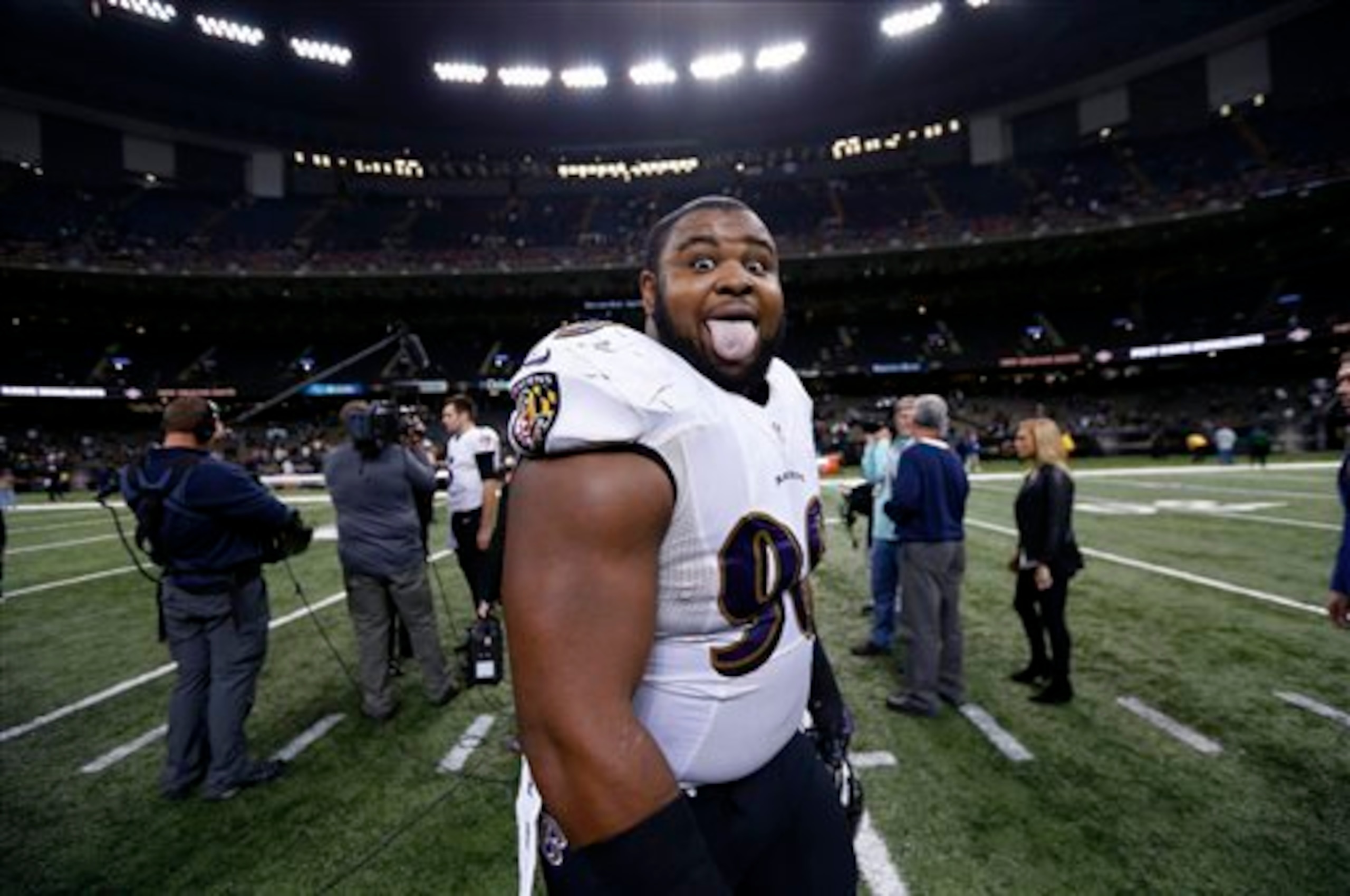
One reason for this weak free agency class is the fact that the 2013 draft class was weak overall. The top two positions in the sport are quarterbacks and pass-rushers.
The only quarterbacks taken in the top-100 in 2013 were E.J. Manuel, Geno Smith, Mike Glennon and Matt Barkley, who will all hit free agency—something starting-caliber passers almost never do.
In terms of pass-rushers, you can make the case that Devin Taylor, a Day 3 selection who Detroit Lions fans want to replace as a starter, is the second-best edge defender out of the 2013 class.
For the Baltimore Ravens specifically, they had about an average class, graded on the curve of the league that season. In the first round, they took Matt Elam, a safety who was recently arrested for marijuana and oxycodone possession, while they picked up Arthur Brown, a street free-agent linebacker, in the second round.
They nailed their third-round pick in Brandon Williams, a nose tackle from Missouri Southern State, though. He's started 46 games for the team over the last three seasons, but at the end of the day, he's a nose tackle.
In those 46 starts, he has 3.5 sacks. Defensive linemen are valuable in the NFL, but if a player doesn't have a position on third and long in a nickel defense, he shouldn't be paid like a premium player.
As potentially the top defensive tackle prospect on the market, that should scare Baltimore if it wishes to re-sign him once free agency starts.
Just because he's the positive memory of a bad draft class doesn't mean you should break the bank, limiting your chances moving forward, to hold on to a value third-round selection.
In one year, Timmy Jernigan, a 2014 second-round pick who recorded five sacks just last season, will be a free agent defensive tackle prospect. They shouldn't miss out on Jernigan's future for Williams'.

Buffalo Bills: Lorenzo Alexander, EDGE
4 of 32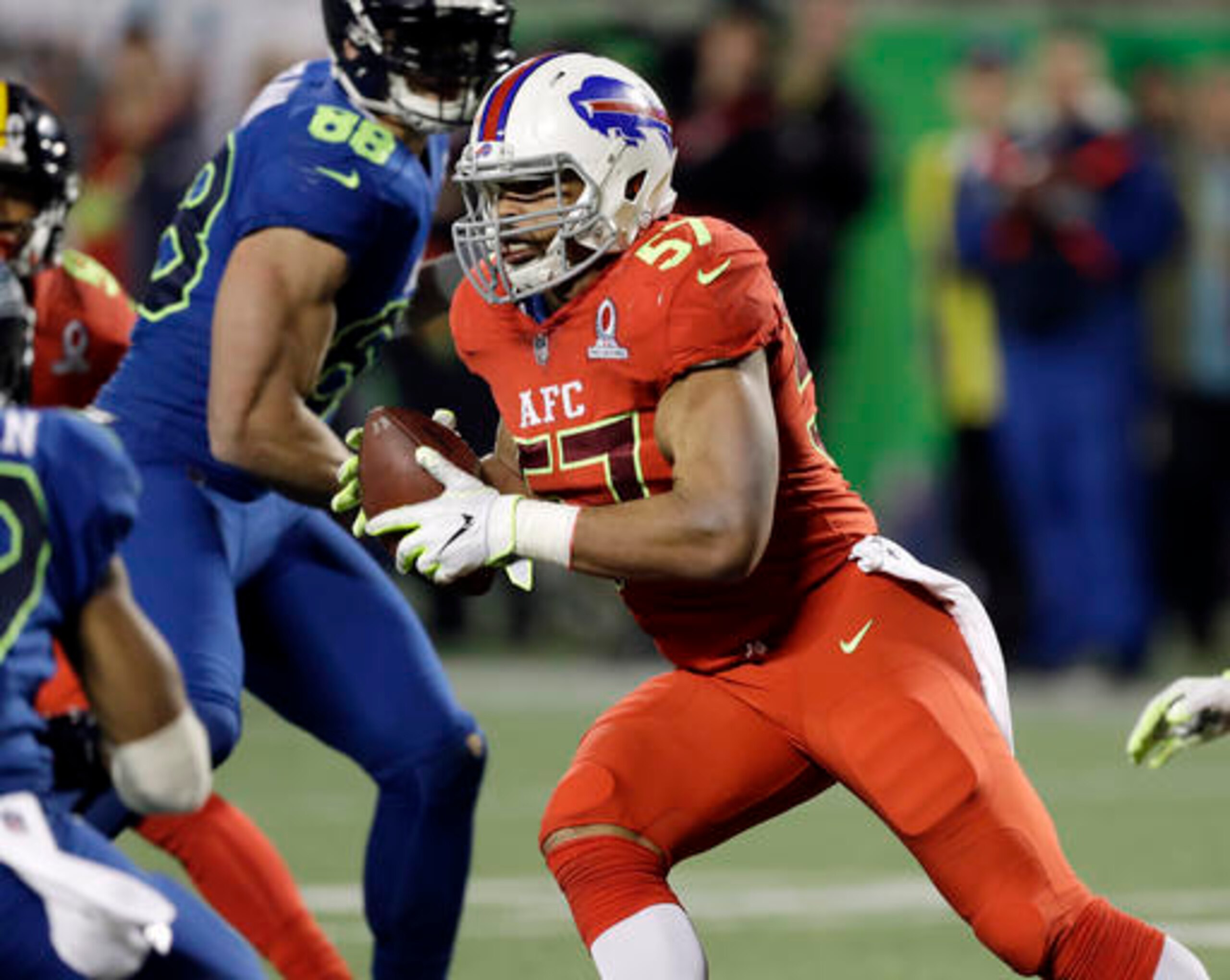
In 2005, Lorenzo Alexander was an undrafted free agent defensive tackle out of California. In 2012, he was a Pro Bowl special teamer for the Washington Redskins. Entering 2016, he never recorded more than 2.5 sacks in a single season in his 11 NFL seasons.
Somehow, Alexander, at 33 years old, had a breakout season of 12.5 sacks with the Buffalo Bills, earning him second-team All-Pro honors. How much do you want to invest in that, particularly in today's pass-rushing market, where edge defenders are getting contracts that usually are exclusive to quarterbacks?
One question has to be what type of defense Buffalo wants to use moving forward. Under Rex Ryan, who was fired in-season in 2016, the team used inside and outside linebacker pressure, forcing its defensive backs to play a lot of man coverage on the back end.
If the Bills want to play like most 3-4 defenses do moving forward, Jerry Hughes, a two-time double-digit sack artist who is five years younger than Alexander, and Shaq Lawson, a 22-year-old 2016 first-round pick, should be plenty of investment at the outside linebacker position.
Was it a fluke season? Does Buffalo want to find out firsthand?
Carolina Panthers: Charles Johnson, EDGE
5 of 32
Since Greg Hardy left Carolina, the Panthers have struggled to get after the quarterback with their edge defenders. They have lacked talent on the outside of their 4-3 defense, but the defensive tackle rotation, including the breakout of Kawann Short, has masked some of those issues.
That didn't stop the Panthers from handing Mario Addison, a 29-year-old former undrafted free agent with 25.5 career sacks, a contract worth $7.5 million per season. There might be a bubble starting at pass-rushing positions in the NFL, and Carolina needs to avoid it.
Last offseason, the team gave Charles Johnson, a former top-100 pick and now 10-year veteran of the team, a one-year, $3 million deal. Despite starting 13 games and recording four sacks, that contract was probably above Johnson's talent in 2016.
After missing 10 games in the last two years, while only recording five sacks combined, it's time for the Panthers to move on. His reps can go to a younger player with promise, which will help Carolina more than anything he can give the team in the short term, no matter what his contributions to the locker room are.
Chicago Bears: Matt Barkley, QB
6 of 32
Heading into his senior season, Matt Barkley was talked about as a potential first overall prospect as the quarterback of the USC Trojans. Down the stretch, things fell apart for the passer, but he was still selected with the 98th overall pick by Chip Kelly when at the Philadelphia Eagles.
In his first three years in the NFL, he played significant reps in just two games, which included one against the Dallas Cowboys that had him throwing for three registered interceptions and one more that was called back. In the last three years, he's spent time with three teams, and after his six starts with Chicago in 2016, he should be moving on to Team 4.
He flashed potential early on in his stint with the Bears, but it caught up to him quick, with him finishing with 14 interceptions and just eight passing touchdowns, totaling a 68.3 passer rating on the season and moving his career number up to 63.7.
Jay Cutler may not be the answer in Chicago, but neither is Barkley. Even as a transitional quarterback, that may be giving Barkley a bit too much credit. He's a backup passer in the NFL.
Cincinnati Bengals: Andrew Whitworth, OT
7 of 32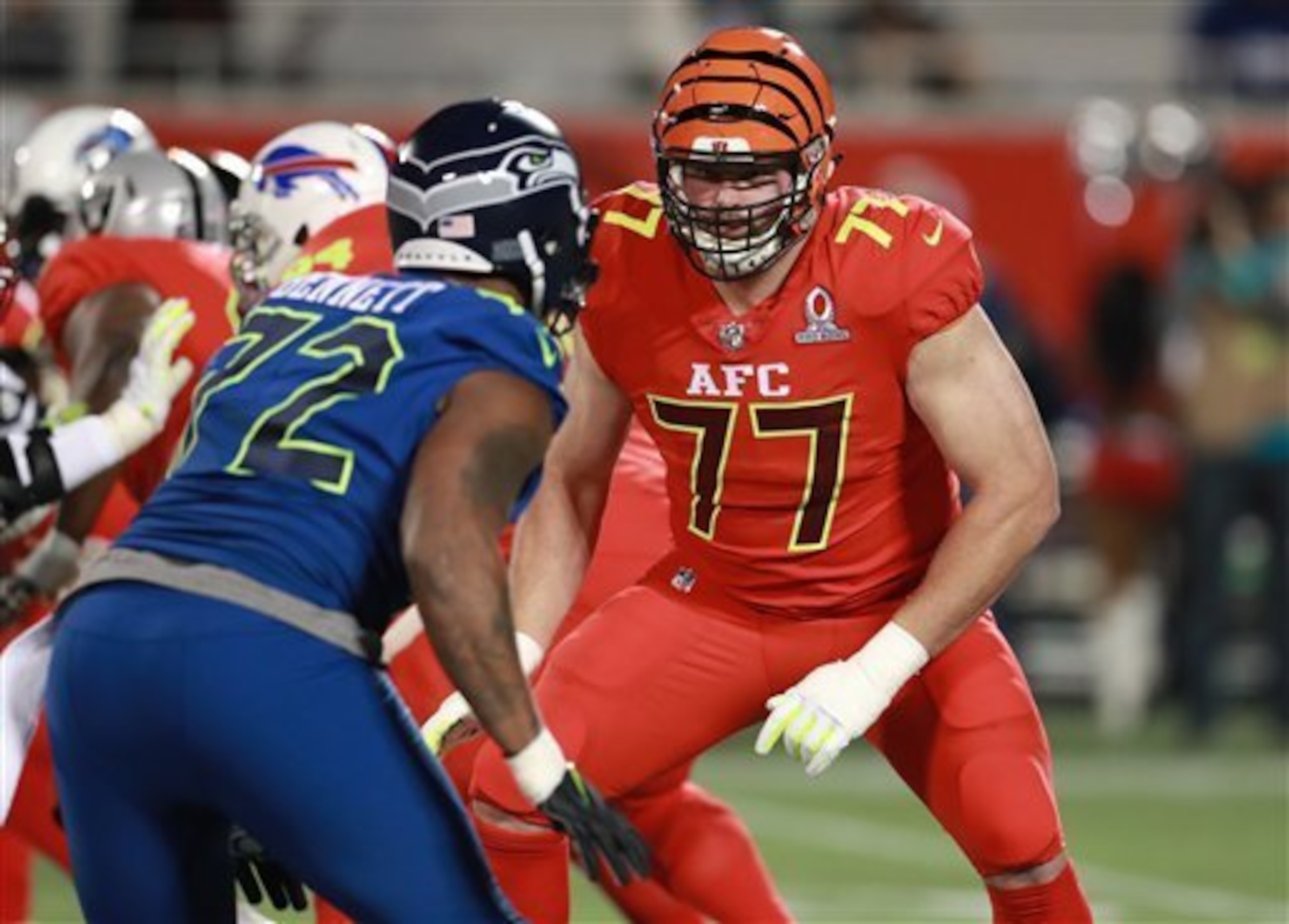
Andrew Whitworth may be the most underrated left tackle in the NFL right now, but he is also 35 years old.
He also plays for the Cincinnati Bengals, a notoriously cheap franchise that homegrows their players. The Bengals may lose 26-year-old guard Kevin Zeitler—a former All-American, first-round pick and 71-game starter—in free agency this season.
But the Bengals drafted Texas A&M tackle Cedric Ogbuehi in the first round of the 2015 draft and then Oregon tackle Jake Fisher in the second round.
This is all about assets. Is the team better paying Zeitler and rolling out Ogbuehi and Fisher out at tackle next season, or is it better paying Whitworth and having to find a replacement for Zeitler in 2017? What is better long-term?
Cleveland Browns: Josh McCown, QB
8 of 32
The Cleveland Browns deserve a franchise quarterback. Browns fans deserve a franchise quarterback. Josh McCown is clearly not that and has never been, especially now as a 37-year-old passer.
The bridge quarterback is one of the many myths of NFL football. In the last decade, only five first-round quarterbacks have failed to record 200 passing attempts as rookies: JaMarcus Russell, Brady Quinn, Jake Locker, Johnny Manziel and Paxton Lynch.
Teams don't sit quarterbacks anymore. When they do, it's clear that they aren't ready to play in the NFL, and they may never be. With Robert Griffin III on the roster, do the Browns even need to entertain the idea of paying two low-level starters while trying to find their savior passer?
Dallas Cowboys: Morris Claiborne, CB
9 of 32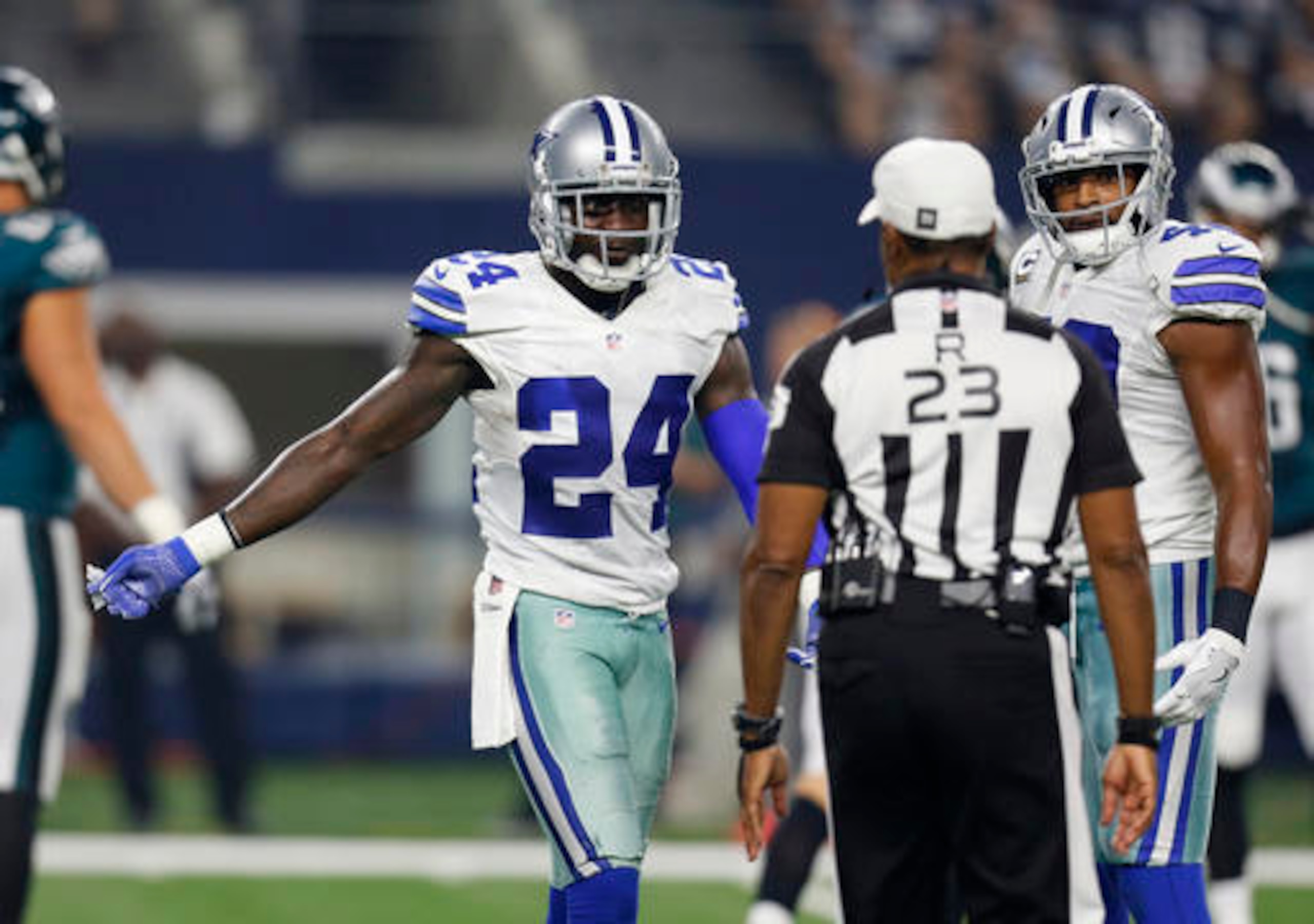
Morris Claiborne was drafted with the sixth overall pick of the 2012 NFL draft. Early on his his career, he was a bit of a disappointment, but his 2015 season was seen as a significant bounce back to the talent many evaluators thought he possessed.
In 2016, though, he tore his groin, and that led to a half-season of missed playing time. As a free agent, how much do you give to a player with one quality season, after being a top-10 pick, who is coming off of an injury at a position so dependent on speed as a 27-year-old?
This may not be a situation where a player should be let go with no contact through free agency, but the Dallas Cowboys are a team built around their offense, and their defensive pieces haven't shaped out too well. There's no point in them doubling down to entrench their 2016 defensive talent.
Denver Broncos: DeMarcus Ware, EDGE
10 of 32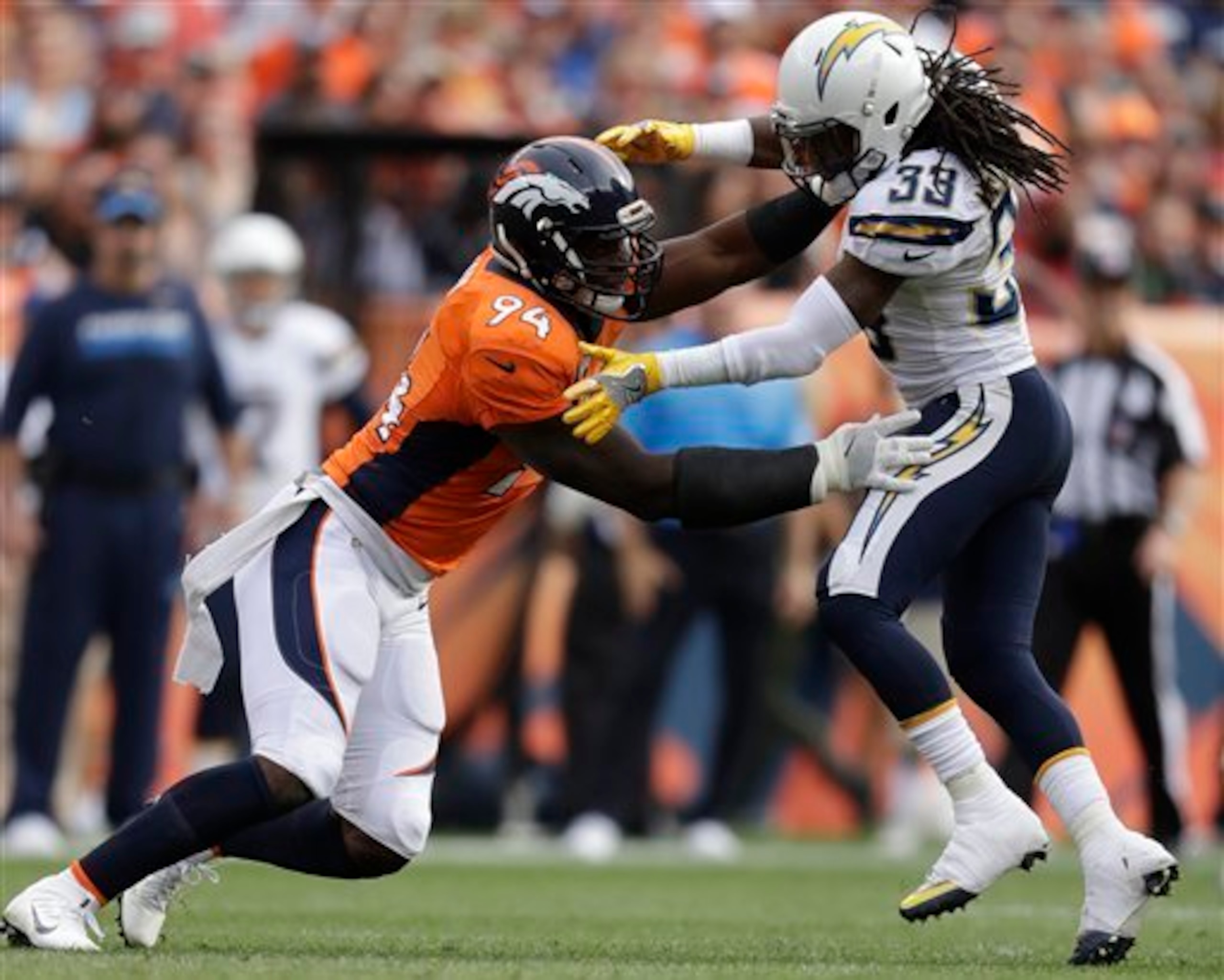
DeMarcus Ware is the leading active sack leader in the NFL since he was drafted. He's a first-ballot Hall of Famer and part of a four-man rotation in Denver as a pass-rusher, when he's healthy.
The team is already paying plenty of money to Von Miller, who signed a quarterback's contract last season. Shane Ray, a 2015 first-round pick, is also receiving reps. One of the more underrated pass-rushers in the league, Shaquil Barrett, is the Broncos' No. 4 rusher at the moment.
Ware signed a three-year, $30 million contract in 2014 and had a cap hit of $8 million last season. He recorded four sacks in 2016, but he'll be a 35-year-old before he plays another down of football.
Detroit Lions: Riley Reiff, OT
11 of 32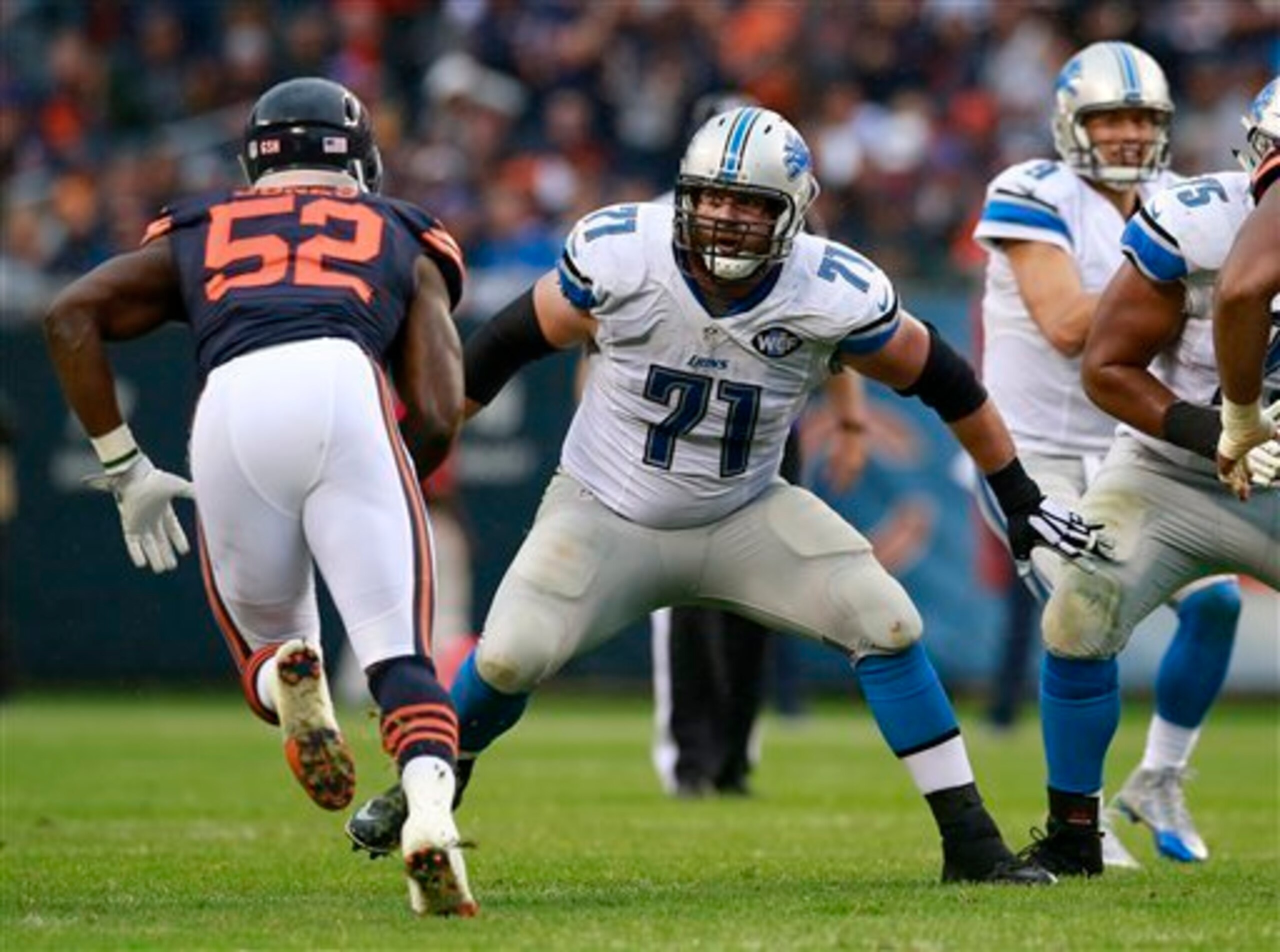
Riley Reiff of the Detroit Lions was a first-round tackle prospect in 2012 coming out of Iowa. He played left tackle for most of his career in Detroit, but after the selection of Taylor Decker with the 16th pick in last year's draft, it's clear the latter is the left tackle of the future for quarterback Matthew Stafford.
Despite Reiff starting 69 games over five years for the Lions, it may be time for the two sides to move on. The truth of the matter is that left tackles and right tackles in the NFL are paid differently on the open market.
For example, the top right tackle in the league, in terms of money, is Lane Johnson of the Philadelphia Eagles, who most assume will move to left tackle long-term once Jason Peters retires. His contract is worth more than $11 million per year.
The biggest contract for a true right tackle is Bryan Bulaga of Green Bay, Detroit's division rival, who is making $6.75 million per year. In a weak offensive tackle class, both in free agency and in the draft, Reiff may get a shot to compete for a left-tackle gig.
Is he worth paying that much money to lock in as a right tackle in Detroit?
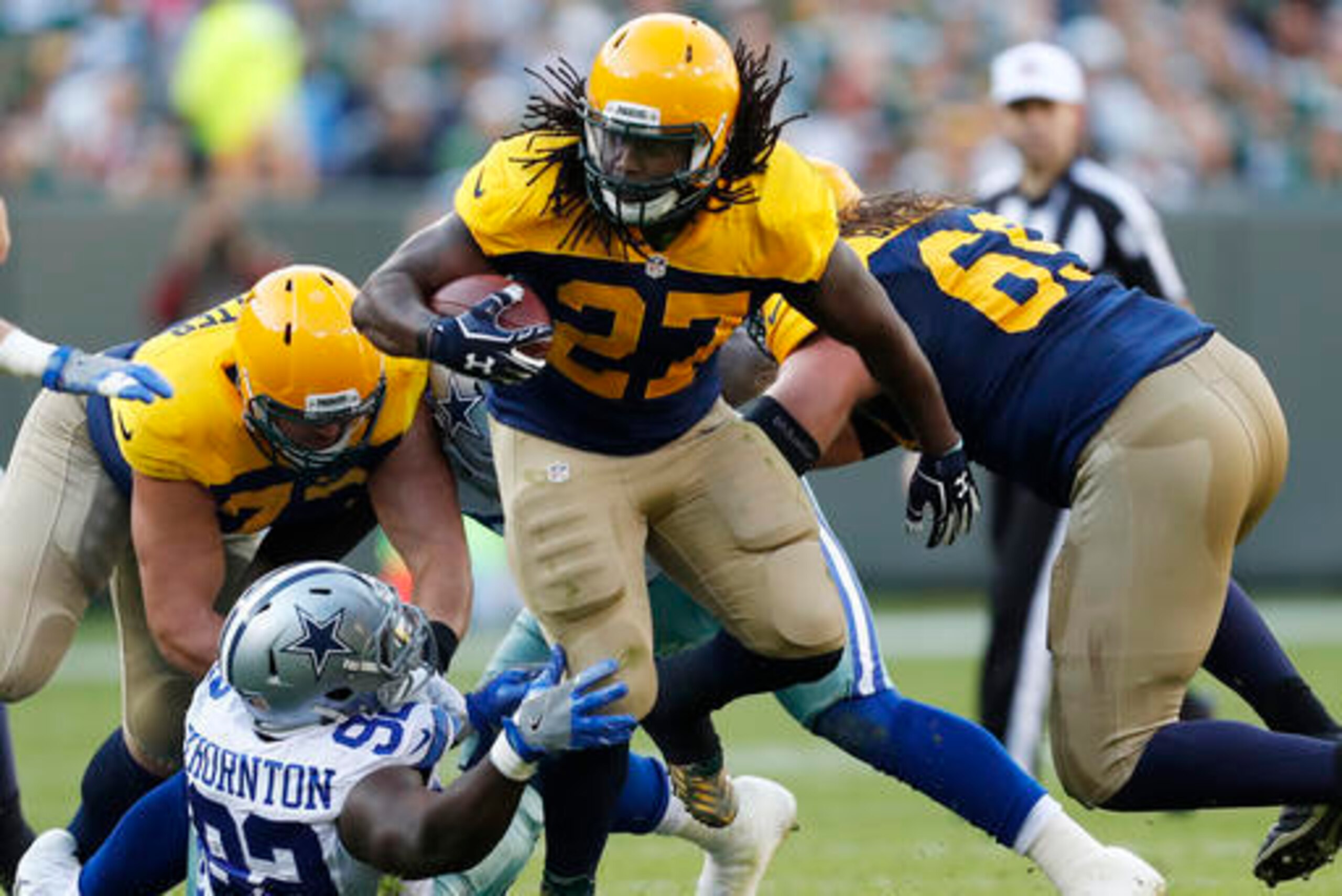
Green Bay Packers: Eddie Lacy, RB
12 of 32
Eddie Lacy has had issues with weight in Green Bay as a running back. He has been injured plenty in his career, and that started during his run at Alabama, which included a toe fusion.
He's going to be a 27-year-old running back with major red flag with both weight and health concerns by the time the NFL season begins. The Packers have major free agents in guard T.J. Lang, tight end Jared Cook, overhand defender Micah Hyde and three pass-rushers in Nick Perry, Julius Peppers and Datone Jones.
Lacy made the Pro Bowl as a rookie, but it's hard to commit to a running back with those type of effort questions who has played in just 17 of 32 games in the last two seasons. Running backs wash out quickly, and Green Bay did fine with Ty Montgomery, a 24-year-old converted receiver, in the backfield last year.
Houston Texans: A.J. Bouye, CB
13 of 32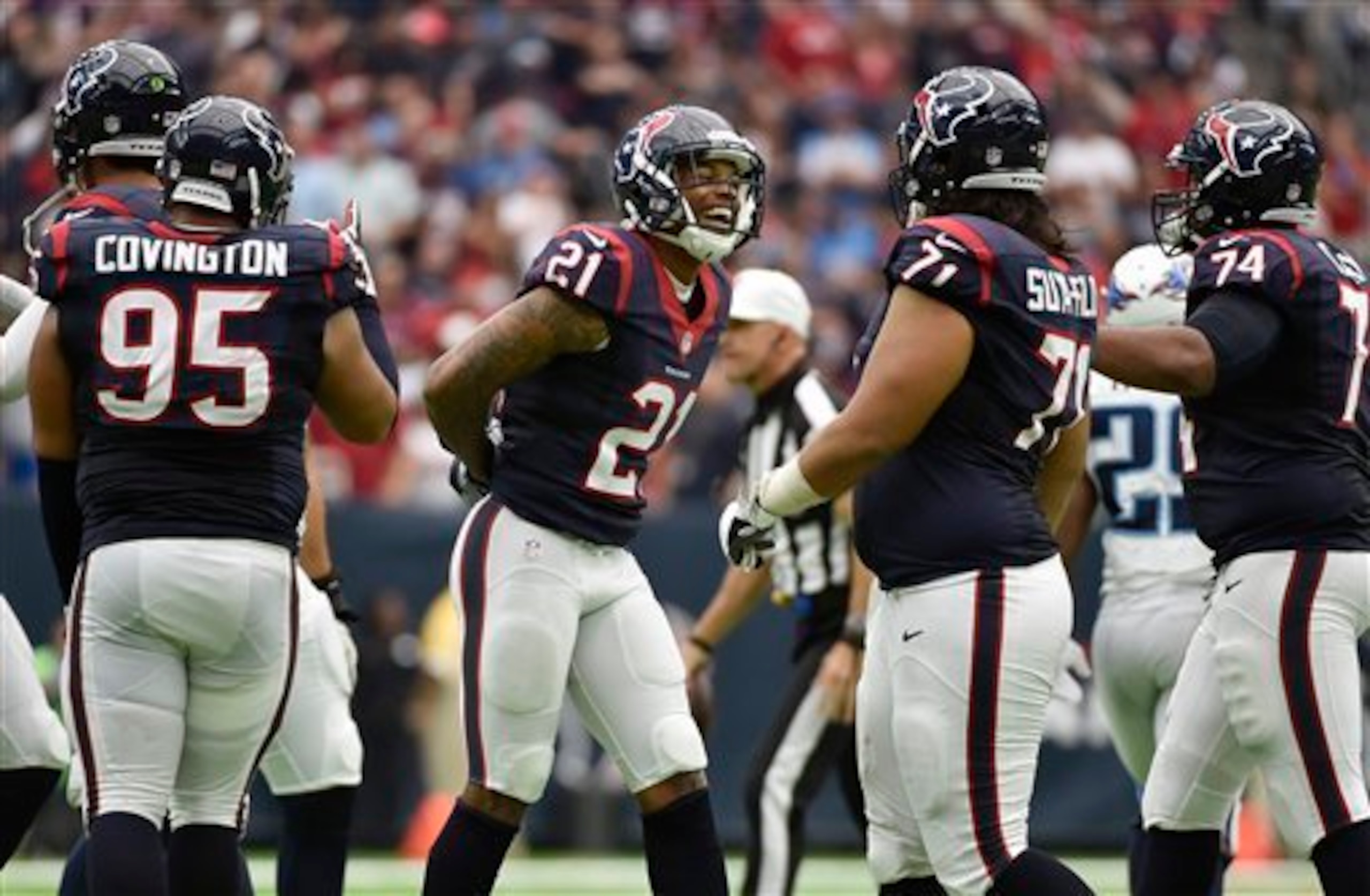
There may not have been a more out-of-nowhere breakout player in the NFL in 2016 than A.J. Bouye. The cornerback for the Houston Texans came into the league as an undrafted free agent, and he signed a one-year, $1.67 million contract last offseason.
This year, he may become the highest-paid player in a free agency period that includes two teams with over $90 million in cap space currently. Bouye started 11 games and racked up 16 pass deflections in his shining season, not bad for a 25-year-old.
The six-footer fits in every NFL scheme, which will only bring the bidding price up, but the fact of the matter is that the Texans don't need him. At cornerback alone, they have Johnathan Joseph, who may be the most underrated cornerback of this generation, Kareem Jackson, who is on a four-year, $34 million contract, and Kevin Johnson, who was taken in the first round of the 2015 draft.
With the likes of Jadeveon Clowney, Whitney Mercilus and a recovered J.J. Watt rushing the passer in 2017, will Houston really need more than that on the back end of their defense next season?
Indianapolis Colts: Erik Walden, EDGE
14 of 32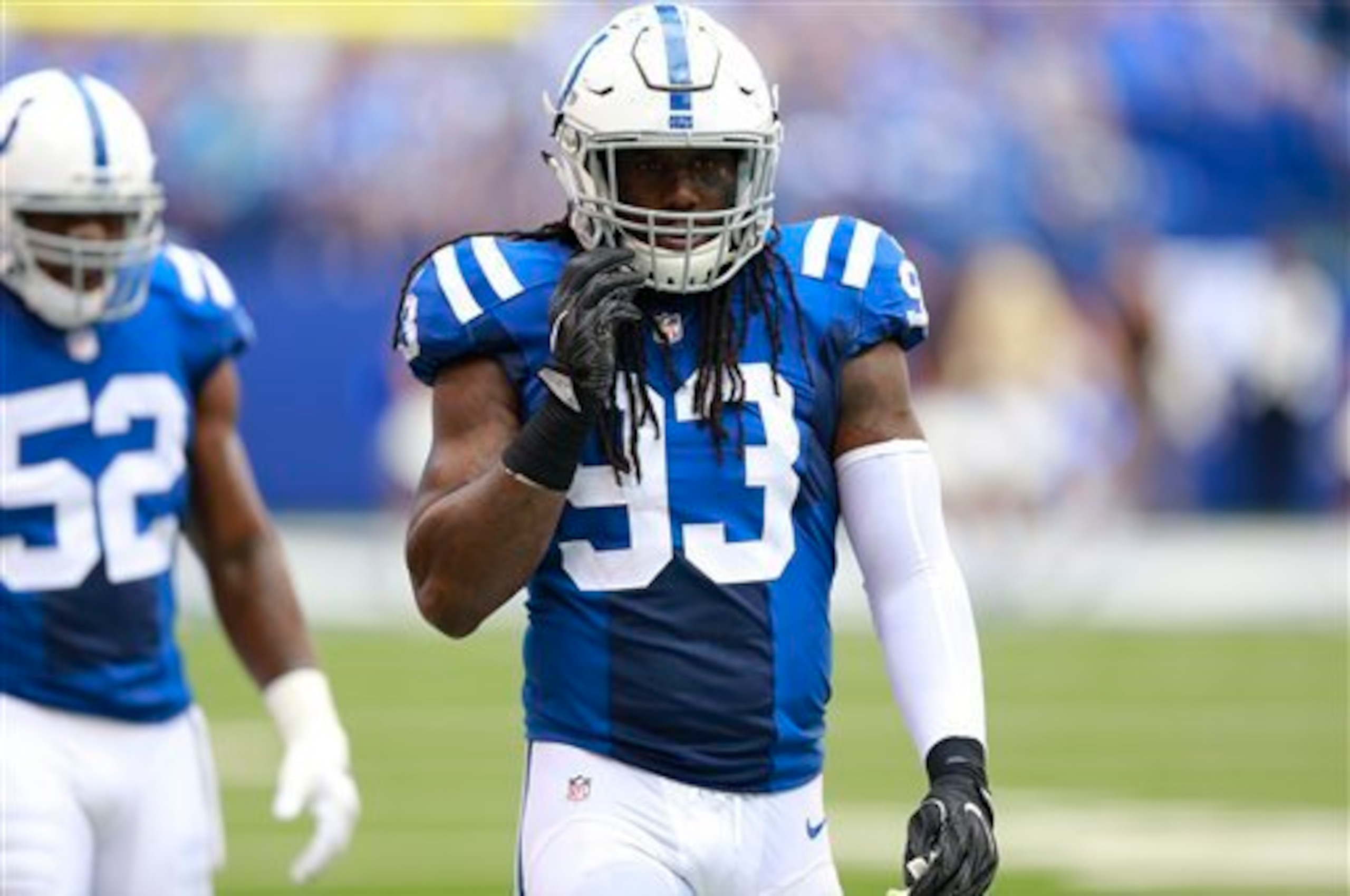
In his first three years in the NFL, Erik Walden spent time with the Dallas Cowboys, Kansas City Chiefs, Miami Dolphins and Green Bay Packers. It wasn't until he landed in Green Bay that the former undrafted free agent recorded his first NFL sack.
In three years with the Packers, he recorded three sacks a year. He hit free agency, to everyone's surprise, to sign a $16 million contract with the Indianapolis Colts, which was considered above market price at the time for a pass-rusher who was considered a backup in Green Bay.
In his first three years with Indianapolis, he recorded just four sacks a season, leading to some patting themselves on the back for calling his contract overvalued. But Walden had a standout 11-sack 2016 in a contract season.
With that being said, Walden isn't a dynamic pass-rush, which you could tell if you watched the Colts struggle on the defensive side of the ball last year.
He's also going to be a 32-year-old before the 2017 season starts. If he had a cap hit of $4.25 million last season, after a double-digit sack year, why would you assume that he takes a pay cut?
Someone will be tricked by his recent sack total, and Indianapolis should know better than to fall for that move after seeing him firsthand for four years.
Jacksonville Jaguars: Luke Joeckel, IOL
15 of 32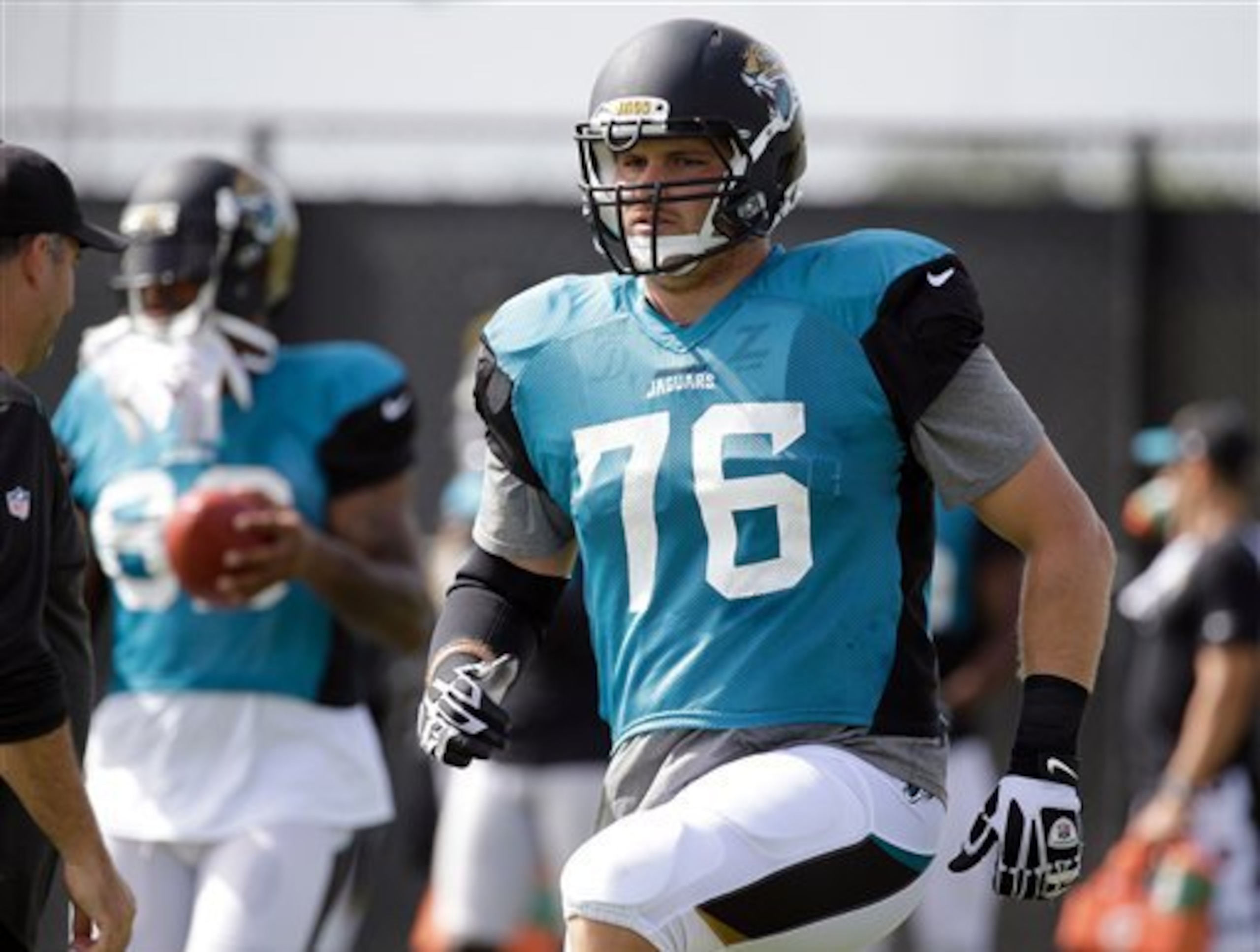
Luke Joeckel was the second overall pick of the 2013 NFL draft, and there were real conversations as to if he or Eric Fisher were the better bookend prospects that year. Unfortunately, he never replicated his Texas A&M flashes into NFL consistency, and Joeckel has since moved to guard.
While Gus Bradley was fired as the head coach of the Jacksonville Jaguars, just about everyone else, including general manager David Caldwell, is still a part of the organization. Jacksonville needs to decide what type of franchise they are.
Are they a team that lets outsiders come in and coast on large contracts? Are they accountable on every level? The New England Patriots are a great franchise because they preach "do your job" and punish those who don't meet expectations. They aren't scared of failure and rolling the dice again.
Will Jacksonville re-sign Joeckel, an average to below average guard, despite the fact that he hasn't worked out how they planned, or will they try to actually improve at the position moving forward?
Is Caldwell mature enough as a general manager to let a former second-overall draft choice walk? We're going to find out a lot about how the Jacksonville staff views itself based on what they do with Joeckel.
Kansas City Chiefs: Dontari Poe, DL
16 of 32
There is no bigger name at the nose tackle position than Dontari Poe on this free-agency market. There may not be a bigger nose tackle name in the league.
Poe was drafted with the 11th pick in the 2012 draft, took a year to develop from a raw athlete from the University of Memphis and was a Pro Bowler in 2013 and 2014. Since his surgery for a herniated disk, though, he hasn't looked the same, and injuries to a penetrating 346-pounder isn't ideal heading into a major contract.
A long-term deal means you're buying into who Poe is into his 30s, and that's a risk. Point blank.
The Kansas City Chiefs are already paying Alex Smith, Eric Berry, Justin Houston, Jeremy Maclin, Eric Fisher, Tampa Hali, Derrick Johnson, Mitchell Schwartz, Allen Bailey, Jaye Howard and Travis Kelce big money. That's after cutting Jamaal Charles and Nick Foles, too.
They have the second least cap space in the league as it stands at the moment, per Spotrac. The risk-reward ratio just isn't adding up.
Los Angeles Chargers: Danny Woodhead, RB
17 of 32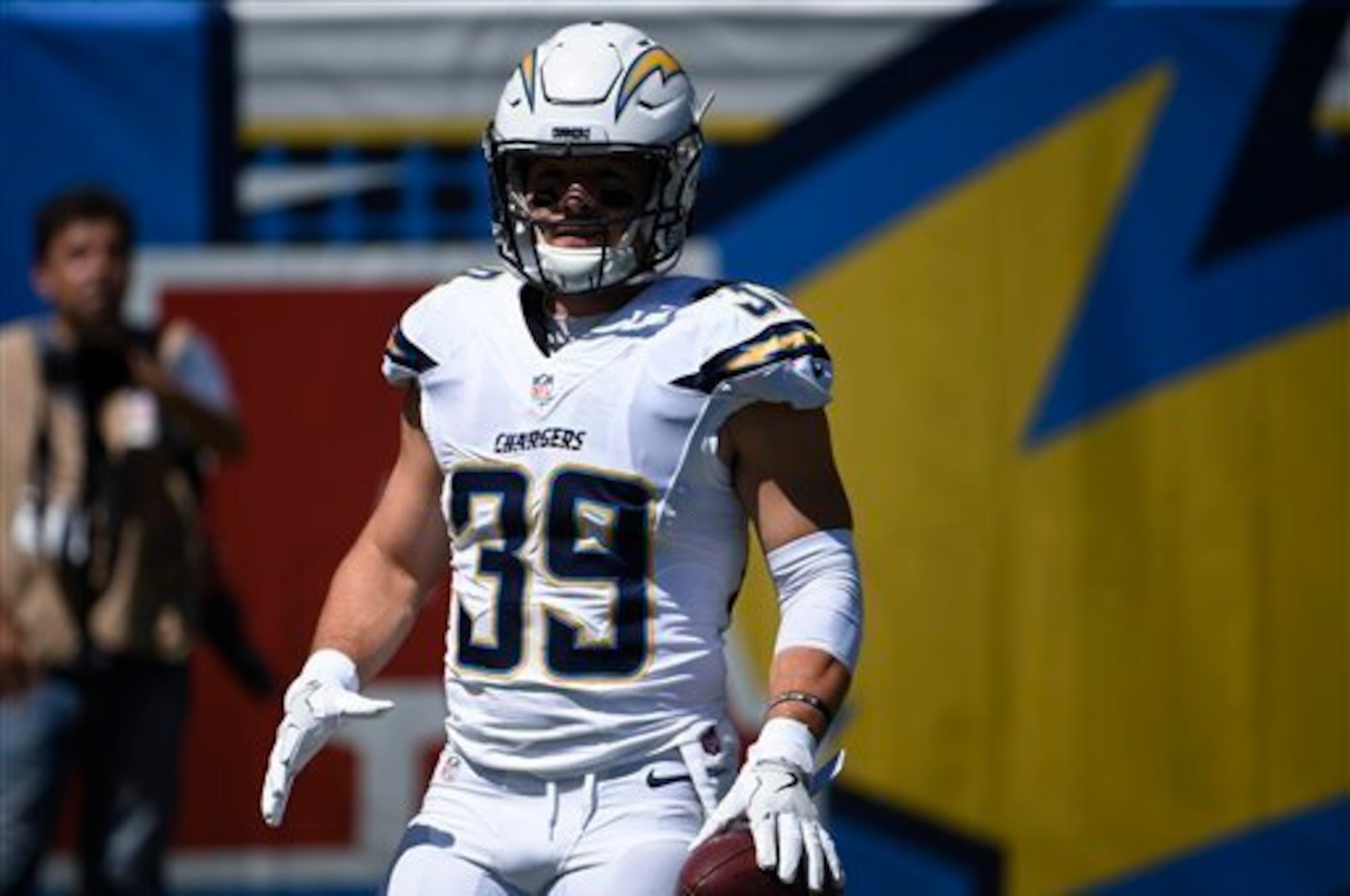
Philip Rivers has loved pass-catching running backs, be it Darren Sproles or Danny Woodhead, but with Melvin Gordon establishing himself as the top back on the Chargers' roster last year, Woodhead may have played his last game as a Charger in San Diego.
Woodhead is a 32-year-old running back, which is a 70-year-old at that position, and he played in just two games last season due to injury. In three years, he's played 21 of 48 possible games. In his career, he has 2,182 rushing yards.
At what point to you move on and just make Gordon an every-down back?
Los Angeles Rams: Brian Quick, WR
18 of 32
The Los Angeles Rams don't have many free agents, since they either pay or franchise tag most of their on-roster talent. You can make the case that they should be trying to keep the same roster around second-year quarterback Jared Goff, but the fact of the matter is that the offensive staff has already rotated.
If that's the case, the chemistry, or lack thereof, between Goff and receiver Brian Quick shouldn't matter too much. Quick was a threat in 2016, but he did not come down with as many balls as he should have.
For Goff to develop, he needs receivers he can trust. It's hard to imagine Quick being that in 2017.
Miami Dolphins: Jordan Cameron, TE
19 of 32
This one is going to be quick. Jordan Cameron will be a 29-year-old tight end before the 2017 season starts. Last year, he started three games and recorded just eight receptions.
Cameron has a history of concussions, and there could be questions about his health moving forward. With the addition of former Denver and Jacksonville tight end Julius Thomas, there really doesn't seem to be any need for Miami throwing good money after bad at Cameron at the tight end position.
He has one season of more than 425 receiving yards in his career and one season of more than three receiving touchdowns.
Minnesota Vikings: Adrian Peterson, RB
20 of 32
Adrian Peterson had a cap hit of $12.4 million last season. The hall of fame running back started three games for the team in 2016, averaging just 1.9 yards per carry.
Peterson is a soon-to-be 32-year-old running back in a league that isn't kind to 28-year-old backs, let along those on the wrong side of 30. Maybe Peterson re-signs with the team, but they shouldn't be convinced to buy into his name more than his talent.
The Minnesota Vikings traded a first-round pick for quarterback Sam Bradford because they thought they were on the edge of competing for a Super Bowl run. It's difficult to come up with how Minnesota could pay Peterson, start him and still continue continue to play football into the deep winter.
New England Patriots: Jabaal Sheard, EDGE
21 of 32
Jabaal Sheard was underrated as a second-round pick for the Cleveland Browns. As far as second-round pass-rushers go, 23 sacks in a rookie contract smashes expectations.
For whatever reason, though, Sheard was benched in Cleveland and was allowed to walk into free agency two years ago.
From there, Sheard was underrated on the free agency market and recorded 13 sacks for $11 million—a great ratio on the open market.
It was clear at the end of his run in New England, though, that Sheard wasn't going to be a long-term starter for the Patriots, as they swung toward the combo of Chris Long and Trey Flowers down the stretch.
New England doesn't love him, and that's not an issue. Sheard should be able to set up himself as a relative steal for his third team after a six-year career in the NFL.
If the Patriots don't want to use him as a starter, there's a good chance that some team will look at him as the second-best pass-rusher under 28 years old on the market behind Green Bay's Nick Perry.
New Orleans Saints: Paul Kruger, EDGE
22 of 32
The New Orleans Saints badly needed defensive end help after Hau'oli Kikaha went down with a knee injury last offseason. Kikaha was a college pass-rusher who played linebacker and was converted to end in 2016 because of the Saints' lack of depth at the position.
Their response to their need was signing Paul Kruger, who was cut late by the Cleveland Browns, as a starter. Kruger has posted two quality seasons, one in a contract year with the Baltimore Ravens and one with the Browns, in his NFL career, but the wear on his tires is clear.
The 31-year-old pass-rusher recorded just 1.5 sacks in 13 games as a starter, falling short of the production his one-year, $3 million deal would suggest. New Orleans still has a need at end with or without Kruger, so there doesn't seem to be a sound reason for bringing him back anywhere near his 2016 asking price.
New York Giants: Marshall Newhouse, OT
23 of 32
Early on in his career, Marshall Newhouse was given the opportunity to be one of the few starting tackles in the NFL to earn a full-time gig without measuring in at 6'4"-flat or taller at the NFL combine. Quickly, though, it was apparent that Newhouse wasn't consistent enough to be a starter for the Green Bay Packers, who drafted him in 2010.
By 2013, he was a backup. In 2014, he was a backup with the Cincinnati Bengals. His career eventually led him to the New York Giants, where under former Packers offensive coordinator turned head coach Ben McAdoo, Marshall again has stumbled into a starting job as a right tackle.
In the last two years, he's recorded 20 starts. The Giants' inconsistencies at tackle, between Newhouse and former first-round pick Ereck Flowers, are one reason for the lack of a playoff run by the team.
Entering his now fourth NFL contract as a 28-year-old, Newhouse shouldn't be handed a starting job at any point in his career moving forward.
New York Jets: Ryan Fitzpatrick, QB
24 of 32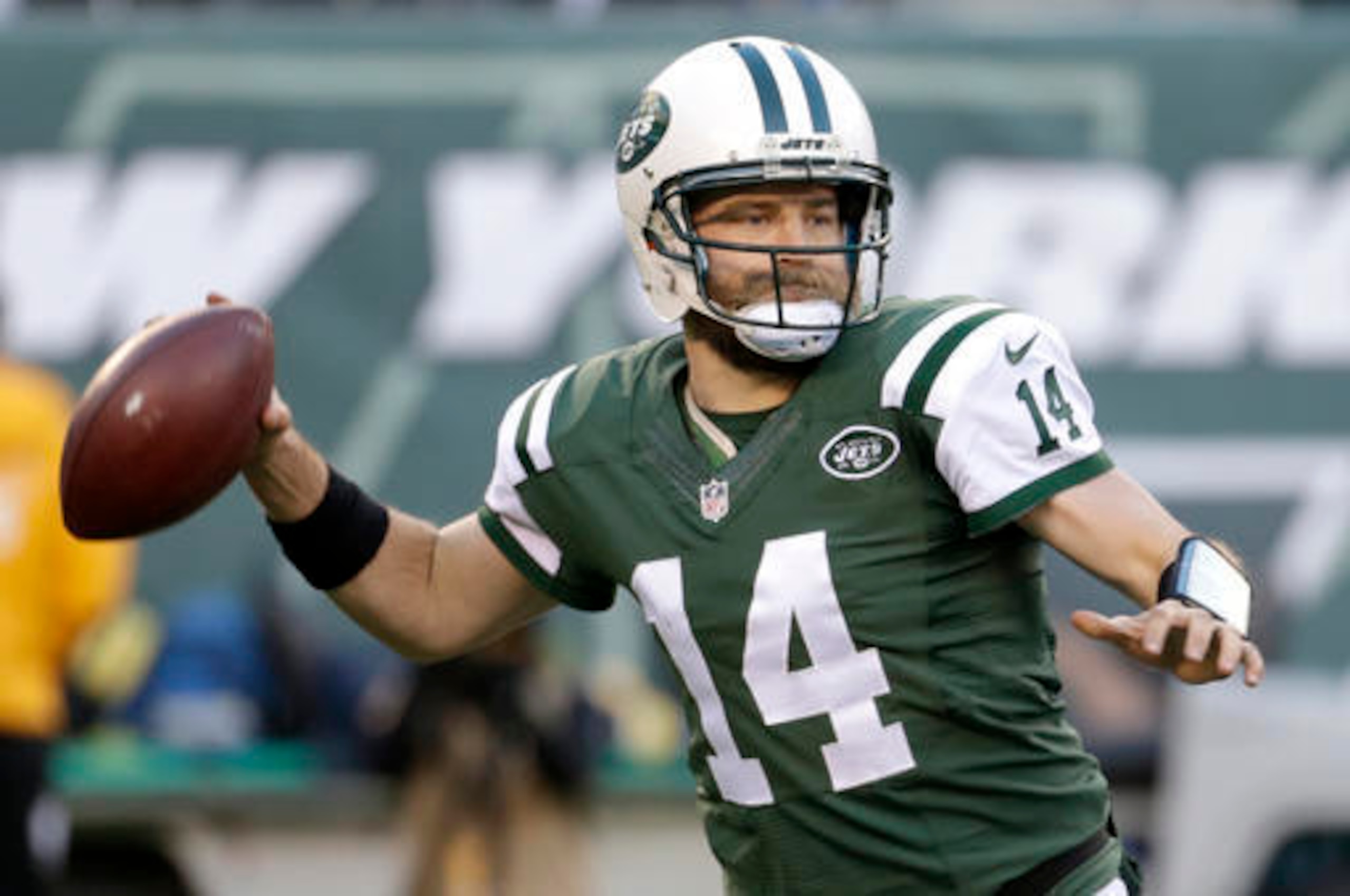
Last summer, New York Jets receiver Brandon Marshall was very vocal in that the team should try to re-sign veteran quarterback Ryan Fitzpatrick. Since then, Marshall has been released, and Fitzpatrick, who is slated to be a free agent, was benched.
The New York Jets are in a rebuilding phase, and no part of the 2020 Jets need to revolve around anything Fitzpatrick can do on the field short-term or long-term.
His 69.6 passer rating is a reflection of his talent and consistency when passing at the moment. Unless the Jets become the first team in the league to openly embrace tanking, it's hard to imagine why they'd bring back Fitzpatrick
One reason that the Jets could never develop a quarterback is that there are too many mouths to feed in Geno Smith, Ryan Fitzpatrick, Bryce Petty and Christian Hackenberg. Freeing up some of those in season reps should help New York moving forward.
Oakland Raiders: Latavius Murray, RB
25 of 32
Latavius Murray is a freak athlete who was able to crack 1,000 rushing yards as a running back in 2015. He just finished a season in which he played as a 26-year-old running back, which realistically gives him a four-year shot before the traditional 30-year-old decline sits in. Why should Oakland move on?
First, having Donald Penn at left tackle, Kelechi Osemele at left guard, Rodney Hudson at center, Gabe Jackson at right guard and Austin Howard at right tackle helps the Raiders in the ground game more than whoever lined up for them in the backfield in 2015 and 2016.
Second, the Raiders had four backs record more than 450 rushing yards in 2016, and Murray had the worst yards per attempt of any of those backs by nearly a yard-and-a-half.
Murray's success has been based on volume behind a talented offensive line. With teams like the Minnesota Vikings desperate for a running back upgrade, it's not realistic to imagine Murray being most valuable to Oakland of all 32 teams in the NFL, since you can essentially plug and play a running back behind that line.
Philadelphia Eagles: Bennie Logan, DL
26 of 32
There aren't many Philadelphia Eagles to choose from, but you can make the case that re-signing Bennie Logan, one of their more talented players on the defensive side of the ball, could end up being a bad decision for the Eagles.
First, Logan is probably their third-most talented defensive lineman behind under tackle Fletcher Cox and defensive end Brandon Graham.
Second, when you look at the defensive tackle market right now, it's hard to imagine how Logan doesn't get a massive deal in a year when the defensive tackle draft class is so weak. On the open market, there's a very real tax you're paying for starting players at premier positions.
On top of that, the nose tackle position is one of the least important positions in a 4-3 defense. While Logan is talented, his ability to eat space will be more valuable to squads that play a lot more nose guard looks than the Eagles do.
If Philadelphia gets into a bidding war to keep him on the roster, they could wind up with another Vinny Curry situation, where they massively overpay to keep one of their own.
Pittsburgh Steelers: Jarvis Jones, EDGE
27 of 32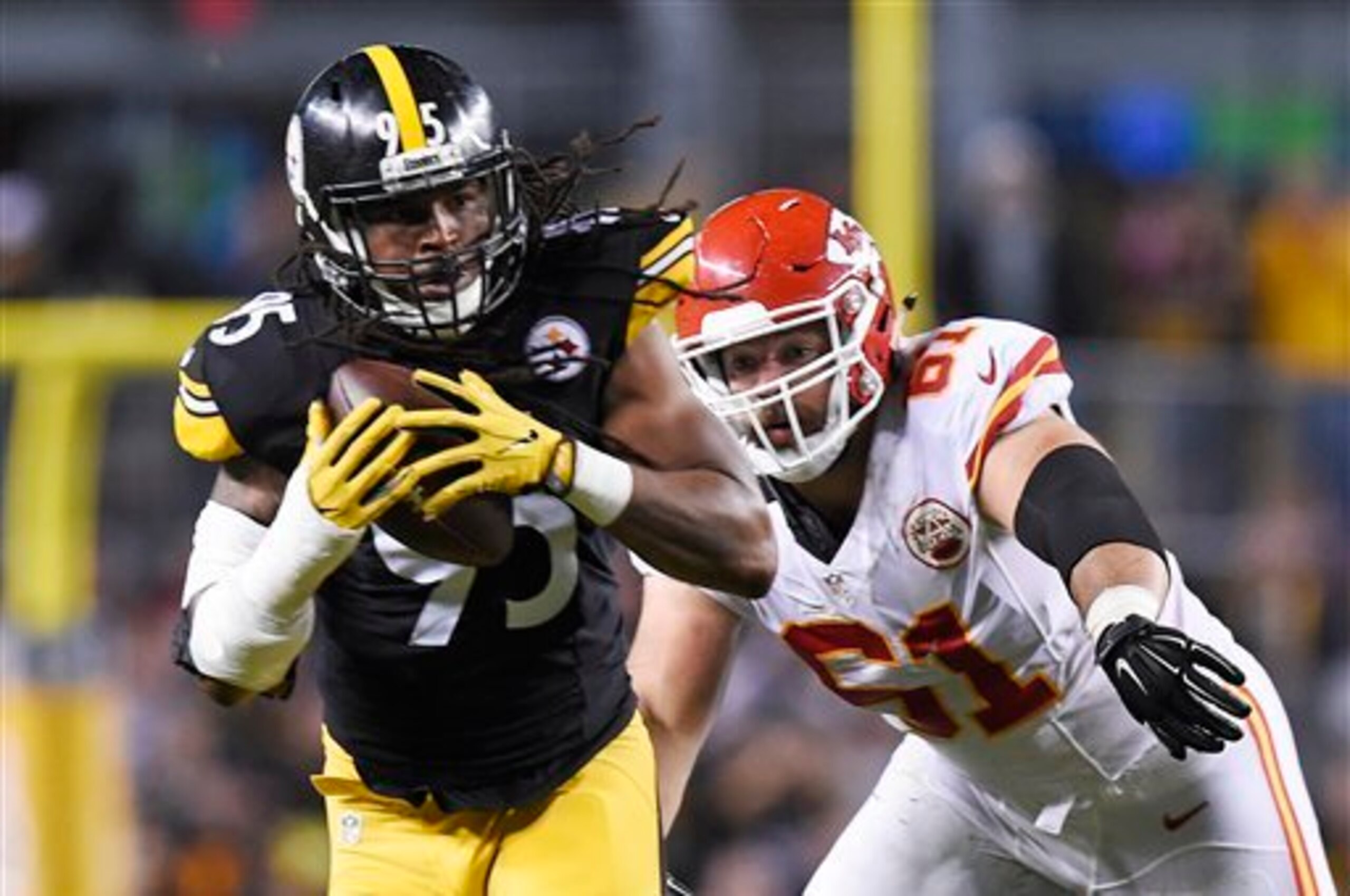
Jarvis Jones was at one point thought of as a potential top-five pass-rushing prospect coming out of Georgia. The former USC transfer had a poor showing at the combine in 2013, though, and slipped to the 17th overall pick in the draft.
In four years since then, the Pittsburgh Steelers outside linebacker has recorded just six sacks. James Harrison, who will be a 39-year-old before the 2017 season starts, just re-signed on a two-year deal. Bud Dupree, a 2015 first-round pick, looks like the team's primary pass-rusher moving forward.
Why exactly do the Steelers need to bring back a first-round bust when they have their two starters locked in short-term and need to free up a roster spot to develop a long-term starter opposite of Dupree?
Jones, who may be a 28-year-old when he records career sack number seven based on his career trajectory, shouldn't be thought of as a "must sign" by any team in the league.
San Francisco 49ers: Glenn Dorsey, DL
28 of 32
The weight of "former first-round pick" on someone's resume can be a bit too much of a title. You'll hear that with nose tackle Glenn Dorsey, but his talent level isn't that of a player with Pro Bowl potential anymore.
Due to injuries, Dorsey became a key part of a San Francisco 49ers defense that hemorrhaged 100-yard rushers. The team spent back-to-back first-round picks on defensive ends in their 3-4 defense. You can piece together who the weak link was.
Dorsey has also missed 26 games in the last three years in San Francisco. If Dorsey makes between a $2 and $3 million cap hit in 2017, like he did under his two-year deal with the 49ers, some team is getting negative return on the contract he signed.
Seattle Seahawks: Bradley Sowell, OT
29 of 32
The Seattle Seahawks have struggled on the offensive line recently. If it's not Russell Okung walking away in free agency, it's the team having to convert Justin Britt, a second-round pick, from tackle to guard or first-rounder Germain Ifedi struggling early on in his career.
For some reason, the Seahawks must believe that they can find offensive linemen while also being cheap. They have tried to convert defensive linemen and basketball players in recent seasons, with little to no success.
Their process on the offensive line is bad, and it's costing them during a title window. At some point, they need to realize that they need to purchase finished offensive linemen, either in free agency or the draft.
Bradley Sowell was one of those projects that the Seahawks have invested in recently. At one point, it looked like Sowell was going to be a 16-game starter at tackle in Seattle. They need to throw their old process out, with that tackle being included.
Tampa Bay Buccaneers: Vincent Jackson, WR
30 of 32
Your offensive passing game needs to have an identity for every receiver. With Mike Evans at receiver for the Tampa Bay Buccaneers, you have to imagine that the team wants to pair a speedster opposite of the big body.
Right now, their next best receiver, at least if you go by money, is Vincent Jackson. Jackson has posted a quality career, but he's now a 34-year-old at a speed position and recorded just 173 receiving yards in five starts last season. He's missed out on 17 of 32 games in the last two seasons, too.
He had a cap hit north of $12 million last season. If he even makes a sixth of that in 2017, he may be paid better than his talent. It's time for the Buccaneers to look at a DeSean Jackson in free agency or a John Ross in the draft, instead of trying to make an aging player reverse time.
Tennessee Titans: Chance Warmack, IOL
31 of 32
Jon Robinson came to Tennessee as a former member of the New England Patriots front office. The general manager has a big decision to make with a year on the job under his belt: Will he conform to the current guard market?
If you look at the Patriots, they've been able to find starting guards in players like Shaq Mason and Joe Thuney in the middle rounds. If Robinson believes he can replicate that in Tennessee, why would he sign Chance Warmack, a 2013 first-round pick, in a market that may feature aging guards like T.J. Lang earning around $10 million per season?
In 2015, the team drafted Jeremiah Poutasi in the third round. He didn't even play guard until late in the preseason, but he started seven games. Quinton Spain, a second-year undrafted player, has 19 starts under his belt at guard for the team.
Why would you spend that type of money at that position, considering where Robinson's philosophy comes from?
Washington Redskins: Vernon Davis, TE
32 of 32
There's a lot going on with Washington's offensive skill players this offseason.
Will Kirk Cousins sign a long-term contract or hold out on a franchise tag? Will Pierre Garcon or DeSean Jackson re-sign with the Redskins?
One underrated decision that needs to be made, though, is on Vernon Davis. A former Maryland tight end, the homegrown Davis is a 33-year-old, and just about as good as you can expect from a 33-year-old tight end billed as an athlete coming out of college.
With Jordan Reed's concussion history, Davis could start 16 games in 2017, should the team re-sign him. Unfortunately for him, he's much lower on the totem pole than Cousins, Garcon or Jackson, and signing Davis as a safety net for Reed shouldn't keep Washington from signing any of those other more talented players.

.jpg?w=2560 "Rams Eagles Football")
.jpg?w=2560 "Grading WWE Raw 🔠")


.jpg?w=2560 "Injury-stricken Seahawks signing veteran RB")
