Barrier-Breaking Football Players on What's Next for Gay Recruit My-King Johnson
"I'm just here to play football."
With that all-business, stick-to-sports tweet, University of Arizona recruit My-King Johnson could have been just about any athlete responding to the media buzz around national signing day—but he's not. Johnson, a 6'4", 225-pound defensive end from Tempe, Arizona, forced three fumbles and had 21.5 sacks his senior year, making him the No. 52 DE in his class nationally, according to Scout.com.
He's also the first openly gay Division I recruit, ever.
TOP NEWS
.jpg?w=2560 "AP Poll Top Five Week 9")
🚨 Week 8 AP Top 25 Poll
.jpg?w=2560)
CFP Bracket After Week 8 🏆

More top teams upset and more takeaways from CFB Week 8
"When I saw that tweet, I thought, 'God, that was exactly the way I felt,'" says Katie Hnida, who at 17 years old (Johnson's age) was in a similarly groundbreaking position. As the No. 1-ranked kicker in Colorado, she was invited to walk on at the University of Colorado-Boulder in 1999. She'd later become the second woman ever to suit up for a Division I game and eventually the first to score in the FBS. "I was a little naive in thinking, 'I'm not trying to make any kind of political statement.' The reality is that being who I was, it was a statement no matter what."
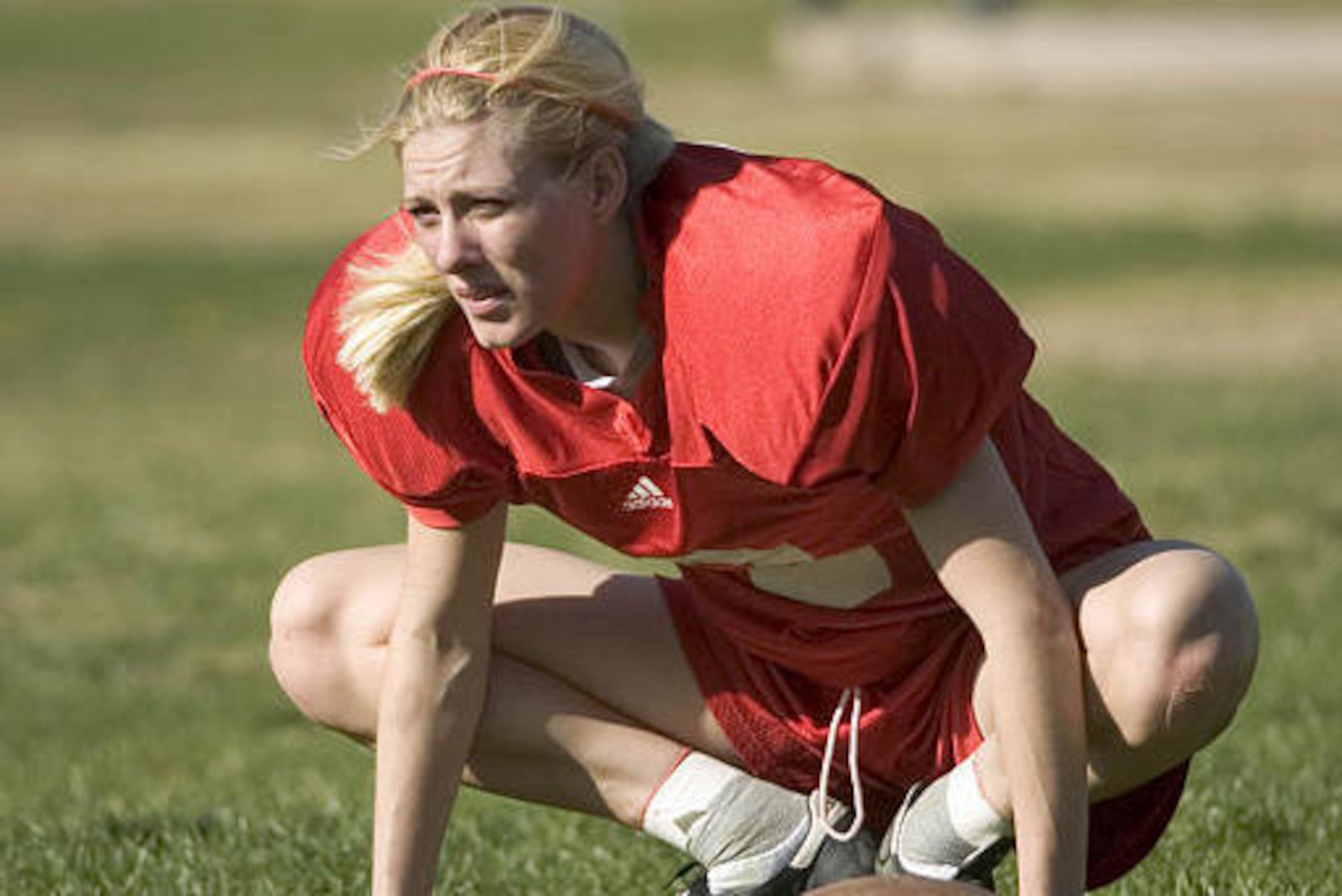
Hnida's blase attitude toward breaking barriers is similar to that of many young athletes, who have often spent years learning to stay humble and defer their interests in favor of those of the team. Standing out in the hyper-masculine, homogenous world of football is hard, but increasingly athletes whose gender or sexuality is deemed headline-worthy are coming out publicly during or after their careers. Players barely into adulthood (or in Johnson's case, who are still technically children) are accepting the mantle of being "first," whether with their team, division or league—inspiring both plaudits and pressures. Just in the past month, center Darrion McAlister (Marian University) and linebacker Kyle Kurdziolek (University of St. Francis) have come out in the press.
Johnson elected to come out publicly via a profile in the Arizona Daily Star last weekend (Feb. 25), sparking headlines about his signing everywhere from the Guardian to the Washington Post. In the piece, he revealed that he had come out to his family and friends when he was 12. Prior to that, all the press Johnson received was solely about his talent as a pass-rusher (save a brief Q&A on WildcatAuthority.com that reveals his favorite athlete is Serena Williams, his favorite musician is Beyonce and his role model is his mom). "I do feel like when I say that [I'm gay], it can put a target on my back—but whatever," Johnson told the Star.
"— My-King Johnson (@kingj9943) February 2, 2017"
"He seems very nonchalant about it, and that's good," says Wade Davis, a former NFL player who came out in 2012 and current executive director of the You Can Play Project, a nonprofit dedicated to eliminating homophobia in sports. "But will he just be allowed to play football? When you're the first in anything, people want to focus on that."
Davis, a former cornerback who came out about a decade after injuries forced him to stop playing, wasn't the first NFL player to openly discuss his sexuality after retirement—that title belongs to David Kopay, a running back who spent eight seasons in the league and came out in 1975, three years after he retired. "I used to hit the hole too quickly, instead of dancing to find a better one, because I didn't want anybody thinking I wasn't tough enough to take on the next guy," says Kopay, now 74. "It was a different time—they were still saying that gay people should get lobotomies. I think sometimes I must have been crazy to come out."
Since Kopay went public, five NFL players and more college players have taken their stories to the press, many without realizing that there was precedent. Michael Sam, of course, changed all that.
"Signed with UofA today. I'm extremely grateful and thankful for the opportunity that has been given to me. #wildcats #beardown ⬇ pic.twitter.com/9OGte98bg0
— My-King Johnson (@kingj9943) February 2, 2017"
"[Sam] opened a lot of doors, but as a community we put so much intense pressure on the guy," says Conner Mertens, a kicker at Willamette University who became the first active college player at any level to come out publicly when he told Outsports he was bisexual in January 2014. A few weeks later, Sam, then a senior at the University of Missouri, told ESPN he was gay. He was drafted in the seventh round by the then-St. Louis Rams, making history as the first openly gay player in the NFL. Ultimately, though, Sam would never take a regular-season snap.
"We know athletes from professional to college, in every single conference, who are closeted, or who are out to their teams," Mertens adds. "But it's a scary thing to be the first. I can't imagine what [Sam] had to deal with."
"Part of me feels like we should just let this one play itself out," adds Davis of My-King's potential in the FBS, both as an athlete and as an activist.
Becoming the only representative of any minority often means acting as de facto spokesman, a position Sam embraced but found demanding—especially for a Division I or professional athlete.
"I would get overwhelmed, because there were so many people who wanted things from me," says Hnida, now 35. "You're a role model whether you like it or not, and people wanted to fit my story into whatever their agenda was. Realizing that my life and my story were mine, that was a really big deal."
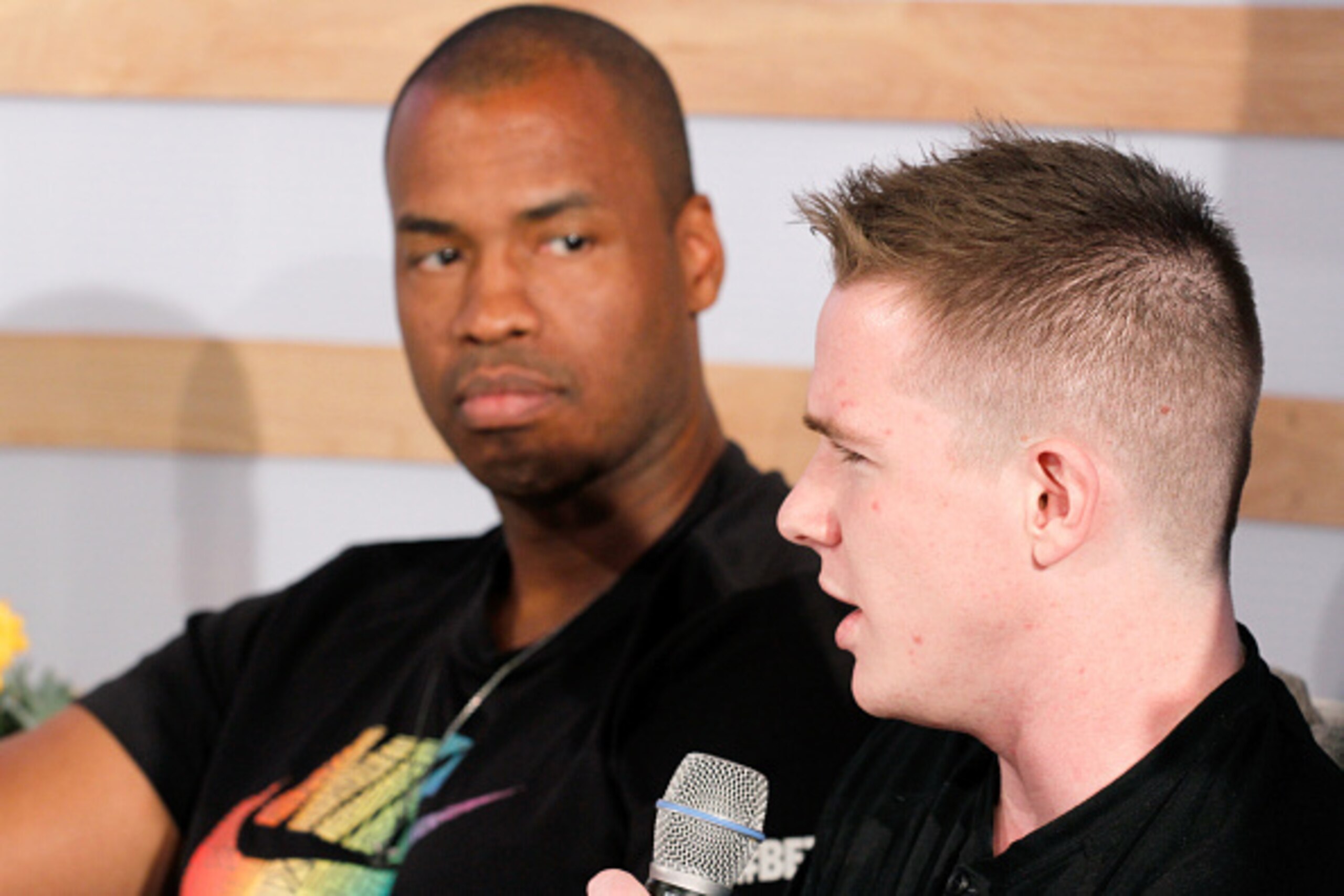
"Early on [after coming out], I felt the need to be very, very perfect," says Mertens, who is now 22 and working on his senior thesis. "I wasn't in the closet, but I had a new mask: acting like I wasn't really struggling and depressed, acting like the things people said weren't bugging me. I censored myself all the time."
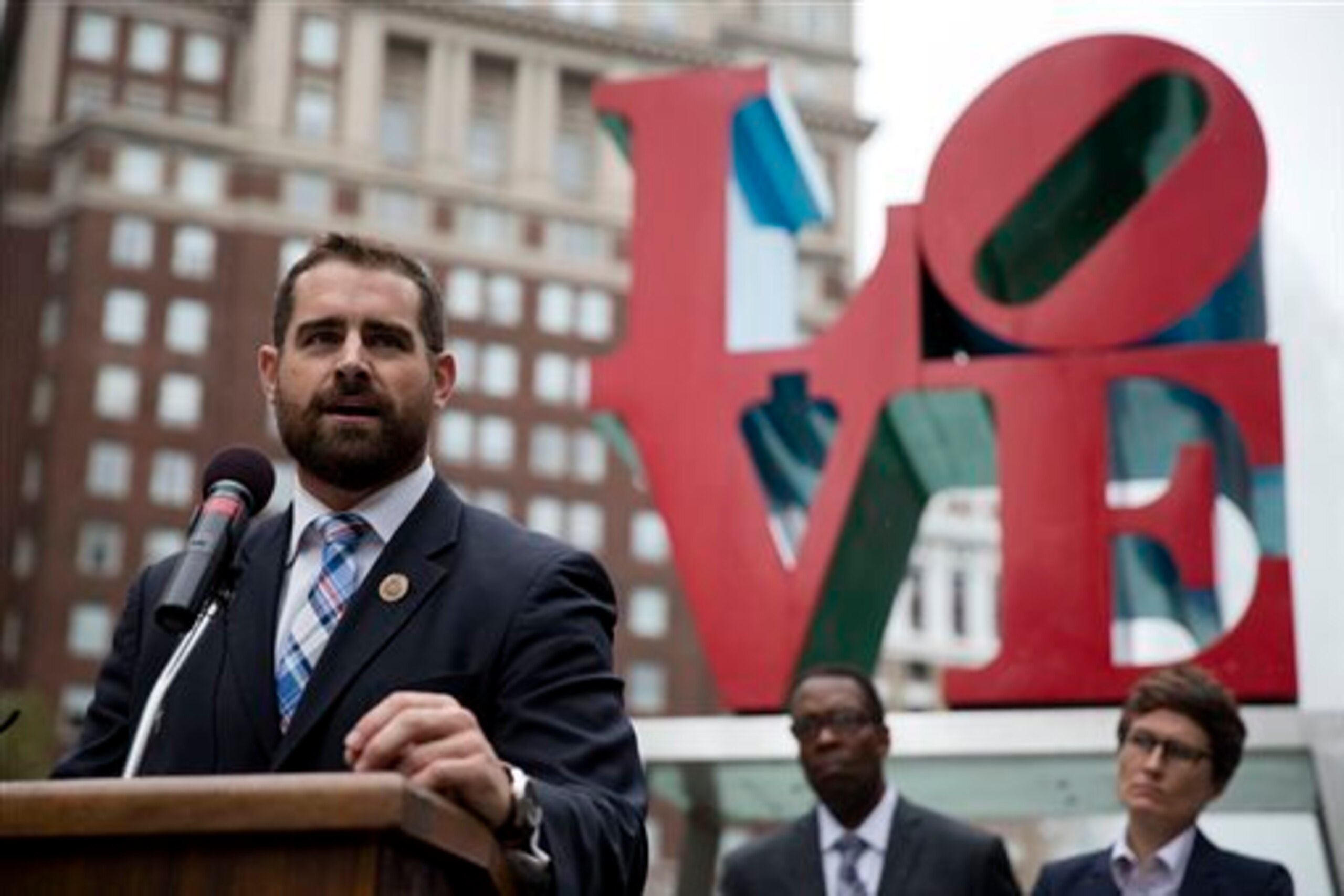
For Brian Sims, a former defensive tackle and co-captain of the Bloomberg University football team, one of his biggest fears about coming out to his team in 2000 (he later came out publicly via Outsports nine years later) was disrupting its carefully cultivated sense of unity. "Drawing so much individual attention to yourself, if you're a rank-and-file player on a football team like most linemen are, is an especially unusual feeling," he says. "In football you don't even see people's faces. Standing out can create a lot of pressure."
Consensus among people who have been in Johnson's shoes is simple: Just let him play. "The best way My-King can advocate is by being the best football player he can," Mertens says. "If you can look up to someone who represents you, there's nothing more empowering."
Sims adds: "This guy, at 17, might be a better football player than I was at 22—what Arizona was looking for was a badass football player. They got one, and we need to let him be that."
"Very blessed to receive my 10th offer from USC. #trojans #fighton pic.twitter.com/GD76k7L4DQ
— My-King Johnson (@kingj9943) June 24, 2016"
The fact that Johnson is a person of color adds an extra layer to the pressures of being in the spotlight. "He's a black man, and he's a gay man—two things that, at some point in his life, haven't been viewed as positive," Davis says. "My advice for him would be to do something for himself every day to counter the negativity one gets being a black, gay man in America."
The question My-King's story begs is, ironically, when his story will no longer be relevant—when a gay athlete who's playing in college or the pros won't be worth a headline.
"Coaches need to have the courage to say 'My team is inclusive of all individuals, including people who identify as lesbian, gay, bisexual, transgender and queer' at the first practice, midseason and at the end of the year," Davis says. "They need to hold players accountable when they use homophobic language, with consistency." But those conversations are already changing, as players entering college today have grown up with marriage equality and seeing LGBTQ figures in entertainment’s mainstream.
"The truth of the matter is that every single person [My-King] takes the field with will have already known an out person in their life," says Sims, who today is a state representative in Pennsylvania, known for his work in LGBTQ advocacy. "That's new, and that's different."
Still, homophobia in sports is hardly a thing of the past. Just this week, former New York Knick Amar'e Stoudemire, who currently plays in the Israeli Basketball Premier League, told Israeli outlet Walla! Sport that if he had a teammate who identified as gay, he would "shower across the street, make sure my change of clothes are around the corner and [take] a different route to the gym." When asked if he was joking, Stoudemire said, "There's always truth within a joke." (Stoudemire has since apologized for his comments, per ESPN.com.)
"We'll no longer have these stories when we can see somebody running s--t on RuPaul's Drag Race who's also the starting quarterback for the Dallas Cowboys," Mertens says. "[During the game] the camera pans to his husband and kids in the crowd, and it's just a blink, nothing new."
For now, 17-year-old My-King Johnson is the face of progress in football—a position he probably doesn't want but can hopefully wear lightly. "The fact that he was like, 'I want to tell the world I'm gay right now, as I'm going into college,' says that collectively, we've created the circumstances for individuals to take risks," says Davis. "That's a beautiful change, and he's taken a really beautiful risk."
Johnson isn't doing any interviews beyond his initial profile, a perfect rebuttal to those who might think it's a press grab. "I can appreciate the conservative idea that we're 'shoving our lifestyle down their throats,'" Mertens concludes. "To a certain degree that might be true, in the sense that our stories are the most powerful weapons we have to combat ignorance. Putting our stories in front of people, it normalizes us, which sucks. It sucks to have to normalize a demographic of people. But the more we see these stories, the more they stop being stories at all."
All quotes obtained firsthand unless otherwise noted.


.jpg?w=2560 "Raiders Could Start Mendoza")



.jpg?w=2560 "Rodgers Iced Out on Plane 💎")