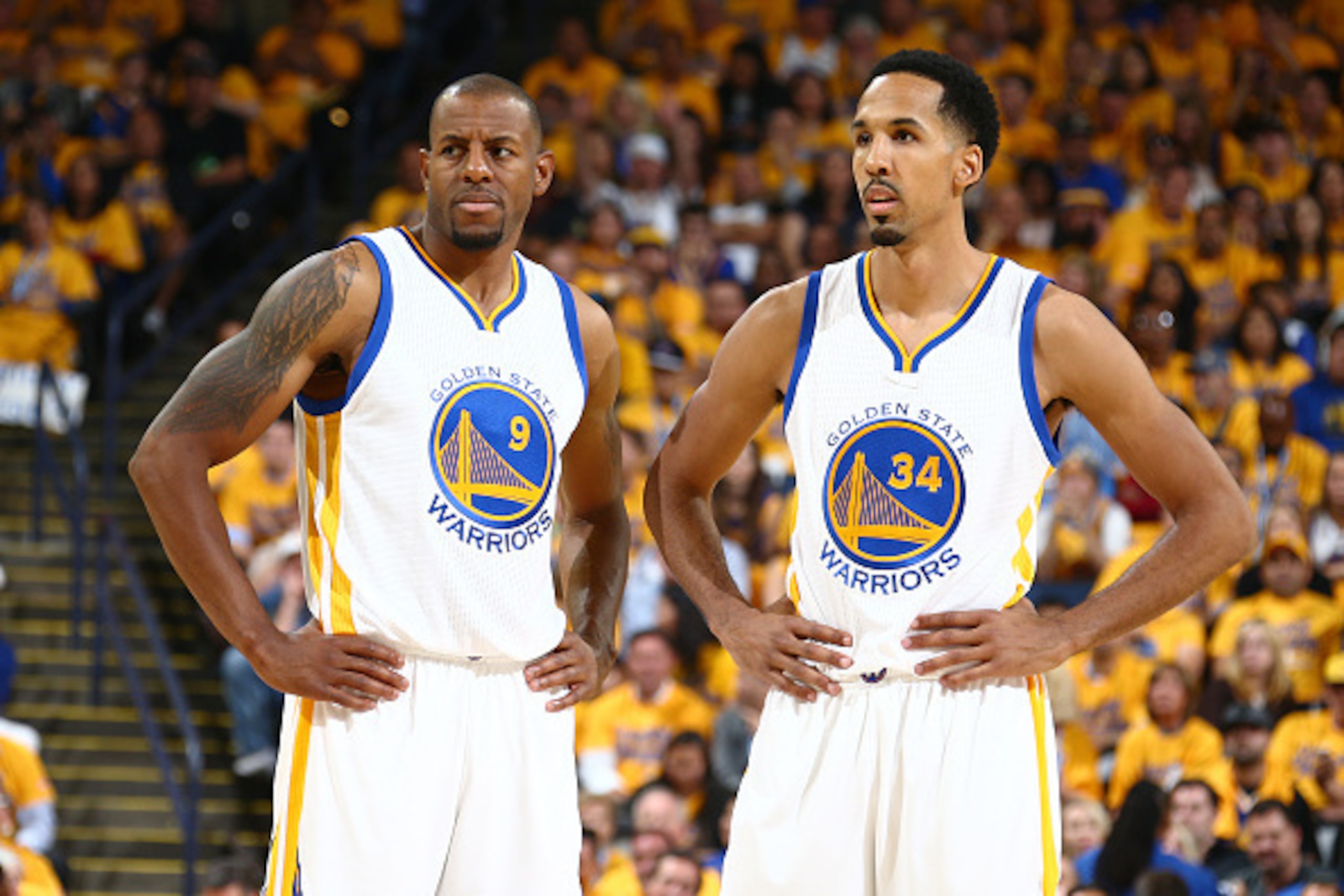

Golden State Warriors Trade Value Rankings Nearing 2016-17 NBA Trade Deadline
The Golden State Warriors continue mowing over their opposition with the NBA's best winning percentage (.864), margin of victory (+13.1) and net efficiency (12.6).
But don't mistake their dominance as evidence they'll stand pat between now and the Feb. 23 trade deadline. Their roster has been unbalanced all season—overloaded up front and rail-thin along the wings.
So, even if they only make a minor tweak, the Warriors could be participants in swapping season. That raises two questions: Which players might they part with, and how valuable are those movable pieces?
Golden State employs a handful of players who won't move, either because they're too important or offer so little that they would bring back nothing in return. There's a separate group who could add value to a deal but only as a sweetener alongside something better.
That leaves seven players the Warriors could reasonably move—with "reasonably" being generously, but not egregiously, applied. Those seven are ranked here based on ability, impact, upside and contract in an effort to determine which ones hold the most value to potential suitors.
Little to No Trade Value
1 of 10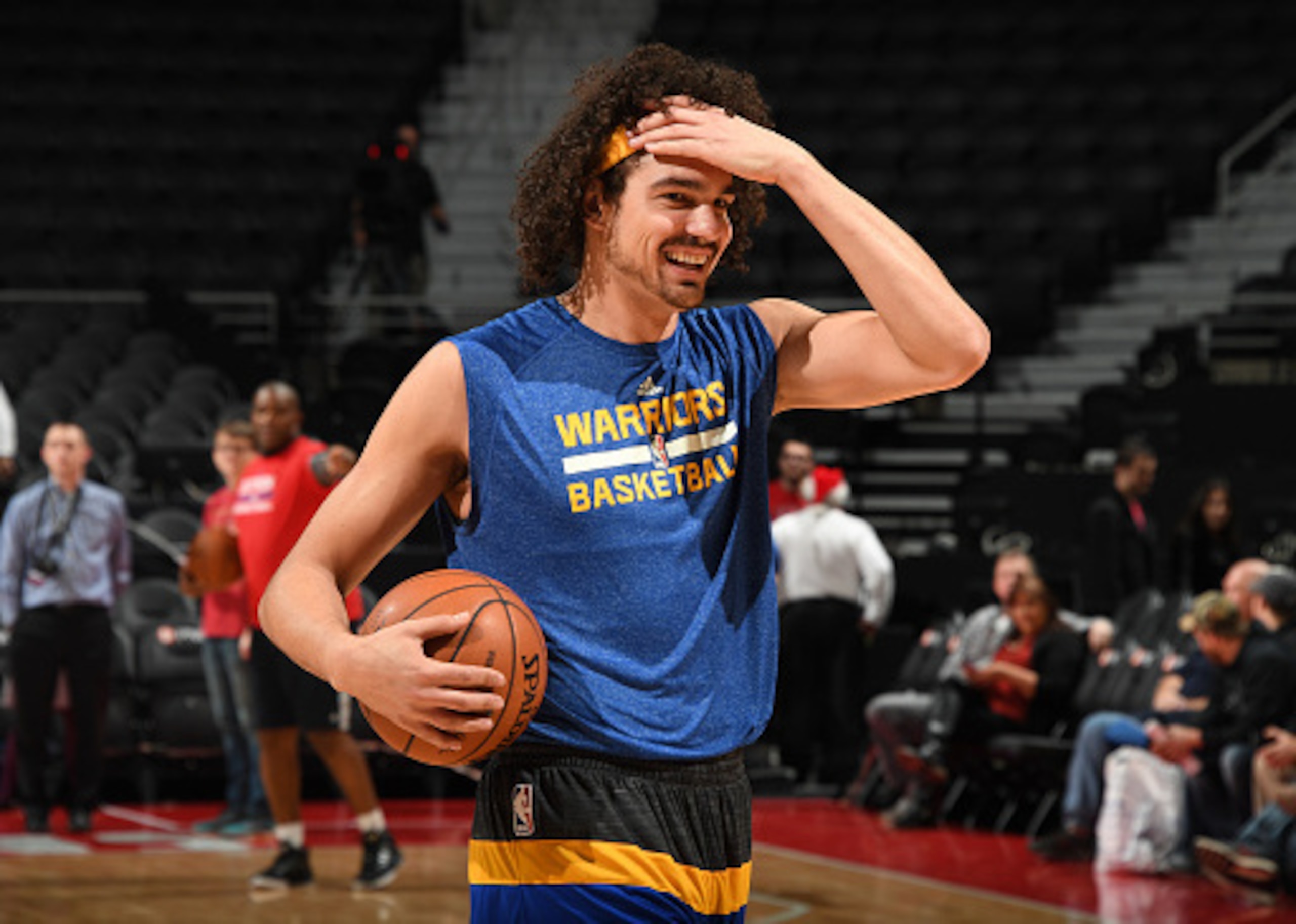
Anderson Varejao
Varejao had negative trade value at last season's deadline. The Portland Trail Blazers received a future first-round pick just to take the Brazilian big man and his burdensome contract off the Cleveland Cavaliers' hands.
One year later, not much has changed. He's not a negative value anymore, since he's working on a minimum deal. But that only lifts his value to zero, since his on-court contributions are also minimal. He's a good guy to have in the locker room, and he hustles his tail off, but his declining skill level will keep his price tag right between the red and the green.
James Michael McAdoo
As forgettable as Varejao (6.8 MPG) has become, he's actually averaging more minutes than McAdoo (5.8 MPG). The North Carolina product is a good athlete who can survive defending on the perimeter and finish plays above the rim. But his skill set is lacking, which explains his team-low 5.8 minutes per night.
If McAdoo had a go-to ability, it'd be easier to envision Golden State getting anything of value for him. But he's neither a self-sufficient scorer, shot creator nor effective rebounder. It takes more than raw athleticism to excite a potential trade partner, especially when that athleticism is coming from a still-raw 24-year-old.
The Untouchables
2 of 10
Curry may no longer be Golden State's greatest talent, but the two-time MVP remains the most critical piece of the team's greatness.
"He's the head of the snake," Kevin Durant told reporters. "We kind of feed off his energy and feed off his scoring."
Curry has a unique gravitational pull on defenders. He has a green light as soon as he crosses half court, some of this generation's best handles and the vision to identify open teammates. The Warriors post their worst offensive and net efficiency ratings when Curry sits, which is a testament to his impact and the obvious reason why he's off limits.
Kevin Durant
He's the reason Curry no longer holds the Warriors' most talented label. Durant, a former MVP, has never turned in a more complete campaign than his first in the Bay Area. His field-goal percentage (54.4), rebounds (8.6 RPG) and blocks (1. BPG) are all career highs, and his 28.2 player efficiency rating both leads Golden State and ranks fourth overall.
Durant's widely criticized, overly scrutinized mid-career transition has somehow been seamless. The Warriors are already lobbying to keep KD around long term, aka doing what you should do with untouchable players.
Draymond Green
Green is commonly called Golden State's "heartbeat," but his impact is more tangible than that. He's more like their bones and joints, structural elements that support the entity and ensure it functions properly.
That means many different things. It's protecting the paint and rebounding as if he was 7'0", not 6'7" on a good day. It's tossing more assists from the 4 and 5 spots than the MVP point guard. It's making just enough jumpers to hold defenses accountable and acing defensive assignments of all types. It's turning versatility into a superstar quality and indispensable puzzle piece.
Klay Thompson
There's a reason you haven't heard any good Thompson trade rumors in a while. They're entirely nonsensical and shot down by the Warriors any time they're raised.
"We're not trading Klay," Golden State general manager Bob Myers said when a rumor surfaced in November, per Bay Area News Group's Anthony Slater. "That's the short answer."
The Dubs have no motivation to move the nuclear sniper. Thompson is the ideal off-ball complement to Curry and Durant; he's a catch-and-shoot gunner who can pile up 60 points on all of 11 dribbles. Thompson is also a main component of the switch-heavy defensive scheme, as he has the lateral quickness to keep in front of point guards. He's an All-Star on his own ability and even more valuable with this group.
The Throw-Ins
3 of 10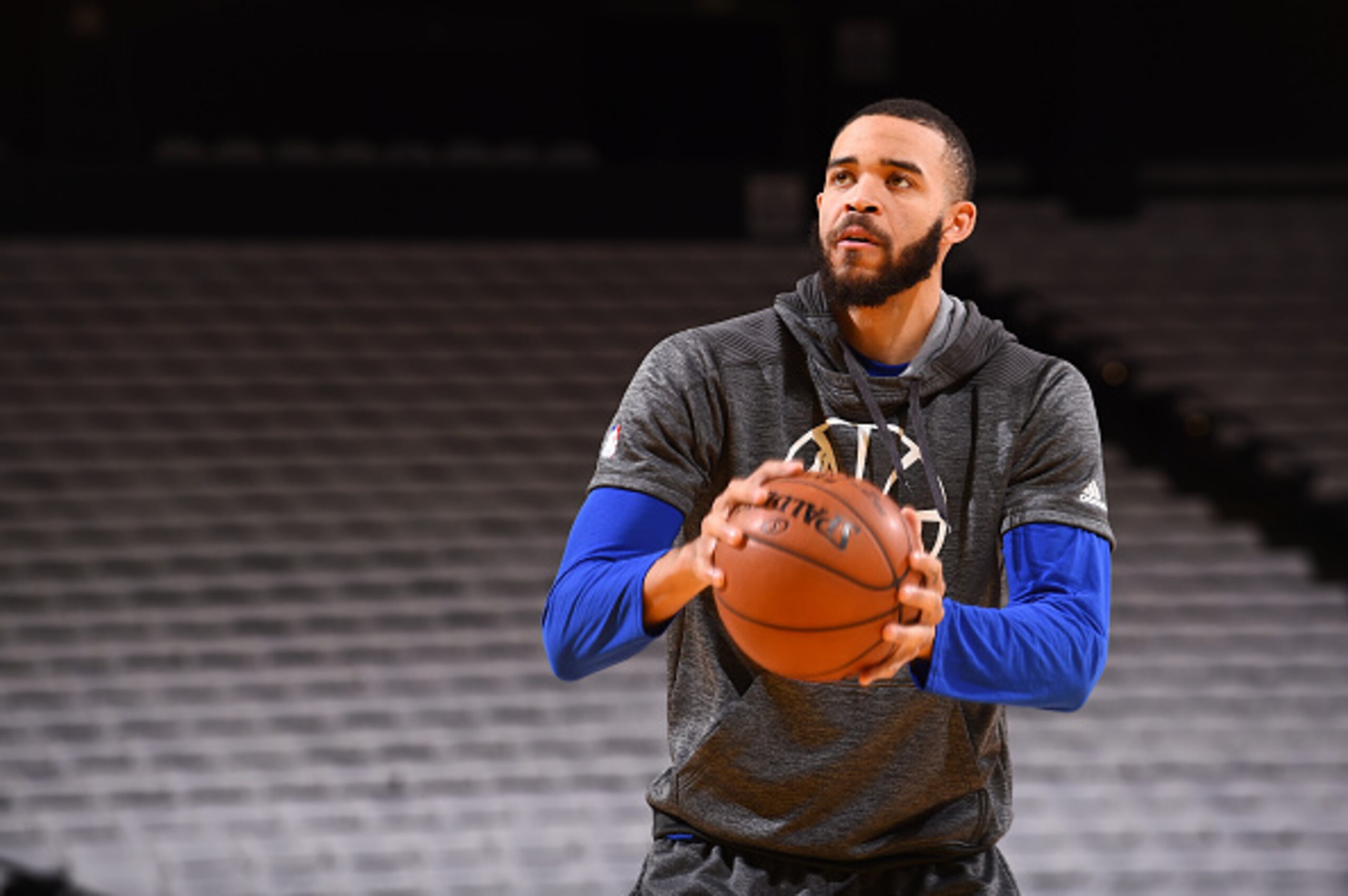
JaVale McGee
By and large, McGee has been almost the same player this season he was for the Dallas Mavericks last year. His per-36-minute production hasn't moved much in either direction—he's scoring more (24.2, from 16.7), rebounding less (11.0, from 12.9) and blocking about as many shots (2.6, from 2.5). His PER is up but not dramatically so (23.2, from 19.9).
Assuming his statistical gains are mostly reflections of his supporting cast, McGee hasn't changed much. And the last time he hit the open market, all he found was a non-guaranteed pact to participate in the Warriors' training camp. Still a supreme athlete with a limited skill set, he'd be nothing more than an add-on for a buyer in desperate need of frontcourt bounce.
Damian Jones
If McGee's book is out, Jones' has no words in it. The 30th overall pick is healed from offseason pectoral surgery, but the procedure seemingly prevented him from finding any path to playing time.
Jones has been relegated to either sideline cheering or NBA Development League duty, save for a pair of scoreless appearances. His ceiling is intriguing—he's a springy 7-footer with range—but until his basement starts to take shape, no one will pay a premium for Golden State's mystery man.

7. David West
4 of 10
Golden State's minimum deal with former David West has looked, at times, downright larcenous.
West—who is collecting the same salary as Varejao and McAdoo—has dazzled in a reserve role. His 24.4 assist percentage trails only Green's and Curry's. West's 8.5 rebounds per 36 minutes match the most he's collected since his rookie year. His 54.5 field-goal percentage matches a personal best.
For a specific group of win-now buyers, West holds substantial appeal. His hoops IQ is off the charts. His vision and unselfish nature combine to form one of the league's better playmaking packages at the center spot. He's a good enough shooter to pull defenders out of the paint, and his communication skills shine at the defensive end.
But most deadline dealers might see West as a declining stock. As neither a floor-spacer nor a rim-protector, he's not the easiest fit in today's game. His diminishing athleticism limits his interior impact, and the only area where he grades out as a difference-maker is distributing.
To top it off, he's sidelined by a left thumb fracture that's expected to keep him out into February. While some trade chips will be showcased leading up to the swap meet, West could be out of sight and mind for most buyers.
6. Kevon Looney
5 of 10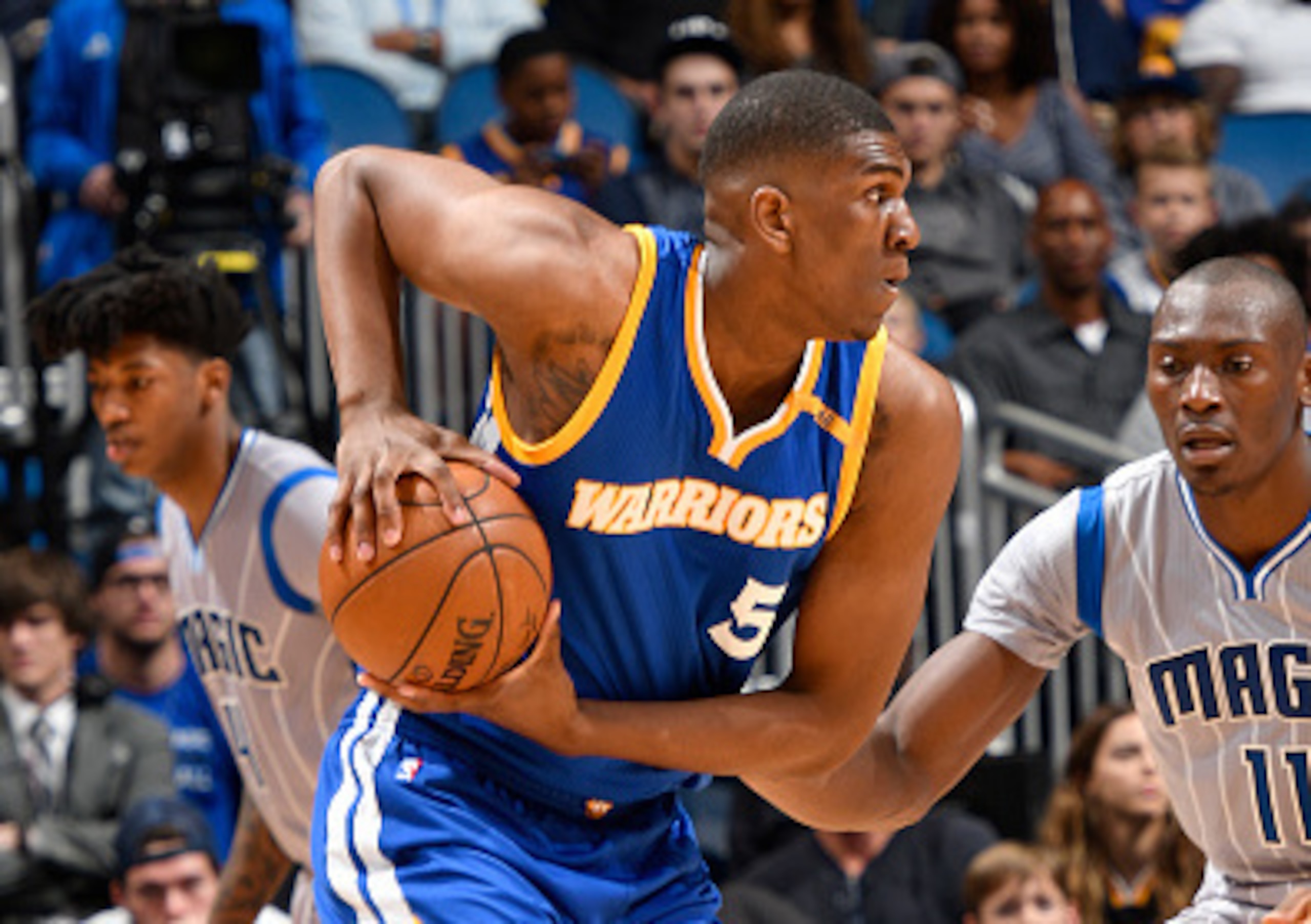
While the Warriors see more value in West than Kevon Looney, most suitors likely have the order flipped. Clubs know the type of player West is—more importantly, the type of player he no longer is—but they could have a compelling vision for what Looney may become.
Just look back at the Dubs' plans after nabbing Looney with the 30th pick in 2015.
"He could be out there playing 5, the 4 or 3," Myers said, per Bay Area News Group's Diamond Leung. "That's the way we think the NBA is trending, being able to employ multiple skill sets. Coaches love guys who can be placed in many different positions, and Kevon's a great example of that."
One-and-a-half years and two hip surgeries later, Looney still has plenty to prove. He's made only 39 appearances for the Warriors and never cleared the 20-minute mark. He's asked to do much less with the Dubs than he would be on most teams due to the wealth of talent around him.
But therein lies the interest for many buyers. The 20-year-old's upside is tremendous—he's a 6'9" former point guard with handles, smooth shooting mechanics, sound instincts and a hawkish 7'3 ½" wingspan. He could be a walking mismatch on offense with positional versatility at the other end. At worst, he's a skilled hustler and relentless rebounder (10.9 boards per 36 minutes) who is cost-controlled through 2018-19.
5. Patrick McCaw
6 of 10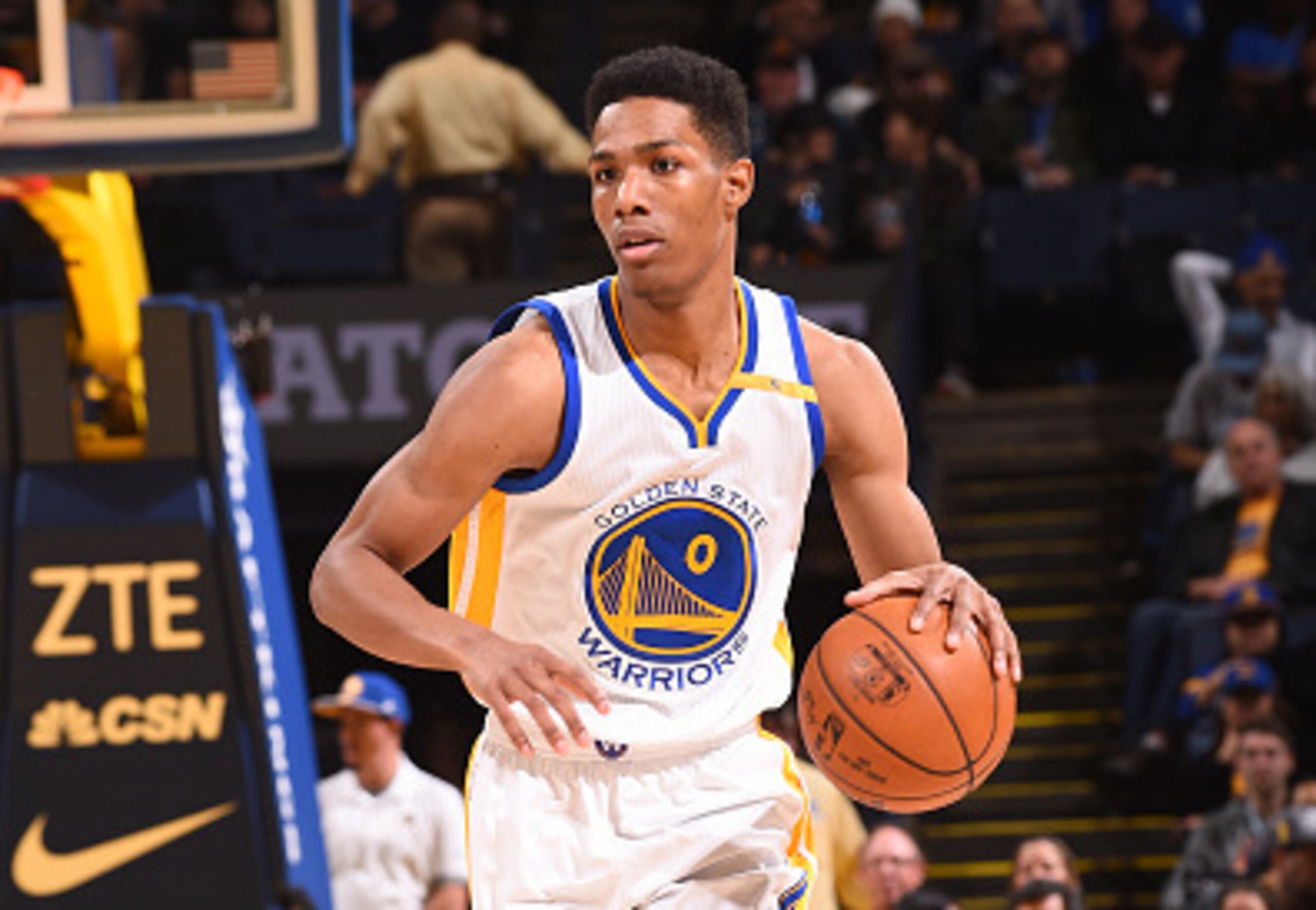
The lone Dubs rookie to crack the rotation, Patrick McCaw has suffered from the inconsistencies seen in most NBA first-timers.
After battling back from an early ankle injury, he handled his heaviest workload in the month of November. He played all 11 games for which he was available, averaging 3.6 points and 1.2 turnovers in 14.8 minutes per night.
But his role has fluctuated since. While he's logged at least 15 minutes in six contests over the last month-plus, there were another five where he didn't get off the bench.
"I know my time is coming," McCaw said, per Connor Letourneau of the San Francisco Chronicle. "There's a lot of great players ahead of me. I'm still learning, I'm still figuring out the game."
The 6'7", 185-pound swingman is also still growing, which has limited his impact on the defensive end. While his athleticism, quickness and 6'10" wingspan all point to his massive potential as a perimeter stopper, his willowy frame has been a detriment against thicker, stronger players.
But in the eyes of suitors, he's an interesting three-and-D candidate with the playmaking potential to possibly grow beyond that role. For clubs with more patience than the win-now Warriors, his attractive future inflates his present value past his production line.
4. Zaza Pachulia
7 of 10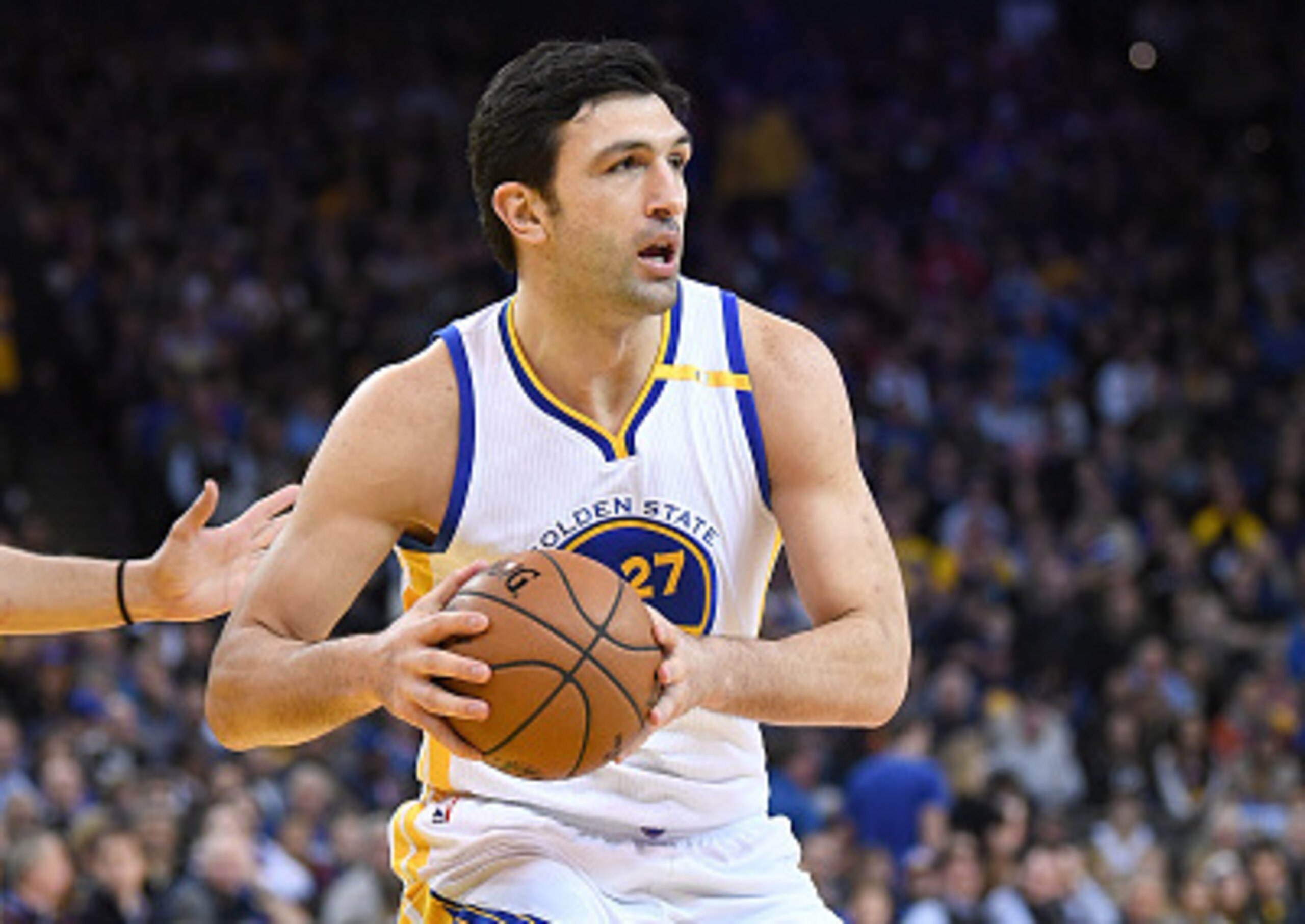
The move from Andrew Bogut to Zaza Pachulia was expected to be a step back, possibly a steep one. Even if Pachulia gave Golden State another sturdy screen-setter and active rebounder, he couldn't replace what Bogut brought as a rim-protector and point-blank finisher.
Still, even without the same interior defense, Pachulia has done enough to make this move more lateral than backward. He has better per-36-minute marks in scoring (11.3) and steals (1.7) than Bogut did last season (9.3 and 0.8, respectively) while sitting just behind Bogut in boards (11.6 to 12.2) and assists (3.9 to 4.0).
Pachulia is a constant source of toughness—just ask Russell Westbrook—and savvy. Pachulia's penchant for physical play and sharp passing eye have eased his transition. The Warriors outscore opponents by an astounding 18.6 points per 100 possessions when he's in the game, their highest such mark by nearly two points.
"[Pachulia] loves the game and just loves to play basketball," Curry said, per Basketball Insiders' Michael Scotto. "So, every night you know he's going to be locked in and give us energy, give us that toughness."
There are sexier trade targets than Pachulia, but few are as reliable (especially for $2.8 million). Stability is an underrated strength for midseason acquisitions, and he'd be a plug-and-play starter elsewhere if the Warriors somehow let him go.
3. Ian Clark
8 of 10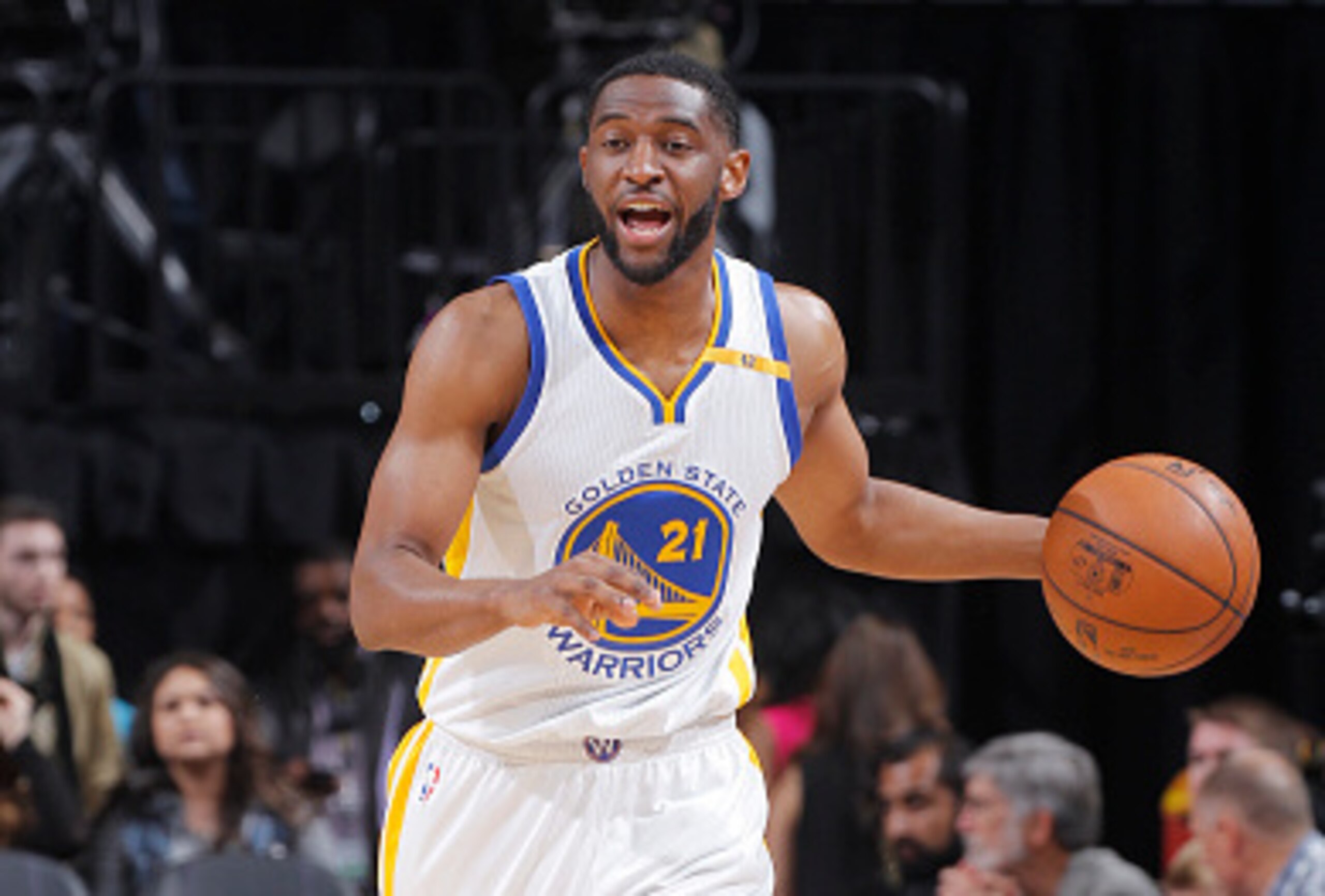
Ian Clark entered this campaign as little more than a blip on the Warriors' radar. He spent his first three NBA seasons as a part-time player, averaging fewer than nine minutes and four points per game.
But the 25-year-old sharpshooter has become this group's biggest revelation. He's been a regular since the end of November, setting a slew of personal bests along the way—6.8 points per game (tops among Dubs reserves), 48.8 percent shooting, 40.7 percent from three, 14.2 PER.
"To see where he's at today, where you can play him at the point, where he can make plays off the bounce, where he can make plays for others, it's amazing to see," Green said, per Bay Area News Group's Carl Steward. "He's continued to work and work, and he's a great guy to have on our team."
Clark carries more potential than the typical 25-year-old, because he's only now getting an opportunity to display his skills. It's hard to imagine many suitors wouldn't be interested in seeing what else he can add. Even if this proves to be close to his peak, he's still a capable combo guard with a near-50/40 shooting slash who knocks 1.2 points off his opponents' field-goal percentages.
The market is always hungry for instant-offense sparks, particularly those who can space the floor. Add plus-defense to the picture, and Clark could fetch a valuable asset in return.
2. Shaun Livingston
9 of 10
Shaun Livingston is a modern marvel with a throwback game.
The 6'7" lead guard has attempted all of 64 triples—about as many as Curry makes in 16 games—over 11-plus seasons. And yet, Livingston's skills have never been more useful. His clairvoyant defensive reads help him pinpoint open teammates all over the floor. With gunners spread around him, he uses his length and butter-soft touch to roast defenses with automatic turnaround jumpers.
His impact is masked a bit by this roster's strength. The Dubs are so dominant on the perimeter that they don't need major minutes from Livingston, even though he's hitting an unconscionable 58.9 percent from the field—by far the best mark of rotation guards. That has brought his counting categories to their lowest levels with the Warriors, though he's been a force when called upon.
"Livingston is still the same savvy facilitator who helped guide Golden State to two straight NBA Finals," Letourneau wrote. "A master of pacing, he ratchets up the tempo and finds bigger-name teammates in their preferred spots."
Livingston's cerebral skills shine in this system, but he could be too costly with Curry and Durant both needing new deals this summer. If the Warriors proactively flipped Livingston, they'd be overwhelmed with suitors. Even in this golden era of point guards, everyone can use an expert table-setter, offensive mismatch and versatile defender.
1. Andre Iguodala
10 of 10
Andre Iguodala is neither young, cheap nor offensively explosive. So why is he holding down the No. 1 spot? Because he's come as close as anyone to playing mistake-free basketball this season.
The former All-Star has tallied 144 assists against a mere 31 turnovers. Every other player with 140-plus assists has at least 44 turnovers, and 51 of the 59 who clear that mark have 62 or more (twice as many as Iggy). His ratio of 4.65 assists to one turnover leads the NBA by a mile—Chris Paul (4.06) is the only other player above 3.58. Iguodala has had six games with multiple turnovers and 20 with none.
"He gets it," Kerr said, per Letourneau. "He's just so smart, and he just calms us down offensively. We just see him make one smart play after another."
Those plays don't always surface on the stat sheet. That, plus some apparent early-season pacing by Iguodala, has pulled his per-game marks down to a career-low 5.9 points, 3.7 rebounds and 3.3 assists. However, he leads all NBA reserves in plus-minus (269). And he's still holding opponents—typically No. 1 options—1.5 percentage points below their normal field-goal rates.
He'd hold more trade value if his contract ran beyond this season, but he'd still be a high-impact addition as someone who can simultaneously organize and elevate the players around him. Steady two-way contributors can be hard to find on the open market, and their price tag always reflects that.
.jpg?w=2560 "49ers LB Suspended for Headbutt")
.jpg?w=2560 "Commanders OL HEATED After Tie ▶️")
.jpg?w=2560 "Buzz: MHJ Hired Agents for Trade")
.jpg?w=2560 "AD Trolls Bears WR on IG 😂")