

Michigan vs. Florida State: Orange Bowl Grades, Analysis for the Wolverines
In the final college football game of 2016, the Michigan Wolverines drop a heartbreaker to the Florida State Seminoles in a memorable Orange Bowl, 33-32. It wasn't Michigan's prettiest performance in the first half, but thanks to a stout defensive showing in the second half and two huge plays, the Wolverines took the lead late. However, it was the Seminoles who were able to score with 36 seconds left to win it.
Check out my game grades and analysis:
Pass Offense: D
1 of 6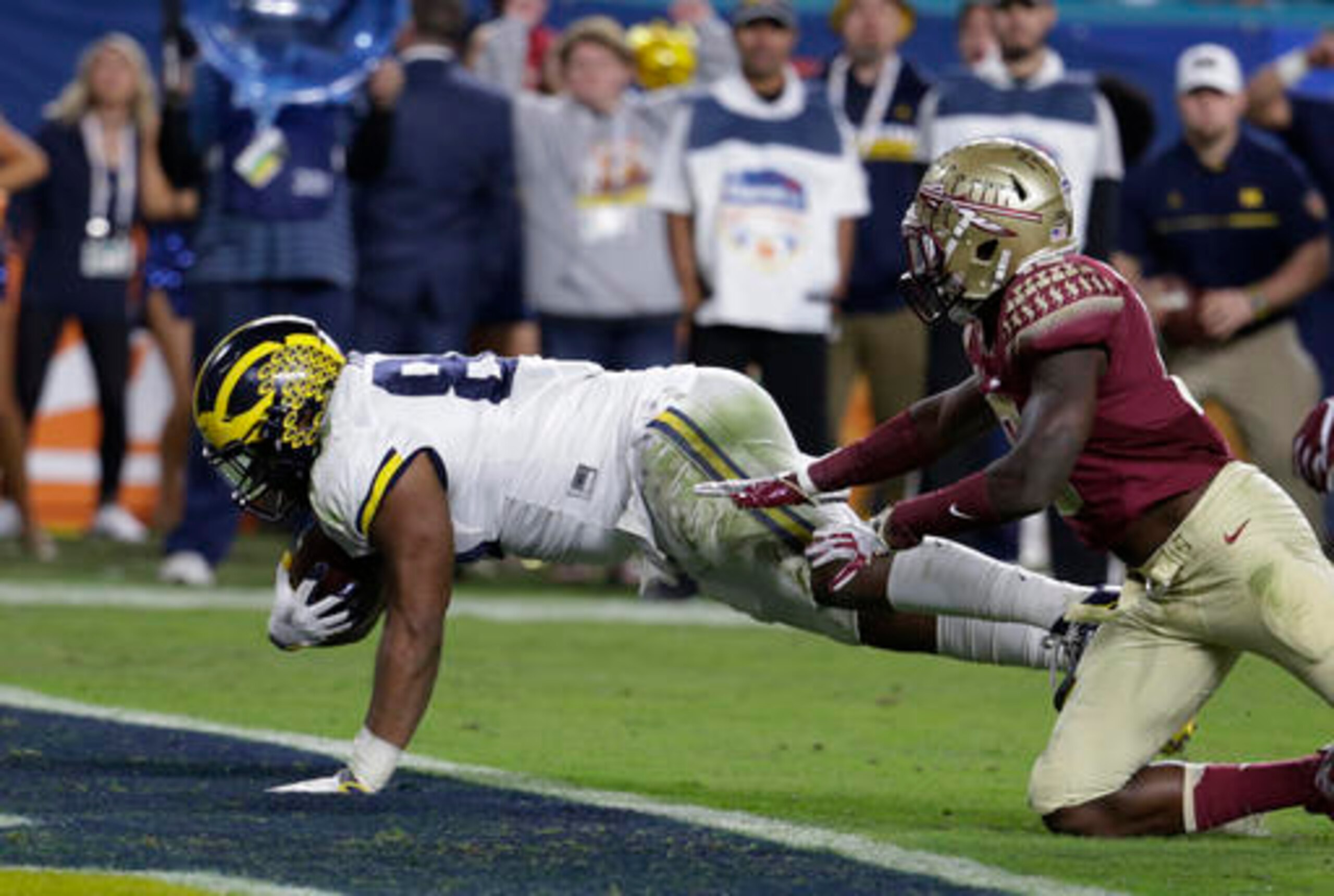
Going into the game, Florida State's secondary looked to be the weak point Michigan would attack. However, Wilton Speight's rough performance and the offensive line's lack of protection led to a long day for the passing attack.
While the loss of Jake Butt in the first half hurt, Speight struggled all day.
He finished 21-of-38 for 163 yards and one touchdown. That's just an average of 4.3 yards per pass. Yeah, not good. A key reason for the lack of big plays was Speight consistently missing downfield receivers high. But a couple of those could easily be blamed on the Seminoles' dominant pass rush.
Pass Defense: C+
2 of 6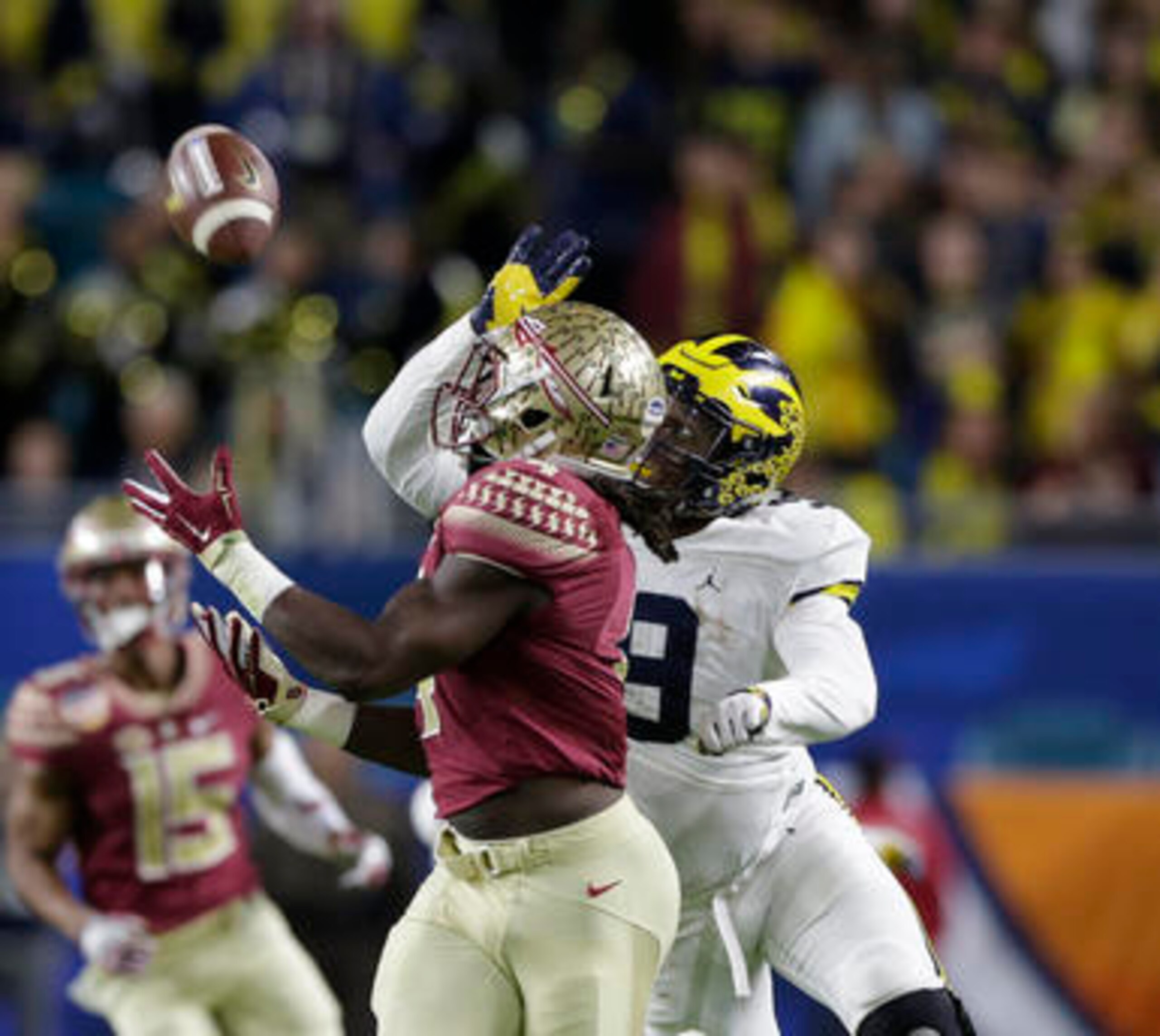
From the outsiders perspective, the Michigan pass defense was smoked all game long. However, looking closer at the game and numbers, it wasn't that bad.
Yes, Florida State had some huge plays through the air, including the 92-yard touchdown after a blown zone coverage. Jourdan Lewis was also beat badly on the game-winning touchdown in the fourth quarter. But the secondary made some big pass breakups and added the Wolverines' first touchdown via a Mike McCray pick- six.
Deondre Francois finished just 9-of-22 for 222 yards and one touchdown. It wasn't a great showing from him either in terms of quarterback play. And a lot of the credit can go to Michigan's pass rush as Taco Charlton and Maurice Hurst were in the backfield all night.
Run Offense: F+
3 of 6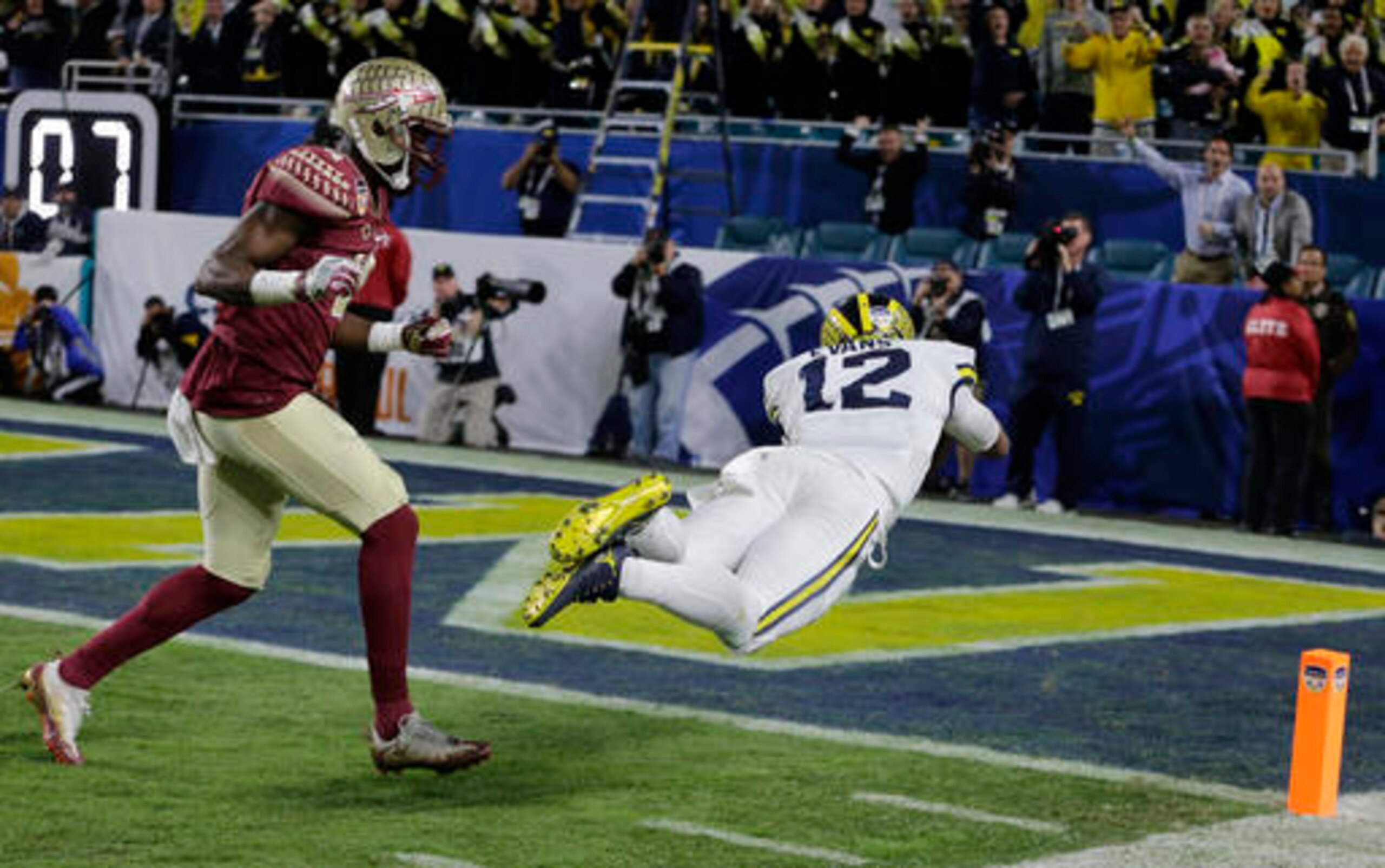
While Michigan's offensive line struggled to pass protect, it struggled even more to open up lanes consistently for the running backs.
Michigan, as a team, finished with just 89 yards rushing on 36 attempts, averaging just 2.5 yards per carry.
Whether it was De'Veon Smith, Karan Higdon or Chris Evans, there was no hope for the running game until Evans shook the pants off a Seminoles defender on his way to the end zone late in the fourth quarter. This gave Michigan the lead, but obviously it wasn't enough for the win.



Run Defense: C-
4 of 6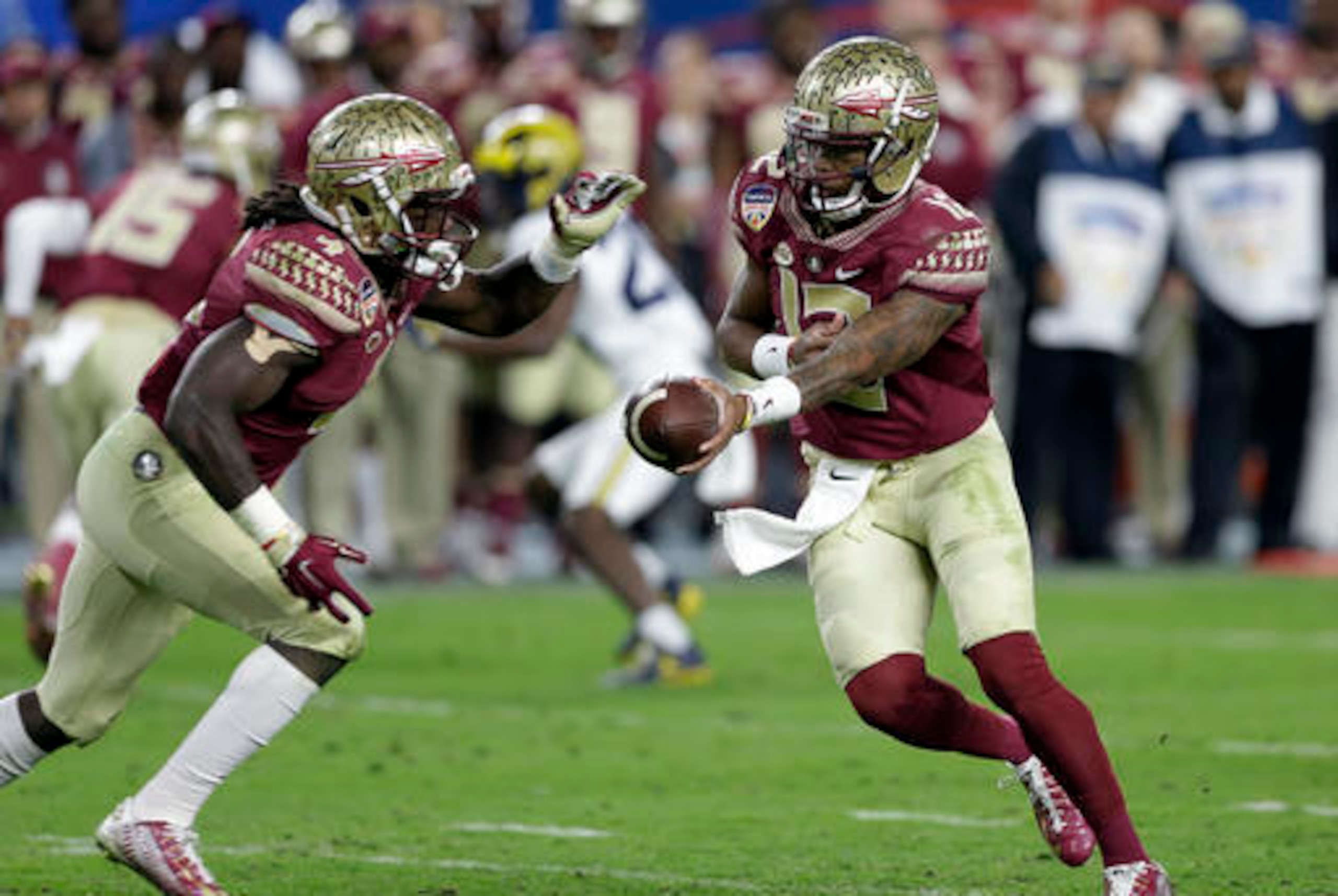
Normally, when a running back rushes for 145 yards, the run defense wasn't very good. And while Michigan was far from being its normal, dominant self, it rebounded pretty strong in the second half to limit Dalvin Cook from putting together a career day.
While Cook put up 145 yards, Florida State, as a team, rushed for just four more yards in total on 35 carries.
It was a roller-coaster day for the defense with big plays made by it and against it. The slowing down of Cook and Francois was good, but the 71-yard run on 3rd-and-long in the second half will be the play everyone remembers.
Special Teams: A
5 of 6
For most of the game, Kenny Allen was Michigan's most valuable player. He kicked three field goals and averaged 47.4 yards per punt, which was one of the main reasons the Wolverines stayed competitive in the first half.
Add in Dymonte Thomas' fumble recovery on the muffed punt and Josh Metellus' two-point blocked field-goal return and it was a very good showing from the special teams.
Coaching: D
6 of 6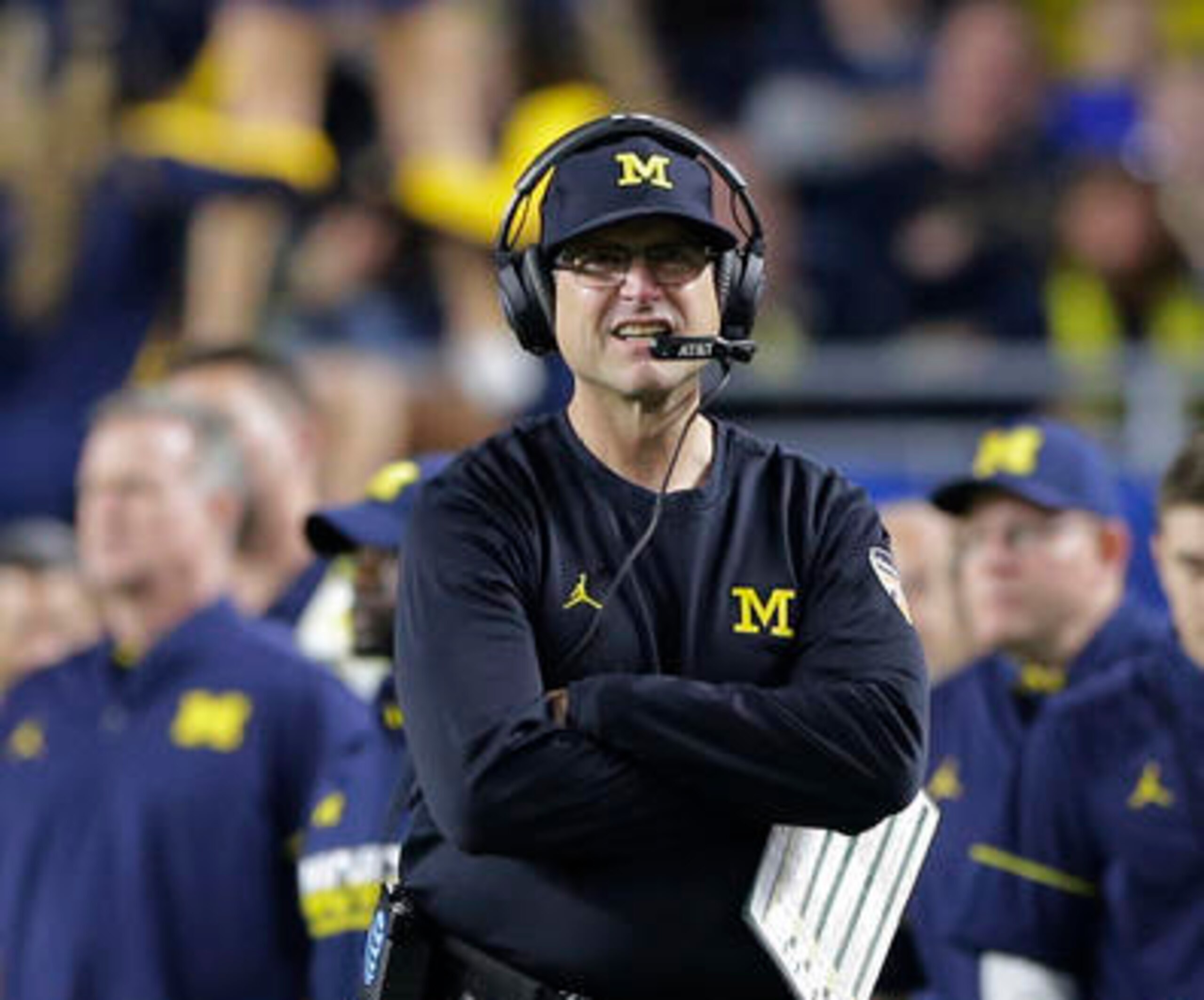
Not a good day for the Michigan coaches as the team looked flat and unprepared throughout the first half. The offense couldn't get going for the majority of the game, partially because of execution, but there were also several questionable play calls on big plays—especially inside the red zone.
Some will question Jim Harbaugh's move of not calling a timeout on Florida State's final drive, but it didn't mean too much as Michigan turned the ball over on downs after a poor offensive drive.



.jpg?w=2560 "Jonathan Taylor Landing Spots 📍")


