

Georgia vs. Georgia Tech: Game Grades, Analysis for Bulldogs
Georgia had a commanding 13-point lead thanks to a dominant third quarter. It scored 20 unanswered overall and made the necessary adjustments to slow down Georgia Tech in the second half. But it finished with one less point than the Yellow Jackets, and that’s where it counts.
The Bulldogs dropped to 7-5 with a 28-27 loss to Georgia Tech, the second time they’ve lost to the Yellow Jackets in three years and the second in a row in Athens. The last three times these teams have played including Saturday, the margin of victory has been six, six, and one.
It seems like this season every second or third game Georgia leaves with a sour taste in its mouth, wondering what could have been. It’s been the defining narrative this season, and it’s somewhat fitting that the regular season ended this way.
Let’s attempt to sort through this game and get to grading.
Pass Offense: C
1 of 7
Jacob Eason passed the ball 27 times, and that number is a bit surprising and too high. Eason had some good reads down the field, including a beautiful deep ball to Terry Godwin in the third quarter that led to a field goal later in the drive.
But Eason threw several passes behind receivers, forcing some tough catches that they were unable to reel in. Eason had just two passes of 15-plus yards, and there could have been a lot more.
Eason had a key interception with under four minutes to go in the game off a deflected pass that probably shouldn’t have been called. This was one of two interceptions—the first such game Eason has had. The late-game interception turned the tide in the game and led to the game-winning score for Georgia Tech.
Isaac Nauta and Terry Godwin had nice contributions in the passing game with 48 and 53 yards receiving, respectively. Nauta dropped a ball he should have had with Georgia trying to make something happen with under twenty seconds left. Georgia could have set up a field-goal attempt had he caught it.
It’s apparent Georgia decided it wasn’t going to try to win this game through the air, and when it did try to air it out, it did so to mixed results. A lot of that is on Eason, who managed just a 50 percent completion percentage and 139 yards passing.
Grade: C
Run Offense: A
2 of 7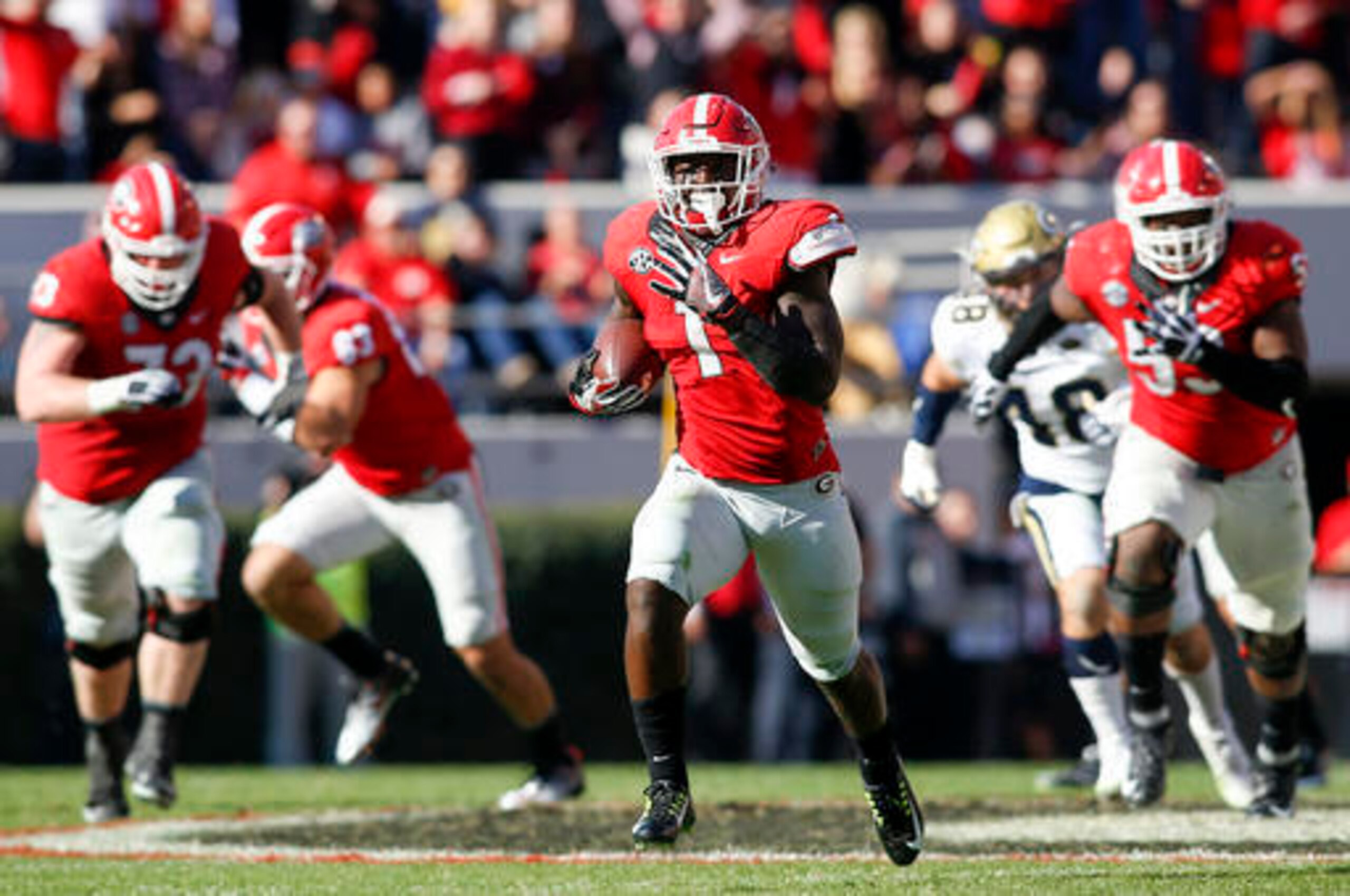
Nothing Georgia football did on offense was flamboyant or showy, and that’s a credit to offensive coordinator Jim Chaney, who has realized late in this season that the Bulldogs are at their best on offense when their backs are being fed the ball.
Georgia has in the past shied toward trying to do too much or get cute, especially in short-yardage situations. That wasn’t the case Saturday, even calling a timeout when Nick Chubb was lined up in the Wildcat and instead calling a run. It’s a small change, but it’s a noticeable and necessary one.
Sony Michel had by far his best game of the season and looked like the back he’s been in long stretches of his career. Michel made some great cuts and followed his blocks all game to the tune of 170 yards on the ground. He was rewarded with 19 carries—a testament to Georgia’s renewed commitment to getting him the ball. Michel stepped up with Nick Chubb hobbling a bit especially in the second half.
Chubb still managed a touchdown and 88 yards rushing on 22 attempts. Georgia ran the ball 42 times Saturday off the strength of mostly Chubb and Michel (Riley Ridley had one attempt). This is compared to 28 total passes, and that’s how it should be.
Georgia’s running game wasn’t the problem Saturday—far from it. The Bulldogs were able to move the ball on the ground at will, rushing for 263 yards, well above their average of 180. They stayed with the run, and it paid dividends.
Grade: A
Pass Defense: D+
3 of 7
A triple-option offense like Georgia Tech’s is run-first. So when it does pass, you’d better be ready. Georgia was not.
Georgia Tech only threw the ball 10 times and completed six of those throws. Of those six, four of them went for 15 yards or more. Two of those were in a row, with Georgia up 13 and what seemed like a comfortable lead. But it gave up two long pass plays to get the Yellow Jackets in a position to cut the lead to six. Georgia’s secondary did a bad job of identifying the pass and recovering when that did happen. Dominick Sanders was burned on a long throw early in the game trying to spy on the run. Sanders did come up with an interception later on.
But Georgia’s secondary did not have a particularly good game Saturday. It did not step up when it needed to, especially on that fourth-quarter drive that got the Yellow Jackets back in the game.
Defensive coordinator Mel Tucker dialed up a few safety blitzes that worked, and Aaron Davis did a nice job rushing the passer. He had 2.5 tackles for a loss as well.
However, this unit let the rest of the defense down Saturday and gave Georgia Tech enough confidence to take a few shots down the field that it was able to complete.
Grade: D+
_0.png?w=2560)
Run Defense: C+
4 of 7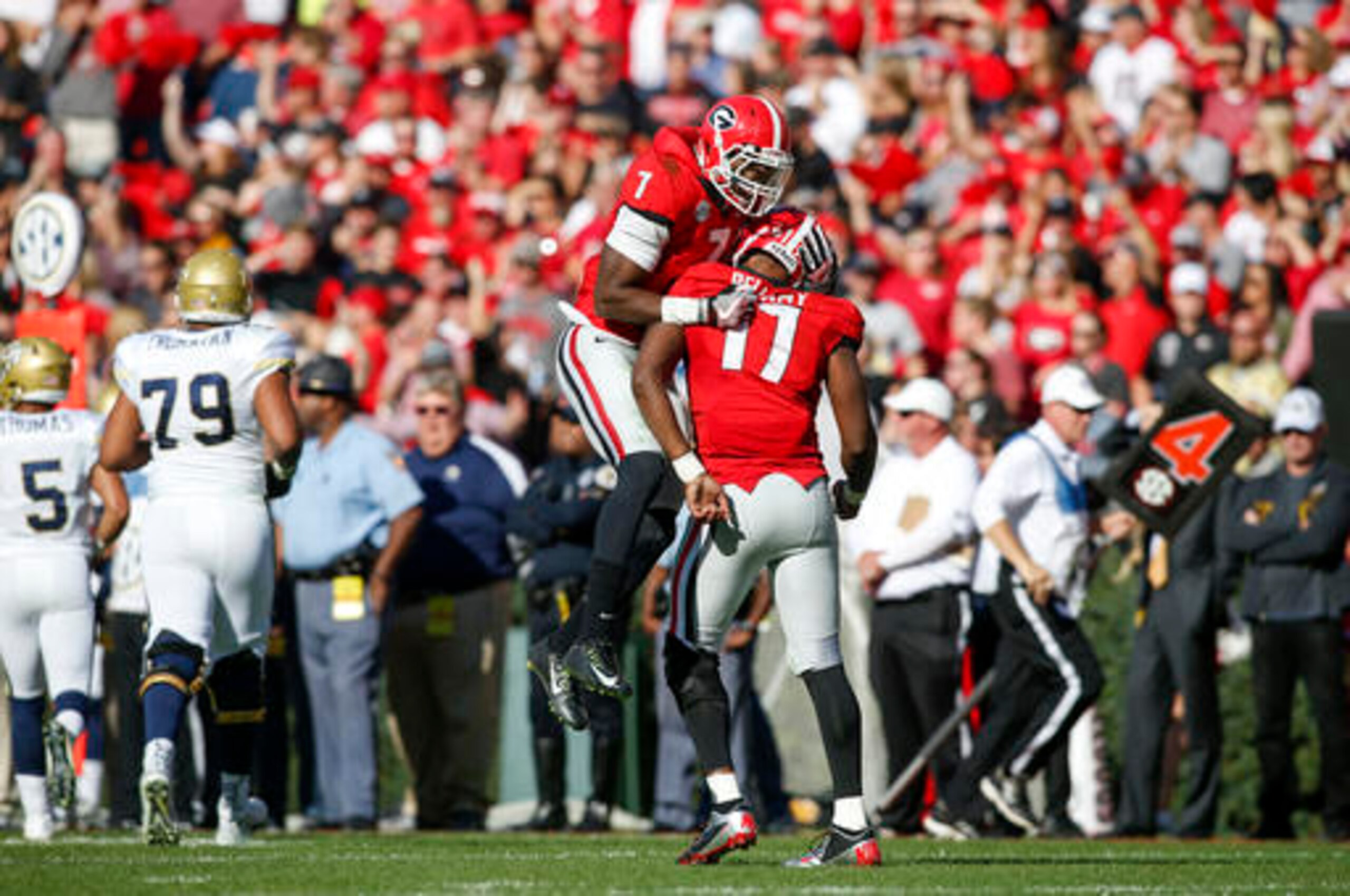
This is where all the focus was coming into the game. How would Georgia’s players, many of whom hadn’t seen an offense like this in live action before, fare against the triple option?
The answer was a mixed bag. Georgia Tech got its yards on the ground in the first half, rushing for 115 and two touchdowns.
When Georgia was able to defend the run, it did so well. Players flew around the field and didn’t get pushed into blocks on the outside. Roquan Smith had a career-high 13 tackles, Lorenzo Carter had eight tackles, and David Marshall had five tackles. All three players had great efforts getting the right angles off tackles and buttoning up the run.
Coach Smart made adjustments at halftime, and the Bulldogs allowed just 21 yards rushing in the third quarter when it seemed they were a play or two away from pulling away for good.
But then the Yellow Jackets bounced back in the fourth, rushing for 90 yards and reestablishing their attack.
A team like Georgia Tech that predicates its offense on the run is going to get its yards. It had 226 on 42 attempts. With that said, it’s a matter of what you allow the team to do with them. And Georgia allowed too many long runs in this game—seven of 10 yards or more—and that is where it ran into trouble.
Grade: C+
Special Teams: B-
5 of 7
The fanfare around Rodrigo Blankenship after this game likely isn’t as strong this week as it has been the last few. Blankenship missed a 42-yard attempt with a little less than six minutes left in the first quarter after a long, dominant Georgia drive stalled. This would turn out to be the difference in the game.
This is a bit of the what-if game, but the fact remains that if Blankenship hits that field goal—one he’s proved over the past month he’s capable of making—then Georgia is relishing its second straight win over its in-state rival. Blankenship did hit two from shorter distances, but it’s the missed one that stands out.
Brice Ramsey was not called on that much to punt Saturday, but had one of his two punts downed inside the 10-yard line. Ramsey hasn’t been the subject of too much ire since taking over punting duties for the injured Marshall Long, and that is obviously a welcome sign for the team.
Georgia didn’t have any opportunities for punt returns off Georgia Tech’s three punts, and advanced just one kickoff, so there’s not much to be judged there.
Georgia’s special teams have settled and calmed down as it relates to mistakes over the past few games, and that’s part of the reason it’s been more competitive. Fundamentals can be as important as flashy plays, and special teams are where that can best be illustrated.
Grade: B-
Coaching: C-
6 of 7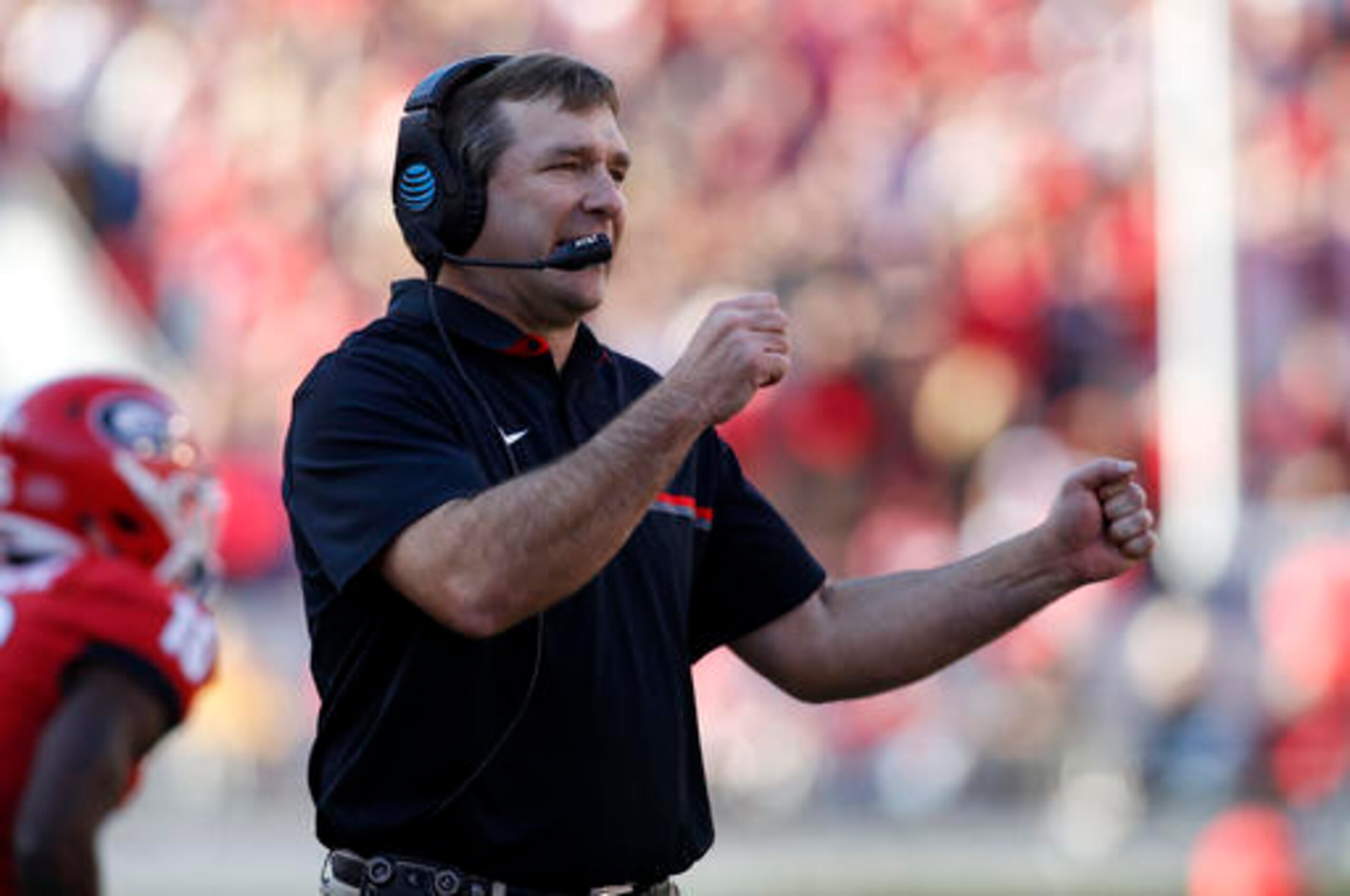
Credit Smart for having a defined game plan coming in: stop the run and run the ball. It’s pretty simple, but for large stretches, Georgia did just that. It’s why the "L" next to this game has to be hard to swallow.
Smart and Mel Tucker should be praised for whatever they came up with at halftime. In-game adjustments are the hallmark that separates good coaches from great ones, and Smart had Georgia come out in the third quarter guns blazing.
But the last quarter was a different story and the difference in the game. Georgia was disjointed and gave up too many big plays. It surrendered fourteen straight points after scoring twenty unanswered itself.
This game could serve as a model for Georgia’s season, as it was plagued with inconsistency and a propensity for mistakes that were impossible to come back from.
It seems as though any solutions Smart had for Georgia Tech’s offense were temporary, and because of this, Georgia sits with its fifth loss of the year in yet again disappointing fashion.
On offense, Jim Chaney probably should have taken the ball out of Jacob Eason’s hands; in this game 27 times is far too many for him to be throwing it. Even given the 42 times the Bulldogs ran the ball, that number could’ve been higher. Brian Herrien got no touches, even though he’s proved himself reliable as a change-of-pace back, especially since Michel was asked to carry the load by himself late.
I haven’t touched on this much in this section before, but wide receivers coach James Coley needs to have a serious talking-to with his receivers about catching the ball. A lot of that is on him, but Georgia’s receivers had several catchable balls in key situations that hit them in the hands. Some of those throws were not perfect, but there were those they should have caught. Too many times this season that has been the case.
Grade: C-
Conclusion
7 of 7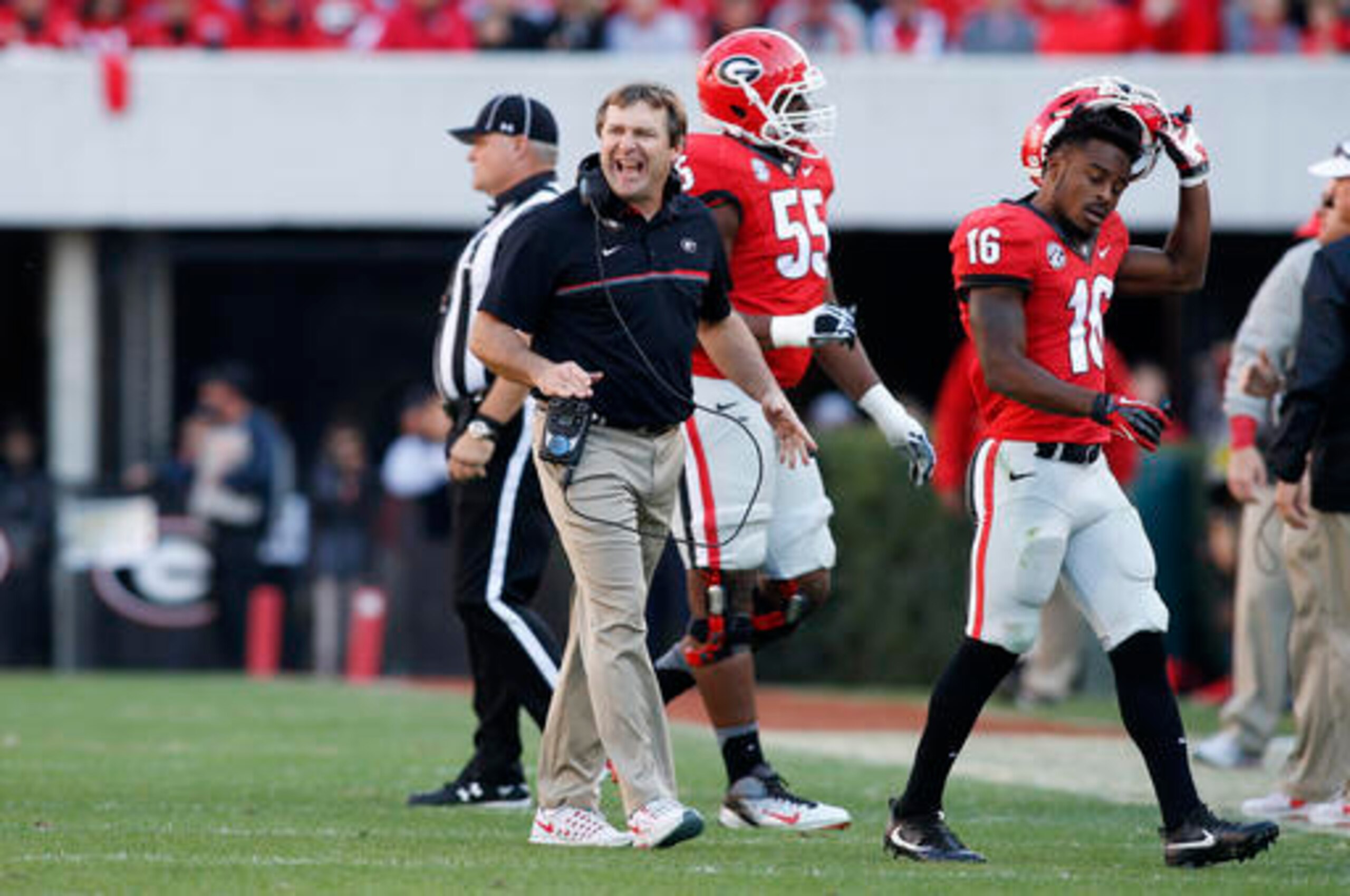
Big picture ... Georgia is still going to a bowl game. It might not be as prestigious as it was going to be prior to Saturday.
But that is small potatoes. Given that this was the regular-season finale and Georgia likely won’t play again for a month, let’s examine its season arc.
A win Saturday would’ve made for an important stamp on the back stretch of this season. Instead, the mistakes and holes that plagued this team against Florida, Tennessee, Vanderbilt and on and on came to a head again. It was a fitting end, a microcosm for Georgia football in 2016.
This program brought in Kirby Smart for the sake of change and a fresh start. Through one year, that has resulted in less wins and more losses. Rome wasn’t built in a day, but can’t be what the team expected coming into this year.
One of the reasons cited for Mark Richt's firing was his inability to beat the teams Georgia expects to beat year in and year out.
Kirby Smart’s team lost to Tennessee, Vanderbilt, Florida, Ole Miss, and Georgia Tech. All of these games carry emotional and national weight, and the Bulldogs came up short in all of them. That can’t be acceptable going forward.
This program took a step back this year. It can only hope that the maxim about taking a step back to take leaps forward heeds true over the next few years. There are things to be excited about, namely a young defensive core and a quarterback with promise, but this year, too often their youth shone through.
Georgia still can finish the season with eight wins, but that would be two less than last year as well as another appointment with the couch during the SEC Championship Game.
The extra practices preparing for the bowl game will have a lot of value, and how this team comes out of them may speak a lot about the program going forward.
But Saturday, there can be nothing but disappointment and lamentation—for this game and for the missed opportunities that came throughout a tumultuous, up-and-down season.
.jpg?w=2560 "Rap: Lions, LaPorta End Contract Talks")
.jpg?w=2560 "Report: Baker May Miss Up to 6 Weeks")
.jpg?w=2560 "EVERY Fantasy Football Update")

.jpg?w=2560 "Commanders May Change Logo 👀")