

Grading Thomas Tuchel on Borussia Dortmund's 2015/16 Season
With the 2015/16 season over for Borussia Dortmund after no fewer than 56 matches across all competitions, it's a good time to reflect on the job head coach Thomas Tuchel has done.
His first year in charge of the Black and Yellows has been largely successful with occasional hiccups. Though it ended in disappointment in all three competitions—for one reason or another—fans can look back fondly at a season that exceeded most expectations.
Here, Bleacher Report takes a look at Tuchel's body of work in his first year in charge of Dortmund before giving him a final grade for the 2015/16 season.

Results
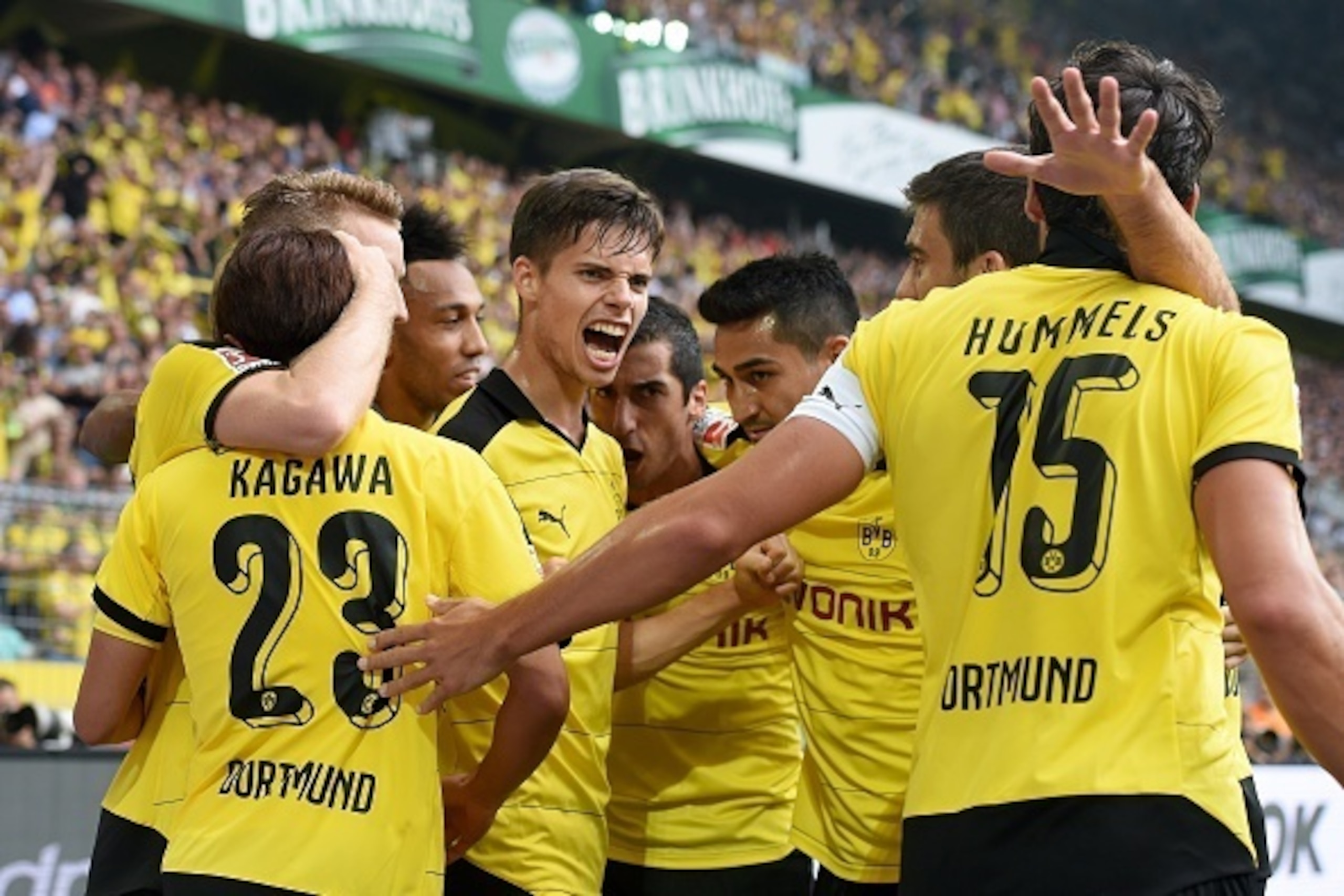
Dortmund won 78 points in the Bundesliga this season, a new record for runners-up in the German top flight and just three points behind the Black and Yellows' club-record tally from the 2011/12 season.
Considering where they came from, having finished the previous campaign in seventh place with only 46 points, the massive improvement exceeded every expectation.
As Stefan Buczko noted for ESPN FC, Dortmund's 78 points would have been enough to win the title "46 out of 53 times." It's hard to blame the club for not winning the championship with that tally: They were very good, but Bayern Munich were even better.
One of the few blemishes on a strong domestic campaign was a 5-1 loss at Bayern in October, however.
Dortmund's heaviest defeat of the season set the tone for a title race that never really was. When the club had a chance to reduce the deficit to two points in the return fixture, they were lucky to win a point in a goalless draw.
A remarkable consistency saw Dortmund lose only four league matches, none of which came at the Westfalenstadion. That being said, the 10-point deficit behind Bayern in the final table was disappointing.
Losing 1-0 against relegation battlers Eintracht Frankfurt and drawing 2-2 with Cologne on the last two matchdays of the season prompted Tuchel to question his side's sharpness in the final weeks of the season.
Per the club's official website, he said: "We played to our limit on every match day, but we stopped doing that 10 days ago. That is not good. That is not what we are about. That does not give us a good feeling. That is why I find it hard today to accept compliments about our season."
The fear at the time was that the lack of form would show in the DFB-Pokal final against Bayern at the weekend. It was Dortmund's third straight trip to the final in Berlin's Olympiastadion and, unfortunately, the third straight loss.
As such, one could describe the club's cup run as par for the course. The Black and Yellows have turned into veritable experts in the cup after years of being a laughing stock that struggled against lower-league competition. Considering the teams they had to beat to make it to the final—third division side Chemnitz, 2. Bundesliga team Paderborn, Augsburg, Stuttgart and Hertha BSC—not reaching the final would have been a disappointment.
In the final, Dortmund defended bravely but failed to produce much going forward, which is why Bayern were deserved winners even though it took penalties to decide the match.
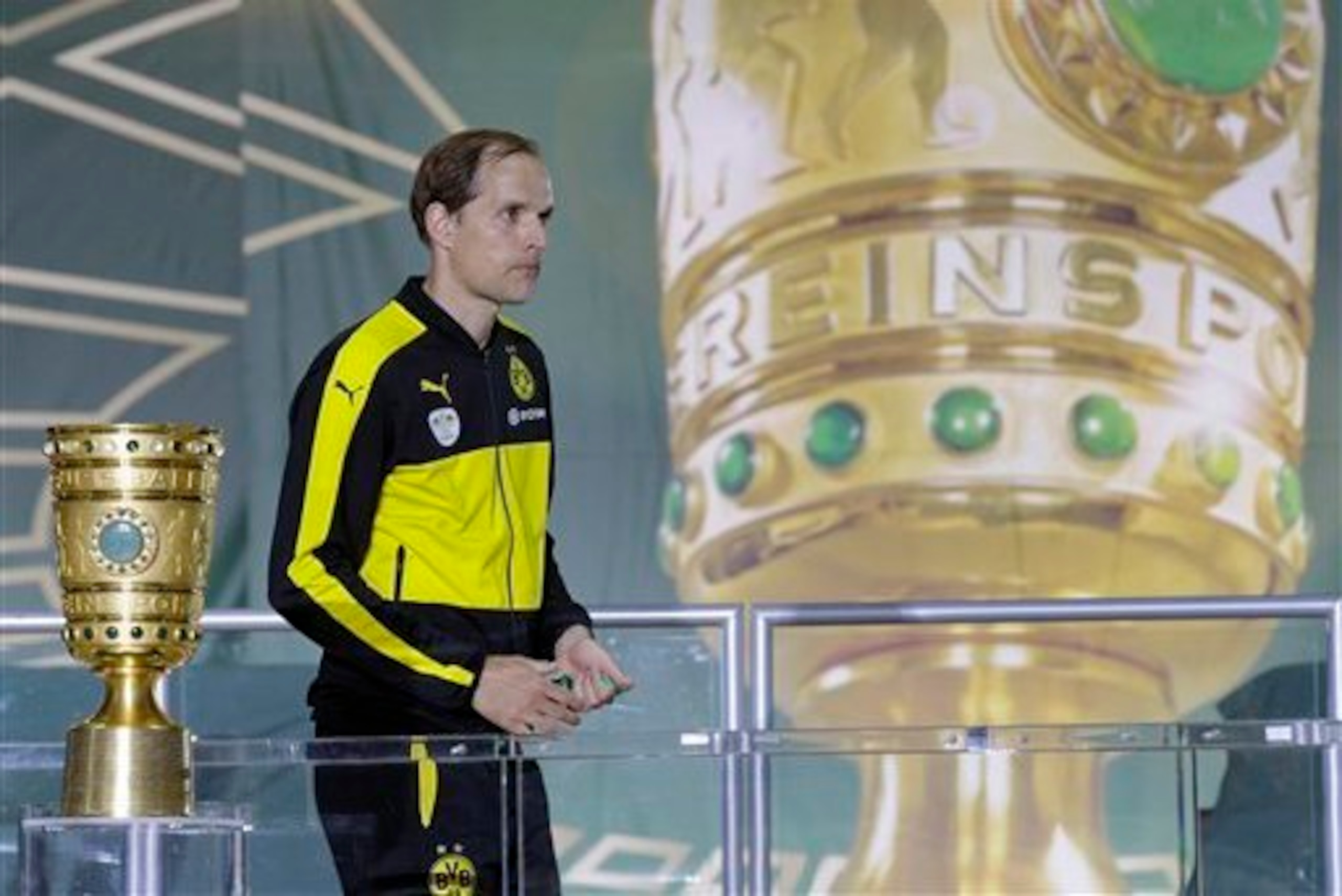
Tuchel called it "another disappointment," per the club's official website, referencing the worst loss of the season.
Dropping out of the UEFA Europa League in dramatic fashion was the indubitable low point of the campaign, the 4-3 defeat against Klopp's Liverpool in the second leg on Merseyside forever casting a shadow over it.
Dortmund were considered favourites in the competition, especially after their impressive dispatching of FC Porto and Tottenham Hotspur in the previous rounds, but they only made it to the quarter-finals, which "hurt the Black and Yellows more than most people imagine," as Raphael Honigstein opined for ESPN FC: "The Westphalians were desperate to become one of the handful of clubs that have lifted all three European trophies."
At the end of the day, a season with only eight defeats in 56 competitive matches—though the cup final technically ended in a draw—has to be seen as a success, but how much that's worth when the club lost the biggest games is something one has to answer for oneself.
Grade: B
Style
Perhaps more impressive than the sheer number of games and points Dortmund won under Tuchel was the way in which they achieved these results.
Buczko wrote that "the highlight of the season was the transformation in Tuchel's first season and the consistency that followed."
Dortmund's focus on ball retention and position play gave them a great level of comfort in games they struggled with in the later stages of Klopp's time in charge.
They quickly found an identity under Tuchel and then evolved during the season, illustrated by the fact that Dortmund conceded only 11 league goals in the second half of the season after allowing 23 in the first 17 matches.

As Andy Brassell noted for FourFourTwo, Tuchel's "Dortmund know when to press and when to sit off, when to go for the jugular and when to keep possession and kill the pace of the game, to recuperate. They can probe and pick locked defences too, which wasn’t the case last season."
Per Honigstein, "Tuchel's men were outstanding through most of the season, scoring goals for fun with attacking football of the highest level." A club-record 82 goals in the Bundesliga alone illustrate their attacking prowess.
However, with the team unable to score more than once in 300 minutes of play against Bayern and to keep their lead against Liverpool, it's not all sunshine and roses. Rather, it remains a work in progress, albeit one on a very solid foundation.
Grade: A-
Squad Management
Tuchel turned Dortmund's fortunes around without a major squad overhaul. In goalkeeper Roman Burki and midfielders Julian Weigl and Gonzalo Castro, only three new signings played a huge role over the course of the campaign.
Although 20-year-old Weigl was arguably the best piece of business in the Bundesliga last year, having come over from 1860 Munich for a mere €2.5 million, per Transfermarkt.de (link in German), Tuchel's real genius was in unlocking potential many didn't see any longer in players already at the club.
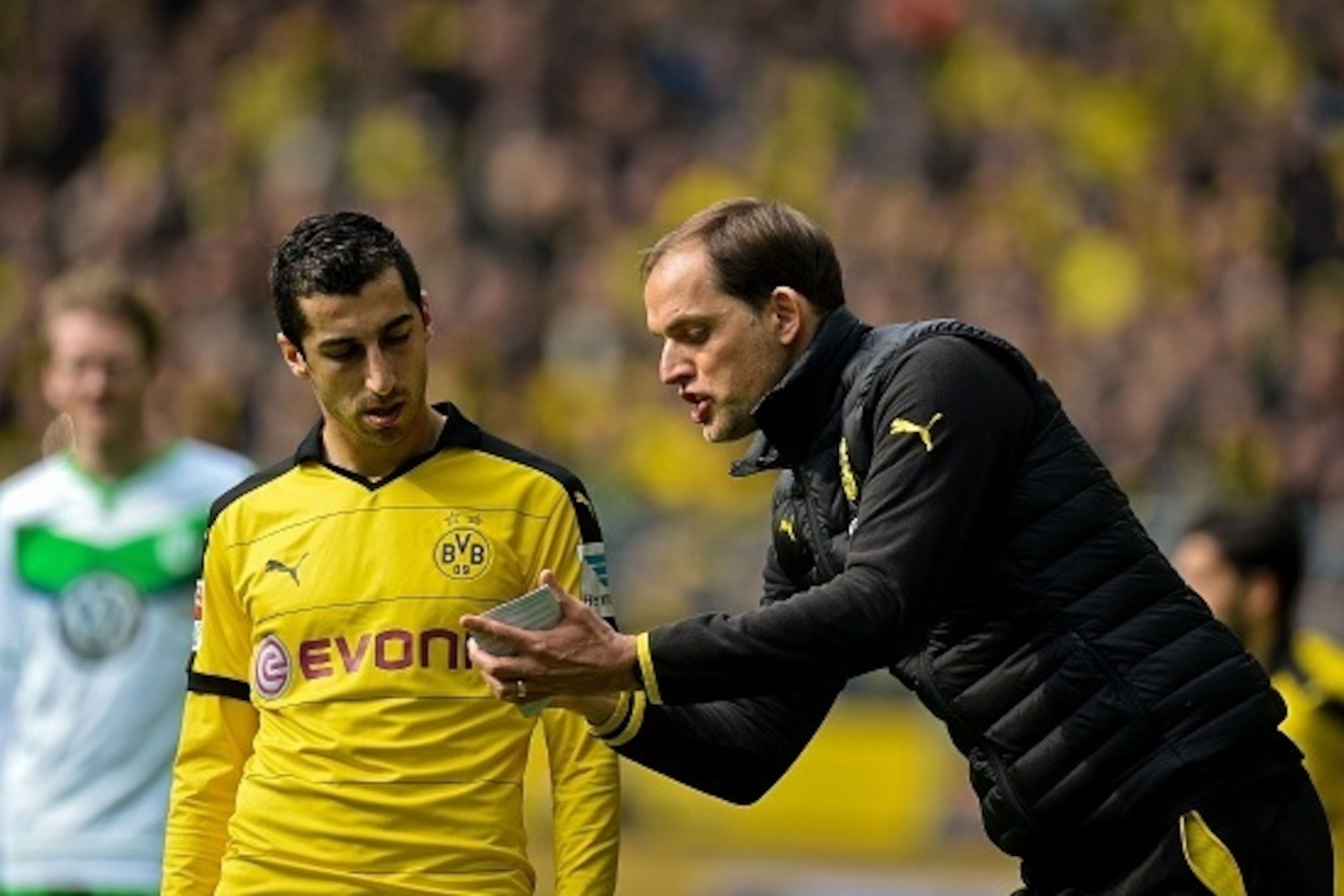
First and foremost, Tuchel unleashed Henrikh Mkhitaryan. The Armenian was Dortmund's best and most consistent player of the season and attributed his success to his new-found confidence under Tuchel in an exclusive interview with Bleacher Report in February.
Players such as Marcel Schmelzer, Sven Bender or Pierre-Emerick Aubameyang also made another big jump under Tuchel's tutelage.
Clever rotation, the more economical playing style and innovative training methods played a big part in Dortmund's success, too, seeing as they went through the season without major injury troubles for the most part.
Per Fussballverletzungen.com, a blog dedicated to statistical analysis of injuries in football, Dortmund were the fifth-healthiest team in the Bundesliga this season, a phenomenal stat considering they played about 20 more games than the teams ranked ahead of them.
Grade: A

Final Grade: B+
Though the average grade of the three categories B/R took a look at here comes out at A-, it's impossible to overlook Dortmund's failure in the biggest games of the season.
The most poignant memories, however unfair that may be, will be the last-minute collapse at Anfield and a fourth-straight final defeat.
Still, though, Tuchel has answered almost every question with a very strong first season in charge at the Westfalenstadion.
The Black and Yellow faithful can look at the future of the club with great optimism. Dortmund are in very good hands.
Lars Pollmann is a featured columnist writing on Borussia Dortmund. He also writes for YellowWallPod.com. You can follow him on Twitter.


.jpg?w=2560 "Latest Peyton-Colts Rumors")


.jpg?w=2560 "Ugly Jets Scoring Stat 😳")
.jpg?w=2560 "Landing Spots for Trade Candidates 📍")