

Granit Xhaka Arrival Is Next Step on Road to Arsenal Building a Strong Spine
There’s no great mystery to where Arsenal’s problems lie. For years there has been nothing much wrong with the team apart from its spine, something that may continue to be true as a metaphor but is gradually becoming less so on the pitch.
The signing of Granit Xhaka from Borussia Monchengladbach, perhaps belatedly, should add steel to a midfield that has so often lacked it.
Two seasons ago, the Gunners needed a goalkeeper, a centre-back, a holding midfielder and a top-class striker, and they have now filled two of those gaps. Petr Cech made some surprising errors last season, but he still projects a confidence and authority that has been so often missing from Arsenal performances in recent years.
TOP NEWS

New NFL contenders starting to emerge after Week 4

Deion Playbook Found at Hotel
.jpg?w=2560 "Cardinals Giants Football")
NFL investigating 2 referees for separate viral exchanges
Bringing in Xhaka should continue that process; the biggest question is not why Arsenal moved for him but why they didn’t move for somebody like him earlier. At 23, he could be a mainstay of the side for several seasons.
It is arguable that the centre of midfield was Arsenal’s biggest problem this past season. The absence of Santi Cazorla with the knee injury he sustained in the draw against Norwich City in November caused significant damage. In the 30 league games he has played alongside Francis Coquelin since the partnership first came together against Manchester City in January last year, the north London club have picked up 64 points.
Discounting the game at West Bromwich Albion when Coquelin went off after 13 minutes, this season Arsenal took 23 points from the 11 games they’ve played together (2.09 points per game); without the pair, they took 45 from 26—just 1.73 points per game.
The lack of bite has been clear. It’s true that Arsenal had more possession than any other side in the Premier League this season, and so they’re never going to be making as many tackles as teams who are perpetually having to hunt the ball, but it still seems telling that only the strikingly insipid Everton have committed fewer fouls this season. Manchester United, second in the possession stats, have committed 12.4 fouls per game to the Gunners' 9.2.
Such statistics are slippery. It would be absurd to pretend that committing fouls is a good thing, and Arsenal’s record of 19.4 interceptions per game is the fourth best in the Premier League, suggesting their preferred method is to try to win the ball without making a tackle.
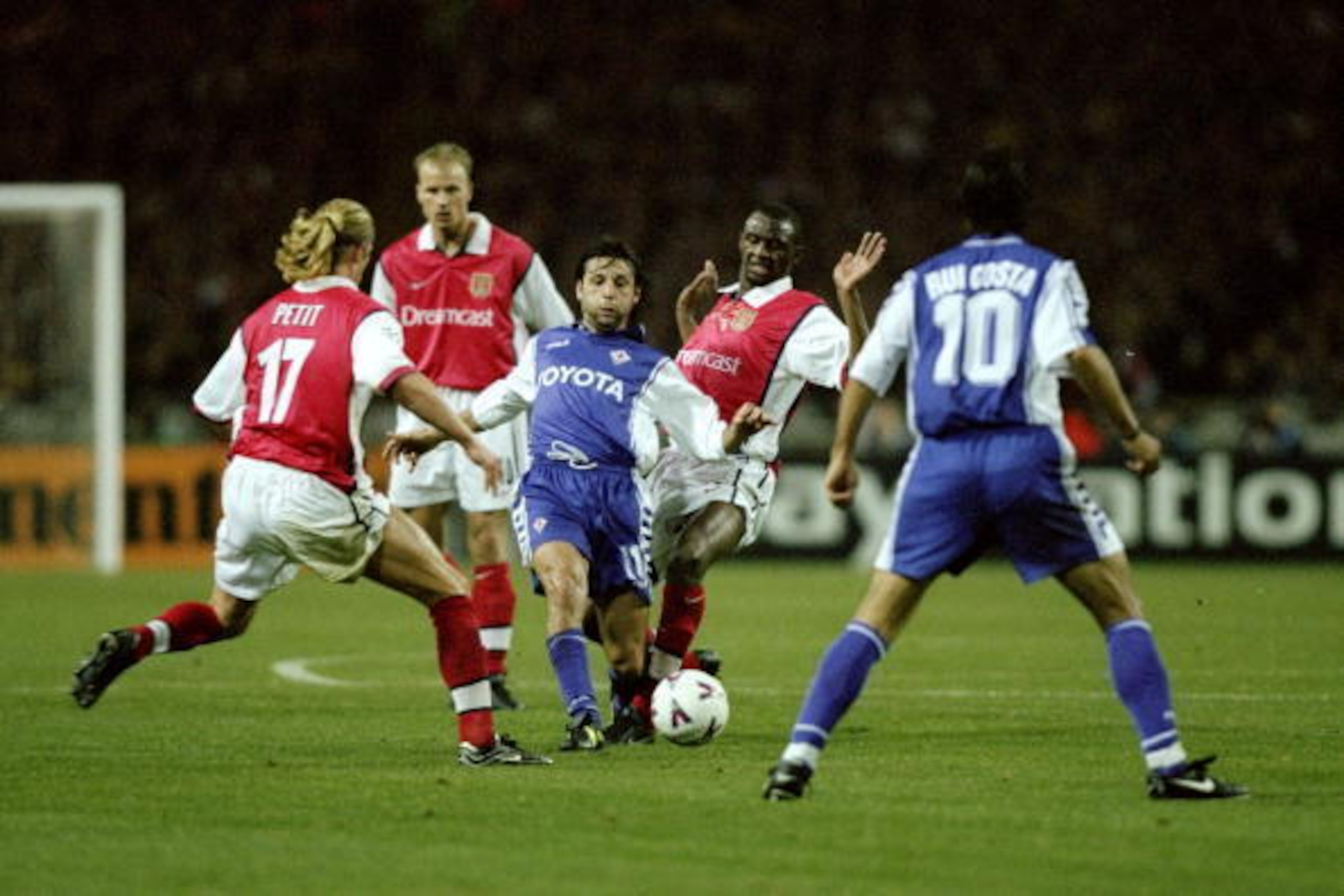
At the same time, the lack of fouls chimes with the perception that there is a softness about Arsenal, certainly when compared with the early Arsene Wenger side that featured Patrick Vieira, Emmanuel Petit and Gilles Grimandi.
Xhaka, perhaps, represents a return to those grittier days. With eight red cards in his career already, he is not a man who shirks confrontation. He can play as a holding player, and so offers cover for Coquelin, but for most of this season at Gladbach, he has played more as a box-to-box player. That immediately gives Wenger more options: He can play a 4-2-3-1 with Xhaka alongside Cazorla or Coquelin, or he could go 4-3-3 and play all three (or Aaron Ramsey, Mohamed Elneny or Jack Wilshere in a central role).
But it’s his aggression that’s the big difference. This season, Xhaka made 2.4 tackles and 2.7 interceptions per game. He also committed 2.6 fouls per game—that is more than a quarter of the entire Arsenal team. A record of 1.6 clearances per game and 0.3 blocks also speaks of his commitment.
Xhaka is not just an engine, dashing ferociously about and making challenges. He can pass as well. A pass-completion rate of 85.1 percent would place him only 14th among Arsenal players this season, but context is required. Gladbach are not a possession team in the way that the Emirates Stadium side are.
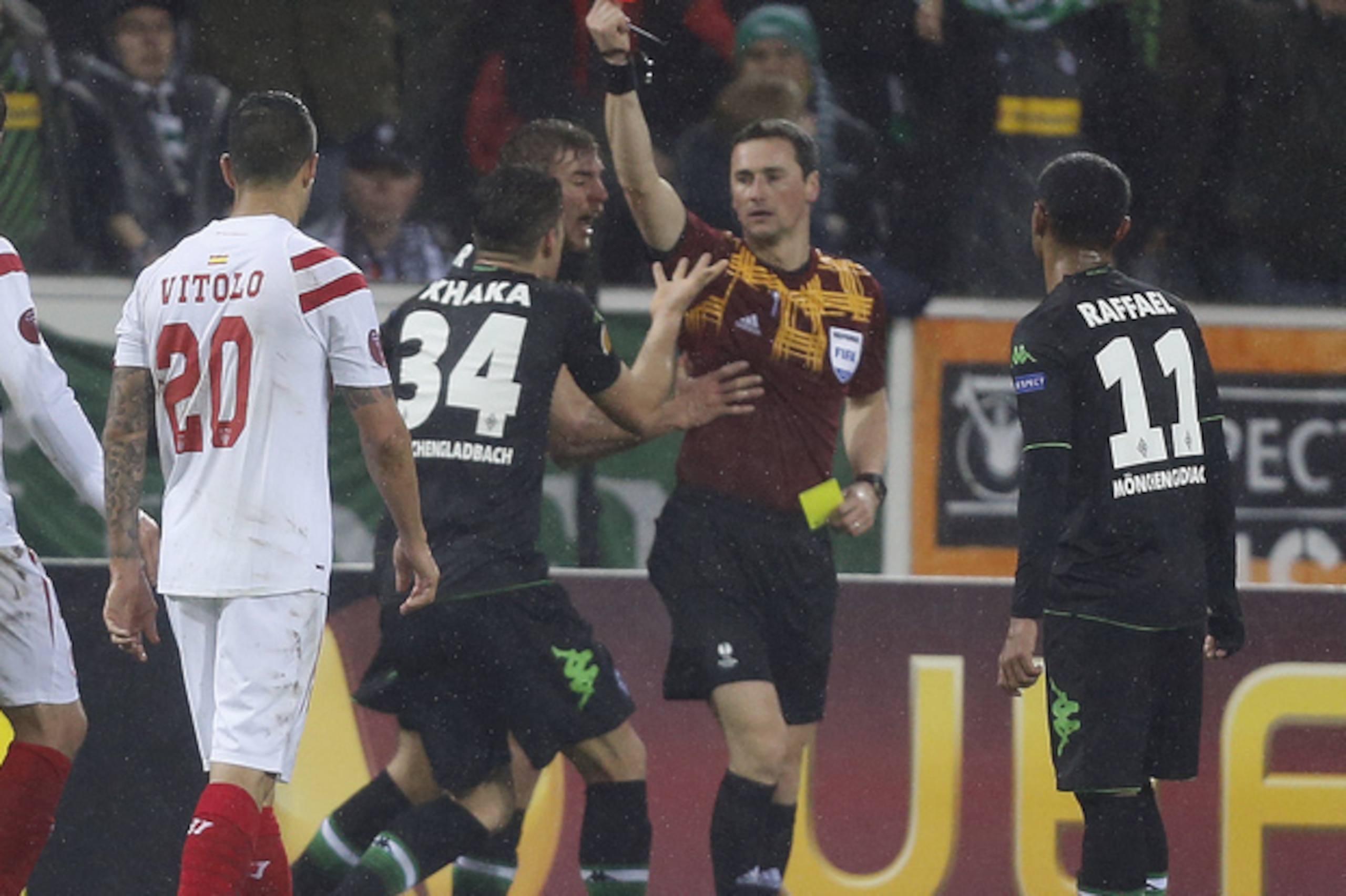
The importance of Xhaka may go deeper than his obvious efforts on the pitch. Gladbach lost their first five games of the season, prompting the departure of coach Lucien Favre. The two club captains, Martin Stranzl and Tony Jantschke, were both injured, forcing interim manager Andre Schubert to make a decision as to who should wear the armband.
To widespread surprise, he selected Xhaka, who had picked up 11 yellow cards and a red card in each of the previous two seasons. He was tough, Schubert reasoned, but more than that he needed to learn responsibility.
It was a process that took time. Against Augsburg, in his first game as skipper, he scored, played with great intensity and ran the game with his passing; he also conceded a penalty and, having been booked, was taken off after 77 minutes to save him from dismissal. Gladbach did win 4-2, though.
But he couldn’t always be protected from himself. By the end of October, he’d been sent off three times. Schubert’s gamble seemed to have failed. Slowly, though, Xhaka grew into the role. Since that third red card, he’s only been booked once in the Bundesliga. Gladbach recovered to finish fourth. The Swiss' role was vital.
“When I was younger, even though I had a big brother, my parents would give me the house key every day,” Arsenal’s publicity machine had Xhaka saying. “It's in my head that I am a leader.”
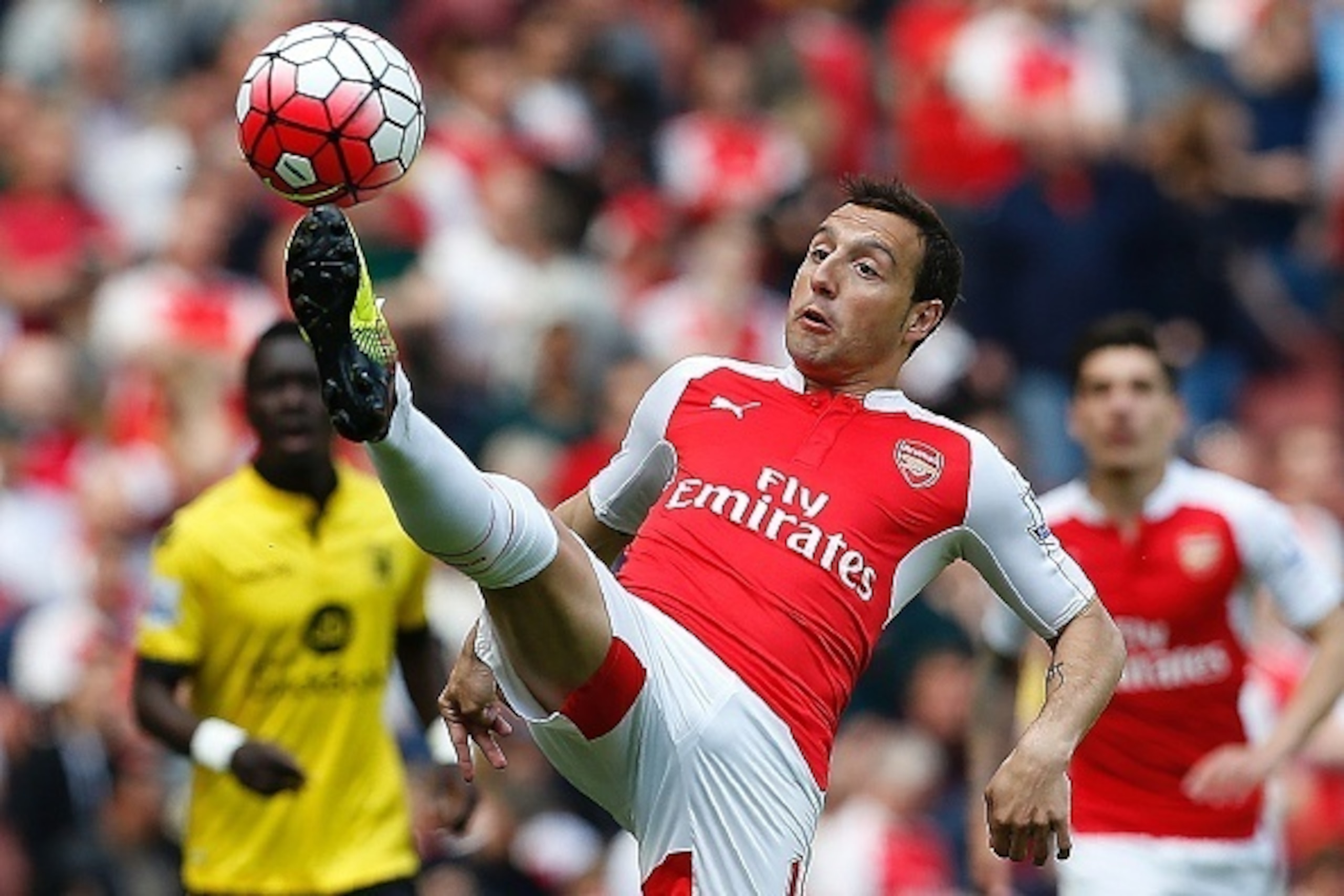
It’s not the most intimidating of images, and perhaps suggests the thread of over-niceness that seems to run through the club, but the reality is that Xhaka is tough and that his resilience and restrained aggression will bolster Arsenal not just in midfield but psychologically, too. He should give them a spine literally and metaphorically.
With Elneny acquired in January and Cazorla to return from injury, Arsenal at last have strength in depth in midfield. While it’s true that their persistent injury record means they probably need it, that centre is impressive enough to think that a genuine title challenge is possible—but how often has this been said over the past decade?
With a lethal striker and a commanding centre-back, perhaps there could be some substance to the optimism at the Emirates this summer.
All stats from WhoScored.com unless otherwise indicated.
.jpg?w=2560 "Titans Giants Football")



.jpg?w=2560 "Ward Nearly Walks Out of Presser 😳")
.jpg?w=2560 "Tyreek makes another cryptic post amid Chiefs rumors")